Suspicious Minds

The "skybridge" that will connect old and new Dubai. Courtesy Dubai Media Office
The “skybridge” that will connect old and new Dubai. Courtesy Dubai Media Office

Suspicious Minds                                                               02 May 2019

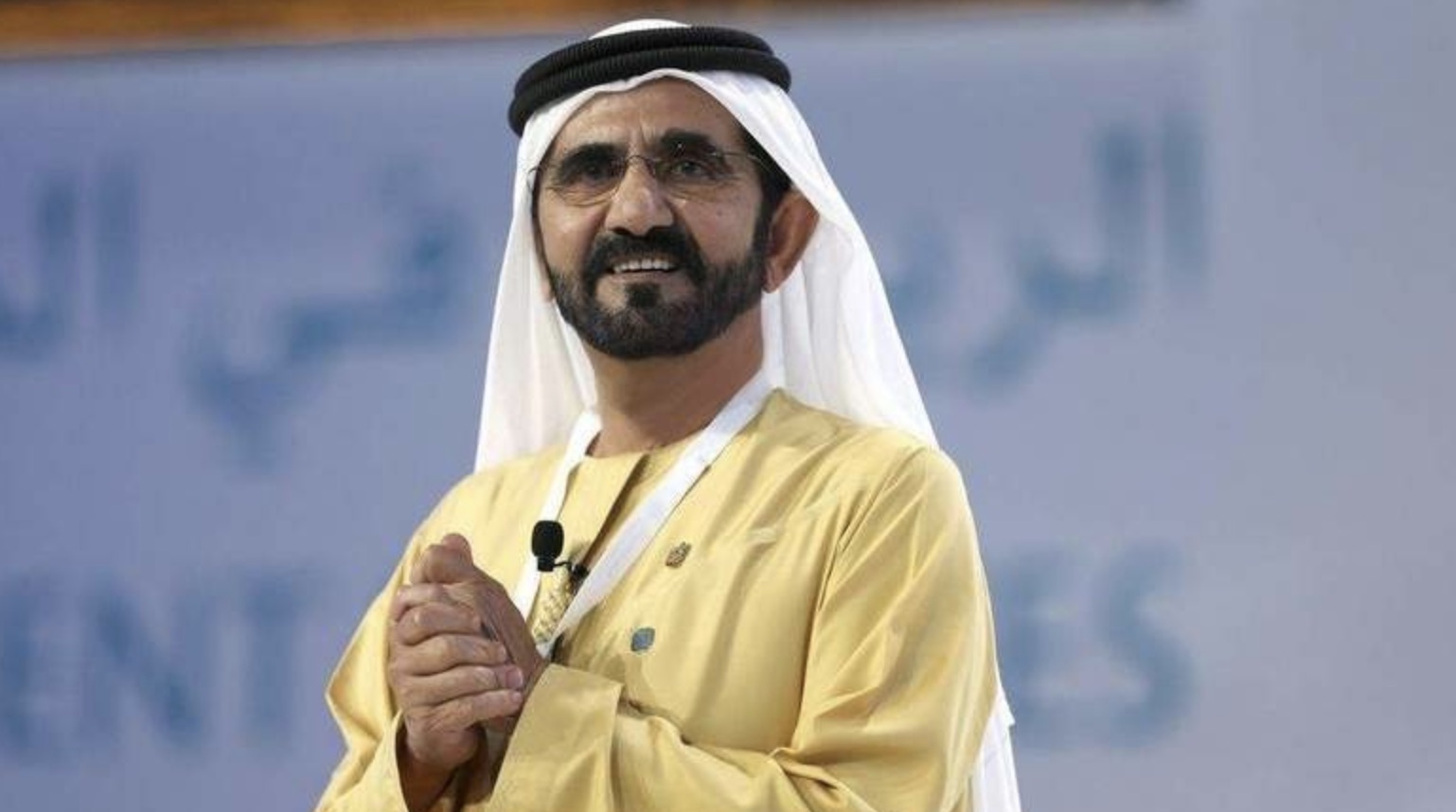
HH Sheikh Mohammed bin Rashid Al Maktoum was in Beijing this week, attending the Belt and Road project, at which China’s President Xi Jinping tried to ease concerns, promising to ensure transparency and the “fiscal sustainability” of all projects. Some critics are concerned that China is trying to exert its geopolitical influence which has already seen some countries becoming indebted to the world’s second largest economy. The initiative is expected to have a final investment of over US$ 1 trillion and has already chalked up some mega infrastructure work in several countries. Sri Lanka has already had to hand over control of one of its ports to repay China some of its foreign loans.

Following HH Sheikh Mohammed Bin Rashid Al Maktoum’s visit to the country there are plans for China to invest in two Dubai-located trading facilities. A US$ 2.4 billion investment will see the building of a sixty million sq ft (5.6 million sq mt) facility, that will be used to store Chinese products for shipping around the world. DP World has also signed an agreement for a US$ 1 billion project to import, process, pack and export agricultural, marine and animal products. These two investments should benefit both parties – it will enhance China’s influence in the Gulf region and will boost regional and international trade.

The Dubai Ruler also unveiled a federal Ministry of Possibilities, a new branch of government, with the “unconventional” ministry functioning “without a minister” but with input from the whole cabinet. He stated that “the virtual ministry, administered by the cabinet, will address pressing national portfolios and build future government systems.” In its first phase, it will oversee the Department of Behavioural Rewards to develop an approach for incentivising positive behaviour through a point-based “rewards” system.

Following Sheikh Mohammed’s displeasure at the service level of some government services, the Ministry of Human Resources and Emiratisation has penalised nine Tasheel government service centres and revoked the license of another. The crackdown followed an investigation into slow service by the Dubai Ruler after he received an anonymous complaint, with a photo, of long queues at an Emirates Post branch. He tweeted that “I received this picture through an anonymous shopper with regards to the level of service at Emirates Post… This is not our level… or our service… and those who continue to provide this level of service will not remain within my team…”

HH Sheikh Mohammed also approved several infrastructure projects on Tuesday, including a 380 mt long, 60m high “sky garden” footbridge, soaring across Dubai Creek, featuring cycling and running lanes and shops. It will connect the redeveloped Al Seef area in Bur Dubai across to the Deira side of the Creek. Other developments include new bike-sharing schemes, beachfront areas and three new promenades.

The 2.5km Sheikh Zayed Road promenade, linking DWTC and the Financial Centre, will feature green spaces for walking and cycling. The second, “sunset promenade”, at Jumeirah Beach Walk, will include several floating islands, with a total 107k sq mt beach area. The “Umm Suqeim promenade”, linking the Mall of the Emirates and Madinat Jumeirah, will comprise a 110 mt pedestrian bridge above Jumeirah Street, including more cycling and running lanes.

The bike scheme, to be managed by the RTA and Careem, will include the provision of 3.5k bicycles at 350 separate locations around the emirate. Users will be able to rent bikes with their credit cards, metro cards or smartphone apps.

More details about these exciting initiatives will be announced in the coming months.

Damac awarded US$ 120 million worth of contracts in Q1, 41% of which were for their master development, AKOYA, 16% for work at Damac Hills and 12% for the completion of the four-tower Damac Towers by Paramount Hotels and Resorts.

Yet another mega development was announced this week which involved two of Dubai’s biggest players – Emaar and DP World (through its subsidiary P&O Marinas). The developer is to use land made available by the ports operator to regenerate an area around Mina Rashid. The Riviera-style coastal development will include residential and the likes of an elite waterfront retail, dining and leisure destination, a floating yacht club (with 430 berths), a sandy beach of over 12.6k sq mt and Dubai’s longest swimming pool. Mina Rashid will also have ‘signature’ hotels, a private beach club, interconnected parks, a 500 mt palm tree-fringed canal, art galleries, a theatre and a museum. Sirdhana, the first residential units for sale, will be launched shortly.

The latest Creek Harbour development was unveiled this week – Creek Edge. Comprising two towers – 40- and 20-storey structures – they will house 560 1-3 B/R apartments, with a very limited collection of waterfront duplex townhouses on the podium level. Located near the premium luxury Address Harbour Point Hotel, as well as the Ras Al Khor Wildlife Sanctuary, it will have a wide range of leisure and recreational facilities.

It is reported that the Dubai Land Department is studying a proposal that would see residential and commercial rents frozen for three years, once a lease agreement has been signed by both landlord and tenant. Nearby Sharjah has already implemented such a scheme.

The Andaz Dubai The Palm will open in Q4 this year following an agreement between the hotel operator and Wasl Asset Management Group; it will be Hyatt’s second branded property in the UAE, following in the steps of Andaz Capital Gate Abu Dhabi. The twin-tower, 15-storey beach-front building will house 217 guestrooms and 116 serviced apartments, along with four restaurants. Hyatt will also open another branded hotel a year later – Hyatt Centric La Mer Dubai.

The 25-year old Jumeriah Group boasts nineteen overseas properties and expects a further nine more before the end of 2020; these will include two in China – in Guangzhou and Hangzhou – one in Bali and others in Italy and France. Owned by the Ruler’s investment arm, Dubai Holding, the hotelier has not forgotten its local roots and is currently developing Marsa Al Arab, a four million sq ft leisure and hotel development on two man-made islands near the Burj Al Arab; completion is expected by 2022. Longer term, it is considering an ultra-luxury brand – The Burj Collection – which would be exclusive global properties built in the manner of its Dubai flagship, the Burj Al Arab.

Dubai becomes the fourth global location – after London, Berlin and Milan – for Warren Buffet’s Berkshire Hathaway Home Services real estate brokerage firm; only six years old, it boasts 1.45k offices in the USA and has 50k advisers. The firm will focus on property above US$ 870k and is confident of success in a market that has seen steady growth in the number of overseas buyers.

Details of some ticket prices for Expo 2020, were released this week, including a one-day pass for US$ 33 and a three day one for US$ 71; more ticket options will be made available later. The site will host pavilions from 192 countries and will have 22 performance venues, hosting 60 different events each day over the six-month period. International travellers will also be able to purchase tickets through hotel, airline or tour operator bundles, with details currently being finalised.

Emaar Malls recorded a 7.0% hike in Q1 net profit to US$ 159 million on the back of a 4.0% increase in revenue to US$ 300 million, helped by the input from its newly acquired e-commerce retailer, Namshi; there were also strong returns from its shopping malls portfolio, including Dubai Mall and Marina Mall. The unit of Dubai’s biggest listed developer Emaar Properties also posted strong occupancy levels touching 92%, with a 3% rise in visitors to 36 million, of which 22 million visited Dubai Mall.

At this week’s Arabian Travel Market, flydubai’s CEO reiterated that the airline remains confident in the Boeing 737 Max aircraft model and that it is still committed to its Boeing orders. However, Ghaith Al Ghaith, said the financial impact of that grounding may be “significant” if it lasts much longer, with 17% of the airline’s seats being affected by the groundings.

HH Sheikh Ahmed bin Saeed Al Maktoum, the carrier’s chairman indicated that flydubai, is in talks with both Boeing and Airbus. The former in relation to seeking compensation for its grounded 14 737 Maxs and the European manufacturer about its A320 Neo narrow-body model in the absence of a timeframe for the return of the troubled Maxs to the skies. Sheikh Ahmed said he hoped the aircraft would be in operation “soon” and “that it’s safe to fly” but commented that Boeing’s communications to its customers, about its software upgrades for the jet and pilot training, “could be better.”

Also, at the Arabian Travel Market, Emirates finally confirmed that it would be introducing a premium economy class for both the its new A380 planes and its new Boeing 777 jets. Sir Tim Clark, president of Emirates, also indicated that ticket prices would be “well below business class fares.” Not many details were made available, but it will have sleeperettes, rather than fully lie-flat beds, and will offer more legroom, along with enhanced food and beverage services.

According to Visa’s latest UAE Travel Snapshot, cardholders spent US$ 6.2 billion (up 4%) in 2018, when visiting the UAE, as the number of transactions climbed 22%. Despite a stronger greenback, which makes the dirham more expensive, the country still continues to be an attractive tourist attraction. Saudi visitors remained the biggest spenders, accounting for 21.5% of the total, at US$ 1.3 billion, followed by the USA, UK and China.

Last month saw the cost of Special 95 jump 9% and yesterday the May price rose a further 10.9% to US$ 0.707 per litre. Diesel prices fared a lot better with only a 1.6% increase to US$ 0.689.

Having earlier forecast 3.6% growth last October for the UAE, the IMF has downgraded its 2019 outlook to 2.8%, as well as cutting its 2018 figure from 2.9% to 1.7%; next year, growth is expected at 3.3% driven by a 4.0% expansion in the non-oil sector, assisted by Expo-2020 spending. The wider GCC bloc is expected to see 2.1% growth this year, slightly up on the 2.0% seen in 2018. Lower domestic liquidity growth has arisen because of pressures from tighter global financial conditions which has resulted in net regional capital outflows.

Notwithstanding negative currency fluctuations, Aramex turned in a 4.0% hike in Q1 profit to US$ 29 million, on the back of a similar revenue increase to US$ 327 million; the percentage revenue would have doubled to 8% if it were not for weaknesses in the Australian dollar, Libyan dinar and the rand, which cut the bottom line by US$ 3 million.

Dubai-based Deyaar Development posted a 54.6% decline in Q1 profits at US$ 5 million, although revenue was only 0.4% down at US$ 48 million. The developer, majority owned by the Dubai Islamic Bank, is hoping for a better 2019, as it will hand over several projects, including the Millennium Atria Business Bay hotel and units from Afnan and Dania districts of its Midtown mega development. It also plans to launch its second hospitality development – the Millennium Al Barsha.

The bourse opened for trading on Sunday 28 April, at 2787, and, shed 29 points (1.0%) to close by Thursday, 02 May, on 2758. Emaar Properties, having lost US$ 0.11 the previous three weeks, was flat at US$ 1.29.  Arabtec shed US$ 0.03 to close on US$ 0.56. The last Thursday before the start of the holy month of Ramadan, 02 May, saw reduced trades of 90 million shares, valued at US$ 42 million, compared to a week earlier of 233 million shares at US$ 56 million. Over the month of April, the bourse was 132 points (5.0%) higher at 2767, with both Emaar and Arabtec down US$ 0.02 at US$ 1.31 and US$ 0.56 respectively.

By Thursday, 02 May, Brent, having traded US$ 6.53 (8.0%) higher the previous month, shed some of that gain this week by closing US$ 3.60 lower (4.8%) at US$ 70.75; gold also headed south again, losing US$ 10 to US$ 1,270. In April, Brent gained US$ 3.50 (5.1%) to US$ 71.60 whilst gold went the other way, down US$ 10 (0.8%) at US$ 1,272.

Australia has witnessed some sort of retail history, as Ikea moves away from its traditional giant out of town warehouse model, opening its smallest store in the world. The first opened in Warringah’s Westfield Shopping Centre and, at only 100 sq mt, is a world away from the traditional Ikea floor space area of 37k sq mt. The Swedish furniture retailer is set to open a further twenty such Australian locations over the next twelve months.

Although widely expected, it was still as shock to see Samsung Electronics report a 56.9% fall in Q1 profits to US$ 4.3 billion (its lowest since Q3 2016), as the global chip market weakened, driven by slowing demand and increased competition. The world’s biggest smartphone and memory chip maker is rapidly losing market share, as the likes of Huawei can make and sell similar products at lower prices; the Chinese rival is now the second largest chip maker in the world surpassing Apple. Another South Korean company, SK Hynix, the world’s second-largest memory chip maker, saw profits nosedive 67%.

With Q1 revenue coming in 17% higher at US$ 36.3 billion, Alphabet’s profit slumped 29% to US$ 6.7 billion, with earnings taking a US$ 1.7 billion hit from an EC fine over alleged abuse of its dominance in internet search, advertising and its mobile system. The market reacted badly with Google shares falling 6.1% to US$ 1.208k, after revenue was not as high as expected. Over 80% of the revenue came from its lucrative advertising platform but the company had losses on its “other bets”, including the Waymo self-driving car project, Verily life sciences and services for internet for remote parts of the world and drone delivery; losses for this sector climbed to US$ 858 million.

Another tech giant going well is Spotify returning a quarterly profit of US$ 106 million on the back of a 33% hike in revenue to US$ 1.7 billion, as the music-streaming entity reached 100 million paid subscribers for the first time; shares climbed 5% on the news. Even now, its subscriber base is twice as much its nearest rival Apple, with the gap expected to grow even further as recent launches in the ME, North Africa and India start to make an impact; already, it has over one million unique users in India across its free and premium tiers, only one week after its release.

The latest tech unicorn planning to go public is the fast-growing office-sharing start-up WeWork, that could be valued at US$ 47 billion. The nine-year old company, a leader in the co-working space sector, has filed documents for a stock market listing to help fuel further expansion plans. It has hundreds of thousands of customers from individual entrepreneurs to major companies, requiring either temporary or permanent office space; among its investors is SoftBank which placed US$ 2 billion with the company earlier in the year.

There is no doubt that US sanctions, as well as its curtailing of the country’s oil exports to zero, are making lives miserable for many Iranians, as its economy sinks deeper into recession. Its inflation rate has almost quadrupled over the past two years from its 2017 level of a manageable 9.6% to its current 37.2%. The country’s economy contracted 3.9% last year, with an even worse scenario set for 2019, not helped by Washington’s decision not to renew waivers that were initially granted to eight nations importing Iranian oil when they expire today, 02 May. Last year, the rial hit record lows, losing 60% in value to the greenback, and the loss of oil revenue has cost the country in excess of US$ 10 billion in revenue.

It seems that the Australian economy, which has not seen a recession in well-nigh thirty years, is finally set to hit the buffers. Q1 saw the country’s inflation rate at zero – a sure sign that all is not well in the lucky country. Deflation will result in a reduction in spending as people wait for prices to fall further and this has a knock-on effect that will soon see unemployment levels head north. The RBA has been targeting an inflation level around the 2-3% level but has failed and now sees stymied growth. When there are other signs of economic weakness – such as falling house prices, weak wage growth and a much too high 8% underemployment rate – then is the time for some drastic action. One would be to cut interest rates which are already at record lows of 1.5%. The other is the bazooka approach and the government to bring in a much-needed stimulatory fiscal policy which would include tax cuts, increased public spending on infrastructure and the like, along with higher pensions/welfare payments.

The eurozone economy continues to disappoint as an EC report noted another fall in its economic sentiment index down 1.6 to 104 in March. All this week’s indicators headed south, including the industrial confidence index down to -4.1 from -1.6, (with expectations for a -1.7 reading), the consumer confidence index lower at -7.9 from -7.2 and the business climate indicator declining 0.12 to 0.42.

The latest Commerce Department indicated that the Q1 US economy fared better than expected, expanding by 3.2% (following 2.2% the previous quarter) – and much higher than the 2.1% forecast by analysts. The main drivers were exports, up 3.7%, and imports falling 3.7%. It will be interesting whether this growth spurt can be maintained but it will silence critics who have been forecasting a major slowdown for some months. Another positive indicator was manufactured durable goods which were 2.7% higher.

Yesterday, 01 May, the S&P 500 hit record highs, with 61% of the listed companies (305) having already posted Q1 results with 76% (232) of that number beating market expectations. One of the best performers of the day was Apple – jumping 6.4% after announcing that Chinese sales were steadying as well as a US$ 75 billion company share back. The current buoyant state of the US economy has also helped push the stock market higher.

Despite the President‘s protestations, the Fed kept rates on hold this week, with borrowing costs remaining at between 2.25% – 2.5%. Donald Trump was hoping for a reduction to just 1% which he said would see the US economy “go up like a rocket” and, if the Fed cut interest rates “with our wonderfully low inflation, we could be setting major records”. However, it is becoming increasingly likely that there will be no further cuts in 2019, with the Fed indicating that global economic risks had moderated; indeed, economic data – especially from China and Europe – has shown marked signs of improvement, with progress being made over the trade tariffs issue.

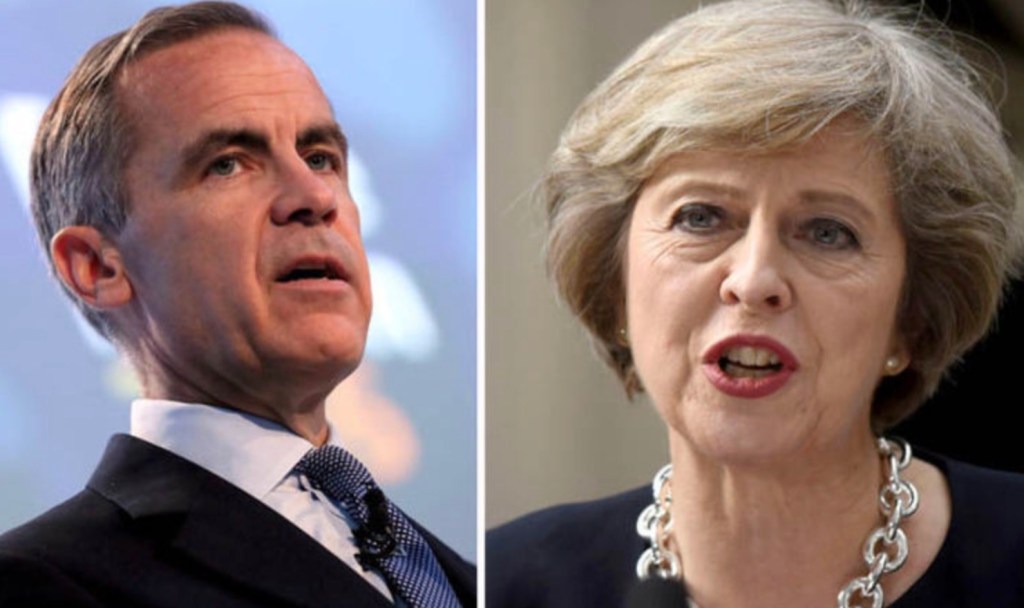
Meanwhile the Bank of England maintained its rate steady at 0.75%, with its governor, Mark Carney, stating that increases could be “more frequent”, if the economy performs as the Bank of England is expecting; so, if there is a Brexit resolution of sorts, as well as inflation and growth moving higher, rate hikes will result. Currently, the market expects but one rate increase over the next eighteen months.

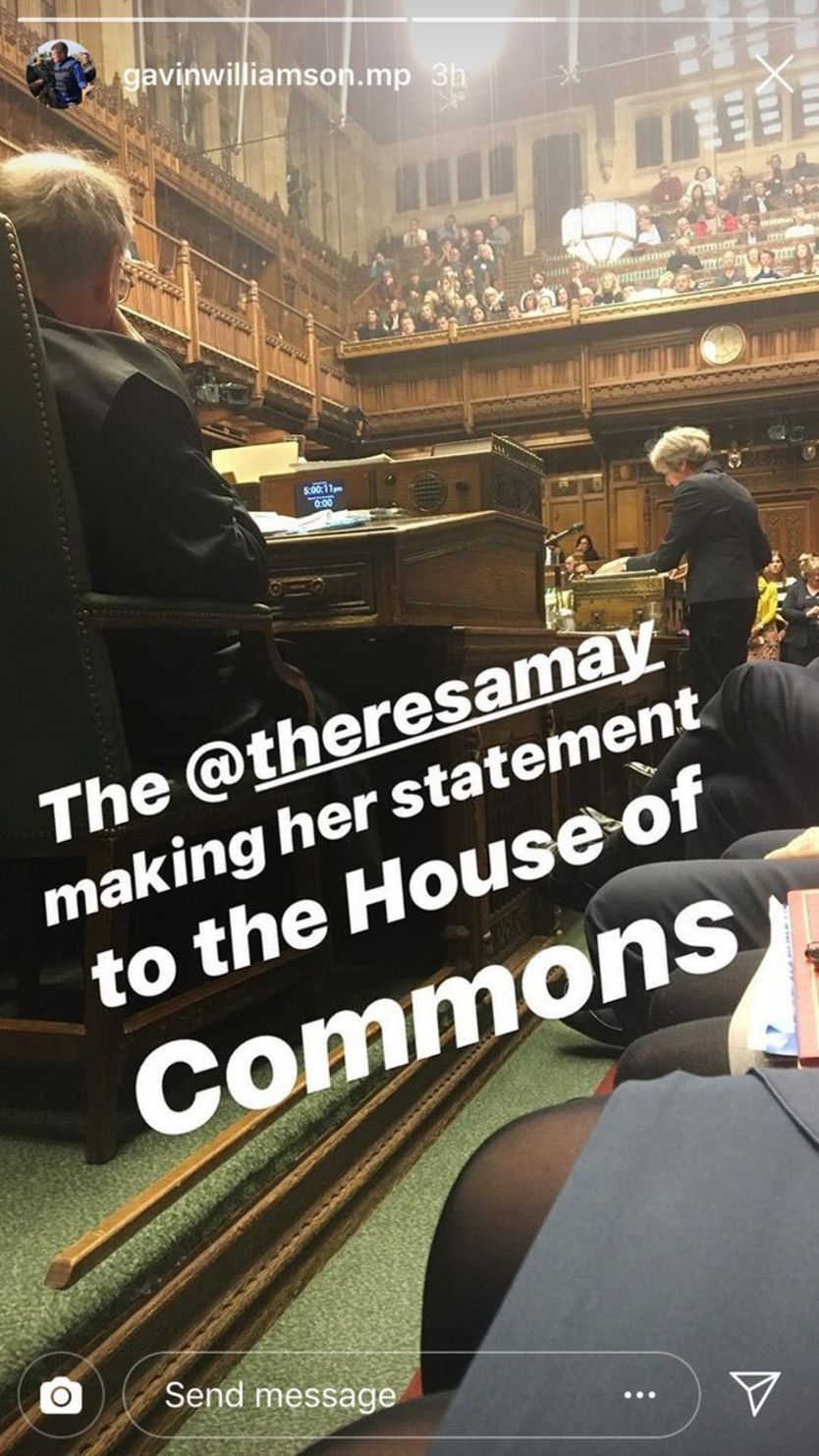
A leaked report claimed that in a top-secret meeting, the UK government had had agreed to allow Huawei limited access to help build Britain’s new 5G network, amid warnings about possible risks to national security, with three of its main allies, US, Australia and New Zealand warning that the Chinese firm was a security risk. Now the Chinese ambassador to the UK, Liu Xiaoming, has come out saying that “countries of global influence, like the UK, make decisions independently and in accordance with their national interests”. Apart from the security aspect of allowing a Chinese state-like company to help build the new network, is the fact that one of the five ministers present must have leaked the information. On Wednesday, the finger pointed to the Defence Minister, Gavin Williamson. He has subsequently denied he was responsible for any leak, although he did acknowledge an 11-minute call to a Daily Telegraph reporter, minutes after the secret meeting. No wonder there are many around with Suspicious Minds.

Posted in Categorized | Tagged , , , , | Leave a comment

The First of May

The First of May 25 April 2019

HH Sheikh Mohammed bin Rashid Al Maktoum was in Beijing this week attending the Belt and Road project at which China’s President Xi Jinping tried to ease concerns, promising to ensure transparency and the “fiscal sustainability” of all projects. Some critics are concerned that China is trying to exert its geopolitical influence which has already seen some countries becoming indebted to the world’s second largest economy. The initiative is expected to have a final investment of over US$ 1 trillion and has already chalked up some mega infrastructure work in several countries. Sri Lanka has already had to hand over control of one of its ports to pay China back some of its foreign loans.

The Dubai Ruler also unveiled a federal Ministry of Possibilities, a new branch of government, with the “unconventional” ministry functioning “without a minister” but with input from the whole cabinet. He stated that “the virtual ministry, administered by the cabinet, will address pressing national portfolios and build future government systems.” In its first phase, it will oversee the Department of Behavioural Rewards to develop an approach for incentivising positive behaviour through a point-based “rewards” system.

A Damac official indicated that the Dubai property market “will balance out” before the end of next year, as the sector is already experiencing the bottom of the cycle. This year, the developer expects to deliver 8k units – the most in the company’s history and double the amount handed over in 2018. Last year’s profit was its lowest since going public in 2013 and is one of the reasons why the company’s share value has plummeted 56% over the past twelve months.

According to Cavendish Maxwell, Dubai house prices have fallen 12% over the past twelve months, with bigger declines seen in locations such as Arabian Ranches, Dubai Sports City, Dubai Silicon Oasis and Jumeirah Islands. In March, month on month prices dropped 1.7% and 5.1% over Q1, as average house prices fell to US$ 708k. Q1 saw a marked decline in apartment transfers (14% lower on the year), as March average prices stood at US$ 490k.

Khoory Hotels is to open two sharia-compliant hotels in Al Qouz – as it taps into an ever expanding hotel sector. The 3-star 92-key Urban By Al Khoory and the 4-star 158-key Al Khoory Courtyard will open before year end. A third property, the 258-key Al Khoory Sky Garden, located near Dubai International Airport, will start operations mid-2020 and bring the company’s portfolio to seven Dubai hotels and 1.2k rooms.

An agreement between Meraas and Singapore-based Chinese company Samanea Group will see yet another mall opening in the emirate in 2021. Costing US$ 272 million, the 570k sq ft outlet, located near Dubai International City, will focus on home appliances and furniture from small, medium and big Chinese companies. This will further enhance bilateral relations and boost China’s number one position as Dubai’s largest trading partner; annual trade currently stands at US$ 37.9 billion.

There was a marginal 90k improvement (1.3% to 3.14 million) in the number of international guests visiting Dubai during first two months of the year. The emirate’s three main markets continue to be Western Europe, GCC and SE Asia, contributing 57% of the total at 22%, 18% and 17% respectively. Country-wise, India is still top of the table, although numbers have dropped 9% to 386k, whilst visitor numbers from the UK, Germany and the US all headed north by 4%, 11% and 4%. However, most hotel indicators came in lower, with Occupancy falling 3% to 84%, Revenue per Available Room 13.8% to US$ 118 and Average Daily Room Rate 10.6% to US$ 140.

Dnata has opened its first of five new US operations for 2019 – a 4.7k sq mt catering facility at Houston’s George Bush Intercontinental Airport; it will have a capacity of 10k meals a day and employ up to 150. The ground handling division of Emirates Airline is expecting to open similar facilities at Boston, Los Angeles, Newark and San Francisco by year-end. Having acquired 121 Inflight Catering last year, it already has three operations in New York’s JFK, Nashville and Orlando airports.

It was a sluggish Q1 for DP World with gross container volumes falling 0.6% year-on-year in handling 17.5 million TEU (twenty-foot equivalent units). Gross-like-for-like volumes declined 0.1% due to higher year-on-year comparables and softer volumes in the UAE and Australia. Due to the loss of low-margin throughout, the UAE posted an 8.8% decline when handling 3.5 million TEUs which was offset by marked growth in Peru’s Callao, the Egyptian port of Sokhna and Mumbai.

Last year, Dubai became home to 2k HNWIs, (high net worth individuals – each with at least $1 million worth of net assets) – 2% up on the previous year. This could prove a welcome boost for the local economy.

A good week for Union Co-op as well as for its customers. The chain posted a 26.3% hike in profits to US$ 38 million and then announced that it had set aside US$ 30 million towards price reduction of more than 25k basic food, non-food, and consumer goods during the holy month of Ramadan, starting within a fortnight.

This week saw the 192nd country to announce their participation in Expo 2020 Dubai, with all indicators pointing to “a truly international event and platform for all of humanity”. It is expected that numbers attending the six-month extravaganza will top 25 million – less than the 73 million at Shanghai in 2010 but more than the 21 million at Expo 2015 in Milan. It is expected that the emirate’s GDP 2020 growth will jump to 3.8% and that foreign investments will be up to 20% higher at US$ 13.6 billion because of the Expo impact.

Having put its proposed Six Flags Dubai project on hold, DXB Entertainment has decided to use some of the funds raised in a 2106 rights issue to expand the offers at its existing Bollywood Parks and Motiongate.

Having divested itself of five of its flagship hotel assets to state-backed Abu Dhabi National Hotels (ADNH), Emaar Hospitality will continue to expand its hotel management portfolio while remaining asset-light. Over the next year, it will add a further five properties and 1.7k rooms to Dubai’s total portfolio. They will include two under its premium Address Hotels + Resorts collection, both in Downtown, and two under its upscale Vida Hotels and Resorts brand in the new Creek Harbour scheme. A fifth, a JV with Meraas, the Rove At The Park hotel, will be located at Dubai’s theme park destination Dubai Parks and Resorts, and feature 579 rooms.

Arabtec is planning to take advantage of “growing market opportunities” in the UAE, Saudi Arabia, Egypt, Bahrain and Kuwait, as it expands its footprint regionally. The Dubai-based contracting giant will also continue to diversify its backlog into infrastructure and industrial sectors, which accounts for 50% of current projects. It announced a US$ 0.014 2018 dividend, having seen its annual profit more than double to US$ 71 million.

Dubai Islamic Bank posted a 12.0% increase in Q1 profit to US$ 249 million, beating market expectations. The country’s biggest Shariah-compliant lender is currently considering the acquisition of Noor Bank and expects to submit a report to the local bourse by the end of the month. Its biggest shareholder is the Investment Corporation of Dubai, with a 28.37% stake, who also has a 22.85% share in Noor Bank – and if the deal were to go through, it would result in a lender with US$ 75 billion in assets.

Embattled Drake and Scull International posted further dismal results as 2018 losses more than tripled from US$ 381 million to US$ 1.4 billion, as revenue fell 69.3% to US$ 217 million. Consequently, its total asset base sank 72.5% to US$ 518 million over the year. The company’s shares have been suspended on the Dubai Financial Market since November 2018 as it continues with its restructuring efforts. The fall-out sees the departures of three of its executives – its chief executive officer, (who only started in January 2019), chief financial officer and chief legal officer.

Etisalat’s Q1 profit rose 5.0% to US$ 599 million on the back of consolidated revenue topping US$ 3.5 billion, driven by a 2.0% expansion in its subscriber base to 12.6 million, as its aggregate subscriber base reached 143 million. Its EBITDA (earnings before interest, tax, depreciation and amortisation) figure came in at US$ 1.8 billion.

Mashreq posted a 5.0% improvement in Q1 profits to US$ 171 million as there were increases in both total assets (up 1.2% to US$ 38.6 billion) and loans/advances 0.8% higher at US$ 19.0 billion; however. customer deposits dropped 3.1% to US$ 22.0 billion. Overall loan impairment allowance fell 13.6% to US$ 71 million, with the non-performing loans to gross loans ratio at 3.6%, as total provisions for loans/advances reached US$ 1.0 billion, equating to a 123.3% coverage for non-performing loans.

Following an eighteen-month drought, it is reported that three companies are preparing IPOs on the DFM; no names have been made available, but the companies are involved in the industry, oil and gas services and health care sectors. The last IPO was the US$ 1.3 billion issue by Emaar Development back in late 2017.The bourse has had a relatively good start this year jumping over 11%, following a dismal 2018 when the market sank 25%.

The bourse opened for trading on Sunday 21 April, at 2814, and having gained 240 points (9.3%) the previous month, shed 27points (1.0%) to close by Thursday, 04 April, on 2787. Emaar Properties, having lost US$ 0.05 the previous fortnight, was down a further US$ 0.06 to close at US$ 1.29.  Arabtec, having gained US$ 0.04 last week, surrendered most of that by falling to US$ 0.59. Thursday 25 April saw reduced trades of 233 million shares, valued at US$ 56 million, compared to a week earlier of 233 million shares at US$ 60 million.

By Thursday, 25 April, Brent, having traded US$ 3.80 (5.6%) higher the previous three weeks, continued its upward trend to close US$ 2.73 (3.8%) higher at US$ 74.35; after a recent downward trend, gold moved US$ 4 higher to US$ 1,280.

Amazon posted impressive Q1 results with a record profit of US$ 3.6 billion (almost double that of one year previously), on the back of a 17.0% jump in revenue to US$ 59.7 billion; this was driven by 40% gains in cloud computing, other revenue including online advertising 34% higher and a 10% hike in revenue from online sales. The market was not too impressed, dipping 0.6% on the news.

Microsoft’s book value briefly topped the US$ 1 trillion level when it announced a Q1 14.0% increase in revenue to US$ 30.6 billion, largely attributable to its cloud computing business. Facebook went even better with a 26.0% increase in its quarterly revenue to US$ 15.1 billion.

Generally, US companies posted better than expected Q1 results, 3M was a notable exception. Having cut its full-year outlook and noting that it will reduce its payroll by 2k, the industrial manufacturer saw its share value plummet 13% – its steepest drop since Black Monday in October 1987. The company is famous for ‘Post-it’ notes, along with a wide range of adhesive products.

Tesla again disappointed the market as it announced a US$ 702 million Q1 loss on the back of a 31% slump in revenue. However, CEO Elon Musk is as optimistic as ever forecasting future growth in both demand and profit margins as the company rolls out updated products and pricing for its three models and sells more battery storage units. Tesla has to start moving more of its three models – S, X and 3 – as it only delivered 63k in total over the quarter, only half the number ordered. After a US$ 920 million bond repayment, its cash reserves fell 31.8% to US$ 1.5 billion by the end of March. Whether the company can produce its expected 400k vehicles this year remains to be seen – and if not its retained losses of over US$ 6.0 billion since its 2004 inception will only get worse.

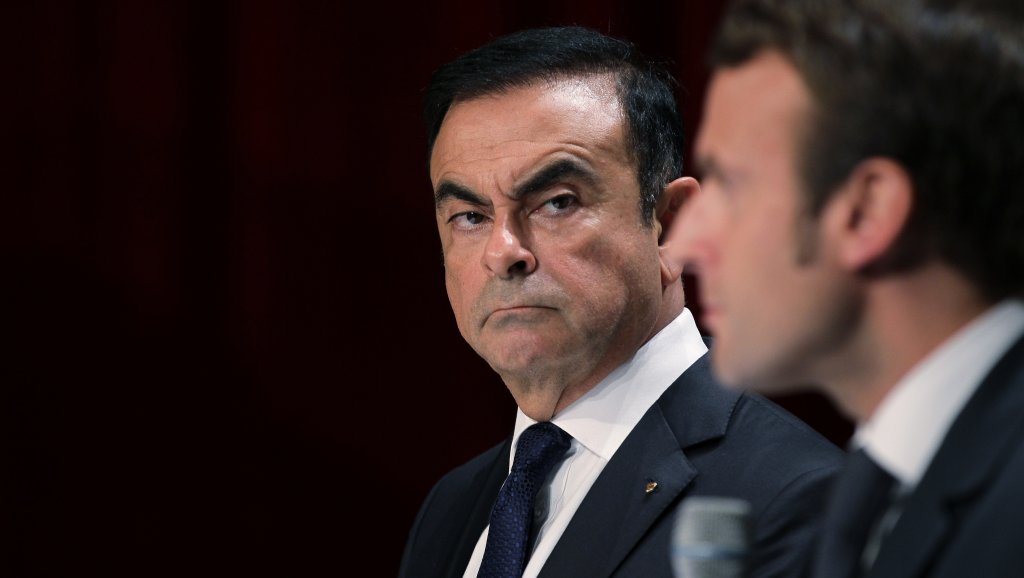
Having posted a further bail of US$ 4.5 million, the 64-year old Carlos Ghosn, has been released from a Tokyo jail. The former Nissan chairman was first incarcerated last November, charged with under-reporting his post-retirement compensation and breach of trust in allegedly diverting Nissan money for his personal investment losses. Prosecutors were reluctant to see his release, fearing he could tamper with evidence or influence witnesses.

As widely expected, the Sainsbury’s US$ 9.4 billion purchase of Walmart’s Asda has been rejected by UK regulators citing concerns the deal would have increased prices and reduced the quality and range of products available.

Having put its airline up for sale in February, Thomas Cook has received interest for both other parts of the business, as well as the Group in its entirety. To cut costs, it is planning to close 21 UK outlets (but will still have 566 operating stores), with the loss of 300 staff. An early entrant for the company’s tour operating business is Chinese investment firm Fosun International which already runs a JV with Thomas Cook in China. Since September, it has issued two profit warnings – the first indicating that profits would be hit after the summer heatwave, with many deciding to take holidays at home rather than overseas, and the second profit warning in November, stating winter bookings were also down.

Australian banks seem to be able to have their cake and eat it, even after the industry was savaged by a royal commission for its unethical and fraudulent behaviour over a long period of time. For the past decade, even though the bank rate has declined, credit card rates have remained static. Currently, the average Australian will pay a rate of 19.77% on credit cards, even though the official cash rate is only 1.5% – the gap of 18.27% is at its highest ever level. In 1995, when the cash rate was 7.5%, credit card interest stood at under 17% (a 9.5% gap). In those days both interest rates (cash and credit card) rose and fell in tandem but that practice has fallen away for the benefit of greedy bank coffers.

By Wednesday, the Australian dollar dipped below the US$ 0.70 mark for the first time since the 3 January ‘flash crash’ – and before that was in early 2016. The main reason for the slide was the release of the weakest core inflation figures on record. This will probably see the Reserve Bank cutting interest rates within the next two months, with another reduction later in the year.

The eurozone economy continues to cause concern, as the latest Composite Purchasing Managers’ Index declined 0.3 to 51.3, with April manufacturing contracting and the service sector growth slowing. Although still in negative territory, the manufacturing PMI rose 0.3, month on month, to 47.8, with the services PMI 0.8 lower at 52.5. Furthermore, new export orders fell yet again whilst new order growth remained stagnant, as employment growth remained at its lowest since 2016.

The euro area government debt to GDP declined 2.0% last year to 85.1%, with the lowest ratio recorded in Estonia, at 8.4%, and Luxembourg with 21.4%. The bloc’s government deficit halved to 0.5% on the back of increasing revenue, up 0.2% to 46.3% of GDP, and expenditure declining 0.2% to 46.3%. Luxembourg posted the highest budget surplus at 2.4% of GDP followed by Bulgaria and Malta, both at 2.0%, with Germany slightly behind at 1.7%.

The US Commerce Department recorded a 4.5% March annualised increase in new home sales at 692k, following a 5.9% increase the previous month – its highest level since the 712k figure of November 2017. Median sales prices – at US$ 303k – were off 4.0% on the month and 9.7% lower than in March 2018. The number of new houses for sale slowed to 344k, equating to a six-month supply at the current sales rate. After jumping to a revised rate of 5.48 million in February, existing home sales plunged by 4.9% to an annual rate of 5.21 million in March.

The Trump administration has decided not to renew waivers that let eight countries – China, Greece, India, Italy, Japan, South Korea, Taiwan and Turkey – buy Iranian oil without facing U.S. sanctions. This decision will upset many but should boost oil prices in the short-term at least, with other suppliers, including the UAE, offsetting the loss of Iranian crude on the market.

Emmerson Mnangagwa has fared little better than his predecessor, Robert Mugabe, in controlling Zimbabwe’s inflation crisis. After 37 years of economic mismanagement, it was hoped that the incoming president would revive the country’s economy but after the introduction of a new currency in February, prices of goods and services have skyrocketed at rates unseen in a decade – and topping 300% in some areas. However, it is still some way off the 500 billion % rate seen in the Mugabe days

Mouvement des gilets jaunes, which only started in November last year, is increasing its power base and worrying the Macron government. Driven by surging fuel prices, increased cost of living and their call for the reintroduction of a solidarity tax on wealth, they donned the yellow high visibility vests; this is in response to French law requiring all drivers to have them in their vehicles and to wear during emergencies and is seen to be “a unifying thread and call to arms”. Their protests over the past six months have involved demonstrations, blocking roads and fuel depots, that appear to have become more violent. Wednesday will see May Day and it is hoped that their protests – and the police reaction – do not get out of hand on The First of May.

Posted in Categorized | Tagged | Leave a comment

When The Going Gets Tough, The Tough Get Going

Wynn Las Vegas

When The Going Gets Tough, The Tough Get Going      18 April 2019

According to Asteco, and despite the current oversupply in the market, there has been a marked increase in Q1 hand-overs, estimated to be 6.7k; reports indicate that 23k residential units were handed over in 2018. The figure is more than double the figure handed over in the corresponding period last year because of previously delayed projects being delivered. The company also estimated that there were 3% falls in Q1 rents for both villas and apartments, with prices declining between 2% – 4%. It did warn that “the real estate market is expected to come under further pressure until economic conditions improve.”

Meraas has announced that its fourth and final La Rive residential building was sold out, even before the official launch. The project, based at Port De La Mer, comprises 250 high-end 1-4 B/R apartments, with prices starting at US$ 354k.

Azizi is set to invest US$ 272 million by expanding into the Abu Dhabi market where it is currently acquiring blocks of land, with a view to either building villas or apartments. This comes the week that the national capital’s government introduced legislation to allow foreigners to own freehold land in designated areas. The Dubai-based developer, with US$ 12.3 billion of projects under development, mainly in Dubai and Afghanistan, recently cut its sales force by a reported 60% to generate efficiencies and control costs.

Property Finder has acquired the five-year old Bahrain Property World for an undisclosed amount. Last November, the Dubai-based real estate portal raised US$ 120 million from General Atlantic for the purpose of expanding its operations throughout the region. Recently, the company announced it will acquire rival platform JRD Group and that it had also increased its stake in Zingat – Turkey’s second largest property portal – to almost 40%.

Tuesday saw the 45-day closure of Dubai International’s southern runway for upgrade work, including resurfacing and replacement of ground lighting and other infrastructure; this will result in a 29% reduction in the number of available seats. Emirates estimate that 48 of its aircraft will be grounded, with the number of flights 25% lower. However, with some flights moving to DWC, the total number of flights across the Dubai Airports system will only drop 19% and the number of seats by 20%.

A MENA EY report estimates that the upcoming Expo will boost the UAE economy by US$ 33.4 billion and support 905k job-years through to 2031. Over the six months (October 2020 to April 2021) of the event, it is thought that it could add as much as 1.5% to the country’s GDP. Having won the bid to host the event in 2013, the construction sector has been the main economic beneficiary, with major spends on roads, bridges and the Metro extension, along with buildings on site. Nearer the opening, travel and tourism will feel the benefit as visitors coming from outside the UAE will account for 70% of the total 25 million visits expected. From April 2021, the site will be transformed into District 2020, an integrated urban development that will house the Dubai Exhibition Centre. It is the post-Expo “legacy” decade that will see the biggest gains garnering US$ 16.9 billion for the local economy, with the main beneficiaries being events organisation, business services, retail, restaurants and hotels.

A mix of higher oil production (and prices) and increased government spending will ensure that the UAE economy should grow at a faster pace than its regional neighbours this year. According to Oxford Economics and the ICAEW, the economy is on course to rise 2.2% this year (2018 – 1.8%), with the oil sector growing by 2.5%, and the non-oil GDP up 2.1%. Real GDP growth in the Middle East (including the GCC) is projected to reach 1.3% this year, (2018 -1.0%).

There are plans afoot for a second Dubai Investment Park, as the first 2.3k hectares site is nearing capacity. The probable location will be in the Jebel Ali area. Despite posting a 34.9% fall in 2018 profits to US$ 177 million, the company declared a 10% dividend, totalling US$ 116 million. Over the year, its total assets were 14.6% higher at US$ 5.3 billion. Its financial services subsidiary, Al Mal, expects to establish a mixed-use real estate investment trust (REIT) to be listed on the local market this quarter.

Etisalat is expected to invest US$ 1.1 billion this year on digital transformation, mobile and fibre networks. The telecom wants to enhance and build one of the most advanced networks in the region and expects its “pioneering efforts” in 5G to pave the way for the “future of connectivity”. Although ready, it is expected that the first 5G devices will arrive in the country this June.

Shuaa Capital Saudi Arabia is to acquire six income-generating real estate assets valued at US$ 80 million, in Riyadh, as it announced plans to launch a US$ 158 million real estate investment trust (REIT). All properties are freehold and the firm expects a return in the region of 7%.

Arif Naqvi, the founder and ex-chief executive officer of disgraced Abraaj, along with his former managing partner, Mustafa Abdel-Wadood, have been charged by US courts for defrauding investors. A third executive, Sev Vettivetpillai, has been held by UK police on similar charges. Abdel-Wadood is already in police custody in New York, whilst Naqvi was arrested last week in the UK and is now awaiting possible extradition. The once powerful asset management group, with over US$ 14 billion under its control, was forced into liquidation last June after a group of investors, including the Bill & Melinda Gates Foundation, alleged mismanagement of money in its healthcare fund. It is thought that both defendants were involved with inflating the value of the firm’s holdings, by more than US$ 500 million, and stealing hundreds of millions of dollars. They are also accused of conspiracy, wire fraud and securities fraud.

This week saw Olivier Harnisch stepping down from his role as Emaar Hospitality CEO “to pursue new interests”. Business operations will be taken over by Chris Newman, the current chief operating officer. The change has come at a busy time for the company which will open five hotels in Dubai and three in KSA, as well as having a further thirty projects in its pipeline.

Although the Emaar chairman has resigned from the Aramex board for “personal reasons”, he still owns a stake in the Dubai-based international logistics company. Three years ago, its founder Fadi Ghandour sold his entire 9.9% shareholding to Gulf investors – including Mohammed Alabbar – in a deal thought to be worth US$ 142 million. He also owns shares through some of his holding companies, including Joana Investments and Boson Ventures Corporation. Aramex had a good 2018, with both revenue and profit moving higher – by 8.0% to US$ 1.4 billion and by 13.0% to US$ 134 million. 

The banking sector continues with impressive returns in a sluggish economy as both Emirates NBD and its sister bank, Dubai Islamic, posted their Q1 returns. The former saw higher revenue with, 15% year on year, and 9% quarter on quarter, increases at US$ 1.3 billion and profit up 15% for both periods to US$ 736 million. There were also hikes in total assets, customer loans and customer deposits by 5% to US$ 143.3 billion, 3% to US$ 92.0 billion and 3% to US$ 97.9 billion.

Meanwhile, Emirates Islamic recorded its highest ever quarterly net profit since its 2004 inception – a massive 97% year on year hike at US$ 112 million (54% up, quarter-on-quarter); its total income came in 12% higher at US$ 181 million.  There were smaller balance sheet increases for total assets (4% – US$ 16.5 billion), and customer accounts (4% – US$ 11.8 billion).

The other major Dubai financial institution, CBD also reported better returns, with Q1 operating income up 17.6% up at US$ 211 million and net profit 21.6% higher to US$ 93 million; operating expenses were down 3.7% to US$ 56 million. Subsequently, there were year on year hikes of 8.5%, 10.3% and 13.3% in total assets, loans/advances and customers’ deposits as at 31 March.

The bourse opened for trading on Sunday 14 April, at 2790, and having gained 216 points (8.4%) the previous three weeks, gained a further 24 points (0.8%) to close by Thursday, 04 April, on 2814. Emaar Properties, having jumped US$ 0.26 the previous fortnight, lost a little impetus to close US$ 0.05 lower at US$ 1.35. Arabtec, having been flat for the previous six weeks, was up US$ 0.04 to US$ 0.62. Thursday 18 April saw trades of 233 million shares, valued at US$ 60 million, compared to a week earlier of 168 million shares at US$ 81 million.

By Thursday, 18 April, Brent, having traded US$ 3.01 (4.4%) higher the previous fortnight, continued its upward trend to close US$ 0.79 (1.1%) higher at US$ 71.62; gold continued its recent downward trend, shedding a further US$ 17 to US$ 1,276.

Troubled Jet Airways, 24% owned by Etihad, having failed to secure emergency funding from its lenders, has finally closed all operations. The 25-year old airline, founded by Naresh Goyal and whose family still own a 52% stake, has debts of over US$ 1.2 billion; it has been unable to pay its 23k employees, including pilots, engineers, and ground staff, since December. What used to be India’s second largest airline has witnessed dozens of its planes being recently seized by creditors.

In a US$ 2.4 billion cash deal, Nippon Paint has bought Australia’s Dulux Group, giving it access to that country’s biggest sales channel for paints and coatings; the sales price was at a 28% premium and was the biggest acquisition yet by the Japanese company. In a global market, estimated to be worth US$ 100 billion, the Australian business ranks only 22nd in the world; the top ten players account for over 50% of world-wide revenue.

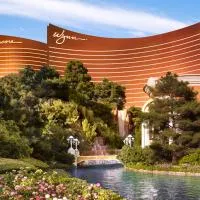
A simple error could have cost James Packer up to US$ 10 billion, as Las Vegas casino operator Wynn cancelled a merger with Crown Resorts because of a “premature disclosure of preliminary discussions”. If the deal had gone through, the Australian magnate, with a 46.1% stake in Crown Resorts, would have walked away with about US$ 2 billion and a 10% stake in Wynn Resorts. The market was a lot happier than Mr Packer – with the Australian casino shares jumping 20% on the news.

The latest “unicorn” to test stock market reaction is Pinterest and, like other similar companies that continue to make losses, fancies its chances by pricing its shares at the top end of market expectations. At US$ 19 per share, the online scrapbook company, which admitted in its flotation documents it may never report income, will see whether investor appetite for such companies has diminished. Uber, another loss-making tech company, expects to see its value top US$ 100 billion in a Q4 IPO, whilst its rival Lyft, which went public last month, has seen its share value drop 22% since then.

To “provide confidence” to passengers over the peak summer travel season, American Airlines is extending the cancellation of its Boeing 737 Max 8 flights until mid-August. Last week, Southwest Airlines made a similar move and United Airlines also cancelled 737 Max 8 flights until June. The on-going investigation is focusing on the plane’s anti-stall software, the Manoeuvring Characteristics Augmentation System (MCAS), whilst Boeing is developing new software for the jet’s anti-stall system.

During Q1, there was a 4.6% decline in the shipments number of global personal computers, to 58.5 million, driven by central processing unit (CPU) supply problems, sluggish consumer demand and political instability in some locations. However, the three world leaders – Lenovo, HP and Dell – did increase their volumes and now account for 22.5%, 21.9% and 17.6% of the total market respectively.

Mark Wintekorn, the former chief executive of VW, has finally been charged with fraud, along with four others for their roles in the diesel emissions scandal. The 71-year old is lucky in that he is unlikely to face the music in the US courts because Germany does not normally extradite their citizens. He is accused of not advising consumers sooner about the manipulation of diesel emissions and also approving a “useless” software update, designed to conceal the true reason for the cars’ higher emission levels. Because of his inaction and apparent fraud, the company has already incurred costs of a massive US$ 28 billion – with more to come.

It seems highly likely that the German economy will see its weakest performance since 2013, with the latest forecast of only a 0.5% expansion this year (compared to a 2.1% projection this time last year). The usual suspects are being rolled out why this is happening – slowing global momentum, Brexit concerns and trade disputes. Such forecasts see the country second only to Italy, as the euro area’s worst performer this year. It nearly fell into recession at the end of last year with Q3 showing a 0.2% contraction followed by zero growth in Q4. (Two successive contractions indicate a technical recession). Although business confidence has improved, the March manufacturing PMI continues to plummet. There are signs that the Merkel administration is investing into infrastructure, education and research at record levels to try and spend itself out of this crisis.

China’s Q1 GDP expanded by 1.4% (6.4% at an annualised rate) driven by yearly rises in both fixed asset investment and retail sales, up on the March year at 6.1% and 8.7% and 0.2% and 0.5% for the month. In a move to boost the economy, the Chinese government continues to announce massive tax cuts and other fee reductions to help struggling companies. If it fails, the private sector will continue to labour unless the new credit policies make a positive impact on consumer spending. Growth has dipped but is still within the target levels, although down on the 6.6% 2018 comparative figure.

Meanwhile, the US$ 250 billion US trade tariffs, introduced in the hope of China slashing state subsidies, continue to hurt the economy (as well as having a negative impact on global trade). Since subsidies and tax breaks are an integral part of China’s industrial policy, it will be interesting to see whether President Xi Jinping will do anything dramatic. Negotiators will focus on other aspects where they think that will give them more chance of success; these include improving access to China’s markets, ending forced technology transfers and improving protection of intellectual property.

The US Commerce Department reported a 3.3% decline in February’s goods and services deficit to US$ 49.4 billion largely due to a 28.2% fall in its goods deficit with China to US$ 30.1 billion; exports rose 21.1% to US$ 9.2 billion and imports fell 3.8% to US$ 39.3 billion. Overall, monthly exports were up 1.0% at US$ 209.7 billion, with imports 0.8% higher at US$ 259.1 billion. Such figures indicate that a 2.0% increase in Q1 GDP is all but inevitable.

In a retaliatory move over the Boeing subsidies, the EU has published a list of goods, including video-game consoles and ketchup, that will total US$ 12 billion on US imports; this is in response to the US threatening a similar amount in tariffs over EU subsidies paid to Airbus. The bloc has already implemented tit-for-tat tariffs of US$ 3.2 billion on American goods in response to Donald Trump’s metal duties imposed last year.

It is obvious that Amazon has not had its own way in China and now plans to downsize its presence in the country by closing its online store. It will mean that in future, Chinese customers will have to buy from Amazon’s global store after 18 July. The company bought Joyo.com, a Chinese books, music and video retailer, for US$ 75 million in 2004 and three years later rebranded the company as Amazon. Now with intense competition from local rivals such as JD.com and Alibaba’s Tmall, Amazon just like Uber and Didi and other US companies finally realise that for China, When The Going Gets Tough, The Tough Get Going.

Posted in Categorized | Tagged | Leave a comment

My Way

My Way                                                                             11 April 2019

March off-plan sales topped 1.8k and were 7.7% higher than a month earlier. This welcome uptick in sales has seen developers, including Sobha – releasing 360 units in its second MBR twin tower project – and Emaar’s Creek Vista to bring forward their launch or new release dates. The realty sector is also getting a boost from China, with forty members of the country’s leading real estate portals, uooulu.com, investing US$ 6 million in fifteen units. More Chinese visits are expected and local agents are gearing up to meet more property investors.

Emaar have unveiled ELIE SAAB at Emaar Beachfront – a tower project comprising 1-3 B/R apartments and some 4 B/R penthouses overlooking the Arabian Sea and The Palm. The Lebanese fashion icon will be responsible for all the project’s design aspects that will focus on the 1930 Art Deco era.

One of Dubai’s leading travel consultancy agencies, Gulf Reps, headed by industry veteran Leo Fewtrell, has formed a partnership with Dubai Tourism in a bid to attract more Gulf holiday visitors; last year, the number of GCC overnight visitors contributed 18% of the total number of Dubai tourists. The arrangement will see Gulf Reps open a GCC representative office, with the main aim of developing relationships with the various parties in the region’s tourism market so as to promote Dubai as the preferred destination of choice.

There was bad news for South African expats living in Dubai with their government indicating it will introduce a tax regime, with the upper limit of 45%, for those earning over US$ 75k (1 million rand) per annum. As from March 2020, the new legislation will take effect for all South Africans who used to escape the taxman if they lived outside the country for more than 183 days.

According to figures released by the Department of Economic Development, over 9.6k jobs were created as it issued 2.5k new licences in March – 35.4% higher than the corresponding month last year.

Embattled Drake & Scull is planning to sell its stake in Abu Dhabi-listed development company, Wahat Al Zawya to Tabarak whose majority shareholder is also the leading shareholder in the Dubai developer. Drake & Scull has had a torrid time and its shares are suspended on the DFM. Despite a 2017 restructuring, that saw 75% of its capital expunged, it has posted several years of heavy losses so that by the end of Q3 last year, it recorded a US$ 134 million deficit and had accumulated losses of US$ 300 million, with liabilities of US$ 109 million.

This week, Bayut acquired its rival portal, Middle East Internet Group’s Lamudi, for an undisclosed sum; the deal will see Bayut taking ownership of all of Lamudi’s GCC assets. In 2012, Lamudi, which became the first real estate portal in Saudi Arabia and started operations in the UAE four years ago, will help boost Bayut’s presence in the kingdom. This deal comes just days after Dubai-based Property Finder announced it will acquire rival platform JRD Group and that it had also increased its stake in Zingat – Turkey’s second largest property portal – to almost 40%.

DXB Entertainments announced that Dubai Parks and Resorts attracted 760k Q1 visitors – a 10.7% drop in numbers compared to 2018. In Q3, it posted a reduced loss of US$ 74 million, as well as restructuring a US$ 1.1 billion bank facility and receiving new funding from its 52.3% shareholder, Meraas Holding. The park will open two new hotels – Rove and Legoland – over the next twelve months which will bring its total rooms to 1.3k.

Emirates NBD has confirmed the sale of 127.5 million ordinary shares from its stake in Network International for US$ 724 million through a secondary listing of its shares on the London Stock Exchange and to MasterCard. It will still retain a 25.5% stake in the company (rather than its previous 51%).

There are reports that the country’s biggest Islamic lender, Dubai Islamic Bank, (of which Investment Corp of Dubai has a 28% stake), could be in the market to buy out Noor Bank PJSC. If a deal did happen – and it is still some way off – the combined financial institution will manage over US$ 75 billion in assets, of which Noor would contribute 18.5% of that total.

Marka is planning to reduce its capital base by cancelling 450k of its 500k shares to make good losses that have occurred since its 2014 DFM debut. The Dubai-based retail and dining operator’s shares had a par value of US$ 0.272 at issue date but sank to just US$ 0.076 before being frozen; this equates to a market value of US$ 37 million.

The bourse opened for trading on Sunday 07 April, at 2776, and having gained 202 points (7.8%) the previous fortnight, gained a further 14 points (0.8%) to close by Thursday, 04 April, on 2790. Emaar Properties, having jumped US$ 0.11 the previous week, closed US$ 0.15 higher at US$ 1.40. Arabtec, flat for the previous five weeks, was US$ 0.01 lower at US$ 0.58. Thursday 11 April saw  trades of 168 million shares, valued at US$ 60 million, compared to a week earlier of 124 million shares at US$ 64 million.

By Thursday, 11 April, Brent, having traded US$ 1.90 higher the previous week, continued its upward trend to close US$ 1.11 (1.6%) higher on US$ 70.83; gold continued its recent weeks of marginal ups and downs, shedding US$ 4 to US$ 1,293.

A strong message has been sent to global mining giants by 2k Zambian villagers who have taken UK-based Vedanta to court for alleged pollution. In a ruling by the UK Supreme Court, the case will be held in the UK because of “the problem of access to justice” in Zambia. The case revolves around allegations by villagers, living near the huge Nchanga Copper mine, that the miner had poisoned their water supply and destroyed farmland. It will not be the first time that mining companies have been involved in similar unethical and anti-social behaviour.

It has taken a long time but Boeing has finally said ‘sorry” for the lives lost in recent accidents in Ethiopia and Indonesia. The plane-maker continues to defend the safety features of its 737 Max model but has promised to undertake changes to eliminate future risk. In both accidents, preliminary findings showed the pilots had followed procedures, but the planes continued to nose-dive despite their attempts to wrestle with the anti-stall system, known as MCAS. The company has seen Q1 net orders fall 44.7% to 95, compared to last year, with none recorded last month, whilst quarterly deliveries dipped 32.6% to just 89, most of which were in January and only 11 in March. In a bid to reduce spending on the 737 and preserve cash, the US company is to cut output by 19% to 42 aircraft a month.

As a direct response to Airbus subsidies, that have stretched some fourteen years, the US is looking to hit the EU with tariffs totalling US$ 11 billion; this comes after the WTO (World Trade Organisation) found that such subsidies have had an adverse impact on the US. It seems that a myriad of goods – including aircraft, cheese, salmon, virgin olive oil and lemons – will be caught in the tariff net. Furthermore, there could be additional import duties levied on listed goods, which include helicopters, undercarriages and fuselages, from four specific countries – France, Germany, Spain and the UK. These charges are in addition to previous levies on the imports of steel and aluminium from the EU.

In a bid to report a lower average emission figure, Fiat Chrysler has teamed up with Tesla tohelp them avoid paying fines for violating new European Union emissions rules which impose an average emissions limit of 95g per km. Under the new regulation, car makers are allowed to pool their models within their own companies to come up with an average emissions figure, and also to form so-called open pools, with other carmakers. Since 2016, Tesla, which has made over US$1 billion selling emissions credits to other manufacturers in the United States, has yet to confirm the deal that could bring it a further US$ 1 billon.

Standard Chartered has been fined US$ 1.1 billion for violating US sanctions against Iran and over inadequate financial crime controls, in relation to various misdeeds dating back to before 2014; the bank had already set aside US$ 900 million to cover these costs. US$ 639 million related to breaching US sanctions on countries, including Cuba, Iran, Myanmar, Sudan and Syria, as well as US$ 132 million for “serious and sustained shortcomings” in its anti-money laundering controls in the UK.

Lei Jun, the founder of Xiaomi, has received a US$ 962 million “award” for his eight years of “devotion” to the company in the way of a stock transfer involving some 636.6 million shares; he has promised to donate the money to “charitable purposes” after tax deductions, The company, which only made US$ 980 million in 2018 profits, is the world’s fourth biggest smartphone maker; although the global handset market dipped 4.1% in 2018, the Beijing-based company saw shipments up 32.2%.

Debenhams has finally rolled over and is now in administration in the hands of its major lenders – Barclays and Bank of Ireland, as well as hedge funds Silver Point and GoldenTree. This comes the same week that Primark opens its biggest ever store, covering 161k sq ft and five floors, in Birmingham. Costing US$ 95 million, it is focussing on the younger market and if it can attract a new generation to ‘bricks and mortar stores’, it could be a lesson to the likes of Debenhams and other failing retail giants in the UK’s high street.

There is another potential pension scandal brewing in the UK, with news that the Regulator has been investigating a potential shortfall in train company pensions. In a warning made to lawyers representing the rail industry trade body, the Rail Delivery Group, it appears that the deficit has increased 56.3% over the past three years to US$ 9.8 billion. Meanwhile, Virgin Trains has been barred from bidding for three franchises which may accelerate its demise. The operator is majority owned by Stagecoach which has blamed the barring on its refusal to shoulder responsibility for unquantified extra pension contributions.

The Australian housing bubble has continued to deflate with forecasts of capital city property prices falling – houses by 7.7% (1.8% in 2018) and apartments by 4.3% – at the same time that February home lending figures show an increase in both owner-occupier and investor borrowing. Melbourne will see the biggest falls as houses and apartments are expected to witness 11.4% and 5.0% declines in value; Sydney’s prices are expected to be in the region of 9.3% and 5.9% lower.

For almost five years, Japan has posted a current account surplus and February proved no exception with a positive US$ 24 billion balance – and a massive 25.5% increase, compared to a year earlier. The main driver behind this was primary income (mainly returns from foreign investments) accounting for US$ 18 billion. Furthermore, and helped by falling energy prices and improving export figures, Japan registered a goods trade surplus of US$ 438 billion. During the month, there were declines in both imports and exports of 6.6% and 1.9% to US$ 56.6 billion and US$ 52.2 billion respectively.

China, with the world’s largest forex reserves, saw a month on month hike in March to US$ 3.1 trillion, as hopes rose for a mutually beneficial trade settlement with the US. Having fallen 5.3% last year, the yuan is rebounding slowly and has gained almost 2% so far this year. The country saw its gold reserves 1.8% lower at US$ 78.5 billion.

Once again, Donald Trump has called for the Fed to cut interest rates and reiterated his confidence that an agreement can be reached with China; he indicated that a deal could be on the cards within a month, although there are still some issues to be cleared. If all goes well, there will be a summit with Chinese President Xi and that it would be “an epic deal” and “the Grand Daddy of them all”.

March saw U.S. consumer prices 0.4% higher – the most since January 2018, – driven by increases in the costs of food, gasoline and rents. However, slowing domestic and global economic growth meant that underlying inflation remained benign at 1.9%, the smallest rise in thirty months. Despite tightening employment conditions in the country, wage growth has been slower than expected.

All is not well in Germany were February manufacturing orders slumped 4.2%, month on month, when analysts were expecting a modest 0.3% increase. There was not one factor behind the decline but both domestic and overseas fell – by 1.6% and 6.0% respectively. There was also a 2.9% fall in demand from the euro area whilst there was a 7.9% slump in bookings from other countries. On an annualised basis, factory orders were off a worryingly high 8.4%, following a 3.6% drop a month earlier in January.

Despite the scaremongering tactics of many “experts”, the UK economy has performed relatively well since the June 2016 referendum. Surprisingly, the IMF expects the UK to perform better than Germany with a forecast 1.2% expansion, compared to just 0.8% for Europe’s leading economy. However, this will see the UK grow at its slowest rate in a decade, whilst wage growth heads in the other direction, rising at its highest pace in a decade. This could be a portent for a BoE rate hike later in the year.

Flummoxing many experts, UK’s economy unexpectedly grew by 0.2% in February, driven by stockpiling ahead of Brexit (whenever that may or may not be); month on month, manufacturing output was up 0.9%. Over the past quarter, whilst exports have dipped 0.4%, (not helped by a slowing global economy), imports have jumped 6.8%. Meanwhile there were 0.1% and 0.4% increases in the services and construction sectors.

Meanwhile, the Brexit farce continues with yet another extension granted by the benevolent EU to 31 October, with the previous deadline falling tomorrow 12 April. With her prime ministership hanging in the balance, May will be gone by May. After thirty months to arrange a formal departure, with abject failure, it seems highly unlikely that she can convince anyone that she can push any sort of deal through. After parliament has repeatedly rejected her withdrawal deal, negotiated with the EU, for Mrs May it is time for the highway not My Way.

Posted in Categorized | Tagged | Leave a comment

Land of Hope and Glory

Land Of Hope And  Glory                                                   04 April 2019

Damac Properties reported a record number of homes handed over last year, with many of the 4.1k total in its Damac Hills community. The developer posted revenues of US$ 1.7 billion, whilst net profits came in at US$ 331 million, with booked sales totalling US$ 1.2 billion.

Last year, Danube Properties sold nearly 1.9k residential units, a 78.5% increase, which the developer estimates to be 10.6% of the total market share of off-plan sales, compared to just 5.0% a year earlier. Over the year, Danube recorded a 19.3% hike in revenue to US$ 266 million. The company continues to be confident in the local realty sector and to date has awarded contracts valued at US$ 436 million, covering twelve projects.

The RTA have extended the Serco contract to operate and maintain the metro transit system for a further two years in a US$ 185 million agreement. The UK company has been with the RTA since the Metro opened and has performed well, with a train service availability of 99.9% and punctuality of 99.8%: last year, there was a record 204 million journeys. Under the new contract, Serco will recruit and train Emirati employees. A recent study has shown that over the first eight years of the rail system to 2016, it had added an estimated US$ 18.0 billion to the economy.

This week sees the hosting of the second annual Future Blockchain Summit, a meeting that will bring together all the sector’s stakeholders from governments, industry and academia. The two-day event will see a global pool of technology visionaries, government bodies, the world’s biggest brands and industry first-movers pushing blockchain forward and championing its adoption on a global scale. It is expected that over 8k interested parties will attend the meeting. Smart Dubai has been working on over twenty citywide blockchain use cases in partnership with the government and private sectors, as it strives to become the world’s first government to execute all applicable transactions using blockchain technology by next year. If this venture succeeds, it will result in savings totalling US$ 1.5 billion and eliminate 100 million annual paper transactions.

The UAE administration is carrying out a joint study with its Saudi neighbours to discuss the “addition of new goods to the selective tax list”. It was only in October 2017 that both governments implemented an excise tax of 100% on tobacco and energy drinks, and a 50% tax on carbonated drinks. The impact of this excise duty has had a detrimental impact for some businesses, with sales of energy drinks plunging by as much as 65%. Whether such companies have taken enough “punishment” remains to be seen but if they have, it is a good bet that the likes of sweets, fast food and crisps could be on the taxman’s menu.

As noted last week, the country’s GDP expanded by 1.7% to US$ 393.0 billion, over the year, driven by growth in oil revenues (because of increased energy prices towards the end of 2018) and a strong performance in non-oil activities. The energy sector, which accounts for 25.9% of GDP, grew an impressive 35.1% over the year. The non-oil sector was 2.9% higher at US$ 307.2 billion, with major contributions from retail/wholesale accounting for 11.2% of GDP, financial services (9.2%), manufacturing (8.9%) and construction (8.3%).

Tristar is interested in a London IPO later this year, as it seeks to raise US$ 250 million. The Dubai liquid logistics provider, co-owned by its chief executive and founder Eugene Mayne, Agility and Kuwait’s Gulf Investment Corporation, has the likes of ADNOC, ENOC, Shell and BP amongst its customers.

Emaar Economic City in Saudi Arabia incurred a net loss after zakat and tax of US$ 37 million last year, compared to a  2017 net profit of US$ 67 million, driven by lower backlogs of residential and industrial projects. `The results were not helped by higher administrative, selling and marketing expenses.

It seems that Network International could be valued as high as US$ 3 billion, based on the pricing range issued ahead of its London IPO. The Dubai payment processor is 49% owned by Emirates NBD, with the balance by Warburg Pincus and General Atlantic. This is a welcome boost for Europe’s lacklustre IPO market, where recent volumes have been at their lowest level since the GFC.

Emirates NBD revised its deal to acquire 99.85% of Denizbank. Although the deal was arranged mid-2018, because of the 17% fall in the Turkish lire, the value of the deal is US$ 2.75 billion instead of the earlier announced US$ 3.2 billion. It is expected that the Turkish bank will contribute up to 15% of Emirates NBD’s 2019 profit. At the end of 2018, the asset value of the combined banks was US$ 173 billion, with the Dubai financial institution accounting for US$ 136 billion.

The bourse opened for trading on Sunday 31 Mar, at 2631, and having gained 57 points (2.1%) the previous fortnight, had an impressive 145 points (5.5%) weekly gain to close by Thursday, 04 April, on 2776. Emaar Properties, having closed US$ 0.03 lower last week, was up US$ 0.11 to close at US$ 1.25, with Arabtec, flat for the previous four weeks, nudged US$ 0.01 higher to US$ 0.59. Thursday 04 April saw increased trades of 124 million shares, valued at US$ 64 million, compared to a week earlier of 208 million shares at US$ 98 million. For Q1, the index was 4.1% to the good at 2635, with corresponding rises for both Emaar and `Arabtec – US$ 0.24 and US$ 0.07 respectively

By Thursday, 04 April, Brent traded US$ 1.90 higher to close on US$ 69.72; gold continued its recent weeks of ups and downs, gaining US$ 2 to US$ 1,297. For Q1, Brent was US$ 14 .30 (28.5%) to the good at US$ 68.10, with the yellow metal US$ 14 higher (1.0%) at US$ 1,298.

Saudi Aramco became the most profitable company in the world when reporting an EBITDA (earnings before interest, tax, amortisation and depreciation) of US$ 224 billion; this figure easily surpasses Apple’s US$ 83 billion surplus. Even though Exxon Mobil pulls in a lot lower profit at US$ 40 billion, it does earn slightly more cash generated per barrel than Aramco which is stifled to some degree by relatively high tax payments; Aramco pays 50% of its profit on income tax, plus a sliding royalty scale that starts at 20% of its revenue.

Another Saudi company in the news this week was Prince Alwaleed bin Talal’s Kingdom Holding that received US$ 333 million from its stake sale in Dubai ride-hailing firm Careem, which was bought out by Uber in a US$ 3.1 billion deal. The investment company will utilise the funds in up to five businesses in Saudi and Europe, with 30% being targeted for technology and potential growth entities and the balance for income-generating, dividend-distributing investments. It has been estimated that it almost doubled its money on its Careem stake.

Tui has warned that the grounding of its 15 Boeing 737 Max planes could cost it up to US$ 340 million; the travel firm was also expecting delivery of a further eight before the end of next month. The tour company has had to use spare planes in its fleet, extend leases that were due to expire and hire in extra planes, many of which may be less fuel efficient and bigger than what is actually required. It seems that the company is not covered for this type of event – no wonder then that its shares fell 8% in Friday’s trading.

easyJet confirmed that it still expects to post a H2 US$ 360 million loss attributable to Brexit jitters and a slowdown in the regional economies. The British low-cost carrier also had concerns about a weakening consumer mood and softer ticket yields across the continent, along with higher fuel prices. Its shares sank 8% on the news, as it expects “the overall environment in Europe to get worse”.

As it tries to cut annual costs further (from US$ 1.0 billion to US$ 1.5 billion), and introduce “significant restructuring”, US-owned Boots has warned of possible closures of some of its 2.5k outlets in the UK. The pharmacy chain, which employs 60k, reported a 2.3% decline in like for like sales and profits 14.3% lower, in a “most difficult quarter”. In February, the pharmacy chain indicated that 350 jobs were at risk in its Nottingham head office, as it planned to reduce costs by 20%.

In a US$ 5.4 billion deal, that will create a technology and security giant employing 80k, French defence electronics group Thales acquired Dutch data security firm Gemalto, a global leader in digital identification and data protection. The deal will result in Thales’s seventh global division being known as Digital Identity and Security focussing on the group’s civil and defence customers. The French government has a 26% stake in Thales and is their biggest single investor.

Months after DSV walked away from a US$ 1.7 billion deal with Switzerland’s Ceva Logistics, it has now acquired Panalpina in a US$ 4.3 billion deal. The price is at a 43% premium, based on the market value on 15 January when the offer was made. The sale will not only boost DSV’s air-cargo volumes and ocean-going sector but also complement the Danish group’s strength in road shipments.

There are growing voices proposing that the UK’s Big Four accountancy firms – Deloitte, EY, KPMG and PwC – should not only be separated into audit and non-audit businesses but should also face a full structural break-up. The four firms carry out 97% of big companies’ audits and at the same time often provide them with other services. The Competition and Markets Authority Chair, Rachel Reeves, said: “For the big firms, audits seem too often to be the route to milking the cash-cow of consultancy business”. There have been concerns about the auditors’ modus operandi on the back of high-profile company collapses such as Carillion and Patisserie Valerie. Not surprisingly the Big 4 seem in agreement to many of the changes recommended and that “trust in audit is in urgent need of repair”. No need to watch this space because nothing major will change.

There is something wrong with the financial world when three world bodies have different opinions on global growth prospects over the coming two years.

The WTO reported that Q4 world trade fell by 0.3% but expanded by 3.0% last year. This year, growth is expected to come in lower at 2.6% and well a below a previous 3.7% forecast. The usual suspects were cited by the world body – new tariffs, slower economic growth, volatility in financial markets and tighter monetary conditions in developed countries. Whilst uncertainty is around the economic environment, trade will always suffer.

Meanwhile the World Bank expects annual MENA growth for this year and next to be 1.5% and 3.4% on the back of a weaker global economy and financial-market volatility. The 2020 improvement is expected to come about because of “ongoing policy reforms to diversify the economy and strengthen the business environment”. However, despite this recovery its long-standing low growth in per-capita GDP will be flat.

Three months on from its January forecast, the IMF has indicated that the global growth has lost momentum since the start of the year, leaving the world economy in a “precarious” position; however, the IMF chief, Christine Lagarde does not expect an immediate recession.  Next week, it will issue its new World Economic Outlook and it will be inevitable that the 3.5% global growth forecast made in January will be downgraded, although there could be an upturn by the end of this year.

At last, Malaysia’s ex-Prime Minister Najib Razak has gone on trial for his role in a financial scandal involving the country’s sovereign wealth fund 1MDB. He faces an initial seven charges, including pocketing US$ 681 million from the fund, out of a total of 42. The government has also filed criminal charges against Goldman Sachs for defrauding investors by raising money for 1MDB – a fund that was supposedly meant to boost Malaysia’s economy through strategic investments. However, some of the money was apparently used to fund lavish lifestyles, a Hollywood film and a super-yacht.

After being arrested last November and then released on US$ 9 million bail in March, disgraced former Nissan chief Carlos Ghosn has been re-arrested in Tokyo. Initially, he was charged with underreporting his pay package the five years to 2015 but a new case implicates him in suspicious payments to a dealership in Oman.

Two former Barclays swaps traders, convicted of manipulating a benchmark interest rate, were sentenced to as much as five years in prison by a London judge who warned those still working in the finance industry that misdeeds would bring jail time. The charges against the two men were in relation to manipulation of the Euro interbank offered rate, which is related to trillions of dollars’ worth of loans and derivatives. According to the judge, Michael Gledhill, the way the Euribor rate was calculated “was an open door for those involved in the conspiracy to manipulate, or attempt to manipulate, the Euribor rate for the advantage of their own bank’s trading positions.”

Latest figures indicate that global e-commerce sales surged 13.0% to US$ 29 trillion, driven by a 12.0% hike in online shoppers to a total of 1.3 billion. The US led the way, as the number of internet users buying goods online from abroad grew to 21.0%, as their cross-border business-to-consumer sales expanded 4.0% to US$ 412 billion, equating to 11% of total sales in this segment. The three largest markets were US (US$ 9.0 trillion), Japan (US$ 3.2 billion) and China (US$ 1.9 trillion). It seems strange and rather ironic that these figures issued by the United Nations Conference on Trade and Development are for 2017 – a little out of date!

According to the UK’s trade body, Ukie, the country’s gaming market is worth US$ 7.5 billion on the back of the very successful releases of games such as Fortnite and Player Unknown’s Battleground that only came out last year. Of that total, US$ 5.3 billion is spent on software, with a further US$ 2.1 billion on hardware; the remaining balance is from “game culture” which includes toys, merchandise and books.  The software can be further broken down into four segments – digital/online, mobile games, boxed software and pre-owned – accounting for 50.1%, 29.1%, 19.1% and 1.7% of the US$ 5.3 billion total. The sector is now worth more than the movies and music segments combined.

Latest figures from Saudi Arabia show that the Q4 unemployment rate has dropped 0.1% to 12.7%; the unemployment rate men stood at 6.6%, compared to 32.5% among Saudi women. There were 3.1 million males in employment, with a further 1.0 million actively seeking employment.

The country’s budget deficit is a little over US$ 150 billion which will rise to US$ 181 billion by the end of 2019, equating to 21.7% of GDP; 46% of the total debt is in US dollars. The further issue of US$ 31 billion this year will be used to help finance the national budget deficit.

It is a good time to go Turkey for a holiday as its lira sank 5% in just one day, and over last week the stock market shed 10% of its value. After several years of noticeable growth, the economy has done a complete turnaround and is now experiencing a recession, accompanied by high inflation at over 20%.

There is no doubt that its President Recep Tayyip Erdogan led the country through fifteen years of almost continuous growth of an 5.6% average (excluding just one year, 2009). Having doubled in size over that period, the economy has had two quarters of contraction, the unemployment rate stands at an unwieldy 13.5% (4.3 million). Things are bound to get better later in the year but do not expect much annual growth of over 2%.

President Abdel Fattah al-Sisi’s government has increased Egypt’s minimum wage level by 66.7% to US$ 116 a month, whilst pensions will rise by 15% to US$ 52, with immediate effect. Consumer spending has been impacted by recent government measures including the introduction of VAT, cutting energy subsidies and devaluing the currency that has left many of the 100 million population in dire straits.

Everybody’s favourite, Jean-Claude Juncker is now not happy with Italy wanting Giuseppe Conte’s populist government to do more to boost their flagging economy – some hope. The EC President’s warning came a day after the OECD highlighted Italy’s urgent need to take control of the fiscal situation and reduce its worryingly high public debt. Now in recession, the country’s output has never returned to its 2007 high.

The man who got all his post Brexit referendum forecasts wrong is again in the headlines warning that the risk of the country stumbling into a “disorderly” no-deal Brexit is now “alarmingly high”. Mark Carney, the Bank of England governor, is no stranger to controversy and some may see his latest remarks as once again pro-Remain political intervention.

There are signs that the Chinese economy may have turned the corner after following recent government intervention that has seen five cuts in bank reserve requirements over the past year along with other fiscal and monetary stimulus measures. China’s Caixin/Markit Manufacturing PMI moved back into positive territory recording a reading of 50.8, following the previous month’s 49.9.

US Commerce Department figures show that January business inventories rose at a quicker rate than expected, when climbing 0.8% – the same level as a month earlier and higher than the 0.5% market expectation. There were also increases in wholesale, retail and manufacturing invoices – up by 1.2%, 0.8% and 0.5% respectively. January sales saw increases for business (0.3%), retail (0.8%) and wholesale (0.5%), whilst manufacturing sales dipped 0.4% over the month.

Manufacturing improved in March with the ISM PMI 1.1 higher at 55.3, driven by gains in new orders (up 1.9 to 57.4) and employment with an impressive 5.2 hike to 57.5.

Construction spending came in 1.0% higher at an annualised rate of US$ 1.32 trillion, with the market expecting a slight downturn. There were increases in four construction segments – “public”, up 3.6% to US$ 325.8 trillion, highway – up 9.5% to US$ 111.1 billion, educational, 0.8% up at US$ 325.8 billion and private up 0.2% at US$ 994.5 billion.

With Brexit turmoil showing no indication of going away, the latest Markit’s services PMI showed that the country’s huge services sector shrank for the first time since mid-2016, with export demand noticeably weaker. In March, the reading of 48.9 (any number under 50 indicates contraction) was 2.4 lower than the 51.3 recorded in February. The construction sector is also decline, whilst manufacturing, with a 50.0 reading, would have been lower if not for stockpiling.

It is surprising to read that there are now 2.9 million UK children living in poverty after housing has been paid, with mortgages and rents continuing to spiral north. 70% of the total were in working families, compared to 67% a year earlier and more worryingly, 53% of children were under the age of five. Just like previous governments, this one has said that tackling poverty was its priority.

Two million UK workers on minimum wages are now receiving a pay rise (which may not be enough as other costs are rising), ranging from 4.9% to US$ 10.26 for 25-year-olds and over to a 3.6% rise for 16-17 year olds to US$ 5.50. Women represent an estimated 60% of those who are benefitting. It is estimated by the Living Wage Foundation that the wage level needed to “meet the costs of living” is US$ 13.75 (in London) and US$ 11.70 elsewhere. However, minimum wages in the UK are among the highest in the western world and of late pay rises are coming in at a higher pace than inflation resulting in a slight increase in consumer spend.

It seems an anomaly that the UK manufacturing sector was one of the few in the world that headed north this month, to a 13-month high, whilst the likes of France, Germany, Japan, Malaysia, South Korea and Taiwan went in the other direction; indeed, eurozone manufacturers posted one of their worst monthly figures since 2013. These returns seem to confirm that a global slowdown is on the cards.

Equally worrying for the eurozone was March’s PMI declining for the eighth straight month to a six year low of 47.5, down 1.8 month on month. With backlogs of work being run down at their fastest pace since late 2012 and new orders falling at their fastest rate in over six years, allied with the fact that both German and French manufacturing are in recession, there is no doubt that the bloc faces a turbulent period.

As Dubai’s winter comes to an end, summer is on the horizon and the same could be said of the local economy. Despite so much negativity in the air, there are signs that it may be picking up. Careem’s US$ 3.1 billion acquisition by Uber, Network’s US$ 3.0 billion IPO valuation, Emirates NBD’s US$ 2.8 billion purchase of Turkey’s Denizbank, Brent reaching the important US$ 70 threshold and the DFM up by over 10% this year are all portents that the worse may be over. Just weeks after Dubai Opera hosted the Proms, maybe it is time for the emirate to  become  yet again The Land of Hope and Glory!

Posted in Categorized | Leave a comment

For Whom The Bell Tolls

Picture inside the House of Commons of Theresa May

For Whom The Bell Tolls                                                  28 March 2019

According to the UAE real estate portal Property Finder, 55% of the emirate’s realty sales, for the first two months of the year, were for off-plan homes, with the balance in the secondary market comprising the balance, equating to 2.5k transactions. Compared to last year for the same period, off-plan sales were 7.8% off and the secondary market witnessed a drop of only 1.4%.

The latest Cavendish Maxwell report just confirms what most already knew – that Dubai average house prices continue to decline, sinking to US$ 710k, (equivalent to a 10.6% twelve month fall and 4.5% lower, quarter on quarter). The average price of a villa is currently US$ 1.25 million and an apartment US$ 490k. Although still relatively high, the rate of off-plan apartment sales was 24% lower than at the same time in 2018, whilst the volume of villa/townhouse transfers nearly doubled.

Despite the apparent dismal state of the local real estate market, Emaar announced that revenue from its villa sales last year was 90% higher, year on year, at US$ 2.13 billion. The news comes at a time when estimates indicate that home prices and rents have slumped by up to 33% since its 2014 peak. The fall was reflected in the fact that there was a 39% 2018 decline in the Real Estate & Construction Index on Dubai’s stock market.

Pantheon Development has started work on its second Dubai project in Jumeirah Village Circle, the US $49 million Pantheon Elysee with 268 residential units and retail outlets; the first – Pantheon Boulevard – has already been successfully launched at District 13, also in JVC. With structural work already 12% complete, completion is slated for Q4 2020. CJTech Contractors is the main contractor, whilst Al Khawajah Engineering Consultants is the project consultant.

Sobha Realty has launched its twin-tower residential development Creek Vistas at Sobha Hartland in MBR City. The twin-tower building, the second of its projects in that location, is part of a development covering eighty million sq ft and follows a sell-out of the first one. The 28-floor towers will house 390 1-2 B/R apartments, with prices starting at US$ 223k, and should be completed by Q3 2021.

Omniyat has secured a US$ 41 million financing package from Mashreq Bank for the fit-out of The Opus by Zaha Hadid in Downtown Dubai. As well as having over 56k sq mt of office space, a club and several restaurants, the twin tower building will house the lifestyle hotel brand ME by Meliá, due to open by the end of the year.

Dubai Airport Freezone Authority’s foreign trade volume climbed 62% last year to US$ 39.8 billion (up 78% from 2017) that saw profit at US$ 5.7 billion. The top three countries were India, China and Switzerland – with totals of US$ 6.6 billion, US$ 6.5 billion and US$ 6.3 billion respectively. In a move to enhance its role in Dubai trade, DAFZA plans to spend US$ 212 million in expansion plans this year.

With a US$ 9 million investment, dnata has opened a cargo centre at Brussels Airport in a 14k sq mt facility that will increase its annual capacity to 125k tonnes in the three Benelux countries; Singapore Airlines will be the Emirates-owned company’s first customer in the new location. It already provides services to 25 cargo and eight passenger airlines at Amsterdam’s Schiphol Airport. dnata now provides ground handling and cargo services at 88 airports in 14 countries, handling over 1.9k flights and moving more than 9k tonnes of cargo a day.

Following a freeze on school fees last year, the Dubai Executive Council has announced that 90% of schools (those that that maintained their KHDA ranking) will have a 2.07% fees cap for the school year 2019-2020. The new School Fees Framework will not permit private profitable schools, that are experiencing a decline in the quality of education, to increase their fees.

Fuel prices will be up to 9.9% higher on Monday, as April sees Special 95 increase by US$ 0.052 to US$ 0.575, with diesel up US$ 0.022 to US$ 0.678.

The RTA is to spend US$ 161 million to expand the smart traffic system in the emirate – work is already 23% complete. The aim of the exercise is to expand the Dubai road by increasing smart systems from 11% to 60%, with the aim of detecting accidents and congestion on roads a lot quicker. A new control centre is being built that will enhance traffic movement by new measures such as variable messaging signs and smart apps. Money will also be spent on a further 112 signs to provide immediate information to drivers about road conditions, as well as data capturing systems including 116 cameras, 100 radar detection systems, 114 Bluetooth devices, and 17 weather information systems.

Latest figures indicate the UAE government posted a US$ 18.4 billion surplus in 2018 as revenue reached US$ 124.1 billion, with expenditure coming in lower at US$ 105.7 billion. Oil price improvements in the latter half of the year, along with ongoing fiscal reforms, were the main drivers behind the revenue improvement.

Last year, Dubai’s economy grew 1.94%, (2.8% in 2017), driven by growth in trade and government investments in infrastructure; trade activities were 1.3% higher – contributing 18.1% of the emirate’s total economy, equating to US$ 108.5 billion. Surprisingly, the real estate sector expanded by 7% and accounted for nearly a quarter of the total growth.

In January, the emirate approved its 2019 budget, with higher revenue targets and setting expenditure at US$ 15.5 billion, a slight rise from a year earlier. The budget also included US$ 2.5 billion for infrastructure projects ahead of Expo 2020.

Dubai-based Network International has signed an agreement with MasterCard, for the US financial services firm to invest US$ 300 million in the upcoming London IPO. The deal will also see both firms enter a ‘strategic partnership’ to support the development of electronic payments in the MENA and establish shared development products.

There were 275 happy Dubai employees this week on news that Uber had acquired the local ride hailing firm Careem in a massive US$ 3.1 billion deal. All became dirham millionaires (US$ 272k) by virtue of shares they owned; there are at least 400 staff, with share options which will be bought as part of the deal. Careem drivers, being not directly employed by the company, will unfortunately miss out. This is by far out the biggest tech deal in the ME, easily surpassing Amazon’s US$ 580 million acquisition of Souq.com in 2017.

There was another very happy person, HH Sheikh Mohammed bin Rashid Al Maktoum, who started the ball rolling some twenty years ago. He said “in 1999, many people questioned our idea to establish Dubai Internet City in the desert. Two years ago, Amazon acquired the multi-billion-dirham Souq.com and today, Uber acquired Careem for AED11 billion. These giant companies flourished from the ‘desert’ of Dubai.”

Shuaa Capital’s share value skyrocketed the maximum allowed (15%) early in the week on the news of a possible merger with its biggest shareholder, Abu Dhabi Financial Group. The Abu Dhabi entity, an alternative investment company with more than US$ 20 billion in assets under management, acquired a 48.36% stake in the Dubai investment bank in 2016.

Amanat Holdings has approved a US$ 10 million dividend for 2018 and also approved a 10% share back of its shares, subject to regulatory approval. To date, the GCC’s largest healthcare and education investment company has deployed 79% of its US$ 681 million share capital and is in the market to acquire further complementary opportunities in selected markets.

The bourse opened for trading on Sunday 24 Mar, at 2629, and having gained 55 points (2.1%) the previous week ended just 2 points higher by Thursday, 28 March, on 2631. Emaar Properties, having closed US$ 0.03 higher last week shed US$ 0.03 to close at US$ 1.25, with Arabtec flat for the fourth straight week at US$ 0.58. Thursday 28 March saw increased trades of 124 million shares, valued at US$ 64 million, compared to a week earlier of 95 million shares at US$ 41 million.

By Thursday, 28 March, Brent traded US$ 0.04 lower to close on US$ 67.82; gold continued its recent weeks of ups and downs, shedding US$ 12 (0.9%) to US$ 1,295.

Aramco has acquired 70% of petrochemicals behemoth Sabic from the Public Investment Fund of Saudi Arabia in a US$ 69.1 billion deal. Sabic, with 34k employees and operations in over fifty countries, posted annual revenue in excess of US$ 45 billion (with a production volume of 75 million tonnes) and a US$ 5.7 billion bottom line. This will allow PIF extra funds to expand into other areas and diversify its revenue streams further. It will also offer Aramco opportunities of quicker growth to transform its downstream growth strategy of integrated refining and petrochemicals.

Miami Nikki Beach Hotels & Resorts hopes to double its portfolio of hotels and resorts by 2022, from its current four resorts and 13 beach clubs worldwide, including one in the emirate, the Nikki Beach Resort & Spa Dubai opened in 2017,

Eight years after HP acquired Autonomy in a US$ 11 billion deal, UK’s biggest ever fraud trial has finally started. The US conglomerate is claiming that the UK software firm’s founder Mike Lynch and chief financial officer Sushovan Hussain inflated the value of Autonomy in the three years prior to the sale. The other side of the argument is that HP is using this as an excuse to blame the two for its mismanagement. Mike Lynch is also facing seventeen charges in the US.

UK’s National Cyber Security Centre has indicated that it can provide “only limited assurance that the long-term security risks can be managed in the Huawei equipment currently deployed in the UK”. The Chinese company, which supplies telecoms companies operating in the UK, has failed to address previously identified problems, continuing with poor practices that could create vulnerabilities that in turn pose security risks. The critical report comes weeks before the government decides whether to allow the company to build next generation 5G networks in the UK.

In the week Uber acquired Dubai-based Careem for a mouth-watering US$ 3.1 billion, Lyft has priced itself at US$ 24.3 billion ahead of its Friday IPO on Nasdaq. The seven-year old US ride-hailing firm expects strong consumer demand, even though it has yet to turn in a profit; last year it doubled its revenue to US$ 2.2 billion but losses increased 32.4% to US$ 911 million. These figures could be a good omen for Uber that expects to go public next year. Has Uber, that could debut at US$ 120 billion, left their stock market entry too late?

The Icelandic Wow Air ended immediate closure of all operations, after failing to reach agreement with investors, and advised passengers to check for available flights with other airlines. Earlier the seven-year old budget carrier indicated that it was in the “final stages” of raising new equity from a group of investors in a US$ 160 million turnaround plan. Last year, it carried 3.5 million passengers.

January IATA figures point to the ME having the weakest passenger demand growth in the world, with demand only 1.5% higher, year on year, compared to the 6.5% global average; at the same time, capacity climbed 3.2% and load factor dipped 1.3% to 75.6%, (with global figures of 6.4% and 0.1% higher at 79.6% respectively).

It seems that US regulators are close to approving a proposed fix that could get the Boeing 737 Max jets flying again after all had been grounded following two major crashes involving Lion Air and Ethiopian Airlines. The US plane maker has asked airline owners of its 737 Max jet to submit orders for a free update of anti-stall software being readied for deployment; the upgrade may take less than an hour to implement for each aircraft.

In a massive US$ 34 billion deal – and a slap in the face for Boeing – Airbus has secured a Chinese order for 300 jets, comprising 290 A320 and ten A350 XWB aircraft. The deal was signed in Paris by the Chinese president Xi on the second stage of his European tour. His first stop was Italy where it became the, in a US$ 2.5 billion deal.

To reduce the negative impact of the global economic slowdown, China is to introduce lower tariffs and expedite debt sales, as well as negotiating with the US about tariffs. The government also plans to cut import taxes and bring in measures to forbid forced technology transfers. The Finance Minister Liu Kun will also speed up bond sales with the aim of boosting domestic consumption.

To date, the US has already slapped tariffs of US$ 250 billion on Chinese goods, with the threat of a further US$ 267 billion if the talks fail; to date, China has retaliated with duties on US$ 110 billion on US products.

There was an unexpected March fall in US consumer confidence with the Conference Board’s index dropping 7.0 to 124.1, with the market expecting a rise to 133.0. Specific one-off reasons for this decline appear to be volatility in global markets, a partial government shutdown and a very weak February jobs report. However, it does appear that consumers continue to be confident that the economy will expand in the coming months – but at a slower rate.

Global trade has taken a sharp turn down, reinforcing the view that the world economy is in its worst state since the financial crisis a decade ago. Latest quarterly figures to January indicate that trade slumped 1.8% compared to the previous period. There is no doubt that the IMF are right to assume “growing risks and uncertainties” and is in line with Chicago Federal Reserve’s assertion that the “risks from the downside scenarios loom larger than those from the upside ones.”

Australians were a little poorer by the end of 2018 with latest figures showing that households’ wealth had shed a decade-high 2.1% of US$ 177 billion in Q4 on the back of falls in both values of properties (US$ 121 billion) and shares (US$ 100 billion). In Q4, the ASX slumped 10% in value whilst the quarterly house price index lost 2.4%; household wealth per capita also fell 2.5% to US$ 287k. More worrying is the level of household debt as a percentage of household income now standing at a new high of 200%.

These statistics just reflect the main problem facing the global economy – debt. If nothing is done about the level of debt incurred by nations, big and small companies and households, the economic environment will just continue to tail spin out of control with dire consequences. If you think 2018 was bad and that 2019 will not be much better, wait until 2020 before a global economic implosion.

A slow but gradual pick-up in wages, along with weakening inflation figures, have apparently not done much to help the UK High street. UK March retail sales have fallen by their highest in seventeen months, indicating shoppers’ concern and consumer confidence impacted by escalating uncertainty over both Brexit and local and international economies.

Tomorrow, the supposed date of Brexit, the UK Prime Minister faces inevitable defeat for the third time which will plunge the UK into an even deeper crisis. If that were to happen, the country will either crash out of Europe without a deal on the new deadline of 12 April or face a lengthy delay to Brexit. Earlier in the week, the shambolic British parliament could not agree on eight alternatives put before them, although a plan for the UK to remain in a EU customs union with EU fell short by only six votes. Tomorrow will be the day that it will be Theresa May For Whom The Bell Tolls.

Posted in Categorized | Tagged , , , , , , , , , , , | Leave a comment

Land Of Make Believe

Land of Make Believe                                                 21 Mar 2019

Photo

Work is ahead of schedule on phase 1 of the US$ 820 million Mirdif Hills project, according to ECC Group who indicated that 70% of construction has been completed on Janayen Avenue and Nasayem Avenue, and 40% on Al Multaqa Avenue. The project, the only freehold development currently in Mirdif, comprises mixed-use, residential, commercial, and retail, and will include a four-star Millennium hotel – with 116 rooms and 128 serviced apartments – and a 230-bed hospital.

sbe is to develop the first SLS property in the Middle East – the SLS Dubai Hotel & Residences in Downtown which is already 60% complete. The 75-floor tower will house 254 hotel rooms, 371 residential units and 321 hotel apartments and will open in Q3 next year. The New York-based hospitality group is developing the property in partnership with World of Wonders Real Estate Development.

VPS Healthcare will open three speciality hospitals in the UAE this year, including one in Dubai, and a further one in Bahrain. The group, with specialties including oncology and maternity, has twenty operational hospitals and 125 medical centres located in the Middle East, Europe and India.

DP World Constanta has renewed its contract with the Romanian port for a further thirty years to 2049. The subsidiary of DP World has operated there since 2004 and the capacity of its terminal stands at one million TEUs; it serves not only the Romanian domestic market but also much of Central Europe with feeder connections to the Ukraine, Russia, Bulgaria, Georgia and Moldova.

This year, the Ministry of Human Resources and Emiratisation is aiming to create 30k private sector jobs for Emiratis, as it launches its National Policy for Employment. A similar initiative launched last year helped accelerate the ministry provide 20.2k (195%) more job opportunities.

The Telecommunications Regulatory Authority has announced new regulations covering early termination charges of service contracts. In future, telecoms will only be able to levy one-month rent multiplied by the number of the contract’s remaining months. Initially, the new rule will only apply to new contracts, with other services’ contracts being applied later. This is a major improvement on the former regime that saw customers having to use the service until the end of the contract – and pay for a service that was not being used.

Four listed companies declared dividends this week. Etisalat proposed a US$ 0.218 dividend – the same as the previous year – having posted a healthy US$ 2.3 billion profit in 2018. Emaar Properties will pay a 15% cash dividend, equating to US$ 292 million – lower than last year and lower than market expectations. However, the move is logical when one considers that the developer has a US$ 6.6 billion capex budget to finance in the coming years. Other related companies – Emaar Malls and Emaar Development – came in with dividend payments of US$ 354 million and US$ 283 million.

The bourse opened for trading on Sunday 17 Mar, at 2574, and having shed 62 points (2.4%) the previous fortnight ended 55 points (2.1%) higher by Thursday, 21 March, on 2629. Emaar Properties, regained most of the previous week’s loss, closing US$ 0.03 higher at US$ 1.28 with Arabtec flat for a second straight week at US$ 0.58. Thursday 21 March saw decreased trades of 95 million shares, valued at US$ 41 million, compared to a week earlier of 342 million shares at US$ 133 million. Monday was a very active day on the bourse because of the government’s decision to consolidate debts that its citizens owed it; US$ 98 million worth of shares were traded, compared to just US$ 22 million the day before.

By Thursday, 21 March, Brent traded US$ 0.63 (0.9%) higher to close on US$ 67.86; gold also moved higher by US$ 12 (0.9%) up at US$ 1,307.

It seems that Garuda will be the first airline to scrap orders with Boeing following the two crashes of its 737 Max 8 jets. The Indonesian carrier, with a 48-plane order, has said that passengers had “lost trust” in the plane. It now seems highly likely that the two crashes were related and that a new automated system in Boeing’s aircraft – intended to stop stalling by dipping the nose – could be involved with pilots unable to override it.

Talks between EasyJet and a consortiumof Ferrovie dello Stato Italiane and Delta Air Lines to bid for troubled Alitalia have fallen through. However, Delta remains in discussions with Ferrovie but any bid for the airline, placed under administration in May 2017 and subsequently propped up by the Italian government, will have to be concluded by the end of the month.

The 166-year old Levi Strauss returned to Wall Street with a bang, as shares opened 31.8% higher at the bell on their first day of trading, valuing the company at US$ 8.7 billion. It has a 5% of the global market in jeans and will use some of the money raised by the flotation to broaden their clothing range and expand into more countries.

This week saw the biggest ever deal in the booming international payments sector when Fidelity National Information Services bought Worldpay for about $34 billion in cash and stock. When the latter’s debt is brought into play, the value moves up to US$ 43 billion. Fidelity will own 53% of the new entity, with the balance take up by the acquired company’s shareholders. Interestingly, the payment processing firm used to be owned by Royal Bank of Scotland which had to sell it as a condition of the bank’s financial crisis bailout. Someone must have egg on their cheek this week when the value of RBS only stands at US$ 42 billion!

As expected Google has been hit with a US$ 1.7 billion fine by the EU for antitrust activities – the third time that the European body has levied such high penalties on the Silicon Valley tech giant. It was alleged that Google “abused its dominance to stop websites using brokers other than the AdSense platform”; this resulted in Google rivals being unable to place their ads on these sites.

A jury in San Francisco has found that pharmaceutical group Bayer’s weed killer Roundup was carcinogenic and contributed to causing non-Hodgkin’s lymphoma in California resident Edwin Hardeman. The German pharmaceutical group, which acquired the product as part of its US$ 66 billion buy-out of US rival Monsanto, has rejected all claims. This is only the second of 11.2k cases against the company; the first one resulted in another Californian being awarded US$ 289 million, later reduced to US$ 78 million and is on appeal.

The future of India’s Jet Airways is in jeopardy despite the Modi administration and lenders making every effort to keep the airline flying. The carrier, which is 25% owned by Abu Dhabi’s Etihad and its largest shareholder, has racked up more than US$ 1 billion in debts; now the government is urging state banks to rescue Jet without pushing it into bankruptcy. To the outsider, this seems to be a political – rather than an economic – move, just weeks ahead of a general election and the possibility of job losses running into many thousands.

There was further bad news for the UK’s high street this week. Next announced that its stores’ sales fell nearly 8% to US$ 2.6 billion (and profit by 20.0%), as its on-line sales headed the other way – up 14.7% to US$ 2.5 billion, with profit 14.0% to the good. Interestingly, Next was also one of the UK entities that has not blamed Brexit for any of its demise.

Meanwhile, Kingfisher, owner of B&Q and Screwfix, posted a 13% slump in 2018 profits to US$ 915 million, with Castorama, its French chain, dragging down sales; like for like sales were 1.6% lower. It is set to close all nineteen Screwfix outlets in Germany and fifteen of its other stores across the group. The market has not been happy with the reign of Veronique Laury, as its shares have fallen over 27% in the past year; her departure this week leaves only five female chief executives in the FTSE 100.

Former Staples stationery chain, Office Outlet, has been placed into administration, putting 1.2k jobs at risk. The retailer, with ninety UK outlets, used to be part of the Staples group until it was hived off to Hilco Capital in 2016 before being sold again through a management buyout last September. Like other UK retailers, the company has been operating in a hostile environment of weak consumer spending, new minimum wage rules, higher business rates and on-line shopping.

There has been a major strategy move made by M&S which is planning a shift towards selling more food at its stores. The retailer sells 6.5k different food items but only twelve of its stores currently carry the whole range. Consequently, it is planning to convert more space in existing outlets for food sales, with new stores better designed to cater for the “food shopper”; it aims to increase the average US$ 17 spend on each shop. 

JD Sports, which currently owns 18.7% of Footasylum, has made a US$ 118 million cash offer to purchase the clothing and shoe retailer; this figure is 77% higher than its current market value. Following a profit warning last September, its share value had tumbled by more than 50%. There is synergy between the two companies, with JD Sports appealing to a younger market than Footasylum which has a focus on adults aged 16-24. Interestingly, Footasylum, which was founded in 2005 by David Makin, one of the two co-founders of JD Sports, is run by his daughter, Clare Nesbitt; in 2008, John Wardle, the other co-founder of JD Sports, joined Footasylum and was chief executive for seven years, before becoming executive chairman in 2015.

No surprise to see Bonmarche’s shares plunge 30% on the back of its third profits warning in six months, announcing “significantly weaker” trading in recent weeks. Initially anticipating a US$ 5.3 million loss by the end of March, the revised forecast is a lot worse – up to a possible US$ 7.9 million deficit. The cut-price womenswear chain blames trading conditions being “significantly worse even than during the recession of 2008-9”.

One on-online trader that is suffering somewhat is ASOS noting that US sales had been hit by teething problems at a new Atlanta warehouse and that it is facing “challenging” conditions in France and Germany. On the news, its share value dipped 11%. Although quarterly revenue was 11.0% higher at US$ 869 million, with the UK 14.0% higher, figures were dragged lower by the EU countries (8.0% higher) and the US where a 3.0% fall was posted.

To save his brother from incarceration, India’s richest man, Muktesh Ambani, worth an estimated US$ 54 billion, has settled a US$ 80 million debt payment owed to Ericsson by his brother, Anil. The two of them have been in an acrimonious relationship following a dispute, fighting over their father’s businesses after he died in 2002 without a will. After a seven-moth feud, the father’s Reliance empire was divided between the two of them – Reliance Industries to Mukesh and Reliance Communications to Anil, whose net worth is about US$ 50 million. In thanking his brother for his largesse, he said that he had “demonstrated the importance of staying true to our strong family values by extending this timely support”.

With the apparent approval of the German government, the country’s two biggest lenders, Deutsche Bank and Commerzbank, began merger talks; the government still owns a 15.5% stake in the latter acquired following the GFC. If the deal goes through, the new entity would control 20% of Germany’s banking business and manage over US$ 21.0 trillion of assets.

Some US economists estimate that Donald Trump’s recent economic activities has cost the country’s GDP US$ 7.8 billion (0.4%) in 2018, estimating that both exports and imports fell – by 11.0% and 31.5% respectively. The higher costs of imports resulted in annual consumer and producer losses of US$ 68.8 billion but this was offset after accounting for higher tariff revenue and gains to domestic producers from higher prices.

Australia’s February unemployment rate dropped slightly to 4.9%, down from 5.0% a month earlier; this is the first time since 2011 that this rate has dipped below the 5.0% mark. Over the month only 4.6k jobs were added, while the participation rate fell 0.1% to 65.6%. In a related story, Prime Minister Scott Morrison announced that the government would lower the annual permanent migration intake by 15% to 160k. One thing the lucky country needs is a population growth, one factor that has led to Australia not experiencing a recession in the past twenty-five years. Late last year, it did seem that the country could fall into a downturn, but it appears that a combination of higher than average tax receipts and surging iron ore prices prevented such a slowdown.

On the back of Brexit, the British Chambers of Commerce estimate that UK companies will cut investment this year by the most in a decade. Weaker investment normally results in lower productivity that then impacts on slowing wage rises which in turn sees sluggish consumer spending. Last year, business investment fell in each of the four calendar quarters. However, once the Brexit decision has been made, one way or the other, there could be a quicker investment rebound.

With no other option available to them, the EU has pushed back the Brexit date until 22 May if the prime minister can convince the British parliament to accept the existing Brexit deal – if not, the country would face a disorderly exit from the European Union on 12 April. Despite parliament voting twice against the current withdrawal agreement, she is going to try for the third time to change MPs’ minds next week. It is too late for Theresa May to worry about history and the Ides of March.  Surely the good lady, who voted Remain prior to the referendum, should consider her position particularly now she seems to be living In The Land Of Make Believe.

Posted in Categorized | Tagged | Leave a comment

Throwing It All Away

Throwing it All Away                                                          

Because of the slowing construction and realty sectors, Moody’s expects that bank loan losses will inevitably grow, based on the fact that lending to real estate entities has increased to 20% of their total lending book (compared to 16% in 2015) but economic conditions have deteriorated. Because of falling demand and increased supply, Reidin have come out with some frightening data that Dubai prices are 23% lower since 2018. With the influx of lower paid workers entering Dubai, and employers reluctant to boost staff numbers, there are fears that the bottom of the market has still not been reached. However, it did estimate that Q4 annualised sales were 8.4%, up from the 7.3% recorded in Q3 – this comes as S&P forecasts a 5%-10% decline this year, due to oversupply and tepid demand; this follows a 25%-33% decline in the Dubai property sector since 2014.

However, a lot could (and will) change when the 25%-30% home buyer deposit is relaxed, and energy prices hover around US$ 70. More tinkering, such as cutting the 4% transfer fee and facilitating visa requirements, will further help the cause.

Emaar, the world’s largest property company outside China, will become one of the first in the world to offer its customers (and partners) referral and loyalty tokens that will give them access to an existing US$ 10 billion operational ecosystem. The plans to leverage blockchain technology, based on the Ethereum blockchain and the ERC20 token framework, could possibly see billions of internet users gain access to the Emaar experience. Furthermore, an initial coin offering in Europe (ICO) could be on the cards within a year.

Flydubai has had to cancel fifteen daily flights following the grounding of its thirteen Boeing 737 Max aircraft, following the global decision to take the model out of operation, as a precautionary safety measure. This comes after 157 passengers and crew were killed on Sunday when an Ethiopian Airlines Boeing 737 Max 8 aircraft crashed on its way to Kenya. The Dubai carrier currently has 237 Boeing 737 MAX aircraft on order, with 46 Next-Generation Boeing 737-800 in operation. (Because of new evidence, Boeing later grounded its  entire 371-global fleet of 737 Max aircraft, following the US Federal Aviation Administration’s much delayed closure decision because new evidence, “made it clear to all parties that the track of the Ethiopian Airlines [flight] was very close and behaved very similarly to the Lion Air flight”).

Package A of the Etihad Rail second stage tender has been awarded to a JV between China State Construction Engineering Corporation and South Korea’s SK Engineering and Construction. The US$ 410 million contract includes all design and build, civil and track works for 139 km of the track. Stage two, when complete, will run for a total of 605 km from Ghuweifat to Fujairah; the total length of the network will be over 1.2k km, linking all the country’s import/export points.

Sheikh Hamdan bin Mohammed Al Maktoum has approved a new strategy to create economic and creative free zones in universities. The aim of the exercise is to support students with education and research so that they can graduate not as students, but successful entrepreneurial employers. This is part of the 50-Year Charter to ensure that Dubai will become the best city in the world.

The UAE is rightly not happy with the EU for adding the country to a ten-country tax haven blacklist set up in 2017 to battle tax evasion. It was included in the first listing but was later removed. According to UAE officials “this inclusion was made despite the UAE’s close cooperation with the EU on this issue and ongoing efforts to fulfill all the EU’s requirements.” As can be seen from their past actions, the EU does not always follow its own rules and is not the easiest body to deal with.

The emirate’s 2018 external non-oil trade neared US$ $353 billion, despite a global growth slowdown, as direct trade reached US$ 206.3 billion and trade through free zones grew 23.0% to US$ 145.0 billion. Of that total, re-exports were 12.0% higher at US$ 109.5 billion, with imports and exports totalling US$ 209.8 billion and US$ 34.6 billion respectively. China still remains Dubai’s leading trading partner, followed by India and the US – with total trade values of US$ 37.8 billion, US$ 31.5 billion and US$ 22.0 billion. (When it comes to FDI, the US is Dubai’s foremost foreign investor with 121 deals totalling US$ 3.9 billion).

Meanwhile Moody’s indicated a 2.8% country forecast for 2019 and estimates that growth was 2.6% in 2018. The ratings agency predicted that non-oil growth would be 0.5% higher at 2.9% but that headline growth would be “constrained” because of previously agreed OPEC cuts.

The February Emirates NBD Dubai Economy Tracker Index sent out mixed signals, with employment in Dubai’s non-oil private sector falling at the fastest rate since January 2010, whilst business conditions maintained a seven-month high at 55.8. Although there has been growth in the volume of output and new work, this has been at the expense of continued price discounting, resulting in on-going lower margins; this has seen a tenth successive month of firms cutting their selling prices, even though input costs have increased over the same period. One of the obvious casualties has been employment, with no increased hiring and job growth in the private sector.

Probably because of the slowing economy, Q4 expat remittances were 7.7% lower at US$ 10.9 billion; 76.2% of the transfers were through money exchanges and the balances through the banking system. The top five destinations, accounting for 62.2% of the total, were India (34.2%), Pakistan (9.4%), Philippines (7.2%), USA (5.9%) and Egypt (5.5%).

Announcing that it will close up to 50% of its branches in 2019, Mashreq Bank, controlled by the Al Ghurair family, will spend US$ 136 million over the next five years replacing physical infrastructure with digital ‘branches’. It seems a logical move particularly when 97% of the bank’s transactions are on-line. Its Chief Executive, Abdul Aziz Al Ghurair, an early pioneer of digitisation, has warned that “the industry is changing, and the banks will have to come out of their comfort zone”.

Network International processed almost 680 million transactions whilst handling US$36 billion in transaction volume. The payments solutions provider, 51% owned by Emirates NBD, is active in over fifty markets in both the Middle East and Africa. Currently, it sees Saudi Arabia – where previously the market was restricted to locals – as a great potential and is ramping up its operations there. The company may well have a 25% IPO on the London market by the end of the year.

DP World posted a 10.2% hike in 2018 profit to US$ 354 million on the back of annual revenue climbing 19.1% to US$ 1.53 billion, driven by acquisitions such as Drydocks World and consolidation of its portfolio. The Dubai company saw the number of TEUs (20’ equivalent units) increase by 1.9% to 71.4 million. The world’s fourth-largest port operator’s capex reached US$ 908 million, lower than the expected US$ 1.4 billion, in 2018, as spending was contained because of the uncertain global trade environment; however, it has spent US$ 2.5 billion on new acquisitions.

Dubai Refreshment Company posted a 26% decline in revenue to US$ 176 million and a 54.0% slump in 2018 profit to US$ 12 million, some of which is attributable to the introduction of 5% VAT which impacted on 60% of the company’s net local revenue and higher prices. The situation was exacerbated because the tax was only applied to carbonated drinks and not to other sugary non-carbonated drinks.

Following the sale of its 10% stake (valued at US$ 164 million) in Aramex by Australia Post, Aramex’s shares jumped 9.1% on the DFM; this was its biggest increase since December 2014, as it opened up the market for overseas buyers. The delivery company is only allowed to have foreign ownership of 49% and its stock was almost at this regulatory limit.

The bourse opened for trading on Sunday 10 March, on 2595, and having shed 41 points (1.6%) the previous week ended 21 points (0.8%) lower by Thursday, 14 March, on 2574. Emaar Properties, having shed US$ 0.23 the previous fortnight lost a further US$ 0.04 to US$ 1.25, with Arabtec flat at US$ 0.58. Thursday 14 March saw increased trades of 342 million shares, valued at US$ 133 million, compared to a week earlier of 103 million shares at US$ 15 million.

By Thursday, 14 March, Brent traded US$ 1.20 (1.8%) higher to close on 67.23; gold also clawed back some of the previous week’s US$ 29 fall (2.2%) to end US$ 9 (0.8%) up at US$ 1,295.

There is no doubt that OPEC’s market presence will be hit by a double whammy – falling production in two of its members (Iran and Venezuela) and increased shale activity in the USA. It is ironic that what was the cartel’s biggest customer is now the world’s biggest crude producer.  The situation will not improve if one believes that the US could be producing 25 million bpd by 2030.

Volkswagen is to go ahead with payroll cuts totalling at least 7k this year, with the aims of achieving a US$ 6.6 billion profit by 2023 and shifting to electric and self-driving cars. The VW brand, which accounts for about 50% of the group’s total deliveries, employs 185k and have been actively reining in excessive expenses which have resulted in the carmaker’s margins being much lower than those of its competitors; last year, its return on sales fell to 3.8% from 4.2%. Over the past three years, the company has made US$ 2.7 billion in savings and has seen a reduction of more than 6.3k positions.

LK Bennett, the womenswear chain, which trades from 200 outlets across the UK and in overseas markets, has called in administrators after a failed attempt to partially sell the business to fashion new investment. Five stores have already closed and a number of staff have been laid off. This comes just eighteen months since the founder, Linda Bennett, regained full control of the 29-year old business after selling out in 2008.

With mounting debts of over US$ 850 million, it seems highly likely that Interserve will soon go into liquidation. Its directors were planning a debt swap for new shares but with the major 27% shareholder, US hedge fund Coltrane, against any such deal, the plan quickly lost traction. The private provider of public services, which employs 45k, will most likely sell the entire company to the current lenders for a nominal amount. This seems to be Carillion all over again.

Despite an annual 4.0% growth, air cargo contracted in January, posting its worst performance in the past three years – the eleventh straight month when growth in capacity has outstripped demand. The main driver behind the disappointing results was the trade tension caused by tariffs and other protectionist measures. Only two of the six global regions bucked the trend with growth seen in both North America (with a 3.3% increase in demand) and Africa. ME freight volumes contracted 4.5% in January, whilst capacity was 4.1% higher.

With a 2.4% contraction in Q4, following a 1.6% decline the previous quarter, Turkey has gone into a technical recession, driven by a trade war with the US which has sent the lire nosediving (falling 30% last year). The trade impasse has resulted from Turkey’s plan to buy Russian missile defence systems and the US not happy with the way that Turkey is fighting the Islamic State Syria and how the Erdogan government has dealt with plotters of a failed 2016 coup which attempted to topple the President. Although the economy did grow 2.6% in 2018, this was a lot lower than the previous year’s 7.4%. Analysts see little chance of any major improvement in 2019.

Germany’s economy continues to struggle with January industrial production down 0.8% on the previous month and 3.3% over the year. The non-adjusted trade surplus, at US$ 16.4 billion, was lower than market expectations, whilst the US$ 20.7 billion current account surplus was 20.8% lower than the December return. Imports grew by 1.5%, after a 0.7% rise in December, whilst exports remained flat

President Trump’s latest budget points to a 3.2% hike in GDP this year, with 3% plus growth over the next five years. December figures show that business inventories climbed 0.6%, whilst the same for wholesale and retail inventories were 1.1% and 0.9% higher.  There were falls in the three main sales sector, retail, wholesale and manufacturing – down by 1.8%, 1.0% and 0.2% respectively. The visible trade deficit climbed 20.1% to US$ 17.1 billion, compared to a year earlier.

The state of the UK economy surprised many by expanding at a faster-than-expected rate in January, driven by upward movements in the manufacturing, services and construction sectors – up by 0.8%, 0.3% and 2.8%.  Month on month GDP growth was at 0.5% (following December’s disappointing 0.4% decline) and up 0.2% quarter on quarter.

However, there is no doubt that the economy would be in a much better shape if politicians had managed to arrange a Brexit arrangement – one way or the other. The shenanigans at Westminster are an embarrassment to both the country and democracy. In the absence of any political leadership and statesmanship, it seems that the country is in danger of Throwing It All Away.

Posted in Categorized | 1 Comment

Don’t Play With Me

Despite all the doom and gloom around, a positive note was sounded by Bayut.com’s CEO Haider Ali Khan who noted that the start of the year has witnessed positive growth in a selection of key Dubai developments. Although agreeing that prices (for both rentals and sales) continue to head south, the rate of decline has slowed somewhat, with very few areas witnessing drastic decreases of over 10% – as had been the case in recent times. it was also noted that in some popular areas, including Downtown Dubai, Palm Jumeirah and Business Bay, there have even been marginal increases in some segments. has been appointed by Meraas to be the main contractor for the Address Harbour Point project in Dubai Creek Harbour. The project comprises two towers – 65 and 53 stories – and will feature 202 1-4 B/R luxury apartments.

In the wake of the property slowdown, it is reported that both Nakheel and MAF Properties cut staff numbers by 300 and 100 respectively. It seems that both developers are outsourcing more project management work – a cheaper option when the work load has been reduced. The questions are when will the market hit the bottom and will it start its inevitable upturn?

ASGC has been appointed by Meraas to be the main contractor for the Address Harbour Point project in Dubai Creek Harbour. The project comprises two towers – 65 and 53 stories – and will feature 202 1-4 B/R luxury apartments.

HH Sheikh Mohammed bin Rashid Al Maktoum announced the allocation of US$ 409 million to build the first tranche of a “new generation” of Emirati schools. He also approved a US$ 27 million fund to transform the Higher Colleges of Technology into economic zones in the hope that it would help support the career development of 65k students in the hospitality, retail, oil and gas and logistics sectors.

With the construction of the world’s largest single-site strategic solar park well under way, DEWA has requested tenders for developers to build and operate phase 5, with a 900 MW capacity, of the project. The Mohammed bin Rashid Al Maktoum Solar Park, at an estimated US$ 13.6 billion cost, will generate 5k MW by 2030 and will be a major contributor to the Dubai Clean Energy Strategy 2050 that aims to provide 75% of the emirate’s total power output from clean energy. Phase1, adding 13 MW, became operational in 2013, followed by phase 2, using photovoltaic solar panels and generating 200 MW, becoming active in 2017.The 800 MW photovoltaic third phase should come on line next year.

The week Kuwait raised the number of leave days of its private sector to 35 days, the UAE government announces that the country’s private sector will now have the same number of public holidays as the public sector.

According to Dubai Municipality, there was a 6% hike in Dubai’s urban construction sector last year, with 29k building permits approved and 6.0k buildings completed in 2018, encompassing 100 million sq ft. Surprisingly, there were 802 new contracting companies registered last year, bringing the total to 9.1k.

The February Emirates NBD UAE PMI figures indicate that the rate of employment in the country’s non-oil economy fell at its sharpest level in almost a decade to 47.5; any reading under 50 indicates contraction. Although still in growth territory, the overall index of 53.4 is the lowest since late 2016 and 2.9 lower than January’s return. There were major falls in both business confidence and seasonally-adjusted selling prices.

There was good news for many SMEs with the government’s announcement that it will expedite payments which should improve the current “awkward” liquidity problems facing many sectors within Dubai. It is expected that US$ 435 million of additional liquidity to companies will become available. As well as cutting current payment terms from 90 to 30 days, there will also be a reduction in insurance costs for SMEs which will not impact their eligibility for government tenders. The ripple effect of such a positive initiative will be felt throughout the local economy.

As it continues to expand its product offerings, the Dubai Gold & Commodities Exchange has launched two new products, aluminium and zinc futures; it already offers futures and options contracts, covering the precious metals, energy, equities and currency sectors, to more than 175 global members. Last month, the DGCX traded over 1.6 million contracts and in 2018 22.3 million contracts totalling US$ 475 billion.

Beehive has secured US$ 4 million in funding from Riyad Taqnia Fund (RTF) as part of a Series B funding round, with the money being used for expansion plans in the GCC and South East Asia. The five-year old peer to peer lending platform has facilitated funding of almost US$ 100 million to more than 450 businesses.

ITP Media Group has launched a new division – ITP Gaming – as it enters the ever-expanding US$ 138 billion global gaming market, with a myriad of games being played by 2.3 billion worldwide players. The leading sector is mobile gaming, growing at a phenomenal 25% annual rate and accounting for 51% of the total revenue. The new entrant will focus on managing large-scale gaming events, representing gaming publishers and creating new games.

It is reported that Uber Technologies Inc is in advanced discussions to acquire Careem in a possible US$ 3 billion cash and share deal. It was less than three years ago that the Dubai-based ride-hailing entity, with more than one million drivers and operations in more than 100 ME cities, was valued at a much lower US$ 1 billion in a 2016 funding round.

The UAE’s inflation rate decreased by 2.39% year-on-year and 0.12% month-on-month in January, according to a recent report by the Federal Competitiveness and Statistics Authority. The UAE Consumer Price Index (CPI) recorded 109.61 points in January, driven by price declines of 5.08% in the housing/utilities segment and food/beverage of 1.09%.

DIFC posted an impressive 11.0% hike in 2018 profit to US$ 88 million, as consolidated revenue moved 5.0% higher at US$ 199 million. At the end of the year, assets under management stood at US$ 99 billion. Over the year, the number of new companies, new arrivals and leased space all headed upwards – by 25.7% to 2.1k, 5.5% to 23.6k and 8.9% to 4.2 million sq ft. Earlier in the year, HH Sheikh Mohammed bin Rashid Al Maktoum approved a plan to triple the size of DIFC that will see 50k employees and US$ 250 billion under management by 2024.

Troubled Union Properties has received official approval to raise its foreign ownership ceiling to 49%; its share value dipped over 1% to US$ 0.104 on the news. In February, the developer posted a US$ 17 million 2018 profit – a major move forward compared to the US$ 740 million loss the previous year.

The bourse opened for trading on Sunday 03 Mar, on 2636, and having risen by 3.7% the previous fortnight ended the week 41 points (1.6%) lower by Thursday, 07 March, on 2595. Emaar Properties, having jumped $ 0.23 the previous fortnight, shed US$ 0.05 to US$ 1.29, with Arabtec down US$ 0.01 at US$ 0.58. Thursday 28 February saw trades of 103 million shares, valued at US$ 15 million, compared to a week earlier of 201 million shares at US$ 77 million.

By Thursday, 07 March, Brent, having jumped US$ 5.31 (8.6%) the previous fortnight had a lacklustre trading week, dipping US$ 0.27 (0.4%) to close on US$ 66.03; gold’s recent good run came to an abrupt halt slumping US$ 29 (2.2%) to end the week on US$ 1,286.

Mining giant Rio Tinto has posted full year underlying earnings of US$ 8.8 billion, (2017 – US$ 8.6 billion). The company also posted a final dividend of US$ 1.80 per share, plus a special dividend of US$ 2.43 per share.

To mark its 110th anniversary, Bugatti has launched a one-off celebration vehicle – La Voiture Noire. At over US$ 12 million, it will become the most expensive sports car ever made and is built along the lines of the Bugatti Type 57 SC Atlantic – with only four vehicles made between 1936 and 1938. It will also have a unique 1.5k horse power 16-cylinder engine.

After three months of incarceration, former Nissan boss, Carlos Ghosn has been released on US$ 9 million bail. Numerous charges against him include financial misconduct and aggravated breach of trust and if found guilty he could face up to ten years in prison. As a French citizen, it will be interesting to see how far the government of that country gets involved in the case.

Despite Elon Musk promising to deliver a US$ 35k Model 3, Tesla woes continue as it posts a Q1 loss that saw its shares sink 4.1% to US$ 307 on the news. He has now promised to go in the black in Q2 by “significantly reducing” its spending on sales and marketing, as it focuses on direct-to-consumer sales and reducing the number of outlets to 130; it is estimated that concentring on on-line sales could save 6% in costs. Furthermore, any car delivered before 01 July will be eligible for a US$ 3.75k government incentive. Although he promised, it is unlikely that car sales will top 500k this year.

Debenhams has issued a profits warning saying its turnaround plan is likely to prove “disruptive” as trading conditions remain tough. In H1, to 02 March, the retailer announced that its like-for-like sales in its core UK market were 6% lower but noted that the rate of decline had moderated. The news did little for the company’s market value which dipped below US$ 53 million, as it fell 8% in early morning trading. Watch out for the much-maligned Mike Ashley who already owns almost 30% of the battered retailer. Having acquired House of Fraser last year, he could be in the market for a bigger share and considering a merger of the two famous retail brands.

Following a surprise 9.1% January jump, Chinese exports will probably show a 4.8% decline, year on year, in February, whilst imports fell for the third straight month as the impact of US trade tariffs begin to take their toll. The need for an amicable settlement between the world’s two superpowers is imperative for world trade to get back on track. For that to happen, Beijing will have to agree to certain structural economic changes and see that its bilateral trade surplus continues to head south. In the week when its overall trade surplus fell by a third to US$ 26.4 billion, China announced that it expects the economy to grow at between 6.0%-6.5% – its slowest pace in almost thirty years.

Australia is not happy with China’s apparent decision to ban its coal exports to five ports due to additional environment checks. Some in Australia thinks this could be a retaliatory move for Australia ‘picking on’ their high-tech company Huawei. However, the IMF is happy with the ‘robust and resilient.’ Australian economy, whilst extolling the virtues of its infrastructure and labour market; the organisation did voice some concern about the downturn in the housing sector and stagnant wage growth.

Worrying news for secret bankers, with the Italian government demanding that Swiss lenders disclose the names of bankers working in Italy, along with details of how their clients’ assets are managed. The letter, sent in January, came three weeks before UBS was hit by a French court fine of US$ 5 billion for helping French clients to launder their assets. On the surface, it seems that the Italians want to ensure that Swiss banks pay Italian taxes, but it is not inconceivable that this information could be used in future prosecutions.

The UK government has agreed to pay US$ 43 million to Eurotunnel in an agreement to settle a lawsuit over extra ferry services, in the event of a no-deal Brexit. It is claimed that the May administration handed out three contracts in a “secretive” way and that one of the firms awarded a ferry contract, Seaborne Freight in a US$ 18 million deal, despite the company having never run a ferry service and having had its deal already cancelled. Eurotunnel wrote to the error-ridden Transport Secretary Chris Grayling pointing out this anomaly and that it should have been considered. The fact that he is still in a job speaks volumes of the way the government moves from one self-made crisis to another.

On an annualised basis, the Indian unemployment rate climbed 1.3% to 7.2% in February – its highest level in almost three years – whilst the number of employed persons dropped 6 million to 400 million. This was probably not what Prime Minister Narendra Modi wanted to hear two months before an early May general election that could easily lead to a change in government for the world’s largest democracy.

Another blow for the Indian Prime Minister came with news that Donald Trump will end India’s preferential trade treatment under a program that allows US$ 5.6 billion worth of Indian exports to enter the United States duty free. The US President is concerned that it “has not been assured the United States has been provided equitable and reasonable access to the markets of India,” Even his most ardent critic must agree that he has a point, as the goods and trade deficit with India stands at US$ 27.3 billion.

Following a massive 9.1% jump in November new home sales to 599k, December witnessed another climb – this time by 3.7% to 621k. This was even more impressive as the general consensus pointed to an 8.7% decline. A 15.3% slump in Midwest sales was more than offset by a 44.8% spike in the Northeast. Median sales were 5.0% higher, month on month, to US$ 318.6k but 7.3% lower than the December 2017 price of US$ 343.5k.

Meanwhile the ISM non-manufacturing index for February rebounded to 59.7 after falling to 56.7 a month earlier and this despite concerns about the uncertainty of tariffs, capacity constraints and employment resources. The main driver was the pace of new orders growth, climbing 7.5 to 65.2, month on month.

There will be one unhappy US President hearing the news that, last year, his country’s trade gap ballooned to US$ 621 billion – a decade long high. The deficit is bound to continue to head north if trade continues as is – last year’s export totals slumped 1.9% to US$ 205.1 billion, whilst imports headed in the other direction, up 2.1% to US$ 264.9 billion. Of that total, the situation worsened in locales such as China, up US$ 43.6 billion to US$ 419.2 billion, and the EU which saw a US$ 17.9 billion widening to US$ 169.3 billion (as EU exports rose to US$ 487.9 billion). Certain governments will soon be heeding Donald Trump’s warning – Don’t Play With Me.

Posted in Categorized | 1 Comment

Back Home Again

sheikh-mohammadHH Sheikh Mohammed bin Rashid Al Maktoum has approved a US$ 8.7 billion nationwide project for the construction of 34k housing units for Emiratis over the next five years. He has also ordered that the value of the salary ceiling of beneficiaries obtaining support from the Sheikh Zayed Housing Programme be increased 50% to US$ 4.1k and the loan values be also raised by the same ratio to US$ 327 million. He again reiterated that “our first, second and third focus is on Emiratis, and we will not be sidetracked from ensuring a sound quality of life for all citizens.”

More of the same news on the property front – this time Cavendish Maxwell indicating that January Dubai real estate prices fell by 9.2%, year on year, 1.7%, month on month and 4.2% Q on Q; the decline sees average house prices in the emirate fall to US$ 733k. Compared to September 2015 prices, villas had lost 16.1% to US$ 1.3 million whilst apartments were at 14.3% down to US$ 490k.

Property Finders estimate that some 47.5k residential units could be handed over this year alone; in the unlikely event that this were to happen, it will equate to almost the same number handed over in the three preceding years combined. This in turn would do nothing to improve the current soft prices, as the supply already in the market and the three-year supply line going forward far outnumber demand. However, if some action were taken on say reducing the 30% deposit and pumping more liquidity into the system, things may change a lot quicker than many would anticipate.

Emaar announced a further extension of its Arabian Ranches neighbourhood. Featuring 3-4 B/R townhouses, and connected to the 86 km long Al Qudra Cycling Track, Arabian Ranches III will also feature a 7.5 acre central park area, community parks and a 4 km long boulevard.

Also with a central park theme, Meraas plans a residential neighbourhood of twelve mid-rise residential buildings, with 187 1-4 B/R units, overlooking a 40k sq mt park. Central Park at City Walk, covering in total 230k sq mt, will include a number of “lifestyle amenities” and be located just a two-minute stroll from the City Walk complex

Sobha is planning to build its new HQ – a 60-storey tower on SZR, ready for completion by 2023.The project, costing US$ 190 million, will also include 6.5k sq mt of office and 1.9k sq mt of retail space, as well as 140 luxury residential units.

Construction has started on the new campus of Rochester Institute of Technology – Dubai in Silicon Oasis. Phase 1 of the total US$ 136 million project, encompassing 30k sq mt, will be completed within a year, whilst phase 2, at a cost of US$ 82 million, will be handed over by 2023. The facility will house up to 4k students and five colleges – Electrical Engineering and Computing, Mechanical and Industrial Engineering, Business Administration, Sciences, and Humanities.  There is no doubt that, with the likes of RIT opening a campus in Dubai, this will enhance the emirate’s position as a tech hotbed as well as one of the world’s leading innovation incubators.

MAF is to spend US$ 100 million (and one year) to revamp its original mega mall, Deira City Centre, more than twenty years after its opening. The investment is targeted at attracting new tenants and customers by adding numerous features such as escalators to the second floor, optimising flow of shoppers and a new food hall. The actual size of the shopping centre will remain unchanged.

Although still heading north the rate of increase has declined with Dubai welcoming 15.9 million visitors last year – up 0.8% on 2017. India and Saudi Arabia remain the two largest markets, providing 22.6% of that total with 2.0 million and 1.6 million. Even with a 5.5% decline in numbers, the UK provided 1.2 million guests. Government initiatives to attract more Chinese and Russian visitors are bearing fruit, with numbers rising 12% and 28% to 857k and 678k. Other data shows that there was an 8.0% hike in the number of rooms and apartments added to the 716 tourist establishments during the year to 116k, with a 76% occupancy rate.

Indian hotel chain, OYO, estimates that it added more rooms than the three largest hotel chains combined in 2018, to bring its total portfolio to 458k. No wonder then, having quadrupled its room numbers last year, it will soon become the world’s largest hotel chain soon, with a value run-rate of US$1.8 billion. Year on year, its total of room nights more than quintupled from 13 million to 75 million. The hospitality chain manages 12.5k rooms in the UAE and has welcomed 120k guests since its April 2018 opening.

Last year’s shipments of mobile phones to the GCC continued to head south, with the figure of 23.6 million 30.4% down on the market’s 2015 peak and 9.4% lower than in 2017. There are many factors behind the fall in numbers including continuous price increases, lengthening refresh cycles and economic uncertainty. With Saudi Arabia accounting for 54% of the market, UAE comes in second although its 2.4% decline in Q4 sales is much lower than the GCC average. Although Huawei is catching up fast (increasing its share of the market by 8%), Samsung and Apple still account for 56.0% of the market – 32.3% and 23.7% respectively.

The Department of Economic Development (DED) in Dubai has recorded a 20.1% hike in January new license numbers to over 2k; commercial and professional dominated, with 64.5% and 33.7% of the total. During the month, 25.1k licences were renewed, with Indians, Pakistanis and Egyptians the top three source markets. In 2018, 248.8k business registration and licensing transactions (an increase of 4.6%) were recorded in the Business Map digital platform of DED.

It is perhaps fitting that in the Year of Tolerance, thirteen national banks have come together to waive debts totalling US$ 98 million for 3.3k Emirati citizens. Jaber Mohammed Ghanem Al Suwaidi, the chairman of the Supreme Committee of the Debt Settlement Fund, said the move was aimed at promoting tolerance as a sustainable institutional practice.

Fuel prices increased for the first time in three months, with March prices for Special 95 4.3% higher at US$ 0.523 per litre; diesel prices also headed north by 5.7% to US$ 0.657.

There are reports that there could be a 30% public offering in shares of Emicool, currently wholly owned by Dubai Investments.

Emaar Malls has invested US$ 130 million to acquire the remaining 49% stake it does not currently own in Namshi from Global Fashion Group (GFG). The deal is seen as a natural progression for the mall developer, as it tries to play a major role in the future of the nascent regional e-commerce sector. The on-line retailer has an ever-expanding customer base, currently at 1.2 million, and had 2018 sales of US$ 231 million, 16% higher year on year, with a selection of over 700 brands.

The bourse opened for trading on Sunday 24 February, on 2634, and having risen by 3.7% the previous week ended the week flat on 2636 by Thursday, 28 February. Emaar Properties, having bounced up US$ 0.15 the previous week climbed another US$ 0.08 to US$ 1.34, with Arabtec US$ 0.02 higher at US$ 0.59. Thursday 28 February saw trades of 223 million shares, valued at US$ 38 million, compared to a week earlier of 201 million shares at US$ 77 million. Although Emaar, which lost almost 40% in value last year, was 14% higher in February alone, it would be a brave punter to see the market going much higher in the medium term.

By Thursday, 28 February, Brent, having jumped US$ 5.31 (8.6%) the previous fortnight slipped back US$ 0.91 (1.3%) to close on 66.03; gold also traded lower by US$ 12 (1.3%) to end the week on US$ 1,315; its short-lived honeymoon may be over. There is a possibility that Saudi Arabia will extend OPEC cuts until the end of the year which should stabilise prices but may not be to the liking of President Trump who has vowed to keep energy prices low.

Rio Tinto posted a 2.1% hike in annual underlying earnings to US$ 6.2 billion – its highest level since 2014. Investors were kept happy with a bumper dividend of US$ 2.8 billion, after a string of divestments in the year including the Grasberg copper mine in Indonesia and other non-core aluminium and coal assets. No wonder that its shares have already jumped almost 15% already YTD.

Nike will no longer sponsor title chasing Manchester City after Puma secured a ten-year deal thought to be worth US$ 850 million. It will be the German company’s biggest ever deal which includes a fixed retainer, a bonus based on sporting achievements and a royalty element. Nike still sponsor Chelsea, whilst Adidas’ deal with Manchester United is thought to be in the region of US$ 100 million per annum.

Rolls Royce continues to have apparent insurmountable problems with fixing its Trent 1000 engines. Having posted a US$ 5.1 billion profit in 2017, it recorded a pre-tax loss of US$ 3.98 billion, whilst taking a US$ 240 million charge after Airbus stopping production of its A-380 jumbo. Last year, the company said that it would take “some years” to fix problems with its Trent engine, which were wearing out faster than expected; increased the charge it had taken on fixing problems by 42.6% to US$ 1.0 billion. The UK engineering giant also withdrew its bid to supply an engine for a new mid-sized Boeing plane. The Derby-based company has some way to go before returning to its golden days

No doubt some will blame Brexit for the fact that UK car sales to China dipped for the eighth straight month in January – down 72%! (The Chinese market only accounts for 7.5% of exports). Year on year production was 18.2% lower at 121k vehicles, whilst exports slumped 21.4% to 94k.

The US President is confident of striking a deal with China to end their trade war and extend his previous 01 March deadline. Although the current impasse has disrupted commerce and spooked global growth, the further escalation, that would have occurred tomorrow when tariffs on US$ 200 billion worth of Chinese imports were to be raised from 10% to 25%, would have been little short of disastrous. The master of brinkmanship also plans to invite Chinese President Xi Jinping to his private Florida Mar-A-Lago residence for further discussions in March. For Donald Trump, it will be good to be Back Home Again!

Posted in Finance | Tagged , , , , , , , , | Leave a comment