Orange Juice Blues

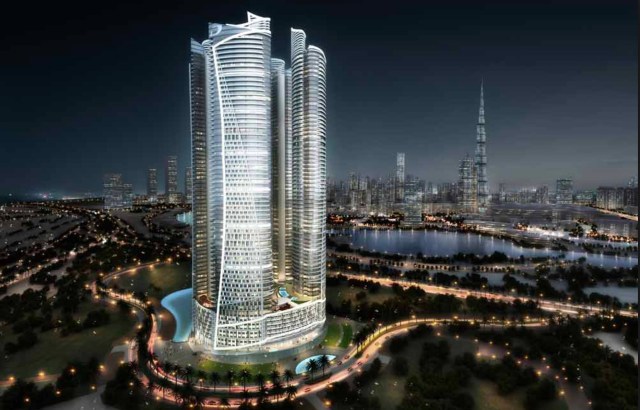
HH Sheikh Mohammed bin Rashid Al Maktoum toured the site of The Tower at Dubai Creek Harbour  which, when completed in 2020, will dwarf the Burj Khalifa by 100 mt. Already the foundation work has been completed, whilst the anchorages for the stay cables are in progress. The project will have minimal residential and leisure features but will have a 360 degree viewing deck, with fully glazed rotating balconies that extend outward from the tower’s main frame.

Following a major fire last August, developer SKAI has announced that 40% of its Viceroy Dubai Jumeirah Village hotel and residences is now complete. The US$ 349 million, 60-storey tower, encompassing 247 hotel rooms and 254 hotel apartments, is still scheduled to open by the end of 2018.

MAG Property Development has appointed Parsons to design and supervise its US$ 1.1 billion District 7 project in Meydan City. The US company will be responsible for a development that includes 35 residential buildings, retail / commercial space and a clubhouse.

Initial work has started on HNI Clients Real Estate’s six-tower project in JVC, to be built by Ghantoot Gulf Contracting Company. The 100k sq ft, US$ 112 million development of 772 apartments will be completed by the end of next year.

Al Thuriah Properties has completed the construction of its US$ 80 million, 33-storey Sahara 4 Towers. Located on the border with Sharjah, handover of the 300 apartments has already started.

With office space in non-prime areas having up to 30% vacancy levels and showing flat or reduced rental returns, it appears that the Grade A builds, in the better locations of Downtown, SZR and Tecom, are performing much better. According to CBRE, there are a number of international firms relocating to Dubai, from within the region, as well as existing local companies moving to better properties.  Growth in prime office supply will be limited until early 2019 and then the floodgates will open, led by the ICD Brookfield tower, introducing 1 million sq ft in DIFC to the market.

An E&Y report will confound the growing number of doom and gloom merchants, with news that Dubai hotels not only have the highest occupancy rate at 88% but also the highest revenue per average room of US$ 273 – 18.7% higher than in April 2016.

Financed by a US$ 5 million investment from the likes of DCCI, du, and the EITC, the Dubai Smart City Accelerator has been established. Operated by Startupbootcamp, the three-year programme will help 40 selected start-ups with office space, consultancy and access to US$ 20k cash – in return for just 6% equity.

According to HE Sultan bin Saeed Al Mansouri, federal Minister of Economy, the Dubai Islamic Economic Development Centre has already attained 75% of its targets to make the emirate the global capital for Islamic finance. Earlier in the year, its latest 2017-2021 strategy was released, with three key pillars being Islamic finance, the Halal sector and Islamic lifestyle, including art, culture, fashion and Islamic tourism.

Saturday was the first day for the sale of the Dubai Lamp – a collaboration between Dutch company Philips and Dubai Municipality. The lamp is the most energy efficient light bulb ever made – with a 90% energy reduction – and use of it could save Dubai consumers US$ 545 annually off their DEWA bills.

Canadian Solar Inc has been selected as the sole modular supplier to provide 268 MW of double glass Dymond modules for phase 1 of the Mohammed bin Rashid Solar Park. Upon completion by 2020, the three phases of the project will require 800k modules.

Ground-breaking has occurred for Patchi’s new chocolate manufacturing facility, covering 122 sq mt, in Dubai Industrial Park. The new factory, also housing the company’s HQ and 3k sq mt warehouse, will open by Q4 2018.

MAF has announced a ten year business plan, with the retail developer investing US$ 8.1 billion in the country, introducing new facilities and expanding existing assets. The development will see a new Dubai regional mall, as part of a mixed use development, as well as ten new shopping malls under its City Centre branding. Over the next ten years, MAF will add 170k direct/indirect jobs, as it more than doubles its retail space to 1.5 million sq mt

The National Industries Park is the location for MAF’s new regional distribution centre which is expected to save over 50% energy per cu mt, with its enhanced warehousing, storage, and logistics technologies.

Dubai Maritime City Authority is reportedly considering the establishment of a US$ 1 billion fund to provide financial investment for Dubai-based firms, with the prime aim of developing the local maritime sector. Initial details are sketchy but the financing could come from a combination of state-owned banks and private investors.

To finance the first phase of the15 km new Metro line to the Expo 2020 site, the Dubai government is expected to be in the market for a US$ 500 million loan facility for a project that will probably require financing of around US$ 2.8 billion. Earlier in the year, US$ 3 billion was raised for expansion work on both of Dubai’s airports.

United Airlines has terminated both its ticketing and baggage interline agreements with both Dubai airlines but its impact is likely to be minimal. Emirates has several codeshare arrangements, with the likes of Alaska Airlines and JetBlue, and interline deals with other US carriers.

By the end of April, Dubai International had seen YTD passenger traffic grow by 7.9% to 30.1 million, with April numbers up 9.0% at 7.6 million. The airport also posted gains in cargo traffic – 1.9% higher to 218k tonnes in the month.

Dubai Airport Freezone Authority posted a 7.0% jump in Q1 sales revenue, on the back of a 31% hike in the number of registered companies; at the same time, it has already attained 62% of its total 2017 sales forecast.

JAFZA reported that it added a further 122 new companies to its register in Q1, 55% of which are from the ME region.

The Telecommunications Regulatory Authority reported that Q1 mobile phone usage in the country has risen to 228 phones per 100 people, with a total number of subscriptions standing at 19.8 million.

June fuel prices are set to fall with Special 95 down 2.6% to US$ 0.504 per litre, with diesel 3.6% lower at US$ 0.518.

Moody’s has upgraded the country’s creditworthiness and is now forecasting UAE growth this year of 1.7% (down from the 2.7% level in 2016). As oil prices start to slowly recover, the agency estimates that the 2017 government deficit will fall to 1.9% of GDP, compared to 3.9% the previous year.

Smart Exchange, with only six branches in the country, has been closed down by the Central Bank following numerous complaints of irregularities and non-transfer of monies, ranging from US$ 272 to US$ 13.6k, to overseas locations. It is thought that because of the need for the country’s 65 exchange bureaux to lodge a bank guarantee with the authorities, customers should get their money returned.

It is reported that the Australian-Indian founder of Pacific Controls, Dilip Rahulan has been jailed for three years in absentia.  The case involved issuing two personal cheques totalling US $ 5.9 million “in bad faith” that were returned due to insufficient funds. The 33-year old tech company, once the doyen of the environmentally friendly sector, has had cash flow problems for some time and last year it seems that it was in discussions with banks over debts of some US$ 380 million.

The country’s 23 local banks reported a 9.4% April increase in assets to US$ 62.4 billion, whilst the 35 international institutions posted a 6.5% fall to US$ 101.4 billion. The same trend was seen with credit provided by local banks up 7.6% to US$ 383.8 billion, as overseas banks drifted 9.3% lower to US$ 51.9 billion.

Dubai International Financial Centre’s recently launched FinTech accelerator has already attracted over 100 international companies keen to make use of the chance of highlighting their work in front of possible investors. FinTech Hive at DIFC, in conjunction with Accenture, aims to introduce world class ventures to Dubai to further enhance the region’s financial services industry.

Emirates NBD’s new real estate investment trust has paid US$ 33 million for Dubai’s first purpose-built student accommodation block – a 424-bedroom building, located close to Dubai Academic City. The 7-year sale-and-leaseback agreement, with Global Student Accommodation, brings the value of the bank’s trust portfolio to US$ 349 million.

It is reported that Dubai-based Aster DM Healthcare is considering a 10% capital float later in the year, with the preferred bourse being either London or Mumbai. Money raised will be used for new projects in Saudi Arabia and India, further possible mergers and debt repayment.

With former CEO, Raed Kajoor Al Nuaimi, moving to a new position to manage development projects for Dubai Holding and Meraas Holding, the new incumbent to run DXB Entertainments will be Mohamed Al Mulla.

Drake and Scull International confirmed that it is continuing discussions with all its stakeholders, including banks. The troubled Dubai-listed construction firm is reportedly expecting to have access to US$ 272 million over the next four years, as it chips away to reduce its debt balance.

The DFM opened Sunday at 3327 and traded 0.8% higher this week – closing on Thursday, 01 June, at 3352. Volumes improved noticeably, closing on Thursday at 615 million shares, valued at US$ 243 million, (cf 215 million shares for US$ 74 million, the previous Thursday). Emaar Properties dropped US$ 0.01 to US$ 1.96, whilst Arabtec nudged US$ 0.01 higher to US$ 0.21. For the month of May, the bourse lost 76 points having started May at 3415 to close on 31 May at 3339, with both Emaar and Arabtec down for the month by US$ 0.02 to US$ 1.96 and US$ 0.02 to US$ 0.21.

By Thursday, Brent Crude, having nearly touched US$ 55 two weeks ago, traded down again this week by US$ 0.83 (2.0%) to US$ 50.63, with gold again heading the other way gaining US$ 14 to US$ 1,270 by 01 June 2017. Over the month, Brent traded US$ 1.13 lower to US$ 50.76, whilst the yellow metal moved up US$ 7 to US$ 1,275.

There are several companies, including CVC Capital Partners and Investindustrial, interested in acquiring Body Shop from L’Oreal. A surprise late entrant for the proposed auction, that could raise US$ 780 million, is the Chinese healthcare company, Renhe Pharmacy Co.

On Tuesday, one Amazon share reached the landmark US$ 1,000, having listed in May 1997 at US$ 18. Its market cap is now at US$ 478 billion, making it the 4th most valuable US company behind Apple, Alphabet and Microsoft. It is estimated that the former book-selling company now accounts for about 43% of all US online sales.

After several failed attempts to acquire Akko Nobel, the last being a  US$ 29.7 billion offer, the US paints and coating maker, PPG Industries, has finally seen the light and given up.

United Airlines has terminated both its ticketing and baggage interline agreements with both Dubai airlines but its impact is likely to be minimal. Emirates has several codeshare arrangements, with the likes of Alaska Airlines and JetBlue, and interline with other US carriers.

1.4k investors in Ingenious, involved in a controversial film-funding scheme, are facing a tax bill of nearly US$ 1 billion. The UK’s HMRC has won a case claiming that it was a means of avoiding tax rather than one of supporting films, such as Life of Pi and Avatar, and a tax break claiming 100% tax relief (and not the usual 30%). Among those caught include footballers Wayne Rooney, Steven Gerrard and Gary Lineker.

BA may be hit with a bill of up to US$ 130 million on the back of a disastrous bank holiday weekend that saw all flights in and out of their two London airports cancelled. A catastrophic IT failure resulted in the airline’s computer systems failing, with a blame game now in full swing. Chief executive, Alex Cruz, has ruled out a cyber-attack (which had been the cause of the NHS shutdown earlier in the month) indicating the cause to be a “power supply issue”; he also reiterated that the move of 600 IT jobs to India had no bearing on the shutdown. By Tuesday, the market value of IAG, BA’s ultimate owner, had fallen by US$ 630 million, as its share value dropped by over 4% on the first day of trading after the Bank Holiday.

IAG hopes to have better luck with the launch of Level, its new budget airline which will initially fly out of Barcelona to three trans-Atlantic destinations – Buenos Aires, Punta Cana (Dominican Republic) and San Francisco. With one-way prices starting at US$ 125, it is little wonder that 100k tickets have already been sold. However, it will have much to do to catch up with the likes of Norwegian.

In the twelve weeks to 21 May, UK grocery inflation reached 2.9% and grocery sales rose by 3.8%, its highest level in almost four years. As has often been the case, the big winners were the German discount stores of Aldi and Lidl which posted impressive 19.8% and 18.3% increases in turnover, compared to an average 1.6% hike by the Big 4 – Tesco, Sainsbury’s, Asda and Morrisons.

Sberbank posted a record quarterly profit on the back of cheaper funding and reduced management risk costs. Russia’s largest bank, which holds 33% of the country’s banking deposits, reported a Q1 profit of US$ 2.7 billion.

In a bid to raise an extra US$ 3.0 billion for the coffers, the West Australian government may make the country’s two commodity giants, Rio Tinto and BHP Billiton, pay out a one-off iron ore levy (instead of paying a lease rent of US$ 0.18 per tonne).This comes after tax revenue has been badly impacted by the slump in commodity prices, leaving the state government with a debt of over US$ 22.5 billion.

Q1 growth in the Indian economy dipped to an annualised 6.1% compared to 7.0% the previous quarter, as annual growth in the financial year to March 2017 slowed to 7.1%, compared to 8.0% a year earlier. The main reason for the fall was the Modi government’s November withdrawal of 500 and 1k rupee banknotes, effectively removing 86% of the currency out of circulation.

It seems that Greece wants to have its cake and eat it, as Finance Minister, Euclid Tsakalotos, indicated that there are no excuses for his country not to receive the next US$ 8.3 billion tranche of its bailout payment from the EU/IMF.  The Greek government has passed a series of austerity measures, that includes pension cuts and tax reform, and seems to think that it has carried out its side of the bargain. However, Germany does not agree with the IMF about whether the Hellenic country should have its total debt reduced yet again. If no agreement is made before the 15 June deadline, it may have to opt out of a July loan repayment.

There was some good European news on the unemployment front with falls reported in April. The eurozone reported its lowest figure – at 9.3% – in over eight years, with the EU posting a decline to 7.8%, its lowest since December 2008. Germany witnessed even better figures as its jobless rate declined to 5.7%, a new record low since the 1990 reunification.

However it was not all good news for Angela Merkel, as April retail sales slipped to 0.9% year on year following a March return of 2.9%.

Since the start of the year, the Japanese economy has been showing signs of improvement. Positive indicators include Q1 capital spending up 4.5% (following a 3.8% hike in Q4) and the latest manufacturing PMI for May up four notches to 53.1 from a month earlier, driven by rising output and new orders. Both company sales and profits headed north in Q1 by 2.0% to 5.6% and 9.7% to an impressive 26.6% respectively.

Although 14% higher than a year earlier, Chinese industrial firms saw April profit figures, at US$ 83.6 billion, lower than the 23.8% level attained a month earlier; for the first four months of 2017, the total profit figure of US$ 332.7 billion was 24.4% higher than the same period last year. The impressive start to the year, including a 6.9% Q1 growth figure, is not expected to continue, with rising debt becoming a major concern for the authorities.

Brazil has come out of recession after a two-year spell that saw the economy contract by more than 8% and bedeviled by continuing political and corporate scandals. However, the Q1 0.5% expansion figure could be a temporary blip and the country – with a record 14 million unemployed, social unrest and uncertainty about the future of current president, Michel Temer – could soon return to negative growth.

Brazil has yet again been rocked by another scandal – JBS, the world’s largest meat-packing company, has agreed to pay a whopping US$ 3.4 billion fine following a corruption probe involving hush-money payments being made to nearly 1.9k Brazilian politicians, in return for economic favours.

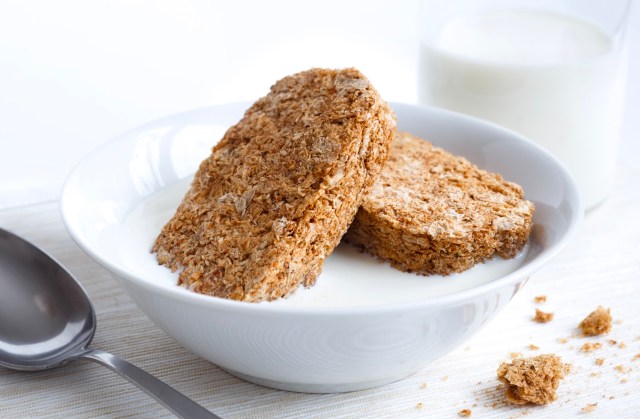
And if that was not enough trouble for the South American country, it is facing problems with its orange industry as a result of changing breakfast habits in other parts of the world and a falling rial. Brazil is the global leader for both oranges and orange juice, producing a third of the world’s oranges and more than half of its orange juice; it has the added problem of relying too much on exports, with 95% of all production shipped overseas. For example, the UK consumption of orange juice, over the past four years, has fallen by 100 million litres – at a time when the demand for coconut water has risen by 80 million litres. Another reason for Brazil to have the Orange Juice Blues!

Posted in Finance | Tagged , , , , , , , , , , , | Leave a comment

On A Slow Boat To China

Dubai Civil Engineering broke ground this week on Schön Properties’ US$ 870 million iSuites project in Dubai Investments Park. The massive development, slated for completion by 2020, will include 2.3k hotel apartments, 125k sq ft retail space, 52 restaurants/cafes, along with a man-made lagoon covering 5 acres.

Dubai will become the eighth global location for Mama Shelter, a global set of hotels established in 2009. The 201-key hotel, with 80 residences, will be located in Business Bay and managed by Accor Hotels.

There were three property launches this week with Emaar involved in two of them – Vida Residences Dubai Mall, that comprises five towers in the heart of Dubai, and Creek Heights in Dubai Creek Harbour – with Damac introducing its latest project, Aknan Villas.

According to Core Savills, Dubai’s secondary office market is unlikely to see light until late next year as there is still a large stock of empty offices in places such as Business Bay, Barsha Heights and JLT, with occupancy levels nearing 30%. 71.3% of the total stock of 9 million sq ft is rated Grade B and C.

Ventures Onsight estimate that the UAE will account for 33.7% of new construction contracts, totalling US$ 40.5 billion; Qatar and Saudi Arabia follow well behind, with sums of US$ 16.7 billion and US$ 16.0 billion.

Careem has introduced a new service – BOX – which will see the Dubai-based ride-hailing app branching out to transporting not only people but now goods. The app will allow customers to track the whereabouts of their merchandise and will be available 12 hours a day.

The world’s third largest money transfer company, Ria Money Transfer, is set to expand its regional operations. A subsidiary of Euronet Worldwide Inc (which itself saw a 2016 20% hike in transactions to 82.3 million, valued at US$ 33 billion).

In a bid to ensure that there is more transparency – and less risk – for investors there has been a new global accounting update that will see insurers having to provide more viable assessments of their assets. This has not come  day too soon since insurance companies’ balances total more than US$ 13 trillion, equating to 12% of all assets held by listed companies. The impact on the local market will probably see reduced short-term profits in the insurance sector, as many operations and processes will have to be improved and standardised, whilst more formal valuations will have to be carried out – all at a cost.

According to a CBRE report, Dubai still holds second place as the city hosting the highest number of global brands, at 57.3%, just behind London’s 57.9%. Last year, it ranked third, behind London and Hong Kong, in attracting the highest number of new labels, with 59 new brands.

A Central Bank study has indicated a Q1 improvement in loan demand, as the economic environment continues to show signs of improvement on the back of recovering energy prices. With demand moving higher, especially in conventional loans and by large entities, there has been a tightening of conditions by banks. This is most noticeable in larger collateralization requirements and increased interest premiums on some loans.

Following the massive success of last week’s 3-day sale, details of the 20th edition of Dubai Summer Surprises have been released. The six-week sales bonanza, starting on 01 July, will see retailers offering up to 75% discount on a wide array of brands.

The ME fashion website, Namshi has sold a 51% stake to Emaar Malls for a reported US$ 151 million, with the current owners, Global Fashion Group, retaining a 49% share. The five-year old company, with a client base of 750k in the GCC, trades 50k products from 600 international and local brands. Last year, it posted a net revenue figure of US$ 151 million.

By the end of the year, consumers will have to pay a 100% excise tax on tobacco products and energy drinks, along with a 50% levy on soft drinks. The introduction of VAT is still on the cards for 01 January 2018, with businesses having an annual turnover of US$ 102k required to register, whilst those with sales of between US$ 51k and US$ 102k have the option to register.

Emaar Turkey, a subsidiary of Emaar Properties, have opened Emaar Square Mall in Istanbul.

Those doom and gloom merchants, who relate tales of a mass Dubai expat exodus, need to see latest figures from the Knowledge and Human Development Authority. Private schools in the emirate have seen an average annual 6.6% growth over the past decade and that ten new schools will open in 2017 bringing the total number to 195 and student numbers to 290k. Dubai is expected to see a further 120 new schools, before 2026, to keep up with the growing demand.

Emaar accounts for 44% of the total value of assets held by UAE companies in the real estate sector, with a 2.8% hike in Q1 to US$ 27.0 billion, compared to the same quarter in 2016. Some way behind are Emaar Malls, Damac and Arabtec with US$ 7.1 billion, US$ 7.1 billion and US$ 2.9 billion respectively.

Some investors have been left poorer but hopefully a little wiser. Those who bought contracts in Arabtec may have lost up to 33% in only a week if they had acquired shares in a rights issue at US$ 0.572 on 15 May but were left holding them on 21 May at US$ 0.163. On that day, Arabtec shares, with a par value of US$0.272, were trading at US$ 0.216.

Shares in the embattled developer received a mini boost this week with news that it had been awarded a Wasl Asset Management Group US$ 398 million contract to build the 63-storey Wasl Tower on SZR. The development will include a Mandarin Orient hotel and is due to open in late 2020. Arabtec has a current backlog totalling US$ 4.6 billion. The company has also requested that their creditors submit all details and documents of their debts in person by 20 June at the latest.

The DFM opened Sunday at 3378 and traded 1.5% lower this week – closing on Thursday (25 May – the last day before the start of the holy month of Ramadan) at 3327. Volumes were again wafer thin, closing on Thursday at 215 million shares, valued at US$ 74 million, (cf 195 million shares for US$ 64 million, the previous Thursday). Emaar Properties dropped US$ 0.06 to US$ 1.97, whilst Arabtec closed flat at US$ 0.20.

By Thursday, Brent Crude, having nearly touched US$ 55 earlier in the week, traded down US$ 1.05 (2.0%) at US$ 51.46, with gold heading the other way gaining US$ 3 to US$ 1,256 by 25 May 2017.

At Thursday’s Vienna meeting, OPEC decided to extend oil production cuts for a further nine months but the market was disappointed that no extra measures were introduced and prices initially slid 2.3% on the lack of further news. There is still too much surplus stock in the pipeline, not helped by increasing US shale production.

With a Serious Fraud Office investigation taking place and its COO, Marwan Chedid, suspended by the company, it was no surprise to see Petrofac shares plummet more than 30% this week. The allegations involve the Monaco-based oil contractor, Unaoil, and “bribery, corruption and money laundering”, in securing dozens of international contracts, mainly in Kazakhstan, between 2002 – 2009.

As part of its global restructuring strategy, GM India will no longer make vehicles for the local market and instead concentrate on using its Maharashtra plant for exports, mainly to South and Central America. This comes after its unit sales in the sub-continent were less than 1% of its total turnover. At the same time, the US auto giant will sell its South African business to Isuzu, with that company also acquiring 57.7% in its East African operations.

A dispute between Apple and Nokia, over the use of smartphone patented technology, has been settled out of court. The end result is that Apple will continue to use the technology for which the Finnish company will receive cash payments upfront, as well as stocking Nokia’s health products in its retail stores. No financial details were made available but this agreement appears to suggest that Nokia will benefit to the tune of US$ hundreds of millions every year.

Having already raised nearly US$ 80 billion from a myriad of investors, including Apple, Foxconn, Qualcomm and Saudi’s PIF, Abu Dhabi’s Mubadala has weighed in with a US$ 15 billion commitment to the Softbank Vision Fund. The huge Japanese Softbank Group investment vehicle will support leading tech companies and entrepreneurial start-ups, with a focus on technology and innovation.

Crypto currency Bitcoin continues to confound analysts reaching a peak of US$ 2,727, before retreating to US$ 2,678 by Thursday. This still represents a massive – and potentially disturbing – 200% increase already this year.

Having had to pay over US$ 520 million in one off-charges relating to pension adjustments and store closures, it was no surprise to see Marks & Spencer report a 63.0% slump in 12-month profits to US$ 230 million. Sales also fell with clothing/home ware down 3.4% (Q4 – 5.9%) and food by 0.8% (Q4 – 2.1%).

The UK’s third largest supermarket, Asda, recorded its 11th straight quarterly fall in profits, posting a Q1 2.8% slump on a like-for-like basis. Luckily its parent company, Walmart reported a 1.4% hike in its US market, as Q1 sales figures reached US$ 117.5 billion. The other three majors – Morrisons, Sainsbury’s and Tesco – are performing better but are all facing stiff competition from the Germen interlopers, Aldi and Lidl.

Despite a decreasing number of worshippers, the Church of England has announced that its 2016 investments returned an impressive US$ 300 million, equating to 17.1%, compared to 8.2% in 2015. The Church Commissioners must be receiving some form of divine intervention as its average annual return over the past 30 years has been 9.6%, beating the likes of the impressive Yale University endowment fund. Investments only account for some 15% of its total income.

After closing the year with its lowest annual borrowing, at US$ 63 billion, since the year ending 31 March 2008, the UK government got a rude awakening in April. Official figures indicate that monthly public sector net borrowing jumped 13.0% to US$ 13.4 billion – its highest level in three years; total public debt was a mouth-watering US$ 2.2 trillion, accounting for 86% of the country’s GDP. Treasury revenues were held back by falling VAT receipts – a possible sign that spending is being stymied by the recent hikes in inflation. Official Q1 growth figures point to a disappointing 0.2% as both real wages (also down 0.2%) and consumer confidence levels dipped.

With a breakdown in last minute talks, Greece failed to convince their creditors (the IMF and the EU) to release a further US$ 8.3 billion tranche of its bailout funds. The cash is needed to ensure that the country does not default on a loan repayment due next month. The main sticking point seems to hinge on differences between the IMF – who would prefer a reduction in the loan – and Germany who insist on no more haircuts. In Q1, Greece fell back into recession, as its GDP fell 0.1% after a 1.2% decline in the previous quarter.

Meanwhile, Portugal has seen its annual deficit, now at 2%, fall below the 3% threshold; this allows the country to exit the EC’s excessive debt procedures after six years of austerity since its 2011 bailout. In true EU fashion, it seems like business as usual for Spain and France despite their 4.5% and 3.4% deficits in breach of the bloc’s regulations.

A Westpac report indicates that growth in Australia will reach 3% this year but the signs for 2018 are “discouraging”. The three obvious drag factors will be a slowdown in exports, weaker wage growth and a contraction in the housing sector.

At this week’s meeting, eleven of the twelve Asia-Pacific trade ministers from Australia, Brunei, Canada, Chile, Japan, Malaysia, Mexico, New Zealand, Peru, Singapore and Vietnam decided to go ahead with the Trans-Pacific Partnership (TPP). This is after  the US withdrawal from the controversial trade deal, following President Trump’s inauguration in January.

Donald Trump certainly made his presence known in Saudi Arabia as a raft of bipartisan deals was signed totalling up to US$ 200 billion. These included a US$ 110 billion defence package, Aramco signing off on US$ 50 billion of agreements with 11 companies and Saudi’s Public Investment Fund (PIF) contributing $20 billion in an infrastructure investment fund with Blackstone Group LP.

The travelling US president released his 2018 budget request that would see him try and balance the country’s budget – which currently stands at US$ 19.9 trillion, equating to 104% of GDP (compared to China (250%), UK (84%) and Dubai (42%) – over the next decade. It includes a spending cut of US$ 1.7 trillion, including US$ 272 billion in welfare programmes, whilst spending more on defence and border security by US$ 54 billion (10%) and US$ 2.6 billion respectively.

The S&P 500 index and Nasdaq hit record highs this week reaching 2415 and 6205 in late week trading. One of the main drivers came from renewed consumer confidence in the US as the retail sector posted improving results. This bullish sentiment echoed around the world with the MSCI 46-country global stock index moving to a record 464.

China could be faced with a bigger borrowing cost as Moody’s downgraded its long-term local currency and foreign currency issuer ratings by one notch to A1 from Aa3, whilst changing its outlook from stable from negative. The agency is concerned that the country’s growth is slowing and its debt continues to rise.

According to Chinese authorities their much vaunted Belt and Road initiative has already attracted deals of more than US$ 900 billion, with heady estimates of trade growing to up to US$ 8 trillion. Indeed this week, President Xi Jinping has pledged a further US$ 78 billion but whether other stakeholders have the financial appetite to help with the infrastructure, to link China with Europe via Asia, the Middle East and Africa, remains to be seen. Whatever happens, trade will be quicker than On A Slow Boat To China.

Posted in Finance | Tagged , , , , , , , , , , , | Leave a comment

Father and Son

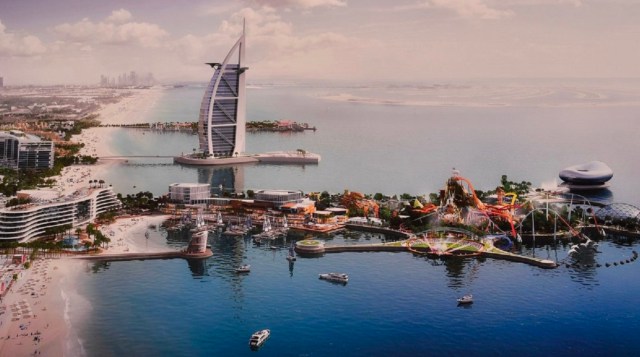
This week HH Sheikh Mohammed bin Rashid Al Maktoum launched the ambitious Marsa Al Arab, to be developed by Dubai Holding. The project will have two islands, one of which, located to the left of the Burj Al Arab, will have 140 luxury villas, a private marina and a boutique hotel.

The second island will include the Dubai Pearl Museum (including a mollusc farm and a pearl-inspired hotel), a 1.7k capacity theatre to be used by Cirque du Soleil and an expanded Wild Wadi / Marine Park, encompassing 2.5 million sq ft.

The mainland will have 20k sq mt of retail space (built on the current Wild Wadi Water Park site), a convention centre (with commercial lots) and a hotel. 300 seafront residential apartments are also included in the plans, as are 400 food-and-beverage outlets.

Nakheel has signed a US$ 409 million, 30-month construction contract with Shapoorji Pallonji to build The Palm Gateway. The three-tower development, to be built above the Palm Monorail terminal, will house 1.3k luxury apartments for lease, along with a retail and beach complex.

MAG Property Development is going upmarket, as it adds MAG 318 and MAG 230 to its growing portfolio; the former will be located in Downtown and the latter will be part of City of Arabia.

A three-day pre-Ramadan sale starts today, with more than 1k retailers offering discounts of up to 90%! If today is anything to go by, the shopping malls will be filled to capacity over the weekend.

It was no surprise to ascertain that e-commerce site, JadoPado, which went off-line last month, has been acquired by a tech fund led by Mohamed Alabbar. He also announced this week that his US$ 1 billion e-commerce platform, noon, is to go live later in the year and then have its permanent base in Riyadh – 50% of its backing is from Saudi Arabia’s Public Investment Fund. Interestingly, on-line trading has little traction in the region, with an estimated 2% of the retail market, but this is expected to grow to US$ 70 billion by 2025 – a good enough reason to get a toehold in the sector.

In a bid to discover tech entrepreneurs and innovators, the Chairman of Emaar Properties has also bought a large stake in ME Venture Partners, a company that already has US$ 120 million of assets under management and a further US$ 60 million in co-investments. He also has a number of interests in this sector, including a 40% stake in the US$ 145 million JV with Yoox Net-A-Porter to start regional on-line trading for the Italian fashion house.

It seems that the image of Financial Advisors will have to improve as the Central Bank has given them 90 days, from its 11 May circular, to resolve all of their outstanding mis-selling complaints amicably. These include certain fixed term savings schemes, banned in many western countries, that have been criticised by some as being the most expensive financial products available anywhere in the world. Other complaints include that under-trained staff, selling these products, have neither the wherewithal to understand clients’ risk profile nor the ability to explain their intricacies. It looks as if formerly opaque plans will become simpler and more transparent indicating how much the client has to pay in commission which in the past has often been front-loaded and biased in favour of the advisor.

There was a 2.9% increase in Q1 Metro users to 51.4 million compared to a year earlier, whilst Dubai Tram saw numbers up by an impressive 23.1% to 1.6 million.

The completion date for Dubai World Central has been put back a year to 2018, when its capacity will jump fivefold to 26 million passengers, growing to 146 million by 2025. It is expected that both Dubai airports will serve more than 100 million people this year. The Dubai government has secured a US$ 1.6 billion 7-year conventional loan along with a 7-year US$ 1.5 billion Ijara facility as part of its two airports’ financing strategy.

Although revenue was some 20.4% higher at US$ 640 million, Damac Properties returned a 16.2% fall in Q1 profit to US$ 240 million, with cost of sales 40.3% up at US$ 242 million. Booked sales for the quarter – at US$ 599 million – were 10.0% higher, with the developer still expecting growth of US$ 1.9 billion this year. (It was also announced that Ziad El Chaar has resigned his position as MD for the developer, with whom he has worked for the past 12 years).

With higher property sales of 44% and its other divisions – entertainment, hospitality, leisure and malls – performing well, Emaar Properties posted a 14.0% jump in profits to US$ 376 million, with revenue 15.3% higher at US$ 1.11 billion. The four divisions saw their revenue jump 44%, whilst contributing 39.1% to the total group revenue. The developer has a backlog amounting to US$ 12.6 billion.

Emaar Malls had comparatively flat results with Q1 revenue just US$ 1 million higher at US$ 228 million whilst profit nudged 1.9% higher to US$ 147 million.

Union Properties announced a 0.9% rise in Q1 net profit to US$ 12 million, although revenue climbed at a much higher rate – 25.2% to US$ 73 million; direct costs were up 39.7% at US$ 69 million.

Having made just a US$ 3 million profit in Q1 last year, embattled Drake & Scull turned in a US$ 228 million loss this quarter, as revenues fell 22.7% to US$ 217 million. The company has already incurred deficits over the past two years of US$ 256 million (2015) and US$ 214 million last year.

Amanat Holdings saw Q1 profits 49.0% higher at US$ 4 million, whilst Gulf General Investment Company posted a US$ 12 million loss (Q1 2016 profit – US$ 2 million) as revenue declined 30.8% to US$ 40 million.

The DFM opened Sunday at 3420 and traded 1.2% lower this week – closing on Thursday (18 May) at 3378. Volumes were again wafer thin, closing on Thursday at 195 million shares, valued at US$ 64 million, (cf 250 million shares for US$ 93 million, the previous Thursday). Emaar Properties shed US$ 0.01 to US$ 2.03, whilst struggling Arabtec yet again closed lower, down US$ 0.01 at US$ 0.20.

By Thursday, Brent Crude continued the previous week’s upward trend to close US$ 1.74 (3.4%) higher at US$ 52.51, with gold again also on the up, gaining US$ 29 to US$ 1,253 by 18 May 2017.

The increase in oil prices have come about because of  Monday’s announcement by Saudi Arabia and Russia that they will abide with the oil quota cuts until next year and US oil inventories falling  during the week from 2.3 million bpd to 520 million.

Facebook has only been fined US$ 125 million – and not hit by other sanctions – by the EC for “incorrect or misleading” information in relation to its 2014 takeover of WhatsApp. Not surprisingly, the US tech giant has indicated that it will not fight the penalty.

A slowdown in April saw China’s annual industrial output soften to 6.5% – well down from March’s return of 7.6%, A feeling that the world’s second biggest economy is losing the momentum of Q1 came with news that fixed asset investment, at 8.9% for the first four months of 2017, was lower than estimates with retail sales, at 10.7%, 2 notches lower than a month earlier. Growth, which was at 6.5% in Q1, is now being stymied by the government’s effort to marginalise risky debt and a notable softening in domestic demand.

The market was surprised by Japan’s Q1 GDP expanding by a creditable 0.5% from 0.3% the previous quarter, equating to an annual 2.2% hike – and well above previous 1.7% expectations. These figures reflect that the country has recorded its longest period of expansion since 2006, driven by an increase in domestic consumption, stronger exports (helped by a falling yen) and the knock-on impact of the upcoming 2020 Tokyo Olympics. It has taken a long time but finally the world’s third largest economy may be thankful for their Prime Minister’s style of economics.

Last month, RBA governor, Philip Lowe, indicated that Australian household debt was on the high side, having risen. 6.5% over the previous 12 months. During that time, median house prices in Melbourne and Sydney rose by 15.2% and 13.1% respectively, equating to a growth of about 3% in aggregate household income. It can only be a matter of time before the property bubble bursts – the only question will be by how much?

Greek Prime Minister Alexis Tsipras has had to eat a little more humble pie as he agrees reluctantly to a further round of pension cuts and lower tax breaks (totalling US$ 5.4 billion in 2019/2020) in order to avail of further bailout funds next month from the EU/IMF. This has led to demonstrations and some social unrest in cities like Athens and Thessaloniki.

Angela Merkel has had a good start to the year with the German economy growing at 0.6% in Q1, compared to 0.4% the previous quarter, equating to an annual 1.7% uptick. Its consumer price index climbed to 2.0% in April (up from March’s reading of 1.6%), driven by a 5.1% jump in energy prices.

The Australian tax authorities have been shaken by one of its deputy commissioners, Michael Cranston, being charged with an abuse of his position. The case involves his 30-year old son Adam, one of nine people arrested for defrauding the government of US$ 122 million in a payroll scheme that saw monies being siphoned off to be used for the accused’s lavish lifestyle which has seen 2 planes, 18 houses, 25 cars and vintage wine being seized. It appears that the father may have unwittingly helped him access some confidential information and, if so, their relationship may be somewhat strained in an unfortunate reprise of Father and Son.

Posted in Finance | Tagged , , , , , , , , , , , | Leave a comment

9 to 5

The RTA is set to spend US$ 102 million on road and tunnel infrastructure in and around the upcoming Jewel of the Creek project in Dubai. Set to be completed within two years, the 124k sq mt development will house hotels, apartments, offices and a conference centre.

Damac will open their ultra-luxury The Damac Maison Royale The Distinction next month. The 52-storey property, with 305 keys, is located in Downtown.

Yet another announcement from Azizi sees the developer planning to build luxury hotel apartments and residences in Dubai Studio City. The twin 8-storey towers will feature 177 1-3 bedroom apartments, along with 6k sq ft of retail space.

Nakheel and Spain’s RIU Hotels & Resorts have released a US$ 183 million construction tender for their 800-key Deira Islands property, to also include a beachfront resort and water park. Due for completion by Q4 2019, the resort will be a focal point of the new 15.3 sq km coastal city.

Local developer, RSG International, is set to have three new hotels in Dubai before Expo 2020, with the first being the US$ 163 million 4-star Sabah Rotana at Jebel Ali Central on SZR. The 40-storey property will have 180 keys and 300 hotel apartments.

Following a positive response to the 2016 launches of its Arabella 1 and Arabella 2, Dubai Properties has unveiled the third edition located in the Mudon community at Dubailand. The project, which will comprise 3-5 – bedroom units, will be close to the 41-acre Mudon Central Park, with its raft of leisure and entertainment amenities.

The Limitless 200-hectare mixed-use project in Downtown Jebel Ali is progressing, with 50% of the deep utilities (sewerage, storm water and water) now completed, as work on the road system has started. It is expected that the US$ 78 million infrastructure project will be finished by next year, with all plots connected to services.

It is reported that the long-awaited US$ 44 million Dubai Frame is set to open this October, with the delay attributed to Dubai Municipality’s decision to replace the landmark’s exterior cladding. Located in Zabeel Park, the 150 mt high, 93 mt wide construction has been built in such a way that Old Dubai – such as Deira and Karama – can be viewed from one side, whilst buildings, like Burj Khalifa and Emirates Towers, representing New Dubai, can be seen from the other side.

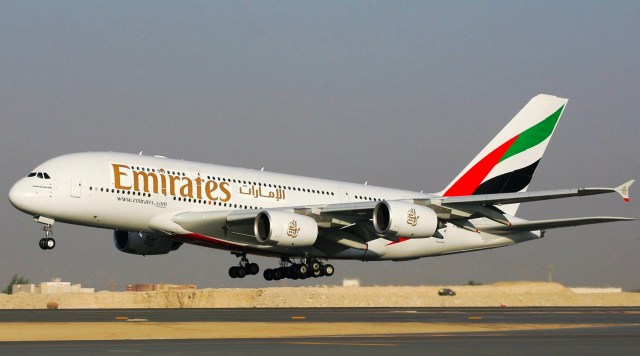
Emirates Group reported a not unexpected 70% slump in annual profit to US$ 681 million – with Emirates, down 82.0%, but still contributing US$ 354 million and dnata US$ 327 million, its highest ever. Despite the difficult operating conditions, Group revenue nudged 2.0% higher to US$ 25.8 billion, of which US$ 3.3 billion emanated from dnata operations. During the year, the airline invested US$ 3.7 billion and received 35 new aircraft (19 A380s and 16 777s) to bring its total fleet size to 259. The airline served 56.1 million passengers, with a Passenger Seat Factor of 75.1%, slightly down on the previous year’s 76.5%, as the supply chain increased seat capacity by 10%. Payroll grew by 11% to 105k.

The specialised freighter operator, Cargolux has signed an operational agreement with Emirates SkyCargo to work closely that will see both entities, at times, using each other’s facilities. This will be most noticeable in areas where one or the other does not currently operate.

As it continues to expand its international cargo network, Dnata has acquired Lynx Holdings’ AirLogistix USA 30k sq ft cargo handling operations at Houston Airport – the Dubai company’s first foray in the US market. It has also agreed to open a similar facility at Dallas Fort Worth airport later in the year. Having opened 18 new facilities over the past five years, Dnata now handles 2.8 million tonnes of cargo at 42 global airports.

The Federal Customs Authority reported a 0.5% increase in the country’s non-oil trade to US$ 426.1 billion. Of that figure, there were increases in all three sectors – imports up 1.7% to US$ 264.0 billion, exports by 5.2% to US$ 53.1 billion and reexports at US$ 109.0 billion.

Despite all the doom and gloom permeating through the market, Q1 money outflows continued their upward trend, with a 1.1% increase to US$ 10.11 billion. Indian, Pakistani and Filipino expats – at US$ 3.53 billion, US$ 950 million and US$ 738 million – accounted for 51.6% of all remittances. US and UK nationals sent home US$ 546 million and US$ 445 million.

An initiative between Dubai Municipality and the Dutch conglomerate, Philips Lighting, has resulted in the future use of Dubai Lamp in many of the emirate’s projects, including two million energy-efficient LED units this year alone. Already major developers, such as Emaar Properties and Dubai Properties Group, have bought into the scheme and it is hoped that by 2021, most of Dubai will be using this form of lighting.

UPS has signed an agreement to provide logistic support at Dubai Expo 2020, starting in October of that year. The company expects to hire up to 1k people and will work from warehouse facilities, covering 27k sq mt. It is keen to expand its international network, as over 75% of its US$ 90 billion revenue last year emanated from its home country of USA.

The entertainment division of Emaar Properties could be divesting itself of a 40% (valued in the region of US$ 800 million) stake in a probable deal with Blackstone Group LP (from the US) and Luxembourg-based CVC Capital Partners. It operates some of Dubai’s most impressive destinations, including Dubai Aquarium & Underwater Zoo, Dubai Ice Rink and Reel Cinemas.

Emaar Properties has announced that it will not be providing any further funding to Emaar India – a JV with MGF Developments Ltd – in which it had already invested US$ 1.1 billion but ended the arrangement in April 2016. The Indian developer requires a further US$ 311 million cash injection to complete all pending projects, having already raised US$ 390 million debt finance since Emaar Properties pulled out.

It is reported that loss-making Drake & Scull International is owed US$ 613 million by Saudi Aramco and hopes to soon settle at least US$ 280 million of the balance; the claim refers to work carried out on the King Abdullah Petroleum Studies and Research Centre in Riyadh which opened last year. In a bid to return to profitability, the Dubai-based contractor is taking steps such as chasing up other debts, totalling over US$ 600k, cutting its payroll by 25% to 21k, selling non-core assets (including its Indian operations) and rescheduling its debt repayments. Despite further diluting shareholders’ equity, they have agreed to increase its write off by US$ 197 million, in addition to a previously arranged US$ 270 million reduction.

Arabtec has announced that its US$ 409 million rights issue will open from 15 – 28 May, whilst trading in the rights issue will only be for the week commencing 15 May. Existing shareholders will be able to trade their rights, with a one fils starting price on the first day during which it will free float but for the following four trading days, it will trade between the 10% down to 15% up  range.

Tabreed (National Central Cooling) posted a 19.0% jump in Q1 profits to US$ 21 million, with revenue increasing by 5.8% to US$ 74 million.

Having made a Q1 loss of US$ 80 million (compared to a US$ 10 million deficit in the same period last year and US$ 64 million the previous quarter), DXB Entertainments is planning to slash costs by 20%; revenue for Q1 came in at US$ 44 million from 586k visits and was well down on forecasts.

Amlak Finance posted a 95.4% slump in Q1 profits to US$ 2 million, as revenue fell 75% to US$ 26 million driven by a softening in the realty sector. The company’s assets stood at US$ 1.77 billion.

Dubai Investments posted a slightly weaker Q1 return, compared to the same period in 2016, with revenue slipping 2.5% to US$ 190 million and profit down 3.0% at US$ 79 million. However, the 2016 figure did include a one-off profit of US$ 51 million, arising from the sale of its stake in Marmum Dairy Farm.

Dubai Financial Market posted a 19.0% hike in Q1 profit to US$ 28 million, as revenue expanded 17.6% to US$ 41 million, comprising US$ 34 million attributable to operating income and the balance of US$ 7 million to investment returns. Over the period, the DFM saw trade grow 18.8% to US$ 13.1 billion.

Emirates REIT returned a 21.2% improvement in Q1 rental income to US$ 13 million driven by stronger leasing at Index Tower and income from its two educational facilities – Jebel Ali School and the new British Columbia Canadian School.

The DFM opened Sunday at 3420 and once again traded flat this week – closing on Thursday (11 May) at 3420. Volumes were wafer thin, closing on Thursday at 250 million shares, valued at US$ 93 million, (cf 308 million shares for US$ 121 million, the previous Thursday). Emaar Properties gained US$ 0.06 to US$ 2.04, whilst struggling Arabtec closed US$ 0.02 lower at US$ 0.21.

By Thursday, Brent Crude, having lost over 14% the previous three weeks, made somewhat of a recovery gaining 4.9% (US$ 2.39) to close on US$ 50.77, with gold again lower (US$ 5) at US$ 1,224 by 11 May 2017.

Although selling more cars (10.25 million), Toyota reported its first fall in profits for five years, driven by exchange fluctuations and higher costs, as it warned that the situation may not improve in the short term; its profit figure slid 21.0% to US$ 16.1 billion.

It was no surprise to see Qatar Airways taking over from Emirates as an official FIFA partner in a deal that will see it have marketing and branding rights at the next two World Cups – in Russia next year and in their home base four years later.

Having left the club in 2012 for US$ 2 million to play for Juventus, Paul Pogba returned to Manchester United in 2016 in a world record US$ 114 million transfer. A new German book – The Football Leaks: The Dirty Business of Football – claims that the player’s agent, Mino Raiola, earned a mouth-watering US$ 52 million in the deal. Now FIFA has contacted the EPL team “”to seek clarification on the deal” to ascertain who was involved and how much each party to the deal received.The theme parks operator DXB Entertainments said it planned to cut operational costs by 20 per cent this year, compared with initial projections, after it missed analysts’ forecasts and posted a wider-than-expected first-quarter loss on higher expenses.

Even though there still “several hundred cases” of corruption pending, the FIFA hierarchy has decided to remove its ethics team, including investigator Cornel Borbely and the ethics judge, Hans-Joachim Eckert, who both helped bring down disgraced former chief Sepp Blatter and some of his cronies.

Ray Gammell has been appointed temporary CEO of Etihad with immediate effect, replacing James Hogan who will leave on 01 July. The group’s CFO, James Rigney, will also leave at the same time, with Ricky Thirion taking over his mantle.

Buoyed by bigger attendances at its resorts, Walt Disney returned an 11.0% rise in Q1 profits to US$ 2.4 billion, even though revenues were only 3% higher at US$ 13.3 billion. 40% of the company’s revenue originates from its TV networks – ABC, Disney and ESPN; the latter is suffering,  having lost millions of subscribers and subsequent advertising revenue, as viewers turn to cheaper sporting alternatives.

For the third time, US-based PPG Industries has failed in its attempt to acquire Akzo Nobel, the owner of Dulux paint, despite a higher bid of US$ 29.2 billion; the Dutch conglomerate indicated that the offer was not only high enough but showed a “lack of cultural understanding of the brand”. Further negotiations may not be so friendly and a hostile bid directly to the shareholders may now be on the cards.

Crown Resorts has sold the remaining 11.2% stake in its Macau casino investment to its JV partner, Melco Resorts and Entertainment, for US$1.0 billion. The Australian company, controlled by James Packer,  has had many problems in the Chinese enclave, including last year’s detention of 15 of his employees by Chinese authorities.

Australian building materials supplier, Boral, has acquired its US competitor, Headwaters Incorporated, in a deal worth US$ 2.6 billion. The new entity, known as Boral North America, will have an expected annual revenue of US$ 1.8 billion.

The Australian property bubble is still waiting to burst – latest Q1 figures indicate price rises of 4.6% in Sydney and 5.1% in Melbourne, with a national average of 3.7%.

Treasurer Scott Morrison surprised the big 5 Australian banks (ANZ, CBA, Macquarie, NAB and Westpac) by a levy increase that will see an extra US$ 4.6 billion being paid over the next four years. He also wants to save US$ 2.9 billion from the education budget which will result in students paying a greater share of the cost of obtaining degrees.

The IMF has raised its 2017 Asia Pacific growth forecast to 5.5% and expects a marginal fall to 5.4% the following year, whilst noting that the near-term outlook was clouded with significant uncertainty.

Growth in China and Japan was revised upward for 2017 compared to the October 2016 World Economic Outlook, owing mainly to continued policy support and strong recent data. Two of the area’s main economies are now expected to grow faster this year with India set to return a 7.2% figure as China comes in at 6.6%; in 2018, growth estimates are 7.7% and 6.2% respectively. Japan’s prospects were disappointing with growth of only 1.2% and 0.6% over the next two years.

However, a 13.1% hike in March exports to US$ 631 billion and a higher 15.4% jump in imports to US$ 555 billion saw Japan post a trade surplus of US$ 762 billion; its current account surplus fell 2.2% to US$ 256 billion. Meanwhile the Bank of Japan recorded 3.0% April rise in overall bank lending to US$ 4.53 trillion. The recent economic upturn has been felt on the Tokyo bourse, with the Nikkei 225 8.5% higher than its 14 April low, aided by a 4 point drop in the yen to 113 to US$ 1.

Despite the eurozone being in the best of economic health for a decade, there is a dichotomy between official employment figures and the real world. A study by the ECB indicates that unemployment in the bloc is higher than what has been recorded and that wage growth has been exceptionally weak. The ECB has indicated that inflation levels have to rise before it can cut back on its stimulus measures – and that means a marked improvement in wage growth is essential along with a significant tightening in the labour market.

The UK economy suffers from the same problem – the strongly performing labour market is not matched by robust wage growth. With only a 4.7% unemployment rate and a record high 74.6% employment level, wage growth should be higher, indicating that there is still slack in the market.

The US and other economies are also suffering from a considerable degree of labour market slack, driven by underemployment and hidden underemployment. The former refers to those who are working part-time but want a full-time position, whilst the latter are not working but would rejoin the work force if the remuneration made it worthwhile. Wage growth would improve if more full time better, paid jobs are made available, with an increasing number working 9 to 5.

Posted in Finance | Tagged , , , , , , , , , , , | 1 Comment

Welcome Home!

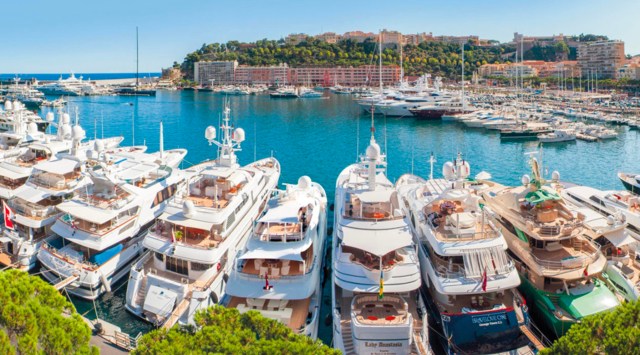
If you thought Dubai property was expensive (at US$ 6,653 per sq mt), then consider Monaco where prices are seven times higher, according to global property firm Savills. On average, the emirate’s villa prices have surged 94% in the past decade but there is a wide variance between locations including Jumeirah Palm and Emirates Hills both up 238% and 45% respectively, whilst Burj Khalifa has seen prices off by 12% since its 2010 opening. The report indicates that Dubai is the tenth most expensive city, with Hong Kong, Tokyo, London and New York joining the principality in the top five locations.

Much of the same from the latest Asteco property report indicating that average apartment rentals fell 3% in Q1 and are 8% lower over the past twelve months; however, the upper end of the market suffered as exemplified by Palm Jumeirah where rents have fallen 7% last quarter and 14% since April 2016. The company estimates that 3.6k new apartments have been added in Q1, with the annual figure by December to reach 17k. Average villa rentals followed the same path as apartments, with the consultancy expecting 4k new villas to be handed over in 2017. Sale prices in both villas and apartments were lower – both down 1% in Q1, with villas flat for the year whilst apartment prices dipped by 3%.

According to Reidin-GCP, there has been a 20% increase in the number of ready units being sold in the first four months of 2017, as numbers reach 4.33k. The main locations with impressive growth numbers were Discovery Gardens up 72% to 244 and Jumeirah Palm 58% higher at 196 homes.

With the Mandarin Oriental Jumeirah Beach due to open late next year, the hotel group will have a second property ready for Expo 2020. Located in Downtown, and also owned and developed by wasl Asset Management, the 257-key hotel will anchor a 63-storey new-build mixed-use building on SZR. There will also be 144 ‘Residences at Mandarin Oriental’ on the tower’s upper floors.

Hilton has signed an agreement with Nakheel to manage two new properties under its DoubleTree by Hilton brand – a 254-key hotel in Jumeirah Village Triangle and a twin tower complex, with 250 hotel rooms and 200 serviced apartments, on Deira Islands.

This week witnessed Dubai’s biggest residential land sale, for the year so far, as Falcon Group chairman, Kamel Al Zarka sold a plot in Meydan for US$ 16 million. The unnamed Emirati buyer is planning to build three family custom-designed mansions on the 120k sq ft site.

“Dubai Font” has been created making the emirate the first location in the world for a Microsoft font to be named after it. The development includes 23 languages and helps to combine both Arabic and Latin scripts seamlessly. All government agencies will be encouraged to use the new font whenever practicable.

Noting that the country is currently well served when it comes to both military and economic power, HH Sheikh Mohammed bin Rashid Al Maktoum has now launched the UAE Soft Power Council, reporting directly to the federal cabinet. The development of soft power strategy will cover various sectors including cultural, humanitarian, scientific and technology, with the aim of enhancing UAE’s position and reputation on the global stage.

Although marginally lower, April’s UAE Purchasing Managers’ Index still provided comforting reading as growth in new orders and output helped the index reach 56.1 – just one notch lower than the March return which was then at a 19-month high. The only drag factors appear to be a tepid environment for new jobs and higher market prices. The non-oil sector is performing better than expected and it is hoped that this recent momentum can be carried forward into the summer months.

Following a decrease in April, UAE pump prices headed north again for May. Special 95 will now retail at US$ 0.518 per litre – up 3.3% on the month – as diesel nudges 1.0% higher to US$ 0.531.

The DIFC had a strong 2016 with increases in three main indicators – gross operating profit, 4% higher at US$ 149 million, employment 9% up at 21.6k and the number of registered entities increasing by 13% to 1.65k. Occupancy figures in the investment park topped an impressive 98%.

Deyaar posted a 37.3% slump in Q1 profits to US$ 9 million, despite revenue surging 137% to US$ 39 million, driven by strong figures from its The Atria and Mont Rose projects.

Arabtec Holding has approved the launch of a US$ 409 million rights issue – at US$ 0.272 per share – with the subscription date of 28 May 2017; this will increase the developer’s capital from US$ 1.26 billion to US$ 1.67 billion which will dilute non-participating shares by up to 24.53%. However, there was some good news of sorts for investors as it turned in its first quarterly profit – since Q3 2014 – posting a US$ 5 million surplus on an 11% hike in revenue to US$ 599 million.

Marka shareholders have agreed to sell their 60% stake in Cheeky Monkeys, a local children’s indoor play area operator. The loss-making Dubai-listed retail company acquired its share for US$ 8 million in April 2015.

With trading stopped on Thursday before resuming on Sunday, Union Properties have voted in a new chairman, Nasser Butti Umar bin Yousuf, and vice-chairman, Hamad Abdulla Mohamed Abdulla Al Mass, replacing Khalid Jassim Bin Kalban and Mohamed Saif Darwish Ahmed Al Ketbi.

Although Q1 revenue was 6.8% higher at US$ 300 million, Aramex posted a 5.3% fall in profit to US$ 24 million, driven lower by an 8.5% hike in the value of the provision related to the company’s incentive scheme; this reduced the logistics firm’s profit by US$ 4 million.

The DFM opened Sunday at 3417 and, having shed 110 points over the previous fortnight, traded flat this week – gaining 3 points – to end on Thursday (04 May) at 3420. Volumes nudged higher, closing on Thursday at 308 million shares, valued at US$ 121 million, (cf 256 million shares for US$ 94 million, the previous Thursday). Emaar Properties gained US$ 0.02 to US$ 1.98, whilst struggling Arabtec closed US$ 0.01 lower at US$ 0.23. For the month, the index fell 1.9% from its April opening of 3480 to close on Sunday (30 April) at 3415. Emaar Properties slipped US$ 0.03 to US$ 1.98, whilst Arabtec’s demise continued, down 4.4% to US$ 0.23.

By Thursday, Brent Crude, having lost almost 8% the previous fortnight, tanked again this week losing 6.0% (US$ 3.08) to close on US$ 48.38, with gold also lower (US$ 37) at US$ 1,229 by 04 May 2017. For the month, Brent shed 2.8% (US$ 1.48), whilst gold ended April US$ 16 higher at US$ 1,268.

The oil prices are at a five-month low driven by the fact that the US has seen production levels rise 10%, pumping out 9.3 million bpd, and this despite the November oil quota cut of 1.8 million bpd largely holding.

BP has managed to turn around a US$ 485 million loss last year to a Q1 profit of US$ 1.1 billion, on the replacement cost measure, driven by oil price rises. At the same time, operating cash flow was up to US$ 4.4 billion, compared to US$ 3.0 billion a year earlier. Royal Dutch Shell also had impressive quarterly returns with profits, on a current cost of supply measure, more than trebling to US$ 3.4 billion (from US$ 1.0 billion a year earlier). Other majors – including Chevron, Exxon and Total – have reported better than expected results, helped by oil prices plateauing in the mid-US$ 50s range for most of the quarter. It will be interesting to see Q2 results with the recent fall in prices.

Alitalia is set to close down after employees rejected a fresh round of job and wage cuts. The troubled Italian flagship airline, 49% owned by Etihad, was privatised in 2008 and since then has racked up losses of over US$ 980 million; furthermore, it has never made a profit since 2002! The only government assistance could be a short-term bridging loan of up to US$ 200 million to keep the airline running in the forlorn hope of a possible external buyer.

Barclays surprised the market by a bigger than expected Q1 profit, up 121% to US$ 2.1 billion – and this despite a one – off goodwill impairment charge of US$ 1.1 billion on the bank’s stake in Barclays Africa Group.

Europe’s biggest bank, HSBC, posted an 18.0% fall in Q1 profit to 5.0 billion, as revenue dipped 13% to US$ 13.0 billion.

Even RBS returned a Q1 pre-tax profit of US$ 326 million (compared to a US$ 1.2 billion deficit in the same period last year). However, its total losses, since the 2008 government bailout, stand at US$ 73.1 billion, including US$ 8.8 billion last year.

ANZ posted a 23% increase in H1 cash profits to US$ 2.62 billion, with NAB reporting a 2.3% profit improvement to US$ 2.54 billion, driven lower by its bad debt impairment costs rising 5.1% to US$ 300 million. Australian banks are considered by some to be the most profitable in the world when measured by their profit share as a percentage of GDP. This is estimated at 2.9% with China (2.8%) and Sweden (2.6%) close behind but well ahead of the likes of the US – 1.9% – and the UK’s 0.9%.

Apple posted a 4.9% increase in Q1 profit to US$ 11.0 billion in line with a 4.6% rise in revenue to US$ 52.9 billion. Its i-Phone sales dipped to 50.8 million units and weaker sales of iPads and Mac computers were reported; revenue from other products such as AirPods wireless ear pieces and Apple Watch posted a 31% jump. Amazingly, the company now has a record level of cash holdings at US$ 256.8 billion.

With Q1 revenue increasing by 49% to US$ 8.03 billion, Facebook posted an impressive 76% surge in profit to US$ 3.06 billion, as user number jumped 17% to reach 1.94 billion. There were warnings that there will be increased pressure on future profit as the revenue stream may slow and expenses will rise.

In Q1, Adidas posted a 16% jump in revenue, as its profit climbed 30.0% to US$ 480 million. With global unit sales up 31%, it has completely outpaced its rival, Nike who managed only a 3% quarterly improvement.

IATA announced that March global air freight (measured by freight tonne kilometres) was 14.0% higher, year on year, as ME carriers posted a 16.4% hike – a sure sign that global trade is on the upturn. Q1 freight capacity rose by 3.7% as demand rose at a quicker pace of 11.0%. On the back of lower fares and an improving economic environment, global demand for air travel has shown a 6.8% quarterly improvement; however this figure for the ME came in lower at 4.9%.

Driven by upsurges in both purchasing activity and new export orders, Japan’s manufacturing PMI continued its upward trend in April – up 3 notches to 52.7. Further to a 20.3% March increase, April saw another impressive jump in Japan’s monetary base up 19.8% year on year to US$ 4.1 trillion.

Although still heading north, China’s PMI dipped six notches in April to 51.2 indicating a slower pace than in the previous month. The country’s GDP growth has shown improvement in Q1, driven by a rebound in retail spending.

As widely expected, the Federal Reserve maintained its benchmark interest rate at 0.75% – 1.0%, with a distinct possibility of a further hike before summer despite recent economic data. There have been two 0.25% rate rises in the past six months with a further two possible before the end of 2017. The Committee expects the recent economic growth to continue as the labour market improves and inflation settles around the 2% target level. Latest economic data shows a tightening of the labour market, with unemployment levels hitting 17-year lows; on the flip side, productivity levels continue to disappoint, with only a 0.6% annual average hike over the past five years.

Prime Minister, Alexis Tsipras, is keen to ensure a speedy end to the deal that will see Greece receive more funds from its US$ 94 billion IMF/EU rescue package. Negotiations are continuing over the country’s post-bailout targets with Greece, not surprisingly, indicating that it has already carried out all its commitments and are waiting for the other parties to move at a quicker pace.

Eurozone’s factory PMI grew at its fastest pace in six years as April data came in five notches, month on month, to 56.7 which equates to an annual rate in excess of 4.0%. Individual countries within the bloc recorded different results – Germany was actually down one point to 58.2 whilst France and Italy both improved by 1.8 to 55.1 and by 0.5 to 56.2 respectively.

The UK’s Markit/CIPS PMI posted a 3.1 jump to 57.3 in April – a sure indicator that the country’s manufacturing sector is weathering the post-Brexit storm. There is no doubt that the fall in sterling has helped, especially with exports, but it has had a negative impact on consumer confidence, as imported goods become more expensive, and ramps up inflation just as wage growth is flat. Whether the improvement in the global economy and the UK’s export competitiveness are enough to stimulate the country’s growth remains to be seen, at a time when Q1 growth fell from 0.7% to a disappointing 0.3% quarter on quarter, driven by weak retail sales figures. Meanwhile, the PMI for the services sector, which accounts for 75% of the UK economy, rose to 55.8

In November 2012, the 34-storey Tamweel Tower was damaged by a fire and it took until June 2016 for repair work to be completed. At the end of last year, Dubai Civil Defense requested incorporation of updated safety measures prior to granting a completion certificate. This has now been reportedly carried out and the official document has been handed over to the DCD. Now it seems that approvals are required from DMCC and Dubai Municipality before residents can return. Not before time, but Welcome Home!

Posted in Finance | Tagged , , , , , , , , , , , | Leave a comment

Quit Playin’ Games

Dubai Investments Real Estate Company plans to soon launch Nasayem Avenue, the second and centrepiece cluster of its US$ 817 million Mirdif Hills project; the whole  development, covering 3.9 million sq ft and housing 1.05k residential units, a 4-star hotel and a 230-bed hospital, is due for completion by the end of 2018.

Dubai tourism’s strong start to the year was confirmed with latest Q1 figures showing that the emirate received more than 11% more visitors, bringing its total to an impressive 4.57 million; this was more than double the growth reported in the same quarter last year. With free visas on arrival, the numbers were boosted by massive increases from Russian and Chinese tourists – up 64% to 230k and 106% to 126k respectively. The top three positions saw no change with India, Saudi Arabia and the UK accounting for 30% of total visitors.

As the ATM (Arabian Travel Mart) gets into full swing there have been a raft of announcements about the need of a further 40k extra rooms to bring Dubai’s total inventory to almost 150k by the start of Expo.

Damac is to cash in on the Trump brand by building a five-tower hotel project on the golf course, bearing his name, at Akoya Oxygen. Off-plan hotel room units will go on sale at this week’s ATM, with prices starting at US$ 106k – a lot less than the rooms being sold last year for US$ 216k in its SZR Aykon project. The developer will see two hotels – Damac Maison Royale The Distinction and Damac Maison Bay’s Edge – open this year, adding a further 555 keys.

The First Group intends to open four properties by 2020 – Millennium Place in Business Bay, Millennium Place at Jumeirah Triangle Village, The One at Dubai Marina and Ramada Plaza in Jumeirah Circle.

Nakheel broke ground on a US$ 65 million, 375-room AVANI-branded property at Ibn Battuta; it is targeting a portfolio of 5.8k rooms and serviced apartments by 2020.

AccorHotels is to introduce a new brand – Mama Shelter – to Dubai, with a 200-key property in Business Bay, adjacent to Dubai Water Canal, due to open in 2020.

Emaar Hospitality has announced five new Dubai ventures – two under its Address banner (a 202-key hotel and 741 serviced residences) and a Vida hotel at Dubai Creek Harbour. The developer will also build a Vida hotel and Vida Residences in Dubai Marina and has already opened three of its Rove hotels since last August, with another seven in the pipeline.

MAF has indicated that the opening of its 304-key Marriott branded Aloft Dubai CityCentre will be the region’s first cinema-themed hotel concept. The development, set for completion early next year, will feature a cinematic themed floor with 25 rooms and four suites.

The UAE continues to head the GCC media advertising spend, accounting for 46% of the total (US$ 409 million), with Saudi Arabia’s US$ 220 million and Kuwait’s US$ 191 million trailing behind. Of that total, newspapers continued to head the sector spends at US$ 162 million, followed by outdoor and radio with US$ 106 million and US$ 79 million.

Next March, Qantas will no longer fly from Melbourne to London, via Dubai, as it will take advantage of its new direct 14.5k km, 17 hour route via Perth; this change will save Melbourne passengers only an hour, with Dubai losing the chance to entertain transit passengers.

It seems that there could be more collaboration between Dubai’s two airlines – Emirates and flydubai – in the wake of increasing turbulence in the global aviation sector. HH Sheikh Ahmed bin Saeed Al Maktoum has pointed to the possibility of greater “synergies” in terms of routes and fleet.

Dubai Aerospace Enterprise has reportedly signed an agreement to take over 100% of global aircraft leasing company, AWAS – a company with a 263-unit fleet. If the sale goes through, the new entity will have almost 400 planes, with a value of US$ 14 billion, serving 110 airlines in 55 countries.

DP World handled 5.7% more TEUs (20’ equivalent units), with a total of 16.4 million, as container volumes on a like for like basis grew by 5.0%, compared to industry estimates of 2.6%. In its own port, there was a 1.8% year on year increase to 3.7 million TEUs.

There is every chance of Union Properties will list its Emirates District Cooling Company on the local bourse later in the year.

The investment arm of the Dubai government, Dubal Holding, posted a 10.0% jump in annual 2016 profits to US$ 283 million, as its current net assets totalled US$ 5.1 billion. The company is studying several investment possibilities in various countries, including Australia, Canada, Chile and the US, mainly in the commodities and mining sectors.

Nakheel posted similar Q1 profits as last year with a return of US$ 403 million. During the quarter, the developer handed over only 412 units but announced a raft of construction contracts worth nearly US$ 1.4 billion, with a further US$ 1.1 billion due in Q2.

Although quarterly revenue was up 2.5% to US$ 864 million, Du posted a disappointing 24.0% slump in net profit, after royalty of US$ 99 million. Government charges continue to hurt the country’s second biggest telecom but the company is expecting to save over US$ 272 million by next year, on the back of cost cutting measures. Meanwhile, Etisalat reported that its Q1 profit, after royalty payment, jumped 5.0% to US$ 572 million, with revenue totalling US$ 3.4 billion.

The DFM opened Monday at 3470 and, having shed 57 points the previous week, continued its losing way – down another 53 points – to end the week 1.6% lower by Thursday (27 April) at 3417. Volumes continue to disappoint, closing on Thursday at 256 million shares, valued at US$ 94 million, (cf 278 million shares for US$ 97 million, the previous Thursday). Emaar Properties lost US$ 0.06 to US$ 1.96, whilst Arabtec is still struggling, closing flat at US$ 0.24.

By Thursday, Brent Crude, having lost 5.7% (US$ 3.27) the previous week, shed another 2.1% (US$ 1.13) to close on US$ 51.46, with gold also lower (US$ 18) at US$ 1,266 by 27 April 2017.

The recent downward pressure on oil prices has not been helped by a rebound of some 500k bpd from US shale output, as their costs halve and mainline producers implement quota cuts. This will have a negative impact on prices in the short-term but the marked reduction in exploration and capital investment over the past two years will inevitably lead to higher prices in the medium to long term.

After filing a case in the London Court of International Arbitration, against the embattled Malaysian investment fund 1MDB, Abu Dhabi’s IPIC (International Petroleum Investment Co) has agreed a settlement. It involves a cash settlement of US$ 1.2 billion to be paid by the end of the year as well as to “assume responsibility for all future interest and principal payments” on two US$1.75 billion bonds. The fund, set up in 2009 by the Malaysian government to develop its economy, has been bedevilled by claims of money laundering and global embezzlement, with investigations still taking place in Luxembourg, Singapore, Switzerland and the US.

VW hopes to draw a line over its long-running US diesel emission scandal; this week, its final criminal penalty, at US$ 2.8 billion, was announced, along with the German carmaker’ earlier agreement to pay US$ 1.5 billion to resolve other issues. Furthermore, it is expected that it will have to find US$ 11 billion for compensation to many of the 600k car users affected by the fraud.

Chevron expressed “disappointment” after losing a High Court appeal against the Australian Tax Office for discrepancies found between 2004 – 2008. The petroleum giant will have to pay an estimated US$ 300 million in taxes and penalties.

Ericsson has posted its first ever quarterly loss (of US$ 1.2 billion), driven by restructuring costs and write-downs, compared to a US$ 230 million profit over the same period in 2016. The Swedish company has been hit by increased competition from the likes of Finland’s Nokia and China’s Huawei.

PPG Industries hope it will be third time lucky as it launches another attempt to take over Dutch paint rival Akzo Nobel, raising its latest offer to US$ 22.8 billion. The American company, behind the Johnstone’s Paints brand, is keen to buy out its rival, which acquired ICI nine years ago, and has vowed to maintain both Azko Nobel’s marine and protective coatings business in Europe.

Several private equity firms, including Advent International, Bain Capital and CVC Partners, are interested in buying out Shop Direct.  The company, owned by the reclusive Barclay twins, owns the Littlewoods and Very brands, and was one of the few retail groups to post favourable Christmas sales – with revenue 9% higher to the seven weeks prior to the festive holiday period.

Bernard Arnault, France’s richest person with a US$ 51 billion fortune,   has made a US$ 10 billion offer to combine his luxury firm, LVMH, and the Christian Dior fashion house, of which he is the main shareholder. The deal will see the magnate take up the remaining Dior shares that he does not own, as well as pay US$ 6.9 billion for Christian Dior Couture. The market appreciated the news with Dior shares up by 11% and LVMH by 5.4%.

Ahead of an announcement that seemed to indicate the distinct possibility that Jimmy Choo could be for sale, the luxury brand had a market cap of US$ 826 million. When the news was released, the shares rocketed by almost 10%. The company went public in October 2014, at a value of US$ 688 million, and any sale now would prove profitable for its 68% shareholder, JAB Luxury, and other stakeholders.

Following Emmanuel Macron’s victory over Marine Le Pen in the first round of the French election, the markets reacted positively, with the French CAC Index 3.76% higher on Monday morning. A sign of the times witnessed no main party candidate (including centre-right François Fillon and hard-left Jean-Luc Mélenchon) making the second round for the first time in nearly 60 years.

Japan posted impressive February economic data with most indicators heading north as the Bank of Japan revised its 2017 growth forecast up a notch to 1.6%. Its all industry activity index jumped 0.7% month on month, driven by a 3.2% hike in industrial production. However, it lowered its CPI forecast to 1.4% but indicated that it will do “whatever it will take” to ensure that inflation reaches the target of 2.0%.

A February seasonally adjusted balance of US$ 41.2 billion – up 45.2% on the month – saw the euro area current account surplus reaching its highest ever level. On an annual basis, the cumulative 12-month balance came in at US$ 392 billion – equivalent to 3.4% of the bloc’s GDP (compared to 3.2% a year earlier). Meanwhile April’s IHS Markit flash composite output index, at 56.7, reached a six-year high, buoyed by both manufacturing and services growth movements; the two major PMI indices both moved two notches higher – factory to 56.8 and services to 56.2

With March imports rising at a quicker rate than exports – 20.3% v 16.4% – it was no surprise that China’s trade surplus was lower at US$ 23.9 billion; this followed the first monthly deficit in over three years – the previous was in February, when imports had surged by 38.1% and exports fell 1.3%.

Following a March blip, US home sales bounced back this month with a 4.4% hike to an annual total of 5.71 million – its highest level in a decade and double of the market’s 2.2% expectations. Median house prices, at US$ 236k, were 6.8% higher on an annual basis and 3.6% up on the previous month. At the end of March, there were 1.83 million US homes for sale, with the unsold inventory equal to 3.8 months of supply.

After proposing a move to cut business tax from 35% to 15%, the Trump administration witnessed a dramatic slowdown in the US economy; the published Q1 0.7% was the slowest quarterly hike in three years. However, the news should be taken with some caution – consumer spending was stagnant as vehicle sales fell from a near record high the previous quarter (e.g. Ford announced a 35% dip in net income to US$ 1.5 billion), inflation is in check, the job market continues in rude health and the latest PMIs indicate better times ahead.

In a move that seems to be placating the US president and his “America First” policy, the IMF has dropped a pledge to fight trade protectionism saying that it would “work together” to reduce global trade and current account imbalance “through appropriate policies”. This comes less than a week after the world body warned that protectionist policies would choke off improving global growth.

The on-going trade dispute between the US and Canada came to a head this week with Trump’s Commerce Department slapping an overall 20% tariff on Canadian softwood lumber. The claim is that the Canadians are improperly subsidising their lumber trade by charging minimal fees to log public lands.  In 2016, exports of softwood to their neighbours were valued at US$ 5.6 billion.

It is reported that French prosecutors are looking into how FIFA came to award the next two World Cups to Russia and Qatar. The world body is still reeling from its near-collapse in 2015 which saw most of its senior management named and shamed out of the game they ruled like a medieval fiefdom. Over the past two years, the UK’s HMRC has collected US$ 190 million in extra tax from the football industry with reports that some 180 EPL players now use private companies, offshore structures and other legal / illegal vehicles to cut millions of US$ from their tax bills. This week, the UK tax authorities have raided offices of West Ham and Newcastle United, making arrests whilst seizing financial records, computers and mobile phones.

It is about time certain people realise that football is being spoilt by the actions of a greedy and often fraudulent minority and it’s time for them to Quit Playin’ Games! 

Posted in Finance | Tagged , , , , , , , , , , | Leave a comment

Take A Chance On Me!

Last year, Dubai International Convention and Exhibition Centre hosted more than three million delegates and attendees at various events and trade shows; this was an 11% annual hike in footfall that saw 51.7k exhibitor companies from 185 countries. The MICE sector (meetings, incentives, conferences and exhibitions) is proving an important driver in the growth of the emirate’s hospitality sector.

The 24th Arabian Travel Market will open next week which will see the event attended by 2.6k exhibitors and 30k visitors. The 4-day event, one of the largest of its kind in the world, will give a much needed boost to both the hospitality and retail sectors.

Latest data from Reidin-GCP seems to support that, after a 3-year decline, there has been a significant improvement in the local real estate sector, with activity and prices in most areas on the rise, including Springs / Meadows recording year on year Q1 gains of 6%. This in direct contrast to earlier reports that the market was still in a down cycle and there was little hope of a pick up until later in the year at the earliest.

Al Hamad Group (the major investor) and Schon Properties have signed a JV to establish a massive iSuites US$ 870 million hospitality project in Dubai Investments Park. The 21-building development, to be constructed by Al Hamad’s Dubai Civil Engineering, will see the building of 2.55k hotel apartments on a single site and be ready in time for Expo 2020. The complex will also include 125k sq ft of shopping space, 52 restaurants, with a man-made beach and a lagoon.

Azizi Developments has appointed Belhasa Projects to build three residential towers, housing 1.9k apartments, in Dubai Healthcare City. This is part of the developer’s strategy to launch 50 new projects this year alone.

According to JLL’s latest report, Dubai’s current retail supply of 3.4 million sq mt of gross leasable area has expanded by 17% over the past three years and is expected to grow to 4.1 million sq mt by 2020. There is a possibility that some of the proposed mega malls may be cut back or put on the back burner in the wake of a troubled retail sector. However, despite the slowdown, rents have yet to move southwards, remaining flat and unchanged.

The foundation stone for Lulu’s US$ 272 million Silicon Mall was laid this week by HH Sheikh Ahmed bin Saeed Al Maktoum. The development, encompassing 2.3 million sq ft and hosting 300 stores and 50 food outlets, will be ready by 2020.

In an agreement with Dubai Wholesale City, Enviroserve UAE is investing US$ 33 million to build a 228k sq ft Swiss-designed waste disposal plant specifically for unwanted electronics and electric equipment. Phase 1 of the development will see 39k tonnes of waste being processed. Such a facility is long needed as data suggests that each UAE resident will produce 16.2 kg of e-waste every year and that such waste in the GCC will grow 50% to 900k tonnes by 2020.

The 3-year old DEWA drinking water company, Mai Dubai, is slowly picking up market share in the country but is still some way off the industry leader, Masafi which accounts for 27% of the total supply. The company is investing US$ 163 million that will see it more than treble its current output to 50 million units by 2020.

It has been reported that the Gargash family has acquired a 100% stake in Gargash Enterprises LLC for an undisclosed sum. The Dubai company is the world’s largest independent distributor for Mercedes Benz vehicles.

Dubai-based Altitude Mask has signed up both footballer Gareth Bale and boxer Anthony Joshua as brand ambassadors for its innovative state of the art resistance masks; online prices range between US$ 100 – US$ 112. Developed and marketed in Dubai, they boost oxygen intake whilst enhancing endurance and fitness levels.

The new US$ 16 million Centre Point Warehouse facility in Dubai South is now operational. The Dubai-based logistics company is expecting to post a further US$ 14 million boost in revenue this year.

Nautica products are back for Dubai shoppers, following a deal with new partner, Apparel Group. The New York fashion chain has relaunched this week in its Dubai Mall store and has currently 12 stores in the region, with a further 18 expected over the next five years.

Although no data was readily available, it seems that Emirates traffic to US destinations has been badly hit by President Trump’s travel ban on six Muslim countries and the on board electronics restriction. Accordingly, the airline has cut certain flights to five of their twelve US destinations. Some of the resulting slack has been taken up by Chinese traffic that has seen recent double-digit growth.

As part of its 2017 expansion plans, DP World is expected to invest US$ 1.2 billion in various locations, including here in the UAE, Africa (Egypt and Rwanda), Canada, Greece, Kazakhstan, and South America.

There is talk that Dubai is in the market for future financing, possibly utilising sukuks rather than more traditional vehicles such as bonds, banks etc. The money would be used to plug its 2017 budget deficit expected tome in at US$ 680 million.

The latest WTO report shows that the UAE is now ranked 19th in a list of the world’s top exporters, with a total value of US$ 266 billion – a 2% decline over the previous year. The world body still has concerns about political and further economic problems but is expecting a global improvement in 2017.

It has not been a good four months for traditional local media. At the end of last year, the last edition of 7 Days was printed and now there are reports that The National is cutting jobs as revenue slides. The slowdown in the market and the impact of low oil prices has now claimed its third casualty – Dubai-based TV station City 7.

A new Standard & Poor’s report indicates that the 29 listed insurers in the country continue in the black having turned profitable in 2016, after losses in prior years. The insurers, which represent 46% of total gross premiums in the UAE, posted a cumulative 2016 profit of US$ 247 million following a US$ 42 million deficit a year earlier. The main drivers behind this turnaround are the introduction of compulsory medical insurance and increases from both the motor and property sectors.

Nasdaq Dubai announced that Saudi’s Islamic Development Bank has issued its eighth sukuk on the local bourse; the US$ 1.25 billion bond brings the bank’s total to US$ 9.8 billion. Its listing total has now reached US$ 53.8 billion (the highest of any similarglobal bourse), with the latest issue being a US$ 500 million bond from Dar Al-Arkan; this brings the total listing for the Saudi-based construction firm  to US$ 1.35 billion.

Emirates NBD posted a 4.0% hike in Q1 profits to US$ 510 million, although total income slipped 3.0% to US$ 981 million. Dubai’s largest bank has managed to reduce its impairment charges by 22.9% to US$ 174 million and its general and administrative costs by a credible 11.0% to US$ 305 million.

In a similar vein, its sister bank, Emirates Islamic, posted a 1.8% rise in total income to US$ 198 million whilst profit almost quintupled to US$ 60 million from US$ 12 million a year earlier. The main drivers were impairment charges falling 48.7% to US$ 37 million and operating expenses down some 18% – with 300 staff retrenched throughout 2016. (Last year total provisions for bank loans throughout the country jumped 7.8% to US$ 21.4 billion – these Q1 figures from the two banks indicate somewhat of an improvement in the situation).

However, CBD posted a 33.5% decline in year on year Q1 profit to US$ 44 million although operating income actually increased 9.0% to US$ 171 million. The main drag factor was a 91.2% surge in net impairments to US$ 66 million, as its non-performing loan ratio nudged marginally higher to 7.1%.

As expected, Emaar declared a 15% cash dividend for 2016, equating to US$ 292 million with the developer having posted a US$ 1.4 billion profit. It also reported that it has a US$ 11.7 billion project backlog including its Dubai Hills Estate JV with Meraas, encompassing 11 million sq mt, as well as an extensive land bank which now stands at 24 million sq m, in the UAE, with a global total of 190 million sq mt. Not content with the two residential towers, Emaar is to build a third within its Downtown Views II project overlooking the Burj Khalifa.

Emaar Malls also announced a 10% cash dividend totalling US$ 355 million; the shopping mall and retail business arm of Emaar Properties had posted a US$ 511 million profit last year, on revenue of US$ 879 million.

The DFM opened Sunday at 3509 and, having shed 57 points the previous week, continued its losing way – down another 39 points to end the week 1.1% lower by Thursday (20 April) at 3470. Volumes were again disappointingly low, closing on Thursday at 278 million shares, valued at US$ 97 million, (cf 336 million shares for US$ 106 million, the previous Thursday). Emaar Properties regained some of the previous week’s loss up US$ 0.04 to US$ 2.02, but Arabtec remained in the doldrums down US$ 0.01 at US$ 0.24.

By Thursday, Brent Crude had shed much of its recent gains, down US$ 3.27 (5.9%) to close on US$ 52.59, with gold creeping lower (US$ 6) at US$ 1,284 by 20 April 2017.

Vijay Mallya has been bailed in London after a US$ 812k bond was posted after his arrest on Tuesday. The disgraced Indian tycoon reportedly owes banks US$ 750 million and was arrested following a request from Indian authorities (who had already cancelled his passport last April). He made his original fortune from the Kingfisher beer brand and then later expanded his empire into aviation and Formula 1 racing.

It would be interesting to ascertain the amount of UK tax Starbucks will pay after its 900 outlets posted an annual 6% fall in revenue to US$ 470 million, with profits tanking 60.8% to US$ 17 million. The usual suspects are again in play for these disappointing results – Brexit, terrorism threats and the fall in sterling.

Two of the UK’s leading retailers are to close further stores this year. Debenhams plans to close 10 of its 176 outlets, along with its DHL-run Northampton distribution centre and ten small in-house warehouses. Although it plans to open 36 new stores – all but two will be food-only – M&S will close six shops of its 344 portfolio; the company also has 615 food outlets operating in the country.

Notwithstanding all its negative publicity, United posted dismal Q1 results with the airline’s profit sinking 69% to US$ 96 million, although revenue edged 3% higher to US$ 8.42 billion. The troubled airline was badly hit by operating costs up 8%, driven by a 28% surge in fuel costs and maintenance/ repairs up by 13%.

Following last week’s mostly favourable results from the three of the US major financial institutions, Bank of America followed suit. The country’s second largest bank posted a 44.0% hike in Q1 profit to US$ 4.35 billion, as revenue increased by 7.0% to US$ 22.25 billion.

Based on recent events, it seems that the 23-year old media and content company Vice could be valued at US$ 5.5 billion. The last time, in 2015, the Canadian company went to market for financing – with Disney spending US$ 400 million for an almost 10% share – the company had a US$ 4.2 billion valuation. Now it is looking for a further US$ 500 million tranche with a possibility that Disney may be considering a 100% buy-out.

Having acquired Weetabix in 2012, China’s second largest food company, Bright Food Group, has sold the brand to Post Holdings for US$ 1.8 billion. This traditional cereal has failed to impress the Chinese public and has made no inroads; indeed 83.8% of its total US$ 433 million 2016 revenue emanated from its home base in the UK.

Weak Q1 sales were reported by two major global consumer companies. Unilever posted a revenue figure of US$ 14.0 billion whilst rival Nestle posted a growth of less than 1% to US$20.7 billion. The Swiss conglomerate blamed currency fluctuations and the sale of an ice cream business for the disappointing turnover.  However, if still expects to reach its up to 4% target figure by year end.

Last season, the 20 English Premier League clubs posted a 10% hike in revenue to US$ 4.5 billion but still turned in a pre-tax loss of US$ 139 million, according to a recent Deloitte study. The main cost drivers saw both wage bills and other operating costs increasing – by 15.0% to US$ 2.9 billion and 12.5% to US$ 1.1 billion respectively. The two Manchester clubs accounted for half of the total revenue increase, with United generating a US$ 650 million revenue stream making it the world’s highest revenue-generating club.

Silvio Berlusconi has sold his AC Milan football team for US$ 627 million to a Chinese consortium. The new owners have committed a further US$ 297 3-year million investment in the team that the former playboy prime minister of Italy bought in 1986.

After being run by a gang of charlatans for so many years, it is no wonder that major companies are keeping their distance from FIFA. With the World Cup in Russia just over a year away, the world body is finding it difficult to find sponsors, with only 10 of the possible 34 deals signed up. Over the past three years, as the FIFA brand became so toxic, sponsors such as Emirates, Castrol, Continental Tyres, Johnson & Johnson and Sony have given FIFA their red cards. It seems that  there have been only three new sponsors – two from China (electronics group, Hisense and Wanda), along with Russia’s Alfa-Bank.

The Brazilian Supreme Court has claimed that there was illegal profiteering from builders and politicians arising from the construction of football stadia for the 2014 World Cup. Following a plea bargaining by Odebrecht executives, it is alleged that there were irregularities in the bidding for six stadia including the iconic Maracana; the cost of renovation at the Rio venue should have been US$ 225 million but the final bill was 40% higher at US$ 315 million. In Sao Paulo, the cost of work at the Corinthians stadium was four times higher than originally planned. (Odebrecht is the continent’s largest construction company and last year, agreed to pay US$ 3.5 billion to authorities in Brazil, Switzerland and the US after admitting using bribery to secure other major contracts).

China’s Q1 figures surprised the market as the economy expanded by an impressive 6.9%, driven by demand for new property and public infrastructure spending; the figures came a month after the National Bureau of Statistics had cut its 2017 growth target to 6.5%. February retail sales also jumped 10.9%, indicating a move up for domestic consumption. However, the country is still bedevilled by debt which accounts for over 250% of GDP and the problem will continue to deteriorate unless the government take furtive action; this will entail cutting back on growth, a move that may not be good news for the Chinese leaders.

After surging to 71 in March, then nearing a twelve year high, the NAHB/Wells Fargo Housing Market Index dropped 3 points to 68 this month. Despite this blip, the US housing market is still in robust health and the demand for housing continues upwards, despite rising building material costs and higher regulatory expenses.

The latest IMF forecasts paint a promising picture for the global economy with 2017 growth four notches higher than last year’s 3.5%, driven by “a long awaited cyclical recovery in manufacturing and trade”. The UK’s expected growth rate of 2.0% will be the best of any of the other major economies barring the US. For a welcome change, not one of the world’s leading economies, including Brazil and Russia, are expected to post falls in economic activity over the next two years.

The February seasonally adjusted eurozone trade balance beat market expectations coming in at US$ 20.6 billion, up US$ 3.8 billion from a month earlier; exports nudged 0.4% higher with imports falling 1.7%. March returns indicate year on year increases in both imports (5%) and exports (4%). Eurozone inflation, at 1.5%, slowed to a three-month low in March, following a 2.0% increase the previous month. This figure is almost in sync with the ECB’s 2% target.

UK employment figures in February showed a 39k increase thus maintaining annual growth at 1%, with the unemployment rate unmoved at 4.7% – its joint lowest level in 42 years – and almost in line with the Bank of England’s 4.5% equilibrium rate of unemployment. It is expected that consumer spending growth (now at 2.3%) will continue to be subdued even though the labour market continues to tighten.

In a move that surprised the market, Theresa May called an 08 June general election which saw sterling move higher, touching 1.29 to the US$, and the FTSE 100 diving the other way, losing US$ 58 billion. By Wednesday, the main stock market had eroded all of its 2017 gains and was trading at 7114, having started the year on 7142.

With the opposition labour party in complete disarray, there is every chance that the Conservatives will return with a bigger majority, which in turn should give the May administration more leverage in Brexit discussions. However, the good lady may rue this decision and regret asking the electorate To Take A Chance On Me!

Posted in Finance | Tagged , , , , , , , , , , , | Leave a comment

In The Summertime

Chestertons reported a marked improvement in the local realty sector, with off plan sales up 45%, an overall Q1 transactional activity higher by 25% and a 4% hike in the number of transactions for ready property. There was a 31% quarter on quarter rise in the value of transactions to US$ 3.3 billion, 45% of which were made up of off plan purchases. The company estimates that 16k units were added to the total number of Dubai residences last year, with a slightly lower figure of 15k expected for 2017.

JLL report minimal Q1 rental changes and expect no recovery in Dubai property prices over the next six months. It estimates that only 2.6k units were handed over in the first three months of the year, with that number expected  to rise to just 14k for the whole year. That being the case, there will be only a 2.9% increase in the emirate’s total real estate portfolio to 489k units. With Dubai’s population at 2.76 million – up 10.4% from the 2.50 million recorded only eleven months ago – and set to expand to 5.2 million by 2030, it seems logical that current future supply is going to be well short of future demand.

There is no doubt that Azizi Developments are on a roll. Having recently purchased 186 plots at Meydan One, the company has two contracts, totalling US$ 463 million, to build 35 apartment blocks there. Phase 1 construction work, to be carried out by KCC Engineering Construction and Maintenance and Actco General Contracting, will comprise 18 low to medium rise buildings, with 2.3k apartments.

Towers Technology Contracting Co has been awarded a US$ 16 million Dubailand contract by Damac to carry out work on the main structure works of Akoya Oxygen villas at Mulberry cluster.

Seven Tides is set to develop a luxury resort on one of its islands in The World archipelago, located in the South American cluster. The developer has already started work on one of the islands, closest to the Dubai shoreline, with plans to build 60 low-rise villas.

After a blip in February, doom and gloom returned to the hospitality sector, with all main year on year indicators heading south. Average daily rates, revenue per available room and occupancy all plummeted by 10.0% to US$ 206, 11.0% to US$ 178 and 1.3% to 86.3%. One of the main drivers is the fact that supply – at 6.0% – is increasing at a faster rate than the 4.6% demand – and the problem could be exacerbated with many new hotels due to open in the coming months.

Despite these figures, AccorHotels is planning to almost double the number of rooms in its UAE portfolio from 8k to 15k over the next twelve months. Currently, the French hotel operator has 38 properties, with 23 of them located in Dubai. It is also rebranding and refurbishing the Yassat Gloria into a 5-star Mercure Dubai Barsha Heights Hotel Suites and Apartments which would make the 1k-key property the largest Mercure hotel in the world.

According to the developer, Damac Towers by Paramount Hotels & Resorts, originally due to open in 2015, is now 85% complete. The US$ 1 billion project comprises four towers, taller than 250 mt, and covering 2 million sq ft. One tower will house an 800-key, 5-star hotel to be operated by Paramount Hotels & Resorts, whilst the other three will have over 1.1k luxury serviced apartments under the Damac Maison brand.

Meraas has announced its intention to establish four hotel brands – Evado, MQ, Re Vera and Vivas – which will range from boutique to upper midscale grading. The developer expects that these will open next year, nearby to Ain Dubai (its landmark Ferris wheel) on the US$ 1.16 billion Blue Waters Island development.

It is reported that the Al Fardan Group has spent US$ 136 million to acquire the 47-storey Carlton Downtown Hotel (formerly known as the Warwick Hotel). This will be the third property to be operated by Carlton Hotel Management in Dubai whilst it also owns and operates Marriott Executive Apartments, Villa Rotana and Four Points by Sheraton in Dubai.

United Engineering Construction was awarded a US$ 1.7 billion contract to construct Nakheel’s Deira Mall, due for completion by 2020. The huge four million sq ft development will be the focal point of the developer’s ambitious 15.3 sq km waterfront city – Deira Islands – which will eventually be home to 250k people. On top of this contract, Nakheel plans to increase the value of its construction tenders by 20% to US$ 3.3 billion, including US$ 1.4 billion for Deira Boulevard.

Nakheel’s fifth community retail centre, Jumeirah Islands Pavilion, opened this week to service 8k residents of the 767 luxury villas and mansions, along with 246 duplex apartments, living in and around the US$ 123 million local community.

A Carrefour hypermarket will replace the closed HyperPanda outlet in Dubai Festival City and will open in May. The chain, which posted a 6.2% hike in Q1 revenue to US$ 22.7 billion, is now the second largest global retailer in the world behind Wal-Mart. MAF has the exclusive rights to operate the French supermarket brand in 38 countries, with 23 such stores operating in the UAE. (Interestingly, its owner, Majid Al Futtaim, has been ranked second in the latest Forbes list of the world’s richest Arabs with a value of US$ 10.6 billion).

According to JLL, Dubai office vacancy rates are in the region of 14%, with a trend for tenants to search for cheaper options. For the next nine months, it is expected that a further 235k sq mt of gross leasable area will be added, with 25.5% of the total expected in JLT.

DP World is in discussions with Egypt’s General Authority for Investment and Free Zones to expand the capacity of Sokhna port. This is just one of the port operator’s 77 operating marine and inland terminals in over 40 countries.

State-owed P&O Ports has been awarded a 30-year concession to manage and develop the Bosasso port in Puntland, Somalia. The total project costs is US$ 336 million, with development in two stages – the first including a new 450m quay, dredging and reclamation work.

Rotary Engineering of Fujairah has won the Enoc contract to build twelve storage tanks that will help its refinery capacity increase by more than 50% to 210k bpd. This is part of the oil company’s US$ 1 billion Jebel Ali expansion plan that will also see storage of jet fuel, naphtha and petrol blends rising to 450k cubic mt.

Dubai’s non-oil private sector continues to improve and is in its best position in over two years. The Q1 Emirates NBD Economy Tracker Index posted a March 56.6 reading (56.2 a month earlier), driven by increases in new orders, employment and stocks of purchases.

With its 21st season closing earlier in the week, Dubai’s Global Village posted record attendances of 5.6 million guests over the 156-day event. During that time, it is estimated that total business transactions for the 10k exhibitors topped US$ 627 million.

Following its acquisition of Souq.com, Amazon is looking to establish a permanent Dubai operation which will require office and logistics space to run the company’s regional operations.

Dubai Islamic Bank has had success in the English courts defending a US$ 2.5 billion claim brought against it by Argentine firm, Plantation Holdings. The case involved a 20 million sq ft of land in Dubai with claims of breaches of contract and of the bank’s duties as mortgagee. As a result of a complex financing fraud, the bank took over security of the project, as part of a US$ 625 million debt.

Dubai Investments’ shareholders approved a 12% 2016 cash dividend, along with a 5% bonus share issue, which brings the total payout to US$ 188 million, of which US$ 132 million applies to the dividend. The company reported a 9.9% hike in profits last year to US$ 332 million.

Dubai Aerospace Enterprise posted a 67.4% fall in 2016 net income to US$ 54 million, although revenue was 22.0% higher at US$ 418 million. Last year, the company, whose major shareholder is the Investment Corporation of Dubai, divested itself of the engineering services provider StandardAero and invested over US$ 1 billion acquiring more aircraft for leasing; the company now has 112 planes, with a total value of US$ 5.1 billion.

UAE’s largest Islamic financial institution, Dubai Islamic Bank reported a 4.0% increase in Q1 net profit to US$ 283 million, as income surged 12.9% to US$ 646 million. All other indicators headed north – net operating revenue, net financing assets and total assets were up by 6.5% to US$ 490 million, 5.7% to US$ 33.1 billion and 6.9% to US$ 50.9 billion respectively.

Dubai’s third biggest bank, Mashreq, posted a 2.7% hike in Q1 profits to US$ 149 million, driven by a 15% reduction in impairment provisions. There were slight declines in both in total assets (by 1.7% to US$ 32.9 billion) and customer deposits which fell to US$ 20.9 billion.

The DFM opened Sunday at 3566 and shed 57 points to end the week 1.6% lower by Thursday (13 April) at 3509. Volumes were again disappointingly low, closing on Thursday at 336 million shares, valued at US$ 106 million, (cf 266 million shares for US$ 88 million, the previous Thursday). Emaar Properties fell US$ 0.06 to US$ 1.98, with Arabtec also in negative territory, down US$ 0.01 at US$ 0.25.

By Thursday, Brent Crude continued to regain recent losses, being up US$ 0.97 (1.8%) to close on US$ 55.86, with gold higher (US$ 37) at US$ 1,290 by 13 April 2017.

On Tuesday, Toshiba finally posted its long awaited nine months’ unaudited results to 31 December 2016, indicating a US$ 4.9 billion loss, with the company warning that its future survival was at risk; there is a chance that this deficit could more than double by the 31 March year end as its write-downs from its US nuclear unit Westinghouse Electric become clearer. It is reported that Broadcom, Foxconn and Hynix are interested in the company’s memory chip business that could be valued at US$ 27.6 billion, whilst Turkey’s Vestel is in discussions relating to the sale of its television division.

BMW recorded its best ever March figure, with a year on year jump of 5.9% to 225k vehicles, as Q1 sales increased to 587k units. Of that total, 503k came from the BMW brand, with the balance emanating from its ancillary brands, including the Mini and Rolls Royce.

With its former disgraced chief, John Stumpf, returning US$ 28 million and Carrie Tolstedt, head of the Community Bank division, losing US$ 47 million of share options, Wells Fargo has reclaimed a further US$ 75 million following the scandal, involving two million fake accounts; in total the two, who had resigned, have now repaid US$ 136 million. US authorities fined the bank US$ 185 million, for “widespread illegal activity” and it also had to pay customers a further US$ 110 million to settle various lawsuits. Nevertheless the bank still reported flat Q1 profit at US$ 5.5 billion.

JP Morgan Chase had a stellar Q1, with profits 17.3% higher at US$ 6.45 billion as revenue climbed 6.0% to US$ 24.7 billion, driven by higher interest rates, increased trading activity and a 28.0% fall in provisions for credit losses to US$ 1.3 billion. There were similar results from Citi, with a 17.0% lift in profits to US$ 4.1 billion, as revenue edged 3% higher to US$ 18.1 billion.

The BBC has been busy investigating two possible financial scandals. The first involves Shell’s activity in Nigeria some seven years ago, where it is claimed that top executives were aware of money being paid to the government being passed to a convicted money launderer; former oil minister, Dan Etete, then allegedly used these funds to pay political bribes. The case involved an oil field, with estimated reserves of nine billion barrels, for which Shell and the Italian oil company ENI acquired rights, having paid US$ 1.3 billion to the government; over US$ 1 billion was then forwarded to Malabu, a company controlled by Mr Etete.

The other implicates the Bank of England who reportedly pressured commercial banks back in 2008 to move their Libor rates down. In a recording, it seems a senior Barclays manager instructed a Libor submitter to lower his Libor rates, claiming that there was “some very serious pressure from the UK government and the Bank of England about pushing our Libors lower.”

The Chief Executive of Barclays, Jes Staley is in trouble for trying to discover the identity of a whistleblower, within the bank, via its internal investigation term. Barclays’ deputy chairman has investigated the case, following which the CE will lose his annual bonus, totalling US$ 1.6 million, and be issued a formal written reprimand for making “an honest but serious mistake”. Regulators are now looking at the case and they will probably take more extreme action, as whistelblowers need to be encouraged as a key element in the war against corruption – and not picked on and hounded by the likes of Mr Staley.

UK’s largest retailer, Tesco recorded its first increase of 4.3% in annual sales (at US$ 62.3 billion) for seven years, as operating profit surged 30.0% to US$ 1.6 billion. However, because of other factors, including a US$ 161 million fine (in relation to its 2014 profits scandal) by the Serious Fraud Office and other probes, pre-tax profits fell 28.0% to US$ 180 million.

The UK High Street is set to lose another famous brand, as the 133-year Jaeger goes into administration. The fashion chain has 46 stores and 63 concessions and there has been no buyer at a selling price of US$ 37 million – an indicator of the dismal trading conditions, especially since the fall in sterling.

The first ever rail freight service between UK and China left Essex this week on a 17-day, 7.5k km journey ending in Zhejiang province. The DP World locomotive, carrying 30 containers, is expected to arrive on 27 April; the operators claim that the cost is cheaper than air and quicker than sea.

The March UK inflation rate remained at 2.3%, month on month, but is significantly higher than the 0.5% rate of March 2016, resulting from the fall in sterling and higher fuel costs. With this level above the Bank of England’s 2.0% target, it seems likely that a rate hike is on the cards despite wage growth remaining weak, having slowed to 2.1% over the past quarter. With spending power also dipping, it was no surprise to see retail sales falling the most in over six years.

Latest reports show that Australian home prices – in their five biggest cities – continue to head northwards, with an average 3.8% increase already this year; both Sydney (with 5.6%) and Melbourne’s 4.6% both now defying gravity. Only Perth, with a 2.5% fall, was in negative territory. It is inevitable that prices are far too high for the Australian economy and it is highly likely that the property bubble will start deflating later in the year, as rising mortgage rates and increased supply start to hit home.

The Bank of Japan confirmed the continuance of its massive QE programme, as the economy still only shows a moderate recovery; the stimulus package is set to continue until the country’s inflation level nears 2%. Its February trade surplus stood at US$ 25.4 billion, slightly less than market expectations but showed a 18.2% hike over the year. However, there was marked weakening in the country’s current economic assessment that fell to 47.4 in March – lower than the 49.8 forecast and down on the previous month’ return of 48.6.

There was some positive new emanating from two leading global authorities. The WTO forecast a rebound in global trade by 2.4% this year (1.3% in 2016) and between 2.1% – 4.0% in 2018 but warned that that this could be undermined if certain countries curtailed trade for political and their own national interests. Other potential hurdles could result from higher interest rates and tighter fiscal policies.

IMF’s Christine Lagarde is bullish on the global recovery with the one proviso – the shadow of protectionism rearing its ugly head. After six years of sluggish growth, momentum is gathering with stronger manufacturing activity, more jobs, higher incomes and greater prosperity for the global economy. (However, weak productivity is still a universal drag factor with the French chief indicating that if growth had followed its pre-GFC levels, the overall GDP in advanced economies would be a significant 5% higher).

This year, Dubai has moved inexorably between a late winter and an early summer. One can only hope that both the global and local economies move likewise and the inevitable turnaround occurs earlier than many analysts expect. This year, Dubai could be the place to be In The Summertime.

Posted in Finance | Tagged , , , , , , , , , , , , | 1 Comment

Only Fools Rush In

The latest CBRE report paints a dismal picture of the Dubai housing market with a Q1 1.0% contraction in quarter on quarter rentals, as the equilibrium between increasing supply and restrained demand widens. Even more sobering is the latest outlook from Cluttons with sales prices in certain locations plummeting, including a 12-month 25% slump for Burj Khalifa apartments, followed by falls for Hattan villas at The Lakes (13.5%) and Arabian Ranches (12.6%), with Palm Jumeirah villas and apartments down by 12.3% and 11.0% for the year. Overall villa prices have slipped 6.8% with apartment values faring worse – down 8.5% over the past twelve months. If you want to find reasons for the disappointing numbers, look no further than Brexit, Donald Trump, oil prices and a sluggish global economy.

Meanwhile Core Savills noted a price decline in prime Dubai locations, whilst the more affordable areas nudged higher. One significant point made was that the property consultancy now expects 2017 deliveries to come in at 18k units – somewhat lower than their earlier 36k forecast (Q1 saw only 3.1k released onto the market). There were mixed results ranging from 7% falls in Jumeirah Village, in contrast to 5% year on year growth in the Meadows and The Springs.  Rentals seemed to fall across the board with little prospect of any improvement until 2018; apartments saw decreases of 7% in The Views and Discovery Gardens, 5% in The Greens and 4% on The Palm, with villas there down by 9%.

There will be similar reports out in the coming weeks. No doubt their  historic findings will all differ and that begs the question – if they cannot produce accurate historic data, how can the general public rely on their forecasting?

Dubai Land Department recorded impressive increases in both the number and value of Q1 real estate transactions – by 45.0% to 20k and 40.8% to US$ 21.0 billion, compared to the same period in 2016.

Last year overseas investors, from outside the Arab region, cut back on their spending in Dubai realty – down 41.0% to US$ 12.0 billion – with the number of non-GCC investors down 35.0% to 22.8k. The three main investing countries were all down – India by 42.3% to US$ 3.3 billion, Saudi Arabia by 15.7% to US$ 2.2 billion and UK by 46.7% to US$ 1.6 billion.

However, Dubai’s commercial sector has by and large weathered the storm, with the average Q1 rental price in prime areas remaining firm at US$ 523 per sq mt. Secondary rentals have softened, with marginal 1% falls to US$ 291 per sq mt.

Azizi Developments have awarded Belhasa Projects the tender to build three residential towers (2*20 floors and the other 18-storey) in Dubai Healthcare City. This development, encompassing 1.9k  units, follows an earlier one that brings the developer’s total spend in this particular cluster to US$ 436 million.

Dubai Properties has announced the first phase of the launch of Mudon Views which will comprise a range of 1-3 bedroom units in two buildings.

AccorHotels’ latest brand, MGallery, will open on The Palm Jumeirah this summer. The 255-room Retreat Palm Dubai – MGallery By Sofitel is the first such property in the ME and will be a wellness resort, with the emphasis on healthy food, along with its own lifestyle consultants and nutritionists. This will become the Palm’s 13th hotel, following Friday’s opening of The Viceroy Palm Jumeirah Dubai; a further 22 are under construction.

The newest addition to the Rotana portfolio will be the 54-storey Sabah Rotana in Sufouh Gardens, in conjunction with RSG International. The five star hotel and serviced apartments, with 534 keys, 220 of which will be for the hotel, will open in Q2 2020.

Nakheel has awarded a US$ 37 million contract to Al Ghurair Contracting and Engineering Works LLC to construct their second hotel in Dragon City. The 304-key, 8-floor Premier Inn, the latest in the developer’s 16-hotel portfolio, will be ready by 2019.

The design of the focal point of Expo 2020 was unveiled this week. Al Wasl (the former name for Dubai, with an English translation of “connection”) Plaza, 150 mt in diameter, will be the centre point of the 4.4km site and connect the three thematic districts – Mobility, Opportunity and Sustainability. The plaza will have a 65mt high domed trellis which will act as an immersive 360-degree projection surface.

According to the Dubai Chamber of Commerce, on-line shopping accounts for just 3% of the emirate’s total retail spend but a double digit annual growth is on the cards for the coming years. At a CAGR (compound annual growth rate) of 4.9%, the country’s total retail sector will top US$ 71.0 billion, from its 2016 total of US$ 56.6 billion, by 2020. Last year saw a further 250k sq mt of retail space added – its biggest total since 2010 – whilst estimates are for an additional 750k sq mt over the next two years.

Tuesday saw the opening of the five-day World Retail Congress in Dubai, attended by some 1.5k delegates. With the sector having a tough time, as traditional outlets continue to lose an increasing amount of business to e-commerce sites, the 11th annual meeting will have a lot to discuss.

Orbi, a development between SEGA Holdings Co and BBC Worldwide, is set to open in City Centre Mirdif. The MAF Group has established the new multi-sensory recreational facility and interactive nature project which will feature a custom built theatre and innovative audio visual technology.

Dubai Mall will be home to Apple’s third UAE store (and second in Dubai), in addition to its two retail outlets at Dubai International’s Terminal 3.

It is reported that Dubai is ranked 7th of worldwide cities attracting foreign investment, with a total of US$ 9.9 billion. With 247 new investment projects last year, the city is ranked third, behind London and Singapore, for the total number of new initiatives. 59% of the projects were financed from the US, UK, India, Germany and Italy.

Despite the doom and gloom merchants thinking otherwise, there is no doubt that the local economy is picking up momentum as the UAE’s March PMI rises two notches to 56.2 – its highest level in 19 months. Factors behind the uptick include a record rise in stocks of purchases, along with notable increases in output and new orders.

Having opened an office in Qatar a decade ago, Sotheby’s has finally a presence in Dubai. The London-based auction house has followed its rival Christie’s to the city. It is hoping that this move may improve its financial position that has seen 2016 revenue and profits both dipping – by 18.1% to US$ 335 million and 30.3% to US$ 99 million respectively.

Following last month’s resignation of its long-standing chairman, Mohammed Abdullah Al Gergawi, it is reported that both its Chief Executive, Fadel Al Ali, and vice chairman and managing director, Ahmad Bin Byat, have left Dubai Holding, the Ruler’s investment vehicle. The newly appointed chairman, Abdulla Al Habbai, will be in charge of managing a massive US$ 35 billion asset portfolio in more than 20 countries.

It seems that Damac’s move to establish its own mortgage department has already paid dividends, with the developer announcing that US$ 163 million of facilitating financing for its own properties has occurred to date. Damac is the first luxury developer to introduce this one stop shop imitative to support its client base.

Having made a US$ 200 million 2016 loss, and ending the year with a negative cash flow of US$ 83 million, the embattled Dubai contractor, Drake & Scull, has embarked on a capital raising exercise. Over the coming weeks, it hopes to generate a much needed US$ 245 million from a US$ 136 million cash injection from Tabarak International, US$ 82 million from a development sale to Omniyat and a US$ 27 million rights issue.

Marka is one of the last Dubai-listed companies to announce their 2016 results, posting an annual loss of US$ 41 million, driven by debt service levels and impairment charges related to goodwill. Annual revenue at the country’s first retail-focused listed company, with 47 mixed-use outlets, surged nearly 37% to US$ 80 million.

The DFM opened Sunday at 3480 and recovered, gaining 86 points to end the week 2.5% higher by Thursday (30 March 2017) at 3566. Volumes were again relatively low, closing on Thursday at 266 million shares, valued at US$ 88 million, (cf 147 million shares for US$ 72 million, the previous Thursday). Emaar Properties gained US$ 0.06 to US$ 2.04, with Arabtec also in front, up US$ 0.02 at US$ 0.26. For the month of March, the bourse shed 4.1% to 3480, with Emaar US$ 0.05 lower at US$ 1.98 and Arabtec by US$ 0.01 to US$ 0.24.

By Thursday, Brent Crude continued to regain recent losses, being up US$ 1.93 (3.6%) to close on US$ 54.89, with gold higher (US$ 8) at US$ 1,253 by 06 April 2017. For the month, both Brent and gold fell – by 5.4% to US$ 53.53 and US$ 2 to US$ 1,252.

An indicator that the production cuts agreed by producers are beginning to take effect sees crude stockpiles declining. An ongoing overhang of some 285 million barrels has seen flat oil prices but a recent Morgan Stanley report has indicated that such stockpiles have fallen by 72 million barrels so far in 2017. With the likes of Iraq and Russia well on track to meeting their quota cuts of 210k bpd and 300k bpd, it seems that prices will continue their upward trend which have surged more than 20% since mid-November.

Tesla announced that its latest quarterly vehicles deliveries topped 25k – a 70% jump on Q1 2016 – and comes after a Q4 9.0% fall because of production problems. The 14-year old electric car company is set for a bumper twelve months, as it will soon launch its mass car Model 3 that will sell at US$ 35k – half the price of its current SUV Model X and sporty saloon Model S. Interestingly, Tesla’s market value, at US$ 49 billion, has overtaken both Ford’s US$ 46 billion and GM.

With its parent company L’Oreal putting it up for sale, it seems that Goldman Sachs is considering to acquire The Body Shop in a US$ 750 million sale. There are several other parties, including Advent International, Apax Partners, Carlyle and CVC Capital Partners, interested in the company, founded by Anita Roddick in 1976 and sold to the French retailer in 2006 for US$ 812 million.

It is reported that Canada’s SNC-Lavalin Group is in the market to acquire the UK’s WS Atkins for US$ 2.6 billion, equating to US$ 2.60 per share – a 35.1% premium on Friday’s closing price of US$ 1.93. Although the UK’s engineering and consultancy firm has a long history with Dubai (and best known for its work on the iconic Burj Al Arab), 50% of its revenue is generated in Europe.

With Apple indicating that it would start developing its own chip technology, shares in the UK’s Imagination Technologies slumped 67.4%, resulting in its market value falling to US$ 312 million. Over 50% of the UK company’s revenue is derived from Apple’s royalty payments.

When its US$ 4.5 billion acquisition of Yahoo is finalised, Verizon Communications will create a new company called Oath along with its AOL operations. It will be interesting to see whether this combination can actually sell more digital ads.

As if Toshiba has not enough trouble on its plate and now it has been forced to buy the 40% of the UK nuclear energy company, NuGen, that it does not already own from French utility company, Engie. With all its problems from Westinghouse in the US, the South Korean company will now face difficulties with the UK project in West Cumbria that will probably face delays and maybe cancellation.

JAB Holdings, owner of Krispy Kreme Doughnuts and Kenco Coffee, has agreed to pay US$ 7.5 billion for control of 36-year old Panera Bread, the US bakery and sandwich chain. Following the biggest ever restaurant deal, Panera’s share value jumped 14%.

After Unilever rejected a February US$ 143 billion takeover offer by Kraft, the Dutch-British consumer products conglomerate has surprisingly announced the sale of its margarine sector. In a further bid to placate its shareholders, the company will increase its dividend payout by 12% and also launch a US$ 5.5 billion share buy-back later in the year.

Boeing has finalised a US$ 4 billion deal with Iran’s Aseman Airlines for 30 737 Max aircraft, including purchase rights for a further 30. This is the second deal that the company has made with Iranian interests, following its US$ 16.6 billion sale of 80 passenger planes to Iran Air last December.

Credit Suisse officials are helping European authorities investigating tax evasion, currently involving five countries – Australia, France, Germany. the Netherlands and the UK – and a massive 55k accounts held by the Swiss bank. To date, Dutch prosecutors have seized US$ millions in assets, including cash, gold and paintings, whilst investigating up to 3.8k accounts.

President Jacob Zuma has upset the markets with his dismissal of Finance Minister Pravin Gordhan that led to the rand dropping 5%. Apart from trying to rein in rampant corruption, the South African finance chief had continued to resist Zuma, keeping a vigilant and tight watch on public expenditure. The inevitable consequence sees the economy downgraded to junk status by S&P.

The eurozone continues to see unemployment rates dropping, with January’s 9.5% recording its lowest level since May 2009. Germany’s rate of 3.9% is impressive when compared to say Greece’s 23.1% and Spain’s 18.0%. (Germany continues to be the standout performer of the bloc with latest data indicating that its rate of economic expansion has hit a 70-month high).

There was also good news from the IHS Markit’s March’s manufacturing Purchasing Managers’ Index up 8 notches to 56.2, month on month.  Overall the eurozone private sector recorded its fastest expansion in almost six years with Germany, whose final composite output index was up from 56.1 to 57.1 continuing to be the leading member of the bloc in February.

In the likely event of negotiations between its creditors (the eurozone and the IMF) failing, Greece has requested an urgent summit to try and break the months’ long deadlock. The main problems centre around debt relief (again), further pension reductions and budget targets. This has led to a delay in an installment of a US$ 92 billion payout originally agreed in 2015. In short, the IMF is for even more debt relief for the beleaguered country and is reluctant to continue with this third tranche. The eurozone wants monetary participation from the world body and is against any future debt relief.

February new orders for manufactured goods continue their recent upward momentum, with the US Commerce Department posting a 1.0% increase led by a 1.8% hike in durable goods orders. Meanwhile the trade deficit narrowed by 7.6% to US$ 44.8 billion, as February imports fell 1.8% to US$ 236.4 billion, month on month, and exports nudged 0.2% higher to US$ 192.9 billion. Based on current data, it is expected that there will be annualised gains in real exports of 3.0% and 2.0% for real imports, resulting in an expected 1.7% overall GDP growth this year.

Employment in the private sector was on the rise with an 8.3% month on month increase to 263k in March the biggest monthly gain in over two years. The US unemployment rate dropped to its lowest level since May 2007, as it fell to just 4.5. With any figure below 5% considered “full employment”, a slowdown in payroll growth is almost a given and this may preclude a further Fed rate in June.

If you get caught in the latest scam doing the rounds, you definitely need your head examining. Using a fake Dubai Financial Services Authority’s letterhead, any person sending a US$ 4k “activation fee”, to a UK contact, will receive a payment of US$ 7.9 million (in sterling). Just like recent Ponzi schemes in the country, people get sucked in far too easily – and unfortunately, to their cost, Only Fools Rush In!

Posted in Finance | Tagged , , , , , , , , , , , | 2 Comments

Doesn’t Anybody Stay Together Anymore?

The pile foundations for the world’s tallest tower have been completed and soon the structures for the Tower at Dubai Creek Harbour will become visible. Completion date will occur before the start of Dubai Expo in October 2020.

After several false starts, it seems that the US$ 44 million Dubai Frame will eventually open later this year, after new bright-gold cladding, on its bridge, replaced the original planned exterior. Work on this project originally started in 2013.

Following months of disappointing data, local hotels reported a 6.0% year on year jump in February occupancy levels to 84.0% – its highest February level in nine years. Average daily rates also headed north 1.4%, up for the month to US$ 195, with revenue per available room 7.5% higher at US$ 163. This month, Dubai joined the ranks of Las Vegas (with 152k rooms), Orlando (150k), (Paris 140k) and Barcelona (120k) as its hotel room portfolio topped 100k.

Next week, Dubai will host 14k cosmetic agents – 13k from the US-based Forever Living and 1k from the China’s Nu-Skin (the same company that brought over 14.k staff here in 2014). The nine-day visit to the emirate is set to generate at least US$ 65 million for the local economy.

The Saudi Savola Group has decided to close its flagship HyperPanda hypermarket which was one of the first outlets to open in Dubai Festival City eleven years ago. This comes after one of the largest food and retail group in the Kingdom reported its first quarterly loss (US$ 257 million) in eight years and closed 51 smaller stores in the country. The Dubai store will have faced mounting problems resulting from several factors, including a slowing economy, reduced consumer disposable income, a strong US$ and the growth of e-commerce.

After three months of rises, petrol prices are set to fall in April with Special 95 retailing 4.2% lower at US$ 0.501 per litre.

Dubai International recorded an 8.8% hike in February passenger numbers to 6.95 million (YTD 9.3% higher at 15.0 million). Cargo traffic was down on the month – 1.9% lower at 193k tonnes but still 0.8% higher YTD at 401k tonnes.

February saw Dubai’s year on year inflation rate top 4.20% (and 0.40% month on month), driven by marked rises in miscellaneous goods, transportation and clothing/footwear of 16.9%, 11.1% and 8.0% respectively.

The federal government has spent US$ 8.1 billion in the first nine months of 2016, equivalent to 61.2% of the approved annual budget of US$ 13.2 billion. The three largest recipients, accounting for 68% of total spend, were general public service (US$ 2.8 billion), public order / safety affairs – US$ 1.7 billion – and education with US$ 1.0 billion.

The proposed US$ 8 billion merger between United Arab Shipping Company and the German Hapag-Lloyd has hit a problem, as some banks want assurances that Qatar Investment Authority will remain UASC’s leading shareholder and not try and divest some of its investment in the future. If that were to happen, there is every likelihood that rival shipping companies would acquire these shares.

Following last week’s news that Amazon had a US$ 580 million bid on the table to take over Dubai-based Souq.com, Emaar Malls surprised the market with a US$ 800 million counter offer. However, this move was blocked since the American company had an “exclusivity” clause which would prevent any other dealings from interested parties whilst sales discussions were still in progress. It is reported that Tiger Global Management, already a major shareholder in the Dubai e-commerce leader, led the drive from Amazon’s side.

Nasdaq Dubai cemented its place as a leading global market with its total sukuk listing now at US$ 49.3 billion, following the Indonesian government listing a further two, totalling US$ 3 billion. The two main contributors to this impressive total are Indonesia (US$ 11.5 billion) and Saudi’s Islamic Development Bank’s US$ 8.5 billion.

Latest audited accounts from Drake & Scull indicate a US$ 200 million 2016loss and a negative US$ 90 million cash balance. The civil contracting company’s auditors, PwC have reported “a material uncertainty exists that may cast doubt on the group’s ability to continue as a going concern”.

Du has announced a US$ 262 million H2 2016 dividend, equating to US$ 0.057 per share, bringing the annual pay-out for the year to US$ 0.093. The telecom also reported a 12.0% surge in its mobile subscribers to 8.65 million.

The DFM opened Sunday at 3520 and shed a further 40 points to end the week 1.1% down by Thursday (30 March 2017) at 3480. Volumes were again disappointingly low, closing on Thursday at 147 million shares, valued at US$ 72 million, (cf 153 million shares for US$ 63 million, the previous Thursday). Emaar Properties gained US$ 0.01 to US$ 1.98, with Arabtec again flat at US$ 0.24.

By Thursday, Brent Crude had regained some of its recent losses, being up US$ 2.40 (4.7%) to close on US$ 52.96, with gold flat, down 0.2% (US$ 2) to US$ 1,245 by 30 March 2017.

At their Sunday meeting in Kuwait, a joint committee of ministers from OPEC and non-OPEC oil producers recommended a further 6-month extension of the 1.8 million bpd output cut agreed last December.

Canadian interests have been involved in two recent major energy sales. Earlier in the month, Royal Dutch Shell sold its Alberta fields and processing centres to Canadian Natural Resources Ltd for US$ 9.5 billion. This week, Cenovus Energy Inc paid ConocoPhillips US$ 13.3 billion for its Canadian holdings, thus doubling its reserves and production.

It is reported that Westinghouse Electric Co, the US-based nuclear developer owned by Toshiba, is filing for protection under Chapter 11 of the US Bankruptcy Code. The company’s two plants in Georgia and South Carolina have been beset by massive cost overruns that have sent the company spiraling into huge losses; any move into administration will help the South Korean conglomerate from hemorrhaging further money. With total 2016 losses expected to top US$ 9 billion, no wonder an investor told this week’s shareholders’ meeting that “Toshiba is now a laughing stock around the world”.

Chinese Tencent has acquired 5% of Tesla shares for a reported US$ 1.8 billion which makes the Chinese internet giant the electric car maker’s fifth largest shareholder. The company also raised a further U$ 1.4 billion earlier in the month, as it finances the introduction of the long-awaited Model 3. The Chinese suiter is keen to develop AI for use in future driverless vehicles.

Wells Fargo, already suffering from the fallout from last year’s fake accounts scandal, became the third US bank to post diminishing Q3 profits which came in 2.8% lower at US$ 5.5 billion. Earlier, JP Morgan posted a 7.6% slump to US$ 6.3 billion whilst Citigroup fared even worse, down 10.5% to US$ 3.8 billion.

The money spent in the Australian tourism sector rose by 5.6% to top AUD 100 billion (US$ 76.6 billion) for the first time, with 39% of the total derived from overseas visitors and the balance from home-based tourists. The oversea market, which climbed 7.1%, is dominated by visitors from China, UK, USA, New Zealand and Japan; the hospitality sector reported that there was an 11% jump in foreign holiday makers to 28.8 million.

Retail sales in Japan have been disappointing with growth of a miserly 0.1% being recorded, although February monthly sales were 0.2% higher. However, sales for larger retailers were even worse – sinking 2.7%.

The March flash survey data from HIS Markit saw the composite output index up seven notches to 56.7 – the eurozone’s highest private investment level in almost six years. There were also welcome (and unexpected) PMI increases in both services to 56.5 and manufacturing at 56.2. Such figures would indicate the bloc’s Q1 growth at 0.6%. There were also February falls in both growth rates for total credit to euro area residents from January’s 4.6% to 4.3% and to general government from 10.5% to 9.8%, month on month.

Despite political hiccoughs, Trump’s administration is churning out favourable economic data. US manufactured durable goods surged a further 1.7% in February, following January’s revised 2.3%, driven by an increase in transportation equipment of 4.3% whilst orders for non-defence aircraft and parts surged by 47.6%. Furthermore new home sales jumped 6.1%, equating to an annual rate of 592k – their highest level in nearly eight years.  March consumer confidence jumped 9.5% to 125.6 – well above analysts’ expectations of 113.8; this was at its highest level since December 2000.

Having already invested over US$ 50 billion in the UK, Qatar seem to have no qualms about Brexit and will invest a further US$ 6.3 billion mainly in the transport, property and digital technology sectors. Among its current portfolio are Harrods, London’s Olympic Village and The Shard (95%), along with stakes in the Milford Haven LNG terminal and Canary Wharf. Qatar has also a 20% stake in London’s Heathrow, whose shareholders recently approved a further US$ 810 million investment in the aging airport.

As expected, EU regulators have blocked the proposed US$ 31 billion merger between the London Stock Exchange and Deutsche Boerse on “competition grounds”. It was no coincidence that the announcement came just hours before the UK Brexit letter was delivered. In another Brexit-related story, Lloyd’s of London has decided to open a new subsidiary in Brussels to ensure that it holds onto its European business which accounts for 11% of turnover.

This week, Theresa May forwarded the Article 50 notification, a six-page letter, to the EU, giving notice that the UK is intending to withdraw from the bloc. The Brussels mandarins will start realising (and worrying) that the Brits may not be the only one leaving. Doesn’t Anybody Stay Together Anymore?

Posted in Finance | Tagged , , , , , , , , , , , , | Leave a comment