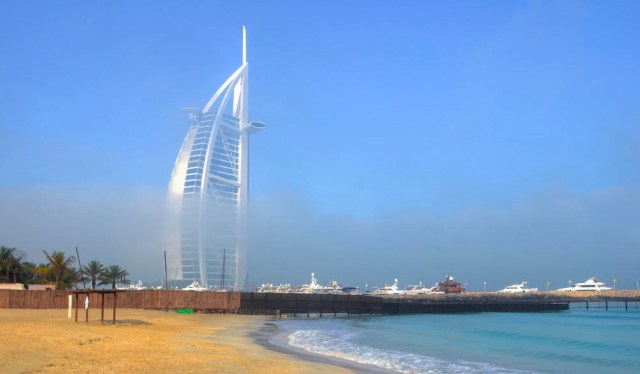
Fog Has Lifted!

burj-al-arab-fogReidin reports that 2016 Dubai freehold transactions, including both freehold and off-plan, fell by 2.3% over the year to 23.6k, with a value of US$ 9.9 billion – 16.3% lower than in 2015 (US$ 11.8 billion); off-plan sales were down 10.6% to US$ 4.9 billion, with ready properties falling 21.1% to US$ 5.0 billion. The market did pick up towards the end of the year, as the impact of an expansion in mid-market offerings, driven by the likes of Dubai South, Damac’s Akoya and Nshama’s Town Square, took effect. Although H1 launches last year totalled 10.3k, followed by 11.6k in H2, it is unlikely that the final number of 2016 actual  handovers will top 10k.

Apartment rentals in many locations slipped during the year with Dubai Marina, Palm Jumeirah and The Greens showing average declines of 14.0%, 11.8% and 5.9% respectively. Rents in other areas including Business Bay, Discovery Gardens and International City remained flat. Arjan was the year’s standout winner, with annual rents up around 30.0%.

Meanwhile, Core Savills are less bullish, with a forecast of a 4% decline in suburban rents this year, compared to 5% a year earlier. The consultancy sees a further 20k units (probably on the high side) entering the market this year and estimates that prices, which have fallen by 15% over the past 30 months, have flattened out and that the bottom of the cycle has been reached. The main drivers for the turnaround are an increased focus on affordable housing, developers offering improved payment terms and global energy prices edging higher.

According to Reidin eight of the top ten 2016 realty sales occurred in Emirates Hills, with a total value of US$ 86.6 million. Palm Jumeirah accounted for the other two sales, totalling US$ 14.4 million.

Following the president-elect’s press conference, Damac confirmed that a US$ 2 billion agreement for a property deal in the emirate had been on the table but was declined by Donald Trump. The Dubai developer has had links with the Trump Organisation for more than three years, with Trump International Golf Club as part of its US$ 6 billion Akoya development.

An Abu Dhabi-based hotel operator has opened its first ever property – the 4-star, 168-key Royal Continental Hotel Deira Royal Continental. It also plans another property – a 5-star, 133-room hotel on Dubai Canal waterfront to be completed before Expo 2020.

Recent Dubai hotel trends continued in the same vein last month. STR figures indicate that occupancy levels remained firm – up 3.2% to a credible 79.7% – but average hotel room rates headed south to US$ 225 – a fall of 8.4%, year on year. However, December did see demand overtake supply along with the highest monthly demand increase in over five years.

In 2016, a further 129k sq mt of gross leasable area was added bringing Dubai’s total office space portfolio to 8.55 million sq mt, with an expected 3.5% to be brought to market this year; Business Bay (30%), The Greens (22%) and JLT (20%) will account for most of the 2017 development, as a marked shift away from the CBD becomes more apparent; in 2016, JLL had noted that vacancy levels in the CBD had fallen to 15%.

The RTA has announced an agreement with Uber to look into the viability of more affordable taxi and limousine services in Dubai. The ride-hailing company will also provide 14k vehicles to be booked via its smart app.

Following a recent IATA report indicating that ME carriers could witness a 67% decline in 2017 profits to US$ 300 million, it is no surprise to hear that Emirates is expecting 2017 to be a “flat” year. The drivers behind their H1 September results, that saw profits sink 75% to US$ 214 million, still exist – a strong greenback, increased competition, economic uncertainty and various security concerns.

In its embryo stages, the newly formed US$ 1 billion Dubai tech company, Noon, will highlight high-street fashion in its drive to dominate the MENA e-commerce sector. Buyers will have access to more than three million products, with payments per NoonPay and same day delivery via Noon Transportation. Its long-term aim is to expand its regional online sales to top 15% (US$ 70 billion) within a decade.

Dubai-listed Gulf Navigation Holding has signed an agreement with Polimar Turkish to expand its range of services. As a result of this partnership deal, the Dubai company’s fleet will expand from four to ten vessels, with a value of US$ 30 million, and annual revenue should grow by US$ 27 million. In December, Gulf Navigation signed contracts with Mena Energy, for cooperation in vessel acquisition and chartering, and Swiss-based SeaQuest to grow its project management services.

Amanat Holdings has invested US$ 97 million to acquire a 13.18% share in Saudi’s International Medical Company. The Dubai-listed healthcare investment company also has a 33.25% share in Jeddah’s Sukoon International.

Having gained 2.7% (97 points) in the first week of 2017 trading, the DFM opened Sunday at 3628 and continued its upward trajectory, climbing 93 points (2.6%) to close Thursday (12 January 2017) on 3721. Volumes were at their highest for some time, closing the last day of the week, at 1.48 billion shares, valued at US$ 414 million, (cf 504 million shares for US$ 171 million, the previous Thursday). Emaar Properties and Arabtec were both higher – by US$ 0.08, to US$ 2.09 and US$ 0.04 to US$ 0.41 respectively.

This week saw Brent Crude shed a little of its recent gains, trading down US$ 0.88 at US$ 56.01. Having already moved US$ 50 higher over the previous two weeks, gold continued with a further US$ 19 uptick, closing at US$ 1,200 by Thursday (12 January 2017).

2016 proved to be a flat year for Boeing, with deliveries 1.8% lower at 748 planes and the 668 booked orders down 13.0% from a year earlier; the value of orders came in at US$ 94.1 billion. The iconic 737 proved its most popular model, grabbing almost 66% of the total deliveries with the number of 747s dropping to a paltry nine. The plane maker has just 28 unfilled orders, after closing 17 sales of the freighter version of the jet last year. Further bad news for the plane maker came when it announced that it was cutting its annual production of the 777 from 84 to 60, in the wake of weakening demand.

On the other hand, Airbus reported an 8.3% jump in 2016 deliveries to 688 planes (including 49 of its long delayed A350s) – and this despite numerous engine and production problems with stakeholders.

Despite Lufthansa posting a 1.8% hike in 2016 passenger numbers to 110 million, it has lost its premier position, as the continent’s largest carrier, to Ryanair. The Irish budget airline had another impressive year, with traffic up 15.0% to 117 million. Two other low cost carriers recorded double digit growth over the year – Wizz Air up 19% to 23 million and Norwegian Air Shuttle by 14% to 29 million passengers. Meanwhile EasyJet saw numbers up 6.6% to 75 million.

If – but more like when – Yahoo sells its digital services to Verizon for US$ 4.8 billion, it will change its name to Altaba, although the buyer will probably retain the Yahoo links. The leaner tech company will become more of a holding company for its e-commerce assets, including the Alibaba Group.

Having seen its 2016 revenue expand by 10.6%, TSMC, the world’s largest contract chipmaker, expects up to double-digit growth again this year. Q4 figures saw the Taiwanese company with record revenue up 28.8%, as profit came in 37.6% higher at US$ 3.2 billion.

Despite all the hullabaloo surrounding Brexit and the dire forecasts of economic disaster, UK retailers reported a rise in Christmas trade. Morrisons, Waitrose, John Lewis, Debenhams and Tesco posted like for like sales increases of 2.9%, 2.8%, 2.7%, 1.0% and 0.7% respectively. Even troubled M&S came to the Christmas party, recording a 2.3% jump in its clothing and homeware division – well above the expected 0.5%.

Having just criticised GM for making cars in Mexico, the president-elect has also tweeted Toyota that it will be heavily penalised if it moved its Corolla production line to Mexico; nevertheless Akio Toyoda indicated that the company had no plans to curb production south of the border. In equally defiant mood, VW is “absolutely committed” to a new Mexican plant, whilst BMW is spending US$ 1 billion on a plant in Mexico. (However, Fiat Chrysler is planning to move its Mexican Ram pickup production line to the US, as well as announcing a US$ 1 billion investment to produce its Jeep models).

The US Department of Justice has finally settled with VW in relation to the German automaker’s scheme, involving 590k diesel vehicles being fitted with a defeat device to cheat on emissions tests. VW will have to pay a fine of US$ 2.8 billion and a further US$ 1.5 billion in civil penalties.

Another carmaker in trouble for the same cheating as carried out by VW is Fiat Chrysler. US regulators have indicated that the company had fitted software which gave distorted emissions readings on a possible 104k vehicles.

The World Bank expects a slightly bigger increase, at 2.7%, in global growth this year following the 2.3% figure for 2016 – the worst since the GFC. It expects the US economy to improve and expand at the rate of 2.2%, compared to 1.6% last year.

For the 10th straight quarter, China’s reserves have fallen – this time by US$ 41.1 billion to a 5-year low of US$ 3.01 trillion, as confidence in the yuan plummets. The country will have to monitor this deteriorating situation closely and maintain a grip on its strict capital controls, along with a worrying surge in debt. However, the good news is that many indicators – such as the service and manufacturing PMIs – are heading north, with a possibility that growth this year may top 7.0%, compared to an estimated 6.7% in 2016.

Australia’s November trade figures impressed the markets as it posted its first trade surplus – at US$ 890 million – in three years; analysts were expecting a US$ 370 million deficit. Exports were 8% higher (with coal, 26%, and iron ore, 11%, the big movers), as imports remained flat. A falling dollar, down some 6.5% since the beginning of November, helped the cause. If this upward trend continues, it could see the country escaping a recessionary slowdown this year.

On the back of higher public and private spending, at 4.2% and 2.0% respectively, Germany recorded a 1.9% GDP increase in 2016 (compared to 1.7% and 1.4% over the previous two years), as Q4 growth tipped an estimated 0.5%. Despite exports only increasing by 2.4%, compared to a 3.4% growth in imports, the country still posted a budget surplus of 0.6% of GDP.

With only a week to go before the Trump inauguration, the US economy continues to steam ahead. December job numbers increased by 156k, as November figures were revised up by 29k to 204k. With jobless claims at just 247k, (and below the 300k mark for the 97th straight week), there are signs that the labour market is tightening. More importantly, the annual rate of wage increase at 2.7% was at its highest level in nearly eight years, as the unemployment level fell to 4.7%. (It must be remembered that these figures do not include those who have given up looking for a job or those who want to work longer hours). There is a feeling that certain measures that the Trump administration plans – tax cuts and infrastructure spending – may overheat the economy which will move ahead even without this added impetus.

Sterling took a bit of a beating this week and at one time was trading at 1.208 but recovered somewhat by Thursday to close on US$ 1.221. The fall followed remarks by UK PM Theresa May – the recovery was thanks to remarks made by president-elect Trump in his first press conference in over six months. Simultaneously, the FTSE 100 discovered new record territory that saw it close on Thursday at 7292 – its 11th successive daily rise.

One of the biggest supporters for the UK to remain in the EU was the Canadian Bank of England Governor, Mark Carney. He has now declared that Brexit no longer remains the biggest domestic risk to the UK economy – if it ever was! Now he has to admit that, despite his pre-referendum protestations, the economy is growing faster than he expected – so much so that there is a distinct possibility that economic forecasts may soon have to be upgraded. (Not surprisingly, he did not agree with his Chief Economist, Andy Haldane, who likened the bank’s forecasting errors as a “Michael Fish” moment). Over the past week, Dubai has had its fair share of misty weather – now hopefully, for the emirate and the BoE forecasters, the Fog Has Lifted!
Posted in Finance | Tagged , , , , , , , , , , , , | Leave a comment

Sittin’ On The Dock Of The Bay

dubai-harbourThis week, the Dubai ruler launched the UAE Food Bank project as part of the UAE’s Year of Giving initiative. His wife, Sheikha Hind bint Maktoum bin Juma Al Maktoum, has been appointed chairperson of the board of trustees.

Al Futtaim Carillion has won a US$ 198 million contract to construct phase 1A6 of One Central for DWTC. The 183k sq mt project will include two (12 and 8 storey) Grade A office buildings which will be handed over by late 2018. Having just delivered Phase1A5, the construction company now has been awarded contracts totalling US$ 490 million in connection with One Central development.

MAF has announced that it will use Dubai as a distribution centre for its ever-growing Carrefour hypermarket chain. The 800k sq ft facility will be located at the National Industries Park (NIP), owned by DP World.

The RTA has had a busy holiday period reaching its peak on New Year’s Eve, when an incredible 1.8 million journeys were made by its passengers including 770k on the metro, 543k by taxi and 394k on public buses.

Considering the strong dollar and a sluggish retail environment, Dubai Duty Free did comparatively well to report only a 3.2% decline in 2016 revenue to US$ 1.82 billion, following on from a 1.5% 2015 fall – the first in DDF’s history. Perfume (16.5%), alcohol (15.9%) and tobacco (8.7%) accounted for 41.1% of total sales.

GEMS Education reported a US$ 132 million profit, on a US$ 790 million revenue, for the year ending 31 August 2016 – a major improvement on the US$ 64 million profit, on a turnover of US$ 879 million, posted for the 17 months to August 2015. Student numbers at the education provider’s 88 schools increased by 6.1% to 104.2k, as its workforce rose by 7.4% to 13.5k.

With the acquisition of a further 23.94% stake in Pusan Newport Company Limited, DP World now holds a 66.03% share in the largest terminal in Pusan. The port – which accounts for 75% of South Korea’s total container volumes, handling nearly 20 million TEUs – is the 6th largest in the world. It is reported that it is also considering plans to build a dry port near Cairo, along with other new ports and free zones in Egypt.

For the first 11 months of the year, both passenger and cargo traffic have surged at Dubai International, the world’s biggest international airport. November saw passenger numbers up 9.4% (compared to a year earlier) to 6.6 million bringing a 7.0% YTD increase to 76.0 million. Cargo was 7.5% higher in November, with 235k tonnes, and 3.3% up YTD to 2.36 million tonnes.

Over the past two years Dubai’s population has grown by 15.86% to stand on New Year’s Day at 2.696 million. Of that total, an estimated 69.3% are male and about 10% – 12% will be nationals. Last year 30.5k babies were born in the emirate, of which 25.3% were Emiratis, with the balance being expatriate births.

Six months after the Department of Economic Development closed its office in Media City, the owner of Exential Group has reportedly been arrested. It is alleged that he ran a US$ 14 million forex Ponzi scheme that promised investors a 100% return on their US$ 25k deposits.

The UAE Central Bank reported that its gold reserves climbed 11.9% to US$ 287 million in the first 11 months of 2016 but decreased 6.8%, month on month. It is expected that this upward movement will continue into 2017.

In a possible April US$ 1.5 billion London IPO, Brazilian food exporter BRF SA is to hive off a 20% stake in its Dubai-based One Foods Holdings (now renamed Sadia Halal). The local company controls 45% of all poultry sales in the GCC. BRF, the world’s leading poultry exporter, aims to tap into the global halal market which is expected to top US$ 60 billion by 2020.

Rasmala has acquired a 68% stake, from PSM Partners, in a UK corporate serviced apartments company, Orchard Apartments, for an undisclosed sum. The Dubai-based investment firm is in the throes of expanding assets under management and diversifying its realty portfolio.

Amlak Finance – 45% owned by Emaar Properties – has renegotiated part of its 2014 creditors’ debt restructuring package, having received approval from a “super majority” of stakeholders. The agreement sees Amlak being able to expand its mortgage book and add new business, following a lifting of several restrictions.

Damac Properties has advised the DFM that it will distribute 2016 dividends of not less than 25% of its equity, totalling at least US$ 409 million. The developer is expected to cash in on its relationship with the US president-elect and this week announced the launch of new villas, adjacent to the first of its Trump golf courses – the Kensington Boutique Villas at Akoya Oxygen and Beverly Hills Boutique Villas at Akoya by Damac.

Dubai Islamic Bank has sold its 20.8% share (held through a 40% stake in MESC Investments) in Jordan Dubai Islamic Bank to Bank Al Etihad. No other details are available.

The impact of foreign investment on the local bourse can be gleaned from the fact that 2016 purchases topped US$ 16.6 billion, as sales were 0.5% lower at US$ 16.5 billion. Meanwhile, institutional investors bought US$ 10.9 billion worth of shares (selling US$ 10.3 billion), as UAE investors topped the lot, with acquisitions of US$ 19.9 billion and sales of US$ 20.0 billion.

The DFM opened Monday at 3531 and had a credible opening week for 2017, climbing 97 points (2.7%) to close Thursday (05 January 2017) on 3628. Volumes were still on the low side, but up for the week, at 504 million shares, valued at US$ 171 million, (cf 398 million shares for US$ 89 million, the previous Thursday). Emaar Properties and Arabtec were both higher this week by US$ 0.07, to US$ 2.01 and US$ 0.01 to US$ 0.37 respectively.

This week saw Brent Crude consolidate recent gains, trading flat – US$ 0.04 higher at US$ 56.89. Gold continued last week’s US$ 27 uptick, closing US$ 23 higher at US$ 1,181 by Thursday (05 January 2017).

According to a MEED report, 83% of the estimated US$ 208 billion to be awarded this year in the MENA region will emanate from the power, oil and transport sectors. Saudi Arabia will account for 20.7% of this total, with this spend 71.3% higher than its 2016 total of US$ 25.1 billion.

Insurance companies had their worst year since 2012 for natural disaster claims which came in at US$ 175 billion, with two disasters – two earthquakes in Kyushu (US$ 31 billion) and mid-summer floods in China (US$ 20 billion) accounting for 29.1% of the total. Worryingly, and probably a sign of the times, floods accounted for 34% of total losses – well above the 10-year average of 21%. It is estimated that 98% of all losses in China were uninsured – and 70% on a global scale.

It seems that President-elect Trump has spooked Ford into cancelling a US$ 1.6 billion plant in Mexico and using some of these funds to expand its Michigan facility in Flat Rock. The tweeting Trump had earlier criticised both Ford and GM for not producing in the USA. It does appear that one of the first casualties following his inauguration on 20 January could well be the NAFTA.

The world’s 5th largest carmaker, Hyundai/Kia, with 35 plants in 10 countries, expects a marginal 1.5% increase in car sales to 8.25 million this year. South Korea’s largest auto manufacturer has seen 11 consecutive quarters of profit downturn, with the latest Q3 return 7.2% down, quarter on quarter, to US$ 953 million.

Although the EU already has a free trade agreement with South Korea, it does not have one with China. The benefits of such agreements have been brought home by Australia that starts 2017 with tariff cuts (of up to 50%) to 7k products because of free trade deals with these two massive economies.

Following the disastrous discontinuance of its Galaxy Note 7 (and a probable US$ 2.1 billion hit to profits), the tide may have turned for South Korea’s Samsung after estimates that December quarter profits would top US$ 7 billion; memory chip sales with its semiconductor business are likely to reach US$ 3.7 billion in Q4 and US$ 10.9 billion for 2016. Little wonder their shares have jumped 43% during the year.

Toshiba shares fell over 5% on Wednesday, as news filtered out that the company, yet again, has been misrepresenting profits – this time of US$ 340 million over the past three years. This came just two weeks after the Japanese conglomerate announced that it may face a multibillion US$ write down on its US nuclear business which saw its shares then crash over 20%.

Apple becomes the latest big name to invest in Japan’s SoftBank Group Corp. The company confirmed a US$ I billion payment into the tech fund which is reportedly tapping Saudi Arabia’s Public Investment Fund in a possible US$ 45 billion deal, with further investments likely from inter alia Foxconn, Oracle and Qualcomm.

There is further evidence that an Australian property bubble is about to burst, with news that capital city properties surged 10.9% last year with Sydney (15.5%), Melbourne (13.7%), Hobart (11.2%) and Canberra (9.3%) at dangerous levels, whilst Perth is cooling off (after the mining boom) with a 4.3% slump.

There was finally some good news for Spain which has reported a credible 10.1% hike in visitor numbers to 71.6 million, for the first eleven months of 2016. The UK was the biggest source market accounting for 23.7% of the total, followed by France (10.8 million) and Germany (10.7 million). For the whole of 2015, numbers totalled 68.1 million whilst November saw a 9.2% hike in numbers to 4.1 million.

In December, the eurozone factory PMI climbed to 54.9 – its highest level since April 2011 – and up from November’s 53.7. Individual countries – such as Germany (55.6) and France (53.5) – performed well but could be facing a difficult year as national elections loom on the horizon.

Caixin’s December survey, at a 53.4 reading, showed the country’s service sector was continuing its recent upward trend. The composite index at 53.5 was at its highest level in almost four years. In contrast, China’s manufacturing PMI headed south dropping 3 notches to 51.4 – as did December’s non-manufacturing PMI to 54.5. Although there have been positive signs such as an improvement in domestic demand, and a fillip in the property sector, there are concerns that private sector debt is climbing to dangerous levels.

As it plans to develop its energy sector, China’s National Energy Administration announced that it would spend US$ 360 billion in renewable power generation over the next five years.

China has opened a 12k km train link from Yiwu, in the eastern province of Zhjiang, to London. The freight train service will take 18 days to complete each way and is expected to make the UK the European gateway for Chinese products as well as to boost investment into the country, following Brexit

The UK’s construction PMI was up to 54.2 from November’s reading of 52.8, as new orders rose at their fastest rate since January. The December manufacturing Purchasing Managers’ Index, with a 56.1 reading, surprised the market by expanding at its fastest rate in 30 months. New orders for the month, along with rates of growth for production and the pace of jobs growth, indicate that apparently there is life after Brexit. The UK economy will probably have grown more than 2% this year, despite a lackluster start to 2016 and the uncertainty before and after the referendum.

In similar fashion, the US manufacturing PMI steamed higher in December to 54.7 – its highest reading for the year – driven by impressive hikes in new order growth to 60.2 and production to 60.3. Furthermore, construction spending climbed to US$ 1.18 trillion, its highest level in over 11 years, driven by a boost in private construction to a rate of US$ 893 billion.

Even Japan jumped on the bandwagon, with a manufacturing PMI reading of 52.4, up from November’s 51.3. Both production and new orders grew at their fastest rate in 2016. Its services sector also headed north with a December PMI score of 52.3 with new orders increasing at their quickest rate in 18 months with input prices maintaining their two-year highs. Caixin’s December survey, at a 53.4 reading, showed the country’s service sector was continuing its recent upward trend. The composite index at 53.5 was at its highest level in almost four years.

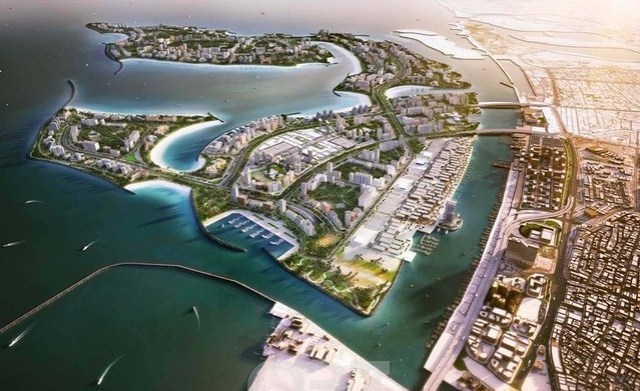
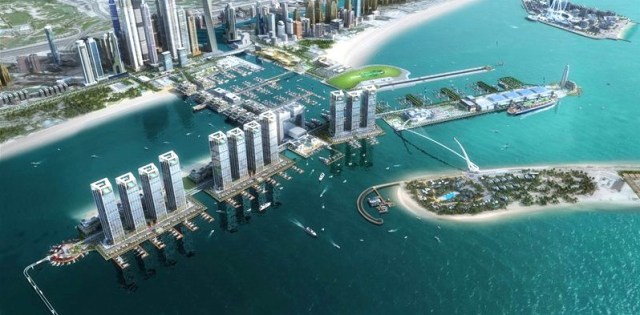
HH Sheikh Mohammed bin Rashid Al Maktoum launched the emirate’s latest mega project this week – Dubai Harbour. Encompassing DIMC, Logo Island and Skydive Dubai, and located adjacent to JBR, the 20 million sq ft Meraas project will incorporate a 3.5 million sq ft shopping mall, a cruise ship port, hotels, residential units and offices. It will also feature Dubai Lighthouse and will have a 1.45k berth marina and no doubt a place for Sittin’ On The Dock Of The Bay!

Posted in Finance | Tagged , , , , , , , , , , , , | Leave a comment

Days Of Future Passed

dubai-fireworks-2017It is expected that KOA’s first mixed-use development will be completed by the end of 2017. The 70-apartment project, located near Mohammed bin Rashid Gardens, will also include a multi-purpose ampitheatre and a gourmet market.

With an opening slated for early 2017, Dubai Motor City’s First Avenue has signed its initial main anchor tenant – ACE Hardware. The US$ 136 million development will house 70 retail outlets, 15 eateries and a 150-key Park Inn by Radisson.

Damac Properties has introduced a Dubai Shopping Festival offer to any purchaser of its units, valued at over US$ 163k, a brand new BMW or other luxury car. No doubt that the developer, having sold a total of 16.8k units to date, will see a mini sales boom up to 28 January 2017.

As has happened over recent months, Dubai’s hotels have seen occupancy levels nudging higher, whilst other indicators head south. November is no exception with occupancy up 4.7% to 89.5%, with the average daily rate and revenue per available room down 8.6% and 3.6% to US$ 250, compared to the same month in 2015.

Meydan Group announced that it had secured Islamic financing of US$ 272 million to be used for its new projects, including its residential District One Project in MBR City.

Dubai Municipality has indicated that it will be spending up to US$ 681 million on two new commercial facilities, as well as expanding and maintaining existing markets. The Central Fruits and Vegetables Market is expected to cost US$ 272 million whilst a multi-storey cold storage for vegetables and fruits for 56 stores comes in at US$ 44 million. It is also currently constructing a US$ 26 million facility specifically for building materials in Warsan-3 and a US$ 21 million market for furniture, electrical equipment and household appliances, located in Nad Al Sheba.

DM has also signed an agreement with the Mohammed bin Rashid Space Centre (MBRSC) in connection with the design and manufacture of the region’s first environmental nanometric satellite – DM SAT1. The project emanates from the Dubai Future Accelerators program, with the advanced satellite able to collect and analyse environmental data.

DEWA announced that it had completed 53% of its US$ 400 million M-Station power plant that will generate a further 700 megawatt – 34% – to 2,760 MW to Dubai’s capacity.

The second phase of the US$ 13.6 billion, 5k MW Mohammed bin Rashid Al Maktoum solar park is set to be completed by April 2017. Then the extra 213 MW solar PV power will provide for electricity to an additional 30k homes.

As part of HH Sheikh Mohammed bin Rashid Al Maktoum’s US$ 354 million Hatta development master plan, construction work will soon start on the Hatta Gate art project. Located in the Hatta heritage area, the building will reflect the area’s topography of mountains and cliffs. The RTA is also currently building a US$ 15 million link road from the town to Dubai, via Lehbab.

Following a directive from Sheikh Hamdan Bin Mohammad Bin Rashid Al Maktoum to boost the industrial sector in line with the Dubai Industrial Strategy 2030, it is expected that Dubai’s GDP could see a US$ 45 billion surge over the next 13 years. The Crown Prince is highlighting the need for an impetus in knowledge-based jobs and wants to see 27k new specialised positions, a marked increase in R&D and related exports to jump by US$ 4.4 billion.

Airbus announced that it was postponing the delivery of 12 A-380s to Emirates due over the next two years. Last month, the airline indicated that it was having some unspecified issues with the new RR engines for the jumbo.

Dubai New Year revelers will have to dig deeper this year, as a travel study has concluded that the emirate will be the most expensive location in the world. The average cost of a “package” covering all the accoutrements – such as drink, food and entertainment – has risen 11.2% to US$ 610 compared to the likes of New York, London, Paris and Sydney where the cost comes in at US$ 510, 391, 319 and US$ 259 respectively.

Local petrol prices nudged higher again with Special 95 up US$ 0.030 to US$ 0.490 from 01 January; over the year, the price has risen 6.5%. A further hit for UAE drivers came with the news that 35% will have to pay more for vehicle insurance in 2017, as new tariffs come into force with minimum premiums of US$ 354 and US$ 545 for saloon cars and SUVs respectively.

The 5-year old Emirates Development Bank has sanctioned a US$ 409 million budget – half of which will go to housing loans for Emiratis and the balance for the for the development of SMEs to help the private sector generate more job opportunities for citizens.

With imports at US$ 161.9 billion, reexports of US$ 67.8 billion and exports totalling US$ 29.7 billion, Dubai’s non-oil foreign trade for the first nine months of the year showed an YTD decrease of 1.4% to US$ 259.4 billion; imports were 0.5% lower from the previous year’s return of US$ 162.7 billion, with reexports down 7.4% from US$ 73.3 billion and exports 8.3% lower at US$ 27.2 billion. However, there was an 11.0% surge in the volume traded to 70.8 million tonnes.

Shuaa Capital has paid US$ 25 million for a 14% stake in Bahrain’s Khaleej Commercial Bank. The Dubai-listed investment bank bought the 147.1 million shares in a special auction from Alimtiaz Investment Group.

The Investment Corporation of Dubai posted a 23.2% dip in H1 profits to US$ 2.2 billion, as revenue fell 7.9% to US$ 22.5 billion. A leading driver was the fall in oil and gas earnings (accounting for 23.5% of ICD’s portfolio) sinking 30.6% to US$ 5.3 billion, with its investments in the likes of Enoc, Ducab and Emirates Global Aluminium being badly affected by a torrid 2016 in the energy sector. ICD has stakes in many of the emirate’s iconic companies including Dubai Islamic Bank, Emirates, flydubai, Jumeirah and Nasdaq Dubai. Its total assets have increased 2.3% to US$ 200.8 billion.

The DFM opened Sunday at 3517 and after a flat week’s trading closed 14 points higher on Thursday (29 December 2016) at 3531. Volumes were on the low side at 398 million shares, valued at US$ 89 million, (cf 210 million shares for US$ 169 million, the previous Thursday). Emaar Properties and Arabtec were both down for the week by US$ 0.04, to US$ 1.94 and US$ 0.01 US$ 0.36 respectively.

This week saw Brent Crude having another good week – US$ 1.80 higher to US$ 56.85. Finally, gold reversed its recent downward trend, closing US$ 27 higher at US$ 1,158 by Thursday (29 December 2016).  Over the year, both commodities traded upwards with Brent up US$ 18.42 to close 2016 at US$ 56.82, whilst the yellow metal was US$ 92 higher at US$ 1,152.

With OPEC’s 2-year strategy of slashing prices by pumping more oil, in a bid to cut out the shale producers, showing some success, the cartel has to ensure that rising oil prices do not encourage a comeback from these alternate oil suppliers. Now as prices nudge higher to the mid-US$ 50 range, shale rigs are being brought out again – an estimated 200 since May. It is estimated by the IMF that a US$ 62 breakeven point would cover most members’ shortfalls but the higher the price the higher the number of shale producers will re-enter the market.

Further to Boeing’s announcement last week that it had secured a US$ 16.6 billion deal with Iranair for 80 aircraft, the Iranian Deputy Transport Minister, Asghar Fakhrieh-Kashan, has indicated that the value of the order was only about 50% of that total. Likewise, it seems that Airbus has been touting a figure in the region of US$ 19 billion for its recent order of 100 planes, whereas the airline’s chief executive has indicated that the value was less than US$ 10 billion.

In Australia, the largest lotteries and betting company in the world has rejected a US$ 4.8 billion takeover bid from Pacific Consortium. The board of Tatts seems to prefer the bid from Tabcorp.

Shares in troubled Toshiba Corp took a 20.4% dive in one day, as news that it may be facing billions of US$ in losses, relating to a US nuclear power acquisition. The company is just recovering from a major accounting scandal that saw the electronics conglomerate inflating profits by US$ 1.25 billion over a 7-year period as well as last year’s write down of US$ 2.3 billion for its nuclear business.

Following its dubious role in mortgage-backed securities, some may consider that Deutsche Bank has got off lightly with a US$ 7.2 billion penalty from US authorities, when the initial September fine came to US$ 14.0 billion. In a similar deal, Credit Suisse has had its fine for similar misdeeds cut to US$ 5.3 billion. Furthermore, it seems that Barclays is now on the DoJ’s radar for alleged mortgage securities fraud involving US$ 31 billion in securities. The US authorities said it would seek compensation up to the amount that investors lost or that Barclays gained.

As expected, the Gentiloni government rubber-stamped a US$ 21 billion finance package to support Italy’s troubled banking sector. The first bank in the queue for funds will be the world’s oldest, Monte dei Paschi di Sienna, which failed in its attempts to raise US$ 5.5 billion from private investors. Now it is requesting a further US$ 4 billion as the shortfall is now bigger than first thought. Under updated EU rules, any bank applying for government assistance will have to convert any junior bonds to shares – a move that may cause problems for small investors, who traditionally own such paper, if and when the financial institution hits the buffers.

It has not been a good first year for the incoming Argentine President Mauricio Macri, as he sacks his finance minister, Alfonso Prat-Gay. He was responsible for ending foreign exchange controls, resulting in the peso losing 33% of its value and inflation jumping to 40%. During the year, with 6k companies having closed and 200k becoming unemployed, Latin America’s third-largest economy is expected to contract by a further 2%.

The US economy is progressing better than expected with Q3 growth rates revised upwards from 2.9% to 3.5% – well up on the 1.4% recorded in Q2. It will be interesting to see the new Trump administration continuing this trend which will have a positive impact on the global economy.

Likewise, the UK has updated its Q3 growth, albeit on a smaller scale, from 0.5% to 0.6%. The FTSE 100 closed on Wednesday at a record high of 7,106, beating the 27April 2015 previous best, and the year on 7,148.

Despite Brexit, the UK has jumped up five places to 5th in the Forbes list of the best countries to do business. Sweden, New Zealand, Hong Kong and Ireland were in the top 4 whilst the US dropped one notch to 23rd, mainly because of increasing bureaucracy.

China expects that 2016 foreign direct investment into the country will reach US$ 113 billion, as outbound direct investment topped US$ 161 billion, having risen 55.3% in the 11 months to November, and 76.5% in the month compared to November 2015. It is expected that the country will tighten up on ODI in 2017, as the yuan continues to wobble and forex reserves dip to their lowest levels in six years. On the other hand, the country will open up on inbound investment and reduce restrictions to “increase openness to the outside world”.

As noise levels in in the China Sea begin to rise, Japan has approved the country’s largest ever defence budget at US$ 43.6 billion, whilst its coastguard budget has jumped 11.9% to US$ 1.8 billion. This comes about because of increasing tension arising from China’s and North Korea’s nuclear and missile threats. The defence budget accounts for 5.3% of Japan’s US$ 828.6 billion for the financial year starting 01 April 2017. This could be a major problem area in 2017 and a global flashpoint.

It is interesting to note that many pundits have been eating humble pie, having got forecasts horribly wrong in 2016. Many predicted oil to be trading at US$ 20 by the end of the year and that sterling would be sinking to parity with the greenback, let alone massing up on Brexit and Donald Trump. Treat any predictions with caution!

Despite the general feeling that 2016 was not the best of years, all this blog’s indicators headed north, with the exception of the AUD, GBP and euro currencies (which failed to compete with the strong US$) and the CSI300 index. The best performers were iron ore, Brent, copper and silver – up 59.57%, 56.10%, 15.89% and 15.77% respectively – but note that all are still lower than at 31 December 2013!

Our June 2017 forecast is listed below, with a local businessman (2) taking on the blog (1) with their considered expectations.

1 2                  
Forecast Forecast                
30 Jun 17 30 Jun 17     Unit %age 2016 31 Dec 16 31 Dec 15 31 Dec 14 31 Dec 13
1,270 1,260 Gold   US$ oz 8.58% 1,151 1,060 1,186 1,236
81 70.5 Iron Ore   US$ lb 59.57% 75 47 73 135
66.50 50.00 Oil – Brent       56.10% 56.82 36.40 57.33 102.50
141 142 Coffee   US$ lb 7.26% 133 124 161 260
73 73 Cotton   US$ lb 7.81% 69 64 62 86
16.85 17.00 Silver   US$ oz 15.77% 16.00 13.82 15.77 20.15
2.62 2.57 Copper   US$ lb 15.89% 2.48 2.14 2.88 3.37
0.74 0.71 AUD   US$   -1.37% 0.72 0.73 0.81 0.89
1.28 1.28 GBP   US$   -16.22% 1.24 1.48 1.53 1.64
1.03 0.99 Euro   US$   -3.67% 1.05 1.09 1.21 1.38
0.015 0.019 Rouble   US$   14.29% 0.016 0.014 0.017 0.030
6,980 6,550 FTSE 100       14.42% 7,142 6,242 6,548 6,730
3,260   CS1300       -11.28% 3,310 3,731 3,532 2,291
2,175 2,040 S&P 500       9.49% 2,238 2,044 2,091 1,831
3,689   DFMI       12.06% 3,531 3,151 3,774 3,370
5,420 5,380 ASX       5.99% 5,665 5,345 5,415 5,352

2017 should be a better year than a lot of experts expect. On the local front, realty will move higher as the Expo momentum takes effect and oil prices stabilise. The emirate’s inflation rate will hover around 2.6%, direct foreign trade in H1 will top US$ 120 billion, its population will grow to 2.75 million and its economic growth will reach 3.0%. The hospitality and travel sectors will show improvement but worries remain in the retail field, particularly eateries.

On the global stage, 2017 will be a positive year. The stock markets will take a breather in H1, having hit record highs toward the end of 2016. As the US Trump led economy will defy general opinion by growing at around 3.5%, the dollar will continue to be the dominant global currency. Expect a major fall-out in the EU from Greece, Spain or even the Italian banks. India and China will lead the Asian economies, with 7% growth rates, but expect that the latter’s shadow banking sector and housing bubble to cause some concern for the Xi Jinping administration in H1.

In 2017, the economic cycle will continue to turn, with forecasts and predictions, as always, similar to looking and listening to Days of Future Passed.

Posted in Finance | Tagged , , , , , , , , , , , | Leave a comment

Days Are Numbered!

HH Sheikh Mohammad Bin Rashid Al Maktoum has approved Dubai’s US$ 12.9 billion 2017 budget which, as expected, sees a marked 27% expansion in infrastructure expenditure, in line with the 2021 Strategic Plan. Consequently, the budget allocation is US$ 272 million higher than in 2016 and forecasts a US$ 681 million deficit, equating to 0.6% of the emirate’s GDP.

The Dubai Ruler also inaugurated the US$ 3.5 billion Dubai Parks and Resorts, the region’s largest theme park destination. Located on an area of 30.6 million sq ft, it hosts three parks – Bollywood, Legoland Dubai and Motiongate (a collaboration of three Hollywood studios, Columbia Pictures, DreamWorks and Lionsgate.

The latest Core Savills 2016 report estimates that Dubai apartment rentals will have fallen between 2% – 4%, except for JLT and JV, which have nudged 1% higher, as well as in prime and central residential locations. There was even worse news for villa renters, but not for tenants, with forecast falls of 3% – 5% in most areas as new supply takes hold. However, the consultancy predicts gradual property prices throughout 2017, with a forecast 20k units being delivered,of which 19% will comprise prime residential.

The Russian Forum Group has advised that its Palm Island XXII Carat will be completed by late 2017. 30% of the luxury development of 22 7-bedroom beachside villas, ranging from 8k – 13k sq ft, has already been sold.

This week, Nakheel opened its fourth community retail centre – Al Furjan Pavilion – which is part of its massive US$ 4.4 billion retail expansion. YTD, the developer has added 1.5 million sq ft of retail space, with a value of US$ 409 million. (Its chairman, Ali Rashid Lootah, expects to exceed last year’s profit of US$ 1.2 billion when 2016 results are published early in Q1.

Union Properties have announced plans for a US$ 163 million mixed use project in Motor City, including yet another theme park. The location was initially slated for a US$ 545 million F1-X Dubai park that has since been shelved. Now half of that land would be used for the theme park and the remaining 50% for residential/retail units. Although Dubai Municipality has given the project an initial approval, the developer is still awaiting clearance from Dubailand to conduct a detailed study.

To support the growing population, Dubai Health Authority is set to build seven hospitals, bringing the emirate’s total to 33, and expand three existing facilities. Furthermore, it already has a staggering 2.8k health facilities serving its 2.7 million inhabitants plus the 1 million daily commuters from other emirates.

Damac announced the launch of MOD – a range of 1-bedroom townhouses – with prices starting at US$ 162k and located in its Akoya Oxygen golf community.

Even with all the doom and gloom surrounding the realty sector, Azizi Developments have announced that it will launch 50 new developments next year in the emirate. The developer is already working on 20 projects (15 of which are in Al Furjan), with a reported portfolio value of US$ 2.0 billion, including the US$ 204 million, 178-unit Azizi Mina Hotel Apartments on the crescent of Palm Jumeirah.

Meraas Holding is expected to open a new operation that will see the introduction of gourmet dining destinations, with the first outlet, Qasr Al Sultan, opening next month; the facility will offer a “Life of a Sultan” experience and comprise a souk, a food bazaar and traditional entertainment. Future outlets will be located in Meraas developments or standalone venues.

According to the Minister of State for Financial Affairs, HE Obaid Humaid Al Tayer, the new VAT tax régime will generate US$ 13.6 billion in its first three years of operation. Although the law has yet to be enacted, it is still expected to commence on 01 January 2018, with revenue being split between federal and the seven local governments. It appears that the tax will not apply to education and health care, whilst some staple food items will be exempted.

A report by PayPal and Ipsos indicates that UAE on-line spending will continue to expand and reach US$ 9 billion by 2018. It estimates that 68% of the country’s on-line adults have used e-commerce shopping over the past year (up from 62% a year earlier).

Unilever has opened its US$ 272 million, 100k sq mt production plant in Dubai Industrial Park. The factory will produce an annual100k tonnes of liquid personal care, 80% of which will be exported.

Unsubstantiated reports indicate that Emirates is cutting back on staff numbers, currently totalling 103k, as a challenging economy, the strong greenback, regional conflicts, and overcapacity continue to wreak havoc on its bottom line.  It seems that the airline has been offering redundancy packages to selected HO staff, as it slashes costs, following a 75% decline in H1 profit to US$ 214 million. Indeed IATA’s dismal forecast for ME carriers sees only a US$ 300 million profit, compared to an expected US$ 900 million this year.

Of the 293 mid-to-large private jets delivered to ME customers over the past decade, UAE (with 63 planes) was the second largest recipient, after Turkey’s orders for 77 units. 80% of financing for the jets (with a price range of between US$ 25 million to US$ 75 million) has been via external sources.

HH Sheikh Ahmed bin Saeed Al Maktoum inaugurated the world’s largest VIP Terminal – covering 5.6 sq mt – at Dubai South, just minutes away from Al Maktoum International. The facility has so far seen 1k flight movements, since its April soft opening, and is looking at quadrupling that number in 2017.

Bloomberg has reported that the cost of the new DWC airport and the surrounding Dubai South logistics hub will cost the government up to US$ 35.7 billion over the next 12 years. Financing is expected to be largely debt-related, using the three main state entities (Department of Finance, Dubai Aviation City Corporation and Investment Corporation of Dubai), with initial expansion costs slated to be in the region of US$ 3 billion.

The emirate’s latest metropolis, Dubai South, will have the region’s first electric E-bus on its roads early next year following an agreement with Australian-based Transit Australia Group. The zero-carbon vehicle, with maintenance costs 80% lower than traditional buses, will carry 50 passengers and have a range of 300 km, as a result of advanced battery technology.

The WTO estimates that the UAE accounts for 31.5% of the ME exports – up from 24.0% the previous year. On a global scale, the country is ranked 20th, accounting for 1.6% of the worldwide total.

The Ministry of Economy has indicated that the country’s overseas investments total US$ 87.4 billion, making it the top Arab investor.

Government-owned Saudi Telecom Co becomes the latest company to show faith in Dubai-based Careem, acquiring a 10% shareholding for US$ 100 million, with Japan’s Rakuten, the world’s largest retailer outside of China and the US, being confirmed as its co-leader. The regional equivalent of Uber is in the throes of raising up to US$ 500 million for expansion purposes.

Nick Peel, Chief Executive of Marka for the past two years, has resigned from the loss-making listed retail company. Q3 figures showed that it made losses of US$ 3 million, as revenue dipped 15.6% to US$ 18 million, compared to the same period a year earlier. Vice chairman, Khaled Al Mheiri, will take over his duties until a replacement is appointed. Dubai’s retail sector is going through a sticky period being hit by a strong currency, weak consumer confidence and the rise of e-commerce. After the announcement, Marka shares jumped 7.1% to close on US$ 0.41.

Emaar Properties has agreed to develop a 2 million sq area in Ras Al Khaimah’s Al Marjan Island, that emirate’s first man-made island development, which has cost US$ 1.8 billion. The Dubai developer will build a 5-star hotel, retail precinct and serviced residences in its phase 1. This will be followed by several more hospitality and retail projects on the island that stretches 4.5km into the sea.

Du (Emirates Integrated Telecommunications Co) has proposed a 0.84% reduction (38.52 million shares) which will see its capital base being reduced by US$ 38 million to US$ 1.235 billion.

Emirates REIT will pay a 2016 interim dividend of US$ 0.409 in January, costing the company US$ 44 million. Shareholders as on 16 January 2017 will be entitled to the pay-out.

With Clarity Fund’s divesting its 9% share in Drake and Scull International, its founder member, Khaldoun Tabari, now becomes its biggest shareholder, with an 8.3% stake. Its shares were trading at US$ on Thursday at US$ 0.13

The DFM opened Sunday at 3554 and after a lack lustre week closed 38 points lower to close on Thursday (22 December 2016) at 3517. There was a marked fall again in volumes, with the last day of trading 210 million shares, valued at US$ 89 million, (cf 691 million shares for US$ 232 million, the previous Thursday). Emaar Properties and Arabtec were both down for the week by US$ 0.04, to US$ 1.98 and US$ 0.37 respectively.

This week saw Brent Crude continue its recent upward trend – US$ 1.03 higher to US$ 55.05. Having shed over 9% the previous three weeks, gold had a welcome flat week, just US$ 2 higher to close on US$ 1,131 by Thursday (22 December 2016).

BP has paid an estimated US$ 2.2 billion, by issuing about 2% of its issued share capital to be held on behalf of the Abu Dhabi government, for a 10% stake in Abu Dhabi’s ADCO onshore oil concession for 40 years. Of the 40% allocated to overseas interests, other stakeholders include Total (10%), Japan’s INPEX (5%) and South Korea’s GS Energy (3%). ADNOC is still looking for further partners to take up the remaining 12% balance.

Two corrupt Brazilian companies have been hit by huge penalties levied by the US Department of Justice. Construction giant, Odebrecht has been fined US$ 2.6 billion and petrochemical firm, Braskem, US$ 960 million, for bribing government officials to secure public contracts.

Lloyds Banking Group beat off the likes of HSBC and Santander, to acquire MBNA for US$ 2.4 billion The company, with 5 million users, is one of the UK’s biggest credit card issuers, holding assets in excess of US$ 8.7 billion and a loan book equivalent to 11% of the UK credit card market.

Bitcoin  has had a phenomenal year  and on Thursday reached its highest ever level on the Europe-based Bit-stamp exchange at US$ 875. It is estimated that the value of all Bitcoins in circulation is US$ 14 billion, with the cryptocurrency more than doubling from its 01 January opening of US$ 435.

SoftBank founder Masayoshi Son has started to deliver on his promise to President-elect Trump of creating 50k jobs and investing US$ 50 billion in US start-ups. This week he agreed to invest US$ 1 billion in the US company, OneWeb Ltd.

Despite the three main rating agencies maintaining Australia’s AAA rating, the outlook for the country is far from promising. The government is still forecasting that the budget deficit will turn to surplus by 2020/21 but that is dependent on factors such as a 3% annual wages growth rate, current high iron ore prices to continue, a marked cut-back in spending, no major falls in the property market and the global economic growth moving north. Even the government has already reduced its growth forecasts – this year from 2.5% to 2.0% and next year 2.75% from 3.0%.

Despite still awaiting the next US$ 656 million tranche of its bailout deal, Greece has angered its creditors by a one-off US$ 900 payment to its pensioners and scrapping a VAT increase for residents of Aegean islands. The Tsipras government claim that this will come out of a US$ 1.1 billion tax surplus but this has not gone down well with Greece’s paymasters which may now delay any further payments to the troubled country.

The Fed Chair painted a rosy picture of the US labour market, with job openings and wages moving higher. Janet Yellen also considered that younger workers are now entering the strongest job market in over a decade, following years of sluggish growth.

Despite hitting another record high, the Dow Jones failed by just 13 points to hit the magical 20,000 level on Tuesday. Since the Trump election the bourse has gained nearly 1,000 points and might have hit the jackpot were it not for the Berlin Christmas market attack and the assassination of the Russian ambassador to Turkey.

To prop up the country’s ailing banking system, new Italian Prime Minister, Paolo Gentiloni, is to seek parliament’s approval to issue bonds totalling US$ 20.8 billion. The scale of the problem can be gleaned from the fact that eight of Italy’s largest banks carry bad loans of US$ 375 billion. It is little wonder that the country is the second most indebted country in EU with a US$ 2.34 trillion burden equating to 136% of its GDP.

For the first time in over three years, Germany’s producer prices edged higher by 0.1% year on year, following a 0.4% decline in October. Although energy prices have fallen 1.7% over the year, non-durable goods, durable goods and capital goods experienced increases of 1.5%, 1.0% and 0.6% respectively.

The post Brexit UK budget deficit narrowed in November by US$ 0.75 billion, with the current public sector net borrowing, excluding intervention, now standing at US$ 15.8 billion; YTD, this has fallen by US$ 11.6 billion to US$ 74.4 billion. However, the public sector net debt has increased over the past twelve months by US$ 73.3 billion to US$ 2.06 trillion, equivalent to 84.5% of the country’s GDP.

Over two years ago, this blog indicated that the IMF chief will be facing criminal charges (Foxy Lady – 01 September 2015). Now the case involving a US$ 430 million award, which Christine Lagarde, then France’s Minister of Finance, signed off in favour of an ally, Bernard Tapie, in a dispute with the then state owned Credit Lyonniase, has been settled. Interestingly, the lady was found guilty as charged but escaped both a prison sentence and a fine. Surely she must go the way of her predecessor, the disgraced Dominique Strauss-Kahn, and now her IMF Days Are Numbered!

Posted in Finance | Tagged , , , , , , , , , , , , | Leave a comment

Don’t Stop Believin’

diera-islands
With work having already started on the 550 million sq ft Dubai Wholesale City, the largest such hub in the world, a memorandum of understanding has been signed with The China Commodity City (CCC) Group. Dubai’s US$ 8.1 billion project will tap into the expertise of the leading global exporter and focus on developing wholesale trade and e-commerce, with the aim of expanding Dubai’s share in the sector that is expected to grow to US$ 4.9 trillion over the next five years.

The Omniyat Group is adding a further raft of projects, totalling US$ 1.36 billion, to its current US$ 4.3 billion portfolio. With financing already in place, the additions will include a luxury hospitality development on Dubai Water Canal and mid-market projects in locations such as Dubailand.

Over the past four months, Damac has awarded 15 major construction / consultancy projects, totalling US$ 243 million, bringing its total for 2016 so far to US$ 1.8 billion. In Q4, the developer will hand over 1.35k residential units in Akoya by Damac.

The Turkish operator, Rixos, is planning to add 13 new properties to its current portfolio of 27 over the next four years. One of the new hotels – Rixos Jumeirah Beach – will be their second in Dubai, following the success of its resort hotel at Palm Jumeirah.

Nakheel confirmed that infrastructure work on its massive Deira Islands project  was ahead of schedule with phase 1, including two of its four islands, 12 km of roads, 44 km of sewage lines and a connecting bridge completed.

Following a decade-long, double-digit growth in the retail sector, it is expected that this year will only see modest single digit expansion. Next year, Euromonitor International is looking at only 5.6% growth with the UAE retail topping US$ 59.8 billion, as e-commerce takes an increasing share of the market.

2016 has not been a good year for UAE car dealers, with annual sales down some 30%, and little indication of any improvement in the short term. With a current excess in inventory, supply is outstripping demand, resulting in a weakening of margins and profit levels, not helped by falling consumer confidence. However, vehicle numbers in the country are expected to expand from their current level of 2 million to 2.5 million by 2020, with new car sales up 4.5% pa to 267k by then.

DP World has announced the expansion of Rashid Port, as it aims to grow the cruise tourism sector in the emirate. A new 365 mt bridge will connect terminals 2 and 3, as a new terminal and additional quays will be constructed. With a 17.2% increase in cruise ship traffic this year to 157, and the number of passengers jumping 30% to 650k, the target is to reach a million cruise tourists by the time of Expo 2020.

There has been an improvement in the country’s non-oil economy with the Emirates NBD Dubai Economy Tracker jumping from 53.2 to 55.2 in November. New visas for Chinese visitors boosted growth with the travel and tourism sector posting a 57.5 reading.

The UAE Central Bank took little time in raising interest rates following the Fed’s decision to hike rates on Wednesday. The inevitable consequence of this action is the imminent increase in borrowing costs across the board.

The Meydan Group will finalise a US$ 163 million financing facility, with the proceeds being used for one of its hotel projects. This will be the developer’s third finance arrangement in 2016, following a US$ 476 million loan from Qatar National Bank and a June US$ 272 million debt facility comprising a US$ 191 million sukuk and the balance made up of a term loan.

HSBC will assist Dubai in finding US$ 7 billion funding for Expo 2020 due to open in October of that year. It is expected that most of the financing will be via bank loans and various export agencies.

Dubai Investments expects to finalise a US$ 300 million loan over the next two weeks, the proceeds of which will be used for a residential project in Mirdif. The company, partly owned by Investment Corporation of Dubai, is expected to retry selling 30% of Emirates District Cooling (Emicool) – a JV with Union Properties – which could raise a further US$ 200 million. It will also develop business parks in Angola, Morocco and Saudi Arabia, on the same lines as its 23 sq km business park in Dubai.

Hassyan Energy, a JV between DEWA, Acwa Power and Harbin Holding Company, has finalised a US$ 2.5 billion finance package to build phase 1 of Dubai’s Hassyan clean coal plant. The 2.4 gigawatt (2.4 billion watts) coal fired power station will be located on the border with Abu Dhabi.

Dubai Islamic’s US$ 409 million rights issue opened on Wednesday with existing shareholders eligible to buy 1 new share for every 2.63 shares currently owned. If successful, the bank’s capital base will be strengthened, with its new share capital of US$ 1.48 billion.

On Saturday, Eshraq Properties announced that the board had approved a contractor for its upcoming JVC project. Despite the company indicating that the deal would have no impact on its market value, its shares rose 8.8% to US$ 0.30 in Monday’s trading.

Al Ramz Investment & Development PJSC notified the bourse that it had acquired 25 million shares (equivalent to almost 5% of the company) in Marka Holding. The DFM also confirmed that a US$ 16 million direct deal was executed by the brokerage firm, formerly known a Dubai Development Company, for 48.3 million shares.

After a 5.9% surge the previous week, the DFM opened Sunday at 3559 and lost 5 points to close on Thursday (15 December 2016) at 3554. There was a marked fall in volumes, with the last day of trading 691 million shares, valued at US$ 232 million, (cf 1.104 billion shares for US$ 401 million, the previous Wednesday). 50% of the day’s trading was down to two companies – Gulf Navigation and Drake & Scull. Over the week, bellwether stocks, Emaar Properties and Arabtec, were flat remaining at their Sunday opening levels of US$ 2.02 and US$ 0.37.

This week saw Brent Crude holding on to recent gains nudging US$ 0.13 higher to US$ 54.02. Having shed nearly 8% over the previous two weeks, the Fed rate hike, from 0.5% to 0.75%, ensured that gold continued its downward trajectory, losing a further US$ 43 over the seven days, to close on US$ 1,129 by Thursday (15 December 2016). Expect the yellow metal to be under further selling pressure in the coming weeks.

Although the 550k  bpd cut by non-Opec oil producers was widely expected, the market reacted with an immediate 4.4% hike on Monday, with Brent trading at US$ 56.74 – its highest level in almost two years. Last month, the 13-country Opec bloc decided to cut production by 1.2 million bpd beginning in January and earlier in the week, Saudi announced that it was cutting back even further than was previously agreed at the November Vienna meeting.

The world’s oldest bank, Italy’s Monte dei Paschi, is in a desperate race against time as it seeks to raise US$ 5.3 billion from investors, rather than face the possibility of a state takeover. The bank, saddled with massive non-performing loans, hopes to convince investors to swap bonds for fresh share capital – some hope! This will be one major headache for the newly appointed Prime Minister, Paolo Gentiloni.

Meanwhile Italy’s premier bank, UniCredit, is to slash 14k jobs and raise US$ 13.7 billion over the next 2 years to return to some form of normality; it also plans to reduce its number of branches by 25% to 28.5k.

Having refused to accept the first four of its order for Airbus A320neos, Qatar Airways is in discussions with the plane maker to amend the order to A321neos. The airline cites engine performance issues for this and may change the engine supplier from Pratt & Whitney to CFM, a JV between General Electric Co and Safran SA of France. In October, Qatar Airways placed a US$ 18.6 billion order with Boeing which included 60 737 MAX 8s – a direct competitor to the A320. Coincidentally, Boeing has announced that because of falling demand for its 777 aircraft, it will cut monthly production from 7 to 5.

Iran has confirmed a US$ 16.6 billion deal with Boeing for 30 777s and 50 737s for its national airline. This is the first such deal since the 1979 Islamic revolution and delivery will take place over a 10-year period. It is expected that a 100-plane order will be signed shortly with Airbus.

Two companies are vying for Punch Taverns, one of the UK’s biggest pub owners, with 3.3k outlets; on the news, shares in the 19-year old company jumped 38% to US$ 2.24, giving it a market value of US$ 480 million. Investment vehicle, Emerald has offered US$ 498 million, whilst Heineken, which already owns 1.1k UK pubs, has placed an initial bid of US$ 470 million.

So as to obtain regulatory approval for its US$ 100 billion takeover of SABMiller, Anheuser-Busch InBev has agreed to sell to Asahi, five of its European brands, including Pilsner Urquell for US$ 7.7 billion. Earlier in the year, the Japanese brewer also acquired Peroni and Grolsch from SAB Miller.

Japan’s Sumitomo is to buy Fyffes for US$ 798 million – and at US$ 2.82 per share, it will pay a 48% premium over its Friday closing price. The Irish company, which employs 17k worldwide, is synonymous with bananas and has an annual turnover of US$ 1.3 billion.

A much bigger takeover offer sees 21st Century Fox with a US$ 14.2 billion bid for Sky for the remainder of shares it does not own, already having a 39.1% shareholding of the company that runs Sky News. With Sky shares tumbling allied with a weak pound, it seems an opportune time to strike for the British pay-TV firm, which comes five years after a similar bid, was scuppered by a political scandal involving the octogenarian media mogul. His son, James, happens to be Chief Executive of Fox and chairman of Sky.

As it ditches plans to spin off its international assets, Crown Resorts has announced that it has agreed to sell 50% of its stake in Melco Crown Entertainment for US$ 1.6 billion, leaving the James Packer-controlled casino operator with a 14% shareholding. Macau casino revenue has dipped recently because of the government anti-corruption drive and China’s softening economy.

Although Australia’s jobless rate rose 0.1% to 5.7% in November, there was a welcome 39.3k increase in full-time jobs, following 41.1k the previous month. This news, allied with recent hikes in commodity prices, points to an improvement in wage growth prospects.

With a more favourable price outlook on the horizon, China’s oil production bounced back in November from the previous month which recorded its lowest level in 7 years. Although monthly production was up 3.4% to 3.93 million bpd, it still lags by 9.0% YTD. With their more mature fields becoming uneconomical – and closing down at any price below US$ 55 – daily production is expected to fall by 335k bpd this year and by a further 240k in 2017.

Exceeding analysts’ expectations, three early November indicators point to an upward trend in China’s economy. Industrial production, retail sales and fixed asset investment – at 6.2%, 10.8% and 8.3% – all headed north.

According to China’s National Bureau of Statistics, the average property price in the country’s 70 largest cities has surged by 11% in the past year, with Hefei, capital of Anhui Province up by a staggering 47% and Beijing by 28%. Speculators continue to push prices higher and the main worry is that like all bubbles, debt is the main driver – in this case, developers borrow money to build and buyers take loans to pay inflated prices. Something will have to give whether it be China’s outstanding debt level of 250% of GDP or its property bubble but when it does the fallout will be on par with the 2009 GFC.

Despite having to adjust its Q3 trade deficit figures from US$ 13.9 billion to US$ 18.8 billion, the Office for National Statistics reported an improved US$ 2.5 billion October shortfall. This came about because of a US$ 2.5 billion hike in exports and a fall of US$ 2.3 billion in imports. Q4 promises even better results, particularly because of the fall in sterling encouraging domestic consumption (in place of relatively expensive imports) and improving exporters’ price competitiveness on the world stage.

November UK inflation rose from 0.9% to 1.2%, month on month – its highest level since October 2014 – as consumer prices rose 0.2%. The recent inflation hikes seem to bear out the Bank of England’s forecast that the targetted 2.0% will be breached by this time next year, especially since the “fall” of sterling. However, weaker growth and a softer labour environment could act in the opposite direction. It is interesting to note that the British Chambers of Commerce have amended their 2016 growth forecast higher from 1.8% to 2.1% but reduced the next two years to 1.1% and 1.4%; these forecasts will inevitably be amended more than once in the coming months – and most probably upwards. Don’t Stop Believin’!

Posted in Finance | Tagged , , | Leave a comment

Congratulations!

7sheikhs-uaeEven though it already houses nine UN Humanitarian Agencies, and over fifty other related international entities, HH Sheikh Mohammed bin Rashid Al Maktoum has ordered further expansion to Dubai’s International Humanitarian City. In these days of socio-political regional tensions, Dubai’s ruler wants to enhance operations and improve the management of relief projects.

A study by Propertyfinder Group has concluded that apartment investors will be getting better returns – as high as 9.0% – from Dubai’s newer and more affordable freehold areas such as Discovery Gardens, Silicon Oasis and Sports City. This is higher on average than the 7.5% levels to be found in The Greens and JLT and the lesser 6% expected returns from Dubai Marina and Palm Jumeirah. Traditionally, villa returns are lower and can vary with the likes of Arabian Ranches and The Springs returning up to 6.4%, more than double that of Dubai Marina and Palm Jumeirah.

Already titleholder of the largest indoor theme park in the world, IMG Worlds of Adventure is to add a new centre – at 2 million sq ft, 33% larger than its existing facility. IMG World of Legends, with eight new attractions, will be built adjacent to the current park and be connected by a state-of-the-art sky bridge.

This month will see the launch of Al Futtaim’s immersive show, combining the three elements – water, fire and light. The entertainment forms part of a US$ 409 million redevelopment project, within Dubai Festival City, and will use 30 fountains, surround sound and giant aqua screens to spectacular effect.

Kleindienst, the developer of The Heart of Europe on Dubai’s The World, has awarded a US$ 1.3 billion contract to three companies – JK Bauen Building Contracting, Sino Great Wall International Engineering Co Ltd and Wuchang Ship Building Industry Group Co Ltd. The development encompasses a cluster of six islands.

This week, the second Rove hotel, a 270-key property, opened its doors in Deira City Centre. The hospitality brand – a JV between Emaar Properties and Meraas Holding – expects to add ten hotels, with 3.7k rooms, before Expo 2020.

There has been no letup for Dubai’s hospitality sector with another month of declining returns. October has witnessed falls across the board with occupancy down 2.0% to 78.0%, average daily rates (ADR) by 9.8% to US$ 208 and revenue per available room (RevPAR) by 11.6% to US$ 162. Over the first ten months of the year, the supply growth of 5.8% has trekked marginally above the 5.6% demand curve.

Dubai Investments is expanding its local realty portfolio, with two projects – the US$ 817 million Mirdif Hills project and phase 3 of Green Community West. It also has plans for a US$ 109 million business centre in Fujairah, an investment park in Saudi Arabia and mixed-use industrial and business parks in Africa.

Following a recent agreement, DP World will hold a 55% stake, with the balance being with Canadian pension fund manager, Caisse de dépôt et placement du Québec, in a US$ 3.7 billion investment vehicle. The fund will invest in ports and terminals worldwide, with 75% allocated for existing assets and the balance for greenfield sites. The Dubai firm has also opened Peru’s first smart logistics centre in DP World’s Callao Port that handles 1.4 million TEUs.

It was a busy week for Emaar Properties The developer has overseas operations in several locations, including Egypt and Saudi Arabia. Its current portfolio in the former is over US$ 2.9 billion and the company will be actively looking at expanding operations there. Meanwhile, Emaar Middle East has launched its third project in its Jeddah Gate – a community that will house 2k residential units and 230k sq mt of office space. It also plans several hotels under its homegrown Vida Hotels and Residences brand.

Emirates National Oil Co is planning to add a further 54 service stations prior to 2020, as part of its growth strategy. ENOC will also expand its Jebel Ali refinery that will see capacity up 50% to 210k bpd, along with a 19km jet fuel pipeline connecting it with Al Maktoum Airport.

It is reported that Emaar Properties has agreed a US$ 327 million settlement with Orient Insurance following the New Year’s Eve fire at its Address Downtown Hotel. The fire was caused by an electrical short circuit on a spotlight.

Dubai-based Gulf Navigation, along with two Chinese shipping companies, is looking at its expanding shipbuilding and repair operations in Khorfakkan and Fujairah. These eastern coast ports are the world’s second leader for ship refueling and bunkering.

There was a minor improvement in November’s Emirates NBD UAE Purchasing Managers’ Index with a 0.9 month on month hike to 54.2. Output growth in UAE’s non-oil private sector dipped 0.8 to 59.8, as output prices fell for the 13th straight month, whilst growth in new orders jumped from 53.2 to 56.4.

According to the Minister of Economy, HE Sultan bin Saeed Al Mansouri, the country’s economy is expected to grow by 3.4% next year, compared to the 3.0% forecast for 2016. Over the past decade, UAE’s GDP has grown threefold from just US$ 139 billion to US$ 490 billion by year end. Inflation is expected to nudge slightly higher from 2.3% to 2.5%. Meanwhile the IMF sees the country’s current account surplus improving from 2015’s US$ 19 billion (equivalent to 5.4% of GDP) to US$ 29 billion (7.3%) this year.

Following October’s shareholders’ agreement to raise its capital by US$ 409 million, Emirates Islamic Bank has now listed and traded the rights issue at US$ 0.10 per share.

The DFM opened Sunday at 3361 and was 198 points higher to close the week at an impressive 3559 level by Thursday (08 December 2016). Volumes, on the last day of trading, were higher at 1.104 billion shares, valued at US$ 401 million, (cf 916 million shares for US$ 330 million, the previous Wednesday). Over the week, bellwether stocks, Emaar Properties traded higher by US$ 0.16 to US$ 2.02, whilst Arabtec was also US$ 0.02 higher at US$ 0.37.

After a 10.2% hike the previous seven days, this week saw Brent Crude holding on to recent gains nudging US$ 0.31 higher to US$ 53.89. Having shed 7.7% the previous week, gold continued its downward trend, just US$ 3 lower, to close on US$ 1,172 at Thursday’s (08 December 2016) close.

The Kremlin has agreed to a US$ 11.3 billion offer by Qatar and commodities trader Glencore to purchase 19.5% of oil giant Rosneft. Maybe the Trump presidential election has seen a lesser risk of such deals going sour, as commercial relations improve between Russia and the western world.

There was mixed October news for the regional airlines – with IATA reporting increased cargo traffic but a slowing down in the rate of passenger demand. ME air fright demand was up 9.2% (globally 8.2%) as capacity rose by less than half at 4.2%. On the flip side, ME carriers saw a 7.0% hike in passenger demand – its slowest pave in 18 months – as capacity grew at the higher level of 10.0%. Consequently, load factors dropped 2.0% to 70.1% – its lowest October level in a decade.

The Competition and Markets Authority has fined two pharmaceutical firms – Pfizer (US$ 106 million) and distributor Flynn Pharma (US$ 7 million) – for overcharging the NHS by a whopping 2,385%. The CMA indicated that an overnight price hike in September 2012 saw a100 mg pack of a drug known as Epanitin jump from US$ 3.56 to US$ 85.05, before dropping to US$ 68.04 in May 2014. Having spent US$ 2.5 million on the drug in 2012, the NHS forked out US$ 63 million a year later.

Reports indicate that the scandal-ridden Malaysian state investment fund, 1MDB, is planning to repay the US$ 6.5 billion owed to Abu Dhabi’s International Petroleum Investment Company (IPIC). It appears that the fund is to swap assets (perhaps land in Penang?) for financing by a Chinese source.

An increasing number of South Korean conglomerates are being pulled into the massive corruption scandal surrounding the President Park Geun-hye. Hyundai Motors, Samsung and six other entities have faced lawmakers who are investigating that millions of US$ have been “donated” to funds operated by Choi Soon-sil, a close presidential confidante, in exchange for favours.

With a 28% premium on Friday’s share price, Hong Kong-based Cheung Kong Infrastructure has made an unsolicited US$ 5.4 billion offer to acquire Australian energy firm Duet Group. CKI, owned by billionaire, Li Ka-shing, would have to obtain formal approval from Australia’s Foreign Investment Board Review. Earlier in the year, it had a joint US$ 7.4 billion bid, with China’s State Grid Corp, for Ausgrid rejected by the FIRB, citing security concerns.

Over the past four years, Sony has sold more than 50 million PlayStation 4 consoles, reaching a sales peak during the Black Friday week ending 27 November 2016. However, this figure is small fry when compared to past sales of PlayStation (157 million units), Nintendo (154 million) and Gameboy (118 million). However, the recently released PlayStation 4 Pro has already reached 370 million game sales.

The Canadian conglomerate, Brookfield, is reportedly buying a share in Greenergy – a fuel supplier that delivers 18 billion litres of fuel, equivalent to 25% of UK’s road usage. The company, 34% owned by Tesco’s pension fund‎ and 16% by co-founder, Andrew Owens, is believed to be worth about US$ 625 million.

Having being accused by some EU officials of avoiding almost US$ 1.1 billion in tax through the use of a Luxembourg loophole, McDonald’s is set to move its non-US tax base to the UK. The food giant dismisses such claims and has indicated that it has paid US$ 2.5 billion in EU tax over the past five years. The new international holding company will see the creation of 5k new jobs and its profits will be liable to UK corporation tax which is said to be cut by 3% to 17%.

The Royal Bank of Scotland, still 73% owned by the taxpayer, has settled with three of the five creditor groups suing it for compensation. The claims refer to the bank’s dubious actions in 2008, when it misled investors to buy into a US$ 15 billion fund raising scheme to shore up the bank after its US$ 61 billion acquisition attempt for ABN Amro failed.

Once again the worrying state of the European banking system has been highlighted because of high levels of non-performing loans, reduced profitabilities and continuing legal claims for past scandalous behaviour. The good news is that the average NPL (non-performing loan) ratio for assessed banks has improved from 6.5% to 5.4% by mid-2016. However, the results from some countries are of major concern with NPL ratios of Greece (47%), Portugal (20%), Italy (16.4%) and Spain (6%). The questions are how the Eurocrats have allowed this situation to arise in the first place and what can they do when the inevitable happens – banks go under?

There are indications that the Italian government may request US$ 16 billion from the European Stability Mechanism (ESM) to help prop up its rotting banking system. Furthermore, the faltering government may also pump in US$ 2.2 billion to take a major stake in Monte dei Paschi, one of many of the country’s struggling financial institutions.

Following news that the Italian Prime Minister, Matteo Renzi, was to resign after he had lost a constitutional referendum, the euro fell on Monday to its lowest level – 1.05 to the US$ – since March 2015. It later clawed its way back to 1.08 before closing on Thursday a tad over 1.06.

In a desperate move to prop up the ailing euro, ECB president Mario Draghi has extended his monthly QE programme a further six months beyond March 2017, but has reduced the stimulus package by US$ 21 billion to US$ 63.4 billion. To date, the ECB has pumped in a massive U$ 1.84 trillion and this, along with ultra low interest rates, has not worked – with the 19-country bloc still in the economic doldrums. There is no doubt that the next year is pivotal for the future of the euro currency (in its present state) and of the eurozone.

The latest Japanese PMI data shows that the Japanese service sector continues to improve in November with a 51.8 reading, compared to 50.5 a month earlier. Furthermore price inflation expanded to a two-year high as output at service firms grew at its fastest rate since January.

As new domestic orders are on the rise, along with a surge in exports (following sterling’s “devaluation”), the recent slump in UK manufacturing may have turned a corner – in the short-term at least. A hike in oil prices should see increased activity from that sector but if inflation levels begin to rise next year then this will have a negative impact on the economy.

The impact the financial service sector has on the UK finances can be gleaned from a City of London report that estimates that it contributes 11.5% of the country’s tax receipts, equivalent to US$ 89 billion. Furthermore it employs 3.4% of the UK workforce – 1.1 million – with an average remuneration of US$ 40k. Any move away from the City, post-Brexit, will have far-reaching consequences.

Ministers still have to sign off a second review of Greece’s bailout programme, before further funds can be released, but have gained some interim relief in the form of longer repayment periods and lower rates. There is some dispute between the eurozone and the IMF, with the latter preferring a “haircut” – an actual reduction in the balance owing – a move opposed by the likes of Germany.

Although there was a chance of the Reserve Bank of Australia cutting rates, it held back so as not to unsettle the patchy labour and housing markets. The September quarter’s inflation data – growing at an annual 1.7% rate – was better than expected but still down on the RBA’s target of 2 – 3% but would normally have been the catalyst for a rate cut. The September quarter saw a 0.5% contraction in the country’s GDP – its weakest reading since the GFC and ending five years of continuous growth. The main drag factors are a marked slowdown in business spending and government cutbacks.

Softbank, which this year has already acquired UK’s ARM Holdings for US$ 32 billion and Vodafone’s Japanese operations for US$ 20 billion, is to invest US$ 50 billion in US businesses. In a meeting with President-elect Trump, the Japanese tech firm’s chief executive, Masayoshi Son, added that this would result in 50k jobs in the USA. In October, the Japanese company announced the establishment of a new US$ 100 billion fund, SoftBank Vision Fund, 45% of which would be financed by Saudi Arabia’s Public Investment Fund. This is one major step for Japan – a country that once ruled the tech world but has been left far behind.

Improving economic data in November sees many US indicators heading north. The ISM’s non-manufacturing index rebounded, gaining 2.4 to 57.2, whilst its manufacturing PMI was 1.3 higher at 53.2. Latest US figures indicate that unemployment has dropped to a 9-year low with jobless rates falling 0.3% to 4.6%, with 178k new jobs being created in November. However, earnings have grown at less than expected, with the annual increase of 2.5% down 0.3% from the October return. With recent indicators pointing to a 3.2% 2016 growth, a rate hike next week is all but inevitable.

Friday’s 45th National Day celebrations saw the UAE rulers gather for the opening of Dubai’s US$ 136 million museum on the Union House site of the original signing of the UAE charter in 1971. The other five rulers, Their Highnesses Sheikh Sultan bin Mohammed Al Qasimi (Sharjah), Sheikh Saud bin Saqr Al Qasimi (Ras Al Khaimah), Sheikh Humaid bin Rashid Al Nuami (Ajman), Sheikh Hamad bin Mohammed Al Sharqi (Fujairah) and Sheikh Saud bin Rashid Al Mualla (Umm Al Quwain) joined Abu Dhabi Crown Prince Sheikh Mohamed bin Zayed Al Nahyan and Dubai ruler, Sheikh Mohammed bin Rashid Al Maktoum, in the celebrations. Congratulations!

Posted in Finance | Tagged , , , , , , , , , , , | Leave a comment

Daydream Believer!

shinzoHH Sheikh Mohammed bin Rashid Al Maktoum has approved plans for a Dubai Street Museum that will showcase the history, cultural values and identity of the emirate. Both local and international artists, who will use many of Dubai’s buildings for their works, will carry out the five-year project.

Damac’s latest launch – the Italian-inspired Akoya Manarola – will comprise 3-bedroom villas, with starting prices of US$ 627k.

Nshama has announced that it expects to deliver 2k affordable housing units, equivalent to 40% of its current pipeline, in 2017. What impact this will have on the mid-tier market, from both a rental and buying perspective, remains to be seen.

Schon has launched a US$ 872 million development that will result in the introduction of 2.6k hotel rooms in Dubai Investment Park. It is expected that the 21 nine-storey buildings, including 52 restaurants and cafes along with a shopping mall, will be completed prior to Expo 2020. The developer has been beset with problems arising from its proposed 2005 Dubai Lagoon project which had been expected to see 4k apartments on a man-made lagoon. (To date, 200 apartments are awaiting utility connections and its first residents due to move in in Q1 2017).

Due to open in Q1 2017, near to Dubai Autodrome, First Avenue will have 70 retail and 15 dining outlets, along with a 4-star, 150 key Park Inn by Radisson. The developer, Saudi Arabia’s Al Tawfeeq for Development and Investment, has already signed up Carrefour as an anchor tenant for its US$ 136 million development.

Cayan Group is to introduce a Rotana-managed hotel apartment tower that will have more than 700 units comprising a range of studio – 3 bedroom residences. The Saudi-based group has established a US$ 272 million realty development fund, with Shuaa Capital, and has already developed Cayan Cantara tower, also located on Umm Suqeim Road. Construction will start next month, with Shapoorji Pallonji International appointed the main contractor.

Aswaaq, owned by the Investment Corporation of Dubai, is planning a further two supermarkets – in Nad al Sheba and Al Quoz2. Over the next five years, a further 50 supermarkets and stores are scheduled to open.

The new annual Dubai Land Department’s official 2017 rent index holds a few surprises with 1-bedroom rentals falling in Jumeirah Village (18.8%), Downtown (between 8.7% to 15.8%), Palm Jumeirah (3.3% to 16.7%), International City (7.9% to 11.0%) and Silicon Oasis (10.0%). It appears that the biggest “casualty” is Dubai Marina with rents down by as much as 22.0%, with Arjan bucking the trend with the biggest increase.

Its Chairman, Khalaf Ahmad Al Habtoor, has confirmed that Al Habtoor Holding has divested all of its shares in HLG Contracting. The company was established in 2007 when Al Habtoor Engineering, founded in 1970, merged with the Australian-controlled developer, Gulf Leighton.

Depa posted a US$ 8 million profit for the first nine months of 2016 (compared to a loss of US$ 2 million a year earlier) on flat revenue of US$ 322 million. The Dubai-based interiors contractor is slowly recovering from the regional slowdown in the construction industry.

Dubai International reported October passenger traffic, at 6.4 million, was 2.7% higher, compared to the same month in 2015, with the YTD figure of 69.4 million up 6.8%. Rather surprisingly, with the soft opening of DWC, cargo traffic still heads northwards with October recording a year on year hike of 9.5% to 236k tonnes, as YTD figures were up 2,8% to 2.1 million tonnes.

Flydubai launched its first double daily service outside of the GCC by opening up Bangkok. The budget airline, which operates the latest Boeing 737s, expects to tap into this burgeoning market with transit passengers from its current European routes and medical tourists – including the 150k from the UAE alone.

Dnata has bought 50% of a Toronto’s cargo and handling operations from GTA Aviation for an undisclosed price. Now the world’s fourth largest air services company, this was the Dubai’s company first foray into the Canadian market.

December petrol prices are heading south, after jumping 5.3% in November, with Special 95 now retailing 5.6% lower at US$ 0.460.

A new JV has been signed between Yoox Net-A-Porter Group, the luxury online fashion retailer, and the Mohamed Alabbar-controlled Symphony Investments which will hold a 40% stake. The JV will open a distribution centre in Dubai and will initially manage the group’s current regional on-line stores. This week, the Emaar chairman also announced that he will launch the first Arab social messaging app in Q1 2017 – as a potential competitor to WhatsApp.

It is reported that Saudi’s Public Investment Fund is to buy 50% in Adeptio, a Mohammed Alabbar company, which recently acquired a 67% stake in the Kuwait-based Americana for US$ 2.35 billion.

In a bid to tap into the “millenials” sector, the 47-year old Commercial Bank of Dubai is to launch a digital-only bank – CBD NOW. It aims to introduce simpler and more efficient practices for their customers who will be able to carry out all dealings via smartphone.

Takaful Emarat has seen its number of customers more than quadruple to 400k since 2013, with the main driver being the introduction of universal health cover in the emirate. Now the Dubai-listed Sharia-compliant insurer is planning local acquisitions to increase its market share, as intense competition between the country’s 61 insurance companies pushes profits southwards; indeed the 29 listed insurers moved into a loss scenario of US$ 29 million compared to a profit of US$ 234 million in 2014. This week, Union National Bank and Orient Insurance Company formed a Dubai-listed JV.

The DFM opened Sunday at 3324 and was 37 points higher to close the shortened week on 3361 by Wednesday (30 November 2016). Volumes, on the last day of trading, were marginally down at 916 million shares, valued at US$ 330 million, (cf 926 million shares for US$ 324 million, the previous Thursday). 30% of Wednesday’s trade was attributable to DXB Entertainments. Over the week, bellwether stocks, Emaar Properties regained the previous week’s loss, up US$ 0.05 to US$ 1.86, whilst Arabtec was down US$ 0.01 at US$ 0.35, despite the appointment of Australian, Hamish Tyrwhitt as its new Chief Executive.

After a 7% hike the previous seven days, this week saw even better news for Brent Crude, with a 10.2% surge to US$ 53.58. Gold headed in the other direction, down 7.7%, or US$ 98, to close on US$ 1,175 at Thursday’s (01 December 2016) close. For the month, Brent was up 10.2% (US$4.96) whilst the yellow metal shed US$ 98 to US$ 1,175 from its opening month balance of US$ 1,273.

The surge in oil prices was a direct result of OPEC’s Wednesday decision to cut the cartel’s daily supply by 1.2 million bpd, with a likely 600k bpd reduction by non-OPEC oil producers.

If gold is struggling, the same cannot be said of base metals, including zinc that has hit nine-year highs of US$ 2,970 per tonne (and 70% higher so far YTD) and lead up 9.8% in November and by 40% so far this year.

RBS, still 73% state-owned, was the main bank to fail a Bank of England stress test that sets to see whether the country’s top seven financial institutions would survive a global economic crash. The bank has subsequently submitted an updated version that sees it reducing many of its “higher-risk credit portfolios” and settling several lawsuits.

The WTO has given the US government just 90 days to stop a special tax exemption for Boeing that is being considered an illegal subsidy. The claim by the EU relates to a 2013 Washington state tax cut to the plane maker for manufacturing 777X wings locally; the world body considered this would distort global trade, as Boeing would be required to use local rather than imported materials.

The US trade deficit in October widened by US$ 5.5 billion to US$ 62.0 billion, month on month, as imports rose 1.1% to US$ 184.1 billion, with exports falling 2.7% to US$ 122.1 billion.

Despite the market’s apparent disdain of the Trump election, the US economy is on the rise with a Q3 growth rate of 3.2% – a welcome improvement on the 1.9% recorded in Q2. These figures for the world’s largest economy, together with inflation nudging higher and employment levels strengthening, point to an almost certain rate hike in mid-December. Two indicators to watch are consumer spending – up 2.8% – whilst business was down 4.8%.

With an economy that has contracted 25% since the GFC, Greece is still awaiting the final go ahead from the troika to release further bailout funds. It seems that the creditors are still not convinced that the Tsipras’ government – in relation to reforms to the labour markets and privatisation – is doing enough.

The Organisation for Economic Co-operation and Development has revised upwards its global economic growth forecasts to 3.3% next year and 3.6% in 2018. However, the 35-country OECD area will see less growth at 2.0% and 2.3% respectively – with the US growth at 2.3% and 3.0% and the faltering euro area at a modest 1.6% and 1.7%.

The latest voice raising concern about the property bubble in Australia is Bank of Queensland chairman, Roger Davis. In October, the Reserve Bank indicated that off plan sales were showing signs of over –supply on the back of tighter regulations for overseas purchasers and some valuations being lower than contract prices. Residential prices, especially in the eastern states, are in a bubble and when the economic climate changes then there could be major repercussions. Any increase in interest rates (which is inevitable) would be the main drag factor to start a housing meltdown but a further slowdown in economic growth, a fall in consumer confidence or a drop in disposable incomes will have adverse knock-on effects.

Two BRIC members came out with varying Q3 results. India’s economy expanded by 7.3% but this was slightly down on analysts’ 8% expectation. Meanwhile, Brazil slumped further into recession shedding 2.5% year on year with the good money on a third year of recession in 2017.

A leading indicator of Japan’s future economic prospects fell 0.6 to 100.3 in September. The country’s consumer prices fell for the eighth straight month in October to 0.4% year on year, on the back of sluggish consumer spending and low energy prices. For the past four years, Prime Minister Shinzo Abe has failed to pull his country out of a deflationary cycle spiraling downwards – and this despite an aggressive QE policy and negative interest rates. His 2.0% inflation target seems a distant pipedream and the days must be numbered for this Daydream Believer!

Posted in Finance | Tagged , , , , , , , , , , , | Leave a comment

Down The Wrong Way!

boardwalk-on-palm-jumeirahA case of déjà vu from the good old days before the GFC – with prices starting at US$ 76k, it was no wonder to witness buyers queuing in Dubai South overnight to acquire units in The Pulse cluster’s second release; the initial launch in October saw 300 units snapped up within minutes of release.

According to a recent Cluttons report, the Dubai realty sector slipped a further 2.6% in Q3 and 7.4% year on year; since its peak in Q4 2008, the market has slumped by 26.7%. The firm expects a further slowdown in the rate of decline, before stabilisation sets in within a year.

In contrast, a JLL / Dubizzle study reported that both average sales and rental prices, across a dozen popular communities, were stable in Q3 but had dropped 4%, year on year. The study concludes that the market has probably reached the bottom of its cycle and expects a recovery to start in 2017, on the provisos of an economic improvement and that a lid is kept on the supply pipeline.

Driven by activity in the affordable housing market sector, JLL estimates that 2017 residential price rises in 2017 could jump up by 5%. The consultancy indicated that Q3 prices were off by 2.6% (and 15% lower than at its 2014 peak) and that a further 1% decline in Q4 will happen before the market turnaround next year.

This week, Dubai Properties launched its Rahaba Residences in Dubailand – its first foray into the affordable housing market segment, targeting junior to mid-level employees of large entities. The concept is an entirely new approach to traditional staff housing.

The affordable house section received a further boost with Nshama announcing another phase of its Town Square project – Noor Townhouses. With prices starting at US$ 324k, the development – including 3/4-bedroom units – will be built in three separate communities.

There is no stopping Azizi Developments who have just launched their ninth development since June 2016! Located in Al Furjan, Azizi Farishta will contain 284 studio / 1-2 bedroom units and should be completed by 2018.

Nakheel have officially opened its impressive Boardwalk – an 11 km, 6 mt wide, walkway located on Palm Jumeirah’s protective breakwater. Access is via 14 separate points and attractions will include a wide range of food trucks.

It seems that Emirates are having last minute technical problems with the new RR engines for its upcoming delivery of A380 jets, five of which are scheduled to be here in December. Its current portfolio of 85 planes is powered by Engine Alliance, a joint venture of General Electric and Pratt & Whitney. RR won a US$ 9.2 billion deal to provide engines for the airline’s next fifty Airbus jumbos.

The new 62km Abu Dhabi-Dubai highway, which has cost US$ 572 million, is expected to open later this month. The 8-lane highway is a godsend for the inter-city commuters and should see improved travel time and reduced accidents.

Work has started on the US$ 8.1 billion Dubai Wholesale City project, with Saeed Transport & Building Contracting Company carrying out excavation work on the 135 million sq ft site. Due to become the largest global wholesale hub, the development will tap into the US$ 4.3 trillion sector, with the aim of increasing the country’s share in this burgeoning market.

In October, UAE gross bank assets increased by 5.1%, year on year, to US$ 693.2 billion. Other key indicators headed in the same direction with total deposits, at US$ 409.5 billion, up 4.7%, and loans and advances higher by 5.9% to US$ 428.8 billion.

Alibaba Cloud has announced that it plans to open four new global data centres, one of which will be in Dubai and the other three in Australia, Europe and Japan. The Chinese offshoot of the Alibaba Group becomes the first such provider of cloud services in the region.

Reportedly hoping to make its first ever profit, by 2018, Careem, the Dubai-based on-line car booking service, is in negotiations to raise a further US$ 300 million for expansion purposes; this follows a US$ 60 million funding last year. The company is facing increased competition from the likes of Uber and Indian start-up, Ola.

The Bank of Singapore has become the latest overseas financial institution to acquire a licence to open in the DIFC; until now, it has had a representative office in the emirate for the past 20 years.

The DFM opened Sunday at 3310 and nudged 14 points higher to close on 3324 by Thursday (24 November 2016). Volumes, on the last day of trading, were marginally down at 926 million shares, valued at US$ 324 million, (cf 1 billion shares for US$ 354 million, the previous Thursday). Over the week, bellwether stocks, Emaar Properties lost US$ 0.01 to US$ 1.81, whilst Arabtec was up US$ 0.02 at US$ 0.36.

After a turbulent three weeks, in which Brent shed over 10% of its value, this week it has moved back into positive territory, up 7.0% to US$ 48.61. Gold headed in the same direction, up 4.6%, or US$ 56, to close on US$ 1,273 at Thursday’s (24 November 2016) close.

Embattled Volkswagen has announced global job losses totalling 30k (or 4.9%) of which 23k (equivalent to 19.2% of its local base workforce) will be in Germany. The carmaker has indicated that there will be no enforced retrenchments and that a further 9k “new future proof” jobs would be created; the cuts are expected to save VW US$ 3.9 billion a year by 2020.

Australian building materials supplier, Boral, is set to pay US$ 2.6 billion in a cash deal to acquire Headwaters Incorporated. With the Utah-based company generating revenue US$ 1.1 billion (with profits at US$ 218 million), Boral is expecting to see a doubling of its present US business.

The extent the luxury goods sector is suffering from the global slowdown can be gauged from the disappointing Q3 results of two of the leading US chains. Abercrombie & Fitch’s shares plunged 13.9% on news of a 6% fall in revenue to US$ 822 million, with profits sinking 80.0% to a mere US$ 8 million. Gap saw revenue down 2.0% to US$ 3.8 billion, as profit slumped 17.7% to US$ 204 million; its shares dropped 13.1% on the day.

JP Morgan has been fined US$ 264 million by the Department of Justice for hiring the offspring of highly placed Chinese officials to gain business in that country. In many cases, the 100 children, so selected as interns, were unqualified but, because of their parents’ connections, managed to generate extra revenue for the bank of US$ 100 million.

Chinese video streaming service PPTV has agreed a 3-year, US$ 700 million deal with the EPL to broadcast English matches. Suning, the parent company of the Chinese video streaming service, already has a controlling interest in Inter Milan. China’s President Xi Jinping is keen for the country to become a major footballing nation within the next decade.

The Saudi government has released US$ 10.7 billion in outstanding payments owed to private companies; this represents 22.9% of the estimated total outstanding of US$ 46.7 billion and a further payment of US$ 26.7 billion is expected in the coming weeks. Any payment will free up companies’ cash flows, to an extent, and see payroll backlogs cleared. One company that may not benefit from the government’s initiative is the indebted Mohammad Al Mojil Group – a construction company that overextended itself and has not traded on the Saudi bourse since July 2012.

In October, Japan reported disappointing trade figures with a trade surplus of US$ 4.5 billion – lower than market expectations of US$ 5.5 billion. Both exports and imports headed downwards on an annual basis – by 10.3% and 16.5% respectively.

With the biggest gain since 1982, US October home construction shot up by 25.5% to a seasonally adjusted 1.3 million, whilst new construction is at its highest level in over nine years. The main drivers behind this boost are a 75% hike in apartment construction and a 10.7% increase in single-family homes.

It was no surprise to see President-elect Donald Trump quitting the Trans-Pacific Partnership trade deal – signed by 12 countries and encompassing 40% of the global economy. Many critics of the TPP – with aims of boosting growth and expanding economic ties – were not happy with the secret deal’s apparent bias towards big business. Maybe China will see an opportunity and step in to fill the gap?

China’s largest online travel firm, Ctrip, has acquired its Scottish equivalent, Skyscanner, in a US$ 1.75 billion deal. The travel search company allows travellers to compare different sites for their vacation requirements. Ironically, the news comes one day after the Chancellor’s promise of US$ 500 million to help local digital start-ups avoid being acquired by overseas predators.

On Monday, Wall Street closed on record highs with the Dow reaching 18,956, S&P at 2,198 and the tech-focused Nasdaq at 5,369. By Thursday, all three indices had moved upwards again to 19,083, 2,205 and 5,381 respectively.

It seems that corruption is rife everywhere. Swedish media has reported that Ericsson officials shelled out millions of US$ in bribes at the turn of the century. It is estimated that US$ 150 million and US$ 89 million payments were sent to Malaysian and Polish bank accounts, via Jersey. Details of these two and other kickbacks – to politicians and senior civil servants – have been forwarded to the US Securities and Exchange Commission by a former executive, turned whistleblower.

Early indications point to Australia’s GDP shrinking for a fourth straight quarter. If this trend were to continue, then undoubtedly the lucky country will have its first recession in nearly 30 years. Major concerns are that house prices have surged 40% over the past three years whilst commodity prices, although nudging higher, will not result in increased mining investment. There is every chance that whilst interest rates creep up elsewhere, Australia will buck the trend and see further cuts.

The EU meritocracy is beginning to run out of excuses for their dismal financial management of the bloc’s economies. Not happy with blaming Brexit, impending trade wars, possible interest rate hikes, increased inflation risks and a strong dollar, their latest effort is political uncertainty. Brussels need not look any further to understand why the populace is turning against them – if they cannot see now wait another nine months after the people in France, Germany, Italy, Spain have voted! Unfortunately, the time for much-needed fiscal and structural reforms has long passed.

Tomorrow sees Black Friday – a day when UK shoppers are expected to spend US$ 2.5 billion – followed by Cyber Monday, with on-line sales expected to reach US$ 4.8 billion. However, this year, several big names – Asda, Ikea and Next – will be noticeably absent. The fall in sterling will have a detrimental effect on this year’s returns.

With its latest sale, the UK government now holds less than 8% of Lloyds Banking Group Plc’s share – a bank that it bailed out, after the GFC, with a US$ 20.3 billion cash injection. Notwithstanding interest and inflation, the government is in front, having already received US$ 21 billion.

It comes as no surprise to see ex-Chancellor, George Osborne picking up over US$ 400k for delivering speeches in the US, including US$ 175k for JP Morgan two speeches and US$ 100k from Palmex Derivatives last month. To some, it may seem that the boys are looking after themselves yet again.

In the government’s first budget statement since Brexit, former Remain campaigner and now Chancellor, Philip Hammond, painted a gloomy picture of the UK economy. With such a weak economy, there were no major highlights, with little funds available for the public spending purse or tax cuts. Indeed, as the government will need to borrow more, (“only” US$ 151 billion) it is expected that the national debt will rise from March’s 81.3% to 90.2% by March 2018 whilst growth for the next two years is forecast to be 1.4% and 1.7%. There is every chance that Mr Hammond, who preached that the economy would take an immediate massive hit, if Brexit went through, and is presumably still utilising the same advisers, is again heading Down The Wrong Way!

Posted in Finance | Tagged , , , , , , , , , , , | Leave a comment

Something Going Wrong

old-traffordThe big local financial story of the week was the launch of the region’s largest e-commerce platform, the US$ 1 billion Noon.com, headed by Emaar chairman, Mohamed Alabbar. Saudi’s Public Investment Fund will finance 50% of the project whilst several unnamed local investors will cover the balance. With the principal aim of becoming the dominant online retail portal, the website goes live in January, with 20 million line items for sale.

Sporter.com has seen Investment House Gulf Capital buy a controlling stake in its online sports and nutrition supplements business; no figures were made available. The Dubai-based retailer is a major player in the local nutrition supplements market.

Souq.com has launched its online hypermarket – Souq Superstore. The Dubai-based e-retailer is hoping to tap into the expanding online groceries sector as a recent Morgan Stanley Research study expects such shopping to grow from 21% to 34% this year.

Dubai’s car booking service Careem has signed an agreement with Apple that now allows users to book rides by using Siri.

Work has started on Shapoorji Pallonji’s first ever project in Dubai – the 45-storey Imperial Avenue residential tower. The US$ 350 million development in Business Bay will house 424 apartments, ranging in price from US$ 400k (1-bedroom) to US$ 3.1 million (5-bedroom penthouse).

In their fifth deal, the Intercontinental Hotels Group has agreed with Al Futtaim to manage its 520-key Holiday Inn Dubai Festival City, slated to open within a year.

Q3 saw an upturn for Dubai hotels as profit per room moved up 7.8% to US$ 62 – compared to a 13.0% year on year fall in H1, when both occupancy levels and average room rates dipped. By reducing staff numbers (payroll costs down 3.0%) and cutting other costs, the industry saw September profit per room nudge 0.4% higher. However, sobering October figures showed falls across the board, with Occupancy down 2.0% to 77.9%, ADR by 10.3% to US$ 209 and RevPAR by 12.0% to US$ 163. Furthermore, supply jumped 6.0% as demand only increased by 3.9%, year on year – never a good sign!

DWC reported Q3 passenger numbers up by 161% to just 192k (boosted by flydubai moving over some services), with cargo actually falling 1.6% to 216k tonnes. The airport’s capacity is expected to quintuple to 26 million passengers over the next twelve months; whether demand is up to this supply level remains to be seen in November 2017

When it comes to diamond exports, it is interesting to note that the UAE is the third largest behind India and the EU. Recent figures indicate that the country accounts for 15% of global trade, valued at US$ 84 billion.

Mubarak Rashid al Mansouri, the Central Bank governor, is concerned that local commercial banks are in danger of missing out on utilising dollar trades, via the US banking system. It seems that several international banks are becoming increasingly reluctant to deal with Gulf financial institutions, as regulations and due diligence on local customers become more onerous.

With three major indicators higher – education, clothing and utilities, up 7.17%, 5.68% and 4.59% respectively – it was no surprise to see Dubai’s October annual inflation rate higher at 2.67%. However, month on month, the rate decreased by 0.13%.

HE Sultan bin Saeed Al Mansouri estimates that the country could attract over US$ 70 billion in industrial investments over the next decade. The Minister of Economy reckons that this would push up the sector’s current 16% contribution of the GDP to 25%.

The Ministry of Finance announced that its e-dirham payment system has generated revenues of US$ 1.6 billion in the first nine months of the year, with transactions surging 20% to 15 million. Over the past nine months, there were 40.6% more e-cards issued, totalling 2.25 million.

For the second time in four years, the DFM-listed General Investment Company (GGICO) is trying to restructure its US$ 643 million loan portfolio; in 2012, it completed a similar US$ 763 arrangement. The current deal involves a creditors’ settlement of US$ 573 million, with the balance of US$ 70 million, relating to a 30 September outstanding balance.

Although troubled construction firm, Drake & Scull, posted another quarterly loss of US$ 13 million, Q3 was a major improvement on the US$ 239 million deficit recorded in the same period last year. The improvement came on the back of almost doubling its revenue to US$ 237 million and cutting costs, including impairment provisions.

In a similar vein, Arabtec has followed the same route in Q3 with revenue up 24.8% to US$ 545 million and a reduction in the quarterly loss from US$ 257 million to US$ 61 million. Its current backlog amounts to US$ 5.4 billion.

Union Properties posted a 70.8% plunge in Q3 profits to US$ 9 million, as YTD surplus sank 7.7% to US$ 40 million. Both Q3 and YTD income headed south – by 22.9% to US$ 69 million and US$ 231 million respectively. The developer’s assets were marginally higher at US$ 2.3 billion.

Shuaa Capital reported another quarterly loss of US$ 10 million as revenue climbed 42.0% to US$ 13.3 million. YTD, the Dubai-based company has reported losses of US$ 31 million, compared to US$ 8 million a year earlier. Abu Dhabi Financial Group has received approval to purchase 48.36% of Shuaa Capital from Dubai Banking Group, a subsidiary of Dubai Group. No financial details were made available but the deal should be finalised shortly.

AMAN (Dubai Islamic Insurance and Reinsurance Co) returned to profit of US$ 227k in Q3, after posting a loss of US$ 310k in the same period last year; however, YTD, the company headed into negative territory with a loss of US$ 894k, following a profit of US$ 1.61 million last year.

Having started off the year so well, Amlak Finance posted a massive fall in Q3 profits to US$ 2 million from US$ 15 million in the same 2015 period, as revenue from land sales dried up.

Last Thursday, Amanat was the dominant trade on the local bourse with 182 million shares, jumping 6.9% to US$ 0.25. On Sunday, it announced a 236% hike in Q3 profits to US$ 4 million (YTD – US$ 10 million). The Dubai-based healthcare and education company has seen YTD asset balances rise by 77.7% to US$ 100 million, including investments in Saudi Arabian healthcare operator Sukoon International and a 16.34% stake in Madaares, a UAE K-12 primary and secondary education provider.

Following on from the Bank of China in March, the Industrial and Commercial Bank of China has become the second Chinese financial institution to become a settlement bank for the Dubai Gold & Commodities Exchange. The world’s largest bank by assets also joins Bank of Baroda, Emirates NBD, HSBC and Standard Chartered as a settlement bank for the Dubai Gold & Commodities Exchange.

The DFM opened Sunday at 3274 and regained all the 24 points (and more) it lost the previous week, to close on 3310 by Thursday (17 November 2016). Volumes, on the last day of trading, were on par with last week’s impressive return of 1 billion shares, valued at US$ 354 million, (cf 1 billion shares for US$ 327 million, the previous Thursday). More than 33% of trade involved Drake & Scull which finished on US$ 0.14. Over the week, bellwether stocks, Emaar Properties lost US$ 0.01 to US$ 1.82, whilst Arabtec was down US$ 0.02 at US$ 0.34.

Having shed 9.2% of its value over the past fortnight, Brent crude continued its downward trend falling 0.7% (US$ 0.42) to close on US$ 45.42; meanwhile gold headed in the same direction, down 3.9%, or US$ 49, to close on US$ 1,217 at Thursday’s (17 November 2016) close.

Economy Minister Alexei Ulyukayev has become the first Russian minister to be accused of taking a bribe. He has been charged with taking a US$ 2 million bung for giving favourable treatment to Rosneft, as it planned to take a 50% share in another state oil company, Bashneft.

There are reports that an IPO is in the offing for the 4-year old messaging app Snapchat that could net the Californian firm, with more than 100 million daily users, up to US$ 25 billion. This would not be a bad return, considering that founder Evan Spiegel rejected a US$ 3 billion offer from Mark Zuckerberg in 2013.

With a 2.2% year on year sales increase for the 12 weeks ending 06 November, Tesco, with 28.2% of the UK grocery market, was the only one of the Big 4 to record a jump in revenue – as Asda, Morrisons and Sainsbury’s posted declines of 5.0%. 2.4% and 0.7% respectively. The two German “upstarts” – Aldi and Lidl – saw their sales growth up 10.2% and 6.1%, their slowest rate since 2011.

Although revenue fell by 2.2% to US$ 4.32 billion, Europe’s biggest budget airline, Ryanair posted a 7.0% jump in H1 profits to US$ 1.25 billion, as passenger numbers surged 12.0% to 65 million and load factor increased by 2% to 95%. Its rival, easyJet, fared worse with a 28.0% slump in annual profit to US$ 619 million – its first profit decline since 2009.

Rakuten has signed a 4-year shirt deal with Barcelona which will net the Catalan club US$ 58 million a year; the Japanese on-line firm will take over from Qatar Foundation / Qatar Airways, who have been involved for the past four years. This is icing on the cake for Messi & Co, as Nike have signed a 10-year sponsorship deal that will bring in US$ 165 million a year from 2018.

On the other hand, Manchester United will be set to lose US$ 28 million a year in the likely event of not qualifying for next year’s Championship League. Its 10-year US$ 930 million Adidas sponsorship deal has a clause that payments would be cut by 30% for non-qualification. Furthermore, the club’s Q1 profit fell 76.0% to US$ 1.5 million on US$ 149 million revenue. More worryingly, its net debt has jumped 15.3% to US$ 418 million.

McLaren Technology Group is 50% owned by Mumtalakat, the Bahraini SWF, with the balance equally shared by Mansour Ojjeh and its long serving boss, Ron Dennis. At a time when the two shareholders wanted the Englishman to stand down, he has seemingly arranged a US$ 2 billion Chinese takeover bid for the group that owns the F1 team. Mr Dennis’s 36-year association with McLaren has come to a sticky end as he was voted out this week.

Alibaba Group Holding Ltd held its annual Singles Day on 11 November and saw a massive 32% surge in sales for that one day to US$ 17.7 billion, having reached the US$ 1 billion level within the first five trading minutes!

British American Tobacco has had its US$ 47 billion offer to acquire Reynolds American (with brands such as Camel, Philip Morris and Newport) rejected; BAT already owns 42% of the US tobacco company. Last year, Reynolds paid US$ 25 billion when it took over Lorillard but had to divest US$ 7.1 billion of assets – including the Kool, Salem and Winston brands – to Imperial as part of the deal.

Samsung Electronics will go ahead with an US$ 8 billion all cash offer for the US auto parts maker Harman, so that it can gain entry into the fast-growing driverless vehicle technology sector; this market is expected to reach US$ 100 billion by 2025.

It appears that Toyota will settle a US$ 3.4 billion US claim from owners of 1.5 million cars for inadequate rust protection involving Tacoma compact pickups, Tundra full-size pickups and Sequoia SUVs. Last week, the world’s largest carmaker saw its H1 profits nosedive 24.3% to US$ 9.1 billion, as revenue dipped 7.2% to US$ 125.7 billion.

Finally – some good news for Japanese prime minister Shinzo Abe as Q3 GDP rose, for the third consecutive quarter, to an annual rate of 2.2%. The main driver was higher exports, helped by a falling yen thus making goods, from the world’s third largest economy, cheaper on the global stage. However subdued domestic demand still remains a major problem that is holding back further economic growth, along with keeping inflation at historically low levels (with latest indications being that the 2% target will not be reached until Q1 2019).

It will come as a surprise to some local observers that the spectre of non-payment is not unique to Dubai companies. Australian research by its Ombudsman (a good idea here?) estimates that up to US$ 20 billion is owed in unpaid invoices by large companies and government agencies to SMEs; this has a direct impact on the livelihoods of over 5 million Australians. Further study shows that 90% of all small companies fail because of poor cash flow (often because of non-payments). The average SME is owed US$ 10k and spends 12 days a year chasing outstanding invoices.

Latest figures from China indicate a 6.1% year on year hike in October industrial production – no change from a month earlier. Other indices showed fixed asset investment at 8.3% and retail sales touching 10%.

Since taking power in 2014, it is estimated that Indian Prime Minister, Narendra Modi, has “found” US$ 18.5 billion of “black” money, including US$ 9.9 billion in his recent amnesty. There is a good chance that he has hit the jackpot with his latest attempt to curb further corruption by withdrawing the 500 and 1,000 rupee notes (representing 85% of the total currency in circulation). Within three days, over US$ 30 billion of old notes have been returned to banks.

There is going to be some hardship considering that it is estimated that 86.6% of all business transactions are in cash. However, this drive against corruption should boost the country’s economy particularly when the size of India’s black economy could represent over 20% of its GDP. (Perhaps coincidentally, ex-state minister G Janardhana Reddy has managed to splurge US$74 million on his daughter’s recent wedding – a novel way to get rid of redundant cash).

October financial data points to the US economy continuing to grow as retail sales, aided by strong vehicle transactions (up 1.1%) and increased demand for building materials, were up 0.4% month on month and 4.3% for the year. There is every likelihood that the mid-December Federal Reserve policy meeting will announce the first and last interest rate hike for 2016.

A good indicator that all is not well in the eurozone was the release of Q3 data from its powerhouse, Germany, which reported slower growth at 0.2%, compared to 0.4% and 0.7% in the previous two quarters. Weaker exports and marginally higher imports, along with the now ubiquitous Brexit “excuse”, were the main drag factors. Similar disappointing results are bound to follow from many other members of the bloc but it is expected that Germany will have slower growth than the eurozone average of 0.3%. Political uncertainty – along with elections in Netherlands (March), France (May), Germany (September) and maybe Italy – will have an adverse impact on 2017 growth which will do well to reach 1.3%.

The EU has also warned eight members, that they are at risk of breaking its rules because of excessive budget deficits that should not be more than 3% of GDP. None of the eight has been fined for this, even though Spain and Portugal have posted deficits of 5.1% and 4.4% of their GDPs.

Although October UK inflation slipped 0.1% to 0.9%, the recent upward trend will continue and could treble to 2.7% by this time next year. One of the consequences of rising inflation could result in a hike in interest rates, although there is the chance of a slowdown in consumer spending as spending power dips with rising inflation levels. UK’s Q3 unemployment rate of 4.8% is at its lowest since Q3 2005

Google is yet another multinational that still has faith in post Brexit UK, as it plans to open a new London HQ that could see 3k new jobs for the City.

For the past eight years, interest rates have been close to zero and the Bank of England has been getting much flak for the situation. Now The Canadian-born Mark Carney, the Bank of England governor, has accused politicians and commentators of “massive blame deflection”. He reiterated that the cause of the low rates is beyond any decisions taken by the central bank and was “a symptom of the situation”. However, their current policies are evidently ineffective and patently not working.

Mr Carney was also one of many that predicted dire economic times if the UK were to vote for Brexit. Much of the data points to the fact that these pundits were wrong – the latest sees October retail sales growth, up 7.4% year on year and 1.9% month on month, at a 14-year high. There is Something Going Wrong.

Posted in Finance | Tagged , , , , , , , , , , , | Leave a comment

If It Be Your Will

leonard-cohen-banRealising a dream of his father, HH Sheikh Rashid bin Saeed, his son inaugurated the Dubai Canal on Wednesday. Following the second phase of the US$ 1 billion, 12 km waterway, the canal connects Dubai Creek with the Arabian Gulf.

Earlier in the week, HH Sheikh Mohammed bin Rashid Al Maktoum visited the Friday opening of Dubai Parks and Resorts. The Dubai ruler met representatives from the resort’s five exclusive major corporate partners – Dubai First, Etisalat, MasterCard, McDonald’s and PepsiCo.

On Tuesday, HH Sheikh Mohammed also approved a 10-year, US$ 381 million development plan for the Dubai enclave of Hatta. Part of the plan will see the construction of 600 homes, over the next two years, and a new market place for its agricultural community.

Meraas has announced that it will be building a 20k seat arena at City Walk, to be completed within two years. The multi-purpose air-conditioned stadium, covering 500k sq ft, will be used for sporting events and concerts.

Abu Dhabi-based developer, Eshraq Properties, has announced three new developments, valued at US$ 204 million, one of which is a mixed-use development (residential and retail) in Jumeirah Village Circle.

The RTA has signed a deal with Hyperloop One to study the feasibility of developing a transport link with Abu Dhabi that would cut the travelling time between the two emirates to just 12 minutes. Based on an idea by Tesla Motors chief, Elon Musk, this mode of transport uses magnets to levitate pods inside an airless tube. No financial details were available.

DEWA has started work on its new HQ which it totes will become the “tallest, largest, and smartest net zero energy building in the world”. Al-Sheera will cover a built-up area of 1.5 million sq ft and will encompass 16.5k sq mt of photovoltaic solar panels that will produce 3.5k-kilowatt hours.

Marka has added a second Harper’s Bazaar Café to its portfolio following the May opening of the world’s first in Dubai Design District (d3); the listed company also has the restaurant chain Al Bawadi and a UEFA themed café. The two-year-old company has yet to post a quarterly profit but hopes to reverse that in the near future.

Although the Emirates Group posted a 1% increase in turnover to US$ 12.7 billion, H1 profit took a 64.0% dive to US$ 354 million. Still the best airline in the world, it was no surprise to see Emirates Airline record a 75.0% fall in H1 profits to US$ 214 million, as revenue was down 1.0% to US$ 11.4 billion. The main drag factors were the strong greenback, economic uncertainty and a dip in premium travellers. Although fuel costs were 10% lower, it still accounts for 24% of total costs that were up 5%.

Passenger numbers climbed 9.0% to 28 million but there are two quandaries facing the airline. The first is to arrest the problem of falling fare revenues, as many passengers have been forced to downsize their cabin selection or choose a cheaper travel option. The second is basic economics – if supply increases more than demand, the end result is inevitable. In H1, the airline saw capacity (measured by ASKM) up 12%, with demand (measured by RPKM) lagging at 8%. Unfortunately, Emirates can do little to change external factors and will have to sit back and weather the storm until the global economy get back on to track.

The airline is the largest global operator of both Boeing 777 (160) and the Airbus A-380 (85). Its US$ 112 billion order book is for 234 aircraft.

In contrast to declining government deposits (because of falling oil prices), UAE residents’ September accounts have risen by 3.4% to US$ 360 billion. The US$ 1.3 billion monthly fall from the public purse has been more than compensated by the US$ 5.1 billion year on year increase of non-resident deposits to US$ 50.9 billion.

Slowing construction growth at 51.8 pulled down Dubai’s October private sector activity, as the Emirates NBD PMI fell from 55.1 to 53.1. There was some comfort to see travel and tourism holding up at 54.8.

Damac posted an 11.6% Q3 profit fall to US$ 246 million, as revenue dipped 13.3% to US$ 477 million, on the back of the delivery of 800 units in the Akoya by Damac development, (YTD – 1.3k residences). In the first nine months, the developer has booked sales of US$ 1.4 billion of which US$ 464 million occurred in Q3.

Emaar Properties posted a 36.4% surge in Q3 profits to US$ 313 million, as revenue rose by 15.6% to US$ 1.05 billion.

Emaar Malls reported that both its Q3 revenue and profit headed north – by 8.0% to US$ 211 million and 15.7% to US$ 119 million respectively, compared to the same quarter in 2015. Despite the gloom surrounding the retail sector, the company continues with its expansion strategy that will see an additional 245k sq ft of gross leasable area when The Souk at The Meadows and The Springs is completed.

The DFM opened Sunday at 3298 and shed 24 points to close on 3274 by Thursday (10 November 2016). Volumes, on the last day of trading, moved markedly higher at 1 billion shares, valued at US$ 354 million, (cf 259 million shares for US$ 85 million, the previous Thursday). Over the week ending 10 November, bellwether stocks, Emaar Properties lost US$ 0.01 to US$ 1.83, whilst Arabtec remained flat at US$ 0.36. On the day, Amanat was the dominant trade (182 million shares), jumping 6.9% to US$ 0.25.

Having shed 8.2% of its value the previous week, Brent crude continued its losing streak falling 1.1% (US$ 0.51) to close on US$ 45.84; meanwhile gold headed in the same direction, down 2.9%, or US$ 37, to close on US$ 1,266 at Thursday’s (10 November 2016) close.

After failing to resolve safety concerns involving batteries in its Galaxy Note 7, Samsung recalled all 2.5 million units and scrapped the project. In a case of déjà vu, the South Korean tech conglomerate has had to recall 2.8 million of its top load washing machines in the US. Whether the latest debacle has the same damaging effect on the company, that the possible loss of US$ 17 billion had in lost phone sales, remains to be seen.

Proving that it doesn’t rain it pours, Samsung’s offices have now been raided by South Korean prosecutors investigating a worsening scandal involving President Park Geun-hye. It is reported that they are probing allegations that the company gave US$ 3.1 million to the daughter of a close confidant, Choi Soon-sil, to bankroll her equestrian training in Germany. Ms Choi – a good friend of the President – is the daughter Choi Tae-min, a shadowy quasi-religious leader who was associated with Ms Park’s father, the then-president Park Chung-hee; earlier in the month she was arrested and charged with fraud.

Following the success of three US cases against Johnson Johnson, claiming its talc-based products cause ovarian cancer, there have been a further 2.5k claims filed, many of them in the same St Louis court. The October settlement against the company, that has annual revenue in excess of US$ 70 billion, settled on US$ 68 million for the victims.

It appears that the Pentagon’s award of US$ 6.1 billion for 57 F-35s – its biggest to date – has not been well received by Lockheed Martin. The aircraft manufacturer has indicated that it was “not a mutually agreed-upon” contract and it was dissatisfied, inter alia, with “the profit level for the contractor”.

Shares in Hertz Global – which includes brands such as Hertz, Dollar and Thrifty – sank more than 30%, after news that it had cut its full year profit forecast to an average US$ 0.70 from US$ 3.12 per share. Q3 saw earnings per share at US$ 1.58, as revenue and profit both tumbled – by 1.3% to US$ 2.54 billion and 79.7% to US$ 44 million respectively.

Starbucks posted impressive Q4 and annual (year ending 02 October) revenue and profits. Closing the year strongly, quarterly revenue and profit jumped by 16% to US$ 5.7 billion and 27% to US$ US$ 1.2 billion respectively (2016 – by 11% to US$ 21.3 billion and 16% to US$ 4.2 billion). The company opened 690 new stores in Q4 bringing its global total to 25.1k.

One of the world’s largest chocolate companies, Jacobs Holdings, is teaming up with Canada’s PSP Investments in a US$ 5.0 billion bid for Pilsner Urquell. This has come about because AB InBev has had to sell some of its assets to obtain regulatory approval for its purchase of SABMiller.

After a record 2016 US$ 7.28 billion profit for the year ending 30 June, CBA posted flat Q1 earnings of US$ 1.85 billion, citing low rates, strong dollar and higher insurance claims as the main drag factors. Australia’s largest lender also saw its level of impaired assets rise 23.6% to US$ 5.23 billion. Meanwhile, Westpac’s annual profit fell by 7.0% to US$ 5.7 billion.

An unprecedented cyber-attack on UK’s Tesco Bank affected 40k (or 29.4%) customers of which half had money removed from their accounts. The bank, with 136k users, has subsequently stopped all online transactions until the problem has been rectified. According to the Financial Conduct Authority, this is the first such attack that customers have actually lost money.

Terrible results from HSBC see Q3 profits down 88.9% to US$ 843 million further compounded by the fact that the other three major UK banks – Barclays, Lloyds and RBS – posted better than expected returns, The main drivers behind the slump were various one-off costs including a US$ 1.7 billion write-down on its troubled Brazilian unit, US compensation payments and losses from currency moves following Brexit.

The world’s largest carmaker, Toyota, saw its H1 profits nosedive on the back of a sharp rally in the yen and a slowdown in N American sales. Its profit fell 24.3% to US$ 9.1 billion, as revenue dipped 7.2% to US$ 125.7 billion although unit vehicle sales were up 1.8% to 5.06 million. There are reports that Toyota is in the market to acquire Suzuki.

With Q3 sales down 12.0% to US$ 26.0 billion, on the sale of 2.6 million vehicles, Nissan posted a 15.6% fall in profit to US$ 1.4 billion. The carmaker, that recently acquired a 35% stake in rival Mitsubishi, still expects annual profit of US$ 5.0 billion.

The VW diesel emissions scandal has claimed another high profile person – its chairman and CFO, Hans Dieter Poetsch, who joins former boss Martin Winterkorn under investigation. The German car maker has indicated that some 11 million vehicles were affected by the scandal that indicated that some models were pumping out 40 times the legal limit of nitrogen oxide.

After H1 profits had fallen by 88.4%, from US$ 264 to just US$ 31 million, Steve Rowe, the new boss of Marks & Spencer, has wasted no time in trying to return the retailer to its former glory. It is expected that he will still go ahead with the planned retrenchment of 500 HO staff and close some 50 international stores most notably in China. But in a radical move, M&S will close up to 60 of its 300+ UK stores and stop clothing sales in others to concentrate on foodstuffs.

Although the US unemployment rate was down to 4.9%, only 161k jobs were added in October, as US service industry activity weakened, caused by a slowdown in both hiring and new orders. The ISM’s non-manufacturing index, accounting for 67% of the country’s economy, fell 2.3% to 54.8.

The stuttering Chinese economy had another wobble in October, with falls in both exports down 7.3% and imports – 1.4%; YTD data shows that exports and imports, in the world’s second largest economy, have dropped by 7.7% and 7.5% respectively. At the end of October, the Chinese surplus was at US$ 49.0 billion. These figures seem to indicate that any recovery is still some way off, although the economy is still growing at the annual rate of 6.7%. Interestingly, in a surprise political – rather than an economic – move, President Xi Jinping has replaced his finance minister, Lou Jiwei, with Xiao Jie.

In an unsuspected move, Indian Prime Minister Narendra Modi withdrew 500 and 1k rupee notes from circulation, in a bid to crackdown on corruption and illegal cash holdings. These two notes account for over 85% of the total paper money in circulation in a country that is overwhelmingly a cash society.

Instead of studying and then learning from all of its shortfalls and deficiencies, it is no surprise to see that the EU meritocracy continues to blame Brexit for all its economic woes. The 19-country bloc has upped its 2016 growth forecast to 1.7%, with an expected fall to 1.5% next year. It also expected this year’s inflation rate to reach 0.3% and jump to 1.4% – still some way off its long-term 2.0% target. Who will they blame when Greece becomes the first of several members to hit the buffers -perhaps President-elect Donald John Trump?

This week has seen the death of the great wordsmith, Leonard Cohen, who would have had something to say about the US democratic process. The big poser is why, yet again, did the pollsters get it so wrong? Once more, they claim their techniques were right – but their assumptions were wrong! If they mess up on these high profile cases, what credence can we put on any survey (big or small, local or global) and how reliable are their methods and conclusions? If It Be Your Will!

Posted in Finance | Tagged , , , , , , , , , , , , | Leave a comment