A Night At The Opera

dubai-opera-houseDubai’s construction boom is being fuelled by Expo 2020, increased tourist numbers and the fact that the population is set to grow by 38.2%, to 3.4 million, over the next four years. A recent BNC report estimated that there are 3.7k projects, valued at US$ 400 billion, ongoing in the emirate. Of this total 0.8k are currently on hold whilst the value of those in an advanced stage totals over US$ 100 billion. Three of the prominent developments are the US$ 2.1 billion Sobha Hartland, the Royal Atlantis Resort and Residences – Palm Jumeirah (at US$ 1.4 billion) and DIC’s Innovation Hub PT-163 (US$1.2 billion).

At last, a good news report on the Dubai realty sector with Reidin/Global Capital Partners forecasting an imminent increase in residential prices. This has arisen because of an upturn in the economic environment and developers maintaining a tight rein on supply of new property.

It had to happen in Dubai – Six Flags plans to build the world’s biggest roller coaster at its theme park due to open next year. The operator already operates 20 theme parks in North America, including New Jersey which currently boasts the tallest ride in the world.

Azizi Developments has launched its Roy-Mediterranean serviced apartment project, located in Al Furjan. The 271-unit building will be the developer’s 12th to date. The developer has also reported that 85% of its US$ 95 million, 90-unit Royal Bay Residence, scheduled for completion by Q2 2017, has already been sold.

Already with ten properties in the country, Rezidor, part of the Carlson Rezidor Hotel Group, will open The Radisson Blu Hotel, Dubai Waterfront within a year and The Radisson Blu Hotel, Dubai Canal View, by Q1 2018 – both properties are owned by Nash’at Farhan Awad Sahawneh.

Nakheel, the poster boy of Dubai’s 2009 debt crisis, has repaid a US$ 1.2 billion sukuk, to mark the end of its March 2010 US$ 16 billion debt restructuring programme to finally become a debt free company. The developer will soon be back in the market, so as to finance its massive project portfolio, including 21k residential units, 14 hotels/serviced apartments and up to 16 million sq ft of retail space.

Australian contractor, Landlease is set to construct Damac’s 50-storey Aykon Tower in London – its first in the UK. Situated in Nine Elms on the South Bank, the 360 luxury apartments, designed by Versace Home, will be completed by 2020.

With 200 ZOOM stores already operating in the UAE, Emirates National Oil Company plans to open a further 30 outlets every year for the next decade. ENOC has expansion plans in other GCC countries and expects to triple its current turnover by 2030.

A group of Chinese investors, led by Miteno Communication Technology Co, has acquired Dubai-based Media.net for US$ 900 million. The contextual ad network employs over 800 staff and reaches more than 100 million US desktop users.

SICPA has signed an agreement with Dubai Municipality to ensure the safety and origin of the container and contents of bottled water in the emirate. The Swiss secure identification company uses smart track and trace technology to ensure the product’s authenticity and specifications. The initial contract will focus on five-gallon water bottles but will be rolled out to encompass halal and other food products.

Aramex has signed an agreement with Dubai-based NewBridge Pharmaceuticals, to provide global logistic services.

Although equivalent to just two days of holiday traffic at Dubai International, Dubai World Central saw H1 passenger traffic nearly double to 410k. The main factor appears to be the arrival of flydubai, which is gradually moving all its operations to the new airport. Within two years, the facility is expected to see passenger numbers at 26 million. Cargo traffic fell 2.9% to 430k tonnes over the same period.

Two high profile cases involving senior executives have been reported this week. An unnamed person at Dubai Financial Market has been charged with forging documents to embezzle US$ 136k. He has allegedly been accused of profiting from public funds, by forging three cheques totalling US$ 545k, one of which he encashed. José Antonio López-Monís, the MD of HLG since 2012, has reportedly been arrested in Dubai “as a result of a complaint filed with police”. No further details were immediately available.

Dubai-based retail and hospitality company, Landmark, has signed an agreement with Abu Dhabi’s Reem Mall to open 23 stores. The 43-year old conglomerate represents some 55 brands and employs 55k in the MENA region and India.

Despite closing its flagship Oxford St outlet, within a year of its opening, Dubai-based The Toy Store is planning to open six stores in the UK. The RM Retail group also has operations in Bahrain, Oman and Qatar.

The London-based economic research consultancy, Capital Economics, has forecast that the UAE will record 2016 growth of 2.0% – its lowest level since 2010 – and down from the previous two years (2014 – 3.1% and 2015 – 3.8%); the good news is that they expect a pickup in 2017/18. The main drag factors have been attributed to the low oil price and fiscal tightening, in the wake of government spending cuts.

Drake & Scull, with a current workforce of 31k, is reviewing its business operations and looking for strategic investors to help boost its flagging business. With its share price having fallen over 10% since announcing a Q2 loss of US$ 57 million, and liabilities of US$ 1.7 billion, the Dubai-based construction and engineering company has been a casualty of the economic slowdown and delayed payments prevalent in the sector.

As reported in last week’s blog, DP World was planning to cut back on its immediate expansion in the wake of the global slowdown. Despite these softer market conditions, the port operator returned H1 increases in revenue – up 10.2% to US$ 2.1 billion – and profit by 50.0% to US$ 166 million.

As the banking sector sees diminished returns, mainly because of the low energy prices and a slowing global economy, many local financial institutions have been laying off staff. For example, earlier in the year Emirates Islamic cut 200 from its then 2.2k payroll and has just announced a further 100 redundancies, mainly in its SME section.

Abraaj Group is reportedly divesting its 66% share in Pakistan’s biggest utility company, K-Electric, thought to be worth in the region US$ 1.5 billion. It seems likely that a Chinese bidder, probably Shanghai Electric Power, will be successful but there are other Chinese and Pakistani companies showing interest in the Karachi-based power company, in which the government has a 24% stake.

The DFM opened on Sunday at 3472 and rose 0.6% to close the week on 3492 by Thursday (25 August 2016). Volumes, on the last day of trading were at 261 million shares, valued at US$ 97 million, (cf 122 million shares for US$ 53 million, the previous Thursday). Bellwether stock, Emaar Properties, was down US$ 0.01 to US$ 1.92, whilst Arabtec was also lower by US$ 0.02 at US$ 0.40.

Brent crude reversed its recent upward trend, closing the week US$ 2.00 lower at US$ 48.89; gold followed suit also down – US$ 32 – to US$ 1,325 at Thursday’s (25 August 2016) close.

Two of China’s major petroleum giants reported dismal results. PetroChina’s profit slumped 98% to US$ 80 million, whilst CNOOC posted a US$ 1.2 billion loss, compared to a US$ 2.2 billion profit a year earlier.

As with other major energy-related companies, it is no surprise to see Glencore Plc’s H1 profit sinking 66.0% to US$ 300 million. The company, currently valued at US$ 36 billion, has been undergoing major structural reforms including selling assets, divesting stock valued at US$ 2.5 billion, scrapping dividend payments and introducing massive spending cuts.

VW has settled week-long disputes with the Bosnian-based Prevent Group, supplier of seat and transmission components, and ES Automobilguss transmission-parts unit, which had halted production of its Golf hatchback and Passat sedan; the closure affected 27.7k employees. It is estimated that a closure of its Wolfsburg facility (responsible for its Golf production) would have cost US$ 113 million a week. The German carmaker is still reeling from the emission testing scandal for which it has already provided US$ 20.3 billion.

After several thousand job losses and aircraft sales, Qantas has managed to slash costs by US$ 1.2 billion over the past 30 months, including US$ 418 million for the current year ending 30 June. Consequently, with a record profit of US$ 1.1 billion, the shareholders will reap the reward of the 3-year restructuring plan, with their first dividend payment (US$ 0.05) in 7 years.

Having been hit with write-downs of US$ 2.0 billion ensured that Australia’s Woolworths posted a US$ 926 million annual loss – following last year’s profit of US$ 1.6 billion. Closing its hardware sector and underperforming stores were the reasons for the impairment provisions. It plans to sell its failed hardware chain Masters, with 8k staff, to Metcash for US$ 124 million.

Following its failed April attempt to take over Allergan, in a massive US$ 160 billion deal, Pfizer has confirmed that it is set to acquire US cancer drug firm, Medivation, for US$ 14 billion. The 12-year old company had seen its share value double over the past six months and the offer of US$ 81.50 per share was 21% higher than at the close of trading last Friday.

The US Treasury is not happy with the EC and its tax dealings with the likes of Amazon, Apple, DHL and Starbucks. It has accused the bloc of applying new laws retrospectively, overstepping its powers and targeting US companies. Although it acknowledges the problem of lucrative tax breaks introduced by countries such as Belgium, Ireland and Luxembourg, I guess their main beef is that the US taxpayer loses out.

With the hawkish Urjit Patel set to replace Raghuram Rajan as governor of the Reserve Bank of India, it seems that, although the market is a little nervy, there will be no immediate change in policy; accordingly, an early interest rate cut is unlikely. The new incumbent will have to keep an eye on inflation, as it has edged higher to 6.07% – well above the central bank’s 5.0% short-term target.

It is not all doom and gloom in the UK with certain sectors benefitting from the weaker pound. A CBI poll found that UK export orders have hit a two-year high with goods becoming cheaper for overseas purchasers, following the mini devaluation in sterling in the wake of the Brexit vote. Another report – by Global Blue – estimated that overseas visitors spent 7% more in tax free shopping in July than the same month in 2015.

There was also good news for the UK auto trade, with over 1 million vehicles built in the first seven months of the year – the first time since 2004 and 12.3% higher than the same period in 2015.

Another plus from the vote could see even closer ties with the UAE and expanded trade opportunities. In Q1, total trade topped US$ 1.8 billion, with imports of US$ 1.3 billion, reexports – US$ 0.4 billion – and US$ 0.1 billion worth of exports.

However, one potential loser is Scotland, with the national government there projecting an annual cost of US$ 14.5 billion, as a result of the June referendum, as well as tax revenues falling by US$ 4.9 billion. Furthermore, Scottish government’s North Sea energy revenue slumped by 97% to just US$ 79 million, compared to US$ 2.4 billion last year (and US$ 15.3 billion, seven years earlier). Consequently, the country’s fiscal deficit now stands at US$ 19.5 billion, equating to 9.5% of the country’s GDP.

It seems that so far Brexit has had little impact for the EU, although the bloc’s economy is still somewhat subdued. August’s Markit’s flash composite PMI for the Eurozone nudged up 1 notch to 53.3. Remarkably, France reported strong growth in its service sector, whilst Germany, although still healthy, headed in the opposite direction. However the bloc’s travel and tourism sector has been badly hit by recent terrorist activity and floods, with France the biggest casualty – the World Travel and Tourism Council estimate the French sector’s contribution to GDP will fall from 2.9% to 1.1%, with a loss of an estimated US$ 850 million in H1. With consumer confidence still low, Q3 EU growth will remain subdued at 0.3%, with little change in the 0.2% inflation rate.

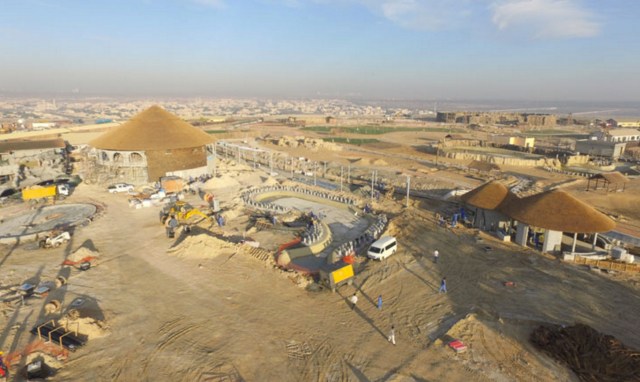
The new opera house will have to pull out all stops as it joins the ranks of the likes of La Scala, Teatro di San Carlo, Teatro Colon, The Royal Opera House, The Bolshoi and Sydney. However, with its state-of-the-art audio-visual technology and innovative design, the 2k-seat venue will not only become the regional cultural hub but also a global centre for opera, theatre and the performing arts. At its opening this week, the Dubai public have the opportunity to see Plácido Domingo and become the first of many to spend A Night At The Opera.

Posted in Finance | Tagged , , , , , , , , , , , , | Leave a comment

Between A Rock And A Hard Place

Omran-DaqneeshHH Sheikh Mohammed Bin Rashid Al Maktoum has approved several projects as part of the emirate’s Traffic and Transportation Plan 2030. These include the Shindaga Crossing (to replace the current tunnel), several new marine stations, expansion to the Burj Khalifa metro station and a 120 mt JBR pedestrian bridge.

Emaar Properties continues with its recent flurry of launches; this time sees the release of two towers (52 storey and 46 storey) – Act One and Act Two. These residences, overlooking Dubai Opera, will house 718 luxury apartments.

Damac Properties is set to sell individual plots in its Akoya Imagine project, with prices starting at US$ 163k. The developer is also launching Tower 108 in JVC – a 33-storey building of serviced apartments, to be operated by Damac Maison de Ville.

A JV between Nakheel and Spanish hospitality giant, RIU Hotels & Resorts, has started work on the US$ 245 million, 4-star, 800-key resort hotel on Deira Islands. Situated on a massive 3.4 million sq ft plot, the project is slated to open in Q1 2019. Other developments on the man-made islands include Deira Mall and Deira Islands Night Souk.

UAE-based Dhabi Contracting LLC won a US$ 409 million Nakheel contract to build its 2 million sq ft Al Khail Avenue retail, dining and entertainment hub, including 350 outlets and a 252-key, 18-floor hotel. Located on the edge of JVT – a 13k residence community – the project is set for completion by early 2019.

Nakheel is also planning to launch a Dine-In Cinema in its 1.4 million sq ft The Pointe development, adjacent to Atlantis The Palm. The facility will be managed by Reel Cinemas, part of Emaar Entertainments, who earlier signed a contract for a 14-screen operation in Al Khail Avenue mall.

Adjacent to two of its other attractions, Dubai Safari and Pet Market, Dubai Municipality announced that its 20k sq mt, US$ 6 million Crocodile Park will open by the end of the year.

MarketView reported that residential property prices have fallen 12% on average, over the past 12 months, and 2% quarter on quarter – the 6th straight quarter of falls, resulting in a 12% year on year decline. CBRE put a slightly lower estimate on Q2 prices falls and expect an average dip of 3% – 5% in the coming months.

According to the latest RICS report demand for commercial property fell for the third quarter in a row caused by the ongoing economic slowdown and a disappointing take-up of increased supply.

Latest STR figures confirm that the Dubai hospitality sector (along with the rest of the region) continues to face tough market conditions. In June, occupancy levels sank to just 51.2%, compared to 67.5% a year earlier. Other indicators headed south, including average room rate (down 9.2%), revenue per available room falling 31.1% to US$ 88.30, total revenue per available room to US$ 187 and gross operating profit per available room to just US$ 12. (Currently, the emirate has 67 hotels, with 20.9k keys, in the pipeline to be built prior to Expo 2020).

June passenger traffic fell 1.0% to 5.9 million compared to a year earlier, although H1 numbers were up 5.8% to 40.5 million. Both June and YTD cargo figures for Dubai International were positive – up by 3.9% to 226k tonnes and 3.8% to 1.28 million tonnes respectively.

Wilo is expanding its operations in JAFZA South and is to build new offices, a warehouse and training academy on a 8k sq mt site. The German pump manufacturer expects the new facility to open in late 2017.

According to Qatar-based Al Maya Group, the owner of the failed BHS franchise in the UAE, five branches of the UK retailer will close, including four in Dubai – Al Ghurair Centre, Dubai Mall, Festival City and Lamcy Plaza.

The Fathima Group is set to develop a US$ 19 million, 100k sq ft food manufacturing plant, as well as a US$ 30 million corporate office and logistics centre in DIP. The UAE-based retailer is also set to spend a further US$ 54 million to open four hypermarkets in the country, two in Saudi Arabia and one in Thrissur in India.

According to recent reports, UAE personal debt has risen 7.5% to US$ 117.2 billion over the past year, equating to an average resident outstanding of nearly US$ 12k. It appears that as remuneration levels are not keeping up with increases in living costs, such as housing and education, people are having to borrow more.

DP World has signed an agreement with US company, Hyperloop One, to study the operation and financial viability of a tube-based transport system, for use at its home base of Jebel Ali. Reportedly the pods used – for both cargo and people – can travel at an impressive 1.2k kph.

The port operator has also seen its long-term issuer default rating upgraded by Fitch from BBB- to BBB, with the credit agency maintaining the company on a stable outlook.

Although H1 revenue was up 10.2% to US$ 2.0 billion (and 2.5% on a like to like basis), DP World has cut back on its ambitious expansion plans, in the wake of the global economic slowdown and softer market conditions. It will now delay both the 1.5 million unit expansion due for Terminal 3 until next year and construction of Terminal 4 until a later date, when trade conditions so warrant.

Shuaa Capital posted a Q2 loss of US$ 14 million, as revenue dipped 25.0% to US$ 12 million. The Dubai-based investment bank attributed the disappointing results to a US$ 15 million impairment charge, (relating to its SME lending unit, Gulf Finance), low oil prices and volatile financial markets. In June, the Dubai Banking Group, the global Shariah compliant financial investor of Dubai Group, divested its 48.3% shareholding in the firm to Abu Dhabi Financial Group for a reported US$ 98 million.

Another offshoot of Dubai Holding, Dubai Financial Group, has sold its 11.8% share in Egyptian investment bank EFG-Hermes to Natixix. Although no figures were available, the deal could be worth just over US$ 100 million. (In 2014, the ultimate holding company, Dubai Group, negotiated a US$ 10 billion creditors’ restructuring programme).

There have been mixed results emanating from the June reporting season. Amanat Holdings posted a US$ 6.5 million H1 profit – up from US$ 400k a year earlier. Meanwhile Amlak Finance recorded a six fold increase in half yearly profits from US$ 4 million to US$ 24 million, largely on the back of one-off sale of land plots in Q1. However, because of increased provisions (US$ 8 million) and a fall in real estate prices, the company made a Q2 loss of US$ 10 million. Damac saw a slowdown in Q2 profit, with a 37.6% slide to US$ 242 million, and H1 results down 27.0% to US$ 529 million.

Marka, a retail firm with 50 outlets and a further 19 to open this year, posted a US$ 5 million loss, despite an 18.2% hike in quarter on quarter revenue to US$ 24 million. Another company in negative territory was Dubai Parks & Resorts reporting a Q2 loss of US$ 16 million – almost four times the deficit recorded in the same period last year. Opening in October, the theme park expects first year revenue of US$ 654 million and a marginal loss of US$ 10 million followed by profits in the ensuing two years of US$ 29 million and US$ 68 million respectively.

Still in negative territory, Arabtec reported a Q2 loss of US$ 51 million, compared to a US$ 196 million deficit a year earlier, despite a 20.9% hike in revenue to US$ 589 million. The developer indicated that it has a current project portfolio of US$ 6.2 billion – 12.5% higher than this time last year.

Despite income from its properties rising 29.3% to US$ 10.6 million, Nasdaq Dubai-quoted Emirates Reit posted a 63.8% slump in Q2 profits to US$ 9.4 million.

The DFM opened on Sunday at 3524 and fell back 1.3% to close the week on 3472 by Thursday (18 August 2016). Volumes, on the last day of trading were at 122 million shares, valued at US$ 53 million, (cf 122 million shares for US$ 53 million, the previous Thursday). Bellwether stock, Emaar Properties, was down US$ 0.03 to US$ 1.93, whilst Arabtec was US$ 0.01 higher at US$ 0.42.

Brent crude continued its recent upward trend, closing the week US$ 3.81 higher at US$ 50.89; gold was also up – US$ 15 – to US$ 1,357 at Thursday’s (18 August 2016) close.

This week saw the death of one of the most corrupt sports administrators and the arrest of a leading Olympic official. Joao de Havelange was President of the Brazilian Sports Confederation for 25 years to 1973, President of FIFA from 1974 – 1998, Honorary President of FIFA from 1998 – 2013 and a member of the International Olympic Committee from 1963 – 2011. In 2012, Swiss prosecutors found that he and his son-in-law, Ricardo Teixeira, had taken at least US$ 41 million in bribes for World Cup marketing rights.

Meanwhile Ireland’s now infamous ticket tout, Patrick Hickey, president of the European Olympic Committee, was arrested in Rio for being involved in a lucrative ticket-scalping scheme. It is alleged that he could have made a US$ 3 million profit by using his status to help “transfer tickets to an unauthorised vendor who would set high fees and disguise the transaction as a hospitality package.”

Last November, IAAF president (from 1998 – 2015) Senegalese Lamine Diack was arrested in France on suspicion of corruption and money laundering. It was alleged that he had received Russian kickbacks for covering up positive doping tests of their athletes. A later World Anti-Doping Agency report stated that corruption was “embedded” in the world athletics body and that Diack was responsible for organising and enabling the conspiracy and corruption.

Recent events just serve to confirm that along with the shenanigans of Sepp Blatter and his cronies, sporting world bodies, such as the IOC and IAAF are just as rotten as FIFA. It does not take too much imagination to think that other sports could be tarnished by the same brush.

Cisco Systems is set to cut its 70k workface by 20%, as the network equipment maker focuses on shifting its core business from hardware to software-centric. The US company is not the only tech giant laying off staff and follows the likes of HP Inc (33k), Microsoft (18k), Nokia (15k) and Intel (12k).

The Walmart-owned supermarket chain, Asda, one of the UK’s “big four”, posted its 8th successive quarterly fall with a Q2 7.5% drop, following a 5.7% decrease in the previous quarter. A five-year US$ 2 billion investment plan to revive the supermarket’s fortunes, which will see reduced prices and enhanced ranges, aims to keep in touch with Sainsbury’s, Tesco and Morison’s along with the ever expanding threat of the newcomers – Aldi and Lidl.

It is interesting to note that online sales in the UK now account for 14.2% of all retail purchases having jumped 16.7% in July. One company taking advantage of this change in consumer buying habits is Amazon. The online retailer, having already invested US$ 6.0 billion in the country over the past five years, is planning a 55% jump this year in its workforce to 15.5k.

The bad man of UK retailing, Sir (?) Philip Green, has been told not to “swan about” on his newly acquired US$ 131 billion super yacht in Greece and return to sort out the mess he left when he sold BHS for US$ 1 to former bankrupt Dominic Chappell. The retail chain collapsed in April with 11k job losses and a US$ 900k pension black hole affecting 22k former staff.

A UK study has revealed that 23% of all insolvencies in 2015 were the result of late or non-payment of accounts, with the problem rapidly deteriorating. If there were a government strategy to address this problem, then many of the 16k SMEs that failed last year would still be adding value to the economy.

Unemployment figures in the UK continued to fall – in Q2, 52k fewer meant that 1.64 million (equating to 4.9%) people were out of work whilst 31.8 million were in employment at the end of June. Pay growth – at 2.3% – also improved on the previous month. These are the best employment figures since August 2005.

Despite a seasonal increase in tax receipts, UK’s budget surplus at US$ 1.3 billion was lower than market expectations and 16.3% lower than the surplus in July 2015. Q2 public borrowing, at US$ 31.0 billion, was 11.0% lower than a year ago but this is still below the government’s 26% target; this in turn restricts what Chancellor Philip Hammond can do to boost the post Brexit economy when he launches his autumn budget later in the year.

Although CBA posted a 3.0% hike in annual profits to US$ 7.0 billion, another credit agency has voiced their concern. Low wage growth, historically low interest rates, surging house prices and record household debt are the main drivers that prompted Moody’s to down grade Australia’s banking system (as well as the big 4 banks – ANZ, CBA, NAB and Westpac) from stable to negative. Private sector credit has jumped 12% to 155% of GDP since January 2014, as bank profits fall following the commodity slowdown. (This week, Woodside Petroleum posted a 50% slump in H1 profits to US$ 340 million, on a 9% hike in revenue to US$ 1.9 billion, as BHP recorded a massive US$ 6.4 billion annual loss).

While it has issued earlier warnings the same agency has maintained the country’s prized AAA rating – one of the few in the world. Moody’s reaffirmed its stable outlook on the basis that Australia has managed somehow to escape much of the economic malaise faced by other developed countries.

However, the country that relies a lot on its Chinese relations (especially trade and travel) could be heading for a bumpy ride. Earlier in the year, the Turnbull government blocked the Chinese from acquiring S Kidman & Co, that owned almost 1% of the country’s landmass, and this week stopped them bidding for power generator, Ausgrid. Worries about security were deemed more important than economic benefits. To add to their woes, it seems likely that another leading trade partner, USA, may lean on them to assist if freedom of navigation in the South China Sea becomes more of a problem and action has to be taken. How the Chinese would react will not be to the liking of Australia – a country that will find itself Between A Rock And A Hard Place!

Posted in Finance | Tagged , , , , , , , , , , , | Leave a comment

The Way The Wind Blows

mark-carneyAccording to ValuStrat’s projections, there are already some indications of a slight firming up in home rents. Median asking rents were 1.3 per cent higher than in Q4-15 and 2.8 per cent over Q1-16. Clearly, some of Dubai’s landlords are confident enough to demand more. Whether they are getting is another matter. (The ValuStrat data is based on a selection of freehold clusters alone).

Tristar Engineering has won a US$ 82 million tender for infrastructure work in the Residential District of Dubai South (formerly known as Dubai World Central), for completion by the end of 2017. Last month, the authority awarded contracts totalling US$ 272 million for various project developments, within the same location.

Nakheel is planning another property in Dragon Mart – a 295-key, 3-star hotel – on a 5.6k sq mt site, with a built up area of 16.9 sq mt. The developer is scheduled to have 10 hotels in the emirate within the next five years.

Already with a presence in Nanaimo, Prince Rupert and Vancouver, DP World has signed a 30+ year lease to run one of Canada’s largest ports -St John in New Brunswick. The Dubai-based operator will start managing the container terminal next year and work with the port authority to manage and expand its operations thereafter.

With more than 90 brands in its portfolio, including Ace and Ikea, Al Futtaim is working with UK agency, Dalziel & Pow to create Homeworks – an upmarket DIY model. Initially, it has plans to open three trial stores in the MENA region.

According to a recent Alpen Capital report, a total of 1.4k new schools will be needed in the UAE within the next four years, as the number of students is set to rise by 19.0% to 15 million. The study indicates that the GCC will require 51k new establishments before 2020, of which 41.7k will be in Saudi Arabia.

Dubai Health Authority’s four main hospitals are seeing more patients, with H1 numbers up to 524k; Dubai Hospital accounted for 38.0% of the total followed by Rashid (33.1%), Latifa (16.6%) and Hatta (12.3%).

A break-up of the 273.5 million journeys made on Dubai’s public transport in H1 – up 0.8% on last year – is as follows:

Metro 96.5
Bus 69.9
Taxis 97.4
Marine 7.1
Tram 2.5
273.5

The RTA network accounts for 15% of Dubai’s total transport requirements, compared to just 6% a decade earlier. It is also considering a feasibility study for Dubai Tram’s phases 2 (Burj Al Arab and MoE) and 3 (Beach Road to 2nd December Street).

Emirates is reportedly planning to raise an 18-month US$ 2.5 billion bridging loan, at 135 points over Libor, to finance up to ten A-380s, for delivery this year. This may be replaced by funding from the European ECA, if it becomes available over this time period, before being converted to a standard 12-year facility.

Novus Aviation Capital has announced the purchase and leaseback of three Boeing 737-900ERs from Indonesia’s PT Lion Mentari Airlines. The Dubai-based private aircraft leasing company, established in 1994, co-owns and manages assets valued at around US$ 3 billion.

The Emirates NBD July manufacturing and services UAE PMI indicated that business activity rose from 53.4 to 55.3, as there were impressive growth in both output (up 3.2 to 62.1) and new orders (up 2.7 to 57.5).

The former head of the Ras Al Khaimah Investment Authority could face further charges relating to a US$ 1.5 billion fraud, after being convicted in absentia for causing “wilful loss to public funds and misfeasance in public office”. Dr Khater Massaad was chief executive of Rakia from 2007 – 2012 and reportedly had other business interests

The DIFC saw the value of cases heard in the Court of First Instance surge 47.6% to US$ 937 million in the first six months of the year. The number of enforcement and arbitration cases rose by 33 to 50 and 6 to 23, as the average claim rose to US$ 8.4 million (from US$ 1.6 million) and fell to US$ 22.3 million (from US$ 36.0 million) respectively.

MAF Group posted a 10.9% hike in H1 revenue to US$ 4.1 billion as its EBITDA (earnings before interest, tax, depreciation and amortisation) rose 5.6% to US$ 518 million. The local conglomerate, with total assets valued at US$ 14.2 billion and a net debt of US$ 2.7 billion, has several divisions including Retail, Properties and Ventures. The former saw both revenue and EBITDA up by 9.0% to US$ 3.4 billion and 2.0% to US$ 159 million; during the period, it opened 11 new stores, bringing its total number of outlets to 160 across 15 countries.

Dubai Investments, which owns over 40 JVs and subsidiaries, reported H1 total income up 18.1% to US$ 373 million, as profits, attributable to shareholders, nudged 2.0% higher to US$ 141 million, At the end of June, the firm’s total assets were valued at US$ 4.3 billion, compared to total liabilities of US$ 1.2 billion.

Dubai International Capital, the international investment arm of Dubai Holding, is reportedly seeking potential buyers for its UK engineering company – Doncasters Group – valued in the region of US$ 2.2 billion. The private equity firm acquired the aerospace parts maker from RBS in a 2006 deal, worth US$ 923 million.

After last week’s acquisition of 9.9% of Aramex, Mohammed Alabbar has led another company, Jaona Investment, to buy a further 6.55% in the Dubai-based courier. It seems that this is part of a strategy to build an extensive regional e-commerce platform. Interestingly, this week, Australia Post (the world’s 4th biggest ecommerce logistics firm after DHL, UP and FedEx) has acquired a 4.5% stake in the courier company for around US$ 100 million.

Having sold his 9.9% holding in Aramex, its founder, Fadi Ghandour, is reportedly launching a US$ 500 million e-commerce venture capital fund. The Wamda Capital II fund will aim for early start up regional tech companies, with average investments of up to US$ 5 million and lower.

Gulf Navigation posted a 43.0% jump in H1 profit to US$ 4 million, as revenue increased by 6.1% to US$ 20 million; Q2 profits were up 40% to US$ 2 million on flat revenue of US$ 10 million. The Dubai-based shipping company still carries net liabilities of US$ 160 million and has accumulated losses of US$ 62 million.

Whilst Etisalat posted a 51.0% surge in Q2 profits to US$ 627 million, the country’s second telco, Du recorded an 11.3% slide in quarterly profits to US$ 121 million, as revenue remained flat, at US$ 836 million.

Emaar Properties posted a 7.6% hike in Q2 net profits to US$ 346 million, as revenue pushed up 6.6% to US$ 1.02 billion. Its shopping malls/hospitality sector and international operations contributed US$ 371 million (36.5%) and US$ 145 million (14.3%) respectively to the turnover figure. H1 revenue at US$ 2.84 billion was 23.0% higher than last year and resulted in a 12.0% increase in profit to US$ 676 million.

The DFM opened on Sunday at 3519 and fell back 1.3% to close the week on 3472 by Thursday (04 August 2016). Volumes, on the last day of trading, were at 171 million shares, valued at US$ 65 million, changing hands, (cf 461 million shares for US$ 156 million, the previous Thursday). Bellwether stock, Emaar Properties, was down US$ 0.03 to US$ 1.84, whilst Arabtec was US$ 0.01 higher at US$ 0.41.

Brent crude arrested its recent downward trend, closing the week US$ 1.59 higher at US$ 44.29 – whilst gold was much higher, up US$ 35 to US$ 1,367 at Thursday’s (04 August 2016) close.

Because of the state of the industry, there was no surprise to see Chevron record a 27.5% fall in Q2 revenue to US$ 29.3 billion, resulting in a net loss of US$ 1.5 billion. In H1, the oil giant had made a US$ 2.2 billion loss, compared to a US$ 3.1 billion profit over the same period in 2015.

Bedevilled by depressed commodity prices, Rio Tinto reported its worst profit figures in 12 years, as H1’s figures fell 46.6% to US$ 1.56 billion. Over the period, the mining giant has slashed spending by 48% to US$ 1.3 billion, sold under-performing assets, maintained capital spending at US$ 4 billion and managed to cut its net debt by 6.5% to US$ 12.9 billion.

In a US$ 35 billion deal, Uber has agreed to merge its Chinese business with its larger local rival, Didi Chuxing. The US firm has failed to make much impact in China since its 2014 launch and has put its annual losses at over US$ 1 billion; this deal sees it holding a 20% stake in the new entity. Also this week, Uber announced a US$ 500 million investment in a global mapping project, as a precursor of the driverless car era. The executive in charge of the project, Brian McClendon, was formerly head of Google Maps.

Having bought the Californian-based navigation software firm Telogis for an undisclosed amount and Yahoo for US$ 4.8 billion, Verizon is planning another acquisition. To further expand its reach in the vehicle tracking sector, the leading US wireless company hopes to conclude a US$ 2.4 billion deal for Fleetmatics Group – a company that saw its Q1 revenue increase by 21.0% to just US$ 79 million!

It is rather surprising to see that, despite the vehicle emission scandal, VW has taken over the top spot mantle from Toyota in H1 vehicle sales. The Japanese carmaker had held its No1 position for the past four years but its 4.99 million unit sales (down 0.6%) was not enough to beat VW’s 5.12 million (up 1.5%). GM’s unit sales fell by 1.2% to 4.76 million – but still good enough to secure 3rd place.

Tesla reported their 13th straight quarterly loss with a Q2 US$ 293 million deficit, as sales reached US$ 1.6 billion. Elon Musk’s electric car company also missed production targets of 17k units by 15.3%, whilst new orders were 67% higher than the same period last year.

Sony posted Q2 profits of US$ 205 million and remains on course to meet its annual target of US$ 775 million.

Alphabet, Google’s parent company, came out with stellar figures a week after Apple posted a disappointing 27.0% fall in Q2 profit to US$ 7.8 billion, on a 14.6% drop in revenue. It reported a 21.0% jump in revenue to US$ 21.5 billion, as its bottom line rose to US$ 6.9 billion.

It seems that new PM, Theresa May, is having second thoughts about the US$ 21.6 billion Hinkley Point nuclear power plant – the most expensive ever built! Just a day before its official launch, the government announced a 3-month delay to further review the details. Whether it is the costs, Chinese involvement (30.5% stakeholder) or the rate (US$ 122 per megawatt hour) agreed to pay the French builder, EDF, there are many that think it is a too high a price to pay.

Last month, it was the previous EU chief getting flak for joining a financial institution. Now it is the turn of the former Bank of England governor, Mervyn King, joining Citigroup as a senior adviser. This is the same man who has, in the past, reportedly described bankers as “incompetent and greedy” and he joins a long list of ex-government technocrats “going to the other side”; Ben Bernanke, the ex-Fed Reserve Chairman is employed by Pacific Investment Management Co and former US Treasury Secretary Timothy Geithner is with Warburg Pincus.

With all the scams and scandals in the industry, the surprising thing is the paucity of corrupt management being prosecuted and sent to jail. This week, three Anglo Irish Bank con men were sentenced to up to 42 months inside for manipulating US$ 8.0 billion in deposits by obvious sham transactions. The subsequent 2009 government bailout cost Irish taxpayers US$ 33.5 billion!

Despite doubling its H1 profits to US$ 3.3 billion, Lloyds expects a slowdown in growth, as interest rates will inevitably fall. Accordingly, it is taking measures to slash this year’s costs by a further US$ 530 million (and US$ 1.85 billion by the end of 2017). In the 4-year period to December 2017, UK’s largest bank will have seen its payroll reduced by 12k and the number of branches by 400.

Last week, major US banks and Deutsche had disappointing Q2 results – this week it is the turn of Barclays, as H1 profits tumbled 21.0% to US$ 2.7 billion. The bank is still paying the price for its past misdeeds and took a further US$ 530 million provision for costs associated with the Payment Protection Insurance (PPI) scandal.

HSBC posted a Q2 49.2% fall in pre-tax profit to US$ 3.1 billion, with H1 profit down 28.7% to US$ 9.7 billion; 83.5% of this total emanated from its Asian operations. The bank is also planning a share buy back in the region of US$ 2.5 billion this year. Meanwhile Standard Chartered reported a profit before tax figure of US$ 1 billion.

Barclays and RBS are among the 15 weakest of 51 leading European banks, based on tests by the European Banking Authority measuring how large financial institutions would fare in a major economic crisis. (RBS could still be fined up to US$ 10 billion by US regulators over its role in sales of mortgage bonds before the GFC). There is also real concern about the state of certain banks in countries like Italy and Portugal.

The RBA has cut Australia’s interest rate 25 points to 1.5% – a new record low. With inflation – at a 17-year nadir of just 1.0% – expected to remain at these levels, on the back of margin*      al growth in labour costs and low levels of business spending, this move is an attempt to boost growth.

As expected, Prime Minister Shinzo Abe approved a US$ 132 billion fiscal package to try and reboot the flagging Japanese economy. Three years of Abenomics – including promised structural reforms, a robust monetary policy and enhanced government spending – have failed to increase consumption and stimulate demand in the world’s 3rd largest economy. Whether these moves will meet the government’s aim to raise GDP by a further 1.3% is a moot point.

It seems that in 2010, the IMF defied its own rules by helping in the Greek bailout, despite widespread doubts about the country’s creditworthiness. Although involved in the first two bailouts, this last deal for a third US$ 96 billion rescue package did not include the fund’s participation – but there is mounting European pressure for their involvement again. It remains to be seen whether the fund will cow-tail to European (German) pressure, at the expense of the rest of the world. Under My Thumb

Q2 growth in the eurozone halved to 0.3%, compared to the previous quarter, as inflation rose 1 notch to 0.2% and the unemployment rate remained flat at 10.1%. Uncertainty following the Brexit vote is the reason given for these weak figures but the bloc’s problems have been apparent for a long time, with very little remedial action having been taken.

US Q2 figures disappointed the markets, growing at an annual rate of 1.2% – less than half of analysts’ expectations; Q1 figures were also revised downwards from 1.1% to 0.8%. Business investment lost 9.7% in the quarter, as inventories fell for the first time in five years, by US$ 8.1 billion. Furthermore, the country’s trade deficit widened, month on month, by US$ 2.2 billion to US$ 63.3 billion. However, it was not all bad news as consumer spending showed a major improvement at 4.2%. Nevertheless, the data seems to point to a rate hike later in the year, rather than next month.

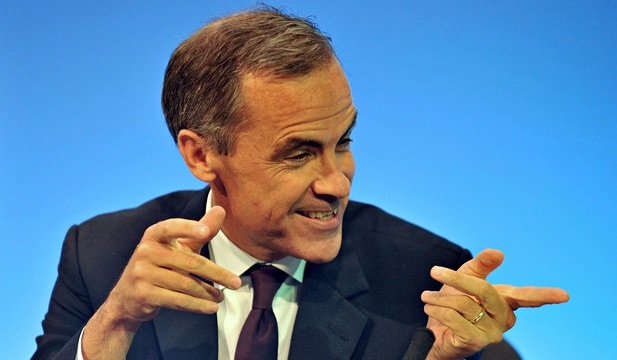
Sterling took a tumble, falling at least 1% against other major currencies, when the Bank of England announced the expected reduction in interest rates from 0.50% to a record low of 0.25% – the first cut in over seven years. To help boost the flagging economy, governor Mark Carney increased BoE’s asset purchases by US$ 79 billion (buying gilts over the next 6 months) to US$ 570 billion and will oversee the buying of US$ 13.1 billion of corporate bonds.

Furthermore a US$ 131 billion Term Funding Scheme will allow high street banks access to cheap funding for both corporate and private consumption. Whether the triple whammy of almost negative interest rates, quantitative easing and further funding will work remains to be seen. Perhaps a weaker pound will help the country over the coming months as the Brexit turmoil continues to maintain economic uncertainty but we will have to wait to see The Way The Wind Blows.

Posted in Finance | Tagged , , , , , , , , , , , , , | Leave a comment

Long Hot Summer!

dubai-stepsDubai Municipality is still considering the whereabouts of a new tourist landmark, Dubai Steps – potential locations include Dubai Creek, Dubai Marina and Union Square. The 100 mt, 500-step structure will be unique because it will lead to nowhere.

Following its success with its initial release last month, Dubai Properties launched phase 2 of Bellevue Towers project, located in Business Bay. The 23-storey tower will house 300 apartments and be ready for hand over in 2019.

The IMF notes that the quality of loans to Dubai households has improved, as the ratio of non-performing accounts has fallen from 10.0% to 4.9% over the past three years – a sure indicator that this realty slowdown will not have the same negative impact as occurred after the GFC.

The authority estimated that Dubai’s average residential prices dropped 11% in 2015. Meanwhile JLL has indicated that over the past 18 months prices have fallen 15%, with villa prices in Q2 down 5%. Chestertons’ MENA reported that Q2 villa prices nudged 0.7% higher, whilst ValuStrat indicated a 1.1% decline over the same period.

As usual for Dubai realty, there are a plethora of conflicting reports about the state of the market. Phidar estimate that, quarter on quarter, there were 3.7% and 1.1% falls in apartment and villa prices. The firm expects further declines over the next 18 months, as institutional buyers and occupiers keep out, citing reasons such as the strong greenback and the uncertain economic climate. Land Sterling also reported Q2 falls in apartment prices – but at the much lower rate of 0.4%. On the other hand, Reidin has reported 1% increases in Q2 property values. Seven surveys, seven different findings!

A recent federal government directive sees SMEs, which are members of the Youth Project Development Organisation and owned by Emiratis, no longer requiring a bank guarantee to continue their businesses. The aims of the exercise are to encourage young locals to embrace the competitive knowledge-based economy and support their progress in a slowing economy.

One of Dubai’s lesser known free zones is Dubai Science Park and, as the name suggests, one of its main aims is to foster the growth of the UAE’s science sector. Among the facility’s 300 companies are a mix of SMEs and international companies, many of which will relocate to DSP’s new twin towers, on their completion early next year.

Thumbay Group has announced that it plans a US$ 327 million investment to build 6 hospitals and 12 clinics in various countries including the UAE, Egypt, India, and Qatar. Last month, the Dubai-based company had indicated it would spend US$ 163 million in the UAE on various healthcare and residential projects.

Following claims by the three biggest US carriers – American, Delta and United – that Gulf carriers, including Emirates, received massive government subsidies, it seems that the State Department, having studied the complaints, will take no formal action. The US administration has indicated that it will continue its commitment to the Open Skies policy and noted its economic benefits for the US economy.

Budget airline flydubai is travelling further afield, with news that it plans to fly to Bangkok, as from November. There seems to be a growing trend for such carriers to move away from just their traditional 4-hour or less routes to include longer-haul destinations. More effective and improved aircraft make this jump possible – the new Boeing 737 Next-Generation can now fly 37% further (up to 5.5k km) than older models.

A BMI report estimates that, following a decade of annual 17% asset growth, regional banks are set to see a marked decline to an average of 6%, over the next four years. The main driver is the slump in oil revenues, resulting in governments having to make good fiscal deficits, utilise local banks and reduce their spending.

Having already invested upward of US$ 900 million in Turkey, Dubai-based Abraaj Group has closed its 2014 Abraaj Turkey Fund I, which had raised US$ 486 million. The fund has already made two investments and focuses on mid-sized businesses that rely on domestic consumption, such as healthcare and logistics.

According to a recent study by TopHotelProjects, Dubai and Abu Dhabi have a combined total of 155 hotels projects (with 47.7k rooms) in the pipeline, with a further 28 (6.3k keys) in the other five emirates. Most will be ready for Expo 2020, with 56 and 58 slated for opening in 2017 and 2018 respectively. The top 10 Dubai hotel projects are:

  Keys Due Date
The Address Sky View 712 2016
Wyndham Marina 497 2016
Sky Central 672 2016
Lapita 503 2016
Tryp by Wyndham 672 2017
Royal Atlantis 1,050 2017
Rotana Al Barsha 528 2018
Bespoke 1,400 2018
Paramount 1,250 2018
Oyster Resort 1,748 Delayed
Total 9,032  

DP World reported a 1.2% increase in H1 gross container volumes on a like-for-like basis, handling 31.4 million TEUs (20’ equivalent units). Stronger results from Europe and India made up for “challenging” market conditions in Australia and Latin America, as well as a 6.0% domestic fall, as lower-margin cargo continued its downward trend.

The Dubai Chamber of Commerce and Industry has seen its membership grow 4.3% to 193k in the first half of this year; most of the new 8k members were SMEs. In H1, registered businesses recorded exports and reexports, totalling US$ 37.6 billion, with Saudi Arabia, at US$ 12.0 billion, the leading destination.

Privately owned Dubai-based Pacific Controls is reportedly in discussions with banks, in relation to a US$ 381 million debt restructure plan. The tech company, founded in 2000, is making use of a special mechanism, introduced by the banks, in order to help such companies affected by the likes of slow payments and working capital issues.

After four months of price increases, the Ministry of Energy has announced that Special 95 will drop 8.5% to US$ 0.44 per litre and diesel by 4.9% to US$ 0.48 for the month of August,

It is reported that the Emaar Properties Chairman, Mohammed Alabbar, has acquired 9.9% of Aramex from its founder, Fadi Ghandour, in a deal worth US$ 142 million. Its Q1 profits were up 11.9%, at US$ 26 million, and Q2 by 45.9% to US$ 34 million, compared to the same period in 2015.

Emaar Malls, 85% owned by its parent Emaar Properties, posted a 11.2% hike in Q2 profits to US$ 125 million, as revenue rose 10.3% to US$ 214 million.

Nakheel recorded a 4.0% hike in H1 profit to US$ 804 million, as it has handed over 1.2k residential units YTD. The developer also opened its first hotel, a 251-key property managed by Accor, located by the newly opened Dragon Mart 2.

Etisalat posted impressive Q2 consolidated results, indicating a 51.0% hike in net profit to US$ 627 million, as revenue moved 2.0% higher to US$ 3.62 billion. The telecoms company, with a 163 million-subscriber base, has declared a US$ 0.109 interim dividend.

Dubai Islamic reported a credible 11.1% hike in H1 net profit to US$ 545 million, as revenue jumped 16.9% to US$ 1.15 billion and impairment charges declined; Q2 profits were up 5.2% to US$ 272 million. Both net financing assets and customer deposits expanded by 12.0% to US$ 29.7 billion and 13.6% to US$ 34.1 billion respectively.

The DFM posted a 31.2% slump in H1 net profit to US$ 38 million, with Q2 profit down 59.6% to US$ 15 million. With overheads remaining relatively flat at US$ 13 million, the disappointing figures were the result of a 22.4% slide in revenue to US$ 62 million, of which US$ 50 million was attributable to operating income and the balance from investment returns. Trading value on the bourse in H1 was down 32.8% to US$ 18.9 billion. (The DFM is planning a new location in Business Bay, having received a 10k sq mt plot of land, valued at US$ 63 million, from Dubai Properties).

The DFM opened on Sunday at 3544 and fell back 0.7% to close the week on 3519 by Thursday (28 July 2016). Volumes, on the last day of trading, were at 164 million shares, valued at US$ 86 million, changing hands, (cf 461 million shares for US$ 156 million, the previous Thursday). Bellwether stock, Emaar Properties, was down US$ 0.04 to US$ 1.87, whilst Arabtec fell US$ 0.01 to US$ 0.40.

Brent crude continued its downward trend, closing the week US$ 3.50 down at US$ 42.70 – whilst gold was marginally higher by US$ 1 to US$ 1,332 at Thursday’s (28 July 2016) close.

Saudi Aramco has awarded a consortium, headed by Hydrocarbon Engineering (LTHE), a US$ 1.6 billion contract to develop the second phase of the Hasbah Offshore Gas Field.

BP reported a 44.6% fall in Q2 underlying replacement cost profits to US$ 720 million, as margins slid and oil prices remained low. The company also took another US$ 5.2 billion charge to cover liabilities from the 2010 Deepwater Horizon disaster, with the final bill being US$ 61.6 billion in legal fees, compensation pay-outs and government penalties.

McDonald’s reported a 3.6% fall in revenue to US$ 6.3 billion, whilst Q2 same-store global sales rose 3.1%; however the US increase was only 1.8% (compared to 5.4% the previous quarter). These returns were lower than market expectations, leading to some analysts predicting a further slowdown – and even a sector recession – within the next 12 months. On the bourses, leading fast-food chains – including Wendy’s, Red Robin Gourmet Burgers, Texas Roadhouse Inc and Noodles & Co – have seen worrying dips in share prices.

Troubled Mitsubishi, Japan’s 6th largest carmaker, had a disastrous quarter, as profits sank more than 75% to US$ 44 million, with revenue down 14.0% to US$ 4.1 billion. Nissan fared better recording a US$ 31 million Q2 profit, down 11.0%, as revenue fell 8.5% to US$ 25.0 billion, not helped by the strong yen. On the other hand, Peugeot Citroën more than doubled H1 profit to US$ 1.3 billion despite a fall in revenue and deliveries.

Although Airbus posted a 15.8% hike in H1 profits to US$ 1.96 billion on flat revenue of US$ 32.1 billion, it suffered a US$ 1.56 impairment relating to its gearbox problems with its military A400M model (US$ 1.15 billion) and other problems with the A350.

Malaysia Airlines has placed a US$ 5.5 billion order with Boeing for 50 Boeing Max planes as it continues to overhaul its aging fleet. The airline, taken over by the government following the MH370 incident, expects to return to profitability within three years and be listed on the local bourse thereafter.

Air France/KLM is still making losses; however, there has been an improvement with H1 2016 loss of US$ 125 million better than the US$ 174 million in the same period last year.

Deutsche Bank came in with worrying Q1 figures, as profit fell a disastrous 97.5% from US$ 877 million to US$ 22 million, with revenue falling 20.0%. Although its legal costs fell from US$ 1.32 billion to US$ 132 million, the bank still has to settle four large litigation cases, including forex manipulation and misselling of mortgage-backed securities.

As expected, Verizon Communication has acquired Yahoo, with the US telecoms firm paying US$ 5 billion for its search and advertising businesses. The deal does not include the company’s shareholding in Alibaba and Yahoo Japan, said to be worth in excess of US$ 40 billion. Yahoo posted a US$ 4.4 billion loss last year, when its share value plummeted by 34%; in Q1, it recorded a US$ 99 million deficit. Verizon’s Q2 profits have slumped 83% to US$ 702 million.

For the second quarter in a row the number of iPhones fell – this time by 15% to 40.4 million units in Q2; prior to this, sales of iPhones had never fallen since their 2007 launch. Apple posted a 27.0% drop in quarterly profits to US$ 7.8 billion on the back of a 14.6% fall in revenue to US$ 42.4 billion. As the smartphone accounts for up to 67% of the firm’s turnover – and sale numbers expected to dip over the coming months – profit improvements are not expected in the short term.

As active users rose only 1.0% to 313 million, the market was disappointed with Twitter’s Q2 revenue figure of US$ 602 million, even though it was up 20.0%, compared to the same quarter in 2015. The company seems to be moving to more of a breaking news and live video medium than just a social communication platform.

SABMiller shareholders are holding out for a better offer from brewing giant AB InBev, especially now that the pound has depreciated since Brexit. The previous offer valued the company at US$ 100 billion (£70 billion) which would now be worth US$ 92.4 billion. Now the offer has been upped to US$ 104.3 billion (£79 billion). If the deal were to go through, the new entity would produce almost 30% of the world’s beer.

Despite a major decline in fuel prices, American Airlines saw a 44.0% fall in Q2 profits to US$ 950 million, citing increased payroll costs, lower revenue and taxes, as the main reasons for this turnaround in fortunes. The world’s biggest airline also had a marginal reduction in revenue to US$ 10.32 billion.

The world’s last video cassette recorder will be produced by Funai Electric Co later this month. In 2000, the Japanese electronics made 15 million units, of which 70% were for the US market. Last year, with production down to an uneconomical 750k and the company facing mounting supply problems, the decision to cease production was taken.

Yet again another case of blaming Brexit – a Baker & McKenzie’s Global Transactions Forecast estimates that a disorderly exit from the EU could result in a reduction of US$ 1.2 trillion in mergers and acquisitions. However, the global M&A sector had already fallen 16.0% to US$ 1.5 trillion in H1, prior to the 23 June Brexit vote.

A former close ally of IMF chief Christine Lagarde has appealed a court decision forcing him to repay US$ 441 million; this was the sum that Bernard Tapie, also a confidante to the then-President Nicolas Sarkozy, was paid as compensation for a 1993 case against Credit Lyonnais. As French finance minister in 2008, Ms Lagarde approved this unusually high pay-out and now stands accused of negligence, with a possible (but highly unlikely) jail sentence in the offing.

With lethargic growth continuing, it is highly unlikely that Japan will meet its 2020 nominal GDP target of US$ 5.7 trillion by as much as 10%, with an estimated primary deficit of US$ 874 million. Abenomics is clearly not working for the world’s third largest economy and this despite a huge QE package, record low interest rates and structural reforms. Like the IMF, Prime Minister Shinzo Abe has a tendency to amend growth forecasts on a regular basis – and all downwards. On Wednesday, the government announced yet another stimulus package – this time totalling US$ 266 billion, in an attempt to get the economy moving.

Indicating that near-term risks have diminished, the Federal Reserve did not move on interest rates, maintaining them at record lows of 0.5%. The fact that household spending was higher, as unemployment rates head the other way, seem to be precursors of a hike in September, although inflation at 1.6% is still below the target number of 2.0%.

Much has been written about the shenanigans associated with 1Malaysia Development Bhd. Following US prosecutors alleging that at least US$ 3.5 billion has been misappropriated, 1MBD’s board has said that its 2013 and 2014 audited financial statements should not be relied on; at the same time, Deloitte, its auditors, resigned. The fund is under investigation in several countries, including Luxembourg, Singapore, Switzerland and US, for alleged corruption and money laundering. For Dubai residents and 1MBD stakeholders, it is going to be a Long Hot Summer!

Posted in Finance | Tagged , , , , , , , , , , , | Leave a comment

Where Have All The Flowers Gone – When Will They Ever Learn?

dubai-safari-parkIt is reported that what would have been the world’s largest hospitality and leisure development in 2007 could be revived. The US$ 27.2 billion Bawadi, a JV between Dubai Holding and Emaar Properties, was shelved as a result of the GFC. At the time, the project would have encompassed 70 million sq ft and included 51 luxury hotels, 6 million sq ft of commercial and retail space, 1.5k restaurants and 18k residential units.

Emaar’s latest launch consists of 147 1-3 bedroom exclusive apartments in Dubai Hills Estate, Mohammed bin Rashid City (MBR). Prices in this Acacia development start at US$ 272 million and the mid-rise tower will be completed by Q4 2018. The estate covers an area of 2.2 million sq mt, equating to about 20% of the landmass of MBR – being built by a Emaar/Meraas Holding JV. On completion, the new city will house 22k apartments and 4.4k villas, along with a boutique mall, two hotels, schools and leisure activities, including a golf course.

Plans are afoot to build the flower-shaped, eco-friendly Desert Rose City to accommodate up to 160k. The US$ 8.2 billion city will encompass 14k hectares, with 50% of the 20k plots allocated for affordable housing units. Dubai Municipality indicated that the city would be largely self-reliant utilising its own resources for communications, energy and transport.

Already with a US$ 817 million property portfolio under development, MAG 5 Property has appointed Fujairah National Construction Company as the main contractor for its US$ 52 million MAG 5 Boulevard project in Dubai South. The project will accommodate 1.2k units, with prices starting at US$ 104k; phase 1 is due for completion by Q4 2018.

Having recently handed over 328 residential units in phase 1 of its Living Legends Community in Dubailand, Tanmiyat Global has released 188 offices at its Exchange Tower in Business Bay.

Dubai Land Department posted that, although the number of H1 real estate transactions rose 22.8% to 28.3k, the total value dropped 12.4% to US$ 30.8 billion; the average transaction fell from US$ 1.53 million to US$ 1.09 million, as the impact of tightening liquidity and tougher mortgage requirements kicked in. Property sales (20k transactions) accounted for US$ 13.3 billion of the total transaction value, with mortgages (6.4k deals) accounting for US$ 13.2 billion.

The latest Luxhabitat report indicated a massive 13% drop in Q2 residential transactions as there was a marginal 0.3% increase in the prime residential sector (including DIFC, Downtown, JBR, Meadows and The Palm).

A triumvirate of Dubai authorities – Land Department, Economic Department and Municipality – is looking closely at the potential of, and the need for, affordable housing in the emirate. The group will analyse factors such as financing (from both sides – the developer and the end user), sector development and stimulation, as well as location.

Dubai South has awarded contracts in excess of US$ 272 million to a raft of companies, specifically for its Residential District adjacent to the Expo site. Eventually this area will house 10k villas / apartments, with a local population of 35k.

The Kuwait-based Action Group is to spend US$ 56 million to build a 220-key, 4-star hotel in Dubai Healthcare City. The property, to be managed by the Accor Hotels’ Novotel brand, is on a 26.3k sq ft plot of land that cost US$ 16 million.

A landfill site at Al Warqa’a has been transformed into a 199-hectare animal safari park, built to replace the outdated Dubai Zoo on Al Wasl Rd. The US$ 272 million facility, housing more than 5k animals, will be open to the public in Q4.

Empower won a US$ 490 million Nakheel contract to provide district cooling to JVC and JVT; the six new cooling plants will eventually provide 260k refrigeration tons for 400 buildings in the two locations.

Less than four weeks after Brexit, a recent local report found that it has had an adverse effect on Dubai’s retail and hotel sector, as average daily room rates fall 13%, year on year. Just like everything else that is heading south in the world, a good time to blame Brexit!

Troubled Arabtec is to receive a US$ 109 million debt facility from Aabar, a major shareholder. The money will be used to ensure expeditious delivery of its current project portfolio, at a time when the payment pipeline in the industry is getting longer, with margins falling.

Embattled Drake & Scull announced that it had been awarded a US$ 62 million contract for engineering, procurement and construction work at Iraq’s Zubair oil field.

In a further bid to diversify the country’s economy away from its dependency on oil, the UAE is planning to expand its manufacturing sector from its current 14% of GDP to 20% over the next five years.

The IMF has adjusted (again) its 2016 MENA growth forecast from 3.1% to 3.4%, as oil prices creep higher, but downgraded next year’s figure from 3.5% to 3.3%. The authority has also recommended that the UAE government should prioritise upgrading the quality of education, facilitating SMEs’ financing access and introducing a modern bankruptcy law.

The Department of Economic Development reported a 34.9% hike in Q2 transactions to 119.6k. Figures, such as increases in new licences (5.6% to 6.4k) and licence renewals (53.2% to 45.3k), indicate that the Dubai economy is weathering the global economic storm.

H1 inflation in Dubai rose to 1.75%, with the usual suspects – education (4.09%), housing (3.91%) and F&B (2.04%) – being the main drivers, whilst transport costs slid by 4.39%.

Sheikh Hamdan bin Mohammed bin Rashid Al Maktoum has launched the Dubai Future Accelerators, focusing on the identification and deployment of futuristic prototypes and products. The ultimate aim of the new initiative is to transform the UAE into a global capital “to explore and create the future”.

June saw the Money Supply aggregate M1 falling 1.6% to US$ 131.0 billion, with decreases in both M2 and M3 by 0.5% to US$ 321.6 billion and US$ 371.8 billion respectively. The UAE Central Bank also reported a 0.5% increase in gross bank assets to US$ 682.9 billion, with gross credit also up 0.8% to US$ 420.5 billion.

Deyaar Development reported a 19.2% fall in H1 profit to US$ 30 million, with Q2 profit falling 30.1% to US$ 16 million, compared to the same period in 2015.

Sister banks posted Q2 figures that were better than market expectations. Emirates NBD reported a 15.8% surge in profits to US$ 520 million (and a 12.0% hike in H1 profits to US$ 1.0 billion), as provisions for bad debts dropped by 30% to US$ 171 million; its non-performing loans ratio has fallen to 6.6%, from a 2012 high of 14.3%. Emirates Islamic Bank more than doubled its quarterly profit to US$ 25 million, as total income rose 11.0% to US$ 335 million.

Mashreq’s H1 net profit decreased 15.4% to US$ 334 million, with a Q2 profit of US$ 147 million, as operating income rose 6.7% to US$ 872 million. The bank’s total assets fell 0.4% to US$ 31.3 billion, whilst loans and advances increased by 2.6% to US$ 16.8 billion; non-performing loans stood at US$ 708 million.

Following two successful US$ 500 million bond issues in 2013 and 2014, Global Securities, a division of MAF Holding, has listed a third for US$ 300 million on Nasdaq Dubai.

The DFM opened on Sunday at 3472 and continued its recent good run, rising 2.1% to close the week on 3544 by Thursday (21 July 2016). Volumes, on the last day of the trading, were at 461 million shares, valued at US$ 156 million, changing hands, (cf 530 million shares for US$ 187 million, the previous Thursday). Bellwether stock, Emaar Properties, was up US$ 0.08 to US$ 1.91, whilst Arabtec remained flat at US$ 0.41.

Brent crude dipped, closing the week US$ 1.17 down at US$ 46.20 – whilst gold was marginally down US$ 1 to US$ 1,331 by the Thursday (21 July 2016) close.

Six years after the Deepwater Horizon drilling disaster in the Gulf of Mexico, it seems that BP’s final bill will come to US$ 61.6 billion in legal fees, compensation pay-outs and government penalties. To help finance some of this total, of which US$ 20 billion went to the US government, the oil company has had to shed US$ 30 billion of its assets.

Houston-based Halliburton posted a US$ 3.2 billion Q2 loss, as revenue came in at US$ 3.8 billion.

EU’s coffers will be US$ 2.9 billion better off, as it has fined four truck manufacturers for price collusion and passing on costs of emissions-reducing technology. DAF, Daimler, Iveco and Volvo/Renault had carried on this illegal practice for 14 years, with the fraud only coming to light when their competitor (and fellow colluder), VW-owned MAN, turned whistle blower – and escaped any punishment.

Despite posting a 4.8% hike in Q2 revenue to US$ 1.3 billion, (with a 50% jump in mobile revenue to US$ 378 million), Yahoo recorded a loss of US$ 440 million for the period. However, it is still trying to divest its core internet business, with interest being shown by Verizon, that recently acquired AOL, and T&T; any deal is expected to raise up to US$ 6 billion. The actual company has a current market value of US$ 35.8 billion.

Another major tech company, IBM, saw Q2 profits sink 27.5% to US$ 2.5 billion, as revenue fell 3.5% to US$ 20.1 billion. Once the leader in the PC market, “Big Blue” has been bypassed by other players and has seen sales slump. A revamp of the business model will see IBM move away from hardware to software, including security, business analytics and security.

Three major US banks reported falling Q2 profits, as the earnings season started in earnest. Bank of America’s earnings fell 19.4% to US$ 3.9 billion, as revenue dipped 7.1% to US$ 20.4 billion. Although its bond business and trading operations revenue rose by 14% to US$ 3.5 billion and 10% to US$ 4.7 billion, Citigroup’s net income fell 14% to US$ 4.0 billion. Meanwhile, Wells Fargo posted a 3.5% fall in quarterly earnings to US$ 5.2 billion.

Last Friday, the market valuation of ARM Holdings was US$ 22.4 billion. On Monday, 18 July, the UK technology firm’s board accepted a bid by Japan’s Softbank, valued at US$ 32 billion – a premium of 43%! Apple and Samsung use the microchips, designed by the Cambridge-based firm that employs 3k, for their smartphones. However, the sale is a major blow to the UK’s technology sector that has seen other major players – including Cambridge Silicon Radio (acquired by Qualcomm) and Autonomy (to HP) – being sold off to overseas interests. Full marks to the Japanese company, that also saved itself 10% because of the fall in sterling, but the new government should be more careful when looking after the country’s crown jewels.

The ECB President, Mario Draghi, seems to be fighting a losing battle as he continues with scant apparent support from the bloc’s governments to spend more. He is fighting fires on several fronts with little success – inflation levels hovering around zero, record low interest rates, double-digit unemployment levels, sluggish growth, an underperforming economy and increasing resentment to the “European Project”. The ECB’s monthly US$ 88 billion QE policy and almost negative interest rates have failed to move static inflation, boost investment, encourage consumer spending or increase the rate of public expenditure. It must be remembered that these problems cannot all be pinned on the current scapegoat – Brexit!

Another company apparently using Brexit as an excuse for its failing is Lowcost Travelgroup. As of last Friday, when the holiday booking company went into administration, it had 110k bookings and 27k customers actually taking their holidays. Other reasons for their failure included the turbulent financial environment, increased terror threats and intense competition. 80% of the total payroll of 570 was based in Poland, with the balance operating from the UK.

Fears of a slowdown in the Chinese economy seem to have been negated with Q2 figures indicating a 6.7% expansion, in line with Q1. The good news was that, with the benefit of government stimulus measures, industrial output and retail sales moved north, although private investment dipped to a record low. Interest rates have been at all-time lows since last October and there has been a surge in public infrastructure projects. But what the economy really needs is a major structural overhaul.

The Department of Economic Development has closed down Exential Group, a DMC company reportedly running a dubious forex trading scheme. Gullible investors were attracted by annual returns of 120% and yet again a duopoly of investors’ greed and ignorance has seen some residents’ fortunes disappear. Where Have All The Flowers Gone – When Will They Ever Learn?

Posted in Finance | Tagged , , , , , , , , , , , , , | Leave a comment

Living In The Gangsta’s Paradise

pokemon-go-banWith developers continuing to scale back on completion of launched and often pre-sold projects, the number of new homes handed over in Q2 totalled only 2.8k; industry expectations were that up to 40k residences would be handed over this year – in fact that number will struggle to reach 15k, with only 5k units delivered so far in 2016. Indeed, according to a Cavendish Maxwell report, 71% of units, that were expected to be handed over, have been delayed and a further 12% placed on hold. This tightening of the supply pipeline should negate any further price falls, as demand continues its upward trend.

Figures from the Dubai Land Department indicate that in H1, US$ 13.1 billion, from 21.8k transactions, were invested in the Dubai realty sector. Of that figure, five nationalities accounted for 57.4% of the total – UAE – US$ 3.3 billion, India – US$ 1.6 billion, Saudi Arabia – US$ 995k, UK – US$ 902k and Pakistan – US$ 728k.

Cavendish Maxwell have reported marginal Q2 declines in both Dubai apartment and villa prices, whilst over the past 12 months falls have been at 6% and 4% respectively. Meanwhile rents are showing marginal declines. The sector is still suffering from tight liquidity, consumer confidence and high deposit requirements from the financial institutions.

Core’s latest report sees a general softening in Dubai office rents, as stock levels continue to rise with a further 7.3 million sq ft, being built, adding to the current 90 million sq ft portfolio. In Q2, the property broker estimated that there were price falls of 10% in JLT, 6% along SZR and 3% in Business Bay, although Tecom and DIFC bucked the downward trend with rentals up 10% and 6% respectively.

Yet another Damac launch this week – this time phase 1 of The Beach at Navitas Hotel & Residences, comprising 3-bedroom apartments, with prices starting at US$ 341k. The 5-tower residential and hotel development will be located within the massive 55 million sq ft Akoya Oxygen project and will have all resort type facilities, including artificial beaches.

Al Shafar General Contracting will be the main contractor for the Vivanta by Taj hotel, to be built in JLT. Piling work has already started and completion date is set for Q4 2018.

The 304-key Aloft Dubai City Centre Deira, due to open in Q1 2018, will have an outdoor rooftop VOX Cinema. The property will also utilise Starwood’s keyless entry, allowing clients to use their smartphone for room access. The hotel will be Majid Al Futtaim’s 11th in the country, whilst it will become Starwood’s 26th, with a further 17 in the pipeline.

If Kleindienst, the firm behind Dubai’s The Heart of Europe development, have their way, the company will soon have the region’s first honeymoon destination. It is developing St Petersburg Island, a heart-shaped island, as a 5-star resort especially for newly-weds.

According to the Dubai Statistic Centre, Dubai’s permanent 2015 population was 2.4 million, with this figure boosted by the daily influx of 1.1 million souls, who live in other emirates but work in Dubai.

An agreement between the World Economic Forum, the UAE government and the Dubai Future Foundation will see the 2-day Shaping the Future annual meeting taking place in the emirate in November. The gathering will build on the work of the Global Future Councils.

The Al Naboodah Construction Group is expecting revenue to climb 75% this year, to US$ 954 million, as new management aims to better utilise related company links with its offshoots, including Arcon ready-mix concrete business, National Plant and Equipment and Trans Gulf (MEP).

Four-year old Careem, the local online taxi booking service, plans to spend US$ 100 million on R&D over the next five years. The company, with three million registered users, has already added 50 engineers in Pakistan and will open further centres in Egypt and Germany.

The 2016 Skytrax World Airline Awards saw Emirates voted the best airline in the world, as well as scooping the world’s best inflight entertainment and best regional airline.

Dnata continues on its acquisition trail – this time it has bought a majority shareholding in the UK’s Air Dispatch, with no monetary details available. This subsidiary of Chapman Freeborn Group provides loading services to airports in Prague and Warsaw and has Cathay Pacific, Qantas and Qatar Airways among its client base.

Although ME carriers posted an 11.8% jump in May air passenger numbers, compared to 4.5% the previous year, capacity increased by more – 15.6% (compared to the global average of 5.5%). IATA estimate that 2016 profits for the region’s airlines will rise by 14.2% to US$ 1.6 billion whilst the global increase will be lower at 8.5% to US$ 39.4 billion. (Some airlines must be making losses if Emirates, US$ 2.27 billion, and Qatar Airways Group – US$ 824 million – made such recent impressive profits).

According to Al Ansari Exchange, UAE expats remitted US$ 1.4 billion to their home countries over the last week of the holy month of Ramadan – 20% higher than last year, and three times the daily average. In 2015, the UAE Central Bank estimated that a sum of US$ 23.9 billion was remitted.

Although the June Emirates NBD Economy Tracker Index is marginally up to 54.6, it is still below the 3-year trend. However there were welcome signs of improvement in two main sectors – retail at 58.2 and tourism at 54.1; even the maligned construction segment had a positive reading of 51.5. Despite these rays of sunshine, there was no improvement in employment numbers, in contrast to the past four-year upward trend.

The June Emirates NBD UAE Purchasing Managers’ Index posted a monthly fall from 54.0 to 53.3 that is lower than the 3-year 56.3 average. One contributing factor to the sluggish figures could be attributable to the start of the holy month of Ramadan. However, non-oil private trade continued to improve, as higher output and new orders shored up a marginal improvement in the sector.

UAE’s Q1 direct non-oil trade, at US$ 73.4 billion, was slightly down on the same period in 2015; 40.2% (or US$ 29.5 billion) of the total emanated from Asia, Australia and the Pacific, whilst Saudi Arabia was the leading regional partner. Imports – at US$ 45.3 billion – comprised 61.6% of total trade, with reexports, at US$ 15.4 billion, and exports of US$ 12.7 billion making up the balance. Whilst the country’s trade momentum has been somewhat subdued, the slowdown in global trade is reflected in these figures. (Credit Suisse has predicted a 2.9% growth this year for the country’s non-oil economy, followed by 3.7% in 2017).

With its US$ 500 million Tier 1 Sukuk, Noor Bank’s listing became Nasdaq Dubai’s 11th of the year and brought the total value of Shariah bonds on the exchange to US$ 44.6 billion.

The DFM opened on Sunday at 3371 and regained all the previous week’s losses and more, rising 3.0% to close the week on 3472 by Thursday (14 July 2016). Volumes, on the last day of the trading, were at 530 million shares, valued at US$ 187 million, changing hands, (cf 289 million shares for US$ 116 million, the previous Tuesday). Bellwether stock, Emaar Properties, surged US$ 0.11 to US$ 1.83, whilst Arabtec also moved north by US$ 0.02 to US$ 0.41.

Brent crude recovered somewhat and closed the week US$ 0.97 up at US$ 47.37 – whilst gold headed the other direction – down US$ 30 to US$ 1,332 by the Thursday (14 July 2016) close. (Iran’s oil exports at 2.6 million bpd have almost reached pre-sanction levels).

It came as no surprise to see Which? reporting that several UK banks have been charging customers several times the fees, compared to payday lenders. It seems that for borrowing US$ 130 for 28 days, customers of HSBC, Lloyds, RBS and TSB could be charged between US$ 104 and US$ 117 – four times higher than the maximum charged by a payday loan institution.

It seems that the seven bidders to acquire Tata Steel’s UK operations will now face serious international competition, as the Indian conglomerate has decided to “look at alternative and more sustainable portfolio solutions for the European business”. At least three major players – China’s Hebei Iron & Steel, India’s JSW Steel and ThyssenKrupp AG – could be interested in JV agreements with Tata Steel. There could be several sticking points in relation to the inclusion of its UK business, employing 15k, including resolution of the US$ 950 million British Steel pension fund liability and government assistance with any bailout.

Boeing could lose out on a potential US$ 25 billion order, with the House of Representatives passing a motion to block US aircraft sales to Iran. Any ban would have to be approved by the Senate. In January, Airbus won an Iranair order for 118 units, with Boeing later reaching a similar preliminary agreement.

Mitsubishi Aircraft Corp’s attempt to break the Embraer and Bombardier duopoly in the regional jet sector received another boost with a 20-aircraft order for its 92-seat MRJ90 from leasing company Rockton; this comes after a similar order earlier in the year from Aerolease Aviation LLC.

Meanwhile, Airbus has announced that it will cut the delivery of its A380s form its current annual level of 27 to 12 per annum as from 2018 – a sign of disappointing sales and a shorter than expected life span?

Pokemon’s first foray into mobile gaming hit the jackpot as GO’s runaway triumph saw the company’s shares jump 86%, to gain US$ 17.0 billion in just two days of trading, following its 06 July launch. Since the app, that has been released only in the US Australia and New Zealand to date, is free, Pokemon investors are unlikely to reap the dividends that the game’s success should warrant.

After last week’s Amazon announcement that it was creating 1k jobs, the UK received another fillip on Monday with news of a further 2k new jobs, as a result of a government agreement with Boeing. The deal involves expanding the US planemaker’s UK research operations and the purchase of 9 Boeing P8 maritime patrol aircraft.

Saudi Arabia’s Kingdom Holding has lost US$ 40 million because of the recent fall in sterling. The company agreed to trade its US$ 3.2 billion stake in FRHI Holdings – owner of the Raffles and Fairmont brands – for a 5.8% share in the French hotel group, Accor, US$ 339 million cash and other assets, including a stake in California’s Claremont Hotel and increasing its stake in London’s Savoy to 58.8%.

Three major elections were settled this week. Following his success, Prime Minister Shinzo Abe, Japan has slashed two major forecasts – growth from its January estimate of 1.7% to 0.9% and inflation from 1.2 to 0.4%. With the three arrows of Abenomics – monetary, fiscal and structural – continuing to miss their target, it is inevitable that a further stimulus package (up to US$ 200 billion) will soon be implemented.

The markets initially reacted favourably to news that the incumbent Australian Prime Minister, Malcolm Turnbull, scraped home, a week after the actual election. However, the Conservative leader will face many problems including the distinct possibility of a credit rating cut of the country’s coveted AAA status, declining consumer confidence and a ballooning trade deficit.

Theresa May became the UK’s Second ever Prime Minister and the 13th in the Queen’s 64-year reign. Her first job appeared to be the axing of the Chancellor George Osborne to be replaced by Philip Hammond. The markets seemed to take the ministerial changes in their stride, with Thursday’s closing of sterling at 1.32 to the US$, FTSE 100 at 6662 and FTSE 250 at 16775.

Following May’s blip, when only 11k new jobs were created, normality returned to the US economy with June figures coming in at a healthy 287k. The jobless rate – measured by the number of unemployed actually looking for work – rose 2 notches to 4.9%, whilst the monthly wage growth was a disappointing 0.1% (2.6% year on year). If there is further encouraging economic data in the coming weeks, a Fed rate hike could be on the cards for September.

Now that a revision has been made to the level of its capital assets, brought about by the number of aircraft imported by leasing companies and other reclassifications, Ireland has amended last year’s impressive 7.8% growth to a spectacular 26.3%. The country’s economy has been bolstered by the fact that it is the home of many overseas companies, redomiciling there for favourable tax reasons.

The IMF has revised forecasts for the Italian economy in the wake of the Brexit vote – to under 1% this year (from 1.1%) and 1% in 2017 – down from 1.25%. Other analysts indicate even lower growth for the Eurozone’s third biggest economy. In the unlikely event that the country fully implemented all recent reforms, it would probably only reach its 2008 peak after a further decade; this compares to other eurozone countries that would be 25% higher by 2025. Italy’s cause will not be helped by high unemployment level, bank debts totalling US$ 398 billion and a rising public debt, currently at 132.9% of GDP – with only Greece in a worse state.

The EU has been beset with internal problems largely of their own making – structural weaknesses, high unemployment and soaring debt levels. Nevertheless the EU has been looking for some excuse to explain its miserable economic performance over the past few months and has been handed one on a plate – the UK Brexit.

Now this is one of the main factors behind the IMF’s decision to cut its 2017 growth forecast for the bloc from 1.7% to 1.4%, with 2016 marginally down to 1.6%. Others include political and economic uncertainty, market volatility and falling investor confidence. (The IMF has a past record of consistently changing forecasts downwards on a regular basis).

A bigger worry to the EU has to be the state of its banking system; for example, Italy may need external assistance as its financial institutions are awash with bad loans. However, the IMF’s main concern is Deutsche Bank which it considers the biggest single risk to the global financial system of the world’s top 29 banks. If that were to suffer, then expect carnage in the markets.

A US Congressional report seems to confirm what many already know – big banks have too much sway with governments. It seems that although HSBC was accused, in 2012, of money laundering for drug cartels – and subsequently paid US$ 1.9 billion in settlement – it never faced criminal charges nor saw any of its top officials prosecuted. The report alleges that the UK government “influenced” the outcome and “hampered” the probe with Chancellor George Osborne “intervened in the HSBC matter by sending a letter to Federal Reserve Chairman Ben Bernanke… to express the UK’s concerns regarding US enforcement actions against British banks”.

Although not the only entity, Goldman Sachs has a history of apparent collaboration with global governments and institutions. In 2009, it is reported that the bank received US$ 20 billion in bailouts, payments and backstops under the Obama administration – that year it paid out US$ 16.2 billion in bonuses. Interestingly, the likes of Robert Rubin (Treasury Secretary in the Clinton administration), Henry Paulson (Treasury Secretary – Obama) and Mark Patterson (Chief of Staff Treasury) were three of many who had previously held important positions In Goldman Sachs – as Co Chairman, CEO and lobbyist respectively.

Governor of the Bank of England, Mark Carney, spent 13 years with the bank in various countries. President of the ECB, Mario Draghi, is not only a member of the lobbyist Group of Thirty but also worked for Goldman Sachs from 2002 – 2005. Even Prime Minister, Malcolm Turnbull, was MD Australia and partner in the bank for four years to 2001.

The latest episode sees the former head of the EC, Portugal’s Jose Manuel Barroso, taking up a job advising the US bank on the consequences of Brexit – this comes 20 months after he stepped down from his presidency. There is something called conflict of interest or is it that some of out politicians, bureaucrats, fat cats and financiers are benefitting, at our expense, Living In The Gangsta’s Paradise?

Posted in Finance | Tagged , , , , , , , , , , , | Leave a comment

The Great Pretender!

tony-blairReidin’s latest report shows marginal May increases for both Dubai apartment and villa prices – but 5.2% and 6.0% down year on year. Meanwhile rents for both apartments (3.0%) and villas (6.4%) fell over the year whilst May saw a 0.47% increase, as villa rents edged downwards by 0.53%.

Damac has launched the first phase of Akoya Imagine – 3-bedroom villas, with prices starting at US$ 327k. Located adjacent to the Tiger Woods-designed golf course, the units will go on sale this Saturday (09 July), with options to spread payments over three years and no service charges for five years.

Greek company Consolidated Contractors Company has reportedly won a US$ 136 million contract to build the 70-storey residential Opera grand Tower in Downtown. The project, the first of 8 towers in that location, will have a large public plaza and amphitheatre.

Next month sees the opening of Dubai Opera House and although there is much work to be carried out before then, the developer is confident that all will be ready for the Plácido Domingo opening on 31 August.

IMG Worlds of Adventure, due to open the world’s largest indoor theme park next month, has awarded a 15-month MEP (mechanical, electrical and plumbing) contract to locally-based Farnek. The developers have also given DEI a three-year contract to be its exclusive souvenir-imaging provider.

As expected, passenger traffic at Dubai International continued to break records, with a 7.2% surge to 6.7 million passengers during May, bringing the YTD total to 34.6 million – up 7.0% on the first five months of 2015. Three countries – India (990k), Saudi Arabia (549k) and UK (435k) – accounted for 29.4% of passenger numbers. Freight volumes edged higher – 4.7% up in May to 217k tonnes and 3.9% higher YTD, to 1.056k tonnes.

Dubai International is not only the world’s busiest international facility, it has also been confirmed as the world’s 3rd busiest airport according to Airports Council International. With 78 million passengers, it is still some way off Atlanta-Hartsfield-Jackson’s 101 million and Beijing, with 90 million.

Having resigned from his position as chief executive of Emaar properties in April, Abdullah Bin Lahej has been appointed to a similar role with Dubai Properties Group, a unit of Dubai Holding. He replaces Abdul Latif Al Mulla who had been in that role since August 2015 and left to “pursue other ventures”.

Mashreq and Arady Properties have launched the country’s initial Qualified Investor Real Estate Fund. With equity of US$ 300 million – and a maximum 50 investors – the Shariah-compliant entity, with a 6-year life, will source assets with strong potential yields.

The Dubai Gold and Commodities Exchange posted a record H1, with trading volumes up 409.6% to exceed 9.5 million contracts and on 24 June posted a daily record of 151k contracts, valued at US$ 3.55 billion. One of the better performing sectors was precious metals, with a 104% growth to 423k contracts.

Abu Dhabi-based Menacorp Financial Services has been ranked the country’s leading brokerage firm – out of 49 – for H1, in terms of trade value and market share.

The DFM opened on Sunday at 3311 and regained all the previous week’s losses, rising 1.8% to close the shortened week on 3371 by Tuesday (05 July 2016). Volumes on the last day of trading before the Eid Al Fitr holiday were at 289 million shares, valued at US$ 116 million, changing hands, (cf 134 million shares for US$ 65 million, the previous Thursday). Bellwether stock, Emaar Properties, rose US$ 0.03 to US$ 1.72, whilst Arabtec also moved north by US$ 0.02 to US$ 0.39.

Brent crude sank on the back of increased production in Nigeria and closed the week US$ 3.31 down at US$ 46.40 – whilst gold, as expected in times of uncertainty, headed the other way – up US$ 42 to US$ 1,362 by the Thursday (07 July 2016) close.

As part of a JV breakup between Shell and Aramco, the Anglo/Dutch petro giant is asking for US$ 2 billion as compensation for the Saudi company to retain a larger share. If the agreement proceeds, Aramco will take over control of Motiva’s largest US refinery in Texas and retain 26 distribution terminals with Shell becoming sole owner of two refineries in Louisiana and Shell-branded gas stations in some eastern US states. The JV will continue a 50:50 split in a Japanese refining facility and Saudi Aramco Shell Refinery Co in Jubail.

Oracle has paid a US$ 3.0 billion penalty for reneging on a software agreement with Hewlett Packard Enterprise. The case, centring on making software that ran on high-end titanium chips, was settled in 2012 but it has taken more than three years to resolve the monetary payout. Last month, the Californian-based computer technology giant lost another case, when seeking damages of US$ 9 billion from Google.

UBS has been directed by Swiss authorities to provide clients’ bank details to French tax officials. Other countries are expected to follow suit following information received from German investigators and shared with other countries. This comes as a major blow not only to UBS but also to the Swiss banking sector, the world’s biggest offshore financial centre, with overseas assets topping US$ 2 trillion.

Four Barclay city traders received prison terms this week for their role in the Libor-rigging scandal and this success was a welcome respite for the Serious Fraud Office that had seen five others acquitted earlier in the year. There are probably hundreds of others who should have been locked up for participating in the scam that negatively affected so many households and companies. Senior management appear to have fallen under the radar and escaped scot free as more junior staff have taken the brunt.

With the expansion of its express delivery service, Prime Now, Amazon will create 1k new jobs in the UK, in addition to the 2.5k already recruited earlier in the year. Amazon itself has 15.5k employees in the country and supports further 74k jobs, via Amazon Marketplace.

Another multinational has fallen foul of the ever-increasing moves to stop cross border tax deals in the EU. This time, Proctor & Gamble is being investigated for the possibility of using Swiss units to avoid Italian taxes. P&G follow the likes of Amazon, Apple and Google who have been under the scrutiny of the EU or national tax authorities, including Italy, for similar actions.

One casualty of the Brexit vote could be the planned merger between the London Stock Exchange and the Deutsche Boerse. A US$ 20 billion deal was agreed earlier in the year and, although shareholder agreement is almost certain, it may not meet regulatory approval; the German authorities will not like the fact that London will be the HQ for the new entity.

To placate certain sectors of the EU bloc, the EC has granted both Spain and Portugal extra time to remedy their deficits (5.1% and 4.4% respectively) so as to avoid fiscal sanctions. Both countries are in breach of the EU’s rules that public deficits should be maintained at less than 3% of GDP. In the current climate of the UK voting to leave and growing continental discontent, high unemployment and sluggish growth for anti-EU parties, it seems highly unlikely that sanctions will be applied.

With just US$ 200 million in its operating account, and total debts of US$ 70 billion, the government of Puerto Rico has defaulted on a debt of US$ 779 million. President Obama has indicated that a US federal agency would oversee a debt-restructuring program and there would be no litigation arising on existing debts.

After a disappointing raft of Q1 economic data in the US, factory activity, which accounts for 12% of the GDP, is picking up as the national index rose from 51.3 to 53.2 in June, with ISM new factory orders index and order backlog index also climbing to 57.0 (from 55.7) and 52.5 (from 47.0) respectively; any reading above 50 indicates expansion. On the flip side, the revised April construction spending saw a 2.0% fall, followed by a 0.8% drop in May.

In line with the rest of the world, the Australian dairy industry is struggling with further price cuts expected this year with minor improvements in 2017. The global oversupply has meant the closure of many dairy farms as margins dip with many unable to scale back on costs.

The US and the UK are not the only democracies in some disarray – Australia is still searching for a government, a week after the election saw both main parties, with 76 seats each, needing minority support to form an administration. Ratings agencies have warned officials that a hung parliament may result in delays in much needed legislation and could see the country, with a credible 3.1% annual growth, lose its coveted AAA rating. Next month will probably see a rate cut to 1.5% despite weak domestic inflation.

Even before the Brexit referendum, the UK construction industry, which accounts for 6% of the country’s economy, was in trouble, as the sector’s June PMI (Purchasing Managers’ Index) plunged to 46.0 – its worst contraction since the GFC. Hardest hit were house building and commercial, with civil engineering remaining flat.

Despite intimating that taxes would have to go up in the event of a Brexit vote to leave the EU, Chancellor George Osborne has floated plans to slash corporation tax from 20% to 15%. Its aims are to entice existing companies to remain in the UK and overseas entities to move to the country, with a competitive tax threshold.

The Chancellor is not the only one to have a change of view following the Brexit vote. IMF chief, Christine Lagarde, now has an optimistic view that could result in the EU deepening their economic integration, despite disenchantment with the EU institution. She admitted that although there is uncertainty in world markets, a global recession is unlikely and that she remained positive.

Former Prime Minister, Tony Blair, was strongly criticised in this week’s Chilcot Report for joining the US-led Iraq invasion without a satisfactory legal basis or proper planning. Teflon Tony, in a two-hour egomaniacal ramble, pleaded for exoneration, claiming that he had acted in good faith and believed that it was better to remove Saddam Hussein from power. The Great Pretender!

Posted in Finance | Tagged , , , , , , , , , , , , , | 1 Comment

Mr Know It All!

panguna-pngHH Sheikh Mohammed bin Rashid Al Maktoum has approved the 2030 Dubai Industrial Strategy, with the aim of generating a further US$ 44 billion to the emirate’s GDP. Its focus will be on six sectors – aerospace, aluminum, equipment, food and beverages, maritime and pharmaceuticals.

Emaar has awarded a US$ 272 million contract to Trojan General Contracting to build 1.4k Mira Oasis townhouses in the 2nd phase of its massive Reem project. Located adjacent to Arabian Ranches, the development is spread over three phases, due for staggered completion dates – December 2017, September 2018 and December 2018.

Jumeirah Golf Estates has sold all phase 1 of its Redwood Park project, due to be handed over in Q4. Prices for the 3-4 bedroom townhouses – overlooking the Fire golf course – start at US$ 681k.

Despite the reported slowdown in the Dubai realty sector, Damac has announced that is has already awarded 25 contracts, valued at US$ 817 million, in the first six months of the year. Its main contract has been for the construction of 2.7k villas in Akoya Oxygen. Currently, the developer has 31k residential units and 13k hotel rooms in various stages, from planning to work in progress.

The emirate’s hotel room portfolio, totalling 82.8 keys, had further stock added this week with the opening of the 356-room W Dubai – Al Habtoor City. This follows the introduction of The St Regis Dubai late last year, in the same location on the banks of the new Dubai Canal. The operator’s third property, Westin Dubai – Al Habtoor City, with 1k rooms, will open in Q3. (It is estimated that this year alone, Dubai will see an extra 10k rooms added to stock – and this after only 621 keys were added in Q1).

Nepalese CG Hotels and Resorts plan to build their first regional hotel in JLT – a 200-room luxury property. The company currently operates 100 hotels, with 4.4k keys, in 12 countries – a number that it plans to double by 2020.

It is estimated that 2015 activities at the Dubai World Trade Centre contributed US$ 3.3 billion to the emirate’s economy, equivalent to 3.1% of GDP. With an additional 15.5k sq mt extension last year, the venue has increased its capacity to 122k sq mt and hosted 2.7 million visitors at 396 trade exhibitions and conferences; of the 2.6 million who attended the 104 large-scale events, 42.3% were from overseas – providing a much needed boost to the hospitality, airline and retail sectors. (The same sectors would have also benefitted from the one million visitors who have flooded into Dubai during the holy month of Ramadan).

There will be slight price increases in July for petrol and diesel for the 4th consecutive month. The Ministry of Energy has announced a US$ 0.054 (1.1%) increase in Super 98 to US$ 0.51, whilst diesel jumps 4.5% to US$ 0.50 per litre

Expolink Consortium, led by Alstom, and including the Spanish company Acciona and Gulermak from Turkey, has won a US$ 2.9 billion contract to expand the metro’s Red Line by 15 km to take in the 2020 Expo site. The project, due for completion by Q4 2019, also includes the supply of 50 trains, with 7 new stations, and is expected to service 125k passengers daily.

The RTA is also planning a US$ 1.1 billion investment in upgrading the city’s road infrastructure and will reportedly issue tenders in the coming months. It would seem inevitable that there will be increases in charges, such as licence fees, salik and parking, to help fund such massive transport undertakings.

DEWA has awarded a Masdar-led consortium to build the 800-megawatt 3rd phase of the Sheikh Mohammed bin Rashid Al Maktoum Solar Park, to be completed by 2020. The total US$ 13.6 billion project, due for completion by 2030, will eventually produce 5k MW.

The amount of money the government pours into Dubai’s infrastructure can be seen from the fact it accounts for 35% of its budget expenditure – compared to the US total of 8%, UK’s 3% and Saudi Arabia’s 3%. In the same Unitas Consultancy’s report, it is estimated that there has been a 16.3 times increase in the value of Dubai’s freehold housing market to US$ 132.2 billion, over the past ten years.

The Investment Corporation of Dubai posted a 3.5% fall in profit to US$ 2.4 billion, mainly because of the collapse in energy prices, as that revenue sector fell 30.2% to US$ 13.5 billion. Nevertheless, the state-owned entity, with major stakes in local high profile companies – including Emaar, Emirates, Emirates NBD and Flydubai (transferred in last August) – increased its distribution to the government by 247% to US$ 1.9 billion.

Over the past 12 years, the government’s smart initiatives have resulted in direct cuts of US$ 1.2 billion. It has been independently calculated that there have been savings of US$ 5.6 for every US$ 1.0 spent under the Smart Government Dubai strategy.

Following similar developments in India and Malta, Dubai Holding is set to roll out its Smart City concept in Nigeria, following an agreement signed with the state of Lagos. This new African set up will be run on the same lines as Kochi Smart City in Kerala, expected to create 90k jobs by 2020, which includes 6.5 million sq ft dedicated for information technology and knowledge services.

The local healthcare group, DM Aster Healthcare, started in Dubai by Dr Azad Moopen as a single surgery, has filed papers with the Securities and Exchange Board of India for a possible IPO on the Mumbai bourse. The company, which now runs several hospitals, clinics and pharmacies and employs 1k doctors, will use the funds for future expansion plans in this booming sector.

It is reported that Emirates has appointed Christoph Mueller as its CTO (chief transformation officer), in charge of digitisation. The German was CEO with Aer Lingus from 2009 – 2015 and currently holds the same position with Malaysia Airlines.

Dubai-based RKN Global has pulled out of building a planned US$ 98 million factory in Slovakia, citing local opposition hostility and EU political uncertainty, mainly arising from the recent Brexit referendum. The facility would have manufactured ID and e-cards and provided employment opportunities for up to 1.4k in an area where unemployment tops 14%.

With a 70-year history in Dubai, HSBC has confirmed the transfer of its Middle East subsidiary (HBME) from Jersey to the DIFC that will see the transfer of US$ 40 billion in assets. The new addition will be housed in the bank’s 20-storey tower, being built in Downtown, that will also house all the bank’s 4k local employees when opened in 2018.

Yet another major bank – following the likes of SCB and HSBC – is planning to move its HQ to Downtown. Mashreq has awarded a contract to Arabian Construction Company to build a 151mt tower, which will be completed within three years.

DIB, the emirate’s biggest Sharia-compliant bank, reported that its US$ 272 million recent rights issue was more than three times oversubscribed. Consequently, the bank’s updated share capital has increased to US$ 1.35 billion, with the new cash being used for expansion purposes and to meet the more stringent regulatory requirements.

On Tuesday, shareholders of Dubai Parks & Resorts voted to change the company’s name to DXB Entertainments ahead of its planned October opening of three theme parks – Bollywood, Motiongate, and Legoland, along with a Legoland Water Park. The park operator also has an exclusive contract with the US-based Six Flags and is to open a park in the same location by 2019. (Notwithstanding this agreement, and following a directive from HH Sheikh Mohammed bin Rashid Al Maktoum, the company has agreed to provide all support if Six Flags were to set up in Saudi Arabia).

Nasdaq Dubai, the largest global exchange of its kind, now has Islamic bond listings totalling US$ 43 billion, following DP World’s latest US$ 1.2 billion sukuk.

The DFM opened on Sunday at 3368 and shed most of the previous week’s gains, falling 1.7% in ever so thin trading to close on 3311 by Thursday (30 June 2016). Trading volumes on Thursday were at 134 million shares, valued at US$ 65 million, changing hands, (cf 153 million shares for US$ 55 million, the previous Thursday). Bellwether stock, Emaar Properties, was down US$ 0.05 to US$ 1.69, whilst Arabtec dropped US$ 0.01 to US$ 0.37. YTD both shares showed rises of 8.96% and 8.80%, as the DFM rose by 5.08%.

Brent crude fell back – shedding US$ 0.40 to US$ 49.71 – whilst gold recovered – up US$ 22 to US$ 1,320 by the Thursday (30 June 2016) close. Evidently, the Brexit referendum, seeing the possibility of the UK pulling out of the EU, had little effect on these commodities.

The Abu Dhabi government has announced that it is considering a US$ 135 billion tie up between its investment fund, Mubadala International, and International Petroleum Investment Company. The former is responsible for investments that will add value to Abu Dhabi’s economy, whilst IPIC’s role is to make investments in the energy sector; it already owns Spain’s Cepsa and Canada’s NOVA Chemicals and is currently in dispute with Malaysia’s SWF, 1MDB, over a US$ 6.5 billion debt. Having made profits of US$ US$ 1.5 billion and US$ 2.2 billion in the preceding two years, IPIC posted a 2015 loss of US$ 2.7 billion, citing low energy prices, write-downs and difficult market conditions for the reversal in fortunes.

It is reported that VW has come to a final settlement, totalling US$ 14.7 billion, arising from its fraudulent emission tests in the US. The disgraced German carmaker has set aside US$ 10 billion to repair or buy back the 475k affected vehicles and pay compensation to owners of up to US$ 10k. A further US$ 2.7 billion will be set aside to offset excess diesel emissions and US$ 2 billion for research. VW posted a US$ 7.3 billion provision in its 2015 accounts but the final figure could be in excess of US$ 40 billion when a potential US$ 20 billion penalty for Clean Air Act violations is considered.

Another carmaker with problems is Toyota that has announced a 3.4 million-vehicle (half of which are 2008-2012 hybrid Prius and Lexus CT200h models) recall owing to faulty airbags and/or fuel emission controls.

In a moribund environment that has seen no technology IPO, of more than US$ 150 million in 2016, the news from Tokyo is welcome. Japan’s number 1 mobile-messaging service, Line Corp, plans a US$ 1.1 billion IPO later in the year and to use the funds to target both the local and US markets. The company had hoped to carry out this exercise two years ago and the delay may have seen its value drop by US$ 3 billion, as competition from the likes of Tencent Holdings and Facebook has eroded their share in the Japanese market. The IPO puts the market cap of Line at US$ 6.6 billion, compared to US$ 10 billion in 2014, although it made a loss of US$ 75 million on revenue of US$ 1.2 billion.

In what would result in the world’s largest confectionary company, with 18% of the market, Mondelez has offered US$ 23 billion for Hershey, currently the second biggest behind Mars which controls 13.3% of the sector. The main shareholder, the Hershey Trust – a US$ 12 billion charity – has rejected the initial bid.

Airbnb is currently sourcing finance for future domestic and international expansion plans, following which the San Francisco-based company could be worth in excess of US$ 30 billion, having tripled its value over the past two years; this includes a sevenfold increase from Chinese travellers.

As happened last year, both US operations of Deutsche Bank and Santander have again failed the Federal Reserve’s annual stress test, with all other 31 banks tested passing; however Morgan Stanley only received approval on condition that it submitted an updated capital plan later in the year. The tests are used to see whether financial institutions could keep operating in the event of a severe economic crisis, such as occurred in 2008.

Rio Tinto has transferred its 54% stake in Bougainville Copper to an independent trustee, some 27 years after the Panguna mine closed due to civil unrest. What makes this a surprising move is that in its 2014 annual report, the world’s second biggest miner reported the mine’s reserves at 19.3 million oz of gold and 5.3 million metric tonnes of copper – which would be valued today at US$ 51 billion! There were many reasons for the civil war that closed the mine, including a growing support for secession from the mainland and a belief that the PNG government was receiving a disproportionately large share of benefits from the mine.

With a Q1 revision, the US economy grew faster than initially reported – from 0.8% to 1.1% – on the back of stronger exports; on the flip side, consumer spending was adjusted down to 1.5%. Q2 growth is expected to come in at the higher rate of 2.4% but later in the year, the figures could be affected by the recent Brexit vote.

By and large, it has been a good 2016 to date for the global economy if figures below are anything to go by. 13 of the 16 indicators point north, with the biggest half yearly gains being Brent (36.57%), silver (34.80%), gold (24.53%) and the rouble (14.71). Sterling’s problems began well before Brexit and can be seen from the latest current account deficit figures whilst the other big loser CSI300 is returning to its pre-bubble level.

The FTSE 100 is 4.20% higher YTD but it is its performance since the referendum that needs noting – up 3.9% – on the back of the fact that most of the companies on this bourse have large non-sterling revenue streams. A better barometer on the health of UK businesses is the FTSE 250 where the improvement has been slower and although 1.7% higher at 16,271, it is still 6.1% lower than its 22 June reading of 17,333.

H1
% Unit 30 Jun 22 Jun Mar 16 Dec 15 Sep 15 Jun 15 Dec 14
24.53% Gold US$ oz 1,320 1,276 1,242 1,060 1,114 1,174 1,186
12.77% Iron Ore US$ lb 53 52 55 47 57 62 73
36.57% Oil – Brent US$ barrel 49.71 50.05 37.52 36.40 48.70 63.05 57.33
17.74% Coffee US$ lb 146 143 128 124 121 131 161
1.56% Cotton US$ lb 65 65 58 64 60 68 62
34.80% Silver US$ oz 18.63 17.38 15.45 13.82 14.57 15.68 15.77
1.40% Copper US$ lb 2.17 2.17 2.18 2.14 2.38 2.62 2.88
1.37% AUD US$   0.74 0.75 0.77 0.73 0.71 0.77 0.81
-10.81% GBP US$   1.32 1.48 1.44 1.48 1.52 1.57 1.53
1.83% Euro US$   1.11 1.14 1.14 1.09 1.11 1.11 1.21
14.71% Rouble US$   0.16 0.15 0.14 0.14 0.15 0.18 0.17
4.20% FTSE 100     6,504 6,262 6,175 6,242 6,061 6,521 6,548
-15.47% CSI300     3,154 3,134 3,214 3,731 3,195 4,409 3,532
2.69% S&P 500     2,099 2,085 2,060 2,044 1,887 2,063 2,091
5.08% DFMI     3,311 3,376 3,356 3,151 3,593 4,087 3,774
-0.65% ASX AllOrd     5,310 5,350 5,083 5,345 5,021 5,451 5,415

The market has not been helped by the fact that the two main parties in the UK – Conservatives and Labour – are facing leadership races with current incumbents, David Cameron and Jeremy Corbyn, little more than dead ducks. The process could take up to three months, during which time a lot of dirty washing will be hung out. Democracy at work is sometimes not a pretty sight!

It seems that, in Luxemburg, whistle-blowers are hung out to dry, as two former PwC employees have been found guilty in the so-called Luxleaks tax scandal. The huge exposé of favourable corporate tax deals that many companies – including Apple, Ikea and Pepsi – had with the duchy occurred when the current President of the EU, Jean Claude Juncker was Prime Minister. An apparent case of the poacher now turning gamekeeper!

Just as the eurozone moved out of negative territory – up a marginal 0.1% – it seems that the Brexit vote will see the bloc return to deflation. This seems to be a poor return for the huge ECB stimulus programme that has failed to jump-start the sluggish economy. It will be some time before the ECB attains its target of 2% inflation, despite introducing negative interest rates and acquiring corporate bonds – a programme that could be seen to favour the corporate heavyweights. The fragile state of the economy was reflected by its credit rating being cut from AA+ to AA.

Meanwhile the UK’s credit rating was cut two notches from AAA, as a direct consequence of the Brexit vote that also pushed sterling to its lowest level against the greenback in over 30 years, closing Thursday at US$ 1.32. The UK’s current account deficit topped a record high US$ 43.4 billion in Q1, as the economy grew 0.4%. Three of George Osborne’s main aims have been to remain in the EU, to protect the country’s AAA rating and cut back the deficit. Not a good week for Mr Know It All!

Posted in Finance | Tagged , , , , , , , , , , , , | 1 Comment

Rockin’ All Over The World!

cameron-brexitHaving launched its Living Legends project in Dubailand in 2006, Saudi developer, Tanmiyat, has announced that 184 villas and the first of 12 proposed tower blocks have been handed over – six years behind schedule. A second phase, in the 15 million sq ft development, will be handed over by Q4 2016, with overall construction completed within 18 months.

With the aim of building “more affordable” homes, Jumeirah Golf Estates has awarded a contract to Dubai’s Sumer Contracting Company to construct 674 apartments (with prices starting at US$ 163k) and 54 townhouses. Building work is expected to start this month with completion expected in 2018.

Decision No (8) of 2016, by HH Sheikh Mohammad Bin Rashid Al Maktoum, sees royal approval, allowing foreign ownership of three new plots in Dubai World Central. Consequently, non-UAE nationals can now claim rights to absolute ownership in these specified locations, close to both the new international airport and the 2020 Expo site.

Dubai Municipality is planning a US$ 545 million investment that will see 2k metric tonnes of solid waste converted to produce 60 MW every day by 2020. The facility, which will be the largest of its kind in ME, will also form part of the strategy that sets to reduce landfill by 75% within five years.

Al Futtaim Retail has signed an agreement with French fashion chain, ba&sh, that will see ten outlets opening over the next three years, with the first shop opening in City Walk, by the end of the year. Meanwhile, the Dubai-based operator has announced that its Carrefour franchise will be the anchor store in Abu Dhabi’s US$ 1 billion Reem Island development.

This week saw the arrival of the 80th Airbus 380 to the Emirates fleet, with a further 62 in the pipeline, 21 of which are due for delivery this year. Consequently, the airline is set to recruit more than 700 pilots this year (to add to its current figure of 3.9k) to meet not only its A380 expansion but also its massive Boeing 777 fleet.

Hong Kong is now the world’s most expensive city for expats, as it take over the reins from Luanda followed by Zurich, Singapore, Tokyo and Kinshasa. The latest Mercer report, covering 209 locations, has different conclusions than a recent Economist Intelligence Unit study which places Singapore, Zurich, Hong Kong, Geneva and Paris in their top 5 pricy cities. Dubai has moved up the Mercer ladder two places to 23rd.

Adeptio, the local investment group headed by Mohamed Alabbar, has finally reached an agreement with the Kuwaiti Kharafi family to acquire a majority 69% stake in Kuwait Food Co (Americana), owner of the ME franchises for KFC and Pizza Hut. The deal, worth US$ 2.4 billion, sees Adeptio buy all Al Khair’s Americana shares for US$ 8.82 each – a 26% premium; US$ 1.5 billion of the financing will be via a bridging loan.

With nearly 220k limited liability companies in the country, it was no surprise that a one-year extension has been granted for companies to comply with the requirements of Federal Law No 2 of 2015 on Commercial Companies. Businesses were originally given a one year grace period – to 30 June 2016 – to amend their Memorandum of Association and Articles of Association, which has now been extended to 30 June 2017.

Having a UAE property backlog of US$ 7.7 billion, and 13k units in the development stage, it is little wonder that Moody’s has upgraded Emaar Properties’ credit rating to Baa3, with a stable outlook. In Q1, the developer, that to date has delivered 40.2k units to the local residential market, posted 17.0% increases in both revenue, to US$ 962 million, and profit to US$ 328 million.

The possible link up between NBAD and First Gulf Bank could be a portent of more consolidation in the country’s banking sector.

As previously noted, both Emirates NBD and Commercial Bank of Dubai were tapping the markets for financing, prior to any possible Fed rate hikes later in the year and to ensure liquidity remains at acceptable levels. This week, the former signed a 3-year US$ 1.7 billion loan (US$ 450 million higher than originally planned), whilst CBD is expected to finalise a US$ 500 million facility before the end of the month.

With the latest Emirates Islamic’s US$ 750 million sukuk, the nominal listing of this sharia paper has topped US$ 41.8 billion on Nasdaq Dubai – the largest total of any exchange in the world.

The DFM opened on Sunday at 3308 and regained most of the previous week’s losses rising1.8% in continuing thin trading to close on 3368 by Thursday (23 June 2016). Trading volumes on Thursday were at 153 million shares, valued at US$ 55 million, changing hands, (cf 120 million shares for US$ 49 million, the previous Thursday). Bellwether stock, Emaar Properties, was up US$ 0.04 to US$ 1.74, as Arabtec remained flat at US$ 0.38.

Brent crude recovered – up US$ 2.90 to US$ 50.11 – whilst gold fell back – down US$ 35 to US$ 1,298 by the Thursday (23 June 2016) close. These were the balances before the Brexit results became known at which time the markets will be in inevitable turmoil.

Elon Musk is the chief executive of Tesla and chairman of SolarCity – and the major shareholder in both companies. This week, the electric carmaker made a US$ 2.8 billion bid for the leader in full-service solar power systems for buildings that also uses Tesla batteries in its projects.

Having recently confirmed that it had been falsifying fuel efficiency tests for the past 25 years, Mitsubishi is forecasting a US$ 1.4 billion loss this year, as over US$ 3 billion has been wiped off its share value. The company, the 16th largest in the world, produces about 1.2 million vehicles every year.

In a bid to expand its global footprint, particularly in the Asia-Pacific region, Revlon has agreed to acquire Elizabeth Arden for US$ 870 million; this represents a 50% premium on its latest share price. Combined turnover of the new entity will be in excess of US$ 3 billion.

In the same sector, Balmain, has been acquired by the Qatari Mayhoola investment fund in a US$ 522 million deal. Consequently, the French luxury company, mainly a wholesale chain, will now have finance to expand internationally and enhance its accessories lines.

Every month since last August, the Saudi government has been selling about US$ 5.3 billion of domestic bonds to banks to fund its budget deficit, caused by low oil prices. Now it is borrowing abroad, having raised US$ 10 billion in May, and will issue a dollar bond in the coming weeks.

After three years at the helm, Raghuram Rajan will be stepping down as the governor of the Reserve Bank of India to return to a life of academia. During his tenure, the Indian economy has become one of the fastest growing in the world, currently at 7.9%, the currency has stabilised and its inflation rate has almost halved to 5.8%.

The latest casualty in the on-going Brazilian Petrobas corruption scandal is former tourism minister, Henrique Alves, charged for money laundering and tax evasion. He becomes the third cabinet minister – after former Transparency Minister Fabiano Silveira and former Planning Minister Romero – to stand down since interim president Michel Temer took over from Dilma Rousseff last month.

Meanwhile, the August Olympics in the troubled city is facing financial problems with Rio’s governor requesting federal funds to help fulfill public service obligations during the Games. Furthermore, emergency measures are required to avoid “a total collapse in public security, health, education, transport and environmental management.”

The IMF has warned the US about the fact that sees 1 in 7 of its population lives in poverty, recommending a boost to the minimum wage level and offering paid maternity leave in a bid to get more females joining the workforce. If no action is taken to tackle this problem, there could be future problems, with the world body recommending increased investment in education and social programmes.

Despite owing its creditors US$ 335 billion, Greece expects to receive a fresh tranche of funds from the eurozone bailout fund, starting with an interim pay-out of US$ 8.4 billion. The country will receive further funds once a series of reform conditions have been met.

To readers of this blog, it was no surprise to see the British (excluding the Scots and Northern Irish) vote to leave the European Union. The nation – and the world – woke up to a financial bloodbath on Friday morning with sterling plunging US$ 0.18 overnight, to US$ 1.3228, and the FTSE shedding US$ 162 billion in early trading. Brent crude dipped by over 5% whilst safe haven assets, gold and the yen, headed in the other direction – up US$ 45, to US$ 1,343, and 5.2% respectively.

Major markets did not escape either, with France’s CAC, Germany’s DAX and the Nikkei all heading southwards – by 10%, 8% and 8% respectively. Some currencies suffered the same fate – Poland’s zloty sank by 7% and the euro was 3% weaker to the US$. Prime Minister David Cameron fell on his own sword and has offered his resignation (in the coming weeks) to The Queen.

The market does not like uncertainty and surprises and will inevitably overreact as it has done so today. In the short-term, expect a raft of interest rate cuts and further monetary easing by several central banks. Normality will eventually return but until then expect the markets to be Rockin’ All Over The World!

Posted in Finance | Tagged , , , , , , , , , , , | Leave a comment

Time To Say Goodbye

brexitAlthough there are still pundits who forecast that residential prices will continue to fall, basic economic laws dictate otherwise. Over the past 18 months, it is estimated that 23k units have been handed over, including 5.5k in H1; supply is being manipulated and phased in, with developers keen not to flood the market. During that time, supply has expanded only 5.9% to 405k, whilst Dubai’s residential population (demand) has grown by 8.1% (189k) to 2.516 million.

According to Global Capital Partners, Emaar and Nakheel deliver about 44% of all residential units in Dubai, as government-owned developers have accounted for 56% of all new homes released over the past 4 years. However, with Damac having 40k units in the pipeline, private developers may predominate in the future.

Damac has reported that it has already sold 800 apartments in its mixed-use Aykon City development, overlooking the Dubai Canal. With phase 1 having sold out, the developer is launching phase 2 before the end of the holy month of Ramadan.

After a sell-out of the initial launch of its Sharia-compliant apartments development, Ghalia, Damac has announced a further release. The 742-key, 38-storey project, located in Jumeirah Village, is an opportunity for the Dubai developer to tap into the expanding global halal tourism market which was worth US$ 145 billion last year. The emirate is the second most popular global destination in this sector after Malaysia.

Eastern International LLC has secured a US$ 62 million Limitless contract to complete the final 30% work on its two residential towers at The Galleries, at Downtown Jebel Ali. The mixed use development, comprising 641 apartments, should be completed by the end of next year – a decade behind schedule.

To help fund on-going developments, the Meydan Group has sourced finance of Dhs 272 million, by dint of a US$ 190 million sukuk and a US$ 82 million term facility.

Official approval has been given for the RTA to build the US$ 91 million EC3, in readiness for Expo 2020. The Green Enterprise Command and Control Centre will be used to manage public transport, as over 20 million visitors descend on the site over a six month period starting October 2020.

Using funds from its own cash resources, Emirates has repaid a 5-year, US$ 1 billion bond on maturity and will settle a US$ 110 million facility later in the month: this brings the total of its repaid sukuks over the past five years to US$ 2.8 billion. The airline is expecting delivery of 36 aircraft this year.

Dnata has bought a shareholding in Destination Asia Group, its first foray in the Asian inbound travel sector. Details of the size and value of the stake are unknown. The Bangkok-based company, with 700 staff, was founded in 1996 and has a presence in 11 regional countries.

Dubai International recorded a 7.2% increase in April passenger traffic to almost 7 million, as YTD numbers moved 6.9% higher to 27.9 million. There were double digit growth figures emanating from Eastern Europe (12.6%), Asia (12.1%) and GCC (10.3%). Cargo traffic for the month came in 4.8% higher, at 214k tonnes, whilst the YTD rise was 3.8%, at 829k tonnes.

With net current liabilities of US$ 165 million and accumulated losses of US$ 64 million, 30% of Gulf Navigation’s shareholders have failed in a bid to raise the company’s authorised equity from US$ 150 million to US$ 1.36 billion.

Government-owned, ENOC, has signed a financing agreement for a US$ 230 million unsecured loan from the Industrial and Commercial Bank of China Ltd (ICBC). The funds will be used for future business expansions, including both its retail and exploration sectors, which will see its revenues grow even faster than the 45% seen over the past five years.

The UAE Space Agency and NASA have signed an agreement that could see both countries sharing spacecraft, technology and research information in their joint quest to explore Mars. This is an important step in further improving long-standing political, cultural and economic bilateral ties that will see both nations uniting to go where no man has been before.

Alubond, the Ajman-based company, that supplied the cladding panels for The Address Hotel that caught fire on New Year’s Eve, will no longer manufacture the inferior non-fire rated panels. Over the past three and half years, there have been at least 11 towers that have caught fire and it is inevitable there will be imminent changes to the UAE Fire and Life Safety Code. The company, which has 50% of the country’s cladding market, will focus on panels that are fire resistant and able to withstand temperatures of 332 degrees.

By the end of March 2016, Dubai’s non-oil trade topped US$ 87 billion, with imports, exports and reexports at US$ 53 billion, US$ 10 billion and US$ 24 billion respectively. The top 3 items, accounting for almost half of the total imports, were mobile phones (21.9%), gold (16.3%) and diamonds (11.7%). The emirate’s top 3 trading partners remained unchanged, with China (US$ 10.6 billion), India (US$ 6.3 billion) and USA (US$ 6.0 billion).

Dubai’s inflation rate continues to head south with May’s year on year CPI of 1.4% compared to the previous month’s figure of 1.9%. The main drivers were the cut in many food items (with the onset of the holy month of Ramadan), along with slowing housing and utility costs.

The Ministry of Finance issued early notice of the upcoming VAT regulations. In phase 1, there is compulsory registration for all companies, with annual revenue of US$ 1 million, whilst it remains an option for entities with revenue of between US$ 510k and US$ 1 million. At a later date to be disclosed, Phase 2 will see registration being mandatory for all participating companies. It is thought that the tax, at 5%, will be introduced in all GCC countries by 01 January 2018 and education, health care and staple foods will be exempt. The UAE is forecast to generate first year tax revenues of between US$ 2.7 billion and US$ 3.3 billion –collection and other indirect costs are unknown.

The IMF has forecast that GCC countries could boost their GDP by 1.5%, with the implementation of this 5% VAT levy. Interestingly, this is just slightly less than the contribution made by the oil and gas sector to Dubai’s GDP which has fallen to less than 2% from 55% in 1981. When all factors and ancillary costs are considered, the question is whether this will prove beneficial to the emirate’s future progress. One inevitable impact of its introduction will be higher inflation.

The Bank of Khartoum has agreed to buy Etisalat’s 92.3% stake in the Sudanese fixed line operator Canar for US$ 95 million, after a move to sell its share to Kuwaiti firm Zain was blocked by Sudanese authorities. Having spent US$ 125 million in 2008, to more than double its share in Canar, the UAE telecom provider took a US$ 125 million impairment charge in 2012.

The DFM opened on Sunday at 3371 and fell 1.9% in exceptionally thin trading to close on 3308 by Thursday (16 June 2016). Trading volumes on Thursday were at 120 million shares, valued at US$ 49 million, changing hands, (cf 410 million shares for US$ 158 million, the previous Thursday). Bellwether stocks, Emaar Properties and Arabtec, both fell – by US$ 0.06 to US$ 1.70 and US$ 0.01 to US$ 0.38 respectively.

Having sailed past the US$ 50 mark the previous week Brent crude took a battering – down US$ 4.72 to US$ 47.21, whilst gold continued its recent bullish run – up US$ 25 to US$ 1,298 by the Thursday (16 June 2016) close.

In a surprise – and maybe desperate – move, Microsoft has made a cash bid to acquire LinkedIn for US$ 26.2 billion; at US$ 196 per share, this represents a premium price of 50% above current market value. This figure is well below the networking and job-search firm’s 52-week high of US$ 258. The tech company’s previous major acquisitions were in 2011, US$ 8.5 billion for Skype, and, in 2014, US$ 7.2 billion for Nokia’s mobile devices business; Microsoft’s CEO, Satya Nadella, will hope that this venture is more successful!

With the easing of international sanctions taking effect, there are reports that Iranair has agreed to purchase 100 Boeing jets, in an order worth US$ 30 billion. This follows Airbus winning a US$ 27 billion provisional order for 118 aircraft earlier in the year.

Sports Direct’s Mike Ashley has written to Duff & Phelps confirming his interest in BHS, the high street chain that has collapsed, with a loss of 11k jobs and a US$ 825 million pension black hole. There is hope that if dialogue can be reopened, parts of the former shopping empire can be saved.

With Chinese authorities seen to be cracking down on corruption, gaming revenues have been hit in Macau, the only place in the country where casinos are allowed. Consequently, Australia’s Crown Resorts, 51% owned by James Packer, has decided to demerge most of its assets there, represented by a 27.4% shareholding in two casinos, into a new entity allowing the parent company to focus on its domestic market and interests in Las Vega and Manila. On Thursday, its share value rose 15% on the news.

Established in 2006, the Libyan Investment Authority is claiming US$ 1.2 billion from Goldman Sachs, relating to 9 disputed trades carried out in 2008. The case, expected to last 7 weeks in London’s High Court, involves claims that the US bank encouraged the US$ 67 billion sovereign wealth fund to make risky and worthless investments. The LIA is also expected to take Société Generale to court over similar trades amounting to US$ 2.1 billion.

With news that the Japanese central bank was not to add further stimulus to boost the economy, the yen rose to its highest in almost two years to 104 v the US$, whilst the Nikkei fell 3% to 15,434 on export price worries.

Even after two years of trying, the Bank of England is still some way off its 2.0% inflation target, as May’s CPI remained unchanged at 0.3%. Comparatively low energy prices, coupled with low economic and wage growth, would indicate that the BoE target is still at least months away. However, the country’s unemployment total at 1.67 million, equating to under 5%, is the lowest since October 2005.

Next week’s Brexit referendum continues to spook global financial markets. It was a reason that the Federal Reserve did not move on rates and Chair Janet Yellen warned that it could have consequences for economic and financial conditions in global financial markets. Australian shares shed US$ 19.7 billion on Monday, as yields on German10-year sovereign bonds moved into negative territory for the first time ever.

Although other issues are in play – including the apparent ineptness of central banks to boost local economies, the continuing slowdown in not only the Chinese but also the world economy and US interest rates – the common factor is nervousness that the UK may indeed exit the EU. It is interesting to note that reports that sterling has tanked are untrue – on 31 March it was trading at 1.437 to the US$ – on Thursday (16 June) 1.436. (Whatever the decision next week, sterling will fall but only in the short-term).

With the Brexit poll only 7 days away, nobody really knows whether the country will be better off in or out of the 28-country EU bloc. For many, there are only two factors – economic and immigration – to consider but there is a third important issue. Just like in the US, where voters have ditched mainline political incumbents in favour of a maverick like Donald Trump, a majority of UK residents could be dumping the UK political establishment – manifested by the BBC (Blair, Brown and Cameron) – the European bureaucracy and international establishments such as the IMF and World Bank. Time To Say Goodbye?

Posted in Finance | Tagged , , , , , , , , , , , , | Leave a comment