Speaking Words Of Wisdom, Let It Be!

muhammad_aliAfter last week’s announcement it was to invest US$ 8.2 billion on local real estate, Majid Al Futtaim Properties has confirmed that part of the money would be spent on a mixed-use development, adjacent to Global Village. Encompassing 750k sq mt, the project will include 2k residential units, a 1.2 million sq ft regional mall and hotels.

The Ramada Hotel, built in 1982 and famous for its 41mt high and 9 mt wide stained glass mural, is to be demolished, to be replaced by a 5-star hotel along with a mall and residences. What will happen to the world’s tallest stained glass structure, designed by John Lawson, remains to be seen.

It is reported that The Corintha at Meydan Beach, adjacent to the Hilton JBR, will open in 2019. The 55-storey tower, designed by the American firm AE7, will house 300 keys and 60 luxury apartments.

As the result of the success of phase 1 – with all 100 apartments selling out the same day – Dubai Properties has brought forward the immediate launch of the second phase of its Bellevue Towers development in Business Bay. The project is slated for a 2019 completion.

Union Properties has secured financing of US$ 79 million to help with the construction of its US$ 123 million Oia Residence in MotorCity. The main construction contract, for the building of 271 residential units, was awarded last month to China State Construction Engineering Corporation Middle East; completion date is set for late 2017.

The Sheikh Zayed Housing Programme has signed a US$ 53 million contract with Dubco Construction for its159-villa complex in Al Qoz. Work at the 900k sq mt site has already started and is expected to take 20 months until handover.

It has been confirmed that the upcoming US$ 1 billion, Santiago Calatrava-designed The Tower at Dubai Creek Harbour will be at least 100 mt higher than the 828 mt Burj Khalifa. It will comprise both residential and leisure facilities, as well as observation decks, but most of the structure will be as a traditional tower. It will be the focal point of the 6 sq km Dubai Creek Harbour, located near to the Ras Al Khor National Wildlife Sanctuary, and will be completed before the start of Expo 2020.

Damac has launched a 60-strorey residential tower in its US$ 1.3 billion Aykon City development, near to Dubai Canal. Starting prices for apartments, which go on sale this Saturday, will be at US$ 463k, with a 2021 completion date. (The property developer announced a 14.6% fall in Q1 profit to US$ 286 million, as revenue sank 33.3% to US$ 441 million).

With the sell-out of its latest project – the US$ 82 million 418 apartment Glamz – Danube Properties has now sold its entire six-project stock, totalling US$ 490 million. The company expects to launch a further two developments this year.

As the US$ 163 million Jumeirah 1-located Union Museum takes shape, approval has been given for specified permanent collections. The facility, operated by Dubai Culture and Arts Authority, will relate the story of the country’s history and development and will also restore the Union House to its original state.

Although occupancy rates are among the highest in the world, at 87%, Dubai YTD hotel rates and revenue continue to head southwards; average room rates have fallen by 9.6% and RevPAR (revenue per available room) is down 10.5% to US$ 258. Although TrevPAR has slowed at a lower rate, 6.6%, profit per room for the first 4 months has fallen 11.4%.

The new US$ 572 million Abu Dhabi – Dubai motorway is due for completion by the end of the year. The 4-lane, 62km highway – an option to the busy E11 – will ease congestion between the cities and will have a capacity of 8k vehicles an hour.

The country’s largest Sharia-compliant lender, Dubai Islamic Bank, will have a US$ 861 million rights issue opening next week, as it seeks to expand its capital base. The 988.4 million shares on offer are priced at US$ 0.87 – on Thursday, the share closed the week on US$ 1.39.

DP World has won a 50-year concession to develop a new Ecuadorian port project in Posorja. 50% of the US$ 1 billion investment will be spent on phase 1, including land purchase, channel dredging and infrastructure over the next two years. The Dubai port operator already has a South American presence in Argentina, Brazil, Peru and Suriname. Indeed it is also planning to expand its port and cruise operations in Buenos Aires which has a capacity of 600 TEUs and 300k passengers. Over the past 20 years, DP World has invested US$ 250 million.

IBM has signed a 10-year, US$ 300 million contract with Emirates to fully manage the airline’s IBM mainframe and storage. Since the airline’s inception, its ticketing and reservations system has been IBM-related.

DEWA has awarded a contract to China’s Harbin Electric and Saudi Arabia’s ACWA Power to build and operate a 1.2k MW clean coal power plant. This development is the first phase of the authority’s US$ 1.8 billion Hassyan project and should be on line by 2023. DEWEA will maintain a 51% share in the new arrangement.

Dubai Investments, in partnership with Al Mal Capital, is planning to invest 10% seed capital in each of two funds, targeting the burgeoning healthcare and education sectors. Both funds will be in the region of US$ 272 million each, with an expected 8% cash yield.

There was a welcome improvement in the UAE’s PMI reading with a monthly rise in May from 52.8 to 54.0, mainly driven by the output index posting 59.9. The good news was somewhat offset by the jobs growth reading of 50.4 – slightly above the neutral point of 50.0 – and weaker purchasing activity. However, the country’s non-oil private sector is moving in the right direct, albeit at a slow rate.

HE Mubarak Rashid Al Mansouri, the UAE Central Bank governor, indicated that the dollar peg (at Dhs 3.6725) would be maintained and any US rate hikes would be mirrored in the local banking sector. He also considered that recent volatility in the market had been contained and the sector is improving, following a difficult Q1.

The DFM opened on Sunday at 3263 and returned to positive territory, with a 3.3% increase in thin trading to close on 3371 by Thursday (09 June 2016). Trading volumes on Thursday were at 410 million shares, valued at US$ 158 million, changing hands, (cf 446 million shares for US$ 114 million, the previous Thursday). Bellwether stocks, Emaar Properties and Arabtec, both moved up -by US$ 0.08 to US$ 1.76 and US$ 0.02 to US$ 0.39 respectively.

Brent crude sailed past the US$ 50 mark – up US$ 2.78 to US$ 51.95, whilst gold continued returned to positive territory – up US$ 60 to US$ 1,273 by the Thursday (09 June 2016) close. It is to be noted here that this blog had forecast at the beginning of the year that Brent would be at US$ 52 by June!

Over the next five years, Kuwait is planning to invest US$ 115 billion in oil projects, US$ 30 billion of which will be for three downstream ventures. The aim of the exercise is to lift production capacity by 33% to 4 million bpd by 2020. Meanwhile, Saudi Arabia reports that it has maintained its capacity at 12 million bpd, despite the low oil prices. Last year, the Kingdom pumped an average 10.2 million bpd – a record – with almost 70% destined for the export market.

According to Airbus, only 319 A380s have been ordered, with Emirates its largest customer by far, with a total of 142. The main worry for the local airline is that the French plane-maker may pull the jumbo and concentrate on its more saleable product lines such as the A320. Sales of the 380 have been disappointing, as many large airlines have only bought relatively low numbers, and any chance of the A380Neo being brought on line is remote.

It has been confirmed that BHS will disappear from the UK’s high street resulting in the loss of 11k jobs and the closure of 163 shops. The former retail giant fell into administration in April with a pension black hole of US$ 830 million. Former owner, Sir Philip Green, is facing mounting criticism for his role in selling the company last year to little-known consortium Retail Acquisitions, whose Dominic Chappell had a history of bankruptcy and little retail experience.

Johnson and Johnson has acquired private hair care company Vogue International for a reported US$ 3.3 billion. The US company has markets in its home country and 38 others.

New York-based Ralph Lauren is planning to close 50 of its global stores (10% of its total outlets) and retrench 6.7% of its 15k staff in a bid to cut costs by US$ 180 million. The fashion house is to concentrate on its three main lines – Ralph Lauren, Lauren and Polo – and will overhaul its production processes. Over the past year, its shares have fallen by 30%.

It was no surprise to see that the World Bank has done what it is good at – amending yet again its global growth forecast to 2.4%, compared to its 2.9% January prediction. Both eurozone (at 1.6%) and China (6.7%) remain the same but the US sees its growth cut to 1.9% – from 2.4% – whilst Japan is slashed from 1.3% to 0.5%.

The US Labor Department reported the worst employment figures in almost six years, with only 38k new jobs recorded in May, as the jobless rate fell to 4.7%; this was due to people dropping out of the labour force and no longer considered “unemployed”. This will inevitably lead to the Fed Reserve putting any interest rate on hold until at least September.

Recent blogs have highlighted the problems that local financial institutions have been facing with regard to non-performing loans. In the same vein, Australian banks have suffered because of their over exposure in the commodity sector, whilst the US has still not seen the full impact of the fracking slowdown and the inevitable write down of US$ billions. Now the OECD has put the spotlight on the growing problem of bad debts in the eurozone and the high level of debt.

Moody’s has warned Australia of its growing government debt, which it is set to rise to US$ 443 billion from just US$ 37 billion in 2008. The country – one of only ten in the world with a AAA credit rating – is set to see a widening deficit as Treasurer Scott Morrison is keen to introduce up to US$ 40 billion in tax cuts over the coming years and any spending cuts, particularly with regard to welfare, will be modest. Whichever party wins the 02 July election will have to bite the bullet and start to rein in public spending.

South Africa just managed to hold on to its investment grade credit rating, BBB-, but is still on negative outlook by S&P. Any fall would see the country given junk bond status that, in turn, makes borrowing more expensive. This would be a blow for an economy that has a budget deficit of 3.2% to GDP and has seen growth fall from 1.3% last year to 0.7%.

With Saturday’s death of Muhammad Ali, the world lost a true champion. The following is a snippet from a 1974 David Frost interview and what an epitaph 42 years later.

David Frost: What would you like people to think about you when you’ve gone?
Muhammad Ali: I’d like for them to say:
He took a few cups of love.
He took one tablespoon of patience,
One teaspoon of generosity,
One pint of kindness.
He took one quart of laughter,
One pinch of concern.
And then, he mixed willingness with happiness.
He added lots of faith,
And he stirred it up well.
Then he spread it over a span of a lifetime,
And he served it to each and every deserving person he met.

Speaking Words Of Wisdom, Let It Be!
Posted in Finance | Tagged , , , , , , , , , , , , | Leave a comment

Running On Empty!

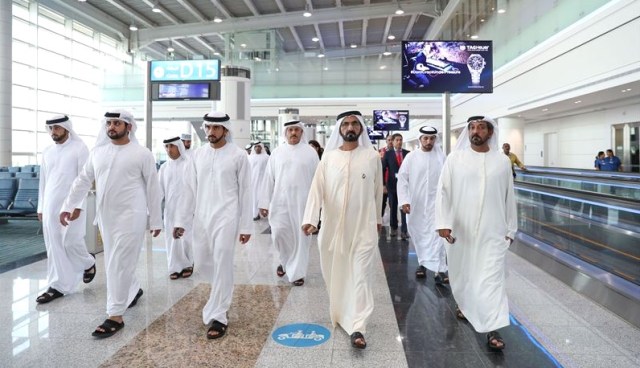
concourse-d-dubai-airportOn Sunday, HH Sheikh Mohammed bin Rashid Al Maktoum inspected the new US$ 1.2 billion Concourse D, at Dubai International Airport. The world’s first dedicated facility for Airbus 380s covers an area of 150k sq mt and has an annual capacity for 18 million passengers, equivalent to 50k every day.

Millennium & Copthorne is to partner with the First Group to manage its Millennium Place JVT – a 34-storey, 599-key 4-star property; the hotel, which is expected to open in 2019, will be First Group’s third, following others in Dubai Marina and Jumeirah Village Circle (JVC).

Dubai Properties has launched Bellevue Towers – twin 23-floor buildings, housing a total of 300 units, along with retail and hospitality outlets. Located in Downtown, the project will be completed by 2019.

With ongoing developments already in Sports City and Silicon Oasis, Shaikhani Group has released details of its US$ 954 million 2025 plan. Phase 1, a US$ 60 million mixed use development in JVC, includes 133 residential units.

It is reported that Dubai Investments, 11.5% owned by the Investment Corporation of Dubai, is seeking US$ 300 million to help finance its Mirdiff Hills project, slated to cost US$ 954 million (including land at US$ 272 million). The development will be a mix of residential, retail and commercial.

RTA contracts, valued at US$ 192 million, have been awarded for phases 4 and 5 of the Dubai Water Canal project, due for completion by this September. The former, costing US$ 84 million, relates to infrastructure work on both sides of the canal, whilst the latter is to complete the link with the Business Bay Canal.

Savills’ latest report indicates that Dubai residential market prices may have bottomed out and that, with limited available prime stock being released over the next three years, its outlook continues to be steady.

Meanwhile, the bullish Reidin/Global Capital Partners report concludes that the recent property correction has not been as severe as the 2008 debacle, citing the fact that price falls, for instance, in JLT and The Greens were 53% and 47% after the GFC, but this time around came in 4% lower and flat respectively. Furthermore, average prices fell 31% in the 22 months after the 2008 meltdown, compared to 13% over the same period since 2014.

Majid Al Futtaim is to invest US$ 8.1 billion locally over the next decade, with plans for 10 City Centre shopping malls, 10 Carrefour hypermarkets, 30 Carrefour supermarkets and 6 hotels. Following this expansion, the group will have doubled its retail footprint to 1.5 million sq mt, have 4.8k hotel rooms, and have provided an extra 170k direct and indirect jobs.

New DED rules have been established to ensure that the emirate’s 2.8k grocery stores have a “uniform identity”. Existing outlets will have two years to accede to these regulations, that will see standardisation in business identity, store design, fit outs, signage etc. The main aim is to improve the quality of retail service, in line with Dubai’s global image.

According to reports, D&D London, owners of Quaglino’s and Coq d’Argent, are looking to expand operations into Dubai for a number of their concepts and brands. The group already has restaurants in London, New York and Paris.

Drake & Scull has won a two-year, US$ 33 million Emicool contract to design, build and operate a chilled water facility in Dubai Sports City. The extension of the new district-cooling network will increase capacity to 77k tonnes of refrigeration.

DP World has announced a US$ 442 million agreement with the government of Somaliland to develop and operate a regional trade and logistics hub, primarily for fast growing Ethiopia. The port of Berbera will be the company’s 8th operation in Africa, following similar agreements in Algeria, Djibouti, Egypt, Mozambique and Senegal. With spending of over US$ 1 billion, DP World’s capacity in the continent is estimated at 6.2 million TEUs (20’ equivalent units).

One of the world’s biggest liners, at 348 mt, the Ovation of the Seas, berthed in Dubai, on its journey from Barcelona to Singapore. It is such stopovers at Port Rashid that should see the number of cruise tourists in 2016 reach 500k, compared to 456k last year – and an ambitious one million total by 2020.

An often overlooked facet of Dubai’s burgeoning hospitality sector is time-sharing. With the sector expected to contribute US$ 3.8 billion to Dubai’s economy by 2020, Arabian Falcon Holidays is actively looking to Africa – a continent that accounts for 5% of Dubai’s inbound visitors – for new business prospects.

The proposed US$ 2.2 billion, 69% acquisition of Kuwait Food Co’s (Americana) by Dubai investment firm Adeptio has fallen through. The Kuwaiti company, owned by the Al Kharafi family, has been on the market for over two years but no agreement could be reached between the two parties.

DEWA confirmed that it would be building the world’s largest CSP (concentrated solar power) plant, located at Mohammed bin Rashid Al Maktoum Solar Park. On completion in 2030, the solar park will have a capacity of 5 GW but the tender for phase 1 is for 200 MW. CSP is some five times more expensive than the traditional photovoltaic (PV) technology but has the advantage of having storage capabilities.

With the aim of investing more in Queensland’s Sunshine Coast, local company Najibi has launched an Australian investment and development company, Sanad Capital. The new entity will focus on community-based, eco-friendly projects in an area that has 9 million visitors every year.

Emirates NBD has indicated that it is considering plans for the country’s first digital bank, as it announces a US$ 136 million investment into digital innovation and a complete overhaul in its modus operandi.

According to the UAE Central Bank, April Money Supply Aggregate M1 rose 0.6% to US$ 134.4 billion, with M2 down 1.3% to US$ 327.8 billion and M3 marginally up to US$ 374.4 billion. Both gross bank assets and gross credit remained flat at US$ 678.7 billion and US$ 413.2 billion respectively.

Following last month’s 10.6% fuel increase, July has seen a further 4.8% hike in Special 95 to US$ 0.477 per litre, as diesel jumps 10.6% to US$ 0.482.

40% of the estimated US$ 100 million, 2014 MENA venture capital investment found its way to the UAE, according to a report from this week’s Arab Digital Forum. However, the total regional figure investment rate is low on a global comparison and 12 times less when compared to the US. Interestingly, only 19% of 2014 start-ups, that received funding over the previous three years, have failed.

Payfort reported that UAE internet spending rose by 23% last year to top US$ 10 billion and that this figure could reach US$ 27 billion by 2020. Airlines and e-commerce accounted for more than 86% of the 2015 total spend, with entertainment showing impressive growth.

The ME’s largest online retailer is looking at an IPO within the next two years. With ambitious expansion plans, Souq.com would need a further capital boost to its finance – and a public issue is an option. Three months ago, the company received overseas funding totalling US$ 275 million. With on-line shopping accounting for only 1.5% of regional retail traffic (compared to 8% globally), the Dubai-based company sees a bright and profitable future for the sector.

Arabtec shareholders agreed to write off 44% of retained losses by using US$ 272 million of its US$ 312 million statutory reserves. The beleaguered contractor is in the throes of a major restructuring plan to firm up its capital base and improve business practices.

Following the recent Dubai Parks and Resorts US$ 458 million capital boost, it is reported that Qatar Holding now holds an 11% stake in the entertainment company. Its major shareholder, Meraas, now has a 52% holding, down from 60% before the capital increase. Shares were trading at US$ 0.38 at Thursday’s close.

The DFM opened on Sunday at 3351 and returned to negative territory, with a 2.6% fall in thin pre-Ramadan trading to close on 3263 by Thursday (02 June 2016). Trading volumes on Thursday were at 446 million shares, valued at US$ 114 million, changing hands, (cf 467 million shares for US$ 120 million, the previous Thursday). Next week, with the start of the holy month of Ramadan, trading could be further subdued.

Bellwether stocks, Emaar Properties and Arabtec, fell in tandem – by US$ 0.06 to US$ 1.68 and US$ 0.02 to US$ 0.37 respectively.

Brent crude dipped US$ 0.42 to US$ 49.17, whilst gold continued its recent downward trend – down US$ 7 to US$ 1,213 by the Thursday (02 June 2016) close.

The Russian firm, Krasnye Barrikady, has been awarded a US$ 1 billion Iranian order for ten rigs. The agreement sees both parties to jointly build the rigs for exploration and production in the Gulf.

It was no surprise to see that VW reported a 19.4% fall in Q1 profits to US$ 3.5 billion (and a 3.4% drop in revenue to US$ 55.8 billion), as the fallout from the emissions scandal rumbles on. The carmaker has already put aside US$ 17.5 billion to cover these costs to date with some forecasting that this figure will eventually top US$ 32 billion.

IATA has forecast that ME carriers will see a 14.2% hike in 2016 profits to US$ 1.6 billion, as global airline profits are expected to rise by 8.5% to US$ 39.4 billion; worldwide cargo revenue is expected to fall by 6.1% to US$ 49.6 billion. Regionally, demand is expected to jump 11.2%, whilst supply is expected to grow at the higher rate of 12.2%.

Sainsbury’s planned US$ 2 billion takeover of Argos could be in jeopardy as the Competition and Markets Authority is looking into the question of unfair competition, if the merger were to go ahead. The new entity – with non-food sales of US$ 8.7 billion and 2k sites – would compete with the likes of M&S and John Lewis.

Greybull Capital has acquired Tata Steel’s European long-products division, following confirmation of a US$ 580 million financing package being finalised. The new business, manufacturing steel for the rail and construction sectors, will be known as British Steel and the owners expect to be profitable within a year. With the government considering a restructuring of the industry’s US$ 21.8 billion pension scheme, there are reports that Tata may decide not to sell its remaining 11 UK plants.

In the UK, HM Revenue & Customs have lost a case, involving Project Blue, ultimately owned by the Qatari government, and its 2007 purchase of Chelsea Barracks. With US$ 73 million at stake, the Court of Appeal ruled that the tax office had pursued the wrong party for the stamp duty on the US$ 1.7 billion sale. Project Blue did not actually own the property as it had used an Ijara arrangement so that it belonged to the bank, Masraf al Rayan, who then leased it back to the defendant.

Although a slight improvement, May eurozone inflation still remains in negative territory at -0.1%. This data – along with the fact that unemployment was unchanged at 10.2% – will have forced the ECB not to go ahead with further QE measures. The rate for the 28-country bloc EU came in at 8.7% as the German figure dropped to a record low of 6.0%. Despite the good news, the likes of Greece, Spain and Italy still have double digit rates of 24.4%, 20.1% and 11.7% respectively. Another disturbing feature of the unemployment data is that 18.8% of those under 24 have no job.

With Australia going to the polls on 02 July, the Turnbull government got a boost with a better than expected 1.1% in Q1 growth figures, as both exports and household spending headed north. With an annualised growth of 3.1%, the data probably precludes the need for a further cut in interest rates, now standing at a historically low 1.75%.

The world’s fastest growing major economy just got faster. India recorded a 0.4% increase in 2015-16 to 7.6%, as the April quarter’s growth touched 7.9%. Meanwhile, with some analysts predicting a hard landing, China’s expansion continues to slow.

An amnesty in Argentine aims to see the return of some of the US$ 500 billion of unregistered funds, deposited in overseas accounts, so that monies can be used to pay for much needed infrastructure projects and to pay outstanding pension funds. President Mauricio Macri is introducing a law that will see the returned funds having to pay between 0% – 15% tax, depending on the amounts involved.

For the 5th successive quarter, Brazil recorded negative growth, with the economy reeling from political problems, the zika virus, corruption and the pending impeachment trial of President Dilma Rousseff. It is estimated that its GDP fell 5.4% year on year and although a marginal improvement to a 4.3% contraction is expected this year, the recession could continue for several more years. Even with the August Olympics coming up, the country is surely Running On Empty!

Posted in Finance | Tagged , , , , , , , , , , , , | Leave a comment

A Little Bit More

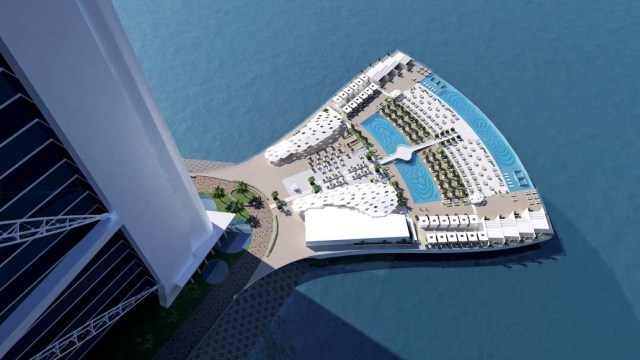
burj-al-arabThe Burj Al Arab has opened its much-vaunted 10k sq mt artificial island, built by the Finnish firm, Admares. Boasting two pools, private cabanas, dining options and a beach made from 1k tonnes of introduced white sand, annual membership rates reportedly start at US$ 28k.

Dubai Municipality is planning to build a US$ 490 million conference centre and arena in Al Jadaf, adjacent to Dubai Festival City. With a 592k sq ft footprint, the creek-side facility will house a 10k capacity, 190k sq ft conference centre which will be connected to three towers – one commercial and two hotels.

Dubai Properties announced the emirate’s second major development of the week – Marasi Business Bay, a US$ 272 million project, encompassing up to 200 “water” homes, 100 outlets, 12 km of waterfront and a 1.3k-berth marina. Financing for the 7-year project, designed by U+A Architects, will be by corporate reserves ‘in partnership with local financial institutions’.

This week, HH Sheikh Mohammed bin Rashid Al Maktoum opened the world’s first 3D-printed office, located near to Emirates Towers and to be used by Dubai Future Foundation. The process of printing the building, on a 20’ high, 120’ long and 40’ wide machine, took 17 days, followed by the internal and external designs, with a further two days for final installation.

Work has started on Yotel’s first ME property – a 582-key hotel and serviced apartments. The Kuwaiti operator has signed an agreement with Dubai Investment Properties and expects the facility, located on SZR, to open by the end of 2018.

Gemini Property Developers have launched phase 1 of its Splendor project – 134 luxury units in the Hartland community of Mohammed Bin Rashid (MBR) City. The 320k sq ft development is expected to be complete within 24 months and will also include retail and recreational facilities.

Deyaar Development has signed a strategic partnership with Asçioglu that will see the real estate company introduce interested Turkish investors to an exclusive tower in the Dubai developer’s Dania District. This is in the 2nd phase of Deyaar’s US$ 817 million Midtown project, covering 1.2 million sq ft, and located in Dubai Production City.

With their 200th outlet opening by Sachin Tendulkar, Aster Pharmacy introduced the GCC’s first health and wellness e-commerce store. The online platform has a range of over 10k products.

Dubai-based Green Valley International has launched a US$ 139 million project in Morocco. The City of Green Valley Marrakech will have 350 villas, spread across 410k sq mt, and is the latest of many of its international developments; in March, it announced similar projects in Bosnia and Morocco, with a combined value of US$ 169 million.

As UAE sales growth slows, with the reduction in high spending tourists, Damas is looking at the Saudi market. Since the start of 2015, the jeweller has opened 20 outlets in the kingdom, with the same number of shops to open before the end of the year.

The latest Nielsen report indicates that UAE Q1 consumer confidence level lost 4 points to 104 – its lowest level in 6 years. The index is a measure of a mix of spending intents, personal finance and job prospects and is a reflection of the negative impact of low oil prices.

With both food and education costs heading up, it was no surprise to see the country’s inflation rate edge higher to 1.63%, from 1.4% a month earlier. Although the rate is expected to fall in Q2 – because of lower rents and reduced utility bills – Dubai still remains an expensive location in which to live. According to a recent Mercer survey, the emirate is ranked 23rd in the world’s most expensive cities, with Abu Dhabi 10 places lower.

Last November, it was reported that local banks could have lost US$ 1.4 billion (equivalent to 0.5% of all banks’ total lending), as SME owners left the country, without settling their loan facilities. A slowing economy, resulting from low oil prices and the tightening of liquidity, made it difficult for some owners to remain solvent; with the risk of a possible jail sentence for default, some decided just to leave Dubai . . . and their debts. But following a March voluntary system, announced by the banks, to introduce more lenient repayment schedules in case of financial difficulty, seems to have largely contained the problem.

With its A+ Fitch rating, and a 76% hike in 2015 profits to US$ 175 million, it was no surprise to see Emirates Islamic’s 5-year US$ 750 million sukuk nearly three times oversubscribed. The Dubai bank’s Islamic bond will be listed on both Nasdaq Dubai and the Irish Stock Exchange.

It is reported that Shuua Capital has cut its 70-strong payroll by 15%, at the same time that a Dubai Holding division is mooted to be selling its 48% shareholding in the investment bank; the stake is valued at US$ 86 million at current prices. Following this news, the investment bank’s shares jumped 5.4%.

It also appears that Abraaj Group is in discussions with the US-based private equity firm TPG Capital to acquire the Spinneys supermarket chain in Egypt, valued at US$ 100 million.

Noor Bank, rated A- by Fitch, is expected to raise US$ 500 million, by way of a 5-year sukuk, priced at 6.25%; this will boost the Dubai bank’s Tier 1, or core, capital.

DP World is seeking a 7-year US$ 1.2 billion sukuk to fund the part-repurchase of an earlier US$ 1.5 billion bond, due to mature next year.

The DFM opened on Sunday at 3230 and returned to positive territory, posting a 3.7% gain in improved trading to close on 3351 by Thursday (26 May 2016). Bellwether stocks, Emaar Properties and Arabtec, nudged higher – by US$ 0.05 to US$ 1.74, and US$ 0.01 to US$ 0.39 respectively. Trading volumes were markedly higher on Thursday at 467 million shares, valued at US$ 120 million, changing hands, (cf 279 million shares for US$ 87 million, the previous Thursday).

Brent crude moved past US$ 50 this week and, although dipping a little, it was still 1.6% (US$ 0.75) up at US$ 49.59 – whilst gold lost US$ 35 to US$ 1,220 by the Thursday (26 May) close.

Coinciding with the visit of the US president, Barrack Obama, to Vietnam, its budget airline, VietJet signed a US$ 11.3 billion order with Boeing for 100 737s which follows a February US$ 3.0 billion Pratt & Whitney engine order.

Bayer’s all cash US$ 62 billion bid to take over the seed company. Monsanto, has been rejected as “incomplete and financially inadequate”. It is expected that a revised offer will be on the table. To date, it has been a busy year for mergers, with global deals of US$ 494 billion just behind the total for the whole of last year.

Toyota has joined with Uber by investing an unspecified amount in the online rideshare company, as well as offering leasing options for its drivers. The Japanese conglomerate is keen to share in ideas and resources in areas such as R&D, into driverless cars, and in-car apps.

Australian authorities have put a temporary block on the US$ 6.5 billion acquisition of the mega rail and ports operator, Asciano. The Commission is keen to ensure that any competition reduction in the container logistics business does not have a negative impact on the industry. Brookfield is still the front runner to take over Asciano.

As its chief executive resigns with immediate effect, criminal proceedings have opened against Swiss bank BSI, for alleged corruption links with Malaysia’s 1MDB fund. The bank, which manages US$ 85 billion of clients’ assets, was also ordered to close its Singapore branch for “serious breaches of money laundering requirements” – the first time in 32 years that the Monetary Authority of Singapore has withdrawn approval for a merchant bank. MAS is one of several regulatory authorities investigating possible wrongdoing by the Malaysian fund.

The world’s largest insurer Axa, with managed assets of US$ 1.5 trillion, has announced that it will no longer invest in the tobacco industry and will sell its US$ 1.7 billion sector portfolio .This comes as a further blow to the industry, as last week the UK government introduced plain packaging for all cigarette packets.

French authorities have raided the Paris office of Google in a tax-related probe involving 100 investigators. It is reported that the US internet giant has an outstanding tax liability of US$ 1.8 billion – slightly more than the US$ 188 million settled with the UK government earlier in the year! The next multinational on the French tax radar could be MacDonald’s.

All eight of France’s oil refineries have been affected by a strike over new labour laws, leaving 20% of the country’s petrol stations with little or no fuel. The aim of the CGT union is to reverse new work legislation (which had already been watered down) that makes it simpler for companies to hire and fire employees. If the dispute spreads, it could affect both the country’s tourism industry and upcoming Euro 2016 football championships.

Although France and Germany bucked the trend, May eurozone output growth slowed to its weakest reading in 16 months. Although still in positive territory, Markit’s flash composite purchasing managers’ index was marginally down on the previous month at 52.9.The usual suspects – Brexit, Chinese slowdown and global volatility – were the drivers for the disappointing figures, with more of the same in the coming months.

European leaders gave the green light for beleaguered Greece to access US$ 11.5 billion in a new bailout package following the country’s recent program of tax increases and budget cuts. This will inevitably see the Hellenic country a further beneficiary of debt relief in the way of “haircuts”, repayment extensions and subsidised interest rates. The country is labouring because of debts totalling US$ 370 billion which equates to 180% of its GDP.

In the wake of the deteriorating health of its 92-year old chairman, Sumner Redstone, the control of Viacom, owner of the Paramount film studio and networks including MTV, continues unabated. The nonagenarian has appointed two new trustees who will have control of 80% of voting rights, replacing Viacom’s chief executive and a board member. The two ousted trustees have now filed a lawsuit against Mr Redstone’s daughter claiming that she is manipulating her father to gain more control of the company.

European leaders gave the green light for beleaguered Greece to access US$ 11.5 billion in a new bailout package following the country’s recent program of tax increases and budget cuts. This will inevitably see the Hellenic country a further beneficiary of debt relief in the way of “haircuts”, repayment extensions and subsidised interest rates. The country is labouring because of debts totalling US$ 370 billion which equates to 180% of its GDP. How many times can the Greeks continue to request its creditors for A Little Bit More?

Posted in Finance | Tagged , , , , , , , , , , , , , | Leave a comment

A Drop In The Ocean!

airbnb-banLast year, CBRE predicted 20k new residential units would be completed – the figure turned out to be less than 10k. This year, the consultancy estimates 15k new properties for Dubai. If the emirate is set to grow at 6% pa over the next four years and the current population is 2.5 million, then Dubai will have an extra population of 656k by 2020. In other words, at current levels, demand is going to outstrip supply by a long chalk, with the inevitability of residential prices (and rentals) heading up!

Due for completion in June 2021, Emaar Properties has launched phase 1 of ‘Fairway Vista’ – 63 large luxury villas in Dubai Hills Estate, within Mohammed bin Rashid City. This master development, encompassing 2.2 million sq mt of green areas, will eventually have 26.4k residential units, with rail links to both international airports.

Azizi Developments has awarded Keilani Construction Company two contracts, valued at US$ 55 million, for its Al Furjan projects. Both the 271-unit Roy-Mediterranean and 222-apartment Montrell will be completed by the end of next year.

With the main aim of promoting the hospitality sector, Dubai Tourism and Airbnb have signed an agreement. The US-based website, with 1.5 million listings, covering 34k cities in 190 countries, provides an online facility for interested parties to list, find and rent lodgings. Surprisingly, there are a reported 3.5k Airbnb listings already in Dubai, with the number having doubled over the past year. It will be interesting to see what other players in the sector think of this development.

Early data from STR Global points to disappointing reading for Dubai’s hospitality sector, as all April indicators head south – including average daily rates (15.4% to US$ 210), RevPAR (16.0% to US$ 168) and occupancy rates (0.9% to 79.7%) – compared to a year earlier. The month witnessed a 6.1% increase in supply, marginally higher than the demand figure of 5.2%. Over 25% of Dubai’s 4.1 million Q1 visitors were from the GCC, whilst India recorded a double-digit increase in numbers.

Of the 80.9k rooms and 251 properties under construction in the ME (40.9% higher than last year), Dubai lays claim to 20.3k and 65 hotels of that total.

Within a year, the emirate’s first dedicated furniture shopping mall will open for business in Al Barsha. The US$ 82 million MMS Gulf project, the Art Centre, is to be built by Airolink and will comprise over 100 retail outlets.

The world’s largest themed retail mall, Ibn Battuta, just got bigger, with the opening of a further 60 retail outlets encompassing a 300k sq ft extension. This will be followed over the next four years by an additional 4.7 million sq ft of space, bringing the total area to over 7 million sq ft.

IKEA has opened its first ME distribution centre in Dubai South. With 200 employees, and covering 100 sq mt, the facility will service the Swedish retailer’s 7 GCC stores.

In a bid to ease traffic congestion on SZR, the RTA has awarded a US$ 91 million contract to upgrade infrastructure in the Business Bay area. Work will include two bridges, three underpasses and 4 km of new roads.

Dubai Municipality has confirmed a massive US$ 3.4 billion, 5-year contract with Parsons Overseas to build a 70 km underground sewage system. Disruption will be minimal, as the building of the 90 mt deep tunnel, supported by 140 km of link sewers and pumping stations, will utilise micro technology, so that there will no digging up of roads.

DP World opened its first Turkish terminal, covering an area of 460k sq mt, with a 1.3 million container capacity. Located in Izmit Bay, DP World Yarimca is one of the country’s largest facilities and will be a welcome driver to boost the current US$ 6.9 billion trade between Turkey and Dubai.

In a bid to attract more airlines, Dubai Airports is offering special incentive deals for those who move operations to the new Al Maktoum International – Dubai World Central. With a current capacity of 5 million – building up to 26 million by 2018 and 250 million when fully operational – the facility serviced only 258k passengers in Q1.

The DMCC goes from strength to strength, with latest data indicating a massive 18% surge in company numbers to over 12k, including 500 retail outlets and 92 educational facilities, housed in 66 mixed-use tower blocks. The Dubai Gold & Commodities Exchange has also expanded actual numbers by 23.0% to 14.5 million traded contracts.

One of the main aims of the newly launched Dubai Health Strategy 2016-2021 is to boost medical tourism. Comprising 98 initiatives, the comprehensive plan is in line with international best practices and will transform Dubai Health Authority into a world-class body.

The Department of Economic Development has instructed Dubai businesses to use Arabic as the main language for invoices, receipts and menus, as from next year. The move will be phased in over a period of time.

Dubai’s 2015 trade in perfumes and cosmetics stood at US$ 5.6 billion, comprising imports at US$ 3.3 billion, reexports – US$ 1.7 billion – and exports, totalling US$ 0.6 billion; this equates to a 25% hike in the five years to 2015.

The DED has established Dubai Ventures Network – an angel investor service with the aim to help SMEs with investments of up to US$ 100k, as well as to set up a SME-dedicated “ecosystem”. Having teamed up with European Trade Association for Business Angels, the venture already has a pool of 25k potential investors, in addition to a further 200 locally. It is estimated that, despite US$ 820 million having been invested in regional SMEs, more than 80% of such entities rely on self-financing.

With the sector forecast to grow 30% over the next five years, Dubai Investments has signed a US$ 68 million 51:49 agreement with Abu Dhabi’s Bildco to construct a steel plant. When operational next year, the factory will be able to produce 300k tonnes of reinforced steel bars per year.

It is reported that Abraaj Group is in discussions to team up with other investors to acquire a minority share – up to 35% – in Barclays’ African unit. With more than 12 million customers, in 12 countries, Barclays Africa is South Africa’s third largest bank and could be worth in the region of US$ 7.5 billion. The Dubai-based private equity firm is also active in the African health sector; last week it announced plans to spend US$ 500 million for a mid-tier hospital business and is targeting key cities, including Nairobi, Lagos and Johannesburg, to create much needed healthcare ‘clusters’.

Meanwhile Fajr Capital has acquired a stake in Cravia Group, a food franchiser, with UAE rights to brands including Cinnabon and Zaatar W Zeit. Details of the investment were not disclosed but the cash injection could be used for expansion both locally and in the new markets of Bahrain and Qatar. The Dubai asset manager has also teamed up with KKR as one of four bidders for a majority share, valued in the region of US$ 1.5 billion, in National Food Products Company; the Abu Dhabi company’s brands include Lacnor, Milco and Oasis Water.

A member of Emaar Properties, Emaar Industries & Investments, has acquired a major stake in Leaders Fort Contracting for an undisclosed fee. The UAE-based LFC specialises in industrial flooring, protective coatings, concrete repair technology and MEP.

After a successful debt restructure with its creditors, Limitless is set to pay its creditors their outstanding balance of US$ 1.2 billion in three equal instalments – 2016, 2017 and 2018 year ends. However, the real estate developer has indicated that it will pay the first instalment and 80% of the second, totalling US$ 564 million, this month, with the banks receiving US$ 518 million (being 43% of their outstanding balance) and trade payables US$ 44 million, equating to 28% of monies owing.

Since the establishment of its Zakat fund in 2004, Emirates Islamic has supported over 28k needy cases and in 2015 it disbursed US$ 7 million for charity purposes; this year to date, the bank has already distributed US$ 8 million. Now with its recent growth, it has set up a formal charity fund.

CBI is planning to raise its capital base by over 50% to US$ 708 million; the bank will issue 869 million shares of US$ 0.27 each.

Network International has raised a 6-year, US$ 350 million loan facility to acquire Emerging Markets Payments, a leading regional payments processing company. NI is jointly owned by Emirates NBD (51%) and 49% by Warburg Pincus and General Atlantic (49%).

Drake & Scull’s woes continue as the embattled contractor recorded a 61.0% fall in Q1 profit to US$ 3 million, with revenue dropping 7.2% to US$ 281 million.

Although still in negative territory, Arabtec’s Q1 figures showed an improvement over the same period in 2015; revenue was up 8.4% to US$ 529 million and a loss of US$ 13 million, compared to a US$ 76 million deficit last year. The full 2015 results had a bottom line loss of US$ 640 million.

The DFM opened on Sunday at 3345 and dropped 3.4%, in thin trading, and lack of market liquidity, to close on 3230 by Thursday (19 May 2016), debunking the theory that its progress or not is tied to the oil price. Bellwether stocks, Emaar Properties and Arabtec, lost ground – both down by US$ 0.05 to US$ 1.69, and US$ 0.03 to US$ 0.38 respectively. Trading volumes continue lower on Thursday at 279 million shares, valued at US$ 87 million, changing hands, (cf 370 million shares for US$ 113 million, the previous Thursday).

Brent crude is fast approaching US$ 50, up this week – 4.5% (US$ 2.11) to US$ 48.81 – whilst gold weakened, losing US$ 17 to US$ 1,255 by the Thursday (19 May) close.

In a bid to boost its LNG development portfolio, Australia’s Oil Search is planning to acquire the PNG’s InterOil for a reported US$ 2.2 billion.

As the oil services industry still reels from the oil price collapse, an all stock deal, valued at US$ 13 billion, sees Technip and FMC Technologies merge. The French company shareholders will receive 2 shares, whilst the Houston-based equity holders get one for one in the new entity.

A much bigger merger is on the cards as German drug-maker, Bayer, with a US$ 90 billion market value, makes a bid for agricultural conglomerate Santano, valued at US$ 43 billion. If the deal were to go through, it would create the world’s biggest supplier of pesticides and seeds.

A month after its US$ 160 billion plans to acquire Allergan were scuttled by US regulators, Pfizer is hoping to buy Anacor Pharmaceuticals Inc in a US$ 5.2 billion deal.

The Dutch electronics firm, Philips, is planning a US$ 792 million IPO, as it tries to hive off 25% of its lighting business. It is expected that trading in Philips Lighting will start on the Amsterdam’s Euronext bourse before the end of the month; the new entity will focus on the LED lighting market, whilst the remaining part of the company will target the health technology market.

Billionaire investor Warren Buffett has shocked the market by buying a US$ 1 billion stake in Apple – a move that saw its stock value, which had fallen over 30% in the past year, jump 3.7% to US$ 94. The purchase makes his company, Berkshire Hathaway, the tech company’s 56th largest shareholder.

With a further recall of 21 million vehicles, bringing the total to 51 million, Honda has seen the charge to address its Takata airbag inflator problems surge 263% to US$ 4.0 billion; the end result is that the carmaker made a Q4 loss of US$ 853 million, whilst annual profit fell 32.0% to US$ 3.1 billion.

On the basis that the US$ 1 billion investment in China’s Uber equivalent, Didi Chuxing, was to help Apple better understand the Chinese market, Chief Executive Tim Cook may have had ulterior motives. Perhaps the fact that the tech company needs to boost its iPhone turnover in China, and also to get a foothold in car technology, may have prompted this investment.

Confirmation that China is expanding its gold reserves came with news that ICBC, the world’s biggest bank by assets, was acquiring a huge vault in London, capable of holding 2k metric tonnes. Currently, the country accounts for more than 25% of the global demand for the yellow metal.

With its economy growing at an annualised 1.7% rate in Q1, having fallen into negative territory in Q4, Japan has averted going into recession. The world’s 3rd largest economy continues to have export and business investment problems to overcome and the outlook for increased consumer spending, which accounts for 60% of economic growth, is unclear. Prime Minister Shinzo Abe still has to maintain negative interest rates and expand his QE program to maintain momentum and stimulate the economy. What seems certain is that he will have to postpone this month’s proposed 2% sales tax increase to10%.

A recent World Bank report warns that over the next 30 years, 1.3 billion people and a massive US$ 158 trillion in assets will be affected by extreme weather and changing climatic conditions. Two examples cited were Indonesia, where chances of flooding from rivers overflowing will increase by 166%, and Kathmandu could witness 50% more earthquakes, in the wake of increasing numbers of slums being built.

As trade tensions heighten, the US has more than quintupled import duties on Chinese-made cold-rolled flat steel, with the accusation of them selling products below market price, i.e. dumping. Along with many other countries, including the UK, the US is unhappy with this unfair competition which it is claimed has cost 12k jobs.

There were three April indicators that the US economy is on the way up; consumer prices at 0.4% rose at their fastest pace in three years, whilst housing starts were up by 6.6% equating to 1.17 million units annually as industrial production rose 0.7%. With the economy picking up steam, there is a good chance of the Fed hiking up rates at their June meeting.

Figures recently released by the Treasury Department show that the UAE holds US$ 62.5 billion of US government debt – some way behind its neighbour, Saudi Arabia, with US$ 116.8 billion but well ahead of other GCC countries, including Kuwait (US$ 31.2 billion) and Oman (US$ 15.9 billion). (The two global leaders of US public debt are China – US$ 1.25 trillion – and Japan – US$ 1.13 trillion).

Coincidentally, this week, the US Senate passed legislation on Tuesday to allow 9/11 families to sue the Saudi government which had earlier threatened to pull out funds if this event happened. However, with latest estimates of US public debt at US$ 19,188,102,413,249, this Saudi balance is little more than A Drop In The Ocean!

Posted in Finance | Tagged , , , , , , , , , , , , , | Leave a comment

Picking Up The Pieces!

MontenegroCBRE’s latest report indicated that slowing job growth and the negative impact of new supply were the main drivers behind Dubai Q1 residential rents and sale prices dropping on average by 2%. This comes on the back of a 4% slump in the previous quarter. The consultancy estimated that 15k residential units could be completed this year, with Dubailand, Dubai Silicon Oasis and Jumeirah Village the top locations.

A shortage in prime office space has seen a 20% Q1 hike in certain locations, such as DIFC, compared to 2015, but the falling vacancy rates are not apparent in other areas. The JLL Global Office Index indicated that Dubai maintained its position as MENA’s top performer in this sector.

Emaar Properties has awarded Arabian Construction Company the contract to build Boulevard Point. The luxury 63-storey tower, comprising 297 apartments, will be the ACC’s third project in Downtown.

Choice Hotels International has signed an agreement with Equinox Group and Al Tayyar Travel Group to develop its three mid-scale brands – Clarion, Comfort and Quality – into the UAE and Saudi Arabia. It is expected that 25 hotels, with 8k rooms, will be built over the next five years.

Lemon Tree Hotels has also announced that it will introduce at least 8 properties, in the 3 / 4 star brackets, over the next three years. The Indian chain has signed an agreement with the Australian real estate company, Raine and Horne.

The Wyndham Hotels Group is another interested party looking to expand operations in the UAE and is in negotiations with potential investors. The US-based operator is one of the largest in the world, with several well-known brands that could gain traction including Dolce Hotels & Resorts, Days Inn, Howard Johnson and budget chain, Super 8.

Dubai (with 361k sq mt) has been ranked, along with Abu Dhabi, as 17th in CBRE’s Global Shopping Centre Development report, with a total of 627k sq mt of total retail space under construction. Dubai still rates a worldwide 2nd for international brand presence. Within the next two years, two malls, Palm Mall in Dubai (111k sq mt) and The Point (48k sq mt), are expected to open.

It is reported that both Emirates NBD and CBD are in the market to raise finance; the former may be looking at refinancing a 2013 US$ 800 million facility and the latter a US$ 450 million loan due to mature this December. This could be a move to source funds before rates start moving upwards and comes after liquidity tightens, in the wake of falling oil prices.

In the same vein, S&P anticipate that Gulf banks will see a marked weakening in growth for the next 18 months, as assets increased much slower last year – Islamic banks fell from 12.3% to 7.0% whilst conventional banks slipped from 9.6% to 5.7%. The agency sees asset growth this year for both banking sectors at 5.0% but it also estimated oil prices would reach US$ 50 in 2018 (today’s price is almost there at US$ 46.70).

The Somaliland government and DP World have agreed to invest US$ 442 million, over time, in the Port of Berbera. The aim of the investment and management arrangement is to make the facility a ‘regional and logistic hub.’

Following last November’s decree, the emirate’s first PPP – public private partnership – has been announced, involving the government and a special purpose company established by Prince Khaled Bin Alwaleed bin Talal’s KBW Investments and the Indian transport firm ITNL. A 30-year concession has been granted for the building of one of the world’s largest automated car parks, to be located adjacent to the Dubai Courts. The total project includes a new Supreme Court building, 3k sq mt of retail area and 18.6k sq mt of office space.

Under new regulations, it is now easier for private homeowners to rent out their residences on short-term lets. If a proper holiday home licence is not obtained from the Dubai tourism authorities (DTCM), then owners could face penalties of between US$ 54 and US$ 5.4k. Repeat offenders could be fined up to US$ 27k. Furthermore, tenants can obtain a ‘no objection’ letter from their landlord and, if they meet the all the other requirements, they too can lease out their accommodation.

Dubai-based Green Energy Tomorrow will be the prime supplier for phase 1 of DP World’s initiative to install photovoltaic solar panels on all its buildings. The solar project, that generates electricity, is the largest of its kind in the ME and is part of the Dubai Integrated Energy Strategy 2030.

Bloomberg reports that GEMS Education could be considering an IPO as early as next year. In 2014, Blackstone, Fajr Capital and Mumtalakat acquired a significant minority stake in the business, whilst last month the school operator sought US$ 250 million finance, for expanding its school numbers, which currently stand at 78. Whether the 2017 economic environment will be suitable for a public listing remains to be seen.

The Investment Corporation of Dubai has bought a majority share in one of the world’s largest super yacht marinas – Porto Montenegro in Sarajevo. ICD reportedly spent US$ 288 million for a 53.2% stake from Canadian billionaire Peter Munk and joins other shareholders including Bernard Arnault, Lord Jacob Rothschild and Oleg Deripaska.

The April Emirates NBD Dubai Economy Tracker Index moved marginally higher to 52.7, as positive momentum returned to the market. The non-oil private sector index is an amalgam of individual indices, with all three key sub-sectors pointing to improved business conditions.

London-based Investec Bank has agreed a US$ 1 billion sale-and-leaseback arrangement with Emirates to finance four A-380s. The deal involves the bank to purchase the jumbos before leasing them back to the airline.

As widely expected, Emirates reported record profits – up by 56% to US$ 1.6 billion – for the year ended 31 March 2016. Although revenue was down 4% to US$ 23.2 billion, most other indicators headed north including passenger numbers by 8% to 51.9 million and capacity by 11%. It appears that the strong greenback cut US$ 1.6 billion off the revenue stream and US$ 1.1 billion from the bottom line. The carrier saw its fuel bill fall by 31% – now accounting for only 26% of its operating costs, compared to 35% last year.

Meanwhile Emirates Group declared a US$ 681 million dividend for ICD on the back of a 49.1% hike in profits to US$ 2.2 billion, despite a 3% reduction in revenue to US$ 25.3 billion. Over the year, employee numbers jumped 13% to 95k.

With flydubai and Qatar increasing their services, Q1 passenger traffic at DWC (Dubai World Central) rose 79.8% to 258k, whilst cargo fell 6.9% to 198k tonnes.

On a federal basis, the cabinet has approved a Shariah authority to monitor the expanding Islamic finance sector. The UAE Central Bank will be responsible for its establishment, with the new body supervising the Shariah boards of the individual financial institutions. In Q4, Islamic banks accounted for 22.2% of domestic credit, compared to 20.8% a year earlier.

Not known for their forecasting skills, the IMF has estimated the country’s 2016 fiscal deficit will widen to 7.2% of GDP but will improve thereafter, as oil prices and the global economy head north. It also expects that inflation will fall from 4.1% to 3.2%. The august body also commented that the Dubai diversified economy is holding up well and expects this year’s 3.3% growth forecast to jump to 5.0%, by the time of Expo 2020.

Damac Properties posted falls in both Q1 revenue and profit – by 33.3% to US$ 441 million and 14.6% to US$ 286 million – compared to the same period in 2015. During the quarter, the developer recorded sales of US$ 545 million, whilst delivering 0.3k units, and expects a further 2.7k to be completed this year.

Amlak Finance posted a 249% hike in Q1 revenue to US$ 99 million, whilst its profit figure jumped from US$ 2 million to US$ 28 million, compared to a year earlier. However, US$ 37 million of the turnover was attributable to a one-off sale of land. Total assets dropped 2.0% to US$ 1.8 billion.

Dubai-based Amanat Holdings reported a six fold increase in Q1 profit to US$ 3 million, as revenue doubled to US$ 5 million. During the quarter, the healthcare and education provider invested a further US$ 4.4 million in Sukoon International Holding, bringing its total investment in the Saudi company to US$ 14 million; it now owns a 33.25% stake.

Marka posted another quarterly loss, with a Q1 deficit of US$ 5 million. However, despite the strong US$ hurting revenue, the Dubai-listed company is confident in a turnaround of fortunes, with plans to double its retail space over the next year.

The DFM opened on Sunday at 3308 and nudged 1.1% higher to close on 3345 by Thursday (12 May 2016). Bellwether stocks, Emaar Properties and Arabtec, gained ground – both up by US$ 0.03 to US$ 1.74, and US$ 0.01 to US$ 0.41 respectively. Trading volumes were marginally lower on Thursday at 370 million shares, valued at US$ 113 million, changing hands, (cf 433 million shares for US$ 137 million, the previous Wednesday).

Brent crude surged this week – up 5.4% (US$ 2.38) to US$ 46.70 – whilst gold was flat at US$ 1,272 by the Thursday (12 May) close.

Recent figures show that Nigerian oil production of 1.7 million bpd is at its lowest level since 1994, largely because of the increased number of attacks on facilities. The latest has resulted in Chevron having to close down a platform producing 90k bpd.

After over 20 years as the country’s oil minister, former health minister and current chairman of Aramco, Khaled Al Falih, has replaced Ali Al Naimi. Last month, Saudi Arabia’s King Salman initiated major economic reforms, as the kingdom readies itself for a life with reduced dependence on oil revenues – emphasised by its 2015 budget deficit ballooning to US$ 98 billion.

After admitting that it had not been following the Japanese fuel consumption tests for the past 25 years, Mitsubishi Motors has seen its shares drop 40%. Now it seems that rival Nissan is in talks to take a 33.3% share, valued at US$ 2.2 billion, in the troubled automaker. Meanwhile the world’s largest car company, Toyota, has announced a Q1 4.0% drop in profit to US$ 3.9 billion; worryingly, it is expecting a further 35% profit plunge over the next 12 months.

Having acquired Sharp in March for US$ 3.5 billion, its new owner, Foxconn Technology Group, has a tough job ahead with the ailing tech company posting a massive US$ 2.4 billion annual loss (US$ 2.0 billion for the year ended 31 March 2015).

The EC has blocked the US$ 14.9 billion O2 sale to Three because of the fear of reduced customer choice and price rises, as the number of UK operators would have dropped to just three. The Hong Kong-based purchaser, CK Hutchinson, is considering the merits of an appeal.

Nokia reported a disappointing Q1 US$ 583 million loss, compared to a US$ 200 million profit in the same period last year. Revenue surged 89.6%, to US$ 6.3 billion, following its US$ 17.6 billion acquisition of French telecom operator Alcatel-Lucent during the year.

Disney is set to close its Infinity line of video games, as it booked a US$ 147 million charge mainly in regard to unsold inventory. It has found that developing games from scratch is a risky business and, in future, will go down the safer route of licensing its screen characters.

Shares in the US department store Macy’s dipped to a 4-year low, as its Q1 revenue fell 7.4% to US$ 5.77 billion and profits tanked 40%. After five straight quarterly falls, the retailer is not expecting any better news forecasting like to like sales down 4% for the rest of 2016.

Despite the Crown Office confirming that individuals associated with the near collapse of RBS will not face any legal action, shareholders may now continue with civil claims. The bank, 73% government owned, that had made a US$ 17.3 billion shareholder cash call in 2008, was “run” by Fred Goodwin, known as “Fred The Shred”. He was in charge when the bank paid US$ 72 billion for ABN Amro and racked up losses of US$ 34.6 billion in 2008 and lost 90% of its market value, resulting in the government bailout.

Australia’s biggest bank, Commonwealth reported a 4.5% hike in Q3 profits to US$ 1.7 billion, despite a jump of US$ 316 million in impairment expenses.

A PWC study indicates that regional IPO activity has all but dried up in Q1, with only one listing. The global slowdown, regional unrest and low oil prices continue to be the main drivers for the paucity of listings that has seen only two transactions completed over the past six months. In Q4 2015, the only regional IPO raised US$ 101 million on the Saudi stock exchange Tadawul, whilst this quarter has had the Middle East Healthcare Company (MEAHCO), for 30% of its shareholding raise US$ 471 million, on the same bourse. Meanwhile, on a global scale Q1 figures show a 72% decline to US$ 14.2 billion – its lowest level since the GFC.

The effect of the global economy continuing to slide can be seen from the fact that Q1 private aircraft sales recorded their biggest decline – 16% – in over five years. Billings fell to US$ 3.5 billion, compared to the US$ 4.2 billion in the same period of 2015. Drivers behind the decline include the energy sector slashing costs, record low commodity prices, just starting to rise, and the strong greenback – now beginning to lose some of its recent lustre.

The fact that its foreign exchange reserves rose to US$ 3.22 trillion is a sure indicator that Chinese capital spending is easing. March forex commercial bank sales of US$ 36.4 billion were 33.1% lower than recorded in January. Last June, the reserves peaked at US$ 3.99 trillion but, following a burst of international activity, there has been a marked slowdown in capital outflows. If this continues, it could have a positive impact on the stabilisation of the yuan.

Once again China’s trade figures cause concern in global markets as April exports and imports both fell by 1.8% and 10.9% respectively, compared to a year earlier. These figures were a lot weaker than expected and could point to further fragility in domestic demand, despite public capital spending projects.

The US April labour figures disappointed the markets, as only 160k jobs were added, compared to March’s 208k and recent months’ averages of over 200k. The slowdown, in tangent with an increase in wage levels, up 2.5%, could see the country’s inflation move north that in turn may prompt the Fed to look at upping bank rates as early as next month. The jobless rate was static at 5.0% but there was a marked increase in numbers no longer in the work force.

There was more bad news for the UK economy, ahead of next month’s Brexit vote as the Q1 trade deficit of US$ 19.2 billion was the biggest since 2008. This figure was US$ 1.6 billion more than the previous quarter, largely because of a US$ 2.7 billion hike in imports, whilst exports rose by only US$ 725 million. (This was in direct contrast to Germany, whose March trade surplus hit a record high of US$ 26.9 billion). For the third time since the GFC, UK manufacturing has gone into recession, having fallen 0.4% for each of the past two quarters. This is the main driver in slowing the country’s growth prospects that have now been pegged back.

The weekend saw the start of a 3-day general strike in Greece in protest to more austerity programmes as a quid pro quo for further US$ 5.8 billion bailout funds. For Prime Minister Alexis Tsipras, this continues to be a fine balancing act, as he was elected on an anti-austerity platform and his parliamentary majority is wafer thin, having 153 seats in the 300-seat house. On Sunday, parliament approved a bill reforming the country’s debt-ridden tax and pension systems.

With the number of consumers expected to increase by 1.1 million by 2020, many UK lenders have extended their mortgage age limits, with the likes of Nationwide increasing the maximum age to 85, Halifax 80 and Santander to 75. The fact is that people are working and living for longer and that many expect to be paying off mortgages during their retirement; this has prompted a major turnaround by some financial institutions. In another move, Barclays has offered 100% mortgages to those whose parents or friends deposit 10% of the value of the house with the bank for three years. Banks have still not learnt from the GFC – wait until house prices begin to fall, and rates move up, then once again who will be left Picking Up The Pieces!

Posted in Finance | Tagged , , , , , , , , , , , | Leave a comment

Do You Believe In Magic?

Claudio_RanieriHH Sheikh Mohammed bin Rashid Al Maktoum has approved the construction of a 60k capacity sports arena in Al Aweer. The Mohammed bin Rashid Stadium, costing US$ 817 million, will be the world’s first fully air-conditioned and raised off the ground stadium, and will include conference halls and a sports museum.

CBRE’s latest report points to strengthening demand in the Dubai prime office sector as the supply pool continues to fall, with only 800k sq mt of new property expected to come to the market over the next three years. There has been a slight increase in quality office rentals to US$ 522 per sq mt, as vacancy rates continue to decline and demand points upwards.

Chesterton’s latest study indicates mixed Dubai real estate transactions, with residential up 11.0% to US$ 7.3 billion, whilst office deals were down 7.0% to US$ 211 million. Although rental rates remained flat, quarter on quarter, apartments still gave average 7.5% yields, with villas lower at 4.7%. The report also confirmed the available supply of Dubai residential units at 471k but also a move by a segment of the market to consider relocation to secondary cheaper markets.

Already with a 1.7k property portfolio, valued at US$ 490 million, Danube Properties has launched the US$ 82 million, 418-unit Glamz 1 Project in Al Furjan. The company expects a further two releases this year.

With its three theme parks opening in October, Meraas has launched the Outlet Village, encompassing 25k sq mt and 100 brands. The upscale outlet mall will be located adjacent to Dubai Parks and Resorts and be open for business by September.

It is no surprise to see that Lamborghini has opened its largest ever showroom and service centre in Dubai. Located on SZR, and featuring an external glass façade suspended by steel cables, the 30k sq ft outlet was designed by Uruguayan architect Carlos Ott.

DEWA announced that it has selected five bidders – Abu Dhabi’s Masdar, China’s Jinko Solar, France’s EDF, Japan’s Marubeni Corporation and Saudi’s Acwa Power – for phase 3 of its Sheikh Mohammed bin Rashid al Maktoum Solar Park. The 5k-megawatt solar park will be completed by 2030, with phase 3 adding 800 megawatts. It is reported that the lowest bid (unnamed) came in at US$ 2.99 kilowatt-hour (kWh).

Dubai Holding released plans of its proposed International Centre for 3D Printing in Dubai International City, as it bids to become the worldwide centre for 3D printing technology. Its aim is to provide a suitable infrastructure environment for all interested stakeholders, including innovators, designers, suppliers and educators, to serve a myriad of sectors, such as medical, construction and consumer products.

The DED has confirmed that no government entity is empowered to take action against anyone making negative comments about the local economic situation and also rejected rumours that the public could be fined for expressing their opinions. However, the Department did warn the public “not to pay attention to unconfirmed reports and hearsay”.

Although still well in positive territory, April’s UAE Purchasing Managers’ Index (PMI), at 52.8, continues to weaken from the previous month’s level of 54.5. Although the main cause was a marked slowdown in employment, output, new orders and input stocks all headed south.

After failing to pay a US$ 35 million fine to a group of Kuwaiti investors, for mis-selling financial products, the DIFC-based Bank Sarasin Alpen (ME) will face a non-voluntary winding-up brought by its creditors. The liquidation order is not subject to appeal and ends a six-year legal battle.

Despite weak market sentiments, Emaar Properties posted a 17.5% hike in Q1 profit to US$ 330 million, on revenue of US$ 962 million, as property sales jumped 70.0% to US$ 1.1 billion. The main revenue drivers were the property unit – up 22.0% to US$ 537 million – and hospitality at US$ 197 million.

As Q1 trading activity improved, with trades up 7.7% to US$ 11.1 billion, the Dubai Financial Market posted a 27.0% hike in Q1 profits to US$ 23 million.

The DFM opened on Sunday at 3492 and lost 5.3% – or 184 points – to close the shortened week on 3308 by Wednesday (04 May 2016). Bellwether stocks, Emaar Properties and Arabtec, lost ground falling US$ 0.13 to US$ 1.71, and US$ 0.04 to US$ 0.40. The index fell 1.4% in the month from its opening April mark of 3356 but was still 5.0% up YTD from its January start of 3151.Trading volumes were marginally higher on Wednesday at 433 million shares, valued at US$ 137 million, changing hands, (cf 304 million shares for US$ 131 million, the previous Thursday).

Brent crude slipped this week – down 3.7% (US$ 1.71) to US$ 44.32 – whilst gold rose US$ 5 to US$ 1,272 by the Thursday (05 May) close. Brent has confounded most analysts in 2016 – it has risen YTD by 30.8% from US$ 36.40 to US$ 47.30 by 30 April and 26.1% from US$ 37.52 for April. In the first four months of the year, gold has jumped 22.4% from US$ 1,060 to US$ 1,297 and in April nudged US$ 55 (4.4%) higher from its month starting position of US$ 1,242.

After announcing a 54.0% fall in Q1 underlying profits to US$ 1.6 billion, and net profits by 89.0% to US$ 484 million, Shell has cut its capital investment programme by US$ 3 billion to US$ 30 billion. The oil giant is also closing three UK offices, with 1.6k staff, in a bid to further slash its costs.

Having agreed in March with Brazilian authorities to a US$ 2.3 billion settlement in relation to the Samarco mine disaster, it now seems likely that Australia’s BHP Billiton, with its JV partner, Vale, will face further federal proceedings for a massive US$ 43 billion. No wonder then that their shares tanked by 9.4% to US$ 14.10, with US$ 4.3 billion being wiped off its market value.

Based on claims that its talc-powder products could have caused ovarian cancer, Johnson & Johnson has lost two US cases this year and ordered to pay US$ 72 million and US$ 96 million in compensation. It is reported that the company could be facing a further 1.2k lawsuits.

As its parent company, BMW, reported record sales of 558k vehicles, Rolls Royce disappointed the market with only 551 vehicles handed over in Q1 – down 29.4%. Fortunately for the German carmaker, its total revenue was only 0.3% marginally down to US$ 24.2 billion, as EBIT fell 2.5% to US$ 2.8 billion.

US vehicle sales soared to US$ 36.9 billion on 1.5 million vehicles in April, with all major carmakers, excluding GM, Hyundai and VW, posting improving results. Honda recorded a 14.4% sales increase followed by the likes of Nissan – 12.8% – Fiat Chrysler, 6.0%, Ford, 4.0%, and Toyota, 3.8%.

It is reported that the Saudi Binladin Group, with bank debts of US$ 30 billion, will lay off 77k foreign workers, as well as 12k Saudi staff – an indicator of the problems facing the Saudi construction sector, as well as the national economy, with the government trying to reduce its budget deficit that reached US$ 100 billion last year.

Australian banks are posting mixed returns. Westpac saw a 3.3% hike in cash profits to US$ 2.9 billion, on the back of rises in both business and home loans, although it set aside a further US$ 190 million for bad loans. ANZ has seen half year cash profits slump 24.3% to US$ 2.1 billion, as bad loans’ provisions increased. The country’s leading lender, National Australia Bank, recorded a 6.5% rise in half-year cash profits to US$ 2.5 billion, with a double-digit growth in its wealth business sector, although bad loans increased.

After the sale of its 47.4% stake in the Chinese online car sales company, Autohome, Telstra is planning to pay back more than US$ 1.1 billion to its shareholders.

In line with most financial institutions, Europe’s biggest lender, HSBC, has blamed tough market conditions and volatility for its 14.0% decrease in Q1 pre-tax profits to US$ 6.1 billion, as its revenue stream dropped 4% to US$ 13.9 billion. As with other major banks, HSBC has yet to finalise past misdemeanours including PPI misspelling and other legacy issues.

Because of a US$ 1.7 billion government payment to cancel its Dividend Access Share, RBS, 73% owned by the UK taxpayer, posted a US$ 1.4 billion Q1 loss; this was more than double the US$ 660 million deficit recorded in the same 2015 period. Since its 2008 US$ 65 billion bailout, the bank has recorded 8 straight years of losses, including a US$ 2.9 billion shortfall in 2015.

The three April Markit/CIPS UK PMIs indicate that all is not well with the UK economy. The manufacturing index was at its weakest in three years, sinking below the 50-mark threshold – an indicator of contraction and falling output. The sector has seen over 20k jobs lost in Q1, as new orders and manufacturing exports continued their downward trend whilst the UK economy recorded a slowdown in growth to just 0.4% over the past quarter.

There is no doubt that the upcoming Brexit vote is having a negative impact on UK business confidence. The latest PMI for the service sector shows a reading of 52.3 (53.7 last month) – its lowest in over three years, as the pace of employment was at its slowest since August 2013. Meanwhile the manufacturing index reported its steepest decline since 2013.

With its quarterly CPI dropping a further 0.2%, it was no surprise to see the RBA cutting its cash rate by 0.25% to a record low 1.75% in a move to push inflation rate to its target of 2% – 3%. The Australian economy is struggling with a sluggish global economy that is impacting on its commodity sector, and continuing subdued growth in labour costs. Whether this marginal change in monetary policy, after a 12-month hiatus, comes too late or is sufficient to boost the economy remains to be seen; rarely will low interest rates be a panacea for solving low inflation.

This week’s budget saw a lifeline thrown to Australian SMEs, in the form of a 2.5% cut in tax to 27.5% for 870k companies. The US$ 4.0 billion tax break over four years will be offset by a crackdown on tax dodgers; bigger companies – with a turnover of US$ 8 million – will have to wait a further six years to reap the full benefits of a tax reduction. The government coffers have been hit by the energy sector’s downturn and subsequent lower tax receipts.

To make up for some of the loss in tax revenue, there will be an increased penalty from 30% to 40% for companies caught contravening tax regulations through moving Australian-sourced profits offshore. The ATO will recruit 1k tax specialists to target suspected corporate and individual dodgers. Treasurer Morrison has to start to rein in the ballooning US$ 28 billion national deficit.

With US on-going intransigence, it seems that the Transatlantic Trade and Investment Partnership with the EU may collapse. The French are concerned that its agricultural sector would suffer if no changes were made to the trade deal, whilst a Greenpeace leak also indicates that EU public health standards would be undermined to the bloc’s detriment. The TTIP has also been criticised because of its bias to bigger business and weaker regulation requirements. According to a recent study, the EU could benefit by US$ 137 billion and the US by US$ 109 billion, if all 28 EU countries accepted the wide-ranging agreement.

The big news of the week was Leicester winning the EPL championship under Italian manager, Claudio Ranieri, who has been in that position for only 294 days – the shortest time ever for a manager being appointed and winning the English title. The team won by dint of current champions Chelsea drawing with Tottenham thanks to a late goal by Eden Hazard, whose transfer fee was US$ 44 million. In comparison, the cost of the usual 11 Leicester players was a paltry US$ 35 million. With 5,000 – 1 odds at the beginning of the season to win the title, under a 64-year old manager that had never won any, Do You Believe In Magic?

Posted in Finance | Tagged , , , , , , , , , , , | Leave a comment

With A Little Help From My Friends

dubai-parksHH Sheikh Mohammed bin Rashid Al Maktoum has set up the Dubai Economic Security Centre whose main aims are to combat bribery, corruption, financing of terrorism, money laundering and fraud. As well as protecting the emirate’s position as a global financial hub, the Centre will have wide-ranging power that gives it authority over all companies operating in Dubai and local government bodies.

It’s business as usual this week – two property reports with two different findings. Standard & Poor’s estimate a 10% drop in 2016 prices, with no immediate improvement in sight. Cluttons forecast further declines – 5% for villas and up to 4% for apartments – in residential prices for the rest of the year, following a 2.2% Q1 fall and 7% over the past 12 months. Interestingly, they estimate that in the 45-month period to December 2019, 43.2k units will be handed over. Given that Dubai’s 2015 population was 2.5 million which is expected to grow at 6% per annum, there will be a 650k increase in numbers by 2019. Where will they live?

As part of its strategy to triple in size by 2024, Dubai International Financial Centre will self-finance its own US$ 129 million Gate Avenue mixed use project. Encompassing 660k sq ft, the development, linking the residential and commercial areas, will house 150 retail and dining outlets and will be completed by the end of next year.

Work on all ten villas on Sweden – one of six island’s making up The Heart of Europe on Dubai’s The World – will be completed by year end. Developed by Kleindienst, all the seven-bedroom beachfront villas will be furnished by Bentley Home – that company’s first project in Dubai.

Naresco has won a US$ 50 million contract to build Danube Properties’ Glitz Residence 3. The US$ 95 million project, based in Dubai Studio City, will comprise 352 residential units and is slated for completion by late 2017.

Emaar Hospitality Group is set to open its latest – and first in six years – Address ­hotel, the 196-key Address Boulevard, by the end of the year. Linked to the Dubai Mall, it will be located on the lower floors of the new 72-storey Downtown Dubai Tower. The upper floors will house 530 serviced apartments, with the top 2 levels reserved for a ‘lifestyle dining’ restaurant and bar.

The developer will also add a further 35 properties to its portfolio over the next five years, covering both local and international sectors, as well as its various brands – The Address, Vida and Rove. Last year, the division, with four hotels and two serviced residences, contributed 12.0% – US$ 447 million – to the Group’s revenue. Three Rove hotels will open this year in Dubai Mall, Downtown and Port Saeed, in conjunction with Meraas Holdings.

Due for completion in 2019, the 5-star Taj Exotica Resort and Spa, located on the western crescent of The Palm, will have 325 rooms. The property, owned by Dubai’s Arenco Group, will be the Indian operator’s second in Dubai, after its opening of the Taj Dubai in Business Bay last year.

Another property on the Burj Khalifa Boulevard has been announced for opening next year. The 40-floor Mövenpick Hotel Apartments Al Burj Business Bay will have 300 apartments and become the Swiss operator’s 7th hotel, with a further two in Downtown and Media City, to open within the next two years.

The first of Dubai’s new theme parks is set to open in August. The 1.5 million sq ft US$ 1 billion IMG Worlds of Adventure – the largest indoor facility in the world – expects 4.5 million visitors in its first year of operations and to be profitable within a year.

CEO Raed Al Nuaimi has reiterated that the US$ 2.9 billion Dubai Parks & Resorts, due to open in October, will generate US$ 654 million in its first year of operations and will break even within 8 years. It is expected that first year numbers will top 6.7 million, with the figure growing 3% annually thereafter; the current daily capacity of the resort is estimated at 55k.

Nasdaq Dubai-listed Emirates Reit posted a 57.8% surge in Q1 profit to US$ 14.3 million as portfolio occupancy levels grew by 17.3% to 77.4%. Its asset value also rose – by 2.8% to US$ 692 million – whilst outstanding debt stood at US$ 251 million.

Dubai Opera – overlooking the Burj Khalifa and Dubai Fountain – is set to host Placido Domingo for its first event on 31 August. Reflecting the emirate’s maritime history, its design depicts vintage dhows. In the coming months, there will be world class line ups for both opera and ballet buffs, with the theatre having a 2k capacity.

La Perle, MENA’s first permanent water show, will open by year-end. The aqua theatre, with 1.3k seats, and a stage filled with 2.5 million litres of water, will be located in the new Al Habtoor City; it is scheduled to show 450 performances in its first year.

This week witnessed the 4-day Arabian Travel Market, with an expected 26k+ global travel executives and operators descending on the emirate. Dubai reported a 7.5% 2015 increase in overnight visitors to 14.2 million and is on track to reach its target of 20 million by 2020. There will be a tweaking in strategy which will see a little more emphasis on the mid-market segment, to expand the pool of visitors. The oil crisis, international sanctions and the strong US$ have had a negative impact on visitors from Russia – with the slack being taken up by rising numbers of Chinese and Indian travellers.

Latest Q1 figures are encouraging with a 5.1% rise in overnight visitors to 4.1 million, compared to the same period in 2015, with GCC accounting for 25% of the total. The two main contributors were Saudi Arabia and India with 476k (up 14.0%) and India’s 467k visitors, up 17.0% – both well ahead of 3rd place UK’s 334k.

Although Dubai Q1 room rates have fallen10.1% over the past year to US$ 235, they remain the highest in the world, as occupancy still hovers around the 80% mark. At the end of March, the emirate had 82.8k hotel rooms.

It is estimated that the travel and tourism sectors add US$ 194.5 billion, equivalent to 8%, to the GDP of ME countries; this is expected to grow at an annual 3.5% over the next decade. The UAE ranks 28th in the global tourism economy, generating US$ 36.5 billion, equating to 8.7% of GDP.

Fuel prices are set to increase next Sunday, 01 May, with Special up 10.6% to US$ 0.455 per litre.

Al Futtaim Motors has won a US$ 33 million, 1.5k-vehicle order from Dubai Taxi Corporation. 83% of the current taxi fleet of 4.8k cars are Toyota, most of which are Camry branded.

Passenger numbers at Dubai International continue to grow with a 7.4% jump last month to 7.24 million – and 21.0 million in Q1. In March, freight traffic was flat at 217k tonnes but 3.1 higher in Q1 to 615k tonnes. It is noted that most of the cargo is now routed via DWC.

The Federal Customs Authority reported that the country’s 2015 non-oil trade reached US$ 425.1 billion, of which 67.9% was direct trade and the balance emanated from the various free zones. Exports jumped 17.0% to US$ 50.5 billion, as imports totalled US$ 259.5 billion. The UAE is ranked 20th in the WTO’s list of the top global trading economies, accounting for 1.9% of the worldwide total.

According to UK reports, Dubai International Capital is planning to auction off one of its trophy assets, the UK-based Doncasters. The engineering aerospace group, which has been impacted by the low oil prices, reported a 6% fall in 2015 revenue to US$ 918 million, whilst EBITDA also fell by 12% to US$ 172 million.

Nasdaq Dubai-listed Emirates Reit posted a 57.8% surge in Q1 profit to US$ 14.3 million, as portfolio occupancy levels grew by 17.3% to 77.4%. Its asset value also rose – by 2.8% to US$ 692 million – whilst outstanding debt stood at US$ 251 million.

Contrasting results this week from two Dubai banks, with Noor Bank posting a credible 40.0% surge in Q1 profits to US$ 153 million, as assets rose by 34.5% to US$ 10.6 billion.

Meanwhile Mashreq saw its Q1 profit fall by 18.3% to US$ 145 million on the back of an 86.7% hike (US$ 100 million) in net impairments, mostly related to non-performing loans. The emirate’s 3rd largest lender reported increases in both its loans and advances, up 7.9% to US$ 16.6 billion, and deposits up 6.3% to US$ 20.6 billion.

Emaar Malls returned a 22.2% increase in Q1 profit to US$ 144 million, as rental income was up 14.0% to US$ 227 million, compared to a year earlier. Occupancy rates remained at the 96% level.

Dubai-based Aramex posted a healthy 11.9% hike in Q1 profits to US$ 26 million, as revenue expanded 12.9% to US$ 286 million. The courier company indicated that the profit would have been 50% higher but for its January acquisition of Fastway Couriers’ New Zealand and Australian businesses for US$ 86 million.

As expected, and mainly because of increased forex losses, Etisalat posted an 8.3% fall in Q1 profit to US$ 545 million.

It is reported that Hapag-Lloyd is in merger discussions with Dubai-based United Arab Shipping Company that would see the German container shipper holding 72% and UASC the balance. If the deal goes through, the new entity would become the 4th biggest in the world – behind MSC, Maersk and CMA CGM.

There were impressive 2015 growth figures from Jebel Ali Free Zone with an 8.5% increase in the workforce to 144k and an 8.0% rise in company numbers. During the year, Jafza One was opened and will be followed this year by Jafza Two – 24-level twin towers.

As the result of a one-off project loss relating to a fertiliser plant in the USA, Orascom Construction reported a US$ 334 million loss, despite revenue of US$ 3.9 billion. The Dubai Nasdaq-listed contractor made provisions of US$ 159 million including a US$ 136 million charge against “onerous contracts”.

DP World has been awarded a 25-year concession to operate the main port in Cyprus, Limassol, with its 25% JV partner, GAP Vassilopoulos Public. The Dubai port operator’s subsidiary, P&O Maritime Cyprus, also has a similar 15-year agreement to manage the port’s marine services.

Dubai’s largest listed company by market value is also planning to buy back 29.05 million US$ 2 shares, equivalent to 3.5% of the company’s total shareholding. The shares have been hovering around the US$ 19 level on Nasdaq Dubai. DP World also reported a 2.4% increase in Q1 gross container volumes to 15.5 million TEUs (20’ equivalent units), despite its Latin American operations posting a 5.9% decline to 3.6 million TEUs.

As pledged at last year’s Sharm El-Sheikh conference, the UAE has now allocated US$ 4 billion to Egypt, by dint of a 50% investment and a 50% deposit with the Central Bank, to support the country’s dwindling foreign reserves.

The DFM opened on Sunday at 3584 and lost 92 points to close on 3492 by Thursday (28 April 2016). Bellwether stocks, Emaar Properties and Arabtec, lost ground falling US$ 0.04 to US$ 1.84, and US$ 0.03 to US$ 0.44. Trading volumes were much lower on Thursday at 304 million shares, valued at US$ 131 million, changing hands, (cf 825 million shares for US$ 285 million, the previous Thursday).

Brent crude had another good week – surging 6.6% (US$ 2.85) to US$ 46.03 – whilst gold rose US$ 17 to US$ 1,267 by Thursday (28 April) close.

Over the past 21 months, Schlumberger NV, the leading oil services provider, has slashed its workforce by 26.2% to 93k in response to a slump in energy prices. Its Q1 revenue and profit continued to slide down – by 36.4% to US$ 6.52 billion and 48.6% to US$ 501 million respectively.

In a similar vein, Halliburton Co reported a Q1 US$ 39 million operating loss in North America, its largest region, on revenue of US$1.8 billion, as it booked a massive US$ 2.1 billion impairment provision for write-offs and job cuts. The world’s second largest oil services provider has delayed full Q1 reporting until 03 May, so as to try and finalise its US$ 25 billion takeover of Baker Hughes.

A recent US government report estimates that US onshore oil producers have lost US$ 67 billion over the past 12 months, as a result of the slowdown in the energy sector, their over dependence on debt and working on sliding margins. Even if oil prices rebounded, some companies will be financially unable to resume “normal” business. Having doubled production over the past five years to 10 million bpd, latest figures indicate a fall off to under 9 million – with more of the same to come. It is no surprise to read that there was a fourfold increase in US oil company bankruptcies last year.

VW has had to increase its provision relating to the diesel emissions scandal from US$ 7.5 billion to US$ 18.3 billion, resulting in a 2015 loss of US$ 6.2 billion, compared to a US$ 2.8 billion profit a year earlier. The problem is spreading as similar irregularities are being discovered with other global car makers.

A German government report has indicated irregularities in 16 global car brands but none were found to have the “defeat device” technology used by VW. Currently Daimler and Mitsubishi are facing US investigations, whilst Peugeot offices in France have been raided. Five German brands – Audi, Mercedes, Opel, Porsche and Mercedes – have agreed to recall 630k vehicles to reset technology.

Having been sold by retail billionaire, Sir Philip Green, for US$ 1.44 last year, to Retail Acquisitions, BHS has called in administrators which might see the loss of 11k jobs in the UK. The struggling retailer operates 164 shops and 74 franchise stores in 18 countries and its demise will be the biggest retail collapse since Woolworths went under in 2008. Also this week, another high street name, Austin Reed, employing over 1k, went into administration.

Although Starbucks Q1 revenue was up 9.0% to US$ 5.0 billion and like to like sales rose 6.0%, Starbucks has had to overhaul its loyalty programme to boost future sales growth. Another interesting development was the coffee retailer’s US food sales surpassing the 20% level of total sales for the first time.

Google’s parent company, Alphabet, saw its shares drop 4%, despite a 17.4% hike in revenue to US$ 20.26 billion. The web search company reported that its profit was affected by the strong greenback.

Troubled times continue for Twitter as its shares sank 13.6%, following the release of disappointing Q1 results. Although there were 5 million more monthly users, recent growth has been stagnant and its Q1 revenue of US$ 594 million is relatively low considering its 310 million client base.

Microsoft also reported falls in both March quarter revenue, by 5.5% to US$ 20.53 billion, and profit by 24.6% to US$ 3.76 billion, as EPS dropped US$ 0.14 to US$ 0.47. The tech company is being dragged down by a continued softening in its core PC market, although its cloud business revenue was up 3.3% to US$ 6.1 billion.

After 13 years of continuous growth, Apple’s quarterly revenue took a dive, falling on the back of a 16.1% drop in iPhone sales to 51.2 million, compared to the same quarter in 2015. Despite this slowdown, the tech giant still came in with credible numbers – US$ 50.6 million in revenue (of which 66% emanated from iPhone sales) and US$ 10.5 billion in profit.

Despite past conflicting national interests, that have seen individual countries decide their own policy to deal with overseas tax locations, the 28-bloc EU has agreed to draft a common blacklist of tax havens and to introduce sanctions for non-cooperative jurisdictions. The EU president, Jean-Claude Juncker, was prime minister of Luxembourg for 17 years to 2013, during which time some would say he turned the country into a major centre of corporate tax avoidance – almost a case of the poacher turning gamekeeper.

This week the Saudi government unveiled a massive economic restructuring plan – Vision 2030 – for the kingdom. The blueprint is based on three pillars – use of its strategic location, its own investment capabilities and an Arab and Islamic division.

There was some good data from the eurozone with a 0.6% Q1 growth rate (up from 0.3% in Q4) and a fall in the 19-country bloc’s unemployment rate to 10.2% – its lowest level in nearly 5 years. On the negative side, deflation returned with April showing a negative 0.2% rate, from zero the previous month – still some way off the ECB’s 2.0% target. However, with political turmoil and sluggish global growth, confidence remains fragile.

Likewise the US saw slowing growth with Q1’s 0.5% rate well down on the previous quarter’s 1.4%. The main drivers appear to be the strong greenback and a fall in domestic demand, with consumer spending increasing at the much slower rate of 1.9%. Furthermore, business investment fell by 5.9% – its biggest quarterly fall since the GFC.

Thursday saw both Japanese and Chinese currencies registering huge daily gains, as the dollar weakened. The yen had its best daily gain in six years to close over 3% up at 107.3, whilst the People’s Bank of China raised its rate by 0.56% to 6.46 – its biggest increase in 11 years. There is no way that the Bank of Japan, or the country’s exporters, can afford to let the yen become too strong and another dose of QE is inevitable.

Much to Japan’s disappointment, the French company DCNS won a US$ 39 billion, 35-year contract to build 12 submarines in Adelaide for the Royal Australian Navy. The Japanese had been recent front runners for the contract and PM Abe had been confident of success – the rejection will do nothing to enhance bilateral relations. No doubt he is thinking that he could have done With A Little Help From My Friends.

Posted in Finance | Tagged , , , , , , , , , , , , | Leave a comment

Throw It All Away!

obama-cameronJLL reported that house prices have fallen 10% over the past 12 months but indicate that the market may now be returning into positive territory. Over the past quarter, rents for apartments dropped by 3%, whilst villas have remained flat in Q1, and down 5% over the past year. The consultancy estimates that 2.2k units were handed over in Q1 with a further 27k expected over the next 9 months – we will have to wait and see!

Already with four active projects, and ten others in the pipeline, Ellington Properties has announced plans to build 10k residential units by 2020. The developer expects its 181-unit Belgravia project in JVC to be completed by year-end, whilst work on three others is under way. These are a 17-storey tower, DT1, in Downtown, the Ellington Collection of luxury villas on Palm Jumeirah and Belgravia II in JVC.

Hotel operator Rotana is expanding operations, ahead of Expo 2020, with plans to add two properties in Dubai – the 600-key Wafi Rotana and a 400-room hotel on SZR, along with 200 serviced apartments and 400 residential units.

Azizi Developments is another company to move into the hospitality sector with two towers – Candace Aster and Candace Acacia – to be managed by Candace Hotel and Resorts. Work on the US$ 125 million project, located in Al Furjan, has already started and, on completion in Q3 2017, will add 460 units to the ever growing serviced apartment sector.

Hilton Worldwide has announced that a management agreement has been signed with Ward Holdings to open the Waldorf Astoria Dubai International Financial Centre. The property is slated for completion by Q4 2017.

Louvre Hotels Group is planning to expand its 60-property MENA operations by adding a further 40 budget hotels to its portfolio. The French company has several brands including Golden Tulip (4-star) and Royal Tulip (5-star) but will be focusing on the lower segment, with its Première Classe and Campanile products.

Because of a trademark infringement, Danube Properties has had to amend the name of its latest US$ 82 million Ritz Tower by Danube to Starz Tower by Danube.

With three new theme parks – Bollywood, Legoland and Motiongate – set to open this October, Dubai Parks & Resorts has announced plans for a 4th – Six Flags. Meraas Holding owns 60% of the Dubai-listed company which is proposing a US$ 458 million rights issue to finance the new venture, with 1.68 billion shares of US$ 0.272, on offer; on Thursday, these were trading at US$ 0.376. Current shareholders will be entitled to 1 new share for every 3.767 held.

Majid Al Futtaim has signed a JV with international fashion retailer, Monsoon Accessorize, to expand in the GCC. The London-based entity – comprising two brands, Monsoon founded in 1973, and Accessorize – has 1k stores in 70 countries and will take advantage of MAF’s regional experience.

Damac Properties announced a 15% cash dividend, as both its revenue and net profit jumped – the former doubled to US$ 2.32 billion and the latter by 29.6% to US$ 1.23 billion.

Amanat Holdings has paid US$ 38 million to acquire a 16% share in Madaares, a Dubai education provider, with six schools, having 6.9k students, and 4 nurseries. It is estimated that over the next five years, the private education sector will witness annual growth of 9%. The company also declared a 1.5% cash dividend, following last week’s announcement that, in its first year of operations, it posted a US$ 14 million profit.

Another company on the acquisition trail is Arcapita, spending US$ 100 million on a Dubai 630k sq ft logistics park in Al Quoz. The investment management firm is planning to lease out all 10 premium warehousing facilities to a large company, ensuring a future steady recurring investment income; this will also see attractive capital appreciation, if the 20% increase over the past 20 months continues.

Moss Bros, founded in 1851, is to open its first overseas store in Ibn Battuta later in the month. The UK plc, with over 150 UK outlets, specialises in men’s dress wear for formal occasions.

Earlier in the week, the world’s first 7-star VIP private air terminal had its inaugural flight. An Embraer Legacy aircraft, with 13 Maldives-bound passengers, took off from the 5.6k sq mt terminal at Dubai South’s Aviation District. Solely for private use, the facility will operate 24 hours every day.

After four years in the position, Alan Liebman has stepped down as CEO of Kerzner International Holdings; last April the Investment Corporation of Dubai acquired a significant equity interest in the company, with Mohammed Al Shaibani taking over as Chairman from the founder, Sol Kerzner. At that time, Istithmar World paid US$ 250 million to buy out the remaining 50% in Dubai Atlantis hotel.

Forbes’ latest report sees six local businessmen make their billionaire ranking. These include Majid Al Futtaim (US$ 5.0 billion), Abdulla bin Ahmad Al Ghurair and family (US$ 4.9 billion), Hussain Sajwani (US$ 3.2 billion), Abdulla Al Futtaim (US$ 3.1 billion), Saif Al Ghurair and family (US$ 2.2 billion) and Abdul Wahid Al Rostamani (US$ 1.3 billion).

Over the next decade the Abdulla al-Ghurair Foundation for Education will provide 15k scholarships for MENA students in need of financial assistance. Launched by Abdul Aziz al-Ghurair, the fund will use US$ 1.14 billion for education grants, in a bid to ensure that every Arab youth has the means to a tertiary education. Last year, the Emirati billionaire businessman pledged to donate 33% of the family business assets over the coming years to charity. (In 1967, his father – Abdullah Al Ghurair – started the country’s oldest commercial and largest private bank – now known as Mashreq – and three years earlier had opened its first boarding school in Masafi).

(The latest philanthropic billionaire is Pony Ma, the Chinese founder of Tencent Holdings Ltd. He is reportedly donating over 11% of his US$ 18.8 billion fortune to his charity foundation by dint of 100 million company shares, currently valued at US$ 2.1 billion).

Three years after exiting the Russian market, and following this January’s agreement to invest US$ 2 billion with the Russian Direct Investment Fund, DP World Russia is now studying suitable locations. The JV, 80% owned by the Dubai partner, is considering potential investments in Vladivostok, the Baltic and the Black Sea.

With just over two months to go before mandatory health insurance for all Dubai employees becomes reality, a reported 25% of employees are still not covered.

Humaid Al-Qatami, the chairman and director-general of Dubai Health Authority, has indicated that the emirate is planning to open 22 new healthcare centres (18 private and 4 public) in the coming five years. These form part of Dubai Health Strategy 2021 to improve the quality and cost effectiveness of local health services as well as to boost medical tourism, with expectations of numbers increasing from the 2014 level of 135k to 500k by 2020.

Q1 traffic on the Metro and Dubai Tram continued to grow, with reported 49.9 million and 1.3 million users respectively.

The world’s largest district cooling services provider, Emirates Central Cooling Systems Corporation, will add a further 30k refrigeration tonnes to its capacity. Empower currently operates more than 1 million 100 thousands RT and provides over 70% of Dubai’s district cooling market.

There was a slight 0.08% rise in Dubai’s year on year March inflation rate to 1.51% but still well down on the 4% level seen in early 2015. It is expected that the downward trend will continue in the short-term, as housing and utility charges will weaken.

Emirates NBD was one of the first major local companies out with Q1 results posting an 8.4% hike in profits to US$ 493 million. The bank, 55.6% owned by Investment Corporation of Dubai, was helped by a 24.6% reduction in its bad debts provision to US$ 226 million. In the past month, the bank has made 300 staff redundant in a bid to cut costs. Both deposits, as well as loans and advances, rose by 12% to US$ 79.3 billion and US$ 76.0 billion respectively.

CBD’s Q1 profit disappointed, with a 0.8% fall in revenue to US$ 157 million and profit by 18.3% to US$ 66 million; operating expenses jumped 8.3% to US$ US$ 57 million, as impairment allowances rose 35% to US$ 37 million. Total assets surged 21.6% to US$ 16.1 billion, with loans and advances up 15.9% to US$ 10.6 billion.

Nakheel recorded an 8.0% jump in Q1 profits to US$ 401 million as its hospitality, residential and retail sectors have expanded, resulting in improved rental returns. The major impact has come with the February opening of Dragon Mart 2, effectively doubling its size to 2.2 million sq ft.

Deyaar Developments reported a 7.6% fall in Q1 profit to US$ 14 million.

Dubai Islamic Bank (DIB) said it has listed $500 million (Dh1.836 billion) of sukuk on Nasdaq Dubai, bringing the bank’s total listing on the bourse to $3.25 billion.

Now that the final dissenting creditor, Stonehill Capital Management, has sold its US$ 15 million debt to DIB, an existing stakeholder, Limitless should be able to finalise its US$ 1.2 billion debt restructuring. If all parties agree, this will include extending the debt timeline to December 2018 and the Dubai-based property developer making an advance payment of US$ 518 million to the banks and US$ 48 million to trade creditors.

Dubai-listed Gulf Navigation is aiming to repay its outstanding debts of US$ 35 million, as it undergoes a new strategy, including a cost cutting exercise and an expansion of services as well as a US$ 60 million convertible bond programme. Two shareholders – Diamond Line General Trading and Tabarak Constructions – have recently increased their shareholdings to 8.55% and 10.35% respectively.

The UAE Central Bank reported that, as the demand for business loans has increased, banks are increasingly reluctant to meet it– probably in light of the economic environment and a rise in debt defaults. This is a problem that needs addressing as SMEs are the lifeblood of the economy but if finance becomes unavailable – or only at exorbitant rates – then growth will be held back.

After its first 15 years, based in the World Trade Centre, the DFM is to build a tailor-made office in Business Bay on a 10.2k sq mt plot valued at US$ 63 million. The new bourse is expected to be ready for business by 2015.

The exchange opened on Sunday at 3547 and nudged 37 points higher to close on 3584 by Thursday (21 April 2016). Bellwether stocks, Emaar Properties and Arabtec, had a mixed week with the former up US$ 0.04 at US$ 1.88, and the latter again unchanged at US$ 0.47. Trading volumes on Thursday were at 825 million shares, valued at US$ 285 million, changing hands, (cf 554 million shares for US$ 257 million, the previous Thursday).

Brent crude had another good week – jumping 4.0% (US$ 1.68) to US$ 43.18 – whilst gold rose US$ 24 to US$ 1,250 by Thursday (21 April) close.

In the first meeting of its kind in 15 years, 16 major oil producers (both OPEC members and others) failed to reach any agreement in Doha on Sunday. It was hoped that some sort of compromise on production quotas could be reached but no deal was attained. OPEC members are set to meet again to try and thrash out some sort of compromise that would be agreeable to all parties, including Saudi Arabia and Iran.

Following on from Hyundai’s 2014 falsification, and the VW scandal last year, Mitsubishi has admitted that it has falsified fuel economy data on 600k vehicles sold in Japan; this includes 470k units it made for Nissan. The Korean company has already settled a US$ 350 million penalty payment with US regulators, whilst VW has set aside almost US$ 7.0 billion to cover costs. This week it reached a deal with US lawmakers that saw every affected customer receiving a US$ 5k compensation payment. along with the carmaker having to fix nearly 600k vehicles at their expense.

An international consortium, including Brookfield, CVC Capital Partners and the Qatar Investment Authority (which has a 25% stake holding), has reportedly cancelled proposals to acquire the UK’s second largest supermarket chain, J Sainsbury. It seems that the US$ 8.6 billion takeover plan was aborted after the supermarket made a US$ 2.0 billion offer for Home Retail Group, the owner of Argos.

Yahoo reported disappointing Q1 results, with revenue down 11.6% to US$ 1.08 billion and a loss of US$ 99 million. The struggling company is looking for buyers for its core internet sector and potential suitors include UK’s Daily Mail, TGP, Verizon and YP Holdings; earlier plans to sell to Alibaba fell through.

Another US tech company facing problems is Intel which has set aside a US$ 1.2 billion charge to cover restructuring costs, as it plans to shed 12k from its payroll, equivalent to 11% of its work force. With global PC shipments falling 11.5% in Q1, the company is trying to move away from this declining sector into the higher-margin data centre business.

The board of Lexmark has agreed to be taken over by an Asian consortium for a reported US$ 3.6 billion, subject to shareholders’ and regulatory approval. Chinese-based Apex Technology, maker and distributor of ink jet and laser cartridge components, is the lead company in the acquisition that also includes PAG Asia Capital and Legend Capital of China.

Last week, the three largest US financial institutions, JP Morgan, Bank of America and Wells Fargo, posted disappointing Q1 results. Now its 4th biggest bank, Citigroup, has reported a 27.1% plunge in quarterly profits to US$ 3.5 billion, as both its fixed income markets and investment banking revenue dipped – by 11.5% to US$ 3.1 billion and 27.2% to US$ 875 million respectively.

With the EPL coming to its year end climax, Deloittes reported that its 20 clubs made a total pre-tax profit of US$ 170 million in the 2014-2015 season – 36.9% down on the previous season. The clubs received US$ 4.9 billion from broadcast rights, due to rise by US$ 2.4 billion next year; this has helped pay the league’s massive US$ 8.6 billion wage bill.

The IMF has warned that Greece’s growth plans are unrealistic and doubted whether the country could meet its forecast 3.5% budget surplus. It still has unemployment levels at over 25% and is in urgent need of major structural reforms, especially in the area of tax reform. It is estimated that tax collection rates are dropping and that 5% of Greek households are exempt from tax – compared to say Portugal where the figure is only 2%.

Indian tax collection is only slightly better, with just under 6% of earning individuals paying tax and its 16.6% tax to GDP ratio is one of the lowest globally. It is estimated that the uncollected outstanding tax could be a staggering US$ 117 billion – six times higher than the figure in 2010. Any modicum of success in collection could help the government’s target of reducing its fiscal deficit from 3.9% to 3.5%.

Having cut its global growth forecast last week, the IMF met with representatives of the 25 largest economies in an attempt to boost the flagging world economy. Some of the issues discussed included certain countries weakening their currencies to gain more competitive export prices along with the needs to boost public spending and avoid continuous deflation.

As the world experiences a global steel glut, China reports a record month in March with a 70.7 million tonne output and exports up 30.0% to 10 million tonnes. Meanwhile, an OECD meeting, with trade officials from 30 affected countries, could not come to any agreement on how to tackle the overcapacity problem facing the industry, whilst the US indicated that the problem lay with China and their need to cut back or face international trade sanctions. It is estimated that the annual global capacity is 2.37 million tonnes but 2015 usage continues to fall – from 70.9% to 67.5%.

George Osborne fell US$ 2.6 billion short on his target to keep annual government borrowing below US$ 106.6 billion. Public sector net debt at 83.5% to GDP remains relatively high, having risen 3.1% over the year to US$ 2,296 billion.

Ahead of its June Brexit poll, there were mixed economic signals from March data points. Month on month retail sales figures dipped 1.3%, despite Easter falling late in the month – sure signs that economic activity is dipping and low inflation is here to stay for most of this year. Latest unemployment figures show a slight 21k increase in unemployment levels to 1.7 million, as the rate remains steady at 5.1% – but down from 5.6%, year on year. Earnings, at 1.8%, slowed from the 2.1% posted in the previous quarter, indicating a slowdown in the labour market.

The Cameron government has called in the big guns – including the US president, the IMF chief executive, the German Chancellor and the Treasury – in a bid to ensure that the UK stays with the EU. From the outside, it very much looks like the fear card is being played remorselessly. To anybody who does not understand why there is growing dissent against the European bureaucracy and a possibility that the country will vote for exit, the following may help.

Pythagoras’ theorem – 24 words
Lord’s Prayer – 66 words
Archimedes’ Principle – 67 words
10 Commandments – 179 words
Gettysburg address – 286 words
US Declaration of Independence – 1,300 words
US Constitution with all 27 Amendments – 7,818 words
EU regulations on the sale of cabbage – 26,911 words

Maybe it is time to Throw It All Away!

Posted in Finance | Tagged , , , , , , , , , , , , | Leave a comment

The Long And Winding Road

dubai-metroEmaar is in the news on several fronts this week. The Spanish architect, Santiago Calatrava Valls, will be responsible for building its latest project – a US$ 1 billion tower, supported by a matrix of cables. Slated to be taller than the 828 mt Burj Khalifa, the project will be completed in time for Expo 2020. Located on The Creek, the structure will be more of an architectural tower (similar to the Eiffel Tower), than a working building, with perhaps only 20 upper floors for a hotel and observation tower.

In conjunction with Abu Dhabi-based Eagle Hills, it has launched The Address Fujairah Resort + Spa, including a luxury hotel and four residential buildings which will house 177 apartments and 10 villas. It is reported that the Dubai developer is also in talks with Rixos to become a 50% partner in a US$ 420 million Turkish theme park in Belek. To be fully completed over the next five years, phase 1 includes a 5-star 200-key hotel, retail outlets and an aqua park. This week, Emaar confirmed that it planned to demerge from its Indian JV partner, MGF Developments, but will continue to develop on-going projects and carry out new business in the country.

In direct contrast to pre-GFC, when developers seemed to collect most of the payments before and during development, the RERA CEO, Marwan bin Galita, is concerned that many plans now see up to 60% payments after delivery. This may result in buyers defaulting which could cause financial stress to developers.

Already with 75 Airbus 380s in service, and a further 65 on firm order, Emirates has arranged to acquire two more, valued at US$ 865 million, for delivery in Q4 2017. Over the intervening period, the airline plans to introduce 33 A380s and 24 Boeing 777s, as it retires 30 older aircraft.

A CBRE report has ranked UAE residents as the 3rd highest F&B spenders in retail malls – outlaying US$ 18.5 per person per visit, and only just behind Switzerland (US$ 20) and Norway (US$ 19). However, the country is in 8th place (US$ 57) when it comes to retail spend per visit – behind the top two, Switzerland (US$ 78) and Belgium (US$ 77).

A report by IHS Global Insight ranks the country as one of the 15 top EMEA investment hotspots and indicates that over the next decade, annual growth will be in the region of 3.5%. The UAE has benefitted from its oil diversification strategy, especially in the tourism, trade and travel sectors, which have seen it become a global hub.

Having earlier posted 2015 profits of US$ 327 million, Dubai Investments has declared a 12% dividend, amounting to US$ 132 million. Its latest strategy is to buy units in a US$ 46 million fund to develop industrial parks in Saudi Arabia, with phase 1 spend estimated to be up to US$ 136 million. The company’s 2015 asset base totalled US$ 4.2 billion and this is forecast to expand by 30.9%, to US$ 5.45 billion, over the next four years.

The Investment Corporation of Dubai has estimated that the emirate received over US$ 5.4 billion in foreign direct investment inflows last year – with 279 new projects established. 75% of the total emanated from five countries – Saudi Arabia, US, UK, India and Kuwait.

In a move to attract more Chinese business, Dubai Gold & Commodities Exchange has agreed to collaborate with two major banks – Agricultural Bank of China and Industrial and Commercial Bank of China – a month after becoming a settlement bank for the Bank of China. These moves will speed up the process, so that yuan transactions can be cleared locally, with the centre becoming a more attractive environment for Chinese investors.

A recent report by the Arab Petroleum Investment Corporation has estimated that US$ 611 billion will be invested in MENA energy projects over the next five years. The spend will be split between power (US$ 194 billion), oil (US$ 190 billion), gas (US$ 149 billion) and petrochemicals (US$ 78 billion). The UAE is slated to spend US$ 49 billion, of which US$ 20 billion is under contract bidding.

Emirates NBD is financing a US$ 225 million loan for two power plants to be built by the Egyptian Electric Holding Company.

The latest Emirates NBD Dubai Economy Tracker Index reinforces that the economy is heading in the right direction. March’s reading of 52.5 is a lot stronger than the 48.9 recorded a month earlier – any score over 50 indicates economic expansion and below – contraction. Encompassing the non-oil private sector, the survey pointed to an upturn in employment numbers, new order expansion and a general rebound in business activity. This goes hand in hand with news that the oil price continues to head north whilst the DFM seems to be in a bullish environment – 36.9% higher, compared to its 2591 low of 21 January 2016.

The bourse had a good week opening Sunday at 3386 to close 161 points higher at 3547 by Thursday (14 April 2016). Bellwether stocks, Emaar Properties and Arabtec, had a mixed week with the former well up by US$ 0.20 at US$ 1.84, and the latter unchanged at US$ 0.47. Trading volumes on Thursday were at 554 million shares, valued at US$ 257 million, changing hands, (cf 910 million shares for US$ 215 million, the previous Thursday).

Brent crude had a magical week – surging 10.6% (US$ 3.98) to US$ 41.50 – whilst gold dropped US$ 16 to US$ 1,226 by Thursday (14 April) close.

Despite its biggest ever loss of US$ 5.2 billion, its payroll slashed by 5k and its share value having fallen 23% over the past year, BP’s chief executive, Bob Dudley, was hoping for a 20% pay rise to US$ 19.6 million! The company consider it justified following an “excellent” operating performance, whilst many shareholders think differently.

In the wake of falling prices and unable to pay its debts, the world’s largest privately owned coal miner, Peabody Energy, has filed for bankruptcy. Like others in the industry, the company, which bought the Australian miner MacArthur for US$ 3.8 billion in 2011, has been hit by low energy prices, a shift to natural gas and enhanced environmental regulations. According to official data, producers accounting for 45% of US coal output have already filed for bankruptcy – maybe the frackers are next on the list?

Its bid, to escape paying US$ 128 billion in US tax, has collapsed with news that the US$ 160 billion Pfizer/Allergan deal has been abandoned. The merger would have seen the world’s largest tax inversions deal but its failure has now seen similar arrangements, totalling US$ 376 billion, being scrapped so far in 2016. US legislators may now block the proposed US$ 25 billion takeover of Baker Hughes by Halliburton – a deal that would have seen the 2nd and 3rd largest oil service providers combining. Earlier attempts by the two largest cable TV companies – Comcast and Time Warner Cable – to merge were also thwarted by Washington regulators.

It seems that the ailing internet company, Yahoo, may have a buyer in the UK’s “Daily Mail”. The company is going through a torrid time and has seen its share value fall 30% in the past two years. Consequently, Starboard Value, a major investor, is trying to oust CEO Marissa Mayer and the company board who have overseen the payroll slashed by 15% to under 10k as it continues to haemorrhage business to Google and Facebook.

Due to declining revenue (falling 3.0% to US$ 24.1 billion), mainly from trading and investment banking as well as potential losses from its energy-based clients, JP Morgan posted a year on year 6.6% fall in Q1 profits to US$ 5.52 billion, as its loan loss provision surged 87.7% to US$ 1.8 billion.

Bank of America, the country’s second largest bank, fared even worse with an 18.4% drop in Q1 profits to US$ 2.2 billion as they made a 30% increase in provisions, equivalent to US$ 1 billion. Revenue fell 6.6% to US$ 19.7 billion.

After a decade’s absence, Argentina is expected to re-enter the global bond markets, following clearance by a US court to overturn claims by dissident creditors, unwilling to settle the country’s US$ 9 billion offer to settle its long-standing debt. Next week, the Mauricio Macri government will raise a further US$ 12.5 billion in new bonds, partly to pay off this debt.

As the AUD hits a 9-month high of 0.77 this week, the country reports a 4.0% month on month fall in consumer confidence, following a 2.2% dip in March. A rising currency sees exports become more expensive, and less competitive, whilst overseas tourist numbers will inevitably drop. Both will have an adverse impact on the country’s future growth prospects.

Meanwhile Chinese investment in the “lucky country” has hit its highest level since 2008 and, of the US$ 11.6 billion total, 45.6% is in real estate, most of which is in New South Wales. Although the country is China’s second most favoured location for investment, it is still a long way off the US$ 118 billion that is spent in the US.

China continues to spook global markets as the country tries to get to grips with its transition to a more consumer driven economy and managing slowing growth in its economy. The IMF has highlighted a potential US$ 1.3 trillion black hole of risky bank loans in the Chinese banking system – both official and shadow.

However, this week was full of good news for the Chinese economy as March exports jumped 18.7% – year on year – and with imports down 1.7%, the country posted a US$ 30 billion trade surplus. Although marginally down on the previous quarter’s 6.8%, Q1 growth figure of 6.7% was in line with exceptions. Positive figures, including a 10.7% jump in infrastructure investment and March consumer spending up 10.5%, point to the fact that the country’s transition is taking shape and the economy may be on the rebound.   .   . if the figures are accurate!

Rising debt levels and low inflation rates are both drivers that could further stall global growth, with the IMF urging more to be done by central banks and governments to restore consumer confidence. The organisation is not renowned for its forecasting, as it seems to change its outlook every other month. It has cut its previous January global growth by 0.2% to 3.2%, with emerging markets down 0.5% to 4.1%, G7 down to 1.9%, the UAE falling to 2.4% (from 2.6%) whilst China actually nudges up 0.2% to 6.5%. For some countries, recovery is going to be a Long And Winding Road.

Posted in Finance | Tagged , , , , , , , , , , , , | Leave a comment

The Taxman’s Taken All My Dough

jw-marquis-dubaiDubai’s first major affordable lifestyle community, Town Square, will welcome its first residents in 2017. Nshama, the developer, has already sold over 2k units and started work on 1.05k townhouses and 1.1k apartments. Prices for the former will start at US$ 272k, whilst 1-bedroom units will sell for US$ 167k. The development is planned to have a 2.5 million sq ft retail district, with over 600 stores as well as many other leisure facilities.

Radiant Star has indicated that its Riah Towers project, located in Dubai Culture Village, will be completed by Q4 2016. The 17-storey US$ 90 million building will house 156 apartments and four retail units.

Despite a slowdown in the 5-star hotel sector, Dubai’s largest property, JW Marquis, managed to buck the trend. The 1.6-key hotel recorded a 13.0% jump in room revenues and had occupancy rates in excess of 73%; it also saw 2015 demand jump 12%, despite overall Dubai supply, at 6.7%, outstripping the 4.3% growth in demand.

It is expected that Dubai’s retail sector will generate more than US$ 52 billion by 2020, as annual growth rate nears 8.0%. Of the 2015 sales figure, totalling US$ 35.4 billion, store based shopping accounted for 93.8%, split between non-grocery (US$ 22.3 billion) and grocery (US$ 10.9 billion).

Savills Global Retail Destination Index 2016 sees Dubai Mall ranked higher than some of its global retail competition, including the likes of Champs-Elysees, London’s Regent Street and New York’s Fifth Avenue. Furthermore, the report expects Dubai to register the strongest future global growth in retail sales over the next five years and could then be in a position to challenge London’s West End’s current leading global position.

According to a New World Wealth’s report, Dubai’s millionaire population rose by 5% last year to 42k, with many coming from North Africa. Whilst Australian cities, Sydney and Melbourne, saw increases of 4k and 3k, on the flip side Paris saw a 7k exodus of millionaires.

Last month, DEWA announced a 3-year plan to build 64 substations, at a cost of US$ 1.8 billion. This week, it announced a spend of US$ 178 million to enhance Dubai’s expanding water supply, by laying down 373km of transmission network.

The emirate has launched its own high-end tea brand – Shay Dubai – with three flavours (Arabic Breakfast, Dubai Spirit and Khaliji Blend). The DMCC, which manages its own Tea Centre handling 41 million tons, is keen to tap into the ever expanding global tea market, estimated at 5.2 million tons.

Following a 4-year low in January, the Dubai non-oil business environment has edged forward, with the latest reading from the Emirates NBD PMI survey showing a 54.5 reading (up from February’s 53.1). Although exports fell, there was slight growth recorded in sectors such as employment, new work and input stocks.

Nasdaq Dubai, the world’s largest Islamic bond centre, valued at US$ 39.6 billion, has seen the issue of two Indonesian government sukuks totalling US$ 2.5 billion. The emirate also has ambitions to become the Islamic Economy’s global capital.

The bourse had a flat week opening Sunday at 3356 to close 30 points up at 3386 by Thursday (07 April 2016). Bellwether stocks, Emaar Properties and Arabtec, had a flat week with the former unchanged at US$ 1.64, and the latter up US$ 0.02 to US$ 0.47. Trading volumes on Thursday were well up at 910 million shares, valued at US$ 215 million, changing hands, (cf 394 million shares for US$ 198 million, the previous Wednesday).

Brent crude traded lower – down 1.5% (US$ 0.59) to US$ 37.52 – whilst gold moved up US$ 7 to US$ 1,242 by Thursday (07 April) close.

With this week’s acquisition of Richard Branson’s Virgin America, Alaska Airlines will become the 5th largest carrier in the US (with a 280-plane fleet). The deal is valued at US$ 4 billion, with a cash payment of US$ 2.6 billion (equivalent to US$ 57 per share) and the US$ 1.4 billion balance taking over the debt of the 9-year old airline.

The fight for Starwood Hotels & Resorts Worldwide rumbles on with Marriott International lodging a US$ 14.4 billion bid as its rival, China’s Anbang Insurance Group, finally pulls out. The deal has still to be approved by regulatory authorities in the EU and China. Marriott will then become the largest hotel chain in the world (with 5.5k properties and 1.1 million rooms), after adding the Sheraton, St Regis and Westin brands to its portfolio.

What is left of the UK steel industry is now in tatters as the Tata Group plans to exit, only 8 years after buying plants from Corus. Despite on-going problems of over-manning and underinvestment, the main problems were the flood of cheap Chinese steel into the market, which has seen prices plummet to US$ 320 per metric tonne, allied with a global economic slowdown. (Coincidentally, there are reports that the Indian steel conglomerate may have made up to US$ 1 billion windfall profits by selling carbon emissions permits it was given for free through the EU emissions trading scheme).

There is no doubt that cheap consumer finance has been a major fillip for the UK car industry, as it enjoyed its second best ever sales month in March. With sales growing by 5.3%, 519k vehicles were registered – only bettered by August 1997’s 526k units.

A sure sign that UK exports are becoming more of a problem came with its February trade deficit – in goods and services – of US$ 6.8 billion, whilst the trade gap with the EU widened to a record level of US$ 12.2 billion. Other data point to more economic problems – industrial output and manufacturing output fell 0.5% and 1.8% respectively, year on year. Indeed industrial output is now 10.7% below its 2008 peak – just before the GFC – whilst there were monthly decreases in 11 of the 13 manufacturing sub-sections. This would indicate that Q1 growth will be no more than 0.3%, compared to 0.6% recorded in the preceding quarter.

Japan’s latest strategy to kick start its faltering economy – negative interest rates – has backfired. Instead of weakening its currency to make exports cheaper and more competitive, the yen has surged to an 18-month high at 112. There is no doubt that markets are beginning to doubt the efficacy of Prime Minister’s “Abenomics”, after 3 years of monetary easing, and it will be interesting to see what happens next.

                   
Q1 %     Unit 31 Mar 16 31 Dec 15 30 Sep 15 30 Jun 15 31 Dec 14 31 Dec 13
17.17% Gold US$ oz 1,242 1,060 1,114 1,174 1,186 1,236
17.02% Iron Ore US$ lb 55 47 57 62 73 135
3.08% Oil – Brent US$ Bar 37.52 36.40 48.70 63.05 57.33 102.50
3.23% Coffee US$ lb 128 124 121 131 161 260
-9.38% Cotton US$ lb 58 64 60 68 62 86
11.79% Silver US$ oz 15.45 13.82 14.57 15.68 15.77 20.15
1.87% Copper US$ lb 2.18 2.14 2.38 2.62 2.88 3.37
5.48% AUD US$   0.77 0.73 0.71 0.77 0.81 0.89
-2.70% GBP US$   1.44 1.48 1.52 1.57 1.53 1.64
4.59% Euro US$   1.14 1.09 1.11 1.11 1.21 1.38
0.00% Rouble US$   0.01 0.01 0.02 0.02 0.017 0.03
-1.07% FTSE 100     6,175 6,242 6,061 6,521 6,548 6,730
-13.86% CS1300     3,214 3,731 3,195 4,409 3,532 2,291
0.78% S&P 500     2,060 2,044 1,887 2,063 2,091 1,831
6.51% DFMI     3,356 3,151 3,593 4,087 3,774 3,370
-4.90% ASX All Ord     5,083 5,345 5,021 5,451 5,415 5,352

Despite all the global gloom, an upbeat Q1 saw rises for six of the seven commodities tracked by this blog, with double digit growth for gold (17.17%), iron ore (17.02%) and silver (11.79%). In relation to the currencies, both the AUD and the Euro headed north whilst sterling weakened again, ahead the prospect of a June Brexit. The local DFM was the big winner this quarter rising by 6.51%, as many of the other global bourses struggled.

The big news of the week was the release of 11.5 million confidential documents allegedly emanating from the Panama-based law firm Mossack Fonseca. The “Panama Papers” seem to indicate how the firm aided some of its clients to dodge sanctions, evade tax and launder money. There were 214k offshore companies listed, many with details of shareholders and directors. The five main countries of incorporation were BVI (113k) and Panama (49k), followed by Bahamas, Seychelles and Nieu.

It has been estimated that over US$ 245 billion of UK property is held overseas and that about 10% of the tax haven companies set up for this role have been linked with this Panamanian legal company. What used to be seen as a private matter has now become public domain much to the embarrassment and chagrin of many including world leaders, politicians along with other powerful and rich members of society. Sunny Afternoon – The Taxman Has Taken All My Dough.

Posted in Finance | Tagged , , , , , , , , , , , , | Leave a comment