Move On!

lord-coeHH Sheikh Mohammed bin Rashid Al Maktoum donated his riding helmet to a fundraising auction organised by the Al Jalila Foundation. The charity, founded in 2013 and named after his daughter, benefitted by a massive US$ 6.5 million – probably making it the most expensive ever headgear.

On Tuesday, the Dubai ruler also launched a US$ 544 million fund to provide for the country’s innovators. Its main aim is to support an innovation environment by financially assisting it to transform ideas into projects. All applicants will be considered but priority will be given to the seven sectors outlined in the last year’s national innovation strategy – education, health, renewable energy, space, technology, transport and water.

in5 Media is a US$ 16 million start-up concept, launched by Tecom Business Parks, to be located in International Media Production Zone. The purpose-built facility will house as many as 200 entrepreneurs for a 5-month period, during which time all types of media facilities, along with mentoring and advice, will be made available. This is another part of Tecom’s US$ 1.2 billion innovation strategy that started in 2014, with its in5 innovation hub in Dubai Knowledge Village.

With a 70% forecast growth in the global urban population within 15 years, Dubai Municipality has finalised a blueprint that covers the possibility of the emirate expanding four-fold to 9.5 million. No timeframe has been given but the aim of the authority’s plan is to ensure that whatever the future it can be properly implemented. Meanwhile, DM is going ahead with plans for Desert Rose – a new sustainable city, housing 160k.

In a bid to penetrate the Saudi market, Jumeirah Group has signed an MoU with Shuaa Capital to develop hospitality projects. The deal would see the Dubai-based asset manager, which already operates a US$ 143 million Saudi Hospitality Fund 1, assisting Jumeirah with funding for land acquisition and project development. The government-owned hotel management company already operates 23 properties worldwide, with a further 25 in the pipeline.

Khansaheb has won a US$ 109 million, 2-year contract to build 250 Palm Jumeirah units for Palma Development. This is part of the US$ 409 million Serenia Residences project, designed by Hazel Wong, the architect behind Emirates Towers.

Cluttons’ latest property report has noted marginal falls in Q3 villa prices (0.5%) and apartments (0.8%), with the forecast of prices dropping a further 3% – 5% before bottoming out by Q4 next year. Interestingly, the company anticipates supply to increase by only 7.4k, 10.3k and 13.6k units over the next three years; that being the case – and with the onset of the Expo construction boom – there is every chance that demand will be greater than supply.

Furthermore, the firm’s office rental report sees a softening market, with rents remaining stable. In the current environment, rents in Al Garhoud and Bur Dubai reported annual increases of up to 10% to US$ 30 per sq ft and Bur Dubai 20% to over US$ 16 per sq ft respectively. Prime locations such as Emirates Towers and The Gate District still command premium rentals of US$ 84 and US$ 61 per sq ft.

On the rental side, Bayut.com has reported that October apartment rents rose 1.1%, as demand edged the supply curve, with reports indicating that the Dubai government had issued over 200k work permits in H1. An Emirates NBD study also showed a slowing in the pace of Q3 price declines – a possible sign that normality may be returning to the realty sector.

The Jebel Ali-based Conares is to spend US$ 25 million to expand its current US$ 200 million factory which currently produces 500k tonnes of steel rebar and 250k tonnes of steel pipes and tubes. Although local steel prices have fallen 14% this year, the company expects to see an 18% jump in 2015 revenue to US$ 260 million, as new lines (and new export markets) come on stream.

In a 5-year deal, Emirates has taken over as the premier partner of the ATP World Tour, having become a platinum partner to the men’s tennis organisation in 2013. It will also continue being the official airline partner. The carrier will be involved in about 60 tournaments a year in 32 countries, 90% of which are currently serviced by Emirates.

In a bilateral agreement, the two UAE airlines – Emirates and Etihad Airways – will operate a further 14 weekly flights to Australia which would bring the total weekly number to 161. It is estimated the Dubai carrier has 25% of the traffic between Australia and Europe – well ahead of Qantas and Singapore, each with a 15% share.

Dnata has entered the South American market by taking a majority shareholding in the 11-year old RM Ground Services, with operations in 24 Brazilian airports. The ground handling company employs over 2.1k staff, manages 400 flights daily and will be rebranded under the Dubai operator’s name.

Dubai-based Citymax Hotels, owned by the Landmark Group, opened its first overseas location –  Alexandria, Egypt. The 156-key hotel and 46-serviced apartment project is the company’s 7th property – with the other six already operating in the UAE.

After at least five years of deliberation, it does seem that a new arbitration and mediation law could become reality by mid-2016. This could be an alternative to the current time-consuming cases of bounced cheques and debts which often lead to high legal fees, excessive court time and prison for far too many. The new legislation will see cases being dealt with almost immediately by arbitration lawyers, helping to solve cases without having to go to court.

Serco has renewed its US$ 573 million contract with Nakheel to operate and maintain the Palm Jumeirah Monorail System for another five years. The same company has a similar contract with the RTA for the Dubai Metro.

Many retailers have already signed up with Dubai’s latest entrant in the mushrooming food delivery service sector. London-based Deliveroo has also launched in four other cities outside Europe – Hong Kong, Melbourne, Singapore and Sydney.

Following on from Standard Chartered cutting back on local staff, HSBC has announced the retrenchment of 150 employees in the country. This is part of the bank’s plan to reduce its global payroll by up to 50k over the next two years. The country’s 3rd largest bank, FGB, is reportedly shedding 100 jobs, as market conditions deteriorate because of low oil revenue and public spending cuts.

December fuel prices are set to drop again – this time Super 95 will fall 1.2% to US$ 0.46 per litre. Despite this drop in local pump prices, taxi fares have risen for the second time in a year, with passengers having to pay an additional 6.4% to US$ 0.50 per km for regular taxis and 12.0% to US$ 0.53 for airport trips.

Just as China has “Singles Day” and the western world “Black Friday” and “Cyber Monday”, UAE online retailers will be “celebrating” White Friday this week. Dubai entities such as Souq.com, Namshi.com and Crazy Deals.com will be hoping that their heavily discounted deals on that day are rewarded by a massive increase in sales.

In its bid to become the most energy efficient business hub, Economic Zones World, owner of JAFZA, has signed an MoU with DEWA to energy retrofit its 157 staff buildings, by replacing all 31k water tanks, 5k a/c units and 85k lights The 7-year project hopes to achieve a 30% reduction in operating costs, equivalent to US$ 36 million.

According to its MD, Ahmad bin Byat, the Dubai ruler’s investment company, Dubai Holding, is expected to post a 17.2% increase in 2015 profit to US$ 1.5 billion. Furthermore, the company will invest US$ 1.2 billion in local infrastructure and will be able to repay all debts on time – the last one, a US$ 760 million bond, being due in January 2017. Among its assets are Dubai Properties Group (with nearly 25k residential units), Jumeirah Group and Tecom.

Much-troubled Drake & Scull has won a combined US$ 36 million MEP contract for two Dubai district cooling plants and an Abu Dhabi tower. This brings its total of contracts won this year to US$ 654 million.

As widely expected, Abraaj Group finally divested its 49% share in Network International to General Atlantic and Warburg Pincus. The Dubai-based private equity firm acquired its shareholding four years ago in the 21-year old payments operator for about US$ 550 million but no sales figures were made available. The company, along with International Finance Corp, also exited their 30% stake in Saham Finances, a leading African insurer, for US$ 375 million.

Next week, the IMF will decide whether to include the Yuan in its global reserves whilst the Dubai Gold and Commodities Exchange has already decided to open a trade in the Chinese currency futures. This move was inevitable following Qatar’s similar move in April and the fact that the country became the UAE’s largest trading partner – recently overtaking India.

It is reported that Saeed Al Mehairbi is taking over as Arabtec’s chief executive, replacing Mohamed Al Fahim, who has been in an acting role since June 2015. Mr Al Fahim will stay on the board and remains head of finance at IPIC, the parent company of Aabar which has a 36% shareholding in the troubled construction company.

The DFM opened Sunday at 3273 to close 2.2% down at 3204 by the end of the week (26 November). Of the bellwether stocks, Emaar Properties lost US$ 0.08 to US$ 1.60, whilst Arabtec fell US$ 0.02 to US$ 0.31. Trading volumes on Thursday were down and still very weak, at only 165 million shares, valued at US$ 54 million changing hands, (cf 219 million shares for US$ 91 million, the previous Thursday).

After a month of falling prices, Brent crude reversed the trend trading up US$ 1.28 on the week to US$ 45.46, whilst gold continued to disappoint, dipping yet again by US$ 7 to US$ 1,070 at Thursday (26 November) close.

The slump in oil prices has seen a 250k global decline in employment numbers in the sector, with more on the way. According to industry consultant, Graves & Co, costs have been slashed with capex expenditure cut by more than US$ 100 billion, with over 1k rigs made idle.

Having been fined US$ 260 million last week for the dam collapse at their Brazilian Samarco mine, BHP Billiton and Vale have been accused of not taking preventative steps to cause environmental damage. The UN has compared the flood to 20k Olympic swimming pools of toxic mud, with the country’s water agency claiming that it had found arsenic levels, ten times over the legal limit.

The latest Gartner report confirms Apple’s continued expansion in the premium smartphone segment, as total Q3 market sales of 353 million units were 15% up on the corresponding 2014 period. Samsung is still the leading company at 83.5 million phones but has seen its market share fall 0.2% to 23.7%, whilst Apple posted a 0.5% increase to 46 million. Although only 3rd to Apple and Samsung, Huawei reported an almost doubling of sales to 17.2 million units, to see their market share increase from 5.2% to 7.7%.

A massive US$ 150 billion deal will see the creation of the largest global drug maker, as Pfizer and Allergan prepare to merge. The terms include 11.3 Pfizer shares for each Allergan share, with the US company reincorporating in Ireland, a country with a lower tax regime (12.5%); known as an “inversion”, this tax saving strategy will not please US legislators.

In Australia, the NSW government has indicated that its Transgrid electricity grid will be leased for 99 years to a consortium for over US$ 7.5 billion. The Australian fund management company, Hastings, will head up the venture that will include Gulf participation by way of the Abu Dhabi and Kuwait investment funds, each with 20% stakes.

SE Asia’s 5th biggest economy grew 6.0% year on year and 1.1% on Q2. The Philippines has benefitted by an increase in infrastructure projects, which has tripled in the past five years, since the election of President Benigno Aquino, and a growth in the services sector. Despite the progress being made, the country still suffers from lack of investment in utilities and infrastructure, with delays estimated to be costing the economy at least US$ 60 million every day.

UK public spending borrowing in October rose 15.5% month on month to US$ 12.5 billion, bringing the YTD total to US$ 82.5 billion – this represents the gap between its spending and income. In the first seven months of the tax year, government spending is up 1.1% to US$ 612 billion. This means that if Chancellor George Osborne wants to meet the Office for Budget Responsibility’s (OBR) annual forecast of US$ 105.5 billion, his borrowing over the next five months will have to be lower than US$ 23.0 billion. Currently, the UK national debts stands at US$ 2.3 trillion, equating to 80.5% of the country’s economic output.

Even though the fall in the price of oil is the leading driver for the low 0.1% inflation level, there is urgency for increased measures to stimulate the rate towards its ECB target of 2.0%. The obvious solution is to expand the ECB’s on-going US$ 1.2 trillion QE (asset purchase) program; it could also charge more for banks’ deposits, thus encouraging these institutions to lend more to industry and households. This is at a time when it seems inevitable that the US Federal Reserve will raise their rates next month.

US Q3 growth figures have been revised up to 2.5% but annual GDP was well down from previous figure of 3.9%. However, stronger returns from house building and investment, as well as growth in other sectors, point to a Fed December rate hike.

It was only three months ago that Seb Coe was elected president of the International Association of Athletics Federations, taking over from the 16-year reign of the disgraced and allegedly corrupt 82-year old Lamine Diack. At the time, the former Olympic gold medallist made light of his own six-figure ambassadorial role with Nike and chairmanship of CSM – a leading sport and entertainment agency. There are reports accusing him of lobbying for the Oregon city of Eugene (with close ties with Nike) to host the 2021 World Championships that was granted earlier in the year, without a bidding process taking place.

It has to be remembered that he was also vice president to the Senegalese for the previous eight years and referred to him as the IAAF’s “spiritual leader”. This is the same person who is now charged with taking millions of dollars to cover up positive doping tests and was reprimanded by the IOC 4 years ago for his role in a FIFA scandal.

There are similarities between the British athlete and a French footballer, as can be gleaned from an August blog,  .   .

”Platini has been on the FIFA executive committee for 13 years and surely association must have tainted his credentials, at least. It is obvious that a new independent leadership, untainted by past practices and corruption, is required. For the Frenchman and the rest of the senior executives, who apparently have done little to improve corporate governance, transparency and accountability at the scandal-ridden organisation, It Is Time To Say Goodbye”.

Surely, Lord Coe should now be considering his position and perhaps it is time for him (and others in the IAAF) to Move On!

Posted in Finance | Tagged , , , , , , , , , , , , | Leave a comment

Halleluiah!

race-to-dubaiAustrian developer, Kleindienst is set to complete its St Petersburg project, part of the 300-island The World, by October 2016. This 3rd phase will comprise the 109-room Tzar Hotel and 40 ‘Floating Seahorses’ – floating villas including 269 sq ft of underwater glazing. This location will be the focal point of the developer’s Heart of Europe resort including adjacent islands – Germany, Monaco, Sweden and Switzerland. The first two phases, encompassing 51 similar villas, have already been sold out, with the first scheduled for handover next month.

A Saudi / Qatari US$ 545 million venture on Palm Jumeirah sees the Al Sharq Group and Al Mana Global development including a ‘W’ hotel and 104 Alef luxury apartments, with prices ranging between US$ 3.3 million and US$ 13.6 million. The project, covering 46.8k sq mt and with a 475 mt beachfront, will be ready within 18 months and is already 30% complete.

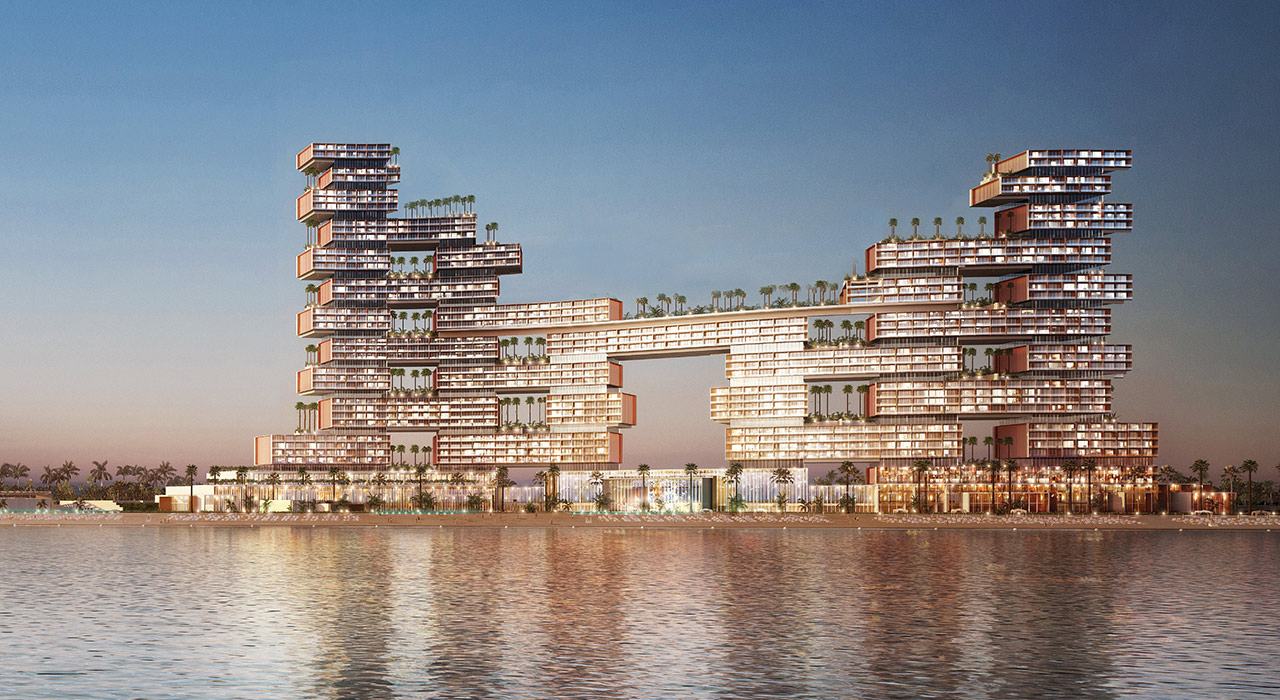
The first of three Starwood properties being built on the old Metropolitan Hotel SZR site is opening on Friday. The 358-room W in Q1 and the larger 1k-room Westin will join the 234-key St Regis Dubai, including 54 suites and the US$ 33k per night Royal Suite, by the end of June 2016. The Khalaf Al Habtoor hotel group will also see a fourth Starwood property by the end of next year – St Regis Dubai Al Habtoor Polo Resort.

Dubai-based and much-troubled builder Arabtec is hoping to win a contract for 13k housing units in Egypt; this figure is a long way off from the 1 million it was expecting to build earlier in the year. The contractor, 36%-owned by Aabar, has seen its share value plummet 85% over the past 18 months, whilst its annual losses to 30 September hve broached US$ 561 million.

Next month, Emirates will introduce its two class A380 and, with the absence of first class, its capacity will rise to 615 passengers – well above Air France; that airline has the current highest configuration for an A380 with 538 seats. The initial routes to be used will be Bangkok, Copenhagen and Kuala Lumpur.

The RTA will spend US$ 59 million in upgrading internal roads at Nad Al Sheba 4 and Al Khawaneej 2 that should be completed by early 2017. This is part of the authority’s 5-year, US$ 282 million plan to improve road infrastructure in a number of Dubai residential districts. It has already spent US$ 150 million for work in 13 different areas.

Drake & Scull, 12.8% owned by Emirates Investment Bank, made a Q3 loss of US$ 268 million, compared to a small US$ 3 million profit last year. The main driver behind this setback was the increase in impairment provisions.

The Jassim Al Ali Group has acquired the daily deals site, Nail the Deal, from Cosmos Group for an undisclosed sum. This is another indicator of the rude health of Dubai-based e-commerce sites, with the sector attracting both local and overseas investment activity and interest.

DP World’s BBB- issuer default rating agency has been raised by Fitch from stable to positive, based on improved cash flows (although still negative because of increased capex) and acquisition completions for Fairview Container Terminal and EZ World. With a 9% share of the global market, the company is the 4th largest container operator in the world and expects to improve this position by capex spending US$ 5.3 billion over the next three years.

It is estimated that UAE expats remit over US$ 30 billion every year to their home countries, with India being the main beneficiary accounting for more than 40% of that total. The cost of remittances can be as high as 10% but the UAE is one of the lowest countries at under 3%. This figure is set to grow, as the population forecast is a further 20% ahead of Expo 2020.

This population growth – along with increased tourism and rising incomes – are the main factors behind Knight Frank’s latest finding that the local retail sector has a healthy future. Its UAE Retail Focus Autumn 2015 report noted that there is a move towards local community centres which now account for 12% of total retail supply space. However, with recent expansions to the Mall of the Emirates and Dubai Mall, along with the planned 80 million sq ft Mall of the World, the mega centres still dominate the sector.

A new Deloitte report has estimated that Dubai receives a US$ 670 million economic benefit from sport-related events, with a spend of nearly US$ 1.8 billion. Of this total, 40% is spent on the emirate’s “magnificent 7” – Dubai Rugby 7s, Dubai World Cup, Dubai Marathon, Dubai Desert Classic, DP World Tournament, Dubai Duty Free Tennis and the Dubai Tour (cycling). 14.0% of the total is spent on facilities and 9.8% on the14.5k employed in the sector.

Dubai’s October inflation rate eased to 3.3%, helped by a fall in transport costs to 1.2% (from 5.5% in September) and housing by 0.4%; however, according to latest UBS Prices and Earnings study, housing remains a major cost driver with Dubai rated the 4th most expensive city in the world (after Geneva, Zurich and New York).

As noted in a recent blog, banks are taking a major hit from absconding owners of failed SMEs. It has been estimated that, so far this year, US$ 1.4 billion could be the potential impairment, as the low oil prices and declining liquidity take traction. Even at this total, it is less than 0.4% of the banks’ total outstanding debt balance of US$ 381.4 billion. It is a Catch 22 for the financial institutions because SMEs form a major client base sector, accounting for 60% of the UAE’s GDP.

With an investment group, led by Al Ramz Capital, acquiring 82.4% of the shares in Dubai Development Company, the company resumed trading on the DFM on Thursday. With 10 million shares, DDC has a market value of US$ 12.4 million at US$ 1.24 per share.

The DFM opened the week at 3265 and, after a disastrous Sunday, managed to close 8 points up at 3273 by Thursday (19 November). Of the bellwether stocks, Emaar Properties lost US$ 0.06 to US$ 1.68, whilst Arabtec crept up US$ 0.01 to US$ 0.33. Trading volumes on Thursday were down and still comparatively weak, at only 219 million shares, valued at US$ 91 million changing hands, (cf 264 million shares for US$ 87 million, the previous Thursday).

After a month of falling prices, it was a flat week for both oil and gold – by Thursday (19 November), Brent crude was up US$ 0.12 to US$ 44.18, whilst gold dipped US$ 4 to US$ 1,077.

There was disappointing news for those hoping that the price of oil – which has more than halved over the past 18 months – would increase in the short-term. According to the International Energy Agency, oil stock piles have reached 3 billion barrels – an all-time high. Although daily demand has risen 2 million barrels over the past five years, supply is not in equilibrium, since OPEC has failed to cut quotas and US production of shale oil has risen. Consequently, with a slowdown in global growth, demand will inevitably decrease – and even if the US shale producers close operations, there will be continued downward pressure on prices.

Australian explosives maker, Orica managed to turn an annual 2014 profit of US$ 436 million to a loss of US$ 917 million this year because of a massive US$ 1.22 billion write down. Its 1% reduction in revenue to US$ 4.1 billion has been attributed to lower Australian ammonium nitrate volumes aligned with reduced demand.

Springleaf, the second largest personal loan provider in the US, is set to acquire OneMain from its parent company Citigroup for a reported US$ 4.25 billion. Following approval from the Department of Justice and state regulators, the new entity will have 1.8k branches, dealing mainly with low cost loans under US$ 6k.

Intercontinental Hotels, with 5k hotels, will lose their number 1 spot as Marriott International has agreed to buy Starwood Hotels for US$ 12.2 billion. The new entity will boast 5.5k properties and its 1.1 million rooms will generate US$ 2.7 billion in revenue. Only US$ 300 million cash will change hands, as the rest of the deal will be equity financed.

In the UK grocery sector, German discount supermarket chains, Aldi and Lidl, now hold 10% of the market segment, as the likes of Tesco Morrisons and Asda see revenue continuing to fall by 2.5%, 1.7% and 3.5% respectively. The two relative newcomers have doubled their market share over the past 3 years. To add insult to injury, Lidl has become the “official supermarket” to England FC – along with Wales and Scotland – in multi-million dollar deals.

The UK government is to sell US$ 19.8 billion worth of the former Northern Rock mortgages to investment firm Cerberus. Following this sale, which values the asset at US$ 426 million above its current book value, the UK government has managed to sell 85% of assets of the Newcastle-based lender which collapsed in 2007, but was then bailed out by taxpayers.

The world’s 3rd biggest economy fell back into recession in Q3 for the 4th time since the GFC. Japan recorded a 0.8% contraction on an annualised basis – after a 0.7% fall the previous quarter. There is the urgent need for the government to take action to boost the flagging economy, as business spending fell 1.3%.

The Chinese Yuan’s rise as a global currency took another step forward with news that it will join the IMF’s basket of reserve currencies, having met its criteria of being “freely available” and “widely used”.

The weekend’s G20 meeting in Turkey was overshadowed by terrorist attacks in both Beirut and Paris. However the 2-day meeting did pledge to use all available policy tools to address uneven economic growth and to endorse the “BEPS” measures to overhaul the global tax system.

Eurozone Q3 economic growth slowed from 0.4% to 0.3%, probably signifying the extension of the QE programme by the end of the year. Whilst Germany and France recorded 0.3% growth, the other two main economies – Spain and Italy – saw figures of 0.8% and 0.2% respectively. Portugal, Greece and Finland fared even worse at 0%, minus 0.5% and minus 0.6%. The most recent data indicates the eurozone inflation rate at zero – some way off the target of 2.0%!

Since January, the ECB has pumped in US$ 64 billion monthly and is committed to continue the same until next September all in a bid to boost growth and avoid deflation. On both counts this has not worked and hence the need for further monetary action.

Following recent strong employment figures, if the US Fed wanted a further sign that a December interest hike is on the cards, it came with a rise in the country’s October consumer prices by 0.2%, with the core CPI up 1.9% on the year.

This could be yet another case of the all too cosy relationship between government and big business. The executives, who ran HBOS into the ground in 2006, will not face prosecution because of the six-year statute of limitations. It has taken banking regulators so long that their report into the financial institution’s demise will see senior management escaping any financial penalties. As the UK’s biggest mortgage lender collapsed, taxpayers – in a US$ 31 billion capital injection into Lloyds TSB – bailed it out. It will be interesting to hear why the enquiry took so long! It is heartening to read that ex-Chief Executive James Crosby subsequently relinquished his knighthood and took a cut in his US$ 880k annual pension. Halleluiah!  

Posted in Finance | Tagged , , , , , , , , , , , | 1 Comment

Games People Play!

cod-bo3-banSeptember was another disappointing month for the hospitality sector as average room rates in the 4/5-star category dropped 2.3% to US$ 208. Although occupancy levels at 76.6% remained flat, all other indicators headed south – including total revenue per available room (8.1% to US$ 283) and gross operating profit per available room (8.7% to US$ 85).

UAE-based MAN Investments has signed an agreement with easyHotel to build properties in the ME. The first one planned is a 300-key hotel in Bur Dubai which is slated for a 2017 opening.

The latest MPM Properties report indicated an 8.6% drop in Q3 Dubai apartment sales to US$ 1.15 billion as prices fell 9.0% over the twelve month period.

Damac returned a healthy 44.4% jump in Q3 profit to US$ 278 million, despite a 4.7% fall in revenue to US$ 550 million. The cumulative 9-month returns see revenue at US$ 1.84 billion, with a 43.0% surge in profit to US$ 1.0 billion.

On the other hand, troubles continue for Arabtec with a Q3 loss of US$ 257 million, compared to a US$ 19 million profit over the same period in 2014; Q3 revenue also fell 24.0% to US$ 436 million. YTD figures prove depressing reading with both revenue and profit sinking – down 10.0% to US$ 1.42 billion and a loss of US$ 529 million following a US$ 84 million profit over the same period in 2014.  It was no surprise then to see that when the news broke, the developer’s share price fell 9.4% to US$ 0.34 – its lowest level in 30 months.

With less than a year to its opening, Dubai Parks and Resorts reported total assets of US$ 2.1 billion, with cumulative capex of US$ 1.3 billion. So as to ensure that the October 2016 deadline is met, the project now has over 11k workers on site, with structure work 73% complete. The theme park expects to pull in US$ 654 million in revenue over the first year of operations, as well as generating 5k new jobs.

This week saw the opening of Nakheel’s Dragon Mart 2 at a cost of US$ 272 million; the 1.4 million sq ft development has almost doubled the size of the existing facility. The extension will add 600 kiosks, 500 outlets and a multi-storey car park, along with a cinema and a 250-key hotel.

Dubai World reportedly indicated that there are no plans to scrap the 50-year old QE2. The liner was bought by Istithmar seven years ago for US$ 100 million and has been left in Dubai since then despite previous reports to be refurbished in a Chinese shipyard.

Dubai Healthcare City and Nshama have formed a JV to build Al Fursan – a mixed use development with apartments, hotels and outlets. The development, covering 2.9 million sq mt, is part of Phase 2 of DHC’s ambitious expansion plans which aim to position the emirate as one of the top global medical tourism destinations; according to the latest Medical Tourism Destination Index, Dubai is currently ranked 17th  in the world.

Local entities, Al Tayer Group and Dubai Investments, are equity partners in a new venture that will see King’s College London opening a hospital and several clinics in Dubai. The planned US$ 200 million, 100-bed hospital will be located in Dubai Hills and is slated for opening by 2018.

The former CEO of Dubai-based GFH Capital, and ex-MD of Leeds United FC, David Haigh, is due to be released from a Dubai jail early next week, following a two-year sentence for “breach of trust”. He was accused of misappropriating US$ 5 million from his former employer but has always maintained his innocence.

As one leaves another one enters. MM Ramachandran, the 73 year old owner of the Dubai-based gold and jewellery retailer Atlas Group, has reportedly been sentenced to three years in jail for issuing bounced cheques worth USD$ 9 million.

Nakheel wishes to expand Indian interest in its developments as it participates in the Dubai Real Estate Show in Mumbai. The Dubai developer estimates that Indians have already invested over US$ 681 million when buying over 4.4k of its property units, equating to 11.0% of its total output to date.

Emirates Flight Training Academy has paid US$ 39 million for five twin-jet Embraer Phenom 100Es and 22 single-piston engine Cirrus SR22s. From 2017, all training for future Emirates pilots will be carried out in Dubai in a new 500-cadet facility, currently being built at Dubai South.

In order to pay off maturing debt and help with the financing of 30 new aircraft in 2016, it seems likely that Emirates will issue up to US$ 1 billion in bonds. 60.9% of the airline’s total debt of US$ 1.82 billion is payable next year.

GE Aviation received a massive boost at this week’s air show with the announcement of a US$ 16 billion maintenance, repair and overhaul (MRO) order. This is the Dubai carrier’s largest ever such contract, covering its fleet of 150 Boeing 777s until 2027. (Coincidentally shares in its engine rival, Rolls Royce plunged 16% on Wednesday, when a profits warning indicated a further fall of US$ 1 billion as a result of sharply weaker demand).

An Indian and Italian venture – comprising Haveus Aerotech, Air India Engineering Services Ltd and AIitalia Maintenance – is building a US$ 100 million, 9k sq mt MRO facility in the same area. When operational, in mid-2017, the company will service 100 engines a year and generate 2k new employment opportunities.

At a private meeting with Sheikh Ahmed bin Saeed Al Maktoum, on the fringes of this week’s air show, Boeing has also agreed to build its ME headquarters in Dubai South. This is a major boost for the emirate in its drive to establish itself as a major global aviation hub.

At the air show, the Ministry of Defence announced two orders – with Saab and AgustaWestland. The first was a US$ 1.27 billion order for two Saab Global 6000 jets, together with upgrading two existing Saab 340s of its turboprop fleet. The Italian order covered 3 AW609 tilt-rotor aircraft, for search and rescue operations, with an option for a further three helicopters, with delivery by 2019.

The two biggest aircraft orders of the week came from Jet Airways and Vietjet. The Indian airline confirmed its purchase of 75 Boeing 737MAX, worth US$ 8 billion, whilst the Vietnamese carrier’s US$ 3.6 billion order was for 30 Airbus A321s. Total orders placed throughout the week came to just under US$ 40 billion.

Following a record Q3, which witnessed a stellar 36.0% growth in trading volumes to 4.1 million contracts, the Dubai Gold and Commodities Exchange reported a 30.0% jump in October metal trades to 58.6k contracts.

Emirates NBD has released its October Dubai Economy Tracker which indicates the slowest business expansion in over five years. There was a massive monthly dip of 4.2 to 51.4, with a marked slowdown in the travel and tourism sectors, which at 49.0 actually dipped into contraction; any reading of over 50 signifies growth.

With Abraaj planning to sell its 49% stake in local payments provider, Network International, it seems that two private equity firms are interested in a deal. General Atlantic and Warburg Pincus could link up with the 51% shareholder Emirates NBD to become owners of the region’s largest payment processor.

Meanwhile Abraaj expanded its North African portfolio by acquiring major stakes in two Moroccan oncology centres – Al Kindy and Menara. Over the past 12 years, the Dubai-based asset manager has invested over US$ 1 billion in the global healthcare sector. Abraaj was also involved in the infusion of US$ 60 million for Careem, as the Dubai-based car-booking service seeks further MENA expansion

Dubai-listed Marka announced a Q3 US$ 4 million loss due to the impact of its significant acquisition activity. The retailer currently manages 39 retail outlets and has acquired the likes of Reem Al Bawadi and the franchise rights of the luxury ice-cream brand Morelli’s.

The local healthcare and education company, Amanat Holdings, reported a 9-month profit of US$ 2 million, with operating expenses at US$ 5 million. In August, the company had acquired a 35% stake in Sukoon International Holding Company. On Thursday, its shares were trading at US$ 0.21.

Emaar Malls reported a Q3 17.2% profit hike to US$ 103 million, as its nine month profit figure surged 27.9% to US$ 327 million. Both quarterly and YTD revenue were up – by 12.0% to US$ 198 million and 15.2% to US$ 597 million. Dubai Mall accounted for 87.4% of the total tenant sales of US$ 3.7 billion. The Emaar Properties subsidiary also recorded a 6.2% increase in its assets to US$ 6.5 billion.

The DFM opened Sunday at 3451 and fell a worrying 5.4% to 3265 by the end of the week (12 November). Of the bellwether stocks, Emaar Properties lost US$ 0.01 to US$ 1.74, whilst Arabtec fell US$ 0.08 to US$ 0.32. Trading volumes on Thursday were up but still comparatively weak, at only 264 million shares, valued at US$ 87 million changing hands, (cf 106 million shares for US$ 42 million, the previous Thursday).

Oil and gold prices both fell this week so that by Thursday (12 November), Brent crude had closed 8.0% down on the week at US$ 44.06, whilst gold continued heading south, falling US$ 6 to US$ 1,081.

Although it is sad to see people lose their job, there will not be too many tears shed by those who had their Standard Chartered accounts unceremoniously closed a year ago. As part of their global restructuring, the bank is cutting 15k jobs, including 25% fewer senior staff, in a bid to save US$ 2.2 billion by 2018.

BHP Billiton saw its share value dive to its lowest level in ten years in the wake of weak commodity prices, a strengthening local currency, a royalties dispute with the Queensland government and the recent Brazilian mine disaster. The Rousseff government has fined the Australian miner – along with its Brazilian partner Vale – US$ 66 million, after a mud slide at its Samarco iron ore mine killed eight with another 19 still missing. Both companies have pledged a further US$ 100 million for relief efforts but some estimates of the final cost point to over US$ 1 billion.

Macy’s returned disappointing quarterly figures as its Q3 net income plunged 45.6% to US$ 118 million. The US department store, which also owns Bloomingdales, has cut its 2015 profit outlook and saw its share value lose 14% following the news. Meanwhile US October retail sales at 0.1% disappointed the market as growth slowed to an annual 1.5%.

The Chinese company, which last year paid US$ 2.9 billion for Motorola, plans to save a further US$ 1.4 billion, as a result of 3.2k job cuts announced earlier in the year. The world’s largest PC maker and 4th biggest smartphone seller, Lenovo, recorded a US$ 714 million quarterly loss.

On 11 November, the 6th Singles Day, e-commerce giant, Alibaba recorded a 53.8% increase in online trading to US$ 14.3 billion, compared to the same day in 2014. There was further good news for the maligned economy, with October retail sales jumping 11%, its quickest gain this year – an indicator that the economy is moving towards a consumption and services base. However, this was tempered by industrial production increasing 5.6%, compared to a year earlier – a return that disappointed the market and a sign that the economy continues to face downward pressure.

Egyptian authorities estimate that the country’s beleaguered tourism sector could lose US$ 280 million every month because both Russian and the UK have suspended flights, following the Sinai Peninsula crash. Those two countries account for 67% of all traffic to Sharm al-Sheikh.

After a four-month hiatus, Greece returns to its old normality with its first general strike since Prime Minister Alexis Tsipras and his Syriza party came to power in January. The unions are fighting against the terms of the country’s third eurozone bailout in which it would receive US$ 91 billion in return for unpopular tax hikes and public spending cuts.

In the September quarter, UK unemployment levels fell by 103k to 1.75 million. Although regular pay growth slipped 0.3% to 2.5%, it still indicates good news for the wage earner as inflation still hovers around the zero mark; in real terms, pay growth is still up and employees have increased spending powers. Although encouraging, the figures are not strong enough to justify any early rate hikes. Two problems that could damage growth prospects are the inflation rate being a long way off the BoE’s target of 2% and the likelihood of a property bubble in certain parts of the country, notably London.

The Bank of England governor, Mark Carney has indicated that public faith in financial markets has been shaken by “widespread misconduct”. It seems that the public are becoming increasingly disillusioned with the large scale graft and corruption in all walks of life.

Unfortunately, this is not confined to just the financial sector. On the sporting side, football, athletics and cycling have been in the headlines for all the wrong reasons. There is no doubt that such corruption and incompetence is endemic and will not only be confined to these three sports.

Activision Blizzard is acquiring King Digital Entertainment, the brains behind mega games such as “Call Of Duty” and “World Of Warcraft”, for US$ 5.9 billion. Interestingly, the latest Call of Duty: Black Ops 3 video game recorded sales in excess of US$ 550 million in the first three days of its Saturday release – more than any other game, film or music debut in 2015. There is money to be made from the Games People Play!

Posted in Finance | Tagged , , , , , , , , , , , , , | Leave a comment

No Good For You!

20thcentfoxNakheel has announced its latest development for Deira Islands – a JV with Centara Hotels & Resorts for a 550-key resort, complete with a waterpark. This would bring the Dubai developer’s room portfolio on the man-made location to 1.8k whilst it will be the Thai company’s first venture in the country. Also this week, Nakheel opened its Golden Mile Galleria – a 400k sq ft development on Palm Jumeirah, with numerous retail and eating outlets and room for 1.2k vehicles.

Deloitte have released its latest tourism report for 2014 confirming that the number of Russian visitors had fallen by 15%, whilst the top three visitors were from Saudi Arabia (1.5 million), India (0.9 million) and UK (0.8 million). On the plus side, the number of Iranian and Chinese visitors grew by 41% and 24%.

It is estimated that Dubai has 369 hotels with an inventory of 75.6k rooms, with an expected 6.7% increase in supply as demand dips to 5.1%. Consequently, it is expected that both occupancy levels and average daily rates will fall slightly.

Al Ahli Holding Group is to build a Twentieth Century Fox-branded theme park over an area of 4 million sq ft. Work will start in 2018 and is slated for completion prior to Expo 2020. The designer and operator of the facility will be the US-based Rethink Leisure and Entertainment and, if successful, Al Ahli has secured the option to build three similar projects which could be in Latin America, India and East Asia.

It appears that the Al Habtoor Group is planning to hive off its shareholding in construction company, Habtoor Leighton Group. The decision to split with its Australian partner was made so that the local conglomerate can focus on its core businesses, including real estate, hotels, schools and car distributorships.

According to the latest Phidar Advisory Report, villa and apartment rentals in Dubai have fallen by 1.5% and 0.5% whilst sale prices dipped 3.4% and 3.6% respectively. Consequently, yields are now 4.8% (villas) and 7.5% (apartments). These figures differ from those that an earlier Cavendish Maxwell report espoused – 2.0% Q3 falls for both property types (the same as recorded in Q2), whilst Q3 rents had stabilised. Interestingly, over the next five years, Phidar estimates that Dubai annual demand will be at 5.8%, whilst supply could range from 2.8% – based on actual starts – and 6.7%, if all launch projects were to be included.

Of the 22.4k transactions, totalling US$ 50.7 billion, recorded by the Dubai Land Department for the first nine months of the year, 50% were mortgages (US$ 25.6 billion) and 42% cash. The Land Department also refuted rumours that it would be doubling the current 4% transfer fee.

Next week will see two major biennial events – the Dubai Air Show and Dubai International Motor Show. The latter comes on the back of UAE vehicle sales increasing by 13.0% last year and with strong H1 figures of 890k units. This year, the event, which is 30% bigger than in 2013, expects to have over 100k visitors. H1 figures show that automobiles account for 5.3% of all Dubai trade, equating to US$ 9.5 billion – a sure sign of the healthy state of this sector.

For the third year in a row, UAE has been ranked as the leading GCC country in the World Bank Group’s Annual Ease of Doing Business Report. However, its global 31st listing was slightly lower than in 2014.

The latest Prosperity Index from the Legatum Institute ranks Norway, Switzerland and Denmark as the top three with the UAE at 30th – ten places lower than the 2014 report. Its position fell mainly because of low oil prices and regional instability but it still remains the leading country in the MENA region.

Dubai Silicon Oasis Authority posted increases in both H1 revenue and profit – 16% to US$ 67 million and US$ 26 million respectively. Furthermore the number of operating companies increased by 11.6% to 1.2k over the same period.

DP World announced that it has acquired the remaining 49% stake in Southampton terminal and has extended its licence agreement there with Associated British Ports until 2047.

Zodiac Aerospace Services will launch its 4.5k sq mt facility, located in Dubai South. The French supplier of aircraft systems and equipment expects to generate 100 new jobs.

Largely because of the strong greenback, Emirates’ H1 revenue dipped 2.3% to US$ 12.6 billion but the airline still posted a stellar 65.0% growth in profit to a tad over US$ 1.0 billion. Over the period, manpower within the group, including Emirates and dnata, rose 4.0% to 87k. Not surprisingly, fuel prices were 45% lower than the corresponding 2014 period and although this was still the prime cost drag, at 28% of total operating expenditure, it was well down compared to the 38% figure last year.
Emirates’ subsidiary, Transguard reported a 20% increase in business over the past year. Established in 2001, to provide facilities management services, including security, recruitment and cargo handling, the company now employs 30k staff. It also manages the cash for more than 80% of Dubai’s ATMs.

H1 figures from Dubai Customs indicate that the emirate is performing well despite the slide in oil prices. Its H1 non-oil foreign trade reached US$ 177.7 billion, with imports, exports and reexports recording US$ 109.6 billion, US$ 17.7 billion and US$ 50.4 billion respectively. Surprisingly, phones accounted for 14.6% of all commodities traded, totalling US$ 25.9 billion. China (US$ 24.5 billion), India (US$ 13.6 billion) and US (US$ 10.7 billion) were the three main trading partners carving up 27.5% of the total.

The latest Emirates NBD UAE Purchasing Managers’ Index indicates a slowdown in business conditions as it drops 2 points to 54.0 in October. Although still in positive territory (signified by any reading over 50), output and new orders expansion dipped.

With the continued softening of the local market, banks are reporting an increasing amount of debt defaults by individuals and SMEs. It is estimated that over the past quarter, defaults have increased by up to US$ 1 billion, resulting in many banks having to increase their impairment losses. It seems that the smaller financial institutions are taking the hit but it is only a matter of time before the contagion impacts on the bigger banks.

The Dutch bank ABN Ambro received a slap on the wrist from Dubai authorities when it it received a US$ 640k fine for breaching anti-money laundering rules. The Dubai Financial Services Authority noted that the bank’s failings were widespread and subsequently nine employees have been reportedly terminated and 80 client accounts closed.

It is reported that venture capital firm Beco Capital has acquired a 14.8% shareholding in JadoPado for US$ 4.0 million, effectively valuing the Dubai-based online market place at US$ 28 million; the additional funding will be used for ambitious expansion plans. Beco has already invested in two other similar local entities – Careem and Propertyfinder.

As its international revenue fell and expenses rose, Etisalat recorded an 8.5% fall in Q3 net profit to US$ 531 million, as total revenue also dipped 1.0% to US$ 3.5 billion. Operating expenses were 5.4% higher at US$ 2.3 billion.

Telecom operator Du saw a 12.3% dip in Q3 profits to US$ 133 million, with revenue flat at US$ 831 million. One of the main reasons for this was a 16.6% jump in government royalty payments to US$ 131 million. The telecom operator, established in 2007, is taxed on two fronts – 12.5% on regulated revenue and 30% on regulated profit – both of which have risen this year from 10% and 25% in 2014.

Aramex reported a 7.3% increase in Q3 profit to US$ 20 million on the back of a 2.0% rise in revenue to US$ 255 million. The Dubai-based courier expects at least two acquisitions over the next six months and has already secured a US$ 150 million bank credit line to cover these purchases.

Emirates Investment Bank posted a 27.9% fall in nine months profit to US$ 80 million as at 30 September. There were marginal increases in both client deposits (1.0% to US$ 823 million) and total assets (0.8% to US$ 2.12 billion).

Q3 profits for Dubai Investments rose 30.2% to US$ 67 million, as its total assets and net worth balances rose to US$ 4.1 billion and US$ 2.8 billion. However, the company’s nine-month profit fell 24.4% to US$ 205 million because of a one-off gain of US$ 129 million from the sale of Globalpharma in the corresponding period in 2014.

Despite announcing a 123% rise in nine-month profits to US$ 4.3 million, on a 11.0% increase in revenue to US$ 28.5 million, shares in troubled Gulf Navigation fell 4.0% on Sunday to US$ 0.136.

Although Emaar Properties reported a 30.7% hike in Q3 profits to US$ 230 million, on a 56.0% jump in revenue to US$ 899 million, the figures were below market expectations. The profit figure for the first nine months of the year headed north – by 16.4% to US$ 831 million – with assets totalling US$ 42.5 billion and a land bank covering 195 million sq mt.

The DFM opened Sunday at 3503 and fell a further 1.5% to 3451 by the end of the week (05 November). Of the bellwether stocks, Emaar Properties was flat at US$ 1.75, whilst Arabtec fell US$ 0.04 to US$ 0.40. Yet again, trading volumes on Thursday were wafer thin, at only 106 million shares, valued at US$ 42 million changing hands, (cf 174 million shares for US$ 73 million, the previous Thursday).

Oil and gold had mixed weeks so that by Thursday (05 November), Brent crude had closed 1.9% down on the week at US$ 47.88, whilst gold continued heading south, falling US$ 60 to US$ 1,087.

Two international banks returned Q3 profits. HSBC posted an unexpectedly high 32.6% hike in pre-tax profit to US$ 6.1 billion. Although market conditions were tough and revenue was 4% off at US$ 14 billion, major cost reduction measures – including job cuts and selling loss-making businesses – ensured a healthy bottom line for Q3.

Due to a US$ 1.7 billion gain RBS, 73% owned by the UK government, was able to post a 6.3% increase in Q3 profit to US$ 1.5 billion. However the bank did see a 15.6% slide in revenue to US$ 4.7 billion, whilst restructuring costs rose to US$ 1.3 billion.

Toyota reported an 11.8% hike in H1 profits to US$ 10.2 billion, buoyed by a weakening yen – with a double whammy of making its export prices more attractive and inflating the value of incoming overseas profits. The world’s largest carmaker saw a marginal fall in unit sales to 4.97 million and although it is going through a major cost cutting exercise, it still has plans to build a US$ 1 billion plant in Mexico.

General Electric has finally acquired the energy assets of the conglomerate, Alstom for US$ 10.6 billion which includes three JVs – electricity grids, nuclear power and renewable power. As part of the deal, the French company bought a rail signalling division for US$ 800 million from GE.

Mainly because of the low fuel prices, eurozone inflation returned to zero in October. In the 28-member EU bloc, unemployment fell to its lowest level in almost four years by 0.1% to 9.3%, with a wide range from Germany’s 4.5% to an estimated Greek figure of 21.6%. There are still discussions in the corridors of power that the ECB may extend its QE programme to boost the sagging economy.

Just as indicators point to a US interest rate hike next month, the Bank of England has signalled that the UK rate will probably remain static at least for the next 12 months. The current rate will thus remain flat at 0.5% – the longest unchanged period in more than 65 years. At the same time, it is unlikely that it will be out in the market selling the US$ 577 billion bonds it bought via its recent QE programme until rates rise to above the 2% mark. The Bank also marginally lowered its 2015 growth rate and also forecast that the immediate inflation rate will hover around the zero level – in the long term this is No Good For You.

Posted in Finance | Tagged , , , , , , , , , , , | Leave a comment

A Change Is Gonna Come!

delta-emiratesThe big retail battle between Apple and Samsung is on in Dubai. This week, Samsung completed a major overhaul and expansion of its 9.2k sq ft flagship store in Dubai Mall ensuring that it was the electronics company’s largest global store outside of Seoul. Meanwhile on Thursday Apple launched its first ME store in the Mall of the Emirates.

Latest data shows that the world’s largest smartphone maker is losing market share, at the quarterly rate of 11.5%, whilst its American rival is expanding sales of its iPhone units by 35% a year. Q3 results indicated a 30% jump in profit to US$ 11.1 billion, on the back of the sale of 48 million iPhones; with the recent introduction of the 6S and 6S+, Q4 sales may see a record 75 million units being sold. (As an aside, Sharp is expecting to report a US$ 970 million six-month loss at the end of September, as demand for its smartphone screens dries up).

Recent estimates indicate that there are over 29k serviced apartments in Dubai, with a further 18% increase to 34.2k expected before 2020. Colliers also estimate 36% of that total is managed by international brands, the same ratio unbranded and the remaining 28% managed by local brands. 2014 occupancy rates fell by 3.3% but still registered a creditable 79.0%.

Accor Hotels and the Manazil Group are planning three new Dubai properties, and 1.1k rooms, for completion by 2019. The three hotels will be built in Jumeirah Village Triangle, being a Majlis Grand Mercure hotel, a Mercure hotel and an Adagio aparthotel.

Damac announced that it expects to open its 1k-key Damac Towers by Paramount in Q4 2016. Three of the four towers will be serviced apartments, whilst the other will be known as the Paramount Hotel & Resorts; all four structures will share a common central podium / reception area.

The 3-day Gulfood Manufacturing 2015 opened on Tuesday, attracting an estimated 1.5k exhibitors (a 35% increase on last year) and over 30k visitors, most of whom will be from overseas. As usual, the hospitality, retail and travel sectors will benefit from this influx which shows the benefit of a strong and vibrant MICE sector for the economy.

The UAE ranks 5th in the Global Built Asset Wealth Index. The Arcadis index measures the value of built assets for every citizen with the UAE, recording a figure of US$ 141k, behind Qatar’s US$ 198k, Singapore, Hong Kong and Japan.

Emirates reached a major milestone this week when it celebrated its 30th anniversary. Although Dubai is now the world’s largest international airport, HH Sheikh Mohammed bin Rashid Al Maktoum’s vision so long ago was not this target but to build “the aviation capital of the world”. Furthermore his strategy for the airline is one of continued innovation so that aviation can be reinvented with “new products, technologies and services”.

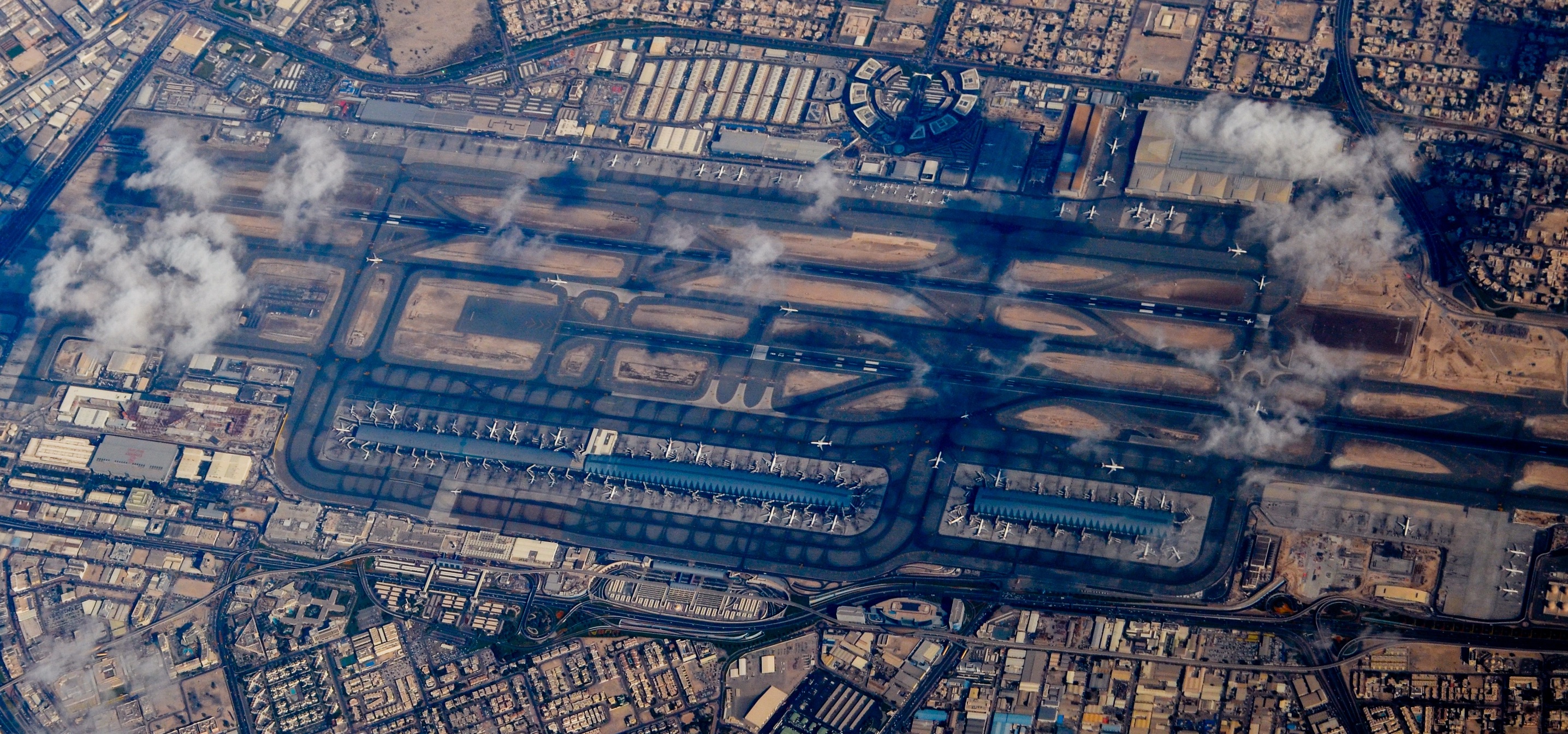
September passenger numbers at Dubai International increased 8.2% to 6.4 million, with YTD traffic up 12.0% at 58.7 million. Even though much of the freight traffic has been transferred to Al Maktoum International, the “old” airport still saw freight traffic up 0.3% to 207k tonnes.

It is reported that flydubai will record a 35.2% jump in the number of passengers this year to 9.8 million, despite seeing flight disruptions because of regional conflicts. Last month, the airline received the last of its 50 737s, ordered seven years ago and has a current backlog of 111 outstanding from an order made at the 2013 Dubai air show.

DP World announced a 3.2% rise in gross container volumes to 46.5 million TEUs (twenty-foot equivalent units) for the nine months to 30 September. Growth areas were the UAE (up by 4%) and Europe.

Empower has won a US$ 34 million contract to supply the US$ 1.6 billion Bluewaters project with 25k refrigeration tonnes for the island’s residential and commercial units.

Majid Al Futtaim has launched a 10-year, US$ 500 million sukuk at 255 basis points over midswaps. The wakala Islamic bond was more than three times oversubscribed.

According to a Deloitte & Touche report, the UAE design sector – including fashion (the largest contributor at 74%), architecture and furniture design – is valued at US$ 27.6 billion, ahead of Saudi (US$ 21.9 billion) and Qatar (US$11.9 billion). Over the next four years, it is expected to grow a further 30.4% to US$ 36 billion. In an attempt to rival the likes of London, Paris and New York, Dubai has already completed phase 1 of d3 (Dubai Design District) – comprising 11 buildings, 500 companies and 10k professionals. Phase 2 will be completed by 2017.

Since the beginning of August, when the petrol subsidy was abolished, fuel prices have been amended every month in line with global trends. In the first month, prices jumped 24.4% to US$ 0.58 per litre but since then, they have been pared back so that November prices will be lower than they were when the subsidy was in place. September and October saw prices fall 8.4% to US$ 0.53 and to US$ 0.49 respectively whilst November prices for Special 95 have been cut by a further 5.0% to US$ 0.46.

UAE’s oil production in September rose 0.8% to 2.9 million bpd as a US federal review indicates that the country could expand production by a further 30%. Currently, the country is the third largest producer within the OPEC cartel.

On Sunday, the federal cabinet approved the 2016 US$ 13.2 billion federal budget, with a zero deficit. Despite the low oil price, the government is still keen to go ahead with major projects in key sectors such as education, social development, public services and healthcare; these four areas accounted for 55.6% of the 2016 spend, being allocated US$ 2.8 billion, US$ 2.0 billion, US$ 1.5 billion and US$ 1.0 billion respectively.

The UAE and UK are looking at doubling bilateral trade, to US$ 25 billion, over the next five years – an ambitious programme considering that five years ago this figure was only US$ 7.5 billion; more business, such as the recent US$ 9.2 billion order for Rolls Royce engines for 50 A380s, will help achieve this target.

Union Properties is arranging a 50:50 JV with the Saudi company, Naif Al Rajhi Investment Company. Based in Riyadh, the new entity will make use of the Saudi’s company huge land bank, with the first project likely to be mixed-use, including 210 town houses and 16 apartments.

Emirates NBD reported a 7.1% rise in Q3 profits to US$ 455 million, with a 27.6% increase, to US$ 1.36 billion, for the first nine months of the year. Dubai’s largest lender, 55.6% owned by the Investment Corporation of Dubai, saw increases in loans and advances plus deposits – of 5.6% to US$ 71.3 billion and 8.0% to US$ 73.3 billion respectively. Its related bank, Emirates Islamic, announced a 109% jump in net profit to US$ 145 million.

Emaar Malls, 85% owned by its parent Emaar Properties, recorded a 17.1% hike in Q3 profits to US$ 102 million. The remaining 15% shareholding was hived off in a US$ 1.6 billion IPO last September.

This week, there were also disappointing Q3 results. Deyaar Development reported a 37.7% slump in Q3 profits to US$ 13 million, which brings its nine months’ earnings figure to US$ 52 million. Meanwhile Dubai Financial Market saw quarterly profits sink 70.4% to US$ 12 million, on the back of a serious slowdown in trading activity.

The DFM opened Sunday at 3588 and fell 2.3% to 3503 by the end of the week (29 October) and for the month, the index fell 90 points. Of the bellwether stocks, Emaar Properties was down US$ 0.05 to US$ 1.75, whilst Arabtec fell US$ 0.02 to US$ 0.44. Yet again, trading volumes on Thursday were dismally low, at only 174 million shares, valued at US$ 73 million changing hands, (cf 148 million shares for US$ 80 million, the previous Thursday).

Oil and gold had mixed weeks so that by Thursday (29 October), Brent crude had closed 0.9% up on the week at US$ 48.80, whilst gold continued heading south, falling US$ 19 to US$ 1,147. By the end of October, oil and gold were trading at US$ 46.39 and US$1,141 respectively – down US$ 2.31 and up US$ 27 on the month.

BP reported woeful Q3 profit figures as it announced a slump of 48.1% to US$ 1.23 billion and that it was cutting a further US$ 1 billion off its already reduced 2015 capital spending to US$ 19 billion. It also has to take a further US$ 426 million hit, in relation to the 2010 Deepwater Horizon accident, which brings its total cost to a staggering US$ 55 billion. Meanwhile, Shell joined BP with Q3 figures that both would like to forget – a US$ 6 billion loss following a US$ 5.3 billion profit over the same period in 2014. The company took a US$ 8 billion impairment charges after failing to find oil in the Alaskan Chukchi Sea.

To add to VW’s troubles, it has lost its top spot to Toyota in global vehicle sales for the first 9 months of the year. The Japanese carmaker recorded 7.5 million sales to the German’s 7.43 million (with GM coming in 3rd with 7.2 million sales). The gap will be greater by the end of the year as the full impact of the emissions scandal comes into play.

With a marked slowdown in global trade, the world’s largest container carrier has trimmed its 2015 profit forecast by 15% to US$ 3.4 billion. The Danish shipping line, Maersk blames low capacity utilisation and competitive pricing which has resulted in loss-making rates on some routes.

IBM is reportedly facing investigation by regulators in three countries – US, UK and Ireland. The probe is apparently related to the way the tech company accounts for certain of its revenue transactions.

It is reported that five major banks – Barclays, BNP Paribas, Goldman Sachs, HSBC and RBS – will be fined a total of US$ 1.2 billion by US regulators. The penalty is in relation to their involvement in the foreign exchange rigging trading scandal and is the latest in a string of claims by affected stakeholders.

Despite there being no change for some time in Australian benchmark rates, most of the banks, including ANZ, CBA, NAB and Westpac, have decided to raise mortgage rates. This will cost consumers US$ 400 pa, as the average rate rises to 5.6%. Next Tuesday, the country is on holiday for the Melbourne Cup and this is always a good time for the RBA to tinker with rates – this time downwards.

Growth in the UK fell in Q3 from 0.7% to 0.5%, with the service sector, accounting for almost 80% of the economy, up 0.7% over Q2. However, construction has decreased 2.2% whilst manufacturing is in recession, having fallen in the previous two quarters. Despite the global slowdown gaining traction, the UK is still in comparatively good shape and will see a 2.3% expansion this year whilst next year may prove a little more difficult.

Any country that has cut its benchmark interest rate six times already this year is in a financial quagmire. At the beginning of the week, China shaved a further 25 points off the index to 4.35%, as well as cutting the amount of local currency banks have to maintain. The government is treading a fine line between stimulating consumer confidence and creating another higher level of debt which could easily turn into a major financial headache. In China, the latest Westpac MNI indicator – measuring consumer sentiment – fell by 7.25% to its lowest level in 8 years.

However, this week China did sign a US$ 17 billion deal with Airbus for 100 A-320s and 30 A-330s – a sure indicator that at least the travel sector in the country is booming. A recent Boeing report indicated that, over the next 20 years, Chinese airlines will need to spend US$ 950 billion buying 6.3k new planes.

Although the global slowdown has hit some of the country’s exports, including carmaker Hyundai, South Korea’s economy is now growing at an annual rate of 2.5% – its highest level in over five years. Although hamstrung earlier in the year because of the negative impact of the Mers virus on tourism and weak consumer confidence, latest figures beat analysts’ estimates.

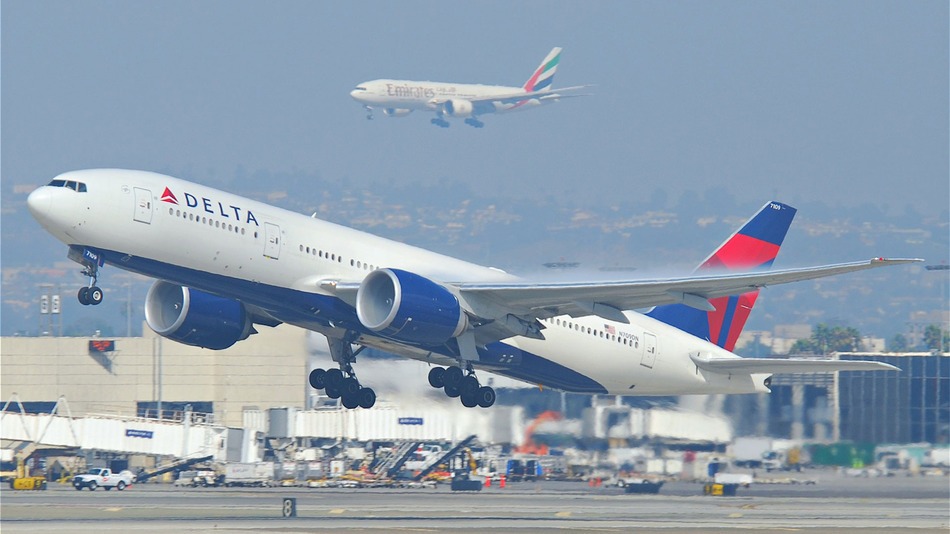
In February, the second largest US carrier will stop flying between Atlanta and Dubai because of “unfair” competition from “heavily subsidised” Gulf carriers, particularly Emirates. Delta will use the extra capacity to fly where it “where it can compete on a level playing field that’s not distorted by subsidised state-owned airlines”. Delta is one of three major carriers lobbying the US government to take draconian action against the local airlines, claiming they have been the beneficiaries of US$ 42 billion in government subsidies. As this route has a reported 85% average seat load, it would appear that Delta’s chief executive, Richard Anderson, has no economic argument to cut this link – only political reasons to keep Emirates’ presence in the US to a bare minimum. No doubt A Change Is Gonna Come!

Posted in Finance | Tagged , , , , , , , , , , , , , , | Leave a comment

Don’t Let Me Be Understood!

batmobile-dubaiIf you thought that Dubai had enough shopping malls, think again! Nakheel has awarded contracts, totalling US$ 627 million, for three retail projects – Deira Islands Night Souk (US$ 319 million), Warsan Souk (US$ 211 million) and The Circle Mall (US$ 97 million).

United Engineering Construction will build in Deira Islands with the project having 5.3k shops and 100 dining outlets, whilst stretching over 2 km on the man-made waterfront. Due for completion by 2018, all 1.2 million sq ft of leasable space has already been let. Warsan Souk, covering 650k sq ft of retail area, will have 1.2k shops and form part of a 930-home gated community. The Circle Mall – to be built by Gulf Technical Construction Company, a division of Drake & Scull – will comprise 235 shops in its 432k sq ft of retail space.

Jumeirah Golf Estates has awarded Al Habtoor STFA Soil Group the contract to build its Alandalus collection of 54 townhouses and 674 apartments. Work will start immediately.

Emaar will launch phase 2 of its Maple townhouses on Saturday. The project, with 666 townhouses at starting prices of US$ 545k, is located within Mohammed bin Rashid City.

Nakheel was one of the first of Dubai’s big companies to announce their 9 month results – an impressive US$ 983 million profit, equivalent to a 39.0% hike on the corresponding 2014 figures. No other details were released.

Business Bay is the initial location for Dubai’s first 7-Eleven convenience store, with bold plans to introduce a national chain of 800 outlets over the next decade. The master franchise holder, Seven Emirates Investment, will have 40 stores open by the end of 2016 and is recruiting 600 new employees, mainly from the Philippines and India.

Tecom has announced that DuBiotech (Dubai Biotechnology and Research Park) and En Park Energy  (Environment Park) will combine to form DSP (Dubai Science Park). The new facility will continue to offer SMEs and international companies a regional hub and facilitate innovation strategy.

A Dubai car dealer is planning to sell the Batmobile, featured in the Dark Knight Trilogy, for a reported US$ 1 million. Although it will not fly, the 5.7 litre vehicle, with a top speed of 250 kph, could soon be seen on Dubai roads.

Lower Russian demand, a strong greenback and suspended flights to Ukraine, Yemen and Syria are the main reasons why flydubai reported a US$ 40 million H1 loss, compared to a US$ 14 million profit for the same period in 2014. The airline, with a 17.2% jump in passenger numbers to 4.2 million, posted a healthy 8.7% increase in H1 revenue to US$ 599 million, although capacity had jumped 33.6% over the same period, resulting in a 12% fall in yields. Nevertheless, CEO, Ghaith Al Ghaith, has indicated that, with strong Q3 results, the budget airline is now back in the black.

This week sees the GITEX Technology Week with one of the highlights being the announcement of Yvolv, a JV between Meraas Holding and the Alibaba Group. The new IT consulting company will be an industry leader in cloud computing solutions for MENA-based enterprises.

At long last, it seems that Etisalat and du will compete directly in fixed-line business and television services. This follows on from July’s announcement that allows consumers a choice, when selecting fixed phone line and broadband services.

Dubai-based Aster DM Healthcare now has a 97% stake in Riyadh’s Sanad Hospital, after acquiring a further 57% shareholding for US$ 245 million. With five other hospitals in the GCC, the healthcare company also operates in Jordan, India and the Philippines.

TaskSpotting, a 2014 Dubai-based start-up, is already looking at expansion plans and has raised US$ 1.2 million funding from MENA Venture Investments and numerous individuals. The app gives local businesses the ability to access directly customer experiences and already has 35k users.

Aramex’s plans for setting up five Egyptian logistics sites with Orascom Telecom Media and Technology have been put on hold for the foreseeable future. The US$ 126 million proposed JV would have seen the Egyptian partner holding a 51% majority shareholding.

The Italian export credit company, Sace has granted a US$ 1.1 billion credit facility to help with the development of the emirate’s new city, Dubai South. The funding agreement was signed at the site of the Milan 2015 Expo and will help Italian companies seeking a business presence in the UAE. Dubai South – a 145 sq km new city with a US$ 32 billion mega airport being built along with a US$ 25 billion residential area – will provide a lucrative source of revenue for many companies as it gears up for Expo 2020.

As H1 bilateral trade between Japan and the GCC sank 41.7% to US$ 50.4 billion, UAE trade figures at US$ 16.3 billion were down 37.2%, with falls in both exports (9.5% to US$ 3.3 billion) and imports (43.2% to US$ 12.1 billion). The declines are attributable to a combination of low oil prices – with fuels accounting for 76% of all trade – and the weak yen.

Dubai’s September inflation rate rose slightly to 4.28% as housing costs, utility charges and beverage prices for the first nine months of the year jumped by 8.0%, 7.25% and 6.68% respectively. However for the month, the rate fell marginally to 3.9%.

Marka, the retailer that listed on the Dubai bourse twelve months ago, currently operates 38 regional stores, with the latest addition being House of Dinh Van. Its ambitious expansion plans will see a further 26 stores added over the next 15 months. Q3 returns are expected to be an improvement on Q1 losses of US$ 2.3 million and Q2’s US$ 583k.

Mashreq reported a 7.6% fall in profit to US$ 150 million – a sure indicator that lower oil prices is taking an inevitable toll on local business and that banks are beginning to suffer, with lower fees and commission income.

The DFM opened Sunday at 3698 and fell 3.0% to 3588 by the end of the week (22 October). Of the bellwether stocks, Emaar Properties was down US$ 0.07 to US$ 1.80, whilst Arabtec fell US$ 0.05 to US$ 0.46. Yet again, trading volumes on Thursday were dismally low, at only 148 million shares, valued at US$ 80 million changing hands, (cf 200 million shares for US$ 57 million, the previous Wednesday).

Oil and gold had a bad week and by Thursday (22 October), Brent crude had closed lower again, down on the week 2.8%, at US$ 48.36, whilst gold lost some of its lustre, after recent weekly gains, falling US$ 21 to US$ 1,166.

FBI staff are investigating claims that East European hackers infiltrated Dow Jones to extract sensitive market information, prior to general release. The data was then sold on to investors who make money from unpublished embargoed financial information. Also this week Talk Talk, a UK telecoms firm, has been hit by cyber criminals who have may have accessed personal and banking details of up to 4 million customers. The Met Police are carrying out investigations.

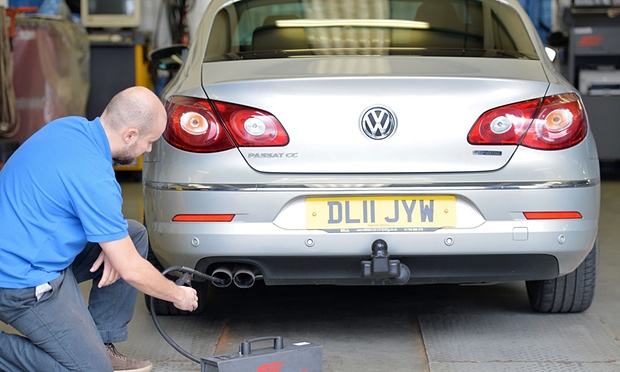
It is expected that over 8.5 million VW vehicles will be recalled in the 28-member state EU following the diesel emission scandal. Next week Q3 results are expected to show that Europe’s largest carmaker has made a US$ 3.9 billion operating loss, whilst making a US$ 7.2 billion provision in relation to this self-inflicted problem. The potential financial damage could run as high as US$ 40 billion.

In line with its peer group, Morgan Stanley returned disappointing Q3 figures, as net sales fell 13.0% to US$ 7.77 billion and profits nosedived 42.4% to US$ 939 million.

Apple has lost a case against the University of Wisconsin and has been ordered to pay US$ 234 million in damages. The Californian tech company was found guilty of infringing mobile chip technology already patented by the educational facility in 1998; it is set to appeal the verdict.

The EU Competition Commissioner has ordered both Starbucks and Fiat Chrysler to pay back up to US$ 30 million in taxes, having decided that tax deals with Netherlands and Luxembourg respectively were state aid. It found that any measures to artificially reduce a company’s tax liability are illegal and not in line with EU legislation. These two decisions represent the tip of the iceberg and could see other companies such as Amazon and Apple falling foul and ultimately left with huge tax bills.

A mega e-commerce delivery business tie-up is expected to get the green light from the EU. The deal will see FedEx pay US$ 5.0 billion to acquire its Dutch rival, TNT Express, and could be finalised early next year.

Hugo Boss has blamed the double whammy of US and Chinese economic slowdowns, along with weakening Asian consumer confidence, as it revised its Q4 profit forecast downwards to as low as 3%. As news of a 1% fall in Q3 sales reached the markets, its shares fell by almost 10%. Last week Burberry shares sank 8% on the back of poor Asian data and particularly from China where trading had become “increasingly challenging”. The slowdown in China’s economy will continue to hit demand for many luxury brands.

The Australian housing market is beginning to flat line with a marked decline in the rate of realty price growth in both Sydney and Melbourne. The quarterly growth in median house prices more than halved in both cities to 3.2% (from 7.7%) and 2.8% (from 6.0%) respectively. This slowdown comes after annual increases of 21.7% and 15.6% in these two locations, as prices in Brisbane remained flat whilst Perth and Adelaide headed south.

Despite the Chinese economic slowdown, Australian miner, Rio Tinto, recorded a 17% increase in Q3 iron ore shipments – well on its way to meeting its annual target of 340 million tonnes. This is despite the massive fall in prices, over the past 18 months, which on Thursday (22 October) stood at US$ 54.17.

China is expected to invest over US$ 46 billion in the UK, including a 30% investment in a nuclear power plant to be built by a consortium comprising France’s EDF and the Chinese state company CGN. This could produce 25k new jobs and, when completed in 2025, will provide all the energy requirements for 6 million homes. China’s investment splurge and trade deals were announced during President Xi Jinping’s 4-day state visit. (In a bid to boost the number of Chinese tourists, David Cameron’s government is considering a move to cut two-year visa costs by 74% to US$ 130. How about doing the same for UAE applicants?).

As widely expected, Chinese Q3 growth fell below 7% in Q3 – the 6.9% return was the lowest since the GFC. (There are doubts whether this figure is correct and, when other factors are considered, this could easily be halved). There is an urgent need of structural changes as the world’s second largest economy continues to soften with major indicators – including manufacturing, imports and inflation – heading south. Continuing volatility in the stock markets, following the summer collapse, only adds further pressure on Premier Li Keqiang to introduce measures to shore up the flagging economy. To further exacerbate the problem, there is the huge debt bubble to consider, allied with the country’s highly unregulated shadow banking sector.

Talking of wonky figures – for some time this blog has questioned the veracity of some data emanating from the local realty sector – be it from so called consultants, financial institutions, agents, brokers or other interested stakeholders, often with a vested interest! This year, for example, some reports were indicating over 25k units would be handed over in the Dubai supply chain – it seems that less than 10k will be nearer the mark as the two major developers – Emaar and Damac – will only be releasing 2.3k units in 2015.

Over the past two years, Dubai’s population has grown at an annual rate of 7.6%, with official data indicating that the number of Dubai households at the end of last year stood at 448k. If the construction labour content (say 800k) were taken out of Dubai’s current population of 2.4 million, a 7.6% increase would see an additional 122k new residents.  At that rate, Dubai would need to find an extra 30k residences a year. Don’t Let Me Be Understood!

Posted in Finance | Tagged , , , , , , , , , , , , | Leave a comment

Fast Car

ferrariCivil Engineering and Contracting has already started work on The Rosemont Hotel & Residences, located in Tecom. The 47-storey twin tower project will not only have 450 hotel rooms and 280-serviced apartments but will also boast an artificial beach and a rain forest environment on the top of its 5-storey podium.

The building of the Emerald Palace Kempinski Hotel on Palm Jumeirah will definitely take place now that Sunrise Properties has obtained finance for the deal. A US$ 140 million Islamic loan has been secured but no other details have been made available.

Dubai Industrial City is expanding at a fast rate, with latest YTD figures indicating a 28% rise in revenue and an even bigger 59% jump in gross profit. The 55 sq km development – located adjacent to Al Maktoum International Airport and JAFZ – has welcomed an additional 700 new companies so far this year.

Dubai Duty Free has announced that it will sponsor golf’s Irish Open for a further three years, following the success of its initial involvement, earlier in June. Consequently, 2016 prize money will jump 60% to US$ 4.5 million, making it one of the more lucrative purses on the European tour.  Rory McIlroy will again host the tournament on behalf of his charity, the Rory Foundation.

Buroj Property Development is planning to invest US$ 1 billion in the first phase of a US$ 4.9 billion Bosnian tourist resort project. Located near Sarajevo, the Dubai-based developer will start work on the 1.3 million sq mt ‘Buroj Ozone’ in H2 2016 and estimates that the entire project will be completed within 8 years.

The RTA is set to increase the number of operating taxis by 34.4% to 12.8k vehicles over the next five years, so as to meet the expected increased demand.

DEWA will be spending over US$ 16 billion over the next five years to meet increasing consumption; it is expected that water and power demands will see annual growth levels of 6.8% and 6.4% respectively.

The first phase of DEWA’s US$ 1.8 billion Hassyan contract – a 1.2k mw clean coal power plant – has been awarded to a syndicate, led by China’s Harbin Electric and ACWA Power from Saudi Arabia. The bulk of the financing – US$ 1.6 billion – will be shouldered by consortium members, with DEWA investing the remainder; however, the utility provider will maintain a 51% shareholding. Phase 1 should be finalised by 2021, with phases 2 and 3 – bringing on line a further 2.4k mw – will be introduced at a later stage.

Hadeed Emirates Contracting Company has won a DEWA contract to construct the Solar Innovation Centre at the MBR Solar Park. To be opened within 18 months, the facility will be an exhibition centre for solar and renewable energy – attracting academics, tourists and other interested stakeholders.

UK-based Brand Finance has ranked “Brand UAE” as the third in the world after Singapore and Switzerland, with a value in excess of US$ 400 billion. The 2015 list sees the country move up 18 places and measures countries’ global brand and strength, taking into account factors such as quality of life, security and the ease of doing business. Emirates continues to be both the region’s – and the airline industry’s – most valuable brand. This year, it has jumped 38 places to 196, with its value increasing by 20.4% to US$ 6.6 billion.

Restructuring discussions have restarted in London between creditors (owed US$ 2.3 billion) and Dry Docks World; 35% of this debt falls due in 2018, with the balance nine years later. The six-man steering committee, comprising three persons chosen by the banks and three hedge fund investors, represents about 70% of the outstanding balance, with the hedge funds owning a large portion of the debt. This is the second restructuring plan, subsequent to the first in 2012, when the company was having financial problems, following large-scale expansion, mainly in SE Asian shipyards.

The DMCC (Dubai Multi Commodities Centre) – housing 11k companies and 85k people in offices and apartments – has been named as 2015’s “Global Free Zone of the Year” by the FT’s fDi Magazine. The award serves as a confirmation of its prime position as a global hub.

According to the latest Emirates NBD UAE PMI, there has been a slowdown in business growth, with the September index falling from 57.1 to 56.0; as any reading over 50 equates to expansion, there should not be much need for concern. However, indicators to watch over the coming months will include the relatively high inflation rate (which has seen output charges increase), foreign orders, growth of new work and the rate of hiring.

The Dubai International Financial (DIFC) Court has seen a massive 482% hike, to US$ 1.44 billion, in the value of cases heard in the first nine months of the year. The average value of claims rose by 137% to US$ 26 million.

On Sunday, trading in the Saudi telecom, Mobily, 27.5% owned by Etisalat, was again suspended by that country’s market regulator. The Capital Market Authority was awaiting details about shareholders’ compensation claims, arising from losses because of last year’s accounting irregularities, before deciding to allow trading to continue on Tuesday. Following revelations last year that the company’s earnings had been misstated, Mobily has seen more than US$ 5 billion wiped off its market value.

Following an 11.6% month on month slide in August, the DFM market capitalisation dropped a further 0.7% in September to US$ 89.0 billion. The DFM opened Sunday at 3706 and slid 8 points to 3698 by the end of the shortened week (14 October) because of the Islamic New Year. Of the bellwether stocks, Emaar Properties was down US$ 0.02 to US$ 1.87, whilst Arabtec fell US$ 0.01 to US$ 0.51. Yet again, trading volumes on Wednesday were desperately low, at only 200 million shares, valued at US$ 57 million changing hands, (cf 134 million shares for US$ 64 million, the previous Thursday).

Oil and gold had mixed weeks and by Thursday (15 October), Brent crude had closed noticeably lower, down on the week 6.3% at US$ 49.73, whilst gold continued its recent upward trend, jumping US$ 43 to US$ 1,187.

IATA has noted that the average global airfare has fallen by 13% in the first 7 months of the year. Although low oil prices are the main downward driver, the strong greenback and increased capacity are other factors at work.

Further disappointing September trade figures emanating from China showed annual exports and imports down 1.1% and a worrying 17.7% respectively. The country is in the throes of a fundamental economic shift to a consumer-led economy from being an export driven one. China recently downgraded its annual growth forecast to 7.3% but this could turn out to be lower come the end of the year.

Largely because of an annual 14.9% decline in the cost of fuel – and a smaller fall in food prices of 2.5% – the UK returned to negative inflation (-0.1%) in September. In the short-term, at least, this is good news for the average person, as the consumer can buy more for the same amount of money. It also reduces the possibility of an interest hike this year. The country’s September jobless rate at 5.4% is the lowest in seven years.

The OECD recently reported that laws allowing companies to move from high to low tax regimes resulted in the loss of global tax revenues of up to US$ 240 billion. Now it seems that Facebook, with advertising revenue of US$ 3.6 billion and global profits in excess of US$ 2.9 billion, only paid US$ 6.6k UK corporation tax; this was after having made a US$ 44 million loss and paying staff bonuses of US$ 54 million. No wonder that the likes of Google, Amazon and Starbucks (which between 1998-2012 paid US$ 13 million tax on revenue of US$ 4.6 billion!) are subject to on-going EC investigations.

Following the collapse of the Anglo Irish Bank in 2009, which cost the Irish taxpayer US$ 34 billion in bailout funds, its boss David Drumm fled to the US, where he filed for bankruptcy. With the failure of his bid in the Boston courts, he could be liable for debts of US$ 12 million and has been arrested on an extradition warrant from Ireland.

Last week, Deutsche Bank’s Q3 results showed a US$ 1.3 billion provision for legal fees. This week, JP Morgan Chase did exactly the same as it reported a 23.6% hike in net profits, to US$ 6.8 billion, despite a 6.0% decline in revenue to US$ 23.5 billion but helped by a US$ 2.2 billion tax credit.

It is reported that the Malaysian Central Bank has recommended criminal action against the state investment fund 1MDB which has invested over US$ 1.8 billion overseas, without formal documentation. Strangely enough, it seems that the fund, set up in 2009 by Prime Minister, Najib Razak, has recently been mired in controversy when it was discovered that some US$ 700 million had been transferred to his personal account from entities linked to 1MDB. Furthermore, the fund has alleged debts of US$ 11.5 billion.

It seems that the major Petrobas fraud in Brazil could top US$ 5.4 billion. The scandal is estimated to have cost the state-owned oil company at least US$ 1.7 billion, over a ten-year period, as it paid out a combination of bribes, fake invoices and inflated contracts to politicians, executives and suppliers.  Over time, the corrupt practice extended into other sectors resulting in the implication of many senior people. Dilma Rousseff was the chair of Petrobas at the time, prior to becoming the country’s President.

A strain of malware, known as Dridex, has allowed East European cyber criminals to steal at least US$ 33 million from UK bank accounts. Their modus operandi is to initially infect computers and then harvest on-line bank details to steal money from unsuspecting victims.

The world’s biggest luxury goods giant, LVMH Moët Hennessy Louis Vuitton, reported an 18.0% surge in revenue to US$ 28.7 billion for the first nine months of the year, boosted by a weaker euro. The French company recorded growth in both Europe and the US but its standout market was Japan.

VW is cutting next year’s investment programme by US$ 1.1 billion, as it starts to come to terms with the consequences of the diesel emissions scandal, involving at least 11 million vehicles. The disgraced German car-maker has already made provisions of US$ 7.2 billion but with the prospect of huge penalties, from various governments, numerous lawsuits and possible criminal cases, the ultimate figure could be higher than US$ 40 billion. To make matters worse for ‘Das Auto’, it appears that Leonardo DiCaprio is considering a Hollywood film about the German debacle.

Troubled Glencore is set to shed 1.5k jobs as its cuts both its lead and zinc production – in Australia, Kazakhstan and South America – by 33%. Ironically, the price of zinc climbed 12%, to US$ 1,875 per tonne, on the news that the Swiss conglomerate was to reduce output by 500k tonnes, equivalent to 4% of global supply. In order to reduce its US$ 30 billion debt burden further, the company is also selling two of its copper mines – in Australia (Cobar) and Chile (Bayas).

There were two massive corporate deals and two minor ones this week. In the largest ever technology acquisition, Dell has paid US$ 67 billion for EMC Corp. Consequently there would be synergy between the buyer’s second position in servers with EMC’s supremacy in storage data devices.

Meanwhile it appears more likely that Anheuser-Busch InBev, with 20.8% of the global beer market, will take over the world’s second brewer SABMiller (9.7%) in a US$ 70 billion tie-up. The enlarged company will have a dominant market share (30.5%) compared to the 21.2% of its three remaining rivals combined – Heineken – 9.1%, Carlsberg – 6.1% and China Resources Enterprise – 6.0%.

This week, Melbourne boutique brewer, Mountain Goat Beer also sold out – to the Japanese-based Asahi for an undisclosed amount. However Australia’s Treasury Wine Estates – which includes Penfolds, Rosemont Estate and Wolf Blass in its portfolio – has acquired a majority shareholding in the UK’s Diageo’s wine business. TWE is the biggest global publicly listed winemaker. Last week Diageo sold two of its brewing companies to Heineken for US$ 780 million.

Fiat has announced that it is planning a New York IPO for the sale of about 9% of Ferrari.  It is expected that 17.2 million shares will be on offer, at a price of between US$ 48 – US$ 52, valuing the issue in the region of US$ 825 million – US$ 894 million. At this level, Ferrari would be valued at just under US$ 10 billion for a company which only sold 7.2k vehicles last year and whose latest figures indicate an annual profit of US$ 787 million. This IPO represents a lot of money for a Fast Car!

Posted in Finance | Tagged , , , , , , , , , , , , | Leave a comment

Something In The Air

royal-atlantisHH Sheikh Mohammed bin Rashid Al Maktoum has announced his global foundation – a programme that aims to consolidate 28 organisations and coordinate 1.4k development projects in 116 countries. With an initial US$ 272 million budget, its immediate targets are to combat both poverty and unemployment, spread knowledge, encourage innovation and empower communities.

Despite all the doom and gloom surrounding the local realty sector, it is interesting to note the impressive Q3 turnover in Emirates Hills. Eight sales, totalling US$ 87 million, were recorded including one for US$ 25 million (equating to US$ 621 per sq ft). This is in contrast to Palm Jumeirah where only two deals took place, totalling US$ 10.1 million.

Two realty reports this week confirm the continued softening of the market. JLL estimated that apartment prices have fallen 11% over the past 12 months – and 3% in Q3. Furthermore both sale numbers, at 4k, and value, US$ 1.6 billion, were at their lowest levels in four years. Meanwhile Tasweek reckoned that the annual fall in prices was at 12.7%. The industry consultancy firm also forecast an additional supply of 26.1k apartments and 2.6k villas by the end of 2016 – hard to square up when only 1.7k units were delivered in Q3, according to JLL.

Perhaps the gloomy picture painted by most analysts is not as bad as many think! Although oil prices are low, the currency strong and inflation relatively high, the IMF still forecast the country’s 2015 growth of 3%, whilst downgrading its global forecast. The plethora of upcoming projects, (both public and private), the airline sector continuing to boom and the raft of new companies being established point to an increased demand for housing that might not be met by an apparently flexible supply curve.

However, there is a definite over-supply in the office sector with estimates that 26% of all space is vacant. With the forecast that the portfolio will expand by 10.5%, over the 15 months, there could be a massive 2.7 million sq mt laying empty by December 2016.

The Investment Corporation of Dubai and Kerzner International are currently developing the Royal Atlantis Resort and Residences, adjacent to the current Atlantis The Palm. Enabling work on the US$ 1.4 billion project has already started and the 800-room hotel, with 250 luxury residences, is slated to open in 2018. According to Knights Frank, the hotel is already listed in the top ten influencers for new luxury development.

Nakheel moved a step further in the building of its 52-storey Palm Tower, by awarding a US$ 223 million joint contract to Trojan General Contracting and National Projects & Construction LLC. The 240 mt 5-star, 290-key hotel, and 504-unit residential complex, will also have catering and leisure facilities, commensurate with such a development.

Traffic congestion has become synonymous with Dubai but two projects announced this week set to ameliorate the problem. Parsons have won a contract to build the Shindagha Corridor, involving a 12-lane freeway. This will by and large replace the 40-year old, 4-lane Shindagha Tunnel that has to cope every year with 38 million cars. The other sees Dubai Properties appointing a consultant to look at traffic flow around the 8-year old JBR – a development with 20k residents and 10 million annual visitors.

The RTA has indicated that work on the Route 2020 metro expansion project, to link the Expo 2020 site, will start in H2 2016. The additional 15 km of track will connect the current Nakheel Harbour and Tower Metro Station with DIP, one of seven new stations which will include Discovery Gardens, Furjan and Jumeirah Golf Estate.

The RTA, along with Meraas Holding, has already started work on roads and bridges around the upcoming Dubai Parks & Resorts location. The US$ 68 million project will link the theme parks with SZR and will include one 1.5k mt 3-lane bridge and another 2-lane 1k mt, along with the extension of a 16 km dual carriageway.

This week, the operator announced that 50% of rides and engineering work have been completed in Legoland and is well on track to open in Q4 next year; the resort’s first roller coaster – the 16 mt high Dragon roller, the biggest in the park – has already been installed.

There is every chance that a new theme park will be announced shortly. It seems that Al Ahli Holding Group is planning a movie-themed resort which will only add to Dubai’s growing list of tourist attractions.

The UK-based Elegant Resorts was sold for US$ 22 million in 2014 by Thomas Cook to the Al Tayyar Travel Group. The Saudi-owned operator is now planning to invest US$ 1.5 million to open a Dubai office by the end of the year.

Next month’s air show is forecast to be the biggest ever with 1.1k exhibitors (up 5.2% on 2013) and over 65k trade visitors. However, one record unlikely to be broken is the massive US$ 206.1 billion in orders taken last time. Despite the recent negative sound bites form its three leading airlines, the US pavilion will be double the size seen at the 2013 exhibition. So much for biting the hand that feeds you!

The trading arm of Dubai Holding, Dubai Holding Commercial Operations Group, has four main operating units – Dubai Properties Group, Emirates International Telecommunications (including Axiom and du), Jumeirah and TECOM. Without any further details available, the company has forecast a 17.5% hike in 2015 net profit to US$ 1.5 billion, following a H1 24.0% profit jump to US$ 708 million.

Avivo Group, with 32 regional health care centres, is planning a 2017 London IPO and to this effect, the Dubai-based private equity firm has invested US$ 300 million to finance expansion plans in the GCC, Malaysia and Singapore. The company, formerly known as Healthcare Mena and founded in 2011, employs 1.3k professionals and treats over 1.3 million patients annually.

As it plans to increase its shareholding from 25% to 40% in Indonesia’s Bank Panin Syariah, Dubai Islamic Bank is hoping to tap into the ever-growing Sharia-banking sector in that country.

Established in Berlin in October 2014, foodora is already testing the waters here in Dubai. The company only deals with high-class restaurants (30 to date) and arranges motor cycle deliveries to Dubai residents, within 35 minutes. Nothing new here then.

The Dubai government repaid a 5-year US$ 500 million Fixed Rate Note; the paper was part of a US$ 4 billion 2009 facility which matured on Monday.

Next month, Dubai will see the introduction of new legislation covering public-private partnerships that will allow the private sector to partly fund major government projects. This will be a major fillip for the economy that is being hamstrung by low oil prices, with resulting budgetary constraints on spending. The RTA, DEWA and other GREs will benefit by the availability of this additional form of new finance. For once, Dubai is not leading the GCC – similar legislation already exists in Bahrain and Kuwait.

The Mohammed bin Rashid Fund for SME Support, launched six months ago, has doubled its seed capital loan limit to US$ 272k  but maintained its credit scheme loan cap at US$ 1.4 million. This will boost this sector for Emirati entrepreneurs who have had financing problems from traditional sources.

UAE’s Energy Minister, HE Suhail bin Mohammed Al Mazroui, has announced that the country will be investing US$ 35 billion to boost natural gas production, so as to reduce imports, whilst diversifying its current energy resources.

The Minister of Economy, HE Sultan bin Saeed Al Mansouri, has forecast that UAE’s 2015 GDP will grow 3.5% to US$ 436 billion – and this despite the slump in oil prices. Because of its diversification strategy, the country has seen double digit expansion in the industrial sector, with expectations that this would increase twofold over the next five years.

Abraaj Capital renewed its interest in the Americas by raising US$ 191 million in Certificates of Development Capital (CKD). The monies will be used in mid-sized Mexican companies with expansion potential in a range of sectors, including health and education. The Dubai-based private equity firm has already carried out 14 investments in Columbia, Mexico and Peru.

The government is actively considering the establishment of a Dubai Ex-Im bank which would be the first Sharia-compliant of its kind in the world. Such a facility would certainly boost the emirate’s goal to become the global Islamic finance capital. A recent Reuters report estimated the current value of the Islamic financial market at US$ 1.8 trillion, set to rise over 80% by 2020.

The DFM opened Sunday at 3619 and jumped 2.4% to 3706 by Thursday (08 October). Of the bellwether stocks, Emaar Properties was up US$ 0.11 to US$ 1.89, whilst Arabtec fell US$ 0.01 to US$ 0.52. Yet again, trading volumes on Thursday were desperately low, at only 134 million shares, valued at US$ 64 million changing hands, (cf 219 million shares for US$ 108 million, the previous week).

Oil and gold both regained ground on the previous week’s losses so that by Thursday (08 October), Brent crude closed a creditable 11.4% higher at US$ 53.05, with gold up US$ 31 to US$ 1,144.

It is estimated by Financial Fraud Action UK that the country’s H1 financial fraud totalled US$ 91 million, with telephone banking scams up 95%, over the same period, and on-line banking losses up 27%, to US$ 78 million. It would be interesting to ascertain the figures in this region. (Currently, the DFSA has issued an alert about a scam involving a US$ 150k payment to the (non-existent) ‘Financial Services Authority (Dubai Regional Office)’. The fraudulent scheme gives a bank account and issues a tax receipt and requests a contribution to ensure a certain Dubai road project goes ahead).

Later in the month, Deutsche Bank is expected to disappoint investors when it declares a US$ 6.9 billion Q3 loss, with analysts initially forecasting at least a US$ 1.1 billion profit. Three main reasons for the loss were unexpected impairment charges of US$ 6.4 billion, a US$ 1.3 billion provision for legal fees and a US$ 660 million write down on its 20% stake in Hua Xia Bank.

Air France is an airline in trouble as it needs to shed 2.9k positions (1.7k ground staff, 900 cabin and 300 pilots) and cut 10% of its long haul routes to maintain commercial viability. Staff voiced their disapproval at recent talks which ended with two dishevelled senior managers taking evasive action by climbing a high fence.

During the GFC, the UK taxpayers pumped in more than US$ 30.6 billion to save Lloyds Bank and now Chancellor George Osborne is planning to sell over US$ 3 billion of shares on the open market early next year. They will be sold at a 5% discount, followed by a 10% bonus share issue, if held for more than a year.

Weakness in the Chinese markets was the main driver of an 18% fall in the shares of Yum Brands on Wednesday The company, that has Pizza Hut and KFC in its portfolio, has seen Chinese sales up only 2%, compared to a double digit forecast. It has been dogged by bad press including reports of the use of excessive levels of antibiotics in its products.

Five years after the Deepwater Horizon oil spill in the Gulf of Mexico – and a budget spend in excess of US$ 54 billion – BP has finally settled with the federal and five state governments. The final bill has risen a further US$ 2 billion, from a July agreement, to US$ 20.8 billion.

It is reported that the troubled Swiss conglomerate, Glencore, could have more than US$ 100 billion of exposure to global banks, much of which is unsecured. This is more than triple the US$ 30 billion touted by the company and this exposure could present a major problem if their situation deteriorates. A further warning for banks came from the IMF that estimated that there is a potential US$3.3 trillion “over borrowing” by banks and companies in emerging markets.

The world body also indicated that the strengthening greenback is causing economic problems in many countries – including Chile, Hungary, Indonesia and Mexico. Payments become more onerous as dollar debt repayments become more expensive to settle.

At the annual meeting of the IMF and World Bank in Peru, Christine Lagarde has espoused the need for a tax on carbon emissions. This would have the double whammy of bringing more funds for cash-strapped governments, as well helping the fight against global warming.

There were disappointing figures emanating from the US with only 142k jobs created in September – well down on the 205k estimate – as July and August figures were cut by a combined 59k to 245k and 136k respectively. The poor figures seem to highlight the fact that the Chinese slowdown is having a negative impact and the probability that any Fed interest hikes will wait until early next year.

German trade is going through a rocky period, with its economic performance weakening in the light of recent slumps in exports and imports; August data reported a 5.2% drop in exports (its steepest fall in over six years), a 38.8% fall in its trade surplus to US$ 17.3 billion, and a halving in its current account surplus to US$ 13.8 billion. The VW crisis will not help matters in a country where most indicators are heading south and this year’s growth will be lucky to reach 2.0%.

A major economic bloc was formed this week – the Trans-Pacific Partnership. The free trade deal – which includes the likes of the US, Japan and Australia among the 12 participating Pacific Rim countries – will see tariffs cut and common trade standards introduced. The TPP, which still needs ratification from all 12 governments, covers almost 40% of the global economy – and this despite the absence of China.

Only two major sponsors – Adidas and Gazprom – continue to support Sepp Blatter whilst Budweiser, Coca Cola, McDonalds and Visa have called on the deluded FIFA president to resign immediately. This follows the news last week that Swiss proceedings were imitated against him on the grounds of making a “disloyal payment” to UEFA president Michel Platini and signing a contract that was “unfavourable to FIFA”. The former involved the payment of US$ 2.3 million to the Frenchman in 2011 for work as Blatter’s technical adviser, carried out a decade earlier – between 1999 and 2002. Sensibly, both men have been subsequently suspended for 90 days by FIFA and maybe at last There’s Something In The Air.

Posted in Finance | Tagged , , , , , , , , , , , | Leave a comment

When All Is Said And Done

dubai-airportThe Dubai Corporation for Tourism and Commerce Marketing reported a 9.3% increase in overnight visitors – to 8.2 million – for the first seven months of 2015. Although Dubai’s hotel occupancy level has been flat, at under 80%, it remains among the highest in the world, despite an increased supply of new inventory.

Next April, Dubai will host the 10th World Retail Congress, which will help cement its place as the world’s second retail destination, after London. As home to over 55% of the leading international retail brands and some of the biggest malls on the planet, this sector boasts turnover of well over US$ 20 billion and is a major driver for Dubai’s growing economy.

According to the MasterCard Muslim Travel Shopping Index 2015, Dubai is the world leader for Muslim travelling shoppers. It ranked ahead of Kuala Lumpur, Singapore, London and Istanbul that made up the rest of the top five positions.

It is estimated that the fast-expanding UAE MICE (meetings, incentives, conferences and exhibitions) sector is valued at US$ 653 million and is an important contributor to both the retail and hospitality sectors. Next week, GITEX Shopper will mark its 25th anniversary and there is confidence that the event will better last year when there were 211k visitors, spending US$ 71 million; later in the month, the 35th GITEX Technology Week will witness the influx of 150k visitors from 150 countries. In Q4 alone, Dubai World Trade Centre will host sixty exhibitions and conferences, attracting 820k visitors.

Next week, Dubai will also host the Global Islamic Economy Summit (GIES). It is estimated that the current global Muslim market travel spend of US$ 142 billion will reach US$ 233 billion by 2020. Dubai is vying with the likes of Malaysia and Turkey to expand their share of this burgeoning Sharia-compliant market segment. Other sectors that would be of interest to the local market include halal food, with huge growth potential, and fashion, now that the emirate is promoting its Dubai Design District, d3.

A recent HSBC survey places Dubai as the number two city in the world after Singapore to start a business, based on business environments, infrastructure and work-life balance. It indicated that Dubai attracts 9% of expats looking to start their own business, compared to a global average of only 4%.

The UAE has dropped five places to 17th (out of 140 economies surveyed) in the latest Global Competitiveness Index. Although performing well in most sectors, it lost points because of the addition of a new indicator on tertiary education, in which scores were disappointing

Yet another report on the state of Dubai realty indicates that the downward price correction continues. Bayut.com indicated a huge variance in the sales “performance” over the past twelve months, covering studio apartments in different localities. Strangely, whilst prices jumped 29% in Dubai Marina, they were down in Business Bay to US$ 291k (13%), JLT to US$ 203k (12%) and Downtown (3%). Rents have remained relatively flat over the past year.

Reidin’s latest report shows annual falls to August of 10.4% in apartments and 8.0% for villas. JLL are a little more pessimistic, amending their 2015 forecast to a 15% fall in Dubai property prices. Earlier in the year, Standard & Poor’s forecast a 20% slump in the wake of the sinking oil price. Take your pick!

This week, Majid Al Futtaim announced a US$ 272 million “vertical” expansion of the 10-year old Mall of the Emirates. The project, covering 36k sq mt of the facility’s third floor, will make room for 40 retail outlets and an additional 12 for dining. This is just one part of the conglomerate’s strategy to double the size of its retail empire by 2020.

Further to three recent contract signings, totalling US$ 278 million, Drake & Scull Engineering has won a US$ 34 million tender for a mixed-use development in Jumeirah. The project, covering 72k sq mt, will include full MEP works and will be completed next year.

The 55-year old Dubai International announced another record month in August, with traveller numbers up 9.5% to 7.2 million, compared to the same period last year. With a YTD total up 12.4% to 52.2 million, it is well on its way to reach its 79 million target for 2015. Despite a shift of freight movements to the new Al Maktoum facility, cargo was also up – 5.3% to 207.4k tonnes.

Dnata has bought a 30% share – with an option to acquire a further 40% – in Airport Handling, a Milan-based ground handler; it will control operations at the city’s two airports and will take over the management of the 1.8k employees. This is another European investment by the Dubai-based company, where it now operates in over 40 airports covering cargo, catering and passenger handling.

There are currently 169 private schools in Dubai with a capacity of 255k students. By September 2016, this number will increase by 12.4% to 190 but whether this will see a reduction in school fees is highly unlikely.

There has been a shakeup in the country’s labour laws which will offer increased protection to employees and see the introduction of three new rules. These will cover the issuing of new work permits, labour contracts for workers from abroad and terminating contracts between employers and employees. It will also mark the end of the much criticised “kafala” system that strictly regulated entry and residence requirements and required employers’ approval for the changing of jobs.

The DFM opened Sunday at 3625 to eventually move 6 points lower to 3619 by Thursday (01 October). Of the bellwether stocks, Emaar Properties was up US$ 0.01 to US$ 1.78, with Arabtec gaining US$ 0.03 to US$ 0.53. As expected, trading volumes on Thursday were again disappointingly low, but up to 219 million shares, valued at US$ 108 million, (cf 160 million shares for US$ 70 million, the previous week).

Oil and gold both moved south this week so that by Thursday (01 October), Brent crude had closed 1.1 % lower at US$ 47.64, with gold falling US$ 34 to US$ 1,113.

Mick Jagtiani, the chairman of Dubai-based Landmark Group, with over 2k regional retail outlets, is also a major investor in the UK’s Debenhams. He is one of several stakeholders who are unhappy with the company’s CEO, Michael Sharp, and his attempts to boost flagging sales and restore the department store giant to its former profitability levels.

Another week sees another political scandal – this time involving Northern Ireland’s former First Minister Peter Robinson. It seems that both the UK’s National Crime Agency, along with the US Department of Justice, are investigating allegations concerning US$ 23 million of “success fees” in the sale of Project Eagle, owned by Nama (National Asset Management Agency) – Ireland’s “bad bank”. It is reported that the fee would be split between five parties, including Mr Robinson who has refuted all allegations. The 850-unit portfolio was eventually sold off in April 2014 for US$ 1.9 billion to Cerebus.

Discredited German carmaker Volkswagen continues to take flak over its diesel emission testing scandal, as its CEO Martin Winterkorn resigns. By Thursday, its preference shares were trading at US$ 99 – a huge drop over the past six months, when in March the value was US$ 291. Following the revelation last week, the company had lost more than US$ 22 billion in market value. It faces fines of US$ 18 billion in the US at a time when the Paris prosecutor is investigating “aggravated deception” and the Swiss banning the sale of new VW diesel cars. It is a fair bet that the scandal will inevitably envelop other manufacturers but for now VW faces massive fines, possible criminal charges and class actions from a pack of hungry US lawyers.

Interestingly, the EU’s Transparency Agency estimates that the auto industry is second only to the finance sector in the use of lobbyists. Furthermore, the Germans are considered the most powerful, spending at least a reported US$ 10 billion, with VW employing 43 to cover their interests in the European corridors of power. Another example maybe of the uncomfortably cosy relationship between big business and politicians!

With the slump in commodity prices, the Swiss conglomerate, Glencore has seen its share value dive from a November high last year of US$ 506 to US$ 139 on Thursday (01 October). This is better than its position on Monday morning when 17.4% of its value was wiped off in the first two hours of trading, as its share price fell to US$ 102.

The company employs 180k in over 50 countries with the main sectors being energy (turning over US$ 132 billion), metals (US$ 66 billion) and agriculture (US$ 26 billion). Despite its massive position in the market, some analysts see its 2015 revenue falling at least 25%, from its US$ 12.9 billion in 2014.

When two heavyweights, like VW and Glencore, go into meltdown simultaneously, the financial world is in deep trouble. The following table is a good indicator that the world is not only facing huge political problems but also is in an economic quagmire.

    Unit %age 30 Sep 15 30 Jun 31 Mar 01 Jan 15 01 Jan 14
      3 mth          
Gold US$ oz -5.11% 1,114 1,174 1,182 1,186 1,236
Iron Ore US$ lb -8.06% 57 62 63 73 135
Oil – Brent US$ Bar -22.76% 48.70 63.05 54.93 57.33 102.50
Coffee US$ lb -7.63% 121 131 134 161 260
Cotton US$ lb -11.76% 60 68 83 62 86
Silver US$ oz -7.08% 14.57 15.68 16.62 15.77 20.15
Copper US$ lb -9.16% 2.38 2.62 2.75 2.88 3.37
AUD US$   -7.79% 0.71 0.77 0.76 0.81 0.89
GBP US$   -3.18% 1.52 1.57 1.48 1.53 1.64
Euro US$   0.00% 1.11 1.11 1.08 1.21 1.38
Rouble US$   -16.67% 0.02 0.02 0.017 0.017 0.03
FTSE 100     -7.05% 6,061 6,521 6772 6548 6730
CS1300     -27.53% 3,195 4,409 3480 3532 2291
S&P 500     -8.53% 1,887 2,063 1990 2091 1831
DFMI     -12.09% 3,593 4,087 3600 3774 3370
ASX All Ord     -7.89% 5,021 5,451 5450 5415 5352

There have been no positive signs in Q3, with all the above indices in negative territory. The short-term view is grim, with economic slowdowns endemic in most countries, as growth rates in emerging markets are forecast to fall to 3.6% this year. Add the on-going problems in China, which can only worsen, continuing low commodity prices, recession in Japan and Russia and worrying signs from the US and the perfect storm is fast approaching – When All Is Said And Done.

Posted in Finance | Tagged , , , , , , , , , , , | Leave a comment

The Writing’s On The Wall!

vw-carThere was sad news at the beginning of the week, with the announcement of the death of Sheikh Rashid bin Mohammed bin Rashid Al Maktoum, the eldest son of the Dubai Ruler, HH Sheikh Mohammed. He died on Saturday, at the age of 33, following a heart attack.

With a debut property in Abu Dhabi starting operations next year, Dubai Properties and Marriott International will open their first Edition hotel in Dubai in Q1 2018. Located in JBR, the 258-key hotel will also encompass a beach club, business centre and food outlets.

The ME aviation market was the only global market showing double digit growth last year as its total market share rose to 5.2%, with passenger numbers up over 10.0% to 173 million. The figures also show that Emirates (with 2.3 million tonnes) was the third largest cargo carrier, somewhat behind FedEx (7.1 million tonnes) and UPS (4.2 million tonnes). These three accounted for 26.5% of the total global cargo (51.3 million tonnes) lifted in 2014.

In 2004 its Private Bank moved to the DIFC and next year will see HSBC Holdings ME relocate there from its current its headquarters in Jersey; it will be regulated by the Dubai Financial Services Authority. Initially it is thought this will see an influx of about 100 staff.

The DFM opened Sunday at 3625 to eventually move 8 points higher to 3633 by Tuesday (22 September); the bourse was closed for two days because of the Eid Al Adha holiday. Of the bellwether stocks, Emaar Properties was up US$ 0.02 to US$ 1.77, with Arabtec gaining US$ 0.01 to US$ 0.50. As expected, trading volumes on Tuesday were again disappointingly low, and were down to 160 million shares, valued at US$ 70 million, (cf 236 million shares for US$ 139 million, the previous Thursday).

Oil and gold had mixed weeks so that by Thursday (24 September), Brent crude had closed 1.9 % lower at US$ 48.17, with gold up US$ 20 at US$ 1,147.

There was little surprise with the news from Janet Yellen that the US Federal Reserve had decided to keep interest rates on hold, despite weaker oil prices.

Coca Cola executives received a shock earlier in the week when it received a bill of US$ 3.3 billion for taxes owing from 2007 – 2009, plus interest. The Atlanta-based drinks company refutes the claim which came after a 5-year audit by the IRS.

Following a 4th consecutive drop in sales, Caterpillar announced that it was slashing costs by US$ 1.5 billion. As sales fell another 2% to US$ 48 billion, the construction and mining equipment maker were planning a further 10k reduction in manpower – and this after losing 31k employees, after a 2012 restructure.

The UK steel industry has been hit by the perfect storm with the double whammy of falling prices and increasing foreign competition. An early casualty was the retrenchment of 2k workers as the Thai steel maker SSI halved production in their English Teesside plant.

UK Chancellor, George Osborne is in China on a five-day trade mission and he has garnered the support of two Chinese companies – China General Nuclear Corporation and China National Nuclear Corporation – to invest in a UK nuclear power station. A final decision on the US$ 39 billion Hinkley Point power station will be made later in the year with the UK government already guaranteeing US$ 3.1 billion initial support.

In January 2012, France lost its AAA grading and now Moody’s has continued to downgrade its credit rating – this time another notch to Aa2 and changed its outlook from stable to negative. The main reasons given were the country’s debt burden and the inability of the Hollande government to boost the economy quicker and to introduce much needed structural reforms. The current budget deficit is well above the EU threshold of 3.0% and even the most optimistic forecast for this year will see the deficit at 3.8%. The government also expects to see growth at its highest level since 2011 but even then 1.0% is not enough to solve the country’s economic problems.

Turkey saw its Fitch rating remain at BBB-, investment grade, with a stable outlook. It was noted that despite the political environment worsening and a slowing of economic reforms, the government had maintained a “strong balance sheet”. Of the other two major rating agencies, Moody’s maintained its investment grading whereas S&P rated the country’s sovereign debt as junk status.

The optimistic Spanish government is forecasting a welcome 3.3% economic expansion this year but the fact remains that the Spanish unemployment rate is at a crippling 22%+ and a more severe 50% for those under 25. Prime Minister Mariano Rajoy can boast that 18 million employment contracts are being signed every year; however, it is estimated that 25% of those are for less than a week’s work!

Italy is also showing signs of improvement with forecast growth of 0.9% and 1.6% over the next two years, following three years of recession. Matteo Renzi’s government has seen the economy boosted by the low oil prices and the weakening euro, along with a marked step-up in domestic demand. However, it still has an issue with its debt to GDP ratio which at its 2015 forecast level of 132.8% is still on the high side.

The big news of the week involved the scandal surrounding Germany’s largest carmaker, Volkswagen, which has rocked not only the business world but has the potential of damaging the country’s economy and political standing. VW has been rigging its US diesel emission testing for years and is now facing penalties in excess of US$ 18 billion from the US Environmental Protection Agency – and this is only the beginning.

Any fallout will have a negative impact, as falling sales will see redundancies in its 270k German workforce and even more cuts for those working for its suppliers. The contagion for other German companies is yet unknown but is bound to see the country’s trade suffer, since the auto industry accounts for 20% of exports, totalling US$ 225 billion, and employs 775k. Its economy has withstood both the eurozone debt crisis and the slowing Chinese economy but now the Berlin government could be scuppered by one of its own companies. The Writing’s On The Wall!

Posted in Finance | Tagged , , , , , , , , , , , | Leave a comment