Hungry Eyes!

Uncle-SamS&P is yet another company with a dire forecast that Dubai property prices will fall by up to 20%, from last year’s highs. The rating agency points to the fact that so many new units will come on line in H2 but any downturn will be softened because the economy is in a better position than it was six years ago, when prices fell by over 50%.

It does appear that many contracts are going the way of the Chinese. This week, the China State Construction Engineering Corporation Middle East won a US$ 67 million RTA tender to build access roads for the upcoming US$ 2.7 billion Dubai Parks and Resorts project.

The impact that the MICE (meetings, incentives, conferences and exhibitions) sector has on the hospitality sector cannot be underestimated. Last year, the Dubai World Trade Centre Authority recorded a 10.0% annual visitor growth to 2.45 million; based on the 93 exhibitions held, that would indicate over 26.3k visitors per exhibition, many of whom would be staying in hotels and eating out.

A recent study estimates that there will be a 56.2% rise in the number of hotel rooms to 101k over the next five years. Currently, there are 96 new hospitality projects in the pipeline – a third of which are due to open in 2017.

Meanwhile TripAdvisor ranks Dubai as one of the 10 most expensive cities in the world. Eight other cities were listed above Dubai, with the top four being Cancun, Zurich, New York and London. The study indicated that a typical 3-day Dubai stay for two costs US$ 1,524 – with dinner at US$167 being rated the most expensive on the planet. What could be a worry is that “local” rival, Sharm El Sheikh, at US$ 820, came in as the third cheapest destination.

With the holiday season ready to start in earnest, Dubai is expecting to cement its position as the world’s busiest international airport. (However, when domestic passengers are included in the total, the likes of Atlanta – 96 million, Beijing – 86 million and Heathrow – 73 million are still more than Dubai). 2015 Traffic for the first four months – 26.1 million passengers – is 6.5% higher than the same period last year; however, cargo has fallen 4.7% to 799k tonnes as much of the operations is being shifted to the new DWC.

It seems that a possible equity partnership agreement between Emirates and South African Airways has hit minor problems. The deal that would have netted the African carrier US$ 164 million, and access to EK’s global network, was not signed at the recent Paris Air Show, as was expected.

The country’s CPI (Consumer Price Index) recorded a 0.27% May monthly increase, and a 4.32% hike over the past twelve months as it reached the 123.27 level (with 2007 as the base 100). With a May monthly hike of 0.7%, Dubai’s annual inflation rate rose to 4.7% – its highest level in six years. The main driver was housing and utility costs up by 7.8% which account for 44% of the total “basket” used for calculation purposes.

At the beginning of the week, HH Sheikh Mohammad Bin Rashid Al Maktoum wrote about the economy. In the bullish review, he highlighted the country’s economic achievements whilst looking forward to a prosperous future. Interestingly, he indicated that one of his aims is to make the country less dependent on oil – currently, the non-oil sector contributes 68.6% of the constant price GDP with an 80.0% target by 2021. This has been aided by both public and private investment, of some US$ 96.2 billion last year, with more of the same expected this year. There will be even more money poured into the ‘3Ts’ – trade, tourism and transport – with increased emphasis on the knowledge economy.

Unilever announced that it had started construction of a US$ 272 million plant in Dubai Industrial City, due to be completed by Q3 2016. The factory, expected to generate 400 new jobs, will be mainly producing personal-care products.

Nestlé is another multinational investing in Dubai – this time a US$ 120 million factory in DWC. The facility, making coffee and culinary products, will open within six months and will eventually generate 400 new employment positions.

Dubai Investments announced that it has acquired a further 59.66% shareholding (in addition to its existing 1.20%) in Al Mal Capital for an undisclosed fee. The acquisition will see DI obtain an opening in the financial services sector, including risk management.

The Argentine restaurant chain, Gaucho is to combine with Add-Mind to add the Indie brand to the ever-growing Dubai lounge scene. The new outlet, in DIFC, will open in Q3.

The Pure Gold Group expects to double its number of outlets to 250 over the next five years. The Dubai-based retailer, with operations in twelve countries, will invest US$ 136 million and is also considering a move into the hospitality sector.

The Al Masah Capital acquisition of Al Faris Restaurant became the third local food-related take-over in the past month; the other two involved Marka’s purchase of Reem Al Bawadi and Audacia’s 30% stake in Al Safadi Restaurants. Al Faris owns the Oman and UAE franchise rights for the Californian-based Johnny Rockets, which has 14 UAE operations, including eight in Dubai.

Souq.com, established in 2005, has reportedly received funding from the US-based Tiger Global Management as it tries to raise a total of US$ 300 million to take advantage of current economic conditions. Dubai’s largest e-commerce company deals with some 400k products and has over 275 million annual website visitors.

Despite the fall in oil prices, the HSBC’s Purchasing Managers’ Index still heads northwards with a May reading up an impressive 0.8 to 62.8 points.

DP World listed a US$ 500 million conventional bond on Nasdaq Dubai, bringing the total of such paper on that bourse to US$ 11.8 billion. This was the third time that the port operator has utilised the bourse following two 2007 listings – a US$ 1.5 billion sukuk and a US$ 1.75 billion conventional bond.

Etisalat, 60% owned by Emirates Investment Authority, has announced that foreign ownership of its shares, to a maximum of 20%, will now be allowed.

Since recommencing trading on the local bourse, six years after its delisting, Amlak has had a tumultuous first 18 days of trading. Since 02 June, its shares have gone up and down on an almost daily basis with nine days of double-digit increases and four days of almost 10% decreases, along with two days of “normal” trading. On Monday, when the Islamic mortgage lender notified the bourse that it was in partnership discussions with Emaar Properties, which already has a 45% shareholding in the company, its shares hit a new peak of US$ 0.70; by Thursday the shares had jumped even to US$ 0.85.

The DFMI rose 2.0%, starting on Sunday at 4064, to close on Thursday (25 June) at 4147. Bellwether stocks had mixed results with Emaar (down US$ 0.01 to US$ 2.18) whilst Arabtec closed US$ 0.03 higher at US$ 0.74. Thursday saw increased activity with 745 million shares, valued at US$ 1.0 billion, traded – compared to the 245 million, worth US$ 488 million, the previous week.

Both gold and oil continued their recent downward trend with the yellow metal down US$ 25 to US$ 1,174 and Brent crude off US$ 1.17 to US$ 63.56 at Thursday’s close.

China’s June HSBC/Markit flash manufacturing purchasing managers’ index continued in negative territory with a reading of 49.6. (Any reading below 50 denotes contraction, above that expansion). This is yet another economic indicator that signifies the need for the authorities in the world’s second largest economy to introduce more stimulus measures to boost growth: Q1 data shows that it had dipped to 7.0% – a six-year low. Other worrying signs are a fall in exports as well a marked increase in lay-offs. Even though rates have been cut three times since December, it seems inevitable that a fourth reduction is on the cards.

In the light of the need for stimulus in a slowing economy, there is no doubt that this could be a tipping point for the Chinese equity market. As liquidity dries up, and with an official crackdown on illegal margin trading, the share bubble, that has seen the Shanghai Composite Index surge 122% over the past year, is set to burst. On Thursday, it closed on 4528, compared to 2016 points 12 months ago.

May saw UK government borrowing down 18.0% to US$ 16.0 billion – its lowest level in over eight years. Total public spending for the year to 31 March was down 9.6% at US$ 140.0 billion, equivalent to 4.9% of the UK’s GDP. This is expected to improve even further with the Chancellor, George Osborne, planning cuts of US$ 47.1 billion in departmental spending and US$ 18.8 billion in welfare payments.

The likes of Amazon make a mockery of countries’ tax regimes. In the UK, the company employs 7.7k, has sales of US$ 8.3 billion (up 14% in a year), makes a profit of US$ 54.1 million and pays tax of US$ 18.7 million – equivalent to 0.2% of revenue! Not too many companies can work on a O.65% net margin. Such entities are not breaking the law as they are allowed to move profits to other countries with more favourable tax rates.

Greece is also doing its best to make a mockery of the EU. The country needs to pay US$ 1.8 billion to the IMF by next Tuesday, as well as requiring over US$ 6 billion for domestic requirements. A return to the drachma would normally be inevitable but the bureaucrats have a way of fudging their way out of an impasse and politics may get the better of economics and common sense.

Some US expats are in for a nasty surprise! Following an agreement signed by the UAE Ministry of Finance, it seems that all US citizens residing in the UAE will have their bank and finance details made available to US authorities. This is in line with the 2010 Foreign Account Tax Compliance Act, targeting US citizens not adhering to US law by hiding funds in overseas accounts. It now requires banks and other institutions to provide account information when so directed by the US Treasury Department’s Hungry Eyes.
Posted in Finance | Tagged , , , , , , , , , , , | Leave a comment

Tragedy!

burj2020The Dubai doomsayers, who were predicting a 2015 30% property crash, still await their day in the sun, as latest figures from Knight Frank’s Global House Price Index indicate only a 6.1% annual slowdown. However, on a global scale the emirate was ranked 53 out of 56 with only Ukraine (15.5%), Cyprus (8.2%) and China (6.4%) having bigger price slides. Interestingly, the index had its weakest annual growth – at only 0.3% – in three years.

According to Reidin.com, there has been a slowing down in the number of property launches in the first five months of 2015. During this period, there have been 14 new projects, covering 4.8k units, compared to 37 projects and 11.3k units over the same period last year. In the past three years, it is estimated that 52k units have been opened in Dubai.

Having seen its first two releases of 463 units sell out within hours, Danube’s Glitz3 development reflected the slowdown in the local market. The company announced that last Saturday’s launch saw about 55% of the 352 apartments on offer actually sold to investors. Prices for the units in Studio City range from US$ 129k to US$ 327k. All three developments are slated for completion within 30 months, with main contractors being appointed in Q3.

Arco General Contracting has won a US$ 78 million, 18-month contract from Limitless to carry out infrastructure work – including lighting, sewerage and roads – on its Downtown Jebel Ali project. The development, encompassing 300 mixed-use blocks, stretches 11km and covers 200 hectares.

Al Fara’a Properties has confirmed that it was in a detailed design phase to build a residential development in Dubai Maritime City.

The Director General and Chairman of the Roads and Transport Authority, HE Mattar Al Tayer, estimates that properties within 1.5km of the Metro have seen prices surge by between 13% – 41% and their rentals up in the region of 10%. In a similar vein, a recent ValuStrat study put the premium at 15%.. Other recent studies have pointed the other way.

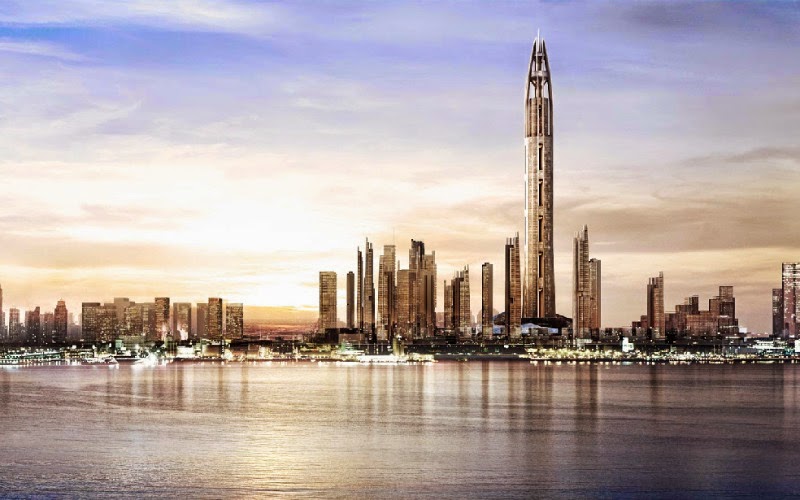
Plans are going ahead for the world’s biggest commercial tower to be built in JLT. Design of the Burj 2020 will be carried out by Adrian Smith + Gordon Gill Architecture – the same firm responsible for both the Burj Khalifa and the Kingdom Tower in Saudi Arabia. The tower will be the focal point of the 1.3 million sq mt Burj 2020 District which will include commercial, retail and hospitality areas. 

Damac’s MD, Ziad El Chaar, is hosting 22 senior staff members from China’s third largest property broker, 5i5j. The company has been appointed to market Damac’s portfolio in China, an expanding market for the local realty sector. It is estimated that in H1 2014, Chinese bought over US$ 5.1 billion of overseas property, half of which were private investors and the balance by state-linked enterprises. The developer is also opening a ladies-only sales office in Damac Maison, near to Dubai Mall. 

It seems likely that Airbus will bow to Emirates’ pressure and introduce an A380neo which could be a longer aircraft with up to fifty more passenger capacity. Although recent sales have been sluggish, and no new activity is expected at this week’s Paris Air Show, Airbus estimates that it could sell more than 1.5k units over the next 20 years.

A combination of 9% more students – to 98k – and increased fees has seen Gems Education’s annual revenue, at 31 March, jump 20.6% to US$ 675 million. The Varkey-led education provider operates over 50 schools in 19 different countries.

The week Twitter’s Chief Executive, Don Costolo, stands down to be replaced by co-founder, Jack Dorsey, the social messaging service is reportedly to open an office in Dubai in Q3. At the same time, Benjamin Ampen has been appointed their new head of MENA sales.

Recording a 29% jump in Land Rover sales and a marginal 2% rise in its Jaguar turnover, Dubai-based Al Tayer Motors now sells more of these models than any of the other 2.7k showrooms in the world. The dealer also announced astronomic annual rises of 82% and 61% in the Jaguar F-Type and Range Rover vehicles respectively. 

Dubai-based Cars Taxi Group is expanding its overseas presence, by investing up to US$ 54 million on 1k new cars, to set up in Saudi Arabia and Singapore; it currently has operations in India, Kuwait, Malaysia and Qatar. The company has more than 7k vehicles in the UAE.

Eros Group, established in 1967, was voted UAE’s best brand for the 5th year in a row. Over the past decade, the Dubai-based electronic company has seen revenue jump from US$ 163 million to over US$ 1.36 billion. Only 55 of the 1.5k leading brands, who applied, were declared Superbrands by the Brand Council.

The GCC’s second biggest cable manufacturer, Ducab will become a 60% shareholder in a new US$ 60 million aluminium plant in Abu Dhabi, to be known as Ducab Aluminium; the new entity will have a 50k metric tonne capacity for aluminium rods and overhead conductors. The remaining 40% shareholding will be with Abu Dhabi’s Senaat which already is a 50% owner of Ducab, with the other 50% owned by the Investment Corporation of Dubai.

Following a decree by HH Sheikh Mohammad Bin Rashid Al Maktoum, the Dubai Technology and Media Free Zone Authority is now to be known as Dubai Creative Clusters Authority. The authority will still be responsible for licensing, visa and zoning regulations for such free zones as Dubai Internet City, Dubai Media City, Dubai Studio City, Dubai Academic City, Dubai Knowledge Village, Dubai Biotechnology and Research Park, Dubai Outsource Zone, Dubai International Academic City, Dubai Design District (d3), International Media Production Zone and Energy and Environment Park (EnPark).

According to research by the National Bank of Abu Dhabi, the recent drop in oil and gas prices, which have halved since September 2014, could lose US$ 240 billion for the six GCC countries; this is slightly less than the IMF forecast of US$ 300 billion. The big losers would be Saudi Arabia (US$ 160 billion) and the UAE (US$ 55 billion). To soften the impact of this loss of revenue, governments should look at cutting budgets, reducing subsidies and closely monitoring project expenditure.

With the notable exception of Baille Gifford, with a 7% holding, Dragon Oil’s 46% minority shareholders have finally agreed to Emirates National Oil Co’s offer of US$ 11.72 per share – a 12% premium on last Friday’s close. It was no surprise then that when trading reopened on Monday the shares were up 9.6%. This new Dubai-government owned oil-producer is valued at US$ 5.75 billion. Also this week ENOC secured a 9-year US$ 1.5 billion bank facility to support long-term funding requirements. 

Shuaa Capital’s subsidiary, Gulf Finance, which obtained a US$ 136 million syndicated loan late last year, expects to raise a further US$ 163 million in 2015. The company’s primary business is to lend much-needed funds to SMEs, mainly in the UAE.

Emaar Properties has decided the IPO share price of US$ 0.50 for its floating of 12.99% of its Egyptian arm, Emaar Misr. 85% of the 600 million shares on offer have been offered to institutions and has been 11 times oversubscribed. Trading will start on the Cairo bourse on 02 July.

The DFMI had a flat week starting on Sunday at 4073 to close on Thursday at 4064. Bellwether stocks, Emaar and Arabtec, did likewise both rose – unchanged at US$ 2.19 and down US$ 0.01 to US$ 0.71 respectively. Thursday saw only 280 million shares, valued at US$ 488 million traded – a massive downturn compared to the 1.30 billion, worth US$ 2.56 billion, the previous week. 

Over the week ending 18 June, gold regained some of its lost lustre up US$ 20 to US$ 1,199  whilst Brent crude was marginally down US$ 0.22 at US$ 64.73.

As David Cameron discusses EU membership with anybody who wants to listen, Standard & Poor’s maintained the UK’s AAA rating but amended its outlook to negative from stable. The ratings agency is concerned that UK’s growth potential could be negatively impacted by the upcoming referendum, due within the next two years. S&P also pointed out that the government will have to closely scrutinise the growing private external debt and its increasing twin deficits. The UK’s inflation rate in May returned to positive – 0.1% – having fallen to minus 0.1% in April – the first time for a negative reading since 1960. Furthermore, average weekly earnings rose 2.7% – its largest increase in over six years.

Even after seven years of near zero rates, the Fed is still reticent to move. Janet Yellen, the Fed supremo, has indicated that both the labour market and inflation conditions do not warrant any immediate action and that any future changes will be gradual.

Japan’s recovery from last year’s recession continues on course with its May trade deficit, of US$ 1.75 billion, 76.5% down on this time last year. Although exports were up 2.4%, lower than expected, imports have fallen by 8.7%. But Shinzo Abe will be concerned that a global slowdown could cut back Japanese factory output, that the weak yen will inevitably push up import prices and the country still has to pull itself out of its years-long deflationary cycle. 

The Australian property bubble continues to be blown up by historically low interest rates, with industry experts predicting it could be another year before the unavoidable crash. Even Glenn Stevens, the Reserve Bank governor, is on record describing Sydney house prices as “crazy”. 

In the Mercer’s 2015 Cost of Living Survey, Dubai has moved up 44 places to 23rd. However, this is just another example of the glaring variances between similar reports with findings having to be taken with a pinch of salt. In this case, the Mercer report comes up with Luanda, Hong Kong, Zurich, Singapore and Geneva as the most expensive cities globally whereas the Economist Intelligence Unit ranks Singapore, Paris, Oslo, Zurich and Sydney as the top five. At the other end of the scale, Mercer ranks Bishkek, Windhoek, Karachi, Tunis and Skopje in their bottom five: EIU rates Mumbai, Karachi, New Delhi, Kathmandu and Damascus. Which one has more credence?

Another example of the cosy relationship between government and the finance sectors comes with the news that the former FCA director of supervision, Clive Adamson, is reportedly becoming a non-executive director of JP Morgan International Bank. Two years ago, the ex-City regulator was involved in fining this bank over US$ 3 million for inadequate client advice. Since leaving his old employment late in 2014, he has also become a non-executive director of Prudential’s UK.

Meanwhile Michael Gove is looking at appointing a wealthy party donor to his Justice department’s board, having just released four independent directors from the Ministry of Justice. The recently knighted Theodore Agnew, who founded the private equity firm Somerton Capital, is a close ally of the new Justice Secretary and was on the board of the Department of Education when Mr Gove was in charge there.

With the EU regulators currently investigating its Luxemburg tax arrangements, another Amazon probe will be in relation to its business practices in the distribution of e-books. The review will look at whether Amazon is “preventing other e-book distributors from innovating and competing effectively”.

Greece is not bowing to German, EU and IMF pressure as it refuses to budge on important conditions relating to certain austerity demands, pension cuts or energy tax increases being demanded by the troika, before any further funds are made available. In a no win situation, the Greek leader, Alexis Tsipras, has accused its creditors of trying to humiliate his country whilst EC president, Jean-Claude Juncker, reproached the government for misleading voters and giving out misinformation on the troika’s demands. 

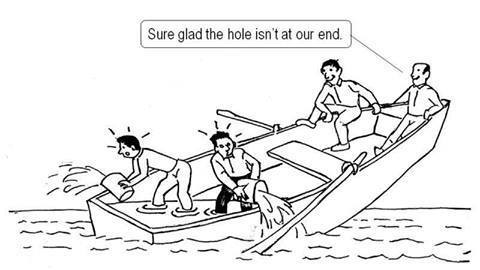
Over the next three months, Greece has to find US$ 19.2 billion to pay creditors and other demands but, in the longer term, its total debt is US$ 360 billion, of which US$ 240 billion is owed to the ECB, including US$ 62 billion to Germany alone. The situation is exacerbated by the fact that its unemployment levels continue upwards – currently at 26% – whilst youth unemployment is more than double at 55%; further its public debt to GDP is at a massive 177%. If the country defaults, fails to pay its creditors and exits the eurozone, it will not only be a Greek Tragedy!

Posted in Finance | Tagged , , , , , , , , , , , , | Leave a comment

Say Goodbye

spinnaker_tower_portsmouthIn a busy week, HH Sheikh Mohammed bin Rashid Al Maktoum has met with Queen Elizabeth, the Polish president, Bronislaw Komorowski, (on a two-day trade visit) and visited the Milano Expo for a further two days; there he announced that he wanted the next Expo in Dubai  to “dazzle the world”. Back home, he also visited his own Mohammed bin Rashid Housing Establishment and confirmed new  projects totalling US$ 981 million; he also reviewed 16 previous projects, which had seen 4.4k houses built, at a cost of US$ 1.3 billion.

The US$ 123 million contract for Union Properties’ Dubai Investment Park, phase 3, has been awarded to Shapoorji Pallonji Mideast. Slated for completion by Q3 2017, the 227 Green Community villas, will be sold off plan in September and when completed will bring the total of residential units there to almost 1.8k.

With apartment and villa prices starting at US$ 137k and US$ 272k respectively, it was no surprise that hundreds of people queued all Friday night to be first to put their names on the Nshama’s Town Square’s sales documents. However, many were left more than disappointed when only ten units were released.

WSP / Parsons Brinckerhoff  have been appointed by Meraas to be lead consultant for the Bulgari Resort in Dubai, due to open within two years. The 7-star 101-key hotel, encompassing 158k sq mt, with 43 villas and 165 apartments, will be located on Jumeirah Bay Island. 

The Japanese convenience store, 7-Eleven, is set to establish a presence in the emirate. Currently, the brand has 56k outlets in 16 countries and it has just signed a franchise agreement with Seven Emirates Investment. The Dubai-based company is hoping to have more than 820 stores operating in the region by 2020.

If there were not enough dining outlets already, Applebee’s Grill Restaurants will add a further 16 more in the country to bring their total to 26. The Californian-based chain expects to add a further 900 staff to its payroll. 

Fast Logistic Solutions Group is ramping up its business and plans an 86% expansion in its staff numbers to 1.4k, including 400 in the UAE. In addition, it will have new offices in DAFZA, DWC, Al Qusais and Rashadiya as it merges its two entities – Fast Forward and First Priority next month. 

Dubai-based Hotbrands International announced a further two fast food outlets in DAFZA – its flagship brand Shamiana and Magic Wok. The 23-year old company already has fifty outlets in the GCC, India and the USA. 

Emirates has signed a three-year US$ 5.4 million deal for naming rights of the 170-metre high Portsmouth’s Spinnaker Tower. One minor problem is that the proposed red facade will not go down too well with Pompey supporters whose team play in blue. The structure looks very similar to the Burj Al Arab and is the focal point of the city’s harbour which will host the America’s Cup World Series next month; one of the challenging boats will be the airline’s sponsored Emirates Team New Zealand. 

Nakheel has confirmed that it plans a US$ 60 million profit payment next week on its on-going US$ 1.2 billion trade credit sukuk.

The recently established investment bank, Audacia Capital, has been quick out of the blocks by acquiring 30% of the Lebanese casual dining chain, Al Safadi. The company has ambitious expansion plans to add to its current three Dubai locations and one in Erbil, Kurdistan.

The Dubai International Financial Centre hopes to see a tripling in size over the next decade, with the number of firms expanding to 1k and staff numbers from 18k to 50k. Over this period, office space will more than double to 5.5 million sq ft. More impressive is the target to see assets under management jump from US$ 10.4 billion to a staggering US$  250 billion – stranger things have happened.

Dubai Islamic Bank’s latest foray into the sukuk market was heavily over-subscribed – the 5-year US$ 750 million bond will carry a 2.92% profit rate.

For the first time in six years, the UAE will post a fiscal deficit due to the halving of oil prices over the past twelve months. The IMF estimates that this year, the deficit will be 2.3% of GDP, compared to a 5.0% surplus in 2014, but a tightening of spending, and the introduction of new taxes, could see the country return to surplus in 2016. At the same time, the international body predicts a 2015 growth slowdown from 4.6% to 3.0%.

The DFMI had its second week of marginal gains – up 0.9% – having started on Sunday at 4032 to close on Thursday at 4073. Bellwether stocks, Emaar and Arabtec, both rose – up US$ 0.02 to US$ 2.19 and US$ 0.10 to US$ 0.72 respectively. Thursday saw 1.30 billion shares, valued at US$ 2.56 billion traded – a massive increase compared to the 593 million, worth US$ 789 million, the previous week. The holy month of Ramadan starts next Wednesday which may see a slowdown in activity on the Dubai exchange.

There would have to be some eyes raised by the recent performances of Amlak and Arabtec. The former returned  to the bourse on 02 June and had jumped 128% in the ensuing eight trading days whilst Arabtec had a two-day rise of 27.0% before falling 9.9% on Thursday. 

Over the week ending 11 June, gold softened even further from US$ 1,194 to US$ 1,179 whilst Brent crude was up US$ 0.35 to US$ 64.95.

Abdel Fattah El-Sisi’s Egypt will be thankful for the recent US$ 35 billion pledges made by GCC countries. This comes at an opportune time, as its current account deficit, in the nine months to March, has ballooned from US$ 543 million to US$ 8.4 billion.

Many recent reports point to a slowdown in global growth. The IMF, who seem to change their forecasts on a regular basis (and usually downwards), has cut the US expected growth from 3.1% (in April) to 2.5%, two months later. In the light of these figures, it seems unlikely that the Fed will consider a rate hike until at least September, even though the labour market appears to be strengthening (including 280k new jobs in May) and low oil prices continue. Any Fed decision always has a huge impact not only in the US but also on a global scale.

In the UK, the Confederation of British Industry has cut their February growth forecast of 2.7% to 2.4%; the Bank of England did likewise. 

China has seen its May exports fall a further 2.5% whilst imports dropped 17.6%, compared to the same month last year. It seems highly unlikely that the country’s forecast 6.0% trade growth will be attained this year. Although interest rates have been cut three times since December, this has failed to boost economic activity. No wonder then that China’s trade surplus jumped 75% in one month to US$ 59.5 billion.

The IMF has also cut its forecast for Australia in the wake of major falls in commodity prices which inevitably has had a major impact on that country’s short-term economic outlook. The RBA’s governor, Glenn Stevens, has not ruled out any further rate cuts.

Japan bucked the trend by recording positive figures, with Q1 growth of 1.0% (compared to the 0.6% initial guesstimate) and an annualised growth rate up from 2.7% to 3.9%. Last year, the world’s third biggest economy had fallen into recession but has climbed out by a boost in business spending, low oil prices and rising exports. 

Whilst global financial eyes are on Greece, the last country to renege on its debt has been ordered to pay US$ 5.2 billion to over 500 creditors. A US judge has ruled that Argentina has to treat a group of hedge funds and bondholders, who refused to sign the original settlement agreement, the same rights as those who agreed to an earlier restructuring.

It is reported that Germany may agree to an extension of the current Greek aid package but has rejected the possibility of an amended third one. But it seems that Athens is still balking at the substantial reforms that are being requested by the troika so by the end of the week, there were still major differences between the parties. After five years of wrangling and negotiations going nowhere, maybe it is time to Say Goodbye!

Posted in Finance | Tagged , , , , , , , , , | Leave a comment

Someone New

sepp-blatterAs expected, April turned out to be a dismal month for the hospitality sector as profitability indices sank by 19.5%. Occupancy, Average  Room Rates and Rev PAR all headed south – 0.5% to 84.9%, 12.8% to US$ 374 and 13.5% to US$ 317 respectively. Total Revenue per Available Room (TRevPAR) dropped 15.7% because of revenue falls in food (19.8%) and Beverage (26.7%). Signs are that the golden goose may have laid too many eggs!

However if a report from Network International is indicative then it seems that more money is being spent by tourists; Q1 expenditure  on credit and debit cards rose by 5%, compared to the same period in 2014. Dubai is again moving up the charts – this time to 4th (out of 132 locations) in MasterCard Global Destination Cities Index, behind London, Bangkok and Paris. This year, the emirate is expecting an 8.0% jump in tourist numbers to 24.3 million. 

Abu Dhabi’s Manazel is studying the feasibility of investing US$ 817 million in a hospitality project, located on the borders of the capital and Dubai. The developer is already credited with developments in both emirates, including Dune Village in Dubai.

A sign that the retail section is still moving north is Nakheel’s proposed 766k sq mt expansion, adding a further 600 outlets and a new 370-key hotel, to its Ibn Batuta Mall. Extending 1.2km, the mall is already the largest themed shopping mall in the world and attracts over 19 million visitors a year. 

HH Sheikh Mohammed bin Rashid Al Maktoum reviewed Emaar’s latest project – a US$ 2.72 billion mixed use development in Al Mamzar. The developer has signed a memorandum of understanding with Dubai Municipality, to build 4k residences, 300 hotel rooms and retail outlets encompassing 230k sq mt.  

According to Meydan Sobha, phase 1 of its Mohammed Bin Rashid Al Maktoum City project, comprising 267 villas, has been sold out whilst the 364-villa phase 2 is selling well. Villas are priced at between US$ 4.2 million to US$ 6.9 million, with a few higher ranged properties going for up to US$ 25 million. The US$ 10 billion project, encompassing 1,100 acres, has a further two phases to build and will also include a 7km lagoon with beach, an 8.8km cycle track and a hotel along with retail/ dining outlets.

Ajman-based R Holdings is planning to invest US$ 68 million to build two community malls in Dubai. The malls will be under its CityLife brand which already operate in Ajman and will have the Dutch supermarket chain Spar as an anchor tenant.

Drake & Scull announced that its Omani subsidiary had won several MEP (mechanical, electrical and plumbing) contracts, valued at US$ 95 million. Work on the Seeb convention centre and two hotels will start in Q3 and be completed by 2017.

A new investment banking advisory firm is due to shortly set up in Dubai. Trussbridge Group, headed by ex-investment bankers Rody Yared and Samer Katerji, will focus on the regional mid-market sector.

Another finance-related firm is opening in Dubai. The UK’s IG Group deals in forex trading and became infamous when hundreds of its clients, who had bet against the Swiss franc, were left with huge losses when the Central Bank unexpectedly scrapped its Euro 1.2 to the US$ cap earlier this year.

It seems that the Investment Corporation of Dubai is one of the leading contenders to buy Hyde Park Barracks in London from the Ministry of Defence. No bids from interested parties have yet been submitted.

Dubai-based Al Ittihad Drug Store announced a 28% rise in Q1 revenue, compared to the sector’s average of 12%, whilst shipping 1.3 million packaged units. IDS, established in 1968, is one of the main regional pharmaceutical distributors and has recently acquired rights to market the anti-aging product Fillerina, and Medcoll, a Collagen product.

Masharie LLC, a division of Dubai Investments, has sold its 51% shareholdings in two entities for a reported US$ 100k; these were International Rubber Company and Techno Rubber Company. The private equity firm has eight operating companies in its portfolio and is considering further investments in the healthcare and hospitality sectors.

The UAE Minister of Public Works, HE Abdullah bin Mohammed Balhaif Al Nuaimi, has indicated that an inter-city metro line is being actively considered. If given the green light, it is almost certain that it will be in place in time for Expo 2020 and that it would link all seven emirates.

Emirates has just had its second sukuk listed on Nasdaq Dubai. The US$ 913 million faculty, to be used for financing new Airbus A380s, brings the total sukuk value on the bourse to US$ 35 billion. 

Figures from Dubai Customs show that last year there was a 10.0% rise in auto parts and accessories to US$ 12.1 billion.with the value of exports and re-exports up to US$ 4.9 billion. The four top trading partners were Japan, South Korea, China and Germany with values of US$ 1.7 billion, US$ 902 million, US$ 861 million and US$ 847 million.

Emaar Properties will soon float 12.99% of its Egyptian unit, Emaar Misr, on the Cairo exchange. 86% of the 600 million shares will be made available for institutions, with retail accounting for the balance. Shares will be listed at between US$ 0.46 and US$ 0.56.

After being delisted from the Dubai bourse in November 2008, when its share value was at US$ 0.28, Amlak Finance, resumed trading on Tuesday. Within hours, the Islamic mortgage provider saw its value fall 23.5% before a recovery closing its first day on US$ 0.24 and the week on US$ 0.36.

Following four weeks of losses, the DFMI clawed back 32 points to close the week marginally higher at 4032. Thursday saw increased business with 593 million shares, totalling US$ 789 million, changing hands – compared to 474 million and US$ 297 million the previous Thursday. Whilst Emaar Properties shares rose – by US$ 0.04 to US$ 2.17 – Arabtec remained flat at US$ 0.63. For the month of May, the index fell 7.2%, closing at 3923, having risen 20.2% in April. 

Both gold and Brent crude prices have been dipping, with the former ending the month of May at US$1,194 and the week even lower on US$ 1,183. Ahead of the OPEC meeting in Vienna, crude was trading at US$ 65.30, at the end of last month, and fell to US$ 63.92 by the end of the Thursday’s trading.

One bank that is facing mounting problems is HSBC. It seems inevitable that the bank will leave its London base, probably for Hong Kong, as UK lenders are suffering from the government’s Bank Levy. In 2012, the bank expensed US$ 4.2 billion to cover costs associated with past illegal activity – US$ 2.3 billion for misselling products in the UK and US$ 1.9 billion for money laundering. It is reported that the bank still employs 5k legal consultants just to keep up with all the flak. (Despite these problems that year, the bank’s top 16 executives averaged an annual remuneration of US$ 4.9 million). It still faces massive penalties from US regulators, for forex manipulation, and is still involved with the Swiss tax evasion issue.

It seems odd that it takes two months for the US authorities to finally arrive at its Q1 GDP figures. The end result is that the economy actually contracted by 0.7% as opposed to the original release of marginal 0.2% growth. Bad weather and a rising dollar were the main attributes for the disappointing figures as most indicators were further revised downwards, such as consumer spending, business inventory and trade balance. The Q2 outlook is for sluggish growth as the two main drivers – weather and a strong greenback – are still in play.

Indicators are that the UK economy is also softening with Q1 growth of 0.3% – half of what it was in Q4 – its lowest in four years. Its latest overseas trade deficit has also jumped 37.5% to US$ 20.2 billion. In a similar vein, but on a bigger scale, China’s growth slowed to 7.0% and the economy has not been helped by disappointing PMI data and weak retail sales.

Australia’s trade deficit more than trebled in April to almost US$ 3 billion from its March level of US$ 945 million. Exports fell 6% and imports were also down 4%, as retail spending remained flat at US$ 18.5 billion. At the same time, the OECD issued a warning that there could be a risk of a sharp correction in the housing market as cheap credit (2.0%), housing shortage and over-generous tax breaks continue to inflate the asset bubble.

This time last year, three major economies were suffering. Now India is outpacing China, with latest 7.3% growth figures, despite the government having lowered their forecast to 6.6% last December. (However the method of calculating the country’s GDP has recently changed and this may be distorting data returns).

Japan and eurozone are slowly heading in same northerly direction, reporting encouraging data with Q1 annualised growth of 2.4% and 1.6% respectively. Both have reaped the benefits of a combination of low oil prices, weak currencies v the US$ and QE stimulus.

Greece has moved one step closer to Grexit as it will not make its US$ 335 million IMF payment tomorrow (05 June) but intends to pay a combination of four outstanding payments, totalling US$ 2.5 billion,at the end of the month. The Tsipras-led government is dissatisfied with the IMF demands for further austerity measures before any more funds are released.

Whilst FIFA’s reputation lays in tatters, the same cannot be said of the English Premier League which recorded record profits in season 2013-14. The 20 teams’ revenue was up 29.0% to US$ 5.0 billion – US$ 1.5 billion more than its nearest rival, Germany’s Bundesliga. The biggest revenue earner was the US$ 2.6 billion paid for broadcast rights.

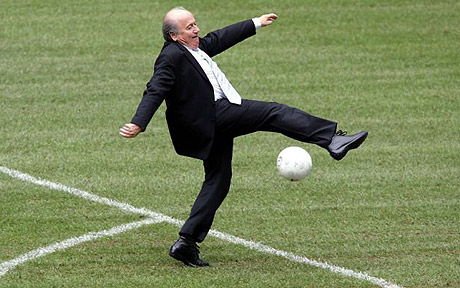
The FIFA debacle will continue until the cancer is cut away. BBC reports that, between 2011 – 2015, this registered charity made a profit of US$ 338 million based on a revenue of US$ 5.72 billion and expenses of US$ 5.38 billion. The prime profit driver is the World Cup with US$ 2.50 billion, based on revenue of US$ 4.83 billion and expenses of US$ 2.31 billion. And what about all the money that has gone the way of graft, scams and kickbacks to Blatter’s cronies? No doubt when all is said and done, this figure could be greater than US$ 1 billion.

With Emirates pulling out last year, FIFA has five main sponsors – Adidas, Coca Cola, Hyundai/Kia, McDonalds and Visa – who each contribute about US$ 30 million per annum. The value of marketing rights to FIFA is US$ 1.6 billion and if sponsors were to follow Emirates’ example and pull out, this would put even more pressure on the organisation to take note and start the process of long needed reforms and urgent management changes. (But with Blatter still pulling the strings, it is the equivalent of putting Dracula in charge of a blood bank). 

Even more damaging would be for the TV companies, who pay US$ 2.4 billion for broadcast rights, to refuse to show the competition.  Now that the self-proclaimed, hypocritical “commander” has jumped his sinking ship, whatever happens hereon, the scandal-hit sporting body quickly needs both something and Somebody New! 

Posted in Finance | Tagged , , , , , , , , , , , , | Leave a comment

Livin’ On Borrowed Time

howes-dubai-blogThis weekend, Emaar will launch its latest project, located in the Opera District of Dubai. The twin towers – of 50 and 70 storeys – will comprise 1-4 bedroom apartments and will overlook the upcoming 2k-seat opera house.

Al Barari has released phase 2 of its Ashjar project – 84 luxury apartments, ranging in size from 1.4k sq ft to 4.1k sq ft, with prices starting at US$ 600k. The 18.4 million sq ft development already boasts 189 luxury residences and 28 bespoke villas, with a further 157 Seventh Heaven homes under construction, along with the Ashjar development, which will have 300 units when completed.

Dubai Properties has announced the sale of 200 apartments in one of its planned four-tower mixed use project in its mega development in the centre of Dubai Creek.

Arabian Gulf Properties and Time Properties have reported details of its 23-storey AG Tower in Business Bay. Prices for the 437 apartments will range from US$ 191k to US$ 616k.

Nakheel expects to see the number of hotel rooms on Palm Jumeirah more than quadruple before 2020, as the portfolio is forecast to rise from the current level of 3.5k to over 15k. The number of properties is expected to increase from 8 to 32 over the same period; six are already under construction.

It seems likely that the emirate will house the 5th Lego-themed hotel in the world with plans to build one in the upcoming Legoland Dubai theme park. The venue, covering 27 hectares, is a part of the US$ 2.7 billion Dubai Parks and Resorts project due to open in Q4 2016.

Hilton Worldwide becomes the latest operator to announce a new property to be located near to Dubai World Central. The proposed 535-key hotel is set to open in 2019 and hopes to tap into the expanding traffic using Al Maktoum International Airport.

An Abu Dhabi operator will open its first hotel in Dubai next year – a 3-star property which will cater for the expected increased demand in affordable accommodation. Jannah Hotels has a 318-room Burj Al Sarab in Abu Dhabi to meet the specific requirements of the halal tourism sector.

Already with 18 properties in the country, the InterContinental Hotels Group (IHG) has just opened its 132-room Dubai Marina.

Following news earlier in the year that British hotel group Yotel was planning a development in Business Bay, it is now considering a property on Palm Jumeirah. No further details were made available.

On 01 September, Emirates will fly daily to their 10th US destination – Orlando, with a flying time ten minutes shy of 16 hours. In a decade of operations to the country, the airline has maintained over an 80% load factor and last year flew over 2.3 million passengers.

As an indicator of the buoyancy in the local vehicle sector, Nissan reported that 2014 regional sales were up 18.1% to 185.1k units and increased its market share by 0.8% to 10.3%. 34.0% of all sales were from the UAE where it maintained its second position to Toyota with a 15.3% market share.

The latest Nielsen Global Survey confirms that the UAE consumer confidence still rates the highest in the ME with an index score of 115. The second best is Saudi Arabia with 107 whilst the global average is a lot lower, at 97. Globally, there are some odd results such as the UK’s 97 and France, with 60, whilst the likes of India, Indonesia and Philippines came in with 130, 123, and 115 respectively.

Although the UAE is the top performing country in the region in the latest IMD world competitiveness report, it has slipped four places to 12th in the global ranking. Although it scored highly in categories such as government efficiency and economic performance, it slipped in areas such as health and education.

Unilever, the Anglo-Dutch conglomerate, is planning to invest US$ 82 million in a new factory to be built in Dubai, adding a further 600 jobs to its payroll. When completed within 2 years, the facility will make shampoos, shower gels and other personal care products.

Conares, the region’s second largest  steel manufacturer, is to invest US$ 54 million to expand capacity at its Jebel Ali factory to 1 million tonnes. The company, established in 1990, estimates that it has cornered 20% of the UAE rebar market and 25% of the regional steel pipes sector.

The UK fragrance house, CPL Aromas, has opened a US$ 8 million factory in Jebel Ali, producing 200 metric tonnes of concentrates monthly.

The Dubai-listed company Aramex has paid US$ 2.5 million for a 25% stake in the US-based consolidator, WS One Investment. This follows recent acquisitions for the South African PostNet (US$ 17 million) and the Australian courier company, Mail Call, for US$ 33 million.

In March, Emirates National Oil Co offered US$ 7.92 a share to buy the remaining 46% of Dragon Oil shares it did not own. Now ENOC has raised this offer by 44.2% to US$ 11.43.

The Ministry of Finance reported that in Q1, the 23 local and 34 foreign banks operating in the UAE increased their asset base by 9.0% to US$ 392.3 billion, whilst lending showed an 8.2% jump to US$ 392.4 billion. As at 31 March 2015, the Central Bank held foreign currency assets, totalling US$ 83.4 billion – 3.1% higher than the same period in 2014.

The UAE Space Agency has introduced ambitious plans to place the country in the forefront of space exploration and research. Its first target is to send the country’s “Hope” probe mission to Mars by 2021 – the year of the UAE’s golden anniversary. The government is determined to make the country one of the global leaders in space technology, with the knock-on effect of adding great value and increased employment opportunities to the national economy.

With an eye on supporting regional SMEs, Abraaj Capital, with a US$ 30 million commitment, will become the leading investor in Auvest MENASA Opportunities Fund. The fund, to be managed by the 8-year old Auvest Group, aims to raise up to US$ 300 million to boost this expanding sector.

Following three weeks of losses, the DFMI continued its downward trend to close the week 2.9% lower at 4000. Thursday saw increased business with  474 million shares, totalling US$ 297 million, changing hands – compared to 245 million and US$ 114 million the previous Thursday. Both Emaar Properties and Arabtec shares fell – by US$ 0.10 to US$ 2.13 and US$ 0.03 to US$ 0.63 respectively

IAG, the owners of British Airways, has reached an agreement with the Irish government to purchase 25% of their 29% shareholding in Aer Lingus. This will now allow IAG to go ahead with their US$ 1.5 billion offer to buy the Irish national carrier.

The proposed US$ 55 billion acquisition of Time Warner by Charter Communications will result in the new entity becoming the second largest cable company in the US. It was only last year that a US$ 37 billion Charter offer was rejected and a subsequent US$ 45 billion deal with Comcast fell through.

Germany, Italy, Spain and the UK will be the main beneficiaries of Amazon’s decision to declare sales (and consequently pay tax) made in those countries. Prior to 01 May, the company had used Luxembourg to be the recipient of all sales and hence paid tax there which has a lower tax regime. Whether the likes of other so-called tax-dodging companies – Amazon, Apple, Fiat and Starbucks – follow suit remains to be seen.

Following encouraging recent economic data, the Bank of Japan has decided not to proceed further with more fiscal stimulus but has maintained its US$ 422 billion QE programme in place. Q1 data indicated that the country was out of recession but whether this can continue remains a moot point. Furthermore, its current 0.2% inflation rate is well below Shinzo Abe’s target of 2.0% and if the situation is not corrected, it is inevitable that the rate of asset purchases will have to be expanded.

If this has occurred in Australia there is a good chance it is happening elsewhere. It appears that credit cardholders have paid an extra US$ 2 billion over the past four years for the simple reason that greedy banks have not passed on interest rate cuts. Although the RBA started cutting rates in November 2011, the customer is still paying on average 17.0% – instead of 14.25% if the bank had dropped rates in synch.

Latest figures from Australia indicate that the economy is still slowing. Q3 business investment (to March) fell 4.4%, whilst the current annual forecast spend of US$ 115 billion would be 30.7% higher than the US$ 80 billion estimated for the 2015/16 year.

The OECD has reported that the rich are getting richer as the poor go in the other direction. For example, over the past five years, US household disposable income for the country’s top 10% rose by 10.6%, whilst the bottom 10% dropped 3.2%. Furthermore, the OECD overall average of the difference between the incomes of the top 10% and lowest 10% was 9.6 times – in the US 19 times. Inevitably this will ultimately result in both an economic and social backlash with a detrimental impact on growth; a 20-year study (between 1985 – 2005) estimated that income inequality reduced growth by 4.7%.  

Another group that has become rich at the expense of the masses is FIFA. The secretive body, overseen by the 79 year-old Sep Blatter, has allegedly been the centre of numerous financial scandals. The so-called mafia-like supremo, Don Blatterone, has been associated with the football organisation for 40 years, 17 of which has been as President. Despite seven top officials being indicted on fraud, money laundering and racketeering charges, the man in charge refuses to take any responsibility for their actions. Although the deluded gentleman thinks he is the only person fit enough to run FIFA and he  will get elected this Friday for another term, his days are surely numbered. This meglomaniac despot is Livin’ On Borrowed Time!

Posted in Finance | Tagged , , , , , , , , , , , , , | 1 Comment

Summer In The City

DPWorld-championshipAnother report shows that the much vaunted major correction in residential prices has yet to arrive. Cluttons indicated that Dubai prices fell by only 0.8% in Q1, and only 0.5% lower over the past twelve months. However, it was noted that 2014 activity, with only 1.3k villa sales, was 52% down year on year whilst Q1 has been 36% lower. The main driving forces have been the Dubai 2014 introduction of a 4% registration fee and the federal mortgage cap, whereby bank lending has been topped, in most cases, at 75%.

It is estimated that over the next decade, Dubai World Central will add 20k hotel rooms to the ever growing Dubai portfolio, as the US$ 32.7 billion Al Maktoum International Airport starts to increase its capacity to an expected 200 million. To date, four hotels – Studio M (750 rooms), Holiday Inn (700), Millennium (400) and Aloft (150) – have confirmed that properties will be built in the area.

At the same time, MAG Property Development and MBM Holding have announced the launch of a US$ 191 million affordable homes project in DWC which will encompass over 1k housing units. Phase 1 of the 800k sq ft development will start in Q4 and be completed within 30 months.

There were two real estate developments announced this week. Jumeirah Golf Estate’s AlAndalus, with 75 townhouses and 550 apartments on offer, will have prices starting at US$ 163k. (The company also reported a 68.0% hike in 2014 profits to US$ 117 million). Dubai Properties will launch its  Arabella Townhouses, located close to Mudon Central Park, on Saturday; GEMS is expected to open a school in September 2016 and there are plans for a 64k sq ft community centre.

IMG Worlds of Adventure has appointed Novo Cinemas to open a multiplex cinema in their temperature controlled indoor theme park – the biggest in the world. The park, set to open later in the year, will also have four separate  themed  zones – Cartoon Network, IMG Boulevard, Lost Valley and Marvel – and expects to host 20k visitors daily.

Meanwhile MAF Cinemas has announced a US$ 272 million enhancement and expansion plan with the aim of attracting an additional 50 million patrons over the next five years. In Q1, Vox Cinemas reported a 50% increase in cinema admissions in its ten UAE and three regional venues.

Although the number of Russian tourists fell by 23.5% last year, its impact on Dubai’s tourism sector will not be as bad as some analysts had forecast. Numbers from the other top ten source markets have increased by over 8% and emerging markets – such as Brazil, China and Nigeria – have showed double digit growth. As Russia and the CIS accounted for only 3% of total inbound figures, any shortfall has been made up from increased numbers from other countries.

Landmark Group has given a massive boost to Nakheel’s upcoming Al Khail Avenue by agreeing to operate 25 brands, including Centrepoint, Emax, Home Centre and SportsOne. Waitrose and Reel Cinemas will also feature in the massive 1.2 million sq ft retail area which will have over 350 outlets.

One of the most popular burger chains in North America, with over 1.2k locations, is set to soon open in Dubai. The 30-year old Five Guys will open its first ME outlet in Dubai Mall, in partnership with the franchiser, Rise.

Emrill, a JV between Al Futtaim, Carillion and Emaar, has launched a new business unit, Emrill Specialist Services, catering for the growing need for a more focussed approach to facilities management, including consultation and engineering solutions. The company is the leading entity in this sector and hopes that this new initiative will enable it to have a bigger share of the market that is expected to reach US$ 5.5 billion by next year.

According to a recent CBRE report, London is the number one shopping destination in the world with Dubai again in second slot followed by Shanghai, New York and Singapore. Last year, the emirate attracted 55.7% of international retailers including 55 new brands to Dubai.

The CEO of the 130-store Lals Group, Jayant Ganwani, thinks that Dubai is becoming too expensive for the retail shopper citing that there has been a 20% reduction at the top end of the market. The smart shopper who used to come to Dubai to bag a bargain now realises that prices elsewhere are cheaper and that the emirate could be pricing itself out of the market. He expects that there could be further decline this year – up to 10% in the mid-market sector and even more at the luxury end.

This “fear” factor might even be spreading into the hospitality sector which may be smarting from the decline in Russian tourists, a strong currency (being pegged to the US$) and regional problems which have been reflected by lower occupancy rates and revenue reduction.

The there is the on-going debate about the high cost of rentals, education and other living costs rising a lot quicker than remunerations.

Not surprisingly, the Burj Al Arab has won the Daily Telegraph’s Best Hotel in the World for the third year in a row.

Benfica is the latest beneficiary of Emirates’ largesse as the airline has just signed a three-year shirt deal with Portugal’s most popular club. The airline has been flying to Lisbon for almost three years and has confirmed a second daily flight to the capital.

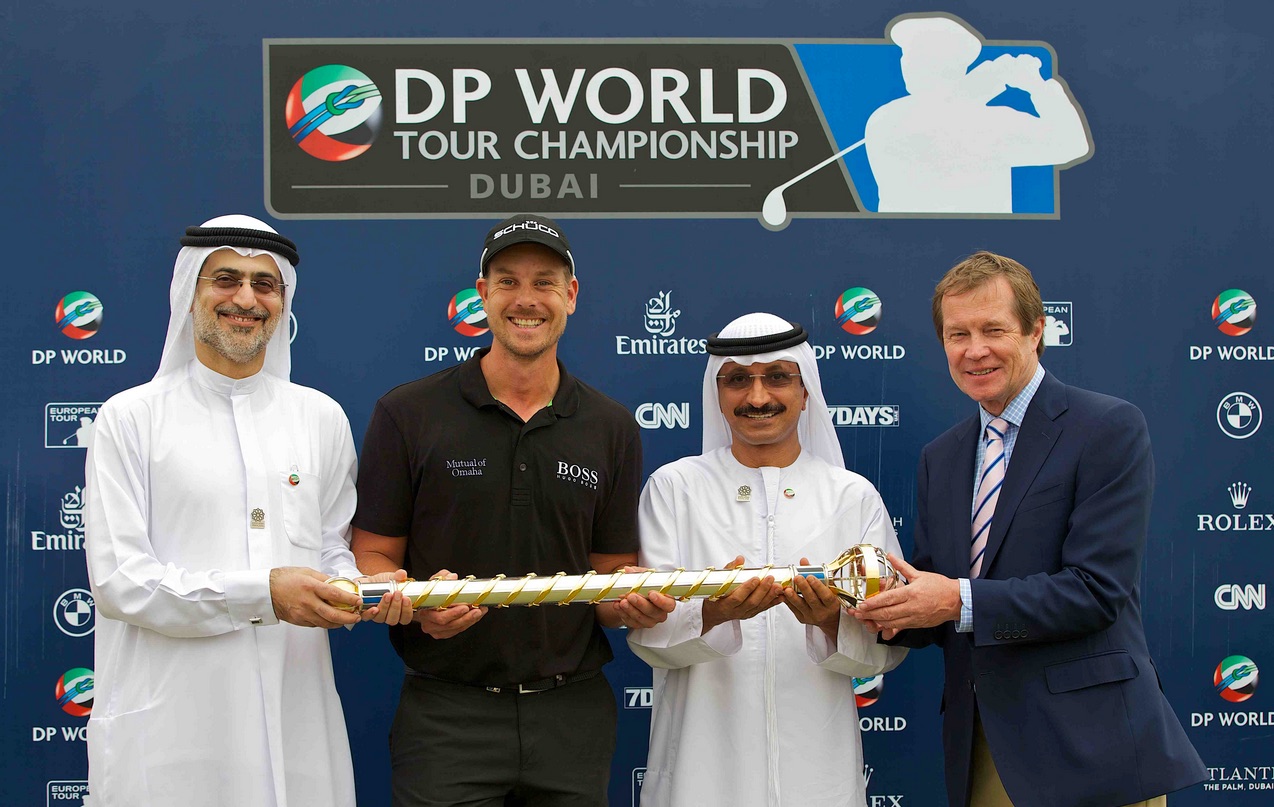
This week, DP World extended its sponsorship, to 2020, of the US$ 8 million World Tour Championship. This is the final event of golfing’s The Race to Dubai which attracted 55k spectators last year and added over US$ 50 million to the local economy.

Dubai World Trade Centre became the latest in a long list of Dubai’s free zones this week. The aim of the exercise is to boost conferences and exhibitions in the emirate as well as to attract investment.

Citigroup reported that its credit card base in the UAE expanded 2.5 times over the past year, as its consumer lending rose by 10.0% in Q1.

The DIFC has licensed another investment bank. Audacia Capital, founded by Emad Mansour, has a US$ 27 million capital base and will target regional investment opportunities of between US$ 15 – US$ 50 million.

The United Investment Bank Limited has been fined US$ 56k by the Dubai Financial Services Authority for contravening a number of the authority’s regulations relating to money laundering systems and controls.

Following its November 2008 delisting and a long debt restructuring process, involving US$ 2.7 billion, Amlak Finance will rejoin the DFM on 02 June.The mortgage lender, 45% owned by Emaar Properties, reported Q1 profit down 62.5% to US$ 1.6 million.

The Dubai health and education investment company, Amanat Holdings, has purchased a 4.14% shareholding in Al Noor Hospitals for US$ 68 million. The company listed on the Dubai bourse in November with a share value of US$ 0.22 – at Thursday’s close, the share was trading at US$ 0.18.

Following two weeks of losses, the DFMI returned to profit to close the week 1.1% up at 4119. Thursday saw continued soft business with only 245 million shares, totalling US$ 114 million, changing hands – it does seem that summer has arrived early this year. Emaar Properties rose US$ 0.09 to US$ 2.23 whilst Arabtec Holdings stayed flat at US$ 0.66. 

Over the week, both Brent crude and gold headed south by US$0.79 to US$ 66.59 and US$ 17 to US$ 1,209 respectively. The benchmark oil price has had a roller coaster year reaching US$ 115 last June before sinking to US$ 46 earlier this year. It is anybody’s guess what will happen at the upcoming OPEC seminar in Vienna but it is unlikely that any firm agreement can be reached about setting quotas for producing countries – both in and out of OPEC. With so much apparent manipulation in the gold market, it is impossible to gauge what will happen to prices of the yellow metal.

The US$ continues to post strong gains against most other leading currencies. Since November, the US Dollar Index – a wighted basket of six currencies to the US$ – has risen from 85 to 95. With the eurozone still struggling and the ECB beginning its quantitative easing programme in earnest, a further strengthening of the greenback would not be a surprise.

As expected, and not for the first or last time, international banks have been hit with mega fines for cheating. This time, Barclays, Citigroup, JP Morgan, RBS and UBS will have to pay US, UK and Swiss regulators a total of US$ 5.7 billion for on-going manipulation of the forex market and rigging benchmark interest rates. It is about time that the perpetrators – and not the victims (consumers and investors) – are called to task and that grovelling apologies will no longer suffice.

This week the Japanese Nikkei hit a 15-year high mainly due to the low yen and an economy growing at a faster rate (2.4% for the year and 0.6% in Q1) than expected. However, this may be a blip for an economy that only came out of recession last year with problem areas such as stagnant wages, falling industrial production and weaker capital  spending to be resolved before Abenomics can finally be declared a success.

May’s preliminary HSBC purchasing managers’ index for China came in at a disappointing 49.1 – any number over 50 indicates expansion, below contraction.This reading shows that the economy is still sluggish and that authorities should be considering further stimulus measures. 

For the first time since 1960, the UK CPI moved into negative territory at -0.1%. Although both Chancellor George Osborne and Bank of England supremo, Mark Carney, reckoned that this was not damaging to the economy, there are fears that it is a portent that all is not well. Although falling prices and rising wages are good news to consumers, in the long term an economy has to grow and with deflation this cannot happen. 

Unless something drastic occurs, there is no way that Greece can meet its short-term debts, amounting to over US$ 19 billion, including to the IMF (US$ 2.4 billion), ECB (US$ 7.5 billion) and other external creditors (US$ 9.1 billion). At the end of June, it will also need to find US$ 2.4 billion to pay public sector salaries and pensions. It would seem that social discontent will be inevitable so Athens is one place not to go this year for a Summer In The City.

Posted in Finance | Tagged , , , , , , , , , , , , , , , | Leave a comment

Art For Art’s Sake

picassoThe latest annual US$ 1.5 billion profit from Emirates has given two major stakeholders a welcome boost. The owners, ICD, saw its dividend increase to US$ 1 billion, whilst the 84.2k staff members were rewarded with a US$ 272 million bonus – equivalent to nine weeks’ salary. Emirates Airline contributed 83.3% of the Group’s profit, as its revenue jumped 7.0% to US$ 24.2 billion with dnata’s profit share being US$ 247 million, with revenue soaring 36.0% to US$ 2.8 billion.

Dubai welcomed 8.2% more tourists last year as the figure reached 13.2 million, well up on the global increase of 4.7%. Major growth markets saw double digit increases from countries such as Brazil, China and Nigeria, with 55% of the total coming from ten source markets.

Spain’s RIU Hotels & Resorts, in conjunction with Nakheel, is to build Dubai’s first all-inclusive beach resort on the developer’s 15.3 sq km Deira Islands. This 750-room 4-star project is just one of ten hotels that Nakheel’s burgeoning hospitality sector plans to build in Dubai before 2020.

Next year, Four Seasons will open its second Dubai property in DIFC, following the success of its 2014 launch of its Jumeirah Beach Resort, whilst Rixos will also open a new hotel in JBR.

Starwood Hotels is planning three further Dubai properties totalling 550 rooms – under its Aloft and Element brands. Two will be located near to the Dubai Airport, with the other being the 150-key Aloft Dubai World Central.

With 18 hotels already in its Dubai portfolio, InterContinental Hotels Group has plans for a further ten, scheduled to open over the next five years.

Juma Al Majid currently has one hotel but is expected to add three more, totalling 1k rooms, over the next three years.

The latest announcement from Damac is the proposed 1 million sq ft entertainment and cultural Vista Lux which will include 1.5km of walkways and a canal, as well as 2k hotel apartments and residences. The entertainment and retail district will be the focal point of Damac’s Akoya Oxygen development.

With almost 50% of its infrastructure already in place, the US$ 2.9 billion theme park, being developed by Dubai Parks & Resorts, is on track to be ready by October 2016. The 2.3 million sq mt development, comprising three separate branded parks and a Marriott-run hotel, is expected to attract 6.7 million visitors, with revenue of US$ 654 million in its first year of operation.

The luxury residential property crash expected by many analysts has so far failed to materialise. Latest figures from Knights Frank show an annual fall of just 1.1% and a half-yearly drop of 1.9%.

Diamond Developers expect to complete phase 1 (comprising five residential clusters totalling 500 villas) of its US$ 300 million Sustainable City project in Q3. The second phase – including an eco-resort, country club, museum and a school – will be ready by December 2016. When finished, the 46-hectare development, located in Dubailand, will be home to 2.7k residents.

Two related companies – Arabtec and Drake & Scull – are going through a rough patch. The former reported a US$ 76 million Q1 loss (compared to a US$ 35 million profit over the same period in 2014) whilst the latter saw its Q1 profit tumble 37.7% to US$ 7 million, as revenue fell 11.2% to US$ 302 million. (However, the mechanical, electrical and plumbing contractor did receive some good news with the award of a US$ 79 million contract for a local mixed use development, bringing this year’s order book to US$ 272 million).

Amlak Finance came in with disappointing Q1 results, with a 76.9% fall in Q1 profit to US$ 1 million, due to amortisation charges. The company is still on track to recommence trading on the Dubai bourse, after being delisted in November 2008.

Enoc is investing up to US$ 136 million, as it adds a further 30 new Zoom stores this year to bring its total number of outlets to 200. The Dubai-based fuel retailer has also acquired franchise rights to an Italian coffee range and the US Paavo’s Pizza, as it moves aggressively into the F&B segment. Not forgetting its core business, Enoc plans to open a further 50 gas stations before 2020 which will see its portfolio increase by 83% to 110.

Dubai-based Pure Gold is planning a US$ 136 million investment that will see the jeweller double its outlets to 250 by 2020. This expansion will see its staff numbers grow by 75% to 5.5k. The company also owns factories in India and China.

Mediclinic ME is to spend US$ 191 million to build a 150-bed general hospital, ready for opening in 2018. The company currently has 12 medical facilities in Dubai, including two hospitals in Healthcare City and Al Garhoud, with Mediclinic City hospital due to open next year.

It has not taken long for Al Maktoum International to become one of the 20 busiest cargo airports in the world. Q1 freight volumes were up an impressive 177% to 213k tonnes, whilst passenger traffic was up 40.4% to 143k.

Q1 was a busy time for the RTA with 44.4 million passengers using the Metro and a surprisingly high number – 944k – riding the recently launched tram. The three busiest stations on the Metro were Deira City Centre (1.83 million passengers), Union (1.80 million) and Al Fahidi (1.79 million).

DP World is hoping to raise a further US$ 500 million funding by dint of a 5-year bond but no definite plans have been released.

The recently listed Marka Hospitality has bought Reem Al Bawardi for a reported US$ 86 million. Its founder, Ayman Abdel Jaber, who turned the company into one of the largest home grown hospitality brands, will join Marka in an advisory capacity. Seven new outlets are planned for this year, with two in Dubai and five in the MENA region.

Following five consecutive weeks of gains, the DFMI has reversed the trend in the first two weeks of May to close Thursday (14 May) 3.7% down on 4073. This represents a fairly mild correction after the Index had jumped 20.3% in April. Bellwether stocks, Emaar Properties and Arabtec, fell by US$ 0.10 and US$ 0.15 to close on US$ 2.14 and US$ 0.66 respectively.

Brent crude, ending the week on US$ 66.59, still heads north but these relatively high prices will encourage more supply to enter the market. Rising production – allied with high inventory levels – will probably see prices peaking at the US$ 70 level.

Gold ended the week on US$ 1,226 having broken out to three-month highs, with the possibility of adding a further US$ 60 in the near future. The main drivers for this surge are a raft of negative US economic data, which reduces the chance of an early interest hike, and the on-going Greek crisis.

The Greek tragedy continues and its final day of reckoning is fast approaching. The country has still not come to grips with the troika’s demand for labour market deregulation, the rehiring of 4k civil servants and pension reform, before it can receive a further payment of US$ 8.1 billion. With a debt to GDP ratio of 177%, a 26% unemployment rate and a 25% fall in its GDP since 2010, the outlook is bleak.

The art world witnessed two records this week with the most expensive auction sales of a painting and a sculpture. Picasso’s “Women of Algeria” sold for US$ 160 million (exc the 12% commission) beating the previous record of US$ 142.4 million for Francis Bacon’s “Three Studies of Lucian Freud”. Alberto Giacometti’s “Pointing Man” went under the hammer for US$ 141 million. Paul Gaugin’s “When Will You Marry” holds the current record price for a painting when it sold earlier this year for US$ 474 million.

As with gold, art is an illiquid asset and one that does not pay interest or dividends, with no guarantee of capital appreciation. (However, a Peter Doig painting “The Architect’s Home in the Ravine”, sold at auction in 2002 for US$ 497k and then again in 2013 for US$ 12.2 million). In 2014, the global art market sales topped US$ 70 billion – a sure sign that investors are not just buying Art For Art’s Sake.

Posted in Finance | Tagged , , , , , , , , , , , , | 1 Comment

Would I Lie To You?

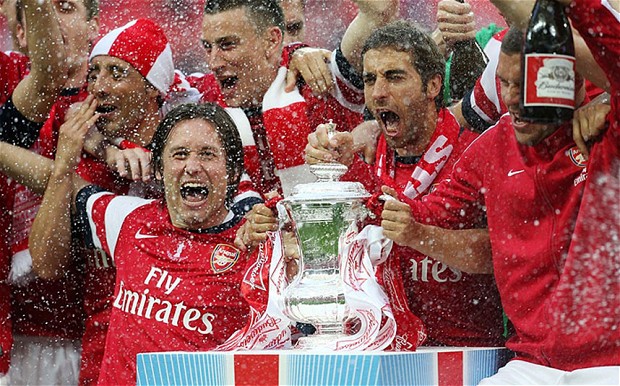
arsenal-facupEmirates is on the verge of signing a 3-year US$ 46 million deal with the English FA to sponsor the FA Cup from 2016. Last year, the airline decided not to renew its World Cup sponsorship with FIFA but has deals with several European teams such as Arsenal, AC Milan, Paris Saint-Germain and Real Madrid.

Emirates is planning to expand its cabin crew by a further 25% to 25k by the end of this year as it ratchets up the number of new aircraft to service its increasing route network. This year, the airline will see 15 new A380s which will bring its total number to 72, with a further 68 on order.

With the supply of hotel inventory at 6.9% being higher than the 4.5% March demand, occupancy rates faced another monthly fall of 2.2% to 85.7%. Other indicators – including average daily rate (US$ 267) and revenue per available room (down 8.1% to US$ 228) – headed south. The main drivers for this downturn are declining numbers of Russian tourists and an uplift in tourism in regional rivals such as Egypt and Lebanon. Overall, the outlook is still promising and 2014 did witness a 5.6% hike in guest numbers to 11.6 million and a 9.8% surge in revenue to US$ 6.5 billion.

M.State by Ocean Breeze is planning to build five villas, with a starting price of US$ 9.1 million on frond M of Palm Jumeirah. Each property will encompass 1.25k sq mt,  with at least five bedrooms and their own 28 mt beachfront.

Emaar announced that its first townhouse community sale of 118 units in Mohammed Bin Rashid City was sold out last Saturday – 25 April. Starting prices were listed at US$ 613k.

SKAI has upgraded its planned hotel by signing an agreement with Viceroy to run its Dubai Jumeirah Village property. The US$ 349 million 60-storey building will house a 221-key 5-star hotel, as well as 254 apartments and will open in 2018.

Bloom, a subsidiary of Abu Dhabi’s National Holding, has announced a 30-month project to build a 279-apartment residential tower in Dubai Marina. Work on the new Stella Maris will start next month. 

The Meraas Holding / Bulgari 101-key luxury hotel, being built on Jumeirah Bay Island, should be completed by 2017 – two years later than originally planned. The entire 158k sq mt project will also include 43 large villas, 165 apartments and a marina.

Emaar Malls Group recorded a 31.6% jump in Q1 profit to US$ 118 million, as revenue rose 21.5% to US$ 200 million.

Although Q1 revenue was up 3.2%, to US$ 831 million, du reported a 0.6% reduction in its profit to US$ 133 million, in the wake of higher royalty fees and a 0.9% fall in subscribers to 7.48 million. (This week the telecom operator sold mobile number – 052 222 2222 – to a Mohamed Hilal for US$ 2.2 million, with some of the proceeds going to charity).

DIFC Investments’ Q1 results were mixed with revenue up 22.0% to US$ 182 million but profits dropping 13.6% to US$ 176 million. The main reason for the fall was a 50% decrease in the fair value gain on investments to US$ 33.0 million.

Dubai Holding, a subsidiary of the Investment Corporation of Dubai, reported a US$ 654 million 2014 profit, as its net assets closed the year on US$ 4.55 billion. Another government-owned company, developer Nakheel, more than doubled its Q1 profit to US$ 368 million, as its retail and leasing businesses continued to grow as well as an increasing number of property handovers. At the end of 2014, the company had an outstanding US$ 1.2 billion trade creditor sukuk due for repayment in 2016.

Q1 saw DP World handling 15 million 20-foot equivalent units – a 4.4% quarterly increase and 7.7% year on year. This week, its shareholders approved a motion for the port operator to buy back a limited amount of its shares, although the company stated it had no immediate plans to proceed further with any such purchase. It is reported that DP World is planning a ten year bond up to a value of US$ 1 billion. As with other entities, the port operator seems to be taking advantage of the favourable rates currently at historically low levels.

In 1998, Dubai received 10k cruise visitors and the 2014 figure is over 500k, with an estimated 20% hike in numbers this year. The boom in this sector looks set to continue as the emirate enhances existing facilities.

HH Sheikh Mohammed bin Rashid Al Maktoum has endorsed the building of the US$ 136 million, 25k sq mt  Union Museum, to be built next to Union House – the location of the 1971 signing  of the country’s federation.

Q1 data from the Land Department indicates that property transactions, totalling 11.6k, were over US$ 17.4 billion. Yet again, Indian investors are the leading property buyers in the Dubai market, accounting for 4.8% of all Q1 transactions, totalling US$ 828 million, followed by Pakistanis and British on 2.9% and 2.2% respectively. Land transactions totalled US$ 14.2 billion, with commercial land accounting for US$ 8.2 billion. Over the quarter, there were US$ 3.0 billion of building transactions of which 76.3% (US$ 2.3 billion) related to housing and US$ 600k to commercial. The two most popular buying locations were Business Bay (1.2k transactions totalling US$ 501 million) and Dubai Marina (524 deals worth US$ 493 million).

The Dubai-based investment bank, Arqaam is raising further finance to expand its operations in Saudi Arabia and Africa. The institution has recently acquired several operations, including Bahrain asset manager Instrata Capital, Libya’s Al Rashad Finance and Management Advisory and Egyptian El Rashad Securities Brokerage.

David Haye has apparently had his passport retained by the police following a reported US$ 490k cheque being “referred to drawer”. The former British heavyweight is planning a boxing gym in Dubai and this payment relates to construction costs; he has put the problem down to a minor administration error.

In a bid to ensure that Dubai’s power generation will expand by 20% over the next five years, DEWA is planning to invest US$ 16.3 billion in major projects. Much of the development will be made through private-public partnerships.

A recent BCCI report indicated that the 2014 UAE GDP was some US$ 40 million better off because the IPL playing twenty games in the country. Some 250k spectators watched the game live, with millions viewing worldwide on TV.

A recent Reuters poll has reiterated that growth in the GCC will be lower than initially estimated in 2015 as a result of the fall in oil prices. Dubai’s forecasts for the next two years have been cut from 3.8% to 3.4% and 3.9% to 3.7% respectively.

The DFM was a major casualty of low trading on the local bourse in Q1 which saw net income sink from US$ 59 million to US$ 18 million, as revenue dropped 55.2% to US$ 31 million. Average daily trading was 64.4% down from US$ 463 million to US$ 165 million, mainly because of investor worries over low oil prices.

Following four consecutive weeks of healthy gains, the DFMI rose a further 5.5% to close this week on 4229. Over the month of April, the index has rocketed 20.3% from its 01 April opening of 3514. On Thursday, 30 April, 9.33 million shares were traded with a value of US$ 349 million. Bellwether stocks, Emaar Properties and Arabtec, rose by US$ 0.08 and US$ 0.04 to close the week on US$ 2.24 and US$ 0.81 respectively.

It may be that time of the economic cycle when some zany schemes are put forward. Polish architect, Krzysztof Kotala, has drawn up plans to build an underwater tennis centre in the Gulf. This comes hard on the heels of the Kleindienst Group’s plans to build 42 “floating seahorses” as part of Dubai the World. These 3-storey residences, to be located in The Heart of Europe islands, will have one floor submerged and the other two above the sea line and will cost over US$ 1.4 million. Another developer, the US-based Reef Worlds, has shown interest in constructing “sustainable underwater tourism sites” in the emirate.

The Abu Dhabi-based developer, Eagle Hills, led by Emaar’s Chairman, Mohammed Alabbar, has signed an agreement with the Serbian government to develop central Belgrade. The agreement sees the Abu Dhabi company investing US$ 163 million in share capital, a similar amount as an advance as well as a US$ 141 million loan. In return, it will own 68% of the 1.8 million sq mt development; the project will have 5.7 residential units, 8 hotels and a 140k sq mt shopping mall.

Apple reported impressive Q1 results as revenue jumped 27.0% to US$ 58.0 billion (as it sold 61.1 million iPhones) and profit spiked over 33.0% to US$ 13.6 billion. The technology giant had cash funds of US$ 195 billion. The only downside was the fact that sales of its iPad tablets, at 12.6 million units, were down 23.0% compared to Q1 2014. On the other hand, Samsung saw both its quarterly revenue and profit drop, with its bottom line disappointing analysts, down 40.0% to US$ 4.2 billion. Apple and Chinese competition, along with the appreciation in the South Korean won, were the main drivers behind this slump.

Electronics company, Panasonic returned a 49% increase in Q1 profit to US$ 1.5 billion, despite a marginal 0.3% fall in revenue to US$ 23.6 billion. The weaker yen is helping growth in Japanese exports. One Japanese company that will have its first loss ever will be Asia’s biggest drugmaker. Takeda have agreed to pay US$ 2.4 billion to settle thousands of US lawsuits over claims that it tried to hide cancer risks associated with its diabetes drug Actos.

Chinese authorities will have to introduce measures to stimulate its economy following a surprise slump in March. Latest data indicates that export sales fell by 15.0% whilst imports, down 12.7%, indicate both continuing weakness in domestic demand and that the expected 7.0% growth forecast may not be reached this year. The contagion impact – both regionally and globally – remains to be seen.

It is not all bad news out of China – the country is, after Spain’s 2.51 million acres, the second largest wine growing area at 1.97 million acres. It is estimated that the global trade in wine is US$ 28.6 billion and China expects to take more of the market in the coming years. 

Australia’s terms of trade continue to disappoint the market, down 9.5% for the 12 months ending March. There has been no improvement in this indicator for more than two years.   

US Q1 GDP grew at a meagre 0.2% (down from 2.2% the previous quarter) with authorities still pointing to harsh weather conditions as the prime mover for this unexpected slowdown. The strong greenback and labour disputes on the West Coast added to the country’s economic woes. This has reduced the possibility of any Fed interest rate hike until at least September

Germany’s largest bank, Deutsche Bank, has settled a transatlantic rate-rigging scandal by agreeing to pay a total of US$ 2.5 billion, of which US$ 340 million will be paid to the UK’s FCA and the balance to US authorities. Amazingly, the bank qualified for a 30% reduction for settling the case early.

Barclays has provided a further US$ 1.2 billion to cover the costs relating to forex charges, which now stands at over US$ 3 billion, as well as a further US$ 225 million to cover claims in its payment protection insurance (PPI) mis-selling. Meanwhile RBS has already incurred US$ 5.7 billion to settle allegations of currency rigging as the bank reported a Q1 loss of US$ 675 million, compared to a US$ 1.8 billion profit a year earlier.

Standard & Poor’s has estimated that the four major UK banks – Barclays, HSBC, Lloyds and RBS – have incurred costs of US$ 63 billion over the past five years in relation to conduct and litigation charges. The PPI scandal costs have already reached US$ 39 billion, whilst currency market manipulation and money laundering will add to the banks’ woes. The ratings agency reckons that the banks will incur further charges of US$ 30 billion over the next two years.  The cosy relations between governments and major financial institutions has become an epidemic and take care when either a politician or bankers asks Would I Lie To You?

Posted in Finance | Tagged , , , , , , , , , , , , | Leave a comment

Things Can Only Get Better!

blackpoolfcEmirates is reportedly looking at ordering a further 200 neo Airbus 380s but is still awaiting further information from the European plane maker on enhancement details. Last week, the airline confirmed the US$ 9.2 billion Rolls Royce order to supply engines for fifty of these aircraft (along with service and maintenance) – at the expense of the existing JV of GE and Pratt & Whitney. Emirates is still mulling over an order for between 50 – 70 A350s or 787s.

Reel Cinemas will open a 2-storey, 76k sq ft entertainment centre in Nakheel’s upcoming Al Khail Avenue development, located adjacent to Jumeirah Village Triangle. The facility will host 14 theatres with a combined total of 1.5k seats. The Nakheel development will include 1.25 million sq ft of retail space, 50% of which has already been taken up by tenants.

On Saturday, Emaar – in a JV with Meraas Holding – will launch the sale of 118 Maple townhouses, its first such community in Dubai Hills Estate, located in Mohammed Bin Rashid City.  Meanwhile its Egyptian arm, Emaar Misr, recorded a 562% jump in Q1 profits to US$ 23 million, as revenue rose 110% to US$ 99 million. The Cairo-listed company has an estimated portfolio of investments, totalling US$ 6.95 billion.

The InterContinental Group has signed a agreement with Sunflower to manage a 285-key Hotel Indigo in Business Bay. The boutique hotel, due to open in 2017, will be InterCon’s 19th Dubai property but the first for both the Indigo brand and Sunflower in the emirate.

Government-owned Meraas Holding has awarded a US$ 406 million contract to the UK’s Dutco Balfour Beatty for its Marsa Al Seef development on Dubai Creek. The mixed use project will cover 670 metres of the creek and will include several hotels, along with retail and dining outlets.

Al Mazaya is the latest developer that sees a booming market in the affordable housing sector. The company is launching a US$ 708 million development in Liwan, Dubailand, with studio apartments starting at US$ 95k. The so-called Q Line project will comprise 500 units, housed in four towers and will be completed by 2017.

Arabtec is seeking out finance options in relation to the US$ 36.7 billion development for 1 million housing units in Egypt. Phase 1 will involve the construction of 100k residences.

Dubai-based Habtoor Leighton Group has won a US$ 95 million contract to build the 112-key Saraya Bandar Jissah hotel in Oman, to be managed by Jumeirah Group. Completion is expected within two years.

Another week sees another two housing reports. Surprisingly, the expected fall in rentals did not materialise in Q1 with the largest quarter on quarter increase of 15.3% recorded for studios. Bayut reports that Dubai apartment prices rose by up to 5.8% (to an average US$ 58.6k) in Q1 but that with 25k new properties entering the market this year, there will be the inevitable downward pressure on rents.

Q1 reporting season has started in earnest with five of the heavyweights reporting impressive results. Dubai’s largest financial institution, Emirates NBD (55.6% owned by the Investment Corporation of Dubai), posted a 60.6% hike in quarterly profits to US$ 455 million. Etisalat recorded a 7.6% rise in net profit to US$ 594 million, as revenue grew by 30.3% to US$ 3.52 billion. Dubai’s third largest bank, Mashreq posted a 13.2% jump in Q1 profits to US$ 177 million. Aramex reported a 9% rise in Q1 revenue to US$ 253 million, as its net profit jumped 10.0% to US$ 24 million. Commercial Bank of Dubai returned a 3.6% hike in Q1 profit to US$ 80 million, as operating income rose 9.7% to US$ 158 million.

Despite Damac’s Q1 profit dropping 38.1% to US$ 216 million, revenue was well up to US$ 488 million. Last year the developer benefitted from a one-off credit gain and if this is taken out, its Q1 profit would have been 3% higher than the corresponding 2014 figure.

Although Dubai Aerospace Enterprise saw only a marginal increase in Q1 revenue to US$ 2.11 billion, its bottom line surged 42.9% to US$ 160 million. The government-owned aircraft maintenance and leasing company employs 3.5k and has a portfolio net value of US$ 3.65 billion, with an order for 40 new ATR-600 aircraft.

Last year, BMW recorded a 23% hike in ME luxury car sales and Q1 continues with a  positive 11% rise, as 8.3k vehicles were traded. The UAE remains its largest market with 58% of its total ME sales of which Abu Dhabi accounts for 3.4k units and Dubai 1.4k.

Dubai World Trade Centre is planning to increase its footprint by 14.5% to 122k sq mt. Construction on the three new halls and a 300 car park area will commence shortly and completion is expected within a year.

Sheikh Mohammed bin Rashid Al Maktoum has introduced a new law controlling charity collections and fund raising. In future, prior written approval has to be attained from the Islamic Affairs and Charitable Activities Department and violation penalties include a jail term of two months to one year and fines of between US$1.4k to US$ 27.2k.

Siemens has won a 3-year, US$ 400 million DEWA contract to expand Jebel Ali’s M-Station power plant by 34% to 2.76k MW. The original power and desalination plant, the largest in the emirate, cost US$ 2.72 billion.

The UAE Energy Minister, HE Suhail bin Mohammed Faraj Faris Al Mazrouei, has confirmed that the country is planning to raise oil production to 3.5 million bpd over the next two years, along with a 55% increase in local refining capacity to 1.1 million bpd. Interestingly, the UAE holds 4% of the global oil reserves and 3.5% of global gas. The country’s future demand for energy is expected to increase by 9% per annum, in line with growth forecasts.

The latest World Trade Organisation’s Report confirms UAE’s ranking as the 16th top global exporter, as well as being the leading MENA merchandise exporter at US$ 359 billion, accounting for 1.9% of all world trade. In relation to import services, it ranks at 19th at US$ 72 billion, equivalent to 1.5% of all global imports of services.

Noor Bank, whose shareholders include Dubai Holding and the Investment Corporation of Dubai, has joined a growing list of Dubai entities tapping into the sukuk market. Its first foray into the sector sees a 5-year US$ 500 million issue, priced at a spread rate of 130bp.

Dubai-listed retailer, Marka has acquired a 60% share in Cheeky Monkeys Playland and Sweet Surprises for a reported US$ 8 million. Late last year, it had also spent US$ 60 million on the purchase of Retailcorp from the government-owned Istithmar.

Following three consecutive weeks of healthy gains of 6.1%, 4.0% and 8.7%, the DFMI still managed a marginal 8 point rise to close this week on 4088. However bellwether stocks, Emaar Properties and Arabtec, were down by 2.7% and 3.7% (US$ 0.06 and US$ 0.03) to close the week on US$ 2.16 and US$ 0.77 respectively.

One casualty of the low oil prices is the huge reduction in the ME mergers and acquisitions sector which fell over 71.8% to its lowest quarterly levels in three years. Qatar accounted for 83.3% in value, amounting to US$ 1.5 billion, of activity, all related to the recent Orascom Construction demerger. Qatar also dominated this sector, outside of the ME, with two deals valued at US$ 1.9 billion accounting for 46.4% of total investment.

UK high frequency trader, Navinder Singh Sarao, has been arrested in connection with his role in the now infamous 06 May 2010 “flash crash”, which saw US equities lose over 400 points – and almost US$ 1 trillion – for a matter of minutes. US authorities want him extradited for wire fraud, commodities fraud and market manipulation and his misuse of automated computer software to influence prices.

After five years, the EU has finally lodged a statement of objections against Google on the grounds of market manipulation over the use of its Android mobile platform. It seems that the Competition Commissioner, Margrethe Vestager, has no issue with Google’s dominance in the sector but the way its puts its own products, ahead of competitors, when its search engine is being used.

The UK’s biggest retailer, Tesco, has joined the likes of Cable & Wireless, Lloyds Banking Group, RBS and Vodafone as recording the fifth biggest loss in UK corporate history. The company, founded in 1919, recorded a massive deficit of US$ 9.5 billion largely because of a US$ 10.4 billion write down of the supermarket’s value. Its actual trading profit was down 57.6% to US$ 2.0 billion.

There are reports that the UK’s biggest – and until recently its most successful – payday lender, Wonga is heading for an annual loss of US$ 51 million as its revenue nosedives 31.7% to US$ 312 million. Last year, it had to pay US$ 3.7 million in compensation to 45k customers for sending out demand letters from non-existent law firms and it has made a US$ 29 million provision to cover future legal costs. The company – like the other estimated 400 payday lenders in the country – is facing difficult times, as new legislation has seen an official price cap on loan and repayment charges. Like the two football clubs it sponsors, Blackpool and Newcastle United, it could be on its way down.

Russia recorded its first quarterly contraction in six years as the economy shrank 2.0%, mainly as the result of the international sanctions. Prime Minister Dmitry Medvedev estimated that that they were responsible for the GDP falling 1.5% and a loss of US$ 26.7 billion in potential exports.

There was some good news out of Tokyo this week with Japan recording its first trade surplus – US$ 1.9 billion – in three years, as exports rose 8.5% and imports fell 14.5%. Despite this good news – largely as a result of a weak yen and cheap oil – the annual overall trade deficit came in at US$ 7.6 billion.

On Friday, Greece could default on its loans which could see the country edge closer to leaving the eurozone. Over the next three weeks, it needs to find money to cover interest payments of US$ 85 million (ECB), US$ 213 million (IMF – 01 May) and US$ 810 million (IMF – 12 May). If Friday’s negotiations are successful then Greece could receive an interim US$ 7.7 billion pay-out – if not then the country has finally run out of cash and time. There will be then a massive run on the banking system, an immediate devaluation, double digit inflation and the reintroduction of the drachma. Then watch out for the Russians and / or Chinese entering with so-called international aid (and possible contagion in other Mediterranean countries). Maybe then for Greece, Things Can Only Better!

Posted in Finance | Tagged , , , , , , , , , , , , , , | Leave a comment

Free Fallin’

tiger-woods-dubaiTomorrow (Friday), Emirates will award a massive engine order for fifty of its Airbus 380s to Rolls Royce, in a deal estimated to be worth in the region of US$ 9.2 billion. That being the case, it will be a massive blow to its current supplier, GE-Pratt Whitney, whose GP7200s are to be found on all its 59 380s currently in use.

HH Sheikh Mohammed bin Rashid Al Maktoum has approved the 2020 Masar Project – an expansion of the Red Line to link with the 2020 Expo site. Starting from the Harbour & Tower terminus, seven new stations and 15km of track, 4km of which will be underground, will be added.

Arabtec will be looking for a new chairman since the current incumbent, Khadem Al Qubaisi, has not been listed on board nominees for upcoming shareholders’ approval. Also missing from the listing is Riad Kamal who founded the company forty years ago and who had resigned as chief executive in February 2013.

Any confusion relating to the future of Mohammed Alabbar’s position as chairman of Emaar Properties was laid to rest as he was re-elected at this week’s AGM. There had been concern that his non-executive positionss with other companies such as Capital City Partners, Eagle Hills and Tradewinds Corporation could be an obstacle to his carrying out his Emaar role. He did disclose that the company had a 235 million sq mt land bank – more than enough for development “for decades to come”. The AGM also approved a US$ 292 million interim dividend payment equivalent to US$ 0.041 per share.

A surprising revelation from Nakheel was that 7.8% of the 9k homes it has built in Dubai have not been claimed by their owners and the government developer has no idea of their current whereabouts.

As already announced, Nakheel is planning to extend the largest overseas Chinese trading hub outside of its mainland. Dragon City will see an expansion, comprising 2.2 million sq ft of retail, 1.3 million sq ft of commercial, 1,120 residential units and a 250-key hotel. On completion, the development will cover an area in excess of 11 million sq ft.

Saudi company, Binladin Contracting Group has been awarded the deep service contract for the Town Square project, including the recently launched Zahra and Hayat Townhouse developments. Nshama is the developer of the mega project encompassing 750 acres, including a 2.5 million sq ft retail area for 600 shops. Meanwhile Al Naboodah Contracting has won a US$ 6.0 million contract for grading works covering the whole project.

Despite marginal Q1 falls in villa prices (1%) and apartments (2%), JLL is still predicting a 10% drop for the year. According to the property company, only 730 residential units were delivered in Q1 with a further 22k due over the next nine months to bring Dubai’s total residential inventory to 401k The office sector is still a problem although vacancy rates fell 3% to 23% in prime locations, as year-on-year rents rose 1% to US$ 512 per sq mt.

LuxHabitat estimates that almost 20% of Dubai’s upmarket residences are normally vacant as overseas owners only use them for holiday homes or just as investment vehicles.

Mövenpick plan to increase its Dubai portfolio to eight with this week’s announcement of a 251-room property in Dubai Media City, following an earlier report of a 246-key hotel in Downtown; both are due to open in 2017.

Almost seven years after receiving payments of US$ 55 million for a golf course that did not materialise, Tiger Woods has reportedly designed a new course at the same location. Damac is developing the Trump World Golf Club which will be the focal point of its 1.5k home-Akoya Oxygen project. The golfer’s design plans will be released in Q2, once tenders have been issued.

A new law will ensure that all found property must be handed in to police within 48 hours – and that finders will be entitled to the lower of US$ 13.6k or 10% of the value of the property.

Another law saw the establishment of the Mohammed bin Rashid Fund for SMEs, with assets totalling US$ 163 million. Two types of funding will be made to Emirati entrepreneurs between the ages of 21 – 65. The Seed Capital Loan will allow direct payments of between US$ 13.6k – US$ 136k whilst the Credit Scheme Loan acts as a guarantor for both start-ups and existing businesses requiring between US$ 136k and US$ 1.36 million. 

The UAE Ministry of Labour reported that the country’s 2014 employment rate rose by about 10% to 4.4 million. Of that total, labourers accounted for 34.0% (1.5 million), the business sector 23.8% (1.05 million) and industry 11.3% (500k). Last year, 1.21 million work permits were issued and 821k terminated. 

Dubai’s inflation rate fell again in March to 4.0%, as a result of the strong greenback and lower global food prices which are at their lowest level in five years. Housing costs – at 7.5% higher than a year ago – are set to fall in 2015 which will see an inevitable dip in the emirate’s inflation but the same cannot be assumed for education expenses and their impact in 2015 remains to be seen.

Although no revenue figures were available, Deyaar Development recorded a 6.0% rise in Q1 profit to US$ 15 million.

Tecom Investments, a unit of Dubai Holding, has closed a US$ 1.09 billion eight-year loan facility. The business park operator will use the funds for general corporate requirements and new developments.

The Investment Corporation of Dubai is back buying hotels with the recent purchase of the W Hotel in Washington DC, a majority stake in New York’s Mandarin Hotel and a minority share in the One & Only in Cape Town.

According to CBRE, the ME sovereign wealth funds cut their 2014 overseas real estate  investment by 33.0%, to US$ 5.84 billion, with the two main drivers being lower oil prices and property becoming over expensive in certain prime locations. Overall investment from all sources fell to US$ 14.1 billion with Qatar (US$ 4.87 billion – 34.5%), Saudi Arabia (US$ 2.30 billion – 16.3%) and UAE (US$ 1.63 billion – 11.6%) accounting for 62.4% of total ME investment. London, Paris and New York were the favoured locations with investments of US$ 4.42 billion, US$ 2.22 billion and US$ 1.35 billion respectively.  (Abu Dhabi holds the second largest SWF, with a value of US$ 771 billion, behind the US$ 817 billion held by the Norwegian Government Pension Fund).

Having already signed agreements, in Australia, Kenya, Singapore and the Southern District of New York, with their respective courts on mutual enforcement of legal decisions, the Dubai International Financial Centre is hoping for a similar Chinese deal.

The Dubai Financial Services Authority slapped a US$ 8.4 million fine on the local branch of Deutsche Bank AG for serious infringements. These included misleading the Authority and failures in internal control procedures.

Qatar has beaten Dubai to become the first ME country to host a yuan clearing and settlement facility in a recent deal with the People’s Bank of China. As 2015 trade with China is set to hit US$ 60 billion, it is inevitable that the UAE will soon follow suit with the DIFC opening a similar set-up with its biggest trading partner.

An agreement between Dubai’s Abraaj Group and Saudi’s TPG sees the two equity houses take a majority shareholding in Kudu, one of he Kingdom’s leading fast food chains. No financial details were made available.

Amlak shareholders have approved a plan for the Dubai-based sharia compliant mortgage lender to re-join the DFMI, six years after its delisting. Last August, the company – 45% owned by Emaar Properties – restructured its outstanding liabilities of US$ 2.7 billion.

Having gained 6.1% and 4.0% over the previous two weeks, the DFMI started trade on Sunday at 3774 and jumped an impressive 8.7% to close at 4080 on Thursday – up 8.11% on its January opening of 3774. Bellwether stocks, Emaar Properties and Arabtec, both rocketed by over 14% (US$ 0.27 and US$ 0.10) to close the week on US$ 2.22 and US$ 0.80 respectively. The last day’s trading saw volumes at 123.4 million shares, valued at US$ 583 million. 

As Nokia looks certain to acquire Alcatel-Lucent for more than US$ 13 billion, it was no surprise to see shares in the French telecommunications equipment maker fall 8.3% as its Finnish rival’s share price initially jumped more than 18%. If the purchase goes through, the new entity will overtake both Ericsson and Huawei as the biggest global player in the sector. 

The IMF has cut UAE’s 2015 growth forecast to 3.5% citing the main cause of the dramatic fall in oil prices since its last October report. Other factors include the weakening eurozone and political uncertainty in the region. Allied to this is the World Trade Organisation reducing its global trade growth from 4.0% to 3.3% which will again impact on the UAE’s economic performance. It is perhaps significant that this figure is only the second time since WW2 that growth has been so weak; the other time was between 1980 – 1984.

It seems that a US$ 20 billion bilateral oil for goods agreement will mean 500k bpd of Iranian oil being traded for Russian grain, equipment and construction materials. A more significant deal is on the cards after President Putin lifted a self-imposed 2010 ban on the delivery of a S-300 anti-missile rocket system to Iran and this could put Russia in pole position when international sanctions are lifted. 

More worrying economic data from China as March exports dropped by 15%, with import shipments at their lowest level in six years – and 12.7% down on the corresponding 2014 return. As global and domestic demand continues at a sluggish pace, the short-term outlook for the Chinese economy does not augur well.

Iron ore is probably the biggest loser as the result of the Chinese slowdown. S&P has slashed its 2015 price forecast by 30.8% to US$ 45 as the metal’s price has slumped 60% over the past twelve months.. Prices have not been helped by the fact that the world’s four biggest producers – BHP Billiton, Fortescue, Rio Tinto and Vale – continue to increase production to maintain export share.  Australia, for one, is hoping that prices do not keep on Free Fallin’!

Posted in Finance | Tagged , , , , , , , , , , , , , , , | Leave a comment