Don’t Ask Me Why

greece-nazi-germansHH Sheikh Mohammed bin Rashid Al Maktoum made a visit to Nakheel offices this week and was updated on their future developments. Over the next three years, the company expects to spend US$ 3.8 billion on various projects, including the massive 9 million sq ft Deira Boulevard, which will have 3k retail outlets, 2.5k apartments, hotels and a 500 mt long glass dome. The developer anticipates to hand over 1.2k villas this year with a 32.1% increase in the value of new construction contracts to US$ 1.91 billion.

Currently home to three hotels, Dubai Investment Park announced that another eight properties will be added over the next five years in the run-up to Expo 2020. Three of these will include a Premier Inn (303 rooms), Armada Hotel (252) and Courtyard by Marriott (165), as the number of total rooms will increase by 2k. Estimates are that Dubai will require a further 45k rooms, with a US$ 7 billion investment, to meet the Expo demand.

Nshama has launched Zahra apartments with a starting price of just US$ 95k. Phase 1 will see 306 apartments being built on the 750 acre site close to Town Square, near to Al Barsha, which itself will house 18k apartments.

The UAE has become the latest country to join the Asian Infrastructure Investment Bank as one of the 35 founding members. The new financial institution, instigated by China as a potential rival to the World Bank, has a US$ 50 billion capital. Initially, the bank will fund infrastructure projects in Asia and will foster regional and international collaboration to support developing countries.

It is reported that HH Sheikh Mohammed bin Rashid Al Maktoum is planning to build a US$ 30 million car park, adjacent to the Battersea heliport in London.

Later in the month, the DIFC Wills and Probate Registry will become reality. This will allow expats, with assets in Dubai, to register their wills, in English, which will ensure that their final wishes are carried out, thus finally creating legal certainty. Initially, the charges for this new service will be in the region of US$ 2.7k.

Damac has opened two more properties in Downtown – Damac Maison The Vogue and NAIA Breeze – adding 500 rooms to their portfolio in this location. The company has a further 10k hotel rooms and serviced hotel apartments under development.

Habtoor Leighton won a US$ 608 million Qatar contract to build five reservoirs and pumping stations as part of a mega project. This was the 7th project awarded to the Dubai-based company by that country’s Electricity and Water Authority. HLG is 55% owned by the Al Habtoor Group and 45% by the Australian Leighton Contractors (which has just sold its John Holland Group to China Communications Construction Group for a reported US$ 879 million).

Speculation seems to be mounting over the future of Mohamed Alabbar’s position with Emaar Misr, an offshoot of Emaar Properties. He has run the Dubai property developer since its 1997 inception but his other commitments include being a founding member of Capital City Partners who have just won a US$ 45 billion contract to help in building a new city in Cairo.

Recently, there have been major local staff changes at Standard Chartered with the latest being the surprise resignations of its MD, Bejan Roohi, and UAE chief executive, Mohsin Nathani, along with several senior staff. The bank upset many of its SME clients last October by unilaterally closing thousands of company accounts, with little notice.

The UAE has become the latest country to join the Asian Infrastructure Investment Bank as one of the 35 founding members. The new financial institution, instigated by China as a potential rival to the World Bank, has a US$ 50 billion capital. Initially, the bank will fund infrastructure projects in Asia and will foster regional and international collaboration to support developing countries.

Despite the savage cuts in oil prices, the UAE economy continues to show robust signs of growth as March’s HSBC Purchasing Managers Index maintains a level of 56.3 – a score above 50 indicates a net expansion in economic activity. Although the IMF has cut its growth forecast for the country to 3.5%, the dirham – being pegged to the greenback – has risen some 20% over a basket of major global currencies. Furthermore as inflation slows, costs have gone down.

Dubai-based Pacific Control Systems has taken out a six-year US$ 272 million loan facility to finance further expansion activities.

Having gained 6.1% the previous week, the DFMI started the week trading on Sunday at 3615 and jumped a further 4.0% to close at 3761 on Wednesday, and only 0.03% lower than its January opening of 3774. Bellwether stocks, Emaar Properties and Arabtec, were both up – by US$ 0.04 – to US$ 1.96 and US$ 0.70 respectively.

Two years after UPS pulled out of a US$ 5.8 billion bid for TNT, rival logistics firm FedEx is scheduled to bid US$ 4.4 billion for the Dutch outfit, valuing it at a premium of 33% of its share price of US$ 8.80. Last year TNT reported a loss of US$ 215 million, as its revenue fell 3.2% to US$ 7.2 billion.

Samsung recorded a Q1 revenue of US$ 43.3 billion and a profit of US$ 5.44 billion – 30% down on the corresponding 2014 period. The Korean conglomerate has been struggling to compete with Apple and other Chinese rivals.

Inflation is getting worse in Russia as March data indicates a 16.9% rate, as growth may contract by around 4% this year. Last month, the Central Bank cut rates by 1% to 14.0%, with the rouble strengthening to around the 56 mark to the US$.

Corruption charges against former President Mahinda Rajapaksa continue unabated. The latest involves the 95% government-owned Sri Lankan Airlines, where an enquiry has alleged irregularities in the US$ 2.3  billion purchase of ten aircraft with the former chairman, Nishantha Wickramasinghe, being accused of a “gross abuse of power”; he is the ex-president’s brother-in-law.

A KPMG study has estimated that five banks – Barclays, HSBC, Lloyds, RBS and Standard Chartered – have incurred penalties equivalent to 60% of their total profits over the past three years! This equates to almost US$ 58.0 billion paid out in fines and remedying customer complaints.

Following the near collapse of its banking sector in March 2013, Cyprus became the only eurozone country to introduce capital controls, which have now been lifted. At the time, the country received bailout funds of US$ 11 billion. The divided island lost US$ 4.8 billion – or 25% of its GDP – because of its exposure to Greek government bonds.

In another twist in the on-going row between the Greeks and Germans, the Syriza government is claiming US$ 303 billion, in compensation for wartime occupation and looting by the Nazis during WW2. With no hope that the Merkel administration agreeing to these demands, it seems that Prime Minister Alexis Tsipras will have to explore other avenues to settle his country’s US$ 407 billion outstanding debt.

Following the near collapse of its banking sector in March 2013, Cyprus became the only eurozone country to introduce capital controls, which have now been lifted. At the time, the country received bailout funds of US$ 11 billion. The divided island lost US$ 4.8 billion – or 25% of its GDP – because of its exposure to Greek government bonds.

The UK has introduced the Diverted Profits Tax aimed at companies, like Amazon, Apple, Facebook and Google, who have used ingenious methods to reduce their tax liability. In 2013, these four companies paid a combined UK tax of US$ 48 million on revenue of US$ 25.2 billion. The new levy will see a 25% charge on profits seen to be siphoned off overseas.

In the late 1960s, the then president of Ford, Lee Iacocca, was responsible for the fast tracking of its Pinto model that was known to have safety design problems. The end result was that between 1971 – 1978, there were several fatal accidents that could have been avoided if the required petrol tank modification had been carried out. In 1978, Iacocca was ousted from Ford and joined Chrysler. Nearly 40 years later, the family of a 4 year old boy has been awarded US$ 150 million following his death in a Chrysler Jeep following the rupture of its rear fuel tank. The jury indicted the company for not warning its customers that the tank’s position increased the chance of a fire risk. History should have taught the automaker a lesson but it apparently did not – Don’t Ask Me Why.
Posted in Finance | Tagged , , , , , , , , , , , , , | Leave a comment

No Shelter From The Storm

dubai-sandA recent bullish report by the influential Oxford Business Group indicates that Dubai is set for steady growth over the next two years. The study Indicated that investment in five sectors – capital markets, maritime, transport, real estate and retail – will be the main drivers as the emirate moves into a new growth phase. Investor interest will be further strengthened as Dubai plans to introduce PPP (public private partnerships) in many areas.

As usual, there are conflicting reports on the state of the local real estate sector.  Most agree that prices are falling but it is difficult to ascertain by how much and impossible to estimate for how long. The reality is that there is not enough stock coming online to meet current demand and it will be at least another 18 months before any sort of equilibrium is reached. The market will soften over the summer months but will return to normality in Q4 – unless external factors dictate otherwise. 

Having stopped building at the height of the 2008 property crash, Tanmiyat Global has announced that all 500 villas and 67% of the units in its 12 apartment towers have been sold. The US$ 1.9 billion, 14.4 million sq ft, Living Legends development will see 150 villas handed over in Q4 whilst the balance, as well as a 9-hole golf course, hotel, schools and shopping mall, will be added later.

The Cayan Group and Shuaa Capital have tied up to establish a US$ 272 million fund to develop a residential and hotel apartment project on Umm Suqeim Road, due for completion within three years. The Saudi developer, who built the world’s tallest twisted building, the 307 mt Cayan Tower in JBR, will be the main developer whilst the Dubai-based Shuaa will act as investment manager.

The hospitality returns continued to soften into February with falls in room yields (1.3%), yields (5.6%) and occupancy (2.3%), as average room rates stood at US$ 275. Dubai currently has an inventory of 64.2k rooms with an expected 42% increase to 91.2k over the next four years.

Indian hotels are beginning to regain their feel for the Dubai market. The Taj opened its second hotel – a 296-key property in Deira – 14 years after opening here. Mumbai-based Hiranandani Group is planning a 2017 opening for an Accor hotel in Business Bay whilst Suba opened a 4-star property in Deira last year and expects to open a second near the new airport. Interestingly, 809k Indians make up the largest nationality group passing through Dubai International, and the emirate’s second largest source market for visitors.

Emaar has a Saturday sales launch for Downtown Views – a 55-story tower – comprising 418 apartments. The development will be connected, by a travellator, with Dubai Mall and the Metro. 

This week saw the Al Barari launch of The Nest – a 99 villa project. Prices for the four-bedroom residences will start at US$ 2.1 million and will probably be that estate’s final residences to be built.

Dubai Properties announced that all 120 4-bedroom townhouses in its Mudon development have been sold. Hand-overs for phase 1, the 72-townhouse Al Salam, and phase 2, Al Nassem with 112 units, started in January.

Al Shafar General Contracting Co has won a US$ 133 million contract to build Dubai’s Union Museum.

Arabtec has confirmed that a deal has now been reached with Egyptian authorities to start work on the US$ 40 billion project to construct one million homes. Phase 1 will see 100k units being built in Badr and Obour on the outskirts of Cairo.

Union Properties is looking at a US$ 191 million local bank facility to finance upcoming projects.

MAF has announced that it plans to expand its Carrefour outlets into Africa. The Dubai-based conglomerate will open a supermarket in Nairobi in Q4 and expects to double the number of stores over the next five years. The company will soon be opening its Mall of Egypt – covering 163 sq mt, with 400 shops. On the local front, MAF estimates that it has 24% of the 3 million sq ft of planned retail currently in the Dubai pipeline and, this week, announced a Carrefour hypermarket for Dubailand.

A lot of money has been spent on upgrading Dubai International. The new US$ 517 million Concourse D, due to open in Q3, will manage 100 airlines that presently use Concourse C. The facility, with 21 contact and 4 remote stands, will also feature open gates which will allow passengers to board directly from the waiting areas. A further US$ 490 million is being spent on refurbishing Terminal 1 whilst upgrading Terminal 2 will cost US$ 163 million.

Meanwhile Dubai International reported a 5.3% increase in February’s passenger traffic to 5.97 million, despite a marked 35.6% reduction in numbers from Russia and the CIS states. Cargo traffic increased by 1.2% to 191k tonnes, with much of this freight being moved to the new Dubai World Central.

The Canadian Fairview Container Terminal in British Columbia has been bought by DP World for US$ 457 million and will become the Dubai port operator’s second operation in that country, following the Centrem Terminal in Vancouver.

It is reported that there is a new chairman at Drydocks World with the DG of Dubai’s Department of Finance, Abdulrahman Al Saleh, taking over from Khamis Buamim, who had been in the post for nearly five years.

The London Sunday Times reports that Rory Mcllroy has left Monaco to become a Dubai resident. It appears that he will live on Palm Jumeirah but will still pay 12.5% Irish corporate tax on his royalty payments, whilst other income could become tax free.

Lionsgate, responsible for The Hunger Games franchise, has teamed up with Dubai Parks and Resorts to open a dedicated zone at the upcoming motiongate theme park. Opening in Q4 2016, it will feature both related theme park attractions and retail and will form part of the 25 million sq ft, US$ 2.86 billion project.

The Dubai Investment Development Agency reported that 2014 foreign direct investment into the emirate stood at US$ 7.8 billion. 83.6% of business, totalling US$ 6.5 billion, emanated from six countries – US, UK, India, Netherlands, Germany and Italy. Real estate, financial services, hotels and tourism, alternative/renewable energy, business services and IT services accounted for 76.9% – US$ 6.0 billion – of the total.

It seems that plans to allow 100% foreign investment in certain sectors for on-shore companies are progressing. Currently the law is that at least 51% of the shareholding in a limited liability company has to be held by a local, whilst off-shore companies are allowed 100% foreign ownership.

VAT could be a step closer for Dubai and GCC residents as authorities have agreed a general framework for its introduction which will be on the May agenda of a meeting of Ministers of Finance and Economy. The possible rate has yet to be finalised but could be around 5%.

A survey by TNS, the largest global custom market research entity, concluded what the majority of customers already know – there has been a weakening in banks’ client dealings. It concluded that customer expectations were not being met and they are reluctant to recommend any banks. Perhaps these financial institutions could pay their junior staff more and spend some of their profits on proper training.

The Commercial Bank of Dubai is spending US$ 817 million buying UAE company loans from the Royal Bank of Scotland. This comes as the 79% UK-government owned bank is moving out of the MENA region to focus more on its domestic market.

Credit Suisse has amended its grading for UAE equity markets from neutral to overweight. The banks’ analysts indicated that shares’ annual forward earnings estimates were discounted 35%, compared to the MSCI World Index.

Dubai Islamic Bank, 86.5% owners of Tamweel, has made a US$ 0.34 per share offer to buy the remaining balance. With the realty sector continuing to weaken, the bank may be regretting not buying these two years ago when it acquired the majority shareholding in the Sharia-compliant mortgage lender.

The DFMI started the week trading on Sunday at 3407 and, after a slow start, jumped 6.1% to close at 3615 on Thursday, but still 4.2% lower than its January opening of 3774. Bellwether stocks, Emaar Properties and Arabtec, were both up – by US$ 0.17 and US$ 0.06 – to US$ 1.92 and US$ 0.66 respectively. On Thursday, 565.3 million shares, valued at US$ 228.7 million, were traded.

Many of the Q1 indicators were down on their January opening, with, among commodities, only cotton and silver heading north whilst the London and Sydney bourses did likewise.


Curr

Unit

01 Jan 15

01 Jan 14

%age


31 Mar 15

%age


2014


2015

Iron Ore


US$

lb

73

135

-45.93%


63

-8.63%

Rouble


US$


0.017

0.030

-43.33%


0.017

0%

Oil – Brent


US$

Barrel

57.33

102.5

-44.07%


54.93

-4.19%

Coffee


US$

lb

161

260

-38.08%


134

-16.77%

Cotton


US$

lb

62

86

-27.91%


83

33.87%

Silver


US$

oz

15.77

20.15

-21.74%


16.62

5.39%

Copper


US$

lb

2.88

3.37

-14.54%


2.75

-4.51%

AUD


US$


0.81

0.89

-8.99%


0.76

-6.17%

GBP


US$


1.53

1.64

-6.71%


1.48

-3.27%

Euro


US$


1.21

1.38

-8.77%


1.08

-10.74%

Gold


US$

oz

1,186

1,236

-4.05%


1,182

-0.34%

FTSE 100


6548

6730

-2.70%


6772

3.40%


CS1300


3532

2291

54.17%


3480

-1.47%

S&P 500


2091

1831

14.20%


1990

-4.83%

DFMI


3774

3370

11.99%


3600

-4.61%

ASX All Ord


5415

5352

1.18%


5450

0.06%

The top 200 Australian companies saw their H1 profits (to December 2014) sink 26.0% to US$ 19.5 billion as revenues nudged 0.2% higher to US$ 226.6 billion. The February inflation rate of 1.5% is well down on the RBA’s target of 2% – 3%, as the economy remains sluggish, despite the housing bubble.

As some commodity prices slump to new record lows, it will be no surprise to see Australian interest rates cut 25bp to 2.0% sometime in April. Analysts had expected the dollar to fall in tandem with commodity prices but as this has not happened, the RBA could be forced to help out sooner than expected. The flip side of the coin is that lower rates will encourage more speculation in the country’s property market, especially in Sydney where prices rose 3% last month.

Following a 12-month run of posting monthly growth of over 200k jobs, reality set in as the US recorded a disappointing 126k figure for March, with the unemployment rate remaining steady at 5.5%. In March only 62.7% of eligible Americans were actually working or looking for employment – its lowest rate since 1978. Such returns may see a delay in the Fed hiking interest rates.

Just as the UK revised their Q4 growth figures upwards to 2.8%, its highest level in nine years, reports indicated that labour productivity in the country fell 0.2% and, at this level, it is still below 2007 figures. Furthermore, unit labour costs have only risen 1% over the past five years. The disappointing productivity data, along with business underinvestment, may point to the reason why the economy is carrying 1.5% slack. Without a productivity recovery, there will be no marked boost in earnings, tax revenues will remain flat and the government will struggle to reduce the record current account deficit of US$ 37.4 billion.

Former EC president, Jose Manuel Barroso is the latest to attack the efforts of the Greek government in trying to sort out their economic malaise. He accused the Syriza administration of “making completely unrealistic promises” and that its demands were “completely unacceptable to other countries”. Despite a promise to crack down on tax evasion and fraud, it still wants to spend more on raising the minimum wage and increasing pension payments. With the distinct possibility of a sovereign debt default, Fitch dropped the Hellenic country’s credit rating two notches from B to CCC.

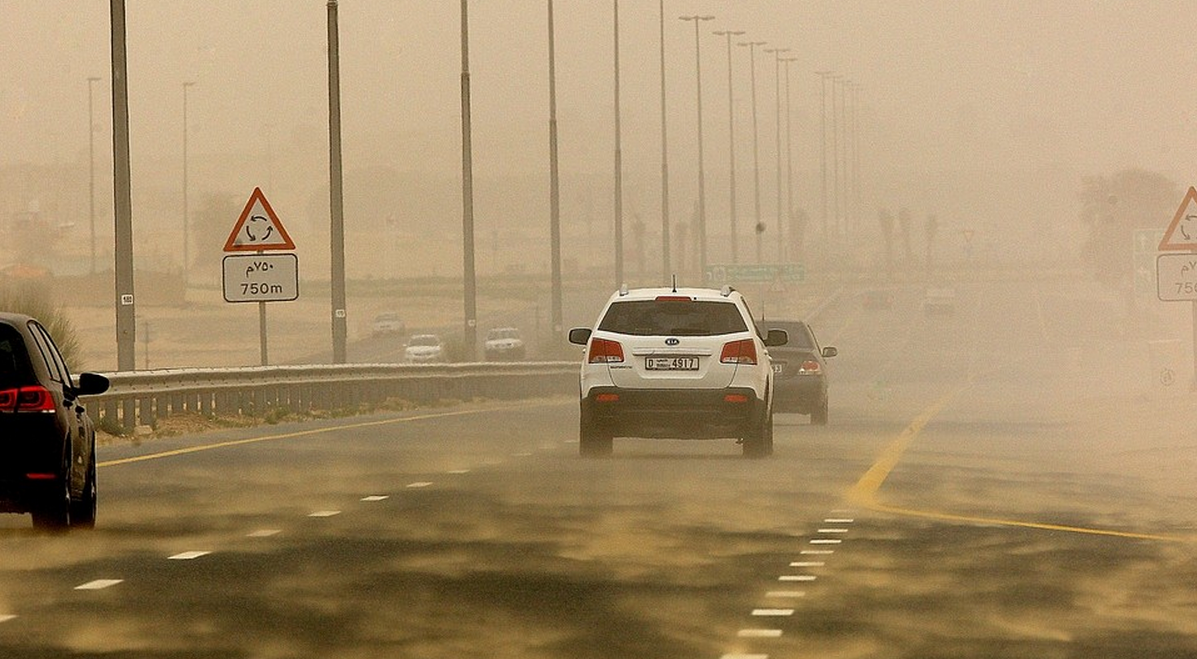
On Thursday, Dubai experienced its worst sandstorm for many years but by next day it had cleared. Greece will not be as lucky as its economic time is fast running out and its troubles will not blow away; the country can find No Shelter From The Storm.

Posted in Finance | Tagged , , , , , , , , , , , , , , , | Leave a comment

What We Ain’t Got!

sydney-opera-bridgeHH Sheikh Mohammed bin Rashid Al Maktoum launched the 22 million sq ft phase 2 expansion of Dubai Healthcare City which will cost up to US$ 1.36 billion. It will include the Nashami health project as well as retail and hospitality outlets. This will be a major boost for Dubai as it aims to become a major player in the global healthcare and medical tourism sector.

Union Properties expect work to commence on the five-tower The Vertex in Q1 2016. Located in Motor City, the US$ 300 million project will have 700 residential units and 66k sq ft of retail space, with the first tower ready by early 2018. A separate US$ 117 million, 4-tower development, also in Motor City, will have 200 apartments, with work starting in September.

Arabtec reported disappointing 2014 net profits, down 49.4% to US$ 66 million, largely because of a H1 blow out in general and administrative costs which soared 74.7% to US$ 204 million. The board indicated that it had intervened in June to curb unnecessary expenses – such as suspending some non-core operations including in Pakistan and Russia – at the time the then CEO Hasan Ismaik stepped down. Revenue was up 46.0% to US$ 2.26 billion, with gross profit showing a healthy 68.0% hike to US$ 250 million and the order book up at US$ 2.62 billion. However, Q4 results indicated a US$ 26 million loss which sent the developer’s shares sharply down. Subsequently, the Board has decided to streamline operations and started with plans to sell four of its five Saudi operations in which it has major shareholdings.

As the bottom was falling out of its share price early in the week, Arabtec announced a US$ 283 million Saudi order to build 380 villas in Dhahran for Aramco. The company is also set to soon conclude an Egyptian contract to build 1 million housing units, initially estimated at US$ 40 billion.

For the first time, the British Export Credit Agency has guaranteed a sukuk issue. Emirates has set the initial price for the US$ 913 million facility which will be in the region of 100 basis points over midswaps. The Dubai carrier will use the funds for the acquisitions of four new Airbus 380s.

MAF currently operates over US$ 10 billion worth of property, including 17 shopping malls, 11 hotels and 3 mixed-use communities in the MENA. The Dubai retailer has just appointed Bertrand Julien-Laferriere as its CEO.

Dubai Holding Commercial Operations Group, which manages several entities including Jumeirah Group, Tecom and Dubai Properties Group, saw its 2014 net profits up 42.0% to US$ 1.28 billion, as revenue rose 14.0% to US$ 3.60 billion.

Dubai Investments has gone into a 50:50 JV with the Saudi/Lebanese realty firm, RED House, to manage projects in the Kingdom, the first of which will be a Riyadh industrial park. The set-up, similar to that of Dubai Investments Park, will cover an expanse of 11 million sq mt.

The first tender for work on Nakheel’s Al Khail Avenue will be released later in the month. Located adjacent to the Al Khail Road, the 3.6 million sq ft dining, entertainment and retail hub, with over 350 outlets, will open in 2018.

Ahead of the final formalities in the Dubai World US$ 14.6 billion debt restructure, it seems that Lloyds and Natixis have sold their outstanding debts, whilst RBS has reduced its exposure.

DP World is liaising with the Maldives to further develop that country’s ports and logistics facilities. Negotiations have been going on for some time, as 2013 reports indicated that a JV was to be established with the local government to build an international port.

The Dubai-based port operator has also launched a new company, P&O Ports, to develop and operate marine and inland ports. The company has already signed agreements with clients in Albania, Madagascar and Somaliland to improve their port infrastructure.

According to recent statistics from the Permanent Committee for Labour Affairs, Dubai has 569k labourers working for 3,039 companies.

China – with a 29.0% increase in trade to US$ 47.7 billion – now tops India as Dubai’s leading trade partner. The emirate’s non-oil foreign trade of US$ 362.7 billion comprised imports (US$ 230.2 billion), reexports (US$ 101.4 billion) and exports (US$ 31.1 billion). Further analysis indicates that direct trade US$ 223.1 billion accounted for 61.5% of the total with free zones contributing US$ 133.2 billion (36.7%) and customs warehouses US$ 6.4 billion (1.8%).

In 2014, Dubai International recorded 15.1k flights of the Airbus 380 – 42.3% up on the previous year and well ahead of second placed Heathrow with 5.4k. Meanwhile the airport had an 11.0% rise in revenue, with help from a 15.0% jump in non-aeronautical revenue, accounting for 53.0% of total revenue. The balance came from aeronautical revenue, including aircraft parking fees, which had a 7.0% rise.

UK’s Leslie Jones Architecture has been appointed to carry out commercial design work on the US$ 32 billion expansion at Dubai World Central. Dubai’s second airport will eventually have the capacity for 200 million passengers. DWC, which started passenger flights 18 months ago, will be developed in two phases, with the initial phase, covering 56 sq km, due for completion before Expo 2020.

Unsecured creditors in the liquidation of ES Bankers (Dubai) Ltd discovered there was no money left for them, despite being owed US$ 14 million. Depositors were luckier receiving an 82.7% payment on the US$ 93.5 million owed. The fallen bank was the Dubai arm of the Portuguese Espirito Santo, recipient of a US$ 5.35 billion bailout payment in August 2014.

Al Etihad Credit Bureau seems to have captured a lot of data since its January official opening. It is reported that the company already has information on 2.8 million individuals, representing 97% of the country’s population with a credit history. It estimates that 16.3% (or 65k) of all UAE-registered companies have credit facilities and the bureau is now in a position to give enquirers up to date and detailed information on companies’ financial standing.

Aster DM Healthcare will issue an IPO later in the year with the favoured locations being Mumbai, Dubai or London. It is estimated that 90% of the privately-held company’s revenue of US$ 600 million was from its GCC operations.

Damac Properties announced a 10% bonus share issue.

Borse Dubai, owned by Investment Corporation of Dubai, has sold its 17.4% share in the London Stock Exchange at a share price of US$ 33.6. In 1997, it had bought 28% of the LSE from Nasdaq at US$ 21.1 per share so this sale for US$ 2 billion has returned a tidy profit. There appears to be no hurry to divest itself of its interests in Nasdaq OMX and other stock exchanges, including an 80% holding in the Dubai Financial Market.

Amlak Finance, 48% owned by Emaar, is to have a 16 April shareholder meeting to approve a move for it to resume trading on the Dubai bourse. The company was delisted in November 2008 – at the height of the local real estate collapse and the GFC – as its shares sank to US$ 0.28, having fallen 79% over the preceding six months. Last November, it finally signed a creditors’ restructuring deal.

The DFMI started the week trading on Sunday at 3473 and dropped 1.9% to close at 3407 on Thursday, and 9.7% lower than its January opening of 3774. Bellwether stocks, Emaar Properties and Arabtec, were both well down – by US$ 0.17 and US$ 0.11 – to US$ 1.75 and US$ 0.60 respectively. Trading on the day was at 488 million shares, valued at US$ 179 million, being transacted. The market was not helped by the escalating problems in Yemen and had dropped 6% in early morning trade on Thursday before recovering. More of the same is on the cards for next week.

Brent crude closed on Thursday at US$ 59.12 – 8.6% up on last Thursday’s close of US$ 54.43. There are fears that the conflict could see Gulf oil supplies being disrupted as Yemen is an important location with European oil supplies passing through the Red Sea, between Aden and Djibouti.

Lloyds is selling its remaining 50% share in TSB to Sabadell, as the Spanish bank made a share offer of US$ 5.08 – 4% higher than the market close last week. TSB has agreed to the US$ 2.54 billion deal that still remains to be approved by the various regulatory authorities in the UK and Europe. Since Sabadell’s offer, the share price has risen 27% in the past two weeks.

A week after the US rebuked the UK for supporting the recently formed China-led Asian Infrastructure Investment Bank, Christine Lagarde has indicated that the IMF would be “delighted” to cooperate with the new banking facility. Now it seems that Germany and France are set to join, much to US chagrin who see the bank as a rival to their “baby”, the World Bank and a method for China to expand its global reach.

According to reports, close allies of the former Sri Lankan president, Mahinda Rajapaksa, have managed to park more than US$ 2 billion in Dubai accounts. This represents only 20% of monies allegedly stashed away overseas. Needless to say, claims have been rejected by Mr Rajapaksa’s cronies.

For the first time since records started in 1988, UK inflation rate dropped to 0% in February, with obvious signs that it may soon fall into negative territory. The rate will hover around the zero level for most of this year, with the worry being that if prices fall much further than the danger of stagflation becomes more probable. A drop in economic activity will occur as companies and individuals defer purchasing.

A mega deal will see Kraft and Heinz, owned by Warren Buffett’s Berkshire Hathaway Inc and the Brazilian private equity firm, 3G Capital, merging to form the 5th largest food and drinks company in the world.  Kraft Heinz will have combined revenue of US$ 28 billion and expects to save US$ 1.5 billion in annual costs.

In the complicated global telecoms world, it has been announced that Spain’s Telefonica will hive off UK’s O2 to Hutchinson Whampoa from Hong Kong for a reported US$ 15.4 billion. The deal, which will take over a year to finalise, is subject to regulatory approval as the buyer already controls the 3 Network in the UK. Last November, BT pulled out of talks to buy O2 and bought EE for US$ 18.6 billion, whilst five months earlier Vodafone paid US$ 8.0 billion for the Spanish cable firm Ono.

As Australian property prices, particularly in Sydney and Melbourne, hit record highs, it seems that a big correction will occur sooner rather than later. When a property bubble is inflating, speculators tend to push prices up in the hope of a quick capital gain and this is exactly what is happening. For the past two years, 50% of all new lending in NSW is by investors which have pushed prices up beyond what would be considered a true market price. Just like Dubai six years ago, there could be major fall-out when the inevitable correction occurs.

It is no surprise to see that Greece’s February state revenue was down 11% from its target, at US$ 8.43 billion – a shortfall of US$ 1.04 billion. As it is still in the throes of finalising term and payment details with its creditors, the outstanding bail-out funds from the troika remain unpaid until an agreement has been completed.

On Wednesday, eurozone authorities advised the Tsipras government that it would not be receiving an expected US$ 1.3 billion for its bank recapitalisation fund. In the absence of incoming funds that come 09 April, the date it needs to repay the IMF part of its bailout loan, there is the distinct possibility that, for Greeks, money is What We Ain’t Got!

Posted in Finance | Tagged , , , , , , , , , , , , , , , | Leave a comment

The Times They Are A Changin’

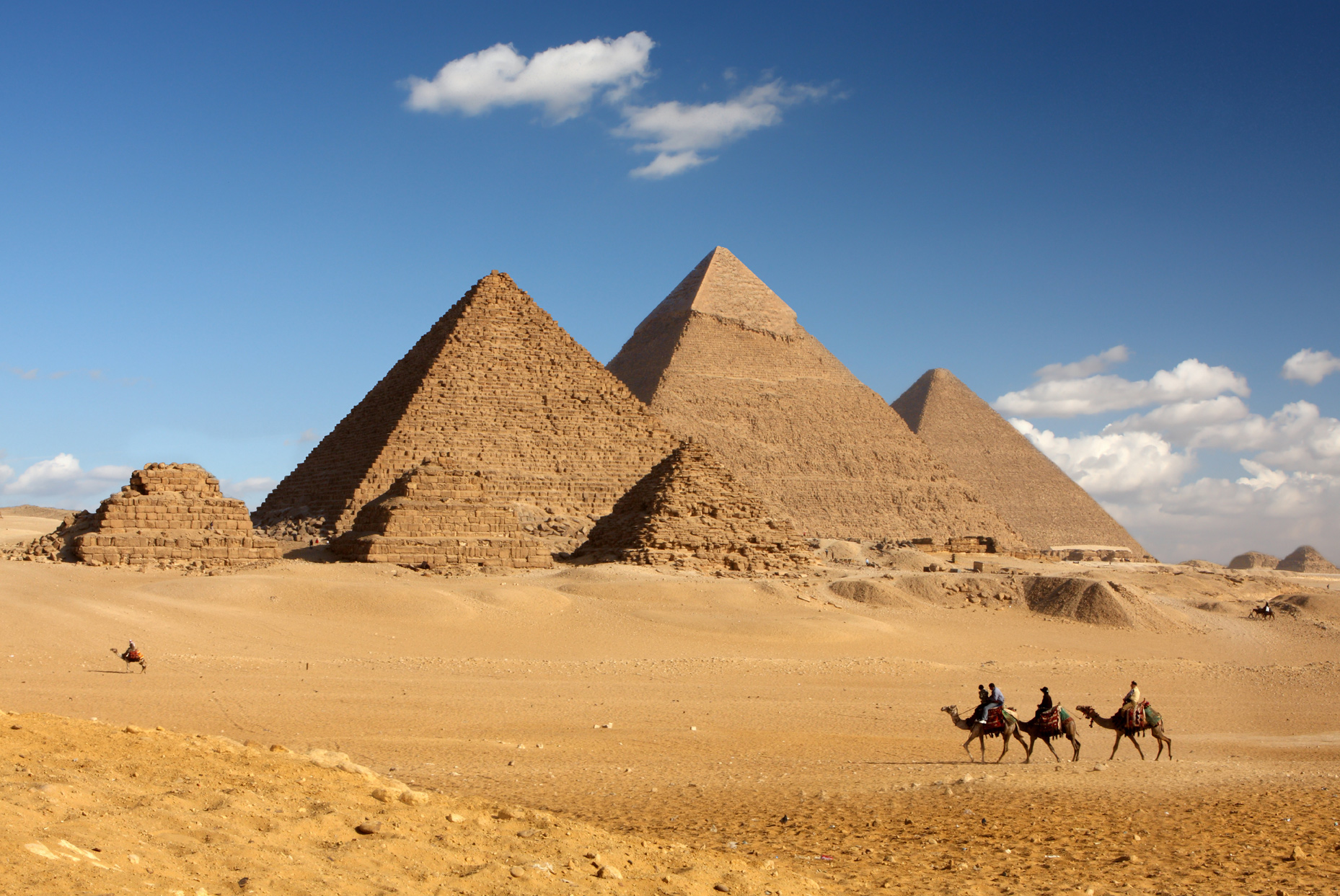
pyramids-egyptProperty developer Nakheel has defended its right to increase villa extension application fees which, in some cases, have risen quite dramatically. Prior to September 2014, the standard tariff ranged from US$ 41 per sq ft in its Jumeirah Village development to US$ 163 in Palm Jumeirah. Then it was announced that the fee would be raised to US$ 545 per sq ft for Palm residents wishing to add an extension to their existing property. Although its tenants are none too happy with this development, Nakheel is holding firm. (In contrast, residents living in an Emaar development are subject to a flat US$ 545 fee).

St Regis Hotel announced Dubai’s first polo resort in association with the Al Habtoor Group. The 136-room hotel will be the focal point of the development that will include a polo club, 24 luxury bungalows, 138 villas, 500 stables and several restaurants.

A new Knight Frank report estimates that H2 Dubai villa prices fell 6.2% but for the year showed a marginal 0.8% increase.

Landmark Group is planning to invest US$ 41 million, over the next three years, in adding a further 20 iCARE clinics to its current Dubai portfolio of six.

Dubai Investment Properties (DIP) has signed an agreement with Yotel to operate a 42-storey, 438-key hotel adjacent to the new Dubai Water Canal Project. The development will also include 127 serviced apartments and should be finished within three years. The Kuwait-managed company currently runs four establishments in New York and has seven more under development.

A new  US$ 108 million JV between two Dubai-based companies – Habtoor Leighton Specon and Drake & Scull – will carry out all the mechanical, electrical and plumbing on the upcoming US$ 1.1 billion Jewel of the Creek project. The work involves five tower blocks (of between 15-19 storeys), including residential, hotel and serviced apartments, and is slated for completion by June 2017.

It is reported that the Al Futtaim Group will close three of its stores in Singapore citing that there are too many malls and not enough shoppers in that city. One Marks & Spencer outlet and two John Little stores will soon shut down. The Dubai-based company still controls Robinson & Co which includes John Little, Marks & Spencer, Principles, Trucco, River Island and Fat Face in its portfolio.

MAF announced that it is planning to invest a further US$ 590 million in Egypt, in addition to the US$ 2.4 billion already scheduled for projects earlier. This last tranche will be used for the construction of four shopping malls and several VOX cinemas in Greater Cairo. The property developer is not the only Dubai entity that sees great opportunities in rebuilding that country’s shattered economy and infrastructure.

Egypt is planning to spend nearly US$ 45 billion establishing a new capital for 7 million. Located east of Cairo, the area will cover 700 sq km and should be completed by 2022. The announcement was made at a major investment conference in Sharm el-Sheikh attended by HH Sheikh Mohammed bin Rashid Al Maktoum and Egypt’s president, Abdel Fattah El Sisi. Emaar chairman, Mohamed Alabbar, signed the land deal with Minister of Housing, Mustafa Madbuli.

However, despite all the recent hype relating to mega projects in Egypt, it is reported that Emaar is not involved in the development of the new capital city. It appears that Capital City Partners, a private real estate investment fund headed by its founding partner, Mohamed Alabbar, will manage the new city’s construction.

According to reports, Arabtec has already agreed some of the terms with Egypt’s Housing Ministry relating to the US$ 40 billion project to build one million houses. A potential sticking point, prior to the final contract being signed, is the number of gratis units to be handed over in lieu of the land payment.

JAFZA reported a 9.8% hike in 2014 revenue to US$ 458 million, as its debt level fell 6.2% to US$ 1.23 billion. Profits were higher following a one-off gain from Dubai World which acquired the Economic Zones World, the parent company of JAFZA, for US$ 2.6 billion last December. (It appears that DP World will also take over the US$ 859 million net debt).

Meanwhile DP World recorded an 11.7% jump in profit to US$ 675 million, as revenue rose by 11.5% to US$ 3.41 billion. A US$ 0.235 dividend was approved.  At the end of 2014, the company had 77 million TEU capacity, with a further 8 million twenty-foot equivalent units to be added this year, with new facilities coming on line in Turkey, India and the Netherlands as well at Jebel Ali.

It seems that DP World’s majority shareholder, Port and Free Zone World, (a subsidiary of DP World) has finalised a US$ 1.1 billion, 5-year loan to be utilised for meeting its upcoming financial commitments. The facility is reportedly priced at 2.25% points above Libor – a much better rate than the 3.5% it paid on a September 2011 loan.

Dubai Silicon Oasis reported 2014 revenue of US$ 138 million as profit jumped 43%. Over the year, the freezone operator saw a 28.9% increase in operating companies to 1.15k, 63% of which were in the IT sector.

Several government related enterprises (GREs) are planning a seven-day exhibition in Beijing to showcase what Dubai has to offer, with the aim of expanding trade and tourist links. Over the past year, trade has risen by 27.0% and now stands at over US$ 34 billion for the first nine months of 2014. It is estimated that Dubai is home to at least 200k Chinese who run over 3k companies. Tourist numbers have shown healthy increases in recent years and the 25% rise last year saw numbers top 344k.

Du shareholders approved a dividend of US$ 0.054 per share, in addition to the US$ 0.033 interim paid earlier. This follows the 22.8% hike in 2014 net profit before royalty of US$ 1.01 billion.

Dubai-government owned Enoc is looking at buying out the remaining 46% shares it does not currently own in Dragon Oil. The offer made last Friday was at the market price (US$ 7.37) plus an undisclosed premium. Since then the share price has risen and closed on Thursday at US$ 8.72 – 17.2% up on its 15 March price of US$ 7.44.

Dubai has a monorail, a metro and a tram system and now Emaar is currently testing a trolley tram for use in Downtown. When testing is finished and stations built, the hydrogen and electric-powered trolley trams will operate across the whole 7km span of the area.

The latest business to be listed on the local bourse will be Daman Investments. The asset management firm, established in 1998, will sell 55% of its shares in the IPO with listing taking place in April; the company will be hoping that market conditions have improved by then. Three years ago, the company privately sold a 22.7% stake for US$ 120 million.

The DFMI started the week trading on Sunday at 3708 and dropped 6.3% to close at 3473 on Thursday, and 8.0% lower than its January opening of 3774. Bellwether stocks, Emaar Properties and Arabtec, were both down by US$ 0.14 and US$ 0.08 to US$ 1.92 and US$ 0.71 respectively. Trading on the day was low with 196 million shares, valued at US$ 157 million, being transacted; total market capitalisation was at US$ 25.4 billion.

Another major bank has been caught for illegal activity. Germany’s Commerzbank has had to pay US authorities US$ 1.45 billion for breaking sanctions in dealings with Iranian and Sudanese businesses. Belatedly, the country’s second biggest bank has indicated that it will address the deficiencies highlighted by the US authorities. Last year, BNP Paribas paid a massive US$ 8.9 billion whilst the likes of Standard Chartered HSBC and Credit Suisse have been apprehended for similar illegal behaviour. 

Although Cold Play’s Chris Martin and Gwyneth Paltrow had a successful decoupling last year, it seems that the US is having difficulty in decoupling from the rest of the global economies. The outcome from this week’s long-awaited Fed meeting was that it was in no hurry to lift rates and the pace of any future rises would be slower than initially expected.The dollar’s strength is curtailing economic growth, making US exports more expensive and not helping the country’s too-low inflation – 0.2% in January. However, the first rate hike since 2007 will still occur this year but a little later than analysts had expected and then watch what capital outflows from emerging economies will do to the markets.

The IMF chief, Christine Lagarde reiterated what many already know – the global recovery “is too slow, too brittle and too lopsided”. She warned eurozone and Japanese authorities of the risk of continuing low growth and low inflation which, in turn, will result in high unemployment and rising debt levels.

Brent closed on Thursday (19 March) at US$ 54.43, as market indicators point to more turmoil in the market. Kuwait reiterated OPEC’s stance that there is no other alternative but to continue to produce at current levels in an oversupplied market just as Saudi sees recent output up some 3%, touching 10 million barrels per day, and exports rising to 7.5 million. Furthermore US stock levels – at 458 million barrels – are at record highs. The dollar plays an important role in pricing oil – a strong greenback will result in reduced demand for commodities, including oil, denoted in US$, with the opposite impact when the currency weakens.

An embarrassing week for Lufthansa’s CEO Casfar Spohr. The German airline has apparently joined three major American airlines in alleging that Emirates receives an unfair advantage with fictitious government subsidies. As a result, he thinks that this gives the Dubai operator an unfair advantage which could ultimately destroy its competitors and eliminate consumer choice. A day later, Lufthansa pilots began a 3-day strike action beginning Wednesday, and affecting the whole of the carrier’s schedule. Maybe Herr Spohr should put his own house in order first and stop blaming non-existent external factors for Lufthansa’s deficiencies. The Times They are A Changin’.

Posted in Finance | Tagged , , , , , , , , , , , , , , , | Leave a comment

Shake It Off

nakheel-monorailAlthough Abu Dhabi recorded a 14.7% 2014 growth in the luxury residential property sector, Dubai only managed a marginal 0.3% price increase, compared to 17.0% the previous year. The Knight Frank’s Prime International Residential Index had Muscat, at 13.2%, the best performing in the GCC and ranked 8th globally. New York topped the ranking with an 18.8% hike whilst, at the other end of the scale Singapore contracted by 12.4%.

According to Luxhabitat, there were surprisingly only 420 sales of villas and 356 apartments, costing more than US$ 1.36 million, in Dubai last year. The most popular sale areas for villas were Arabian Ranches, Palm Jumeirah and Emirates Hills whilst Downtown, Dubai Marina and Palm Jumeirah were the top three locations for apartment sales.

Meanwhile the Palm’s first large scale commercial project will incorporate a 200m observation tower and will have the existing monorail run through the middle of the upcoming Nakheel Mall. Covering an area of 300k sq mt, the project will also include a 200-key 5-star hotel and 500 serviced apartments.

Nakheel also announced the completion of 90 villas in Jumeirah Village Circle, with delivery slated to start in April. This is part of a 570 hectare development, which will eventually house 250k people; 615 villas have already been handed over in 2013 and the 1 million sq ft retail and dining Circle Mall is due to be completed by 2017.

Hilton Worldwide is the latest hotel chain to announce a new Dubai property, following a management agreement with AIG Investments. The 336-room Hilton Garden Inn Dubai Al Jadaf will open in 2017.

On Monday, there was the launch of the Trump PRVT residences, part of the Akoya by Damac development. With villa prices starting at US$ 1.77 million, there will be gated access to the island location.

Now in its 19th season, the ever-popular Global Village will have attracted over five million visitors and generated US$ 463 million by the time it closes on 11 April, after running for 159 days. The massive extravaganza has over 3.5k outlets, as well as 31 pavilions, 25 restaurants, and 150 kiosks.

The Chinese seem to be taking over the mantle of the Russians – with Chinese tourist numbers to Dubai expected to double within a decade to 545k whilst in January there 27.3% fewer Russian visitors. Last year, the Chinese spent US$ 488 million in Dubai and stayed, on average for 3.3 days.

The Dubai Airport Freezone has had to lease a 17k sq mt Al Ghusais block from the government-owned Al Wasl to meet pent-up demand. DAFZA will build 32 light industrial units to add to the 260, already operating at the airport, and hope to acquire more land to build a business park in the area.

Emirates Group company, dnata, has bought a 51% share in UK-based Imaging Cruising – a major player in not only the cruise market but also in other aspects of stay holiday distributorship.

Saturday was the last day of the Dubai International Boat Show which attracted over 26k visitors and 800 exhibitors, as well as generating sales of US$ 50 million. The exhibition highlighted the progress made by local shipbuilders including Al Shaali Group, whose showcase luxury yacht is the US$ 5.45 million AS100, and Al Hareb Marine which came away with four sales totalling US$ 2.2 million.

The Korath Group is to spend US$ 27 million in introducing the Hawes & Curtis brand to the MENA, with an ambitious expansion strategy of 25 outlets. The first men’s retail shop, located in the Wafi Mall, was launched this month by Bollywood star, Shahid Kapoor.

Last year, New World Wealth estimated that 26k millionaires resided in Dubai. A new Knight Frank report has ranked Dubai as the 8th most important city for the ultra-rich, only behind London, New York, Hong Kong, Singapore, Shanghai, Miami and Paris.

It has been reported that a subsidiary of Dubai World (which itself has a US$ 14.6 billion debt), Drydocks World, may request creditors for a restructuring of its US$ 2.3 billion outstanding balance. As did its parent company, the shipyard may opt for an early repayment, and better terms, for the balance of the debt, followed by a repayment extension. US$ 800 million is due for settlement in August 2017, with the remaining US$ 1.5 billion in 2027.

Celebrating its 50th year, Dubai Chamber of Commerce reported that its members were involved in US$ 49.0 billion of export and re-export trade within the GCC. Saudi Arabia accounted for 54% of the business – US$ 26.4 billion – with Qatar (13%) and Kuwait (12%) the other major players.

Union Properties declared its first dividend in over twelve years; patient shareholders will receive US$ 0.008 cash and a 5% bonus issue.

Official approval has been given for a 20% hike in the price of bottled water.

February saw a 3% increase in volumes on the Dubai Gold & Commodities Exchange, with 929k contracts valued at US$ 35 billion. There was a 103% surge in Indian Rupee Options to 7.2k, as well as a 22% increase in the Exchange’s Indian Equities portfolio.

Earlier in the week, Orascom Construction began trading for the first time on NASDAQ Dubai and rose 3% on the day.

Bad news for the public sector with reports that there will be no pay rises for those employees between Grades 7 – 14. The Finance Minister, HE Obaid Al Tayer, indicated to the FNC that he considered the current salary levels as sufficient.

Following an internal enquiry, it seems that six Dubai-based employees of ABN Ambro have resigned or been dismissed for apparent fraudulent behaviour and contravening the bank’s policies and procedures.

Next month will see Amlak Finance returning to the DFMI over six years since its November 2008 suspension. The mortgage lender reported a 22.2% rise in 2014 attributable profit to US$ 16 million including a US$ 572 million write off on its portfolio and a US$ 518 million gain on its restructuring deal on a mudaraba instrument

Having recorded a 2014 US$ 207 million profit, compared to US$ 78 million a year earlier, the Dubai Financial Market has approved a 7% dividend, equivalent to a total pay-out of US$ 153 million.

The DFMI started the week trading on Sunday at 3747 and dropped 1.0% to close at 3708 on Thursday, and 1.7% lower than its January opening of 3774. Bellwether stocks, Emaar Properties and Arabtec, were both down by US$ 0.02 and US$ 0.01 to US$ 1.92 and US$ 0.79 respectively.

Subsequent to February’s devaluation of the pound, it is no surprise to see Egypt’s inflation rate hit double digits – up 0.9% to 10.6% – as imports became more expensive. The currency slipped to 7.6 to the US$, compared to 7.2 at the beginning of the year but perhaps the currency has to fall even further for Egyptian exports to compete in the global arena.

There was mixed US market news with February data indicating 295k new jobs (following January’s revised figure of 239k) and a fall in the unemployment rate to 5.5%. If this trend were to continue, it is inevitable that the Fed will lift interest rates by July, particularly because of the strong dollar. On the flip side, some analysts are cutting US Q1 growth estimates from 2.3% to 1.5%, as several indicators point to some problems ahead. These include wholesale inventories rising 0.3%, wholesale sales declining 3.1% (the biggest fall in nearly six years), slowing construction spending and poor auto sales. Whether this is just a blip remains to be seen.

Even the ever optimistic ECB have got in on the act forecasting a stronger 2015 growth in the eurozone from 1.0% to 1.5% and that the current low negative inflation would turn the corner by the end of the year. This Monday (09 March), the long-overdue QE programme, with over US$ 1.25 trillion of assets being bought over the next 18 months, started as the euro was trading at the 1.09 level to the greenback. By Thursday it had sank even further to 1.05 – its lowest level in over 12 years, as Deutsche Bank forecast a further drop to 0.85 by the end of 2017.

In December, EC President, Jean-Claude Juncker introduced a US$ 341 billion investment plan to encourage growth by financing numerous projects. To date, Germany has promised US$ 16.2 billion, France US$ 8.7 billion and Spain US$ 1.6 billion.

February data from China indicates a record trade surplus of US$ 60.6 billion, with exports up 48.3% and imports down by 20.5%. However, the figures may be skewed somewhat by the fact that the Chinese New Year occurred mid-February. Where the export figures may indicate a rise in demand for Chinese goods, imports highlight the problem of weak domestic demand and the worry of deflation taking hold.

Brazilian president Dilma Rousseff’s government is being tainted by the expanding Petrobras scandal, with 54 people accused of taking bribes including many senior politicians. Although she chaired the petroleum company’s board for seven years, the president has been cleared of any charges!

It does seem incongruous that HSBC top management was unaware of the illegal activities of their Swiss private bank. Details of the scandal, involving some 30k accounts, were made known to the French authorities in 2007 and passed on by them to their UK counterparts. It was only last month that the information came into the public domain and since then the HSBC executives have been ducking and weaving.

The latest data from Baker Hughes Inc indicates that the number of US operational drilling rigs fell for the 13th straight week to 922 – 42.7% down on the October figure of 1,609. Thanks to the shale oil revolution US production, over the past five years, has risen by 67.3% from 5.2 million bpd to 8.8 million bpd. The worry is that if prices keep falling (and they were at US$ 55 at the end of the week), shale oil production becomes a loss making venture and bankruptcy becomes a fact of life. If the financial institutions have been bankrolling these ventures willy-nilly, the economic fall-out could be much worse than the sub-prime crisis and more difficult to Shake It Off. 

Posted in Finance | Tagged , , , , , , , , , , , , , | 1 Comment

Leaving On A Jet Plane

euro-wingsThe Investment Corporation of Dubai is teaming up with Canadian asset manager, Brookfield, to build a US$ 1 billion 50-storey tower next to the DIFC. ICD Brookfield Place, comprising a hotel, offices and retail outlets, will be ready in 2018.

Al Rostamani Pegel has won a Deyaar Development contract to build its two-tower The Atria in Business Bay. The US$ 245 million project, slated for completion within two years, will consist of a hotel and 219 residential apartments, all of which were sold out on their release in March 2014.

Emaar Hospitality has teamed up with Nshama to operate the new 180-key Vida Town Square hotel and serviced apartments. The hotel will be a focal point of the recently announced 31 million sq ft Town Square project, located near Al Barsha, which will also include 3k townhouse, 18k apartments, 600 shops and other facilities. At around US$ 163 per sq ft, villa prices will start at the US$ 272k level. Meanwhile, following a 28.0% surge in 2014 profit to US$ 896k, Emaar has proposed a 15% (US$ 0.04 per share) dividend.

There was a 5.6% rise in 2014 hotel guests to 11.6 million, as revenue jumped 9.6% to US$ 6.51 billion, and guest nights by 7.4% to 41.6 million. The hotels’ biggest source markets were Saudi Arabia, India, UK, USA and Iran, with Russia a notable – but not surprising – faller. During the year, the number of properties increased by 7.5% to 657 and available rooms rose by 9.2% to 92.3k.

The RTA will consider a private partnership for the development of the emirate’s first Transit-Oriented Development model. Tenders will be called in May for the Union Oasis project which will involve construction of mixed used tower blocks, and other amenities, on a 15k sq mt plot above the Union Metro Station.

Another report has again highlighted the fact that more schools will be needed to meet the ever-growing demand in Dubai, with an expected 33.3% increase to 360k students. Colliers estimate that a further 52 establishments, to meet this demand in student numbers, will be required by 2020 – with an estimated total investment of at least US$ 3.9 billion, based on an average cost of US$ 75 million per new facility.

Dubai International reported a 7.7% increase in January passenger traffic to 6.9 million compared to the same month last year – and is already well on track to beat 2014’s total of 70.4 million. There was no surprise that the number of Russian and CIS travellers fell 22.7% over this period. With the move of much of the cargo to the new Al Maktoum International, freight traffic dropped 5.5% to 186.2k tonnes.

flydubai recorded impressive 2014 results with revenue at US$ 1.20 billion and profit up 12.3% to  US$ 68 million. During the year, the airline added 23 new routes, whilst passenger numbers increased to 7.24 million and daily flights to 200.

A study by Frontier Economics estimates that Emirates adds US$ 7.6 billion and 85k jobs to the EU economy, not including US$ 3.8 billion and 41k jobs emanating from buying 40% of all of the Airbus 380 production.

In conjunction with two European entities, Abraaj Capital is planning to invest US$ 200 million in North Africa Hospital Holdings Group. The Dubai-based private equity firm is financing 80% of the total in the company that will enhance healthcare in Tunisia and Egypt, where the operation already has four hospitals.

Zoom, a division of ENOC retail, with 170 convenience stores in its petrol outlets and Metro stations, as well as 22 market stores across the UAE, is expanding into Bahrain. The company already has a presence in Saudi Arabia and has plans for a further 250 units in the GCC, over the next five years.

The latest Forbes World Billionaires List, now totalling 1,826, shows that the five richest persons in the country are Abdulla Bin Ahmad Al Ghurair, ranked number 220, (with a net worth of US$ 6.4 billion), Majid Al Futtaim (US$6.2 billion), Micky Jagtiani (US$5.2 billion), Saif Al Ghurair (US$3.4 billion) and Abdulla Al Futtaim, ranked at 557, (US$3.2 billion).

A decision in the Dubai Cassation Court confirms the need for proper documentation where contracts are involved. A developer asked an architect to carry out design work on two proposed 51-storey buildings in Business Bay – with no written contract. The work was carried out but the developer declined to pay the fees as Dubai Municipality refused planning permission, indicating that the land was allocated for parking. The Court, in awarding the engineering firm US$ 2.0 million for its design work, confirmed that proof of an agreement, other than in writing, can be used.

Another recent court case has again reiterated that owners of free zone companies will not be held liable for company debts – either in a personal capacity or company debts, more than the paid up capital. Both the Court of First Instance and the Appellate Court ruled against the owner of a decoration company that was being sued for US$ 63k. However, the Court of Cassation reversed the decision based on the provisions of the Commercial Companies Law No. 8 of 1984.

Dubai Islamic Bank has sold its 25% share in Emirates REIT to Eiffel Management, giving it 100% ownership of the country’s first real estate investment trust, with assets of US$ 600 million.

The DFMI started the week trading on Sunday at 3865 and dropped 3.1% to close at 3747 on Thursday, and 0.6% lower than its January opening of 3774. Bellwether stocks, Emaar Properties and Arabtec, were both down by US$ 0.12 and US$ 0.07 to US$ 1.94 and US$ 0.79 respectively.

According to a 2015 Economist Intelligence Unit report, there was no change in the top five most expensive cities this year with Singapore, again taking the top spot, followed by Paris, Oslo, Zurich and Sydney.

Two major UK banks published 2014 results with Barclays and Lloyds TSB announcing profits of US$ 8.5 billion and US$ 2.7 billion in turn. Barclays’ chief executive had a total pay package last year of US$ 8.5 million whilst Lloyds’ Antonio Horta-Osorio is up for a bonus of US$ 17.82 million as the respective bonus pools were set at US$ 2.85 billion and US$ 570 million. Barclays provided for US$ 4.8 billion for potential claims, mainly in relation to its misselling of payment protection insurance, with a warning it could face “substantial monetary penalties” regarding its involvement in forex rigging. Lloyds reported that potentially there is a further 600k potential complaints over PPI in 2015 and that it may have to increase its current US$ 18.6 billion provision accordingly.

Even the sacrosanct Bank of England is being investigated by the Serious Fraud Office for possible manipulation of so-called liquidity auctions during the GFC. Although the terms of the enquiry are unknown it seems to revolve around whether the BoE was colluding with certain banks in illegal activities.

It was not long ago that the Brazilian, Russian, Indian and Chinese economies shone like beacons in a recession-hit world. There is more evidence that the Russian economy will struggle this year with reports that the Finance Ministry has updated its 2015 budget deficit to 3.8% of GDP, compared to the original forecast of 0.6%.

Whilst two other BRIC countries, China and India, have cut rates, Brazil has gone the other way by raising its interest rates to 12.75% in an attempt to reduce inflation from its current 12.4%, nine year high, to 6.5% this year. Some analysts forecast that its economy will contract by 0.5% as indicators, such as January industrial production which fell 5.2% compared to last year, head south. The country’s progress is being stymied by corruption at the state-owned Petrobras, lack of consumer confidence and reduced public and private investment.

The Indian authorities have set a consumer inflation target of 4.0% in a move to curb that country’s ubiquitous price volatility in the market. This seems to be a progressive move by the RBI Governor, Raghuram Rajan, which has received the support of Prime Minister Narendra Modi. This week his government’s first budget was seen as business-friendly, with a 25% corporate tax reduction over the next four years. It is expected that Asia’s third biggest economy will see an 8.0% growth this fiscal year and will cut its fiscal deficit by 0.4% to 4.1% of GDP. (However, a higher growth rate will be needed to ensure that the country develops faster and cuts the “economic gap” with the likes of China). Following a similar move in January, the RBI has surprisingly cut its repo rate again by 25 basis points to 7.5%.

There was contrasting economic data coming out of China with the latest Purchasing Managers’ Index (PMI), registering 49.9, indicating that China’s factory sector has again contracted, and employment falling to 47.8. However, the service sector, which accounts for US$ 4.9 trillion (48% of the country’s economy), had a reading of 53.9. Any figure below 50 indicates contraction and above denotes expansion. On the back of these figures, the Central Bank reduced interest rates in a further bid to boost growth; the authorities had already reduced rates in November and cut the banks’ reserve requirements in February. This week the National People’s Congress set a 7.0% forecast for 2015 as the authorities aim for a slower but more sustainable growth.

Another country that will probably chop rates this month is Australia which should not only enhance demand but also support a weak Australian dollar which will make exports more competitive.

The new Prime Minister, Alexis Tsipras, continues with his plan to put an end to the troika-imposed austerity cuts and to try arrange some sort of haircut for the country’s outstanding debt of US$ 360 billion.

After nine months of growth, it appears that the Greek economy will sink into another recession, mainly caused by uncertainty pre and post the January election; this has had a damaging impact on business and consumer confidence. Following Q4’s 0.4% contraction, all indicators point to the country slipping further in Q1 even though only last month the EU was predicting that the country’s 2015 growth would be 2.5%.

In October, Lufthansa will launch its new long haul budget carrier, Eurowings, with one way tickets to Dubai at an unbelievable US$ 111. At those prices, there will be a lot more people Leaving On A Jet Plane.

Posted in Finance | Tagged , , , , , , , , , , , , , , | Leave a comment

Don’t Call Me!

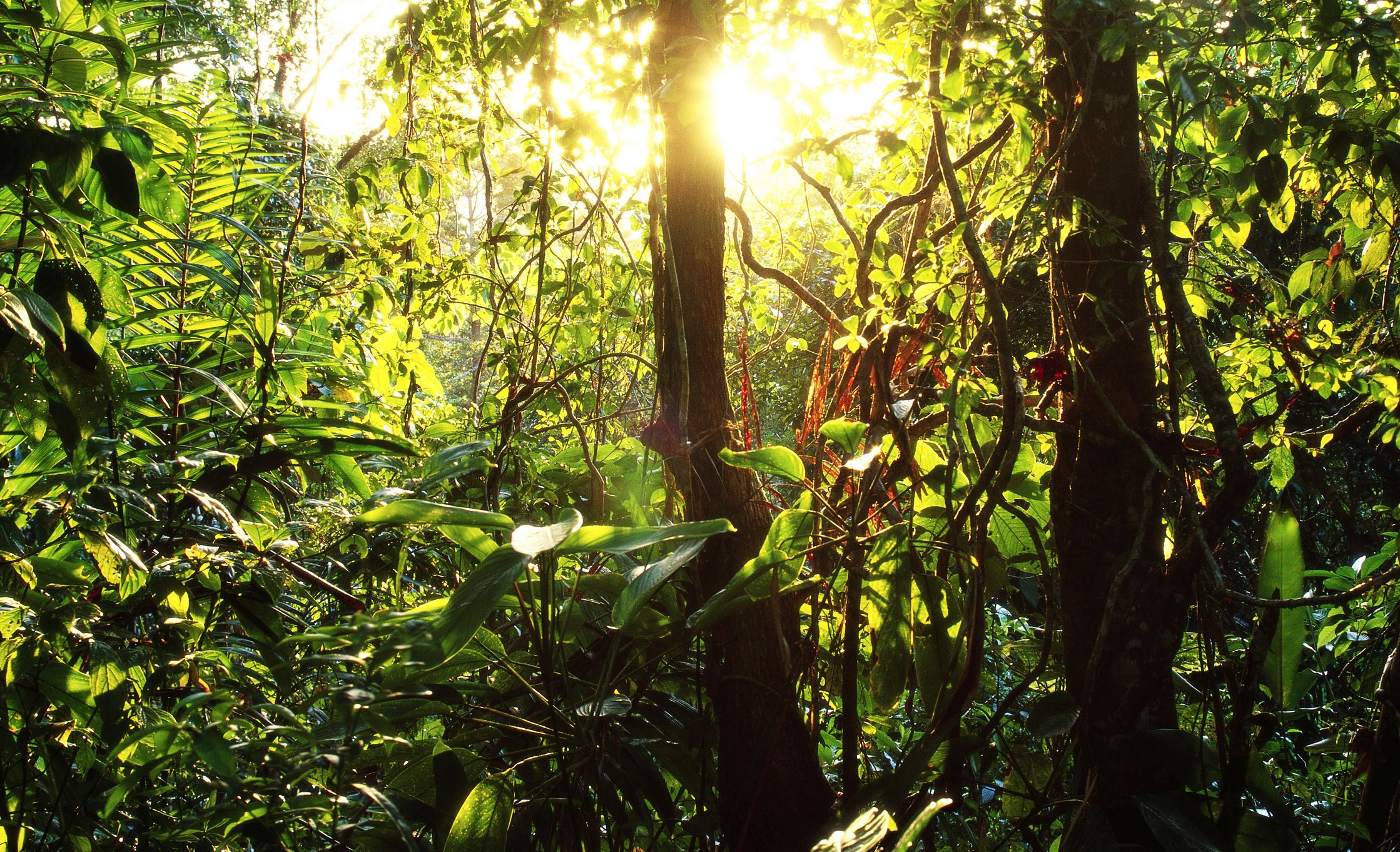
rain-forest2It seems that Dubai will see its first rainforest, as plans are afoot by Damac Properties to incorporate one in its latest development – Akoya Oxygen, encompassing 55 million sq ft. The developer will try and replicate the eco-system in the desert by the use of numerous plant species with the dome man-made jungle slated to become a big tourist attraction.

This Saturday, Emaar – in a JV with Meraas Holding – will launch Acacia at Park Heights, in Dubai, Abu Dhabi, London and Karachi. Located in Mohammed bin Rashid City, the Dubai Hills development includes a championship golf course and will house 479 apartments – with no prices yet available.

A recent report by Luxhabitat analysed 2014 sales of luxury apartments (priced over US$ 1.36 million) by location. The most popular was Downtown with an average price of US$ 1,084 per sq ft,, with sales of US$ 300 million, followed by Dubai Marina (US$ 684 and US$ 210 million) and Palm Jumeirah  (US$ 544 and US$ 136 million).

Texture Global Investments has bought Union Properties’ Auto Mall development, covering 450k sq ft, for US$ 143 million. The troubled developer will use funds raised from the sale for “other development streams” which could mean phase 3 of Green Community or a proposed 4-star, 150-key hotel in Dubai Investment Park.

The Minor Group has joined forces with Dubai Properties to develop the Anantara Creek Hotel, due to open in 2018. The Thai-based hotel management company has indicated that the 290-room luxury property will be the first to be located in the new Culture Village and will have a waterfront setting.

Yet another major boost for a British related company – Al Futtaim Carillion has won two Meraas contracts. The first, valued at US$ 350 million, is for a Dubai Creek waterfront mixed use development and the other, for La Mer at Jumeirah, for US$ 240 million, including the creation of a 1km beach.

Arabtec has picked up contracts, valued at US$ 253 million, for work in upgrading facilities for Aramco in Saudi Arabia.

The reporting season is in full swing, with Etisalat announcing a 26.0% hike in 2014 profits to US$ 2.42 billion, as revenue rose in tandem to reach US$ 13.30 billion. The board declared a US$ 0.19 dividend (equating to US$ 1.51 billion) and a 10% share bonus issue. Globally, the telecoms provider saw a 14.1% increase in its subscriber base to 169 million, as its UAE network rose 6.0% to 11 million. 

Empower reported a 76.0% surge in 2014 revenue to US$ 409 million as profit surged 65.0% to US$ 112 million. The district cooling services provider acquired Palm District Cooling – at a cost of US$ 500 million from Istithmar World – in late 2013, which then gave Empower  the world’s largest district cooling portfolio.

Dubai Airport Free Zone Authority reported 2014 profits rose by 48.0%, as revenue was up 13.0%, with its total assets rising by 3.4% and office space acquisition by 11.3%. It is estimated that DAFZA contributes US$ 29.7 billion to Dubai’s non-oil trade.

HH Sheikh Hamdan bin Rashid Al Maktoum inaugurated the Mai Dubai  factory – the emirate’s most recent entrant into the bottled drinking water market. The company is a subsidiary of DEWA, which currently has an installed capacity of 470 MIGD of desalinated water so will have no problem with supplying the new entity.

Emirates is planning a 5-10 year US$ 1 billion sukuk which will be backed by the UK Export Finance – a body that seems to be becoming more active in the region. Two Dubai banks, Emirates NBD and Dubai Islamic, are part of an 8-bank consortium arranging the facility.

Whilst it is no surprise to see that Emirates is considered the most valuable regional airline brand, valued at US$ 6.6 billion, it is one that it only makes 196th in the 2015 Brand Finance Global 500 report.

Government-owned Dubai Aerospace Enterprise is reportedly selling its services facility for over US$ 1.8 billion. StandardAero, based in Arizona and is involved in repairs and maintenance, was bought by the Dubai company in 2007 for US$ 1.8 billion, in a deal that also included Landmark Aviation.

An Investment Corporation of Dubai entity, Emirates National Oil Company (ENOC), is negotiating a 9-year US$ 1.5 billion finance deal, some of the proceeds of which may be used for expansion beyond Dubai. Its last major investment was seven years ago when it bought 48% of Dragon Oil for US$ 1.8 billion.

Visa reported that it had a 12% increase in spend over the first two weeks of the one-month long Dubai Shopping Festival. Among the high performers were restaurants up 31.3% to US$ 53.7 million and electronics 22.0% to US$ 37.2 million, whilst fashion retail was the best earner at US$ 151.2 million. Saudi and UK were the biggest spenders at US$ 35.2 million (up 17.3%) and US$ 30.0 million (up 8.1%) respectively, with Angola registering the biggest percentage increase – 98.0% – to US$ 28.5 million.

To the surprise of many, Dubai is well on its way to becoming the tea capital of the world, thanks mainly to the huge Lipton factory located in Jebel Ali Free Zone. The Unilever-owned facility has seen a 50% expansion since 2010 and now produces the equivalent of 20 billion cups of tea annually (33k tonnes). Coincidentally, its near Jebel Ali neighbour, Al Khaleej Sugar, produces 1.5 billion metric tonnes annually, making it the world’s largest stand-alone sugar refinery.

Dubai-based Abraaj Capital has expanded its interest in the burgeoning Turkish market with a minority stake in Hepsiburada.com, a leading on-line trader. It also plans to buy into that company’s furniture and home accessories subsidiaries, Evmanya and Altincicadde, which would bring its total investment to eleven entities in that country.

The DFMI started the week trading on Sunday at 3858 and rose 7 points to close at 3865 on Thursday, and up only 18 points in the month,  (2.2% higher than its January opening of 3774). Bellwether stocks, Emaar Properties and Arabtec, were both up US$ 0.02 at US$ 2.06 and US$ 0.86.

Two major Australian companies reported disappointing financials – an indicator that all is not well Down Under. BHP Billiton saw H1 profits sink 31.0% to US$ 5.4 billion, on the back of falling commodity prices, and has cut exploration and other costs by 23.0% to US$ 6.4 billion. Meanwhile, the government-owned Australia Post performed even worse, as  H1 profits sank 56.0% to US$ 77 million, with the distinct possibility of an annual loss at the end of June – for the first time in over thirty years. However, national carrier Qantas did return to positive territory, reporting H1 profit of US$ 289 million, after its biggest ever annual loss for the year ending June 2014.

For wilful and illegal use of three Smartflash patents by iTunes, Apple has been fined US$533 million by a Texan court. Apple will appeal the case which involved accessing and storing downloaded music.

After agreeing, in 2012, to pay the US government US$ 4.5 billion to settle criminal responsibility, BP has lost its fight to reduce the US$ 13.7 billion maximum civil fine it could face following the 2010 Gulf of Mexico oil spill. To date, the oil company has estimated it has incurred costs of a massive US$ 42 billion following the Deepwater Horizon rig explosion.

Over the past month, gold and oil have showed mixed fortunes but YTD are heading north. The yellow metal closed on Thursday at US$ 1,218 per oz whilst Brent Crude was trading at US$ 61.89 /bbl, both up on their 01 January openings of US$ 1,186 and US$ 57.33. Meanwhile, the global share markets continue to show significant gains – including the Dow Jones, S&P 500, NASDAQ, Germany’s DAX, Japan’s Nikkei 225 and the FTSE 100. With low interest rates, and the QE being introduced into the eurozone, this may continue in the short-term but it is obvious that there will be a major correction before the end of the year.

Recent data indicates softness in the US housing market and a slower Q4 expansion (with 2014 growth rate down from 5.0% to 2.6%) despite other positive indicators; these include falling unemployment (with 336k jobs being created monthly over the past three months), positive consumer sentiment and historically low interest rates. This week, Fed chief, Janet Yellen, has been testifying before Congress and although she was concerned with foreign economic developments (including the eurozone and China) and a fragile domestic employment position, analysts do not expect any rate increases until July at the earliest.

Russian debt rating descended to junk status, as Moody’s cut its ranking to Ba1, following S&P’s similar move last month. Most analysts forecast that the country is at the start of a recession that will be exacerbated by continuing low oil prices, a troubled rouble and weak consumer confidence: all indicators are that the on-going capital flight out of the country will continue unabated.

Some Italians will be far from happy with news that the country has signed a bilateral tax information sharing deal with Switzerland. It has been estimated that 70% of cash stashed abroad by Italians is in Swiss banks, costing the country upwards of US$ 100 billion p.a. Any monies collected will help the exchequer to reduce its forecast 2.9% of GDP deficit figure for 2015.

January figures show that eurozone’s second largest economy, France, has seen prices drop into negative territory for the first time in five years. The -0.4% reading is a further problem for the 18-country bloc, with  a 2.0% target, which has just introduced QE to reverse this downward spiral and attempt to boost growth and economic activity.

So as to avail of a four-month bailout extension, Greece finally submitted details of reforms requested by the troika; these include measures to curtail both tax evasion and smuggling, as well as trimming its bloated civil service and fighting endemic corruption. 76% of its US$ 366 billion debt is owed to the troika – EC – US$ 220 billion, IMF – US$ 37 billion and ECB – US$ 22 billion. The country has temporarily escaped Grexit which would have resulted in a run on the banks and state bankruptcy.

After being one of six banks fined a combined US$ 4.3 billion, for forex market manipulation, last month, RBS has now suspended five employees in relation to their own internal enquiries. (The bank has not made a profit since 2007 – with its 2014 loss of US$ 5.4 billion an improvement on the preceding year’s figure of US$ 13.9 billion). It seems that government agencies have finally woken up to this scandal and there are several on-going investigations by regulators into the massive US$ 5.3 trillion a day market.

Sad news for senior staff at UK banks, as reports indicate that bonuses will be 15% lower than last year. It is expected that the bonus pool for staff at Barclays, Lloyds and RBS will be US$ 4.3 billion. The much troubled HSBC saw a 17.0% fall in 2014 profits to a mere US$ 18.7 billion but has apparently reported that bonuses will only be 7.0% down on last year. Chief Executive, Stuart Gulliver, has to make do with his total package down 5.4% to US$ 11.74 million. HSBC’s Chairman, Douglas Flint, and Mr Gulliver have been hauled before the UK MPs’ Treasury Committee and forced to apologise for “unacceptable” practices in its Swiss private bank. It seems that the bank’s internal controls did not pick up these anomalies and neither did the auditors nor the government regulators.

It is obvious from events this week that there are endemic problems with organisations’ systems and procedures, with the House of Westminster joining the banking industry. Two heavyweight UK politicians, and both ex-Foreign Ministers, Jack Straw and Malcolm Rifkind, have been caught in a sting operation over cash for access claims – and both, not surprisingly, deny any wrongdoing! The former was recorded on how he operated “under the radar” and got paid US$ 93k annually for using his influence to change EU rules.

Meanwhile Rifkind, who was also chair of the parliamentary committee overseeing Britain’s intelligence services, boasted of his contacts and offered his “services” for up to US$ 12k per half day, whilst claiming that MPs could not live on their US$ 104k salary. It is reported that among his directorships, he receives US$ 133k (Unilever),  US$ 54k (Adam Smith) and US$  39k (LEK Consulting).

Apparently the following current serving MPs are the three biggest earners – Gordon Brown, Geoffrey Cox and George Galloway. In 2014, the former Labour PM earned US$ 1.49 million, on top of his parliamentary remuneration, including US$ 95k for a speech in Beijing and US$ 72k for speaking at the American University in Dubai. He also holds positions as Chairman of the World Economic Forum Policy Coordination Group, Distinguished Global Leader in Residence at New York University and United Nations Special Envoy for Global Education. The Conservative Cox made an extra US$ 1.27 million mostly from his legal work, with almost 2k hours of work registered (including from previous years). The third major earner was George Galloway with US$ 465k.

Then there is FIFA where there either has been a breakdown in internal control or it has never existed. How can such an august body take a year to realise that it is too hot to play football in Qatar in July? Or did they have other plans?

To the outsider, the banking industry, politicians and FIFA represent an old boys’ club with their own internal rules and modi operandi.

In the UK, the government is clamping down on “cold calling”. It is taking a more stringent approach with the prospect of larger fines and making board-level executives responsible for nuisance calls and messaging. Its aim is to stop companies bombarding the general public with unwanted marketing calls and texts. There will be many financial advisory companies in Dubai hoping that the same approach does not happen here but until it does, Don’t Call Me!

Posted in Finance | Tagged , , , , , , , , , , , , , , | Leave a comment

One Vision

dubai-tower1This week, HH Sheikh Mohammed bin Rashid Al Maktoum launched three new wasl projects including Zabeel Park 1 which, apart from being a mixed-use development, will also have a year-round snow fountain, as well as the feature main tower in the shape of the number “1”. The other two were Al Wasl Tower that will resemble an integrated vertical city, with the world’s largest ceramic façade, and Dubai Gate in Jebel Ali.

Saudi developer, Tanmiyat, will finally  deliver 150 villas of its US$ 1.9 billion Livings Legend development, which had been hold ever since the GFC, over six years ago. On completion next year, the 14.4 million sq ft project, located near to Downtown, will encompass 500 villas, 12 apartment towers, a hotel, retail / dining outlets and a 9-hole golf course.

So far this year, Damac has awarded five contracts – for work on Akoya by Damac, Akoya Oxygen, Celestia, Privé and Vantage – totalling US$ 327 million. The developer has already delivered 13k units and has a 38k pipeline, including 10k hotel rooms and serviced apartments for its new Damac Hotels & Resorts division.

Following the 2008 GFC, AZIZI Developments was forced to cancel several projects, as liquidity and demand dried up. Having successfully launched five developments, totalling US$ 1.23 billion, last year, it has plans for further expansion in both the luxury residential and hospitality sectors.

As the supply of hotel inventory continues to rise quicker than demand (not helped by the drop in Russian and eurozone visitors), it is inevitable that both occupancy and room rates will fall. January Average Room Rates fell 3.6% to Dhs 1,070, along with Revenue per Average Room by 6.4% to Dhs 916, as occupancy rates dropped 2.9% to 85.6%. With 80 new properties in the pipeline, and inventory set to rise by 22.2%, over the next two years, to 110k rooms, there may be a further softening in price when supply is greater than demand. According to MasterCard Global Cities Index, Dubai – with 11.95 million visitors – is the fifth largest tourist destination in the world, after London (18.69 million), Bangkok, Paris and Singapore.

With the Jumeirah Group moving into its next three-year expansion phase as it plans, , to add a further 20 properties to its existing 22-portfolio, there has been changes to its Board. CEO of the highly successful flydubai, Ghaith Al Ghaith, is to become vice chairman, whilst Richard Hartman, the ex CEO of Millennium & Copthorne Hotels, will replace Sir David Michels as a director.

The luxury hotel company also launched its JRG Dubai (Jumeirah Restaurant Group) management company that already operates some 60 franchises, including The Noodle House (with 23 global branches), Pai Thai, Pierchic and 360°.

Starwood is one of a raft of hotel groups that have brought different branding to Dubai with an announcement that, in conjunction with wasl hospitality, it would introduce both Aloft and Elements into the local market. Located in Maritime City, both the 165-key Aloft Dubai Raffa and the 96-room Element Dubai Raffa will open in 2018 which will bring the total number of Starwood brands in the emirate to nine.

Carlson Rezidor, which manages the Radisson Blu and Park Inn by Radisson, is planning a further two properties in Dubai as part of its two year regional strategy of 12 additional hotels.

Later in the month, Taj Hotels will open its second Dubai property in Downtown. The Indian hotel group is confident of further expansion and is reportedly in discussions with investors in The Palm, JLT and SZR.

Emaar Properties recorded increases in both Q4 revenue and profit – 3.3% to US$ 777 million and 13.9% to US$ 235 million respectively. The company has invited bids for a Dubai Marina plot , with a minimum price set of US$ 76 million. The block could be used for a hotel building with a total gross floor area of 698k sq ft.

Drake & Scull, the Dubai-based mechanical, electrical and plumbing company, blamed a slowdown in its two major markets, UAE and Saudi Arabia, for disappointing 2014 results. Revenue was marginally down to US$ 1.32 billion whilst net profit flatlined 31.8% to US$ 30 million. However, its order backlog jumped 20.0% to US$ 3.92 billion.

Despite a 4.0% increase in 2014 revenue to US$ 1.1 billion, Dubai-based Dragon Oil reported a 15.9% fall in operating profit to US$ 158 million. The exploration and production company, 54% owned by the Dubai government, blamed the fall on a 9.2% hike in cost of sales, plus a US$ 24 million impairment cost in the Philippines.

Du reported its Q4 results – revenue up 12% to US$ 880 whilst profit fell 10.1% to US$ 140 million (although annual profit came in at US$ 676 million, 6.05% higher than in 2013). The telecom operator saw its royalty bill rise to 43% of profit to US$ 433 million, compared to 36% a year earlier.

Government-owned Meraas Holding is pursuing a US$ 234 million loan to finance retail development around the world’s largest Ferris wheel on Bluewaters Island, off JBR.

National Petroleum Services (NPS) has secured financing in the form of a US$ 150 million fixed rate sharia-compliant facility and US$ 50 million working capital funding. No other details were made available from the Dubai-based oilfield services company that was acquired last year by a group of regional investors, including Apicorp and Fajr Capital.

As widely expected, Dubai World finally won 100% creditor support for the amendment and extension of its outstanding  2011 US$ 14.6 billion debt. The new structure sees an early repayment of US$ 2.9 billion and a 4-year extension of a US$ 10 billion balance to 2022.

Due to launch in October 2016, the Dubai Parks and Resorts mega theme park, located in Jebel Ali, has forecast first year revenues at US$ 654 million. The Meraas Holding company recorded a US$ 6 million 2014 loss, with total assets valued at US$ 1.88 billion.

The Chalhoub Group, with 11k employees and 600 retail stores, is the first big name to set up headquarters in the upcoming Dubai Design District (d3). The retail group has franchise agreements with the likes of Louis Vuitton, Fendi and Michael Kors, as well as its own retail brands, including Wojooh and Tanagra. The development of d3 can only enhance the emirate’s edge in the luxury goods sector where it is estimated that it holds 30% of the regional market.

Another indicator of local economic confidence was that the Department of Economic Development (DED) reported a 13.0% jump in commercial licenses last year to 59.1k.

Yet another report points to a softening in the local real estate sector, with the three main causes cited being the global economic slowdown, flagging consumer confidence and new projects – 78 of which were launched last year – ratcheting up the supply curve. Standards & Poor’s indicated a 15% – 25% fall over the past nine months and suggest that the market is now in a stabilisation stage with a possible 10% – 15% future annual rise.

Having seen a 14.8% increase in 2014 net profit, to US$ 1.46 billion, and a confirmed cash balance of US$ 965k, DEWA announced that it will use its own funds to repay a US$ 1 billion bond maturing in April. It will also pay the government a dividend of US$ 136 million. The authority recently approved its 2015 budget of US$ 6.23 billion – up 11.3% on 2014 – and introduced a plan to reduce energy demand by 30%; this would cost US$ 8.2 billion but bring in revenues of US$ 22.3 billion – a potential  US$ 14.1 billion saving.

Beehive, the recently launched peer-to-peer online lending platform, has introduced a further financial aid for local SMEs. Such companies will now be able to list their 60 – 120 day invoices, at a monthly starting rate of 0.75%, and hope that investors buy into the scheme.

The Al Futtaim Group has added an aviation division to its expanding portfolio. DC Aviation Al-Futtaim, in a JV with DC Aviation GmbH, flew its first commercial flight from Stuttgart, having been issued an Air Operator Certificate from the federal civil aviation authority.

It seems that relations between the local airlines and some of the bigger US carriers have worsened as Delta Airlines’ boss is reportedly arguing that local airlines, such as Emirates, “are not airlines but governments”. Richard Anderson is claiming that regional carriers have received over US$ 40 billion in subsidies, blaming 9/11 – “involving terrorists from the Arabian Peninsula” – for the company’s 2005 bankruptcy and denying that Delta ever received government hand-outs – although it was allowed to forego US$ billions in debt. Perhaps it would help Mr Anderson if he flew Emirates and saw the difference in the quality and service between the two carriers; he may then realise why one is making money and the other not as much.

The International Civil Aviation Organisation has announced that the UAE has been ranked number one in the world in complying with global aviation standards. Its award of 98.86% is the highest ever awarded.  Furthermore, its result of 98.86% is the highest ever awarded by the international body and is an indicator on the amount of time and money, the authorities have spent on air safety and infrastructure..

Since 2007, the GCC has been considering the possibility of the introduction of VAT for the six-bloc nation. It is reported that discussions are on-going and that an upcoming meeting will try and iron out areas of disagreement. Although nothing has been finalised, any new tax rate will be no higher than 5%.

A 4.5% year on year inflation rate in January was Dubai’s highest level since May 2009. The main driver was a 7.6% jump in housing and utility costs (that equates to 445 of total expenditure) whilst the food basket , accounting for 11%, actually fell by 1.6%.

Nasdaq Dubai will introduce a new company next month as Orascom Construction Industries is planning to list its construction division. Having delisted from the Cairo bourse, when the Mohammed Morsi government was in charge, it will offer 15% of the new entity in an IPO and will see trading in three locations Dubai, Cairo and Euronext Amsterdam.

The DFMI started the week trading on Sunday at 3903 and fell 45 points (1.15%) to close at 3858 on Thursday (2.2% higher than its January opening of 3774). Bellwether stocks, Emaar Properties and Arabtec, were trading at US$ 2.04 and US$ 0.84 – up 2.5% and flat,in turn, on the week.

The HSBC fiasco continues with the bank publicly apologising for its misdeeds, including possibly helping clients to evade tax, and confirming its cooperation with the Swiss authorities. The bank is facing criminal investigations in Switzerland, as well as in Argentine, Belgium, France and USA but not to date in its home country UK. Meanwhile informant Herve Falciani has indicated that he has much more harmful information to reveal, including damaging details of a major oil company

Brazilian court papers indicate that a Petrobras employee, turned informant, received US$ 200k in kickbacks from Rolls Royce, manufacturer of gas turbines used on the company’s oil platforms. With the UK company also being investigated by the Senior Fraud Office over similar cases in China and Indonesia, it has stated that it does not “tolerate improper business”.

A security firm has alleged that a gang from Russia, China and Ukraine, has been involved in an on-going cyber robbery that may have cost some 100 banks, in 30 countries, over US$ 1 billion. Their modus operandi seems to have been the use of viruses to corrupt banks’ networks with malware, with each attack netting the criminals US$ 10 million on average. This is a timely reminder to all computer users to take preventative measures, with the latest software, to stop potential hackers.

There was a smidgen of good news for the eurozone with Q4 growth of 0.3%, and 0.9% year on year, with the 18-member bloc being led by Germany’s 0.7% and 1.6% returns. However the likes of France and Italy still give rise for concern as they recorded 2014 growth of 0.4% and negative 0.4% respectively and the Greek problem will not be going away soon. However optimists will point to the fact that the fall in the oil price and the massive inflow of new money from QE should stimulate growth.

By Thursday, it seemed likely that a short-term compromise would be reached with the ECB agreeing a short-term extension to Greek bailout funds. How much and for how long remain to be seen but any arrangement is only delaying the inevitable Grexit.

A 0.4% January decline in Chinese new home prices – the ninth straight month of declines – sees the asset class in deep trouble. With the country reporting its worst annual growth in 24 years, an oversupply of inventory and the stock market becoming a more attractive investment vehicle, the global economy will feel the shockwaves when the inevitable bubble bursts and the banks left with massive debts. These factors, along with slowing government investment and a weakening export market, will ensure that China’s 2015 growth, of 7.0%, will be less than its disappointing results last year.

Following two quarters of negative growth, Japan’s economy moved northwards as Q4 saw the embattled economy expand by 0.4% but as the world’s third largest economy had zero 2014 annual growth, following a 1.6% increase in 2013, it is inevitable that more monetary easing by the Bank of Japan will be needed. However there was welcome news that January export volume had surged 11.2% – a sign that the weak yen could be the driver that pulls the country out of recession.The Nikkei index topped the 18,000 level for the first time in seven years and then on Wednesday was heading for 15-year highs.

HH Sheikh Mohammed bin Rashid Al Maktoum’s quote, “although we live in a civilised society, the business world remains a jungle”, could hold true for the shenanigans going on in the EU. By Thursday, it seemed likely that a short-term compromise would be reached with the ECB agreeing a short-term extension to Greek bailout funds. How much and for how long remain to be seen but any arrangement is only delaying the inevitable Grexit. 

The Dubai Ruler has always demanded the best and the newly planned Zabeel Park 1 main tower, in the shape of number 1, signifies his continued quest for Dubai to be number one. This reflects his vision that “Dubai will never settle for anything less than first place”. One Vision.

Posted in Finance | Tagged , , , , , , , , , , , , , | Leave a comment

Take The Money And Run!

Dubai-Opera-HouseWith the 2k-seat Dubai Opera slated for completion by 2016, Emaar have wasted no time in appointing the ex-COO of London’s Royal Albert Hall, Jasper Hope, to head up the venture. Located in Downtown, the Opera District development promises to enhance Dubai’s cultural ambitions and will also feature residential units, luxury hotels and waterfront promenades.

Meraas announced the launch of Boxpark – a novel urban lifestyle located in Al Wasl. The 44-unit development, based on warehouse containers, features retail, culinary and entertainment outlets and hopes to emulate the success of similar projects found in London, New York and Paris. However, London lawyers have apparently claimed that intellectual property rights may have been breached.

Work started this week on the Danube Group’s initial two residential projects. The US$ 136 million Dreamz By Danube is slated for completion within 18 months whilst the 300-apartment Glitz By Danube, costing US$ 82 million, should be ready by Q3 2017.

A month after announcing its massive US$ 8.2 billion Desert Rose project, Dubai Municipality confirmed that work will start on Aladdin City next year. Located on Dubai Creek, but outside the possible World Heritage zone, the project will comprise three towers, housing hotels and commercial space.

Last week’s announcement by Kleindienst, developers of the six-island Heart of Europe project on The World, that it was launching the sale of underwater villas, on Monaco Island, has hit an early snag – Nakheel has yet approve the development!

It is reported that government-owned Dubai World is looking at a US$ 1.2 billion syndicated loan to help it meet upcoming payments. Only last month, an agreement was finally made to repay US$ 2.9 billion, before this September’s deadline, and extend the remaining US$ 10.6 billion debt a further four years to 2022.  At the same time, its property division, Limitless, is in the throes of renegotiating a US$ 1.2 billion debt.

The newest addition to the emirate’s hospitality sector will be the 328-room InterContinental Dubai Marina, due to open in May. The property is part of the Bay Central development and will include nine eateries.

Developer Muraba confirmed that phase 1 of the Muraba Residences Palm Jumeirah has been finalised and that the 46-apartment and 4-penthouse development will be ready for hand over, on time, in April 2016.

With over 80 million visitors, Dubai Mall retained its position as the world’s most visited lifestyle destination – well ahead of its main competitor, Times Square (39.2 million). It is estimated that the Emaar mall, with 1.2k retail and 200 F&B outlets, contributes about 5% to Dubai’s GDP.

An RTA study has indicated if the authority had not carried out US$ 16 billion worth of infrastructure work, the annual cost of congestion would have been 5.7 times higher than the estimated US$ 790 million, based on lost working hours.

There was good news for some motorists this week with ENOC (Emirates National Oil Company) reducing diesel prices by 6.4% to US$ 0.79. This is less than half of what the UK consumer pays for a litre – US$ 1.77.

As Gulfood got under way this week, Dubai Customs reported a 13.4% hike in the emirate’s food foreign trade to US$ 18.0 billion, for the first nine months of 2014. This comprised of rises in all three sectors – imports of US$ 11.7 billion (14.4%), re-exports of US$ 3.6 billion (18.2%) and exports of US$ 2.7 billion (4.2%).

Emirates Group expects to increase its manpower by 14.7% to 87k over the next year – a sure sign of the buoyancy in the market and the airline’s continued progress and profitability. The carrier’s success often flummoxes rivals, including, in the past, Air Canada, Air France and Lufthansa, who inevitably blame “unfair subsidies”, including cheap fuel, for the fact that it is a more efficient and better operation. The latest attack comes from the US trinity of American, Delta and United, who have forwarded a 55-page joint report requesting the authorities to revisit US air treaties, alleging that Emirates, Etihad and Qatar have been the beneficiaries of subsidies totalling US$ 40 billion. Such a work of fiction is better suited for the upcoming Emirates Festival of Literature.

IATA reported that growth in ME 2014 passenger traffic of 13.0% was more than double the global average of 5.9%. Regional capacity rose 11.9%, with load factor up 0.8% to 78.1%, compared to the global average of 5.6% and 0.2% (to 79.7%) respectively.

Gulf Finance Corp, owned by Shuaa Capital, has applied for a Saudi operating licence to offer sharia-compliant leasing products. The Dubai-based company hopes that this will fill a gap in the market by giving regional SMEs the opportunity to access funds and to ameliorate bi-lateral deals.

Emirates NBD has delivered its second Australian dollar bond in ten months with a US$ 348 million 7-year issue.  The so-called kangaroo bond, which is a popular vehicle with local banks, had a 4.75% coupon rate.

Under new Central Bank regulations, Indians can now buy overseas property – equivalent to US$ 250k and double the current balance – without official permission. Whether there is a positive knock-on effect on the local real estate sector remains to be seen but Indians continue as the number one buyers of Dubai property, having bought over US$ 12 billion in the past three years alone.

Last month, Aabar Investments received SCA’s approval to purchase up to 75 million Arabtec shares. This week, they were in the market and spent US$ 21.8 million, scooping up 24.8 million units; this brings their total shareholding to 36.1%, or 1.59 billion shares.

Damac Properties first listed on the DFMI on 11 January, with a share value of US$ 0.76 which, by 29 January, had fallen to US$ 0.48. At the close of Sunday business (08 February), six trading days later, the stock stood at US$ 0.84 – an almost 75% surge. This Monday (09 February), impressive 2014 results were reported, indicating a 190.0% jump in profits to US$ 948 million, followed by a board recommendation of a 10% share bonus issue. That day’s trading saw Damac shares drop to US$ 0.76.

In January, the local bourse’s market capitalisation jumped – month on month -1.8% to US$ 89.5 billion whilst volume, at 8.9 billion shares, and value traded, at US$ 4.2 billion, were well down 28.2% and 34.1% respectively.

The DFMI started the week trading on Sunday at 3887 and was up 16 points to close at 3903 on Thursday (3.4% higher than its January opening of 3774). Bellwether stocks, Emaar Properties and Arabtec, were trading at US$ 1.99 and US$ 0.84 – down 0.5% and up 3.6%, in turn, on the week.

With little chance that the rest of Europe will come to the Greek party as it tries to convince the eurozone to slash its outstanding US$ 275 billion debt, Standard and Poor’s downgraded the country’s rating to B-; this is at a level showing that it is vulnerable to default of its debts.

There was no Greek joy to be had in the European corridors of power to their pleas for leniency and there was more bad news when the ECB withdrew the right of Greek banks to use government debt as collateral for loans. Time is indeed running out for Syriza to reach a deal with its creditors, as the 28 February deadline looms. There is a very serious credit crunch coming soon to Athens, if and when the banking system has no access to funds.

The inevitable stalemate occurred at Wednesday’s meeting of eurozone and Greek officials, with not much progress being made in solving that country’s debt crisis. The dichotomy between what Greece wants – an end to austerity measures and a further write down of the outstanding US$ 375 billion debt – and the eurozone – no amendment to the existing arrangements – remains. (China is watching events with interest).

In 2014, the UK saw its trade deficit widen to US$ 53.0 billion with falls in both exports – US$ 22.2 billion – and imports – US$ 11.1 billion. A report by the Institute of Fiscal Studies indicates that there will have to be massive 14.1% government departmental spending cuts of US$ 78.3 billion over the life of the next parliament – well up on the current US$ 58.3 billion. The end result is that this year will see the fewest number of government workers in 40 years and the sector will be receiving its lowest share of national income in 66 years.

As the euro heads south, Danish authorities are doing their utmost to weaken the krone with their fourth rate cut in three weeks – to minus 0.75% – and market intervention of US$ 16 billion. The country has pegged its currency to the euro since the latter’s 1999 inception and, just like Switzerland, it has been looked on as a safe haven. Whether the Danes go down the same path as the Swiss, who allowed their franc to surge in value last month, has speculators guessing.

With the likes of Greece, Chinese slowdown, the euro QE, unethical bank practices and the Russian crisis dominating both the front and business pages, there is one more major problem facing the global economy. The so-called currency war sees countries – including Australia, Canada, China Denmark and India – take steps to weaken their currency, so as to ensure an unfair trade advantage. Such competitive currency devaluations are often short-term measures that have long-term negative repercussions.

SE Asia’s largest economy reported disappointing 2014 growth figures. Indonesia’s weaker than expected 5.0% growth was down 10.4% on the previous year, as falling commodity prices kicked in during the year. The country’s new president, Joko Widodo, will have his work cut out to get the economy moving again, having to reduce both the high inflation rate, currently standing at 6.96%, and the current account deficit, which equates to 3.1% of GDP.

Below par figures from China saw January falls in both exports by 3.3% and imports by 19.9%, compared to the same month last year, resulting in a record monthly US$ 60 billion trade surplus. Both Australia and Russia saw their exports – mainly commodities and fuel – to China fall by 38.34% and 28.7%.  China’s total trade value increased by 3.4% over the year – much lower than the official 7.5% target – whilst growth at 7.4% was the lowest in 24 years.

Many analysts continue to be cautious about China’s official economic data and now it seems that India’s new formula, in calculating GDP, is causing sleepless nights for economists. Although the latest revision sees 2015 growth at 7.4%, up from an earlier 6.9% estimate, it is way above the 4.7% figure that emanated from using the old method. Many had thought that the country was experiencing its worst downturn in more than 30 years.  It is similar to a recent report estimating that 363 million Indians (29.5% of the population) lived below the poverty line, in contrast to the official government figure of 269 million; the government uses a base of US$ 0.45 a day against the more realistic US$ 0.55.

Despite 30% of state income originating from energy exports, which have seen recent falls of up to 50%, Malaysia surprised analysts with a Q4 growth of 5.8% – its highest in over four years – and 6.0% for the year. The main driver for this was a boost in domestic demand.

All is not well in Australia as the unemployment rate reached 6.4% – its highest level since 2003. All signs are for another Reserve Bank rate cut to 2.0% in March but no immediate end to the dole queues getting slightly bigger in the coming months. Something has to be done when currently the economy is creating jobs at 1.50% whilst the net working population is increasing at the greater rate of 1.75%.

Over the past three months the US labour market has created one million jobs which equate to 336k jobs a month – well up on the 197k recorded over the same period last year. Although this indicates that the economy is improving, the unemployment rate – at 5.7% – has edged up and it must be remembered that six years ago, pre GFC, 81.0% of men were in employment compared to the current 76.5%.

Qualcomm has been fined a massive US$ 975 million by Chinese authorities. The US chipmaker is the largest supplier of smartphone chips, with half of its US$ 26.5 billion revenue, originating from China. The company has agreed to alter its patent licensing practices by charging royalties at 65%, rather than 100%.

Another bank cover up looks in the offing with news that an HSBC Swiss subsidiary marketed schemes for clients to avoid tax, conceal undeclared accounts whilst allowing clients to withdraw “bricks” of cash on a regular basis. This fraud was on-going throughout 2005-2007 and is said to have involved 100k account holders (and US$ 119 billion) with Swiss (11.2k), French (8.8k) and UK (8.7k) the countries with the largest number of “offenders”, whilst the countries with the highest US$ value were Switzerland (US$ 31.2 billion), UK (US$ 21.7 billion), Venezuela (US$ 14.8 billion) and USA (US$ 13.4 billion).

To date, HSBC has admitted failings in its subsidiary, the Swiss government has charged the whistleblower, Herve Falciani, with industrial espionage and breaching the country’s secrecy laws, the UK taxman has clawed back a miserly US$ 205 million and Steven Green, ex CEO from 2003-2006, and then Chairman of the bank, was appointed to the House of Lords and made a trade minister in 2010. It will be no surprise to see more startling revelations over the coming weeks but it will be one to see any prosecutions. UBS, already hit with over US$ 1 billion in fines last year, could be another bank in the firing line over its selling of bearer bonds.

British lawmakers have accused the Big 4 accounting firm, PwC, of promoting tax avoidance on an industrial scale and cited the example of Shire. The pharmaceutical company employs 5.5k globally with just two in their Luxembourg office. It appears this arrangement, with the duchy was only one of 343 made by PwC in the eight years to 2010 and ensured that the drug maker paid tax at an effective rate of only 0.0156%!  Shire join an increasing number of companies that just Take The Money And Run!

Posted in Finance | Tagged , , , , , , , , , , , , , | Leave a comment

I Won’t Back Down

DubaicreekHH Sheikh Mohammed bin Rashid Al Maktoum announced plans to transform the Dubai Creek area, with the aim to raise public awareness of Dubai’s tradition, history and culture. Covering an area of 1.5 sq km, the renovation work will concentrate on four areas – Al Faheidi, Bur Dubai, Deira and Shindagha – with more than 60 projects included in the renovation work.

At an estimated cost of US$ 33 million, there will be new aerospace supply chain facilities developed at Dubai World Central. Due for completion by Q1 2016, the project will include a multi-purpose building, specifically for supply chain tenants in the Maintenance, Repair and Overhaul (MRO) sector.

Damac reported a 64.0% jump in 2014 revenue to US$ 2.0 billion (helped mainly by the delivery of 3.6k units and two land sales, bringing in US$ 874 million) and a 46.1% hike in profit to US$ 937 million. During the year, the company saw a 24.0% increase in booked sales to US$ 3.1 billion, with properties under construction at year end up 20.0% to US$ 2.33 billion.

Arabtec announced that it had won two Emaar contracts, valued at US$ 102 million, to build villas for the Arabian Ranches extension and Al Mira Residences.

Kleindienst, developers of the six-island Heart of Europe project on The World, is launching the sale of villas, some underwater, on Monaco island. The 1.7k sq ft villa prices will start at US$ 1.36 million, with handover slated for 2017.

Now in its 19th season, Global Village expects to attract more than 5 million visitors this year before the 157-day event closes on 11 April. Encompassing 2.7 million sq ft, there are more than 3.5k outlets from 70 participating countries.

Jumeirah manages 22 hotels and has a further 26 in the pipeline, with the latest being the first bearing its new Venu brand. It has signed a management agreement with Meraas Holding to operate a 300-room, 119-apartment property on Bluewaters Island, located off JBR.

Dubai Healthcare City will join up with Northern Ireland’s Queen’s University to establish the Mohammed bin Rashid University of Medicine and Health Sciences. It is expected that the first intake of students will be in September 2016.

Mashreq, Dubai’s third largest bank, is planning to move its HQ from Deira to Downtown, as it issues a tender for a 151 mt tower to be located near Burj Khalifa. With a record US$ 654 million 2014 profit reported last week, the family-based bank should have no problem with financing the project. (This week, the bank forecast that it expected retail lending to fall by 25%, in the wake of a fall in consumer confidence and the introduction of the Etihad credit bureau).

DP World reported an 8.9% increase in gross container volumes in 2014, handling 60 million TEUs. During the year, two new operations opened – Embraport in Brazil and London Gateway – whilst Jebel Ali will have an extra 11.2% capacity later this year when its total capacity will expand to 19 million TEUs.

David Haigh, who has been incarcerated for the past nine months, has launched a US$ 50 million claim against GFH Capital, former owners of Leeds United FC. The ex-MD of the club has been accused by his former Dubai-based employer of embezzling at least US$ 6 million, by faking invoices.

The local courier company, Aramex, posted its 2014 results which showed a 14.5% hike in its net profit to US$ 87 million, of which US$ 24 million was attributable to Q4, a 17.0% increase.

Despite a 10.5% jump in 2014 revenue to US$ 2.1 billion, Dubai Duty Free was edged out of the global number one slot by South Korea who recorded US$ 100k more sales.

Next week sees 4.8k exhibitors and 80k food professionals in Dubai for Gulfood exhibition – a huge boost for the MICE (meetings, incentives, conferences and exhibitions) sector. Now in its 20th year, the five-day event is now the largest of its kind in the world and will expand even more with 600 companies already on next year’s waiting list.

Kia Motors recorded a 10.0% rise in sales to the MENA region to 323.8k vehicles, of which UAE contributed 16.5k – a rise of 11% on the year.

In what appears to be a logical move, Continental, the German tyre manufacturer has shifted its MENA office from Hanover to Dubai. This is another indicator on how the commercial world is increasingly considering Dubai as a regional hub.

It is reported that Dubai-based Buroj Property Development has signed a MoU with the Sarajevo mayor to build a luxury US$ 2.6 billion development in the Bosnian ski resort.

Dubai Investments made two announcements this week – its 2014 results and a major acquisition. Last year the Dubai-listed investment company, with a paid up capital of US$ 954 million, recorded increases in both its Revenue and Net Profit – 12.3% higher at US$ 869 million and 63.0% up at US$ 365 million respectively. The company also showed a 14.3% hike in Total Assets to US$ 3.93 billion. It also announced that it would acquire 60% in Abu Dhabi’s Al Mai Capital for an undisclosed amount.

The DFM reported a massive 167% jump in 2014 profits to US$ 207 million as revenue rose 109% to US$ 255 million. Total trading value for the year surged 139% to US$ 104.0 billion.

The DFMI started the week trading on Sunday at 3674 and recovered all of the previous week’s losses by surging 5.8% to close at 3887 on Thursday (3.0% higher than its January opening of 3774). Bellwether stocks, Emaar Properties and Arabtec, were trading at US$ 1.99 and US$ 0.84 – up 8.7% and 6.3%, in turn, on the week.

In a bid to boost growth, Australia became the latest country to cut rates to a historic low of 2.25%. The 25 basis points reduction resulted in a fall in the dollar to 0.766 to the US$ and a 1.1% jump in the stock market. This seems a deliberate move by the Reserve Bank to ensure that the overvalued currency continues in a southward direction, especially because commodity prices have fallen off sharply. Political turmoil may well see the demise of Tony Abbott as Prime Minister next week but this attempt will probably fail.

Barack Obama is hoping to raise an additional US$ 238 billion as he plans to close a tax loophole by which many US firms avoid paying tax on overseas profits, The money raised, by imposing an initial 14% levy in 2016 and thereafter a 19% annual tax,  will be used for road projects. The top five companies with most money stashed overseas are GE (with an estimated US$ 110 billion), Microsoft, Apple, Merck and Pfizer, Whether Congress agrees remains to be seen.

Amazingly still behind the UK’s 3.2%, the US recorded annual 2.4% growth in 2014 but there were warning signs with December returns showing a growing trade deficit and lower business spending. Although there was a December dip in consumer spending (which accounts for 67% of the country’s economic activity), one of the positive indicators was the 4.3% annual jump, attributable to fact that pump prices have fallen 43% over the past six months.

As oil prices have plummeted, the knock on effect is that it has speeded up the rate of deflation in the eurozone with January levels down 0.6% compared to the previous year, as energy prices dropped 8.9%. The main problem is the repayment of debt; falling incomes result in borrowers having difficulty settling liabilities whilst governments see a shortfall in tax revenue.

It is estimated that the 60% drop in oil prices may have contributed an additional US$ 175 billion for consumer spending in the US; as this sector accounts for 67% of the country’s economy, this will fuel confidence and help speed up growth which in Q4 was at an annualised 2.6% – weaker than market expectations.

One casualty of the drastic fall in oil prices was Royal Shell, as the Dutch oil company announced that it was slashing spending by US$ 15 billion over the next three years. Last year, the company reported a 14.0% jump in profits to US$ 6.2 billion.

Despite Chancellor Merkel’s assertion ruling out any further debt relief for the beleaguered Greek economy, Prime Minister Alexis Tsipras is still following his anti-austerity stance and to drastically amend the terms of the current rescue package. In 2012, the country saw US$ 113 billion written off as creditors and banks took a reluctant “haircut” but even now the total outstanding is US$ 356 billion, equivalent to 175% of GDP. The economy has seen a 25% contraction since the start of the crisis and has frightening unemployment levels – 25% of adults and 50% of youths are out of work. There is no doubt that if the impasse is not breached then “Grexit” is one step nearer moreso because both the main protagonists’ mantra seems to be I Won’t Back Down!

Posted in Finance | Tagged , , , , , , , , , , , , , | Leave a comment