Both Sides The Tweed

scottish-flagIt has been yet another busy week for HH Sheikh Mohammed bin Rashid Al Maktoum as he has reviewed and given his seal of approval to several projects, the largest of which was a for Royal Atlantis Resort on Palm Jumeirah. The new facility, with a cost of US$ 1.5 billion, will comprise 800 rooms and 250 hotel apartments and will be managed by Kerzner International Resorts – a company 46% owned by Investment Corporation of Dubai –  who already manage the 100% government-owned Atlantis The Palm.

The Dubai ruler was also briefed on the progress of the US$ 2.1 billion Dubai waterfront development. Phase 1, of three phases, will be completed by 2016 and have an area of around 820k sq mt.

ICD also published details of the One Zabeel project, located adjacent to Zabeel Park. At a cost of US$ 681 million, the development will include two towers, linked by a suspended bridge, that will house 550 apartments, two hotels and 130 hotel apartments.

Seven Tides have released twelve penthouse apartments, costing from US$ 5.6 million to US$ 10.9 million, at its prized Anantara Residence on Palm Jumeirah. These are part of two residential tower blocks which form Anantara Dubai Palm Jumeirah, Resort & Spa.

With prices starting at US$ 600k, Sun and Sand Developers will build 40 3-bedroom duplexes in Dubai Silicon Oasis. Construction will start shortly, with a 2016 completion date.

According to a study by Ventures ME, Dubai’s retail sector is set for a massive 33% expansion by the end of next year. The emirate is undoubtedly the regional leader in this segment and has more global brands than any other city in the world, barring London. Things can only get better as the number of new shopping experiences are expanded, including the US$ 6.8 billion Mall of the World.

Costing US$ 500 million, the RTA is planning two new roads – the first is in Zabeel and the other is the Al Ittihad bridge, replacing the current floating bridge which will be moved to moved further up the creek.

Following a disastrous July, the Dubai hospitality sector returned to some form of normalcy. Although supply increased by 8.6%, it was more than compensated by a 10.9% hike in demand. August saw occupancy up by 2.1% to 75.1%, compared to a year earlier. On the flip side however, both RevPAR (revenue per available room) and ADR (average daily rate) declined by 3.7%, to US$ 139.58 and 5.7% to US$ 185.89. With tourist numbers up in H1 to record levels of 5.8 million, it was expected that revenue would head north, which it did, ending the half year up 10.9% to US$ 3.47 billion.

As a prelude to next week’s Cityscape Global, Omniyat will showcase two new towers at the three day event. The first tower – costing US$ 245 million – will be located in Business Bay and will house 274 apartments in its 25 storeys. The other building in Dubai Maritime City, although bigger with 48 storeys, will only have 225 apartments and cost US$ 163 million.

Dubai Parks & Resorts has confirmed that 30% of the infrastructure on its massive US$ 2.72 billion leisure project has been completed. The Meraas Holding-owned company’s first phase will comprise three theme parks – Bollywood, Legoland and Motiongate – and cover an area of 25 million sq ft.

Jebel Ali Free Zone reported a 44.4% jump in H1 profits to US$ 122 million, compared to the same period in 2013,  along with a 9.3 hike in revenue to US$ 224 million. JAFZA’s performance was helped by lower finance costs  as it transferred its conference centre for US$ 300 million to its parent, Dubai World. The end result was that  its debt had fallen by 6.8% to US$ 1.26 billion and cash balance increased by 26.6% to US$ 275 million.

Although most reports show a softening in the local realty sector, a recent Knights Frank study indicates that for the fifth successive quarter Dubai’s growth – 24% annualised – is the highest in the world. However, Q2 saw only a 3.9% rise whilst H1 returns showed a 7.4% climb indicating that some of the steam has been taken out of the market and it will not attain the dizzying 2013 heights, that saw prices up by 35%.

The Al Futtaim Group has finally secured its first major African investment by currently owning 91.6% of Kenyan car dealer, CMC Holdings Ltd. Strangely, it does not hold any agency agreements with manufacturers that Al Futtaim represent in the UAE but does have major brands including VW, Ford, Suzuki and Eicher.

A new report puts Dubai as one of the hotspots for the world’s rich to purchase their second home with an estimated 8.2k multi-millionaires buying in the emirate. Dubai rose to fifth in the global ranking with London, New York and Hong Kong filling the top three positions.

In the UBS Billionaire Census 2014, Dubai has moved up to 8th in the world with 34 nationals with New York (103), Moscow (85) and Hong Kong (82) taking the top three rankings in a global list of 2,325 individuals.

To enhance its growing stature as a sector hub, the government has established a maritime arbitration centre which will settle marine trade disputes in the region.

DEWA announced record power generation in Q2 of a massive 10.692 GWh – 9.8% up on the same period in 2013. Despite a current production capacity of 9,565 MW, and a recorded requirement peak of 7,233 MW, the fact is that too much power is being consumed in Dubai. A 2013 report by World Resources Institute indicated that the country used 481 tonnes of oil equivalent for every US$ 1 million of GDP, compared to say Japan where the equivalent figure is 154 tonnes – 68% less!

A recent Hong Kong government US$ 1 billion 5-year sukuk was nearly five times oversubscribed, with the issue being listed on Nasdaq Dubai.

Meanwhile the DFM will see its first new share listing in five years as Marka, a retail group, goes public next week. (On Wednesday, the company’s chairman, Jamal Al Hai, announced that it had become the exclusive franchise operator for Cristiano Ronaldo’s CR7 footwear). Another indicator that investment confidence is buoyant is the fact that Dubai-based Ithmar Capital managed to sell 7.3% of its shares in Al Noor Hospital,  at US$ 16.73 per share, in a US$ 142 million deal.

Although not yet finalised, Emaar’s IPO of part of its Malls unit is expected to raise US$ 1.58 billion. Emaar announced that it had sold all the available allocated shares to institutional investors on Sunday which represents 60% of the 2 billion shares on offer for its Malls Group IPO. The offer closes next Wednesday, 24 September, for retail investors who have been allocated one share for every 36 held in the parent company. Some analysts consider the US$ 0.68 – US$ 0.79 offer price on the high side but only time will tell.

Having fallen 3.1% the previous week, the Dubai bourse opened on Sunday at 4961 points – and recouped most of that loss, by closing on Thursday, 2.98% up at 5098.  So far this year, the market has jumped 51.3% from its 01 January opening of 3370. Bellwether stocks, Emaar and Arabtec closed on US$ 3.16 and US$ 1.31 respectively.

It seems that the on-going Arabtec soap opera may be drawing to a close with news that the former CEO, Hasan Ismaik, who currently owns 27.90% of the company’s shares, is planning to sell half his stake to Aabar Investments who are the second largest shareholder with 18.94%.

In the US, the Federal Reserve confirmed that their quantitive easing program, which this time last year was pumping in a monthly amount of US$ 75 billion, will end in October. A decline in the energy price was the main driver in a fall in US consumer prices as the annual CPI levelled out to 1.7%. There is no apparent appetite among Fed members to tinker with interest rates which have now remained near zero for almost six years.

Oil prices have seen a decline with Brent Crude trading on Thursday at US$ 98.50 – down nearly 13% over the past three months, as inventory levels rise sharply. There are many reasons for this decline, including the role of speculators, but probably the most interesting fact is the position of the USA which now uses some 18.6 million bpd. It was not long ago that the country consumed 25% of the world’s output and imported 75% of its requirements. In 2005, the US imported 12 million barrels per day – today this figure is 7.5 million bpd – and this despite increased demand. In addition, the country exports 3.5 million bpd (1.1 million bpd – 2005). At this rate, the country will become a net exporter of crude which will have a significant impact on the global oil market, especially in this region.

The OECD (Organisation for Economic Cooperation and Development) joined the clamour for more positive action from the ECB coming out with a gloomy eurozone outlook and slashing its growth forecast for this year and 2015 to 0.8% and 1.2% respectively – from their May estimate of 1.2% and 1.7%. There is no doubt that if more aggressive measures are not taken soon to boost domestic demand, employment and economic growth, the bloc will be mired in a deflationary cycle and a major recession. Maybe this Friday’s G20 meeting in Brisbane may act as a catalyst.

It seems certain that Scotland will not get the independence that  Alex Salmond’s SNP dearly craved for. Outside of Scotland, most observers were for the “nae” vote, mainly for economic reasons and also all the niggly administration problems that would arise if the Scots got their independence. It is ironic that the two persons – Gordon Brown and Alistair Darling – headlining the push against independence were the same UK Labour leaders, who nearly turned the union into a banana republic with their mishandling of the nation’s finances. If the Scots get more devolutionary power, belatedly promised by the panic stricken CCM (Cameron, Clegg and Miliband) then there will be some form of satisfaction Both Sides The Tweed.

Posted in Finance | Tagged , , , , , , , , , , , , , , , | Leave a comment

Under African Skies

african-skylineHH Sheikh Mohammed bin Rashid Al Maktoum has approved a massive US$ 32.7 billion expansion plan for Dubai World Central which, on completion of phase 1, will accommodate 120 million passengers. The facility will cover an area of 56 sq km.

Meraas Holding has announced details of its massive theme park project including Bollywood Park, Legoland and Motiongate, along with the Lapita hotel and Riverpark.  The whole project is expected to cost US$ 2.7 billion, with work commencing early next year. It will be managed by Dubai Parks & Resorts, a new subsidiary of Meraas, which is currently negotiating a US$ 4 billion loan facility to finance this and other ventures. Hill International has been awarded a two-year US$ 51 million consultancy contract.

Dubai Holding Commercial Operations Group – which includes Jumeirah, Tecom and Dubai Properties Group – reported a H1 net profit of US$ 572 million on revenue of US$ 1.53 billion. The 2013 annual return had 12 month profit at US$ 900k on revenue of US$ 3.16 billion.

Dubai Holding is going ahead with plans to build the world’s largest shopping complex, Mall of the World, expected to cost in excess of US$ 6.8 billion. Initially slated for the area around Dubai Police College, the 48 million sq ft climate-controlled facility will be located in Mohammed bin Rashid City. Apart from a shopping mall, covering 8 million sq ft, it will have a glass-domed theme park and 20k hotel rooms.

Dubai Holding Commercial Operations Group – which includes Jumeirah, Tecom and Dubai Properties Group – reported a H1 net profit of US$ 572 million on revenue of US$ 1.53 billion. The 2013 annual return had 12 month profit at US$ 900k on revenue of US$ 3.16 billion.

Dubai World is in the throes of restructuring its US$ 25 billion debt facility by extending the loan tenure by a further four years to 2022. To sweeten the deal, the company is prepared to offer DP World shares as collateral, a higher interest rate and an early repayment of the first instalment due next year. Although agreement has been reached with the creditor committee of banks, other lenders have still to be swayed with more than two-thirds having to agree before the original scheme of arrangement can be amended. In essence, the company would agree to pay the May 2015 US$ 4.4 billion tranche earlier but have the US$ 10.3 billion deferred until 2022.

Initially launched in 2006, Limitless is looking for developers to help kick start its US$ 19.1 billion Downtown Jebel Ali – a proposed 200 hectare residential/commercial development, between JAFZA and Techno Park. This week, the company awarded a US$ 5.3 million contract to Dar Al Handash to supervise and review infrastructure, with an aim to attract further development. To date, only the infrastructure in the first of four phases and four of the proposed eight towers in The Galleries have been built so the project has a long way to go before it will house an estimated 70k residents and 235k workers in 237 buildings.

Park Investments, a new UAE-based real estate investments company in UAE is launching its first Dubai project. Park Villas will comprise 93 4-bedroom villas, with a launch price of US$ 790k, and be located in Jumeirah Village Circle.

This Saturday will see yet another Emaar launch – this time for 280 one to three bedroom luxury apartments. BLVD Heights is located in Downtown and sales will take place concurrently in Dubai, Abu Dhabi, Hong Kong, Shanghai and Singapore.

Wasl Hospitality is already building the emirate’s first Mandarin Oriental, owned by Dubai Real Estate Corporation. Located on Jumeirah Beach Road, the 200-room property should be ready for business in 2017.

It seems that Jumeirah’s new hotel brand, VENU, will have its first home on the upcoming Bluewaters Island, off JBR. The island, expected to cost in excess of US$ 1.6 billion, will be developed by Meraas Holding. 

Abu Dhabi-based, Deyaar Development, is developing a US$ 123 million sharia-compliant hotel in Barsha. The company is also set to build a hotel apartment tower in DuBiotech with 180 units.

Time Hotels is planning to build a 277-room 5-star hotel in Dubai Health Care City. Awtad Investments will finance the US$ 55 million facility which should be opened within two years.

Mulk Holdings is to spend US$ 68 million building two 75-bed hospitals, one of which will be located in Dubai. The UAE-based company has recently opened a 14k sq ft diagnostic centre in Jumeirah – the largest of its kind in the ME, with plans for a further ten units in the MENA region.

Drake & Scull International announced their success in a US$ 30 million tender to design a district cooling plant in Qatar.

The latest Lloyds List sees Jebel Ali Port maintain its position in the top ten global container ports. Singapore and Pusan are the only other non-Chinese ports to make the listing.

Emirates NBD successfully launched a US$ 500 million Tier 1 6.375% bond this week which was nearly three times over-subscribed.

It seems strange that HSBC has reportedly closed many of its local SME accounts and at the same time announcing its second US$ 272 million tranche of payments to that category of customer. The money will be made available to businesses with a turnover in excess of US$ 8.2 million.

Emaar’s long awaited IPO of its shopping malls will open next Wednesday, 14 September,  will close on 24 September for retail investors and two days later for institutional buyers and will be listed on the DFM on 02 October. The plan is to sell at least 1.95 billion shares – but no less than 15% of the share capital – with the new share capital being valued at US$ 3.54 billion. The actual share price range will be divulged next week. Current Emaar’s shareholders are in line for a dividend pay-out of US$ 2.45 billion with 59% emanating from the IPO and the balance from a previously declared dividend. (There are reports that Emirates NBD customers will be able to buy the new shares via the bank’s ATMs – this would be a world first).

Having climbed 3.9% the previous week, the Dubai bourse opened on Sunday at 5121 points – and closed the week 3.1% down at 4961. So far this year, the market has jumped 47.2% from its 01 January opening of 3370. Bellwether stocks, Emaar and Arabtec closed on US$ 3.00 and US$ 1.21 respectively.

US August employment data proved disappointing with only an additional 142k jobs coming on-line – well down on the recent monthly average of 212k. Although  hourly earnings were up 2.1%, the number of employees looking to work longer hours has risen quite sharply – a sure indicator that the labour market continues to be sluggish.

Troubled Australian carrier, Qantas has announced that it will cancel five flights in the coming weeks, due to poor demand, with the slack being inevitably taken up by Emirates. It is estimated that Emirates now accounts for 60% of the UAE-Oz traffic with Etihad (20%) and the “Flying Kangaroo” trailing a distant third, with 17%.

It is not only the national airline that is causing concern in Australia but also the fact that their recent mining boom is well and truly over which sees a dramatic downturn in investment in the sector. For the only country in the western world not to experience a recession over the past twenty years, the party is well and truly over. Although off its dizzying heights of 1.05 to a US$ 1, the currency is still seen to be overvalued at 0.92 and there are continuing fears of a housing bubble. The outlook is not helped by the marked downturn in not only the Chinese economy but with their other trading partners.

France and Italy still dominate the eurozone news with the former announcing that the country will not meet the union’s budget deficit target of 3.0% of GDP until 2017; over the next two years, the forecast is for 4.4% and 4.3%. At the same time, growth levels have been revised downwards from 0.7% to 0.4% this year and 1.7% to 1.0% in 2015.

Meanwhile, the continent’s third largest economy is struggling with Matteo Renzi, already predicting zero growth this year as the county is mired in its third recession in the past ten years. The prime minister is keen to cut the bureaucratic red tape and corruption but this will take time, so his chances of boosting some level of growth and reducing the unemployment lines appear bleak.

Robert Mugabe has ruled Zimbabwe since 1980 during which time its GDP has dropped on average 1.2% per annum and life expectancy has fallen by three years. In H1, the country was the recipient of only US$ 67 million in direct foreign investment – down on the US$ 167 million received in the same period last year. Also exports fell by 13% in H1, not helped by falling commodity prices.

With the likes of Mugabe ruining a country, Ebola killing a growing number of people in western Africa, on-going civil wars in Southern Sudan and CAR, wars against militants / rebels in DRC, Mali, Nigeria, Somalia and Sudan, high corruption levels in a majority of the continent’s 54 countries, unemployment levels of 20%+ and 450 million people living in extreme poverty, life can indeed  be tough Under African Skies.

Posted in Finance | Tagged , , , , , , , , , , , , , | Leave a comment

Time After Time

dubai-festival-cityNakheel is going ahead with another Palm Jumeirah project for 130 apartments. Costing US$ 20.4 million, the 12-storey tower will be built by Trojan General Contracting and should be ready within two years. The Dubai-based developer has also opened its first ever retail mall in Jumeirah Park – The Pavilion – a 10.6k sq mt shopping and entertainment complex. This is the forerunner of four more similar entities to be located in Al Furjan, Badrah, International City and Jumeirah Islands.

Dubai Sports City will be the home of yet another shopping mall, slated to be the same size as the massive Mall of the Emirates. The Arena Mall, covering 1.4 million sq ft of leasable area, will have a 140k sq ft anchor hypermarket as well as the usual attractions – food courts, children’s play areas, Cineplex etc.

Following in the steps of Mall of the Emirates, BurJuman, Ibn Batuta and Wafi, Dubai Festival City has become the latest mall to announce expansion plans. Its second phase will see an enlarged Creekside festival square.

A JV between Omniyat and Drake & Scull, that is developing a residential project on Palm Jumeirah, has enlisted Super Potato to help with the design. The Japanese firm is famous for its distinctive work seen at Zuma London, Grand Hyatt Singapore and Ritz Carlton Pudong.

A new entrant to the Dubai hospitality sector is Suba. Based in India, it has opened a 92-room 4-star hotel, located in Deira, and plans three more over the next two years.

It was interesting to note that latest Rera (Real Estates Regulatory Agency) data shows that rents in certain areas of the emirate are falling. For example, studio rents in Discovery Gardens and International City have dropped by 10.0% and 12.5% whilst in other locations, such as JLT and Silicon Oasis, they have remained flat.

As part of the US$ 817 million master plan for Rashid Hospital, its Trauma and Emergency Centre extension will see an additional 160 beds, at a cost of US$ 43.9 million, and be ready by June 2015. The main hospital will be completely rebuilt and have three 7-storey tower blocks, each housing 300 beds.

HH Sheikh Mohammed bin Rashid’s company, Meraas Holding, is reportedly in discussions to raise US$ 4 billion to finance a number of upcoming projects, including an island off JBR and a JV with Six Flags Entertainment Corporation for a theme park complex.

Tecom Investments, part of Dubai Holding, is apparently in the market for a US$ 1.1 billion loan facility. The company – which operates eleven business parks in the emirate – will use the funds for expansion purposes and “other strategic objectives”.

It seems that GEMS Education is in negotiations with a New York private equity firm, Blackstone  Group LP, about the latter’s first foray into the ME market, in liaison with Fajr Capital. There is talk that 20% of the Dubai education provider could be worth around US$ 350 million.

MAG F5 Holdings – a JV between two Dubai-based property investment companies, MAG and Fortune 5 Investments – has bought a 202-unit Abu Dhabi property. Formerly owned by Aldar, the Reem Island tower had been vacant for almost three years; no costs were available.

A report by Kuwait-based Global Investment House has indicated that UAE H1 corporate earnings rose by 31.2% to US$ 9.0 billion with Dubai showing an impressive 50.7% growth to US$ 3.3 billion, with the banking and real estate sectors leading the upward trend.

Having been temporarily delisted from Nasdaq Dubai last week, Depa returned to the bourse on Monday. The authorities had raised concerns about the composition of the six-member board, three of whom were Arabtec appointees and the fact that a new chairman had not been appointed. The company’s H1 results were disappointing with both revenue and profit down by 8.9% to US$ 251 million  and 24.0% to US$ 7.4 million respectively.

As widely expected, Emaar will release Emaar Malls Group as an IPO this month on the DFM. It is thought that about 15% of Emaar’s shares will be sold, equivalent to US$ 1.5 billion, which will be paid out as a dividend to existing shareholders, of which the Dubai government, via the Investment Corporation of Dubai, owns 30%. Based on this information, the new spin-off entity will be valued at a conservative US$ 9.5 billion.

Having risen only 0.4% the previous week, the Dubai bourse opened on Sunday at 4928 points – and closed the week 3.9% up at 5121.  So far this year, the market has jumped 52.0% from its 01 January opening of 3370. Bellwether stocks, Emaar and Arabtec closed on US$ 3.11 and US$ 1.30 respectively.

In the wake of last week’s disastrous results from Qantas, reporting a record US$ 2.4 billion loss, two other airlines have come in with poor figures. Malaysian Airlines will slash 6,000 jobs, cut back on its international routes and pump in US$ 1.9 billion to try and save the troubled carrier from bankruptcy. Meanwhile Virgin Australia has posted a US$ 332 million loss – more than triple the US$ 98 million of the previous year – citing weak demand, high taxes (including US$ 52 million in carbon tax) and strong competition from Qantas.

Following its relatively successful holding of the World Cup, Brazil now has to face the stark reality of a sluggish economy that is edging closer to a recession, with Q1 GDP contracting 0.2% followed by 0.6% in Q2. This pales into significance

considering that until recent times the world’s 7th largest economy was registering growth levels of over 7%. Just like Italy it is essential that the government gets to grips with overhauling its cumbersome red tape and archaic tax and labour laws.

Drastic measures are needed to save Italy’s ailing economy which this week recorded its first drop in consumer prices since 1959! Prime Minister, Matteo Renzi, has to find ways to revive the economy – the worst performing in the eurozone – that contracted by 0.2% in Q2 and saw the unemployment rate jump to 12.6% (and 43% for those under 24). His two major hurdles are to stimulate some sort of growth and cut back on the infamous Azzurri bureaucracy.

The German economy appears to be grinding to a halt with Q2 construction investment and gross capital investment sliding 4.2% and 2.3% respectively. Domestic demand is at best sluggish and its PMI fell yet again to 51.4, whilst foreign trade has fallen, albeit by a rather modest 0.2%. Perhaps more worrying is the fact that Europe’s leading economy manages to spend just 17.0% of its GDP on annual investment – well down on the 21.0% level seen in most other industrialised nations.

Falling consumer confidence in the eurozone was manifested in the fact that July retail sales fell 0.4%, month on month, as growth continued to stagnate. August’s PMI dipped again to 50.7 (from July’s 51.8) as manufacturing growth was at a 13-month low. With inflation also dropping to 0.3%, there is the distinct possibility of a period of damaging deflation. To cap off all their troubles, there is the on-going conflict in the Ukraine where the situation deteriorates by the day. The market is still awaiting more positive action from Mario Draghi and if recent past history has anything to go by, the vacillating European Central Bank president will continue to dither as he has done Time After Time.

Posted in Finance | Tagged , , , , , , , , , , , , , , , , , , | Leave a comment

Foxy Lady

Christine-LagardeThere is no doubt that the aviation sector is feeling the pinch from current geo-political, health and climatic issues. With conflict areas – such as eastern Ukraine and northern Iraq – becoming no-fly zones, airlines have had to take expensive detours.

For example, Emirates’ fuel bill last year came in at US$ 8.4 billion – or over 30% of operational costs. In addition, they have cancelled flights to both Erbil and Kiev and have seen reduced passenger loads to other troubled areas. The Ebola scare in western Africa has had a similar effect on air travel and, now looms the Icelandic Bardarbunga volcanic threat.  In 2010, the Eyjafjallajokull eruption saw 100k flights cancelled and a US$ 1.7 billion loss to the industry.  All these factors will have a negative impact on Emirates’ (and many other carriers’) top and bottom lines.

One of many airlines struggling is Qantas which has just reported its biggest ever loss of US$ 2.6 billion (which did include a US$ 2.4 billion write down on its international fleet). In addition, the usual suspects – high fuel prices and weak domestic demand – added to the airline’s woes.

Ryanair, the world’s largest budget carrier seems to be taking a leaf out of flydubai’s book. Over a year ago, CEO Ghaith Al Ghaith introduced business class on many of its routes and now the Michael O’Leary airline is following suit. Imitation is the sincerest form of flattery.

Established in 2006, the Emirates Institution for Advanced Science and Technology is finalising the first phase of its Dubai facility that will eventually build satellites. When completed, manufacturing will move from its current S Korean location to the emirate where  further development of the Khalifa Sat will take place. So far, the EAIST has successfully launched DubaiSat 1 and 2.

As the population grows so do the manpower needs of the medical sector resulting in Dubai Health Authority recruiting a further 531 nurses for work in the ever-expanding public hospitals and clinics. A recent report by Alpen Capital indicates that the UAE is the fastest growing GCC market in this sector. Indeed there has been a doubling of the UAE healthcare budget over the past six years but despite that, it is estimated that the country still spends US$ 2 billion in sending Emiratis for overseas treatment.

October will see the launch of medical tourism packages, involving a host of government departments and Emirates Holidays. The aim of the exercise is to see the number of medical tourists surge from 2012’s total of 107k, generating US$ 178 million, to 500k, and  US$ 708 million, by 2020.

There was no surprise to discover that phase 1 of  Damac’s Akoya Oxygen project was sold out in a day particularly when prices of 5-bedroom villas were going for US$ 681k. The development is branded as Dubai’s first green master development and will cover an area of 55 million sq ft. The company has already delivered 11k units to the market with a further 26k in the pipeline.

Dubai Properties also announced that its recent launch of Naseem townhouses has sold out and consequently the company is putting extra units onto the market. The same developer is also releasing a further 200 units in its Remraam development, following similar success with its May launch.

Tecom, one of the emirate’s largest commercial developers operating eleven business parks, is now moving into the residential market. It has announced that it will build 440 units in its Villa Lantana development, with prices starting at US$ 647k. Located near to its DuBiotech business park, the project will be finished by the end of 2015.

Already managing European operations in France, Germany, Romania and Spain, DP World is expanding its Belgian business by acquiring Euroports shares to take over the running of a planned container terminal in Liège. Due for completion next year, the new facility is expected to provide employment for 1k.

DP World recorded a 25.8% hike in H1 net profit to US$ 332 million, with a 9.9% increase in revenue to US$ 1.66 billion. The company operates 65 terminals around the world and has seen an 8.5% rise in throughput to 13.9 million TEUs (20’ equivalent units).

Jumeirah Palm is currently awash with 5-star hotels only but Byblos Hospitality is set to change this by developing a 144-room 4-star brand. The US$ 49 million hotel will be located on the island’s trunk, opposite the One and Only Royal Mirage. Interestingly Dubai has 351 hotels (70k rooms), of which only 38 (7.7k rooms) fall in the economy to upper mid-scale bracket.

Despite the abysmal July data, Dubai’s 634 hotels (and hotel apartments) had a mighty fine H1 as all indicators headed north, albeit at a reduced rate. The record number of visitors – at 5.8 million – rose by 2.3% (compared to 11% in 2013) and produced US$ 3.47 billion in revenues, with room sales up by 15.3% and F&B 3.8%. Saudi Arabia, India and UK were the top three contributors to visitor numbers.

Dubai Summer Surprises closes next week on 05 September and has reported a 39% surge in special festival promotions. The 27 participating malls have reported a 10% increase in footfall whilst hotels and Emirates have recorded major increases in traffic.

Atlantis, The Palm, becomes the latest government entity to consider refinancing its current loan facility. Last September, the hotelier, 100% owed by the Investment Corporation of Dubai, signed a US$ 880 million, five-year syndicated loan at 500 basis points over Libor. Last week it was reported that Dubai Duty Free was refinancing their US$ 1.75 billion loan at 175 bps.

Dubai World is hoping that smaller investors will buy into their new US$ 10.3 billion debt restructuring proposal  which reportedly proposes an early repayment of US$ 4.4 billion, followed by a four-year extension, to 2022, for the repayment of the balance at a high rate than the average 2.4 % currently agreed.

The 32-year old Emirates General Transport and Services Corporation has announced 2013 revenue of US$ 409 million, maintaining its 18% average annual growth over the past five years. The corporation, with a fleet of 13.5k vehicles, also reported total assets valued at US$ 545 million, spread over 41 sites across the country.

A recent report by G4S has estimated that the value of the facilities management sector could reach US$ 5.5 billion in 2015. The survey covered the likes of cleaning, pest control and building management but excluded security.

Dubai’s H1 foreign trade dipped 3.7% to US$ 178 billion, with imports at US$ 111 billion, exports – US$ 16 billion – and reexports of US$ 51 billion. The emirate’s biggest trade partners were China (US$ 21.9 billion), India (US$ 14.4 billion) and the US (US$ 11.1 billion).

Nasdaq Dubai has only two companies trading shares – DP World and Depa. On Monday the Dubai-based interior specialist company saw its trading suspended in relation to technicalities concerning the composition of its six-member board of directors, half of whom have links with Arabtec, their largest shareholder with a 24% stake. Depa is without a chairman as the former incumbent, Arabtec’s ex managing director, Hasan Ismaik, resigned in June. (Coincidentally, Mr Ismaik is reportedly interested in selling some of his 27.90% stake holding in Arabtec but he values each share at above the current market value).

Having risen 2.0% the previous week, the Dubai bourse opened on Sunday at 4908 – and closed the week marginally up 20 points at 4928.  So far this year, the market has jumped 46.2% from its 01 January opening of 3370. Bellwether stocks, Emaar and Arabtec closed on US$ 2.79 and US$ 1.28 respectively.

If the proposed US$ 11.4 billion Burger King takeover  of Tim Hortons goes through, the big loser would be Uncle Sam. Currently, the company, based in Miami, that gave the world “The Whopper” pays 35% corporation tax in the US but a move to Canada would result in a 15% tax burden. Strangely, Warren Buffet, a strong critic of companies using tax loopholes, is investing US$ 3 billion in the JV which will be domiciled in Ontario. Another tax inversion deal rears its ugly head!

A week after Bank of America’s US$ 16.65 billion legal settlement in its role of selling questionable mortgage securities, Goldman Sachs has been hit with a net US$ 1.2 billion penalty for similar offences involving Fanny Mae and Freddie Mac. Having already reached sixteen settlements with various defaulting financial institutions, the Federal Housing Finance Agency is still pursuing similar cases against HSBC, RBS and Nomura.

With over a 25% unemployment rate – equivalent to 8.3 million – South Africa has major economic problems. Despite a Q2 recovery which saw a GDP growth of 0.6%, compared to a 0.6% contraction in Q1, Africa’s second biggest economy recorded contractions of 9.4% in mining and 2.1% in manufacturing.The country needs to drastically cut its unemployment level before any meaningful recovery can take place.

Attending the Jackson Hole meeting earlier in the week, the ECB’s Mario Draghi is confident that his current polices will put the EU economy back on track but he reiterated that individual governments would have to get their own house in order. This may mean them going ahead with unpopular economic measures and introducing structural economic reform in many areas.

It is inevitable that the ECB has to introduce drastic measures to push up the eurozone inflation – well down at 0.4%, compared to their 2.0% target – and a major asset purchase by the central bank is becoming inevitable. Quantitative easing has already proved of some benefit to the US and UK economies but it seems that the eurozone may be coming to the party a little too late.

The French PM, Manual Valls, has had enough of François Hollande’s dithering with the country’s economy and has handed in his resignation. There is little chance of the Gallic country making a quick economic recovery, especially since there has been no growth this year and unemployment levels still hover over the 10% level. With a 0.8% July jump, there are now 3.42 million in the dole queue – a rise of 4.3% in the past year.

Another French personality has had a bad week with news that ex-finance minister – and now IMF chief – Christine Lagarde has been formally investigated in a political fraud involving Bernard Tapie and his ally, and former president, Nicolas Sarkozy. It appears that she signed off a more than favourable US$ 530 million payment to Tapie in an arbitration dispute with the then state-owned Credit Lyonnais. Foxy Lady!

Posted in Finance | Tagged , , , , , , , , , , , , , , , , | Leave a comment

Non, Je Ne Regrette Rien!

rolls-royce-dubaiThe boom in the luxury vehicle sector continues at an ever-increasing pace. Rolls Royce recorded a July sales hike of 117% and Lexus came in with a 26% rise in H1 revenue, whilst Bentley recorded a 29% jump in UAE H1 sales; their regional figures were helped by huge rises in Oman and Bahrain at 114% and 90% but interestingly, the UAE and Saudi Arabia still remain that company’s biggest two global markets.

Last month proved a stellar one for Nissan which reported that its Patrol model showed a 103% surge in sales of almost 3.9k models in the Middle East of which 39.1% (or 1.5k units) emanated from the UAE. This is yet another indicator of the buoyancy in the motor segment as H1 figures indicate a 17.6% jump in Japanese passenger car imports to US$ 1.6 billion.

In the wake of its recent 80-day maintenance and upgrade, Dubai International will soon have the capability to handle 36% more aircraft from 33 to 45 an hour. This is as a result of the introduction of an expanded facility for “high speed turn-off”. Within a decade, the airport will double its current 600k annual movements to 1.2 million. With these figures, the new airport at Jebel Ali could be under-utilised.

As local consumer confidence continues to bubble, it is predictable – and slightly worrying – that there has been a 21% increase in outstanding credit card bills, according to a new Lafferty Group report.

Azizi Developments has launched a US$ 37 million, 99 apartment development, a month after releasing a similar project in the same Al Furjan location. The Azizi.Iris project follows the Azizi.Orchid Residences, ready for completion by the end of next year.

Following its successful 2013 launch of Akoya by Damac, the Dubai developer has announced Akoya Oxygen, a residential development surrounding yet another golf course. Covering a massive 55 million sq ft, the project is slated to have the “greenest living spaces in Dubai” with parks, open spaces and even a forest of four thousand trees.

Likewise, Indigo Properties hope to start work on their 350-villa, US$ 409 million Zen project, adjacent to Arabian Ranches, early next year. The price of the villas will be around US$ 1.4 million and the 4.5 million sq ft development will have a Far East theme with parks, meditation zones and running waterways. However, the company is concerned that, because of a backlog in the approvals process, caused by the high number of new developments, there could be a long delay in finalsing all the required paperwork; this, in turn, could put back the construction start date.

According to a recent EC Harris report, there is currently US$ 212 billion of UAE projects under construction, with the 2014 total of both announced and planned projects coming in at a staggering US$ 315 billion.  Another report – by Jones Lang LaSelle – indicated that US$ 5.4 billion of residential contracts were awarded in the emirate in H1. With these figures, it is little wonder that there will be an inevitable backlog in start-ups.

Following their first UAE investment in Dubai, Star Tower, the Italian developer, Preatoni, has opened a local sales office. The company has already invested over US$ 3.3 billion in the MENA region and will be likely to announce more Dubai projects.

Nakheel has awarded infrastructure work to the value of US$ 16 million to Ghantoot Road Contracting. The work will be carried out in the developer’s phase 2 Al Furjan master community, covering 1.2 million sq mt, and should be completed within the year. The company also awarded a US$ 38 million contract to Metac General Contracting to build 84 villas, and eight retail blocks, on its upcoming Jumeirah Islands waterfront park project.

As expected, Nakheel has announced the early repayment of its entire bank debt of US$ 1.50 billion, having repaid US$ 650 million in February. Of the total, 62.3%, or US$ 940 million, will go to local banks, whilst the balance of US$ 560 million being paid to overseas financial institutions.

Brookfield Multiplex has won a US$ 75 million contract to build phase 1 MAF’s new City Centre in International Media Production Zone. The initial stage will see sixty international retail outlets, covering 1 million sq ft, and will include a 92k sq ft Carrefour Hypermarket, as well as a 750-space car park.

It seems that Indian nationals are pouring more money into local realty as latest Dubai Land Department figures show a 31.3% increase in their property investment to US$ 2.86 billion in H1, compared to the same period in 2013. In turn, Indians were the biggest foreign investors accounting for 28.0% of the total of US$ 10.2 billion, followed by British and Pakistanis at US$ 1.58 billion and US$ 1.23 billion respectively. Overall, H1 property deals were up 4.6% to US$ 30.8 billion. Rather surprisingly, Russian and Chinese investors were ranked 6th and 8th behind nationals from Iran and Canada.

As reported earlier in the month, July was a disastrous month for Dubai hoteliers as occupancy rates – for the 70k rooms in the 351 hotels – sank to 45% – an 18-year low. With a further 83 hotels – totalling 24.3k rooms – coming on stream, it is inevitable that hotels will struggle to maintain previous years’ levels. At least for the short-term, the premium end of the market may have reached saturation level emphasising the need for more budget-rated establishments.

Dubai Investments Park reported a 10.5% rise in H1 warehouse leases with 86 new companies taking up space. Having launched phase 8 only last year, the park is now almost 100% occupied, having leased nearly 1 million sq ft of warehousing in H1.

To take advantage of the more favourable terms currently on offer, Dubai Duty Free has decided again to reprice its July 2012, six-year US$ 1.75 billion split  loan and its September 2013 US$ 750k loan. The former was divided evenly between US$ and dirham, both at 325 basis points over Libor, which was further negotiated last year to 250 and 225 bps and now further renegotiated to both be at 175 bps. The later loan was initially at 225 bps and has now been reduced to 175 bps.

Although Emaar Properties has yet to take a final decision on its retail business IPO, there are indications that the announcement could come as early as next month. The listing could be on the local bourse and with a figure of US$ 2.5 billion being bandied around, it would bring a welcome boost to the local market.

DEWA has released tender documents, for phase 2 of the 100MW MBR Solar Park, to a 24-developer short list; the value of the contract is in the region of US$ 272 million. When completed in 2030, the park is expected to have cost US$ 3.3 billion and will produce 1k MW. DEWA is actively looking for a 49% partner for this massive project.

Gulf General Investments Co reported a 23.2% hike in Q2 net profit to US$ 8.5 million as H1 profits actually dropped 7.0% to US$ 14.8 million.

It has taken Apple six months after their CEO, Tim Cook’s February visit, to announce that the company will be opening a ME store – with Dubai the obvious choice.

The country’s Q1’s non-oil trade reflects its continuing economic growth as it reached US$ 69.7 billion with imports at US$ 45.3 billion, exports – US$ 8.2 billion and reexports – US$ 16.2 billion.

Forbes has ranked Dubai as the world’s 7th most influential city, only bettered by the likes of London, New York and Paris but ahead of Beijing, Sydney and Los Angeles. Some of the criteria used included air connectivity, racial diversity, number of regional head offices and the amount of FDI (foreign direct investment) it generates.

In a bold move to attract major asset managers, the DIFC has created a new class of funds that can be managed by senior and experienced managers which will require less supervision and regulations. The aim of the exercise is to attract more funds than the nine that are already domiciled in Dubai. The newly created QIF (qualified investor fund) is more flexible with a lower minimum subscription of only US$ 500k and can only be offered via private placements, with a maximum of fifty investors allowed.

Meanwhile, Jeff Singer, chief executive of the DIFC Authority, resigned with immediate effect after only two years in the position. Prior to that, he had been in charge of Nasdaq Dubai.

There was some disappointing news for Dubai SMEs with Standard Chartered announcing that it was planning to largely exit this segment. This follows a US$ 300 million settlement with New York authorities for their failure to closely monitor high risk transactions originating mainly from Hong Kong and Dubai. It seems that certain low risk, higher return clients will be retained by the Dubai-franchised bank.

The DFM reported that, with the exception of Amlak Finance, which is currently suspended from trading, the remaining forty-one listed public joint stock companies have followed regulations and all have issued their H1 financial results.

With a 1.6% rise the previous week, the Dubai bourse opened on Sunday at 4813 – and closed the week up 2.0%, again on very thin trading, at 4908. So far this year, the market has jumped 45.6% from its 01 January opening of 3370. Bellwether stocks, Emaar and Arabtec closed on US$ 2.85 and US$ 1.16 respectively.

Following an agreement to merge with Irish-based Fyffes, to form a company, with over US$ 4.6 billion in revenue, US-based banana producer Chiquita has subsequently rejected a US$ 611 million takeover bid by Brazilian companies – Cutrale and investment bank, Safra. One benefit for Chiquita would be that it could relocate its HQ to Ireland and, by utilising tax inversion, it could reduce its tax liability – a loss for the US Treasury but a gain for the Irish exchequer.

Going against current thinking, BHP Billiton, the world’s biggest miner, wants to contract so as to make operations quicker and to improve efficiency. The “Big Australian”, that saw its latest annual profits up 23% to US$ 14 billion, wants to demerge US$ 14 billion of its assets and form a spin-off metals and mining company, to be based in Perth.

Allied with a softening in July growth, China’s economy received a further knock with an H1 drop in incoming foreign investment to US$ 71.1 billion and a July return of US$ 7.8 billion – its lowest in the past two years.

Time is quickly running out for the eurozone as unemployment levels still remain stubbornly at double-digit levels, business growth stalls, manufacturing is losing traction and geo-political problems are beginning to take their toll. The bloc will have to take drastic steps to address the problems of low inflation (currently at 0.4%), patchy investment growth, high public debt levels and the over-valued euro. Quantitative easing can only be a matter of weeks away – if not, we will see its third recession in the past six years. Even then, the eurozone will see the start of  a phenomenon known as secular stagnation which will result in the continent falling further and further behind the rest of the world and will not return to the halcyon days of pre-GFC.

Having lost public confidence and his economic policies in tatters, Francois Hollande, has promised to accelerate long-needed structural reforms, cut back on red tape and introduce tax reforms.  With France recording another quarterly zero growth in Q2, its lowest housing starts since 1999, unemployment at 10.2% and a budget deficit of 3.8%, that exceeds EU targets, the beleaguered president is struggling to placate his electorate and is facing possible sanctions from his continental peers. He is blaming the eurozone’s austerity programme for his country’s problems and he will probably never admit that many of France’s economic woes can be laid at his door – Non, Je Ne Regrette Rien!

Posted in Finance | Tagged , , , , , , , , , , , , , , | Leave a comment

Just Can’t Get Enough

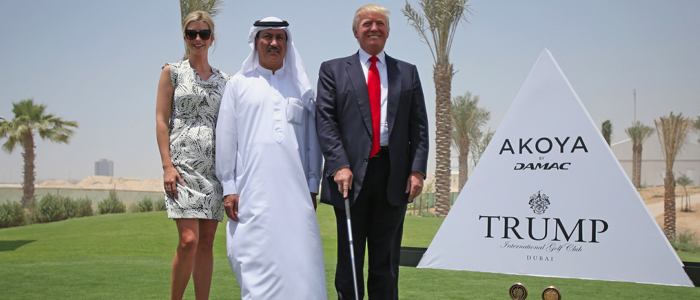
donald-trump-akoyaDamac reported a healthy 39% boost in H1 profits to US$ 463 million as revenue jumped 59% to US$ 991 million, with Q2 returns of US$ 253 million and US$ 556 million respectively – both up on Q1’s US$ 210 million and US$ 435 million. Over the half year, the developer’s asset base expanded by 41% to US$ 4.29 billion whilst it has already booked sales of US$ 1.44 billion for its much vaunted Akoya project. (Last month, the company announced that it would soon list on the local bourse and, with a market cap of some US$ 3.5 billion, it will soon become a big player on the DFM).

Dubai Refreshments Company posted a healthy 14.1% rise in H1 profits to US$ 18.7 million. The Pepsi distributor in Dubai and Northern Emirates saw sales increase by 11.7% to US$ 130 million.

Drake & Scull reported disappointing Q2 earnings with a 41.0% drop in profit to US$ 7.1 million, compared to the same quarter in 2013, as revenue dipped by 17.9% to US$ 300 million. The main reason given was delays in some projects in Saudi Arabia.

Although there has been a marked slowdown in the realty sector, Dubai Land Department reported that Emiratis splurged out US$ 3.4 billion on local real estate in H1, with a further US$ 1.8 billion being spent by nationals from the rest of the GCC. Reports indicate that prime property price rises have fallen from 11.7% to 6.3%, year on year ending 30 June 2014.

Even though July is recognised as a flat month for the hospitality industry, latest figures still come as a major jolt with occupancy rates of 45.4%, which, according to STR Global, are at their lowest in eighteen years. The figures were made worse because the holy month of Ramadan fell mostly in July. The 11.8% fall in occupancy was the result of the double whammy of an 8.3% surge in supply, allied with a 4.5% drop in demand. Consequently RevPAR (revenue per available room) dropped 5% to US$ 79, whilst conversely average daily rate rose 5% to US$ 174.

Emaar Middle East has awarded the locally-based Arabian Construction Company a contract for three buildings in its Emaar Square development in Jeddah, with handover for the first offices by 2016. No financial details were available.

The Telecommunications Regulatory Authority confirmed that there are over 16 million active mobile subscribers in the country giving an impressive penetration rate of almost 193% – one of the highest in the world. This is in addition to the 2.1 million land lines in use. Pakistan was the leading country for outgoing calls, with a staggering 2.1 billion minutes recorded.

Emirates has signed a five-year maintenance agreement with BAE Systems to provide technical support for its Boeing fleet of aircraft. No costs were available but this a major contract for the UK company, as the airline operates the largest 777 fleet in the world.

The airline has also arranged loan facilities, totalling US$ 425 million, from three local banks to finance the purchase of two Airbus 380s which brings their total to fifty one.

Following China, the UAE is now considered the world’s second fastest growing air passenger traffic hub, with an 11.7% hike in numbers to 45.3 million last year.

The latest project for the ever-expanding Jumeirah Village Circle is Al Manara Tower. Tiger Properties has already started work on the 300 apartments with the US$ 55 million project slated for completion by 2016.

Only two years after going international, Dubai-founded Doner Kebab now has presence not only in the GCC but also Pakistan, India and a London base. It plans a US$ 5.5 million investment to open a further twelve outlets in Dubai and build a factory here. It employs more than 300 in its 20+ outlets.

Max Hypermarket, part of the Dubai-based Landmark Group, and the French retailer, Auchan, have pulled out of arrangements to operate hypermarkets in India. The initial 2012 arrangement was for the Indian partner to operate the French chain of outlets and have up to 80 stores open by 2015.

By the end of June 2015, Dubai Municipality hopes to have completed the naming of all streets in the emirate. In total, 7.5k streets and roads will bear names that take into account Dubai’s history, heritage and culture.

In line with the emirate’s recent economic growth, Dubai Customs has reported a 9.8% H1 expansion in transactions to 4.5 million. Among the various delivery channels in use, Dubai Trade portal and Business to Government (B2G) saw transactions up 37% and 11% respectively.

Emirates District Cooling – a JV between Dubai Investments and Union Properties – obtained a US$ 245 million, 12-year loan facility from Dubai Islamic Bank. Emicool will use the funds largely for refinancing purposes, as well as for expansion plans.

There are rumours that Meraas Holding, backed by the Dubai government, is considering an IPO that would help finance its ever-growing order book. Major projects include its massive JV with Emaar Properties for building Mohammed bin Rashid City, the US$ 1.6 billion Bluewaters Island off JBR, US$ 535 million Dubai Creek development and partnership with Six Flags to develop a theme park.

A recent ISC report indicated that almost 47% (439) of all GCC international schools are based in the UAE, more than the combined total of the next three countries – Saudi Arabia (195), Qatar (130) and Kuwait (80). The total fees for all 982 schools were estimated at around a staggering US$ 6 billion.

There was no surprise news from Dubai Statistics Centre confirming a monthly increase in the emirate’s inflation rate from June’s 2.8% to 3.4%. This was the highest it has been since July 2009.

Better late than never, UNCTAD (United Nations Conference on Trade and Development) highlights that the UAE still maintains its second position in the Middle East, after Turkey, for foreign direct investment. The 2013 return of US$ 10.5 billion is a 9% increase on the previous year. FDI outflows last year were up 14.6% to US$ 2.9 billion.

The country’s official credit bureau – Al Etihad Credit Bureau – will start the first phase of its long-delayed operations next month by issuing consumer credit reports. Having processed six months of credit data from all the banks in the UAE, it will be able to give current information on all the banks’ clients who need to have their credit checked – a total of 5.2 million individual records are now on file.

All twenty eight of its financiers have approved Amlak Finance’s restructuring package, which is a forerunner for the institution to recommence trading on the Dubai Financial Market in early 2015 – almost six years after being delisted. The deal will see Amlak make an initial US$ 545 million payment to the financiers with the balance (a reported US$ 2.15 billion) being repaid over twelve years, including a US$ 380 million convertible bond; the outstanding debt due to the federal government will be repaid over six years. The deal has to be approved by the Sharia-compliant mortgage lender’s shareholders, of which Emaar Properties is a 45% stakeholder.

It is reported that DIFC Investments could issue a sukuk as early as next month and that proceeds therefrom could be used to refinance the US$ 1.2 billion syndicated loan taken out in May 2012.

Having dropped 2.0% the previous week, the Dubai bourse opened on Sunday at 4735 – and closed the week up 1.6%, on very thin trading, at 4813. Thursday saw total transactions at 301 million shares valued at US$ 108 million. Bellwether stocks, Emaar and Arabtec closed on US$ 2.74 and US$ 1.16 respectively.

Dubai Nasdaq is set to have a new listing as the Bahraini-based Gulf Finance House is planning a US$ 200 million sukuk. The money raised will be used to repay an existing Islamic bond of US$ 84 million and project development. Last month, the company signed a land sale agreement with Dubai Properties Group.

Poor economic news shows a 0.2% Q2 contraction in Germany and zero growth in France – a sure indicator that all is not well in the eurozone. Under the circumstances, France will not meet its 2014 deficit, as the country reels from lack of business investment and archaic labour laws. The 18-country bloc is being further hampered by worryingly low inflation and the on-going crisis in the Ukraine. It begs the question on who came up with the idea of sanctions against Putin’s Russia without realising that this is a double-edged sword and can work both ways.

As expected, Japan’s economy contracted by 6.8% in Q2 – its largest fall since the 2011 tsunami – mainly as the result of the government lifting the sales tax rate from 5% to 8% in April. On a quarterly basis, GDP fell by 1.7% following a 1.5% Q1 rise but this blip is only temporary as the economy will return to growth in Q3 as indicators, such as industrial production and retail sales, head north.

As a result of not achieving their budget deficit target, Fitch has cut Croatia’s rating one notch to BB. The recently admitted EU nation had earlier announced that it would cut its deficit from 4.9% to 3.8% but has failed to do so and has a public debt problem that may blow out – if action is not taken.

Another country not hitting their target is China with a July inflation rate of 2.3% – well down on the estimate. With July returns indicating a 14.5% hike in exports, compared to a year earlier, and a healthy trade surplus of US$ 47.3 billion, the Chinese economy is set to grow at a rate above 7.0% but slightly less than official estimates. The government has been proactive in moving the economy forward by such steps as reducing tax, making finance more available, cutting red tape and improving the country’s infrastructure.

Because of shady operations in its pre-GFC sale of mortgage-backed securities, it seems that the Bank of America will finally receive its full come-uppance. The disgraced financial institution is nearing a record US$ 17 billion settlement with the US Justice Department – 47% of which will be paid to the struggling home-owners who lost homes to foreclosures due to the banks’ rash actions.

This is the third major settlement arising from the same scandal with JP Morgan paying out US$ 13 billion last year and Citigroup US$ 7 billion last month. It was the junk status of these loans, packaged as commercial value by major banks, that was a precursor for the GFC.

It appears that Australian banks are following the example of their European and American brothers with legal proceedings being brought against the Big Five – ANZ, BankSA, Citibank, St George and Westpac. An Australian legal firm has instigated proceedings over late credit card fees that could run into hundreds of millions of dollars. More and more bankers Just Can’t Get Enough!

Posted in Finance | Tagged , , , , , , , , , , , , , | Leave a comment

We Can Work It Out

david-haye-gymThe Indian-based Hiranandani Group has signed a management agreement with Accor to develop a 350-room Ibis hotel in Downtown Dubai. This is yet another indicator that Dubai’s hospitality sector is in need for hotels in the budget price range, as the 5-star bracket continues to dominate the market. The hotel – slated for a 2016 completion – will be the French Accor’s 16th property in Dubai.

SKAI Holdings has announced that it has sold all 234 hotel rooms, 234 apartments and 33 penthouses in its recently launched US$ 306 million Jumeirah Village Circle project. The Dubai-based developer reported that sales proceeds were US$ 253 million and that it would retain the likes of 17k sq ft of retail space, restaurants and spa facilities. The project will take three years to complete, with work commencing next month.

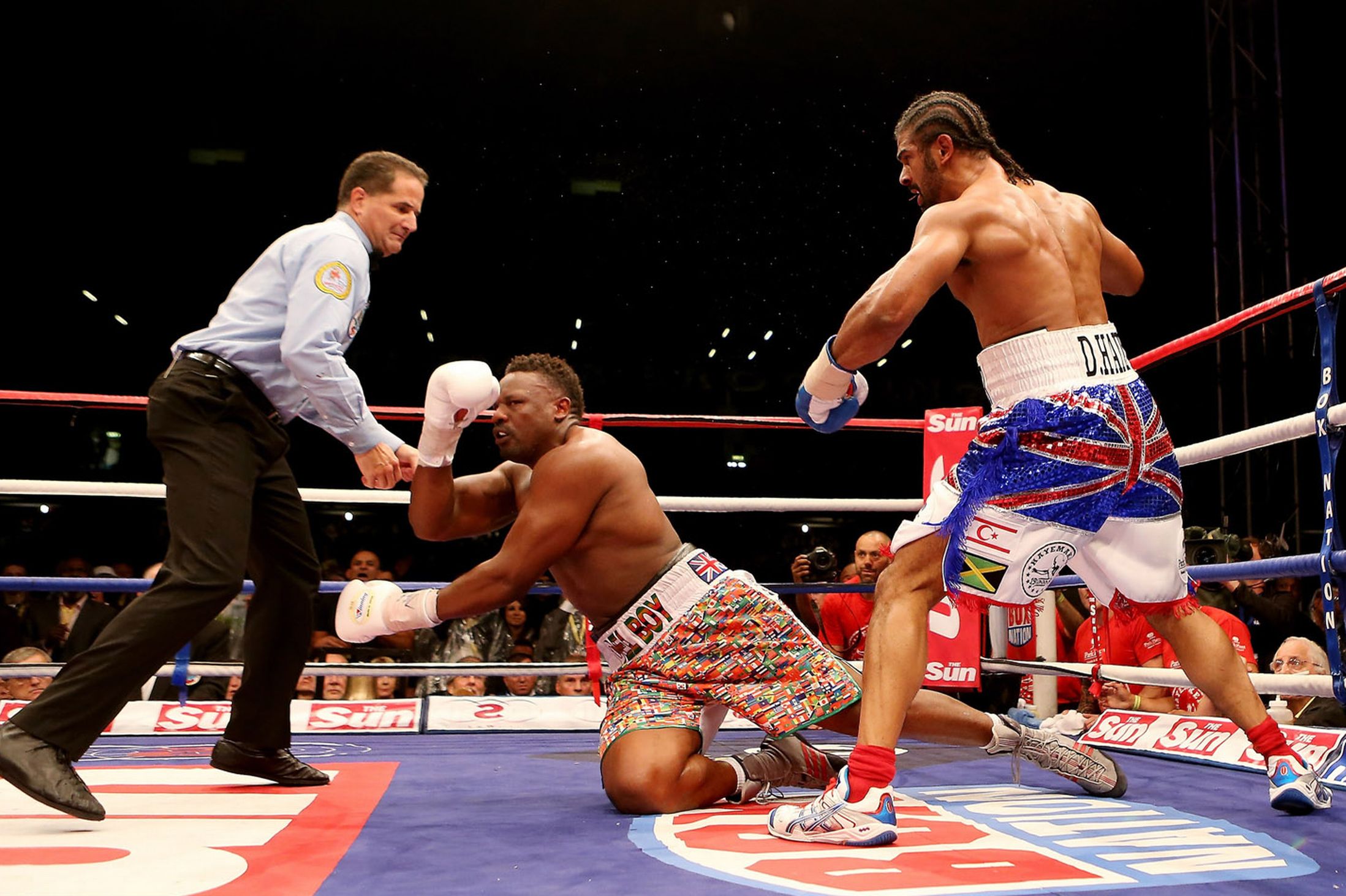
Dubai’s move into the health and fitness market received a timely boost with the opening of the Hayemaker Gym, with the support of Dubai Investment Development Agency, in liaison with David Haye, the ex-world boxing champion. The new centre of excellence for sports and performance coaching will help the emirate’s push to becoming a global health tourism destination.

Meanwhile it is reported that Dubai may well submit a bid to host the 2024 Olympics but will probably  bid for the Youth Olympics and / or the Asia Games earlier.

Further apparent good news for Dubai Investments with H1 profits more than doubling to US$ 219 million from US$ 101 million, in the same period last year. However, it has to be noted that US$ 129 million of the profit came from the May sale of its 66% share in Globalpharma to the French pharmaceutical company, Sanofi. The company is expecting that its credit rating will soon be lifted to BBB, a move that would help it raise future funds at more favourable rates.

According to OAG, Emirates is ranked first globally when it comes to a premium class capacity ranking known as ASKMs (available seat kilometres) having recorded a weekly 876 million in April, with 191k seats available in business and first class.

Having already launched thirteen new routes this year, flydubai is to start flying to destinations in Iran – Tehran and Mashhad.

Emaar Properties reported a 40.6% rise in H1 profit to US$ 472 million, on revenue figures of US$ 1.38 billion. 52.3% of total revenue, equivalent to US$ 721 million, came from the company’s malls, leisure and hospitality businesses. Furthermore, revenue from international operations came to US$ 205 million, contributing 14.9% to the company’s top line. The Dubai developer has indeed come a long way from its origins, as a builder of villas, in new Dubai, some fourteen years ago.

Shuaa Capital saw Q2 revenue and profit weaker than in Q1. Revenue at  US$ 14.2 million was 18.75% down whilst profit at US$ 1.7 million was off 24.4%. The main reason for this was the fall-out from the Q2 22.1% drop on the Dubai bourse.

Dubai International Capital racked up a tidy profit with the sale of Mauser Group to Clayton, Dubilier & Rice for a reported US$ 1.7 billion. Owned by Dubai Holding, DIC bought the German packaging company for US$ 1.1 billion in 2007.

It will come as no surprise to many to see that Gems Education has reported a 78.6% jump in annual profit to US$ 75 million although its cash holdings dropped 8.6% to US$ 24.6 million. Bloomberg reported in May that Fajr Capital and Investcorp were considering a minority stake holding in the parent company which would have valued it in excess of US$ 1.5 billion.

The Department of Economic Development renewed 31.3k licences in Q2 and issued 5.8k new licences in H1 – a 17.0% increase on last year – of which 74.2% (or 4.3k) were trade licences.

With 8.7k new companies joining in H1, the Dubai Chamber of Commerce can now boast a staggering 160k members. The Chamber, the largest in the MENA region, is planning to shortly open a further three international offices – in Erbil (Kurdistan), Ghana and Mozambique.

The importance of SMEs to the local economy was highlighted by figures from the Dubai Economic Council which estimated that 42% of Dubai’s workforce is employed by that sector. The biggest hurdle facing SMEs is the lack of finance and unfortunately they do not seem to get too much help from the banks here.

Ventures Onsite estimates that new 2014 GCC infrastructure projects will be in excess of US$ 86 billion – a massive 78% increase over 2013 returns. The company expects to see a fivefold surge in UAE projects to US$ 15.2 billion, only topped by Saudi Arabia (US$ 29.3 billion) and Qatar (US$ 26.2 billion).

Empower provided 174.3 million refrigerating tonnes per hour (RTH) in July – a 9.5% increase compared to 2013. The largest district cooling service provider in the world has a capacity for 1 million RTH, following its January acquisition of Palm District Cooling and is building a third district cooling plant in Business Bay.

Following July’s recovery that saw the bourse gain 22.6% in the month, the Dubai Financial Market General Index opened on Sunday at 4833 – and closed the week 2.0% down at 4735. Bellwether stocks, Emaar and Arabtec were trading at US$ 2.66 and US$ 1.12 respectively.

Following its buy-out of Autonomy in 2011 for US$ 11.1 billion, and then finding out that it had bought a lemon, Hewlett Packard is to sue the UK company’s former chief executive, Michael Lynch, and CFO, Sushovan Hussain, for fraud. This is after HP had to write down US$ 8.8 billion of the company’s value within a year of the sale. So much for due diligence!

Almost on the same subject, some may consider F1 supremo, Bernie Ecclestone, a lucky man.The 83 year old had admitted making a payment to German banker, Gerhard Gribkowsky to facilitate the sale of a major stake in his F1 business. The German banker is currently in jail whilst Mr Ecclestone has agreed to pay US$ 100 million as settlement  to end his trial on bribery charges. This could be considered one law for the rich and one for the poor.

HSBC has a lot to thank this region for as MENA (Middle East and North Africa) accounted for US$ 989 million, or 8.0%, of its H1 profit (up 8.8% from 2013 H1’s figure of US$ 909 million). On a global scale, the bank reported a 12.7% fall in its profit, down from US$ 14.1 billion to US$ 12.3 billion, as its revenue figures dropped 9.3% to US$ 31.2 billion.

Standard Chartered fared even worse with a 20.0% fall in H1 profit to US$ 3.3 billion and now faces the real threat of takeover bids from larger European or Australian banks.

But HSBC and Standard Chartered are not the only banks with unhappy shareholders. Credit Suisse announced its biggest quarterly loss (US$ 780 million), since the GFC, which included a US$ 1.78 billion provision for US tax evasion charges. Meanwhile Bank of America came in with a 43% quarterly fall in net income to US$ 2.3 billion. In recent times, the financial institution has been hit with a massive US$ 9.5 billion fine for its impropriety in its dealings with Fannie Mae and Freddie Mac and US$ 783 million for mis-selling.

The Portuguese Banco Espirito Santo has had to be split in two with the “good” bank, Novo Banco, receiving an extra US$ 6.6 billion in capital and taking over the branches, deposits and other healthy assets whilst the “bad” bank will inherit the bank’s loan portfolio and be wound down over time. This comes after H1 losses of US$ 4.8 billion and is bad news for both shareholders and some creditors who will lose money on the new set-up. The troika – EC, ECB and IMF – gave Portugal US$ 105 billion in bailout funds and it seems that they, along with the local government and the bank, have been negligent and have still not fixed the banking system. If it can happen here, there is another Banco Espirito Santo on the European horizon.

Although there are many who consider that the US economy is well into its recovery phase, recent data seems to indicate otherwise. Slowdowns in July growth figures and nonfarm payrolls (from 298k to 209k), as well as a marginal increase in unemployment figures from 6.1% to 6.2%, are giving rise for some concern.

The Australian government is hoping that July’s 6.4% unemployment rate, its highest level since 2002, was a glitch but, if not, the country could be heading for a downturn. With 789k unemployed, it seems that the country’s jobless rate is now greater than the US which last occurred more than seven years ago.

With a 0.2% Q2 contraction, Italy has returned to recession as numbers have deteriorated since the beginning of the year. Since the GFC, its economy has shrunk by over 9.0% and their economic troubles have been further exacerbated by huge government debt and a complete lack of reform to their archaic labour laws. 

The last thing the eurozone wanted was the Ukraine crisis to worsen. Now Vladamir Putin is piling the pressure on the West as he retaliates by cutting back on food imports and restricting the use of Russian air space in a move that will have severe economic repercussions for some major carriers. Mario Draghi, the ECB president, will have to introduce some form of quantitative easing sooner rather than later. Failure to act now will see the bloc inevitably go into recession.

Despite the continuing optimism for the Dubai economy, there are some niggling signs that all may not be rosy in the garden and that the emirate may be operating a two-sided economy. Public sector leverage remains high with some estimates putting the emirate’s debt this side of US$ 150 billion compared to a GDP of US$ 110 billion. Up to 65% of this total relates to GREs (government related entities).

The Dubai debt problem will not go away and latest reports indicate that Dubai World is once again restructuring its US$ 25 billion loan and Amlak its US$ 2.7 billion facility; both are looking at an early first repayment and for an extension to the loan tenure. Latest results from Arabtec, Emaar and Shuaa Capital all indicate that Q2 results were not as good as those of Q1. Add to this the recent volatility in the stock market, increased rents, rising costs, a flat housing market and regional ge0-political problems then some may consider that light clouds are on the horizon. But then again this is Dubai and, as usual, We Can Work It Out.

Posted in Finance | Tagged , , , , , , , , , , , , , , , , | 1 Comment

Danger Zone

marina-101The last week of July saw the Q2 reporting season in full swing with Arabtec, Emirates NBD, Emirates Islamic and Du announcing their latest results. Arabtec – which has dominated the financial press recently for all the wrong reasons – came in with a 51.0% hike in Q2 revenue to US$ 657 million to generate a quarterly profit of US$ 28 million (H1 revenue and profit were US$ 1.24 billion and US$ 65 million).

Emirates NBD saw its Q2 profit up 34.8% with H1 profit at US$ 640 million on total income of US$ 1.92 billion. At the end of June, its total assets were US$ 94.9 billion, with customer loans and deposits both marginally up at US$ 65.9 billion and US$ 68.9 billion respectively. Its related bank, Emirates Islamic, reported impressive H1 increases in both income (28.0% to US$ 250 million) and profit (101.8% to US$ 62 million).

Du’s revenue was 13.7% higher at US$ 823 million with jumps in both EBITDA (17.9% to US$ 351 million) and net profit by 22.0% to US$ 259 million. The Dubai-based telecom company is proposing an interim dividend of US$ 0.033 on the back of these figures.

Despite its recent partial 80-day closure for maintenance and refurbishment – and reduced June passenger numbers of 5.1 million (cf 5.6 million in June 2013) – Dubai International was still able to record an impressive H1 growth of 6.2% to 34.7 million.  It is highly likely that the world’s busiest international airport will top a record 70 million passengers by the end of the year.

DP World handled 29.4 million TEUs in H1 – 10.7% up on like to like traffic over the same period last year with 25.2% originating at its home base – a rise of 14.1%. This figure is set to grow even further as an extra 66.7% capacity will be added by the end of the year so that Jebel Ali will be able to handle in excess of 10 million TEUs.

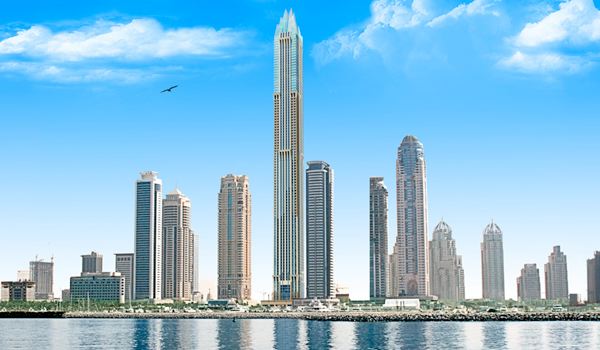
The long-awaited Marina 101 – slated to be Dubai’s second tallest tower at 425 metres – is due to open early next year. It was expected that Hampshire Hotels, in association with the Wyndham Group, would operate the 300-room Dubai Dream hotel – the focal point of the development – but it now seems that the search is on for new management of the hotel.

Dubai has always put a lot of emphasis on 5-star tourism with an estimated 62% of all properties falling into that category. Premier Inn is one company that is planning to redress the balance with plans to open a further four budget hotels adding 1,090 rooms – Ibn Batuta (370 rooms), Jadaf (300), Healthcare City (220) and Al Maktoum International Airport (200). The UK-based hotel brand, established in 1987, entered a JV agreement with Emirates Group in 2006 to launch in the Gulf and has already opened three properties in Dubai.

Having reported a 12% fall in H1 revenue to US$ 17.6 billion, JP Morgan Chase & Co is cutting staff numbers by 2%, including a number in its Dubai operation.

A recent report by Knights Frank shows a massive 25% increase in Dubai industrial rents with Class 2 buildings in Dubai Investment Park, Jebel Ali and Ras Al Khor posting gains of over 40%. With an increasing dearth of quality buildings available, there is growing demand for second-rate units.

The Dubai World Hospitality Championship is to establish a sector to develop best training methods to global standards in the hospitality segment. This comes in the form of a directive from the Crown Prince, Sheikh Hamdan bin Mohammed Al Maktoum, as Dubai ratchets up its efforts to ready the emirate for Expo 2020 and the influx of 20 million visitors.

The Dubai Financial Market General Index opened on Sunday at 4652 – and closed the shortened week up 3.9% at 4833. Because of the Eid Al Fitr holidays, there were only two days’ trading – Monday and Thursday – with thin volumes; Thursday saw only 335 million shares, equivalent to US$ 240 million, being transacted. The market has recovered 22.6% in July from its monthly opening of 3943.

A US lawsuit has now named Deutsche Bank, HSBC and Bank of Nova Scotia of trying to fix the price of silver and abusing their position in the market. Every day, in an apparent veil of secrecy, these three banks, appointed by the London Bullion Market Association, fix the price of silver in a practice that has been going on since 1897.

Thursday saw Argentina default on its foreign currency debt as last-minute talks failed to end the impasse.  A US federal court has urged its government to resolve this debt crisis through negotiations as it blocked the Latin American country from making interest payments to creditors, who exchanged their bonds in 2005 and 2010 for securities of a lesser amount. The court ordered that it should settle the US$ 1.5 billion owed to US hedge funds, led by NML Capital, that bought up the cheap defaulted debt but did not agree to a “haircut”. Until this dispute is settled, the country’s precarious economy could be further damaged which will then have a negative impact on the world’s financial markets.

It was only last year that the IMF was advising the UK government that their economic policies were not working. Not for the first time has the august world body got it wrong as the British economy goes from strength to strength. This week, it reported a 0.8% rise in GDP, with latest data forecasting that annual growth is set to be around the 3.2% level – the highest of any developed country. In contrast, the German economy is slowing dramatically, not helped by geo-political developments in the Ukraine, with even the moist optimistic growth estimate being south of 2.0%. Meanwhile France’s economy is stagnating as the Hollande government fails to get to grips with archaic labour laws and too much red tape.

The July eurozone inflation rate dipped yet again to 0.40% – its lowest level since the financial crisis. Over the past ten months, annualised prices have risen at less than 1.0% and the monthly trend continues to head south. This figure is well below the European Central Bank’s target of 2.0% and the risk of a deflation spiral will become reality unless the ECB Governor Mario Draghi takes a more proactive approach to the problem. There is no doubt that the bloc is in the Danger Zone.

Posted in Finance | Tagged , , , , , , , , , , , , , , | Leave a comment

Good Riddance (Time of Your Life)

dubai-aiport2Dubai Land Department reported that H1 real estate transactions totalled US$ 30.8 billion, of which US$ 14.2 billion occurred in Q2 indicating a slowdown compared to the previous quarter. The 6.9k mortgage deals, totalling US$ 12.9 billion, accounted for nearly 42% of all transactions. During the period, 16.0k units were sold, totalling US$ 6.7 billion of which 2.6k, amounting to US$ 1.6 billion, took place in Dubai Marina.

Office rents are still on the rise but increases have slowed in Q2 to around 3% compared to 25% over the past twelve months. 40% of stock is still vacant but space in prime locations is filling fast where rents average US$ 513 per sq mt. Secondary office space has seen prices jump 24.2% to US$ 312 over the past year.

Abdulla Al Moosa’s Arenco Real Estate has just awarded the China State Construction Engineering Co (CSCEC) contracts to build two 5-star hotels on Palm Jumeirah. The world’s third largest construction company expects to complete construction of the two 13-storey buildings by the end of 2016.

Marina 101, standing at 425 mt, is expected to be handed over early next year. What will then be the tallest tower in Dubai Marina – and second only to Burj Khalifa – will comprise a 420-room, 5-star hotel, 60 3-bedroom apartments and 8 duplexes.

Damac Properties’ latest Loretto project sold out at its Monday’s launch. The 300 luxury apartments – part of the massive Akoya development – will finally be completed by 2018, with hand over on the early starts by the end of next year.

Deyaar saw Q2 profits skyrocket 229% to reach US$ 17.0 million – a sure sign that the Dubai-based property developer has recovered well from its dark days following the GFC. Sales were buoyed by the April launch of its Atria hotel apartments, located in Downtown.

Dubai-listed Emirates Reit Limited reported a 194% surge in H1 net profits to US$ 34.1 million compared to the same period in 2013. The Shariah-compliant real estate investment trust also saw its portfolio increase by 73.1% to US$ 561 million. Over this period, REIT raised US$ 200 million in an IPO which has funded US$ 32 million and US$ 167 million for the purchase of Le Grand Community Mall in the Marina and office and parking space in the DIFC’s Index Tower respectively.

Commercial Bank of Dubai reported satisfying H1 figures with Operating Profit up 4.4% to US$ 196 million and Net Profit up 17.0% to US$ 158 million over the same period in 2013. Loans and advances surged 6.8% to US$ 8.5 billion whilst deposits were up 12.1% to US$ 8.8 billion. Another indicator that consumer confidence has returned to the market was the fact that CBD’s gross loans climbed 40.4% to US$ 1.0 billion.

Mashreq went even better with a 45.3% jump in Q2 net profits to US$ 159 million, with H1 at US$ 316 million.

Following its 80-day partial closure for refurbishment and maintenance, Dubai International services returned to normal this week with 31% more flights. Even with its reduced workload in June, it was still the busiest international airport in the world and will probably carry more than 70 million passengers this year.

Of the 1,226 billionaires listed by Forbes, four come from Dubai – Abdul Aziz Al Ghurair (Mashreq bank) has a wealth fund estimated at US$ 2.9 billion, Saif Al Ghurair – US$ 2.0 billion, Abdullah Al Futtaim (Al Futtaim Group) – US$ 1.6 billion and his cousin, Majid Al Futtaim – US$ 1.1 billion.  The latter’s MAF Group reported a 14% H1 hike in revenue to US$ 3.5 billion resulting in EBITDA being US$ 490 million – an increase of 13.0%. Most units performed well, including retail with revenue up 15.0% to US$ 2.9 billion, with EBITDA at US$ 151 million.

A recent Q2 survey by Morgan McKinley indicated that demand was greater than supply when it came to professional job opportunities in the UAE; it found that there was a 21.1% increase in job opportunities, to 8.1k, compared to Q1, whilst the number of professionals looking for work jumped by 29.7% to 45.6k. There was no surprise to see that construction was the primary driver and these figures underlie the continuing strength of the economy which is growing at its fastest rate since the halcyon days of 2007.

The Dubai Financial Market General Index opened on Thursday at 4667 – down 4.8% on Sunday’s opening of 4903.  Emaar and Arabtec, were at US$ 2.65 and US$ 1.15 respectively. 

If not so serious, it would be laughable, that despite all the rhetoric about the imposition of tough sanctions against Russia, the UK is still exporting arms to the value of US$ 225 million. No doubt some of these are being used for “illegal” activities as well as for military and security purposes. It is about time that western governments toughened up and imposed more severe restrictions that will damage the Russian economy, rather than individuals and small companies. Why has Robert Mugabe faced the full force of sanctions whilst Vladimir Putin has not? The answer is simple!

Analysts are keeping a close eye on developments in the eurozone as a Bundesbank report expects that the German economy has stagnated in Q2 with growth at a pitiful 0.2%. Apart from the inevitability of further bad news from bloc members, external factors – such as the Russian / Ukraine stand-off and the immoral expansive Israeli ground offensive in Gaza – are slowing down European economic growth and are primary reasons for German economic indicators heading southwards.

It is indeed a matter of when – and not if – the ECB introduces QE (quantitative easing) as current growth is at best patchy and consumer confidence is weak. The troika of high public debt, very low inflation and minimal expansion will leave countries marginalised, with high unemployment levels and reduced tax revenue, which will continue to spiral ever downwards, unless immediate positive measures are taken. The central bank has to act now and start buying government bonds – this is the only way to kick start the eurozone economy.

Unlike its European neighbours, the UK economy is beginning to build up a head of steam with a forecast 2014 growth rate of 3.1% – the highest in the G7 and over 70% higher than Germany’s forecast of 1.8%. Although sterling is strong (at over 1.70 to the US$), unemployment levels are plummeting and business investment – rather than consumer spending – is the main economic growth driver, interest rates will probably remain at their historical lows until at least the end of the year. One drawback to some is that house prices will continue to head upwards – probably as high as 10% in certain hot spots.

A defeat in the World Cup final could well be followed by another loss that could have ramifications not only for Argentine but for the global bond market. The country is refusing to follow a US court decision that it pay all its creditors – including a minority that have refused to take a hair-cut of up to 70%. \if the current impasse continues into next month then Argentine will again be in default for the second time in the past decade.

Improprieties and banks seem to go hand in hand, whether it be gold price fixing, money laundering, manipulation of Libor rates, mis-selling of mortgage-backed bonds – the list goes on. Indeed it is estimated that UK’s four largest banks’ exposure in the PPI scandal runs at over US$ 34 billion!  Now that country’s Senior Fraud Office is to investigate whether currency traders have been rigging forex rates to their advantage – and customers’ disadvantage. 40% of the daily US$ 5.3 trillion market is carried out in London and it would be against the grain if no manipulation has been taking place. It seems that people in this business cannot help but help themselves and already almost forty staff from ten banks are on garden – or permanent – leave. Good Riddance (Time of Your Life).

Posted in Finance | Tagged , , , , , , , , , , , , , | 1 Comment

Life On Mars

mars-banFollowing Emirates’ announcement earlier in the month, confirming its order for 150 Boeing 777X aircraft, the airline has signed a 12-year, US$ 13 billion maintenance and repair agreement with GE for the 300 GE9X engines that it ordered last November, at a list price of US$ 15 billion. (The GP7200 engines, used on the entire Emirates 380 fleet, are made by Engine Alliance, owned by GE and Pratt & Whitney).

The week it received its 50th Airbus 380, and with a further 140 on order, Emirates intimated that it could be in the market for another 80 if the manufacturer could be convinced to overhaul the existing model by 2020. Any revamp would include using the more fuel efficient Rolls Royce engines and other modifications which could slash operating costs by more than 8%.

DP World is the latest GRE to make use of the improved debt market conditions by signing a 5-year US$ 3 billion loan. It is reported that the global port operator has agreed to a US$ 2.39 billion conventional loan, at 150bps over Libor, with the balance being a Sharia compliant instrument.

To ensure a continuing reliable supply of water, and improve operating efficiency, DEWA has invested US$ 18 million in a two-year project that will see the introduction of surge protection devices in its pumping stations.

The fact that Dubai’s inflation rate in H1 rose over 71% to 2.74%, compared to the same period in 2013, comes as no surprise when residential rent and utilities account for 44% of total consumer expenses. Three major price rises in H1 were gas (11.89%), rents (5.03%) and education (4.43%).

Shuaa Capital posted Q2 profit figures of US$ 1.7 million, up US$ 1.3 million on a year earlier, as Revenue jumped 19.8% to US$ 14.2 million. Although the investment bank’s figures are up on the same 2013 period, they are slightly down on Q1 Revenue and Profit of US$ 17.5 million and US$ 2.2 million.

There is some indication that Aabar Investments is interested in acquiring more shares in Arabtec from its former CEO, Hasan Ismaik, so as to bring its holding to around 30%. The Abu Dhabi government-owned investment company is currently Arabtec’s second largest shareholder with a 18.94% stake. Belatedly, the authorities have taken some positive action and suspended trading in the company’s shares at the start of Thursday’s business, whilst it awaited further clarification from the main stakeholders.

The Dubai Financial Market had a stellar Q2 with Profit up 363% from US$ 18.9 million to US$ 68.8 million whilst the value of securities traded in the quarter rose by 234% to US$ 34.6 billion.

The bourse, opening on Sunday at 4575 points, had another mega week to close Thursday up 7.2%, or 328 points, at 4903. Emaar and Arabtec ended the week on US$ 2.70 and US$ 1.35 respectively. The DFM alsobconfirmed that it had approved a move by Drake & Scull to issue a US$ 15 million convertible bond to an unnamed investor, keen to buy into the company.

According to a recent Thomson Reuters’ report, H1 debt capital market activity in the ME fell some US$ 4 billion to US$ 22 billion. Over US$ 12.1 billion of this business originated in the UAE with Saudi being a distant second with US$ 6.2 billion.

The Brics group – which represents over 40% of the global population – now has its own development bank with the principle aim of financing infrastructure projects in the five member nations – Brazil, Russia, India, China and South Africa – without having to rely on the Western banking system. All countries will each pay in US$ 10 billion capital for the new financial institution which will be headquartered in Shanghai. Furthermore, there will be a US$ 100 billion Contingent Reserve Arrangement to reduce any economic fall-out as US continues tapering its QE policy, which started the year at a monthly US$ 85 billion and is expected to be finally closed down by November.

HH the President Sheikh Khalifa announced the creation of a UAE Space Agency, as the country enters the space race to send an unmanned craft to study Mars. This project will be the main driver of the agency but it will also be tasked with developing Emirati talent in the space and aeronautical sector as well as making the country a space technology centre. Only eight other countries have plans to explore this planet that will involve a 60 million km journey over a nine month period.

The launch date, 2021, coincides with the country’s 50th anniversary of its formation and UAE will be the first Arab nation to explore outer space. There are no costs available but the UAE has already spent US$ 5.5 billion on its satellite and space development programme – and this will cost a lot more. HH Sheikh Mohammed bin Rashid Al Maktoum is quoted as saying: “We chose the epic challenge of reaching Mars because epic challenges inspire us and motivate us. The moment we stop taking on such challenges is the moment we stop moving forward.” One wonders what Dubai could do to the red planet if its probe did find Life On Mars.

Posted in Finance | Tagged , , , , , , , , , , , , | Leave a comment