Hey, That’s No Way To Say Goodbye!

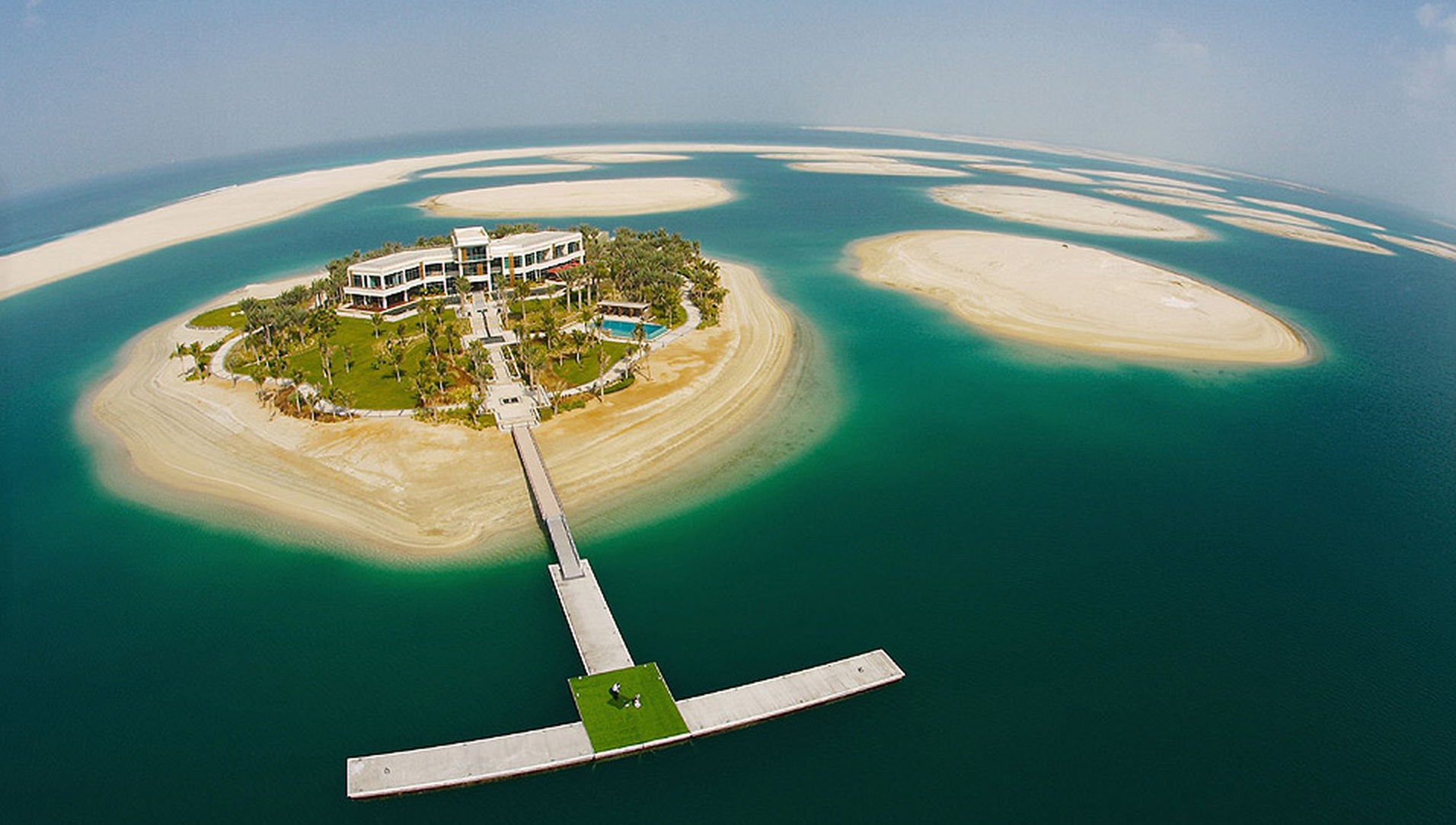
sepp-blatter-emiratesAt long last, there appeared to be some action taking place in Great Britain – an island on The World project. Drydocks World reportedly signed an agreement earlier in the week with the Q Group to provide technical support for further development on the proposed 5-star resort island. A day later, Nakheel, the master developer of World Islands, indicated that there were some outstanding issues that needed to be resolved before any further progress could be made. How long it will take GB to join Lebanon and Central Europe as the huge project’s only developed islands remains to be seen.

In order to add even more dining and leisure activities for the 30k inhabitants and countless more visitors to Jumeirah Palm, Nakheel is letting out a  further 17 plots in their Azure Residence and Club Vista Mare developments.

The same developer has already completely leased out its 5.3k retail and 93 food spaces for their Deira Islands Night Souk, covering a massive 15.3 sq km area, including 1.9 km of shoreline. When completed, the area will be a vibrant tourist destination, along with scores of new hotels, residential buildings and waterfront activities, as well as an amphitheatre for 30k. The whole Deira Island project will see 280k residents and 50k new hotel rooms.

Engineering Contracting Company has been appointed as the main contractor by Dubai Properties for their US$ 218 million Dubai Wharf project. The four towers, housing 582 residential and 150 retail units, will be completed by 2017 and will form an integral part of DP’s Cultural Village master development.

Spanish operator, Parques Reunidos has been awarded the contract to operate motiongate Dubai and Bollywood Parks for Dubai Parks and Resorts. These are two of the four unique zones that will comprise the mega theme park being built in Jebel Ali.

October witnessed a record high in business activity with the HSBC UAE Purchasing Managers’ Index reaching 61.2 – its highest ever level since the series began over five years ago. This indicates that the local economy is steaming ahead, despite low oil prices (Brent crude currently trading at US$ 83.0) and international geo-political factors.

The awarding of a US$ 47 million district cooling plant in Abu Dhabi has pushed the total new business for Drake & Scull Engineering to over US$ 218 million this year. The project, including design and building, will be completed within a year.

Dnata, which operates in all six UK airports, into which Emirates flies, plus East Midland, have expanded their Manchester operation, by adding ground handling services there. Initially, it will service Emirates and then next month Cathay Pacific. This expansion has seen its workforce more than double to around 220 employees.

With much of the cargo traffic now moving to Dubai World Central, the new facility recorded Q3 returns of 243k tonnes (YTD – 520k tonnes). The airport saw 156k passengers in the quarter with a YTD total of 734k.

Since introducing Wi-Fi three years ago on some of its flights, Emirates has seen its usage literally take off with over 500k users. The airline’s aim is to make the service free of charge on all its flights; currently, only its entire A-380 fleet of 54 aircraft and 27 of its 100 Boeing 777s have the service available.

Next Tuesday, 11/11, will see the official opening of the RTA’s new tram service which is expected to run twenty hours from 0500 to 0100. Initially there will be eight vehicles used on the 10.6km tramway which is expected to transport 27k passengers on a daily basis. Built by a consortium of Alstom, Besix and Parsons, phase 1 will have cost US$ 866 million.

The latest Knights Frank report points to a further decline in the luxury home market, as prices slipped a marginal 0.3% in Q3. As has been the case all year, the Central Bank tightening of the mortgage cap for properties over US$ 1.36 million, along with the doubling of the transfer fee to 4%, have been the main reasons attributed for the slowdown. Over the past twelve months, prices were up by only 2.6% compared to 6.3% in the preceding 12-month period.

The government has repaid the US$ 1.93 billion it raised in a 5-year sukuk in October 2009 – at the beginning of the financial crisis. Earlier in the year, Abu Dhabi agreed to refinance a US$ 20 billion loan, for a further five years, at a 1% rate.

Following last week’s announcement of the TECOM expansion, the company is now planning to raise a 7-year US$ 1.09 billion loan. The funds will be used by this unit of Dubai Holding, for its growth plans, and with some funding for its parent company.

The newly incorporated Emaar Malls Group announced a 55.2% increase in Q3 net profit to nearly US$ 88 million, as revenue jumped 19.7% to US$ 177 million. The company raised US$ 1.58 billion when it went public in September.

Last week’s equine trade biennial fair, organised by Al Fajer Information and Services, attracted a record number of trade visitors (5k) and 215 exhibitors – 85% of whom have already booked for Al Fares 2016. The 2013 imports of equine products and accessories reached US$ 327 million.

Abraaj Investment Management has made a US$ 119 million offer for Bisco Misr, an Egyptian bakery. The affiliate of Abraaj Capital is awaiting further advice from the Egyptian Financial Supervisory Authority on the proposed sale. Abraaj, which manages assets of over US$ 7.5 billion, also bought into Wine Connection, a leading SE Asia food and drink chain, with its fourth foray into that regional market.

EIIB Rasmala is planning to expand its investment range by enhancing its local property portfolio. The Dubai-based asset manager – 76.3% owned by The European Islamic Investment Bank, with the balance to Rasmala Holdings – is hoping to raise US$ 1.6 billion. US$ 1 million will be invested in its leasing and alternatives business with the residue in the UK property segment.

Dubai Health Authority has imposed a 4.2% cap on any healthcare service increase as from 2015, in line with the forecast inflation rate. Hospitals and clinics, along with services provided to local insurance policies, will be covered by this welcome new regulation.

DEWA has started an US$ 18 million project to upgrade the efficiency of its water transmission networks. This will cover thirteen locations where surge protection systems will be installed.

Following their August US$ 300 million fine from the New York banking regulator, it seems that there will be further investigations into potential sanction violations by the troubled Standard Chartered Bank. There will not be too many of their former Dubai SME clients, who were given just 30 days’ notice to close their accounts, losing sleep over the bank’s latest troubles. Investors are not happy either – as the share price of US$ 15.24 is 37.0% down on 52-week highs and less than half of what it was in November 2010.

It looks like another international bank is pulling the plug on its ME operations with reports that RBS is considering the sale of its corporate loan book. As the recipient of the biggest bailout funds following the GFC, the bank – 81% owned by the UK government – is focusing more of its attention in its home market.

The latest company to go public on the Dubai Financial Market is Daman Investments which is planning a 55% share float in Q1 2015. The exact amount of the IPO – along with the ratio of retail and institutional buyers – will be known later in the month. This is a sure sign that the Dubai economy is on the upswing especially after the two recent IPOs – Emaar Malls Group and Amanat – which raised US$ 1.6 billion were oversubscribed.

The Saudi bourse has been rocked by news that telecom operator, Mobily has had to restate its audited earnings from the past 18 months because of accounting irregularities. As a result, Etisalat – a 27.5% shareholder in the company – has had to follow suit and has trimmed its 2013 profits and H1 2014 by US$ 381 million.

Having fallen 0.6% the previous seven days, the DFM had a dismal week falling 3.1% from its Sunday opening of 4545 points to close Thursday on 4406. Bellwether stocks, Emaar Properties and Arabtec, were trading at US$ 2.68 and US$ 1.04 respectively.

The UK Serious Fraud Office, not known for its success rate in prosecuting offenders, has accused Robert Hallett of two counts of corruption. The ex-senior manager of Alstom Network UK is to face two charges of paying “inducements” totaling US$ 4.2 million to Delhi Metro Rail Corporation officials. More charges against the company and other officials will follow.

More bad news for the South African economy with the government almost halving its 2014 growth forecast from 2.7% to 1.4%. With a 4.1% budget deficit, the country, that spends over half of its income on the public sector and welfare payments, needs to raise an additional US$ 1.36 billion.

The current economic outlook in Australia is causing concern as its September trade deficit more than doubled to almost US$ 2.0 billion as exports rose by 1% but imports jumped by 6%. A plunge in commodity prices – as global demand falls – has seen a 40% fall in iron ore over the past year and thermal coal prices at five-year lows; these are the country’s two main exports.

Indonesia has seen a marked slowdown in its GDP growth which, at a still credible 5.01%, is at its lowest level since the GFC. Both Q3 exports, 0.7%, and imports, 3.63%, were down on the same period last year. Their on-going long-term economic problems – a widening  current account deficit and weakening global demand – continue to beset the newly elected president, Joko Widodo.

With real estate accounting for 16% of the China’s GDP and housing sales in the first nine months of 2014 falling 10.8%, there is some credence in the belief that a property bubble is about to burst. If that were to happen, the contagion will be felt locally – initially in the steel and cement sectors – and across the world. One interesting fact on the impact of a property bubble collapse is that, in the past three years, China has used 6.6 billion tonnes of cement – in the whole of the twentieth century, USA consumed only 4.5 billion tonnes! With its total debt spiraling out of control, the whole world is hoping that the Beijing government will manage a soft landing when the inevitable housing correction occurs.

Even though Spain’s recession is officially over, as more jobs are being created, consumer demand has picked up quicker than expected and the 2015 growth forecast rose to 2.0%. Unfortunately, the headline figures hide the fact that the country is facing dire social problems. Not only is unemployment at over 25%, public debt stands at 100% of GDP and companies owe more than 120% of GDP but 1.5 million Spaniards rely on food banks, 700k households – that generate no income – are unable to claim government benefits and 2.4 million have been unemployed for more than two years.

Having been FIFA’s airline partner for the past three world cups, Emirates has finally pulled the plug and will not renew sponsorship with the world football body which has been beset by numerous scandals and reported financial misdemeanours. It is estimated that partner sponsors pay over US$ 1.6 billion into the pot for a 4-year World Cup cycle. The Dubai-based airline was one of six partner sponsors – along with adidas, Coca Cola, Hyundai/Kia, Sony and Visa– and the first to realise that there may be some toxicity with links to Sepp Blatter’s FIFA and its alleged ever- increasing corruption scandals. Emirates has now shown FIFA a deserved red card and the sooner other sponsors follow suit, the quicker the world game can rid itself of its tarnished reputation and regain credibility. Then the FIFA cabal can moan that Hey That’s No Way To Say Goodbye!

Posted in Finance | Tagged , , , , , , , , , , , , | Leave a comment

I Can’t Explain!

the-whoHH Sheikh Mohammed bin Rashid Al Maktoum opened the 10th World Islamic Economic Forum this week in Dubai. The three-day event was attended by nine heads of state, along with over 2k delegates, and showcased the importance of the city as a global financial centre.

The Dubai Ruler was also in attendance when plans for further developing Dubai Internet City and Dubai Media City were unveiled. The US$ 1.23 billion project, covering 10 million sq mtrs, will see TECOM with an additional 5.5k companies, to 10k, and an extra 30k workforce to 100k. The main aims of this initiative are to actively encourage the expansion of SMEs, develop new technologies and create sustainable infrastructure, thus making Dubai a smarter and more innovative location.

Although not up to market expectations, Emaar Properties reported a 20.7% hike in Q3 profits to US$ 191 million despite a 15.2% fall in revenue to US$ 537 million. The company has witnessed a marked slowdown in property handovers as well as holding on to plots of land for their own development use. Furthermore, the sector has been affected by the recent moves to raise the property transfer fee from 2% to 4% and the banks introducing tighter mortgage controls.

Despite this, Emaar has announced a multi-million US$ development with Dubai Holdings which will include 600 mtr + twin towers which will dwarf Petronas Towers in Kuala Lumpur. The Creek Harbour, located in The Lagoons, will be bigger than Downtown Dubai and will encompass a massive 1.5k acres. Phase 1, costing an estimated US$ 817 million, will incorporate six towers with harbour and city line views.

Hard Rock is to have a 281-room hotel in Marina 101 which is currently the world’s largest residential building. To be open within nine months, the 33-storey hotel will have a lounge area on the 101st floor, overlooking JBR and Jumeirah Palm. It will be managed by Hard Rock International for the developer, Sheffield Holdings, and Abu Dhabi Finance Group.

Following recent announcements by the Meraas subsidiary, Dubai Parks & Resorts, the company has appointed Marriott International to run its Polynesian-themed hotel in its massive Jebel Ali theme park project. The 503-key hotel will be open in 2016 and will be the base for many tourists slated to visit the Bollywood, Legoland and motiongate Dubai park attractions.

Both telecom operators came out with Q3 results this week. Etisalat announced a 21.3% rise in profits to US$ 605 million – slightly down on market estimates – as revenue surged 37.6% to US$ 3.6 billion; 48.5% of sales (US$ 1.74 billion) originated overseas in the 19 countries that Etisalat carry out operations.  Meanwhile Du posted a 17.9% hike in net profits to US$ 152 million, in line with a 14.8% rise in revenue to US$ 826 million.

Dubai International saw a 9.9% rise in September passenger traffic to 5.94 million as the YTD returns were up 6.2% to 52.4 million. Although freight saw a slight 2.8% increase in September to 202.4 million tonnes, the 9-month figures, at 1,763 million tonnes, are marginally down because of the on-going move to Dubai World Central airport.

DP World reported a creditable 9.9% rise in Q3 container volume from 14.17 million TEUs (20’ equivalent units) to 15.44 million, with a YTD total of 44.8 million units. Capacity at its home port, Jebel Ali, is expected to reach 19 million TEUs by Q1 2015.

Dubai’s latest IPO has already been over-subscribed despite not closing until next Tuesday. The Belhoul Group – a leading healthcare provider – has received the US$ 375 million required for 55% of its company.

There are reports that Dubai Investments is also planning to enter this ever-increasingly lucrative market. It is expected that it will build a school and university in its Dubai Investment Park in the near future and should have no funding with both its profits (up 17.4% in Q3) and a cash balance heading north. It is also considering the opening of a medical facility.

The Dubai Financial Market returned impressive quarterly results with net profit 85.4% up at US$ 42 million on the back of the value of traded shares surging 60.0% to US$ 21.4 billion during the quarter.

Having gained 7.1% the previous week, the DFM returned to negative territory, with the market falling 0.6% from its Sunday opening of 4573 points to close on Thursday on 4545. The index had a poor October falling 9.9% from its monthly opening of 5043 but is still up 34.9% this year. Bellwether stocks, Emaar Properties and Arabtec, were trading at US$ 2.72 and US$ 1.15 respectively.

It has not been a good year so far for gold as prices dropped to their lowest levels since 2010. This week alone, the yellow metal has fallen 5.3% to US$ 1,166 per oz despite the fact that the Fed had ended its QE programme. Whether its 28% 2013 fall will be replicated this year remains to be seen but the outlook, short-term at least, remains bleak.

A recent Independent Commission for Aid Impact report has concluded that UK overseas aid has failed in its aims to meet the needs of the poor and to reduce corruption levels in countries receiving aid. These include the top six receiving nations – Pakistan (US$ 540 million), Ethiopia (US$ 526 million), Bangladesh (US$ 435 million), India (US$ 430 million), Nigeria (US$ 398 million) and Afghanistan (US$ 339 million).

Following this week’s revelation that the EU is demanding a US$ 2.72 billion surcharge from the UK, there was more disturbing news for Prime Minister Cameron. In 2013, his country paid more than US$ 13.8 billion into the union’s coffers than it received – in 2007, this figure was US$ 6.4 billion!

RBS and Barclays have announced that they have each set aside US$ 800 million to cover possible fines and fees relating to their roles in manipulating the US$ 1.36 trillion–a–day currency markets. Other financial institutions, including Citi, JP Morgan and UBS, have already done likewise and all expect to know their fate from the British financial regulator in November.

Ebola has been with us for almost over 40 years but it has taken the World Health Organisation a long time to wake up to one of the world’s most acute public health emergencies. Back in April, MSF were warning that the spread of the epidemic was unprecedented and becoming uncontrollable but the world organisation rejected the severity of the warning. Even now it seems that the disease, that has officially killed 4.5k, but probably a lot more, is out of control with the French-based charity still in the firing line. What the WHO has been doing – I Can’t Explain!

Posted in Finance | Tagged , , , , , , , , , , , , , , | Leave a comment

If I Were A Rich Man

standard-chartered-bankHH Sheikh Mohammed bin Rashid Al Maktoum announced a seven-year plan to make the UAE one of the leading innovative countries in the world. His National Innovation Strategy will focus on seven main areas – education, health, renewable energy, space, technology, transport and water. The main target is to set up an environment that actively encourages innovation and entrepreneurship between the public and private sectors.

The first ever UAE-built satellite is expected to be launched in 2017, as Emirates Institution for Advanced Science and Technology (EIAST) announced that it had completed its design of KhalifaSat. This will be followed by actually manufacturing the unit that will then put Dubai well and truly on the map, as a leader in space technology.

As part of the move to make the emirate a Smart City, Dubai Municipality has signed an agreement with du to introduce free Wi-Fi for all its beaches, parks and public places.

Atlantis The Palm becomes the latest government related entity to make use of the favourable debt market conditions. The luxury hotel, owned by the Investment Corporation of Dubai (ICD), is to refinance its US$ 880 million loan at the new rate of 375 basis points over Libor (compared to its original September 2013 facility at 500 bps). Furthermore, it has increased its principal to US$ 1.2 billion and extended the tenure from five to seven years.

Over the past three months, both Dubai Duty Free and DP World have done likewise. DDF repriced its US$ 1.75 billion loan, for the second time in a year, to take advantage of better terms whilst the port operator refinanced and amended its loan from US$ 1 billion to US$ 3 billion.

Jumeirah Group announced that it had signed three new hotel management agreements with Chinese operators – in Hainan, Hankou and Nanjing. The luxury hotel company, owned by Dubai Holding, operates the Jumeirah Himalayas Hotel in Shanghai and has a further seven Chinese properties in the pipeline whilst currently managing 22 properties, half of which are in the ME, six in Europe and five in Asia.

The hospitality sector has seen better Septembers with latest figures indicating falls in both average daily rate, down 4.0% to US$ 183, and revenue per available room, 3.7% to US$ 140. At the same time, occupancy rose marginally to 76.3% as demand was up 7.8% just outstripping the supply increase of 7.4%.

After its highly successful Decmber 2013 launch of Maison Dubai Mall Street, Damac has just opened Canal Views in the Burj Area. The 211 luxury hotel suites tower will be operated by Damac Maison, one of the company’s two hospitality brands – the other being NAIA by Damac.

2014 continues to see a slowdown in the real estate market with the third straight quarter that both sales and rentals have fallen. There is no doubt that the 2013 introduction of the mortgage cap (75% for expats and 80% for locals) and the doubling – to 4% – of the DLD transfer fee have taken the froth off the top of the market.

As the residential sector appears to be flat lining, it seems a strange time for Christies International Real Estate to open its first regional office in Dubai. Just to let the market know of its arrival, the company’s first major sale is a US$ 99 million Arabic palace.

Coincidentally, Christie’s auction house is selling over 200 items this week, including 125 modern and contemporary Arabic art pieces. The three-day sale is expected to raise almost US$ 10 million.

With its shares losing over 20% last week, Arabtec bounced back on Sunday with a jump of 10% in valuation following positive news about its role in the US$ 40 billion Egyptian housing project. The company announced that work will start in Q4 on the first phase of the one million homes project.

MAF, the exclusive franchisee for Carrefour in the ME, is extending the French supermarket brand by introducing Carrefour City – The Neighboring Store. The new smaller outlet concept will see its first opening next month in conjunction with the RTA Metro and will carry up to 4,000 line items, for a quick and convenient shopping experience.

Dubai Parks & Resorts have announced a tie-up with Sony Pictures Studio and Smurfs Zone for one of their proposed theme parks in Jebel Ali. It will host 12 themed attractions in one of the planned four parks, encompassing 4 million sq ft.  It also reported that its Bollywood venture, covering 3 million sq ft, will comprise five movie theme zones and 16 other attractions. Phase 1 of this mega project, also including Legoland and a hotel, will be completed by the end of 2016.

Three local banks reported September results this week – all heading north in line with the resurgent Dubai economy and an uplift in consumer confidence.

Emirates NBD will keep their 55.6% majority shareholder, Investment Corporation of Dubai, happy with an impressive 101.3% surge in Q3 net profit to US$ 425 million. Deposits rose by 9.2% to US$ 68 billion whilst total loans were at US$ 67.5 billion. Meanwhile Dubai Islamic Bank saw Q3 net profits up 55.7% to US$ 184 million. Commercial Bank of Dubai recorded an 18.4% net profit jump in the first nine months of the year to US$ 243 million despite a 14.6% hike in operating expenses to US$ 143 million. Loans and advances were up 3.5% to US$ 8.58 billion whilst deposits jumped 10.6% to US$ 8.66 billion.

According to a recent MEED report, 2014 will be a bumper year for GCC construction projects, with over US$ 180 billion of contracts – up 15.4% on last year and the highest figure since the GFC.

Dnata has obtained UK regulatory approval to buy Stella Travel Services which includes TravelBag. The Chester-based company has long been an important contributor to Dubai’s inbound tourism sector.

Gaureng Desai has been appointed temporary CEO of the Dubai Gold and Commodities Exchange (DGCX) in the wake of the resignation of the current incumbent, Gary Anderson, due to ill health.

Last week it was Lego and now another Danish company is about to expand its Dubai presence. Ready by Q3 2015, Ikea is building a regional distribution centre at Dubai World Central, capable of handling 50k 20’ equivalent containers every year.

Along with TPG Capital, Dubai-based private equity firm, Abraaj Group, is planning to buy a controlling share in Kudu. The Saudi fast food chain is reportedly valued in the region of US$ 530 million and is currently owned by four Saudi shareholders.

Following a seemingly unstructured buying spree prior to the GFC, Dubai International Capital is planning to divest itself of the two remaining trophy assets still on their books. In 2012, it was forced into a US$ 2.5 billion restructuring programme and has a current net debt in the region of US$ 1 billion. Sale of these two assets – the UK engineering aerospace company, Doncasters, and the German alumina products maker, Almatis – will provide sufficient funds to meet these liabilities within the next eighteen months.

As part of a New York legal settlement, in which it was fined US$ 300 million, Standard Chartered was ordered to close high risk SME accounts in the UAE. Accordingly, the bank has notified thousands of effected clients here and given them 30 days’ notice to find another bank. Many are not too happy with this unilateral action.

ES Bankers (Dubai), a unit of the disgraced Portuguese Banco Espirito Santo, has been closed down by the Dubai International Financial Centre court. Earlier in the year, major accounting irregularities led to a US$ 6.3 billion Portuguese government bailout of what was that country’s largest financial institution.

There are some out there who consider that prices in Dubai are heading northwards too fast and if the latest Shake Shack Index is anything to go by, they may have some credibility. Dubai International Airport came out as the most expensive burger meal, at US$ 23.22, from a list of 56 different global sites.

Not unexpectedly, Dubai’s September inflation rate hit a five-year high rising to 4.2% year on year. Housing and utility costs, which account for 44% of the “inflation basket”, recorded a 6.5% surge.

With due respect to neighbouring countries – Bahrain, Oman and Qatar – it is hard to agree with a recent HSBC Expat Explorer survey that ranked them more popular than the UAE. Bahrain came in 5th – ten ahead of the UAE as the latter lost marks for a rising cost of living and increased education expenses.

In the wake of last week’s major sell-off, when the market dropped 13.6%, the DFM regained 303 points – or 7.1% – as the index rose from its Sunday opening of 4270 to its Thursday close of 4573. This week, Emaar and Arabtec shares recovered from US$ 2.70 to US$ 2.81 and from US$ 0.98 to US$ 1.14 respectively. So far this year, the market has jumped 35.7% from its 01 January opening of 3370.

The French government is waiting to see whether the EU will reject their 2015 budget plans because it will be unable to bring its deficit below the EU required target of 3% of output.  The country seems to be doing very little in the urgent requirements of structural reforms and a speeding up of reducing the deficit.

It has not taken that long for the trade sanctions against Russia to make a negative corporate impact with Rolls Royce reporting that its revenue will be down up to 4%. The reason given is that customers, who are experiencing worsening market conditions, have delayed or cancelled certain projects.

Although recent forecasts from both the Bank of England and the IMF are bullish on British growth forecasts, there are increasing signs that the future is not as rosy as it first appears. The effect of sluggish growth on the continent – UK’s biggest trading partner – and geopolitical problems, especially in the Ukraine and ME, will inevitably have a drag on future growth prospects. The country would be doing exceptionally well if it were to meet the current forecast expansion of 3.0% next year.

The Chinese economy had its lowest growth level since the GFC with Q3 GDP up by 7.2% year on year – down on the forecast 7.5%. The main areas of concern are the reduced demand for its products – especially from Europe – and a property slow-puncturing bubble. When its economy hit the rails in 2008, the government introduced a US$ 630 billion stimulus package but the introduction of a similar measure is currently unlikely. But it did inject some US$ 80 billion into the banking system for relending purposes last month.

Despite the best efforts of Abenomics, Japan’s economy is still causing concern as its September trade deficit balloons out to almost US$ 9 billion – 35% higher than this time last year. Furthermore the IMF has just cut its growth forecast for the world’s third largest economy from 1.6% to 0.9%. Prime Minister Shinzo Abe had raised the sales tax in Q2 with the aims of reducing the country’s debt burden and hope that a weakening yen would result in stronger exports – but neither has transpired.

It seems that three financial institutions have got off lightly as the European Commission issued fines for their participation in banking cartels. JP Morgan, UBS and Credit Suisse have to pay US$ 91 million, US$ 17 million and US$ 12 million respectively whilst RBS were let off any penalties because they were the first to notify the EC of any wrongdoings!  To further prove the cosy relationship banks have with the regulatory authorities, they all received a 10% discount for admitting their transgressions.

If they have problems paying these fines, the banks could turn to Microsoft boss, Satya Nadella, for assistance whose current pay package tops US$ 85 million. If I were A Rich Man!

Posted in Finance | Tagged , , , , , , , , , , , , , | 1 Comment

Rolling In The Deep

lego-manThis week, Emaar’s directors approved a special cash dividend of US$ 2.46 billion, following a US$ 2.2 billion pay-out earlier in the year
As at 16 October, the developer’s market capitalisation was US$ 19.3 billion, down some US$ 3.0 billion this week.

Emaar Properties is also planning to sell a Downtown commercial plot, measuring 506k sq ft. It is expected to raise at least US$ 83 million – based on a rate of US$ 163 per sq ft – and the winning developer will be allowed to build up to 30 storeys.

Nakheel seems to have upset some residents by raising application fees for those wishing to add extensions to their property. For example, it is reported that fees in Jumeirah Village have risen from US$ 40.9 to US$ 103.5 per sq ft. Meanwhile the cost to Emaar residents is US$ 545.0 per application.

Dubai is set to become Lego’s 7th global theme park location when it opens in 2016. Based in Jebel Ali, and encompassing three million sq ft, it will be operated by Merlin and developed by a Meraas subsidiary – Dubai Parks & Resorts Limited. It will have 40 interactive rides, with six distinct areas inside the park.

There was good news for Shuaa Capital with a 628% increase in profit for the first nine months of the year to US$ 7.1 million.

As expected, a group led by Fajr Capital has taken a significant minority stake in Dubai-based GEMS Education for an undisclosed sum – although there were some reports valuing the company in the region of US$ 2.5 billion. The educational operator runs more than 50 schools, in 19 countries, but under the new arrangement, GEMS will have two entities – one focussed on the MENA region and Asia and the other in Europe and N America.

Flydubai becomes the latest government related entity to look at raising additional finance through a bond issue, whilst favourable market conditions still continue. Funds raised would be used for general operating expenses and for new aircraft.

The UAE cabinet has approved a 6.3% increase in the 2014 federal budget to US$ 13.4 billion. Further analysis indicates that US$ 6.5 billion has been allocated to social sectors – health, education and social services – and US$ 5.4 billion on government expenditures. Lesser allocations see US$ 534 million on infrastructure, US$ 436 million on financial assets and US$ 272 million to federal spending.

Q3 saw Dubai’s inflation rate jump to 3.07% – three times higher than the same period last year. The main reasons for this rise were housing-related costs, which accounts for 43.7% of the basket, and food / beverage (11.0%) both up 5.11% and 3.15% respectively, whilst education saw a 4.31% hike. (The IMF had forecast a 2.2% UAE inflation rate for this year).

Following the success of the Emaar Malls Group recent IPO, next week will see Amanat going to the market, floating 55% of the company. The UAE-based healthcare and education provider will be selling shares at US$ 0.27 but is unlikely to be as oversubscribed as Emaar’s US$ 1.58 billion flotation that attracted over US$ 47 billion. (Some entity must have benefited from this temporary cash inflow).

As part of its restructuring plan, the much-troubled Gulf Navigation has managed to convert US$ 60 million bonds into share capital. The company saw its shares fall, at the close of this week’s trading on the DFM, to US$ 0.11.

With the UAE retail sector growing at an 8% annual rate and valued at over US$ 102 billion, of which US$ 10 billion originates from apparel and footwear, the newly listed Marka plans to open four new fashion outlets over the next twelve months. As a “greenfield” IPO, the company had no assets or real business when it commenced trading last month but has a current share value of US$ 0.32 – up US$ 0.05 on its issue price.

There was blood on the floor of the local bourse as the DFM saw 673 points wiped off as the index fell 13.6% from its Sunday opening of 4943 to its Thursday close of 4270. This week, Emaar and Arabtec shares sank from US$ 3.12 to US$ 2.70 and from US$ 1.23 to US$ 0.98 respectively.

Bank of America is the latest financial institution to report a massive fall in Q3 profits from US$ 2.5 billion to US$ 168 million on revenue of US$ 21.4 billion. This was the result of a multi-billion dollar mortgage-related settlement with the US authorities. To rub salt into their wounds, banking rivals, JP Morgan and Citigroup, announced profits of US$ 5.6 billion and US$ 3.4 billion.

Following a marked slowdown, the German government has once again cut its 2014 growth forecast from 1.8% to 1.2%, as well as for next year from 2.0% to 1.3%. Much of the blame for this turnaround is attributed to falling exports and the worrying eurozone and international economic environments.

Falling oil prices are now giving serious concerns with the International Energy Agency announcing higher output and reduced demand growth. On Thursday, Brent Crude was trading at US$ 85. It is inevitable that prices will fall even further under this scenario as Opec September production was its highest in the past year – so there is no indication that the organisation, that produces 35% of the world’s crude, is cutting back on supply. It is also estimated that oil demand growth is at its slowest rate since 2009. A fall in oil demand is a good barometer that the global economy is slowing.

Six years since the last recession, the eurozone is caught out on two fronts. First, it has not fully recovered from the battering it took then and it has not learnt too many lessons from its earlier mistakes. High unemployment, sluggish growth and too much bureaucracy continue unabated in most of the bloc. Furthermore it seems that the likes of the French and Italians do not understand the meaning of the word “austerity” and would prefer the easier option of borrowing and spending their way out of their troubles. It seems certain that for the next few years, the eurozone will be beset by stagnation with little or very subdued growth.

The US and the UK introduced QE policies – something that seems an anathema to Mario Draghi and the European Central Bank. As a result, it is a fair bet that it will soon slump back into another recession and a triple dip recession will be a contagion around the world, including here in Dubai. Then we have other issues – IS, Ukraine, ebola and a Chinese slowdown – that do nothing for confidence and little wonder that the markets are Rolling In The Deep…

Posted in Finance | Tagged , , , , , , , , , , , , , , , | Leave a comment

A Bad Moon Rising

full-moonNakheel reported a 46.9% surge in profits to US$ 708 million for the first nine months of 2014. This improvement was aided by a handover of 950 properties and a strong performance from its retail sector.  Although it has paid its bank debt earlier than planned, the company still has to face major debt issues but it does seem to be heading in the right direction.

According to latest H1 data from Dubai Land Department, GCC nationals invested US$ 5.2 billion in Dubai realty. Local law (Act no 7 – 2008) dictates that only such nationals can own property in non-freehold locations which was again highlighted by a case in the Cassation Court. A Pakistani had signed an agreement with an Emirati friend who consented to hold the registration for a block of land in his name. Unfortunately, the local died and there was a dispute with the heirs relating to the ownership. Despite having acknowledgment from the deceased, the court found that any contract contrary to the current law was void.

Knight Frank’s Q2 report claims that Dubai annual rents (at 14.1%) had the fastest growth rate in the world. However the Q2 figures, with a 2.0% increase, (compared to Q1’s 6.0%) indicated that the steam had been taken out of the market.

The importance of Eid Al Adha for the local economy was brought home by government figures indicating a 12% hike (to US$ 7.7 billion) in foreign trade in Eid-related products, such as cosmetics and clothing. Imports accounted for US$ 5.7 billion of the total with exports and reexports of US$ 300 million and US$ 1.7 billion respectively. Both the retail and hospitality sectors benefitted from an influx of over 600k visitors over this important holiday period.

There is no doubt Healthcare City is fast becoming another Dubai success story as there has been a 20%+ rise in H1 patient numbers to 600k whilst there now over 4.1k  licensed healthcare professionals. More significantly, the number of overseas patients has jumped to 90k – another indicator that health tourism is becoming a valuable revenue driver for the emirate’s coffers.

Surprisingly, the UAE accounts for 6.3% of the global exports of copper cable, with a value of US$ 1.325 billion. Russia is the biggest exporter at US$ 2.94 billion followed by Germany, Belgium and the US with UAE coming in fifth place. With Ducab a major player, the local industry has a trade surplus of US$ 923 million, with imports at US$ 397 million.

MA Yussufali’s Lulu Group has spent US$ 82 million in buying 10% of the UK-based East India Company and 40% of its fine foods subsidiary. The company has four outlets in the UK and three in the Middle East and is planning to expand in the US and Europe.

Abraaj Capital has bought a majority stake in South Africa’s Liberty Star Consumer Holdings for an undisclosed amount. With over 4.2k employees, Libstar is a personal care product and food manufacturer with plans to expand into other sub-Saharan African countries. With over US$ 7.5 billion of assets under management, the Dubai-based private equity firm has been recently active in consumer businesses in the region, including Egypt, Saudi Arabia and Turkey.

Dubai-based Global Student Accommodation, together with the Creedon Group, are planning to develop a 2.5 acre Dublin site at a cost of US$ 52 million to accommodate 400 students in the Irish capital. This will be phase 1 of a US$ 316 million investment plan and will expand GSA’s operations which currently run in the UK, Japan, China and Australia.

Following the region’s biggest ever bond issue (at US$ 4.3 billion) in Q2, it is reported that Etisalat is again going to test the market with a planned US$ 500 million bond issue.

Having fallen 0.2% the previous week to 5042 points, the Dubai bourse opened the shortened week on Tuesday. Over the ensuing three days’ trading, it closed 2.0% down, on Thursday, at 4943.  So far this year, the market has jumped 46.7% from its 01 January opening of 3370. Bellwether stocks, Emaar and Arabtec closed on US$ 3.12 and US$ 1.23 respectively. With the global stock markets heading south, it seems plausible that the local bourse will follow suit next week.

Following GlaxoSmithKline’s recent US$ 489 million fine for corruption charges in China, it seems that the British company and another drugs company are investigating bribery allegations – this time in this region. GSK is looking at claims of corrupt behaviour in the UAE, as well as Lebanon, Syria and Iraq. Sanofi has notified the US authorities that it had been made aware, by a whistleblower, of improper payments in connection with the sale of pharmaceutical products in unnamed countries in the ME.

China’s services sector continues to decline with its non-manufacturing PMI dropping from 54.4 to 54.0, with a marked decline in the realty sector which dropped to levels last seen in 2008.

All is not well in the eurozone as its stock markets had a bleak week with fears deepening for the global economy. The IMF once again cut back on its previous growth estimates as the ebola epidemic joined the Ukraine crisis and IS to become a major drag, pulling the single currency bloc closer to recession. Official data indicates that Germany recorded its biggest fall in exports (down 5.8% in August) and industrial production (down 4.0%) since 2009 with growth half of that of the UK – now the fastest growing economy of the G20 countries. If this is happening to the powerhouse of the eurozone, the future is going to be messy for the bloc and the outlook for the euro is indeed gloomy.

The IMF has also lowered its growth forecasts for the Mena region down from its 3.2% estimate in April to 2.6% this year and from 4.5% to 3.8% in 2015. Over the same time period, Iraq’s 6.7% forecast has been slashed to a negative 1.5% because of the current geo-political turmoil. However, the world body actually upped expected growth in the UAE for this year and 2015. However, there has to be a caveat – if the oil price were to fall even further there would be an inevitable negative impact on growth forecasts and a major cutback in its fiscal surplus.

Although part of Dubai will soon become an island, in economic reality it will always be affected by external factors beyond its control.  As global demand weakens, the Brent crude oil price dipped below US$ 90 – its lowest level in four years – on Thursday.  If this continues to fall, then this could result in problems for the country’s exchequer as analysts indicate breakeven estimates of between US$ 70 – US$ 85. If the world’s economy continues to stagnate, this will have a knock-on effect on the country’s fiscal surplus as well as on Dubai’s trade, tourism and travel industries.

As stock markets around the world tumble and the outlook for the global economy deteriorates, October could once again prove to be a portent for economic malaise. The Wall St stock market crash occurred in October 1929, signalling the start of the Great Depression and Black Monday in October 1987 saw the Dow Jones lose 22.61% in one day. There are now real fears that October again could see A Bad Moon Rising.

Posted in Finance | Tagged , , , , , , , , , , , , | Leave a comment

You Can’t Get Me I’m Part Of The Union

aus-portTwo events have reaffirmed the buoyancy and confidence in Dubai’s resurgence: last week’s Cityscape unveiling of 27 projects, totalling US$ 10.9 billion, and Emaar Malls Group’s recent successful IPO. With the institutional side of the sale being 30 times oversubscribed and retail 20 times, it is no surprise that the share price was set at US$ 0.79 – the high end of expectations, valuing the new entity at US$ 10.3 billion. The 2 billion shares on offer equated to 15.4% of the market valuation of the company.

Following this success, it looks increasingly likely that Emaar’s hospitality division will be the next in line for a listing on the Dubai bourse.

Emaar announced that it had sold 72 units in The Address Residence Sky View project with prices of over US$ 1,090 per sq ft. On completion, the 50 storey, 230 mt twin tower building will house 532 luxury apartments and a 180-room business hotel.

R Hotels has been awarded the management of a new 192-bedroom hotel in Jumeirah – their fifth in Dubai. The Ajman-based hospitality company expects to welcome its first guests in Q2 2015.

Teyban is now open for interested parties wanting to buy into their JBR development, Sparkle Towers – one with 29 floors and the other 14. The luxury resort style towers will house a myriad of Swarovski crystal ornaments and will target the top end of the market.

Nakheel have awarded their US$ 41 million Palm Jumeirah Boardwalk project – including two 100 mt piers – to Overseas AST Company. Construction of the 11 km long, and 6 mt wide, piers will start in Q4 and be completed by mid-2016.

It is expected that over the next six years, heading into Expo 2020, Dubai will build a further 60k hotel rooms, of which over half will be in the mid-price range. The plan for the emirate is to increase the inventory to 150k to meet the expected demand then. To encourage development in this segment, Dubai Municipality have waived certain fees for developing such buildings.

Over the same six year period, the emirate is planning to spend US$ 8.2 billion on infrastructure projects, including a 15 km extension to the Metro’s Red Line.

A deal has been struck between Dubai World and its biggest creditors relating to an extension of its repayment timetable on its huge US$ 25 billion debt.

Target & Jima Construction Co has won a US$ 33 million contract, from Nakheel,for phase 2 infrastructure work in Al Furjan. The Dubai-based contractor will install 16 km of new roads and prepare almost 500 new villa plots, ready for building.

Six months after announcing a US$ 40 billion deal to build one million houses for the Egyptian army, Arabtec has announced that it has nearly completed the planning and design stage. The first phase is due to be finalised within three years and the whole project slated for completion by 2020. Arabtec has reiterated that it will be able to raise the required finance.

The Knowledge and Human Development Authority (KHDA) has forecast that there will be a 47.0% increase, to 250, in the number of private schools in Dubai over the next six years, as student numbers expand from an estimated 243k to almost 400k.

Depa has won two new contracts, totalling US$ 39 million. The troubled Dubai-based fit out company won tenders for work on the 412-room Novotel World Trade Centre and the 345-key Emerald Palace Kempinski Hotel, Palm Jumeirah.

The Chinese Real Estate Development has announced that it will start work on The Royal Gardens project, located in MBR City – District 11. The development – the first in the emirate by a Chinese company – will include 878 villas and townhouses. It is expected that completion will be well before the 2020 Expo.

Dubai Development Co, partly government owned, along with the Al Mulla and Al Owais families, may well be sold. Formed in 1975, and listed on the DFM, the shareholders have agreed to consider any offers for the company since there are no further projects on hand.

According to Forbes, Micky Jagtiani, head of the Landmark Group, is the richest Dubai-based Indian, with an estimated US$ 5.2 billion to his name. The next two on the ranking were Lulu’s Yusuffali MA (US$ 2.3 billion) and GEMS Sunny Varkey (US$ 1.8 billion).

Another sign of the rude health of the local bourses was the announcement by Amanat Holdings that it will be looking at a listing on the DFM. The healthcare and education group is planning to divest 55% of the company by selling 1,375 billion US$ 0.27 shares to raise US$ 375 million. The current 37 investors have already paid for their 45% of the new listed company.

Having fallen 0.9% the previous week, the Dubai bourse opened Sunday on 5054 points to close 0.23% down on Thursday, at 5042.  So far this year, the market has jumped 49.6% from its 01 January opening of 3370. Bellwether stocks, Emaar and Arabtec closed on US$ 3.04 and US$ 1.22 respectively. In Q3, the market recovered from its 22.1% Q2 loss to jump 28.0% from 3943 to 5049. Emaar Malls Group had its first day trading on Thursday and rose from its opening price of US$ 0.79 to close 12.1% up on US$ 0.89.

The noose is tightening around the necks of six international banks as the UK regulator is set to levy record fines for their alleged rigging of the forex market, which turns over an estimated US$ 5.3 trillion daily. UBS, RBS, HSBC, Barclays, Citigroup and JP Morgan Chase hope to coordinate a settlement with the FCA by the end of the year. Any such settlement – that could reach US$ 3 billion – does not preclude possible criminal charges on individuals.

The IMF issued a stark warning that the large net foreign liabilities of some nations make them more susceptible, in times of economic turmoil. The debt of some countries has not stopped expanding, even after the GFC, and that the global imbalance could be a recipe for economic disaster.  For example, Spain and Italy have seen their net foreign liabilities, to annual output, jump from 70% to 103% and 24% to 36% respectively.

Finance Minister, Michel Sapin confirmed that, yet again, France will be unable to reduce its budget deficit to below 3% of GDP – the EU’s threshold – until 2017. The country is beset by a myriad of problems including almost non-existent growth, high unemployment and a reluctance to curb public spending, by at least US$ 63 billion.

Europe may have won the Ryder Cup this week, but it is the US that is leading the economic race as it is well on the growth trail when compared to the other side of The Pond, where the eurozone is heading to a potentially damaging recession. Whilst the US was not afraid to increase public spending, there seems to be a regional reluctance for the eurozone bloc to do likewise. As it slides deeper into an economic mire and worrying deflation, the economic outlook has been further hit by the marked slowdown in China and the two major CLOBAL geo-political issues – Ukraine and IS.

Africa, the world’s second most populous continent, was on Dubai’s radar this week as HH Sheikh Mohammed bin Rashid Al Maktoum sat in on the Africa Global Business Forum held in the emirate. The city is a natural link between Africa and Asia and Dubai government entities have not been slow to forge relationships. DP World intimated that it may develop a port in Senegal. Meanwhile Emirates signed a 10-year agreement with TAAG Angola Airlines to provide management support and supply other related services. Having recently spent US$ 300 million for a 1.4% holding in the Nigerian conglomerate, Dangote Cement, Investment Corporation of Dubai is looking at further business opportunities with the group.

It is estimated by Dubai Chamber of Commerce that Gulf companies and development agencies have invested over US$ 30 billion in infrastructure since 2004, of which 65% was targeted for North Africa.

Ireland has been accused, by no less than the European Commission, of giving illegal government aid to Apple which employs 4k in that country. With an already low corporation tax rate of 12.5%, it seems that because of nefarious accounting practices, the American giant pays an effective 2% rate. People are becoming fed up with such companies flaunting a system that allows them, for example, to declare their UK revenue at US$160 million (despite having 37 stores) and pay 11% tax. No wonder it pays dividends for entities to report high profits in a low tax jurisdiction and low profits in a high tax authority. The fact that the USA  could be losing upwards of US$ 90 billion a year because of transfer pricing, or advance pricing arrangements, may result in some drastic action being taken by governments around the world.

It seems that DP World and the Maritime Union of Australia have differing views, resulting in work stoppages at Sydney and Melbourne, with a possibility of extending to other ports. Both parties have been in discussions since January but still cannot agree on a new enterprise bargaining arrangement, as well as a 4% pay rise. It remains to be seen what happens and whether, in Australia, it is true That You Can’t Get Me I’m Part Of The Union.

Posted in Finance | Tagged , , , , , , , , , , , , | Leave a comment

Oh What A Circus!

cityscape-dubai

The circus came to town this week in the shape of the 13th Global Cityscape – 25% bigger than last year (using 31k sq mt of hall space) and the largest since the hedonistic days of 2008. With 280 exhibitors and attendance well up, numerous new developments were launched.

The largest was La Mer – Meraas Holding’s four-zone mixed-use development of a 9.5 million sq ft in Jumeirah. The four areas – the beach, a leisure and entertainment hub, North Island, and South Island – will include 699 apartments and villas, hospitality (a 160-room hotel) dining, leisure and  two marinas. Although the project will use reclaimed land, there is no doubt that public beaches will be affected.

Nakheel’s offering of the week was The Palm Gateway, comprising 1,300 waterfront apartments in three tower blocks, the tallest of which will reach 260 metres. With its own private beach club and park for its tenants, the towers will be constructed on the existing Palm Monorail Gateway terminal.

Another was the announcement involving Tecom’s Dubai Design District (d3) – covering 21 million sq ft, with a 1.8 km water frontage. Phase 1 of the project will start in Q1 2015 and will include residential, dining and retail outlets along with several hotels (adding 4k rooms) and art galleries – all with the aim of making the area the artistic centre of Dubai. It is expected that up to 4k designers will use d3 as their base.

Indigo confirmed that its US$ 408 million Dubai Golf City project will start early next year which will comprise 346 villas, numerous parks and, in keeping with its Zen theme, several meditation areas. Completion date is expected in Q1 2017.

With Donald Trump in town, it came as no surprise to see Damac  announce another golf course project, in liaison with the American property tycoon. The Trump World Golf Club will be located in the 55 million sq ft development – Akoya Oxygen (Dubailand). The first golfers will be teeing off by the end of 2017.

Damac also announced their fourth Paramount-related hotel which – with 1,250 rooms – will be the third largest in the emirate after Atlantis and JW Marriot Marquis. The Dubai-based developer is not concerned about diluting the brand, with all four hotels being released around the same time, and is confident of selling all the hotel rooms.

As part of Salim Ahmed Al Moosa’s Falcon City development, the planned 20-storey glass structure – Taaj Arabia – will be open by 2017. The 350-room, 5-star hotel, to be managed by Leela Palaces, Hotels and Resorts, will be modelled on the original Taj Mahal.

Some may say not before time as Union Properties announce the building of three new hotels in MotorCity. In addition, the once-troubled developer is also planning a leisure and entertainment area which would replace a proposed F1 theme park that was officially scrapped last year. It also came up with three other projects –  a US$ 300 million 5-tower block in Motor City – The Vertex, US$ 177 million on Phase 3 of Green Community DIP and US$ 109 million on phases 2 and 3 of Green Community Motor City.

Dubai Wharf is yet another new development announced by Dubai Properties, a division of Dubai Holdings. The US$ 218 million project will be based near the Creek in the middle of Culture Village. Its central feature will be a canal promenade.  The developer is also planning to open a 270-room luxury waterfront hotel in early 2018, to be operated by Anantara Hotel Resorts and Spa.

The company announced their latest Downtown project – Maram Residence – two 27-storey towers with apartment prices for a one-bedroom unit costing US$ 463 million. The development will have a 19th floor viewing bridge along with the usual retails, and leisure accessories.

Dubai Municipality’s plans, for its US$ 9.5 billion smart Desert Rose city, are gaining pace with news that phase 1 of the project will be tendered next year. The new satellite city, approved by the government in May, will be flower-shaped and will be located near Al Lusail desert on a 14k hectare site. The infrastructure design work is currently being carried out.

As part of phase 2 of the US$ 5.7 billion Mohammed bin Rashid City, Meydan is planning to construct 1.5k 4-bedroom villas, specifically for use by Emirates deck crew. A further 700 villas will be built for sale in the area known as District Eleven which will include Kent College Canterbury – a private 2k pupil school, specialising in equestrian training.

Where else in the world would you expect to find the Perfect City as Dubai launches the first global property-related metropolis which will incorporate all facilities associated with the realty sector. These will include all government-related offices (including the Land Department, and RERA), court, university, brokers, agents and even a museum. It will have 75% green space, a 500-metre canal and will be 100% sustainable. (The pace of expansion in this sector can be seen from the fact that Rera have already registered 567 new brokerages so far this year).

One project that will not get built in Dubai is the locally based Invest Group Overseas confirming that it would be involved in a US$ 700 million mixed use development in the Texan town of Frisco.

A growing trend in the Dubai hospitality sector is the increase in hotel apartments which provide 28.1% of the total 88.7k room inventory. Guests tend to stay in serviced apartments on average 5.3 days – twice as long as traditional hotel guests – and pay US$ 118 per night, 31% less for their room. More and more of the bigger players, both local and international, are beginning to move in on this burgeoning sector of the market. It is estimated that 38% of properties are individually owned with the balance almost evenly split between local brands, such as Jumeirah Living and Golden Sands, and international.

Good news for Dubai tenants is that after ten successive quarters of growth, the rental market dropped by 1% in Q2. According to a recent CBRE report, rents in areas such as Media Production Zone fell by 3% whilst The Greens and Dubai Marina remained flat. This comes at the same time that property sales have begun to stabilise.

Although a recent report indicated that the current cost of living in Dubai is still 16% lower then it was in 2008, Savills has Dubai as the 9th most expensive city in the world.

July and August had 2,525 property transactions, totalling US$ 1.41 billion – down 22.5% on the same period in 2013.  The latest CBRE study indicated that The Palm Jumeirah, Emirates Living and Dubai Marina were the main locations, by value, accounting for 58.9%, 18.8% and 17.0% of the total value.

Drake & Scull have been awarded a US$ 129 million contract by Gulf Related for a residential compound in Riyadh.

After a summer slowdown, not helped by the 80-day runway upgrade, business returned to normal at Dubai International which reported a 10.8% rise in passenger numbers to 6.6 million, bringing the YTD total to almost 44 million – a 5.7% rise over the same 2013 period. Monthly cargo returns of 192k tonnes were up 4.3%.

The Executive Director of the RTA, Mattar Al Tayer, has been attending InnoTrans 2014 in Berlin. He told the conference on how fast the Dubai transport system has grown, with a further 35 projects coming on stream, including extending the Red Line, acquiring a further 39 trains, expanding the bus network, with 18 new districts, and introducing the initial 10 km tram system, by the end of the year. Over the past eight years, the Agency has invested US$ 20 billion upgrading the emirate’s transport infrastructure including 75 km of Metro track, 47 stations, expanded the road network by 43.9% to 12,545 lane km and refurbished the bus and taxi fleets along with the marine transit. Accordingly the number of persons using the public transport system has risen almost fourfold to 446 million over the period.

Having already invested US$ 5.4 billion in space science and technology, the newly established UAE Space Agency has been discussing the progress to date of their Mars probe project, The unit is confident that  the UAE will become the first Arabic nation to explore the Red Planet, within an estimated 7-year target.

Last year, Dubal and Emal merged to become Emirates Global Aluminium, valued at over US$ 15 billion. Now the 5th largest global aluminium company plans a further US$ 3 billion expansion to build a refinery, ready for operations within three years.

An increasing number of GREs (government related entities) is making use of the more favourable financial climate as borrowing costs fall. Dubai Duty Free has just renegotiated their July 2012 US$ 1.75 billion loan for the second time. This – along with another US$ 750 million facility – now carries improved terms of 1.5% above Eibor (for the dirham balance) and 1.75% above Libor for the dollar part.Following the success of this week’s heavily over-subscribed Emaar Malls partial IPO, Nakheel is reportedly looking at going sown the same road. The government-owned developer is considering various avenues to raise much needed funds, with an IPO one of the options available.

Dubai-based Ithmar Capital, founded in 2005 and managing over US$ 800 million in equity capital, is planning the listing of US$ 436 million to raise funds to then make private investments, mainly in the healthcare and education sectors. If all goes well, the listing could take place next month with a Dubai bourse listing. DIFC Investments is reportedly preparing to raise US$ 700 million by way of a sukuk to finance further investment in the DIFC and to refinance a current loan balance of US$ 650 million.

It is reported that Habtoor Group may be planning a US$ 2.5 billion IPO, two years after pulling out of a similar move due to the then economic climate. The current favourable financial conditions may see the conglomerate offer up to 30% of designated businesses within the group.

It seems that Citigroup is bucking the trend as it plans to expand operations in the UAE. just as other large financial institutions, including Barclays, HSBC and Standard Chartered, are cutting back. This comes at a time when the New York-based bank has closed retail operations in Greece, Pakistan, Romania and Turkey to concentrate on more lucrative markets.

After 23 years as governor of the UAE Central Bank, Sultan Nasser Al Suweidi is stepping down to be replaced by Mubarak Rashid Khamis Al Mansouri. The federal decree saw other changes to the Board.

HH Sheikh Mohammed bin Rashid Al Maktoum has approved a secondary financial market so that private companies can trade shares. The exciting new development will allow designated private companies the opportunity to test the share market and offer a further option for such entities to raise finance. Earlier in the year, the US NASDAQ introduced a similar exchange.

According to S&P, an extra US$ 700 million could flow into the local bourses as the result of attaining official emerging market status. It has joined 24 other countries.  The UAE has been given a 1% weighting and the money inflow will result from passive investors replicating this weighting of the market.  Major economies are listed as emerging markets, and these include the BRIC countries, Mexico and the Philippines. Not surprisingly the likes of China (24%) and Brazil (11.3%) have a larger weighting than the UAE.

Having risen 3.0% the previous week, the Dubai bourse opened on Sunday on 5098 points – and after a relatively quiet week closed 0.86% down on Thursday, at 5054.  So far this year, the market has jumped 50.0% from its 01 January opening of 3370. Bellwether stocks, Emaar and Arabtec closed on US$ 3.22 and US$ 1.25 respectively.

An indicator that some of the recent measures – introduced by the ECB to reinvigorate the sluggish eurozone economy – are not working is the fact that there is little appetite for the cheap bank loans on offer. Of the US$ 510 billion made available, only US$ 105 billion has been used despite an interest rate of 0.15% to the participating banks. More proactive measures are required to save the sluggish economy from nose-diving into a potential depression, as inflation drops to 0.3%, unemployment levels remain stubbornly high and manufacturing output has stalled.

GlaxoSmithKline, was fined a record US$ 480 million by a Chinese court for bribing medical personnel and hospital officials. The UK pharmaceutical giant accepted the verdict and admitted that illegal activities had taken place.

Jack Ma, the founder of Alibaba, was a happy man this week as the Chinese e-market company saw its IPO share price surge from its US$ 68.0 listing to US$ 92.70, making it the second biggest entity on the FTSE 100, behind Royal Dutch Shell. The flotation on the NYSE raised almost US$ 25 billion, making it the largest in US history. Yahoo invested US$ 1 billion in the company in 2005 and could be in for a windfall of US$ 10 billion if it decides to lower its stake.

Tesco has had a worrying twelve months as sales (and profits) have tumbled and now to make matters even worse, it has been found to have overstated H1 profit by US$ 405 million. On the news breaking, the UK grocery chain saw its value lose US$ 3.5 billion as the share price shed 11.6% to US$ 3.29.  The board, senior management and auditors face major questions on what went wrong.

Another organisation that is has been beset by alleged wrong-doings is FIFA – but, in this case, it seems business as usual as nobody will be held responsible. The international body commissioned high profile US lawyer, Michael Garcia, to look at the controversial bidding process involved in the 2018 Russian and 2022 Qatar World Cups. Now, having received a 350-page report, the opaque and sinister sports body seems to have decided not to publicly release the findings and have intimated that it will only be made available to two members of their inner cabal. Oh What A Circus!

Posted in Finance | Tagged , , , , , , , , , , , | Leave a comment

Both Sides The Tweed

scottish-flagIt has been yet another busy week for HH Sheikh Mohammed bin Rashid Al Maktoum as he has reviewed and given his seal of approval to several projects, the largest of which was a for Royal Atlantis Resort on Palm Jumeirah. The new facility, with a cost of US$ 1.5 billion, will comprise 800 rooms and 250 hotel apartments and will be managed by Kerzner International Resorts – a company 46% owned by Investment Corporation of Dubai –  who already manage the 100% government-owned Atlantis The Palm.

The Dubai ruler was also briefed on the progress of the US$ 2.1 billion Dubai waterfront development. Phase 1, of three phases, will be completed by 2016 and have an area of around 820k sq mt.

ICD also published details of the One Zabeel project, located adjacent to Zabeel Park. At a cost of US$ 681 million, the development will include two towers, linked by a suspended bridge, that will house 550 apartments, two hotels and 130 hotel apartments.

Seven Tides have released twelve penthouse apartments, costing from US$ 5.6 million to US$ 10.9 million, at its prized Anantara Residence on Palm Jumeirah. These are part of two residential tower blocks which form Anantara Dubai Palm Jumeirah, Resort & Spa.

With prices starting at US$ 600k, Sun and Sand Developers will build 40 3-bedroom duplexes in Dubai Silicon Oasis. Construction will start shortly, with a 2016 completion date.

According to a study by Ventures ME, Dubai’s retail sector is set for a massive 33% expansion by the end of next year. The emirate is undoubtedly the regional leader in this segment and has more global brands than any other city in the world, barring London. Things can only get better as the number of new shopping experiences are expanded, including the US$ 6.8 billion Mall of the World.

Costing US$ 500 million, the RTA is planning two new roads – the first is in Zabeel and the other is the Al Ittihad bridge, replacing the current floating bridge which will be moved to moved further up the creek.

Following a disastrous July, the Dubai hospitality sector returned to some form of normalcy. Although supply increased by 8.6%, it was more than compensated by a 10.9% hike in demand. August saw occupancy up by 2.1% to 75.1%, compared to a year earlier. On the flip side however, both RevPAR (revenue per available room) and ADR (average daily rate) declined by 3.7%, to US$ 139.58 and 5.7% to US$ 185.89. With tourist numbers up in H1 to record levels of 5.8 million, it was expected that revenue would head north, which it did, ending the half year up 10.9% to US$ 3.47 billion.

As a prelude to next week’s Cityscape Global, Omniyat will showcase two new towers at the three day event. The first tower – costing US$ 245 million – will be located in Business Bay and will house 274 apartments in its 25 storeys. The other building in Dubai Maritime City, although bigger with 48 storeys, will only have 225 apartments and cost US$ 163 million.

Dubai Parks & Resorts has confirmed that 30% of the infrastructure on its massive US$ 2.72 billion leisure project has been completed. The Meraas Holding-owned company’s first phase will comprise three theme parks – Bollywood, Legoland and Motiongate – and cover an area of 25 million sq ft.

Jebel Ali Free Zone reported a 44.4% jump in H1 profits to US$ 122 million, compared to the same period in 2013,  along with a 9.3 hike in revenue to US$ 224 million. JAFZA’s performance was helped by lower finance costs  as it transferred its conference centre for US$ 300 million to its parent, Dubai World. The end result was that  its debt had fallen by 6.8% to US$ 1.26 billion and cash balance increased by 26.6% to US$ 275 million.

Although most reports show a softening in the local realty sector, a recent Knights Frank study indicates that for the fifth successive quarter Dubai’s growth – 24% annualised – is the highest in the world. However, Q2 saw only a 3.9% rise whilst H1 returns showed a 7.4% climb indicating that some of the steam has been taken out of the market and it will not attain the dizzying 2013 heights, that saw prices up by 35%.

The Al Futtaim Group has finally secured its first major African investment by currently owning 91.6% of Kenyan car dealer, CMC Holdings Ltd. Strangely, it does not hold any agency agreements with manufacturers that Al Futtaim represent in the UAE but does have major brands including VW, Ford, Suzuki and Eicher.

A new report puts Dubai as one of the hotspots for the world’s rich to purchase their second home with an estimated 8.2k multi-millionaires buying in the emirate. Dubai rose to fifth in the global ranking with London, New York and Hong Kong filling the top three positions.

In the UBS Billionaire Census 2014, Dubai has moved up to 8th in the world with 34 nationals with New York (103), Moscow (85) and Hong Kong (82) taking the top three rankings in a global list of 2,325 individuals.

To enhance its growing stature as a sector hub, the government has established a maritime arbitration centre which will settle marine trade disputes in the region.

DEWA announced record power generation in Q2 of a massive 10.692 GWh – 9.8% up on the same period in 2013. Despite a current production capacity of 9,565 MW, and a recorded requirement peak of 7,233 MW, the fact is that too much power is being consumed in Dubai. A 2013 report by World Resources Institute indicated that the country used 481 tonnes of oil equivalent for every US$ 1 million of GDP, compared to say Japan where the equivalent figure is 154 tonnes – 68% less!

A recent Hong Kong government US$ 1 billion 5-year sukuk was nearly five times oversubscribed, with the issue being listed on Nasdaq Dubai.

Meanwhile the DFM will see its first new share listing in five years as Marka, a retail group, goes public next week. (On Wednesday, the company’s chairman, Jamal Al Hai, announced that it had become the exclusive franchise operator for Cristiano Ronaldo’s CR7 footwear). Another indicator that investment confidence is buoyant is the fact that Dubai-based Ithmar Capital managed to sell 7.3% of its shares in Al Noor Hospital,  at US$ 16.73 per share, in a US$ 142 million deal.

Although not yet finalised, Emaar’s IPO of part of its Malls unit is expected to raise US$ 1.58 billion. Emaar announced that it had sold all the available allocated shares to institutional investors on Sunday which represents 60% of the 2 billion shares on offer for its Malls Group IPO. The offer closes next Wednesday, 24 September, for retail investors who have been allocated one share for every 36 held in the parent company. Some analysts consider the US$ 0.68 – US$ 0.79 offer price on the high side but only time will tell.

Having fallen 3.1% the previous week, the Dubai bourse opened on Sunday at 4961 points – and recouped most of that loss, by closing on Thursday, 2.98% up at 5098.  So far this year, the market has jumped 51.3% from its 01 January opening of 3370. Bellwether stocks, Emaar and Arabtec closed on US$ 3.16 and US$ 1.31 respectively.

It seems that the on-going Arabtec soap opera may be drawing to a close with news that the former CEO, Hasan Ismaik, who currently owns 27.90% of the company’s shares, is planning to sell half his stake to Aabar Investments who are the second largest shareholder with 18.94%.

In the US, the Federal Reserve confirmed that their quantitive easing program, which this time last year was pumping in a monthly amount of US$ 75 billion, will end in October. A decline in the energy price was the main driver in a fall in US consumer prices as the annual CPI levelled out to 1.7%. There is no apparent appetite among Fed members to tinker with interest rates which have now remained near zero for almost six years.

Oil prices have seen a decline with Brent Crude trading on Thursday at US$ 98.50 – down nearly 13% over the past three months, as inventory levels rise sharply. There are many reasons for this decline, including the role of speculators, but probably the most interesting fact is the position of the USA which now uses some 18.6 million bpd. It was not long ago that the country consumed 25% of the world’s output and imported 75% of its requirements. In 2005, the US imported 12 million barrels per day – today this figure is 7.5 million bpd – and this despite increased demand. In addition, the country exports 3.5 million bpd (1.1 million bpd – 2005). At this rate, the country will become a net exporter of crude which will have a significant impact on the global oil market, especially in this region.

The OECD (Organisation for Economic Cooperation and Development) joined the clamour for more positive action from the ECB coming out with a gloomy eurozone outlook and slashing its growth forecast for this year and 2015 to 0.8% and 1.2% respectively – from their May estimate of 1.2% and 1.7%. There is no doubt that if more aggressive measures are not taken soon to boost domestic demand, employment and economic growth, the bloc will be mired in a deflationary cycle and a major recession. Maybe this Friday’s G20 meeting in Brisbane may act as a catalyst.

It seems certain that Scotland will not get the independence that  Alex Salmond’s SNP dearly craved for. Outside of Scotland, most observers were for the “nae” vote, mainly for economic reasons and also all the niggly administration problems that would arise if the Scots got their independence. It is ironic that the two persons – Gordon Brown and Alistair Darling – headlining the push against independence were the same UK Labour leaders, who nearly turned the union into a banana republic with their mishandling of the nation’s finances. If the Scots get more devolutionary power, belatedly promised by the panic stricken CCM (Cameron, Clegg and Miliband) then there will be some form of satisfaction Both Sides The Tweed.

Posted in Finance | Tagged , , , , , , , , , , , , , , , | Leave a comment

Under African Skies

african-skylineHH Sheikh Mohammed bin Rashid Al Maktoum has approved a massive US$ 32.7 billion expansion plan for Dubai World Central which, on completion of phase 1, will accommodate 120 million passengers. The facility will cover an area of 56 sq km.

Meraas Holding has announced details of its massive theme park project including Bollywood Park, Legoland and Motiongate, along with the Lapita hotel and Riverpark.  The whole project is expected to cost US$ 2.7 billion, with work commencing early next year. It will be managed by Dubai Parks & Resorts, a new subsidiary of Meraas, which is currently negotiating a US$ 4 billion loan facility to finance this and other ventures. Hill International has been awarded a two-year US$ 51 million consultancy contract.

Dubai Holding Commercial Operations Group – which includes Jumeirah, Tecom and Dubai Properties Group – reported a H1 net profit of US$ 572 million on revenue of US$ 1.53 billion. The 2013 annual return had 12 month profit at US$ 900k on revenue of US$ 3.16 billion.

Dubai Holding is going ahead with plans to build the world’s largest shopping complex, Mall of the World, expected to cost in excess of US$ 6.8 billion. Initially slated for the area around Dubai Police College, the 48 million sq ft climate-controlled facility will be located in Mohammed bin Rashid City. Apart from a shopping mall, covering 8 million sq ft, it will have a glass-domed theme park and 20k hotel rooms.

Dubai Holding Commercial Operations Group – which includes Jumeirah, Tecom and Dubai Properties Group – reported a H1 net profit of US$ 572 million on revenue of US$ 1.53 billion. The 2013 annual return had 12 month profit at US$ 900k on revenue of US$ 3.16 billion.

Dubai World is in the throes of restructuring its US$ 25 billion debt facility by extending the loan tenure by a further four years to 2022. To sweeten the deal, the company is prepared to offer DP World shares as collateral, a higher interest rate and an early repayment of the first instalment due next year. Although agreement has been reached with the creditor committee of banks, other lenders have still to be swayed with more than two-thirds having to agree before the original scheme of arrangement can be amended. In essence, the company would agree to pay the May 2015 US$ 4.4 billion tranche earlier but have the US$ 10.3 billion deferred until 2022.

Initially launched in 2006, Limitless is looking for developers to help kick start its US$ 19.1 billion Downtown Jebel Ali – a proposed 200 hectare residential/commercial development, between JAFZA and Techno Park. This week, the company awarded a US$ 5.3 million contract to Dar Al Handash to supervise and review infrastructure, with an aim to attract further development. To date, only the infrastructure in the first of four phases and four of the proposed eight towers in The Galleries have been built so the project has a long way to go before it will house an estimated 70k residents and 235k workers in 237 buildings.

Park Investments, a new UAE-based real estate investments company in UAE is launching its first Dubai project. Park Villas will comprise 93 4-bedroom villas, with a launch price of US$ 790k, and be located in Jumeirah Village Circle.

This Saturday will see yet another Emaar launch – this time for 280 one to three bedroom luxury apartments. BLVD Heights is located in Downtown and sales will take place concurrently in Dubai, Abu Dhabi, Hong Kong, Shanghai and Singapore.

Wasl Hospitality is already building the emirate’s first Mandarin Oriental, owned by Dubai Real Estate Corporation. Located on Jumeirah Beach Road, the 200-room property should be ready for business in 2017.

It seems that Jumeirah’s new hotel brand, VENU, will have its first home on the upcoming Bluewaters Island, off JBR. The island, expected to cost in excess of US$ 1.6 billion, will be developed by Meraas Holding. 

Abu Dhabi-based, Deyaar Development, is developing a US$ 123 million sharia-compliant hotel in Barsha. The company is also set to build a hotel apartment tower in DuBiotech with 180 units.

Time Hotels is planning to build a 277-room 5-star hotel in Dubai Health Care City. Awtad Investments will finance the US$ 55 million facility which should be opened within two years.

Mulk Holdings is to spend US$ 68 million building two 75-bed hospitals, one of which will be located in Dubai. The UAE-based company has recently opened a 14k sq ft diagnostic centre in Jumeirah – the largest of its kind in the ME, with plans for a further ten units in the MENA region.

Drake & Scull International announced their success in a US$ 30 million tender to design a district cooling plant in Qatar.

The latest Lloyds List sees Jebel Ali Port maintain its position in the top ten global container ports. Singapore and Pusan are the only other non-Chinese ports to make the listing.

Emirates NBD successfully launched a US$ 500 million Tier 1 6.375% bond this week which was nearly three times over-subscribed.

It seems strange that HSBC has reportedly closed many of its local SME accounts and at the same time announcing its second US$ 272 million tranche of payments to that category of customer. The money will be made available to businesses with a turnover in excess of US$ 8.2 million.

Emaar’s long awaited IPO of its shopping malls will open next Wednesday, 14 September,  will close on 24 September for retail investors and two days later for institutional buyers and will be listed on the DFM on 02 October. The plan is to sell at least 1.95 billion shares – but no less than 15% of the share capital – with the new share capital being valued at US$ 3.54 billion. The actual share price range will be divulged next week. Current Emaar’s shareholders are in line for a dividend pay-out of US$ 2.45 billion with 59% emanating from the IPO and the balance from a previously declared dividend. (There are reports that Emirates NBD customers will be able to buy the new shares via the bank’s ATMs – this would be a world first).

Having climbed 3.9% the previous week, the Dubai bourse opened on Sunday at 5121 points – and closed the week 3.1% down at 4961. So far this year, the market has jumped 47.2% from its 01 January opening of 3370. Bellwether stocks, Emaar and Arabtec closed on US$ 3.00 and US$ 1.21 respectively.

US August employment data proved disappointing with only an additional 142k jobs coming on-line – well down on the recent monthly average of 212k. Although  hourly earnings were up 2.1%, the number of employees looking to work longer hours has risen quite sharply – a sure indicator that the labour market continues to be sluggish.

Troubled Australian carrier, Qantas has announced that it will cancel five flights in the coming weeks, due to poor demand, with the slack being inevitably taken up by Emirates. It is estimated that Emirates now accounts for 60% of the UAE-Oz traffic with Etihad (20%) and the “Flying Kangaroo” trailing a distant third, with 17%.

It is not only the national airline that is causing concern in Australia but also the fact that their recent mining boom is well and truly over which sees a dramatic downturn in investment in the sector. For the only country in the western world not to experience a recession over the past twenty years, the party is well and truly over. Although off its dizzying heights of 1.05 to a US$ 1, the currency is still seen to be overvalued at 0.92 and there are continuing fears of a housing bubble. The outlook is not helped by the marked downturn in not only the Chinese economy but with their other trading partners.

France and Italy still dominate the eurozone news with the former announcing that the country will not meet the union’s budget deficit target of 3.0% of GDP until 2017; over the next two years, the forecast is for 4.4% and 4.3%. At the same time, growth levels have been revised downwards from 0.7% to 0.4% this year and 1.7% to 1.0% in 2015.

Meanwhile, the continent’s third largest economy is struggling with Matteo Renzi, already predicting zero growth this year as the county is mired in its third recession in the past ten years. The prime minister is keen to cut the bureaucratic red tape and corruption but this will take time, so his chances of boosting some level of growth and reducing the unemployment lines appear bleak.

Robert Mugabe has ruled Zimbabwe since 1980 during which time its GDP has dropped on average 1.2% per annum and life expectancy has fallen by three years. In H1, the country was the recipient of only US$ 67 million in direct foreign investment – down on the US$ 167 million received in the same period last year. Also exports fell by 13% in H1, not helped by falling commodity prices.

With the likes of Mugabe ruining a country, Ebola killing a growing number of people in western Africa, on-going civil wars in Southern Sudan and CAR, wars against militants / rebels in DRC, Mali, Nigeria, Somalia and Sudan, high corruption levels in a majority of the continent’s 54 countries, unemployment levels of 20%+ and 450 million people living in extreme poverty, life can indeed  be tough Under African Skies.

Posted in Finance | Tagged , , , , , , , , , , , , , | Leave a comment

Time After Time

dubai-festival-cityNakheel is going ahead with another Palm Jumeirah project for 130 apartments. Costing US$ 20.4 million, the 12-storey tower will be built by Trojan General Contracting and should be ready within two years. The Dubai-based developer has also opened its first ever retail mall in Jumeirah Park – The Pavilion – a 10.6k sq mt shopping and entertainment complex. This is the forerunner of four more similar entities to be located in Al Furjan, Badrah, International City and Jumeirah Islands.

Dubai Sports City will be the home of yet another shopping mall, slated to be the same size as the massive Mall of the Emirates. The Arena Mall, covering 1.4 million sq ft of leasable area, will have a 140k sq ft anchor hypermarket as well as the usual attractions – food courts, children’s play areas, Cineplex etc.

Following in the steps of Mall of the Emirates, BurJuman, Ibn Batuta and Wafi, Dubai Festival City has become the latest mall to announce expansion plans. Its second phase will see an enlarged Creekside festival square.

A JV between Omniyat and Drake & Scull, that is developing a residential project on Palm Jumeirah, has enlisted Super Potato to help with the design. The Japanese firm is famous for its distinctive work seen at Zuma London, Grand Hyatt Singapore and Ritz Carlton Pudong.

A new entrant to the Dubai hospitality sector is Suba. Based in India, it has opened a 92-room 4-star hotel, located in Deira, and plans three more over the next two years.

It was interesting to note that latest Rera (Real Estates Regulatory Agency) data shows that rents in certain areas of the emirate are falling. For example, studio rents in Discovery Gardens and International City have dropped by 10.0% and 12.5% whilst in other locations, such as JLT and Silicon Oasis, they have remained flat.

As part of the US$ 817 million master plan for Rashid Hospital, its Trauma and Emergency Centre extension will see an additional 160 beds, at a cost of US$ 43.9 million, and be ready by June 2015. The main hospital will be completely rebuilt and have three 7-storey tower blocks, each housing 300 beds.

HH Sheikh Mohammed bin Rashid’s company, Meraas Holding, is reportedly in discussions to raise US$ 4 billion to finance a number of upcoming projects, including an island off JBR and a JV with Six Flags Entertainment Corporation for a theme park complex.

Tecom Investments, part of Dubai Holding, is apparently in the market for a US$ 1.1 billion loan facility. The company – which operates eleven business parks in the emirate – will use the funds for expansion purposes and “other strategic objectives”.

It seems that GEMS Education is in negotiations with a New York private equity firm, Blackstone  Group LP, about the latter’s first foray into the ME market, in liaison with Fajr Capital. There is talk that 20% of the Dubai education provider could be worth around US$ 350 million.

MAG F5 Holdings – a JV between two Dubai-based property investment companies, MAG and Fortune 5 Investments – has bought a 202-unit Abu Dhabi property. Formerly owned by Aldar, the Reem Island tower had been vacant for almost three years; no costs were available.

A report by Kuwait-based Global Investment House has indicated that UAE H1 corporate earnings rose by 31.2% to US$ 9.0 billion with Dubai showing an impressive 50.7% growth to US$ 3.3 billion, with the banking and real estate sectors leading the upward trend.

Having been temporarily delisted from Nasdaq Dubai last week, Depa returned to the bourse on Monday. The authorities had raised concerns about the composition of the six-member board, three of whom were Arabtec appointees and the fact that a new chairman had not been appointed. The company’s H1 results were disappointing with both revenue and profit down by 8.9% to US$ 251 million  and 24.0% to US$ 7.4 million respectively.

As widely expected, Emaar will release Emaar Malls Group as an IPO this month on the DFM. It is thought that about 15% of Emaar’s shares will be sold, equivalent to US$ 1.5 billion, which will be paid out as a dividend to existing shareholders, of which the Dubai government, via the Investment Corporation of Dubai, owns 30%. Based on this information, the new spin-off entity will be valued at a conservative US$ 9.5 billion.

Having risen only 0.4% the previous week, the Dubai bourse opened on Sunday at 4928 points – and closed the week 3.9% up at 5121.  So far this year, the market has jumped 52.0% from its 01 January opening of 3370. Bellwether stocks, Emaar and Arabtec closed on US$ 3.11 and US$ 1.30 respectively.

In the wake of last week’s disastrous results from Qantas, reporting a record US$ 2.4 billion loss, two other airlines have come in with poor figures. Malaysian Airlines will slash 6,000 jobs, cut back on its international routes and pump in US$ 1.9 billion to try and save the troubled carrier from bankruptcy. Meanwhile Virgin Australia has posted a US$ 332 million loss – more than triple the US$ 98 million of the previous year – citing weak demand, high taxes (including US$ 52 million in carbon tax) and strong competition from Qantas.

Following its relatively successful holding of the World Cup, Brazil now has to face the stark reality of a sluggish economy that is edging closer to a recession, with Q1 GDP contracting 0.2% followed by 0.6% in Q2. This pales into significance

considering that until recent times the world’s 7th largest economy was registering growth levels of over 7%. Just like Italy it is essential that the government gets to grips with overhauling its cumbersome red tape and archaic tax and labour laws.

Drastic measures are needed to save Italy’s ailing economy which this week recorded its first drop in consumer prices since 1959! Prime Minister, Matteo Renzi, has to find ways to revive the economy – the worst performing in the eurozone – that contracted by 0.2% in Q2 and saw the unemployment rate jump to 12.6% (and 43% for those under 24). His two major hurdles are to stimulate some sort of growth and cut back on the infamous Azzurri bureaucracy.

The German economy appears to be grinding to a halt with Q2 construction investment and gross capital investment sliding 4.2% and 2.3% respectively. Domestic demand is at best sluggish and its PMI fell yet again to 51.4, whilst foreign trade has fallen, albeit by a rather modest 0.2%. Perhaps more worrying is the fact that Europe’s leading economy manages to spend just 17.0% of its GDP on annual investment – well down on the 21.0% level seen in most other industrialised nations.

Falling consumer confidence in the eurozone was manifested in the fact that July retail sales fell 0.4%, month on month, as growth continued to stagnate. August’s PMI dipped again to 50.7 (from July’s 51.8) as manufacturing growth was at a 13-month low. With inflation also dropping to 0.3%, there is the distinct possibility of a period of damaging deflation. To cap off all their troubles, there is the on-going conflict in the Ukraine where the situation deteriorates by the day. The market is still awaiting more positive action from Mario Draghi and if recent past history has anything to go by, the vacillating European Central Bank president will continue to dither as he has done Time After Time.

Posted in Finance | Tagged , , , , , , , , , , , , , , , , , , | Leave a comment