Don’t Stop Me Now

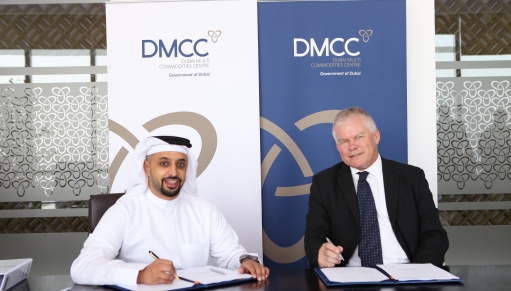
dmcc-multiplexNow officially the emirate’s largest free zone – with over 7,300 registered companies – DMCC have contracted Brookfield Multiplex to design and construct ‘One JLT’, a glass-box style building. On completion, this impressive world-class building will cover 23.4k sq mt and be located in the middle of the 65 mixed-use residential and commercial tower JLT development. Maybe it is not beyond the realms of possibility to visualise the world’s tallest tower being built there in the not too distant future.

One unnamed landlord is taking advantage of the current boom in real estate prices by releasing 300 apartments in JBR. With apartment prices in Shams 1 ranging from US$ 327k to US$ 872k – 34% up on last year – and a growing demand for beachfront property, these apartments will be sold quickly.

A few more than usual potential buyers will be trying to seal deals this week, with news that the property transfer fee is set to double to 4%, effective from 06 October. The reason for this surprise move is to curtail the practice of flipping which was prevalent in the halcyon days of 2008, resulting in an asset bubble that spectacularly burst bringing Dubai to its economic knees.

Yet another hotel is planned for the Dubai Marina area with the TAJ RP International Limited has signing an agreement with the Intercontinental Hotels Group. The 280-room property is slated for completion by 2016 and will be the fourth Crowne Plaza in Dubai.

As part of its US$ 409 million investment strategy, R Hotels is planning to open its second Dubai hotel, in JBR, in Q4 2013. The company has also reportedly started work on another property on Palm Jumeirah.

Meanwhile, the Palazzo Versace is now expected to open by the end of 2014 – five years later than originally planned. The US$ 626 million project is being developed by Enshaa Services Group that initially had a JV with the Australian-based Sunland Group. However, a 2011 swap deal saw Enshaa take 100% in exchange for the Versace Hotel on the Australian Gold Coast.

A recent survey shows that Dubai’s waterfront hotels had the best profitability rates in the Middle East. Occupancy rates have risen by 3.7% to 84.0% whilst ADR has surged 4.85% to a creditable US$ 389.00.

With Emirates planning to start phasing out their current fleet of 120  777s in 2017, Boeing are hoping that their largest customer will shortly place a new order for the new long-range 777-9X. Some expect a major announcement to be made at November’s Dubai Air Show – whether this will surpass the Emirates’ US$ 18 billion order last time round, two years ago, remains to be seen.

Within a year, Emirates SkyCargo will move its operations to the new terminal at Al Maktoum International Airport. On completion, the fully automated facility, at the world’s first purpose-built aerotropolis, will be able to handle up to 1 million tonnes of cargo.

Although year on year August monthly cargo figures actually contracted by 3.1% to 185k tonnes, YTD returns are 8.1% higher at 1.59 million tonnes. Passenger traffic for August was up by 23.8% to just shy of 6 million whilst YTD is 16.4% up at almost 44 million.

Another indicator of the confidence in the local economy is that 2013 vehicle sales are expected to top the all-time high of 346k units, reached in 2008.

It was no surprise to see Lindner Depa Interiors file a US$ 245 million arbitration claim against New Doha International Airport. The company – a JV between Germany’s Linder AG and Dubai’s Depa Limited – had its contract terminated in June for their refusal to accept new terms and conditions.

Despite the global slowdown in trade, the UAE continues to expand with 2012 imports of US$ 273.5 billion – accounting for 26.8% of all the region’s imports, of US$ 1,022 billion, and even surpassing Saudi Arabia with its US$ 211 billion total. However its exports of US$ 314 billion (or 21.7% of the total) were less than Saudi’s US$ 410 billion. The extent of the country’s impressive growth can be seen from the fact that over the past five years, exports have grown in excess of 27% annually and imports by 24%.

The Dubai Financial Market has had a turbulent September so far starting the month at 2523 points and closing on Thursday 8.5% up at 2737. However, the past four weeks have witnessed a 7.4% fall to 2337, followed by an 8.6 gain to 2538, a 5.0% rise to 2666 followed this week by a modest (by Dubai standards) increase of 2.7%.

Gold continues to lose its shine and is hovering around the US$1,320 per oz mark; it is already down 5% in September, 20% YTD and 25% over the past year. The fact that the Federal Reserve decided to maintain its US$ 85 billion monthly stimulus package has probably stopped the precious metal from testing the US$ 1,250 level or lower.

Next week, the USA will finally exceed its legal borrowing limit, set at US$ 16.7 trillion, and will balance on the edge of another financial cliff. If no further action is forthcoming, then the country will run out of cash by the end of October, resulting in cuts, job losses and potential loan defaults, with serious repercussions for the country’s economy. So much for the world’s leading democracy in action!

Whilst most of the global economies seem to be struggling, Dubai is still full steam ahead with a simple message – Don’t Stop Me Now!
Posted in Finance | Tagged , , , , , , , , , , , | Leave a comment

Shiny Happy People

dubai-paddle-boardScarcely a week goes by without some report reaffirming the buoyancy of the Dubai real estate sector; the latest, that house prices are rising faster than anywhere else on the planet. With an annual 21.7% surge in the year to June 2013, the emirate leads the likes of Hong Kong (19.1%), Turkey (12.2%) and Brazil (11.9%), and is well ahead of mainland Europe, which managed a meagre 0.7% rise, and poor Greece, recording a fall of 11.5%.

Unfortunately, it came as no surprise to see July hospitality figures indicating a decline in both revenue and profit;  the double whammy of the holy month of Ramadan and the summer heat, resulted in falls in RevPAR (16.8%) and occupancy from 65.1% to 54.6% – however ARR crept up by 2.2% to US$ 196.87.

Dubai developer, Sheffield Holdings, is working with US-based Hampshire Hotels Management to invest in and run the Dream Dubai Marina. The 101-storey, 420 mt high, building will cost an estimated  US$ 410 million, and house 300 hotel rooms and 420 serviced apartments – the hotel is expected to open late next year whilst the remainder to be ready by 2017.

Damac Properties awarded its largest ever contract of US$ 272 million to Turkish company, TAV Tepe Afken Investment, to build its Damac Towers by Paramount. The four-tower development will include the luxury Paramount Hotel, with the other three buildings as serviced residences and is slated for completion within thirty-three months.

Drake and Scull have been awarded an Abu Dhabi government contract, valued at US$ 68 million, which brings their projects signed this year to a credible US$ 1.66 billion. The capital seems to be a good hunting ground for the Dubai-based company as it has recently procured work for the Fairmont Hotel and the prestigious Louvre Museum.

Majid Al Futtaim is planning to spend US$ 272 million further expanding its flagship Mall of the Emirates. The project – Evolution 2015 – will see a new fashion area, a sports and leisure zone along with additional luxury retail outlet and is expected to be finished within two years.

The Al Futtaim Group, with franchise rights to Toyota, Lexus, Honda, Jeep and others in Dubai, is to move further afield, with its first investment in Africa. It has offered US$ 86 million to take over CMC Holdings with its exclusive Ford distributorship in Kenya, Uganda and Tanzania.

Flydubai, one of the world’s fastest growing airlines, has announced its 66th destination – this time to Chisinau in Moldova. Interestingly, this will be the low cost carrier’s 45th destination that previously did not have direct UAE carrier links to Dubai. These new destinations can only benefit Dubai’s burgeouning trade and tourism sectors.

Following weeks of negotiations, Dubai Aerospace Enterprise has failed to cut a proposed deal with BBA Aviation. It was reported that the British based aircraft services company was in merger talks with US StandardAero – a company bought by DAE in 2007.

Already running the world’s longest driverless metro system at 75km, the RTA is planning to extend its network by almost 50% with 24km and 12km extensions to its Red and Green Lines respectively. Its current fleet of 58 trains carry over 366k passengers daily.

Although not in the same league as the big boys, Dubai continues to expand its foreign exchange trading. Currently, the UK takes 41.0% of the total trade with the US (19.0%), Singapore (5.7%), Japan (5.6%) and Hong Kong (4.1%) making up the top five forex centres. The Dubai Gold and Commodities Exchange witnessed a 23% increase in August business with currencies accounting for 97% of the 1.159 million trades – an impressive 89% surge in YTD business.

This week, there was a 5.7%  hike in the price of diesel sold in Dubai by the locally government-owned Emirates National Oil Company (Enoc), and its subsidiary, Emirates Petroleum Products Company (Eppco), to US$ 1.00 per litre. Emarat, Dubai’s third fuel retailer, established by the federal government, has followed suit. However, it is reported that Abu Dhabi’s Adnoc has fixed its diesel price at US$ 0.89. Unlike diesel, federal authorities fix the petrol price which is currently being sold at the subsidised rate of US$ 0.47.

Dubai Holding Investment Group has renegotiated a US$ 1.2 billion loan agreement with its creditors, who have agreed to an extension until 2020. DHIG is part of Dubai Holding and was formed by the amalgamation of Dubai Group and Dubai International Capital.

H1 saw Dubai’s exports jump 21.7% to US$ 22.9 billion whilst its imports rose by 16.3% to US$ 110.6 billion. In 2012, Dubai’s foreign trade growth rose 13% and in H1, this has improved by 16.2% to US$ 159.1 billion. As usual, gold was both the top imported and exported commodity at US$ 22.1 billion and US$ 13.6 billion respectively.

Central Bank reports highlight the fact that during the first seven months of the year, money supply aggregate M2 (currency, current accounts, call accounts and deposit accounts) increased by 8% to US$ 253.3 billion, The other positive news is that bank deposits have jumped 7.3% to US$ 341.4 billion, and bank loans and advances by 5.6% to US$ 316.3 billion.

Australian property developer, Sunland lost its US$ 15.5 million appeal against Matthew Joyce and Angus Reed, former employees of Nakheel. The three Australian judges rejected the appeal as “groundless” in a case that involved another Australian company, Prudentia, in an alleged scam to secure a Nakheel Dubai Waterfront plot, known as D17. In May, both men were found guilty of fraud in a Dubai court and received ten year sentences. Reed had already left the country whilst Joyce, the former GM of Dubai Waterfront, was also fined US$ 25 million and is under house arrest whilst his appeal is being heard.

Another week sees another roller coaster ride for the Dubai Financial Market General Index. Having lost 6.6% and 9.3% over the past two weeks, it opened on Sunday at 2337 points and regained 8.3% to close on 2539. Whether this week’s movement represents a ‘dead cat bounce’ remains to be seen.

It seems that the slower growth pattern coming out of China earlier in the year has now begun to move in the other direction with most analysts predicting that the world’s second largest economy will edge towards 8% growth, at least in the short-term. New credit was seen to be expanding in August with 45% (or US$ 115.6 billion) attributable to new loans – this plus the fastest gain in industrial output are positive signs that recovery is taking hold. Although one warning sign is that the country’s ratio of credit to GDP stands at an exceptionally high 187% and another potential problem is that only 3% (1.25 million) of the country’s SMEs are able to secure  a bank loan, hence the other 97% rely on the flourishing but unregulated shadow banking system. (Some estimate this sector could account for nearly 70% of China’s GDP equivalent to US$ 5.72 trillion).

Consumer confidence is fast returning to the Australian economy in the wake of the election of Tony Abbott and the ousting of the Labour government, latterly led by Kevin Rudd and previously by Julia Gillard. The new coalition is promising to cut red tape and lower taxes as it declares that, once again, Australia is open for business. It will receive an added boost with the upbeat news from China which will prove a fillip for the country’s resources sector. House prices have shown an annual 5.3% rise and with the current feel good factor in play, allied with low interest rates (2.25%), this trend is set to continue.

Its neighbour, Indonesia, is not faring as well with soaring inflation (fastest growing since 2009), a falling currency (already down 11% in Q3) and a widening current account deficit (US$ 9.8 billion). This week, it sold US$ 1.5 billion of sukuks at the highest rate (6.125%) in six years, compared to its last foray ten months ago when the rate was 3.3%. Its current deposit facility rate is at a high 7.25% and is bound to rise even further this month as the country’s economy deteriorates.

There is an inevitability to the Federal Reserve start to cutting back on its QE3 policy, of US$ 85 billion monthly bond-buying, sometime this month. That being the case, there is a strong argument for gold prices to ease downwards, perhaps to the US$ 1,200 level, not helped by steady low inflation rates and an upturn in the global economy. At noon Thursday, it was trading lower at US$ 1,339 (compared to US$ 1,924 in September 2012 – 30.4% down).

A week after its buildings were rated the vainest in the world comes news that the UAE is one of the planet’s happiest countries. It is now ranked number 14 and moving up on the previous report. Some may think that the UN would be better served trying to broker peace in places like Syria and Central Africa, but no they have published “The World’s Happiness Report 2013”. HH Sheikh Mohammed bin Rashid al Maktoum has been quoted that “all development plans that we approved, all initiatives that we launched and all government policies and laws, have one common goal – achieving the happiness of our people”. No wonder then that with the economy booming, a stock market rising 8.5% in one day, and the imminent arrival of perfect winter weather, Dubai is full of Shiny Happy People!

Posted in Finance | Tagged , , , , , , , , , , , | Leave a comment

You’re So Vain

dubai-fountainAfter a relatively quiet period of reported new projects, Arady Developments – a JV between Deyaar Development and Dubai Properties Group – announced the launch of a 48-storey residential tower. Located in the Dubai International Financial Centre, this forms part of the 1.57 million sq ft Central Park plan. The building will house 426 apartments along with the usual accoutrements – swimming pools, exclusive shopping area and dining outlets – and will be completed by the end of next year.

There is a wide range of opinion on the state of Dubai’s residential market from an almost fully blown bubble to a continuing boom for the foreseeable future.  The former is driven by speculation, the latter by strong fundamentals of economic growth, rising population, increasing business confidence and strong demand. The truth is probably somewhere in the middle. In the past four years, the number of residential units has risen over 37% to an estimated total of 360k and is expected to rise by a further 11% to around 400k by the end of 2015. What will shake the sector will be any dent in consumer confidence and a further deterioration in the global economy – both are distinct possibilities. Any market that climbs so quickly, in such a short time span, is heading for trouble!

Yet another international hotel group is planning to start operations in Dubai. This time, the 672-room TRYP by Wyndham Dubai, to be located in Al Barsha, will be completed in 2016. The US-based group is the world’s largest and most diverse hotel company, managing over 7,400 properties, and has signed an agreement with The First Group.

It is only two years since government-owned DP World was forced to restructure US$ 25 billion of debt. Since then, the company has had to sell off non-core assets, as part of its deal with creditors – the latest of which is reportedly its 50% share in Miami’s Fontainebleau Hotel for which it paid US$ 375 million in 2008. In July, the company sold Gazeley, the logistics warehouse developer, to Brookfield Asset Management.

Just as Emirates will soon start flights to a second Philippines destination, Clark, dnata has announced that it will take over airport handling operations there. This will be the Dubai-based air service provider’s 75th global location.

A major mechanical, electrical and plumbing contract – valued at US$ 113 million – has been awarded to Drake & Scull International for work on the new Louvre Museum, being built in Abu Dhabi. Another Dubai company – Arabtec – is the main contractor on the US$ 653 million development, due to be completed within two years.

In line with other free zones, the Dubai International Finance Centre, is showing impressive growth figures. In H1, there was a 7% increase in companies to 979 whilst the number of employees rose by 1k to 15k. The DIFC is working close to full capacity and is currently utilising 372k sq ft of space, not owned or managed by the authority. A recent survey puts Dubai as the sixth in the ranking of international business centres.

Confirming recent reports, it is no surprise to see Barclays plc decide to move out of retail banking in Dubai to concentrate on its core business of investment and corporate banking. Up to 280 employees are in danger of losing their jobs as the UK’s third largest bank is still reeling from a 17% drop in H1 global profits to US$ 5.6 billion. Furthermore, there are reports that, over the past three years, the bank has paid out US$ 10.9 billion in bonuses, US$ 9.4 billion in fines and only US$ 3.1 billion in dividends.

Two local entities are seemingly in the market to raise funds. Dubai Duty Free estimates it will need US$ 750 million for its expansion plans. In 2012, DDF took out a six-year US$ 1.75 billion syndicated loan – a first foray into debt finance in its thirty year history. Last year, revenue reached new heights, topping US$ 1.6 billion and with H1 sales already at US$ 874 million, it is expected to reach US$ 1.8 billion by the end of 2013. Meanwhile, Majid Al Futtaim Holding is hoping to raise US$ 1.5 billion using a revolving credit facility.

The country’s love affair with the US continues as H1 imports rose 25.2% to US$ 13.7 billion and exports, largely crude oil, increased by 11.2% to US$ 1.4 billion. Interestingly, the country is the largest ME market for US imports, accounting for 26% of the total.

Australians go to the polls this weekend in an election that will probably see Australia swearing in its third prime minister (Tony Abbott) within the past three months. The country has suffered from a slowdown in its resource sector and, until recently, an over-valued dollar and this has had a negative impact on its trade to the region. Although the UAE is still Australia’s prime market, latest trade figures indicate a 13.0% slump to US$ 4.7 billion.

For the first time, the World Economic Forum has ranked the UAE as one of the top twenty most productive economies in the world – moving up five places to number 19 this year. There was no real surprise in the top 5 – Switzerland, Singapore, Finland, Germany and the US – but a slight shock to see Qatar, the highest-ranked ME nation, at number 13. The report added that UAE could improve further by investing in the health and education sectors.

Although not in the top twenty of yet another report, the country has made significant progress in the recently released Global Built Asset Wealth Index. The study, which tries to quantify the value of all public and private property along with infrastructure, estimates its value at US$ 1 trillion! This gives a per capita built asset wealth of US$ 123k.

August saw no movement in the UAE PMI which stayed unchanged at 54.5 points – an indicator on how well the economy is tracking. Latest figures show that consumer price inflation remains static at an annual rate of 1.3%.

This could be a gilded week for some 10k residents who entered the month-long “Your Weight in Gold” campaign. Participants will receive 2 gm of gold for every kg lost over 5 kg and 3 gm per kg if they lose 10 kg or more.

The Dubai Financial Market General Index took a another pasting this week – largely because of the continuing regional geo-political unrest, especially in Syria. Having lost 6.6% last week, it opened on Sunday at 2523 points and nose-dived another 9.3% to a Thursday close of 2337.

There is an ever-growing feeling that the global stock markets are heading for a major downward revision despite many pre-GFC highs being recorded in August. In the US, Dow indicators such as EPS (falling), PE ratios (rising) and volatility levels (at historic lows) all point to a pending crisis.

There were two massive telecom deals this week with the largest, by far, the Vodafone sale of its 45% share in their US JV with Verizon for US$ 130 billion. (To put this into perspective, this figure is almost the same as Dubai’s reported public debt). The other deal saw Microsoft pay US$ 7.2 billion for Nokia’s mobile business, as well as licensing the Finnish company’s patents and brand name for the next decade.

Slow global growth patterns present the biggest economic s challenge as the G20 meeting this week in St Petersburg at a meeting which will be dominated by Syria. However there is mounting economic concern about the sudden fall of the BRIC economies which have been blighted by plummeting currencies and slowing growth. They will feel even more pressure if and when the Fed starts cutting back its QE programme, resulting in even more selling of the weak currencies.

Although there are promising signs out of Europe, all is not well. Attempts by some countries to rail in public spending and, at the same time, introduce austerity packages have proved counterproductive. Instead of stimulating growth and economic activity, it has resulted in reduced tax receipts, higher unemployment and increased benefit payments. Someone has to pay for this folly. In the event of citizens of say Spain and Italy seeing their bank deposits raided, like their Cypriot neighbours, the world will then see the eurozone in a real crisis.

Dubai has another world record and this time it can boast having six of the top 10 vainest skyscrapers (any building over 985 ft) in the world. A recent report has claimed that the emirate’s skyscrapers waste 19% of their total space. It can only be a matter of time before the fountain music in front of the vainest of all buildings – the Burj Khalifa with 29% of “wasted” space – will be changed to You’re So Vain.

Posted in Finance | Tagged , , , , , , , , , , , , | Leave a comment

Money, Money, Money

AbbaEvery month this year, consumer spending has shown marked increases – with June the largest on record as personal expenditure reached US$ 1.0 billion, with the H1 total at US$ 4.2 billion. Amazingly, this sum equates to all the spending recorded in the prior thirty months and brings the local banks’ personal lending to US$ 75.3 billion. No doubt, this boost in consumer spending is good news for the banks and local economy but not so for some residents who are living beyond their means which may prove costly in the future, as rates of inflation and interest rates inevitably rise.

By any measure, Dubai hotels had a spectacular Eid Al Fitr holiday, with occupancy rates at 89%. 73k of the 82k hotel rooms available were taken by guests coming from all over the globe, including the GCC (42k), Europe (14k) and Asia (12k). However, recent reports show that the number of Indian cancellations are beginning to rise as the falling rupee starts to hit the pockets of potential tourists from there; it will be interesting to see whether last year’s figure of 764k is surpassed in 2013. (Yet again, the currency skidded to another record low touching 70 to the US$ – with no end to its strife in sight).

It is difficult not to imagine another property bubble here when latest reports indicate that Dubai residential prices have risen over 30% in H1 alone. Amazingly, villa price hikes in Q2 (at 21%) were actually down on the same period last year which had a 24.4% increase. The Land Department estimates property sales in excess of US$ 6.2 billion for the first seven months of the year – a staggering 67.4% up on last year. Mortgages have risen in tandem showing a 66.4% surge to US$ 11.5 billion.

Helping to satisfy the increasing appetite for real estate, Nakheel is on track to deliver upwards of 3k units this year and has announced that it has just completed construction of over 800 homes in its Al Furjan development.

Dubai Aerospace Enterprise is in discussions with BBA Aviation in a reported part merger of certain divisions of their business. The UK aircraft services company is in negotiations with US-based StandardAero which DAE bought in 2007.

To keep pace with ever-growing demand, it is estimated that Emirates Airline will need to spend at least US$ 26.7 billion over the next five years as it prepares to expand its existing fleet from 201 to 320 aircraft. It is now planning to raise US$4.5 billion to finance its next tranche of aircraft – 10 Airbus 380s, 9 Boeing 777-300ERs and 2 Boeing 777 freighters. Will there come a time when economies of scale begin to go the other way?

Also expanding is the number of passengers using Dubai International Airport which saw a 6.1% July rise to 5.31 million – this equates to a YTD jump of 15.3% to almost 38 million. The world’s second busiest international airport is well on its way to narrowing the gap on London Heathrow and could well  take over the top spot within two years.

Although minute, Qantas has returned to the black posting a US$ 5.4 million profit in 2013, compared to a loss of  US$ 220 million a year ago – although US$ 112 million came as a result of a settlement with Boeing in relation to its cancelled orders for the troubled 787 Dreamliner. Its alliance with Emirates has helped the carrier improve passenger numbers on its international routes.

Despite a 1.3% drop in H1 revenue to US$ 1.51 billion, DP World still managed a 6.3% improvement in operating  profit to US$ 278 million. This year, the company, 80% effectively owned by the government,  has seen capital expenditure of US$ 544 million and has a further US$ 3.7 billion planned over the next thirty months. It currently has 65 terminals operating on all continents.

Dubai-based interior contracting company, Depa Limited returned to profit in H1. With revenue up 22.4% to US$ 275 million, it posted a surplus of US$ 9.0 million compared to a US$ 30.0 million loss a year earlier. With new contracts of US$ 354 million signed in H1, its project backlog has risen by 11% to US$ 817 million.

Orbit Showtime Network, the MENA region’s largest pay TV company, has purchased Pehla Media & Entertainment which brings in forty new channels and access to a a huge Asian audience. Dubai-based OSN has decided that acquisition – rather than organic expansion – is their fastest growth strategy.

The latest Forbes list of 1,226 billionaires includes four from Dubai. The CEO of Mashreq bank, Abdul Aziz Ghurair, has an estimated wealth of US$ 2.9 billion, followed by his relative Saif (US$ 2.0 billion), Abdullah Al Futtaim (US$ 1.6 billion) and his cousin Majid (US$ 1.1 billion).

In the UK, Citizens Advice is becoming increasingly concerned with financial services companies and their “cold calling” techniques, especially after the 30 million unwanted calls following the recent mis-selling PPI. The organisation is asking for a total ban on such calls and perhaps the same could be introduced in Dubai, where many financial services and real estate staff ply their trade with similar nuisance and unasked for calls.

The World Bank has released 2011 figures showing that the 15 million expatriates, then living in the six-country GCC, remitted a total of US$ 74.5 billion. 39.9% of this total (US$ 29.7 billion) was by Indians beating the combined total of the next four countries – Egypt (US$ 6.9 billion), Pakistan (US$ 6.0 billion), Philippines (US$ 5.0 billion) and Bangladesh (US$ 3.1 billion). Saudi Arabia was the main provider accounting for 38.4% of the total (US$ 28.6 billion) with UAE coming in next at US$ 18.2 billion.

Last week, it was thought that the Dubai bourse may lose some steam – but nobody could have predicted that it would come off the rails! Monday saw the market attain its highest level in five years, closing at 2742; Tuesday, the market had its biggest daily fall in six years, losing 7.01% of its value to close on 2549.  By the end of the week some sort of normality had returned to the market where it closed on 2523 – 8.0% down on the week from its Sunday opening of 2700 points. Despite the tumultuous week, and the accompanying drop, it must be remembered that the market is still currently up 62.66% this year and 70.51% higher than it was this time in 2012. No doubt, the Syrian crisis was the tipping point for the massive sell-off but other factors are in play, including the anticipated US tapering of QE2 and the fact that profit-takers were in the market.

The big winner from the global mini stock market crash is gold which is fast recovering lost ground, topping US$ 1,429 per oz during the week, before falling back to just below US$ 1,400 – a gain of over 21% since its late June close of US$ 1,181. As usual, silver tracked gold and nearly reached US$ 25 per oz before sliding to under US$ 24 on Thursday.

It seems that embattled US bank, JP Morgan, is set to be fined US$ 80 million by federal regulators for inappropriate dealings with its retail customers some years ago. However, this is small change to reports that the bank could be fined US$ 6 billion for mis-selling securities to the value of US$ 33 billion to Fannie Mae and Freddie Mac, then the country’s biggest mortgage lenders. To further add to their woes, it could receive a similar hefty fine for its role in the ‘London Whale’ trading debacle that has already cost the firm US$ 6 billion.

The patchy US growth scenario was reflected in disappointing trade figures with July durable goods orders falling 7.3%, after three months of gains, and non-defence capital goods dropping 3.3%. This follows close on news of a marked slowdown in residential construction and new home sales.

As the Brazilian real continues in free fall to its lowest level in almost five years (at 2.45 to the US$) and inflation rates soar to 6.3%, the country’s central bank has confirmed its fourth rate hike this year to 9%. Whether this works remains to be seen but the odds are stacked against any early improvement, as the country gears up for the FIFA World Cup next year.

Meanwhile the gaffe-prone FIFA executive committee will soon vote to move the Qatar summer 2022 World Cup bid. This probably means either moving to a winter date, at the same location, or moving to another country. One has to ask two questions – why did the football authorities go against tradition and vote for the Gulf country in 2010, four years earlier than had ever been done before? Secondly, are they now blaming global warming for deciding it is too hot, less than a year after their selection (when evidently it was not too hot)? Money, Money, Money (must be funny in a rich man’s world).

Posted in Finance | Tagged , , , , , , , , , , , , , | Leave a comment

Should I Stay or Should I Go?

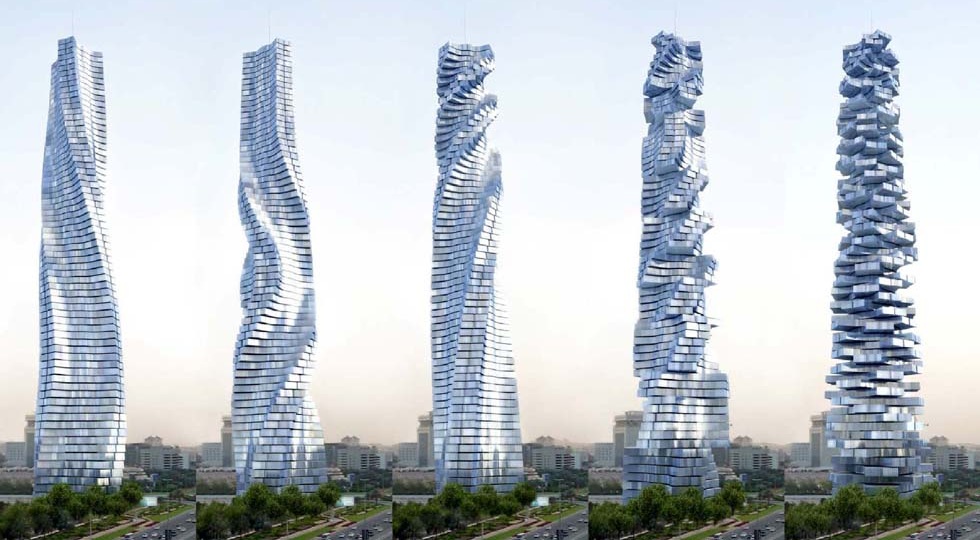
dubai-dynamic-towerAccording to UK press reports,the 80-floor Dubai Dynamic Tower, designed by Florentine architect David Fisher, is estimated to cost US$ 545 million and could be ready within two years. Its unique selling point is that each individual floor will rotate independently and turn a full 360 degrees around a central column.

Since Abu Dhabi’s Aabar Investments bought into Dubai’s largest contractor, Arabtec has gone from strength to strength posting a Q2 profit of US$ 25.2 million (compared to a 2012 loss of US$ 3.2 million) and amassing an order book of US$ 6.65 billion. Although officially denied, the company is reportedly in merger discussions with Saudi Oger and Kuwait’s Combined Group Contracting. This comes only months after a JV arrangement with Samsung Engineering.

Orion Holdings finalised the sale of 100 one-bedroom apartments in Silicon Oasis from Gulf General Investment Company for a reported US$ 15.7 million. Orion plan to offer the units on a 35% down payment, with the balance to be paid over three years.

As the hospitality sector‘s boom period continues unabated, reports indicate that, in the MENA region, there are of the 813 hotels (with 134k rooms) being built or in the planning stage, Of that sum, 114 hotels (representing 14% of the total inventory) will be located in the UAE with an estimated 32k rooms or 23.9% of the planned total. Dubai is expecting its annual room portfolio to rise by 7% over the coming years.

Every cloud has a silver lining – with all the regional strife, an increasing number of Saudis are visiting Dubai. In H1, the Dubai Tourism and Marketing Department estimate that there has been a 31.6% surge in numbers to 710k, which boosted the local economy by US$ 4.6 billion. (The Kingdom pumped 9.8 million barrels a day in 2012, at an average price of US$ 106.1, which equates to oil revenue of US$ 380 billion).

As indicated previously, budget carrier, flydubai, is to offer a business class service on many of its routes as from October. Their first flight will be to Kiev, when twelve premium seats will be on offer, with other destinations, including Istanbul, Male and Bucharest, to follow.

In a move to diversify, DEWA is looking at building a new clean coal power facility. When completed, the Hassyan plant will have a 1,200 MW capacity, producing 12% of Dubai’s power requirements – with the balance from natural gas (71%), nuclear energy (12%) and solar power (5%).

June 2013 figures from the Central Bank indicate a 1% monthly fall in money supply aggregate M0 (currency) to US$ 16.2 billion. However M1 (M0 + banks’ current and call accounts) showed a 1.6% rise to US$ 94.5 billion. Money supply aggregate M2 (M1 plus quasi-monetary deposits) also showed an increase of 1.3% to US$ 253.4 billion. When government bank deposits are added to M2, money supply aggregate M3 comes in 0.6% higher at US$ 322.2 billion. A further sign that the economy is still on traction is that net bank loans jumped 1.4% to US$ 312.6 billion (and an impressive 4.4% in H1).

The Dubai bourse recovered this week closing 2.6% up at 2700 – 68 points higher than its Sunday opening of 2632 points. Some expect the market to lose steam in the coming month but it is currently up 73.45% this year and 78.56% higher than it was this time in 2012. Bellwether stocks, Emaar Properties and Arabtec Holdings ended on US$0.72 and US$ 1.70 respectively.

Internationally, embattled US bank, JP Morgan continues to hog the headlines – for all the wrong reasons. Following its London Whale trades debacle – which resulted in a loss of US$ 6.2 billion – and its US$ 410 million civil settlement over its manipulation of Californian energy markets, it is now being further investigated by US prosecutors. In addition, the SEC is looking at their hiring of children of  high–ranking Chinese officials.

Thirteen financial institutions – including the likes of Barclays, RBS, Morgan Stanley and HSBC – have been forced by UK regulators to set up a US$ 2 billion compensation fund to pay out a staggering 7 million customers for yet another insurance mis-selling scandal. Some estimate that the series of mis-selling cases may cost banks over US$ 31 billion. Unfortunately, the perpetrators will invariably get off scot-free!

One of the biggest fraud cases is on-going in India where this week, Anil Ambani, head of Reliance ADA Group, was a reluctant witness in the infamous 2008 “2G Scam” court case. Two other companies  – Swan and Unitech Wireless – are also involved along with the then Telecom Minister, A Raja. It is claimed that the government could have lost  US$ 27 billion as licences were sold at giveaway prices to favoured companies in return for massive kickbacks.

Swiss mining conglomerate Glencore Xstrata has just come in with an H1 loss of US$ 8.9 billion, which included a US$ 7.6 billion goodwill write-down. These were the first results since their earlier merger which on a comparative basis saw sales 4% up to US$ 112 billion whilst comparative profit at US$ 2.04 billion was 39.3% down on 2012’s return of US$ 3.36 billion.

A welcome change with some good news from the eurozone – latest figures show the 17-member bloc reporting a US$ 23.0 billion trade surplus in June – compared to US$ 17.0 billion a year earlier. However, the EU (comprising the eurozone plus ten other countries) trade surplus came in lower at US$ 13.1 billion which, in turn, was a major improvement on June 2012’s deficit of US$ 1.3 billion. Inflation rates were almost identical – with the eurozone at 1.6% and the EU at 1.7% – and well within the European Central Bank’s target of 2.0%. Netherlands had the highest rate at 3.1% whilst Greece was at the other end of the scale with a negative 0.5%.

However for some Asian countries, the outlook is not so bright. For example, in Indonesia there is a widening current account deficit (up 69.0% to US$ 9.8 billion, quarter on quarter), a currency that has fallen 11% this year, inflation rising to 8.6% and its main bourse falling 21% in the past four months. Consequently, the country is in the throes of a marked slowdown in economic growth – now below 6% for the first time in three years.

Even worse is Thailand which worryingly fell into a recession, as its economy contracted 0.3% in Q2 – this is a far cry from the staggering 18.9% Q4 2012 GDP expansion. The baht is at its lowest level since 2009.

Over the past year, Japan has seen its trade deficit almost double to US$ 10.5 billion, mainly because of a 19.6% jump in imports and the yen falling 25% in the past nine months. The world’s third largest economy saw a Q2 decrease in growth from 4.1% to 2.6% but the policy of a low yen may yet stimulate exports and eventually assist in reducing the deficit. Abenomics may still be the country’s  saviour!

With a noticeable improvement in the US economy, it is now likely that the Federal Reserve will taper their monthly US$ 85 billion quantitative easing programme later this year before ending it some time in 2014. Although there has been no official announcement, the markets have taken this as read and emerging markets have suffered. Interestingly, the BRICs, (Brazil, Russia, India and China), have witnessed an outflow of at least 30% of their bond funds. Their respective stock markets have fallen between 12% and 20% this year. These four countries have had their day in the sun and could be heading for a severe correction as  investors’ money heads back to safer shores.

The Indian rupee goes from bad to worse plunging to new depths despite the government injection of US$ 1.25 billion into the banking system. The markets were not impressed by the latest move to improve liquidity and reduce bond yields so it was no surprise to see the rupee drop to historic lows of 64.6 to the US$ and the Bombay bourse spiral downwards, shedding over 7% this week alone – equivalent to over US$ 125 billion in value. There is no doubt that the new governor of the RBI, Raghuram Rajan, has problems to overcome. But the main protagonist is the octogenarian prime minister, Manomohan Singh, whose economic management has seen the country’s growth at its lowest in a decade, its currency the worst performing in Asia and both its fiscal and current account deficits ballooning out of control. With constant ill-thought out policy changes, and as the country heads into not only a deepening  financial crisis, but also a crisis of confidence, maybe it is time for the PM to ponder the question – Should I Stay or Should I Go?

Posted in Finance | Tagged , , , , , , , , , , , , , | Leave a comment

Walk Away

dubai-cycle-trackNakheel has issued a tender for piling works – a precursor for work to finally start on its US$ 680 million mall development at the end of Palm Jumeirah. The project, including a 200-room five star hotel, serviced apartments and 250 retail outlets, will cover nearly 420k sq mt.

Arabtec, Dubai’s largest contractor, saw its Q2 revenue up 23.1% to US$ 436 million and a profit swing from a Q2 2012 loss of US$ 3.2 million to a current quarterly surplus of US$ 25.2 million. This comes on the back of improving business confidence in the region and their winning of several lucrative contracts so far this year.

Better late than never – the IMG-owned Worlds of Adventure, first mooted in 2005 to be part of their City of Arabia project, is to open its first of four theme parks early in 2014. The construction columns, to hold the massive frame, are already in place and, within four years, the 1.5 million sq ft park will be able to cope with upwards of 20k daily guests. In addition, the US$ 5 billion City of Arabia will also have 40k residents in a self-contained environment with its own educational, recreational and health facilities.

The race is on between Dubai Multi Commodities Centre and Jebel Ali Free Zone. DMCC, established in 2002, has a government mandate to facilitate trade flows through Dubai and has now nearly 7,000 companies in its portfolio and is the master developer and licensing authority for JLT. Evidently, 95% of the 1,200 companies registered there this year were new to the emirate. JAFZA, thirty-four years old, has seen over 350 new companies, so far in 2012, bringing its total to just over 7,000. It is responsible for more than 25% of Dubai’s total non-hydrocarbon trade, with an estimated value of around US$ 82.0 billion.

Latest figures from the Ministry of Economy (albeit 2011 data) indicate that the number of UAE manufacturing companies rose 4.9% to 5,200, 40% of which were located in Dubai. However it only attracted 22% of investment in direct contrast to Abu Dhabi with 7% of the total companies but 59% of the investment. Overall, the industrial sector contributes 14% to the country’s GDP.

Empower, the local district cooling provider, has settled half of its 2013 repayment and 70% of its US$ 327 million loan taken out to finance new cooling plants in DIFC, Al Quoz, Mirdiff and Business Bay.

The RTA announced that its Dubai taxi fleet carried out over 50 million journeys in H1 – up 3% on last year. Over the same period, the green and red lines of the Metro have transported nearly 67 million passengers and are well on track to surpass their 2012 total of 109.1 million. For the more energetic, the RTA has recently opened 104 km of its planned 850 km of cycle tracks.

A potentially interesting development comes with Emirates Classification (Tasneef) signing a partnership arrangement with Dubai Drydocks World. The concept is to introduce a regulatory authority for merchant vessels, responsible for shipping surveys and insurance-related certificates. Already an international hub for vessels, there would appear to be an expedient market for such a service to join the ranks of the top five global classification establishments – Nippon Kaiji Kyokai, Lloyd’s, Bureau Veritas, Det Norske Veritas and the American Bureau of Shipping.

With the slowdown in the global economy continuing, it is no surprise to see that June cargo figures, at the world’s top fifty airports, declined by 1.1% compared to a year earlier. Equally unsurprising is that Dubai International again bucked the trend by increasing business by 3.6% to 202k tonnes making it the fifth largest airport cargo handler in the world. Currently only Memphis (342k tonnes), Hong Kong (337k tonnes), Shanghai (233k tonnes) and Anchorage are ahead of the local airport. (According to the UAE General Civil Aviation Authority, Dubai had over 29k aircraft movements in July).

Official data continues to show that the country’s inflation rate rose 1.3% for the year ending 31 July with Dubai reporting a higher figure of 1.6%. It is estimated that housing accounts for 44% of total consumer spend and recent reports indicate that Dubai rents have jumped 7.5% in Q2 and 30% over the year. Such hikes will undoubtedly push up future inflation rates.

July was another record month for the Dubai Gold and Commodities Exchange with total trading activity topping US$ 44.6 billion. – a 55% surge in volume compared to one year ago. Once again, currency contracts dominated with the Indian rupee trade accounting for 86.4% of the total of 1.45 million trades.

The country’s two bourses, Dubai and Abu Dhabi, have seventy four registered companies with a recorded combined H1 profit of US$ 6.9 billion – 15.1% up on last year. The recovery was spearheaded by the banking sector accounting for 57.1% of this figure (US$ 3.9 billion) and real estate with its combined profits up by 26% to US$ 814 million.

The Dubai bourse turned in a rare weekly loss – down 1.6% to close on 2632 points. Some hope that this is just a minor blip as the market is still up 69.08% this year and 73.74% higher than it was this time in 2012.

As DEWA announces a 3.3% YTD increase in electricity usage to 6.857 MW and a 3.7% jump in daily water usage to 295.5 million imperial gallons, the six main UK power companies have amassed profits of over US$ 4.65 billion. Local users have had prices remain relatively flat over the past two years at a time when their British counterparts have seen their bills up by over US$ 460.

Latest estimates from OPEC indicate that there will be a 1.2% increase in 2014 oil consumption to 90.8 million barrels per day as the global economy starts picking itself up from the floor. The twelve-member cartel pumps about a third of that total or just under 30 million bpd. July prices were up 3.4% to US$ 104.45 per barrel.

Following a record trade year with Japan in 2012, slightly lower crude prices – allied with a slowdown in the Japanese economy – saw GCC exports to that country fall by 8.3% to US$ 74.83 billion in H1. UAE’s exports fell 7.4% to US$ 20.96 billion, whilst imports also dropped by 11.9% to US$ 4.08 billion.

After posting a 4.1% annual growth in Q1, Japan’s economy has seen a marked slowdown in Q2 with growth of 0.6% indicating a reduced annual growth rate of 2.6%. Despite Prime Minister, Shinzo Abe, introducing Abenomics to try and get the economy moving, it seems that his raising government spending and boosting money supply have met with minimal success and are the main drivers in the recent decline of the yen.

While Europe slowly emerges from its economic abyss, it seems less and less expatriates are choosing the likes of Spain, Portugal and France as preferred destinations. With Australia and Canada occupying the top two slots, Dubai has moved to third according to a listing drawn up by NatWest International Personal Banking Quality of Life Report. Obviously  quality of life, job prospects and a better standard of living are the main reasons for this “transfer of power”.

Having already drawn down 90% of its bailout funds of US$ 320 billion, it is widely expected that Greece will be asking for even more by the start of next year. However with German elections coming up next month, it seems likely that no formal announcements will be made until after Chancellor Angela Merkel has a secured at third term in office. Greece has not helped itself with recent government reports indicating that half of the companies surveyed were cheating the taxman and 70% of staff with the National Tourism Organisation did not work their full minimum hours. Furthermore its GDP fell 4.6% in Q2, compared to 2012, following a 5.6% plunge in the previous quarter.

The French Finance Minister, Pierre Moscovici, is confident that the country’s US$ 2.67 trillion economy has turned the corner after recording two 0.2% contractions in Q4 2012 and Q1 2013. In June, the EU gave France two years to reduce its budget deficit of 3.7% to 2%. However unless Francois Hollande is willing to boost the economy, by reducing labour costs and minimising tax increases, the country is set to remain in a moribund state.

Despite the gloomy prognosis of certain individual EU member states, official data indicates a eurozone Q2 growth of 0.3% – welcome news after eighteen months of negative data. The German economy grew 0.7% in Q2 whilst the French reported growth of 0.5% after dipping into recession earlier. However the recovery is patchy and undoubtedly the PIGS will continue to struggle as they try to ease unemployment queues, political infighting, social unrest and austerity measures. The case for a two-tier euro system is there for all to see.

A dirty pipe has cost the New Zealand economy at least tens of millions of dollars. Fonterra, the country’s largest company and the world’s biggest dairy exporter, discovered botulism-causing bacteria in some of its whey products which resulted in China and other countries halting imports. This is a huge blow for the company, which has revenues of US$ 15.9 billion, the industry which accounts for 28% of the country’s exports and New Zealand with a tarnished reputation for many of its exports.

What has the financial world come to when charges are dropped against the London Whale, Bruno Iksil? Manhattan prosecutors have decided to take no further action against the man who reportedly was involved in racking up losses of US$ 6.2 billion for his employer, JP Morgan.

Following recent reports of HSBC culling some of its local retail customers, it now seems that Barclays is considering selling its UAE retail business. The UK’s third largest bank will most likely retain its corporate and investment banking arms. In H1, Barclays’ global profits were 17% down to US$ 5.6 billion and it has been reported that, over the past three years, the bank has paid out US$ 10.9 billion in bonuses, US$ 9.4 billion in fines and only US$ 3.1 billion in dividends.

In 2012, 2.4 million UK customers closed accounts with the Big Five banks – it seems that, in Dubai, certain financial institutions are getting in on the act before their clients jump ship. The simple message is that if you are not happy with your bank – Walk Away!

Posted in Finance | Tagged , , , , , , , , , , , , , | Leave a comment

A Dedicated Follower of Fashion

Beau-BrummelDubai’s hospitality sector continues to confound its critics with all pointers showing sustained growth patterns – in June, occupancy rates by 3.6% to 79.2%, Average Room Rates (ARR) by 6.2% to US$ 207.29 and Revenue per Available Room (RevPAR) by 11.2% to US$ 164.22. It seems that Dubai is succeeding in its aim to make the emirate an all year holiday destination.

The Director-General of the Dubai Land Department, Sultan Butti bin Mejren, has announced  that seven proposed pieces of legislation will be introduced over the next two years to better control the burgeoning real estate sector. These measures will protect the market from speculators and other damaging factors that have blighted the industry over recent times as well as enhance current legislation in relation to tenants’ rights, landlords’ associations and stalled projects.

Depa, the Dubai-based interiors contractor, has bought Loher Raumexklusiv, the German private jet and yacht outfitter, for an undisclosed amount. The company, based in Munich, had been facing bankruptcy earlier in the year and the sale will help with Depa’s aims of diversifying into an ever growing niche market.

Nakheel, has awarded five contracts to the value of US$ 127 million, the two largest for the building of villas in its Jumeirah Park location (US$ 82 million) and for the expansion of Ibn Battuta Mall which will cost US$ 25 million.

A raft of Q2 corporate earnings results hit the market this shortened week and most continued the trend of earlier announcements with increased revenue and profit levels – a sure sign of the upturn in Dubai’s economic fortunes.

Union Properties saw a 35.5% hike in Q2 profits to US$ 30.9 million compared to a year earlier and this despite a fall in revenue from US$ 151.8 million to US$ 116.3 million. The reduction in expenses came about because of liability settlements, totalling US$ 21.8 million, with various creditors during the period.

Another property company, Deyaar reported a 46.8% rise in Q2 profit to US$ 7.4 million and an even bigger H1 jump of 66.8% to US$ 12.7 million. The company has two new projects in the pipeline including a US$ 136 million residential project in Business Bay.

Even better results emanated from Drake & Scull International that saw both Q2 contract revenue and profits heading north – 86.8% up to US$ 365 million and 63.0% to US$ 14.2 million respectively. As a sign of the good times returning to these shores, the company has an order backlog of US$ 3.19 billion, 58.1% higher than in June 2012.

Meanwhile Dubai Islamic Bank – in line with most other Dubai-based financial institutions – announced a 34.8% surge in Q2 profits to US$ 113.9 million on a nominal 1.7% rise in its revenue to US$ 351 million.

After seven consecutive quarters of losses, Shuaa Capital finally turned the corner with a Q2 profit of US$ 354k – only the sixth time the troubled investment bank has not recorded a quarterly deficit over the past five years. The bank’s loan book has increased by some 15% to US$ 199 million.

Dubai Investments have seen its H1 profits swell by 116.4% to US$ 101 million but only on a 15.2% rise in total income of US$ 351 million. With total assets of US$ 3.43 billion and a net worth of US$ 2.34 billion, the company is the largest investment company listed on the Dubai Financial Market.

The Dubai Financial Market Index closed trading on Tuesday because of the upcoming Eid al Fitr holidays. However even in a three-day week it still managed to close 3.0% up at 2674 after a Sunday opening of 2595 points. Over the past year, the market is 79.04% in front and has risen 71.79% already in 2013. (in Q2 the Index rose 21.5% being only surpassed by the Damascus bourse which jumped 44.7% mainly on technical – rather than market – influences).

Official data confirms that UAE’s real GDP expanded 4.4% in 2012 to a record US$ 278 billion with the non-oil sector accounting for US$ 188 billion of this figure or an impressive 67.7%. The continuing positive move away from reliance on the oil industry is welcome news. Surprisingly, the official inflation rates last year was only 0.66% with more of the same expected this year coming in at just over 1%.

Greek prime minister, Antonis Samaras, is due to meet Barack Obama later in the week in an attempt to secure US approval to introduce stimulus policies for the embattled Ionic economy. The country is in its sixth straight year of recession and has 1.4 million of its population unemployed; this equates to 27.6% (compared to the eurozone rate of 12.1%) and even more depressing is the rise in youth unemployment which is now at 64.9%.

In stark contrast to its continental neighbours, the UK economy is showing signs of a grand revival. The world’s seventh largest economy recorded a major rise in the latest PMI (purchasing managers’ index) with the Markit/CIPS services survey posting a monthly jump from 56.9 to 60.2 – its highest level in six years. Other indicators are also heading in the right direction in July  – retail sales were at their highest level in seven years, industrial production was up 1.2% and vehicle sales were 12.7% up. Despite the promising data, the country is still way behind the levels reached pre-GFC.

The Indian rupee continues to fall – this week sinking to all-time lows of 61.8 to the US$ with no apparent Reserve Bank of India intervention in sight. Unless the authorities rectify the country’s underlying economic problems and rein in its ballooning current and fiscal deficits, standing at 6.7% and 5.0% respectively, the currency will continue its descent – now 40% down over the past two years. Introducing half-baked measures, such as raising the gold import duty to 8% and lifting the price of fuel five times since June, have not appeased investors – both domestic and overseas – who are taking their money out of the country at record levels. High inflation and a slowing of growth to around the 5% mark will continue to drag the economy in a downward spiral.

Despite avoiding a recession during the GFC, the Australian economy is now going backwards as commodity prices tumble and growth forecasts are cut once again – this time to 2.5% for this year. The lucky country is now bedeviled with rising unemployment levels (expected to hit 6.25%), flat retail sales, slowing tax receipts and falling business confidence. The Rudd government has seen the currency drop 14%, in a matter of months, to AUD 0.90 to the greenback and its budget deficit expected to double to US$ 26.8 billion this tax year. Whether this week’s move by the Reserve Bank to cut interest rates to its lowest ever level of 2.5% will help the struggling economy remains a matter of conjecture.

Over 4,000 families were directly affected by the April Bangladeshi factory collapse that claimed 1,132 lives and injured over 2,500. It is no surprise to see that much of the promised compensation by the government and the federal garment association remains outstanding. With earlier pledges indicating individual payouts of US$ 21,000, it is reported that the government has paid between US$ 1,200 and US$ 3,500 to only 350 of the survivors and family members and will only pay those who actually turn up at the prime minister’s office in Dhaka.  Furthermore no payments of three months’ wages, promised by the Bangladesh Garment Manufacturers and Exporters Association, have been made to any of the victims. If these reports are true, it may be time for the likes of H&M, Abercrombie & Fitch, Walmart and Gap to take more positive action.

As part of Dubai’s overall strategy, HH Sheikh Mohammed bin Rashid Al Maktoum has issued a decree to set up the Dubai Design and Fashion Council and has ambitious plans to grow small businesses, develop the global market for locally produced goods and increase employment levels across the industry. If all goes to plan, within five years, the emirate could rival the likes of Paris, London and New York. Soon Dubai could be seen to be A Dedicated Follower of Fashion.

Posted in Finance | Tagged , , , , , , , , , , , , | Leave a comment

Catch Us If You Can

barclaysTo many observers, the local property market is perhaps growing at a faster rate than would be considered appropriate, bearing in mind that it is less than five years since over-inflated property prices saw a 50% diminution and brought Dubai to its economic knees.  Latest figures indicate housing rentals up 30% over the past twelve months and residential property valuations up at almost the same level. In H1, recorded sales totalled US$ 7.85 billion of which a staggering (and worrying) US$ 6.32 billion, or 80.6%, were for cash. The most popular location was Dubai Marina where total transactions amounted to US$ 1.8 billion. Commercial sales were also up with H1 figures of US$ 21.6 billion.

A recent IMF report shows that Dubai government debt grew by over 10% to US$ 142 billion in the year ending 31 March 2013. Of this total, which is estimated to be 102% of the emirate’s GDP, 45% or US$ 64 billion falls due within the next three years. Could a double whammy of a crashing real estate sector and an unsettling financial market see history repeating itself.

Meanwhile, the Ruler of Dubai has issued a decree appointing a committee to deal with all court cases for stalled real estate projects, currently going through the legal system. It seems that the new body will have total responsibility for settling legal disputes between investors and developers in any scheme that has been cancelled by Dubai Real Estate Regulation Agency (RERA) – late last year, it reported that it had cancelled 217 projects between 2009 and 2011.

Latest figures show that there has been an 11.1% increase in Dubai visitors to 5.58 million with hospitality revenues up by 18.6% to an impressive US$ 3.17 billion. All indicators are heading north including hotel occupancy up from 81.8% to 84.6% – this despite a jump in inventory with sixteen new hotel establishments opening in the past year increasing the number of rooms available to 81.5k.

The week started with a formal announcement from Arabtec Holdings that it had raised US$ 654 million in a rights issue to double its equity. The 1.56 billion shares will have an issue price of US$ 0.41 (compared to its opening price on Sunday of US$ 0.61). It is expected that the money will be used to help with the company’s regional growth plan which has already seen 2013 orders of US$ 3.54 billion. The company may tap into the bond market later in the year to raise further finance.

Emaar Properties announced a 9.9% increase in Q2 profits to US$ 184 million on a 47.6% surge in revenue to US$ 845 million, compared to the same quarter in 2012. Its Dubai H1 sales of US$ 1.72 billion were four times higher than in the previous year but profit of US$ 335 million  was less than 1% up on last year’s comparative figures. 45% of revenue (US$ 634 million) came from its hospitality and retail business.

One of Russia’s largest energy providers, Lukoil, is planning to move its head office from Moscow to Dubai in the near future. It is expected that up to 400 employees will make the move – a further indication of how the emirate is becoming a focal point for major players in the energy sector.

No surprise to see that Dubai International Airport recorded a 17.5% increase in June traffic to 5.54 million with the H1 total hitting 32.6 million – an increase of 16.9% over 2012 returns. Despite a slowdown in world trade, cargo figures also headed north with a 10.2% H1 hike to 1.2 million tonnes. Since the start of the year, the facility has seen the introduction of 84 new services to 25 destinations.

With lower cargo volumes in Asia, Africa and Europe, DP World reported a 5.7% decline in H1 container volumes, handling 12.8 million 20’ equivalent units, compared to 13.6 million TEUs in the same period of 2012. The world’s third biggest port operator remains upbeat for the rest of the year.

Dubai-based Adenium Capital, has doubled its solar portfolio by buying an Italian 24 MW solar farm in partnership with ForVEI. The company, that deals in renewable energy investments in Japan, Italy and Jordan, reportedly paid US$ 69.1 million for their new asset.

Following last week’s reports that Etisalat was in exclusive talks to acquire the 53% shareholding of the French operator Vivendi in Maroc Telecom for around US$ 5.1 billion, the telecoms provider is reportedly showing interest in Pakistani firm Warid Telecom. Warid, currently owned by The Abu Dhabi Group, is the smallest of that country’s five operators, and would probably sell for around US$ 1 billion.

Emirates Central Cooling Systems Corporation, a JV between Dewa and Tecom, is building the first green district cooling plant in the region. Empower have awarded Transgulf a US$ 42.2 million contract to build the facility, with a capacity of 45k Refrigeration Tonnes, in Business Bay.

Joyalukkas, the locally based jewellery trader, is planning an 18% increase in outlets to one hundred, covering ten countries. The company currently employs 6,000 and has expansion plans for its money exchanges.

The “Dress One Million Children” campaign, initiated by HH Sheikh Mohammed bin Rashid Al Maktoum, was extended after meeting its initial target of US$ 10.9 million. This week, it reached US$ 16.3 million which has now doubled by the fact that the Dubai ruler donated a similar amount. The end result is that children in forty six countries will benefit from the largesse of the Dubai community.

The Dubai Financial Market Index had another hectic week closing 3.0% up at 2595 after a Sunday opening of 2519 points. In what is usually a tranquil period for the market, July’s trading saw the Index start the month on 2221 and close 16.6% up at 2589. Over the past year, the market has been on fire and is 67.3% up (2589 to 1548) compared to the comparatively minor gains of FTSE 100 – 15.9% (6621 to 5712), S&P 500 – 21.7% (1686 to 1385) and All Ords – 17.4% (5036 to 4289).

The IMF has indicated that it expects the US economy to grow at a slower than expected rate in Q2 following a lacklustre 1.8% return in Q1. This comes despite the fact that house prices have been on the up and unemployment levels begun to drop. However, consumer spending, which accounts for 66% of US economic activity, has slowed down reflected in poor June retail sales figures.

The world body has also come out with concerns about the Chinese economy especially in relation to government debt (both central and regional) which stands at a worrying 45% of the country’s GDP. Even the government is concerned so much so that it has called for an urgent audit of all its debt which is measured in trillions of dollars. In addition, Moody’s Investor Services claims that the country’s shadow banking sector, at an estimated US$ 4.7 trillion, may be as high as 55% of GDP. However, China still holds a massive US$ 3.5 trillion in mainly US$ foreign reserves.

If China has a debt problem, what about Japan? The world’s third biggest economy has a debt level which is estimated to reach 230% of its GDP by 2014. The country should be wary of Abenomics which encourages more government spending and drastic monetary easing to lift Japan out of its long-standing deflationary era.

The Indian rupee continues to fall and on Wednesday it was at 61.17 to the US$. Authorities are trying – with little success – to revert its downward trend by introducing stop-gap measures such as expanding the gold duty, moving up short-term interest rates and pushing up fuel prices.  Despite these efforts, the outlook is more of the same which will be good news for the NRIs remitting money home – but not for the long-term good of the Indian economy.

In Europe, the outlook is still bleak for the PIGS and certain other EU countries. However, there are some economists who consider certain former Iron Curtain countries to be possible hotspots for increased economic growth as they strive to catch up with their western neighbours. Interestingly, Poland is the only EU country to have escaped any recession whilst Russia is expecting 2013 growth in excess of 2%.

Barclays, the mis-selling bank, having already provided for US$ 4 billion mis-selling payment protection insurance and US$ 1.3 billion for mis-selling swap products, has set aside a further US$ 3.0 billion to cover future claims. This comes after the troubled bank has been hit with recent fines of US$ 460 million for manipulating US energy prices and US$ 444 for its role in the Libor rate-fixing scandal. To further add to its woes, the bank is being investigated by the UK’s Serious Fraud Squad relating to Qatar Holding’s US$ 8.1 billion 2008 investment, that helped the bank avoid a government bailout.

Another bank facing the wrath of the regulators is Credit Suisse. The UK’s Financial Services Authority fined the financial institution US$ 9.1 million for exposing some of its customers, who invested more than US$ 1.5 billion,  to an unacceptable risk, when selling them Scarps (structured capital at risk products).

Not to be outdone, JP Morgan Chase have settled with the US authorities and agreed to pay a fine of US$ 410 million for its alleged power market manipulation – slightly less than Barclays penalty.

Long gone have the days when banks did what banks were supposed to do – taking in deposits and lending out to customers. Nowadays it seems much of  their work is done in the twilight zone carrying out risky business transactions and shonky deals. In some cases, their simple message to the regulators is – Catch Us If You Can!

Posted in Finance | Tagged , , , , , , , , , , , , | Leave a comment

Heart of Gold

titanic-dubaiJust as one famous ocean-going liner, the QE2, leaves these shores, there are plans to bring another one to Dubai. Australian business tycoon, Clive Palmer, is to build an exact replica of the Titanic – with work commencing soon at the Chinese shipyard, CSC Jinling. If all goes to plan, it could be ready to sail to Dubai sometime in 2016.

After a relatively slow start, the world’s first purpose built maritime city will see at least fifteen mixed-use tower buildings ready within the next four years. Dubai Maritime City, which covers an area of 2.27 million sq mt and is located between the Dry Docks and Port Rashid, , will include a range of hotels ranging from budget to luxury 6 star as well as the usual mix of residential, retail and commercial.

Q2 data indicates that Dubai’s economy is steaming ahead at a faster pace than first expected with its GDP surging 4.7% compared to 4.1% in Q1. Most sectors showed growth as the emirate continues in efforts to ease its reliance on oil which now only contributes 12 % to Dubai’s budget – compared to trade (28%), manufacturing (16%), financial enterprises (14%), real estate (13%) and construction (8%).

Three of Dubai’s leading banks reported second quarter earnings. Emirates NBD defied market expectations by posting a massive 50.2% increase in Q2 profits to US$ 264.9 million at the same time as it recorded an impairment provision of US$ 271.7 million. However, it still has an outstanding repayment of US$ 1.31 billion to the federal government – the balance of the US$ 3.43 billion support received at the time of the GFC.

Commercial Bank of Dubai had a 2.3% rise in H1 profit to US$ 135.4 million on operating income of US$ 267.8 million, of which net interest income of US$ 189.1 million  accounted for 70.6% of the total, and non-interest of US$ 78.7 million. During the period, it made impairment allowances of a further US$ 55.9 million on its non-performing loan balances.

Mashreq, controlled by the Al Ghurair family, showed a 25.6% jump in Q2 profits to US$ 109.7 million as its net loans and advances increased by 10.9% to US$ 12.9 billion.

Mortgage lender Tamweel got in on the act reporting a 40.4% hike in profit to US$ 7.1 million. The company is due to delist from the Dubai Financial Market as Dubai Islamic Bank becomes its 100% owner.

Further impressive Q2 results came from Dubai-based logistics firm, Aramex announcing an 11.9% surge in quarterly profits to US$ 19.7 million compared to the same period in 2012. Revenue jumped 8.8% to US$ 230.2 million as it continues its two-prong expansion strategy in the region and Africa.

With assets of US$ 10.6 billion and net debt of US$ 2.3 billion at the end of June, Majid Al Futtaim Holdings reported a 10% rise in H1 revenue to US$ 3.1 billion resulting in an operating profit of US$ 436 million. It is expected that Dubai’s leading property developer will shortly issue a perpetual hybrid security to partially fund its recent purchase of a 25% minority stake in MAF Hypermarkets from the Carrefour Group.

DP World lost a court battle with the UK tax authorities over an “elaborate trick” by the then independent P & O to reduce its 2004 tax bill. The Dubai-based global port authority now has to pay a US$ 21.4 million tax bill plus, one assumes, legal fees.

As already mentioned in a previous blog,  Etisalat is in the final stages of acquiring the 53% shareholding of the French operator Vivendi in Maroc Telecom for around US$ 5.1 billion. Earlier, Qatar’s Ooredoo had shown interest in the Moroccan venture but is now out of contention.

Meanwhile the UAE telecoms operator has reported a 20% jump in Q2 revenue at US$ 2.7 billion and a smaller 9% rise in profit to US$ 537 million. Almost 64% of the company’s revenue (US$ 1.72 billion) emanated from the local market – 12 % up on the same quarter in 2012.

Du, the other provider, recorded a 12.2% increase in Q2 revenue to US$ 725 million with an H1 total of US$ 1.44 billion. After paying a royalty fee of US$ 82.8 million, it returned a net profit of US$ 129 million – up 45.4% on Q2 2012. The company also declared a US$ 0.0272 dividend amounting to a total of US$ 272 million.

Growing confidence in Dubai is reflected in the fact that even bank lending has begun to improve with news, that in the first four months of the year, total credit extended to residents jumped by US$ 6.3 billion to US$ 228.8 billion. 69.5% of this total (US$ 159.0 billion) was attributable to the private sector with government loans creeping up to US$ 33.3 billion.

Rather surprisingly, official figures put Dubai’s inflation rate at a paltry 0.66%. Whether this reflects reality is open to some conjecture when most expenses – including rents and education – continue to surge.

HE Sultan Al Mansouri, the federal Minister of Economy, has hinted that there will be a new Commercial Companies Law introduced by the end of this year. If implemented, it will replace the existing 1984 law and the long-awaited updated version will be welcomed by most of the business community.

The Dubai Financial Market General Index had a relatively quiet week closing on Thursday at 2519 points – up 0.9% on its Sunday opening of 2496. The Index has been heading north for some time starting the year at 1623 and rising in Q1 by 12.7% to 1829 and by a further 21.5% to 2223 at the end of June. The end result is that there has been a 13.3% increase this month, 61.82% growth so far in 2013 and an even better 74.96% over the past year. The increased trading has seen the bourse’s Q2 income jump a staggering 581% to US$ 18.9 million on revenues of US$ 30.7 million and a quarterly trade of US$ 10.4 billion. It is expected that similar growth patterns will be the norm for the rest of the year.

Two Dubai residents, Dhia Jafar and Omar Nabulsi, have been implicated for alleged insider trading involving Onyx Pharmaceuticals. The US SEC filed a lawsuit earlier in the month against unnamed plaintiffs who were alleged to have made a quick profit of US$ 4.6 million on an investment of just US$ 305k as its shares rose 51% in one day – 30 June 2013 – after it had rejected a takeover bid from Amgen and declared it would put itself up for sale. The two gentlemen allegedly made profits of US$ 2.33 million and US$ 200k respectively.

A week after the SEC filed civil charges against Steve Cohen, founder of SAC Capital and estimated to be worth US$ 8 billion, the US authorities have launched criminal charges relating to four counts of securities fraud and one of wire fraud against the company. It is alleged that the Wall St hedge fund, that once managed US$ 15 billion of assets, was involved in systematic insider trading resulting in hundreds of millions of dollars in illegal profits over a period of eleven years to 2010. Four employees have been charged – two of whom have already pleaded guilty.

Also in the US, prosecutors are following up on what has become the country’s largest ever hacking and data breach violation. The case involves the theft of a staggering 160 million credit cards by a gang of four Russians and one Ukrainian from a number of high profile companies including Heartland Payment Systems, Carrefour and 7-Eleven. The scam resulted in stolen credit cards being sold on to criminal gangs globally for amounts of between US$ 15 and US$ 150 each. Three of the companies involved have already reported losses of US$ 300 million.

Halliburton must be one lucky company having escaped this week with a nominal US$ 200k fine, after pleading guilty to deleting detailed evidence following the 2010 Gulf of Mexico oil spill. The company was BP’s cement contractor on the Macondo well that exploded, killing three, and created the biggest environmental disaster in US history. The oilfield service company and BP have blamed each other for the disaster.

The newly appointed Archbishop of Canterbury, Justin Welby, went to war this week on Wonga and threatened to put the company out of business because of their nefarious business practices. Unfortunately, he found out next day that the Church , with over US$ 8 billion in investments, had interests in the payday lender. One would think that it would be better all round if he put his own house in order before embarking on such crusades. No doubt the likes of Paddy Power, MacDonalds and Coca Cola will be future targets for the ex-Shell Oil executive.

On the accounting front, radical new UK measures are to be introduced which will see the big four audit firms – Deloitte, Ernst & Young, KPMG and PwC – losing some of their clout. Expected is a tougher stance with a move to stop the banks’ insistence of auditing by one of the Big 4 as a requirement for loans to companies and a ban on certain companies and institutions allowing only the Big 4 to apply for audit work. This follows concerns that the four firms – who audit 90% of country’s leading 350 listed companies – were too dominant and often not acting in the owners’ interests.

Who would have thought that Motor City, and the home of Tamla Motown, would have to file for bankruptcy after decades of corruption, mismanagement and economic decay? Detroit, the largest US city in history to go bust, has stopped payments on some of its US$ 18.5 billion of debts – with a repayment bill equivalent to 38% of city revenue – due to rise to an incredible 65% within three years! In a city of 700,000, the population will continue to fall as residents leave because of a burgeoning crime rate along with reduced city services and policing and 78,000 derelict buildings.

UK Q2 data indicates that the country’s recovery is moving at a quicker rate than expected with GDP up 0.6% – the best quarterly return in two years. However, any recovery is bound to be fragile and, it will be interesting to see how the incoming Mark Carney manages the Bank of England’s strategy in dealing with what is still a very weak economy that is almost 4% below its pre-GFC peak.

Despite some better news out of the eurozone, the bloc is still the main lagging factor holding back global recovery. Whilst record unemployment levels continue to head northwards, consumer confidence remains in tatters and social unrest simmers, the reality is that it will take a lot more positive news for the eurozone to move out of its stubborn recession into a state of expansion.

There are very few places in the world where citizens are paid to lose weight. In the US you may be awarded with a free burger, in the UK a certificate but only in Dubai will you be paid in gold. Open to any resident, “Your Weight in Gold” scheme will see participants receive a gram of gold for each kilogram lost before the final weigh-in on 16 August 2013. It is hoped that such initiatives will help reduce the high levels of obesity, which often result in heart problems and diabetes, caused by poor diet and lack of exercise.  Dubai indeed has a Heart of Gold!

Posted in Finance | Tagged , , , , , , , , , , , , , , | Leave a comment

I Believe in Miracles

JBR-The-Walk-DubaiThe bounce back in local real estate can be gleaned from the fact that Dubai Land Department recorded a 30% surge in H1 business transactions, reaching US$ 29.4 billion. There was an even larger amount in the number of properties involved – up 60.8% to 30,469 units. As indicated in previous blogs, almost 75% of all transactions were for cash but only accounting for 48.9% or US$ 14.4 billion in total value.

Dubai Properties Group has announced plans to enhance The Walk at JBR with the addition of a Beach Club. This busy tourist thoroughfare had over ten million visitors last year and is slated to see increased numbers in 2013. One downside – especially for JBR residents – is accessibility, with on-going infrastructure work, including the Al Sufouh tram development, and high traffic volume.

Sheikh Ahmed bin Saeed Al Maktoum, President of Dubai Civil Aviation Authority, is confident that the emirate’s airport will serve 75 million passengers by 2015 – then making it the busiest and biggest international airport in the world. Having already seen 21.9 million passengers in the first four months of 2013, it seems likely that it will reach a record 66 million by year end. A US$ 7.8 billion capital expansion plan will see its capacity increase to 100 million by the end of the decade.

The next part of the expansion will be Concourse D, close to Terminal 1, which covers 65k sq mt and will be able to deal with 18 million passengers a year. It will service 100 international airlines and will be linked to Terminal 1 by an elevated rail system. To maximise revenue potential, Dubai Airports is inviting bids from interested parties who wish to open retail and food outlets.

However, Terminal 3 is no longer the world’s biggest building having just lost that accolade to the New Century Global Centre in Chengdu. The Chinese water park – at 1.7 million sq mt – has a floor space 0.2 million sq mt larger than T3.

Meanwhile Emirates SkyCargo – with its Boeing fleet of eight 777Fs and two 747-400ERFs – has announced that it will move its operations from Dubai International to the new Al Maktoum International as from May 2014. The new terminal will have initial annual capacity of some 700k tonnes. As cargo from its passenger operated flights will remain as is, there will be dedicated road feeder services between the two facilities. Oh for a rail service to take some of the trucks off the roads!

Further good news for the emirate was the signing of an agreement between Dubai Industrial City and Etihad Rail to build a terminal as part of the second phase of its development that will connect all UAE’s major cities and logistic hubs. This will be a huge boost for DIC that would see it linked with all the country’s major ports – Khalifa, Jebel Ali, Fujairah and Mussafah – and other major regional centres.

Reports indicate that DP World is in JV negotiations with the Maldivian government to establish an international port in Male. In bipartisan talks with HH Sheikh Mohammed bin Rashid Al Maktoum, the island’s president, Mohamed Waheed Hassan, also discussed assistance with setting up a financial hub and developing both e-government services and the health sector.

It is estimated that Nakheel has received at least US$ 8 million government support since its near 2008 implosion following the GFC. It has a reported current development pipeline of over US$ 2.2 billion and has managed to deliver 65% of the 9,300 units that were on its books at the time of its August 2011 restructuring. With the turnaround in the realty sector and increased building activity, the company’s US$ 1.16 billion sukuk has become one of the best performing Islamic debt paper, yielding nearly 10%.

Yet another international hotel chain sees the benefits of setting up operations in Dubai. This time, Thai-based Minor International expects its Anantara Palm Jumeirah to be completed by year end.

Local developer, Abdulsalam Al Rafi Group, has secured a US$ 245 million club loan to finance the Burj Al Salam Towers being built on Sheikh Zayed Road. One of the three towers will be a Starwood hotel and the other two will be commercial and residential. The deal was put together by Dubai’s largest bank, Emirates NBD, in conjunction with First Gulf Bank.

With 3,000 camels, producing 1.8 million litres of milk a year, and a 100% growth in revenue, Dubai-based Emirates Industry for Camel Milk & Products cannot keep up with demand. Products include milk, cheese, whey powder and chocolate and the company has just begun exports into Europe.

A case in the Dubai Criminal Court shows how naïve some people are. An American woman, living in Ghana, has been allegedly duped out of US$ 1.1 million by a scam involving two Nigerians and a Jordanian. The three have been accused of forging the signatures of the seven UAE rulers, on a fake US$ 80 million gold loan contract, in a “deal” with the federal government.

The Dubai Gold and Commodities Exchange witnessed H1 contract volumes more than double to 7.72 million totalling US$ 268.85 billion, up 112% on last year. Currency contracts accounted for the major part of the business with the Indian rupee again dominating the market with 90.2% (or US$ 242.5 billion) of total trades. This week again saw that currency hovering at near historic lows of 60 to US$1.

The Dubai Financial Market General Index had another bouyant week closing on Thursday at 2496 points  – up   4.3% on its Sunday opening of 2392. Bellwether stocks, Emaar Properties and Arabtec, continue heading northwards ending on US$ 1.59 and  US$ o.61 respectively. So far this year the Index has risen by 60.34% and over the past 52 weeks an impressive 69.40%.

As Australia’s economy continues at a slower growth pace, it seems that their weaker dollar – which has fallen some 13% in the past two months – may help both the trade and tourism sectors, as its mining boom starts to peter out. It does seem likely that there will be a further rate cut to maybe 2.5% at the next RBA meeting – hopefully further help for an under-performing economy.

Despite H1 retail sales up by 13.4%, fixed asset sales by 20.1% and industrial production by 8.9%, there has been a slowdown in the Chinese economy with Q2 growth down to 7.5%, compared to 7.7% in Q1. This is the sixth straight quarter that growth levels have been below 8% and there are forecasts that next year this may drop to below 7%. However, foreign direct investment into the country rose by 4.9% to US$ 62 billion in H1.

Yet another financial scandal has emanated from China – this time involving GlaxoSmithKline. The UK-based drugs manufacturer has been accused of transferring US$ 486 million in bribes to various sections of the medical profession and government officials.

Scarcely a week goes by without a further bank scandal. In the US, Barclays and four staff members have been fined  US$ 488 million for manipulating energy markets, mainly in California, Arizona, Oregon and Washington. The bank is appealing the verdict.

A further sign of a slowdown in the US economy came with June retail sales figures which came in at lower than expected. Analysts, looking at an 0.8% jump, were disappointed to see a figure half that amount. This may mean that Ben Bernanke will not be so quick to phase out his monetary stimulus package.

Fitch Ratings lowered France’s credit rating to AA and expects to see the country’s government debt at 96% of GDP. Despite this, its budget to GDP – at 4% – is still well above the European limit set at 3%. A further problem that needs urgent attention is the country’s state pension fund which will have a deficit of US$ 27 billion by 2020, if no action is taken.

Both the Spanish and French governments continue to believe in fairy tales. This week, the Spanish Economy Minister, Luis de Guindos, has declared that the Spanish recession is over. Somebody should remind him that in Q1, the economy shrank for the sixth straight quarter by 0.5% and that unemployment levels of 27% show little sign of early improvement. Likewise, French President, Francois Hollande has again asserted that recovery has started despite continued recession, high unemployment and proposed cuts of US$ 18.2 billion in state expenditure, in a vain attempt to balance his ballooning budget.

Also in the news this week are Dr Montaser Al Mansouri and Sepp Blatter. The former is probably this country’s most celebrated illusionist who is hoping to make the world’s tallest building, Burj Khalifa, disappear later in the year. The other is an illusionist who is famous for moving the goalposts – this time, he has finally decided, following further medical information, that it will be too hot to have the 2022 Qatar FIFA World Cup played in summer!

To Messrs de Guindos, Hollande, Al Mansouri and Blatter – I Believe in Miracles!

Posted in Finance | Tagged , , , , , , , , , , , , , | 1 Comment