Happy Birthday!

Cluttons reckon that 80k residential units cloud be added to the Dubai property portfolio over the next three years and is one of the few consultancies that consider that this may not result in an oversupply situation. In line with what this blog has been expounding for some time, it expects the emirate’s population to increase by 441k over the same timeframe which pro rata equates to the requirement for an additional 105k units.

In Q3, the consultancy estimates that residential prices declined 1.9%, with villa prices down 2.8% and apartments lower at 1.3%. The sector recorded drops of 1.5% in Q2 and 5.6% over the past twelve months.

fäm Properties reports that there has been a US$ 8.2 billion (78%) increase in the value of Dubai land sales over the past five years, now at US$ 18.5 billion so far this year, compared to US$ 10.4 billion in 2012. Probably the best performing location has been Business Bay that has witnessed value growth from just US$ 131 million in 2012 to its current YTD level of US$ 900 million (and area-wise from 731k sq ft to 2.5 million sq ft).

Lootah Real Estate has broken ground on its The Gardens project in JVC. Covering an area of 244k sq ft, the twin residential buildings will house 217 units and should be completed by Q3 2019.

As part of its US$ 1.4 billion hospitality expansion plans, Nakheel has opened its tenth community club in Al Furjan. Located next to Al Furjan Pavilion, the facility will host a 150-seat restaurant, a swimming pool and fully equipped gym.

MMS Global has announced that The Art of Living Mall will open in September 2018. The specialised homeware mall, the first in the region, is being built on 162k sq mt of land in Um Suqeim Road and will host over 100 outlets. Apart from the “homeware” stores, it will also feature art exhibitions, restaurants, cafes and a gym.

Both parties have rejected claims, following rumours of a possible Spinneys takeover by Majid Al Futtaim. Spinneys did announce expansion plans which will see a 29.5% increase in its regional outlets to 79 and create 2k new jobs. The supermarket chain will also build a new US$ 48 million HQ in Dubai which will also feature a flagship store and an on-site cookery school.

A new fun golf concept is Dubai-bound for 2019 with the introduction of Topgolf. In partnership with Dubai Golf, the US company will open its venue at the Emirates Golf Club. The 60k sq ft, three-level building will see guests in hitting bays, using micro chipped balls that instantly score themselves, whilst indicating the accuracy and distance of shots. This is all carried out in a climate-controlled, family-friendly environment that utilises play, food and music.

Yet another leisure pursuit has arrived in Dubai with XDubai introducing its XLine in Dubai Marina. Not for the faint-hearted, the 1 km long zipline has a 16 degree incline and travels at 80kph.

There is every chance that Emirates may consider the introduction of a premium economy class on some of its flights. Some analysts consider that the airline has been missing out on an important revenue segment.

Damac confirmed plans that it hopes to work on Croatian projects – including Dalmatia, Dubrovnik and Istria – as it continues to expand its overseas business. The Dubai-based developer is searching for the right local partners.

Dubai Investments expect work to start early next year on its Riyadh Investments Park, whilst other projects in Angola and Kenya will be implemented later in 2018. The US$ 534 million Saudi project is in collaboration with two Saudi partners, one of which is providing the land whilst the remaining two stakeholders will contribute funding and management.

Dubai-based ASGC has won two Emaar Misr contracts in Cairo – phases 1 and 2 of the new Uptown Cairo project Levana, and the Crescent project in Mivida. The former involves construction of 121 villas and infrastructure work and the latter thirteen fully-finished apartment buildings with 5k residential units.

With revenue rising 17.3%, year on year, to US$ 926 million, GEMS Education posted an impressive 22.9% hike in its EBITDA (earnings before interest, taxes, depreciation and amortisation) to US$ 262 million. Revenue per student, among its 47 schools, jumped 6.6% to US$ 8.1k, whilst enrolments were 9.4% higher at 114k students, although capacity fell from 90% to 87%. Over the past four years, the company has invested over US$ 1 billion in capital expenditure, of which US$ 343 million was expended this year.

Dubai-based Audacia Capital has paid US$ 108 million for two headquarter office properties – the ASICS EMEA and Benelux HQ and the Danone Netherlands Global headquarters – under construction near to Schiphol Airport in the Netherlands.

In what could be construed as a highly controversial and political move, the UAE has been included on an EU blacklist of 17 global tax havens. It is thought and hoped that it will have a negligible impact on the local banking sector and that sense will prevail in Brussels.

November’s Emirates NBD’s quarterly purchase managers index indicates that there has been a marked increase in buying activity in Dubai’s non-oil private sector. The headline PMI was up at 57 and indicators point to strong growth in Q4 which will be further boosted with increased sales activity prior to the introduction of VAT on 01 January 2018. On the flip side, there are still a lot of discounts on offer, to stimulate demand, that may stifle new business growth.

It was no surprise to see Dubai finally makes it into the top 30 of JLL’s latest Global Cities Ranking, coming in at 27th. Encompassing 300 cities, the study covers the attractiveness of its commercial real estate offering.

Following its October launch in Dubai, the US$ 1 billion e-commerce company Noon has signed an agreement with the Saudi electronics giant, United Electronics Company (eXtra), as its exclusive partner for a range of consumer electronics and home appliance items. Noon has its head office in Riyadh.

Emirates REIT debut sukuk was 2.5 times oversubscribed; with a 5.125% profit rate and a five year tenure, the US$ 400 million raised, with a credit spread of 291 bp, will be used to refinance existing debt and replace amortising loans with bullet funding.

Acquiring an additional 66.7% stake in Brazil’s Empresa Brasileira de Terminais Portuários, DP World now owns 100% of Embraport The facility, to be known as DP World Santos, is Brazil’s largest multi-modal port terminal with an annual 1.2 million TEU capacity (20’ equivalent units). The Dubai operator already has a big presence in Latin America including operations in Argentina, Dominican Republic, Ecuador, Peru and Suriname.

Abraaj has made an initial investment in an 111MW Mexican natural gas-fired power plant in Chihuahua – the first phase of what will be a 500 MW platform that the Dubai investment firm is planning for the country. The Mexican government is targeting clean energy generation to reach 35% by 2024.

The DFM opened the shortened week on Monday (03 December), at 3420 and was 27 points off to close on Thursday, 07 December, at 3393. Volumes were lower this week, with trading of 302 million shares, valued at US$ 154 million, (cf 345 million shares for US$ 217 million, on Wednesday, 29 November). Emaar Properties was US$ 0.04 higher at US$ 2.06, with Arabtec bucking its recent downward trend, climbing US$ 0.04 to US$ 0.65.

By Thursday, Brent Crude was 0.7 % higher closing at US$ 63.40, with gold down 2.0% to US$ 1,278 by 07 December 2017.

HotStats’ October returns give mainly good news for the regional hospitality sector. GOPPAR (total gross operating profit), RevPAR (revenue per available room) and occupancy headed north – by 1.9%, 4.1% to US$ 208 and 4.8% to 68.5% – whilst average room rates cane in lower, down 3.1% to US$ 178.

Coincidentally, Australia’s major banks “voluntarily” agreed to a formal investigation into the financial services sector minutes before PM Malcolm Turnbull announced a US$ 57 million royal commission. It seems that the Big 4 – ANZ, CBA, NAB and Westpac – have finally realised that they had lost their customers’ trust and confidence by their sometimes shonky behaviour. The one year enquiry will look into how financial institutions have dealt with cases of misconduct, cultural and governance issues – and no doubt their findings will prove interesting reading.

The US healthcare sector will be reshaped if the US$ 69 billion bid by pharmacy chain CVS to acquire health insurer, Aetna, is approved by shareholders and regulators. However, it must be remembered that two years ago, Aetna’s US$ 34 billion bid for Humana fell foul of federal judges over antitrust concerns. This comes at a time when there are reports that Amazon may enter the pharmaceutical market.

The US Commerce Department has revised the country’s Q3 economic growth upwards from 3.0% to 3.3% – compared to Q2’s 3.1%. Positive economic data continues to exude from the US – this time, Q3 labour productivity was up 3.0%, with output 4.1% higher as hours worked only rose by 1.1%.

Moody’s maintained Japan’s credit rating at A1, with “stable” outlook. The agency forecasts that the country’s 2018 growth will be 0.4% weaker at 1.1% and even drop to just 1.0% thereafter. There could be an affordability problem in relation to its rather high debt level which, because of its 2016 stimulus package, continues to expand and could be at a worrying 220% of GDP by the end of the decade.

Despite all its apparent woes and tribulations, November’s IHS Markit/CIPS manufacturing PMI was 2.0 higher at 58.2 – its highest level in over four years – driven by a boost in the global economy and to a lesser extent soft sterling. Other positive indicators include a marked uptick in demand for investment goods, such as plant and machinery, and recruitment levels reaching 2014 levels. However, the UK economy continues to be stymied by a sluggish services sector and high inflation levels, outscoring insipid wage increases. Q3 growth was 0.4%, whilst the pound moved as high as US$ 1.35 during the week, and the FTSE 100, in line with many other global bourses, continued to defy gravity.

In line with recent data, UK construction activity in November continues to improve with the IHS Markit/CIPS Construction PMI posting a 2.3 points month on month hike to 53.1, driven by a boost in homebuilding activity; however, commercial work and civil engineering were lower.

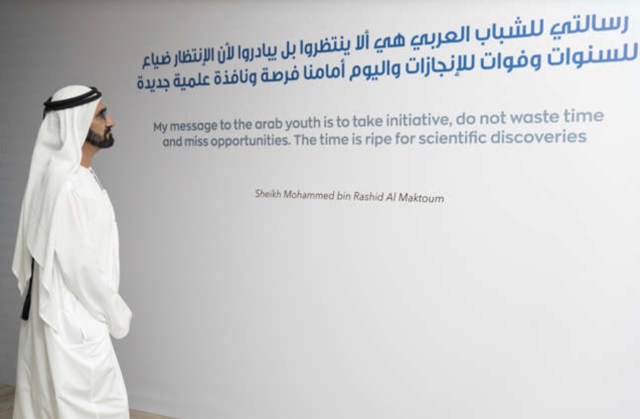
Abu Dhabi Crown Prince Sheikh Mohamed bin Zayed has given the country’s motorists a welcome birthday present – a 50% discount on all traffic and impoundment fines outstanding as on the 46th National Day, 02 December. The country has come a long way since 1971 and has every reason to celebrate a Happy Birthday!

Posted in Finance | Tagged , , , , , , , , , , , | Leave a comment

Ticket To Ride!

fäm Properties expect that over the next five years to 2022, Dubai’s property portfolio will rise by 164 k, with 7.3k handed over before the end of the year. Other consultancies have estimated far more so there is a wide divergence of views on future supply. The past three years, handovers have been half of what most “experts” had expounded at the beginning of each year, viz 14.9k in 2015 and 11.9k last year with  say 26k for 2017. Assuming the current population is 2.9 million and the number of residential units is 500k, the average unit houses 5.8. If the population increases at the current 8.1% rate, the population by the end of 2019 will have reached 3.38 million which would indicate that an extra 82.8k units would be needed to house 5.8 people. Over the past three years, the total number of handovers has only been 52.8k or 17.6k per annum so where’s the problem?

It has been estimated that 2017 construction contracts of almost US$ 3 billion have been awarded in connection with Expo 2020, together with a further US$ 112 million relating to non-construction. With the event edging nearer vital deadlines, more procurement opportunities will arise in 2018.

The owner of Emirates and flydubai has posted flat H1 profits. The Investment Corporation of Dubai, that also has major stakes in Emirates Global Aluminium and Emirates NBD, reported a marginal 0.6% decline in profits to US$ 2.25 billion, dragged down by a 52.0% slump in its transportation segment to US$ 300 million. Revenue was 13.1% higher at US$ 25.4 billion.

DMCC is to build a Jebel Ali coffee centre, that can handle up to 20k tonnes of green coffee beans annually with a value of over US$ 100 million, to be developed by Chinese companies, Mega Capital Halal and Yunnan State Farms Group. The country is the hub of a region that consumes 8% (equivalent to US$ 6.5 billion) of the global coffee consumption and would benefit by the fact that global exports jumped 4.8% last year to116.9 million bags.

Petrol prices are set to rise from tomorrow (01 November). Special 95 will be 6.3% higher at US$ 0.556, with the higher grade Super 98 up 5.9% to US$ 0.620 per litre. Having risen 6.5% in 2016, Special 95 is 13.5% higher so far this year, starting on 01 January at US$ 0.490.

Dubai Investments has acquired the two-year old Kent College Dubai campus in a long-term sale and leaseback deal which will see the operators working on a triple net basis to manage the school. With a student population of 2.2k, the UK school operates in Nad Al Sheba and is a subsidiary of Mir Hashem Khoory. The Dubai-listed company appears to be focusing on education-related ventures, as it expands its reach into income-generating real estate assets.

The UAE ambassador in Washington, HE Yousef Al Otaiba, stated that he thought that “US companies remain the preferred supplier for the country’s commercial and military’s aviation needs”. In the past decade alone, it is estimated that UAE customers – Emirates, flydubai, Etihad and Air Arabia plus the military – have purchased units valued at over US$ 150 billion from Boeing alone that represents a large share of the US$ 19 billion trade surplus the country has with the UAE.

The latest BMI report highlights the country’s transportation infrastructure as a leading driver in the construction sector with a total of 71 projects, valued at US$ 54.6 billion, under construction or in the planning stage. The fifteen railway projects account for US$ 13.9 billion of the total spend, with the largest being the 1.2 km Etihad Rail development. Both Dubai and Abu Dhabi are spending significant amounts on their airport expansions whilst half of the total projects are road-related but they only account for 8% or US$ 6.7 billion.

The latest BNC report estimates that there is currently 11.8k active construction projects in the country, valued at an impressive US$ 818 billion. The UAE’s number of projects accounts for 52% of the total and 33.6% of the total value of all the MENA projects.

Emaar Properties has agreed to start construction on Al Rasheed Residential City in Iraq; work on the US$ 10 billion project will begin early next year.

Long-standing creditors of Drydocks have agreed to DP World taking over the UAE shipbuilder in return for a US$ 225 million capital injection; this money will be used to pay out the junior creditors around 23% of their initial US$ 1.4 billion outstanding balance.  The remaining senior debt of US$ 649 million will be paid in two tranches – one of three years at 200 basis points over Libor and the other a five year repayment at 250 bp. The original US$ 2.2 billion debt (a three year loan of US$ 1.7 billion and the balance over five years) occurred in 2000 when Drydocks was planning to expand operations into Singapore.

A Chinese company, EHang Inc, has developed a one-passenger flying car that it hopes to roll out in Dubai next year prior to regulatory approval. The taxi drone, powered by four battery propellers, will have a100 km cruising speed and can remain airborne for 25 minutes.

The world’s busiest international airport continues to grow and looks set to welcome a record of over 89 million passengers by year end. Dubai International posted a 6.9% hike in October passenger numbers to 6.9 million, although flight movements were lower offset by an 11.6% increase in passengers per flight to 213.

The cruising season has restarted in Dubai after the summer break, with the emirate confident of beating last year’s total of 625k cruise visitors – a 15% hike on numbers from a year earlier. This year will see a rise in cruise calls to 155 with over twenty different cruise lines making use of the world class facilities, one of which will be Crystal Cruises which has chosen the city for the maiden voyage of its recently refurbished Crystal Symphony.

On Monday, the federal cabinet issued decree number 52 in relation to the introduction of Value Added Tax as from 01 January 2018. The executive regulations detail the supply of goods and services and initially will only apply to the UAE and Saudi Arabia, with other GCC states joining later. Any entity, with revenue over US$ 100k, is required to register although some companies will be considered exempt. The tax rate is currently fixed at 5% with some specified goods and services being zero-rated. To those hoping for an implementation extension, there is bad news – the Director General of the General Tax Authority has reiterated that there would be no delay. It is also reported that failure to submit a registration application by 01 January 2018 could lead to a possible US$ 5.4k fine.

Following the announcement that Shuaa Capital had abandoned plans to buy into Global Investment House of Kuwait, its shares fell 1.7%; in June, the Dubai-based investment back pulled out of merger talks with Bahrain’s Gulf Finance House. Once the region’s largest investment bank, its fortunes declined on the back of the GFC and, having returned to profitability over the past two years, it was planning to expand its balance sheet partly through acquisitions.

The DFM opened Sunday (26 November), at 3461 and by the end of the shortened week (because of the National Day holidays) was 41 points off to close on Wednesday, 29 November, at 3420. Volumes were higher this week, with trading of 345 million shares, valued at US$ 217 million, (cf 356 million shares for US$ 172 million, on Thursday, 23 November). Emaar Properties was US$ 0.08 lower at US$ 2.06, with Arabtec continuing its recent downward trend, nose-diving by US$ 0.08 to US$ 0.61.  For the month, the bourse was 5.9% lower from its opening of 3461 (YTD 3.1% down), with Emaar and Arabtec both heading south dropping US$ 0.21 and US$ 0.14 from their respective November openings of US$ 2.27 and US$ 0.80.

By Thursday, Brent Crude was 2.6% higher closing at US$ 62.94, with gold flat at US$ 1,278 by 30 November 2017. The month opened with the yellow metal trading at US$ 1,276 and Brent at US$ 60.79.

There was some sort of consensus in Vienna with OPEC deciding in principle to cap production for another nine months. This comes after a year of output cuts of 1.8 million bpd involving all stakeholders including non-cartel members which led to oil prices stabilising upwards. It is estimated that compliance to this output reduction was over 90%.

The Abu Dhabi National Oil Company is planning to spend US$ 110 billion over the next five years, as it continues expansion by further exploration, development and production of its energy assets. It is also expected that ADNOC will look closely to worldwide downstream investments to become a global player in that sector. The oil giant recently announced a partial IPO (of between 10-20%) of its fuel distribution unit, with shares valued at between US$ 0.64 and US$ 0.71.

Keeping to his promise to the South Australian government – and at the same time winning a US$ 50 million bet – Tesla chief executive Elon Musk has delivered the world’s biggest lithium-ion battery within 100 days. The state had suffered a series of “load-shedding” blackouts earlier in the year that had left 1.7 million residents without power. In September he stated that the 100 Mw battery, enough to provide emergency power to 30k homes, would be up and running within 100 days or it would be given free.

A surprise development saw Xavier Rolet step down, at the board’s request, as chief executive of the London Stock Exchange with immediate effect. This follows a bitter boardroom battle with some members not happy with him. Mr Rolet will leave with payments that could be as high as US$ 17 million – US$ 1.1 million annual salary, US$ 2.3 million bonus and the balance from a number of long-term incentives.

The UK’s biggest tobacco supplier, Palmer & Harvey has entered administration, leaving 2.5k people jobless. The main driver was finance-related as a potential buyout by private equity firm Carlyle did not materialise.

Another week and another Japanese corporate scandal. Following in the wake of fake data from the likes of Kobe Steel, Mitsubishi and Nissan, Toray becomes the latest to be embroiled in falsifying product data. The synthetic fibre-maker has admitted rewriting quality tests before shipping products to several companies, including those that make car parts and tyres.

Black Friday saw footfall in the UK high street shops down 4.2%, and 3.6% in shopping locations, against market expectations of only 0.6%. The usual suspects, the continuing squeeze on household income and the recent rate hike, came into play but many stores already had prior sales bargains in place.

The Consumer Financial Protection Bureau has had two directors this week following the resignation of its previous incumbent who nominated Leandra English as his replacement. However, President Trump had other ideas and installed his budget chief Mick Mulvaney to the position – a man who has called the consumer financial watchdog “a sick, sad joke” that should be scrapped. The agency has tried to curb the power and influence in Wall Street following the GFC whilst others consider it stifling economic growth with too much red tape and overbearing regulations.

Société Generale is to provide US$ 678 million in Q4 in relation to tax changes and redundancy payments with plans to cut a further 900 jobs on top of the 2.6k already announced. The bank is focusing on enhancing its tech investments and mobile banking to boost both revenue and profitability.

Troubled Uber Technology will reportedly post a Q3 loss of US$ 1.5 billion as it faces several legal battles, intense competition and regulatory problems in several jurisdictions. Two of its early backers want out and they have received a bid from Japan’s SoftBank to acquire a large shareholding but at a 30% discount on its last US$ 69 billion valuation. Other possible suitors for a stake in the ride-hailing company include Dragoneer Investment, Sequoia Capital and Tencent as General Atlantic and DST Global have dropped out of discussions.

In 2014, Time Warner divested itself of the iconic magazine publisher which has struggled, like many other in the printing world, from falling advertising revenues; it posted a 9.5% fall in Q3 revenue to US$ 679 million. In its home country Time publishes Entertainment Weekly, Fortune, People and Sports Illustrated.

The OECD is yet another global institution bullish about the global economy and has upped its 2017 forecast to 3.6% followed by 3.7% and 3.6% over the next two years. Over the three year period, US and euro area growth will be 2.2%, 2.5% and 2.1%, with the latter at 2.4%, 2.1% and 1.9%. There is no surprise to see the UK economy with figures of 1.5%, 1.2% and 1.1%. However, it is highly likely that these forecasts will not ring true and will probably come in higher as they do appear to be on the low side.

Zimbabwe is not the only country in an economic downturn. S&P have downgraded South Africa’s local currency debt score to junk status of BB+. It highlights the fact that the country’s economy has stagnated and, with its external competitiveness softening, a worsening of its economy and public finances is all but certain. The end result would be a widening of its budget deficit with borrowing costs increasing.

It appears that Prince Miteb bin Abdullah is one of the first detainees in the recent Saudi corruption crackdown to be released after reportedly settling to repay US$ 1 billion as “compensation”. Earlier in the month, Crown Prince Mohammed bin Salman hinted that most of the 200 or so Saudis detained in the Riyadh Ritz Carlton would be freed if they agreed to repay some of the money they had acquired via illicit means. The Public Prosecutor has the final say whether to take any of the suspects, that include Prince Alwaleed bin Talal and billionaire Mohammed Al Amoudi, to court instead; to date, at least five will face prosecution whilst several have already settled with cash payments.

Having started the year trading at US$ 1k, virtual currency Bitcoin was trading at just over US$ 8k last Friday (24 November) and by Wednesday had risen by a further 25% to top US$ 10.0k for the first time. Most bank chiefs have trash talked the virtual currency, likening it to a Ponzi scheme, mainly because it is encroaching on their traditional business. International authorities are also concerned especially with the lack of regulation and not being backed by any government, or central bank, no entity is responsible for backing their value. Like similar crypto currencies, Bitcoin makes use of blockchain – an online ledger of transactions – backed up by a network of unknown computer operators on the internet. There is no doubt that anyone who purchases crypto currency will have bought a roller-coaster Ticket To Ride!

Posted in Finance | Tagged , , , , , , , , , , , | Leave a comment

Out Of Touch

Decree 43 of 2013 laid down set rules on how landlords could raise rentals – but did not account for decreases. Under the regulations, an increase of 10% was permitted if the rental fell within 21% – 30% of average wages, 15% between 31% – 40% and 20% if the rent was 40% less than the average wage. Now the Dubai Land Department has recently updated its rental index that has seen average 10% declines across the board, in non-freehold areas, whilst freehold areas were largely left unscathed.

Following its recent US$ 171 million contract with Arabtec to build 1.3k villas at Akoya Oxygen, Damac Properties has started additional work there, valued at US$ 95 million, so as to speed up development in its 55 million sq ft green development.

As promised by Mirwais Azizi, in September, work has started on his company’s massive US$ 6.8 billion development in District 7 of MBR City. Covering 33 million sq ft, the project will encompass 30k residential units, constructed on 105 mid and high-rise buildings, as well as two hotels and a retail district. To be built in four phases, the first two are slated for completion by Q2 2019.

Not to be outdone, Oriental Pearls announced that its US$ 5.7 billion project, covering 4.6 million sq ft, will be finished by 2022. Phase 1 of the 7k premium freehold apartments, located in the Meydan Master Development, is already 10% completed and the first twelve towers will be ready for handover by November 2019.

Target Engineering, an Arabtec subsidiary, has won a US$ 259 million Emaar contract for work on phase 2 of Forte, located in Downtown. This contract is for the building of two towers (46 and 67 floors) and comes on top of the firm winning a contract for its five basements. Completion is expected by Q1 2021.

InterContinental Hotels Group is planning to launch Hotel Indigo Dubai Sustainable City, a 143-key property slated to be entirely solar energy-powered. No further details were available but it will be in association with Diamond Developers.

Emaar Hospitality expects to quadruple its number of hotels over the next four years. Currently, the Emaar Properties subsidiary has 30 hotels under development in a wide range of countries including the UAE along with Bahrain, Egypt, Maldives, Saudi Arabia and Turkey, with further expansion plans in over fifty countries.

The new Mina Rashid Marina, stretching 13 sq km, was inaugurated this week by Sheikh Mansour bin Mohammed bin Rashid Al Maktoum. Built by DP World’s P&O, the facility will have 19 designated docks, with 646 berths that can accommodate 5k boats. Phase 2 of the project is currently under way and will include retail, residential and F&B, whilst the final phase will see berthing facilities for 16 large yachts, to be completed by Q3 2018. This development is part of the emirate’s 10X Initiative as Dubai is implementing projects now which other global centres will adopt ten years hence.

Exploratory work has begun on DEWA’s five year sewerage treatment system that involves 70 km of tunnels with 140 km of link sewers and pumping stations. Apart from the elimination of 100 pump stations, the new system will result in marked reductions in costs, power demand and carbon emissions.

On the back of an expected boost in regional e-commerce, DHL has opened a US$ 18 million expansion to its Dubai International Airport logistics facility. The global delivery firm has posted 26 consecutive quarterly growths of over 8% but much higher in the ME; itis forecasting 2018 growth of over 15%, aided also by an upturn in global trade. The upgraded facility will see an extra 13.1k sq mt and will enable hourly shipments to double to 5k.

Dubai World Central reported a 9.1% growth in traffic, to 705k, for the first nine months of the year, with passenger numbers rising 7.9% to 650k. However, flight movements were 15.3% lower at 24.9k but average passengers per flight expanded by 29.9% to 120.

It was surprising to see that Manama was ranked the top global city in this year’s Expat Insider Survey whilst Dubai, languishing 17th, was behind Muscat, 12th, and Abu Dhabi – 13th. The survey involved 13k respondents and was conducted by InterNations.

Further to the IMF’s recent forecast of 3.5% 2018 growth for Dubai, the DCCI president, Hamad Buamin is also bullish about the emirate’s future expansion, agreeing with that figure and noting that 98% of the local economy is driven by the non-oil sector. He also pointed to the fact that Expo 2020 will result in increased investment that will “allow the city to grow”.

The Central Bank posted month on month October increases in gross bank assets to US$ 719 billion, gross credit (US$ 432 billion) and Money Supply Aggregate M1by 6.3% to US$ 134 billion.

Five-year old GlamboxME has been acquired by an unnamed Saudi buyer. The beauty subscription e-commerce company had already raised US$ 4 million from local investors and the new set up will see further expansion of both products (already with over 200 beauty brands on offer) and its regional network.

Emirates NBD issued its eighth bond – of US$ 750 million – to bring its total listing on Nasdaq Dubai to US$ 5 billion and ensuring that the bank is the bourse’s leading customer of conventional bonds.

Wednesday saw the launch on the DFM of Emaar Development PJSC, with its Chairman, Mohamed Alabbar, predicting a bright future and, on the back of a US$ 11.6 billion order pipeline, targeting an annual 8.6% dividend yield over the next three years. The shares opened at US$ 1.643, fell 3.6% within an hour of trading and closed the week 4.6% off at US$ 1.567.

The DFM opened Sunday (19 November), at 3460 and despite a topsy-turvy week was only 1 point higher to close on Thursday, 23 November, at 3461. Volumes this week were almost unchanged, with trading of 375 million shares, valued at US$ 169 million, (cf 356 million shares for US$ 172 million, on Thursday, 16 November). Emaar Properties was US$ 0.01 higher at US$ 2.14, with Arabtec continuing its recent downward trend by US$ 0.05 to US$ 0.69.

By Thursday, Brent Crude had lost half of its previous week’s gain dropping US$ 2.13 (3.4%), closing at US$ 61.36, with gold US$ 7 down to US$ 1,278 by 23 November 2017.

Carillion, has announced its third profit warning for the year, as a result of breaches of agreements with lenders. The UK construction firm, employing 43k, is working on some major projects and has to deal with on-going debt problems and badly performing contracts. Following its two earlier profit earnings, the company’s shares sank by 67% and this week the shares slumped by 50% in early trading.

Chinese company Tencent has joined the tech’s big 5, at the expense of Facebook. The social networking giant, founded almost twenty years ago by Ma Huateng, is now valued at US$ 523 billion but still lags behind Apple, Alphabet, Microsoft and Amazon.

This week’s budget sees the UK Chancellor, Phillip Hammond, introduce tax cuts in the form of cancelling stamp duty for first-time home buyers up to a maximum of US$ 400k, as well as an extra US$ 3.7 billion spending for the embattled NHS and the setting up of a US$ 4 billion Brexit war-chest, along with a US$ 2 billion U-turn on Universal Credit. (Remember he was a diehard “Remainer” some eighteen months ago). This is at the same time that he announced that annual growth in over the next five years had been cut, with all years having growth of less than 2% – the first time this has happened in modern times.

The main driver is that the country has been far too slow to rebound from the GFC. Consequently, with less money coming into the treasury, because of lower tax receipts, and less consumer spending because of wage level rises will continue  not to keep pace with inflation,  the government will have to lend more to cover their extra expenditure and the US$ 46 billion budget deficit.

In the US, the Conference Board reported a bigger than expected hike in its October index of leading economic indicators, up 1.2% (rather than the 0.6% expectation). Nine of the ten indicators headed north with the three main contributors being average weekly jobless claims, interest rate spread and the ISM new orders index. Further proof that the US economy is moving in the right direction came with new residential construction up 13.7%, month on month, to 1.29 million. Furthermore, building permits also increased – by 5.9% – to 1.3 million.

With the market bulls still stampeding the global bourses, there has to be renewed concern that a major correction is on the way. The MSCI All-Country World Index, covering 47 markets, hit an all-time high this week and is 19% up on the year and 190% higher than it was at the time of the GFC. Almost weekly, the Dow Jones industrial Average, Nasdaq and the S&P 500 continue to hit record highs (as they did again this week).

This week, the Chinese authorities continued their crackdown on the expanding, and almost unregulated, online micro lending sector. The Central government sent a directive to all its provinces to suspend regulatory approval for all new applicants and to cut back on such firms lending across different regions. This comes after several attempts to regulate more stringently the industry which has seen more than its fair share of scandals, frauds and high profile P2P (peer to peer) failures. Unsecured lending in this sector alone more than tripled last year to  a worryingly high US$ 140 billion.

The IMF has warned that even though Robert Mugabe has been ousted, the short-term economic outlook for Zimbabwe is gloomy. After almost forty years of his tyrannical rule, the country is beset by high government spending, inadequate reforms in place and an untenable foreign exchange regime. There is no doubt that the Chinese will have the country on its radar, with much of the post-Mugabe investment being in renminbi rather than US$ and euro.

The new incumbent – and the country’s third president – the 75-year old Emerson Mnangagwa comes with baggage and whether he pulls the country together remains to be seen. It has to be remembered that he has been a senior figure in Mugabe’s regime and a leading member of the ruling ZANU-PF party for decades. Furthermore, he was the Minister of Security during the Gukurahundi massacres in which thousands of Ndebele civilians were killed. One of the richest men in the country, he is known by his “Ngwena” nickname (Shona for crocodile) for a reason. Even with this changing of the guard, Zimbabwe is a long way from being Out Of The Woods and more like Out Of Touch.

Posted in Finance | Tagged , , , , , , , , , , , | Leave a comment

Yesterday’s Man

HH Sheikh Mohammed bin Rashid Al Maktoum has approved a new penal order system that will see Dubai Public Prosecution dealing with minor misdemeanours and offences – via fines – rather than through the court. The good news for many is such offences will now include bounced cheques of up to US$ 54k, non-payment of rents and defamation cases.

fäm Properties has reported that Q3 Dubai estate transactions and  sales of 19.9k units now account for more than 50% of the 39.5k total  – this is the first time since the 2008 GFC that this has happened.  In 2010, the ratio was at 88-12 of “ready” property to off-plan and since then this has continued to drop to its current level.

With this week’s US$ 15.1 billion Air Show commitment for 40 787-10 Dreamliners, the number of wide-body Boeing planes Emirates has ordered reached 204, with a combined value in excess of US$ 90 billion; deliveries will start in 2022, two years later than the first of the 150 777X, ordered at the 2013 Dubai Air Show.

Before Wednesday, flydubai’s fleet stood at 61 planes, with a further 70 Boeing 737 MAX 8s due before 2023. The eight-year old budget airline, which serves 97 destinations in 44 countries, surprised everybody by placing a US$ 27 billion order for a further 225 aircraft.

This week did not start well for its rival Airbus that lost out with its A350 bid with the American plane being “the best option” for Emirates. The European conglomerate had earlier in the month offered a higher-density configuration plane but it had arrived too late for further consideration. The Dubai airline has also decided to stall any A380 orders, to add to its already 142 inventory, until Airbus makes firm commitments on its future.

By the end of the week, a smile had returned to the Airbus faces as it announced its largest ever single order – 430 A320neo, with a list price of US$ 49.5 billion – that will boost its order book that stood at only 290 aircraft at the end of October. The US Indigo Partners, whose airlines include Frontier (US), JetSmart (Chile), Volaris (Mexico) and Wizz Air (Hungary), hope to finalise the deal by the end of the year. (The aviation sector contributes so much to the Dubai economy accounting for 28% of its GDP, contributing US$ 22 billion to the economy, and 19% of the total workforce).

This week serves to show that so-called “experts” are not always right, with the general feeling being that this would be a lacklustre event. Over the five days, there was a record 79k visitors and total bookings were US$ 113.8 billion – almost three times more than the US$ 37.2 billion of orders signed at the 2015 show. (The aviation sector contributes so much to the Dubai economy accounting for 28% of its GDP, contributing US$ 22 billion to the economy, and 19% of the total workforce).

Despite volatile regional and global economic conditions, Dubai continues to perform strongly as demonstrated by Q3 trading results, indicating a credible 12.8% hike in non-oil foreign trade to US$ 93.7 billion, compared to the same period in 2016. Re-exports were the main driver, with a 34.0% jump to US$ 28.0 billion, as all three trade components showed increases – free zone (21%), direct trade (9%) and customs warehouses (8%). Dubai’s top three trading partners remain China (US$ 35.1 billion), India (US$ 20.2 billion) and USA (US$ 17.0 billion). YTD, non-oil trade was up 3.5% to US$ 268.4 billion.

To expand the local development of financial technology, Dubai International Financial Centre has initiated a US$ 100 million FinTech-focused fund. The DIFC, recently ranked tenth in The Banker magazine’s annual international financial centres, estimates that this will leverage its FinTech ecosystem and enhance the future of finance in the region.

Dubizzle has acquired two local companies – Masterkey and AirList – to boost its real estate listing, currently standing at 150k. No financial details were readily available.

It has been announced that the upcoming Emaar Development, with a 22 November start date, will raise US$ 1.7 billion – higher than the 2014 Emaar Mall’s launch of US$ 1.6 billion. The share issue price will be US$ 1.64. It has recorded YTD revenue of US$ 1.77 billion, resulting in a profit of US$ 573 million.

Emaar Properties posted a 31.7% jump in Q3 profit to US$ 411 million, with revenue 45.0% higher at US$ 1.52 billion. YTD, both its revenue and profit realised healthy gains – by 21% to US$ 4.2 billion and 20% to US$ 1.2 billion. The developer reported a 32% increase in the sales of residential property.

Arabtec Holding recorded its third quarterly profit this year of US$ 5 million – a major turnaround following the US$ 61 million loss in Q3 2016; YTD, the company has posted a US$ 20 million profit, compared to a US$ 125 million deficit last year. Q3 and YTD revenue both headed north, by 5.9% to US$ 572 million and 3.2% to US$ 1.7 billion respectively; going forward, it has a project pipeline, totalling US$ 4.6 billion.

Because of the need to complete a capitalisation programme, and a US$ 136 million cash injection, Drake & Scull International posted a US$ 98 million Q3 loss due to a lack of liquidity; revenue totalled US$ 161 million, of which US$ 68 emanated from local operations. When some form of financial normality returns, and the ongoing debt restructuring is finalised, the firm hopes for an improvement in operational performance.

Following a US$ 9 million profit in the same period last year, Union Properties posted a Q3 loss of US$ 12 million, with revenue dropping 54.2% to US$ 32 million. The loss, attributable mainly to the winding down of its subsidiary Thermo, would have been greater if operating expenses had not fallen by 28.1% to US$ 44 million. During the period, the revamped developer unveiled a US$ 2.2 billion master plan for Motor City, comprising 44 high and low rise buildings and150 villas along with commercial, entertainment, hospitality and residential facilities.

Marka saw a quarter on quarter narrowing of its losses in Q3 from US$ 34 million to US$ 6 million, although revenue nudged 8.0% lower to US$ 6 million. The company expects results to improve with the introduction of a strict cost control program and major operational changes.

The DFM opened Sunday (12 November), at 3450 and by the end of the week had crept 10 points higher to close on Thursday, 16 November, at 3460. Volumes were higher this week, with trading of 356 million shares, valued at US$ 172 million, (cf 242 million shares for US$ 133 million, on Thursday, 09 November). Emaar Properties was US$ 0.01 higher at US$ 2.14, with Arabtec continuing its recent downward trend by US$ 0.05 to US$ 0.69.

By Thursday, Brent Crude had lost half of its previous week’s gain dropping US$ 2.13 (3.4%), closing at US$ 61.36, with gold US$ 7 down to US$ 1,278 by 16 November 2017.

US-based investment firm, Harbour Energy, has had a US$ 67.2 billion bid for the Australian energy company Santos rejected; at the time of the August offer, shares were trading at US$ 3.54. By Thursday, its shares were 8.8% higher at US$ 3.85 from its August price and 13.0% up on the day.

Siemens announced that it will retrench 6.9k (50% in its home base, Germany) mainly in its fossil fuels division, as global demand for its large turbines has fallen. The conglomerate had already announced 6k job cuts in its wind power units. Its UK business is unlikely to be affected.

In a long-standing tax evasion case, involving assets of more than US$ 1.9 billion, by some of its clients, HSBC has agreed to settle with French authorities and pay a US$ 353 million fine. Europe’s largest bank had acknowledged “control weaknesses” and will be happy to see the case closed, although two of its former directors could still face legal action. Under new 2016 French legislation, it is allowed for companies to settle, without any finding of guilt.

Despite a dip in consumer spending, Japanese Q3 growth grew at a 1.4% annualised rate, driven by improving export figures (up 6.0%) and increasing global demand. This, the seventh consecutive quarterly expansion and the longest growth period since before the GFC, follows more than four years of economic stimulus by Prime Minister Shinzo Abe. However, even after the 2013 introduction of “Abenomics”, inflation is still weak and private consumption spending continues to soften.

Although month on month figures were slightly down, China is still performing better than analysts expected at the beginning of the year. Industrial output at 6.2% was 0.4% lower, retail sales 0.3% off at 10.0% and fixed asset investment posted a 0.2% decrease to 7.3%.

Whilst applauding the improvement in the European economy and that the recovery looks to be durable, the IMF did warn that a disruptive Brexit would have a negative impact and lower growth for both stakeholders – Europe and the UK. Driven by historic low interest rates and unprecedented central bank stimulus, there has been 18 quarters of growth, with latest figures indicating 2.5% for this year and even higher figures up to 3.0% for some eastern European countries.

Finally, the US House of Representatives has passed an overhaul of the US tax code that would slash corporate rates and be the biggest such legislation since 1986. Described by the President as a “big, beautiful Christmas present” for families, he hopes that the “simple, fair, and competitive tax code will be rocket fuel for our economy”. If successful, it would see corporates paying 20% tax (down from the current 35%) and significant changes on how overseas profits and payment from overseas subsidiaries are taxed. (Some significant US companies will be lobbying against these proposals).

It has taken a long time for the UN to accuse Myanmar’s government of ethnic cleansing as reports indicate that over 600k Rohingya refugees have fled on-going violence, mainly to Bangladesh, over the past three months. The country’s elected leader, Aung San Suu Kyi, has also been rightly criticised for alleged human rights abuses and the destruction of villages in the northern Rakhine state. Chevron has not escaped reproach as it has multibillion dollar energy investments in the country.

Africa’s richest woman, Isabel Dos Santos, the billionaire daughter of former President José Eduardo dos Santos, has been sacked as head of Sonangol, Angola’s state oil company. In September her father, who was Africa’s second longest-serving leader, stepped down after 37 years in power to be replaced by Joao Lourenco who has promised to tackle corruption.

Meanwhile the longest serving African leader, Robert Mugabe is reportedly under house arrest. The 93-year old has managed to wreak havoc on Zimbabwe’s economy and will be remembered for declaring inflation illegal in 2007 after the 59% inflation level in 2000 rose to 600% three years later and then to 1,200% in 2006 and 66,200% and 80 billion% over the next two years. He also reduced what was considered the continent’s breadbasket to a country relying on food imports as in the 1990s, he stripped white farmers of their land and handed it to members of the black population who, in many cases, had no farming experience.

Strangely, it was only last month that the World Health Organisation announced that it was making the African tyrant a “goodwill ambassador”! This century has seen the “enforced” downfall of the likes of Sadam and Gadaffi and the question has to be why it has taken so long to see the end of Mugabe. Far too late, this despot has finally become Yesterday’s Man.

Posted in Finance | Tagged , , , , , , , , , , , | Leave a comment

Heroes and Villains

Damac has announced that it sold 85% of its luxury Věra Residences’ units on 04 November, the opening day of sale. The 30-storey tower is located in Business Bay overlooking the Dubai Canal. Only last month, the developer sold out all residences for phase 1 of its Akoya Oxygen’s Just Cavalli Villas.

It also announced that it had started additional work in Akoya Oxygen, totalling US$ 95 million. Towers Technology Contracting was chosen as the main contractor for 448 villas, whilst Nael Construction and Contracting will carry out roads and infrastructure work for phase 6 of the development.

With construction stalled and the property being 90% complete, Langham Hospitality Group is still confident that the luxury hotel on Palm Jumeirah will be completed. The 323-key building was initially scheduled for completion in 2015.

Dubai tourist numbers for the first nine months of the year have risen 7.5% to 11.6 million, with India (1.45 million), Saudi Arabia (1.25 million) and the UK (905k) holding on to the top three source markets. Largely because of the introduction of the visa on arrival scheme, there were marked increases in visitors from Russia (up 95%) and China (up 49% to 573k). At this rate, an annual 9% increase in numbers will see Dubai breach its 20 million target by October 2020 – a viable figure even without the attraction of Expo. Euromonitor International ranks Dubai the sixth most visited global destination behind Hong Kong (26.6 million visitors), Bangkok, London, Singapore and Macau.

Emirates posted a 111% surge in H1 net profit to US$ 453 million, with passenger numbers rising 4% to 29.2 million and capacity by 2% to 264 aircraft. The owner of the airline, Emirates Group, reported a 77% improvement in profit to US$ 631 million, as revenue came in 6.2% higher at US$ 13.5 billion. Dnata posted a 20.0% hike in profits to US$ 180 million, handling 330k aircraft (up 11%) and a 25% increase in cargo to 1.5 million tonnes. During the period, the airline signed a code share agreement with flydubai involving 45 destinations and also extended its partnership with Qantas for a further five years.

As the Dubai Air Show opens this Sunday, there is every chance that Airbus will receive a new order for the A380 jumbo from its lead customer. Having just taken delivery of its 100th double-decker airliner, Emirates already has a further 42 on order and accounts for 44.8% of the total A380 net orders of only 317 units (with a list price of US$ 437 million). With Airbus cutting annual production to just eight aircraft, the long term prospects for the plane seem gloomy, especially if there is no order forthcoming from its lead customer this week.

The federal cabinet has approved the country’s 2018-2021 budgets, totalling US$ 54.8 billion, including US$ 14.0 billion for next year. The two main sectors, accounting for 80.0% of the total spend, will be ‎social development/benefits (US$ 7.2 billion) – comprising US$ 2.8 billion allocated to education and US$ 1.2 billion to health – and government affairs (US$ 6.0 billion). No deficit is forecast, as the government aims to balance the books.

In tandem with its development of the Port of Berbera, DP World is to establish a 12.2 sq km greenfield economic free zone in Somaliland. The Dubai-based company will develop the new facility, based on its home Jebel Ali Free Zone, in phases, with the first one covering 4 sq km. Further details, including DP World’s capital investment plan, will be announced once the agreement is signed with the new government, following next week’s elections.

The world’s fourth largest ports operator is also planning to develop a 95 sq km industrial and residential zone in Egypt’s Sokhna on the Red Sea. No figures were readily available but it will hold a 49% stake in the project with the Suez Canal Economic Authority retaining 51%.

As the Dubai Air Show opens this Sunday, there is every chance that Airbus will receive a new order for the A380 jumbo from its lead customer. Having just taken delivery of its 100th double-decker airliner, Emirates already has a further 42 on order and accounts for 44.8% of the total A380 net orders of only 317 units (with a list price of US$ 437 million). With Airbus cutting annual production to just eight aircraft, the long term prospects for the plane seem gloomy, especially if there is no order forthcoming from its lead customer this week.

The US-based Fetchr, along with drone delivery firm Skycart, are developing the region’s first autonomous drone delivery service with Dubai’s Eniverse. Using the latest geolocation technology, packages of less than 5kg can be delivered all over the emirate.

The Emirates NBD October UAE Purchasing Managers’ Index increased by 0.8 to 55.9 on the back of rising output and a surge in inventory levels, with the expectation of a marked upturn in demand. However, there are still concerns about rising costs and the prevalent use of discounting to secure business, although there was a welcome increase in new business.

A US$ 500 million APICORP sukuk brought the number of 2017 sukuks on Nasdaq Dubai to eleven, with a value of US$ 10.25 billion; this is the second issue by the multilateral development bank under a 2015 US$ 3 billion sukuk programme. Dubai has become a global leader in this financial sector and its listings currently total US$ 53 billion.

Amlak Finance reported a 111.5% hike in Q3 profits to US$ 4 million but were lower for the first nine month, down 68.5% to US$ 8 million, as revenues of properties under construction dipped 90.4% to just US$ 10 million.

Arabtec Holding posted its Q3 results that have seen revenue up 5.7% to US$ 572 million (and 3.2% to US$ 1.7 billion for the nine months to September) as the construction company returned to profit; in Q3, this came to US$ 15 million, compared to a US$ 61 million deficit last year and a US$ 14 million YTD surplus following a US$ 143 million loss in 2016.

Emaar Malls reported an 11.5% hike in Q3 profit to US$ 132 million, as revenue rose by 13.2% to US$ 239 million. In August, it bought online retailer Namshi for US$ 151 million and this has benefitted the company, with its Q3 revenue was 39.0% higher at US$ 53 million. Footfall for the first nine months of the year was 5% higher at 95 million visitors.

Amanat Holdings recorded a 15.2% improvement in Q3 profit to US$ 4 million on a 42.8% rise in total income to US$ 6 million. The Dubai-listed healthcare and education company is expected to spend US$ 272 million this year on at least two deals.

Aramex posted a 13.0% increase in Q3 profits to US$ 22 million with revenue 9.0% higher at US$ 312 million, driven by global e-commerce growth across all geographical sectors. The international logistics and transportation company would have reported a higher double digit profit growth if it were not for currency fluctuations, especially the Egyptian pound.

In 2016, SHUAA Capital posted a US$ 10 million Q3 loss but over the past year has managed to turn things around to record a 2017 quarterly profit of US$ 6 million; for the first nine months of 2017, profits were at US$ 16 million, compared to a US$ 31 million deficit in the same period last year.

Although the Commercial Bank International posted a 4.0% increase in Q3 profit to US$ 9 million, there was a 15% decline for the nine months to US$ 23 million, driven by higher impairment charges; net interest income in Q3 was 13.0% higher at US$ 40 million. There were improvements in both net loans/advances (up 2% to US$ 3.7 billion) and customer deposits by 10% to US$ 3.9 billion.

The DFM opened Sunday (05 November), at 3622 and by the end of the week had lost 172 points (4.7%) to close on Thursday, 09 November, at 3450. Volumes were higher this week, with trading of 242 million shares, valued at US$ 133 million, (cf 126 million shares for US$ 58 million, on Thursday, 02 November). Emaar Properties dropped US$ 0.13 to US$ 2.13, with Arabtec falling US$ 0.06 to US$ 0.74.

By Thursday, Brent Crude was US$ 4.34 (7.3%) higher on the week, closing at US$ 63.49, with gold US$ 17 higher to US$ 1,285 by 09 November 2017.

The latest leak of a reported 13.4 million confidential financial documents indicates how some secretly invest in offshore tax havens. Last year, it was the Panama Papers that hit the headlines, now the Paradise Papers are set to cause at least embarrassment to a range of high-net-worth individuals including HM Queen Elizabeth, Donald Trump’s Commerce Secretary, Lord Ashcroft, Bono, Lewis Hamilton, a key aide of Canada’s PM (Justin Trudeau) and Russian oligarch, Alisher Usmanov.

According to the leaked documents, Apple, in 2015, moved much of its offshore cash from Ireland to Jersey to “ensure that tax obligations and payments to the US were not reduced”. This followed the tech company making corporate changes to adapt to the tightening of Irish tax legislation.

Reports from Saudi Arabia indicate that the Crown Prince Mohammed bin Salman bin Abdul Aziz, having set up a new anti-corruption body, has undertaken a major purge of the kingdom’s political and business leadership. It appears that eleven princes, including Prince Alwaleed bin Talal, four sitting ministers and dozens of ex-ministers have been detained.

On Tuesday, shares in Prince Alwaleed bin Talal’s Kingdom Holding Company fell 9.78% on the Tadawul to US$ 2.16 – its lowest level since December 2011. According to Bloomberg, the Saudi prince lost 6.9% of his wealth, to be worth only US$ 17.7 billion, within 48 hours of the shock announcement.

There is no doubt that President Trump is keen to see the New York Stock Exchange as the chosen international bourse for the upcoming Aramco IPO, due to take place in Q3 next year. With only 5% of the conglomerate being floated, it is expected that the Saudi government’s coffers will be enhanced by up to US$ 100 billion.

Following BP’s impressive results last week, Royal Dutch Shell has announced that Q3 profits jumped 47% on the back of higher production and recent rises in energy prices. However, current cost of supplies rose 155% to US$ 3.7 billion, resulting from one-off costs last year.

The world’s second largest car-maker reported an impressive 13.2% hike in H1 profits to US$ 9.4 billion, as revenue rose 8.6% to US$ 124.7 billion, driven by a weaker yen and a major cost-cutting exercise. Toyota has now upped its full year (March 2018) profit forecast to US$ 17.1 billion.

Meanwhile, Japan’s second largest vehicle company, Nissan has cut its full year profit forecast by 5.9%, to US$ 5.7 billion, because of a safety inspection scandal which saw a 1.2 million car recall only last month and a three-week factory shutdown; this was as a result of revelations that uncertified workers had been carrying out final vehicle inspection checks for decades. Earlier, the company had posted a 21.6% decline in Q3 operating profits to US$ 1.1 billion, as North American sales sank to a three-year low.

SoftBank kept the markets happy with a US$ 3.5 billion Q3 profit, that was some 23% higher than analysts’ expectations, with revenue topping US$ 19.7 billion. The Japanese company reported that its US unit, Sprint, already struggling with subscriber losses, will be looking for a new direction now that its merger talks with T-Mobile US have broken down.

In a move that surprised the market, Broadcom Ltd has made a US$ 100 billion offer for Qualcomm Inc that would make the new entity the third largest global chipmaker, behind Intel Corp and Samsung Electronics Co. The deal – the largest ever in the tech industry – would see Broadcom’s revenue surge by US$ 30 billion and expand its network in chips that connect handsets to wireless networks to its existing expertise in chips that link devices to Wi-Fi networks.

When he first came to power in 2014, President Joko Widodo set a 7% annual growth target but he has fallen short over the past three years, posting figures around the 5% mark. The largest regional economy in SE Asia, Indonesia posted a 5.06% annualised growth in Q3, (on the back of communications, information and services sectors), with exports climbing 17.3%, year on year. To further boost the economy, a series of economic stimulus packages have been introduced and interest rates cut, now at 4.5%.

It has not been the best twelve months for Prime Minister Narendra Modi after his announcement of India’s biggest-ever cash ban exactly a year ago, cancelling 86% of the currency in circulation. His attempt to rid India of corruption, fake rupees and black money, in one fell swoop, has largely failed. However, his biggest problem is that the promising economic growth prospects, that were forecast to be in the 7% region, have stalled. Indeed, GDP growth has declined linearly over the past six quarters from a 9.2% high in Q3 2016 to the current 5.7%.

China’s financial system is becoming significantly more vulnerable due to high leverage, according to central bank governor Zhou Xiaochuan, who has made a series of blunt warnings in recent weeks about debt levels in the world’s second-largest economy. There is no doubt that the authorities are becoming increasingly concerned about the country’s high borrowing levels and that tougher regulations will be introduced. Furthermore, there could be a relaxation of capital controls that will allow non-Chinese financial institutions to operate on the mainland.

US October employment figures posted an additional 261k jobs that helped to drive the jobless rate down to 4.1% – the lowest rate since the turn of the century. The main drivers were marked increases in the manufacturing as well as the professional and business services. However, wage growth was slower than expected and the increasing hiring expected, following the major hurricane season, did not materialise. With consumer credit surging US$ 20.8 billion in September and expanding at an annual 6.6%, there will be worries of a growing debt problem in the country.

On Thursday, the US and Chinese Presidents Donald Trump and Xi Jinping signed deals worth US$ 250 billion, as it was reported that total bilateral trade totalled US$ 648 billion in 2016. However, Donald Trump is far from happy about the US$ 310 billion trade imbalance and has blamed his predecessors for allowing it whilst praising and crediting Jin Ping for looking after his citizen’s welfare. It is becoming more difficult these days to choose between the Heroes and Villains.

Posted in Finance | Tagged , , , , , , , , , , , | Leave a comment

Wouldn’t It Be Nice?

This week, a US$ 736 million JV was announced between Dubai Airport Free Zone Authority and wasl Asset Management Group to set up Dubai CommerCity. Located on a 2.1 million sq ft plot in Umm Ramool, MENA’s first dedicated e-commerce free zone will have three clusters – Business (with 13 office buildings), Logistics (84 units) and Social (including art galleries and a range of luxury restaurants and cafés). There is no doubt that it will enhance Dubai’s standing as a major e-commerce hub and will act as a catalyst for dedicated foreign investment opportunities and further growth in a regional market that is set to expand to US$ 20 billion by 2020.

Azizi Developments confirmed that its US$ 212 million Mina by Azizi on Palm Jumeirah will be ready by Q4 2018. Based on the traditional Arabic dhow, the project will comprise a range of 1-4 BR fully-furnished and serviced residences. This year alone, the Dubai-based developer has registered 68 separate projects, valued at US$ 5.7 billion.

The twin tower The Waves in Jumeirah Village Circle will be ready for handover by Q4 2018, according to Lootah Real Estate Development. The project comprises 135 studios / 1 BR units and will incorporate a pool and gymnasium.

The world’s fifth Bulgari Hotels and Resorts property will open in Dubai in December 2018. Located on Jumeirah Bay Island, and shaped like a seahorse, the Marriott International operated property will have 101 rooms and 20 beachfront villas, with its own private beach.

Union Properties has set up an investment arm, UPP Capital Investment, that will focus on its direct and indirect real estate business. This will be the developer’s third new division, following Union Malls and Al Etihad Hotel Management, since the May appointment of Nasser Butti Omair Bin Yousef as its Chairman.

Gulfood Manufacturing 2017 opened on Tuesday and, with 1.6k exhibitors, expects over 10k trade visitors over the three days.

There are two news items that should help silence the many doom and gloom merchants in town. BNC report that Saudi Arabia and the UAE account for 74% of the GCC’s hospitality and leisure projects currently underway and valued at a US$ 200 billion total. The other is the price of oil that has seen Brent at over US$ 60 for the first time in over two years. A rising oil price and a strong construction sector, allied with Expo 2020, will have a positive impact on the local economy that will see Dubai grow almost 4.0% in 2018 and even more in the ensuing two years.

To support the recently announced Saudi Vision 2030 by the Crown Prince, Prince Mohammed bin Salman bin Abdul Aziz, DP World will help in the development of Jeddah port. Along with the new US$ 500 billion mega project called Neom, Jeddah could become a major hub owing to its geographical proximity to this new development, other major markets and trade routes.

Locally-based fit-out company, Depa reported a 343% surge in nine-month profit to US$ 35 million, as revenue rose 33% to US$ 334 million. Its recently introduced business/restructuring plan is seemingly taking effect.

For the first nine months of the year, Dubai International has posted a 5.8% hike in passenger numbers to 66.6 million, with September registering only a 1.7% rise to 7.2 million because of the splitting of seasonal travel rushes during Eid; 27.9% of the traffic emanated from three countries – India (931k), UK (549k) and Saudi Arabia (536k) – and the three most popular destinations were London (346k), Kuwait (214k) and Mumbai (183k). Although there was a 1.9% monthly decline in flight movements to 308k, the average number of passengers per flight was 6.8% higher at 224.

Petrol prices will be lower in November as the Ministry of Energy announces that Special 95 will fall 4.5% to US$ 0.523, although diesel will nudge up 0.5% to US$ 0.575.

Because of the oil price crash, when prices dipped below US$ 30 in January 2016, the GCC countries took steps to boost non-oil revenue streams, slash public spending and introduce economic reforms. The inevitable slowdown in some countries – and slumps in others – resulted in budget deficits, and this week the IMF predicted GCC economic growth of just 0.5% this year – the worst return since 2009’s 0.3%. Consequently, the organisation is encouraging quicker diversification away from oil and greater input from the private sector.

Dubai Investment recorded a 4.8% rise in Q3 profit to US$ 95 million, with a nine-month profit figure of US$ 226 million. The company had a US$ 553 million turnover and a total asset base of US$ 4.6 billion.

Emirates REIT posted a very healthy 42.2% growth in nine-month profit, at US$ 14 million, with its portfolio value topping US$ 845 million – a 13.9% hike compared to September 2016. The world’s largest Sharia-compliant REIT spent US$ 35 million when purchasing European Business Centre in Dubai Investment Park. The company is planning a debut US$ 300 million Islamic bond by this December.

Emirates NBD reported a 36.7% hike in Q3 profit to US$ 619 million, well up on market expectations, as net interest income was 10.0% higher at US$ 763 million, with non-interest income 9.0% higher at US$ 316 million. Operating income at the emirate’s biggest bank by assets was 9.7% higher at US$ 1.1 billion, with a marked reduction in net impairment provisions, down 40.8% to US$ 117 million. Customer loans, deposits and total assets all headed north – by 5.0% to US$ 82.9 billion, 4.0% to US$ 87.7 billion and 3.0% to US$ 125.6 billion respectively.

Emirates Islamic has posted increases in both Q3 and 9-month profit figures – up, year on year, to US$ 30 million (following a US$ 8 million loss in 2016) and by 470% to US$ 136 million respectively.  However, nine-month total income dipped 6.0% to US$ 490 million, driven by lower one-off gains from the sale of investment properties, whilst impairment provisions were 41% lower and operating costs down  by 13%. The bank saw its total assets up 1.0% to US$ 16.3 billion.

Emirates Investment Bank posted a 74.0% hike in nine-month profit to US$ 12 million, with Q3 coming in 48.4% higher at US$ 5 million.

Emirates Integrated Telecommunications Company PJSC reported a 4.2% Q3 year-on-year increase in net profit to US$ 130 million, as revenue remained flat at US$ 853 million. Du’s nine month profit was down 6.9%, to US$ 351 million, after royalty for the quarter came in at US$ 140 million and YTD at US$ 417 million.

Emaar confirmed that it would be offering 800 million shares (20% of the issued shares) in the IPO of its subsidiary Emaar Development; 7.2 million shares will be available to institutional investors with the remaining 10% allocated to retail buyers. An additional 40 million shares, worth US$ 1.6 billion, will be assigned to the Emirates Investment Authority. The IPO was full subscribed within hours of its Thursday opening and the share issue price will be in the region of US$ 1.70.

The DFM posted a 21.8% decline in Q3 profits to US$ 8 million, as revenue fell 8.8% to US$ 20 million, on the back of a sluggish summer that saw trading values down 23.0% to US$ 4.6 billion; this in turn resulted in lower fee income.

The DFM opened Sunday (29 October), at 3651 and by the end of the week had lost 29 points to close on Thursday, 02 November, at 3622. Volumes were well down this week, with trading of only 126 million shares, valued at US$ 58 million, (cf 453 million shares for US$ 118 million, on Thursday, 26 October). Emaar Properties dropped US$ 0.05 to US$ 2.26, with Arabtec flat at US$ 0.80. For the month, the bourse gained 2.0% from 3564 to 3635, with Emaar US$ 0.04 lower from its October opening of US$ 2.31 to its close at US$ 2.27, whilst Arabtec was US$ 0.02 higher at US$ 0.80.

By Thursday, Brent Crude was US$ 1.92 (3.4%) higher on the week, closing at US$ 59.15, with gold again moving lower by US$ 22  to US$ 1,268 by 02 November 2017. Brent had a good October jumping 5.6% from US$ 57.54 to US$ 60.79 as gold was US$ 8 lower to close the month on US$ 1,276.

IATA has announced that ME September, year on year, cargo growth reached 8.9% with capacity growing at the much lower rate of 2.6%. On a global scale, air freight demand came in at 9.2%. ME carriers reported a 3.7% hike in September passenger traffic – its slowest rate of increase in more than eight years. Capacity rose 4.3% with load factors slowing 0.4% to 74.5%.

The problems facing the disgraced Kobe Steel continue to mount as it withdrew its US$ 308 million net income forecast for March 2018 (and cancelled an interim dividend payout) because the company does not know the potential liabilities from the scandal, involving its falsification of product data. Clients will inevitably seek reimbursement if their 525 affected customers request replacement products or compensation and there is every chance of litigation taking place. (VW have already paid out over US$ 50 billion, arising from claims and fines, for falsifying diesel emission).

JC Penney is beginning to feel the pinch and, with sales flat in 2017, it has downgraded its adjusted earnings per share from US$ 0.40 – 0.65 to US$ 0.02 – 0.08. The US retailer, along with other traditional department stores, is fast losing grounds to the likes of Amazon and other on-line sites as well as to discount retailers.

Yet another Australian dairy processor is joining the ranks of those who have been acquired by overseas interests. This time, Murray Goulburn is being bought out in a US$ 1 billion deal, by Canada’s Saputo, since it can no longer afford to pay its suppliers enough to keep them happy and in business. The Victorian company has seen its milk supply half over the past two years whilst its debt levels and operating costs have remained at the same levels.

Swiss drug-maker, Novartis, has acquired French-based Advanced Accelerator Applications for US$ 3.9 billion which will boost its growing oncology business. The cash amount showed a 47% premium on AAA’s closing price when news first broke in late September.

The UK’s Competition and Markets Authority is investigating how hotel booking websites operate and whether they have customers’ best interests at heart. There are concerns that they could be misleading in the way they present information on their sites, including the likes of result rankings, “pressure selling”, hidden charges, and discount claims.

There were some stellar Q3 results from a myriad of major international players, Sony was perhaps the most impressive, posting a US$ 1.8 billion profit figure, 27 times higher than a year earlier; it also expects to post a record annual profit in March – the traditional Japanese business year end.

BP saw Q3 profits 9.0% higher at US$ 1.8 billion helped by the recent hike in global energy prices. The oil giant has recovered from the devastating 2010 Gulf of Mexico oil spill disaster, which cost over US$ 50 billion. It has also been bolstered by marked improvements in its downstream division (including distribution, marketing and refining).

HSBC more than quintupled its Q3 profits from US$ 843 million to US$ 4.6 billion, driven by improving business in Asia and reaping the benefits of a recent major corporate overhaul.

Meanwhile BNP Paribas reported an 8.3% hike in quarterly net profit to US$ 2.4 billion, assisted by a US$ 380 million capital gain from the Indian IPO of SBI Life: however, its revenue dipped 1.8% to US$ 12.1 billion, driven by “an unfavourable foreign exchange effect.”

Despite reporting its third straight quarterly profit (of US$ 517 million, compared to a US$ 619 million loss 12 months ago), the government-backed RBS is still looking at its tenth straight annual loss. The bank, still 70% owned by UK taxpayers after its US$ 59.4 billion 2008 bailout, is facing a multi-billion dollar US Department of Justice penalty for its sale of toxic mortgage-backed securities.

Ryanair has confounded the markets by posting an 11% hike in half year profits (at 30 September) to US$ 1.5 billion, with passenger traffic up by 11% to 72.1 million; this number is expected to fall to 4% over the next half year (to 56.9 million) because of the roster problem that has grounded 25 aircraft for lack of available crew and a “forced” pay rise costing an extra US$ 52 million. It will also incur an expected expense of US$ 29 million to cover the cost of 700k affected passengers.

China’s industrial profit continues to boom with September’s 27.7% year on year growth not only eclipsing August’s impressive 24.0% figure but also being the fastest growth rate since 2011. Over the nine-month period, earnings at state-owned firms surged 47.6% which were more than triple those of private enterprise at 14.5%.

Even as it trimmed its inflation forecast, the Bank of Japan decided to maintain its mega monetary stimulus program unchanged. It now expects to hit its 2.0% target by April 2019 and sees that the economy is on track to continue its longest expansion since 2001 with both stocks at their highest level and the labour market at its tightest this century.

According to figures released by the EC, economic confidence in the Eurozone is at its highest level since January 2001, as the Index of Industry and Consumer Sentiment rose 0.9 to 114 points in October, month on month. Furthermore, the bloc’s economy expanded for the 18th straight quarter in Q3, whilst unemployment levels have fallen to 9.0%. Q3 eurozone growth continued to head north – driven by strong domestic demand – climbing 0.6% quarter on quarter, (slightly down on the 0.7% in Q2), as the unemployment rate was at its lowest in over eight years. However, inflation slowed surprisingly and is still some way off the bloc’s 2% target. Eurozone’s annual 2.5% GDP growth is similar to that of the EU28.

Chancellor, Philip Hammond, could be looking at a US$ 26 billion black hole only weeks before his autumn budget, later in the month. As productivity growth diminishes, the IFS estimate that the public deficit could reach over US$ 47 billion – a lot higher than the Office for Budget Responsibility’s US$ 22 billion forecast earlier in the year. It will be interesting which route the Chancellor takes to balance the books or whether he abandons this target altogether.

In the UK, the Institute for Fiscal Studies has warned that the manufacturing sector PMI recorded yet another monthly growth in October (its 15th in a row), rising 0.3, month on month, to 56.3. The most active drivers behind the uptick were increased production, new export business and a rise in new orders. However, the service sector did not fare as well, and, with the perennial problem of inflation outpacing wage growth, discretionary spending is still muted.

There was also a slowdown in the US manufacturing sector as the Institute for Supply Management’s PMI dipped 2.1 to 58.7 in October. This result is not as bad as it first appears coming on the back of September’s 13-year high return. The main drivers were slowdowns, recorded in new orders and production growth but both still have 60+ readings. This is still very good news for Trump administration and will allow the Fed to continue with its “gradual” pace of policy tightening.” The agency has already indicated that there will be a rate hike before the end of the year.

The US economy continues to confound analysts as Q3 posted a 3.0% growth despite global uncertainty, including North Korea, as well as the problems emanating from Hurricanes Harvey, Irma, and Maria. These figures follow positive Q2 data indicating a solid 3.1% economic expansion, with the last six months seeing the country’s strongest economic activity in over three years. There is no doubt that the US economy is heading in the right direction and if only some credit could go to the incumbent president, Wouldn’t It Be Nice?

Posted in Finance | Tagged , , , , , , , , , , , | Leave a comment

Against All Odds!

HH Sheikh Mohammed bin Rashid Al Maktoum has launched the One Million Arab Coders initiative which he hopes (and expects) to equip young Arabs with fluency in coding and programming. The forward thinking Ruler sees coding as the language of the modern era which will provide them with improved employment prospects and empower them with the attributes required to contribute to the development of the fast-growing e-economy not only in the UAE but further afield. The two-year initiative will comprise three stages, culminating in the leading 1k coders competing for a top prize of US$1 million.

According to the Dubai Land Department, there were 52.2k property transactions, valued at US$ 55.6 billion, in the first nine months of the year. Location-wise, Burj Khalifa, Business Bay and Dubai Marina were the best performing, with deals valued at US$ 1.7 billion, US$ 1.5 billion and US$ 1.4 billion respectively. Of the total transactions, 36k (US$ 13.2 billion) involved residential, land 11.2k (US$ 39.0 billion) and building sales 5.0k (US$ 3.4 billion).

Following a raft of quarterly reports last week, the latest is ValuStrat’s Q3 realty review which concludes that market recovery is being stymied by increased off-plan activity, especially in the affordable section. It noted that more than 50% of the monitored locations – including Downtown Dubai and Emirates Hills – were showing signs of recovery. It estimates that 73% of all Q3 residential sales transactions were off-plan and that by the end of 2017, Dubai’s residential portfolio would see an addition of 25k units. Interestingly, it suggests a further 55k could be added next year.

Asteco has joined the ranks of other consultants reporting that realty prices fell in Q3 – with rentals 4% lower for apartments and 3% for villas. Further fall are expected in Q4.

Azizi Developments has announced that its ninth Al Furjan project should be completed in Q1 2018. Azizi Montrell, with 168 studios and 54 one B/R apartments, will bring the developer’s total delivery to over 1k. The company expects to complete a further three projects in the same location by 2020.

Although construction will not be completed until 2020, wasl Asset Management Group is to sell 200 residential units in wasl1 Park Gate Residences project. Located on a man-made island, access to the development will be via four bridges.

The scarcity of good office space has seen prime office lease rates remain stable in Q3. The latest CBRE report also indicates that this could change, with the influx of new office buildings, as 85k sq mt was added to the Dubai portfolio in the last quarter. Since Q1 2016, rentals have been stable in both sectors – with prime locations at US$ 522 per sq mt and secondary office rents at US$ 276. Meanwhile the major shopping centres continue to perform well – with high occupancy and stable lease rates – but the smaller malls are still struggling with vacancy levels nudging upwards. It is expected that a further 1 million sq mt of gross leasable area will be added before the end of 2019. JLL also came with similar results reporting that there has been up to a 5% decline in headline rents, with smaller neighbourhood and community malls faring slightly worse.

Tunneling work has started on the Metro’s Route 2020 Project which will have 3.2 km of the new 15 km Red Line extension to the Expo site going underground from Discovery Gardens to The Green Community. The transport system is to receive fifty new carriages which will see Gold Class seats transversal and Silver Class longitudinal, along with other enhancements.

H1 investment in the industrial sector has risen by 2.0% to US$ 35.4 billion, year on year. The Ministry of Energy has plans to lift this sector’s contribution to national GDP from its current level of 16% to 20% by 2021.

With the introduction of Apple Pay this week, the UAE became the 20th country in the world to use the latest digital wallet. This payment method can be used by anyone with credit card facilities, with one of six participating UAE banks, and an i-Phone. Apple Pay will now offer competition to earlier start-up e-payment systems, Samsung Pay (introduced six months ago) and BEAM that has been available for the past five years.

With the cruising season starting on Wednesday, DP World announced that it is expecting a record 115 luxury cruise ships to berth at Mina Rashid’s Dubai Cruise Terminal in the coming months. Current expansion plans will see enhancements to present berthing facilities, as well as new ones being added.

DEWA has raised US$ 6.5 billion for its investment arm, Green Fund, that could eventually reach US$ 272 billion, according to Saeed Al Tayer, its Managing Director and CEO. The fund, established last year, has two aims – to invest directly into green businesses and to offer loans to companies in the clean energy sector.

DP World posted a 13.5% hike in Q3 gross volume handled, as its YTD total rose 10.0% to 52.3 million TEUs (twenty-foot equivalent units), across its global portfolio. During the period, 1.5 million TEUs of new capacity were introduced – 1 million from Jebel Ali Terminal 3 and 0.5 million (the port of Prince Rupert in British Columbia).

Because of steady growth across its various business sectors – including hospitality, residential and retail – Nakheel posted a 2.5% hike in nine-month profit to US$ 1.1 billion; for the first six months of 2017, it had reported a 10.5% decline in net profit. So far this year, the government developer has issued US$ 1.9 billion of contracts, including the US$ 1.1 billion Deira Mall project, and now has over US$ 13.6 billion worth under construction.

Emaar Properties’ shareholders approved an IPO for up to a 30% stake in Emaar Development as well as transforming the new entity into a public joint stock company, with the shares being listed DFM. Part of the proceeds from the issue – which could generate as much as US$ 7.6 billion – will be made available to shareholders, in the form of a cash dividend, probably as early as January.

Etisalat reported a 29.0% surge in Q3 profit to US$ 654 million on revenue of US$ 3.5 billion. The UAE, which has 12.5 million of the telco’s 140 million subscribers, saw increases in both revenue, up 3.0% to US$ 2.1 billion and profit 4.0% higher at US$ 545 million.

Gulf Navigation posted declines in both nine-month and Q3 profits – by 89.4% to US$ 32 million and 76.1% to US$ 9 million respectively. The Dubai listed company has also announced a tie-up with Ali & Sons Marine Engineering Factory to form a new company specialising in oil drills reparation and renovation. The navigation company has also put aside US$ 150 million for future acquisitions which will further expansion plans and profit levels and will issue a US$ 250 million sukuk in the near future.

Dubai-listed Shuaa Capital is considering a stake in Global Investment House subject, inter alia, to DFM approval. It is part of the company’s expansion strategy within the GCC.

The DFM opened Sunday (22 October), at 3673 and by the end of the week had lost 22 points to close on Thursday, 19 October, at 3651. Volumes were down this week, with trading of 452 million shares, valued at US$ 118  million, (cf 709 million shares for US$ 250 million, on Thursday, 19 October). Emaar Properties, on the back of the IPO announcement, dropped US$ 0.07 to US$ 2.31, with Arabtec edging US$ 0.01 lower to US$ 0.80.

By Thursday, Brent Crude was US$ 1.92 (3.4%) higher on the week, closing at US$ 59.15, with gold again moving lower by US$ 22  to US$ 1,268 by 26 October 2017.

Singapore Airlines has signed a US$ 13.8 billion order for 20 777-9 and 19 787-10 models from Boeing, although in reality the value of the order could be discounted by at least 50%. Delivery will start by next year. In 2016, the airline was one of several that decided not to continue using the Airbus A380.

Singapore-based Noble Group could post a US$ 1.25 billion Q3 loss (following a US$ 1.75 billion Q2 deficit) on the back of a proposed sale of its American oil-liquids business to Vitol Group. The embattled commodities trader, badly impacted by the falling energy prices, is selling some of its assets in an attempt to pay off its mounting debts. By the beginning of the week, its shares had plummeted 78% YTD.

Global Infrastructure Partners (GIP) is set to acquire Equis Energy for US$ 5.0 billion, including US$ 1.3bn of liabilities. The Singaporean developer of renewable-power projects is involved in several solar, wind and hydroelectric power operations in Asia and Australia, where it is developing one of that country’s largest solar plants.

Volvo surprised the market with Q3 profit 44.7% higher at US$ 861 million, driven by strong demand for heavy trucks and commercial vehicles. The Swedish company, that hived off its car-making to Ford nearly two decades ago, is also benefitting from its introduction of a US$ 1.2 billion cost-cutting drive. Consequently, its shares shot up by 7% and YTD up 56%.

EU officials have raided the BMW headquarters as it investigates an alleged cartel along with four other German carmakers – Audi, Daimler, Porsche and VW. It is reported that Daimler has already filed an application for leniency but has no current plans to set aside funds for possible fines, whilst VW defended itself against similar claims last July. Regulators are looking at allegations that there has been collaboration for decades on many aspects of development and production, to the disadvantage of stakeholders, including customers and suppliers.

Toshiba has halved its annual loss forecast for selling its memory chip division to a Bain-led consortium for US$ 1.0 billion. This week, its shareholders agreed to the US$ 17.6 billion sale that will help the Japanese conglomerate claw back some of the losses incurred by a multibillion-dollar deficit in its US Westinghouse nuclear operations.

Lloyds posted an impressive Q3 146.6% profit surge to US$ 2.6 billion only four months after it returned to 100% private ownership, having been bailed out in 2008 by the government post GFC. It was helped by the fact that there was no increase in impairment provisions for which the bank has already paid out in excess of US$ 23.7 billion for its role in the payment protection insurance (PPI) scandal.

Having already paid US$ 2.5 billion in fines in 2015 for dubious dealings over rate fixing, Deutsche Bank has agreed a US$ 220 million payment to settle a US investigation into its rigging of the benchmark Libor rate. The bank had been accused of defrauding government entities and charities by making false or misleading submissions to set benchmark rates so as to benefit their own internal trading positions.

On the subject of rate rigging, three of Australia’s major banks have gone down the same road. ANZ settled with the Australian Securities and Investments Commission in 2016 and it now looks as if National Australia Bank may do likewise. That being the case, it would leave only Westpac to face trial over bank bill swap rates, a key benchmark used to price billions of dollars of loans, bills, bonds and derivatives.

Latest quarterly figures from Qantas indicate that the airline is going well, with revenue up 5.1% to  US$ 3.2 billion and a six month underlying profit forecast of up to US$ 730 million, 11.5% higher when compared to the same 2016 period.

In her first significant move as New Zealand’s youngest-ever Prime Minister, Jacinda Ardern, is to ban foreign buyers from purchasing existing homes in the country. This is because soaring prices have resulted in an affordability crisis, with many New Zealanders unable to climb on to the property ladder. Other factors impinging on the problem were increased immigration, low interest rates and a shortage of residential stock. An estimated 10.4% annual jump in house prices has seen Auckland’s median price up at US$ 583k, whilst the capital Wellington witnessed a massive 18.1% surge for the year to June 2017.

Shinzo Abe comfortably won Japan’s general election, the market responded favourably with the Tokyo bourse hitting 21-year highs and the yen declining to its lowest level in three months. Although slightly down on the previous month, Japan’s manufacturing sector, at 52.5, is still in expansion mode, driven by an increased rate of employment, backlogs and output prices, whilst new orders, new export orders, output and purchases increased at a slower pace.

In a bid to diversify its economy away from hydrocarbons, Saudi Arabia announced that it plans to establish an investment zone, comprising nine specialised sectors, named as Neom, in the north west of the country. The project, which will be backed by up to US$ 500 billion, will be spearheaded and supported by the PIF (Saudi’s Public Investment Fund) with backing from PPPs (public private partnerships) and international investors, including Japan’s Softbank. The development, covering some 10k sq miles and bordering the Red Sea, will stretch into Egypt (which will be linked by a bridge) and Jordan.

Unsurprisingly, it seems that Greece is still some way off to placate the requirements of the IMF and the EU involving some 95 outstanding reforms that need to be implemented. Prime Minister Alexis Tsipras is keen to get some agreement by the end of the year so that the country can see an early end to eight years of rescue funding programs. Whether it can reduce state control of public utilities and cut back on government spending to satisfy its two main creditors remains to be seen.

There was good news from the smaller 19-country Eurozone bloc as October’s IHS Markit’s Flash Composite PMI reported that companies were hiring at the fastest pace in over a decade – although it did show a month on month decline from 56.7 to 55.9. However, the manufacturing PMI headed north – up 0.5 to 58.6. Both indices indicate that the eurozone economy is progressing well.

Q2 euro area government debt to GDP fell 1.7%, year on year and 0.1%, Q on Q, to 89.1%. Estonia, Luxembourg and Bulgaria had the lowest ratios of debt in the 29-country bloc with Greece (at 175%), Italy and Portugal were found at the other end of the spectrum. Debt securities accounted for 80.3% of the liability,as loans comprised 16.6% of the total.

The UK can expect its first interest rate hike in over a decade next week on the back of better than expected Q3 growth of 0.4% following 0.3% in each of the previous two quarters. The current record low rate is at 0.25% and could be doubled by this time next week.

A benchmark indicator points to the rude health of the US economy as September new home sales surged 18.9% to 667k, driven by a 33.3% jump in sales in the Northeast and 25.8% in the South to 405k. At the current level, the 279k estimate of new houses for sale equates to a five month supply at current sales rates.

Just as the Trump administration plans to introduce tax cuts of US$ 1.5 trillion, it was reported that the country’s budget deficit rose by US$ 666 billion for the 2017 fiscal year, 13.7% higher than a year earlier; the deficit represents 3.5% of the GDP, compared to 3.2% in 2016. With the Senate narrowly passing the 2018 federal budget, it is hoped that these cuts will result in expanded growth which in turn will increase tax revenues.  There is no doubt that Donald Trump will be ultimately judged on how the US economy performs and, after nine month in office, he continues to defy many of his critics Against All Odds.

Posted in Finance | Tagged , , , , , , , , , , , | Leave a comment

You’ve Got A Friend

Another survey notes the softening in Dubai’s realty sector and expectations that it will continue into 2018. Core Savills points to increased competition between older and new units and weak tenant demand as drivers for modest rental declines in Dubai. However, it does expect sales prices, at the higher end of the market, to remain resilient. The consultancy reported that Q3 handovers of 6k were noticeable higher than the 3.5k in Q2; their forecast for 2017 is 17.8k, largely in the mid-market segment.

Similar figures are coming from Asteco’s latest report that estimates that just under 15k apartments will be handed over by the end of the year, compared to 8.8k in 2016. The company expects that Q1 2018 will see a significant amount of supply that had been previously forecast for 2017 but delayed either intentionally, through phasing considerations, or because of construction / financial issues. Q3 apartment prices remained flat but on an annual basis were 4% off. However certain locations showed some bigger losses – such as 8% lower in Business Bay and Dubai Marina and 7% down in Dubai Sports City, International City and Jumeirah Village. On the other side, The Greens and DIFC remained almost the same year on year.

A third report by Chestertons MENA indicated that the value of off-plans sales surged 118% to US$ 1.1 billion in Q3, with transactions 86% higher. This had a negative knock-on effect on completed units which witnessed a 19.0% decline in value and 11.0% fall in transaction numbers. The consultancy reported that The Greens (at 13%) and Dubai Marina, 2%, were the only Dubai locations where apartment prices rose in Q3; the average decline for the quarter was 2%, with one of the worst performers being Dubai Silicon Oasis, off 9%. Rentals fell on average by 3%. It also confirmed that villa sales prices had been relatively resilient, although The Meadows and The Springs had seen falls of 7%. There were marginal falls in villa rentals, except for 3 BR registering a 4% hike.

Business in New Dubai and Dubai South appears to be going well for Damac Properties, as it announces that it has sold over 80% of its hotel apartment projects there. They include two buildings in the former location – Damac Maison de Ville Tenora and Damac Maison de Ville Celestia – and in Jumeirah Village Circle, Tower 108 and Ghalia. All are due for completion next year. (Dubai South is expected to be home for more than one million residents when completed). Damac has also announced, that as phase 1 of its Just Cavalli villas has also sold out, it will launch the second phase this Saturday, with prices starting at US$ 354k. The project is located in Damac’s golf development, Akoya Oxygen.

Binghatti Developers has announced that it will complete five projects, totalling US$ 272 million, by the end of the year. One of the projects was a juice and food factory in Abu Dhabi but the others are to be found in Dubai, including three residential – Binghatti Views, Binghatti Horizon and Binghatti Court in Jumeirah Village Circle – and a factory in Dubai Silicon Oasis. Currently, the developer has 30 projects underway in various Dubai locations that will add 6k units to the emirate’s property portfolio.

Azizi Developments has announced a massive 33 million sq ft US$ 6.8 billion community project, located in the heart of Dubai. Work will start on the yet unnamed project next month with completion slated by 2020. It will comprise of 105 mid-rise and high-rise residential buildings, with 30k apartments, as well as retail, hospitality and educational facilities.

The Mohammad Bin Rashid Housing Establishment is to build 523 residential units in Khwaneej Second and Al Warqaa Fourth, at a cost of US$ 141 million. Completion is expected by 2020. The organisation is planning to build a total of 1.8k units over the next four years under the grants and loans system.

Multiplex Constructions has won an Emaar contract to build a 77-storey twin tower project. The mixed use development will comprise a 217-key Address Jumeirah Resort + Spa hotel, Address Residences Jumeirah Resort + Spa and The Residences Jumeirah Dubai. Emaar Properties has also launched its twin-tower Vida Zabeel project to be completed by 2020.

So as to focus more on projects that would be ready for Expo 2020, Dubai Holding has put its US$ 20 billion Jumeirah Central project on hold and are “re-evaluating” plans. The massive 47 million sq ft project, launched last year, was planned to comprise 278 buildings including 3k apartments, 2.8k hotel rooms, 9 million sq ft commercial space and 33 parks. One project that is going ahead is the US$ 1.8 billion Marsa Al Arab, the man-made island adjacent to the Burj Al Arab.

Oriental Pearls has started work on a US$ 954 million residential project in Dubai.

Reign Holdings’ subsidiary, Arthur & Hardman, is planning a US$ 1 billion investment in regional realty. Prior to Expo 2020, the Dubai-based company hopes to have delivered 1k 4-star hotel apartment units in Jumeirah Village Circle; it has already 400k units in its Dubai Sports City Giovanni Boutique Suites portfolio. Future plans will see developments in Business Bay, Dubai Marina, Meydan and Palm Jumeirah.

DP World is investing a further US$ 17 million for a 2.7km dual carriage way in its Jebel Ali Free Zone. The road, to be designed and built by the Dutch Royal BAM Group, will connect the port’s latest Container Terminal 4 to the city’s existing road network, and will include two bridges.

As part of the National Innovation Strategy, DEWA became the first regional entity to set up a Silicon Valley investment company to study opportunities linked to R&D and innovation. JEI Silicon Valley will act as a conduit to develop commercial relationships with US R&D networks and universities.

UAE’s first hydrogen plant was opened in Dubai Festival City. An Al Futtaim Motors’ initiative – with France’s Air Liquide – it is part of an experimental programme to test the utility of zero-emission technology on the country’s roads.

In August, Dubai Aerospace Enterprise, a major global aircraft lessor, acquired Dublin-based Awas for which it secured financing of US$ 2.3 billion, through a senior bond issue. Now it is reported that the government-controlled company is preparing to soon seek an Islamic bond issue as part of a strategy to diversify its funding.

This year’s November Dubai Air Show is expected to be much bigger than the last one in 2015. There will be 20% more exhibitors – at 1.2k -with visitor numbers slated to be 15% more at 72.5k. Whether deals will match the 2015 mark of US$ 37.3 billion remains to be seen but Boeing may see some orders as it will be displaying its first 787-10X test aircraft and flydubai will have a new 737 MAX on display.

According to Payfort, the ME witnessed a 22.1% jump in on-line transactions last year to US$ 30.4 billion, with Saudi Arabia showing a 27% increase, Egypt (22%) and UAE (21%). Trade from the UAE, at US$ 12.4 billion, accounted for 40.8% of the total in the seven countries surveyed, with Saudi Arabia (US$ 8.3 billion) and Egypt (US$ 6.2 billion) some way behind. “Events and entertainment” was the fastest growing sector with a 33.0% year on year increase.

Brand Finance has ranked the UAE, at US$ 594 billion, as the 21st in the world when it comes to international brand value and the best in the region. However, it is still some way behind the inevitable number one – US, with a value of US$ 21.1 trillion, followed by China and Germany.

A UK court, in agreeing with EU legislation, has found against Emirates (and other international airlines) that passengers can claim compensation for flight delays. The decision was based on a 2004 law that entitles up to US$ 700 for passengers whose flights have been delayed. The common perception among international airlines was that the legislation did not apply to long-haul flights with connections at EU airports. Not surprisingly, the Dubai airline is reportedly taking further legal advice.

The Investment Corporation of Dubai has listed a US$ 200 million bond on Nasdaq Dubai that follows a similar US$ 300 million facility set up in May 2014. The issuance was made under the sovereign wealth fund’s Euro Medium Note Programme of US$ 2.5 billion.

CBD posted a 5.1% decline in nine-month profit to US$ 181 million, driven by higher general provisions, as a result of loan growth and a 45.3% hike in additional net impairment provisions of US$ 178 million. However, operating income was 10.9% higher at US$ 540 million, of which net interest income accounted for US$ 368 million. There were marked year on year increases in the bank’s total assets (10.9% higher at US$ 18.8 billion) and loans/advances, up 14.9% to US$ 12.9 billion.

Damac posted a 20.3% decline in Q3 profit to US$ 196 million – its third consecutive quarterly fall – despite a 31.0% surge in revenue to US$ 624 million, as cost of revenue rose to US$ 354 million. YTD, the developer has delivered 1.9k units of which 1.1k were in Damac Hills, whilst the balance were delivered in Riyadh and Amman.

The robust 96.2% growth in 9-months’ revenue to US$ 140 million was not reflected in Deyaar Development’s bottom line of US$ 27 million, down 40.1% year on year. The main driver behind this decline was a write-back of provision for impairment of investment in an associated entity. The company announced that two of its flagship projects – The Atria and Mont Rose – were more than 80% complete.

Nine-month profit for Mashreq saw a 12.0% jump to US$ 463 million, helped by a 30% fall in impairment provisions. As at 30 September, both the bank’s total assets and customer deposits remained stable at US$ 33.2 billion and US$ 20.7 billion, with a 6.0% hike in advances to US$ 17.6 billion. Q3 figures showed a 35.2% increase in profit to US$ 152 million, as impairment allowances fell by 44% to US$ 72 million.

The DFM opened Sunday (15 October), at 3660 and by the end of the week had only moved by 13 points to close on Thursday, 19 October, at 3673. Volumes also improved this week, with trading of 709 million shares, valued at US$ 250 million, (cf 467 million shares for US$ 144 million, on Thursday, 12 October). Emaar Properties was flat at US$ 2.38, with Arabtec nudging US$ 0.01 lower to US$ 0.81.

By Thursday, Brent Crude was US$ 0.98 (1.7%) higher on the week, closing at US$ 57.23, with gold moving US$ 7 lower to US$ 1,290 by 19 October 2017.

Mining behemoth Rio Tinto’s troubles from its 2011 Mozambique US$ 3.7 billion coal purchase continue. It has already been fined US$ 35 million by UK authorities for breaches of disclosure rules and now a US law suit has been filed.  It accuses the company – as well as its then chief executive, Thomas Albanese, and CFO, Guy Elliott – of failing to follow accounting standards to accurately value the assets. It is alleged that following the purchase, the mining company realised that both production and quality were less than expected and so hid losses by inflating the value of these coal assets which were subsequently sold for a mere US$ 50 million!

Another mining giant, BHP, also has hassles. It is involved in an on-going US$ 875 million tax dispute with the Australian Tax Office relating to its Singapore marketing hub; in a parliamentary debate, former Treasurer, Wayne Swan, said that BHP had operated at the ‘evasion end’ of the tax spectrum for over a decade.

The UK’s FCA (Financial Conduct Authority) is still investigating the role Barclays Plc’s CEO, Jes Staley, played in attempting to unmask a whistle-blower. In the possible (but unlikely) event that the authorities find that he is unfit to lead a financial institution, Barclays will be looking for a new leader. This is not the only problem facing the international lender as it has legal fights on two fronts. The first is the multi-billion-dollar fine from the US Justice Department for its role in selling mortgage bonds prior to the GFC. The other involves four executives set to stand trial in 2019 on fraud allegations over the bank’s 2008 fund-raising with Qatar.

After 10 months of waiting to find out whether its US$ 15.8 billion bid for affiliated satellite giant Sky has been successful, 21st Century Fox is still awaiting the final decision. Even though the EC regulators approved the deal in April, the UK government will not sign off until the Competitions and Markets Authority (CMA) completes an investigation that was only launched last week.

In a surprise and significant move, Airbus is to take a 50.1% stake in Bombardier’s C-Series jet project, based in Belfast, that has been involved in a trade spat with the US that has seen a 300% import tariff levied. The French plane-maker, which has not had to hand over any cash for the part acquisition, has the option to acquire the remaining stake in 2023. Whether this new “arrangement” fixes the tariff dispute remains to be seen.

In a bid to slash costs by US$ 650 million, Sainsbury’s is planning to cut up to 2k jobs from its human resources staff. The “difficult decision” made by the UK’s second biggest supermarket chain will impact across the board – both outlets and central office.

Although no financial details were made available, Richard Branson has joined the board of Hyperloop One as his Virgin Group invests in the superfast rail concept. The brainchild of Elon Musk, the company has already raised US$ 160 million (with investors such as DP World, GE, the French national rail company SNCF and Russia’s RDIF) and aims to have a pod transport system capable of near-supersonic speeds.

The new owner of Vauxhall, the French PSA Group, is set to retrench 400 UK employees because it is “facing challenging European market conditions.” Falling sales of the Astra model has resulted in the car maker, that also produces Peugeot and Citroen, moving from the current two daily shifts to just one. Vauxhall employs 4.5k in its two UK plants, at Luton and Ellesmere Port, with the job cutting taking place at the latter which will see a 22.2% fall in the work force to 1.4k.

Despite Samsung Electronics announcing record quarterly profits, driven by higher memory chip prices, the South Korean conglomerate is still in managerial upheaval following the August imprisonment of the group’s heir apparent Lee Jae-yong, following corruption charges. This week, its chief executive, Kwon Oh-hyun resigned citing an “unprecedented crisis”.

US consumer prices continue on the up with the September index 0.5% following August’s 0.4% hike. The favourable Labour Department’s data is in line with the 1.6% surge in September retail sales.

To the surprise of many, the US stock markets continue heading north and by Monday all three indices were in record territory; the S&P 500 and the Nasdaq closed on Monday at 2,559 and 6,624 whilst the following day the Dow Jones Industrial Average topped the 23,000 level. By Thursday the three bourses closed at 2,564, 6,605 and 23,162.

Driven by the fall in the pound sterling, along with price increases in both transport and food, UK’s CPI reached 3.0% in September – its highest level in over five years. The three-month August unemployment level fell again – by 52k – to 1.4 million, as the jobless rate stays at 4.3%. Again the problem remains of the real value of earnings down over the year at 0.3% not keeping pace with inflation. One consequence is the distinct possibility of a November rate hike.

The People’s Bank of China Governor Zhou Xiaochuan is confident that the recent uptick in the economy will continue for the rest of 2017 as a raft of indicators point to “stabilised and stronger growth”. It seems certain that the doom at the beginning of the year has disappeared and there is every chance of 2017 growth nearing 7.0% – good news not only for the country but also for the global economy. September figures were encouraging with Q3 GDP 1.7% (6.9% on an annual basis) higher, and major improvements in industrial production, retail sales and fixed asset investment at 6.6%, 10.3% and 7.5% respectively.  The authorities are closely monitoring the risks that may emanate from the shadow banking sector and the burgeoning real estate market.

Antonio Tajani, the president of the European parliament, has warned the UK that tits Brexit divorce bill offer of US$ 23.6 billion is “peanuts” and that a figure of US$ 70 billion is more realistic. He is just one of many in Brussels who are trying to ramp up the pressure on the UK prior to the actual start of trade negotiations. This is the same person who, in 2013, was warned in a letter from the Environment commissioner, Janez Potocnik,   about “widespread concerns that [car] performance has been tailored tightly to compliance with the test cycle in disregard of the dramatic increase in emissions outside that narrow scope”. The Italian bureaucrat took no action, until the VW scandal came to light in 2015, at which time he reportedly claimed that he was not informed of the issue at the time.

Today, PM Theresa May will meet the other 27 leaders of the EU as well as officials such as Antonio Tajani, Jean Claude Juncker, Michel Barnier and Donald Tusk whose  immediate aim in life seems to be to extract as much money as they can from the departing Brits. There is no doubt that, both in Brussels (as well as London), Mrs May is struggling and it is unlikely her song is You’ve Got A Friend.

Posted in Finance | Tagged , , , , , , , , , , , | Leave a comment

Ridin’ The Storm Out

Sheikh Hamdan Bin Mohammad Bin Rashid Al Maktoum launched the 5-day Gitex Technology Week on Sunday. Now in its 37th edition, the event hosted 4.1k exhibitors and 100k visitors from 70 countries; this is another example of how the emirate’s MICE sector proves a welcome fillip for the local hospitality and retail industries.

JLL’s latest report points to the possibility of a 16.4% rise in the number of residential units to 567k by 2019. That would indicate 40k handovers for the next two years 2018 to 2019 – despite the fact that Dubai property portfolio has only risen by 40k over the past thirty months to June 2017, equating to just 16k a year. The consultancy did state that actual deliveries may be less than the headline number quoted but even if this were not the case, the emirate’s population growth will probably require that number. Since 01 January 2016, Dubai’s population has risen by 14.2% to 2.86 million over the past 21 months – this equates to an annual growth of 8.1%. If that growth rate were to continue to September 2019, the population would have increased by 480k. How many extra residential units will be needed? Furthermore with a swathe of lower priced realty entering the market there will be more buyers available, compared to earlier in the cycle when most of the property available was beyond the range of most residents.

The luxury end of the villa realty sector ticked over in Q3 with the two biggest deals being in Emirates Hills, selling for US$ 26 million and US$ 16 million, whilst The Palm saw two deals worth US$ 7.5 million and US$ 6.1 million. According to Luxhabitat, the overall villa market recorded Q3 deals totalling US$ 187 million, with 71% of the sales occurring in the Emirates Living areas.

Skyview Levels at Golf Vita – with views of the Trump International Golf Club – is the latest Damac Properties’ launch. Located on the 42 million sq ft community site, the project includes 1 – 2 B/R apartments, with prices starting at US$ 157k.

With a focus on revitalising the sector, Al Ghurair Properties is to spend US$ 1.4 billion on 58 buildings, including 3k residences and 350k sq ft of retail space. Spread across the whole of Dubai, including Barsha, Bur Dubai and Deira, work will be completed by 2020.

Al Qabdah Building Contracting has been awarded a US$ 109 million contract by Jumeirah Golf Estates for its Alandalus development comprising 715 1-4 B/R apartments in six apartment buildings (two more are already under construction), 95 villas and a retail centre. The first two towers will be handed over in Q2 next year with phased handovers of the other six buildings from Q3 2019.

Nakheel has awarded a US$ 45 million contract to APCC Piling for the construction of six marinas at Deira Island that will accommodate 614 craft. The developer has already invested US$ 2.0 billion on the project which, when completed, will have a 250k population and will add 40 km to Dubai’s coastline.

Ishraqah has announced that its US$ 350 million The Onyx is completed and handed over. The development – located on SZR – comprises a 4-star hotel, two towers (one commercial and the other residential) and three podium levels for retail.

Dubai-based Hospitality Management Holding (HMH) has added to its property portfolio by acquiring the 5-star, 337-key Coral Dubai Al Barsha Hotel from Faisal Holding; it was formerly known as Auris Plaza Hotel.

Kingston Holdings International Limited has signed up InterContinental Hotels Group to develop and manage Holiday Inn & Suites in Dubai Business Bay. The development, set to open in 2021, will comprise 350 keys, 400 residences and a small boutique shopping arcade. The hotel chain already has three properties in the area – Hotel Indigo, Crowne Plaza and an InterContinental Residences.

September was another disappointing month for the hospitality sector, with STR’s preliminary data indicating a 14.8% decline in RevPar (revenue per available room) to US$ 104 as the ADR (average daily rate) fell 10.6% to US$ 136. Although demand nudged up 0.6%, this fell well short of the 5.6% increase in supply.

The latest addition to the ENBD Reit Ltd’s portfolio is The Edge in Dubai Internet City, bought for US$ 60 million from developer Sweid & Sweid. It is expected that the 7-storey office building, with tenants including McGraw Hill, Oracle and Snapchat, will deliver a gross yield of 7.4%.

The world’s first government entity to adopt blockchain technology is Dubai Land Department which has been developed in co-operation with Smart Dubai. The system, with a secure database, keeps a record of all realty contracts and related documents / details and is linked with other entities such as DEWA, du and etisalat. With the tenant database recording Emirates Identity Card, bank records, visa details etc, online payments can be made from anywhere in the world.

On Tuesday, Uber introduced the Tesla, to its Dubai customers, at a base rate of US$ 2.72 and US$ 0.52 per km – the same rate as UberBlack.  Both Model S and Model X of the electric vehicles are available for hire.

Having signed a three year contract in July, P&O Ports (part of DP World) plans to start operations in the French Port de Sete in Q1 next year. The contract sees the Dubai operator managing a container yard, with a draft up to 14.5m and 457 metres of quay. Strategically located, the deep draft port forms part of the network of feeder routes to Italy, Spain and France, with ready access to major Mediterranean hubs. The port is also the location for a new superyacht marina to be run by another DP World subsidiary, P&O Marinas, in association with IGY Marinas.

According to September’s Emirates NBD Dubai Economy Tracker Index, expansions in both new business and output indicated a welcome improvement in the emirate’s business environment. Although the index declined by 1.1 to 55.2, month on month, the indicators point to on-going improvement in the economy, driven by construction and retail/ wholesale. Firms in the non-oil sector continue to reduce their prices, so as to remain competitive and to boost demand in a demanding market.

Good news for the local economy came with IMF’s latest forecast that sees UAE’s growth double to 3.4% come next year and the bigger region of Menap (Middle East, North Africa, Afghanistan and Pakistan) up to 3.5% from 2.6%. This latest global forecast indicates 2018 growth at 3.5% (well up on this year’s 2.6%) but the advanced economies are set for a paltry 2.0%.

Whilst maintaining a stable outlook for the country’s banking sector, Moody’s Investors Service has indicated that because of sluggish 2017 growth, NPLs (non-performing loans) will rise from its June 2017 5.3% level to up to 6.0%. Meanwhile the topsy-turvy credit growth has seen levels of 8.0% in 2015, 5.8% last year, an expected 2.0% this year and a forecast 5.0% next year, as faster economic growth returns to the market.

The Federal Tax Authority (FTA) has announced that online registration is now open and has encouraged companies, that have taxable supplies and imports surpassing the mandatory registration threshold of c US$ 100k, to register early. Businesses with taxable supplies and imports from abroad that are below the mandatory registration threshold and exceed the voluntary registration limit of c US$ 50k can optionally register for VAT. All businesses, however, must be registered by 01 January 2018 and should submit their registration applications before 04 December 2017.

Etisalat is to spend US$ 817 million to modernise its infrastructure, expand its fibre optic networks and implement new technologies. The telecom is targeting 2020 to complete its 5G network so that it becomes “one of the fastest, smartest and most advanced networks in the world”, by the time Expo opens in October of that year.

Dubai Islamic Bank reported impressive Q3 numbers, with increases in both Islamic financing and investing transactions – up 21.0% to US$ 545 million – and net profit by 25.6% to US$ 300 million. The main drivers were an increase in customer deposits and growth in financing assets, although impairments doubled. The emirate’s largest Sharia-compliant lender has posted a 10.0% jump in YTD profit to US$ 899 million, with financing assets14.0% higher at US$ 35.8 billion and deposits up 17.0% to US$ 39.1 billion.

Marka’s shareholders have approved plans to continue business but will restructure the business, and introduce a strict cost control programme, whilst existing underperforming fashion and sports sections will be closed. Since its September 2014 listing, the retailer has accumulated losses of US$ 98 million of which US$ 34 million arose in Q2.

As it broadens its range of capital investments, Dubai-listed Amanat Holdings announced that it plans to invest US$ 272 million in the Saudi healthcare and education sectors which would bring its total external investments to US$ 472 million; this equates to about 70% of the company’s equity. 80% of the spend to date has been in the UAE and Saudi Arabia but the company will invest in other GCC countries when circumstances so direct.

The DFM opened Sunday (08 October), at 3564 and by the end of the week had risen by 96 points (2.7%) to close on Thursday, 12 October, at 3660. Volumes also improved this week, with trading of 467 million shares, valued at US$ 144 million, (cf 245 million shares for US$ 108 million, on Thursday, 05 October). Emaar Properties was up US$ 0.04 at US$ 2.38, with Arabtec also higher by US$ 0.02 to US$ 0.82.

By Thursday, Brent Crude was US$ 0.75 (1.3%) lower on the week, closing at US$ 56.25, with gold reversing its recent downward trend, adding US$ 24 to US$ 1,297 by 12 October 2017.

This week, 9.2% of the 9k employed in the two Lancashire sites (Warton and Samlesbury) of BAE Systems have been retrenched, along with a further 1.2k jobs in other locations. Workers at the defence contractor’s two sites are involved in the production of the Eurofighter Typhoon jet, which has seen a marked slowdown in orders, not helped by increased competition from the likes of the new F-35, the US F-16 and France’s Rafale.

It is reported that its chief executive Tom Enders has written to all 130k Airbus employees warning them of “turbulent and confusing times” in the wake of fraud and corruption investigations by both UK and French authorities. Senior management had reported anomalies in the 2003 US$ 2 billion sale of Eurofighter combat jets to Austria to UK investigators, with the possibility of illicit payments being made in other deals, now being investigated.

Not satisfied with slapping a 220% tariff on Bombardier last month, the US Department of Commerce has now ruled again in favour of Boeing and added a further 80% levy for alleged below-cost selling. The so-called subsidies are in relation to the Canadian plane maker’s C-Series, the wings of which are built in a US$ 690 million factory in Belfast, where a work force of 1k could be impacted by an adverse decision.

The Organization for Economic Co-operation has reported that Q2 growth was up from 0.5% to 0.7%, Q on Q, driven by improved investment (0.3%) and private consumption (0.5%), with net exports dipping 0.1%. The major economies of USA, Japan, Germany and the UK registered movements of 0.8%, 0.6%, 0.6% and 0.3% respectively, with German growth softening, UK flat and Japan’s real growth doubling.

September saw some weak economic data coming out of China with the Caixin/Markit services PMI falling to 50.6 (52.7 in August) – its lowest level since December 2015 – and one of the weakest since the survey began in 2005. Recent expansion in both manufacturing and services softened last month with new business (at 52.0) moving at a slower rate. Indicators are that there will be continuing downward pressure on growth in Q4 as China moves its economy from the traditional heavy industry and investment to more emphasis on high value-added services in finance and technology. Meanwhile the central bank, in a bid to add extra finance to SMEs and boost the softening private sector, has cut the reserves that some financial institutions hold, in a bid to ease liquidity.

The Organization for Economic Co-operation has reported that Q2 growth was up from 0.5% to 0.7%, Q on Q, driven by improved investment (0.3%) and private consumption (0.5%), with net exports dipping 0.1%. The major economies of USA, Japan, Germany and the UK registered movements of 0.8%, 0.6%, 0.6% and 0.3% respectively, with German growth softening, UK flat and Japan’s real growth doubling.

The latest US company to seemingly flout the UK tax laws is Airbnb which, despite a revenue of US$ 870 million, managed to pay corporation tax of only US$ 250k last year! The nine-year old Californian accommodation website uses an Irish platform to book commissions (3% from landlords for each booking and fees to users) earned in the UK; last year, it had 5.9 million travellers and 168k listings in the country. Airbnb, valued at over US$ 24 billion, estimated that it boosted the UK economy by US$ 4.6 billion over the year.

It has not been a good year for Japanese business when it comes to product defects. Takata started the eventful year by misleading car makers about the safety of its exploding air bags, followed by Toyo Tire & Rubber admitting that it had falsified data on rubber for earthquake-proofing building. In June, Shinko Wire, a Kobe Steel affiliate, admitted that it had misstated data on the tensile strength of stainless steel wires for springs. Only last week, one million Nissan vehicles were recalled because of unauthorised inspectors approving vehicle quality. The latest revolves around Japan’s third biggest steel-maker, Kobe Steel, falsifying data related to the strength and durability of some of its aluminium and copper parts products.

Despite all these troubles, Tokyo’s Topix index hit a ten-year high at 1,695 on Tuesday with the Nikkei 225 recording its sixth successive daily gain to close on 20,824; it closed on Thursday on 20,954, with Softbank reaching a 17-year high. Investors were heartened by a cooling in the North Korean crisis and improving economic data from home and the US.

August  growth in German industrial production expanded at its highest in six years as it jumped 2.6% month on month, having declined 0.1% in July; Q3 figures should prove interesting reading. The growth would have been even better at 3.2% if energy and construction had been stripped from the data. On an annual basis, the growth figure came in at 4.2% and is in line with last week’s factory orders growing by 3.6%, driven by strong foreign interest.

UK’s retail sector continues to improve with September retail like for like sales 1.9% higher, as August figures were adjusted up to 1.6%; food sales were 2.5% higher whilst non-food lagged somewhat behind at 0.5%. It appears that the main driver is focused on essential purchases rather than the big-ticket items. Another sector going well is tourism with a record 40 million visitors (spending US$ 34 billion) expected this year; this is estimated to be worth US$ 168 billion to the country’s economy.

On the flip side, August saw UK’s trade deficit hit an all-time high at US$ 18.9 billion – 10.9% higher than a month earlier. Imports rose by 4.2% but exports, despite the fall in sterling, increased at the much lower 0.7% rate. Despite this, there is every chance of a rate hike next month so as to keep rising inflation in check.

With the 2017 hurricane season nearing a welcome end, Morgan Stanley expects overall insured losses this year to be around US$ 100 billion. Insurance companies have had to bear the brunt of the cost. For example, AIG estimate that the three major storms – Harvey, Irma and Maria – has cost US$ 2.7 billion with Morgan Stanley estimating losses of above US$ 2.6 billion and Chubb US$ 1.3 billion. Unlike PM Theresa May, these entities will have no problems Ridin’ The Storm Out!

Posted in Finance | Tagged , , , , , , , , , , , | Leave a comment

Sign Of The Times

The latest Cavendish Maxwell report has pointed to a decline in both Dubai property sales and rentals in Q3 but an upturn in Q4 or early 2018 is anticipated. With regard to sales, villa and apartment prices dipped 1.4% and 1.2% respectively whilst rentals declined 3.5% and 2.8%. The usual drivers are still in play – new project handovers (especially at the budget end) and job losses in certain sectors. Over the past nine months, the consultancy estimates that 11.8k residential units have been handed over.

Nshama Property Developer announced that it had delivered 320 units of Zahra Townhouses in Dubai Town Square. The total project covers an area of 31 million sq ft and is located near to the Expo 2020 site and the Al Maktoum International Airport.

Wilton Terrace 1 becomes Ellington Properties’ fifth Dubai launch. Located in MBR City, work has already started on the first of two towers which will house 150 residential units and include a recreational area with a pool.

Dubai Municipality plans a new 763 hectares residential area in Umm Nahd-3.

After several false starts, Berwaz Dubai (Dubai Frame) will open next month featuring uninterrupted views of Old Dubai to its north and New Dubai to the south. Its two 150 mt towers are connected by a 93 mt bridge at the top. The attraction will be managed by Emaar.

France’s EDF has started their studies into the planned US$ 518 million Hatta Dam project – the first of its kind in the region. On completion, it will have a 250MW capacity, with the dam itself capable of holding 1,716 million gallons and a further 880 million gallons in an upper reservoir. The move to hydro power is just one piece of the energy jigsaw that will see 75% of the country’s needs emanating from clean energy.

MAF Cinemas, which expects its customer base to jump 50%, to 18 million this year, is set to invest US$ 327 million to grow its cinema portfolio by a mix of acquisitions and internal expansion. It has already sourced 23 new locations that will open over the next three years; in 2017, 16 VOX cinemas will open, with a total of 145 screens, in seven countries.

DP World is in discussions with the Malian government to develop a transportation and logistics strategy, with electronic customs processes, to improve the landlocked African country’s economy by tapping into its huge resource potential. The Dubai operator would bring its expertise to maximise the benefits of the 1.8k km of inland waterways, carrying agricultural products and gold to international markets.

Emirates and flydubai have announced an extensive code-sharing arrangement that involves a greater integration of services and initially covers 29 routes, most notably in Eastern Europe, the Gulf and India. Both carriers will continue to be managed independently and more code sharing is expected in the future. (This week it was also announced that Emirates will be the first to receive Boeing’s all-new 777X aircraft, when it gets rolled out in 2020).

Mashreq Bank on Sunday launched Mashreq Neo, a new full-service digital bank – a financial institution without any branches and where every transaction is via mobile devices. Although not the first of its kind in the region, it is the only one to provide access to international markets for investment opportunities.

With a 10-year maturity and a 4.85% coupon rate, Emirates NBD has obtained a US$ 156 million senior unsecured kangaroo bond; ANZ was the sole lead manager.

Channel VAS has seen Abu Dhabi investment firm Waha Capital invest US$ 55 million for a minority stake. The Dubai-based financial technology company operates in over 25 emerging markets and provides micro finance lending solutions to over 500 million mobile network subscribers.

Dubai’s Souqalmal.com has raised US$ 10 million, including from UK site GoCompare, UAE Exchange Group and Saudi’s RTF, to finance future expansion plans. This is the third foray by major international investors into the local online sector following Amazon’s US$ 580 million acquisition of Souq.com and China’s DiDi Chuxing’s investment in Careem.

Despite a monthly fall from 57.3 to 55.1 in the headline seasonally adjusted Emirates NBD UAE PMI, growth in the country’s non-oil sector remains strong, as recorded by the best quarterly return (at 56.1) in two years. The main drivers behind this remain above-average expansions in both output and new orders but on the downside new overseas business, output charges and input price inflation all softened.

According to the UAE Central Bank, total remittances in Q2 came to US$ 11.1 billion, following the Q1 figure of US$ 10.1 billion. In Q2, the top three nationalities were Indian (US$ 4.0 billion), Pakistani (US$ 1.1 billion) and Filipino (US$ 0.8 billion) which accounted for 52.6% of all remittances.

GEMS Education is reportedly streamlining its corporate structure as it plans a US$ 1 billion loan facility to refinance existing debt prior to an expected London IPO. The company, which operates 250 schools in 14 countries, could reach a market valuation of up to US$ 4.0 billion.

It is reported that Emaar Properties is preparing to float parts of its business with an IPO before the end of the year. Accordingly, it has transferred a number of key assets to a new investment vehicle, Emaar Development; these include 49 units in the Burj Khalifa and two Address hotels still under construction. It is expected that existing shareholders will receive dividends from the funds raised from the new IPO. More information will be made available but it is known that the new entity will be divided into five sections – completed units, empty plots, JVs, mixed use projects under construction and villa communities under construction. The parent company will retain 70% ownership, with the balance going to the public.

Gulf General Investment Company has finalised a US$ 572 million debt restructuring deal that will buy the company time to dispose its non-core assets in an organised way. Among GGICO’s portfolio is the development of a 50 million sq ft community in Dubai Sports City. In its latest Q2 return, the company saw losses almost double, from a year earlier, to US$ 11 million whilst revenue halved to US$ 30 million. Last month, its shares were trading at US$ 0.10 compared to US$ 0.14 in September 2016.

Drake & Scull has completed its restructuring program and will focus on the local market and its core sector strength in mechanical, electrical and plumbing (MEP). The company will benefit by Tabarak Investment’s input of US$ 136 million, with the DFM approving the capital increase activation. Its capital had been reduced to US$ 156 million from US$ 623 million prior to the Tabarak issue.

The DFM opened Sunday (01 October), at 3564 and recovered 27 points (0.8%) to close the week on Thursday, 05 October at 3591. Volumes improved this week, with trading of 245 million shares, valued at US$ 108 million, (cf 137 million shares for US$ 51 million, on Thursday, 28 September). Emaar Properties was up US$ 0.03 at US$ 2.34, with Arabtec also higher by US$ 0.02 to US$ 0.80.

By Thursday, Brent Crude was US$ 0.57 (1.0%) higher on the week, closing at US$ 57.00, with gold continuing its recent downward trend, dropping a further US$ 16 to US$ 1,273 by 05 October 2017.

It is reported that Russia and Saudi Arabia have agreed to establish a US$ 1 billion fund to invest in energy projects, technology and equipment. It will encompass not only the oil and gas sector but also electric power and renewable energy.

Ford is set to slash its costs by over US$ 14 billion over the next five years, as it moves its focus away from traditional vehicles to electric and hybrid cars. As it aims to achieve an 8% profit margin, it is considering partnerships with ride services company Lyft (for its future self-driving cars), Indian automaker Mahindra and Chinese electric vehicle maker Zotye.

VW took an unexpected US$ 3 billion Q3 provision relating to the on-going diesel emission scandal that could bring its total damages bill to over US$ 30 billion. The latest provision indicates that the tainted VW engines are proving “far more technically complex and time consuming” to fix and, that even after two years, there may be more financial worries for the biggest car-maker in the world.

Google has agreed a US$ 1.1 billion deal with HTC Corp to acquire a division that develops the US firm’s Pixel smartphones. As part of the agreement, Google will inherit 20% of the Taiwanese workforce (2k) and acquire a non-exclusive license for HTC’s intellectual property. Google will use this as a quick way to try and catch up with Apple’s i-Phones. (Over the past seven years, HTC has seen its global smartphone market share sink from 8.8% to 0.9%, as its share value has plummeted 94%, giving it a current value of US$ 1.9 billion).

Tesco posted a much improved H1 profits figure to US$ 750 million (compared to US$ 95 million in the same period in 2016), attributable to it not raising prices as high as its competitors; however, sales in Q2 dipped 2.1% and 2.3% a quarter earlier. The company has already retrenched 1.2k HO staff and 1k from its Cardiff call centre in a bid to slash costs by US$ 2.0 billion. Meanwhile a London court case sees three ex-Tesco executives on trial, accused of fraud and false accounting, whilst overstating the supermarket’s profit forecast by US$ 330 million in September 2014.

The former head of HSBC’s foreign exchange, Mark Johnson is on trial for fraud and conspiracy, in New York accused of a scheme  the made the Bank US$ 8 million profit; furthermore it is alleged that he, the bank’s former head of European  currency trader and none other traders made commission of US$ 3 million. The bank had been hired by Cairn Energy Plc to convert the proceeds of a US$ 3.5 billion to GBP. The deal was done when sterling was at its highest for the day with accusations that the price was ramped up with 75% of the trading occurring five minutes before the trade’s execution.

Last week, Ryanair was in the news – this week it is the turn of Monarch Airlines, which stopped trading on Monday, with 110k of its clients still overseas. The fifth biggest airline in the country employed 2.1k and had reported a US$ 395 million loss last year. Even though it has carried 14% more passengers than last year, its revenue was down US$ 135 million. It is easy to blame Brexit and the fall in the value of sterling for the airline’s demise but “depressed prices” in the short haul travel market, along with “problems” in places like Egypt and Tunisia, are the root causes of the failure.

Another UK company seemingly in trouble is the building and services firm Carillion which announced a profit warning, advising that year end results would be below expectations. This comes after a H1 loss of US$ 1.6 billion, including a US$ 182 million impairment charge on its UK and Canadian construction businesses. Further write-offs were US$ 270 million for support services contracts’ losses and a July charge of US$ 1.0 billion. Following the announcement of the forecast revenue lowering to around US$ 6.2 billion, its share value plummeted by 20%.

For the first time in nine years annual house prices in London have fallen – and, according to Nationwide, not since 2005 has the capital been the country’s “worst-performing” region, (being the only location to post a Q3 annual fall of 0.6%). The average growth, at 2.0%, was up 0.2% – month on month – with the average cost of a UK property coming in at US$ 285k. Although the north/south divide is seen to be slowing, the gap in cash terms remains “exceptionally high” at US$ 231k – a figure which has doubled over the past decade. Despite all this, compared to pre-GFC London’s prices were still 55% higher compared to the national 14% average.

With the Kingdom posting its second quarterly contraction, down 1.0% from a year earlier, Saudi Arabia is in recession. The main driver behind the demise is its oil GDP shrinking 1.8% in Q2. Not only do authorities have to manage falling prices but Saudi Arabia is at the forefront of OPEC’s initiative to cut output. Furthermore it is going through a time of great structural change and non-oil industries seem to be stagnating – only 0.4% growth this quarter compared to 0.9% in Q1. BMI expects the Saudi economy to remain in recession for the rest of the year but to recover next year with a “modest” growth of 1.3%.

Business confidence in Japan is at a decade-high on the back of improving global demand. The Abe government is hoping that the economic recovery will help push inflation towards its 2.0% target and to boost wages and consumer spending. Recent high H1 corporate profit returns and a weaker yen are signs that there is traction in the country’s economic recovery, with 2.5% annualised growth recorded in Q2.

The Indian drinks tycoon, Vijay Mallya, has been rearrested in London on new charges of money-laundering, involving the collapse of his airline Kingfisher. In March 2016, he reportedly defaulted on bank loan payments and left debts totalling US$ 1 billion. His monetary affairs are also being investigated by his country’s Central Bureau of Investigation.

India’s answer to Uber, Ola, has just received additional funding from a group of investors including SoftBank Group and Tencent, This cash influx will help the company with latest technology requirements and finance the need for extra vehicles and manpower. With Uber hoping to get the upper hand by driver incentives and increased promotions, it remains to be seen which of the two gets the lion’s share of the estimated US$ 10 billion market.

The Indian drinks tycoon, Vijay Mallya, has been rearrested in London on new charges of money-laundering, involving the collapse of his airline Kingfisher. In March 2016, he reportedly defaulted on bank loan payments and left debts totalling US$ 1 billion. His monetary affairs are also being investigated by his country’s Central Bureau of Investigation.

In Q2, the Indian economy grew at its slowest pace (at 5.3% compared to 9.1% a year earlier) in three years, as growth itself declined for the sixth straight quarter; indeed, without government spending, expansion would have been a lot lower at 4.3%, a particular worry since this represents 90% of the country’s economy. Ever since Prime Minister Narendra Modi took over the reins from Manomohan Singh, he has promised more jobs and a stronger economy. This is not reflected in the latest numbers that show industry as a whole up by only 1.6%.

There is also some concern about the state of India’s mainly government-owned public sector banks, with a reported 17 of 21 of them having a bad loans ratio of more than 10%, including the Indian Overseas Bank at 25%.

One of the main reasons that the world has seen politics turned on its head in recent times is political cronyism and links between governments and big business. The most recent example is the former German Chancellor Gerhard Schroeder, seemingly cashing in on his position,  being elected chairman of the Russian state-controlled oil giant Rosneft. As Chancellor for seven years to 2005, he was a strong supporter of Nord Stream’s building of a pipeline between Russia and Germany; once out of office, he became chairman of the Nord Stream shareholders’ committee.

A meagre 0.1% hike in August consumer spending and inflation falling to its lowest pace in two years did not spook Wall Street. By 30 September, both the Nasdaq (at 6,496) and the S&P 500 closing on 2,519 had reached record highs. The Dow Jones finished the month on 22,405. The fact that President Trump is considering the hawkish former Federal Reserve Governor Kevin Warsh as a replacement for Janet Yellen was the main driver for the late boost in market activity. By 05 October, all three bourses had headed north again to 6,567, 2,547 and 22,762 respectively, whilst the world waits for the inevitable bubble to burst.

There is no doubt that Donald Trump is annoying a lot of people, none moreso than the big multinationals who for years have been making “tax arrangements” whereby instead of paying US tax at a higher rate they have shifted their tax bases to countries with a lower tax regime. The three examples listed – Facebook, Apple and Amazon – seem to back up the US President who seems determined to do something about it when previous incumbents have apparently turned a blind eye.

A perusal of Facebook’s recent UK results is bound to raise concerns. Last year, it paid tax of US$ 1.4 million (equivalent to 8.8%) with a profit of US$ 77 million on revenue of US$ 1.1 billion; the previous year its tax bill of US$ 1.1 million (8.1%) was based on a profit of US$ 14 million on the back of US$ 279 million. In 2014, its tax bill was just US$ 6k. Since April 2016, the company, with a 1k payroll, has booked revenue from larger advertisers, such as supermarkets and multinationals, through the UK books whilst smaller companies are invoiced through its Ireland office.

The European Commission is planning to take Ireland to court because it has failed to collect an estimated US$ 15.2 billion of back taxes from Apple. It estimated that Apple paid less than 1% in tax – when the Irish rate is at 15% (the lowest in the EU) and the US rate is at 35%.

The EU has also ordered Amazon to repay US$ 293 million in back taxes indicating that it had been given an unfair tax deal in Luxembourg. The European Competition Commissioner Margrethe Vestager argued that the US tech giant had paid “substantially less tax than other businesses”, which it said was “illegal under EU state aid rules”, with 75% of its profits escaping any tax (equivalent to four times less than other companies).

The current EC President, Jean-Claude Juncker, was the prime minister of Luxembourg when this tax deal was made in 2003 – a case of the poacher turning gamekeeper – and an example of why many people remain suspicious of the inner workings of the EU. Brexit will not be the only problem facing the technocrats of Brussels  – Italian banks and the Greek economy have now been joined by Catalonia, Ireland and big business to reflect a crucial Sign Of The Times.

Posted in Finance | Tagged , , , , , , , , , , , | Leave a comment