Life In The Fast Lane

dubai-creek-hsbcLast week, a report indicated that 2015 property sales for both Abu Dhabi and Dubai amounted to just 8k, whilst a new study this week points to 18.6k units. Phidar Advisory also reported that villa and apartment 2015 sales were down 14.8% and 12.7% respectively, with lease rates falling 5.1% and 1.9%. Interestingly, when it comes to compound annual growth rates, demand at 6.5% is greater than supply’s 3.6%. Yet two other reports this week had different 2015 supply figures; a ValuStrat study, estimated that 18k apartments and 3.77k villas were delivered whilst Cavendish Maxwell came in with 8.8k units. If last year’s supply figures show such variances, what credence can be given to both historic reports and future data and forecasts?

Latest nine-month figures from Dubai Land Department go some way to silence the doomsayers in the market. The 33.9k land and property deals to September totalled US$ 50.8 billion, well on its way to supersede the US$ 59.4 billion reported in 2014. Although commercial land sales at US$ 17.4 billion were the largest contributor, the 21.7k property sales, including buildings and units, brought in US$ 8.7 billion.

When it comes to supertall (300mt +) structures, Dubai, with 18, rules the world – a long way ahead of 2nd place, New York, with just 7. There are now 100 such towers, with half of them built over the past five years. Over the coming years, Dubai will add a further four to this listing – Burj 2020 in JLT, Dubai One in Meydan One, Entisar Tower on SZR and RP One in Business Bay.

Damac Properties has announced the US$ 231 million launch of the five-tower Navitas Hotel & Residences in its Akoya Oxygen development. The hotel will have 312 rooms, available for sale with prices starting at US$ 120k, whilst the four other towers will be for residential units.

The ME’s first bio-dome is scheduled to open in Q2. Meraas has launched The Green Planet, that will contain over 3k plants and animals, in an attempt to replicate a tropical forest at Dubai’s City Walk. The same location will also see the opening of Valiant Clinic, an offshoot of the US-based Houston Methodist Hospital, who will manage the operation for the developer’s new healthcare division.

Over 60% of the available retail space in the upcoming Riverland component of the Dubai Parks and Resorts multi-theme park has been taken up. With eight months still to go before the park’s October opening, 34 leases have already been signed and it seems likely that all the 220k sq ft of dining and retail space will be filled long before then. The operators have forecast 6.7 million ticketed visitors in its first year which will go some way to recover the facility’s US$ 2.9 billion estimated cost.

A recent Deloitte report seems to confirm what has been known for some time – Dubai hotels will see a continued softening in occupancy rates. The 70 – 75% forecast is still high by global comparisons but well down on the recent past level of up to 85%. Increased competition, as well as supply outstripping demand, could see more competitive pricing in the sector.

DP World has signed a potential US$ 2 billion JV with the Russian Direct Investment Fund that could result in the global ports company pumping in 80% of that total to invest in Russian marine, dry port and logistics infrastructure.

With an initial US$ 8 million investment, Medstar Day Surgery Centre has opened its first surgery in Dubai Healthcare City. The new 20k sq ft facility employs 50 staff and is the forerunner for a further US$ 100 million expansion plan, including three new centres before 2018.

A partnership agreement between Mir Hashem Khoory Group and UK’s Kent College will see the opening of Kent College Dubai in September. The US$ 40 million, 400k sq ft campus is located in Meydan and will be able to house up to 2k students, including boarding facilities. The college will cater for students from ages 3 – 18.

The Philippines’ largest fast food chain, Jollibee, is set to establish a further six Dubai outlets (including MoE and Burjuman) as part of its plans to roll out a total of 100 in the GCC by 2020. The company had earlier opened its 1,000th global branch in Dubai Mall.

The Oman-based Enhance Operating Companies, part of the W J Towell group, is spending US$ 27 million on a new logistics centre in Dubai Industrial City. The first of two buildings, covering 163k sq ft, opened this week with the second due for completion by July. The Dubai division will employ 800 personnel.

Despite all the negative sentiment around, Dubai Chamber of Commerce reported a 9.5% hike in new member companies, bringing the total registered entities to 185k.

A marginal drop saw Dubai’s December inflation rate at 3.05%, as housing rentals flattened – down 0.6% to 5.9%. The strong US$ is leading to a price reduction in many imported items.

Emirates NBD is the first of the banks to announce Q4 results. The financial institution, 55.6% owned by the Investment Corporation of Dubai, posted a 74% surge in quarterly profits to US$ 580 million, with a 39% hike in annual net profit to US$ 1.94 billion. The expected dividend of US$ 0.11 per share will be 14.3% higher than that for 2014. The bank is also testing the waters in relation to the lifting of the Iranian sanctions; any ensuing business activity could be a welcome future income stream for Emirates NBD (and other local financial institutions).

Its sister bank, Emirates Islamic, also recorded impressive 2015 figures, with both total net income and net profit up by 24.6% to US$ 662 million and 76.0% to US$ 175 million respectively. Their balance sheet shows financing and investing receivables rising 31.0% to US$ 9.3 billion and deposits up 25.0% to US$ 10.7 billion.

Most local banks have benefitted over the past few years, in tandem with economic growth and a thriving corporate sector. However, with the recent slump, resulting from many macro-economic problems, financial institutions are in for a rough ride. Standard & Poor’s latest forecast is that the ratio of Non-Performing Loans to Total Loans, which had dropped from 4.2% to 2.2%, over the past five years, will now start to reverse.

After 70 years, HSBC is moving from its Creek office to a new US$ 250 million building in Downtown. Gulf Resources Development & Investment will construct the 860k sq ft, 20-storey tower and then sell it to the bank, on completion late next year. Most of the 4k staff will be housed in the new building, with the bank also maintaining a presence in Dubai Internet City.

According to a Thomson Reuters’ report, the ME 2015 merger and acquisition sector was 13.0% higher at US$ 56.2 billion – with outbound activity up, 34.0% to US$ 35.2 billion, and inbound by 29.0% to US$ 5.4 billion. The UAE, with deals topping US$ 16.2 billion, accounted for 46% of all overseas acquisitions, followed by Qatar and Saudi, with 36% and 10% of trades respectively. Meanwhile domestic activity fell 16% to US$ 11.3 billion. ME investment banks did not fare so well seeing fee income fall 16.0% to US$ 636 million.

2015 was a busy time for the Commercial Compliance & Consumer Protection division of the DED. During the year, the unit confiscated 63 million pieces of counterfeit goods, valued at US$ 275 million, (compared to just 37 million totalling US$ 51 million in 2014). The three most popular items, accounting for 43.8% of the total in value, were eye wear (US$ 46 million), accessories (US$ 38 million) and phones (US$ 36 million). Currently, the UAE is ranked 22nd in the World Economic Forum’s Global Competitiveness Report in intellectual property rights.

There was a significant announcement by the Chinese president Xi Jinping this week as he pledged up to US$ 55 billion in special loans and investments. The UAE (and Qatar) could be beneficiaries since the deal included an investment fund of US$ 20 billion specifically for these two countries, as well as US$ 15 billion for ME industrial projects and US$ 20 billion in loans to boost the energy sector.

Aramex has bought a 25% share in the US on-line business, WS One, for US$ 2.5 million. This is part of the Dubai-based company’s strategy to further boost its global presence, especially in the e-commerce sector.

Having already shed 10.7% of its value in the first two weeks of 2016 trading, the DFM opened Sunday at 2815 and closed 6.9% down at 2622 on Thursday (21 January 2016). Both bellwether stocks, Emaar Properties and Arabtec, were again in negative territory down US$ 0.06 to US$ 1.19 and US$ 0.01 to US$ 0.30 respectively. Trading volumes on Thursday were down on last week at 297 million shares, valued at US$ 88 million, changing hands, (cf 405 million shares for US$ 134 million, the previous Thursday).

Brent crude had a relatively good week only dropping 5.7% to US$ 29.25, following massive falls of 9.3% and 8.1% in the first two weeks of the year. Meanwhile gold regained most of its last week’s losses, rising US$ 24 to US$ 1,098 by Thursday (21 January) close.

Iran has confirmed that it plans to produce 500k bpd but this is still some way off the 2.3 million barrels produced in the days before sanctions were imposed.

Preliminary figures from Shell serve to emphasise the carnage that the oil price slump has had on the industry. The Dutch company expects Q4 profits down by at least 60% to around US$ 1.5 billion, whilst annual profits will come in at about US$ 10.5 billion, having already slashed operating costs by US$ 4 billion during 2015.

In the wake of the oil price slide, JP Morgan estimate that oil-producing countries will divest up to US$ 240 billion of international assets to make good the fall in revenue. It is thought that governments will also raise further finance by issuing bonds, to the value of US$ 20 billion.

In the US, Fiat Chrysler is facing a lawsuit alleging it inflated its car sale figures. The company has recorded 69 straight months year on year sales growth and, following a December 2015 surge, reported annual sales up 7.0% to 2.2 million units. However, a dealership has claimed that it was offered US$ 20k to falsely report the sale of an additional 40 vehicles.

The VW exhaust emission scandal may be spreading with reports that Renault is being investigated for similar activity. To date, nothing untoward has been discovered but enquiries continue. Peugeot has also been subject to official scrutiny. Following the VW scandal, UK’s Which? has found that 95% of all diesel models (and 10% of petrol cars) it tested emitted more nitrogen oxide than officially permitted.

It was not surprising to note that BHP Billiton’s shares tanked on Friday following news that it had written down the value of its US shale assets by a further US$ 7.2 billion, bringing its total in that country to 67% of its asset base. It has reduced the number of shale oil rigs over the past year from 26 to 9. The company is beset with problems as commodity prices – including oil, gas, iron ore, coal and copper – have plummeted and it still ascertaining the massive costs expected to arise because of last year’s mine disaster in Brazil. The Australian miner plans to cut 2016 iron ore production by 4.0% to 237 million tonnes and, at the same time, announced a US$ 450 million provision to cover redundancies and inventory write-downs.

Some US banks have been forced to extend provisions following defaults by collapsing energy companies, hit by the falling oil prices. Citigroup’s 2015 provision for its energy portfolio is US$ 530 million, of which US$ 280 million was set aside in Q4. (Even with this provision. and a further US$ 150 million for “macro concerns”, the bank’s Q4 profits were up tenfold, at US$ 3.3 billion, on the same period last year). Both JP Morgan and Wells Fargo reported higher oil and gas related losses and in Q4 set aside US$ 86 million and US$ 90 million respectively. This could be the tip of the iceberg that may have a greater impact on the global economy than the sub-prime debacle.

Bank of America also released impressive 2015 results with Q4 profit up 9.9% to US$ 3.0 billion and US$ 14.4 billion for the year. It does however forecast a tough 2016, even though its home country economy is steadily improving.

US authorities have reportedly reached a US$ 5.1 billion settlement with Goldman Sachs, following its use of fraudulent marketing material to sell residential mortgage-backed securities (RMBS) before the GFC. Consequently, Q4 results proved dismal reading, as profits fell for the third straight quarter, not helped by this huge penalty, with the big US bank recording a 71.7% slump in profit to only US$ 574 million.

If some consider Dubai’s economy to be sluggish, spare a thought for Puerto Ricans as that country enters its 10th starlight year of recession. With debts of over US$ 70 billion – and no way to fully repay them – US Treasury Secretary, Jacob Lew, is urging creditors to consider a debt restructuring plan, rather than a government bailout.

In a bid to stimulate the economy, French President Francois Hollande has introduced a US$ 2.2 billion plan to create new job opportunities and reduce the country’s 10.6% unemployment rate (compared to the EU average – 9.8% and Germany’s 4.2%). Small firms will receive subsidies for taking on young or unemployed people, whilst he hopes to create 500k vocational training schemes. Coincidentally, there is a presidential election early next year!

As widely anticipated, China announced that its economy expanded by 6.9% last year (7.3% – 2014) – its lowest level since 1990.   Despite its economic woes, venture capitalists poured a record 1,555 deals totalling US$ 37 billion into China in 2015 – more than double the amount recorded the previous year which in turn was triple the US$ 4.5 billion amount of 2013. The slowdown in the economy is epitomised by the facts that both electric generation (down 0.2% to 5,618 trillion kWh) and steel (2.3% to 803.8 million tonnes) fell for the first time in 47 years and 34 years respectively. Coal production slowed by 3.5% for the second year in a row. However, there was a 3.8% rise in crude oil usage to 10.44 million bpd.

It has been estimated that 1% of the world’s population has the same amount as the other 99%, with only 62 persons possessing more than 50% of the world’s people. The report decried the work of lobbyists and the use of tax havens, whilst calling for the global introduction of a living wage and a narrowing of the gap with executive remunerations. Oxfam, using data from Credit Suisse, undertook the study. It is ironic that the Swiss bank has recently been fined US$ 2.6 billion by US authorities for conspiring to help U.S. citizens hide assets in offshore accounts in order to evade paying taxes.

The governor of the Bank of England seems to have ruled out any early rise in UK interest rates. Citing tumbling oil prices, sluggish UK pay growth and an “unforgiving” global environment, Mark Carney seems to have changed his mind, as six months ago he signalled that rates would start to rise early in 2016.

On Tuesday, the FTSE 100 lost 3.5% (equivalent to US$ 74 billion) of its value, to close the day on 5640. The index has dropped 20.6% since its 27 April 2015 high of 7104 and, already this year, 9.7%. Most of the global bourses shared the same predicament.

The IMF has cut its 2016 global economic growth forecast to 3.4%, with only three of the large advanced economies – US, UK and (surprisingly) Spain – topping 2.0%. Brazil, hosting this year’s Summer Olympics, is facing a worrying 3.5% contraction, with Russia likely to be mired in recession for another year. All the much-expounded negative drivers – including weak oil prices and slowdowns in emerging markets and China – have resulted in oil producing countries’ forecasts being cut back, including Saudi Arabia to 1.2% (from 2.2% just 3 months ago). Notably, there have been no changes to earlier India and China forecasts – with 2016 growth levels remaining at 7.5% and 6.3% respectively. It may be some time before the global economy returns to Life In The Fast Lane.
Posted in Finance | Tagged , , , , , , , , , , | Leave a comment

The Man Who Sold The World

david-bowieTo the surprise of many real estate “experts”, who had forecast that 2015 would see as many as 30k units completed in Dubai, JLL reported that only 8k hit the market in both Dubai and Abu Dhabi, compared to 16k a year earlier. So much for an oversupply! There is no doubt that the market is nervous about external factors such as the high dollar, low oil prices, localised geopolitical conflicts and a cut back in public spending.

Dubai Land Department’s 2015 report indicates that real estate transactions topped US$ 72.8 billion – an 8.0% increase on 2014 with 63.7k transactions. Of that balance, with 48k transactions, sales equated to US$ 35.4 billion of the total, with 12k mortgage deals, coming in at US$ 31.9 billion. Sales and mortgages relating to just land transactions accounted for nearly 73% of the 2015 value, whilst there were 47k dealings, totalling US$ 19.6 billion, representing 27% of the balance.

The three leading locations for apartment sales transactions were Business Bay (3,212 – US$ 1.35 billion), Al Hebiya 4 (3,080 – US$ 701 million) and Dubai Marina (3,059 – US$ 1.70 billion). The three prime locations for mortgage apartment transactions were Dubai Marina (927 – US$ 488 million), Business Bay (814 – US$ 496 million) and Al Thunaya (739 – US$ 248 million).

Following a 2011 JV agreement between the Investment Corporation of Dubai and Brookfield to establish a US$ 1 billion real estate fund, its first project has just been announced – a 50-storey office and hotel building in DIFC. Completion is due by 2018.

It is expected that the initial mega plans for The Mall of the World will be scaled back, in the light of changing conditions – both economic and environmental. Although the project will still cover 9.15 million sq ft, it is now proposed to build three malls in stages, as demand and capital dictate, rather than one massive structure. Apart from the numerous shopping outlets and malls, the project will also have 8k residential units and 35 office buildings, along with a central terminus for the Metro, tram, bus, taxi and the new electric shuttle. The project – which could eventually cost US$ 20 billion – will be 50% financed by Dubai Holding, with the remaining half coming from the private sector.

Work has started on the US$ 196 million phase 2 Dubai Trade Centre District project, including two office buildings of 12 and 8-storeys. Al Futtaim Carillion, the main contractor, has already completed phase 1 – the 588-key Ibis hotel and an 8-level office tower.

Although occupancy remains at high levels (84.9%), Dubai’s luxury properties are facing increasing revenue pressure, as ARR (average room rates) drop 6.9% to US$ 315. The 4/5 star hotels have seen RevPAR (revenue per available room) and TRevPAR fall 8.1% and 12.0% respectively. A mix of lower revenue streams and higher expenses has resulted in GOPPAR (gross operating profit per available room) sinking 15.8% to US$ 215.

One hotel that hopes to make a financial killing next month is Anantara The Palm that has announced a US$ 109k Valentine’s Day package. This includes an exclusive beach villa, a helicopter tour and a further two nights at its sister Anantara Kihavah property in the Maldives.

Roda Hotels, a division of Dubai International Real Estate, is quickly expanding and expects to open 1k hotel rooms in its 8 million sq ft Jewel of the Creek project by 2018. With other hotels being developed on Dubai Canal and Al Garhoud area, the company will be investing over US$ 2.2 billion in Dubai’s hospitality sector.

Next month, the Jumeirah Group will have a new chief executive as incumbent Gerald Lawless steps down after 18 years at the helm, to become responsible for tourism and hospitality with Dubai Holding. His replacement is Stefan Leser who has been executive vice president with Swiss travel group Kuoni.

It appears that the Al Habtoor Group is planning to replicate its Dubai Al Habtoor City concept in Cairo. The 800k sq mt project will incorporate three luxury hotels, three high-rise and six mid-size residential apartment towers, as well as 200 villas. Services will include shopping facilities, schooling, golf course and two polo fields.

Despite industry experts pointing to a flat 2015, Al Habtoor Motors have bucked the trend, announcing a 10% surge in overall sales. This included 68k Mitsubishi models and 450 Bentleys – helping the company maintain that brand’s leading global distributorship.

With a current 12% share of the local district cooling market, Emicool (Emirates District Cooling) is planning to expand this to 20%, with a 117% increase in capacity to 250k tonnes, by 2020. The 12-year old company, a JV between Dubai Investments and Union Properties, recorded a 23% jump in consumption last year.

It is reported that the RTA is seeking finance options for its 15 km proposed Metro extension to the 2020 Expo site. It will probably make use of the new PPP (public private partnership) legislation to raise the estimated US$ 2 billion.

Sweden’s Vostok New Ventures Ltd has invested US$20 million in UAE-based Propertyfinder Group, valuing it at US$ 200 million. The company employs 150 staff and, with over 1 million monthly users, has generated 300k leads for real estate agents and developers.

Dubai-based Abraaj is expected to acquire 72% of CARE Hospitals from Advent International which – having bought this share in 2012 – has made a 250% return in the ensuing three years. Although no details have been released, it is thought that the Indian company, that operates 16 hospitals in the ever growing Indian medical sector, is worth in the region of US$ 280 million.

Standard & Poor’s have painted a less than rosy picture for UAE banks, with tougher trading conditions and negative 2016 growth. The expected culprits are blamed – low oil prices and the continuing global slowdown – that will result in weaknesses in both deposits and credit growth.

As the problem of absconding defaulters deteriorates, and banks’ profit margins are being impacted, local institutions are hiring overseas agencies to settle outstanding debts of clients who have left the UAE.

The Central Bank has revoked the licence of Dubai-based Al Zarooni Exchange for compliance violations relating to anti-money laundering. Last November, the US Treasury also imposed sanctions for laundering money for criminals and political extremists.

With the proposed introduction of VAT in 2018, the federal government is expected to boost its coffers by up to US$ 3 billion every year. The rate will be between 3% – 5% and will exclude certain food items and services such as healthcare and education.

It has also been reported that the GCC has agreed to unified taxes that will see a 50% levy on all soft drinks and 100% on energy drinks and tobacco. It would be another two years before this becomes reality.

There was finally some good news for embattled Arabtec, with the announcement of a US$ 545 million Aldar contract to build over 1k villas on Yas Island. Work on the 440k sq mt project will start almost immediately and handover of the villas, with a starting price of US$ 1.1 million, will occur within two years.

Having shed 5.9% of its value last week, the DFM opened Sunday at 2966 and closed 5.1% down at 2815 on Thursday (14 January 2016). Both bellwether stocks, Emaar Properties and Arabtec, were in negative territory down US$ 0.15 (again) to US$ 1.25 and US$ 0.01 to US$ 0.31 respectively. Trading volumes on Thursday were up on last week at 405 million shares, valued at US$ 134 million, changing hands, (cf 317 million shares for US$ 106 million, the previous Thursday).

Falling 9.3% in the first week of the New Year was a disaster for oil, with the following week not much better, as Brent crude sank a further 8.1% (US$ 2.72) to US$ 31.03. Meanwhile gold lost most of its first week’s gains, dropping US$ 34 to US$ 1,074 by Thursday (14 January) close.

Royal Dutch Shell’s attempt to take over BG Group for a reported US$ 47 billion has hit a snag, with one of its major shareholders, Standard Life, opposing the deal. It cited both falling oil revenues and operational risks of its Brazilian assets that could jeopardise Shell’s future value. However, with only 1.7% of the oil company’s B shares (ranking it the company’s 11th largest shareholder), Standard Life’s chances of success appear dim.

Hollywood’s Legendary Entertainment – maker of films such as Jurassic World and Dark Knight Batman – has sold a controlling share to Dalian Wanda Group for US$ 3.5 billion. The Chinese company, with that country’s richest man Wang Jianlin in charge, is the world’s largest movie theatre operator, with a major share in the US chain AMC.

Aramco has confirmed that it is considering what could be the largest ever IPO, with a figure of US$ 2.5 trillion being bandied about. The world’s biggest oil producer, which controls reserves ten times that of the Exxon Mobil, is considering various finance options. These include a percentage of the parent company shares or hiving off certain “downstream” units. With such low oil prices, it may not be the best time to be selling off the “family jewels”. (Last year, Saudi’s petroleum exports reached US$ 285 billion).

BP has announced the retrenchment of at least 5% (or 4k) of its work force as it battles to slash costs, by US$ 3.5 billion, because of the slump in oil prices. Over the past 18 months, since the start of the current crisis, as prices have slid 75%, its shares have tanked by 40%. Other majors, including Chevron and Royal Dutch Shell, are following similar strategies as Q4 upstream earnings are expected to be down 84%, year on year, and 48%, quarter on quarter.

Two months after acquiring the power and grid businesses of the French company Alstom for US$ 10.5 billion, GE announced plans to cut 18.5% (6.5k) jobs in Europe. Even though 10% of this total will be French-based retrenchments, the company is still standing behind its promise of creating a further net 1k positions in that country.

The European Competition Commission has ordered Belgium to recover US$ 763 million from 35 international companies after it was found that tax breaks given were illegal. It seemed that such companies could get up to 90% of its taxable profit reduced – a scheme that was not available to smaller localised entities, thus distorting competition.

McDonalds, with 8k European restaurants, is the latest multinational to face EU investigations for its trading practices on two fronts. The first involves its nefarious tax arrangements with Luxembourg and the latter the alleged abuse of its dominant market position – at the expense of both customers and franchisees.

The UK’s Water Services Regulation Authority (OFWAT) has been accused of overcharging households, when allowing suppliers to benefit by as much as US$ 1.8 billion, over the past five years. MPs were critical of the authority for not adopting different approaches to setting price limits, for the various water authorities, and not protecting the interests of customers.

A report by creditcardfinder.com.au estimates that Australian families splurged US$ 19.2 billion, including US$ 2.2 billion on Christmas presents, in credit card debt over the recent festive season. Once again, banks will be the main beneficiary, picking up an extra US$ 200 million in additional interest payments.

After having been mired in deflation (at one time at minus 2.9%) for the past 33 months, Greece’s inflation rate shows signs of improvement with its December CPI falling only 0.2% year on year. However, a bigger problem faces the Tsipras’ government this year. Government debt of US$ 340 billion (mostly owed to the EU) is at 177.1% to GDP and it is widely acknowledged that this is too high; annual interest alone is in excess of US$ 22 billion. The IMF has a negative outlook on the country’s prospects and would like to see more leniency in the way of debt relief from the EU side. The country’s tax and pension reforms are progressing too slowly and its plans to privatise government assets has been a disaster – only 6.4% of its US$ 54 billion target has been achieved to date.

Eurozone growth at 1.6% has been patchy and should be a lot higher than this year’s 1.8% forecast, especially as it has so many factors going its way. These include historically low interest rates, a weak euro, and sliding oil prices. If it cannot take advantage of such favourable aspects, then it will struggle this year with problems such as the immigration crisis, increased terrorist threats, local political uncertainty and non-performing bank loans; these are at highs of over US$ 1 trillion.

China’s latest estimates are that the country will report growth levels of around 7.0% – its lowest level since 1990 and down from 2014’s 7.3%. In December, trade figures were better than expected, with imports up 2.3% – compared to the forecast fall of 4.1% – and imports down only 4.0% (cf 7.9%). For the year, both exports, at 1.8%, and imports, at 13.2%, headed south.

Apart from being a music giant for fifty years, David Bowie was also a cultural icon in fields such as art, film and fashion. What is less known is his impact on the financial world, with his 1997 introduction of Bowie bonds? His asset-backed security (a backlog of all his recordings), bought by Prudential Financial for US$ 55 million, was sold on to creditors, who were guaranteed an annual 7.9%, as future royalties were paid in. This innovative way of using unorthodox assets to back securities was a forerunner for the sub-prime crisis a decade later when mortgages were used, instead of royalties, as collateral. It was this that brought the global economy to its financial knees so was David Bowie – The Man Who Sold The World?

Posted in Finance | Tagged , , , , , , , , , , , , | Leave a comment

I Wasn’t Expecting That

kimjong-unAccording to the 2016 RERA (Real Estate Regulatory Authority) official index, apartment rents have fallen by between 4.5% -11.0% in some areas such as Business Bay (11.0%), International City and JLT (both – 10.0%), Downtown and Palm Jumeirah  (both – 5.5%) and Discovery Gardens (5.9%). In most other locations, rentals have remained flat.

For the second straight month, Dubai property values remained flat according to the ValuStrat Price Index, registering 97.9 (compared to a January 2014 base of 100). The report indicated 4.5% and 5.6% yields for villas and apartments respectively.

HSBC became the first major bank to lift mortgage rates, in the UAE, by 0.25%, in line with the recent US Fed hike. Other financial institutions are expected to follow suit in the coming weeks, with rates as high as 7.0% likely. This seems a little out of kilter with the current EIBOR which ranges between 0.20% (overnight) to 1.52% (1 year).

The start of the New Year has seen the first tenants move into the US$ 300 million Sustainable City. The Diamond Developers’ project has a community farm and currently two operational biodome greenhouses – with a further nine by April – for home-grown produce for exclusive use of the residents. The 5 million sq ft development will house five clusters of residences, each with a communal area, playground and a central wind-tower.

Saudi-based Abdul Rahman Saad Al-Rashid & Sons is launching Mada Residences in Downtown – its first foray in the Dubai real estate sector. The project will contain 193 apartments but no other details – including cost and completion date – were made available.

AccorHotels will open its 3rd hotel within the Dubai World Trade Centre area. The 588-key ibis One Central will almost double the number of rooms that the operator manages in that location.

SRG Holding, a Dubai-based developer has paid US$ 200 million to Blackstone, for High Holborn Estate in London. It is reported that this could be four times the amount the US private equity firm paid for the 9-property office building in 2012 but it has since seen extensive refurbishment. The Abdul Salam Al Rafi Group also has a Dubai property portfolio including the Sheraton Grand, Chelsea Tower, Du Tower, Burj Al Salam and the Marquis Square development in Business Bay.

Dutco has landed the contract to restore fire-hit The Address Downtown to its former glory. No timetable has been released but it is expected that it will be speedily carried out.

Dubai Shopping Festival started on 01 January, with one of its major supporters, Damac Properties, yet again announcing attractive deals. The real estate developer is offering latest model BMWs or Lamborghinis to buyers of selected properties during the one-month event.

Krzysztof Kotala is still keen to build an underwater tennis stadium off Dubai’s coast. He has indicated that the project, now in its final stage, involves seven arenas, with a carbon-glass glazed dome. The Polish architect is in talks with US investors.

Dubai Duty Free recorded a marginal US$ 16 million increase in 2015 revenue to US$ 1.93 billion with average daily sales transactions of 73.6k. Perfume (US$ 310 million), liquor (US$ 291 million), cigarettes (US$ 161 million), confectionary (US$ 152 million) and gold (US$ 150 million) accounted for 55.2% of all sales.

DEWA’s 2016 budget sees a spend of US$ 6.4 billion, with US$ 2.4 billion being for capex – a 3.4% increase on last year. Power and transmission will account for 39.2% of the total (US$ 931 million), followed by generation (US$ 806 million). The authority will also utilise PPPs (public private partnerships) to help finance other projects as it moves to ensure that by 2050, 75% of Dubai’s energy will be “clean”.

The latest Emirates NBD PMI’s reading of 53.3 indicates that the country’s non-oil private sector is growing at its slowest rate since September 2012. More worryingly is that although any figure over 50 shows expansion, the latest is well down on the 59.3 recorded 12 months ago. Most indicators headed south pointing to lower demand – both domestic and external.

For some time, DFM volumes have been wafer thin – down 60.3% year on year to an average daily value of US$ 164 million – so it is little wonder that the current 49 brokerages are feeling the pinch. It is inevitable that brokers will be forced to close and / or consolidate. Nothing exciting will happen in this bourse until liquidity returns to the market, which has not materialised, as when expected because of its 2014 MSCI upgrade to emerging market status.

The DFM opened Sunday at 3151 and closed the week on Thursday (07 January 2016), taking a 5.9% tumble to 2966. Both bellwether stocks, Emaar Properties and Arabtec, were in negative territory down US$ 0.15 to US$ 1.40 and US$ 0.03 to US$ 0.31 respectively. Trading volumes on Thursday were up on last week at 317 million shares, valued at US$ 106 million, changing hands, (cf 182 million shares for US$ 74 million, the previous Thursday).

The first week of the New Year was a disaster for oil, as with Brent crude sank 9.3% (US$ 2.65) to US$ 33.75 whilst gold surged US$ 48 to US$ 1,108 by Thursday (07 January) close. Latest research from Deutsche Bank indicates that the UAE breakeven price is US$ 65 per barrel – almost half the current price. Put another way – if the country is pumping 2.9 millions barrels a day it will have an annual shortfall of US$ 38.1 billion (2.9 million * 365 * US$ 31.25).

The financial markets started the year in spectacular fashion with China’s CS1300 share index falling 7% in its first session before trade was suspended for the day. Two factors caused the problem – disappointing factory activity and the early prospect of the share sales ban being lifted some five months after its imposition on listed companies’ major shareholders.

There are reports that two of France’s four telecoms operators – Orange and Bouygues – are in merger talks. If the deal, valued at US$ 10.7 billion, were to go ahead, the new entity would control almost half the national market.

Another potential takeover would see Sainsbury’s take control of Home Retail Group (owners of Argos and Homebase). A November bid was rejected so that the group, which has 16.7% share of the UK grocery market, has until next month to return with a better offer. Coincidentally, Sainsbury’s co-founded Homebase but sold it in 2000 for US$ 1.4 billion.

Following years of losses, the Netherlands’ largest department store chain has declared itself insolvent. With 67 stores, Vroom & Dreesman employs 10k staff and could partially be saved, if restructuring is successful. The current owners, Sun Capital, a US private equity firm, bought the flagging business in 2010. (The country is the 18th largest global economy, with growth slowing from its current 2.1% level whilst its unemployment is on the high side at 6.8%).

The US retail giant, Macy’s, is struggling to keep up with technology changes in the sector, as it reported a difficult holiday season. For the year, the company expects same store sales to drop by 2.9% so as to maintain profit margins it has to look at drastic cost cutting measures. In Q1, 4.7% (or 36) of its outlets will close, there will be 600 back office staff made redundant and its St Loud call centre will close; all in all, this will cost an extra US$ 200 million in one-off costs.

Hyundai / Kia reported a 2.3% fall in forecast 2015 vehicle sales at 8 million units – the first time the group has missed its annual target since the GFC. There is no doubt that the South Korean carmaker is suffering from intense competition, a Chinese slowdown and very weak sales in countries such as Brazil and Russia. Meanwhile, whilst car sales in the US headed north. (UAE is expecting to show a drop in 2015 numbers).

UK car sales are expected to reach the record level of 2.63 million – up 6.0% on 2014 (and could have been higher if not for declines in VW sales in Q4).  The sector benefitted from low interest rates, a strong £ v euro and strengthening consumer confidence.

VW expects 2015 sales of 5.8 million units – its first annual fall since 2004. Meanwhile it is reported that the company may have to buy back 115k vehicles (or 20% of its diesel vehicles affected) because of the emission scandal. This is petty cash compared to Monday’s announcement that the US Justice Department would be suing the German carmaker for US$ 48 billion for allegedly violating US environmental laws.

A huge financial scandal is brewing in India as a property investment company is accused of defrauding 55 million investors of US$ 6.8 billion. The founder of PACL Ltd, Nirmal Singh Bhangoo, claimed that he was selling land but has allegedly been running an illegal investment scheme.

Jermyn Street Real Estate Fund, a group of international investors including from the UAE, has spent US$ 434 million to buy Astir Palace, a luxury seaside resort, from Greece’s privatisation agency. 75% of the total is expected to go to the National Bank, which owns 85% of the resort, with the balance to the agency.

Despite a target of US$ 54.2 billion to raise from government asset sales, to date only US$ 3.8 billion has landed in government coffers. Meanwhile the country will continue to face a difficult year, as it needs to introduce unpopular economic measures; these include pension and tax reforms, so as to meet the requirements of its US$ 93.4 billion bailout funds from the troika, the IMF, EC and the ECB.

Turkey reported that its 2015 trade deficit contracted by 25.5% to US$ 63.1 billion – as exports fell 10.1% to US$ 11.7 billion and imports were down 14.5% to US$ 207.1 billion.

Germany’s December unemployment rate remained at a record low of 6.3%, indicating that the economy is on the right track for growth in 2016 – and this despite the recent influx of an estimated 1.1 million migrants. With this record employment and annual inflation at its lowest ever level, it appears that the main growth driver will be private consumption because of increased consumer purchasing power.

Prior to this week’s economic meltdown, the World Bank had cut its 2016 global growth forecast from 3.3% to 2.9%, in the wake of weak data from emerging countries. With the exception of India (which also has its problems), the BRICS are all slowing down simultaneously which could have a negative impact on other global economies.

Markets do not like uncertainty and volatility and this week saw an abundance of both. The first four days of 2016 trading have witnessed:

  • US$ 2.5 trillion being wiped off the value of global stock markets
  • S&P having its worst ever opening in history
  • the FTSE losing US$ 2.5 trillion by Thursday’s close
  • Brent crude dropping to its lowest level since June 2004
  • China actively moving to weaken its currency, with the Yuan now at 6.565 to the US$, dipping to an 6-year low, as weak economic data becomes its norm
  • on-going regional problems
  • North Korea’s claims to have tested a hydrogen bomb
  • increasing tensions and a diplomatic impasse between OPEC’s dominant partner, Saudi Arabia, and fellow cartel member Iran

I Wasn’t Expecting That!

Posted in Finance | Tagged , , , , , , , , , , , | Leave a comment

Look On The Bright Side Of Life

dubai-address-fireThe New Year’s Eve fire at The Address received global attention and saw the world’s media at its worst. For instance, Sky News were reporting that the fire was at The Torch in JBR, some 20 km away, whilst its first two on the spot eye witnesses were an English visitor at Meydan racecourse (some 5 km away) and a guy from Middlesex, UK (a lot further afield!). There was also talk of the tower falling, even though the fire was less than an hour old!

The UK’s MailOnLine had a headline “Panic In Dubai as inferno rips through 63-storey hotel”, whilst CNN came up with the dramatic “Fire engulfs downtown Dubai’s high-rise Address hotel”. There was little mention of the professionalism of the civil defence personnel that had the fire 90% under control within an hour and ensured that the packed hotel was safely evacuated, with only 16 people suffering minor injuries. Investigations are taking place but it has been confirmed that the fire started on the 20th floor and that the south-facing façade of the building and the lobby have been badly damaged.

Despite all this, the spectacular 26-minute firework display went ahead, as planned. Being Dubai, there was never any doubt that the show would go ahead.

HH Sheikh Mohammed bin Rashid al Maktoum has approved the emirate’s 2016 budget which sees an 11.9% jump in public spending to US$ 12.6 billion. It is expected that increased revenues (boosted by an estimated additional 12% from government services) will ensure a balanced budget next year; only US$ 630 million of the spend will be utilised to service Dubai’s debt.

As the federal government has cut back on spending (down 21.6% to US$ 21.3 billion in Q3), in the wake of sinking oil prices, it seems that its 2015 fiscal deficit will be smaller than originally forecast. With a US$ 3.5 billion Q3 shortfall – and US$ 9.3 billion for the first nine months – the YTD deficit equates to 2.1% of GDP – a lot lower than the latest IMF forecast of 5.5%. The impact of low oil prices can be gleaned from the fact that Q3 oil revenue fell by over 31% to US$ 17.8 billion, compared to the same period in 2014. In contrast, the Saudi 2015 budget deficit reached US$ 98 billion, as spending topped US$ 260 billion, with revenue down to US$ 162 billion.

In a move to satisfy demand for more affordable homes, wasl properties is set to release 280 units (in 7 of its 23 buildings) in the Muhaisnah oasis II development. The remaining 964 apartments will be released in Q1 2016.

Danube Properties launched their 5th project – the US$ 82 million, 450-unit Ritz, located in Al Furjan. Also targeted at the lower end of the market, this will bring the developer’s portfolio to 1.6k, with a value of US$ 409 million (or US$ 262k per unit). The company is bullish about the local housing market, as it estimates that the population could grow by 41% over the next five years to 3.4 million; this equates to at least an annual supply of 18k properties to meet such demand.

2016 will see work start on Dubai’s Taaj Arabia, located on 20 acres in Falcon City of Wonders in Dubailand. Developed by Link Global Group, the project will comprise a 400-key hotel, 300 serviced apartments and a 2k-pax wedding hall. Twice the size of the original Taj Mahal, this will be the first of other global structures – including the Great Wall of China, the Hanging Gardens of Babylon, the Leaning Tower of Pisa and the Pyramids – to be built in the Salem Ahmad Al Moosa development.

It is reported that several outlets are making best use of their Burj Khalifa location by charging customers for eating there on New Year’s Eve. If you have US$ 817, you can try a special set menu at either Fortnum & Mason or Joe’s Café; US$ 545 will be the cost at Japengo Club, PI Dubai and Social House, whilst a burger meal at 5 Guys will set you back only US$ 327! (Meanwhile online ticket sales site Attractiontix has ranked the 828 mt tower as the number 1 international tourist attraction).

Euromonitor International forecast a credible 7.0% increase in the 2016 UAE retail market to US$ 53.7 billion, despite on-going drags from sinking oil prices, the strong currency and a marked spending drop from Chinese and Russian tourists. In 2015, Dubai retail space rose by 200k sq mt and, with a further 400k sq mt expected next year, the total stock will reach 3.4 million sq mt.

Whilst retail can weather the storm, the hospitality industry could be in for a tough 2016 mainly due to factors beyond the sector’s control. Occupancy levels could drop to 75% with the impact of regional unrest, heightened security alerts and a global slowdown that will see tourist numbers falling as well as visitors spending less.

Emirates has reported a 9.0% rise in 2015 passenger traffic to 51.3 million covering over 186k flights to over 150 destinations, having added 6 over the year. The world’s largest international carrier now has a fleet of 248 aircraft – including 156 777s and 73 A380s.

Dubai-based DM Healthcare is planning a US$ 250 million, 3-year expansion plan, as it aims to benefit from the burgeoning GCC healthcare market. Growing at an annual rate of 12%, the market is valued at just under US$ 50 billion this year.

Current “inhabitants” of the 1.5 hectare zoo on Jumeirah Road will be a little happier to learn that by Q3 next year, they will move to a more spacious habitat. The new US$ 41 million, 119 hectare facility, incorporating a safari park, will be located at Al Warqa, adjacent to Dragon Mart, and will house 1k animals.

According to International Expo Consults, revenue from Dubai’s upcoming theme parks will top US$ 5 billion by 2020, with a PwC report indicating visitor numbers at 18 million. Two of the three main parks are set to open in 2016 – IMG Worlds of Adventure in Q1 and Dubai Parks & Resorts in Q4 – with the recently announced 20th Century Fox World following in 2018.

The Ministry of Labour has abolished the long-established practice of a 6-month ban on foreign workers and restrictions on the transfer of sponsorship. Two of the main benefits will be that, as the number of disputes dwindles, court time will be reduced and expat unemployment will lessen, as workers can start new jobs immediately and no longer be unemployed for six months.

The UAE Space Agency has signed an MoU with the China National Space Agency to exchange information, studies and scientific data in the field of space exploration. This is just one area in which the country is expanding its ties with China, following the recent visit of Abu Dhabi’s Crown Prince, Sheikh Mohammed bin Zayed Al Nahyan.

There was good news for motorists to start 2016, with the announcement that fuel prices will fall as Special (95 octane) drops 6.0% to US$ 0.46 per litre. (Even Australia has seen massive reductions in fuel prices, now retailing as low as US$ 0.80 per litre).

Despite all the external economic and political problems including the massive drop in oil prices, Dubai’s non-oil foreign trade is holding up comparatively well, with Q3 and nine months’ figures showing US$ 85.5 billion and US$ 263.2 billion (compared to US$ 269.2 billion in 2014). Imports accounted for US$ 162.7 billion of the total, with reexports and exports coming in at US$ 73.3 billion and US$ 27.2 billion respectively. Over that period, direct trade – at US$ 164.2 billion – was the highest contributor (62.4%), followed by free zones – US$ 92.6 billion, 35.2% – and customs warehouses, US$ 6.2 billion.

The DFM opened Sunday at 3137 and closed the week (and year) on Thursday (31 December 2015) 14 points up at 3151. Both bellwether stocks, Emaar Properties and Arabtec, remained at least week’s level US$ 1.55 and US$ 0.34 respectively. Trading volumes on Thursday fell with only 182 million shares, valued at US$ 74 million, changing hands, (cf 489 million shares for US$ 153 million, the previous Wednesday).

December continued to be a bad month for both oil and gold, with Brent crude down 3.9% (US$ 1.49) to US$ 36.40 and gold US$ 16 lower at US$ 1,060 by Thursday (31 December) close. Latest research from Deutsche Bank indicates that the UAE breakeven price is US$ 65 per barrel.

Chang Xiaobing, chairman of state-owned China Telecom, has joined a long list of high profile executives being investigated for corruption. This year, Jiang Jieman, China National Petroleum Corporation, Xu Jianyi, China FAW Group, Shen Hao, 21st Century and Cheng Boming, CITIC Securities, have all lost their number 1 positions and faced the wrath of the law. Whether these are political victims, or a serious attempt by the government to weed out corruption, remains to be seen.

Nathan Tinkler, once Australia’s youngest billionaire and mining magnate, is back in the game. His Australian Pacific Coal company has paid a meagre US$ 36 million for an 83.3% share in the Dartbrook mine in the Hunter Valley. It is hoped that the mine, which has been on care and maintenance for the past decade, will produce 5 million tons a year.

Having already been hit with a US$ 70 million fine last month for safety violations, Takata could be facing a further US$ 130 million in deferred penalties. This comes after an 8th US death, linked to a faulty airbag inflator, has been reported. To date, the problem has seen the recall of 19 million vehicles from 12 different carmakers.

In a bid to bolster its finances, and try to recover from its Q3 U$ 6.6 billion loss, Deutsche Bank has sold its 20% shareholding in China’s Hua Xia Bank. It is reported that the state-owned Chinese insurer, PICC Property and Casualty Company, paid US$ 4 billion for the stake.

Having booked US$ 963 million profit to an Irish subsidiary, (with a lower tax regime), for the six years to 2013, Apple Inc has been reportedly fined US$ 348 million to settle a claim in the Italian courts. Too many international companies appear to have done sweetheart deals with countries such as Ireland, Luxembourg and the Netherlands; now the EU is keen to crack down on these types of tax avoidance schemes. Interestingly, the current EC president is one Jean Claude Juncker, former prime minister of Luxembourg from 1995 – 2013 (and Minister of Finance from 1989 – 2009) at a time when most of these nefarious plans were being introduced!

Brazil’s economy goes from bad to worse, as its public sector deficit reached US$ 5.1 billion in November – a massive 70.4% hike month on month. The country continues in recession (with a Q3 contraction of 1.7%), inflation is soaring into double digit territory and unemployment, at 7.5%, continues its upward spiral. Brazil has not been helped by weak government, apparent pandemic corruption and low commodity prices and will be hoping for an economic boost from this summer’s Olympic Games.

Prime Minister Shinzo Abe still has a long way to go to reach his 2.0% inflation target, as November saw a weak 0.3% return (down 0.3%, month on month). He would also be disappointed in the rising number of unemployed – now at 3.3% – whilst wages and household spending have slipped 1.4% and 2.9% respectively over the year. The Japanese economy has a way to go to ensure a sustained recovery and needs further government stimulus to make it happen.

Earlier in the month, French authorities fined 20 package delivery firms US$ 61 million for price-fixing. This week, it was the turn of the Chinese, with 7 major shipping companies being penalised a total of US$ 65 million for the same type of offence – coordinating bids and routes, when transporting vehicles globally.

The IMF is expecting a problematic year ahead with feeble growth and falling commodity prices adding to a period of uncertainty in 2016. Both Fed interest rate hikes and disappointing Chinese growth figures will cause further problems for emerging economies, with high US$ debt levels and reliance on commodities for a major part of their export earnings.

It has been a disastrous year, as can be seen from the table below which shows all but two indices (cotton and the CS1300) in negative territory. However, the bottom of the cycle may occur quicker than most expect and, that being the case, a welcome improvement may be seen by the end of June.

30 Jun 16   Unit %age 12 mth 31 Dec 15 30 Sep 15 30 Jun 15 31 Dec 14 31 Dec 13
1,120 Gold US$ oz -10.62% 1,060 1,114 1,174 1,186 1,236
58 Iron Ore US$ lb -35.62% 47 57 62 73 135
52.00 Oil – Brent US$ Bar -36.51% 36.40 48.70 63.05 57.33 102.50
130 Coffee US$ lb -22.98% 124 121 131 161 260
62 Cotton US$ lb 3.23% 64 60 68 62 86
14.25 Silver US$ oz -12.37% 13.82 14.57 15.68 15.77 20.15
2.02 Copper US$ lb -25.69% 2.14 2.38 2.62 2.88 3.37
0.71 AUD US$ -9.88% 0.73 0.71 0.77 0.81 0.89
1.53 GBP US$ -3.27% 1.48 1.52 1.57 1.53 1.64
1.12 Euro US$ -10.00% 1.09 1.11 1.11 1.21 1.38
0.02 Rouble US$ -17.65% 0.014 0.02 0.02 0.017 0.03
6,250 FTSE 100 -4.67% 6,242 6,061 6,521 6,548 6,730
3,950 CS1300 5.63% 3,731 3,195 4,409 3,532 2,291
2,125 S&P 500 -2.25% 2,044 1,887 2,063 2,091 1,831
3,450 DFMI -16.51% 3,151 3,593 4,087 3,774 3,370
5,400 ASX All Ord -1.30% 5,345 5,021 5,451 5,415 5,352

With regard to the local environment, the 2016 forecasts include:

  • Real estate prices flattening and then improving mid-year so, that by June, expect a 5% upturn as rentals returns fall with actual rents remaining unchanged
  • Retail and commercial sectors will see a supply surplus which could result in marginal price decreases in H1
  • The hospitality sector could have a troubled time with lower occupancy rates (down to 76%) – expect some deals for Dubai residents, especially in dining outlets
  • H1 passenger numbers at Dubai International will top 42 million
  • Local airlines will introduce more special offers
  • Special (95 Octane) petrol prices will be 8.7% higher at US$ 0.50 per litre by June and there could be slight increases in either Salik or parking charges
  • DEWA charges may edge higher
  • Certain government fees will increase by up to 7%
  • Oil prices will head north and Brent crude should top US$52 by June – unless a major political / economic event takes place
  • Although global coffee prices will be half of its December 2013 value, Dubai outlets will continue charging at the current level
  • Dubai trade figures will continue heading north, despite the global slowdown, and will reach US$ 180 billion by June
  • School fees will remain constant in H1 but are set to fall in Q4, as supply starts to outstrip demand
  • Inflation in the emirate will continue downwards and will be lower than 3.0% by the end of H1
  • The Dubai Financial Market General Index will recover 9.5% and will be higher than 3,450 over the next six months with Emaar Properties and Arabtec trading at US$ 1.70 and US$ 0.40 respectively
  • With the hospitality and other sectors reeling from a strong greenback, there has to be a possibility of the UAE abandoning its rigid peg to the US$. (A slightly weaker dirham could prove a lifeline to parts of the Dubai economy)

There is no doubt that Dubai’s economy would benefit from a little more positivity in the market, with too many doom and gloom merchants taking centre stage. At the start of 2016, business confidence is sadly lacking and, for Dubai to prosper in a global slowdown, it is time for many more to Look On The Bright Side Of Life.

Posted in Finance | Tagged , , , , , , , , , , , , | Leave a comment

Every Day’s Like Christmas!

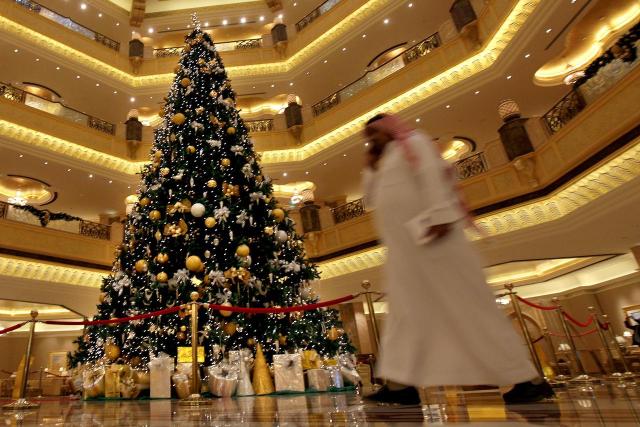
emirates-palace-xmas-treeDespite not expecting to hand over any villas until next December, Al Barari has announced that almost 75% of its 203-home Ashjar project has been sold. The luxury Zaal Mohammad Zaal development consists of 13 low-rise buildings, each separated by a forest, and is part of phase 2 of the 18.4 million sq ft community which has over 80% of the land set aside to nature.

Deyaar has announced that its 1.25 million sq ft The Atria development is 25% complete and on track for handover within 18 months. The twin tower project will comprise one 30-floor residential building, with 219 units, and the other 31-storey tower will house 347 hotel apartments.

The MAF-owned Hilton Garden Inn Dubai Mall of the Emirates, the largest outside of the US, opened this week. The 370-key property is the 3rd of the brand in Dubai, following Inns in Al Muraqabat and Al Mina.

Even with a slowdown in some construction work, Dubai Parks and Resorts plan a September soft opening for its three theme parks – Bollywood, Legoland and Motiongate – along with the Lapita Polynesian-themed hotel and Riverland. The US$ 2.9 billion resort is set for an official October opening. The company also confirmed that it was on target to hire 1k nationals by the end of Q3.

Abercrombie & Fitch will see its first UAE outlet in MoE on Saturday (26 December) which will bring its global total to 965. The US luxury clothing company has formed a JV with an offshoot of the mall’s owner, Majid Al Futtaim Fashion.

With a 15% annual appreciation in the dirham – allied with depreciation of most competitors’ currencies – it is little wonder to see Dubai ranked as the world’s most expensive city to celebrate the New Year. A Travelex study ranks Dubai (at US$ 529) well ahead of the next three locations – London, Paris and New York – where the average cost for the celebration is put at US$ 445.

The strong dirham also partly explains why Dubai Duty Free expects flat sales this year, estimated to be under US$ 1.9 billion; a 4.3% increase, to US$ 2.0 billion is forecast for 2016. Also not helping the cause was the fall in the number of Russian tourists (with sales down US$ 50 million) and the fact that Chinese visitors were spending less.

HH Sheikh Ahmad bin Saeed Al Maktoum chaired the first meeting of the Dubai Free Zone Council. The body will coordinate and govern the emirate’s 22 free zones that, with over 20k companies, account for 25% of Dubai’s GDP.

It appears that some Indian investors in Gurgaon are becoming increasingly frustrated by delays in the 200-apartment ‘The Palm Terrace’ project, an Emaar-MGF development. Launched five years ago, it is two years overdue, with many investors having already paid 93% of the asking price.

Following his recent release from jail, the ex-MD of Leeds United FC, David Haigh, is reportedly back inside for cyber slander. His former employer, GFH Capital, who had earlier accused the 38-year old of embezzlement, for which he served two years, lodged the charges.

JAFZA has made an early repayment, due in 2020, of a US$ 545 million loan, leaving an outstanding balance of US$ 655 million, due for payment in June 2019. The US$ 1.2 billion Islamic loan facility was taken out in 2012 to largely repay a 5-year 2007 sukuk. The company is a subsidiary of Dubai World.

Two Dubai entities were in the news this week. Asset manager, Abraaj, and its French partner, Proparco, have sold their 83% share in Tunisia’s second-largest pharmaceuticals company Unimed. Bangalore-based Quess Corp Ltd, a subsidiary of Thomas Cook, has acquired Dubai’s Styracorp Management Services and IME Consultancy. No financial details from both deals were made available.

The federal minister of state for financial affairs, HE Obaid Humaid Al Tayer, has reportedly ruled out individual income tax. Along with the inevitable introduction of VAT (probably no earlier than 2018), there could be a tax on foreign remittances on the cards; some form of corporate tax and a levy on new motor vehicles cannot be ruled out.

Dubai Police will spend US$ 79 million to build six “smart” police stations across the emirate over the next two years.

Following a Dubai Financial Services Authority ruling, MAS Clearsight Limited has been ordered to pay a total of US$ 3.2 million to 20 investors for promoting a Collective Investment Fund, in breach of the authority’s regulations. In June, its licence was suspended and now the firm is in liquidation.

The DFM opened Sunday at 3073 and closed the shorter week on Wednesday (23 December) 2.1% up at 3137. Of the bellwether stocks, Emaar Properties dropped US$ 0.01 to US$ 1.55, with Arabtec US$ 0.04 higher at US$ 0.34. Trading volumes on Wednesday improved with 489 million shares, valued at US$ 153 million, changing hands, (cf 386 million shares for US$ 120 million, the previous Thursday).

After a really bad month, there was some relief this week with Brent crude up 2.1% (US$ 0.78) to US$ 37.89 and gold jumping US$ 23 to US$ 1,076 by Thursday (24 December) close.

The collapse of oil prices has seen both Royal Dutch Shell and Chevron take action to cut costs. Shell has forecast that its 2016 operating costs will be 10% (US$ 4 billion) lower than this year and has further reduced its capex by another US$ 2 billion to US$ 33 billion. Having already announced earlier that it was planning to cut its global payroll by 7k, Chevron has now retrenched 1.2k employees at its Gorgon and Wheatstone LNG project in Western Australia.

In the wake of November’s mining disaster, Brazilian authorities have blocked the assets of BHP Billiton and Vale, owners of Samarco. The incident saw the collapse of a dam that killed at least 13 and now the mining JV is being sued for a possible US$ 5.2 billion.

After his recent arrest for security fraud, Martin Shkreli has lost his positions as chief executive of KaloBios Pharmaceuticals and head of Turing Pharmaceuticals. This comes three months after he gained infamy, by increasing the price of Damaprim, a HIV treatment drug, by 5,000%, from US$ 13.50 to US$ 750.

Even after 40 years, the latest Star Wars movie – The Force Awakens – did not disappoint, as its US$ 525 million box office receipts broke all records for a weekend opening. The JJ Abrams’ film is set to become the biggest Hollywood film of all time but still has a way to catch up with the leading three – Avatar (US$ 2.8 billion), Titanic (US$ 2.2 billion) and Furious 7 (US$ 1.5 billion).

2015 has not been the best of years for 140-year old Toshiba, after being found out that it had been inflating its profits for the past six years and now expects an annual loss of US$ 4.5 billion. With its shares having nosedived 40% since April, and plans to cut 6.8k jobs, (or 3.1% of its current workforce), the Japanese conglomerate is also hiving off most of its consumer electronics business, as well as an Indonesian washing machine plant.

The company’s auditors, Ernst Young ShinNihon LLC, have been fined US$ 18 million – the equivalent of two years’ fee income – for failing to spot the irregularities. Furthermore, Moody’s added to the company’s problems by cutting its credit rating two notches to junk status – Ba2.

One of the Big 4 accounting firms, KPMG International, with 174k staff, reported an 8.1% hike in annual profits to US$ 24.4 billion. Over the period, MESA (ME and S Asia) revenue was up 12.7%.

IATA expects ME carriers to report lower 2015 profits, down 22.3%, to US$ 1.4 billion, than previously indicated – as the local industry reels from regional unrest and lower oil revenues. 2016 is forecast to see a 21.4% upturn in profits to US$ 1.7 billion – equivalent to US$ 7.97 per passenger.

Following October’s endorsement for a massive coal mine (7 times the area of Sydney Harbour), Adani Mining has received further federal government approval to expand north Queensland’s Abbot Point, making it one of the biggest coal ports in the world. The Indian miner estimates that the expansion will result in 10k new jobs (both direct and indirect) and will boost the Queensland coffers by almost US$ 16 billion, in taxes and royalties. The approval came despite strong protests from the environmental lobby – mainly because of its proximity to the Barrier Reef and the required dredging of 1 million cu mt of spoil.

On the flip side, with iron ore prices slumping 43% this year, it was no surprise that the four partners – American Metals & Coal International, Aurizon, Baosteel and Posco – have mothballed the planned US$ 3.6 billion West Pilbara Iron Ore project. Already this year the Australian government has removed four such projects – totalling US$ 12.2 billion – from its major resource list.

The Canadian fund manager, Brookfield, is facing competition in its attempt to take over the Australian rail and ports operator, Asciano. Local logistics company, Qube Holdings, has matched the Canadian’s bid of US$ 6.5 billion. A decision from the Australian Competition and Consumer Commission is expected in Q1.

In what could be a blip, November home sales in the US fell a worrying 10.5% to 4.76 million, wiping out most of the gains made this year. In addition, median house prices of US$ 220k are 6.3% higher than in the same month last year, whilst the recent Fed rate hike may deter some potential buyers.

UK Q3 growth has been pared back from 0.5% to 0.4%, as financial services slows; the end result is that annual growth has been cut to 2.1%, whilst growth in the last 3 quarters – 0.4%, 0.5% and 0.4% – has disappointed some. Furthermore, November borrowing, at US$ 21.1 billion – was 10% higher than a year earlier. With four months to go before the end of the UK tax year, it is highly likely that, with public borrowing at US$ 99.4 billion, Chancellor George Osborne is unlikely to meet his US$ 109 billion come March 2016.

It is reported that Germany’s largest lender, Deutsche Bank, has flagged a total of US$ 10 billion in Russian trades that may not have been vetted for money laundering. 60% of the total relates to mirror trades which are under investigation by US authorities. The bank has already paid US$ 2.7 billion to UK and US legislators to settle other misconduct charges and has also been fined by the Russian Central Bank.

Several international banks in the UK are operating in an almost tax-free environment. Latest figures indicate that seven major banks – BoA, Deutsche Bank, Goldman Sachs, JP Morgan, Morgan Stanley, Nomura and UBS – paid between them US$ 31 million in corporation tax, despite revenues of US$ 31.0 billion and profits of US$ 5.3 billion; this equates to a tax rate of 0.6% when most companies are taxed at 20.0%! For these banking parasites, Every Day’s Like Christmas!

Posted in Finance | Tagged , , , , , , , , , , | 1 Comment

To Ring The Alarm!

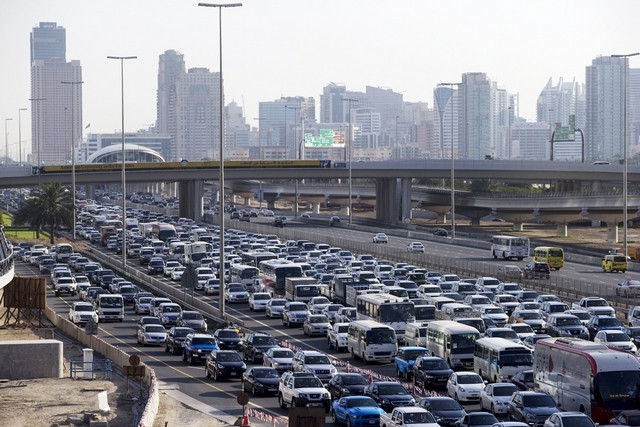
traffic-szrAccording to the latest CBRE ME report, prices of Dubai villas and apartments have seen annual falls of 14% and 16%, as total transactions have plummeted 33%. With an estimated 48k units being delivered over the next three years, it also expects further price deflation, with villa values down by another 10%. However, as the Dubai population – say of 2.6 million – has had an annual increase of 7.5% over the past two years, with all indicators that this trend will continue up to 2020, surely the demand will be out of sync with supply. Strip away the labour population of 1 million, it seems that there will be an extra 120k (7.5% of 1.6 million) added to the population every year.

In addition, the property developer estimates that 6k units, scheduled for completion this year, have been largely completed but have not yet been handed over to buyers. There is also the ‘X’ factor and its impact on the economy, with Arqaam Capital forecasting a US$ 23 billion windfall for the country’s GDP because of Expo 2020. It is expected to create 277k jobs and 153k visitors every week during the 6-month exhibition. Surely this would see the demand curve heading upwards?

In a bid to help stalled projects, the Dubai government introduced two schemes – Tanmia and Tayseer – four years ago, to secure government or private investment. Since then, under the former initiative, 56 projects, valued at US$ 3.3 billion, have restarted including 12, totalling US$ 545 million, in the past year. Eight developers are listed under the Tayseer plan which covers 40 delayed projects in Business Bay, with the proviso that the project is already 60% built.

Following an agreement with the Al Futtaim Group, Laservision Mega Media is to introduce a world-class water, sound and light show at Dubai Festival City. Scheduled to start in Q3 2016, the producers are looking at replicating the best of its other global attractions, such as Hong Kong’s A Symphony of Lights and Singapore’s Wonder Full at Marina Bay. Moreover, the Dubai retailer is expanding the 2 million sq ft DFC Mall by a further 400 retail outlets, 75 cafes, a Novo cine complex and parking for 6.5k vehicles.

There is no doubt that the hospitality sector has had a rocky year, exemplified by disappointing November data from STR Global. Preliminary figures show all indicators heading south, as new supply (5.4%) outstrips demand (2.4%). Despite major events in the month – such as the Big 5, International Motor Show, Airshow and numerous high profile sporting events – average occupancy dipped 2.9% to 83.0%. Average daily rates and revenue per available room both dropped by 7.1% to US$ 242 and 9.8% to US$ 201 respectively.

2016 will prove a hectic year for the Al Habtoor Group’s hotel division as it has been allocated an extra US$ 545 million, for further overseas expansion. Following the recent soft opening of St Regis Dubai at Al Habtoor City, the two other adjoining 5-star properties – The W and The Westin – will both open early next year.

The value of the conglomerate’s Dubai assets is put at US$ 3.4 billion, as its total revenue was up 16%. Its auto division posted record sales of 50.7k Mitsubishi vehicles (equivalent to 60% of all that maker’s GCC sales), as revenue for the nine months to September rose 17%. There was also a 5% revenue increase in its real estate division over the same period and this will be boosted when the 1.4k Al Habtoor City apartments and the Polo Resort & Club’s villas are released in the market.

A recent report by Lamudi indicates that since the turn of the century, a total of 190 skyscrapers has been built in Dubai, compared to just 23 in London. There is no doubt that such buildings – above 150 mt – are gaining in global popularity, with China now boasting 800. Last year, a record 97 buildings of over 200 mt were built globally.

Last week, the Ruler’s private real estate company, Meraas Holding, initiated a hospitality division. Under the 2020 Dubai Medical Tourism Strategy, the emirate hopes to attract 500k medical tourists, within the next five years, and companies, like Meraas Healthcare, want to tap into this burgeoning sector.

Ten years ago, McGettigan’s started its first venture outside of Ireland and now it has 11 hotels (one in Dubai and 10 in Ireland) and 11 pubs in Ireland, UAE, Singapore and New York. The chain has announced expansion plans for opening 40 new worldwide outlets before 2020.

The French nursery company Babilou Group, with 850 European centres, is to launch 20 more in the UAE by 2018. Initially focussing on Dubai, it has already opened its first in Downtown, with a second in Umm Suqeim next month.

It is reported that one of the emirate’s leading SMEs – Dubai Desert Extreme – is considering selling up to 40% share in the company to finance regional expansion plans. The distributor of bicycles and sports equipment, established in 2001, has 11 outlets, employing 160 staff and has an annual turnover of US$ 20 million.

This week, Dubai-based Aster DM Healthcare opened a medical facility in Bahrain and is planning to invest a further US$ 136 million for GCC expansion over the next two years.

Paris Gallery, the local retailer, has opened its first franchise store in Baghdad. The company, with a portfolio of over 600 luxury brands, has over 90 outlets in the GCC.

Dubai’s Fajr Capital is in discussions to buy a major shareholding in Cravia which owns the UAE licences for brands such as Cinnabon and Zaatar W Zeit, along with Five Guys rights in Bahrain and Saudi Arabia. Its annual turnover is reportedly US$ 55 million, with 71 outlets mainly in the UAE.

Marka Hospitality has signed an agreement with d3 (Dubai Design District) to open Dubai’s first Harper’s Bazaar Café in Q1 2016. This offshoot of the luxury fashion magazine will have a 140-seat capacity.

Moisekin has made a 65 kg clock valued at over US$ 1 million. The Russian jeweller has showcased the piece, with 1 kg of gold and 2k diamonds, at Dubai International Jewellery Week which ended on Saturday.

50 employees will lose their jobs as Yahoo plans to close its Dubai regional office next April. This follows the closure of other offices last year – in Amman and Cairo – in a bid by the internet giant to streamline its business. Over the years, it has been left behind by the likes of Google and Facebook, and although still valued at US$ 32 billion, this includes its US$ 30 billion stake in Alibaba.

Dubai authorities are reportedly contacting the Guinness Book of World Records to check whether its new US$ 8 million facility, located in Zabeel Park, is the largest global glow-in-the-dark gardens. The park, with installations based on wonders of the world by over 150 artists, opened on Wednesday.

Following a recent Deloitte report estimating that golf brings in US$ 131 million a year to the Dubai economy, the Investment Corporation of Dubai has appointed Peter Dawson as a consultant. The current president of the International Golf Federation and former chief executive of the R&A is to try and enhance the emirate’s position as a global golfing destination.

In a PPP (public private partnership), the RTA is to add 400 extra air-conditioned bus shelters (of which 150 will be solar-powered) with Right Angle Media Company, bringing the total number of such units to 1.3k by 2017. In addition, 50 smart shelters – with Wi-Fi and café facilities – will be built.

The RTA reportedly has invited bids for a 300 mt long, 22 mt wide bridge to replace the 40-year old Shindaga Tunnel. Last month, a tender was issued for the construction of Al Ittihad Bridge, also crossing the Creek.

Dubai’s annual inflation rate continues to fall and is now at 3.07%, year on year, and down 0.19% on the month. Although transport costs and food prices continue to fall (by 2.23% and 1.52% from October), housing and utility costs jumped 6.87% on the year and 1.14% for the month.

His Highness Sheikh Mohamed bin Zayed Al Nahyan is on an official visit to China, to meet President Xi Jinping, at which a US$ 10 billion joint strategic investment fund was set up. Abu Dhabi’s Mubadala and the China Development Bank will jointly manage the investment. Over the past 30 years, bi-lateral trade has gone from a tiny US$ 63 million to a probable US$ 60 billion by year end. Furthermore, China is Dubai’s top trading partner in 2014, with a total of US$ 45.7 billion. It was no surprise therefore to see the Abu Dhabi Crown Prince tweet that Dubai Ports is planning a US$ 1.9 billion investment in a country where it already has operations in Qingdao, Tianjin and Yantai.

DP World is also holding discussions with British Columbian authorities on possible expansion plans for the Fairview Container Terminal in Prince Rupert.

Government developer, Nakheel, has made its second profit payment (of US$ 60 million) this year, on its US$ 1.2 billion trade creditor sukuk.

It seems that longstanding negotiations, over US$ 2.3 billion of outstanding debts, between Dubai Drydocks World and its creditors (represented by six financial institutions) have stalled. On one hand, the Dubai World subsidiary is hoping for an extension to the first 2017 tranche of US$ 800 million – with a small cash repayment. For the balance of US$ 1.5 billion, maturing in 2027, DDW has offered either a smaller cash settlement or an extension. The creditors would evidently prefer a cash settlement in 2017 and a cash premium on the debt due in 2027. Discussions are on-going.

Atlantique Telecom, a subsidiary of Etisalat, has been hit by a US$ 451 million fine payable to Sarci, a minority shareholder in Telecel Benin. The company is appealing the verdict. Also this week, it is reported that the UAE telecom operator is negotiating a US$ 2 billion revolving credit facility, prior to future rate hikes.

MAF Holding became the latest local company to list on Nasdaq Dubai. Its US$ 500 million sukuk brings the exchange’s total 2015 sukuk listing to US$ 13.25 billion.

The DFM opened Sunday at 2945 and closed 4.3% up at 3073 by the end of the week (17 December). Of the bellwether stocks, both regained the previous week’s losses with Emaar Properties up US$ 0.16 to US$ 1.56, and Arabtec US$ 0.03 higher at US$ 0.30. Trading volumes on Thursday improved with 386 million shares, valued at US$ 120 million, changing hands, (cf 215 million shares for US$ 84 million, the previous Thursday).

In the previous week, Brent crude sank 9.7% (US$ 4.13) to US$ 39.61 and fared little better over the past 7 days, down 6.3% to US$ 37.11, as whilst gold slipped US$ 19 to US$ 1,053 at Thursday (17 December) close.

Last month, VW recorded global sales of 496k vehicles – a fall of 2.4% – with YTD sales slumping 4.5%, as a result of the emissions scandal; the company is unlikely to reach last year’s total turnover of 6.12 million units. Because of other economic reasons, sales in Brazil and Russia have fallen 51.4% and 31.8% respectively.

The Chinese Ministry of Commerce, following approval by other global authorities, including those in Australia, Brazil and the EU, has cleared royal Dutch Shell’s US$ 71 billion takeover of BG GROUP. The final hurdle will take place early next year when the shareholders have their say. If the deal goes ahead, Shell will gain greater access to the LNG market.

Rio Tinto has managed to source financing for its US$ 4.4 billion Oyu Tolgoi project. The Mongolian copper and gold underground mine will take up to 7 years to develop.

Following last month’s US$ 108 billion takeover of SAB Miller by Anheuser-Busch InBev, it seems that the former SAB Miller Peroni and Grolsch beer brands may be hived off for US$ 2 billion to a syndicate, headed by TPG Capital. It is inevitable that smaller breweries, such as Heineken and Carlsberg, will also show interest.

Despite Emirates propping up sales of 380s, with 38.7% (67) of all deliveries and 44.2% (140) of firm orders, Airbus is struggling and has reduced production to 30 this year, as interest dwindles. Indeed the plane maker received no new orders in 2015 and so it is looking at a revamped version of the superjumbo that would entail a fully re-engined plane. Last year, Airbus delivered 630 planes from its total range – in 2015, the figure could be marginally lower.

In the US, Fiat Chrysler has been hit with its second fine this year; in July, it reached a US$ 105 million settlement, relating to its handling of 20 recalls, covering 11 million vehicles – and now a US$ 70 million fine for its failure to disclose death and injury reports. Last month, the US National Highway Traffic Safety Administration also fined Takata Corp US$ 70 million for failures to disclose defects in its airbags.

20 package delivery firms, including the likes of the French divisions of DHL, FedEx and TNT, have been fined a total of US$ 742 million for colluding in price-fixing. UK’s Royal Mail was also involved and paid a US$ 61 million fine – its French division accounts for 17% of the company’s total revenue. The French anti-trust authorities have also fined telecom operator, Orange, US$ 385 million for abusing its dominant market position in that country.

In 2010, the EC fined 11 airlines – but none from the ME – US$ 735 million for fixing freight prices, with Air France (US$ 168 million) and KLM (US$ 117 million) bearing the brunt. At the time, Lufthansa escaped any penalty, as a result of providing evidence to the commission. Five years later, the General Court of the EU has backed the airlines to appeal the original decision.

Starbucks (with 800 outlets) is back in the news for all the wrong reasons, as it is reported that the company paid just US$ 12 million UK corporation tax this year. This is just slightly less than the US$ 13 million it paid in its first 14 years, when its total revenue was US$ 4.56 billion. Although the current US$ 52 million profit was nearly 17 times higher than in 2014, its tax bill was lower. No wonder then that the EC is closely investigating the tax affairs of many international companies who seem to be working the system.

Even in September 2014, blog ‘Foxy Lady’, it seemed that Christine Lagarde was being investigated. This week it was confirmed that the ex French finance minister, and current head of the IMF, is to stand trial for negligence. It relates to a 2008 US$ 438 million payment involving Bernard Tapie, a supporter of the then President Nicolas Sarkozy.

A recent study has estimated that online trading has doubled over the past 7 years and now accounts for 6% of the overall US economy. Employment over the same period has jumped from 1.5 million to 3 million, whilst the sector accounts for US$ 966 billion in economic activity.

It was definitely no surprise to see the Federal Reserve hike interest rates by 0.25% for the first time since 2007. This move is seen as the start of a gradual tightening in monetary supply that will probably result in a further three similar rises in 2016 for a median rate of 1.125%. The steady rise in economic growth, pick-up in the labour market and confidence that inflation will attain its 2% target in the medium-term made Janet Yellen’s decision inevitable.

With inflation levels of 25%, a sinking currency and depleting foreign reserves, incoming Argentine president, Mauricio Macri, has had to take drastic action. His decision to relax currency controls, brought in by the former leader, Cristina Fernandez de Kirchner, will result in the peso falling at least 40% from the official 10 to US$ 1 to 14. The government hopes that this will fuel economic growth and boost its flagging exports. On the flip side, imports become more expensive.

The World Bank estimates that the age old custom of slash and burn has cost Indonesia US$ 15.7 billion this year alone – twice as much as incurred from the devastating 2004 Aceh tsunami. This equates to 1.9% of Indonesia’s GDP and is often the result of companies illegally clearing land for palm oil and pulp wood plantations; an estimated 800k hectares have been burnt out by October this year.

The federal government has downgraded Australia’s May growth forecast for 2016 of 3.25% to 2.75%, which is slightly higher than the 2.5% expected in the current year. Furthermore, the budget deficit has widened by 6.6% to US$ 27.1 billion. The bad news is in contrast to the recent encouraging employment figures, which have seen 340k new jobs, added over the past year; the expected 6.0% unemployment level next year is lower than the original forecast of 6.5%. Inflation is set to range between the 2% – 3% target, as the country readies for a newer type of economy, beset by falling commodity prices, fragile global growth and decreasing terms of trade.

The November UK annual rate of inflation returned to positive territory, with a 0.1% reading, compared to a negative 0.1% the previous month. It is likely to remain at these levels for some time that is good news for consumers – with more spending power and the unlikelihood of the Bank of England hiking interest rates in the short-term. (Latest figures show annual average earnings up by 3.0% – which is obviously a lot higher than the current 0.1% inflation rate).

The unemployment rate has fallen over the past year from 6.0% to 5.2% (1.71 million) – its lowest level in nearly 10 years – whilst job vacancies at 707k is at its highest in 14 years; currently, there are 31.3 million people in employment – up 505k – as average annual earnings rose by 2.4%.

Mystery surrounds the recent disappearances of several Chinese financial firms’ executives which seem to coincide with a crackdown by authorities, following dramatic mid-year falls in the stock markets. Last month, Yim Fung, the Hong Kong boss of Guotai Securities, was reported missing, followed this week by the disappearance of Fosun International’s chairman, the legendary Guo Guangchang. In addition, the biggest mainland brokerage firm, Citic Securities, announced that two of its investment bankers have gone AWOL. It could be time To Ring The Alarm!

Posted in Finance | Tagged , , , , , , , , , , | Leave a comment

Big Wheel Keep On Turnin’ – Proud Mary

bluewatersThe less said about Donald Trump the better . .   .

UAE is thought to be the most generous country in the world, having donated US$ 47.4 billion since its 1971 foundation. Latest figures indicate that 64.1% of aid is concentrated in three sectors – “government and civil society” (US$ 22.0 billion), “public programs support” (US$ 6.1 billion) and humanitarian and relief aid (US$ 2.3 billion). 89.4% of the aid has gone to Asia (US$ 21.8 billion) and Africa (US$ 20.6 billion).

Last week it was all about making Dubai the greenest city in the world – this week new laws, introduced by HH Sheikh Mohammed bin Rashid Al Maktoum, aim to place Dubai as the smartest global city. The emirate’s ruler is keen to foster closer ties between the public and private sectors by introducing legislation to facilitate PPPs and by authorising the newly created Dubai Smart City Office to enter into ventures with any entity to implement best practices.

Next April, Four Seasons will have their second Dubai property in DIFC – a year after the opening of its Four Seasons Resort Dubai at Jumeirah Beach. The 106-key hotel, with interiors by New York’s Tihany Design, will also have four outlets.

Another hotel due to open next year will be the 103-room Bespoke Hotel and Residences Palm Jumeirah. The UK management group, with over 200 global boutique properties, has signed a JV with Dubai-based IFA Hotels and Resorts for its first foray in the local market.

Hilton Worldwide is in discussions with both of its local partners – Majid Al Futtaim and Wasl Hospitality – to add to its current three Dubai properties (Al Mina, Al Muraqabat and Mall of the Emirates), under the mid-market Hilton Garden Inn brand. All have been opened in 2015, with the next one in Bur Dubai, slated for an early 2019 completion.

Dubai Municipality has indicated that work on its US$ 500 million Aladdin City project will start late next year, with completion by the end of 2018. Air-conditioned bridges will connect the three (25, 26 and 34-storey) towers which will comprise both hospitality and commercial space.

The US-based Nikki Beach Resort & Spa will partner Meraas Holding in a 52k sq mt resort, due to open in Q1 2016. The resort, located on Pearl Island peninsula, will incorporate other leisure facilities, including Nikki Beach Restaurant & Lounge.

Meraas has also established a new division to manage its hotel portfolio. Apart from the upcoming 7-star Bulgari, the company already has links with Emaar Hospitality, with the Rove brand, and Jumeirah, with Venu.

By H1, Dubai had 667 hotel establishments (5% higher than the same period in 2014) and 94.9k rooms – up 7%.

The latest report from Unitas Consultancy and Reidin.com seems to point to a marked slowdown in residential property sales over the past two years. For example, Dubai Marina sales for the nine months to September were down 33% to 1.5k, compared to the same period in 2014, whilst Downtown recorded a 37.5% drop to 500 units.

Work is expected to start on the US$ 6.8 billion Mall of the World in 2017, with the Police Academy moving to Academic City. The mega city, covering 1.7 million sq mt, will be finished by 2030 and will include 278 buildings, with a network of 33 roads and 152k sq mt of walkways.

Local community mall developer, aswaaq, is planning to expand its 11 Dubai community malls and supermarkets. A US$ 30 million investment will see new facilities – 3 malls and 3 supermarkets – creating 300 jobs.

Dubai is set to get two more supermarkets as Abu Dhabi-based Fresh & More, founded last year, plans a 50% UAE expansion which would bring its total of outlets in the UAE to 21 by the end of next year.

LG Gulf has spent US$ 8 million in refurbishing its anchor store in Dubai Mall. The company’s president, Yong Geun Choi, is confident that the electronics sector will continue to flourish, despite low oil prices and a drop in consumer confidence.

Emirates Flight Catering has signed an exclusive agreement with Dubai South to build an inflight catering facility for the private and business aviation sector that will be using the new mega airport.

In 2016, Emirates is expecting the delivery of 36 new aircraft (20 Airbus 380s and 16 Boeing 777s), whilst retiring 26 older units over the next two years. By the end of 2015, the fleet will be 244 strong, following the acquisition of 26 planes this year, with a further 262 planes, valued at over US$ 120 billion, on order. It is interesting to note that the fleet average age for Emirates is 5.6 years, compared to the top 5 US carriers’ mean of 10.7 years.

It is ironic that Emirates will be carrying 15k US civil servants next year as its code share partner, JetBlue, won a government tender. This comes at the same time that United announced the cancellation of its flights into Dubai, following Delta’s similar decision last month. Now none of the big 3 US carriers, (American, Delta and United), who are accusing Gulf airlines of unfair government subsidies, have a Gulf presence.

Although October traffic was up 4.4%, to 6.3 million passengers, annual growth rate at Dubai International slowed, as the impact of low oil prices, regional turmoil and a strong greenback took effect. For the first 10 months of the year, passenger numbers totalled 65.0 million – 11.2% up on last year.

A new directive from the Department of Economic Development will see the end of companies, in both the education and healthcare sectors, being able to charge extra on any credit card payment. This will come into force next February and could well be followed by similar action for the service sector.

Dubai Economic Council has signed a partnership agreement with Philips to create Dubai Global Innovation Centre, following a MoU signed in 2014. Building of the non-profit centre will start in 2016, with the aims of establishing research projects and encouraging innovation.

Although still in positive territory, the Emirates NBD UAE PMI’s rate of growth has slowed dramatically. November saw a .5 point monthly rise to 54.5 which indicates growth in the non-oil sector, despite the slump in energy prices, general wariness in the market and tightening liquidity.

Despite the doom and gloom around the emirate, growth this year is expected to be in line with the previous three years – at 4.0% – according to the DG of the Department of Economic Development, Sami Al Qemzi. Earlier in the month, Sultan bin Saeed Al Mansouri indicated 3% – 3.5% GDP growth for the UAE.

Dubai Gold & Commodities Exchange saw a monthly 41.0% growth, compared to November 2014, as year on year volumes rose by 23.0%.

A November law has established a new Dubai Statistics Centre which, inter alia, will oversee all surveys carried out by private entities; in order to ensure the quality and veracity of information contained in future reports, companies will require prior authorisation before publishing.

Dubai start-ups may benefit from the announcement that the US venture capital firm, 500 Startups, has established a US$ 30 million fund; 500 Falcons will help up to 200 MENA entities, with seed money of up to US$ 100k and will focus on e-commerce.

It seems that the recent clampdown by US authorities on dollar banking transactions is having an adverse impact on local financial institutions and individuals. In a bid to weed out money laundering and tax avoidance, both the time and compliance costs of clearing through US correspondent banks have increased. The UAE central bank governor, Mubarak Rashid al-Mansouri, has noted that this is having an adverse effect on the country’s financial institutions and has already discussed the problem with the US.

Embattled Drake & Scull received a crumb of comfort this week with a US$ 67 million MEP contract in the capital, bringing its total project awards this year to US$ 689 million. On Thursday, the company’s shares were trading at US$ 0.104 – over 58% down YTD.

The DFM opened Sunday at 3204 and closed a massive 8.1% down to 2945 – its lowest level in over two years – by the end of the week (10 December). Of the bellwether stocks, Emaar Properties lost US$ 0.17 to US$ 1.40, whilst Arabtec fell US$ 0.03 to US$ 0.27. Trading volumes on Thursday were again wafer thin, at only 215 million shares, valued at US$ 84 million changing hands, (cf 169 million shares for US$ 92 million, the previous Tuesday).

Brent crude had a week to forget, sinking by 9.7% (US$ 4.13) to US$ 39.61, whilst gold nudged up US$ 11 to US$ 1,072 at Thursday (10 December) close.

There was no deal forthcoming from the latest OPEC meeting which ended last Friday, as the 13-member bloc failed to agree an oil production ceiling. As one of the main protagonists, Iran, wants to restore its output to pre-sanction levels, before considering any production cut-backs, it is hard to predict how much this would add to OPEC supply. It is estimated that Iran will pump at least a further 1 million bpd into a bloated market that is already adding a superfluous 2 million bpd to stock levels. Basic economic theory indicates that, under the current status quo, where supply is greater than demand, prices will continue to fall. However, it is noted that since October, US producers have closed 15.3% of active oil rigs to 572, with the Energy Information Administration cutting next year’s production forecast to 8.8 million bpd, compared to current level of 9.3 million bpd.

Last month drug makers, Pfizer and Allergan, announced a US$ 150 billion merger to be followed this week by a US$ 120 billion deal between Dow Chemical and DuPont. Although the Chinese slowdown and low oil prices have proved catalysts for the chemical industry to consolidate, rising competition from non-conventional producers is the main driver. It is estimated that the merger could see the new venture saving over US$ 3 billion in costs alone.

Although on a smaller scale, the same scenario is occurring in the hospitality industry. In November, a US$ 12.2 billion deal was agreed with Marriott International acquiring Starwood Hotels. On Wednesday, Accor bought FRHI Holdings (owner of Fairmont, Raffles and Swissôtel) for US$ 2.9 billion. The deal will see the French company acquiring 155 hotels in 34 countries, whilst the current owners of FRHI, Kingdom Holding Company and the Qatari Investment Authority, will retain 5.8% and 10.5% stakes in the new venture.

As energy prices continue to fall, Woodside Petroleum announced that it had withdrawn its US$ 8.4 billion September bid for Oil Search. Australia’s 2nd largest oil firm, of which the Papua New Guinea is a 10% shareholder, was expected to tap into that country’s gas prospects via Oil Search, whose major shareholder is also the PNG government.

German investment firm JAB Holding has acquired Keurig Green Mountain for a reported US$ 13.9 billion – this at a 78% premium on its Friday 04 December closing price, but well down on its November 2014 book value of US$ 23.7 billion. Coca Cola is the largest investor in the US maker of K-cups single-serve coffee pods and will have a 17.4% shareholding in the new private company, with Keurig maintaining its independent status. In a growing market, it is estimated that the coffee pod sector accounts for US$ 6 billion or 40% of the global coffee market.

Although an apparent agreement was reached last year, General Electric has decided not to go ahead with the US$ 3.3 billion sale of its appliance division to Sweden’s Electrolux.

Despite sales of US$ 3 billion, it is reported that Cadbury’s (now owned by Mondelez International) paid no corporation tax last year. It joins a host of other multinationals, such as Amazon, Google and Starbucks, who have courted parliamentary and public outrage, by their “legal” tax arrangements. In 2010, Kraft Foods acquired the UK chocolate maker in a US$ 17.5 billion deal, with Kraft hiving off its snacks business to Mondelez two years later.

Japanese authorities are expected to slap a US$ 40 million fine on Toshiba for the accounting scandal that saw the electronics conglomerate inflating profits by US$ 1.25 billion over a 7-year period. Over the past five years, two other Japanese companies have been involved in accounting irregularities – IHI Corp and Olympus.

It is expected that Japan will beat China to build India’s first high speed train line – from Mumbai to Ahmedabad; the 505 km journey currently takes at least eight hours but the new line would cut the travel time to just two! The US$ 14.7 billion project is one of the country’s biggest foreign investments and is a sign of the Modi government’s efforts to update India’s ageing infrastructure.

Over the past two months, employment data has surprised many analysts in Australia. In October, 56k new jobs were created and this was bettered last month with 71k extra, bringing the jobless rate down to 5.8% – a 19-month low. On the other hand, economic growth is still relatively soft at 2.5% and lower than the expected 3.2%. However, the RBA has resisted moves to cut rates which are now expected to remain at current levels for at least H1 2016.

The same cannot be said for the world’s largest dairy producer, New Zealand, which is suffering from a softening in international prices. This week, the Reserve Bank cut benchmark rates for the 4th time in six months to 2.5%, in a bid to counter its strong dollar and boost the inflation rate which is lower than the government’s target.

The World Bank estimates that most emerging market countries’ economies have slowed over the past five years, with the prospect of more of the same over the coming years. With the exception of India, the BRIC countries have seen major economic downturns, after being touted as saviours of the world in 2010, not helped by corruption and falling commodity prices. Furthermore, many countries have seen incoming foreign investment fall, (estimated at 25%) and increasing amounts of capital returning to safe heavens. A stronger dollar is a major problem in as much it makes borrowed money more expensive to repay.

President Jacob Zuma continues to spook the markets – this time as he fired his finance minister, Nhlanhla Nene, a week after Fitch cut the country’s debt to BBB-, the lowest investment grade level. South Africa’s sluggish economy is bedevilled by falling commodity prices, lengthening power outages and on-going corruption. 2015 growth at 1.4% is at its lowest level since 2009, whilst the gross debt to GDP has almost doubled to 50% over the same period. Furthermore the rand is at a record low of 15.38 to the US$, whilst benchmark 10-year bonds, at 9.46%, are at their highest rate since the GFC.

Another BRIC country suffering the same problems is Brazil with a Moody’s rating of Baa3 – its lowest level of investment grade. At this level, overseas investors may pull out of the country particularly as no positive changes are likely next year, with a continuing recession inevitable. Q3 saw a 1.7% contraction, whilst last year the fall was 3.2% with benchmark rates at highs of 14%. The economy is being dragged down by massive corruption problems, spiralling inflation, rising unemployment and falling domestic demand.

In line with the terms of their 3rd creditors’ bailout agreement (for US$ 93 billion), the Greek government has approved a tough 2016 budget. The country, now in its 6th year of austerity, expects a 0.7% contraction in its economy next year, after zero growth in 2015.

Surprisingly, German October trade figures fell, with exports and imports down 1.2% and 3.4% respectively. These figures, along with disappointing industrial output figures, may indicate that the economy is hurting from the slowdowns in both China and emerging markets. However, other economic data, including its trade surplus widening 8.3% to US$ 22.8 billion, show otherwise so the government will be hoping for stronger November returns and 2015 growth nudging 2.0%.

This week is another indicator of the all too cosy relationship between government and big business, as two former labour politicians acquire lucrative postings. Former Prime Minister, George Brown, has been appointed to the advisory panel of Pimco (which also includes former Fed chairman Ben Bernanke and Jean-Claude Trichet, ex-president of the ECB). His Chancellor, Alistair Darling, has joined the board of Morgan Stanley. In 2014, the bank’s board were well remunerated with fees of US$ 75k and US$ 250k worth of stock. It is hoped that both of them have more luck than they had running the country up to their demise in 2010.

The focal point of the Meraas Holding’s US$ 1.6 billion Bluewaters Island project, Dubai-I, is facing possible delay. Dutch company Starneth Group, the designer of the Ferris wheel, and principal contractor Hyundai Engineering and Construction are locked in legal arbitration in Singapore, over management and budget issues. It is reported that Starneth, now taken over by Challenger Acquisitions, has stopped working on the US$ 40 million project and the US$ 5.6 million order for the drive system has been cancelled by Hyundai. Will the Big Wheel Keep On Turnin’ – Proud Mary?

Posted in Finance | Tagged , , , , , , , , , , , , | Leave a comment

Let The Sun Shine In!

dubai-balloonsIn a bid to make the emirate a global centre for clean energy and green economy, HH Sheikh Mohammed bin Rashid Al Maktoum has launched the US$ 13.6 billion Dubai Clean Energy Strategy 2050. Its main target is to ensure that clean energy sources contribute over 75% of Dubai’s energy requirements to make the city have the least carbon footprint in the world. At the launch, the Dubai Ruler also revealed plans for the Dubai Green Zone, to attract industry research and development expertise as well as establishing a US$ 272 billion Dubai Green Fund.

The Palm is set to have yet another 5-star property – this time developer Nakheel has contracted Starwood Hotels & Resorts Worldwide to operate The St Regis Dubai. The 289-room, 23-suite hotel will be located on the first 18 floors of the US$ 223 million, 52-storey Palm Tower – the remaining floors will house 504 luxury apartments.

Twelve years after its launch, the long-stalled and much-changed Dubai Peal development, overlooking Jumeirah Palm, may spring back to life. Canada Business Holdings is considering this project, along with other distressed realty opportunities in Dubai, and has a war chest of US$ 6 billion to reportedly spend in the emirate. Last year, Hong Kong’s Chow Tai Fook Endowment Industry Investment Development (CTFE) took a US$ 1.9 billion stake in the 4-tower project which includes plans for 1.5k apartments, seven 5-star hotels, 60 restaurants, retail outlets and a 1.6k seat theatre.

Dubai Sports City will see yet another residential complex open by H2 next year. Fortuna Village, built around the Els Golf Course and comprising only 30 four-bedroom luxury villas, will be Victory Heights 8th community, bringing the total amount of villas to 1k.

The world’s largest indoor theme park is set to open, almost 2 years later than planned, in Q1 2016. The IMG Worlds of Adventure, covering 1.5 million sq ft, encompasses four distinct zones – Cartoon Network, IMG Boulevard, Lost Valley – Dinosaur Adventure and MARVEL. The owners – brothers, Ilyas and Mustafa Galadari – expect 20k daily visitors.

The Dutco Group has signed an agreement with the UK-based Snoozebox – a company that converts shipping containers into portable hotel ‘on-site’ accommodation. The rooms do not require water or mains electricity but still come with en-suite wet rooms with shower, basin and toilet. They can be quickly assembled and, being fully operational within days, are in demand for major events.

HNC Healthcare Group will be spending US$ 82 million over the next five years. The Dubai-based company will start with ten new facilities in the UAE, expanding to 100 by 2020 in the GCC and India.

Schlumberger becomes the first free zone company to be licensed by DWTC as it takes up office space in the Dubai Trade Centre District. The building is already 70% pre-let, with a 588-key Ibis hotel, due to be open next year, as part of phase 2 of the development; this will also include two more office buildings.

A recent study indicates that Emirates has already contributed US$ 848 million to the Indian GDP, despite restrictions on flights. It is estimated that if the airline were allowed a further 4.5k extra weekly seats, the Indian economy would benefit by an additional 40k tourists and 4.8k new jobs. If this entitlement were to be tripled to 13.5k weekly seats, 100k new jobs would be created, that would be a boost to the GDP and foreign exchange earnings of US$ 2 billion. Despite this, there is reluctance from the Indian government to increase Emirates current weekly quota of 183 flights. (This week, Spice Jet announced plans to start Dubai flights from both Hyderabad and Jaipur).

Emirates has signed a code-sharing agreement with Malaysia Airlines which will stop flying to Paris and Amsterdam and will use Dubai as a future base. The deal sees EK passengers using MH for connections within the Asia Pacific region. Meanwhile Emirates has been ranked 6th in a global survey by Airlinrratings.com, with Air New Zealand maintaining its top position, for the third year in a row, followed by Qantas.

Although still on the rise, with October demand up 8.3% and 11.6% on the same month last year, the rate of cargo growth has slowed in the ME. IATA reported that October global airfreight was up by only 0.5% compared to the same month last year, as measured by freight tonne kilometres.

Dubai-based hospitality group, Rotana, is planning to expand its global footprint by a further 27% extra capacity, with the addition of 3.8k rooms. The addition of 14 new hotels next year would bring its total number of properties under management to 100.

Emaar Properties has agreed a joint venture with Bitexco Group to develop a 427-hectare site in Ho Chi Minh City over the next 15 years. The US$ 1.4 billion project will be the Dubai company’s first foray in Vietnam but its 11th in the international market that includes Egypt, India, Saudi Arabia and Turkey.

Latest figures from the Federal Customs Authority indicated a 2.4% hike in H1 non-oil foreign trade to US$ 145.5 billion as imports dipped 0.9% to US$ 92 billion, whilst exports surged 28.0% to US$ 22.2 billion. Gold, raw aluminum and jewellery accounted for 55.6% of exports, contributing US$ 7.8 billion, US$ 2.4 billion and US$ 2.1 billion respectively. Native gold, vehicles and non-composite diamonds led the imports, with 28.9% of the total, with US$ 13.8 billion, US$ 6.8 billion and US$ 6.0 billion respectively.  Reexports dropped 2.0% to US$ 31.4 billion.

There was some good news for the UAE economy as its 2015 budget deficit forecast is set to be lower than expected. Because of spending cuts, abolishing certain subsidies and higher than expected revenue streams, its deficit will be 2.1% of GDP, down from the original 2.5%.  The fiscal H1 deficit was US$ 5.7 billion and, at the current rate of spending, this will easily fall short of the earlier 2015 projection total of US$ 33.8 billion.

It is reported that online commodity trader, Gold AE’s trade licence has been terminated by the DMCC, following bitter disputes between its shareholders. The company had suspended its online services late last month and dissatisfied clients are being advised to take any complaints to the courts or DIFC, where the company’s parent, Gold Holding Limited, is registered.

Union Insurance has raised its stake holding in Depa by 4.7% to 11.41% – a sign that it has confidence in the troubled fit-out company’s future, despite the fact that it has lost over 25% of its market capitalisation this year; it had also reported a 44.0% decline in H1 profits to US$ 4 million. Following a Q3 loss of US$ 6 million on a 32.0% slump in revenue to US$ 95 million, the company is undergoing a restructuring which will inevitably involve staff cuts.

The DFM opened Sunday at 3204 and closed at the same 3204 by the end of the shortened week (30 November) because of National Day holidays. Of the bellwether stocks, Emaar Properties lost US$ 0.03 to US$ 1.57, whilst Arabtec fell US$ 0.01 to US$ 0.30. Trading volumes on Tuesday were marginally up but still very weak, at only 169 million shares, valued at US$ 92 million changing hands, (cf 165 million shares for US$ 54 million, the previous Thursday). In November, both shares recorded dramatic falls – Emaar by US$ 0.18 to US$ 1.57 and Arabtec US$ 0.14 to US$ 0.30 – as the index slid 300 points to 3204.

Both Brent crude and gold headed south again this week by US$ 1.62 to US$ 43.84 and US$ 9 to US$ 1,061 at Thursday (03 December) close. At the end of November, YTD, both commodities had slumped – Brent crude by 22.2% (US$ 12.72) to US$ 44.61 and gold by 10.2% (US$ 121) to US$ 1,065.

Iran has apparently overhauled the way it offers energy contracts to overseas companies, as the lifting of sanctions will see the country’s energy investment reaching US$ 30 billon. Previous oil contracts often deterred foreign participation but new ones will give investors a greater share in long-term profits. Once sanctions are finally lifted, the country plans to immediately increase production by 16.7% to 3.5 million bpd, increasing to 5 million bpd by 2020.

Every week there are never-ending stories of corruption in governments, sporting bodies, financial institutions and business entities. The latest company to come under the bribery spotlight is British American Tobacco. According to a BBC Panorama investigation, the company illegally paid off politicians and civil servants in East Africa for a number of years with one of its employees, turned whistleblower, indicating, “it was the cost of doing business there”.

The Serious Fraud Office reported that Sweett Group had admitted two 2013 bribery charges in the Middle East. The UK company provides professional services for the construction and infrastructure projects.

Fast food chain MacDonald’s is the latest international company to be investigated over its tax policy, with the European Commission claiming it has avoided paying tax in both Luxemburg and US on European royalties. The company has paid no tax in Luxemburg since 2009 despite large profits, the last one recorded being over US$ 250 million in 2013.

Ten months after Japan’s Mitsubishi Heavy Industries and Kawasaki Heavy Industries were a shoo-in to build Australia’s new submarines, without a competitive tender process, two European competitors have joined the fray. France’s DCNS and Germany’s ThyssenKrupp Marine Systems have now entered bids for a contract that could be worth US$ 36 billion. A final decision is expected in 2016 and whoever wins the project, it will prove a huge stimulant for the local economy.

Atlassian, founded in 2002 on a US$ 7k credit card debt, is expected to be valued at US$ 3.6 billion, as it goes public on New York’s Nasdaq Stock Market. The Australian software maker, whose latest revenue figures are at US$ 320 million, plans to sell 20 million Class A shares. The two Australian founders – Scott Farquhar and Mike Cannon-Brookes – are expected to retain a 67.2% stake in the new public company.

Despite the current inflation rate of 1.8%, being below its 2% – 3% target, the RBA has decided to leave rates unchanged, at the historically low level of 2.0%. Although its currency is at the relatively low 0.71 to the US$ and employment is nudging higher, the economy is still reeling from sinking commodity prices and sluggish investment. However, with signs of the economy gaining some sort of traction – quarterly company profits and wages up 2.4 and 1.0% – it is unlikely that the RBA will risk tinkering with interest rates in the short-term.

A new report indicates that over the next four years, the Australian economy will be over US$ 27 billion worse off because of the Chinese economic slowdown. The main cause of the US$ 3.8 billion increase in the current budget deficit to US$ 29.0 billion is down to China. Furthermore, it is expected that economic growth will also dip from Its May forecast of 3.0% to 2.7%.

The ECB’s moves to boost the flagging eurozone economy – by cutting deposit rates to minus 0.3% and extending the monthly US$ 65 billion QE strategy a further six months to March 2017 – seems to have been a damp squib. Even the faltering euro gained over 2% reaching 1.08 to the US$, whilst markets were left unimpressed falling over 2% on the news. More needs to be done by Mr Draghi and urgently – perhaps by lifting the monthly stimulus amount to say US$ 90 billion and cutting rates further to minus 0.5%.

On the other hand, Fed Chair, Janet Yellen, seemed to rubber stamp the first US rate increase in 9 years, expected later in the month.

With the Olympics fast approaching, the Brazilian economy continues in the doldrums with a Q3 1.7% contraction. South America’s largest economy, reeling from spiralling inflation, rising unemployment and sinking domestic demand, is being hamstrung by the massive Petrobas corruption scandal. It is expected that, over the next nine months, benchmark rates will stay at around the 14% mark, whilst the recession will continue well into 2016, following a 3.2% fall this year.

There was more disappointing news out of China – this time its PMI fell from 49.8 to 49.6 in November, indicating another downturn in its manufacturing sector which fell to a 3-year low. The world’s second largest economy is heading for a growth level of less than 7.0% which would be its lowest since 1990. The government, in actively trying to change to a consumption-based economy from its traditional export-driven one, has cut interest rates six times over the past year.

Conversely, India is heading in the other direction, as Q3 returns show an annual growth rate of 7.4%, making it the fastest growing major economy. Both domestic demand and manufacturing have increased, buoyed by lower oil and gold prices and the recent 50-point cut in interest rates to 6.75%.

In a bid to make the emirate a global centre for clean energy and a green economy, HH Sheikh Mohammed bin Rashid Al Maktoum has launched the US$ 13.6 billion Dubai Clean Energy Strategy 2050. Its main target is to ensure that clean energy sources contribute over 75% of Dubai’s energy requirements to make it the city with the least carbon footprint in the world. At the launch, HH also revealed plans for the Dubai Green Zone, to attract industry research and development expertise, as well as establishing a US$ 272 billion Dubai Green Fund. Over the next 15 years, the Dubai ruler expects every building in the emirate to have solar panels on their roofs, connected to the local grid. Let The Sun Shine In!

Posted in Finance | Tagged , , , , , , , , , , , | 1 Comment

Move On!

lord-coeHH Sheikh Mohammed bin Rashid Al Maktoum donated his riding helmet to a fundraising auction organised by the Al Jalila Foundation. The charity, founded in 2013 and named after his daughter, benefitted by a massive US$ 6.5 million – probably making it the most expensive ever headgear.

On Tuesday, the Dubai ruler also launched a US$ 544 million fund to provide for the country’s innovators. Its main aim is to support an innovation environment by financially assisting it to transform ideas into projects. All applicants will be considered but priority will be given to the seven sectors outlined in the last year’s national innovation strategy – education, health, renewable energy, space, technology, transport and water.

in5 Media is a US$ 16 million start-up concept, launched by Tecom Business Parks, to be located in International Media Production Zone. The purpose-built facility will house as many as 200 entrepreneurs for a 5-month period, during which time all types of media facilities, along with mentoring and advice, will be made available. This is another part of Tecom’s US$ 1.2 billion innovation strategy that started in 2014, with its in5 innovation hub in Dubai Knowledge Village.

With a 70% forecast growth in the global urban population within 15 years, Dubai Municipality has finalised a blueprint that covers the possibility of the emirate expanding four-fold to 9.5 million. No timeframe has been given but the aim of the authority’s plan is to ensure that whatever the future it can be properly implemented. Meanwhile, DM is going ahead with plans for Desert Rose – a new sustainable city, housing 160k.

In a bid to penetrate the Saudi market, Jumeirah Group has signed an MoU with Shuaa Capital to develop hospitality projects. The deal would see the Dubai-based asset manager, which already operates a US$ 143 million Saudi Hospitality Fund 1, assisting Jumeirah with funding for land acquisition and project development. The government-owned hotel management company already operates 23 properties worldwide, with a further 25 in the pipeline.

Khansaheb has won a US$ 109 million, 2-year contract to build 250 Palm Jumeirah units for Palma Development. This is part of the US$ 409 million Serenia Residences project, designed by Hazel Wong, the architect behind Emirates Towers.

Cluttons’ latest property report has noted marginal falls in Q3 villa prices (0.5%) and apartments (0.8%), with the forecast of prices dropping a further 3% – 5% before bottoming out by Q4 next year. Interestingly, the company anticipates supply to increase by only 7.4k, 10.3k and 13.6k units over the next three years; that being the case – and with the onset of the Expo construction boom – there is every chance that demand will be greater than supply.

Furthermore, the firm’s office rental report sees a softening market, with rents remaining stable. In the current environment, rents in Al Garhoud and Bur Dubai reported annual increases of up to 10% to US$ 30 per sq ft and Bur Dubai 20% to over US$ 16 per sq ft respectively. Prime locations such as Emirates Towers and The Gate District still command premium rentals of US$ 84 and US$ 61 per sq ft.

On the rental side, Bayut.com has reported that October apartment rents rose 1.1%, as demand edged the supply curve, with reports indicating that the Dubai government had issued over 200k work permits in H1. An Emirates NBD study also showed a slowing in the pace of Q3 price declines – a possible sign that normality may be returning to the realty sector.

The Jebel Ali-based Conares is to spend US$ 25 million to expand its current US$ 200 million factory which currently produces 500k tonnes of steel rebar and 250k tonnes of steel pipes and tubes. Although local steel prices have fallen 14% this year, the company expects to see an 18% jump in 2015 revenue to US$ 260 million, as new lines (and new export markets) come on stream.

In a 5-year deal, Emirates has taken over as the premier partner of the ATP World Tour, having become a platinum partner to the men’s tennis organisation in 2013. It will also continue being the official airline partner. The carrier will be involved in about 60 tournaments a year in 32 countries, 90% of which are currently serviced by Emirates.

In a bilateral agreement, the two UAE airlines – Emirates and Etihad Airways – will operate a further 14 weekly flights to Australia which would bring the total weekly number to 161. It is estimated the Dubai carrier has 25% of the traffic between Australia and Europe – well ahead of Qantas and Singapore, each with a 15% share.

Dnata has entered the South American market by taking a majority shareholding in the 11-year old RM Ground Services, with operations in 24 Brazilian airports. The ground handling company employs over 2.1k staff, manages 400 flights daily and will be rebranded under the Dubai operator’s name.

Dubai-based Citymax Hotels, owned by the Landmark Group, opened its first overseas location –  Alexandria, Egypt. The 156-key hotel and 46-serviced apartment project is the company’s 7th property – with the other six already operating in the UAE.

After at least five years of deliberation, it does seem that a new arbitration and mediation law could become reality by mid-2016. This could be an alternative to the current time-consuming cases of bounced cheques and debts which often lead to high legal fees, excessive court time and prison for far too many. The new legislation will see cases being dealt with almost immediately by arbitration lawyers, helping to solve cases without having to go to court.

Serco has renewed its US$ 573 million contract with Nakheel to operate and maintain the Palm Jumeirah Monorail System for another five years. The same company has a similar contract with the RTA for the Dubai Metro.

Many retailers have already signed up with Dubai’s latest entrant in the mushrooming food delivery service sector. London-based Deliveroo has also launched in four other cities outside Europe – Hong Kong, Melbourne, Singapore and Sydney.

Following on from Standard Chartered cutting back on local staff, HSBC has announced the retrenchment of 150 employees in the country. This is part of the bank’s plan to reduce its global payroll by up to 50k over the next two years. The country’s 3rd largest bank, FGB, is reportedly shedding 100 jobs, as market conditions deteriorate because of low oil revenue and public spending cuts.

December fuel prices are set to drop again – this time Super 95 will fall 1.2% to US$ 0.46 per litre. Despite this drop in local pump prices, taxi fares have risen for the second time in a year, with passengers having to pay an additional 6.4% to US$ 0.50 per km for regular taxis and 12.0% to US$ 0.53 for airport trips.

Just as China has “Singles Day” and the western world “Black Friday” and “Cyber Monday”, UAE online retailers will be “celebrating” White Friday this week. Dubai entities such as Souq.com, Namshi.com and Crazy Deals.com will be hoping that their heavily discounted deals on that day are rewarded by a massive increase in sales.

In its bid to become the most energy efficient business hub, Economic Zones World, owner of JAFZA, has signed an MoU with DEWA to energy retrofit its 157 staff buildings, by replacing all 31k water tanks, 5k a/c units and 85k lights The 7-year project hopes to achieve a 30% reduction in operating costs, equivalent to US$ 36 million.

According to its MD, Ahmad bin Byat, the Dubai ruler’s investment company, Dubai Holding, is expected to post a 17.2% increase in 2015 profit to US$ 1.5 billion. Furthermore, the company will invest US$ 1.2 billion in local infrastructure and will be able to repay all debts on time – the last one, a US$ 760 million bond, being due in January 2017. Among its assets are Dubai Properties Group (with nearly 25k residential units), Jumeirah Group and Tecom.

Much-troubled Drake & Scull has won a combined US$ 36 million MEP contract for two Dubai district cooling plants and an Abu Dhabi tower. This brings its total of contracts won this year to US$ 654 million.

As widely expected, Abraaj Group finally divested its 49% share in Network International to General Atlantic and Warburg Pincus. The Dubai-based private equity firm acquired its shareholding four years ago in the 21-year old payments operator for about US$ 550 million but no sales figures were made available. The company, along with International Finance Corp, also exited their 30% stake in Saham Finances, a leading African insurer, for US$ 375 million.

Next week, the IMF will decide whether to include the Yuan in its global reserves whilst the Dubai Gold and Commodities Exchange has already decided to open a trade in the Chinese currency futures. This move was inevitable following Qatar’s similar move in April and the fact that the country became the UAE’s largest trading partner – recently overtaking India.

It is reported that Saeed Al Mehairbi is taking over as Arabtec’s chief executive, replacing Mohamed Al Fahim, who has been in an acting role since June 2015. Mr Al Fahim will stay on the board and remains head of finance at IPIC, the parent company of Aabar which has a 36% shareholding in the troubled construction company.

The DFM opened Sunday at 3273 to close 2.2% down at 3204 by the end of the week (26 November). Of the bellwether stocks, Emaar Properties lost US$ 0.08 to US$ 1.60, whilst Arabtec fell US$ 0.02 to US$ 0.31. Trading volumes on Thursday were down and still very weak, at only 165 million shares, valued at US$ 54 million changing hands, (cf 219 million shares for US$ 91 million, the previous Thursday).

After a month of falling prices, Brent crude reversed the trend trading up US$ 1.28 on the week to US$ 45.46, whilst gold continued to disappoint, dipping yet again by US$ 7 to US$ 1,070 at Thursday (26 November) close.

The slump in oil prices has seen a 250k global decline in employment numbers in the sector, with more on the way. According to industry consultant, Graves & Co, costs have been slashed with capex expenditure cut by more than US$ 100 billion, with over 1k rigs made idle.

Having been fined US$ 260 million last week for the dam collapse at their Brazilian Samarco mine, BHP Billiton and Vale have been accused of not taking preventative steps to cause environmental damage. The UN has compared the flood to 20k Olympic swimming pools of toxic mud, with the country’s water agency claiming that it had found arsenic levels, ten times over the legal limit.

The latest Gartner report confirms Apple’s continued expansion in the premium smartphone segment, as total Q3 market sales of 353 million units were 15% up on the corresponding 2014 period. Samsung is still the leading company at 83.5 million phones but has seen its market share fall 0.2% to 23.7%, whilst Apple posted a 0.5% increase to 46 million. Although only 3rd to Apple and Samsung, Huawei reported an almost doubling of sales to 17.2 million units, to see their market share increase from 5.2% to 7.7%.

A massive US$ 150 billion deal will see the creation of the largest global drug maker, as Pfizer and Allergan prepare to merge. The terms include 11.3 Pfizer shares for each Allergan share, with the US company reincorporating in Ireland, a country with a lower tax regime (12.5%); known as an “inversion”, this tax saving strategy will not please US legislators.

In Australia, the NSW government has indicated that its Transgrid electricity grid will be leased for 99 years to a consortium for over US$ 7.5 billion. The Australian fund management company, Hastings, will head up the venture that will include Gulf participation by way of the Abu Dhabi and Kuwait investment funds, each with 20% stakes.

SE Asia’s 5th biggest economy grew 6.0% year on year and 1.1% on Q2. The Philippines has benefitted by an increase in infrastructure projects, which has tripled in the past five years, since the election of President Benigno Aquino, and a growth in the services sector. Despite the progress being made, the country still suffers from lack of investment in utilities and infrastructure, with delays estimated to be costing the economy at least US$ 60 million every day.

UK public spending borrowing in October rose 15.5% month on month to US$ 12.5 billion, bringing the YTD total to US$ 82.5 billion – this represents the gap between its spending and income. In the first seven months of the tax year, government spending is up 1.1% to US$ 612 billion. This means that if Chancellor George Osborne wants to meet the Office for Budget Responsibility’s (OBR) annual forecast of US$ 105.5 billion, his borrowing over the next five months will have to be lower than US$ 23.0 billion. Currently, the UK national debts stands at US$ 2.3 trillion, equating to 80.5% of the country’s economic output.

Even though the fall in the price of oil is the leading driver for the low 0.1% inflation level, there is urgency for increased measures to stimulate the rate towards its ECB target of 2.0%. The obvious solution is to expand the ECB’s on-going US$ 1.2 trillion QE (asset purchase) program; it could also charge more for banks’ deposits, thus encouraging these institutions to lend more to industry and households. This is at a time when it seems inevitable that the US Federal Reserve will raise their rates next month.

US Q3 growth figures have been revised up to 2.5% but annual GDP was well down from previous figure of 3.9%. However, stronger returns from house building and investment, as well as growth in other sectors, point to a Fed December rate hike.

It was only three months ago that Seb Coe was elected president of the International Association of Athletics Federations, taking over from the 16-year reign of the disgraced and allegedly corrupt 82-year old Lamine Diack. At the time, the former Olympic gold medallist made light of his own six-figure ambassadorial role with Nike and chairmanship of CSM – a leading sport and entertainment agency. There are reports accusing him of lobbying for the Oregon city of Eugene (with close ties with Nike) to host the 2021 World Championships that was granted earlier in the year, without a bidding process taking place.

It has to be remembered that he was also vice president to the Senegalese for the previous eight years and referred to him as the IAAF’s “spiritual leader”. This is the same person who is now charged with taking millions of dollars to cover up positive doping tests and was reprimanded by the IOC 4 years ago for his role in a FIFA scandal.

There are similarities between the British athlete and a French footballer, as can be gleaned from an August blog,  .   .

”Platini has been on the FIFA executive committee for 13 years and surely association must have tainted his credentials, at least. It is obvious that a new independent leadership, untainted by past practices and corruption, is required. For the Frenchman and the rest of the senior executives, who apparently have done little to improve corporate governance, transparency and accountability at the scandal-ridden organisation, It Is Time To Say Goodbye”.

Surely, Lord Coe should now be considering his position and perhaps it is time for him (and others in the IAAF) to Move On!

Posted in Finance | Tagged , , , , , , , , , , , , | Leave a comment

Halleluiah!

race-to-dubaiAustrian developer, Kleindienst is set to complete its St Petersburg project, part of the 300-island The World, by October 2016. This 3rd phase will comprise the 109-room Tzar Hotel and 40 ‘Floating Seahorses’ – floating villas including 269 sq ft of underwater glazing. This location will be the focal point of the developer’s Heart of Europe resort including adjacent islands – Germany, Monaco, Sweden and Switzerland. The first two phases, encompassing 51 similar villas, have already been sold out, with the first scheduled for handover next month.

A Saudi / Qatari US$ 545 million venture on Palm Jumeirah sees the Al Sharq Group and Al Mana Global development including a ‘W’ hotel and 104 Alef luxury apartments, with prices ranging between US$ 3.3 million and US$ 13.6 million. The project, covering 46.8k sq mt and with a 475 mt beachfront, will be ready within 18 months and is already 30% complete.

The first of three Starwood properties being built on the old Metropolitan Hotel SZR site is opening on Friday. The 358-room W in Q1 and the larger 1k-room Westin will join the 234-key St Regis Dubai, including 54 suites and the US$ 33k per night Royal Suite, by the end of June 2016. The Khalaf Al Habtoor hotel group will also see a fourth Starwood property by the end of next year – St Regis Dubai Al Habtoor Polo Resort.

Dubai-based and much-troubled builder Arabtec is hoping to win a contract for 13k housing units in Egypt; this figure is a long way off from the 1 million it was expecting to build earlier in the year. The contractor, 36%-owned by Aabar, has seen its share value plummet 85% over the past 18 months, whilst its annual losses to 30 September hve broached US$ 561 million.

Next month, Emirates will introduce its two class A380 and, with the absence of first class, its capacity will rise to 615 passengers – well above Air France; that airline has the current highest configuration for an A380 with 538 seats. The initial routes to be used will be Bangkok, Copenhagen and Kuala Lumpur.

The RTA will spend US$ 59 million in upgrading internal roads at Nad Al Sheba 4 and Al Khawaneej 2 that should be completed by early 2017. This is part of the authority’s 5-year, US$ 282 million plan to improve road infrastructure in a number of Dubai residential districts. It has already spent US$ 150 million for work in 13 different areas.

Drake & Scull, 12.8% owned by Emirates Investment Bank, made a Q3 loss of US$ 268 million, compared to a small US$ 3 million profit last year. The main driver behind this setback was the increase in impairment provisions.

The Jassim Al Ali Group has acquired the daily deals site, Nail the Deal, from Cosmos Group for an undisclosed sum. This is another indicator of the rude health of Dubai-based e-commerce sites, with the sector attracting both local and overseas investment activity and interest.

DP World’s BBB- issuer default rating agency has been raised by Fitch from stable to positive, based on improved cash flows (although still negative because of increased capex) and acquisition completions for Fairview Container Terminal and EZ World. With a 9% share of the global market, the company is the 4th largest container operator in the world and expects to improve this position by capex spending US$ 5.3 billion over the next three years.

It is estimated that UAE expats remit over US$ 30 billion every year to their home countries, with India being the main beneficiary accounting for more than 40% of that total. The cost of remittances can be as high as 10% but the UAE is one of the lowest countries at under 3%. This figure is set to grow, as the population forecast is a further 20% ahead of Expo 2020.

This population growth – along with increased tourism and rising incomes – are the main factors behind Knight Frank’s latest finding that the local retail sector has a healthy future. Its UAE Retail Focus Autumn 2015 report noted that there is a move towards local community centres which now account for 12% of total retail supply space. However, with recent expansions to the Mall of the Emirates and Dubai Mall, along with the planned 80 million sq ft Mall of the World, the mega centres still dominate the sector.

A new Deloitte report has estimated that Dubai receives a US$ 670 million economic benefit from sport-related events, with a spend of nearly US$ 1.8 billion. Of this total, 40% is spent on the emirate’s “magnificent 7” – Dubai Rugby 7s, Dubai World Cup, Dubai Marathon, Dubai Desert Classic, DP World Tournament, Dubai Duty Free Tennis and the Dubai Tour (cycling). 14.0% of the total is spent on facilities and 9.8% on the14.5k employed in the sector.

Dubai’s October inflation rate eased to 3.3%, helped by a fall in transport costs to 1.2% (from 5.5% in September) and housing by 0.4%; however, according to latest UBS Prices and Earnings study, housing remains a major cost driver with Dubai rated the 4th most expensive city in the world (after Geneva, Zurich and New York).

As noted in a recent blog, banks are taking a major hit from absconding owners of failed SMEs. It has been estimated that, so far this year, US$ 1.4 billion could be the potential impairment, as the low oil prices and declining liquidity take traction. Even at this total, it is less than 0.4% of the banks’ total outstanding debt balance of US$ 381.4 billion. It is a Catch 22 for the financial institutions because SMEs form a major client base sector, accounting for 60% of the UAE’s GDP.

With an investment group, led by Al Ramz Capital, acquiring 82.4% of the shares in Dubai Development Company, the company resumed trading on the DFM on Thursday. With 10 million shares, DDC has a market value of US$ 12.4 million at US$ 1.24 per share.

The DFM opened the week at 3265 and, after a disastrous Sunday, managed to close 8 points up at 3273 by Thursday (19 November). Of the bellwether stocks, Emaar Properties lost US$ 0.06 to US$ 1.68, whilst Arabtec crept up US$ 0.01 to US$ 0.33. Trading volumes on Thursday were down and still comparatively weak, at only 219 million shares, valued at US$ 91 million changing hands, (cf 264 million shares for US$ 87 million, the previous Thursday).

After a month of falling prices, it was a flat week for both oil and gold – by Thursday (19 November), Brent crude was up US$ 0.12 to US$ 44.18, whilst gold dipped US$ 4 to US$ 1,077.

There was disappointing news for those hoping that the price of oil – which has more than halved over the past 18 months – would increase in the short-term. According to the International Energy Agency, oil stock piles have reached 3 billion barrels – an all-time high. Although daily demand has risen 2 million barrels over the past five years, supply is not in equilibrium, since OPEC has failed to cut quotas and US production of shale oil has risen. Consequently, with a slowdown in global growth, demand will inevitably decrease – and even if the US shale producers close operations, there will be continued downward pressure on prices.

Australian explosives maker, Orica managed to turn an annual 2014 profit of US$ 436 million to a loss of US$ 917 million this year because of a massive US$ 1.22 billion write down. Its 1% reduction in revenue to US$ 4.1 billion has been attributed to lower Australian ammonium nitrate volumes aligned with reduced demand.

Springleaf, the second largest personal loan provider in the US, is set to acquire OneMain from its parent company Citigroup for a reported US$ 4.25 billion. Following approval from the Department of Justice and state regulators, the new entity will have 1.8k branches, dealing mainly with low cost loans under US$ 6k.

Intercontinental Hotels, with 5k hotels, will lose their number 1 spot as Marriott International has agreed to buy Starwood Hotels for US$ 12.2 billion. The new entity will boast 5.5k properties and its 1.1 million rooms will generate US$ 2.7 billion in revenue. Only US$ 300 million cash will change hands, as the rest of the deal will be equity financed.

In the UK grocery sector, German discount supermarket chains, Aldi and Lidl, now hold 10% of the market segment, as the likes of Tesco Morrisons and Asda see revenue continuing to fall by 2.5%, 1.7% and 3.5% respectively. The two relative newcomers have doubled their market share over the past 3 years. To add insult to injury, Lidl has become the “official supermarket” to England FC – along with Wales and Scotland – in multi-million dollar deals.

The UK government is to sell US$ 19.8 billion worth of the former Northern Rock mortgages to investment firm Cerberus. Following this sale, which values the asset at US$ 426 million above its current book value, the UK government has managed to sell 85% of assets of the Newcastle-based lender which collapsed in 2007, but was then bailed out by taxpayers.

The world’s 3rd biggest economy fell back into recession in Q3 for the 4th time since the GFC. Japan recorded a 0.8% contraction on an annualised basis – after a 0.7% fall the previous quarter. There is the urgent need for the government to take action to boost the flagging economy, as business spending fell 1.3%.

The Chinese Yuan’s rise as a global currency took another step forward with news that it will join the IMF’s basket of reserve currencies, having met its criteria of being “freely available” and “widely used”.

The weekend’s G20 meeting in Turkey was overshadowed by terrorist attacks in both Beirut and Paris. However the 2-day meeting did pledge to use all available policy tools to address uneven economic growth and to endorse the “BEPS” measures to overhaul the global tax system.

Eurozone Q3 economic growth slowed from 0.4% to 0.3%, probably signifying the extension of the QE programme by the end of the year. Whilst Germany and France recorded 0.3% growth, the other two main economies – Spain and Italy – saw figures of 0.8% and 0.2% respectively. Portugal, Greece and Finland fared even worse at 0%, minus 0.5% and minus 0.6%. The most recent data indicates the eurozone inflation rate at zero – some way off the target of 2.0%!

Since January, the ECB has pumped in US$ 64 billion monthly and is committed to continue the same until next September all in a bid to boost growth and avoid deflation. On both counts this has not worked and hence the need for further monetary action.

Following recent strong employment figures, if the US Fed wanted a further sign that a December interest hike is on the cards, it came with a rise in the country’s October consumer prices by 0.2%, with the core CPI up 1.9% on the year.

This could be yet another case of the all too cosy relationship between government and big business. The executives, who ran HBOS into the ground in 2006, will not face prosecution because of the six-year statute of limitations. It has taken banking regulators so long that their report into the financial institution’s demise will see senior management escaping any financial penalties. As the UK’s biggest mortgage lender collapsed, taxpayers – in a US$ 31 billion capital injection into Lloyds TSB – bailed it out. It will be interesting to hear why the enquiry took so long! It is heartening to read that ex-Chief Executive James Crosby subsequently relinquished his knighthood and took a cut in his US$ 880k annual pension. Halleluiah!  

Posted in Finance | Tagged , , , , , , , , , , , | 1 Comment