It Is Time To Say Goodbye

Two recent events highlight the strength of Dubai’s economic recovery. Expanding export orders for the country has seen the HSBC Purchasing Managers’ Index at 53.8 in October – compared to say China where a similar index is at 53.5 and the eurozone at a disastrous 45.4. This indicates that local companies are growing at a faster pace than many other areas in the world.

The other factor is the phenomenal growth in the building and construction sector which has seen YTD projects announced totalling US$ 65 billion, a third of which has emanated from the UAE, with an expected US$ 30 billion in Q4. No wonder that this week’s Big 5 Show has brought in over 50,000 visitors to see what this sector has on offer.

Then there is the renaissance in the real estate sector which has seen villas post a 23% surge in value over the past twelve months compared to a miserly 4% in the price of apartments. YTD, Dubai Land Department has dealt with transactions amounting to US$ 22.6 billion.

Reports indicate that there are 1.32 million in the Dubai workforce, with the 6,700 companies in the Jebel Ali Free Zone employing almost 13% of that total. Of more interest is that JAFZ contributes about 20% (or about US$ 16.4 billion) to the local economy. It will also benefit in the future from the on-going development of the adjacent Dubai World Central, Dubai’s second airport, which reported strong Q3 figures. Cargo volumes of over 58,000 tonnes, 4,100 air traffic movements and 36 carriers signed on are all well up on corresponding 2011 figures.

One of these free zone companies, JRD International, announced a US$ 410 million investment in seven of its overseas manufacturing plants making polypropylene boards. Within four years, it expects global production at 500k metric tonnes with many of its products boasting a “Made in the UAE” logo.

A strange fact of economic life in the country is that 5% of all cheques issued bounce, for one reason or another. This equates to over 1.5 million instruments for payments in excess of US$ 15 billion. The biggest player in the market is Emirates NBD which deals with about 35% of all cheques issued. No wonder then that some lenders are now calling for a change to the legal system (which makes this a criminal offence) and for an alternative to the present system. The magnitude of the problem can be gleaned from the fact that 5.5% of the 28.4 million cheques issued here were returned compared to 0.5% of the 682 million cheques issued in the UK.

Furthermore, local banks received a slap on the wrist with Moody’s continuing with a negative outlook for the sector. The agency remains concerned with their poor asset quality and low provisioning levels covering any non-performing loans potentially from large stressed quasi-government entities and “old” real estate problem loans which remain outstanding. Whilst Abu Dhabi banks will see higher returns next year and beyond, the outlook for Dubai is less optimistic.

HSBC has bigger difficulties to worry about, reporting a 52% decrease in Q3 profits to US$ 2.4 billion mainly because of plunging Revenue figures and huge investment losses. Its Middle East division fared marginally better with a 32% drop to US$ 276 million. Globally, the World’s Local Bank had to provide a further US$ 800 million to bring the total to US$ 1.5 billion for possible fines for past anti-money laundering practices. In an effort to slash overheads, the bank is exiting its Islamic retail banking in the UAE and is no longer involved in domestic private banking. It was not the only international bank having to set aside funds to provide for future litigation with Standard Chartered increasing this provision to US$ 1.5 billion which went a long way to understand why their Q3 profits more than halved to US$ 2.5 billion.

For so long banks have been the bugbear of the general public but large multinational companies are muscling in on their turf. Some conglomerates, such as Apple, Starbucks, Amazon, Google and Facebook, are making a mockery of international tax laws much to the chagrin of other taxpayers by using tax havens (and very good tax experts).

For example, Apple paid 1.9% corporation tax on all its profits outside the US, i.e. US$ 713 million, on pre-tax profits of US$ 36.8 billion. Starbucks go even further and have reportedly only paid income tax of US$ 13.8 million on sales of US$ 4.96 billion over the past three years. Latest accounts from Amazon show that, despite UK sales of US$ 4.5 billion, no UK corporation tax has been paid by the company. Google has apparently only paid US$ 8 million on UK sales of US$ 3.36 billion.

Unfortunately it seems such companies are only the tip of the iceberg and something must be done to reduce the tax burden of the average person in the street by tightening up on such inequitable practices whilst ensuring morally repugnant companies pay a fairer tax share. Some hope!

There was mixed news from some of the local companies reporting Q3 results this week. The biggest winner was Dubai Investments which saw quarterly profits more than treble from US$ 6.8 million to US$ 22.1 million. The company, which has holdings in at least forty companies, has managed to restructure its debt, sell non-performing assets and is now focused on expanding the company.

Dubai Islamic Bank announced a quarterly profit of US$ 81 million with YTD standing at US$ 233 million. Its total assets came in at US$ 25.5 billion with deposits up 3.3% to US$ 18.2 billion. So far this year, the bank has put aside US$ 23.3 million for possible impairments.

Dubai’s largest listed construction company made a US$ 9.5 million Q3 profit. Although Arabtec saw a 27.3% hike in Revenue to US$ 381 million, its profit was down 10.3% on last year. Part of the reason for this was that the company took a US$ 5.2 million hit in the value of its Nakheel sukuk holding.

One company emerging from its recent problems is Depa which has won an Abu Dhabi contract, valued at US$ 25 million, for the interior fit out of the new Hilton Hotel. So far this year, the Dubai-based company has signed up US$ 105 million of contracts in the capital. Currently the company is in the throes of completing a US$ 68 million contract for the soon to be opened Conrad Hotel in Dubai.

The Dubai Financial Market had yet another tepid week of trading with an 18 point drop in the Index from Sunday’s opening at 1623 to a Wednesday close of 1605.

Wednesday also saw the re-election of the incumbent president but the US markets reacted negatively to the news with a slide in the value of the greenback and a US$ 40 upward movement in the price of an ounce of gold. Dealers expect the continuation of the Fed’s monthly US$ 40 billion bond-buying escapade and are increasingly worried whether Obama can stop the country falling off the fiscal cliff on 01 January 2013, which may force the government to axe spending and raise taxes.

Rising regional tensions have resulted in an increased order book for some US military companies. Having already spent US$ 1.96 billion last year on Lockheed Martin’s defence systems, the UAE has requested a further US$ 1.13 billion worth of kit. It is a pity that other sectors of the US economy cannot produce such orders as US managed to sell US$ 66.3 billion to Gulf countries in 2011!

Also in on the act – but not on such a grand scale – is the UK. PM David Cameron came to the UAE, with his begging bowl, hoping to sell 60 Typhoon fighter jets (valued at around US$ 3 billion) and to establish a defence and industrial partnership between the two countries. I guess he will have more luck, on the next leg of his journey, in Saudi Arabia.

Spain is still beset by huge problems and the inevitability of having to apply for a bailout, despite the protestations of its PM Mariano Rajoy. It is expected that there will be a 1.5% decline in the country’s GDP this year and no improvement on the cards in 2013.

The Greeks are becoming even more stuck between a rock and a hard place with nothing they can do to get them out of this economic mess. It seems counterproductive that the two major unions have called a two-day strike as a protest against the proposed US$ 23.7 billion austerity package, a rise in the retirement age to 67, salary cuts in the public sector and a 15% reduction in many state pensions.

These measures are needed to secure the next tranche of US$ 40.3 billion of the troika’s bailout payment which will be decided next week at a meeting of eurozone finance ministers. Whether they get this next instalment or not the writing is on the wall for the Greeks – It Is Time to Say Good Bye to the euro.

Posted in Finance | Tagged , , , , , , , , , , , | Leave a comment

The End of the Line

Just how diverse the UAE economy has become can be gleaned from the fact that the country is now the leading global hub in the tea re-export market with a massive 60% share, valued last year at US$ 48 million. Furthermore, it is ranked second in the world for imports which have climbed 50% in the past four years to reach US$ 485 million – accounting for 9.4% of total worldwide sales. Year on year, exports were up 68% to US$ 5.7 million. (In relation to coffee re-exports, UAE came in fifth with a total of US$ 6.2 million).

This is small change when compared to the country’s largest traded item, gold – with five-month imports at US$ 12.9 billion and exports of US$ 8.6 billion. In 2011, Dubai accounted for 29% of global trade in the yellow metal with transactions of US$ 41 billion.  However, this year, the City of Gold has taken two massive blows in the past quarter with India raising its import duty on the metal from 1% to 4% as well as strictly imposing duty on incoming passengers restricting females to a limit of US$ 460 and men US$ 190. It is estimated that 70% of 22 carat gold jewellery sold in Dubai is destined for India.

Turkey is one expanding gold market with official data showing their August exports of the precious metal to Dubai reaching US$ 2.2 billion, with 54% of the total passing through the main Ataturk airport and 35% from the smaller Sabiha Gocken facility.

As Q3 is always a quiet season, it comes as no surprise to see property transactions drop to US$ 5.4 billion with YTD figures at US$ 22.6 billion. Quarterly land transactions showed a similar trend with returns of US$ 5.4 billion and YTD reaching US$ 22.6 billion.

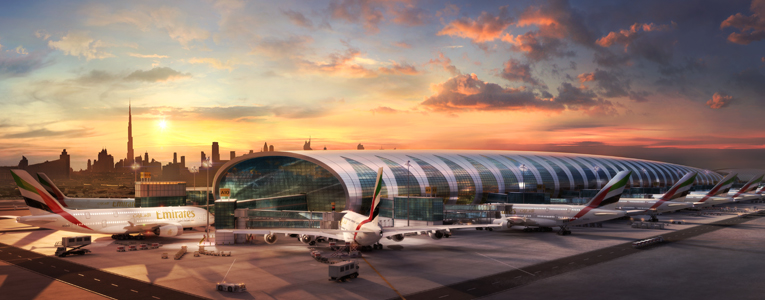
The airline sector never seems to have a downtime. Dubai International Airport’s September passenger numbers surged 12.8% to almost 4.8 million resulting in a 13.4% YTD increase to 42.6 million. Despite the global slowdown, cargo numbers were again up – this time by 9.1% to 177k tonnes.

There was also growth in sea trade with DP World, the global port operator, announcing a 4.6% YTD growth to 42.4 million TEUs (twenty foot equivalent units) with 14.2 million TEUs in Q3. Its local operation saw a 4.6% quarterly rise in traffic to 3.4 million TEUs. Container handling accounts for almost 80% of DP World’s revenue from its sixty worldwide terminals, with a further ten being developed. This week, it has won a US$ 200 million contract to build and operate another berth adjacent to its existing terminal in Mumbai.

On the aviation front, flydubai’s Chief Executive, Ghaith al Ghaith, is forecasting that the fledgling low cost carrier will turn in a profit by the end of the year – no mean feat as it has only been operating since June 2009. Flying to over 50 destinations – all within five hours of its home base – the company operates 27 aircraft with another 23 already ordered and looks set for another era of unprecedented growth.

Despite a slight 2.8% dip in occupancy in September, the hospitality industry continues to fare well. With Average Room Rates up 3.9% to US$ 218 and Total Revenue per Available Room rising 2.7% to US$ 312, the Gross Operating Profit per Average Room soared 11.3% to US$ 94. Overall this year, Revenue from the hotel and hospitality sector will be US$ 4.9 billion – a 9% increase on 2011.

The hotels will receive another boost this week with The Big 5 International Building and Construction Show opening on Monday. This promises to be the largest show of its kind in the ME and will attract over 50,000 attendees.

Dubai’s most prolific developer, Emaar Properties, has announced it is selling luxury apartments in upmarket Los Angeles. With a price range from US$ 1.5 million to US$ 22.4 million, the 22-storey tower block was purchased, whist still under construction, in 2007 for US$ 65 million. Since then the developer has spent a further US$ 325 million on getting the property ready for sale.

The company that was in the forefront of the local building boom in the 1990s has just completed the JW Marriott Marquis, the world’s tallest hotel (at 355 metres). This week, Brookfield Multiplex also announced that it was to design and construct Masdar’s new HQ in Abu Dhabi. Ready by the end of 2014, it will one of the most sustainable constructions in the world and will include the fitting of 1,000 sq mt of rooftop solar panels.

The much troubled Union Properties gave signs that things were improving with a Q3 Net Profit of US13.6 million – not much one would think but a massive transformation from a US$ 290 million loss in the corresponding 2011 period. Although YTD Revenue dropped from US$ 870 million to US$ 355 million, its bottom line went from a US$ 354 million loss to a profit of US$ 42 million.

Meanwhile DEWA has awarded First Solar, a US company, to construct the first phase of the US$ 3.3 billion Mohammed bin Rashid Al Maktoum Solar Park. When completed, the development will cover 48 sq km and produce 1,000 mw of clean energy. The initial phase will see a 13 mw power plant which will generate annually in excess of 22 million kw hrs of electricity.

A much smaller investment was announced by US-based Emerson with a US$ 33 million plant for expanding their Jebel Ali facility. The company will be in a position to expand its a/c, heating and refrigeration solutions unit.

Another shortened week on the Dubai Financial Market saw the Index open at 1631 and close marginally lower at 1623 on thin trading. The market has seen a YTD rise of 19.94%.

There is no doubt that the country is benefitting from strong oil prices as borne out by the latest OPEC figures which shows that the twelve nations in the 42-year old organisation will generate earnings in excess of US$ 1 trillion again in 2012. In Q1 this year, the UAE had income of US$ 35 billion.

The federal government has just released details of its 2013 budget which sees increased emphasis on social welfare which accounts for 51% of the US$ 12.2 billion to be spent with education and energy expenditure at US$ 2.7 billion and US$ 1.5 billion respectively. It is to be noted that the federal budget accounts for only 11% of the country’s total expenditure with individual emirates responsible for their own spending plans.

A much bigger budget is beginning to rattle European politicians as the British threaten to scupper any deal on the EU budget which includes a US$ 1.3 trillion spending plan. In addition, the French – having always been the largest recipient of EU farm subsidies – have not taken too kindly to the fact that other members, including Germany, want to cut back on this spending as part of an overall US$ 260 reduction plan.

September saw a new record in the eurozone with 18.5 million people now unemployed or 11.6% of the workforce, compared to 16.3 million a year ago. Analysts expect this to worsen in the coming months.

Greece sinks further into the mire with latest forecasts indicating that its debt mountain will rise from 167% of economic output (as agreed with the troika in March) to 189% by year end. Obviously there will have to be some form of official fiddling to ensure that the Greeks can close the gap and receive their next tranche of bailout funds later in the month. It still seems that the country will have to leave the euro, one way or the other, and the longer it goes on, so increases the cost to other eurozone creditors.

In the US, super storm Sandy may result in a huge US$ 45 billion bill to the economy after bringing New York and other major cities along the eastern seaboard to a standstill. What it has done to Obama’s chances of re-election remains to be seen.

For the President and Greece, November may well be The End of The Line.

Posted in Finance | Tagged , , , , , , , , , , , , , , | Leave a comment

Even The Bad Times Are Good

Whilst  most of the world seems to be sinking into an economic abyss, Dubai continues to confound its critics with an economy which is heading north in the other direction.

With the Eid holidays upon us, Dubai will see shopping malls open 24 hours a day to cater for the expected one million visitors who will transform the city into a maelstrom that will trawl the malls, fill the hotels and bring bumper to bumper traffic on to the roads. Many will be from the neighbouring GCC countries whilst some lucky European tourists will be taking a mid-term school break in the sun.

The hospitality sector is still counting its takings following a hectic month of exhibitions and conferences, including Gitex and the World Energy Forum, that has seen the city bursting at its seams. Global Village opened on Sunday and will run until the end of March 2013. With almost forty pavilions and seventy countries represented, this cultural and entertainment attraction is looking at over 5 million visitors this time round.

The recent Gitex Shopper, which accounts for 10% of the total annual retail spend in IT and electronics sales, reported an impressive 23% growth in this year’s sales to US$ 65 million with a similar growth in attendees to 206k.

The increasing population of the UAE is reflected in the news that GEMS Education plans a further ten new schools, over the next two years, to cope with the influx of extra pupils. With educational establishments in ten countries, Dubai still remains the company’s mainstay with over twenty schools in operation. As a matter of interest, nearly 88% of all Dubai-based students attend the 150 private schools which collected US$ 960 million in tuition fees. The 207k students in attendance are taught by 13,200 teachers, giving a student-to–teacher ratio of 16:1.

Another beneficiary of this population growth is Dubai Healthcare City, established in 2002 as the world’s first healthcare free zone. There has been a 25% year on year increase in the number of patients which now numbers over 500k, of which 15% are from overseas. Medical tourism is a growing income stream for the emirate and indicates the quality of care and high standard of its international medical centres.

In on-going efforts to rid itself of its non-core assets, DP World has just sold a 25% investment in a Russian container terminal for US$ 230 million. Downsizing in 2012 has seen this subsidiary of Dubai World sell off a 60% stake in an Australian operation and a 34% stake in the UK Tilbury Container Services (US$ 75 million) as well as quit ventures in Belgium and Yemen. In a similar vein, Drydocks World has just sold a 67% stake in its SE Asian operations to the Malaysian shipping company, Pacific Carriers.

The end of October is the start of the Q3 reporting season with generally good results on show. Nakheel saw a 97% YTD jump in Net Profit to US$ 520 million because of a 126% increase in Revenue from US$ 545 million to US$ 1.25 billion. It does appear that it has recovered well from its near 2008 demise following the GFC.

Meanwhile, Emaar Properties came in with YTD Net Profit up 49% from US$ 295 million to US$ 440 million, ably assisted by a US$ 840 million contribution from the launch of its three recent residential projects.  At the same time, its retail division – including Dubai Mall – saw nine-month Revenue up 18% to US$ 510 million and its hospitality business up 15% to US$ 265 million.

Dubai’s second largest developer, Deyaar, saw Q3 profits surge from a paltry US$ 0.2 million to US$ 1.4 million despite a fall in its Revenue from US$ 50.2 million to US$ 37.4 million. The company is still feeling the effects from the 2008 property collapse here.

Not to be outdone by the major developers, the banks have come in with strong earnings. Mashreq reported a 28.3% improvement in its YTD Net Profit to US$ 265 million on Operating Income of US$ 800 million. Helped by increasing stability in the market and positive economic data, the bank saw a 7.5% increase in Loans and Advances to US$ 11 billion whilst maintaining total assets of US$ 20.8 billion. A further sign of improvement in the local economy was a 37% decline in its provisions for Loans and Advances which has now fallen to US$ 145 million.

Dubai-based Emirates NBD, the country’s largest bank by assets, had a great Q3 with a massive increase in Net Revenue from US$ 48 million to US$ 174 million. This did come with a cost as  the bank cut overheads by closing down eight branches (with 750 jobs) and 64 of its ATMS – mainly as a result of its earlier acquisition of the troubled Dubai Bank.

Very strong growth in the telecoms sector saw du record a 33.8% quarterly jump in Net Profit, before Royalty to US$ 178 million following a 12.9% hike in Revenue to US$ 687 million.

Its duoplistic competitor, Etisalat,  had a 29% increase in Q3 Net Profit to US$ 600 million but this figure flattered to deceive somewhat because it included US$ 510 million in relation to its sale of a 9% stake in the Indonesian mobile operator, XL Axiata. With this stripped out, there would have been a 9% quarterly rise to US$ 80 million on Revenue of US$ 2.18 billion.

The good news did not permeate into the Dubai Financial Market Index which actually fell 13 points to 1631 over the shortened week. This could have been the result of some profit-taking ahead of the Eid holiday. Wednesday, the last day of trading this week, saw some 100 million shares traded, valued at US$ 39 million.

Worse news for some expatriates was that the Dubai Economic Council has been discussing a number of tax issues emanating from the federal government. Whilst emphasising the importance of any tax being considered a fundamental part of the UAE’s economy Juma Al Majid, the Council’s Chairman, said it would be unwise to rush such a move without proper deliberation from all stakeholders.

Massive tax increases and draconian spending cuts in the eurozone have failed to ease their debt problems. Q3 witnessed the highest level of total government debt which was estimated to be at 90% of the 17 countries’ economic output. Furthermore five countries – Greece, Italy Spain, Portugal and Cyprus – remain in recession with many analysts expecting other nations to follow in the near future. Greece’s debt burden is over 150.3% whilst Italy is struggling at 126.1%, as both economies shrink even further.

The three countries with the immediate problems continue to be Spain, Greece and Italy. Spain is reeling under a jobless rate among the 16 – 24 year age group of 52% whilst its overall unemployment rate has risen from 8% to over 25% since 2007. The country’s retail sales fell at their fastest pace in six years and the signs are ominous as consumer confidence hits rock bottom, social unrest becomes more violent and their economy shrinks.

Greece is hoping that it can agree with the troika so that it can receive further bailout funds of US$ 41 billion next month. If they fail, the country could become technically bankrupt and quickly exit the euro.

The traditional instability that is the hallmark of Italian politics has been brought into sharp focus again with the shenanigans of the former PM, Silvio Berlusconi who is threatening to bring down the Monti government. One can only see hardships on the Italian horizon with more austerity and increased civil unrest on the cards.

The situation is further exacerbated with the area’s PMI (Purchasing Managers’ Index) dropping to 45.8 in October – its lowest level since 2009. Any number under 50 signifies a contraction in activity.

Worryingly for Germany, a survey of manufacturing has seen the index drop again from 47.4 to 45.7. The returns from France were even more depressing showing that the contagion effect from the poorer south countries is having such a negative impact on the whole region. And with the number of unemployed in the eurozone now nearing 18 million, there is little hope of any economic recovery in the foreseeable future.

Then we look at Dubai again where, in comparison, Even The Bad Times Are Good.

Posted in Finance | Tagged , , , , , , , , , , | Leave a comment

All Right Now

Now that property developer Limitless, a subsidiary of Dubai World, has restructured US$ 1.2 billion of debt, the company will soon come under the auspices of the Dubai government. In addition, it has fully cleared outstandings with 92% of its creditors, signed settlement agreements for the remaining balance and expects to settle all outstandings by 2016. Apart from its proposed development of 6.5 million sq mt in Downtown Jebel Ali, it is also carrying out projects in three overseas locations – a 1,400 hectare Al Wasl township in Riyadh, a 111 hectare mixed use area in Moscow and a resort in Vietnam.

A recent report shows that Dubai prime rents climbed 3.3% in H1 after no change in H2 2011. This figure was 1% more than the average of the sixteen countries surveyed and outperformed the likes of Singapore, London and Hong Kong – a sure sign that the global developing markets are pushing ahead of the struggling western economies.

One record that Dubai may not be too unhappy losing is that of the most expensive drink in the world. The Skyview Bar of the Burj Al Arab will lose this “honour” when its 27321 (the original cost in dirhams) drink priced at US$ 7,400 will be superseded by a London imbiber who drank a cocktail that set him back US$ 8,800!

The managers of the Burj, Jumeirah Group, announced a tie-up with China’s premier travel service provider, Ctrip, which will permit travellers from there to book directly any of the Jumeirah properties. Because of this one association, the chain expects to check in an additional 14% more Chinese guests next year at their twenty hotels around the world.

Jumeirah, along with every other hotel here, will be having yet another bumper week with the 32nd edition of Gitex Technology Week which opened on Sunday. As one of the top three ICT events in the world, it expects over 130,000 industry professionals to attend and visit many of the 3,500 suppliers on show.

Also filling the hotels – as well as the roads – will be delegates attending the 12th International Telecommunications Union conference – the first time it has been held in the region. This 5-day event brings together high profile participants – including heads of state, government ministers, industry leaders, advisors, regulators and academics – to shape the future direction of this fast-moving industry.

Then towards the end of the month, there will be a major influx of visitors with the long break for Eid Al Adha and the European school holidays. Most hotels are completely booked out and are expecting a windfall with some room rates more than twice the normal tariff. It is widely thought that Dubai will be swamped with over 1 million visitors over the festive period. It will also ensure that Emirates and flydubai will be kept busy with extra flights and full passenger loads.

The Dubai-based carrier became a casualty of Australia’s Competition and Consumer Commission and fined just over US$ 10 million for “engaging in cartel conduct”. It is the 10th airline to have its wrists slapped by the Commission which now has collected US$ 70 million from offending carriers to date with Singapore, Cathay, Thai and ANZ waiting to add to the balance, when their cases are heard later in the month.

Figures from IATA, covering the first eight months of the year, indicate how well the region is travelling. Whilst total global passenger growth has risen 6.6%, the ME airlines saw expansion of 16.9%. More revealing was cargo – a global decline of 2.6% whilst the region saw a spectacular 14.1% hike. IATA also reported that the aviation industry contributes US$ 40 billion to the UAE economy, equivalent to 14.7% of the GDP, and employs 14% of the total workforce.

Staggering statistics from Etisalat show that the corporation has spent US$ 4.0 billion on its fibre optic network which has included over 2.8 million km of cable being used. The impact of this massive infrastructure investment is immeasurable as most segments of the economy have benefitted by a faster communication network.

Following on the September news that it had been awarded a US$ 310 million healthcare contract in Saudi Arabia, Dubai based Habtoor Leighton has announced a second one for US$ 74 million. This new project, taking eighteen months to complete, will provide the best available cancer treatment technology.

Local company, Arabtec has just won a US$ 115 million contract to build over 400 villas for Emiratis located in Ban Yas Residential Development West. Having already built over 11,000 villas, the company has probably built more villas than any other in this sector.

These two construction companies – along with others in the industry – will expect to grab future business in neighbouring Qatar as it starts preparations for the 2022 FIFA World Cup. Expenditure is expected to be in the region of US$ 130 billion and will include US$ 35 billion for a rail / metro link, US$ 7 billion for a new port along with other infrastructure projects.

In the Jebel Ali Free Zone, JRD International invested US$ 82 million in its new RMD Board plant and have started production. Having created 700 new jobs, the company hopes to reach 110k metric tonnes processing capacity of polypropylene which would then make it the largest single site manufacturing plant of its type in the world.

Another indigenous business is set to open five stores in Iraq following a franchise agreement with Al Handal International. Paris Gallery, the leading luxury retailer in the ME, expects that the first one will be up and running in Baghdad next year. Since 1994, it has now over forty shops not only in the UAE but also Saudi Arabia, Qatar and Bahrain.

Still another retail centre is being planned for Dubai – this time Tejuri will be the first e-shopping mall in the region and a major boost for the fledging e-commerce sector. It will be based on the success of the decade-old Tejari (Arabic for ‘trade’), the B2B online service for companies wishing to acquire commodities. Backed by the Department of Economic Development, it will empower retailers, SMBs and consumers.

A quarterly survey has again concluded that shopping is cheaper here than in many other countries with a basket of branded goods being 40% cheaper than in a UK supermarket and half the price than in Australia. Unfortunately, Dubai is not immune from the global hike in food prices, arising mainly because of disastrous harvests in many locations (refer “Go Your Own Way” – 29 July 2012).

According to the UAE Central Bank, MO money supply (currency in circulation plus currency at banks) rose 1.1% to US$ 15.2 billion at the end of August. There was a marginal decline in total bank loans and advances to US$ 297 billion whilst total bank assets rose 0.5% to US$ 472.4 billion.

It was another quiet week on the Dubai Financial Market ahead of the Q3 reporting season. The Index closed Thursday at    1654 after a Sunday opening of 1636. As the global economic malaise continues, the situations in Iran and Syria become more volatile and relatively high oil prices continue, local investors are exercising caution in their business affairs.

If only Dubai’s roads were as quiet! Despite much congestion at peak periods, there have been over 112k speeding fines issued in September alone (compared to 67k in August) with SZR accounting for nearly 40% of the total. It is worrying – but not surprising – to see that 30% were committed by taxis and public transport vehicles!

On the international front, nothing much has changed. As Greece enters its fifth year of recession, and the country forecast to contract by another 3.8% next year, it is being asked to tighten its belt even further so it can meet the terms set by the troika and collect the next tranche (US$ 41.0 billion) of its bailout funds (US$ 450 billion). There is very little positive news from the cradle of civilisation when its public debt is expected to rise from 171% of GDP to 182% next year and private creditors – having already taken a US$ 130 billion haircut – along with individual European countries reluctant to offer any further assistance.The local populace is venting its anger by an increasing number of protest marches against the severe austerity package that has been set by the troika.

Despite the recent downgrading of its credit rating and its economy falling into an abyss, PM Mariano Rajoy is still with his head in the sand and refusing to believe the inevitable – Spain will have to apply for a bailout if only to reduce the country’s escalating borrowing costs. After Spain, the dominos start falling with Italy next on the precipice.

Way down the pecking order is the UK but the portents there are gloomy with revised forecasts that the economy will actually contract (again) by 0.4% this year and grow at a slower rate (1.1%) than first expected in 2013. The recession has brought reduced tax receipts for the troubled Chancellor, George Osborne, and he has not been helped by the eurozone crisis and the problems in markets such as the US, China and India. To cap off his woes, it is likely that he will miss his 2012 borrowing target with the deficit decreasing at a slower rate – this may result in extra austerity measures having to be introduced.

Even the German economy is slowing down with the latest 2013 forecast seeing growth drop to 1% from 1.6%. In 2010 and 2011, German GDP had grown by 4.2% and 3.0% respectively but now is taking the full force from the eurozone debacle and weakening economies particularly in Asia and Latin America.

Hopes continue to be dashed that the Asian economies may start showing signs of traction. The expected growth in China and India has failed to materialise whilst the IMF has lowered its forecasts (again) for many of the other emerging nations from their July estimate of 7.1% to 6.7%. European contagion is beginning to hurt these economies. Japan, the world’s third largest economy, is still feeling the effects of last year’s tsunami / earthquake and will have to borrow more money to avoid liquidity problems.

With the US election almost upon us, bad news for the incumbent with a budget deficit topping US$ 1,000,000,000,000 (one trillion) for the fourth straight year of his presidency. What is more frightening is the fact that the national debt is on the north side of US$ 16 trillion and that this year the US government has borrowed 31 cents of every US$ 1 it spent. No wonder that some commentators are forecasting that when tax increases and massive spending cuts take effect early next year, this will be the tipping point to push the already wobbly economy over the now infamous “financial cliff”.

And then you see the figures for the UAE which expects a 5% expansion in this year’s notional GDP to US$ 375.9 billion and an 18.5% jump in current prices over 2010. This increase has been helped by the country pumping an annual one billion barrels of crude oil at a price edging above US$ 100. Furthermore, the economy posted a US$ 10 billion budget surplus last year, equivalent to 2.9% of the GDP, based on Revenue of US$ 103.5 billion and Expenditure of US$ 93.5 billion. Next year the plan is for the surplus to equal 6.4% of the GDP.

As noted in last week’s blog, UAE non-oil foreign trade for the first five months of 2012 showed a 10% year on year growth to US$ 112.4 billion with imports up 13% to US$ 73.5 billion, exports 38% to US$ 16.5 billion and re-exports came in at US$ 22.4 billion. No wonder we can sing that it is All Right Now here in Dubai!

Posted in Finance | Tagged , , , , , , , , , , | Leave a comment

Just One Cornetto

The big news of the week was HH Sheikh Mohammed bin Rashid Al Maktoum’s endorsement of the US$ 400 million plan to build a 2.8 km waterway that will connect Business Bay with the sea at Jumeirah 2. Within two years, the canal will cross the Sheikh Zayed Road, Safa Park and Al Wasl Road to the waters of the Arabian Gulf. On completion, the area will be transformed into a major tourist hub with floating hotels, recreational facilities and restaurants along the water line – with maybe the odd gondola!

The Dubai ruler has also recently announced that 13,000 undergraduates at UAE universities will receive their own iPads as a step to improving their performance. Interestingly, the Higher Colleges of Technology, the country’s largest tertiary education provider, has plans to become the first in the region to have iPad only lessons.

Whilst on that subject, a London-based company is producing a unique 24 carat rose gold iPad which will be auctioned in association with the Burj Al Arab. All proceeds will be for Breast Cancer Awareness and, as usual, during this month, the sails on the iconic hotel will be lit pink.

There are many other indicators – such as increased car sales, rising property prices, 14% growth in the hospitality sector etc – that point to the fact that Dubai is fast returning to the golden days of pre-2008 and the GFC.

In 2008, UAE vehicle sales reached 340,000 units – its highest ever figure. With YTD August sales already at 240,000, dealers expect sales to top 300,000 which would equate to the second best year on record. And this despite tight credit conditions, including a 20% deposit, compared to the 2008 environment when banks were tripping over themselves to give money to almost anyone, without too much checking on individuals’ financial soundness. With the world economy going backwards, this region is one of the few real growth areas for the car industry as September figures show Toyota wholesale global deliveries 49% down at 44k units and Honda dropping 41% to 33k vehicles. (On the local front, the Dubai Toyota dealer has had to recall some 65,000 units to check on a power window defect).

As residential property prices in certain locations show up to 15% hikes, with rents following suit, it comes as no surprise to see that Nakheel took deposits of over US$ 270 million (for 225 units) at the 01 October public launch on its first phase of 360 Jumeirah Park Legacy villas.

The performance of Tasweek Real Estate illustrates the strength of the upturn in the market. Established in 2009, the US$ 250 million fund targeted distressed assets in both Dubai and Abu Dhabi at a time when some property prices were decreasing by over 50%. The fund is expected to see a 20% return to its investors when it completes later this year.

A recent study estimates that Revenue from Dubai’s hospitality sector will reach almost US$ 5 billion this year with the same impressive 10% annual growth going out to 2016 when the Turnover will be US$ 7.5 billion. This figure is even more remarkable when the IMF has estimated that the overall UAE economy will grow between 2.8% and 3.6% over the same period.

Many of the tourists spend much of their time shopping in Dubai’s numerous malls with yet another one to be added by 2013. Meraas Holding, which is also developing The Beach at JBR, has begun construction on a new outlet village, with 160 stores selling designer brands at much reduced prices. This new venture comes five years after the opening of Dubai Outlet Mall which has seen a 20% sales increase so far in 2012.

Also tracking well is Dubai Duty Free with September YTD sales up 10% to US$ 1.14 billion and it has targeted a further US$ 500 million over the traditionally busy Q4. It now has a payroll in excess of 5,000 – a 25% increase in manpower this year.

In relation to e-commerce, UAE accounts for about 60% of the total spend in the Gulf States with Saudi Arabia a distant second at 15%. One well known site, Namshi, which sells clothes and shoes on-line has recently secured  US$ 20 million financing from JP Morgan Chase and Blakeney Management. This is a sure sign of business confidence for a company that is only a year old as well as for the overall regional market.

It is also seems likely that PayPal, the US-based transaction company, will soon open a UAE office – and not before time for the ever growing number of local e-commerce enterprises. The company currently has 100 million accounts and expects tremendous future growth in the undeveloped ME market.

One of the major exhibitions of the year starts this Monday with the opening of Gitex Technology Week which will see the town bursting at the seams as thousands of attendees arrive from around the region. Coincidentally, Dubai Customs have just released Q1 trade figures for Electronics and Accessories which has seen an 8% growth to US$ 13.9 billion with imports 4% up to US$ 7.6 billion and exports / re-exports at US$ 6.3 billion.  China was the biggest supplier at 45% of the total (US$ 3.5 billion). The 2011 annual trade figures reached US$ 52.3 billion which, in turn, showed a massive 24% increase on the preceding year.

A leading British secondary educational establishment will have to revise its internal controls and procedures after it was reported that an accountant had managed to steal more than US$ 4.7 million over an 18-month period. The 27 year old Indian has been absent from school since last December.

UAE non-oil foreign trade for the first five months of 2012 showed a 10% year on year growth to US$ 112.4 billion with imports up 13% to US$ 73.5 billion, exports 38% to US$ 16.5 billion and re-exports came in at US$ 22.4 billion. Gold was the biggest imported and exported item accounting for 19.8% of all imports (US$ 12.9 billion) and 52.1% of exports (US$ 8.6 billion).

The most dangerous practice known to man or beast is set for a return to the local bourses. The Securities and Commodities Authority have introduced regulated marginal trading – a practice that allows investors to leverage their cash and trade much larger values. In the short-term, the exchanges will see increased business but the eventual losers will be the many investors who get caught up in over-trading and have the potential to lose more money than they had initially invested – especially when the markets move south.

The Dubai Financial Market Index had a relatively quiet week with a 9 point increase from its Sunday opening of 1627 points to closing on Thursday at 1636. With the Q3 reporting season approaching, increased activity will perk up the shareholders’ interest. However the Dubai Gold and Commodities Exchange saw its highest ever monthly volumes in September with over 970,000 contracts, or double that of the same month in 2011, and 143% up on YTD with 6.7 million transactions.

With Europe sliding back into deeper recession, the vacillating eurozone bureaucrats have introduced their much vaunted US$ 650 billion rescue fund. A certain case of too little too late compared to the US QE3, a new $40 billion a month, open-ended, bond purchasing program of mortgaged backed securities.  This package, with very low rates, is effectively a stimulus program which allows the Fed to take up US$ 40 billion monthly of commercial housing market debt risk until this crisis is resolved.

Greece is still awaiting the green light from the mid-October Brussels summit of the 27 EU leaders, many of whom are more concerned about their national political ambitions than they are for the survival of the common market. The Greek Prime Minister, Antonis Samaras is still hoping against hope that his country will receive their next US$ 40 billion part payment of the bailout package. One thing is certain – Germany’s Angel Merkel will not be going to Greece for her next holiday after her Tuesday Athens reception from a belligerent crowd of over 300,000.

The other problem nation, Spain, continues to believe that the country is in no need of a bailout with their Economy Minister, Luis de Guindos, reiterating that their austerity package is beginning to put the country back on track. Obviously many pundits believe otherwise including Standard & Poor who cut their credit rating two notches to BBB- which is only one level above junk status.

Meanwhile the ECB president, Mario Draghi, seems to think that the central bank can do little more to try and arrest the demise of the euro and has passed the responsibility on to the individual governments. The same plea came from the IMF head, Christine Lagarde, who called on US and European leaders to act quickly to solve their debt problems. All that means is that this economic mess will continue ad infinitum.

In the wake of the eurozone crisis, and slowing economic growth in other major economies, the IMF has yet again revised down its global growth forecast from its July estimate of 3.5% to 3.3%. For the UAE, their revised forecast rose to 4.0% – a good enough reason to enjoy Just One Cornetto, sailing a gondola on the Dubai Business Bay Canal.

Posted in Finance | Tagged , , , , , , , , , , , , | Leave a comment

Happy Days Are Here Again

Dubai’s exhibition season has started with both the 11th Cityscape Global 2012 and GITEX Shopper (with the main GITEX Technology Week being still two weeks away). HH Sheikh Mohammed bin Rashid Al Maktoum opened the popular consumer and IT electronics event and was so impressed with its positive impact on the local economy, he ordered that it become a bi-annual event.

Meanwhile Cityscape began with announcements of several major projects – the largest of which was the on-going Falconcity, with a capital cost in excess of US$ 10 billion. Its Chairman, Salem Al Moosa, has estimated that, within ten years, the development will be home to 35,000 residents who will be housed in areas adjacent to global landmarks such as the Taj Mahal, the Giza Pyramids and the Eiffel Tower.

Not to be outdone, Meydan – having already spent over US$ 2.7 billion on the iconic racecourse – detailed three new projects. Two of these will be within the original location including the US$ 3.0 billion Sobha City, in conjunction with the Indian company of the same name. This development will cover 8 million sq ft and will encompass 280 villas, 13 high rise apartment blocks, retail space and schools with a ten year completion schedule. The other will be the Meydan Tower, on Sheikh Zayed Road, a mixed used area including a 100-room boutique hotel, 250 serviced apartments, 300 units and 20,000 sq ft for retail use.

Surpassing all expectations, Cityscape reflects further confirmation that the Dubai realty sector is well and truly on the way up. If further proof were required, then one just has to look at the way villa prices have climbed 14% in the past twelve months whilst rents have climbed 10%. As a result of these price escalations, Dubai is placed 12th in the ranking of 27 global markets. This comes despite the fact that the inventory supply continues to climb to a level of an estimated 350,000 which shows that more people are making Dubai their home base. There is confidence that prices will continue to move in the right direction for at least the next two years moreso when the active population is set to expand at an annual rate of 6.1% compared to residential supply growth of 4.9% over the same period.

Even the badly bruised Nakheel has got in on the act and seeing brisk demand for its public launch of 360 Jumeirah Park Legacy villas selling in the region of US$ 1.3 million. To try and avoid flipping of properties – that was so prevalent in the industry five years ago – the developer requires a 15% down payment with instalments over the ensuing three years prior to completion.

However, one sector still suffering from the manic building boom of days gone by is commercial, where there is a worrying 45% vacancy rate. Q3 saw US$ 550 million in transactions and any movement southwards, towards say the 40% level, will be a major achievement – unfortunately this will have to be a longer term target.

Hotels are a different story with the first half of the year witnessing a 10.0% hike to 5 million guests for Dubai’s hospitality sector with an additional 18% more nights to 19.2 million. The important factor was that Revenue rose a welcome 22% to US$ 2.67 billion. The number of rooms has jumped 4% to just over 54,000 so that any further positive movements in visitor numbers will be easily accommodated.

Away from their home base, local companies are faring well overseas with the biggest recent development being the US$ 820 million Cairo Gate project – a JV between the two Dubai heavyweights, Emaar and the Al Futtaim Group. This will be a major retail and lifestyle development, covering 160 acres.

Arabtec continues to dabble abroad and has won a US$ 120 million contract to build Europe’s tallest residential tower in St Petersburg. No wonder their share value has doubled in a year – almost six times better than the Dubai Financial Market Index which has gone up 17.49% over the same period. This week, the market has risen over 3% from Sunday’s start of 1570 points to the closing Thursday bell at 1627.

Another positive indicator for the Dubai economy is the latest HSBC Purchasing Managers’ Index which has shown a monthly increase from August’s 53.3 to 53.8 at the end of Q3. This is noteworthy since any figure over 50 is positive news whilst most of the other global economies are on the south-side of this figure.

Although intimated in a recent blog that more banks will be cutting back, it still comes as a shock to see that HSBC will be closing down its Islamic banking operations in Dubai and moving them to Qatar and Malaysia. This is part of the bank’s strategy to improve its bottom line but its bottom may well be bitten because of this risky exercise.

Violent scenes reverberated around the streets of Athens as Greeks protested against proposed pension cuts, increasing consumer costs and higher taxes. Prime Minister, Antonis Samaras, has warned that the country will run out of money within weeks if the next tranche from the bailout loan of US$ 170 billion is not forthcoming. Currently delegates from the troika – the EU, ECB and IMF – are in the country assessing whether Greece has fulfilled the terms for receiving further funds totalling US$ 43 billion.

Luis de Guinda, Spain’s Economy Minister, has reiterated that his country does not require a bailout. Passionate protests met his latest budget that cut US$ 17 billion whilst an independent audit estimated that Spanish banks would need US$ 77 billion to survive a serious downturn. With its head in the clouds, Mariaono Rajoy and  his government still consider that the country is in no need of a bailout despite an ever shrinking economy and 1 in 4 of the populace  unemployed.

Compared to these two struggling countries – as well as most other countries – it can be seen that at least for Dubai, Happy Days Are Here Again!

Posted in Finance | Tagged , , , , , , , , | Leave a comment

Under Pressure

Facing the presssure head on is Dubai’s leading property developer, Emaar. Their recently announced ‘The Address Boulevard’ sold out within hours despite the fact that prices for the 542 serviced apartments being on the north side of high at US$ 680 per sq ft. Studios started at US$ 300k whilst 4-bedroom units were in excess of US$ 1.6 million. To try and avoid too much speculation, seen so much in the halycon days, buyers will have to pay 30% of the balance before they can sell on.

In their continuing quest to diversify, the company has also announced a management agreement for The Address Hotel, Masai Mara in Kenya – their second foray into Africa after opening in Cairo in 2009. If the new hotel has the same success as its Dubai equivalents, then the outlook is promising for this particular Emaar unit.

Although the hospitality sector continues with high occupancy rates, which will be enhanced  with the conference season fast approaching, it received a further boost that the Summit of the Global Agenda, in collaboration with the World Economic Forum, will take place between 12 – 14 November. Billed as the world’s largest brainstorming event, the city will host more than 1,000 experts and leaders to help develop innovative solutions for many of the world’s challenges.

The importance of such events has not escaped the eyes of HH Sheikh Mohammed bin Rashid Al Maktoum, who has ordered the establishment of a board, chaired by Emaar’s Mohammed Ali Al Abbar. The new entity will be responsible for organising and collating future Dubai events and festivals and will report directly to the Dubai Ruler.

Unsurprisingly, to cope with increased demand, DEWA plans to spend US$ 1.1 billion to upgrade and expand its infrastructure. It expects to raise the money through selling sukuks, the proceeds of which will be used to complete on-going projects and repay exisiting liabilties.

Although there are increasing number of cruises coming into the renovated Port Rashid Terminal, it is still a shock to see that Royal Caribbean will be scaling back their schedule at the end of the 2013 season. However with Costa, Aida, Tui and FTI maintaining the local presence, next year will see a 7% increase in volume to 420k passengers.

There are mixed results coming out of Dubai’s other port, Jebel Ali and its free zone companies. JAFZA, a unit of Dubai World, has H1 Revenue up to US$ 194 million but Profits down 20% to US$ 58 million, mainly because of a 40% hike in Financial Costs to US$ 66 million. The organistaion’s positive impact to the emirate’s success can be seen from its 25% contribution to Dubai’s trade, with 6,700 companies employing 170k. (In addition, DP World has sold off shares in their Belgian and Yemeni port facilties).

Dubai International Airport did not disappoint with a 20% August increase in passengers to 4.8 million whilst YTD figures are up 13.4% to 37.8 million. Despite the global economic slowdown, Dubai ploughs ahead with August cargo figures up 4.4% to 191k tons with  a 3% YTD rise to 1,482 million tons.

Two organisations that seem to have money to spend are  Tony Blair Associates and Emirates NBD. Readers may be surprised to read that Tony Blair, the erstwhile ex-PM, is negotiating a new and lucrative contract with the much maligned Kazakhstan government which could eventually be worth US 16 million. Earlier in the year, one of his many companies, Windrush Ventures, had a 2011 tax bill of US$ 510k on Revenue of US$ 19.5 million! Some reports indicate that he has earned over US$ 125 million since 2007, helped by annual retainers fronm the likes of JP Morgan (US$ 4 million) and Zurich (US$ 800k). It is pleasing to note that the good man is there “not to make money but to make a difference”!

Dubai’s largest bank reportedly spent US$ 1 million to bring over Pussycat Doll, Nicole Scherzinger, so that their staff and families could be entertained for forty five minutes. If that were the case, the money could have been better spent on an extra 15 staff to improve service to their customers – the people who actually pick up the tab.

However other Dubai banks are not faring as well. Early signs are that some of the banks may be scaling back operations in Dubai with the resultant loss of jobs. For instance, Credit Suisse is reloacting some of its investment bank work to Qatar whilst Deutsche Bank and Nomura Holdings are downsizing as deals continue to slow down. There are bound to be other bigger banks reducing their payroll in the near future.

Latest figures indicate that total bank lending from the country’s 51 financial institutions was slightly up as at the end of May. Although total lending rose to US$ 216.4 billion, credit extended to the private sector was down 1% to US$ 154.8 billion, lending to the other two segments – government and the public sector – was marginally up to US$ 30.3 billion and US$ 31.3 billion respectively.

The Dubai Financial Market came off its recent winning streak ending the week 2% down, or 35 points, at 1570 from a Sunday start of 1605. Despite this little setback, the market is up 16.0% YTD and year on year 8.4% in front.

Continuing problems in the eurozone and worsening US economic data will lead to the IMF downgrading its global growth forecasts – yet again! Its head, Christine Lagarde, is concerned and has voiced her dismay about the lack of progress on both sides of the Atlantic.

Social unrest has seen riots in the streets of Athens and Madrid as both governments appear clueless and directionless. Greece needs to show the troika that it will be able to come up with even more draconian cuts to be in a position to claim the next US$ 40 billion tranche of their US$ 175 billion bailout payment. Failure to do so will see the home of democracy returning to the drachma.

Spain has similar problems, with tax receipts down and benefit payments up, and it is only a matter of time before their stubborn PM, Mariano Rajoy, has to request the inevitable bailout.

Both countries are Under Pressure.

Posted in Finance | Tagged , , , , , , , , , , | Leave a comment

Wish You Were Here

The main drawback of living in one of the best locations in the world is that it comes with a price – Dubai has been ranked as the 22nd most expensive city globally and number one in the ME. The recent UBS survey confirms that you have to pay for what you get. Interestingly, it did show that the work ethic here is high with employees putting in more than 2,000 hours a year. Contrast that to workers in W Europe, who have much shorter working hours and the longest holidays, and you can begin to see why Dubai’s economic outlook is brighter when compared to many others.

Another indicator of increasing consumer confidence is the proposed IPOs from two of Dubai’s better known entities – Paris Gallery and the Al Habtoor Group. CEO, Mohammed Al Fahim, has had discussions with all the three local bourses with a view to taking Paris Gallery public. The company had a 2011 turnover of US$ 272 million including its Imperial Majesty No 1 perfume which sells for over US$ 300k – no surprise then that only 10 bottles have ever been produced! The latter, headed by Khalaf Al Habtoor, is looking at raising around US$ 1.5 billion, probably on Nasdaq Dubai. (Interestingly, Habtoor Leighton Group has just won a healthcare project in Saudi Arabia worth US$ 315 million – this coming a month after the Joint Venture secured a US$ 125 million Qatar tram project).

If either of these IPOs goes ahead it will be the first seen locally in over four years and may be a precursor of other family companies following suit. And if they were to list on Nasdaq Dubai, it would be a major boost for that exchange’s image and trading volumes since it currently trades only two companies.

On the subject of trade, increasing amounts of cargo are using Dubai International Airport. Consequently it is expanding its facilities to cope with the growing demand, as well as refurbishing its existing facilities – Hall A and Freight Gate 1. As part of its US$ 7.8 billion 2020 Strategic Plan, it will begin work on a 30,000 sq mt addition to the Cargo Mega Terminal which will result in a 25% annual capacity increase to 1.5 million tons. Additionally, construction has already commenced on a new transhipment facility with a 400k tons capacity.

To keep up with DIA, DP World is going ahead with major development plans on two fronts. A 400 metre quay extension to its Terminal 2 will allow the expanded 3,000 metre quay to handle six vessels of 15,000 TEUs simultaneously. To further build up capacity, and to cope with the expected increases in demand, at its new Terminal 3, the company has just signed agreements for the supply of 19 quay cranes and 50 rail mounted gantry cranes. The Jebel Ali Port has already moved a record 6.1 million TEUs in H1 and when these enhancements are in place in 2014, total capacity will be 19 million TEUs.

It is somewhat ironic that as the global economy continues to weaken, Dubai seems to be heading in the other direction. FedEx, the world’s second largest package delivery company, has issued a profits warning indicating that it will be 10% lower than first expected – because of a downturn in trade.

2012 has seen car sales go through the roof as a result of lower financing deals and increasing customer confidence. Some of the dealers, with growing sales, include Toyota – up 43% in the first eight months, Nissan ME with a 30% jump in Q1, Kia 37% up in H1 and Chevrolet up an impressive 40%. Even Ferrari ME saw a 7% rise in H1 sales to 190 vehicles.

One of these buyers must have been the driver – admittedly with many cars – who has committed over 12,700 offences and racked up fines in excess of US$ 3.8 million. The second driver on the police list owes US$ 320k covering 1,000 fines over the past 18 months.

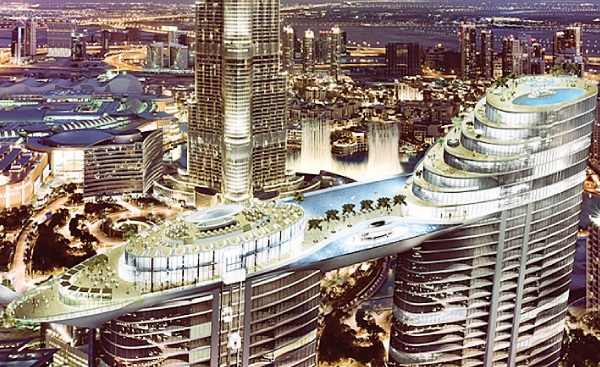
The emirate’s retail and hospitality segment has received one of its biggest boosts for some time with Emaar’s launch of a 340 metre, 63-storey building with 200 hotel rooms and 542 serviced apartments. Slated for a 2015 opening, it will become the company’s third Address Hotel in Downtown and will further augment this sector which accounts for nearly 35% of Dubai’s economy – more than the combined totals of real estate and financial services.

Scarcely a week goes by without news of another major conference coming to these shores. This time it is the Association for the Advancement of Cost Engineering who will be holding their international conference here in November – the first time it has been held outside of the USA.

The Dubai retail sector, which contributes 12% (US$ 4.1 billion) to the emirate’s GDP, is expected to continue annual growth of at least 5.5% for the next three years. As indicated in last week’s blog, Majid Al Futtaim had reported impressive H1 results with a 17% hike in profits to US$ 410 million with total group assets north of US$ 10.0 billion. This week, MAF announced it intends to replicate its highly successful Mall of the Emirates in Cairo with a US$ 400 million Mall of Egypt complete with Ski Egypt.

Another Dubai-based company with overseas interests is Drake & Scull who have just been awarded a US$ 360 million contract, in a JV with Italy’s SICIM, to lay pipelines to develop an Iraqi oilfield. This is part of that country’s strategy to double its oil output within the next two years.

Obviously not resting on their laurels, having just helped Qantas out of their troubles, it is reported that Emirates are now in talks with troubled American Airlines over a new partnership deal. The American carrier filed for Chapter 11 bankruptcy protection in November 2011 and could obviously do with all the help that it can get – especially in these uncertain times.

Despite the doom and gloom in the banking industry, the 51 UAE banks – comprising 23 national and 28 overseas – saw their 2011 net profits surge 18.2% to over US$ 7.2 billion as a result of a 6.9% decline in interest expense and a 3.8% increase in net interest margins. By April 2012, net foreign assets showed a 78% year on year growth to reach US$ 45.0 billion with Assets up by 17.8% to US$ 122.7 billion and Liabilities down 1.3% to US$ 77.7 billion.  Whatever they do, and whatever the economic conditions, banks just cannot lose! (A pity about their level of customer service).

On the treasury side, it appears that the emirate is in the throes of issuing a bond to refinance a proportion of a US$ 1.8 billion sovereign debt due to mature next April.  Taking advantage of lower global interest rates and increasing industry confidence in its creditworthiness, Dubai’s credit default swaps now stands at their lowest level in four years. Empower continues to repay its loans – currently at US$ 326 million – on schedule with the latest loan instalment of US$ 22 million being repaid this week. The original loan was used to build plants and equipment for the district cooling provider in its various Dubai locations.

Just when we discover that 40% of the UAE population (including expatriates) is obese, the London-based Hummingbird Bakery – celebrated for its cupcakes – announces its first of twenty proposed  franchises in the ME opening in Dubai Mall (where else?) at the end of this month.

Not expanding as quickly as local waistlines is the UAE Consumer Price Index. Compared to the base year 2007, when the CPI stood at 100, it is  at 116.86 – a 0.33% increase on July 2012 and 0.95% up year on year.

The Dubai Financial Market continues its recent winning streak ending the week 2% up, or 31 points, at 1605 from a Sunday start of 1574. Not a bad year so far with the market up 18.6% and year on year 9.5% in front.

This week two more factors can be added to the mix to further exacerbate the current global economic malaise – East China Sea and the Strait of Hormuz. The political fallout over the disputed islands in the South China Sea has led to Japanese companies taking drastic action in China where all the leading vehicle companies, including Honda, Nissan, Mazda and Toyota have either stopped or suspended production. Major shops and supermarkets have taken similar action with I Holdings closing 13 outlets and 198 convenience stores, Aeon 30 (or 85%) of its supermarkets and Uniqio 42 clothing stores. Even Sony and Komatsu have shut down some of their operations. With bilateral trade worth US$ 345 billion, the worry is that if this continues it will not only damage trade between the two countries but will have a devastating impact at a global level.

The second factor begs the question of why there are navies from 25 countries carrying out the largest ever war games exercise near to the Strait of Hormuz – the seaway that sees 18 million barrels of oil pass through every day. Any blockade, which would be probably caused as a direct consequence of actions between the “2Is” – Israel and Iran – will have such a damaging effect on the economies of many countries which, in turn, will make the eurozone crisis pale into insignificance. (And there is an election in November).

Meanwhile the farce that is eurozone continues unabated. In Spain, it transpires that 10% of their bank loans (equivalent to US$ 221 billion) are bad with the July figures the worst on record. Their political obduracy will prove economic suicide as the likes of Prime Minister, Mariaono Rajoy, continue to declare that the EU and the ECB will not be permitted to dictate terms as a condition for buying that country’s bonds. It can only be a matter of time – say October – that a full Spanish bailout is on the table.

The latest figures from Greece indicate that their primary debt figure will overshoot 50% to 1.5% as the recession takes hold which has seen its GDP shrink 20% since 2008. Further, according to their Finance Minister Yiannis Stournaras, it also seems unlikely that they will be in a position to meet the troika’s request to cut their two-year budget by a further US$ 15 billion.

When you add Ireland and Portugal to these two ailing economies, it comes as no surprise to see that investors, from these four countries, have withdrawn from their banks US$ 410 billion in the past year and moved the funds to safer locations within the eurozone. So much for a common currency!

At times like this I guess many of you wish you were here (in Dubai).

Posted in Finance | Tagged , , , , , , , | Leave a comment

You’ll Never Walk Alone

Sunday saw the third anniversary of the Dubai Metro which has carried a staggering 184 million passengers. The 52 km long Red Line was the start of the operations and has transported 152 million passengers since September 2009 whilst the 23 km Green Line is only one year old.

DIFC is on track as well with latest figures showing office occupancy in the Gate District at 98% and a 41% annual increase in the issue of commercial licences. It is noteworthy that 36% of the regulated member companies are from Europe whilst 26% originate from the Middle East and 16% from North America. As would be expected, 17 of the top 25 global banks, 8 of the top 10 insurers and 10 of the top 20 money managers have a presence in the Centre.

Also improving is the Dubai Gold and Commodities Exchange where August volumes were 153% up on the preceding year with 939,000 trades valued at nearly US$ 35 billion – a jump of 71% compared to last year and 79% on the preceding month.

On the local corporate front, two companies were in the headlines. Dubai-based Shelf Drilling has just signed a US$ 1 billion deal to buy 38 oil rigs from the Swiss company, Transocean, in what is expected to be an 80% cash sale and 20% via seller financing. The second, Etisalat reported that it was selling most of its 13.29% stake (at a 9% discount) in the Indonesian telecom, XL Axiata, bought in 2007 for US$ 502 million. This could be the start of several divestments by the company which reportedly spent US$ 12.5 billion between 2004 and 2009 on acquisitions and investments.

The Dubai Financial Market had another flat week but ended up 18 points at 1574 from a Sunday start of 1556. So far this year it has seen an impressive 16.3% gain – an indicator of the growing confidence in the Dubai market. Year on year the market is 7.75% in front.

Just as turgid is the usual summer slowdown in the hospitality sector with Dubai hotel occupancy levels dropping in July to 70%, being further exacerbated by the start of the holy month of Ramadan. However there was an increase in the Average Room Rate (ARR) – up 6.4% to US$ 189 but with the inevitable decrease in food and beverage revenues over this period, it came as no surprise to see an 8.2% reduction in TRevPAR and GOP/PAR dropping 30% to US$ 45.

This sector will receive an extra boost early next year when Dubai hosts the American Society of Travel Agents International Destination Expo in April. It is expected that over 700 travel agents will attend and it will go a long way to promoting Dubai as a first class tourist destination in a country which has now become the emirate’s 4th most productive source market for travel.

News that yet another hotel is being developed – this time the world’s largest hotel provider, InterContinental,  is set for a late 2013 opening of a 132 room and 196 residential suite hotel in the Dubai Marina.

On the retail side, Nakheel has announced that it has completed the pre-letting of 88% of the leasing space available in its US$ 270 million extension to Dragon Mart, already the biggest Chinese shopping hub outside of that country. The remaining space has already been reserved for international retailers. When completed in Q3 next year, the complex will more than double in size to 330,000 sq mt.

Further evidence of the confidence returning to Dubai shopping came with MAF announcing a 10% hike in consumer spending at its local malls including Mall of the Emirates and Deira City Centre. As retail accounts for over 30% of Dubai’s GDP, this can only be seen as positive for both MAF and Dubai.

The impact of the European economic problems was evident in there being little or no growth in Dubai’s trade with the EU. H1 exports were up by 16% to US$ 1 billion, imports flat at US$ 16.6 billion and re-exports up 9% at US$ 3.3 billion. As overall trade was almost identical to H1 2011 at US$ 21 billion, it is a good job then that Dubai does not have to rely on Europe but was saved by impressive growth in other markets as global non-oil trade showed an impressive 12.1% hike to US$ 163 billion.

There was conflicting news this week from two separate reports. The first from Saudi’s National Commercial Bank indicated that UAE’s real GDP will grow 3.1% this year with much the same for the next two years. The other, from the UAE Central Bank, projected an even better result in 2012 indicating a 4.0% increase. Earlier in the year, the IMF was predicting a 3.5% growth whilst the UAE Ministry of Economy expected only a 3% growth. As long as one of these is correct then we will have had an impressive 2012.

The main message seems to be that Dubai and the UAE have recovered well from the loan defaults and real estate implosion that occurred following the GFC. For example, the country’s fiscal surplus has widened to nearly 4.7% (from 2.9%) as has its current account to 10.8% (from 9.2%). It is expected that the 2012 inflation rate will be up to 1.1% (from 0.9%) with slight increases to 1.5% and 1.7% over the ensuing two years.

A report from BNC confirmed UAE’s premier position as the Gulf’s largest construction project market – currently totalling a staggering US$ 680 billion of which 62% or US$ 435 billion are on hold. Another bank report (this time from the National Bank of Kuwait) blames the cancellation of mega projects in Saudi Arabia (US$ 958 billion as of last October) and UAE (US$ 354 billion) for a third successive annual decline in Foreign Direct Investment. Following its zenith in 2008, when FDI into the GCC stood at US$ 60.3 billion, the 2011 figure shows an annual 35% decline to US$ 25.9 billion. (Despite this, FDI into the UAE has actually grown since 2009). Not unexpectedly, FDI outflows showed a 53% annual increase to US$ 218 billion.

The local banks still have a significant exposure to real estate which comprises about 21% of their net loans equivalent to US$ 63.2 billion. Of this balance, 45% (US$ 28.5 billion) relates to individuals, 31% (US$ 19.5 billion) to corporate investors and 24% (US$ 15.2 billion) to developers.

The official US government export credit agency, Ex-Im Bank has underwritten a US$ 2 billion loan to the UAE nuclear power plant, Barakah One, in relation to US equipment and service providers. This will provide a welcome additional 5,000 jobs in the US. Last year, the bank provided US$ 415 million worth of export credit and has a current exposure in the UAE of US$ 3.7 billion.

The economic climate in the US is worsening and set to deteriorate even further by the end of the year. Furthermore the so-called fiscal cliff – proposed tax increases and US$ 480 billion public sector spending cuts due for early 2013 – has the potential to wreak more havoc on the global economy than the eurozone crisis. If left unchecked, this will be a precursor of a major recession and will see the US lose its much coveted AAA credit rating.

Even now, the economic slowdown is beginning to hurt the US with its July trade deficit growing 0.2% to US$ 42 billion. More worryingly was the fact of record trade shortfalls with China (US$ 29.4 billion) and the EU (US$ 12 billion). Exports fell 1% to US$ 183.3 billion whilst imports were at US$ 225.3 billion – a drop of 0.8% from June. In addition, August payroll figures were horrific coming in at only 96,000 new jobs created. It does appear that additional monetary policy action – QE3 – is badly needed – at least for a short-term fix.

On the other side of the Atlantic, Spain’s Mariaono Rajoy appears to be biting the hand that feeds him by declaring that he will not permit the EU and the ECB to dictate terms as a condition for buying that country’s bonds. The fact that he has broken election promises and that he has to go back to the polls by 2015 may be a reason for his intransigence.

This week has seen the 9/11 anniversary, US whistleblower Bradley Birkenfield receiving US$ 100 million for lifting the lid on tax fraud at UBS and the recognition of a major cover up by authorities relating to the 1989 Hillsborough football tragedy involving Liverpool FC. You’ll Never Walk Alone but unfortunately many have to when trying to discover the hidden truth.

Posted in Finance | Tagged , , , , , , , , | Leave a comment

What’s Going On?

A further sign of confidence in Dubai’s real estate sector was this week’s announcement that Dubai Properties Group (DPG) will resume work on its Mudon (“cities” in Arabic) development located in Dubailand. Although the initial US$ 11 billion project was for a 678 hectare mixed use development, including 3,200 villas and 8,500 apartments, the restarted work will cover only 350 villas. In July, Emaar acquired a plot of land, in the same location, from DPG for an undisclosed amount to develop a mixed-use neighbourhood As Dubai’s population is set to double over the next ten years, and the current demand for quality residences is buoyant, these two projects should prove profitable.

When announced at the height of the real estate frenzy, Dubailand was to be a US$ 90 billion project, twice the size of Walt Disney World. How times have changed!

Unfortunately, what has not changed are the real estate scams that were prevalent during the boom times. The latest rogue appears to be a certain Haitham Mahmoud Al Kouatly, CEO of Shamayana Entertainment, who has managed to con hundreds of Dubai residents in an elaborate scam involving millions of dirhams.

Cityscape Global will take place in the first week of October and organisers are expecting a 25% upturn in the number of delegates to around 22,000. This year, the event, which has been on the calendar since 2002, will see overseas exhibitors take up over 50% of the floor space. This strong global interest augurs well for the state of the local real estate sector.

The Dubai-based Islamic lender, Tamweel, forecast a 30% increase in 2012 loans to US$ 2.2 billion. It had already seen a H1 26% rise in home finance applications whilst property prices have risen on average 15%  over the previous eighteen months with higher increases in prime locations such as The Meadows, Business Bay and DIFC. It will be interesting to see their Q3 earnings report!

The property arm of Dubai World, Limitless, expects to finalise its US$ 1.2 billion creditors debt deal this month. This will not be the first time that the troubled company has rolled over its loan initially due for a March 2010 settlement.

Just as buoyant is the  travel sector with the strength of the ME carriers in evidence once again as IATA reported year on year traffic growth of 11.2% (compared to the global return of 3.4%) as well as a 12.4% rise in capacity. More strikingly, as global air freight demand fell 3.2%, local carriers saw a 16.0% jump year on year.

When Etihad began flying in 2003, the doom and gloom merchants were forecasting the imminent demise of Emirates Airline. Nothing could be further from the truth as the Dubai-based operator has gone from strength to strength to become the world’s largest international carrier.

As expected, Emirates have signed a 10-year codeshare deal with the loss making Qantas. This will see the Australian airline moving its European hub from Singapore to Dubai with potentially an additional 900 daily passengers arriving from Australia into Dubai. The existing 17-year QF/BA arrangement and the QF/Oneworld alliance must now be in some doubt.

At the same time, Dubai International Airport has just announced that July saw over 5 million passengers – the highest monthly figure ever recorded and 6% up on last year. The YTD figure of nearly 33 million is a massive 12.4% hike on the same period in 2011. As reported previously, aviation contributes about US$ 22 billion to Dubai’s GDP.

This week saw the opening of the US$ 7 billion Khalifa Port some 40 km north of Jebel Ali. Although currently much smaller than its Dubai neighbour, (2.5 million TEU capacity cf 15 million), some may see it as a major rival taking business away. Only time will tell, and although both ports may take a slight hit in the inevitable global recession and the subsequent slowdown in trade,  there is no doubt, as have the local airlines managed, so will these two major ports.

Along with travel and trade being important elements in the rise of Dubai’s fortunes so is the third “T” – tourism. The sector grew 20% in 2011 as Revenue figures hit US$ 4.3 billion with a similar increase expected this year. The growth in the number of new hotel rooms is staggering – having risen by 26,500 in the past nine years of which nearly 70% occurred in the 2008 – 2010 period. 2012 should see another 4,000 rooms added to the inventory with a further 10,000 under construction.

Rezidor announced that it was developing a new hotel – a 300-bed Park Inn by Radisson – in collaboration with Aabar Investments. The hotel operator also reported that it would build two more upscale properties to cater for different market segments.

Meanwhile Jumeirah Group has expanded further in Russia with a contract to manage the Tsarev Sad apartment hotel in Moscow. The developers are expected to invest US$ 300 million to finish off the project. It has also launched The Grosvenor House Apartments by Jumeirah Living in London – the first exclusive hotel residences in the English capital comprising 130 apartments. Two of Jumeirah’s local restaurants  – Al Mahara in the Burj al Arab and The Rib Room in Emirates Towers – were also named in a list of the world’s best eateries. (Surprisingly the iconic Ravi’s did not make the Daily Meal listing).

On the corporate front, Dubai’s Abraaj Capital has been shortlisted for the second phase of an Indonesian healthcare-related auction that could be worth US$ 300 million. The operator involved, Siloam, is that country’s largest private hospital company. Abraaj, founded ten years ago by Arif Naqvi, currently manages US$ 7.5 billion in funds. The founder was also in the news for a different reason when it became known that he has become the largest shareholder of the troubled Scottish football club, Rangers.

Al Habtoor Group, one of Dubai’s largest family-owned businesses, is considering an IPO. The company employs over 40,000 and has interests in a myriad of sectors including construction, real estate, insurance, vehicles and hospitality.

The Dubai Financial Market, had another flat week closing 8 points up at 1556. So far this year it has seen an impressive 14.9% gain – another indicator of the growing confidence in the Dubai market.

No shock to see the banking industry in strife – this time, the UK the Serious Fraud Squad is investigating Barclays again in relation to payments under specific commercial agreements between the bank and Qatar Holdings. This is in regard to the 2008 GFC when Barclays managed to raise US$ 19 billion from several investors including QH and thus avoided the need to be bailed out by the Brown government.

Also blotting their copybook once more is RBS where there is talk of discontented shareholders taking a US$ 5 billion legal action against the bank and its former CEO, Fred “The Shred” Goodwin. This concerns a US$ 18.5 billion 2008 rights issue ahead of its government bailout when investors lost 90% of their capital. The mess the bank is in can be seen from it already having put aside US$ 2 billion over mis-selling payment protection insurance and a further US$ 200 million for its recent IT debacle. To exacerbate their problems, the US authorities are now actively pursuing the much troubled bank over their possible violations of Iranian sanctions.

Eurozone reported a 13th straight month of output weakening and the fact that the PMI is at 45 indicates that the economy is deteriorating with no apparent resolution to the crisis. The knock on effect of low growth and spending cuts is being felt in China, India, South Korea, Taiwan and other countries that trade with Europe. China’s business activity is falling at its fastest rate in over three years whilst India has expanded at its slowest rate this year. PMIs in South Korea and Taiwan fell yet again in August indicating that these countries’ economies may be cooling quicker than first thought. In contrast, UAE’s reading in August was 53.4 with anything above 50 indicating expansion.

The World Bank has issued a warning about global food prices which have leapt 10% in July alone. As intimated in the 29 July Blog – “Go Your Own Way” – the main reasons were the US heatwaves and drought conditions in the growing regions of Europe resulting in 25% jumps in the prices of corn and wheat and 17% in soybeans. The Bank has highlighted that ME countries are exposed as they rely heavily on imports, as well as spending a large proportion of their income on food.

With the week drawing to a close it appears that little has changed on the global and economic fronts. How many more need to be killed before there is an end to the tragedy which is Syria? How many more mega-billion frauds are there going to be in India before the people of that country wake up? When will the eurozone take decisive action to end their 3-year crisis which threatens the global economy? How can con-merchants like Haitham Al Kouatly get away with a  multi-million dirham real estate scam? What’s Going On?

Posted in Finance | 1 Comment