We Are The Champions

United-Arab-Emirates-National-Football-TeamLatest figures show that Dubai hotels are going from strength to strength with their best returns for three years. Occupancy levels hit 90.8% in November with average room rates up 3.1% to US$ 360.47 with even bigger leaps in revenue per available room and gross profit per available room – 5.2% to US$ 327.16 and 12.3% to US$ 297.15 respectively. Since the emirate attracted over 9 million visitors last year, with more expected in 2013, the outlook is indeed bright for Dubai’s 105 5-star hotels and the other 500+ establishments. This week alone, the country’s biggest hotel chain operator, Rotana, opened two new properties bringing their Dubai inventory to 15 hotels and 3,800 rooms.

Also helping to fill hotel’s coffers is the Dubai Shopping Festival. Organisers are confidently predicting an 8% increase in visitor numbers to 4.65 million this year with the highest number of tourists coming from Saudi Arabia. The 32-day festival ends on 03 February and is expected to see sales up by 18 % to US$ 4.9 billion.

Even with some major  projects coming on stream this year, the outlook for the retail sector is bullish. An upturn in consumer confidence and the impressive growth in tourist numbers will ensure that the malls – including ten new ones such as Jumeirah Beach Village and Jumeirah Residence – continue to perform well.

The RTA ha reported that the emirate’s taxis made 37 million journeys over the past twelve months – a 12% increase on 2011. The taxi sector had a 46.8% surge in net profit to US$ 58.4 million on revenues of US$ 297.0 million. This week Salik charges were reintroduced for taxis in a bid to reduce their passenger numbers and move them to using the metro.

How times have changed!  At the turn of the century, there were no buildings  higher than 200 metres to be found in Dubai. Now it can boast of having 20% of the world’s tallest 100 towers as well as the top four global residential buildings. Not one to rest on its laurels, last year four of the six tallest buildings completed globally were located in Dubai.

Recent directives from the Ministry of Economy will result in the prices of 2,000 basic food items being fixed for 2013. Not surprisingly, some retailers are upset as they will see their profit margins slashed whilst most consumers will be happy to take advantage of cheaper produce. One possible downside is that suppliers may be reluctant to deliver at capped prices which may result in shortages of certain items.

One Dubai-based company is to invest US$ 90 million in India. Marina Home Furnishings is expected to open up to fifty outlets in the sub-continent over the next five years and is set to expand even further afield to the UK, US and Canada.

With year-end corporate results set to be released as from next week, positive news from Dubai Gold and Commodities Exchange which registered a staggering 137% growth in 2012 to over 9.6 million contracts with a value of US$ 372.8 billion.

It seems likely that there will soon be a total restructuring of Dubai Holding’s US$ 10 billion debt holding following an agreement with four banks – RBS, Commerzbank, Standard Bank and Commercial International Bank – who have now settled their dispute with this arm of Dubai Group. It is reported that the settlement included 18.5% of the debt being repaid in cash plus responsibility for their debts. Thirty five other banks – owed in the region of US$ 1.5 billion – will be offered the same arrangement. For any deal to progress further, there has to be agreement among its other creditors.

Another entity considering restructuring of their debt is Amlak Finance who are in talks with their creditors to restructure US$ 2 billion worth of liability. The Islamic mortgage company is partly owned by Emaar Properties, who this week announced the 28 January launch of The Address Residence Fountain Views. This follows the Q4 sell-out of its 72-storey project, The Address The BVLD last year.

There are unsubstantiated reports that Emaar is planning to divest itself of its retail and Turkish units and list them on the local bourse and Istanbul exchange. Its current share value stands at US$ 1.11 but its significance to the Dubai exchange can be gleaned from the fact that its US$ 6.85 million Thursday trading accounted for 18.5% of the DFMI’s total daily trade of US$ 36.95 million. The market itself is surging closing on Thursday at 1775 – up 1.1% on the week, 9.39% up in 2013 trading and 35.45% over the past year.

The Central Bank has been in the news more than usual recently especially with its declarations on bounced cheques and mortgage lending policy. To try and burst the property bubble before it inflated too quickly again, the Central Bank has ruled that residential mortgages be capped at 50% (60% for nationals) on the purchase of a first property and then 40% (50% for nationals) on the second and subsequent purchases. In some quarters, the news has gone down like a lead balloon.

Because harsh economic reality is at last hitting home and the need to drastically cut costs, many banks have been in the process of slashing their payroll numbers. One such bank, Morgan Stanley Inc, is reported to have made 1,600 employees redundant with the knock-on effect of their Dubai office being downsized. Other financial institutions – including HSBC, UBS, BoA and Merrill Lynch – have already gone through this exercise and reduced their Dubai numbers with others planning to follow suit. Some investment bankers may have to live on their past year bonuses for a while at least.

The economic climate in the eurozone continues to deteriorate with latest data showing that industrial output fell once again, by 0.3%, to a year on year fall of 3.7% and obvious signs that when Q4 figures come out it will indicate the fourth straight quarter of recession.

The World Bank had reduced its 2013 global growth outlook from its original estimate of 3.0% to 2.4% including advanced economies at 1.3%, developing countries 5.5% and China 8.4%. The usual suspects – high unemployment and fragile business confidence – are the causes of this dismal outlook.

Even the lucky country is not immune from the economic downturn with a slowdown in mining with other sectors under pressure because of the high Oz dollar (currently at over 1.05 to the greenback) and weak consumer demand. December unemployment rates rose to 5.4% as the manufacturing sector contracted for the 10th straight month. Undoubtedly, the country has become an expensive holiday destination and the cash-strapped tourists will inevitably seek cheaper destinations. There are some analysts who are also predicting that Australia will see a bursting of its housing bubble this year.

In the US, lawmakers have six weeks to hammer out an agreement pertaining to the spending cuts as well as to agreeing to some sort of arrangement for its pre-determined debt ceiling, currently standing at US$ 16.4 trillion. No doubt that the US will be peering over the fiscal cliff again come the 01 March deadline.

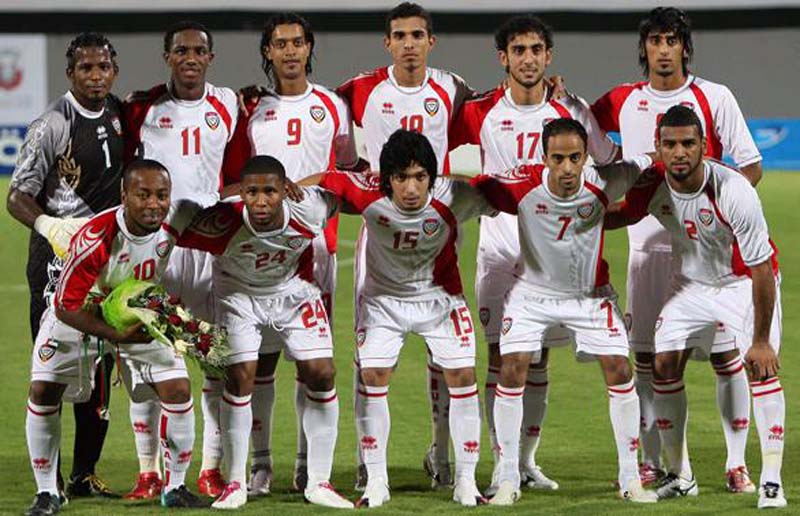
Dubai and the UAE had more pressing things to worry about with the country’s involvement in the Gulf Cup, being played in Bahrain. Having won all of its first three games to progress to the semi-final, Mahdi Ali’s men received a boost. The various emirates’ rulers authorised free air travel, refreshments and tickets for the match against Kuwait – up to 9,000 fans availed themselves of this largesse and saw Ahmed Khalil score the only goal to secure victory and a berth in Friday’s final against Iraq. No doubt the good run will continue and there will be the usual fun and festivities as the celebrations take to Dubai’s roads.  We Are The Champions.

Posted in Finance | Tagged , , , , , , , , | Leave a comment

One More Cup of Coffee

starbucks-dubaiA sign of the global downturn came with Singapore Airlines’ announcement that it was asking its 2,400 captains to volunteer for unpaid leave. It seems that the carrier continues to struggle after declaring a 69% drop in annual Net Profit last March. Long haul travel demand has weakened as passengers’ disposable income has declined. Compare this to the ME carriers which saw a 10.5% November increase in passenger loads – compared to the global growth of 4.6%.

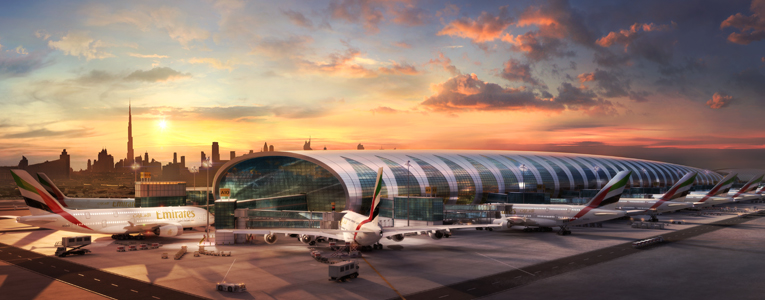
Meanwhile Emirates go from strength to strength with the opening of its new purpose-built A380 terminal costing US$ 3 billion. Covering an area of 528k sq mt on 11 levels, it has 20 gates that will be utilised to manage traffic from the 31 jumbos already operating and the further 59 on order. The facility has the capacity to cope with 15 million passengers. Recently Emirates President has indicated that he would, in principle, buy a further 40 of these aircraft but for lack of room at the burgeoning airport.

As one of FIFA’s biggest sponsors, Emirates’ eight year US$ 195 million agreement runs out after the 2014 World Cup. This week, the airline indicated that it was satisfied that the world governing body was doing its best to rid itself of internal shenanigans and that as far it was concerned the brand was not being tarnished because of this association.  (An August blog – A Sign of the Times –  cited that Jose Havelange, IOC member from 1963 – 2011 and former FIFA president , was a beneficiary of bribes from ISL, a company granted exclusive marketing and TV rights for the 2002 and 2006 FIFA World Cups. It was revealed that Havelange and his cohort and ex son-in-law, Ricardo Teixeira, received at least US$ 1.5 million and US$12.6 million respectively).

One of Dubai’s older shopping centres is undergoing major renovation over the next eighteen months. Burjuman will see its retail space increase a further 20% to reach 1 million sq ft and will add a new Carrefour hypermarket, a cinema multiplex and a doubling of its food court.

On the subject of food, the largest Cheesecake Factory in the world has opened in MoE. As Dubai and most of the developed countries are becoming increasingly obese this is just what the doctor ordered! Market analysts expect the UAE restaurant market to surge 30% to US$ 780 million by 2015 and there is no surprise in the news that American brands account for 47% of all food and beverage outlets in Dubai malls.

Fairmont the Palm became the first of many new hotels to be opened in 2013. Located on Palm Jumeirah’s trunk, the 5-star property, costing US$ 330 million with 380 rooms and 460 metres of beachfront is part of a project that also includes a further 560 luxury apartments. The Fairmont will be seen as a premium location and will have room rates at the top end of the market – well in excess of the October average room rate of US$ 476 for beachfront hotels.

A recent report showed that the UAE currently has over 20k hotel rooms under construction at 2012 year end. Latest figures (October 2012) indicate a 17.3% jump in Dubai’s hotels’ RevPAR and a 5% spike in occupancy rates.

Despite the optimism in this sector, there are still some projects on hold including the likes of Jumeirah Hotel in DMC, the Creek’s Palazzo Versace and the Palm’s Oceana and Royal Amway hotels.

January is traditionally a great month for the emirate’s hotels which will be further boosted by the DSF and numerous exhibitions. This month alone, Dubai World Trade Centre expects at least 150,000 trade visitors attending the likes of Arab Health, the world’s second largest health care exhibition, Arabplast, Tekno Tube Arabia, Intersec and Aircraft Interiors ME. February and March will see larger exhibitions with even more visitors boosting the local economy. It is estimated that the DWTC adds almost US$ 1.8 billion to the Dubai purse, accounting for 2.1% of its GDP.

The emirate’s largest private developer, Damac, is offering prospective customers “free” Audi cars if units are purchased during the Dubai Shopping Festival. Penthouse buyers will be entitled to an R8 (valued at US$ 136k) with A8s, A6s and A4s on offer for 3, 2 and I bedroom apartments respectively.

The second phase of the government’s US$ 380 million Barsha housing project has been completed on time. This is part of HH Sheikh Mohammed bin Rashid  Al Maktoum’s initiative  to ensure that all his citizens live in a secure and comfortable environment. With almost 80% of the work now finished, the final completion is slated for September 2014.

Two of the bigger Dubai-based contractors, Brookfield Multiplex and Arabtec, were awarded major contracts. The former was on the receiving end of Emaar’s new 72-srorey, Address Hotel, with 200 rooms and 523 serviced apartments. At 370 metres, it will become the second tallest structure in Dubai when completed in 2015. The Canadian company – with an Australian background – has already built several iconic landmarks including Emirates Towers, the Standard Chartered Gate Building and DIFC Gate Building as well as several Marina developments. Arabtec were awarded a US$ 650 million contract for the Jean Nouvel- designed Louvre Abu Dhabi.

Nakheel is slowly extricating itself from its financial mess arising from its “cloud-building” exercises pre GFC. This week it issued a US$ 33 million Islamic bond, being the third tranche of a sukuk that is part of its August 2011 US$ 16 billion restructuring plan. There is still plenty of work to be done to return the developer to some form of financial normality.

DEWA expect to spend a little more this year with expenditure up under 2% to US$ 3.76 billion. 90% of the spend (US$ 3.4 billion) will be operational expenditure that will help maintain electricity and water production capacity higher than the 2012 levels of 9,646 MW and 470 MIGD respectively. To pay for some of these projects, as well as to refinance existing debt, the utility provider is planning a Q1 Islamic bond issue in the region of US$ 1 billion.

Another Dubai entity seeking additional finance is Emirates Islamic Bank (EIB). The bank’s capital base will be raised to US$ 1 billion as it issues 1.5 billion Dhs 1 shares with a rights issue.

It seems likely that the Islamic home finance provider, Tamweel, will be taken over by Dubai Islamic Bank who already hold 58.2% of the shares. The offer price would see 18 Tamweel shares being swapped for 10 DIB scrip with shares in the former valued at US$ 0.61 and the latter at US$ 0.34.

The local bourse has started the year on fire with a YTD 6.24% rise in the first ten days of 2013; on the week it is 3.66% up having ended the Thursday session on 1756 and a massive 31.03% over the past 52 weeks.

Another indicator on the growing strength of the local economy was Germany’s BMW’s announcing a record 21,300 vehicles being sold to ME customers in 2012. Of this total, the UAE accounts for nearly 50% of the market with sales in excess of 10k units.

Although the German car industry is ticking over, it seems that country may be edging closer to a recession with the latest quarterly results the worst in four years. There is no doubt that Germany is being dragged down by its poorer  eurozone partners. Unemployment rates in the bloc rose to their highest ever level of 11.8% or 18 million. Worse still was the youth unemployment rates in places like Spain and Greece where they currently stand at 56.1% and 57.6%!

The UK’s economy has yet to recover the level it was at four years ago, pre GFC, and there are distinct possibilities of a triple dip recession in 2013. Eurozone’s PIGS all have debts as a percentage of GDP ratios of over 100% whilst the UK’s 86.3% is a worrying sign. Japan fares even worse with a rate of 212% – second  in the world behind Zimbabwe!  It is no surprise that, with Prime Minister Shinzo Abe facing general elections in July, the government has introduced a US$ 110 billion stimulus package  in a belated attempt to end deflation and boost growth.

It can only be Dubai with Starbucks’ announcement that it had opened a 24 hour drive in on Beach Road for its customers. It proves that the coffee chain is making life less taxing for its patrons just as it does for itself in the UK. This is their 103rd opening in the UAE – a country that drinks the equivalent of 3.5 kg of coffee annually – twice as much as any other GCC nation. One More Cup of Coffee for the thirsty Dubai populace.

Posted in Finance | Tagged , , , , , , , , , , , , , , , , | 1 Comment

Simply The Best

Burj-Khalifa-New-YearDubai’s 2013 budget hopes to cut its annual deficit by 18% to less than 0.5% of GDP with Revenue expected to rise by 7.8% to US$ 8.9 billion and Expenditure up 6.0% at US$ 9.3 billion. It is not known what vehicle the government will use to finance this deficit of US$ 400 million.  39% of spending will be payroll-related, which includes an additional 1,600 jobs for Emiratis as part of the drive to put more locals into employment.

A recent FT survey yet again places Dubai as the region’s top destination accounting for 30% of all the ME’s DFI (direct foreign investment). There is no doubt that it has been helped by its superb infrastructure, Jebel Ali Port and Emirates.

04 January will not only be the 7th anniversary of HH Sheikh Mohammed bin Rashid becoming the Dubai ruler but it will also see  the completion and opening of the upgrade to the Al Khail Road. Costing US$ 517 million, with new flyovers and 8 line highways in some places, it is situated between SZR and Emirates Road. Indeed, with possible congestion on SZR over the next eighteen months – caused by the expansion of Dubai Creek through Jumeirah – Al Khail Road takes on added significance.

Dubai will continue developing its roads and infrastructure in 2013 and the RTA is expecting to spend US$ 1.7 billion with US$ 820 million and US$ 880 million earmarked for its operational and capital budgets respectively. Of the total, 34% (or US$ 580 million) is for the Traffic & Roads Agency.  An 11% increase in forecast Revenue will help defray some of the costs.

The quay wall extension at Jebel Ali Port, an integral part of its 1 million TEU (20’ equivalent container units) expansion, has been completed. With an additional extension of 400 metres to 3,000 metres, the facility will be able to cope with handling six 15,000 TEU mega ships at the same time and is due to open in Q2 2013. At the end of September, the port had posted a 4.6% increase to handling almost 10 million TEUs.

Having splashed out a record amount to extend shirt branding of Arsenal FC through to 2019 and naming rights to the stadium until 2028 (thankfully they have started winning again), Emirates is now the official airline of the men’s tennis tour for the next five years. Last February, it also signed a seven year US$ 90 million deal to be the title sponsor for the US Open and nine other US tennis tournaments.

At the end of 2012, it seems likely that Emirates will become the world’s second biggest airline, overtaking Delta, but still well behind United which merged with Continental last year. Local “rivals”, Qatar and Etihad, are ranked 17th and 28th respectively. Meanwhile Dubai Airport came in as the 5th biggest airport in terms of seats per week. Its 1.6 million was just behind Heathrow’s 1.7 million and not far from the biggest airport, Atlanta’s Hartsfield Jackson with 1.9 million. Interestingly, no other ME airport made the top 50.

As recent blogs have indicated, there has been tremendous growth in the UAE’s non-oil trade figures, expected to reach almost US$ 1 trillion this year with a 15% 2012 growth projected and next year will be along the same lines. UAE free zones, with a 20% increase, accounted for US$ 120 billion of the total. In the latest available figures, 46.2% of trade was with non-Arab Asian countries whilst the EU, Americas and GGC trailed behind with 21.5%, 9.3% and 9.2%.

The last week of the year started with claims and counterclaims as Qatar Airways filed a US$ 600 million suit against the Dubai / German JV Lindner Depa. The reason claimed for the legal dispute was that LDI failed to complete the construction of 19 airport lounges at the new US$ 15.5 billion Doha Airport putting back its opening a year to H2 2013. This in turn affected the airport’s expansion plan and inconvenienced the 20 million passengers – 80% of which are flown by the national carrier.

This was followed by LDI’s statement to Nasdaq Dubai (Depa is one of only two companies listed on that bourse). It indicated that the Qatari claim was false and misleading and, whilst being deeply disappointed by the allegations, it rebutted all claims.

Reports that certain properties in the Downtown area have seen prices increase by up to 10% in Q4 alone (and 25% in 2012) may well have sounded the alarm bells about the possibility of the start of another asset bubble. But those fears were quickly put to rest by the shock Central Bank announcement that banks have to cap mortgage lending for expatriates to 50% of the property’s value. Although it should stop the perennial flippers and speculators in their tracks, it will come as disappointing news to the genuine investor / buyer and could have a negative impact on other realty stakeholders, including developers and agents.

One wonders what hit the construction sector will take and what impact it will have on the Dubai economy. In 2011, the industry accounted for 10.3% of Dubai’s GDP with a total construction project value of US$ 86.9 billion – way ahead of Saudi Arabia’s US$ 59.6 billion.  With over 80% of the population expatriates, it is hard to see where most of those, who would normally buy property, will access their money.

Despite this shock, Nakheel is going ahead with a self-financing US$ 136 million project for 381 villas in Jumeirah Park. This is a major step forward for a developer that reportedly had to write off assets, valued at US$ 21.4 billion after the last bubble burst in 2008. It is estimated 50% (or 4,500) pending units have already been handed over, with the balance slated for completion by the end of 2013.

Nakheel’s iconic Palm Jumeirah has received a boost with DEWA set to spend US$ 16 million to extend, by 3 km, a water transmission network from the island’s trunk to the crescent of the Palm. Completion is expected within eighteen months.

Contrary to earlier reports it seems that expatriates will not be immune from criminal charges in relation to bounced cheques. The new Presidential directive applies only to nationals and includes decriminalisation of such cheques presented by UAE citizens.

On the political front, the Syrian tragedy continues but this will be resolved one way or another in H1. The troubled relations between Japan and China will not go away and this will deteriorate even further this year. As North Korea becomes less isolationist, it will look for ways to improve their political and economic relations with the rest of the world. Nearer home, Egypt’s political impasse will drag on to the detriment of any meaningful economic progress.

Dubai has two stock markets. Nasdaq Dubai has only two listed stocks – DP World which ended 20.8% up on the year at US$ 11.73 whilst troubled Depa Limited closed 16.7% down at US$ 0.35. The Dubai Financial Market Index ended 2012 on 1623 points – a very credible 19.89% up on the year. It performed a lot better than most other global bourses such as Australian All Ords – 14.6%, Dow Jones – 7.3% and London FTSE – 5.84%.

Although the global economic climate remains bleak, the DFMI should continue its upward trend and could well break through the 1700 point level in H1. If anything, gold and silver did not perform as well in 2012 as some pundits had forecast. Gold stood at US$ 1,673.59, having risen 6.96% in 2012 but is now likely to test the US$ 1,800 level over the medium term. Having ended up 8.28%, at US$ 30.12, on the year, silver is expected to reach US$ 33.00 over the same time frame. (The almost daily volatility of these two metals may lead some to think that a little market manipulation may be occurring).

Over the past four years, Brent Crude has seen 3.78%, 13.35%, 21.27% and 65.82% rises and ended 2012 at US$ 111.27. It is hard to see oil trading over US$ 95 come the beginning of Q2 – unless, of course, there is some major catastrophe. Longer term, the price is set to drop quite significantly when new drilling technologies – including fracking – take effect. The world may become a different place if – and when – the US becomes the world’s top oil producer.

On the local front, property prices, in prime locations, will continue to rise – albeit at a slower rate whilst there will be more worrying news for tenants with annual rental increases of around 8% in the offing. Emirates will once again stun the aviation world when their annual results are released in April. Consequently both Dubai Airport and Dubai Duty Free, riding on the airline’s coattails, will continue announcing record figures – 60 million passengers and Revenue of US$ 2 billion in 2013 are not out of the question for these two entities.

If the world were not in such an economic mess, Dubai would grow at a faster rate than the predicted 4% for this year. Inflation will rise but will be still low on global comparisons. The hospitality sector will remain buoyant with 80%+ occupancy and RevPar rates nearing US$ 300. Whether the banks do anything about reducing their high provision rates for non-performing loans is problematic but these still continue as a millstone for local SMEs. The emirate’s government related companies will have no problem with US$ 9.4 billion bond repayments due this year – 2014 is another issue.

The eurozone is set to sink even further; do not be surprised to see turmoil in the markets and civil unrest on the streets of Greece, Spain, Italy and even France. The UK economy is expecting little growth following a double dip recession. When the IMF predicts Germany as one of its 20 worst performing economies, the Europeans portents look bleak indeed.

Elsewhere the BRICs are being superseded by the MICKS. Whilst China still remains an integral part of any possible recovery in 2013, the inefficiencies and corruption levels in the other three countries mean that they have been replaced by Mexico, Indonesia, Korea (South) and Southern Sudan. These countries have great growth prospects in the coming year.

The political lemmings in the US have avoided falling over the cliff – but the reprieve is only temporary. The huge debt problem is the main danger to the economy and there has to be some sort of bipartisan agreement to rein in that government’s US$ 16.4 trillion. Expect some more drama and show-boating by the end of February.

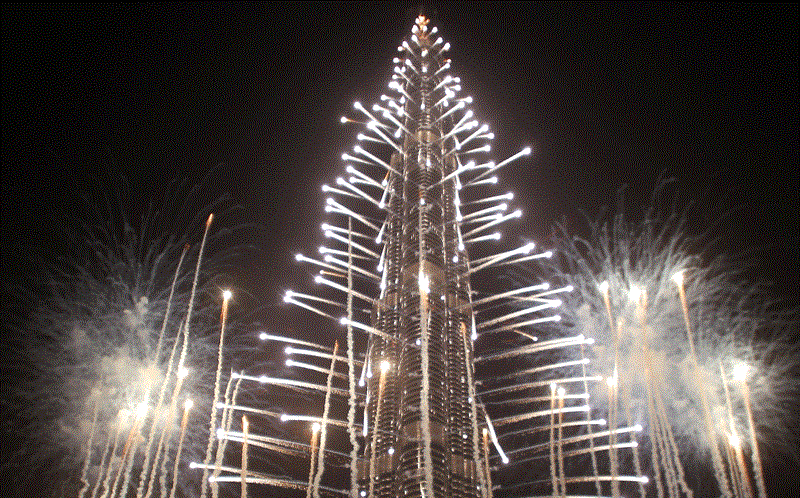
The Dubai Shopping Festival opens on Friday and has the tagline – “Dubai at its Best”. New Year’s Eve saw the emirate put on the world’s greatest fireworks display, watched by one million in the Down Town area and over a billion around the world. If Tina Turner had sung “Simply the Best”, nobody here would have argued.

Posted in Finance | Tagged , , , , , , , , , , , , | Leave a comment

Telegram Sam

Wild-WestThe impact that Emirates has on the local economy is staggering and the realty, retail, hospitality and trade sectors owe much of their recent success to the expansion, exploits and expertise of the local carrier. The aviation sector contributes US$ 22 billion, or 28%, to Dubai’s GDP. As the number of routes increases so do the number of employees, who require accommodation. There has been a tremendous growth not only in passenger numbers but also in the volume of travellers now stopping off in Dubai for a short break, boosting the takings of the malls, hotels and even Dubai Duty Free.

As passenger traffic at the airport is forecast to grow 13.1% this year to 57 million (with Emirates accounting for 60% of that total), it is little wonder that DDF is reaping the rewards. With 2012 Revenue expected to reach a record US$ 1.6 billion, with a 25% profit margin, the airport retailer continues to see double digit growth and with its retail space set to increase from 18k sq mt to 33k sq mt, it hopes to see its Revenue top US$ 3 billion within five years.

The annual Dubai Shopping Festival (DSF) – which this year ran from 05 January to 05 February – had 4.36 million visitors, who increased the emirate’s economy by US$ 4 billion, with shopping adding US$ 2.42 billion and accommodation US$ 0.76 billion – both marginally better than recorded in 2011. Although there was a 9.5% increase in visitor numbers, overall spending dropped by 2.6%. Of the 900k overseas visitors, 28% came from Europe, 23% GCC and 16% South Asia.

Retail accounts for 11.7% of all UAE’s GDP, having reached almost US$ 40 billion last year – the second largest contributor to the economy after petro-chemicals. No wonder then that the MAF-owned Dubai Mall, the world’s largest retail centre, claims that it has more annual visitors (50.2 million) than the whole of New York!

Following on last week’s announcement by Emaar that it was developing a retail outlet in Istanbul, MAF has announced that it is in discussions with Egypt’s Mansour Group to purchase its 70-store supermarket business, Metro, and discount groceries, Kheir Zaman, for US$ 300 million. Despite the political turmoil and a recent S & P downgrade, some investors have long term confidence in the Arab world’s largest populated country.

This week, HH Sheikh Mohammed bin Rashid Al Maktoum viewed plans of the 4 km waterfront development between the Creek and Hamriya Port. The US$ 816 million project was announced earlier in the year and includes six hotels, residential and commercial towers and a new fish market. He also reviewed the plans of the 2 km Business Bay Canal Project which will include a unique “hanging canal” over the metro track by Sheikh Zayed Highway.

Still struggling in Las Vegas is CityCenter, a US$ 8.5 billion JV between Dubai’s Infinity World (a subsidiary of Dubai World) and MGM Resorts. Opened three years ago, just as the city’s real estate imploded, the complex comprises a 4,000 room resort hotel, several other hotels, residential towers and a huge retail centre. The development was still in the red last year, with a Q4 loss of US$ 10 million, but it has just sold 427 homes for US$ 120 million which worked out at about US$ 300 per sq ft – up on last year – but still 50% off its 2006 peak.

Another questionable investment was by Istithmar – being its 2007 US$ 100 million purchase of the liner QE2, launched in 1969. Slated to become a floating hotel, it now seems that it may end up in a Chinese scrapyard, with a probable return to the owners of US$ 20 million.

DEWA continues in its on-going quest to maintain the efficiency of its networks and infrastructure. It has just activated a US$ 29 million 132/11kV substation at the Jebel Ali racecourse. A further 22 similar substations are currently under construction.

Dubai residents will shortly see a third petrol retailer operating alongside Emarat and Enoc. Abu Dhabi-based Adnoc is planning to open ten new petrol stations in the coming year.

The country is synonymous with oil and in November, daily production was at 2.65 million barrels with Abu Dhabi producing over 90% of that total whilst Dubai pumps about 60k bpd. In other words, in eight days, the Abu Dhabi output surpasses that of the whole year for Dubai.

October Central Bank figures showed a 1.4% monthly rise in M1 money supply aggregate (all the banks’ current and call account balances) to US$ 80.0 billion. A slightly bigger percentage increase was seen in total bank deposits to US$ 316.7 billion whilst there was no change in total bank loans and advances which remained at US$ 30.0 billion. It appears that only 4% of total lending (compared to 15% in developed countries) ends up with SMEs – a figure that will have to improve as they comprise 95% of all businesses. There was also a minute reduction in the banks’ bad loan provisions to US$ 17.79 billion (from US$ 17.82 billion) – noted because it was the first decline since the GFC four years ago when provisions stood at a miserly US$ 5.36 billion. Of the 51 banks in the country, 23 are local.

2012 has seen borrowing costs drop significantly as Dubai got on top of its debt problem with prompt repayments and a certain amount of restructuring. 2013 debt repayment for the emirate will come in at a surprisingly low US$ 9 billion but the Dubai government entities will have to repay US$ 31.0 billion in 2014 on its maturing bonds and loans.

On the local bourse, the Dubai Financial Market Index closed the week on 1611 points – 9 points up on the Sunday opening in flat trading. As the year draws to a close, the Index has shown a 19% increase in 2012.

2012 has seen bankers replace lawyers as people’s bêtes noires but the latter are fighting back. In a US litigation claim, Toyota has agreed to pay an estimated settlement of US$ 1.4 billion in an automobile defect class action. It seems that the plaintiff lawyers will pick up US$ 200 million in fees and US$ 27 million in costs!

Greek lawyers (and doctors) were fingered in a recent ERU and IMF Report that highlighted the fact that the Greek crackdown on tax evaders had somewhat faltered and was well under the target set by its lenders. It was envisaged, that by September 2012, 1,300 suspected HNWI would have been audited and at least US$ 2.65 billion overdue tax collected. Not surprisingly the actual audits totalled 440 and US$ 1.45 billion collected. In urging a more robust approach to the problem, the lenders concluded that “doctors and lawyers are a good place to start”. Coincidentally the biggest tax debtor turned out to be OSE, the state run railway!

Corruption will never go away and a recent report from Global Financial Integrity claims that in the first decade of this millennium, the developing world lost a total of US$ 5.86 trillion to illicit financial activities, China was streets ahead of the rest of the world with an estimated loss of US$ 2.74 trillion with Mexico a distant second at US$476 billion. UAE trailed way behind at a comparatively paltry US$ 107 billion.

Globally, the economic position is at best shaky. In Japan, despite the Liberal Democratic Party winning a landslide victory in the lower house, the yen fell to a two-year low whilst the stock market went the other way and reached its highest level since March 2011. The hope is that the incoming Prime Minister, Shinzo Abe, will introduce more proactive fiscal and monetary policies to kick start an economy that has been lifeless for some time.

It seems likely that the US government will hit their tax ceiling of US$ 16.4 trillion by 31 December and if this amount is not raised before then US$ 600 billion in tax rises and spending cuts cannot be avoided. However it seems that this date could be pushed back by two months if certain measures – creating a further US$ 200 billion – are implemented on an interim basis. The rest of the world can see first-hand how a true democracy works!

One of the enigmas of this year is why Spain has not sought an ECB rescue despite 18 months of recession and unemployment edging over the 25% mark. How long that a request for a sovereign bailout can be avoided remains to be seen. Their case will not be helped by Italy’s political troubles, which have seen the demise of Prime Minister, Mario Monti, as there will be a contagion effect on Spain’s borrowing costs.

As Dubai races into 2013 – and has the reputation of being one of the more progressive places in the world – it does seem quaint that Etisalat has just announced its new telegram services charges. For those in the know, service to the rest of the world will now be fixed at US$ 2.72 plus US$ 0.41 per word. Marc Bolan may well be dead but evidently there is still life in Telegram Sam.

Posted in Finance | Tagged , , , , , , , , , , , , , , | Leave a comment

Silent Night

nativity-sceneIn a city of superlatives, it is not surprising to see that Dubai boasts ten of its constructions over 300 metres including the world’s highest building, shopping centre and hotel, viz., Burj Khalifa (828 metres), Princess Tower (414 metres) and JW Marriott Marquis Hotel (355 metres).

The scale of the recent expansion in new businesses setting up in Dubai is impressive. For example, Dubai Internet City has witnessed annual growth of 15% since 2008 with now more than 1,400 entities set up in this particular free zone. Last year, there were 166 new additions and this will be improved on in 2012. JAFZA is now home to over 6,800 companies which help to generate over 25% (US$ 69 billion) of Dubai’s total trade, 21% of its GDP and accounts for almost 50% of the emirate’s exports.

Last year, UAE’s industrial exports (excluding oil and gold bullion) showed a 16% rise from US$ 11.8 billion to US$ 13.7 billion. Figures also indicate that the fast growing manufacturing sector adds over US$ 27 billion whilst the country’s foreign trade in ceramics has risen by 45% with it now responsible for 60% of the global re-export trade.

Jebel Ali port has handled over 500k motor vehicles so far this year surpassing the previous record of 479k cars recorded just before the GFC in 2008. In the nine months ending September, the port handled 10 million TEUs (20 ft equivalent container units) – up 4.6% on the previous year.

With its current fleet of nearly 150 aircraft – and this number is set to double with new orders – Emirates are to build a new US$ 100 million engine maintenance facility. Khansaheb Engineering will be responsible for the 225k sq ft construction which should be in operation within eighteen months and require an additional 500 engineers to work on maintaining 300 engines a year.

The Australian authorities have given the initial green light for the Emirates / Qantas alliance which should be finalised by the end of Q1 2013. Despite some concern about reduced competition on certain routes, the Australian Competition and Consumer Commission (ACCC), concluded that benefits would far outweigh any concerns.

One good thing to come out of McDonalds is the waste cooking oil from which Dubai-based Neutral Fuels manage to convert to biodiesel. The company, based in Dubai Investment Park, has an annual capacity of 1 million litres. Its local operation has been so successful that it is now planning a process facility in Victoria, Australia, where it will have the waste from that state’s 211 McDonalds to convert to fuel for use by the fast food chain’s fleet of vehicles.

Gloria Hotels opened their 1,019 room Yasat Gloria property on Sheikh Zayed Road this week and when allied with its sister property, the 1,101 room Gloria, across the highway, makes it the largest hotel property in the region.

This week, one of the foremost luxury property developers, Damac, put 295 luxury serviced apartments up for sale in its The Distinction in the Downtown area. Being constructed by ANC Contracting, the project is slated for completion by 2015. The company was also joined by both Emaar and Nakheel who were also out looking for new buyers – the former launched its Sky Collection, a tranche of penthouses in its BLVD scheme, and the latter 90 villas in the Jumeirah Village Circle.

Overseas, Emaar is set to build the 73k sq mt Emaar Square in Istanbul and has just secured US$ 500 million bank finance for this development which will include a five star hotel, 1,000 villas and Turkey’s largest shopping mall.

DEWA has a US$ 10 million project to lay water transmission pipes at Al Khawaneej and Wadi al Amardi with the aim to meet the growing rise in water demand all over Dubai. It should be completed by the end of 2013.

Dubai Aluminium has announced a US$ 5 million investment in the Sheikh Mohammed bin Rashid Solar Park with phase 1 expected to produce 10 MW by the end of next year. Dubai Integrated Energy Strategy 2030 expects this figure to be ramped up to 1,000 MW by that date.

To further develop their infrastructure, Du has just signed a US$ 100 million loan agreement with Singapore’s DBS Bank. It is estimated that the Dubai-based telecom, 40% owned by the government, has already spent US$ 300 million in 2012 on network enhancements.

Thuraya, Dubai’s satellite phone company, is expecting at least a 10% surge in Revenue this year with even more business forecast in 2013. Etisalat owns 28% of this private company which operates two satellites covering most of the world, except for the Americas, and has over 200k subscribers, split evenly between data and voice.

Disturbing news for some parents came with the announcement by GEMS that it was planning to close its Westminster School as from June 2014. The owners have promised that it would give priority placements to the 4,800 exiled students in their other educational establishments, even though some are as far away as Ras Al Khaimah.

Another quite week on the Dubai Financial Market saw the Index edging higher to 1602 points – an increase of 17 from the Sunday opening of 1585. So far this year, the Index is up by18.32%.

Dubai’s second bourse, Nasdaq Dubai, which only has two listed companies, received a blow with news that Khalaf Al Habtoor had decided to postpone a planned IPO that would have seen his Al Habtoor Group raise up to US$ 1.6 billion by floating part of the company on that exchange. A valuation of US$ 6.06 billion by Grant Thornton excluded five overseas properties, several listed investments and their holding in Habtoor Leighton Group (HLG).

Interestingly, HLG is set to be the principal sponsor in the first Islamic Museum to be built in Australia. Expected to be the country’s centre for Islamic art, education and culture, Leighton Contractors envisage completing the building by 2014.

The Central Bank estimates that it will make a reduced US$ 820 million profit next year with revenues expected to reach over US$ 1.06 billion and expenditures in the region of US$ 240 million. This year the profit is expected to be in excess of US$ 1 billion.

Emirates NBD has laid out US$ 500 million to purchase the Egyptian arm of BNP Paribas, just days after Qatar National Bank spent US$ 2 billion for Société Générales operations in the same country. Time will tell whether this proves to be money well spent or the French knew something that the buyers did not.

Despite some banks – including HSBC, Deutsche Bank, Morgan Stanley and Credit Suisse – moving services away from Dubai to Qatar and elsewhere, Barclays have decided to boost its corporate banking operation here and wants to develop the emirate as the regional hub.

As intimated in a recent blog, UBS were in trouble again, this time with the authorities in three jurisdictions – USA, UK and Japan. For its unethical and immoral role in the interest rate manipulation, the Swiss bank will be fined US$ 1.6 billion. RBS is lining up behind with a possible fine of US$ 570 billion in the offing. The first bank to get into trouble was Barclays who in June agreed to settle on a fine of US$ 470 billion. These banks have been cooperative with investigators but other financial institutions have been less so and will not be treated as leniently.

Seeing these massive fines begs the question of who actually pays for these apparent fraudulent misdemeanours. The simple answer is the poor customer picks up the bill for the banks’ profligates, as can be seen by their continuing huge profits and fat cat pay packets.

Yet another country has cut its growth forecast; this time, India started the year expecting a 7.85% increase in its 2012 GDP, now slashed by 22% to 5.8% and even that figure may be problematic. Prior to the GFC, double digit expansion was the norm in a country that has never had growth at less than 6.5% over the past ten years. Some estimate that India has to grow at 8% just to keep its economic head above water.

Italy’s technocratic PM, Mario Monti, has resigned leaving a country worse off than when he took office 13 months ago, now with a smaller economy, higher taxes and rising unemployment. It is forecast that the country’s GDP will contract 2.1% this year and unemployment, currently at 11.1%, will continue at this damagingly high level.

After Italy, France is the next country to come under the spotlight. Recent growth has been sluggish – at 1.7% in 2011, an expected 0.2% this year and not much better in 2013. This means that Francois Hollande will miss his (and the eurozone’s rules) target of reducing public debt to 3% next year, with 4% being closer to the mark.

By the end of the week, it became apparent that House Speaker, John Boener, may well abandon a vote on “Plan B” which would then see the US teeter closer to the financial cliff. “Plan B” included extending the Bush-era tax cuts for all Americans, except those earning in excess of US$ 1 million. If no progress is made then the automatic tax hikes and spending cuts kick in on 01 January.

In Eastern Democratic Republic of Congo, Monusco, the UN-backed peacekeeping force, failed to stop the Rwanda-backed M23 from taking over the third largest city, Kisangani. In the past decade, it is estimated that at least 5.5 million people have died. The Syrian war continues unabated with at least 50,000 deaths and now there is the distinct prospect of chemical warfare. In the US, the last victims of the Newtown School massacre have been laid to rest and, if nothing is done about the US archaic gun laws, it will happen again. Silent Night, Holy Night. All is Calm, All is Bright. Some hope!

Posted in Finance | Tagged , , , , , , , , , , , , , , , , | Leave a comment

Send In the Clowns

circus-clownsOnly two weeks since the announcement of MBR City, its first project has been revealed. Dubai Hills, being developed by a JV between Emaar Properties and Dubai Holdings, will be on similar lines to the hugely successful Emirates Hills with sizable blocks of up to 30k sq ft. It will also have the obligatory 18-hole championship golf course, parks, retail outlets and schools and be located between Emirates Road and Al Khail Road.

With all the regional problems, it comes as no surprise to see Dubai as a safe haven especially for the HNWIs (high net worth individuals). With its booming economy, the emirate is proving a magnet for real estate investment with 40% going into residential, 40% hotel and leisure and 20% into commercial.

One of Canada’s largest property developers is planning to set up shop in Dubai. Empire Communities is hoping to develop iconic buildings in the city and is trying to take advantage of the upturn in the market here. Better late than never for the company that is building one of the tallest buildings in Canada – the 66-storey Eau de Soleil in Toronto.

Fears of another property bubble became a possibility with CBRE reporting that rents in some of Dubai’s more popular areas have risen 25% over the past twelve months. With only 36,000 new units slated to come on line within the next three years, some argue that this may not be enough supply to meet the demand from an ever growing population base. Indeed another report put Dubai as third in the world – after Moscow and Miami – for strongest performing property markets.

Despite these rental increases, UAE’s inflation rate stood at 0.5% in October – well down on its high of 12.3% in December 2008 and up from its record low in January 2011 of –1.6%.

Flavour of the month seems to be the healthcare sector with Majid Al Futtaim the latest entrant. In a bid to meet the increasing local demand (from both Emiratis and expats) and the growing medical tourism market, MAF is planning to use its high profile shopping malls as a base for top end medical facilities.

On the aviation front, Dubai Aerospace Enterprise has cancelled half of its order for ten 747-8 freighters. It was in the halcyon days of 2007 that the company stunned the aviation world with orders of 200 aircraft with Boeing and Airbus, most of which have now been cancelled. DAE was formed in 2006 by several well-known entities, including the Investment Corporation of Dubai, DIFC Investments and Emaar.

Construction of the new US$ 136 million Emirates new flight training academy is set to commence in January and will be located at the new airport, Dubai World Central. The facility will be solely for the Emirates’ National Cadet Pilots and will have a capacity for 400 students. However, in the future, it could be used to train pilots from other carriers.

Next week will see the first trial of Dubai Airport’s Concourse 3, built at a cost of US$ 3.5 billion. This expansion will lift the airport’s capacity to 75 million passengers and will be 645 metres long and able to handle 20 aircraft – 18 380s and 2 777s. A further US$ 7.6 billion will be spent over the next four years which will see the airport able to cope with 90 million travellers.

IATA have forecast that within three years the UAE will be among the top six global freight markets moving in the region of 2.5 million tonnes – ahead of Korea  (1.9 million tonnes), UK (1.8 million tonnes) and India (1.6 million tonnes). In 2011, 29.6 million tonnes where carried by airlines with the figure set to grow to 34.5 million tonnes by 2016.

This week, Dubai Exports signed a MoU with the Hong Kong Trade Development Council to increase trade between the two entrepôts. In the first nine months of 2012, bilateral trade has increased by 33% to US$ 7 billion with exports jumping 48% to US$ 3.5 billion and imports up 20% to US$ 3.2 billion.

The federal Minister of Economy, HE Sultan Al Mansouri, met with the ambassadors from 18 EU member states to discuss improving trade links. The minister would like the bloc to play ball and ease some tariffs on UAE goods and reconsider the planned carbon trading tax for airlines which will have a negative impact on both Emirates and Etihad. Furthermore the EU plans to remove the country from a list of countries who are currently beneficiaries of reduced tariffs.

Dubai’s Mina Rashid port was again voted as the world’s best cruiser port by the World Travel Association. On-going development will see the port expand to be in a position to cope with seven cruise ships simultaneously.

Not so good news for investors in the country’s two telecom operators – Etisalat and Du. The government has indicated that it will increase royalty fees – for example Du will have to 17.5% of their profit (from (15%) and 5% of revenue  as annual payments from this year.

The day of global censorship, control and government interference is fast approaching following a two week meeting in Dubai. Despite the fact that certain countries – including USA, UK, Australia, Canada and India – walked out, the World Conference for International Telecommunications agreed to update the 24 year old UN regulations giving countries a right to access international telecom services and to block spam.

Three Dubai banks received sobering news this week with a Moody’s downgrade because of concern about problem loans. Emirates NBD, CBD and Mashreqbank had long-term ratings lowered to Baa1 and all placed on negative outlook. As indicated in previous blogs, problem loans are at an unacceptable level of 15%+ – astronomically high when compared to the average GCC bank’s 6.1%. Evidently, the over exposure is primarily with stressed government entities and, although a reduction is expected in 2013, the problem may linger for somewhat longer. Latest lending figures show that the 3.2% UAE annual increase was about 20% of that of Saudi banks and point to the fact that this is a reason for local lending lethargy.

Shares in Emirates NBD fell this week following the downgrade. The actual DFM Index also fell on the week by 25 points closing the Thursday session at 1585.

HSBC were in the headlines for all the wrong reasons having confirmed that it had been hit by the largest ever penalty of US$ 1.92 billion. The fine, by US authorities, was the result of their role in transferring over US$ 7 billion cash – proceeds from illegal Mexican drug dealing. The bank has yet to settle with UK authorities.  Next week another bank, UBS is looking at a fine in the region of US$ 1 billion to settle Libor manipulation charges brought by authorities in both the US and UK.

Overseas positive economic news is almost non-existent. For example, Japan saw an annualised GDP contraction of 3.5% and fell into recession over Q3. With exports falling and domestic consumer confidence waning, it seems that the country has yet to hit the bottom with Nissan and Honda slashing their profit forecasts for March 2013 by 20%. The yen has fallen 3.6% in the past month alone.

One fact is certain – until the eurozone get their act together and start making tough decisions to resolve their huge economic mess, the whole world will suffer in tandem. The need for the eurozone to become more competitive and get back to real work has never been more apparent. One just has to look at the following statistic that epitomises the problem. In the past ten years, labour costs have gone up in these four countries by the following percentages: Ireland – 37, Portugal – 32, Italy – 31 and Germany 6!

Two events this week brought some light relief to Europe. Despite the continent being in one of its worst ever economic crisis and deep rifts emerging between the continent’s “haves” and “have nots”, the EC president, Jose Manuel Barroso, along with Herman van Rompuy and Martin Schulz, collected the Nobel Peace Prize for the EU!? Then former Italian Prime Minister Silvio Berlusconi announced that he was “sadly returning to public service”. Send in the Clowns.

Posted in Finance | Tagged , , , , , , , , , , , , | Leave a comment

Let the Good Times Roll

dubai-powerwagonOne of Dubai’s success stories, that seems to be under the radar, is the fact that the emirate is fast becoming one of the leading players in the healthcare market. The main drivers are the increased government and international investment which have seen the likes of Dubai Healthcare City beginning to flourish. It has been estimated that this sector will be worth in excess of US$ 11 billion next year – from an almost nil base less than a decade ago.

The reason why Dubai’s economy is flying, whilst that of say the UK is in a flat spin, is best exemplified by Willie Walsh, the beleaguered head of BA, speaking to the UK House of Commons Transport Committee. He pointed out that in 2001, Dubai was the 99th biggest global airport – now it is 4th – and that soon it will overtake Heathrow as the largest in the world because UK politicians are afraid to make tough decisions. One just has to see the quintessential response from HH Sheikh Mohammed bin Rashid Al Maktoum on such matters and that is why the London airport is at full capacity at 68 million whilst Dubai will have almost doubled its size to 90 million passengers.

The increasing stature of Emirates and other ME carriers to the aviation industry was brought home by the Boeing estimate that, over the next two decades, nearly 2,400 new aircraft will be ordered, with a value of US$ 470 billion. As would be expected, because of more long haul flights, 46% of that total would be twin-aisle aircraft compared to the global rate of 23%. Of the remaining order, 45% will be single aisle, 8% the larger craft such as the A380 and 747, with the remaining 1% being regional jets. There is no doubt that ME carriers will continue to outperform the global market.

There is slow visible progress at Dubai World Central, the new mega airport being developed in Jebel Ali. This year, freight tonnage should tip 200k tonnes whilst passenger operations are set to commence next year, although no actual timetable is yet available.

It is reported that Emirates are in potential partnership talks with Fastjet, the former aviation unit of Lonhro plc, which began commercial flights only last month. Despite the discussions being at an early stage, the low-cost African carrier’s share value jumped 7.5% on the London AIM this week.

Also on a similar front, dnata has won contracts to run ground handling services for Iberia and BA at two Swiss airports, Geneva and Zurich. Commencing in February 2013, the Dubai-based company will handle over 9,500 flights. Owned 100% by the Investment Corporation of Dubai, the company is one of the largest combined air services providers in the industry.

Rather surprisingly, Dubai is only ranked 60 of the most popular cities in the world for hosting conventions. Having put on 34 events in 2011, and because of its world-class infrastructure and position as a global travel hub, the local MICE industry will undoubtedly expand.

Dubai is currently hosting the World Conference on International Telecommunications, with over 2,000 attendees discussing pressing issues impacting the ICT sector. The last major overhaul was back in 1988 when there were a mere 4.3 million mobile accounts and the internet was a pipedream. How times have changed – today there are 6 billion mobile accounts and 2.5 billion using the internet. What is decided here in Dubai will dictate the future direction of how the industry is regulated and whether governments will get more actively involved in setting up usage charges. The worrying feature is that the 12-day meeting is being held behind closed doors with the future of the internet being decided by major telecoms – with all other interested stakeholders persona non grata.

The week that Dubai’s Ambassador to France, Mohamed Meer Abdulla Al Raesi, submitted the emirate’s formal Expo 2020 bid to the BIE, there is the announcement that the city will bid for the 2024 Olympic Games.

According to latest statistics (for 2011) from the World Trade Organisation, UAE is now the world’s 20th biggest exporter in merchandise trade – its US$ 285 billion accounting for 1.56% of the global total of US$ 18.215 trillion – and 25th  biggest importer with its US$ 205 billion (or 1.12% of the US$ 18.38 trillion total).

The importance of the Chinese influence on the local economy is seen from the fact that their trade with JAFZ has more than doubled in five years from an annual US$ 4.4 billion in 2005 to over US$ 10 billion last year. No wonder then that Talal Al Hashimi, MD of Economic Zones World (EZW) will be leading a delegation to the Bauma Machinery and Construction Equipment Exhibition in Shanghai, in an attempt to attract even more business and raise the “Dubai brand”. (Interestingly the EZW accounts for over 40% of Dubai’s FDI and contributes 25% to its GDP).

It appears that Giordano is another company that has seen the benefits of setting up a regional hub in Dubai. The Hong Kong-based clothing retailer, established in 1993, is set to spend US$ 5 million in developing a logistics centre in Jebel Ali Free Zone (JAFZ).

Following recent announcements of various new tourism, retail and real estate projects, Emaar will expand the world’s largest shopping precinct, Dubai Mall, by a further 1 million sq ft. The development will comprise a new shopping boulevard, hotel, serviced apartments and luxury villas.

The other major property developer, Nakheel, is going green. Following the opening of its US$ 6.5 million park on Palm Jumeirah, it has intimated that they will be building many more recreational areas in their other developments. The newly opened Al Ittihad Park covers an area of 1.1 million sq ft and has a 3.2 km jogging track – it will be interesting to see how many residents will use this facility.

Dubai-based construction company, Arabtec has been awarded a contract in Qatar valued at US$ 630 million for ten buildings as part of a US$ 5.5 billion development of Msheireb Downtown Doha. Such projects will boost the company’s profitability and analysts are expecting an improvement on their rather disappointing Q3 Profit of US$ 9.5 million. Their shares on the Dubai Financial Market Index rose 1.7% on the day.

Meanwhile the Index ended its three day week (because of the National Day holidays), only 2 points higher at 1610 from its Tuesday start. YTD the market is up at a healthy 18.93%.

The business outlook for UAE continues bullish with the latest PMI (purchase managers’ index) standing little changed at 53.7. Any reading above 50 indicates growth whilst under that figure shows contraction – as is the case in the eurozone and other countries mired in the economic malaise. This is another sign that proves Dubai is outperforming most other places.

A further indicator that Dubai is prospering despite the global economic turmoil is that new car sales continue to soar. Latest figures show that for the half year to 30 September, Jaguar and Land Rover sales were up 21% and 33% respectively – their best results since the GFC. This is on the back of previous dealers’ latest results including Bentley sales up 88%, Ford 38%, Nissan Altimas 33% and BMW 15%.

The Road Transit Authority is trying its best to get residents off the road and on to its Metro. Their latest strategy is to start applying the Salik road charge for taxis, previously exempt from the US$ 1.10 toll, every time a cab passes one of the four electronic booths. It is expected that Salik will add almost US$ 1.4 billion to the government coffers next year.

This week, the President, HH Sheikh Khalifa bin Zayed Al Nahyan, directed that over US$ 410 million be used to clear the debts of Emirati nationals, the number of which was not disclosed. As part of the deal, monies will have to be repaid but will not exceed 50% of any debtor’s monthly salary.

The nefarious, Berlin-based Transparency International considers the UAE the least corrupt regional nation and is ranked 27th on the global stage. Predictably, Denmark, Finland and New Zealand were considered the “cleanest” whilst Afghanistan, North Korea and Somalia were at the bottom of the ladder of the 176 countries surveyed. That being the case why do certain western powers continue to pour billions into such profligate countries?

Just to show that corruption is endemic, the EU has imposed a US$ 1.9 billion fine on six companies, including LG, Philips and Panasonic for running two cartels for almost ten years. Evidently, senior management would regularly meet to fix prices and market share.

Then there is the case of Rolls Royce who are in talks with the UK’s Serious Fraud Office about possible bribery cases in China, Indonesia and other countries. If proven, then the US Department of Justice will become involved and that could mean even more trouble for UK engine maker; it was only two years ago that BAE felt the wrath of US justice and incurred a US$ 400 million charge.

Not to be outdone, banks’ shenanigans are back in the news with three ex-employees of Germany’s largest lender, Deutsche Bank, alleging that the bank hid losses up to US$ 12 billion. At the time, during the turbulent 2007 – 2009 period, the false valuation of their derivative positions averted a damaging government bailout. The SEC is studying the allegations. Meanwhile Standard Chartered has agreed a US$ 330 million settlement with US regulators for their flouting of sanctions against Iran.

Better late than never, German Chancellor, Angela Merkel, is beginning to realise the inevitability of a further write-down of Greek debt. As she still wants to be Chancellor after September 2013 elections, there is no doubt that this will not be considered until 2014 at the earliest. No doubt Greece will continue taking the easy way out, knowing that the real severe economic measures, that should be taken, can well be diluted.

Another sign of the global slowdown emanated from the world’s biggest exporter of iron ore and coal. With commodity prices declining rapidly, Australia saw its Q3 growth soften to 3.1% slowing from the 4.0% growth of H1. Although still resilient, compared to most other countries, there are two economies running in parallel universes – the mining sector has committed resource projects valued at US$ 280 billion whilst tourism, manufacturing and retail are struggling because of the lofty dollar, reduced consumer spending and relatively high labour costs.

The ECB President, Mario Draghi, blamed weak consumer and investment growth for a revised eurozone forecast that sees a further shrinkage of 0.5%. The bloc is mired in a recession from which it will find increasingly difficult to escape. Austerity packages result in unemployment rising which has a double whammy for governments – a fall in tax receipts and an increase in benefit hand-outs. The current unemployment level of 11.5% is a disgrace and demonstrates a lack of cohesive action from the Brussels bureaucrats.

There is probably no more bureaucratic organisation than the UN that has again shown its ineptitude with its mishandling of the Syrian crisis as massacres continue. The latest news is that there will be repercussions if the Assad government decide to use chemical warfare. President Obama and US officials have been issuing stern warnings this week but if more than 50,000 have already died, why do we have to wait for a tipping point?

In contrast, all the key economic indicators are pointing north as confidence in Dubai grows with prime real estate up 20%,  hotel rates and occupancy up by 10%, the cost of insuring its debt against default more than halving over the past two years and the feel good factor fast  returning. Let the Good Times Roll!

Posted in Finance | Tagged , , , , , , , , , , , , , | Leave a comment

Jump

skydive-dubaiWhat a week for mega projects! First came the news of a multi-billion dollar development, dubbed Mohammed bin Rashid City, comprising the Mall of the World, which would overtake Dubai Mall as the largest on the planet, 100 hotels and a Universal Studios theme park, expected to attract 35 million visitors annually. It will also have a park 30% bigger than London’s Hyde Park. As yet there have been no cost details or timeframe but some analysts have indicated that the shopping mall itself could cost in excess of US$ 2.7 billion. The two developers named are Emaar and the government-owned Dubai Properties Group.

Then approval has been given for a US$ 2.7 billion development to establish five new theme parks, linked by shops and restaurants, in Jebel Ali. The Dubai Adventure Studios fun park will be the first phase, slated for completion in 2014, to be followed by Bollywood, water and marine life, children’s and night safari themed parks.

Also this week, HH Sheikh Mohammed bin Rashid Al Maktoum has ordered the implementation of phase 2 of JW Marriott Marquis costing US$ 680 million. Phase 1 of the tallest hotel in the world (at 355 metres) has been completed and the Dubai ruler expressed his satisfaction at the finished product and indicated that it would further enhance his emirate’s position as the leading hub in the region. Brookfield Multiplex, the company behind many of Dubai’s iconic buildings, including Emirates Towers, Grosvenor House and the Standard Chartered bank building, is responsible for building both towers.

As these types of projects are usually reliant on banks and capital markets, there may be some difficulty in raising the huge amounts of cash required. The global economic malaise, the lack of liquidity and the reluctance of many investors to buy off-plan will probably result in phased construction at a slower rate and in a more orderly fashion than what Dubai has seen in the recent past. However Hani Al Hamli, secretary general to the Dubai Economic Council, has indicated that the emirate will be able to internally fund some of the projects. (It must not be forgotten that Dubai government entities will have to repay US$ 9.4 billion in 2013 and US$ 31.0 billion in 2014 on maturing bonds and loans).

Emaar’s Saturday launch of its 253 CASA villas in Arabian ranches went without a hitch and was completely sold out within one hour of the strictly online registration process.

The hospitality sector continues to confound the Dubai doomsayers with October ADR increasing 13.2% to US$ 273 and RevPAR figures jumping 20.4% to US$ 225.

Already operating over twenty luxury properties, half of which are overseas, the Jumeirah Group has signed its first Indian contract to manage a 470-room hotel in Mumbai. In addition, it currently has a further fifteen properties under development.

The French group, Accor, indicated that it will be operating two new 350 room + hotels next year – one on the eastern crescent of Palm Jumeirah and the other in the Downtown area.

Even Dubai Duty Free is getting in on the act by posting record sales of US$ 1.3 billion for the first ten months of the year. This 11% jump in Revenue is attributable to many factors including the number of passengers using the airport with Indians accounting for 24% of sales and the Chinese 19%. At the same time, latest figures show that the world’s fourth largest airport saw traffic increase in October by 14.3% handling 4.92 million passengers with YTD numbers at 47.5 million – up 13.5% on the same period in 2011.

As part of the massive expansion plan at the airport, Bombardier Transportation signed a US$ 107 million contract to design and  construct an automated people mover connecting Terminal 1 with the new Concourse 4. The 1.5 km elevated system will be ready within two years and is part of the expansion plan to increase passenger capacity 50% to 90 million.

The jury is still out on whether the emirate is returning to its 2003 or 2008 roots. It is hoped that lessons have been learnt from the whirlwind days of the latter and that this new boom is more reminiscent of the earlier belle époque of pre-boom Dubai. There is no doubt that investor confidence has bounced back and that liquidity has returned to the market following the third anniversary of Dubai World’s bombshell announcement to renegotiate US$ 25 billion of debt.

However the economy is now growing at its fastest rate since 2007 and although there a few niggles along the way – such as somewhat reduced liquidity with banks still showing almost US$ 18 billion in provisions at the end of Q3 – the prognosis remains strong. Property prices have firmed, 10 year government bond yields are falling steadily and tourism is booming.

In the first half of the year, Dubai’s exports and re-exports reached US$ 39 billion with over US$ 21 billion traded in Q2. Sheikha Lubna Al Qasimi, the Foreign Trade Minister, has forecast UAE trade to grow by up to 15% this year following a 23% hike in 2011.

In a recent survey only four other cities – Jakarta, London, Miami and Nairobi joined Dubai (at 19.5%) in double digit growth in luxury real estate for the year ending 30 September 2012.

There is no doubt that Emirates must be the largest single sponsor of sports events in the world. They have just signed a US$ 240 million deal with Arsenal FC which gives them shirt naming rights through to 2019 and extends the naming of Emirates stadium to 2028. There are not too many major sporting events where the name of Emirates is not visible. On the local front, they have just been a major participant in the much acclaimed DP World golf tournament, won by Rory Mcllroy, and later this week they will be hosting the second leg of the World Sevens Rugby here in Dubai.

Another sporting event that will see more visitors heading to these shores is the World Sky Diving Championship that started on Wednesday and will conclude with a spectacular concert – starring Katy Perry and Usher – on 09 December. This comes on the back of J Lo’s sell out concert last week. (As if she were not paid enough for that appearance, it was reported that she picked up a further US$ 250k for opening a Dubai car showroom).

Just when the UAE has attained the top spot in a World Bank study that measures the ease of paying taxes, there is news from the same entity that a VAT system could be reality here within the next four years. It is expected that all six GCC countries will adopt a common approach and implementation could start as soon as 2014!  If the global economy does not pick up and oil revenues start stagnating, then some governments will have to use tax as a means of raising government finance.

However there was some relief to note that Dubai’s Deputy Ruler, Sheikh Hamdan bin Rashid Al Maktoum, was quoted that there were no plans to impose corporate taxes. He did say that VAT was under discussion within the GCC and, if introduced, would be in the 3% – 5% range.

With its tagline – “Connecting Minds and Creating the Future – Dubai’s bid to host the Expo 2020, on a huge 438 hectare site in Jebel Ali, is gaining momentum. The local delegation joined its four other competitors – Sao Paulo, Ayatthaya, Izmir and Ekaterinburg – in giving a twenty minute presentation pitch to the OECD in Paris. Next week, it has to present its completed dossier on the bid at which time more information would be made available. It will be another ten months before a winner is announced.

On the corporate front, Drake & Scull International, which deals in mechanical, electrical and plumbing works, announced three more overseas contracts – two in Qatar for US$ 26 million and a US$ 15 million order for a residential tower project in India.

Two of the major Dubai players, Emaar and the Al Habtoor Group, have agreed to collaborate on investment opportunities in Belarus. A joint team will soon travel to Minsk to study potential projects, particularly in the hospitality sector.

The local bourse only just arrested its recent losing streak with the Dubai Financial Market Index increasing 10 points over the week to close on Thursday at 1607. YTD, the index shows a healthy 18.81% upturn. The market will reopen on Tuesday following the National Day holiday.

No wonder then that Dubai is flavour of the month with many including the US bank, Citi, which has upgraded UAE’s growth for this year from its original estimate of 1.9% to an impressive 5.1%. The bank made their reassessment based on growth prospects in the construction and real estate sectors and follows the IMF’s October readjustment to 4%. Firm oil prices, along with major improvements in the hospitality, travel and real estate sectors, are major drivers in this surging consumer confidence.

Compare this to the OECD’s latest global forecasts which see the eurozone economy contracting by 0.1% (from a 0.9% growth estimate in June) and the US growing by 2.0% (down from 2.6%). However if the US jumps down its fiscal cliff – which will see automatic tax rises and public spending cuts in the region of US$ 600 – then the world’s number one economy will sink into recession.

Talks on a new seven year EU budget fell into disarray as the union displayed their national interests above those of the union. The foible of the EU is best demonstrated by the fact that the Brussels bureaucrats are looking to increase their US$ 1.3 trillion budget whilst all their individual members are having to cut spending and improve efficiency.

The Spanish banks have been handed a lifeline with a US$ 52 billion aid package from the European Stability Mechanism to overhaul its troubled banking sector. Four banks – Bankia, Catalunya, NGC and Banco de Valencia – will receive these funds whilst it will cost certain bondholders US$ 13 billion. There are other troubled banks awaiting more funds, probably within one month.

After the third meeting in Brussels in two weeks, a patched-up deal was cobbled together so that Greece could receive its latest tranche of US$ 44 billion of its bailout funds. Some of the attached conditions include:

  • slashing interest rates on the first  bailout funds by 100 points to just 50 points above interbank loans – this will save US$ 2 billion for the lucky Greeks as creditors take another enforced haircut – talk about Grecian 2000!
  • interest payments on the second bailout funds will be deferred by ten years and their maturities delayed for fifteen years
  • eurozone to forego US$ 9 billion owed to them by the ECB for previous profits on Greek bonds
  • a debt payback program that lacks many precise details and indicative price levels

These measures will save Greece a shed load of money – but their windfall will have to be largely met by other member countries of the bloc having to take substantial write-down on their bailout loans. Once again it seems that the troika – EU, ECB and IMF – are taking the easy way out and yet again delaying the inevitable.

Greece should do everybody a favour and emulate the skydivers currently in Dubai – Jump!

Posted in Finance | Tagged , , , , , , , , , , , , , , , | Leave a comment

What a Wonderful World

The headline of the week was Sheikh Mohammed bin Rashid Al Maktoum’s approval of US$ 1.2 billion worth of projects, the largest of which was the US$ 680 million development of the Madinat Jumeirah resort in Umm Sequim to be ready by 2015. There will be a 450 room expansion to the hotel along with 45 residential villas, the ubiquitous retail area and restaurants. Other developments announced were a pedestrian crossing over Dubai Creek, dredging of the new Business Bay Canal (US$ 410 million) and a new police barracks (US$ 105 million).

As most of this is labour intensive, it is expected that there will be a surge in employment opportunities which will have a ripple effect on other sectors of the economy. Tourism will also get a shot in the arm with these added attractions.

Although still paying off mind-boggling loans, which could be in the region of US$ 15 billion, Nakheel is being very bullish in its outlook. The state owned developer has just completed land deals in Palm Jumeirah (US$ 114 million) and Jumeirah Village (US$ 31 million). It is thought that land prices on Jumeirah Palm have risen 30% in the past twelve months – a sure sign that Dubai is back in business.

The other major player, Emaar Properties, plans to build a further 250 villas in Arabian Ranches. The new Casa community will also have schools, eateries and a health club and will be completed by the end of 2014. Already Arabtec have been selected by Emaar to build 33 villas and 62 townhouses in the development.

On the corporate side, shares in the troubled Dubai-based fit-out company, Depa, jumped more than 46% – from US$ 0.30 to US$ 0.44 – on Wednesday with news that Arabtec was acquiring 25% of its capital for US$ 66 million. This comprised 150 million shares for US$ 0.44 each which are traded on Nasdaq Dubai. The other local bourse continued in negative territory with the Dubai Financial Market Index falling 20 points over the week to close on Thursday at 1597.

Drake & Scull, the local contractor, which announced dismal Q3 results, had better news this week on two fronts. First, its German owned subsidiary, Passavant-Roediger, won a US$ 46 million contract for a Vietnamese water treatment plant. More significantly was that Goldman Sachs bought US$ 40 million worth of warrants which can be converted into cash after five years.

This week the International Jewellery Week opened with 320 luxury brands from 25 countries on display. The show’s highlight is a unique 214 carat diamond with a mere US$ 1 million price tag.

The local jeweller, JoyAlukkas, is planning to invest US$ 1.8 billion in an expansion plan that will see 200 new outlets in the Gulf and India with an estimated expenditure of US$ 9 million per shop. Currently it has a portfolio of 85 stores, with manpower of over 6,000.

Dubai’s GFH Capital, a subsidiary of the Bahraini group, Gulf Finance House, finally signed a deal taking over the English football side, Leeds United. With the likes of Ken Bates and Neil Warnock associated with the club, it will be interesting to see how they get on with their new owners.

In 2011, the US exported over US$ 1 billion worth of agricultural goods into the country and are hoping to reach US$ 1.2 billion this year. Segment-wise the biggest increase was seen in consumer-ready goods where there was a 19.8% jump to US$ 635 million. No wonder then that there are 17 US exhibitors at this week’s Sial ME Food Exhibition.

Dubai will host the region’s first data hub catering to both local and international companies for storing their data. Du has tied up with the US company, Equinix, with both parties each investing US$ 40 million in the enterprise. The facility, initially hosting 650 cabinets, will open for business in January 2013.

Coutts, the London private bank, has just opened its regional office in the DIFC. The bank joins a long line of financial institutions and other international companies which have seen the benefit of using Dubai as a regional hub for business.

The number of UAE road fatalities fell by 17.4% to 450 and there was a smaller reduction (7.7%) in the number of injuries during the first nine months of the year. It may be interesting to note that 2011 (twelve months) road deaths in the UK and Australia came in at 1,901 and 1,292 respectively.

Overseas, former UBS bank trader Kweku Adobo, having lost the prestigious Swiss bank US$ 2.3 billion, was sentenced to 7 years in jail for fraud. The fact that he was only authorised to trade to a limit of US$ 100 million, and at one stage could have cost the bank US$ 12 billion, says much for the bank’s cavalier attitude to making money at all costs with apparently minimal internal control procedures in place.

One of the former stars of Silicon Valley, Hewlett-Packard Co, has fallen from grace with its share value dropping US$ 135 billion since its 2000 high of US$ 155 billion. Along the way there have been many a disaster but none moreso than the one revealed this week. The company announced a US$ 8.8 billion write down, including US$ 5 billion for its UK software division, Autonomy, after discovering serious accounting improprieties. Autonomy was bought for US$ 11 billion two years earlier so there are bound to be questions for the Board and their auditors, Deloittes and KPMG. (In future, HP should stick to making brown sauce).

In the US, Matthew Martoma has been charged with insider trading shares involving two pharmaceutical companies. The defendant worked as portfolio manager for CR Intrinsic, a SAC capital fund, with US$ 14 billion worth of hedge funds, founded by Steven Cohen in 1992. These bring back painful memories and hopefully are not a precursor of similar frauds such as WorldCom and Enron seen at the turn of the century.

The head of the Fed, Ben Bernanke, has warned that the economy is being dragged down by political inaction failing to get on top of the fiscal cliff problem. In the event of no solution, tax rises and spending cuts will automatically take place on 01 January 2013. If this were to happen, there is the inevitability of the world’s largest economy sliding into recession with the knock-on effect felt all over the world.

The splits in the EU came to the fore this week with political leaders failing to compromise over future EU budgets. It does seem paradoxical that the Brussels bureaucratic machine is looking to increase its spending as all its member countries are slashing theirs. After two days of deliberation, the only resolution was to discuss the matter further in the new year.

Further bad news for the UK with the government having to borrow US$ 13.7 billion more than it did in the previous month and 45% up on October 2011. With the economy in slowdown, there was a 10% reduction in corporation tax receipts which was the main reason behind these disappointing figures.

Recent blogs have highlighted the economic mess in both Spain and Greece and now Italy is moving into the spotlight. As Europe’s third largest economy, it has grown less than its partners over the past twenty years and the problem has been exacerbated by political ineptitude, sluggish growth and debt. The country has government debt at 120% of GDP – second worst to Greece in the EU. It has foreign debt of over US$ 1 trillion and sees 16% of its budget paying interest on its formidable debt. Like Spain, its regions have their local economic problems and it seems likely that fiscal problems in Sicily may be a tipping point in Italy’s demise.

Even the relatively stronger European economies are beginning to feel the strain with the like of France losing its AAA credit rating whilst the Dutch and Austrian economies contracted 1.1% and 0.1% in Q3. Overall the eurozone economy shrank again in Q3 indicating that the bloc is still in recession with a long way to go before any sustainable recovery is in sight.

Nearer home, the Morsi government has almost engineered a US$ 4.8 billion loan from the IMF which will restore confidence in its economy battered by two years of political turmoil. Egypt is trying to bring down its budget deficit from an unsustainable 11% to a more manageable 8%.

In contrast, the confidence in Dubai is palpable. With major sporting events – DP World Race to Dubai featuring the European Tour’s top 60 golfers, the Emirates Rugby Sevens and the World Sky Diving Championship – concerts (J Lo, Usher and Katy Perry) and the country’s 41st National Day fast approaching, there cannot be many better places  than Dubai. What a Wonderful World!

Posted in Finance | Tagged , , , , , , , , , | Leave a comment

The Carnival Is Over

This week, Dubai has been hosting the World Economic Forum’s 5th Summit on the Global Agenda, which is a precursor to their annual meeting in Davos. The three-day event was attended by more than 1,000 industry experts whose aim was to discuss the main global problems. No surprise then that they concluded the most pressing of difficulties was the eurozone crisis – and its contagion effect.

It is somewhat ironic that Dubai was chosen as the venue for this prestigious event since the emirate is bucking the global trend by going in the other direction with a market that is thriving despite all the international problems.

Dubai’s flagship, responsible to a large extent for the local boom in the 3 ‘Ts’ – tourism, travel and trade – is Emirates. This week, there was a doubling of its half-year profits as at 30 September, with revenue surging 17% to US$ 9.7 billion and with costs being trimmed, its net profit more than doubled to reach US$ 463 million. Passenger numbers continued to increase – to 18.7 million – whilst load factors were on the right side of 80%. Iata’s Q3 return saw global demand increase by 4.1% over the corresponding period in 2011 whilst ME traffic was more than three times higher at 13.3%.

These figures are staggering when compared to other airlines. For example, Iberia is said to be losing US$ 1,600 per minute which has resulted in their owners, IAG, having to reduce capacity by 15% (25 planes) and cut payroll numbers by 23%. (Even more trouble for the Spanish economy). Philippine Airlines have asked their civil aviation authority to reject Emirates’ application to add extra flights to Manila next year using the reason that they face “a commanding undue advantage”. Some excuse to disguise their own inefficiencies! Then there is Air Canada that restricts Emirates to three flights a week to their country – fifty-three less than the number of EK flights to London, not to mention their other four UK destinations.

The importance of the aviation industry to the burgeoning local economy was reiterated by flydubai’s CEO, Ghaith al Ghaith, as he received the ME’s Low Cost Airline of the year award for the three-year old airline. There is no doubt that the company means business, with the Maldives becoming their 11th new destination in the past year.

Trade – and, in particular, on-line – will receive a boost with the proposed introduction of a PayPal office in Dubai. (Interestingly it is the fourth opening this year of a major internet player, with Facebook, LinkedIn and Twitter already here expanding business interests). It is estimated that the regional online-payments market is worth over US$ 9 billion and PayPal is hoping to double its share to 10% and expects major growth as this segment matures.

The pick-up in the real estate sector is highlighted by the fact that according to a recent report, the UAE has the fastest growing demand for office and retail space in the world as the market saw a 48% net rise in Q3 compared to the previous year. What should be a quiet time for the industry saw commercial property sales in excess of US$ 545 million. It is expected that 2012 will see a further 800k sq mt added to the existing inventory of 6.1 million sq mt. The recovery is a reflection of the stronger economic fundamentals being found in the emirate.

One such company that is benefitting directly from this upturn in the real estate market is Emirates Steel which has seen its production increase by 33% in the first nine months of the year. The recovery in Dubai’s property sector is the main reason that it has seen a 10% upturn in the production of its steel-reinforcing bars and iron rods, commonly used in construction.

Another Jebel Ali-based company, Conares Metal Supply, has launched a new range of rebars following a US$ 85 million capital investment program.

In the same sector, Dubai’s second largest contractor, DSI, announced that it had won three contracts for mechanical, electrical and plumbing work valued at US$ 87 million for two in Abu Dhabi and one for installing utilities in 58 office buildings in Taif, Saudi Arabia. The market is awaiting its upcoming Q3 results, with interest as this year has not been an easy one for the company.

The Dubai Financial Market Index had yet another lacklustre week with a Wednesday close of 1617 – exactly the same as its Sunday opening. The market was closed on Thursday for the Islamic New Year.

Although not in the same league as neighbouring Abu Dhabi, Dubai’s oil sector is showing promising signs with news that oil exploration is on the increase. Currently it pumps daily about 60k barrels (compared to the capital’s 2.6 million + barrels) and is hoping that this figure will rise with potential opportunities especially with on-shore shale fields. If only it can return to the glory days of the early 1990s, when 400k barrels were coming from the emirate’s oilfields.

Whilst Dubai continues to prosper with an air of confidence not seen since the halcyon days of 2006/2007, the same could not be said for other regions. The troublesome Japanese electronics industry epitomises the dire trouble in which that country has fallen. Three of the largest players reported deficits and may be heading for bankruptcy; Sharp and Panasonic have forecast losses this year of US$ 5.6 billion and US$ 9.6 billion respectively whilst Sony’s Q3 loss came in at a comparatively respectable US$ 194 million.

With these three giants on their knees, and its auto industry suffering because of the Chinese boycott and global slowdown, the Japanese economy shrank 0.9% in Q3 and it is widely expected to have already slipped into recession.

In South America, speculation is growing that Argentina will select default rather than settle with its so-called holdout creditors. It is only eleven years ago that the country last reneged on its loan commitments but it had quickly regained the confidence of the capital markets. Now history is about to repeat itself, with President Cristina Fernandez de Kirchner likely to trigger a default as yields on its 20-year euro-denominated bonds rise  4.15 % to a five-month high of 16.93%. This followed a US court ruling that the country must pay holders of debt from its record US$95 billion 2001 default.

Following the US presidential election, all eyes are on that nation’s still-unresolved financial crisis and the so-called fiscal cliff – a raft of tax increases and spending cuts of more than US$ 600 billion that will kick in on 01 January 2013 if the two political parties cannot compromise on how to settle the issue. If no settlement is reached within the next six weeks, the country will probably go into recession.

The eurozone debt crisis is gradually beginning to bite into global growth and unless there is some resolution to the debacle then it is hard to see any positive resolution to the economic malaise. The region‘s economy shrank for the a second quarter and is mired in a recession from which it will take a long time to recover. Increasing unemployment, reduced tax income and increased benefit spending will not help economic recovery or overcome debt repayments by the various governments.

Greece continues to tread water and is being kept afloat by its European partners. The Greek economy is in tatters and simmering civil unrest – as a result of the drastic austerity packages introduced at the behest of the troika – will bring further turmoil to the country.

In Spain, Prime Minister, Mario Rajoy, continues to believe that he will not have to request an international bailout. He will have done well if he can continue this façade until the end of the year.

Meanwhile, eurozone’s second and third largest economies, France and Italy, are rapidly heading in the same direction. France has just lost its AAA rating whilst Italy’s debt at 120% of GDP is second only to Greece. There is worse news on the horizon

The Carnival is Over for Greece and there is a good chance that three other members of Club Med – Spain, Italy and France – will follow.

Posted in Finance | Tagged , , , , , , , , , | Leave a comment