We’ve Only Just Begun

The impact of the eurozone debacle, slow worldwide growth and the fact that global banks are cutting back on lending are all reasons why this area is now facing a meltdown in bank lending. Staggering figures out this week have revealed that Middle East syndicated lending for H1 2012 touched US$ 190 million – a frightening 98% fall from US$ 10.2 billion a year earlier. Five years ago, ME corporate lending had hit a massive US$ 144 billion.

There is some little respite in the fact that debt capital markets are picking up some of the shortfall with a 50% year on year increase to US$ 17 billion.

Following nearly two years of talks about the restructuring of Dubai Group’s US$ 10 billion debt, it seems that some of the banks have lost patience and are considering withdrawing from further discussions. The impasse has arisen despite other government related entities having already refinanced their debt this year. These include JAFZA (US$ 2 billion), DIFC (US$ 1.5 billion) and Dubai Holding (US$ 500 million).

Jordan Dubai Capital, a subsidiary of Dubai Capital, was established in 2005. A Hong Kong private investment fund, HPF, paid US$ 135 million for the acquisition of a company that was based in Amman.

Whilst one local group is cashing in another is splashing out. Jumeirah Group is reported to have expensed US$ 80 million for a 25-year management contract to run a new 180-room hotel in Baku, Azerbaijan. The Jumeirah Bilgah Beach Hotel is the latest addition to the Group’s portfolio which reached 20 properties with this week’s opening of the Dubai Duty Free-owned Jumeirah Creekside Hotel.

Another company may have to reach for its cheque book if it is successful in Afghanistan’s second ever oil auction, covering certain blocks in the north. Dragon Oil, 51% owned by Dubai government via ENOC, is one of eight companies that have been approved by The Afghan Ministry of Mines.

One more organisation  after your money is the Dubai developer, Range Developments. The firm is planning to build a US$ 200 million hotel on St Kitts and Nevis and are looking for investors who are willing to buy a share in the project.

Last week’s blog noted the boom in tourists which had resulted in a 10.4% year on year increase in passenger numbers at Dubai airport, bringing the YTD total to 23.2 million. Consequently it was no surprise to see that Dubai Duty Free announced an 11% increase in sales of over US$ 770 million for H1 2012.

The fact that summer is here can be seen from the latest hospitality figures with May hotel occupancy dropping to 79% (from a March high of 89%). Although there has been a 13% increase in RevPar (revenue per available room) over the first five months of the year, May did witness a monthly drop in the average room rate from US$ 290 to US$ 204.

One Dubai sector not bothered about the heat is real estate. The Al Barari development has just announced the release of 33 villas with a price range of between US$ 5.5 million and US$ 9.5 million. Obviously there are still some investors who have yet to hear of the coming of the second GFC!

This comes at a time when the local property market is at the beginning of quite a revival. Reports indicate that some locations have seen annual price increases of 20% – such rates have not been seen since the halcyon days of 2008.

The emirate’s biggest developer, Emaar Properties, is reported to be looking at issuing a US$ 2 billion sukuk to help future expansion plans. Last month the company launched its newest residential project, The Views – with 224 apartments – which sold out in a day.

Emaar’s shares are currently trading at US$ 0.84 – almost the same level as this time last year. The DFM Index closed the week down 19 at 1491 in fairly lacklustre trade as the holy month of Ramadan approaches.

Conflicting fortunes for two locally-based engineering-related companies. The Australian firm, Hastie Group – with 7,000 employees of which 20% worked here – went bust in May. It had reported a US$ 150 million loss in H2 2011 and an “accounting irregularity” of almost US$ 20 million, apparently perpetrated in Brisbane. Now it seems that their former CEO, Bill Wild, is apportioning much of the blame for their demise on a series of bad acquisitions in the Middle East. So much for due diligence!

Meanwhile UK-based Driver Group has seen their revenue rise 35% in the six months to March 2012 mainly because of a 50% surge in ME operations. (This comes on top of news that Balfour Beatty last month reported that major improvements in Dubai had helped the company maintain its order book at around the US$ 23 billion level).

On a global level, the big four emerging markets – BRIC – are seeing a worrying downturn, the speed of which  has surprised many analysts. Q2 saw nervous investors withdraw hundreds of millions of dollars from related stock funds. It seems that not only the eurozone crisis is having an impact on continued growth in these markets but also the deteriorating US economy.

The old Berlin Wall was a symbol of the political separation between east and west Europe. The new Berlin Wall is an economic symbol beginning to divide north and south Europe. One just has to compare the government credit ratings and bond yields of the different eurozone countries to see that it will be only a matter of time before there are at least two currencies in the eurozone. The 10 year bond rates highlight the widening gap – Greece at 25.51%, Portugal 10.58%, Spain 6.83% against Germany’s 1.32%, Netherlands 1.70% and France 2.25%.

The alarm bells have been ringing for some time but have fallen on deaf ears. In relation to the real trouble, it’s true to say that we’ve only just begun.

Posted in Finance | Tagged , , , , , , , , , | Leave a comment

Diamonds are Forever

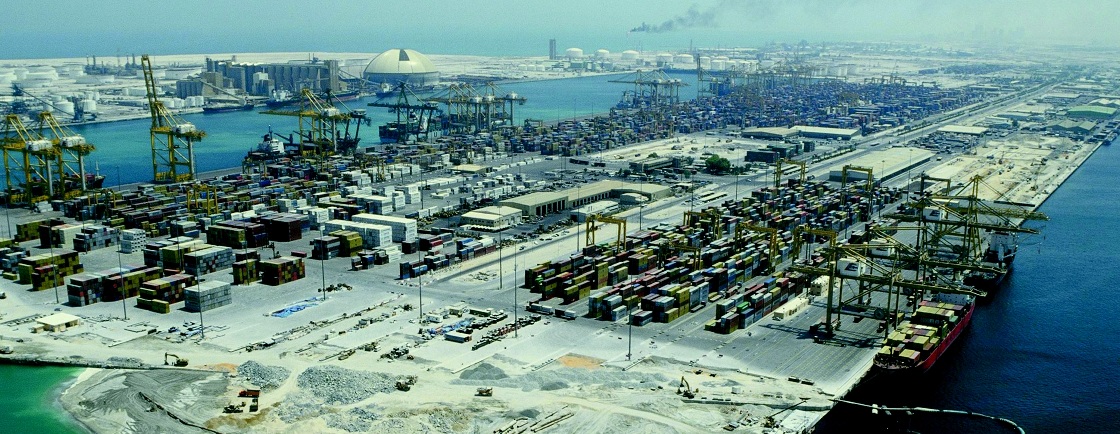
The UAE has ticked all the right boxes to claim regional bragging rights, by bettering all of its neighbours, in the recent World Economic Forum’s Global Enabling Trade Report 2012. On a worldwide comparison, it was ranked in terms of quality of:

  • air transport infrastructure – 4th
  • seaport infrastructure – 6th
  • transhipment connectivity – 7th
  • transport infrastructure – 11th
  • border administration – 11th
  • business environment – 12th

Such reports just go to highlight the immense progress that has made Dubai such a vibrant regional tourist, trade and retail hub.

The retail sector will add yet another facility to its portfolio with the proposed US$ 7.5 million Jumeirah Park Community Centre, covering nearly 11,000 sq mt. Although not in the same league as the likes of Dubai Mall (the world’s largest at 350,000 sq mt), Mirdiff City Centre (290,000 sq mt) and Mall of the Emirates (225,000 sq mt), it will serve over 4,000 residences in the Jumeirah Village triangle.

Then there is the US$ 160 million expansion plan of the Dragon Mart. Already the world’s biggest trading centre for Chinese goods outside of China, it is looking at an additional 177,000 sq mt extension. Interestingly, it is reported that over 80% of the extension has already been pre-let!

Also going well (maybe too well) is local real estate. It is estimated that Dubai has over 400,000 apartments and 58,000 villas with a further 6,000 houses (or over 10%) becoming available in H2 of 2012. If reports are to be believed, there are some areas that have seen a whopping 10% QUARTERLY increase in prices – that being the case, it can only be hoped that this not a precursor of another property bubble, which all but destroyed the market in 2008.

Commercial realty is a different story with there still being a 40% vacancy rate. A further 800,000 sq mt is expected to be added to the inventory in H2 bringing the total amount of Dubai office space available to nearly 10 million sq mt.

As the temperatures hover in the mid-40s and the utility bills rise in unison, DEWA continue with their expansion plans. This time it will spend US$ 55 million laying over 800 km of cable to add to the electricity grid.

It seems that Meydan is also turning up the heat with their reported claim for US$ 950 million against Arabtec and the Malaysian contractor WCT in relation to the construction of the mega racecourse which hosts the Dubai World Cup. This follows an apparent acrimonious dispute that saw the cancellation of the original contract in 2008.

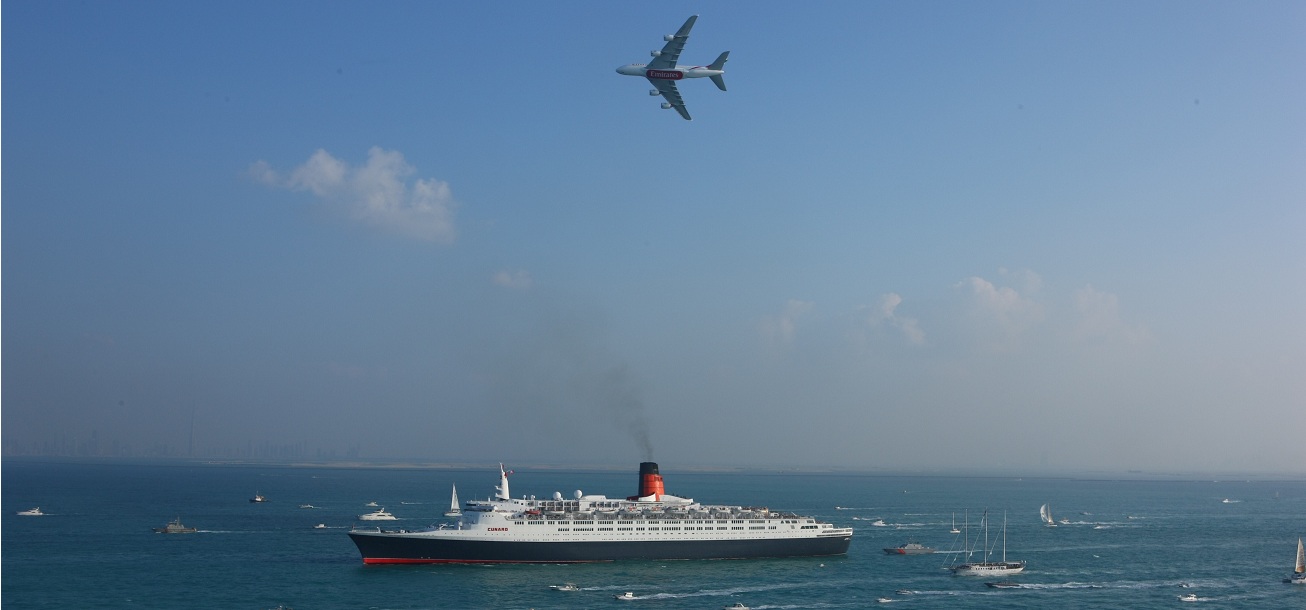
That year also saw the QE2 berth in Dubai and four years later plans are finally afoot to recoup some of the US$ 100 million investment. Now – with its original fittings and décor intact – it is to become a luxury floating hotel with 300 hotels and another must see landmark for the increasing number of Dubai-bound visitors.

The boom in tourists is mirrored in the May 10.4% year on year increase in passenger numbers at Dubai airport. The monthly figure of 4.4 million brings the YTD total to 23.2 million and in line with the annual forecast of 56.5 million passengers in 2012.

Another Dubai success story is Byrne Equipment Rental which accounts for over 20% of all equipment hired in the UAE. The company, valued at US$ 320 million, is set to build a new US$ 4 million HQ in Dubai Industrial City.

It is no secret that car dealerships have had a bumper year to date and this reflects growing consumer confidence that the good old days are on the way back. Al Nabooda Automobiles seem to think so as the distributor of Porsche, Audi and VW has just announced plans to spend nearly US$ 300 million on new facilities over the next two years.

One industry that is beginning to feel the pinch from the economic turmoil is private equity. Although estimated at US$ 23 billion (having grown from a base of US$ 8 billion five years ago), the Middle East segment expanded by only 3% – or US$ 700 million – in 2011. Life is not going to get any easier as fund raising becomes more difficult to source and the local bourses continue to perform badly.

However, Majid Al Futtaim Holdings LLC is a company with no apparent problems raising finance. This week it managed to sell US$ 500 million bonds at 5.25% and actually received bids in excess of US$ 3 billion. Likewise Dubai Duty Free managed to raise US$ 1.75 billion by a 6 year senior unsecured syndicated credit facility which was heavily oversubscribed. Both these deals indicate that Dubai debt has recovered from the dark days of November 2009 and has regained market confidence.

The DFM had a better than expected week of trading with the Index closing on Thursday at 1505 – heading north from Sunday’s opening of 1452. The Index is showing an 11.1% YTD improvement from its opening then of 1353.

Meanwhile, the Central Bank reported a 1.5% reduction in May money supply aggregate M1 (total of current and call accounts deposited with the banks) to US$ 77 billion. With quasi-monetary deposits of US$ 150 billion added to M1, money supply aggregate M2 fell just over 3% to US$ 227 billion. When government deposits at local banks of US$ 60 billion are added to M2, the money supply aggregate M3 sees a 1.3% decrease to US$ 287 billion.

Although bank deposits slipped 1.2% to US$ 306 billion, there was a marginal increase in May total bank loans and advances to US$ 292 billion. This indicates a tightening in liquidity which, if continued, could prove to have a negative impact on future growth; at the moment, the non-oil sector is slowing down and the banks’ Q2 reporting season profits will inevitably be disappointing overall.  But on a global comparison, Dubai is still tracking reasonably well.

On the world stage, the eurozone debt crisis still dominates the news with little or no hope for a permanent solution to all of its problems whilst the politicians are involved in micro rather than macro-managing the situation. The crisis deepens by the day and can only be rectified by a combination of fiscal and political integration with fundamental changes to the whole system, including the establishment of a federal central bank.

Eurozone now has a 1 in 9 unemployment rate (17.6 million) – the highest since the euro was launched back in 1999 – and youth unemployment has reached 22.6% (3.4 million). The Greek youth unemployment rate is over 50% whilst Italy stands at 36.2%. When you add the figures from the other ten EU countries not in the 17-member eurozone, there are 24.9 million (10.3% of the work force) unemployed including 5.5 million youths (22.7%).

And which country is the current president of this mess – Cyprus!

Two examples from the corporate world company highlight that it is not only the eurozone crisis that is causing economic mayhem. Microsoft bought aQuantive in 2007 for US$ 6.3 billion and now it has just written off this balance indicating the worthlessness of the acquisition. The British pharmaceutical company, GlaxoSmithKline, has settled a US$ 3 billion case for being involved in healthcare fraud in the USA. And then there is Barclays.

As intimated in a recent blog, Bob (I Love Barclays) Diamond, the erstwhile CEO of Barclays, finally did fall on his own sword. His Tuesday resignation, following revelations of a Libor rigging scandal by the bank, surprised some analysts and came as the bank faced possible criminal action. It is hard to imagine that other major players are not involved as Barclays was the first to raise their head above the parapet, admit their wrong-doing and settle with the authorities. Who said Diamonds are Forever – not so for the one who gets paid so much for appearing to know so little!

Posted in Finance | Tagged , , , , , , , , , , | Leave a comment

You Can’t Always Get What You Want

Just as the rest of the world appears to be wallowing in an economic malaise, Dubai Customs report that Q1 trade reached an impressive US$ 81 billion almost 7% up on the corresponding period last year. Exports and Re-exports rose 9% to over US$ 33 billion whilst Imports reached US$ 48 billion – 1% higher than in Q1 2011.

India is still the top trading country with total trade at almost US$ 11 billion – almost half of which were exports. This made India Dubai’s second biggest exporter but well behind China which exported US$ 7 billion worth of goods. Unsurprisingly gold was not only the biggest imported item with the yellow metal accounting for over 14% of total imports (or US$ 7 billion) but also the emirate’s biggest export at US$ 5 billion.

Undoubtedly such figures spark investor interest in Dubai and are a factor in the 22% year on year increase in the number of business registration and licensing transactions (54,286) carried out by the Department of Economic Development. May also witnessed a 14% increase in the number of trade licences issued. Such figures only go to prove the increasing resilience of the local economy.

One reason expounded for Dubai’s success is its development of modern customs systems which has resulted in the emirate becoming more competitive on the global stage. Indeed the World Economic Forum placed the UAE third in the world in its Global Competitiveness Report 2011 – 2012.

The tourism sector received a boost with the planned 2013 opening of a Marvel Comics indoor theme park. Built by the IMG Group (Ilyas and Mustafa Galadari), it will be located at their City of Arabia development and will cover 1.2 million sq ft.

Even without the attraction of such a theme park, tourists are flocking into the emirate not only for a pre-Ramadan break but also to enjoy the shopping and ancillary activities of Dubai Summer Surprise. Last year, DSS attracted 4 million visitors who spent an estimated US$ 2.4 billion and it is hoped that this number will be surpassed in 2012.

It is not only tourism but also real estate sector that is beginning to regain some of its former glory with even more land being made available to overseas investors. Sheikh Mohammed bin Rashid Al Maktoum released two plots of land in Dubai Investments Park on an 85 year leasehold. This will surely bring in overseas buyers looking for a secure and profitable investment and should be a win win situation for both sides.

Arabtec finally signed a US$ 3 billion contract to construct the Midfield Terminal Building at Abu Dhabi International Airport. The 700,000 sq mt terminal building will be able to accommodate 65 aircraft and 8,500 passengers an hour.

Further good news came from two other major companies – Anham and Nestle. The former, a Dubai-based company, has just been awarded an US$ 8 billion contract for supplying American troops in Afghanistan. This comes on top of the same company being awarded a US$ 2.2 billion 2010 contract for logistical support to US troops in Iraq, Kuwait and Jordan.

Nestle announced that it was building a new US$ 135 million factory that will create an additional 800 jobs. The new facility will be on a 175,000 sq mt block at Dubai World Central and will make coffee and culinary products.

Not a bad week also for the Iraqi entrepreneur, Ihsan Jawad, who sold his intelligence and information group, Zawya, to Thomson Reuters for a reported US$ 40 million. The company was launched in Dubai ten years ago.

Also in the selling mode was Shehab Gargash, the owner of Daman, the Dubai investment management group. The company offloaded 22.7% of its shares in a private deal estimated at US$ 27 million. If the market continues to improve, the company will look at an IPO with a possible listing on one of the UAE markets. (One bourse that could do with the business is Nasdaq Dubai, which since the May delisting of Damas, has only two stocks trading).

One of those two listed companies, Depa Limited, has just lost a US$250 million fit out contract for the Doha International Airport. This blow to the interior design company comes on the back of losing US$ 50 million as their related performance bond and advance payment guarantee were encashed.

Meanwhile, the DFM had another flat week of trading with the Index closing on Thursday at 1452 – heading down from Sunday’s opening of 1470. As already indicated in earlier blogs, the market will remain stagnant until there is some action from European leaders on solving their sovereign debt crisis.

Dubai and the region are in the middle of a boom in debt market trading with bond sales this year already in excess of US$ 18 billion. The easier availability of credit and the growing confidence in Dubai’s creditworthiness have made the emirate a safer haven than most other locations in the world.

With the announcement that Emirates will help finance the imminent arrival of four Airbus 380s as part of its current order of fifty-eight, the airline will arrange a US$ 1 billion financing facility. Nearly US$ 600 million will be part of a leasing agreement across two tranches – with 75% having a 10 year maturity and the remainder with a 6 year maturity. Last week, the airline had repaid a US$ 550 million sukuk on maturity.

The UAE Central Bank indicated a 30% rise in banks’ non-performing loans (NPLs) for the twelve months ending 30 April 2012. There was a paltry 1.7% increase in loans to nearly US$ 300 billion whilst NPLs soared 30% to over US$ 16 billion. (What is left in the woodwork remains to be seen).  Total bank assets saw an almost 3% jump to over US$ 460 billion.

Overseas, certain banks have been taking a pounding this week. Barclays was fined US$ 450 million for trying to manipulate the Libor rate (some may call it cheating). Just wait for the lawyers to get their teeth into lawsuits and then Barclays problems will escalate exponentially. What is even more disquieting is that it is expected that other banks may be in the same trouble.

JP Morgan, having thought they had  lost US$ 2 billion in May from their credit derivatives debacle, may have to revise this estimate to a much higher figure. So much for betting in credit markets!

The two banks’ respective CEOS, Bob Diamond and Jamie Dimon, must be in danger of losing their jobs.

Whilst the outlook in Dubai is bullish, the same could not be said for many other places – none moreso than the euro zone which appears to be spiralling into deeper economic turmoil. If the political leaders cannot agree on basic fundamentals to try and lessen the crisis then the odds must be in favour of certain countries leaving the euro this year.

Unlike Portugal, Ireland and Greece, which have been hit hard by austerity packages as part of their bailout agreements, Spain seems to have been able to negotiate a much more equitable deal. This just shows that you can’t always get what you want but if you try sometimes you get what you need – but for some high profile banks that should read “you get what you deserve”.

Posted in Finance | Leave a comment

You Keep Me Hangin’ On

Further signs of the region bucking the global trend came with the news that Gulf cement companies saw a 24% Q1 increase in Revenue to US$ 1.25 billion whilst their profits rose by 21% to US$ 435 million. UAE-based companies had a welcome 8% rise in Revenue to US$ 260 million over the same period.

An interesting fact from the Dubai Statistics Centre revealed that on a daily basis more than 1 million people (day visitors, tourists, workers from other emirates etc) come to Dubai – boosting the actual population by 50% to over 3 million. This indicates the growing importance of the city’s standing as the regional business and tourism hub and augurs well for future growth.

The nation’s CPI saw a monthly 0.21% rise and a 0.81% increase over the May 2011 figure. Dubai’s monthly increase was 0.35%.

The 12-nation OPEC, which pumps about 40% of the global oil, recently reported record export earnings for its members, with UAE as its second largest earner (after Saudi Arabia). The syndicate’s income in 2011 was in excess of US$ 1 trillion and 33% up on the preceding year with the UAE accounting for over 10% of that figure, well behind Saudi’s income of US$ 310 billion.

A good indicator of the turnaround in the local economy was that Eros Group, one of the leading distributors of electronic goods, forecasts a 30% + growth in Revenue this year to over US$ 800 million. Consequently, they are looking at expanding on their existing 30 stores and recruiting more staff in the UAE.

The population growth has also seen a boost in the healthcare sector which some estimate that increased spending in the UAE will top US$ 17 billion by 2015. It currently contributes about 3% to GDP. Little wonder then that Dubai-based Landmark Group is planning a US$ 30 million investment with plans to open 20 clinics around the country.

Property developer, Damac, resuscitated its old pre-GFC marketing ploy to try and drum up business. Then it would regularly throw in gifts – such as Porsche cars, apartments and even a tropical island – to entice potential buyers. Now it is back giving away jet-skis, Monterey cruisers or yachts (worth in excess of US$ 1 million) to all buyers, depending on the value of the property.

On the subject of property, the Real Estate Regulatory Authority (RERA) has announced that all Dubai-based companies will now be required to register their property lease agreement which will be completed on their Ejari online system. Of the 115,000 contracts already registered, 64% are residential whilst the remaining 36% are commercial.

You can never keep Emirates Air Line out of the news. Now it is the imminent opening of London’s newest attraction – their cable car system which will straddle the Thames between Greenwich and the Royal Docks. Emirates have invested nearly US$ 60 million in a ten-year sponsorship agreement and this can only enhance their growing presence in the UK.  Because of their flying 100 times a week into the country, some estimates indicate that it contributes over US$ 400 million to the British tourist industry.

This week, Emirates fully repaid a 7-year US$ 500 million sukuk and this shows that the airline is on a sound financial footing. As with other global carriers, the airline is feeling the pinch as a result of high oil prices and the volatile market that have seen prices hover between US$ 91 and US$ 128 over the past quarter. Obviously high oil prices have a negative impact on the industry with higher ticket prices and fewer customers (both passengers and cargo). Today’s Brent crude oil price of US$ 91 is the lowest in eighteen months and a reflection on the sorry state of the global economy. Whether this leads to cheaper air fares is problematic.

As expected, MSCI, the international index provider, once again decided not to upgrade Dubai Financial Market from frontier to emerging market status which would have introduced billions of dollars of new investment on the local bourse. Although satisfied that most of their requirements – including market accessibility, clearing and settlement issues – had been met there was still some concern about the trade settlement system.

Meanwhile, the DFM had another uneventful week of trading with the Index closing on Thursday at 1470 – slightly up on the Sunday opening of 1464. Having risen by some 24% in Q1, the Index has fallen back somewhat since then and is now registering an 8%+ YTD increase. The market will remain stagnant until there is some action from European leaders on solving their sovereign debt crisis.

Wherever you look there is nothing but negativity. Corporate and consumer confidence in India continues to fall as the rupee drops to a historic low of 56.55 to US$ 1. China sees its factory sector slump for the eighth straight month whilst its export orders are at the lowest in three years. The US Federal Reserve acknowledge a much weaker than expected economic outlook with increased unemployment and little growth. And then there is Europe!

Much has been written on the Euro crisis but not as succinct as the following excerpt.

The Euro according to Black Adder

Baldrick: “What I want to know Sir is, before there was a Euro there were lots of different types of money that different people used. And now there’s only one type of money that the foreign people use. And what I want to know is, how did we get from one state of affairs to the other state of affairs”

Blackadder: “Baldrick. Do you mean, how did the Euro start?”

Baldrick: “Yes Sir”

Blackadder: “Well, you see Baldrick, back in the 1980s there were many different countries all running their own finances and using different types of money. On one side you had the major economies of France, Belgium, Holland and Germany, and on the other, the weaker nations of Spain, Greece, Ireland, Italy and Portugal. They got together and decided that it would be much easier for everyone if they could all use the same money, have one Central Bank, and belong to one large club where everyone would be happy. This meant that there could never be a situation whereby financial meltdown would lead to social unrest, wars and crises”.

Baldrick: “But this is sort of a crisis, isn’t it Sir?”

Blackadder: “That’s right Baldrick. You see, there was only one slight flaw with the plan”.

Baldrick: “What was that then, Sir?”

Blackadder: “It was bollocks”.

Whilst the European leaders keep everybody hangin’ on, there is no doubt that the global economy can only move in one direction – and it is not up!

Posted in Finance | Tagged , , , , , , , , , , , , | Leave a comment

Paint It Black

ImageIt comes as no surprise to hear of the IMF warning that the UAE could be hit by further deterioration in the eurozone crisis. Their report specifically highlighted Greece as the major source of “contagion risk” for Dubai and added that Italy, Portugal and Spain could also add to the emirate’s woes.

The Spanish Prime Minister, Mariano Rajoy, has finally realised that his country needed to be bailed out to try and save its exposed banking system which has been saddled with at least US$ 240 billion in dicey real estate loans. Whether the requested US$ 125 billion is enough remains to be seen and I guess a stronger firewall – maybe ten times this amount – will be needed to stop the crisis spreading to other countries. But what should be clear to the authorities is that if this bail-out fails, it will lead to a global economic catastrophe. However, as the less than proactive eurocrats have done very little since the euro crisis started in Greece over two years ago, the outlook is indeed bleak.

It does seem ironic that as Dubai recovers from the GFC and has metaphorically taken its medicine over the past three years, it now may be forced to take another dose because of the failure of other countries to look after their own economic health.

As business confidence plummets around the world, the annual IATA meeting in Beijing spreads even more doom and gloom. The industry has been hit by a triple whammy of high fuel prices, Europe’s sovereign debt crisis and the political situation in the Middle East. This has seen its profits fall from US$ 16 billion in 2010 to US$ 8 billion last year with their current year forecast of US$ 3 billion – a wafer thin 0.5% net profit margin.

Whilst the air industry was meeting in its capital, the Chinese government surprised the markets by cutting interest rates by 25 basis points – its first cut since 2008! Although perhaps a sign of easing of monetary policy, it did little for the equity markets amid fears that it would fail to boost lending as their mainland banks continue to struggle to fill loan quotas.

As reports indicate that the Dubai bourse has lost in excess of US$ 60 billion since the September 2008 failure of Lehman Brothers, the Dubai Financial Market Index again remained flat starting and ending the week at exactly the same level – 1464.

Dubai-based expats will be relieved to discover that the emirate has slipped to become the 94th most expensive city in the world – down 13 places from last year. At the same time, Dubai continues to live up to its reputation as a global tourist destination, now ranked 8th in the world. It seems that it is by far the most popular of the total top ten destination cities in the Middle East and Africa; its 8.8 million visitors account for 30% of the top ten’s total of 29 million.

As part of its strategy to increase the number of visitors to Dubai, authorities are now pitching for the city to host the 2020 World Expo. It will be bidding against four other locations – Ayutthaya, Ekatrinburg, Izmir and Sao Paulo.

One of Dubai’s traditional industries – fishing – received a boost this week with the announcement of the second phase of the emirate’s Al Hamriya port development. This will include a new 1,650 metre long wharf with a capacity to accommodate 200 fishing vessels.

As Dubai’s property market sees welcome strengthening in specific areas, there was news of a further 2,000 apartments being released this month. Comprising eleven buildings, the Ritaj development is situated in Dubai Investments Park and may prove a magnet for those residents currently working in neighbouring Abu Dhabi. Although the economy is showing major signs of improvement, with investor confidence heading north, it is sobering to remember that current property prices are still 64% lower than at their peak of September 2008.

Despite the fact that there are positive factors indicating an upsurge in the local economy, it is the external factors that will cause future problems. In the short-term, this week-end’s Greek elections or any further worsening of the situation in Spain maybe the catalysts for a major spill over from the current fringe players into the heart of Europe and then into the rest of the world.

Most of Europe is in a perilous state and if Greece has to return to the drachma, Europe will inevitably go into a deep recession with the knock on effect for Dubai – further tightening of liquidity, increased lending rates and a massive body blow to the three “Ts” that have led Dubai’s economic revival, tourism, travel and trade. And what will happen to say the American and Chinese economies – both of which will be major casualties of a European economic meltdown? No wonder there are those who look at the immediate future and paint it black.

Posted in Categorized | Leave a comment

Tomorrow Never Knows

Some welcomed the fact that Brent Crude, having hit a low of US$ 93 earlier, ended the week hovering around the US$ 100 mark. As the Iranian crisis had pushed up prices earlier in the year, the European economic woes and growth contraction in China have led to the current fall – well down on the US$ 126 mark witnessed in March.

But the news is not so good for Gulf producers as some estimate that for every US$ 1 drop in price costs them an annual US$ 6 billion in lost revenue. Last year the average oil price came in at around US$ 110 and earned the UAE US$ 112 billion and contributed 39% to the country’s economy. A fall to say an average of US$ 95 per barrel will leave the country at least US$ 14 billion short on the year.

But lower oil prices, allied with the global economic malaise, will inevitably result in the country posting a lower growth this year. 3% in 2012 will be highly regarded even though it will be well down on the 4.2% recorded in 2011.

There is good news in certain non-oil sectors. Following unprecedented falls in 2010, there have been significant improvements in retail trade (up 10%), manufacturing (6%) and transport (4%). However construction is still under the cosh but managed to register a 3% expansion in 2011.

One company that will not be participating in any further growth in 2012 will be the Australian builder, Hastie Group. Specialising in mechanical and electrical contracting, the company, which had been involved in several major projects here,  has gone into administration and part of its problems seems to have been the discovery of on-going accounting irregularities of US$ 20 million. As so often is the case, this has been put down to the actions of a “rogue employee”!

One former Australian company, Multiplex, (now Canadian-owned Brookfield Multiplex) is faring better having just built the JW Marriott Marquis Dubai located on SZR. What will be the world’s tallest all hotel building at 355 metres will see the first of its two phases opening later in the year. The hotel will have over 1,600 rooms and is owned by Emirates.

Further good news for Australia came with reports that their economy grew by 1.3% in the last quarter – far better than expected. But this may present a distorted view as the incredible mining boom may be disguising problem areas in other sectors including housing, retail, tourism and exports. The high dollar rate and the fact that the top 200 companies have seen over US$ 100 billion wiped off their value since the beginning of May do little for business confidence and consumer sentiment. Like Dubai, the Aussie economy faces the same pressures that continue to arise from the eurozone crisis and a slowdown in China’s growth.

On the local front, Nakheel have reported a US$ 100 million Q1 profit compared to a US$ 10 million loss in 2011 whilst their revenues have almost tripled to US$ 370 million over the same period. This comes at the same time as an industry report indicates a strengthening of the residential sector in certain areas of Dubai.

The Dubai Financial Market Index continued with its recent lacklustre trend closing the week down 8 points to 1464 and 6% down over the last month. It is difficult to see any dramatic change for the remainder of June.

Facebook shares continue to plummet as they try to achieve a more realistic price level. An almost 30% decrease since its 18 May debut seems to indicate that the stock was well over-valued at a massive 107 times reported earnings.

On-going dismal economic data from the Eurozone continues to dog the markets. The 10 year bond rates indicate the dire mess the eurozone is in with Greece paying 28.6%, Portugal 11.5%, Ireland 8.2% and Spain 6.1% for servicing their long-term debt whilst Germany’s rate is at 1.4%. The fact that Greece is paying 20 times more than Germany says so much for a common currency!

Whilst many consider the inevitability of Greece returning to the drachma, the focus now is to try and protect Spain from the going the same way. But any bail-out attempts are fraught with danger and failure will only hasten the debt crisis further in countries such as Hungary and Italy.

Tomorrow never knows but we are entitled to ask what have the European politicians been doing about their economic crisis and, even more damming, what have the world diplomats been doing about Syria. Precious little!

Posted in Finance | Tagged , , , , , , , , , , | Leave a comment

Back in the High Life Again

Just to prove that the economy is on the mend, the world’s most expensive reading glasses have gone on sale in Dubai. And what do you get for US$ 75k – hand-crafted glasses, made in the USA, that are 18 carat gold with a sapphire and a diamond (for show I expect). One does not need any glasses to see that oil has been a major contributor to this recovery.

Thanks to average 2011 crude prices of US$ 110 and daily production in the region of 2.6 million barrels, UAE has again positioned itself as the second largest Arab economy. This was reflected in the country’s GDP increasing by almost 21% to US$ 360 billion. A massive 50% increase in crude prices over the year saw the country earn a record US$ 112 billion (compared to US$ 75 billion in 2010). Even though the year saw a 23% jump in imports, its current account rose to US$ 33 billion – a threefold increase – and its sovereign wealth fund has estimated assets of US$ 600 billion.

Despite higher air fares because of the spike in fuel prices, local hotels have already recorded record figures for Q1. Tourist figures will be further heightened by over 400,000 cruise passengers this year with more than 100 cruise ship calls expected to berth at the emirate’s Port Rashid.

With the temperatures rising, preparations are well under way for the 15th Dubai Summer Surprises which will start on 14 June. It is amazing to consider that last year the festival brought in over four million visitors and added US$ 2.4 billion to the Dubai economy. With the holy month of Ramadan starting mid-July, there is hope that records will be broken again in 2012. And the knock-on effect for, inter alia, the hotels, Emirates and retail will be considerable.

Local SMEs – which account for about 90% of the UAE economy – have been given a potential boost by HSBC’s announcement that it will set aside US$ 270 million for business loans of which 30% will be earmarked for Emirati-owned entities. This may help offset earlier news that this bank’s lending in the region had shrunk by 1% whereas elsewhere in the world all their loan books had headed north. HSBC’s total lend to local SMEs is in the region of US$ 600 million. Undoubtedly the nurturing of this sector is of paramount importance as it will be the key driver of future economic growth.

Some experts have indicated that commercial fraud costs the UAE US$ 160 million a year with the usual suspects being auto spare parts, tobacco, medicines, cosmetics and electrical appliances. Much is being done by the relevant authorities to tackle this growing problem.

Despite having some of the best highways in the world, Dubai does have a problem with some of its motorists. Last year, it was estimated that road accidents cost the UAE economy an estimated US$ 4.6 billion along with a human cost of 720 deaths and 7,800 injuries. In 2011, there were over 1.3 million speeding violations of which more than half were caught by cameras on the Sheikh Zayed Highway. After cancer and heart attack, speeding is thought to be third highest cause of death here.

Whilst on the subject of traffic violations, an interesting anecdote from Saudi Arabia where a man there was trying to settle his fines at a payment machine. Having pressed the wrong numbers, he found that he had traffic fine details of the King. He was so impressed and surprised to see the ruler being fined that he actually paid the fines amounting to US$ 2,000!

The Dubai Financial Market could do with a little of Saudi largesse following another flat week that ended with a 10 point gain to close on 1480. Expect little change (at least upwards) for the second half of May as the shares will be range bound for the foreseeable future.

In a recent blog, it was considered that Facebook was somewhat overvalued and so it has proved. No doubt the shares will continue to fall even further than from their first week close of US$ 33 and once again prove that many an investor lose money from a combination of their greed and ignorance.

The continuing euro zone crisis has heightened concerns for Dubai-based entities to refinance debt as European lenders now have tougher requirements in relation to their own capital buffers. Falling oil prices and the fact that growth is slowing down appreciably in countries such as China and India are areas of concern that will impact on the local economy here.

Posted in Finance | Tagged , , , , , , , | 1 Comment

We’re All Going to the Zoo Tomorrow

Good news – at least for the animals in the over-crowded Jumeirah zoo, with reports that they will be shortly relocated to a 400 hectares redevelopment in Al Warqa’a. Furthermore, the new complex will include golf courses, along with entertainment and recreational areas. The move is long overdue and this ambitious project, costing US$ 40 million, will add another attraction for both Dubai’s residents and the ever increasing number of visitors.

Dubai Municipality have also announced two other major projects – the completion of the Business Bay canal, linking it with the sea, and the expansion of the iconic Creek.

The Business Bay Project – costing US$ 50 million – will see the canal connected to the sea by a three kilometre pipeline and this will be followed by completion of the canal waterway connecting all the existing lagoons. The end product is bound to be something special!

The Dhow Wharfage Development will add an extra three kilometres to the Creek which will allow 450 dhows to berth, with thirty loading areas covering an area of 90,000 square metres. Existing capacity will be increased by 50% as well as allowing bigger vessels to anchor.

Another indicator that Dubai’s fortune is on the up is that real estate prices are edging toward levels last seen in early 2008 and that a further 28,000 units will become available this year.  Dubailand (4,400 units), Jumeirah Park (4,200), Jumeirah Village (3,900) and Dubai Marina (3,100) will be the main contributors to adding to the emirate’s residential stock.

It is interesting to note that in Q1, Dubai-based banks saw a profit decline whilst their Abu Dhabi equivalents saw record profit growth over the same period. One of the main reasons for this blip related to increased provisions for bad loans. (How much more potential bad loans in their books still remains to be seen).

Emirates NBD saw profits fall 55% to US$ 175 million, whilst DIB’s profit was down 10% to US$ 60 million and DCB fell 8% to US$ 66 million. Reports indicate a 4% drop in Q1 profits to a total of US$ 1.58 billion for the eighteen listed national banks.

HSBC, the biggest international bank here, saw a 0.8% quarterly shrinkage in its loan book to US$ 27.3 billion – whereas in all its other global regions, there were rises. This may be a pointer that growth is not as robust as it should be and the problem here is further exacerbated by other European lenders who have been forced to cut lending lines to the region under Basel III.

Despite this, current predictions are that Dubai’s GDP will expand at a faster rate than first forecast with some analysts now looking at a growth rate of up to 5% – much better than the 3% recorded in 2011. Not surprisingly, the strong showing in Dubai’s trade, tourism and travel sectors is receiving most of the plaudits. April saw Dubai’s CPI decline 0.3% month on month and 1.9% for the year whereas Abu Dhabi went the other way with 0.2% and 1.3% increases respectively.

Much of the football world has been focussed on Abu Dhabi as Manchester City, owned by Sheikh Mansour bin Zayed Al Nayahan, became the English Premier League champions this week. The moneys involved in the game, at this level, beggars belief. Consider this. When the EPL came into existence in 1991, the average wage in the UK was US$ 30,000 whilst the average pay for a premiership footballer was four times as much at just over US$ 120,000. Now the national average is US$ 51,000 but  EPL footballers now earn over US$ 1.85 million (or 36 times the national  average) – and that is just from their football income.

The Dubai Financial Market continues into negative territory shedding a further 1% when it ended the week on 1476 points compared to its Sunday opening of 1515. Despite another weekly fall, the market is still up nearly 13% this year.

Whilst on the subject of the DFM, Q1 losses for all the 49 listed brokerage firms amounted to US$ 2.7 million – a major improvement on the US$ 21 million shortfall in the same period last year, as traded  values improved from US$ 9.9 billion to US$ 15 billion this quarter.

Just as things go from bad to worse in Europe, the quarterly reporting season from Japan is just as depressing. Who would believe that the likes of Sony and Panasonic could have quarterly losses of US$ 3.2 billion and US$ 5.5 billion respectively? And what does it say about the sorry state of the once powerful Japanese economy?

Nearer home, the fall of the Indian currency indicates that all is not well there. Over the past ten weeks, the rupee has fallen 10% in value and now stands at 54.5 to the US$. Good news for the NRI community sending money home – but a problem for the Indian

The continuing economic tragedy – which is the eurozone – deteriorates by the day. From a Dubai perspective, this could be bad news if (and when) oil prices soften, global trade drops and the flow of European tourists dries up.

Posted in Finance | Tagged , , , , , , , , | Leave a comment

Right Here Right Now

The triple “Ts” of Travel, Trade and Tourism continue to be the main drivers helping Dubai in its recovery phase since the global meltdown of 2009 which left the emirate in such a parlous state.

Despite the record high fuel prices and global economic turmoil, the Emirates Group has just announced a US$ 629 million net profit for its year ending 31 March 2012. The year saw the airline’s revenue jump nearly 15% to US$ 17 billion but  because of the high fuel cost (reflected by a 44% annual increase to US$ 6.6 billion) their bottom line decreased by 72%. (But compare this to  IAG, the owners of BA and Iberia, who have had a Q1 2012 loss of US$ 340 million – up from a loss of US$ 60 million a year earlier)

Staff numbers rose by 10% to 63,000 and during the year, 22 new aircraft were delivered which helped in carrying an 8% increase in passenger load to 34 million. The airline is set to expand even faster when one considers that it has 230 aircraft on order costing in excess of over US$ 84 billion.

Better news this week came from the Department of Economic Development reporting a 27% quarterly year on year increase in the number of trade licences issued. In addition to the 4,300 new licences, a further 25,000 were renewed in Q1. There was a marked expansion in licensing activity in the tourism sector reflecting its spectacular growth.

A recent independent study carried out by the Emirates Competitiveness Council  has estimated that the time saved by government e-services has led to cost cutting of over US$ 40 billion in the past five years. This has resulted in the number of days required to import or export goods being halved to seven days at a cost of US$ 630 per container. This compares to high income OECD countries where it takes three days longer and at a 50% higher cost than Dubai.

The hospitality sector continues to confound its critics. The stellar performance of Dubai’s hotels sees March occupancy levels at nearly 90% and average room rates up 6% to an impressive US$ 280 level. Many experts expect this upward trend to continue throughout 2012 and beyond.

Another indicator that the good times have returned – the local Land Rover distributor, Al Tayer Motors, has been recognised as the highest selling dealership  for Range Rover models in the world. Furthermore their Q1 sales showed a 40% increase over the same period last year.

The housing sector, that saw up to 60% of its value wiped off during the 2009 financial crisis,  is now showing encouraging signs of improvement. Apart from recent capital appreciation, it is reported that rents have jumped by 15% over the past twelve months with further rises expected over the remaining part of the year. Good news for investors but not so good for tenants, many of whom see more than 30% of their income being expended on rent.

Arabtec, the Dubai-based building company, announced a quarterly increase in its revenue to US$ 350 million and a tripling of its net profit to US$ 23 million. In addition, they have just won a US$ 60 million contract from Aabar and they are part of a three-firm consortium that have been nominated as the preferred bidders for a US$ 3 billion contract for the new Abu Dhabi airport.  No wonder their shares are one of the best performing on the local stock market this year, having doubled already this year.

Another Dubai company, du, saw a massive 62% quarterly hike in its net profits to over US$ 90 million – and this after paying a 50% royalty payment. Its revenues over the same period rose over 20% to US$ 650 million and now has a customer base of over 5.5 million subscribers.

The Dubai Financial Market Index has been running out of steam of late and this week over 4% was wiped off the value of  stocks as it ended the week on 1515 after a Sunday opening level of 1582 points.

As summer rapidly approaches, it seems that Istithmar World – an investment arm of Dubai World – continues with its spring cleaning. Having bought Barneys for nearly US$ 950 million in 2007, it has now lost control of the company following a deal with its creditors which sees the American company’s long term debt reduce by US$ 500 million to US$ 50 million. Around the time of its buying spree, Istithmar bought the QE2 for US$ 100 million, 20% of Cirque Soleil, a majority share in the Mandarin New York for US$ 340 million and the W Hotel Union Square for nearly US$300 million among other trophy assets.

No surprise to discover that the local banks are growing at a slower rate than initially estimated largely as a result of a weakening in credit demand. Q1 lending of the top seven banks showed a nominal 0.6% rise to just over US$ 200 billion. This will have a detrimental impact on the banks’ revenue as a slowdown in 2012 economic growth and a squeeze on their margins take effect. This might also explain why the UAE bank benchmark rate, EIBOR, at 1.52%, is the highest of the GCC countries and well above say Saudi Arabia (0.90%) and Bahrain (0.73%).

USA’s largest bank, JP Morgan, has a problem with a London trader, known as “The Whale”, who has been involved in complex trading activity that has gone drastically wrong. The end result is an initial loss put at US$ 2 billion and one has to wonder if more losses will become apparent in the coming days. An embarrassment for  the bank that paid out US$ 5.6 billion as “compensation for its investment bankers” in 2011.

The eurozone crisis goes from bad to worse. France will probably show negative growth in Q1 when their figures are released next Tuesday. Weekly 10 year bond  bond rates have shown signs for much concern. Greece’s rate rose to 24.39% (from 21.08%) whilst other countries such as Hungary’s 9.06% (from 8.20%) and Spain’s 6.00% (from 5.35%) indicate that the markets see these as increasingly bad risk.

In comparison, Dubai is performing well and the feeling of consumer confidence is becoming more palpable. Dubai may have already taken its medicine and is fast on the road to economic recovery. 

Posted in Finance | Tagged , , , , , , , , , , , | Leave a comment

Déjà Vu

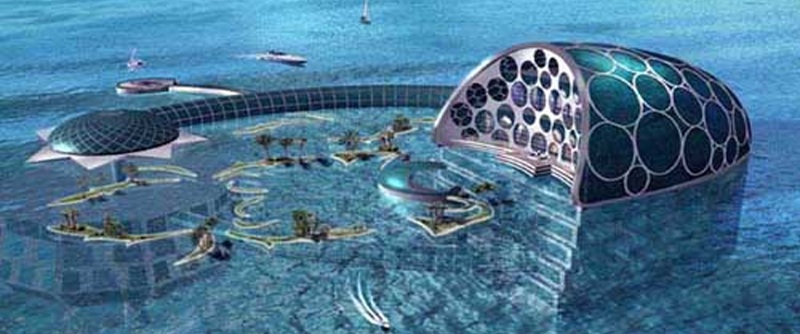
Those who remember the boom times will recall the plans then to build Hydropolis, the world’s first underwater hotel, off the Jumeirah coastline. The idea sank with the onset of the economic meltdown only now to resurface with the news that Dubai Drydocks World have signed an agreement with a Swiss-based company to build similar hotels in the future.

This week saw HH Sheikh Mohammad bin Rashid Al Maktoum inaugurate the 19th Arabian Travel Market. With over 25,000 visitors and 2,400 exhibitors, it has proved yet another bonanza week for the Dubai economy.

The importance of tourism to the Dubai economy cannot be over-emphasised as it now contributes 31% to the emirate’s GDP. This is set to increase in 2012 as the authorities are anticipating an impressive 10% growth which would bring the number of tourists to well over ten million. For the UAE as a whole, tourism brought in US$ 6 billion last year.

With a 9% quarterly growth in the number of hotel guests (and revenues up 24%, to US$ 1.5 billion, on the corresponding 2011 quarter), the hospitality industry continues to expand. It makes economic sense then for Istithmar World – a Dubai World subsidiary – to have announced that it has just spent US$ 250 million to buy out the 50% stake in the Atlantis Hotel from Kerzner International.

Good and bad news this week for the Dubai government’s coffers. Higher utility tariffs have seen DEWA save more than US$ 250 million as consumers paid higher rates in addition to a fuel surcharge. This halved the projected increase in the demand for natural gas and the money saved has reduced the cost to the Authority in providing electricity and water to its users.

On the other hand, it seems that petrol continues to be subsidised to the tune of US$ 1.5 billion as current federal legislation dictates that the Dubai-owned ENOC (and its subsidiary Eppco) have to sell petrol at subsidised prices (currently at US$0.46 per litre). Unlike Abu Dhabi, which has a plentiful supply of crude, Dubai has to buy from the international market and at prices of over US$ 100 per barrel, it is hurting!

Further signs that the local economic environment is improving came with the news that JAFZA is looking at repaying a US$ 2 billion sukuk, due in November, six months early. This is a welcome sign that Dubai’s creditworthiness continues to improve on the world stage.

On the local market, Emaar Properties announced a 44% increase in Q1 profits to US$ 170 million aided by increased property sales in Dubai and strong earnings from both its mall and hotel operations. The company has an asset base in excess of US$ 16 billion.

The Dubai Financial Market Index weakened over the week to close 70 points down at 1582 – perhaps indicating that the Q1 bear run is over for the summer. April saw its market capitalisation fall almost 1% to US$ 52.4 billion with a 40% drop in shares traded to 4.7 billion.

The eurozone debt crisis is spreading with the news that annual unemployment in Europe has jumped from 9.9% to 10.9% or 17.4 million people. No wonder that the stock markets were rattled. When you consider that Spain’s jobless rate at 24.1% is the highest in the developed world and that other countries such as Greece (21.7%), Portugal (15.3%) and Ireland (14.5%) are not that far behind, it seems that unemployment – rather than the initial debt problem – will be the tipping point for further strife on the continent.

With German unemployment levels at 2.9 million and rising quickly enough to cause concern, there are some analysts who would not be surprised to see this European giant fall into recession as well.

As countries sink further into the abyss, it seems strange that some politicians think that austerity is the solution whilst others consider borrowing even more money to be the answer. Either measure is doomed to fail.

Unfortunately for Dubai, it is not immune from the impact of these European problems and it has to shield itself as best it can from their negative impact. Whether it will succeed or not remains to be seen but we are in for a long hot summer.

Posted in Finance | Tagged , , , , , , , , , , , , , | Leave a comment