Big Yellow Taxi

Work has started on an Al Futtaim 78.5k sq mt “smart mall”, part of phase 1 of the upcoming Wasl Gate development, located near the Ibn Battuta Mall.  With a 55k sq mt leasable space, it will have 100 outlets, with the anchor stores being the country’s 4th Ikea, covering 30k sq mt, and Ace (4k sq mt). The mall, with parking for 2k vehicles, will be completed within two years but the whole development, which will eventually have 25k residents and a 23 hectare central park, will be a15-year project.

Al Futtaim Carillion will be the main contractor for a US$ 600 million project to develop three Expo site districts, housing 136 pavilions. This is the first major contract awarded for the event, with a further US$ 2.4 billion of construction work still to be let.

It seems that work may have already started on the Hyperloop which will eventually cut the travelling time between Dubai and Abu Dhabi to just 12 minutes. The futuristic transport system uses magnets to levitate pods inside an almost 100% vacuum tube, so that speeds of over 1k kph can be reached. The US-based company estimates that it would save inter alia US$ 800 million in lost working hours but that seems to be a very conservative estimate.

Dubai’s first ever stone villas are to be built, with units ranging from 1 to 4 bedrooms, with starting prices at US$ 293k. Hajar Villas is a concept by developers, MAC Properties.

An agreement between Dubai Holding and Dubai Municipality will see the establishment of the region’s largest public park at 1.43 million sq mt. Increasing the emirate’s public space by 17%, the park will have a myriad of attractions, including 45 sports grounds, five major event arenas, 30 km of walkways, 20 km of jogging tracks, 14 km for cyclists and 7 km of nature trails. Work on the 318k sq mt phase 1 will commence this year.

DAFZA, which accounts for 9% of Dubai’s non-oil trade (US$30.0 billion), reported a 32% hike in multinational companies using the free zone in 2016. Almost half of that number emanates from three sectors – IT/telecoms account for 27% of the total, followed by consumer products (10%) and engineering/aviation contributing 9%.

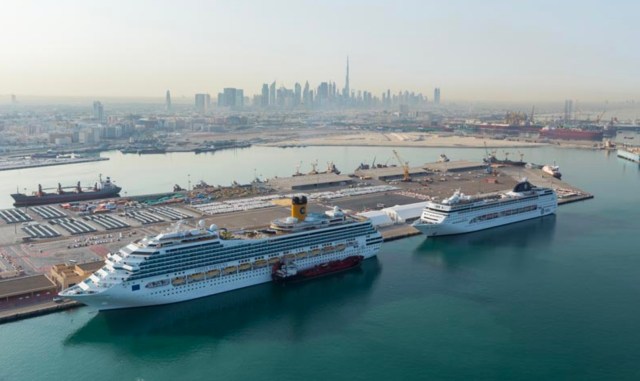
It is estimated that the UAE maritime industry is worth US$ 16.3 billion, with Dubai the busiest Gulf port, as has been the case for over a century. With a 2 million sq ft freezone soon to open in Maritime City, and further expansion plans at Jebel Ali, this sector will continue to act as a lifeline for Dubai’s well-being. Currently, the sector adds 4.6% to the emirate’s GDP (equating to US$ 3.9 billion) – a figure that is set to show robust growth.

A big win this week for DP World with the announcement that The Alliance – comprising Hapag-Lloyd, K-Line, MOL, NYK Line and Yang Ming – has chosen to use their Southampton and London Gateway facilities on its transatlantic and Asia-Europe lines. This 5-group consortium accounts for 18% of the global container shipping fleet.

As economic indicators continue to head north, the Minister of Economy, HE Sultan bin Saeed Al Mansouri, has indicated that the UAE economy could grow by up to 4% this year. As prices continue to nudge higher, the country will benefit with 30% of the economy being reliant on the oil sector. In tandem, the non-oil sector will move higher as the economy stabilises and reaps the benefits of major Expo capital investment and improving indicators.

Etisalat reported that it would be spending more than US$ 817 million to develop the country’s infrastructure and expand mobile and fibre optic networks. The UAE boasts the highest fibre to the home (FTTH) penetration, at 93.7%, of any other country, whilst its 3G network coverage and 4G LTE are in excess of 99% and 95%.

To the surprise of some, the February Emirates NBD Purchasing Managers’ Index jumped 7 notches to 56 – its highest level in 18 months; the main drivers appear to be a marked expansion of output to 63 and inflows of new work at 59.9. With the economy picking up in Dubai’s non-oil private sector, companies have apparently been hiring and purchasing more. With oil prices creeping higher and the prospect of major Expo contracts in the offing, business confidence is looking up.

To ensure that UAE financial institutions have an adequate capital base, the Central Bank has issued new rules in line with the Basel Committee on Banking Supervision in Basel III. The regulations are complicated but banks have to ensure that their common equity Tier 1 is a minimum of 7.0% of their risk weighted assets and Tier 1 capital at least 8.5% of RWA. Even ratings agency, Fitch, said that the UAE banks were able to comfortably meet these new capital adequacy rates.

Emaar Properties’ shares plummeted 3.3% to US$ 2.02 on news that the developer was maintaining a 15% cash dividend, unchanged from 2015. The company is also to propose a share capital increase and a plan to introduce an employee sharing scheme at their upcoming AGM.

In contrast, Mashreq shareholders will be happy with a 40% (US$ 10.90) cash dividend, with the bank paying out a total of US$ 193 million, despite a 19.6% fall in 2016 profits to US$ 526 million.

The DFM opened Sunday at 3584 and sank even lower, 1.8% down on Thursday (09 March 2017) at 3520. Volumes still remain at low levels, closing the day at 221 million shares, valued at US$ 139 million, (cf 360 million shares for US$ 175 million, the previous Thursday). Emaar Properties traded US$ 0.08 lower, to US$ 2.00, with Arabtec, remaining flat at US$ 0.25.

By Thursday, Brent Crude was US$ 3.71 lower (6.4%) to close on US$ 52.19, with gold also heading down (US$ 30) to US$ 1,203 by 09 March 2017.

Wednesday had seen its price fall 5% – its largest one day drop in a year and this despite top oil ministers at a Houston meeting trying to reassure the world that their November output deal was working. Furthermore, a large build up in US crude inventories of 8.2 million barrels, along with reports of rebounding shale output, spooked the market. For the first time since 1979, Iran’s oil exports topped three million bpd, as its daily output heads towards four million bpd, with a five million target by 2021.

Analysts estimate that next year’s IPO could value Saudi Aramco as high as US$ 1.5 trillion, whilst Deputy Crown Prince Mohammed bin Salman is more bullish at US$ 2 trillion. Either way, it will be the world’s largest IPO, as the government sells 5% of the asset. The Saudi conglomerate has also agreed to pay Royal Dutch Shell US$ 2.2 billion, as it takes over full ownership of the Motiva Enterprises’ name and legal entity.

As January capacity showed a 3.3% seasonally adjusted increase, IATA reported that ME carriers’ cargo volumes were 8.4% higher. Although lower than the double digit growth, prevalent for the past decade, the figures were still higher than the 6.9% global average.

It has been reported that Uber has been using “dirty tricks” to fool authorities around the world to stop them closing the ride-hailing app in certain jurisdictions. The company used a program named Greyball that was able to help in discovering officials who were trying to clamp down on its activities so that ride-hailing service could take preventive measures. Days after defending the system earlier, Uber has now decided to ban the secret software.

GM announced details of the proposed sale of its loss-making Vauxhall/Opel operations to PSA, the French company, which owns Peugeot/Citroen. This could be bad news for the UK economy with 4.5k jobs in the balance at plants in Luton and Ellesmere Port. If the US$ 2.3 billion deal goes ahead, then PSA will overtake Renault to become Europe’s second largest car-maker behind the world leader, Volkswagen.

In Australia, the chief executives of the four major banks – ANZ, CBA, NAB and Westpac – have been hauled in front of a House of Representatives standing committee to explain why the banks had not passed on an August 2016 central bank interest rate cut. Much ducking and weaving is bound to ensue.

Troubled Deutsche Bank is making several strategic changes in an attempt to recover from its recent losses, including US$ 1.5 billion in 2016. These measures incorporate an US$ 8.5 billion rights issue (pricing the shares at US$ 12.31, a 39% discount on last Friday’s close), an IPO of a minority stake in its asset management business, possibly worth US$ 8.5 billion, and remerging its corporate finance business and trading activities.

Latest retail figures from the UK indicate that Aldi and Lidl recorded  12.0% and 9.1% year on year increases in February sales, compared to the overall market average of just 2.2%. The two German retailers now account for 12.3% of the country’s market share, with this set to grow again this year to the dismay of the traditional Big Four – Tesco, Asda, Sainsbury’s and Morrisons. The latter, the country’s fourth largest supermarket, and currently outperforming its three main rivals, has returned to sales growth for the first time in five years, with 2016 profits up 50% to US$ 395 million.

In 2012, Schlecker, the German retail pharmacy giant, with 50k employees, went bankrupt. Now its head, Anton Schlecker, has gone on trial, accused of syphoning off US$ 21 million for personal use, despite knowing that the company was going under.

In a proposed US$ 4.6 billion merger, Standard Life Plc is in discussions with Aberdeen Asset Management Plc that would see the new entity overseeing funds of over US$ 811 billion. If the deal were to go ahead, Standard Life investors would own 66.7% of the combined group, valued at US$ 13.4 billion.

Having acquired the UK tech firm, ARM Holdings, last year, for US$ 29.2 billion, it appears that Japan’s Softbank is to offload a 25% stake to a Saudi-backed investment group.

The third biggest cereal maker in the US, Post Holdings, whose brands include Golden Crisp and Cocoa Pebbles, is ready to pay US$ 1.8 billion to acquire Weetabix, the UK’s second biggest cereal maker after Kellogg’s. The only other company interested in the sale is its majority shareholder, China’s Bright Food.

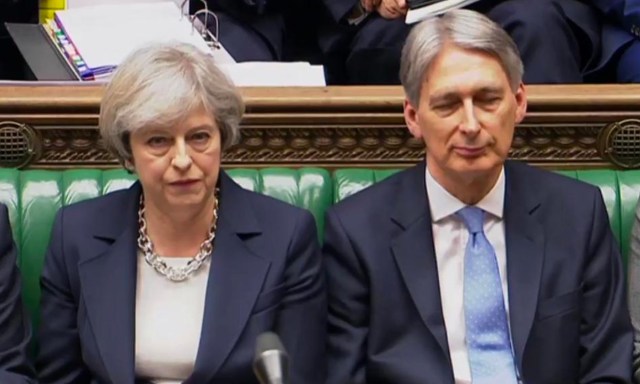
The OECD is the latest global organisation that sees an improvement in the worldwide economy, indicating a “modest” recovery to 3.3% and 3.6% over the next two years. However, it warns that significant risks – including exchange rate volatility and external shocks – could pose problems in middle income and developing countries. Interestingly, its biggest adjustment was for the UK which should see growth up 0.4% to 1.6% this year; this is not as optimistic as Philip Hammond. In his Wednesday budget, the Chancellor reiterated that the economy had “continued to confound the commentators” and expected this year’s growth to reach 2.0%.

With the Australian mining boom a distant memory, it seems that agriculture is once again front stage. In Q4, there was an 8.3% growth in agriculture, forestry and fishing production, compared to 3.4% recorded by mining. It is estimated that the sector’s annual production will reach a record high of US$ 48.4 billion – nearly 18% higher than the five year average to 2016. Exports are expected to top US$ 37.0 billion.

Figures from Eurostat showed the eurozone economy finally stabilising in Q4, with 0.4% growth, the same as Q3 – and 1.7% on an annual basis. Both exports and imports recorded increases of 1.5% and 2.0% respectively. The 28-country EU economy also reported a 0.5% Q4 growth and 1.9% for the 12 months.

Germany is going through a rocky patch, with January factory orders recording their biggest fall in over eight years decreasing on the month by 7.4%; local orders plummeted by 10.5%, with foreign orders faring better but still down 4.9%. There is an obvious lag between the recent upbeat economic indicators and what is actually happening on the shop floor.

Dragged down by a poor performance from Airbus, France posted its biggest ever trade deficit in January. Following a 6.6% hike last year to US$ 50.8 billion, January saw a massive US$ 8.3 billion gap as the country’s exports fell 7.7%, whilst imports went in the other direction by 2.9%.

Brazil continues in the doldrums posting a worrying 3.6% GDP contraction last year, resulting in an economy that has slipped 8.0% over the past two years. Unemployment levels have soared by 76% since 2014, with the current rate at 12.6%, equating to 12.9 million. Investor confidence is at rock bottom, mainly because of rampant corruption, political scandals and lower commodity prices, allied with the global economic slowdown.

With the US weekly 25 February jobless application rate falling 19k to 223k, this was the country’s lowest number since 1973. – an indicator that the employment market is in rude health. Economists are happy with a figure of 300k – a level that is seen to be in line with a healthy labour sector. Initial reports are that in February, the economy generated 175k new jobs, compared to 225k a month earlier, and the unemployment rate edged lower to 4.7%.

However, January’s trade deficit widened by the most in nearly five years – by 9.5% to US$ 48.5 billion. Imports were 2.3% higher at US$ 65.6 billion, as exports rose at the lower rate of 0.6% to US$ 192.1 billion. It is expected that over the next quarter, exports will expand at a stronger rate.

Japan’s Q4 grew by 0.3% and only 1.2% on an annual basis but the economy has expanded for four straight quarters for the first time in over three years. The country’s current account surplus sank 88.9% to US$ 574 million, well down on the US$ 2.4 billion forecast. Annual exports and imports both rose – by 2.9% to US$ 48.4 billion and 10.0% to US$ 55.8 billion respectively – to give a trade deficit of US$ 7.4 billion. Overall bank lending was up 2.8%, compared to a year earlier, at US$ 4.48 trillion.

At Sunday’s National People’s Congress, Chinese Premier Li Keqiang introduced a raft of measures to attract increased overseas funding into the local economy. In future, more service industries, manufacturing and mining will be able to enter the Chinese market and be treated the same as domestic firms, when it comes to licence applications, government procuring etc. After a lull in foreign direct investment, which has seen India attracting more funds, inflows have improved, rising 4.1% last year to US$ 118 billion. This year’s growth is expected to come in at 6.5% down from 6.7% in 2016 which was the lowest return in over 25 years. The country is also having trouble maintaining the yuan at below 7 to the US$ and so far has expended over US$ 1 trillion in keeping the currency around that level. In February, it posted its first trade deficit – at US$ 9.2 billion – in three years, as imports jumped 38.1%, with exports falling by 1.3%.

A Singaporean study has concluded that a yellow taxi is safer to drive  than a blue one, with six fewer accidents per 1k taxis each month than their blue counterparts. The three-year study concluded that colour visibility plays an important role in traffic safety. On average, the country’s 12.5k blue taxis had 71.7 monthly accidents per 1k taxis per month, compared to 65.6 for their yellow equivalent vehicles. How long before the RTA change their vehicle colours from beige to yellow and we have a city of Big Yellow Taxis?

Posted in Finance | Tagged , , , , , , , , , , , , | Leave a comment

Get Off My Cloud!

It was announced that 180 luxury apartments in the second phase of sales of units in Al Habtoor City have already been sold, with prices for 1-bedroom units starting at US$ 518k. Handover for units – that range from 1 to 7-bedrooms – is expected in Q4. There are three high rise towers, with a total of 1.46k units and located by Dubai Canal, that comprise The Residence Collection.

The transport network received another boost this week with HH Sheikh Mohammed bin Rashid Al Maktoum’s approval of another road (costing US$ 136 million), running parallel to the US$ 133 million ‘Airport Road Improvement Project’ that is currently under construction. The project – which will ease the congestion around Dubai International Airport – will create a new 11.8 km corridor, of which 5.3 km will be a new road whilst a 6.5 km stretch of Tripoli Road will be widened.

An agreement between Careem and the RTA will see customers of the ride-hailing app able to book any one of 10k taxis operated by the emirate’s six taxi franchises. The booking service will allow users to track and check details of their bookings on Careem’s platform. Meanwhile Uber will levy a US$ 0.82 surcharge on all its future bookings, with collections being credited to the RTA.

Local fuel prices head northwards for the third straight month in March, with Special 95 higher, 1.6% month on month to US$ 0.523 per litre, having started the year on US$ 0.490; last year’s increase was 6.5%.

DEWA is planning to invest  a further US$ 907 million to increase its spend to US$ 2.72 billion for building  97  132/11 kilovolt (kV) substations over the next three years. The utility has a US$ 17.7 billion budget to meet increased demand over the next five years. Its current capacity is 10k megawatts, serving 800k customers, with a 2016 peak load of 8k MW – 4% higher than a year earlier.

Dubai Wholesale City has launched a 1.5 million sq ft complex of light industrial units and refrigerated warehouses specifically for the emirate’s food and halal sector. The TECOM global integrated wholesale trading hub aims to become one of the industry’s major global players.

Du held an auction for 50 mobile numbers which raised US$ 2.02 million. It can only be Dubai when one such number sold for US$ 1.23 million with Indian businessman, Balwinder Sahni, paying this amount for number 058 888 8888.

It is reported that Abraaj Capital has acquired Middlesex University’s overseas campus in Dubai from a group of local investors. Although the actual value of the deal was not known, it is thought that it was equivalent to 11 times EBITDA (earnings before interest, tax, depreciation and amortisation) which would put the price of the 13-year old facility at about US$ 75 million.

Dubai Holding Commercial Operations Group, a division of Dubai Holding, the 13-year old investment arm for HH Sheikh Mohammed, posted an 8.0% rise in profits to US$ 1.72 billion on the back of a 16.0% surge in revenue to US$ 4.59 billion. Dubai Holding has a US$ 35 billion asset base and is involved in a myriad of business sectors in 20 countries. This week, its only chairman, HE Mohammed Abdullah Al Gergawi, resigned to concentrate on his federal government role as Minister of Cabinet Affairs.

Emirates REIT posted a 37.6% rise in 2016 cash profit to US$ 11 million, on the back of an 8.0% hike in revenue to US$ 3.23 billion, driven by increases from both rental income and property income – up by 22.8% to US$ 45 million and 22.2% to US$ 51 million respectively. Interestingly, this week Emirates NBD has transferred a seven-property US$ 314 million portfolio to set up their own real estate investment trust (reit). As with Emirates REIT, this will be listed on Nasdaq Dubai.

The DFM opened Sunday at 3634 and closed 1.4% down on Thursday (02 March 2017) at 3584. Volumes still remain at low levels, closing the day at 360 million shares, valued at US$ 175 million, (cf 349 million shares for US$ 120 million, the previous Thursday). Emaar Properties traded US$ 0.01 up, to US$ 2.08, with Arabtec, shedding US$ 0.01 to US$ 0.25; its share value has fallen 35.8% over the past three weeks. In February, the bourse shed only 13 points to close the month on 3630, with Emaar nudging US$ 0.01 higher to US$ 2.03 and Arabtec plummeting US$ 0.12 to US$ 0.25.

By Thursday, Brent Crude was US$ 0.09 higher to close on US$ 55.90, with gold marginally down (US$ 7) to US$ 1,233 by 02 March 2017. Brent traded 0.5% lower in February to US$ 56.56, whilst the yellow metal gained 3.5% to close the month on US$ 1,254.

The Joint OPEC / Non-OPEC Ministerial Monitoring Committee has announced an 86% conformity level in relation to the 1.8 million bpd output reduction agreed by all participants last December.

The year-old proposed US$ 30.4 billion merger between London Stock Exchange and Deutsche Boerse is having problems with EC approval; it could collapse unless the LSE sells its 60% stake in MTS, a fixed-income trading platform. It looked as if this were a done deal especially after the London bourse divested part of its clearing business, LCH,  to satisfy the EC’s competition concerns.

As expected, the Royal Bank of Scotland posted its ninth straight annual loss with a 2016 deficit of US$ 8.6 billion bringing the cumulative total for the period to US$ 71.3 billion. To cap it all off, chief executive, Ross McEwan, acknowledged there was more to come! The bank is planning cost cuts of US$ 2.5 billion over the next four years which will see inevitable retrenchments.

Ford is considering cutting its UK workforce in Bridgend by as much as 65% to just 600 within the next five years. This comes after the US car giant decided to cut investment in the new generation Dragon petrol engine project, just six months after its announcement.

Rupert Murdoch’s Twenty-First Century Fox is seeking EC regulatory approval to acquire European pay-TV entity Sky for US$ 14.4 billion. Its bid to take full control of the rest of the UK company is unlikely at this stage because of potential political problems, as was the case in 2011.

Having lost US$ 350 million, because of two security breaches (the biggest in internet history) that impacted 1 million users, Yahoo has punished Marissa Mayer. The CEO will not receive her annual bonus nor a potentially lucrative share award.

Despite worries that the economy may hit the ropes early in 2017, Q4 data indicates that Australia will continue to grow and break the Netherlands’ record (1982 – 2008) of over 25 years of uninterrupted economic growth. Because of increases in both consumer spending and exports, Q4 growth came in at 2.4%. December business investment also moved higher after three years of decline. With commodity prices on the up and the country relying less on its resources investment boom, 2017 growth may well top 3%. Another sign of the good times saw Q4 company operating profits climb by 20.1% and an impressive 26.2% on the year.

Following President Trump’s Congressional Address, the Dow Jones closed on Wednesday at a record 21115 with the bourse gaining 1000 points over the past three weeks. The S&P 500 and the Nasdaq Composite also headed north closing at highs of 2397 and 5904 respectively. With tax cuts and a boost in infrastructure investment in the pipeline, allied with a sentiment that economic expansion has arrived, a Fed rate hike is becoming increasingly likely and may be as early as this month. There is no doubt that worldwide, investors are feeling more positive about the global economic environment with many indicators continuing to head upwards.

The danger of over-reliance on using the cloud was brought home by Amazon’s cloud computing service’s outage in the east of the US. This week, its simple storage system, Amazon S3, reported “high error rates” that impacted on several of the company’s cloud service.Also this week, the UAE received welcome rain, abetted by the National Center of Meteorology & Seismology. The agency has been involved in enhanced cloud seeding that has assisted in increasing the amount of rainfall.  Get Off My Cloud!

Posted in Finance | Tagged , , , , , , , , , , , | Leave a comment

State of Shock

Emaar has launched its latest development – Harbour Gate. The new residential estate, located close to The Tower at Dubai Creek Harbour, will comprise 491 1-3 bedroom apartments, six penthouses and six townhouses.

Jumeirah Golf Estates’ latest launch of its Alandalus Townhouses, a gated community with 2-3 bedroom units, sold out within three hours on Saturday; starting prices were at US$ 354k. The development, which should be ready for handover within 18 months, forms part of a mixed use community, including 715 apartments and a hotel.

Nakheel announced that the lowest Deira Mall construction bid (of the three received) was US$ 1.14 billion. The massive development – part of the Deira Islands project – will encompass 4 million sq ft of leasable space with 1k outlets, an 8.4k multi-storey car park and an atrium with a retractable roof. The developer is also in discussions with two potential JV partners for new resort hotels.

Despite a US$ 3.7 billion projects under construction pipeline, expected to almost double to US$ 6.9 billion during the year, Nakheel does not expect to issue bonds or sukuk to raise finance. Furthermore chairman, Ali Rashid Lootah, is not planning to take the company public.

S&P has indicated that Dubai is in danger of losing its enviable position of “shoppers’ paradise” in the wake of an appreciating dollar and increased retail prices. The situation has been further exacerbated by the fact that sterling has fallen 17% since Brexit and other currencies have also dropped, albeit on a smaller scale, including the yuan (7%) and euro (3%). The sector is being hit by a drop in individual consumer spend with footfall remaining stable, despite the 5% increase in tourist numbers. To add more worries, retail space will surge by a further 30% over the next three years to 3.9 million sq mt.

A new entity, Falcon Golf, will take over the management of Dubai’s three main tournaments – Race to Dubai, Omega Desert Classic and the Ladies Masters. Peter Dawson, former CEO of The R&A, will head the organisation which has also been tasked to increase golf tourism to the emirate and enhance local grass roots participation.

With the new Education Cost Index set at 2.4% (down from last year’s 3.2%), private schools can hike 2017 fees by up to 4.8%. Schools older than three years will be eligible to apply for increases with those ranked as excellent (up to 4.8%, compared to 6.4% last year), very good (4.2%), good (3.6%) and others (2.4%). New private schools have to maintain fixed tuition fees for the first three years of operation.

With a 14.0% hike in registered companies to 1,648, the DIFC posted a 2016 profit of US$ 115 million. The centre’s workforce increased by 9.0% to 21.6k during the year.

Empower is still considering the benefits of an IPO when market conditions improve and is also in discussions to acquire more UAE cooling firms. It currently handles 69 district cooling plants in the emirate and has seen a 13.6% hike in numbers to 920 buildings using its services. The company expects 2017 revenue to top US$ 600 million, with a 30.8% jump in profits to US$ 184 million. It is expected that projects under construction will increase by 38.5% to US$ 245 million this year.

Dubai Land Department has issued strict new guidelines for brokers trying to sell overseas properties to residents. Under the threat of legal action, brokers will have to obtain official on-line documentation, submit the marketing contract to authorities and a duly attested title deed, along with a letter from the country of origin detailing their property ownership mechanism.

The UAE’s December’s inflation rate recorded a massive 1.4% monthly fall to only 1.2%. Housing / utility costs were 1.6% higher for the year, whilst food was up 0.5%; they account for 34.1% and 14.3% of consumer expenses respectively. These low figures are expected to continue well into 2017.

In January, there was an 18% hike in UAE government deposits with local banks, to US$ 50.6 billion year on year, but a marginal 0.6% fall, month on month. There were also monthly falls in cash at banks, down 15.6% to US$ 3.5 billion, and issued currency by 0.5% to US$ 21.0 billion.

The Central Bank has issued new guidelines aimed at getting banks to lend more to SMEs – a sector that accounts for 60% of the country’s GDP. It does appear that many such companies have been receiving a raw deal from the country’s financial institutions, as certain banks have “pulled the plug” on clients or have raised their fees. On the other side of the coin, some banks have taken hits on defaults and seen their profits plummet as impairment levels have risen.

The number of new local mobile subscribers is growing quicker than the population, as latest figures show the number jumping 11% (1.96 million) to 19.9 million. Amazingly, the number of fixed line users also rose by 1.3% to 2.3 million, whilst internet users were up 5.7% to 1.3 million.

One local sector is looking at a positive 2017. After years of poor results, the 29 listed UAE insurance companies turned a 2015 total loss situation of US$ 32 million to a US$ 313 million profit last year. Now higher revenue streams – including compulsory medical insurance for everyone, with a UAE residency visa, and higher rates for vehicle insurance – point to a buoyant twelve months; a potential 12% hike would see turnover climb to US$ 6 billion. The three largest companies – Oman Insurance (US$ 970 million), Orient (US$ 708 million) and Abu Dhabi National (US$ 649 million) – accounted for 43.8% of the industry’s total 2016 turnover of US$ 5.3 billion.

Kuwait’s Al Mazaya Holding acquired a further 0.1% (100k shares) of its subsidiary First Dubai for Real Estate Development to bring its total ownership to 7.21%.

Following a London arbitration ruling, Dana Gas has had to revise down its unaudited preliminary results, which had showed a US$ 33 million profit, to a US$ 88 million loss. The decision, involving a dispute with the Kurdistan Regional Government, resulted in a one-time unrealised interest adjustment of US$ 121 million.

According to its chairman, Hussain Sajwani, Damac expects 2017 revenue to reach US$ 1.91 billion with profit remaining flat at US$ 1 billion. The developer will continue to focus on the UAE and GCC market sectors.

Over the past ten days, since announcing a 2016 loss of US$ 929 million and a Q4 deficit of US$ 804 million, Arabtec has seen its share value plunge 36.4% to US$ 0.26. On Wednesday, it received initial agreement from the regulator to recapitalise the company by a US$ 409 million rights issue. (This week the developer awarded a US$ 223 million contract to National Marine Dredging Company for work on a project in the Maldives).

The DFM opened Sunday at 3651 and closed 0.5% down on Thursday (23 February 2017) at 3634. Volumes were again significantly lower, closing the day at 349 million shares, valued at US$ 120 million, (cf 442 million shares for US$ 211 million, the previous Thursday). Emaar Properties traded US$ 0.01 weaker, to US$ 2.07, with Arabtec, having shed 23.0% the previous week, again closing US$ 0.02 lower at US$ 0.26.

By Thursday, Brent Crude had nudged US$ 0.07 higher to close on $ 55.81, with gold continuing its recent upward moves, with a 0.9% increase (US$ 11) to US$ 1,240 by 23 February 2017.

Russia now holds the number one position as the world’s largest oil producer, with an average December daily output of 10.49 million bpd, overtaking Saudi Arabia’s 10.46 million bpd; the US trails in third place at 8.9 million bpd.

After a positive start to this year, following its disastrous 2016 Galaxy Note 3 launch, Samsung was hit with news that its heir apparent, Lee Jae Yong, was arrested on corruption and bribery charges connected to an on-going political scandal.

Kraft Heinz, the US Warren Buffet food group, is no longer pursuing its US$ 143 billion bid to acquire rival Unilever. Strangely, this announcement came just two days after it had publicly confirmed its interest in the deal, after both Mr Buffet and Unilever’s Jorge Paulo Lermann decided that a protracted public battle could be detrimental to both entities.

Amazon will add a further 25% to its UK workforce, as it plans to hire a further 5k employees to signify its long-term commitment to post Brexit UK. This follows recent announcements by Facebook and Google that they will be adding a further 500 and 3k employees this year, following Amazon increasing its payroll by 3.5k in 2016.

A corruption scandal in Spain has seen the king’s brother-in-law, Inaki Urdangarin, convicted whilst his wife Princess Cristina was cleared in a landmark trial that reflected the country’s anger at abuses by the country’s elite. The former Olympian was jailed for six years on counts including fraud and influence peddling.

According to the OECD, Q4 growth in the developed economies fell 0.1% to 0.4%, quarter on quarter. Growth accelerated in Germany (0.4%) and France (0.4%), remained stable in the UK at 0.6% and fell in the US (0.5%), Japan (0.2%) and Italy (0.2%). For the year, total growth of 1.7% was lower than the 2.4% in 2015.

The Bank of Japan maintained its minus 0.1% interest rate on current accounts that financial institutions maintain at the central bank. Japan’s manufacturing PMI expanded at its fastest rate in nearly three years, topping 53.5 in February (52.7 a month earlier), driven by increases in employment, new orders and output.

Overall, eurozone private sector growth surprised the market with the IHS Markit composite output index up 1.6 in February to 56.0 – its highest point in nearly six years. Both manufacturing (with a PMI of 55.5) and services (55.6) headed north with job creation, order book growth and business optimism riding the crest of the wave.

The two major eurozone economies started the year on the back of improving economic data. In Germany, the manufacturing Purchasing Managers’ Index recorded its highest reading – at 57.0 – in almost six years with the services PMI up 1.0 on the month to 54.4. If this were to continue for the rest of Q1, growth will reach an impressive 0.6%.

Meanwhile France saw both its manufacturing PMI (at 53.8) and services PMI of 56.7 well above the 50 reading which delineates between expansion and contraction. There were marked improvements, with rises in new orders and employment at their highest since mid-2011, as service providers led this growth drive.

Over the Channel, the UK January budget balance of US$ 11.7 billion was the highest in over sixteen years. YTD, the public sector net borrowing (excluding banks) fell 21.6% to US$ 61.3 billion – its lowest level in nine years. Over the past twelve months, the public sector net debt has increased 5.8% to US$ 2,092 billion, equating to 85.3% of the country’s GDP.

Having been caught carrying out dangerous stunts in City Walk during the recent wet weather, a local driver (and his passengers)  now have to spend four hours a day for the next month cleaning Dubai streets. Apparently, on the instructions of HH Sheikh Mohammed bin Rashid Al Maktoum, this will become the norm for all similar offences in the future as part of their community service sentence. No doubt, there are some racers now seeing the streets from a different perspective, sweeping them in a State of Shock!

Posted in Finance | Tagged , , , , , , , , , , | Leave a comment

Spirit In The Sky!

The latest Asteco report indicates that this year 31.5k apartments and 12.5k villas are scheduled for delivery, compared to actual 2016 completions of 8.8k and 5k. That being the case, there could be a further softening of the market; however, if past history is anything to go by the actual handovers at the end of 2017 could be half of that total. Furthermore, Dubai’s population is expected to grow by at least 150k – all of whom have to be housed (admittedly not necessarily in the emirate). This would see a supply shortage with the obvious conclusion that prices will rise – by how much is the US$ 64k question.

Azizi Developments is to build 180 residential and retail units in Meydan One – a community that will be home to a shopping mall, with a 150mt x 80mt retractable roof, the world’s largest “dancing fountains”, an indoor ski slope, a 4km canal and a 300 mt “beach”.

Earlier in the week, the first Trump-associated property to open since the president’s inauguration was The International Golf Club in Damac Hills (formerly Akoya). The president’s two sons, Eric and Donald Jnr, who now control the Trump empire, were at Saturday’s glitzy launch.

Danube Properties’ US$ 109 million Miraclz Tower, with 591 apartments (ranging from studio – 2 bedroom), has already been 95% sold – a sure indicator of the buoyancy in the affordable housing sector.

With infrastructure design by Dar Al Handasah almost 80% complete, Nakheel will recommence work on the 266 mixed-use Madinat Al Arab. The 522 hectare site, ideally located close to the Dubai World Central mega-airport, the Expo 2020 site and the newly-opened theme parks, is a major part of Waterfront project

Nakheel also reported that it had begun work on a 55-storey residential tower, adjacent to The Gardens community. The US$ 232 million Ibn Battuta Residences 2 will have 279 apartments, along with retail space and a multi-storey car park, and is in addition to the developer’s 48-floor twin tower project, housing 531 units, announced last year. The company will also increase its current retail space by 53k sq ft, introduce a 16-screen dine-in cinema complex and add a further 600 parking spaces.

With the Dubai Marina Yacht Club closing its doors in January, Emaar has announced that a Vida hotel will be built in its place. It is expected that the new building will house both a hotel and serviced apartments but as yet no further detail are available.

DXB Entertainments (60%) and Merlin Entertainments Group (40%) have joined forces to build the region’s first Legoland Hotel adjacent to Legoland, part of Dubai Parks and Resorts. Every one of the 250 rooms will have a Lego theme to it.

Saudi Arabia’s Al Tawfeeq for Development and Investment (ATDI) expects its US$ 136 million First Avenue to open in Q2. The project, located in Motor City, comprises a shopping mall and a 150-key Park Inn by Radisson hotel. Five anchor tenants – Carrefour, Prime Medical Centre, Fun Block, Reem Al Bawadi and ACE Hardware – account for 40% of the mall’s leasable area, which will host a further 80 outlets.

With the commercial property sector finally showing signs of recovery, a recent Knight Frank report indicates that rents will remain flat, as premium locations see new supply eating into any potential upturn, whilst lesser grade buildings may witness a slight decline. 2016 was a year blighted by a slowing local economy and marked employment cutbacks in certain sectors which had a negative impact on the Dubai market.

It was no surprise to see the retail sector continuing to struggle for a variety of reasons including a strong greenback, low consumer confidence, a dip in shoppers’ purchasing powers and a flattening of the sales curve. Despite these problems, the larger, better managed malls continue with high occupancy levels but with new supply coming on line, and a growing demand for online shopping, 2017 could present further problems.

According to a recent Cluttons report, demand for Dubai industrial realty has fallen on the back of a sluggish global economy and an increase in the supply of new warehouses. With capital market values slipping across the board – but markedly in older stock – there is now opportunities for purchasers to buy in the hope that the bottom of the market has been reached, especially with Expo on the horizon and oil prices nudging higher.

5-year old Snapchat has opened its first ME office in Dubai Internet City, as it tries to extend its reach in the area, targeting advertisers in the UAE and Saudi Arabia. The company, that could be valued up to US$ 25 billion, currently has 150 million active daily users.

The doom and gloom merchants will be surprised to read a report from BNC’s Construction Analytics that indicates that Dubai has 4k active construction projects, valued at an impressive US$ 313 billion. Of this total, 3.2k can be found in the emirate’s urban construction sector, accounting for 78.3% of the total spend (US$ 245 billion).

Dubai public transport recorded another record year in 2016, with total passenger traffic up 4 million to reach 543.6 million. The metro, posting a 7.1% increase in numbers to 191.3 million, accounted for 35.2% of the total, followed by 33% using taxis. Interestingly, there were significant increases in bus and tram users – up by 12.2% to 151.1 million and 32.7% to 5.4 million – whilst 14 million used marine transport.

The RTA will buy 200 Tesla electric vehicles (Model S sedans and Model X SUVs), fitted with autonomous driving technology, for use in its limousine taxi fleet. At the same time, it was announced that the US company would also open a Dubai office for distributing and maintaining its vehicles.

Al Khaleej Sugar Refinery announced that in November it delivered 404k tonnes of white sugar – the largest ever quantity by a single deliverer. The Al Ghurair company is the largest global port sugar refinery, with 50% of the product destined for the UAE market.

UAE’s love affair with Mars continues. Last November, HH Sheikh Mohammed bin Rashid Al Maktoum approved the country’s Mars Hope probe, scheduled to reach the red planet in 2021; now the Ruler has announced the Mars 2117 project which targets a miniature city being built there within the next century.

In a bid to increase their flagging non-oil revenues, the 6-country GCC bloc still hopes to introduce a 5% VAT on 01 January 2018. However, it appears likely that UAE will lead the rush and that some other countries will delay implementation until procedures are in place. Currently, the government would want the tax levied across the whole economy but may well look at education, healthcare, renewable energy, space, technology, transport and water in a more sympathetic light. The cut-off for registered companies may start with revenues as low as Dhs 365k but residents will have to wait and see until the UAE VAT law is finally approved and enshrined into law.

Currently, only individual emirates can issue sovereign bonds but this is set to change with the federal government introducing measures that could see the country doing likewise. Funds raised in this fashion would be utilised mainly in the banking sector, as a means for the Central Bank to better manage its liquidity requirements.

Dubai Investments has  made a US$ 51 million profit as it sold its 100% stake in Marnum Holding and United Sakes Partners to Elite Agro.

Dubai Investments, a conglomerate in which sovereign fund Investment Corp of Dubai owns an 11.5 percent stake, has announced that its wholly-owned subsidiary Dubai Investments Industries Al Mal Capital PSC has acquired its second US investment – the 153k sq ft Poinsettia Plaza shopping centre in Ventura, California; it had exited its first US foray – a Louisiana residential complex – in 2015. This week, the company has also made a US$ 51 million profit as it sold its 100% stake in Marnum Holding and United Sales Partners to Elite Agro.

As part of its continuing expansion strategy, Dubai Investments Industries have invested US$ 300 million in various global sectors; these include Emirates Aluminium Rolling (US$ 30 million), Kings College Hospital Healthcare (US$ 50 million) and Modul University Dubai (US$ 9 million).

Dubai Islamic Bank increased its sukuk listing on Nasdaq Dubai to US$ 4.25 billion, with a US$ 1 billion issue on Wednesday. The local bourse is now considered the largest global venue for sukuk listings, totalling US$ 47.8 billion.

With the 2016 reporting season in full flow, there were many results announced this week – some good, some bad. As 2016 group revenue increased 1.9% to US$ 14.27 billion, Etisalat posted a 1.9% rise in profits to US$ 2.29 billion. Meanwhile, the country’s second telecom, Du, disappointed the market with a 20.0% slump in Q4 profits to US$ 101 million; some of the fall has been attributable to higher government royalty payments.

Emaar Properties has seen a 56.0% hike in Q4 profits to US$ 438 million as revenue from its property developments rose; 2016 profits came in 28.0% higher at US$ 1.43 billion on the back of a 14% hike in revenue to US$ 4.23 billion. International activity, at US$ 726 million, accounted for 17.2% of total revenue, with Dubai property sales of US$ 3.92 billion showing a 41% jump on the previous year’s returns.

On the other hand, Arabtec is going through a torrid time and its Q4 and 2016 results do not make happy reading. The Dubai-listed contractor posted a Q4 deficit of US$ 804 million, more than seven times the US$ 110 million recorded last year, and an annual loss of US$ 929 million (compared to US$ 640 million a year earlier). The board has agreed to a US$ 409 million capital restructuring plan.

Dubai developer, Damac, reported a 1.3% rise in Q4 profits to US$ 233 million, with annual profits falling 18.2% to US$ 1.0 billion. Shareholders will be happy with a US$ 0.068 cash dividend – 66.7% higher than last year. Over the year, the company handed over 2.4k units, with 45.8% of that total occurring in Q4.

Union Properties posted a 51.4% decline in 2016 profits to US$ 58 million, as revenue tumbled 23.5% to US$ 308 million. Its total asset base nudged 1.7% higher to US$ 2.3 billion.

Although still in the red, Drake and Scull International reduced their 2016 loss by 16.2% to US$ 214 million, with a Q4 loss of US$ 133 million (compared to a US$ 3 million profit in the same period of 2015). 2016 revenue was down 22.6% to US$ 886 million.

Despite a 35% hike in 2016 revenue to US$ 79 million, Marka reported an annual loss of US$ 7 million. The Dubai-listed group still remains confident with the regional retail sector, despite the current difficult economic environment.

Amanat Holdings saw annual profits down 24.1% to US$ 10 million with Q4 just breaking even, down 96.2% on 2015’s profit of US$ 11 million.

Gulf Navigation recorded their best annual figures since 2008, as profits surged by almost sevenfold to US$ 37 million, with Q4 returns 20.0% higher at US$ 1.5 million. However, much of the gain arose from a US$ 25 million write back of a “derecognition” of liabilities.

Meanwhile Amlak Finance came in with a 23.0% fall in 2016 net profits to US$ 29 million. Although revenue was 63.0% higher, at US$ 207 million, net operating profit dropped by 13.3% to US$ 66 million; its total assets also dipped 4.6% to US$ 1.77 billion.

Dubai-listed Shuaa Capital reduced its Q4 loss by US$ 39 million to US$ 5 million despite revenue being 12.5% lower at US$ 10 million. Revenue for the year was down 2.2% at US$ 47 million, whilst the loss narrowed by 30.0% to US$ 36 million.

Emirates Investment Bank saw profit up 20.3% to US$ 92 million, with both total assets and customers’ deposits higher – by 12.1% to US$ 3.2 billion and 8.2% to US$ 935 million respectively.

Dana posted major falls in both Q4 and 2016 profits by 94.8% to US$ 7 million and 77.1% to US$ 33 million respectively. It is estimated that the company is still owed nearly US$ 1 billion from debtors in Kurdistan (US$ 713 million) and Egypt (US$ 265 million). This week, the Dubai-listed company won a ruling in its four-year dispute with the Kurdistan administration over certain rights and outstanding payments.

The DFM opened Sunday at 3683 and closed 0.9% lower on Thursday (16 February 2017) at 3651. Volumes were significantly lower, closing the day at 442 million shares, valued at US$ 211 million, (cf 866 million shares for US$ 354 million, the previous Thursday). Emaar Properties traded US$ 0.03 higher, to US$ 2.08, with Arabtec tanking, losing 23.0% on the week to close at US$ 0.28.

On Tuesday, Brent Crude nudged US$ 0.07 higher to close on $ 55.81, with gold continuing its recent upward moves with a 0.9% increase (US$ 11) to US$ 1,240 by 16 February 2017.

Latest figures indicate that the 11-member OPEC cartel has cut production by about 1.2 million bpd to 29.92 million bpd largely in line with cuts agreed late last year. At the same time, Russia and ten other countries had agreed to reduce by 0.6 million bpd but have only managed 40% of that total.

It is reported that talks between Abu Dhabi’s IPIC and Malaysia’s 1MDB fund have broken down at the London Court of International Arbitration. The case could drag on for a further 18 months before a decision about the Abu Dhabi state fund’s US$ 6.5 billion claim could be reached.

With a Q4 GDP growth of 0.2%, Japan recorded an annual gain of 1.0% (well down on the 1.4% growth forecast expected at the end of Q3); although the figures disappointed the market, the country has recorded growth for four straight quarters.

China reported its lowest level of foreign exchange reserves in almost six years, with a January return of just under US$ 3 trillion. The prime cause was the weak yuan which fell by 6.6% to the US$ resulting in the Central Bank having to prop up its currency by selling its dollars. (interestingly, Germany has a bigger current account surplus than China whilst the USA has the world’s biggest deficit).

The IMF has reiterated that the US economy continues to improve under the new Trump administration. In 2016, the economy expanded 1.6% but the world body now expects growth over the next two years to increase by 2.3% and 2.5%. It also expects the global economy to marginally improve on 2016’s 3.1% growth with forecasts of 3.4% and 3.6% in 2017 and 2018.

However, the country’s 2016 trade deficit topped a massive US$ 502 billion – its highest level since 2012. The main driver behind this was the strong greenback as trade deficits with China, Japan and Germany fell to US$ 347 billion, US$ 65 billion and US$ 69 billion respectively.

January inflation figures saw the UK’s consumer price inflation rise two notches to 1.8% – its highest rate in over 30 months – driven mainly by the weak pound pushing up imported prices. This is in line with the Bank of England’s forecast of inflation touching 2.0% in Q1 and rising to 2.7% over the next twelve months.

UK’s December trade figures pointed to a monthly 7.2% reduction in the deficit to US$ 4.12 billion as exports to non-EU countries surged by US$ 1.37 billion. Overall, both exports – at US$ 60.86 billion – and imports of US$ 64.98 billion were at record highs.

This week, the RTA announced a world first – the trial run of a successful autonomous aerial vehicle (AAV) capable of carrying a human. The Chinese-built EHANG 184 has been compared to a driverless flying car, capable of carrying a passenger for a maximum of 30 minutes at a cruising height of 3k ft, with a speed of 160 kph. The craft, with eight main propellers, will allow a passenger to choose a selected route and then sit back and land at the chosen destination. Come July, Dubai residents could see more than a Spirit In The Sky!

Posted in Finance | Tagged , , , , , , , , , , , | Leave a comment

Mama Weer All Crazee Now!

snapchatDubai Properties has awarded a US$ 272 million contract to Dubai Contracting Company for the construction of 1/JBR – a 46-storey luxury tower; the development will include 161 2-4 bedroom apartments, along with several 5-bedrooom penthouses, with the average price for a 2-bedroom unit starting at US$ 1.47 million. Enabling work began last year and project completion is due by Q4 2019.

This week saw the launch of Plazzo Residence in Jumeirah Village Triangle. Prices for studios, 1-bedroom and 2-bed apartments will start at US$ 109k, US$ 191k and US$ 286k respectively.

Despite all its problems – including a strong greenback, Brexit and a Saudi economic slowdown – Dubai 2016 tourist numbers climbed 4.9% to 14.9 million, well on its way to hit its 20 million target by 2020. To reach this, it needs an annual 8% growth over the next four years – no doubt Expo will see this figure being surpassed.

In partnership with the Bin Haider Group, the Rezidor Hotel Group has announced that two Radisson Blu hotels will open in 2019, in addition to

a 432-key property on Dubai Waterfront, set to open by June 2017. The two hotels will be located in International Media Production Zone (and will have 356 rooms) and Dubai Studio City, with 290 keys.

Central Hotels expect to double its portfolio with the opening of three 4-star hotels this year – two on Palm Jumeirah and the third in Business Bay. This will bring the Dubai-based developer’s room total to 1.2k keys, all located in the emirate.

UAE-based Smartotels has announced the launch of its first flagship brand Form Hotel to be built in Dubai’s Al Jeddaf area. Although no financing details were available, the 143-room property will open in Q1 2018.

Dubai Chamber of Commerce and Industry’s head, Hamad Buamim, has a part-solution to assist the ailing retail sector – malls should consider reducing rent to compensate for a marked contraction in retailers’ turnover figures in 2016. The sector has also not been helped by the inflow of 260 sq mt of new retail space, (the highest annual volume in seven years), with a further 600k sq mt due to be released over the next two years. Furthermore e-commerce is on an upward curve and represents another problem for traditional retail outlets.

MAF is to spend US$ 90 million over the next year to upgrade its City Centre Mirdif car park, as it adds 1k new parking places and improves accessibility.

As expected, Emaar Properties has agreed a US$ 332 million settlement with Orient Insurance for the claim following the 2015 NYE fire at the Address Downtown Dubai.

The Al Shafar Group of Companies (ASGC) is planning to spend US$ 48 million to double the size of its steel fabrication plant in Dubai Industrial Park; US$ 27 million will be spent on building four new facilities, with the remaining US$ 21 million balance for new machinery. The project will take up to 18 months to complete, following which annual production will be ramped up by 30%, whilst the payroll will reach 2.3k. The Dubai-based family company has other construction interests including contracting, MEP, ready-mix concrete and a precast concrete factory.

Apple has announced the recall of 89k iPhone 6s in Dubai, manufactured in September/October 2015. The Chinese made phones have defective batteries but present no safety issues.

It is reported that the Dubai government is in the final throes of securing a seven-year US$ 3 billion syndicated loan to be used to part finance expansion at the new US$ 35 billion Al Maktoum International. On completion in 2028, the airport will have the capacity to handle 220 million passengers and 12 million tonnes of cargo every year. The government will also be looking for a further US$ 9.8 billion to finance the Expo 2020 site – US$ 7.0 billion – and the Dubai metro extension (US$ 2.8 billion).

In a bid to entice highly talented and better qualified talent to the country, the UAE cabinet has approved an integrated entry visa scheme. The country aims to be a global talent hub, with the first phase of the strategy focusing on educational, health and tourism visas.

According to a recent PwC report, the country will need a further 175k places in the K12 segment of which 90% will be placed by private schools. It estimates that Dubai will need an extra 50 schools to house the additional inflow of 74.5k students. Al Najad Education is keen to jump on the bandwagon and has plans to double its school/nursery student roll to 28k over the next two years. The Dubai-based education provider is expecting to invest up to US$ 150 million to further expand the business.

The latest Brand Finance Global 500 report indicates that the Emirates brand – having gained 170% the previous year – has shed 19.7% of its value to US$ 6.1 billion. This fall has seen the airline lose its premier regional spot to Saudi Telecom Company (valued at US$ 6.2 billion) as it moves down 83 places in the global ranking to 264th. Meanwhile, Etisalat, valued at US$ 5.5 billion, moved up 111 places to 293rd.

DP World announced that in 2016, gross container volumes expanded by 2.2% on a like-for-like basis and 3.2% up on a reported basis to 63.7 million twenty-foot equivalent units. Interestingly, in Q4, gross reported volumes climbed 6%, compared to the same period in 2015.

Dubai Customs and Dubai Trade have joined with IBM in an initiative to advance Dubai’s government blockchain strategy; one of its aims is to introduce a trade finance and logistics solution for the import and re-export process of goods that will see parties receiving real-time information.

Spending on beauty care products in the UAE was estimated last year at US$ 2.1 million, equivalent to 22.6% of the total GCC spend. Analysts expect these figures to rise by 28.6% to US$ 2.7 billion (UAE) and 46.2% to US$ 13.6 billion (GCC) over the next four years.

Just to emphasise what everybody already knows, Colliers latest Cost Benchmarking report reiterated that cash flow remains the biggest issue facing the local construction sector, with sustained payment delays continuing to blight the industry. (Indeed, the French credit insurer, Coface, estimated that payments were delayed on average 123 days longer than the contracted payment schedule). However, some good news indicated that over the past two years, commodity pricing has remained flat although some items – including aggregate, concrete, glass and sanitary ware – headed north whilst the likes of cement, diesel, switches and timber fell.

The January Emirates NBD Purchasing Managers’ Index, with a 55.3 reading, indicates that the local non-oil private sector is in rude health. Most indicators – including output, new work, increased payroll numbers, faster new order growth and export orders – all tracked higher.

Three-year old Dubai-based Emirates Reit has joined forces with RAK’s Al Hamra Real Estate Development and National Bonds to establish the country’s first residential real estate investment trust, comprising 500 units, 74% of which are in Ras Al Khaimah and the balance in Dubai. The value of the investment is US$ 141 million, split almost equally between property in Dubai and RAK. It is thought that a further US$ 141 million will be raised prior to the company being floated on a local bourse, possibly later in the year.

The Commercial Bank of Dubai was one of the last big players to release its 2016 accounts, posting a 6.7% hike in operating profit to US$ 433 million but a 6.5% decline in net profit to US$ 272 million, driven by increased provisions. Both total assets and loans/advances were higher by 10.7% to US$ 17.5 billion and 7.5% to US$ 11.4 billion.

Despite a 12% decline in 2016 trading volumes to US$ 36.2 billion, the DFM managed to confine the fall in profit to just 2.9% over the year to US$ 69 million; revenues dropped by 2.6% to US$ 120 million. However, the bourse ended the year on a high, with Q4 revenue and profits both heading north – by 89% to US$ 36 million and 406% to US$ 21 million respectively.

The DFM opened Sunday at 3701 and  closed on Tuesday (07 February 2017) at 3718. Volumes were slightly lower, closing the day at 593 million shares, valued at US$ 286 million, (cf 691 million shares for US$ 283 million, the previous Thursday). Emaar Properties traded US$ 0.07 higher, to US$ 2.04, with Arabtec remaining flat at US$ 0.37.

On Tuesday, Brent Crude shed US$ 0.51, since the previous Thursday, to close on $ 56.05, with gold continuing its recent upward moves with a 3.9% increase (US$ 46) at US$ 1,236 by 07 February 2017.

Although BP’s Q4 profits (measured by underlying replacement cost profit) more than doubled to US$ 400 million, the annual figure fell 56.3% to US$ 2.58 billion. The oil giant is still paying for the Deepwater Horizon accident and the US$ 799 million charge has brought the total cost to a massive US$ 62.6 billion. With that disaster almost finalised – and with oil prices nudging higher than the average US$ 44 last year – the oil giant can look forward to a more stable environment in 2017. It expects to spend up to US$ 17 billion in capital expenditure this year.

Aldi is now the fifth largest UK supermarket chain with 6.2% of the total market share, behind Tesco (28.1%), Sainsbury’s (16.5%), Asda (15.6%) and Morrisons (10.9%). Less than a decade ago, the German interloper accounted for less than 2% of the market but in 2016 alone attracted an additional 826k more shoppers to its 700 stores. (It can only be a matter of time to see the likes of Aldi and Lidl trading in Dubai).

In line with most airlines, Ryanair posted a 7.8% fall in Q3 earnings to US$ 102 million, as fares fell (by 17%) in a highly competitive market, with surplus capacity; however, load factors did reach a record 95%. The company, with a market value of US$ 19.2 billion, still expects an annual profit of US$ 1.45 billion by the end of the next quarter.

Although its 2016 profits declined 2.7% to US$ 9.43 billion (including US$ 500 million in foreign exchange losses), GM posted a US$ 12 million profit in North America. Consequently, its US hourly paid workers will receive a US$ 12k bonus (based on US$ 1k for every US$ 1 billion of profit).

RBS, still 70% owned by the UK government, is planning a US$ 425 million bonus pay-out. This figure is well down on the US$ 1.8 billion pot of 2009 and 5% down on last year’s figure; however, it comes at a time when the bank is expected to announce one of its biggest losses since its 2008 government bailout. Indeed there are not too many companies that can afford to pay bonuses when losses are being made!

In Italy, UniCredit, having posted a massive US$ 12.6 billion 2016 loss, on the back of loan writes downs, started this week trying to raise US$ 13.9 billion to rebuild the bank’s capital base. It is little wonder that the three major shareholders, Capital Research (6.7%), Aabar (5%) and Black Rock (5%), have yet committed to exercise their rights; along with all other shareholders, failure to do so could result in a 70%+ dilution of their shares.  Under a December restructuring plan, UniCredit will have to offload US$ 18.9 billion in bad debts, as it cuts costs by retrenching 3.9k staff, with a further 10.1k to leave over the next two years.

This week, the IMF reiterated that it believes that Greece needs further debt relief from its creditors but remains unsure on which direction the country’s finances should take. This is in contrast to the eurozone who are reluctant to introduce another “hair-cut” on the current debt and wants Greece to work towards a 3.5% of GDP budget surplus, with the IMF maintaining the feasibility of a 1.5% surplus. The dispute will not go away and will continue to delay a further payment of US$ 92 billion bail-out funds – and could well impact on forthcoming elections, especially in Germany.

Despite President Trump saying the Pentagon’s most expensive defence programme was “out of control”, the Department of Defense has ordered a further batch of 90 F-35 jets from Lockheed Martin for US$ 95 million. Over the next three decades, it is expected that a further 2.4k planes will be bought.

Another busy week for President Trump – on Friday, he signed an executive order to scale back on the 2010 Dodd-Frank Act and some of its major regulations. The aim is to cut back on over-regulation in the financial services sector, introduced to counteract the banks’ shortfalls and failings culminating in the GFC. Not surprisingly, the ECB president, Mario Draghi, voiced his displeasure with Mr Trump’s actions, saying that a relaxation of banking rules is the “last thing we need”.

Improving data indicates that the doom and gloom messengers, espousing a sinking US economy following President Trump’s election, have once again been proved wrong. December new orders for manufactured goods jumped 1.3% (following a 2.3% November fall) whilst orders for non-durable goods were 3.1% higher. Also higher for the last month of the year were shipments of manufactured goods (by 2.2%) and inventories of manufactured goods by 0.1%. To top off the good news reading, January non-farm payroll employment was up to 227k, following an upward December revision to 175k. However, the annual rate of average hourly employee earnings growth slowed by 0.3% to 2.5% in January – this may be an indicator that the Fed will not be pushing for a rate increase until at least mid-year.

Co-founders, 26-year old Evan Spiegel and Bobby Murphy could be the big winners if their six-year old company, Snapchat, realises US$ 3 billion in the sale of a small percentage of shares which could value the messaging app at US$ 25 billion – and their stakes at US$ 5 billion. How can a company that recorded sales of only US$ 404 million and made a loss of US$ 515 million be worth that much money? Mama Weer All Crazee Now!

Posted in Finance | Tagged , , , , , , , , , , , | Leave a comment

Hazy Shade of Winter!

snow-rakEarly 2017 property reports seem to have different findings. JLL estimate that only 15k units were handed over last year and this was the highest annual number in five years. ValuStrat put this number even lower at 11k which was 33% of initial estimates of 33k at the beginning of 2016. Most reports seem to indicate that the 2016 market was at best flat but could not agree on the rates of decline. It did seem that lower cost housing was performing better and elsewhere price falls varied between different locations and different types of units (apartments generally holding up better than villas).

What is worrying are the differences and lack of agreement between studies on what is historical and factual data. If consultancies cannot agree on what has happened in the past, there is little hope of agreeing what will happen in the future.

There is a divergence of views on which way and when prices will move. Cluttons do not expect a recovery until at least the end of 2017, whilst Phidar Advisory believe that the market will remain subdued with a continuation of “further gradual softening”. Knight Frank stated that prices in the mainstream market fell 7% in 2015 and at a slower 5% rate last year, whist the falls in prime areas were at 4% and 5% in 2016. They now expect prices to rise from mid-year. In contrast, ValuStrat indicate that property prices had fallen 13.7% since their peak in 2014 but now expect a cyclical soft recovery stage. In the same camp are Core Savills, who have noted that prices have already started rising in the mid-market sector, and JLL, who forecast price rises in 2017. Now these are four of several firms that are calling the bottom of the market indicating that for Dubai property, the only way is up!

Arab Health should bring some joy to the embattled local hospitality industry, as organisers expect 120k visitors to attend the 4-day exhibition that ends today (02 February). The 5.1% increase in exhibitors to 4.4k indicates the fact that Dubai is now considered a world-class hub for the healthcare medical sector.

EY’s MENA Hotel Benchmark confirms earlier reports that Dubai maintains its position as the leading regional market despite most indicators heading south. The emirate boasts the highest occupancy rate (80%) and RevPar (US$ 200) but has seen 2016 average room rates and room yields fall by 7.8% to US$268 and 7.4% to US$ 200.

Riviera Group has launched its 7th project in Jumeirah Village Circle. The 22-storey, US$ 34 million building will house 144 apartments, with prices starting at US$ 157k, and two ground floor retail units. Completion of La Riviera Apartments is expected by the end of next year.

Al Shaya has signed an agreement with Nakheel to lease 100k sq ft of shop space in the upcoming Al Khail Avenue Mall. The Kuwaiti retail conglomerate has many well-known brands in its portfolio including American Eagle, Boots, Debenhams, Footlocker, Mothercare and PF Chang’s. The massive development, located in Jumeirah Village Triangle, will have 1.2 million sq ft of retail space and will house 350 shops, along with dining outlets and a cinema.

With 2017 revenue set to decline by 2.8% and infrastructure spending 26.6% higher, Moody’s expects Dubai’s US$ 680 million budget deficit, equivalent to 0.6% of GDP, to have little impact on public debt levels. It also expects the emirate’s GDP to grow faster than in 2016 – from 2.4% to 2.9%. Dubai has managed to cut its direct government debt levels from 33% to 25% over the past six years but the ratings agency expects this figure to nudge higher to 30% by next year. However, Dubai’s total public debt is relatively high at 128.7% of GDP – up from 113% over the past five years.

The local economy will receive a welcome boost when World Expo 2020 awards 47 construction contracts, valued at US$ 3 billion, this year. According to the IMF, the trade fair will result in GDP growth of over 5%.

With no new establishments opening this academic year, GEMS Education will only be recruiting up to 1.2k new teachers for the 2017/2018 school year (compared to 1.7k the previous year). The management company operates 47 schools in the UAE and 250 globally.

On Monday, the world’s leading optical and digital precision technology company, Olympus launched its new regional HQ, located in Dubai Science Park. The 2k sq mt facility will be responsible for 72 countries in MEA and will report to Hamburg-based Olympus Europa.

Also this week, printing and packaging company Delta Group opened a US$ 200 million, 250k sq ft plant in Dubai’s National Industries Park. The company has an 800 workforce.

Local delivery app Fetchr, that employs 1k in the region, is expected to finalise its Series B funding by the end of March; last June, the 4-year old Dubai-based start-up received the largest ever ME Series A funding at US$ 11 million from the leading venture capital (VC) firm in the world, New Enterprise Associates.

Although the number of 2016 cases heard by the Dubai International Financial Centre (DIFC) Courts was similar to a year earlier, the value of these, at US$ 1.6 billion, was 5% higher. Of this total, the DIFC Court of First Instance reported a 22% hike in case value to US$ 734 million.

DWC reported an 84.5% hike in 2016 passenger numbers to 851k, with Q4 up 39.9% to 248k; however, actual aircraft movements dipped 5.6% to 39k. Surprisingly freight only showed a marginal 0.8% rise to 898k tonnes. (Although IATA reported that 2016 regional freight volumes jumped 6.9%, and 11.2% in December, compared to a year earlier, the rate of growth for ME carriers was the lowest since the GFC).

Fuel prices went up yesterday for the second consecutive month – this time, Special-95 jumped 5.0% to US$ 0.515 per litre, with diesel rising 3.1% to US$ 0.545. This is in line with recent global oil price hikes.

Already with a presence in two South American countries – Columbia and Peru – Abraaj has bought a majority stake in a Chilean home design company, Casaideas. Founded in 1993, the company also has outlets in Bolivia and Peru.

Having seen a 3.2% increase in their levels of personal debt (including loans and credit cards) to US$ 11.6k, it now seems that UAE residents have started to tighten their financial belts, with average debt levels expected to decline. Furthermore, with banks having to account for falling deposit balances as well as to accommodate the commercial and public sectors, bank liquidity is tight. Latest figures indicate that the total of personal loans is US$ 118.3 billion, of which US$ 80.4 billion (68.7%) are for business reasons.

The UAE Central Bank confirmed that last year the country’s total foreign assets fell 8.9% to US$ 84.7 billion, as foreign deposits jumped 29.2% to US$ 40.3 billion, year on year.

If the current market rally continues to mid-year, it appears that Dubai Investments (DI) may well start IPOs for some of its subsidiaries, with Emicool top of the list. Meanwhile, the company posted a 9.8% hike in 2016 net profits to US$ 365 million, (including a US$ 51 million gain on the disposal of a subsidiary) as revenue surged 14.8% to US$ 845 million.

ICD, government-owned and a 12.5% shareholder in DI, also announced its third debt listing on Nasdaq Dubai – a 10-year US$ 1 billion sukuk. (This has strengthened the Dubai bourse’s claim to be the world’s largest exchange for sukuk listings with a current total listing of US$ 47.2 billion).

Within weeks, the parent company of Du, Emirates Integrated Telecommunications Co, will launch Virgin Mobile as the third operator in the country. Although its growth trend is heading upwards, Du has had to lay off staff in a cost cutting restructuring programme, resulting from increasing government royalty payments.

Nakheel posted a massive 13.2% hike in 2016 profits to its highest-ever mark of US$ 1.35 billion, with Q4 22.3% higher at US$ 260 million. The results were helped by growths of 70% and 50% in the developer’s retail and hospitality sectors. During the year, the company also repaid all of the outstanding US$ 1.17 billion of its trade creditors sukuk.

Majid Al Futtaim continues to go from strength to strength with a 9.0% hike in revenue to US$ 8.15 billion which drove a 8% increase in EBITDA  (earnings before interest, taxes, depreciation, and amortisation), to US$ 1.12 billion. The private Dubai family company has total assets valued at US$ 14.4 billion, with a net debt balance of US$ 2.6 billion.

Emirates Refreshments Co posted disappointing Q4 figures with a massive 92.3% dive in profit to just 3k, as 2016 profits dropped 16.4% to US$ 958k.

Tabreed reported a 6.0% increase in 2016 profit, with revenue rising at the same rate to US$ 349 million. The district cooling company had added a further 74k refrigeration tonnes (including Dubai Parks & Resorts) to its capacity in 2016 and last month acquired a plant servicing ICT’s Nation Towers in Abu Dhabi. 63 of the 71 plants operated by Tabreed are located in the UAE.

Although revenue showed a 2.4% hike to US$ 1.36 billion, flydubai posted a 68.6% fall in 2016 profit to US$ 9 million on the back of “a difficult pricing and operating environment”. Passenger numbers were 14.4% higher at 10.4 million, with the budget airline increasing the size of its fleet of 737-800 aircraft to 57 over the year

Aramex posted a massive improvement in Q4, with profits climbing 128.8% to US$ 36 million. Although the Dubai-based courier company also showed an 18.1% rise in revenue to US$ 316 million, it still maintains a cautious outlook on future prospects as economic uncertainties continue. Two important shareholders are Mohammed Alabbar (16.45%) and Australia Post (4.5%) – in October it established an e-commerce JV with this junior international shareholder.

Emaar Malls, 85% owned by its parent Emaar Properties – with the balance by retail investors – belied the current malaise in the retail sector by recording a 3.9% hike in Q4 profits to US$ 123 million and an annual 12.6% revenue increase to US$ 510 million.

The DFM opened Sunday at 3701 and, after another flat week,, lost 77 points (2.3%) to close Thursday (02 February 2017) on 3624. Volumes were slightly higher, closing the last day of the week, at 691 million shares, valued at US$ 283 million, (cf 601 million shares for US$ 266 million, the previous Thursday). Emaar Properties traded US$ 0.10 lower, to US$ 1.97, with Arabtec remaining flat at US$ 0.37. In January, all three indicators had headed north – the DFMI a tidy 3.2% higher at 3643, Emaar Properties up US$ 0.08 to US$ 2.02 and Arabtec a tad US$ 0.01 higher at US$ 0.37.

This week Brent Crude gained US$ 0.32 to close on $ 56.56. Gold also moved in the right direction with a 2.4% increase (US$ 29) at US$ 1,190 by Thursday (02 February 2017). For the month of January, Brent traded US$ 1.33 lower (2.3%) to US$ 55.49, whilst gold was US$ 61 higher (5.3%) at US$ 1,212.

It is reported that Royal Dutch Shell is to sell a large portion of its North Sea assets, including nine of its oil fields, to Chrysaor for up to US$ 3.8 billion. The Anglo Dutch energy colossus wants to focus efforts to streamline its portfolio, following last year’s US$ 45.8 billion acquisition of BG Group. It also reported 8% dips in both Q4 and 2016 profits to US$ 1 billion and US$ 3.5 billion respectively, even though prices had more than doubled over the past 12 months.

Despite taking a US$ 2 billion impairment charge, in writing down its value of oil and gas reserves, Exxon Mobil still managed to post a US$ 1.7 billion Q4 profit – a 40% decrease compared to the same period in 2015.

Q4 figures from Facebook were more than impressive as both revenue and profit surged – by 53.6% to US$ 2.3 billion and 131% to US$ 3.7 billion respectively. The world’s leading social network saw user numbers up 17% to 1.86 billion. However, a US court has found Facebook guilty of illegally using Zenimax computer code to launch its own VR headset and ordered a US$ 500 million payment to be made for this infringement.

Apple also reported strong Q4 figures with net sales up 3.0% to US$ 78.4 billion – its strongest Q revenue ever, following three successive quarters of declining revenue. Unit sales of the iPhone were 4.7% higher at 78.3 million, accounting for US$ 54.3 billion (69.3%) of the company’s turnover.

As expected, VW (with 10.3 million vehicle sales and including Audi, Porsche and Skoda) deposed Toyota (10.175 million) as the world’s top selling auto maker. This achievement is more remarkable considering VW has had to deal with the fall-out from the emissions-cheating software scandal which cost the company US$ 4.3 billion in fines and penalties, levied by the US Department of Justice.

For its nefarious role in a Russian money-laundering scheme, Deutsche Bank has been hit with a US$ 603 million fine by US and UK regulators. Illicit activity between 2011 and 2015 resulted in the illegal movement of some US$ 10 billion out of Russia.

Another financial institution in the news is HBOS with two former bankers, along with four so-called turnaround consultants, found guilty of bribery and fraud that saw customers and shareholders being fleeced of several hundred million US$. The scheme involved the bank recommending its clients to use a firm of consultants to help the business with their “experience and expertise”. The opposite happened with the “consultants” charging high fees and using their relationship with HBOS to bully business owners and in many cases strip them of their assets and take over ownership.

Ant Financial, the digital payments division of China’s Alibaba, has bought MoneyGram for US$ 880 million. The US-based on-payment firm has 350k global outlets, whilst the e-commerce giant has over 630 million users.

In a move that surprised the market, Tesco is to acquire Booker for US$ 4.6 billion. The low profile food wholesaler operates the UK’s biggest cash and carry network, with 200 branches and also owns store chain brands, including Budgens, Londis and Premier, which cover over 5k sites. The market acted positively with Tesco shares up 9% and Booker surging 16%.

Sinking DVD and home entertainment sales have seen struggling Sony posting a US$ 1 billion write down in its accounts. To make up for any loss because of this impairment charge, the Japanese conglomerate will divest shares in its medical web service M3.

The Australian economy took advantage of improving commodity prices, with the latest quarter’s terms of trade surging 12.2%, as export prices soared by 12.4% whilst imports were up by a marginal 0.2%. For the year ending December, both figures were higher by 12.4% and 4.6% respectively. Despite global political and economic uncertainty, the “lucky country” continues to confound observers; the latest ANZ-Roy Morgan Australian Consumer Confidence Survey has a reading of 118.1 – well above the 100-point division between pessimism and optimism.

Although the Thai economy is being hamstrung by political uncertainty, its economy grew by 3.2% on the back of tourism (which accounts for 11% of GDP and saw a 9.2% increase in visitor numbers to 32.6 million) and further investment in military government projects.

The Bank of Japan has upgraded its October growth forecasts for the country from 1.0% to 1.4% and from 1.3% to 1.5% for fiscal 2017. It was also confident the inflation rate would reach its 2.0% target by fiscal 2018. Japan’s exports and manufacturing data indicate an economic upturn driven by a weaker yen, improving commodity prices and confidence returning to the global economy. Like the rest of the world, it has to closely monitor what is happening with Trump-era monetary and economic policy, in Europe with Brexit and debt issues in Greece, Italy and other countries, as well as geo-political turmoil in many troubled hot spots.

With inflation moving higher towards its target level of 2.0%, and unemployment at its lowest level in almost eight years (but still at 9.6%), there is every chance that the ECB may curtail its QE programme sooner than planned. It currently stands at US$ 86 billion a month to be scaled back to US$ 65 billion in April, prior to closing at the end of 2017. Q4 growth came in at 0.5%, pointing to a 1.7% annual rate. However, the Brussels bureaucracy will have nagging worries on whether events, including Brexit, Trump policies and elections – in France, Germany and Netherlands – could scupper further short-term progress.

In Q4, the UK economy continued to amaze the Remain camp by expanding a further 0.6%, driven by confident consumer spending and a burgeoning service sector. Despite fake reporting and scaremongering prior to the Brexit vote, the country grew by over 2% and the feared slowdown has not materialised. Indeed even Mark Carney of the Bank of England has upgraded his growth forecast from November’s 1.4% to an updated 2.0% less than three months later.

As he had already indicated pre-election, President Trump has called on the pharmaceutical sector to cut “astronomical” drug prices, as well as imploring the industry to manufacture more of their products in the US. In return, he has promised to cut taxes and speed up the approval protocol for new medicines.

The Federal Reserve kept interest rates on hold, still in the range of 0.5% to 0.75%, having raised the benchmark indicator by 0.25% in December 2016 – only its second increase in ten years. With near full employment and the prospect of higher inflation, hitting 2% this year, (as the president is on record indicating tax cuts, higher public spending and more deregulation), the Fed appears to be bullish on the country’s economy.

The National Centre of Meteorology and Seismology has announced that a deep low pressure over the UAE this weekend will see temperatures dropping to below zero degrees on the mountains and the risk of snow in parts of the northern emirates. It is a pity that both the Dubai Tour Cycling and the Dubai Omega Desert Classic (including one Eldrick Tont Woods) will be impacted by the inclement weather and blowing sands – this weekend, the country is experiencing a Hazy Shade of Winter!

Posted in Finance | Tagged , , , , , , , , , , , | Leave a comment

Bed of Roses

trump-mayHH Sheikh Mohammed bin Rashid Al Maktoum has approved a 300k sq ft expansion to triple the size of Dubai’s International Humanitarian City. This is in the wake of a marked increase in the global demand for emergency aid, as the number of humanitarian disasters and regional disturbances continues to proliferate.

Emaar has launched Creek Gate, a high-rise tower block, in Dubai Creek Harbour, a residential project comprising units ranging from 645 sq ft to 1,490 sq ft. No further details were available but the development will be handed over by 2020.

A MoU between Deyaar and Dubai South will see a massive 1.27 million sq ft development around the new airport. No further details were immediately available but the project will include residential units, retail outlets and hospitality facilities.

Omniyat has appointed Sun Engineering and Contracting Company as the main contractor for its twin tower project located on Dubai Canal. The Sterling building will house a total of 343 1 / 2 / 3 bedroom units. This development will add to the its current US$ 6.2 billion property development portfolio.

The developers of the Al Garhoud Towers, Hasabi Real Estate, have appointed HLG Contracting to build the three towers. The US$ 109 million project will have a 250-key 4-star hotel, a 350-room 3-star hotel with the third tower housing 100 serviced apartments. (The 10-year old HLG is now owned by Riad Al Sadik and a 45% stake with Cimic – formerly known as Leighton Contractors).

According to research from Bayut.com, 2016 Dubai apartment prices fell on average by 10.9% to US$ 624k, as rents slumped by 6.0%; they were affected by people moving to cheaper suburbs and new inventory entering the market. The severity of the decreases varied between sectors; for example, rents and prices fell by 8.1% (to US$ 16k) and 5.0% to US$ 210k for studios whilst 2-bedroom units fell by 8.0% to US$ 40k and by 11.0% to US$ 681k respectively.

Bulgari’s first foray in the Dubai hospitality sector will see its 121-key luxury facility, located on Jumeirah Bay Island, to open in Q4. In addition, there will be six 7-storey buildings housing 15 mansions, 165 apartments and 8 penthouses clustered around a 50-berth marina. Although private sales have already started, prices have yet to be released.

Admares confirmed that the first batch of ten “floating” homes, two restaurants and a yacht club destined for the Marasi Business Bay project, will be in the emirate by year end. This project will form part of Dubai Properties Group’s US$ 272 million development of Dubai Water Canal which also includes a 12 km promemande, five marinas and floating restaurants. (The Finnish company’s first project here was the Burj Al Arab Terrace, opened last year).

DP World announced that it will build another hotel at Ibn Batuta Mall in an agreement with Thailand’s Minor Hotels. Under the AVANI Hotels & Resorts brand, the 372-key, 18-storey property will become the 16th in the developer’s portfolio and add to its current 5.5k room inventory.

A Nested study places Dubai as having the world’s most expensive monthly average Airbnb cost at US$ 15.9k; at the other extreme, Kuala Lumpur came in with a figure of US$ 1.7k. The research indicated that it would take 187 months of “traditional” renting, compared to 46 months of Airbnb, to recuperate the cost of the average Dubai property.

It is reported that the average commission paid to Dubai brokers last year came to a staggering US$ 12.5k for every property sold! The 5.9k registered brokers received a total of US$ 414 million in commissions on the 32.9k transactions recorded; this equates to US$ 69.8k per broker – not bad for the amount of work some actually do!

Growing at a 4.9% annual rate, UAE continues to tap into the US$ 151 billion global halal travel market. The latest Global Islamic Economy Report ranks the country in top position for having the “best developed halal ecosystems” – ahead of rivals Malaysia and Turkey.

Cityland Group has released further detail of its planned US$ 300 million Cityland Mall, touted to be the first ever global nature-inspired shopping complex. Scheduled for a mid-2018 launch, the development’s focal point, Central Park, will include a 3k-seater amphitheatre, a 300-year old tree garden, a 500 metre circular running track and a park that will accommodate up to 7k visitors. The project will have connected access to the adjacent Global Village.

Despite a despondent 2016, the retail sector continues to prove its resilience, with CBRE reporting major shopping centres having near 100% occupancy. Last year, Dubai’s retail space increased by a further 7%, with the largest addition being City Walk Phase II.

Nakheel has announced a two-year US$ 41 million investment in the emirate’s welfare, as it plans to build 105 km of bicycle tracks, all linking to the government’s cycling master plan. A 10 km super loop for the more experienced rider will also be added.

It has been confirmed that DP World will hold 55% of an asset vehicle, with Canada’s Caisse de dépôt, and will invest 25% of the US$ 3.5 billion funds in greenfield opportunities and the balance to existing entities, specifically in investment-grade countries. Seeding will be with two of the Dubai’s operator’s local container terminals in Vancouver and Prince Rupert.

Although posting its second lowest annual growth rate in eight years, Dubai International reported a 7.2% hike in 2016 traffic to 83.6 million, with cargo up 3.4% to 2.6 million tonnes. Although it is the world’s busiest international airport, it is still some way off Atlanta (101.5 million) and Beijing (89.9 million) that have a large number of domestic travellers making up their numbers.

Emirates has confirmed that, although a minor restructuring has led to some posts being made redundant, jobs in other areas have been made available to those impacted by the move. It seems that since the airline has cut back on recruitment and non-essential training, the HR division has been most affected.

Emirates has made use of aviation’s “fifth amendment” and will start flying to New York (Newark) via Athens from March. Needless to say, certain American airlines have expressed their concern; this will be the carrier’s fifth daily flight to the Big Apple, with its three existing direct flights and one via Milan. There is every possibility a similar service via Budapest could be introduced this year.

It came as little surprise to see that, after more than a decade in charge, its CEO, James Hogan, is to leave Etihad Airways. Over the past five years, the airline has acquired stakes in various airlines including a 29% stake in Air Berlin and 49% in Alitalia -both drivers in Etihad’s US$ 512 million 2015 loss from European operations. The company is to analyse its current airline equity partnerships which also include Air Serbia and Air Seychelles.

There seems to have been a misunderstanding between Careem and the RTA. The car-hailing service announced a US$ 0.82 surcharge per trip which would be passed on to the government agency. Two days later the RTA seemed to refute this claim denying that it had imposed such a fee. (It is reported that the ride-hailing app is considering an IPO before the end of 2019).

Abraaj Group is set to acquire a majority stake in Jhimpir Power Limited, a Pakistani company that owns a 50MW wind power project in that country.

BMI Research indicates that the country’s CPI (consumer price index) will average 1.8% this year (its lowest level in six years); the main drivers for this fall are continued subdued growth and a high greenback. Dubai will record a slightly higher rate than the capital because it has fewer subsidies in place.

A report by Moody’s Investors Service indicates that the global average size of non-financial public sector debt is about 14% of GDP (in contrast to a 55% level of an average public government debt). It highlights that the likes of China, Dubai, Qatar and Kazakhstan had public sector liabilities of 114%, 74%, 41% and 30% of GDP respectively. In comparison, the figures for Western Europe, Canada and the UDS stood at 12%, 8% and 0.1%.

It is estimated that there are over 500k Filipinos living in the country and that in the first 11 months of last year, a total of US$ 1.9 billion was remitted to their homeland – a 6.8% increase on the same period a year earlier. The other five GCC countries account for a further US$ 4.66 billion in remittances, with Saudi Arabia the highest at US$ 2.4 billion.

The Central Bank posted that total bank deposits in December rose by US$ 11.4 billion, as gross bank assets jumped 1.6% to US$ 708 million, month on month.

Dubai Insurance Company posted a 56.5% fall in Q4 profits to US$ 783k, whilst annual returns were 4.3% higher at US$ 10 million.

Deyaar Development posted annual figures, with profits up 54.8% to US$ 60 million, whilst revenue actually jumped 66.6% to US$ 117 million, driven by progress made on its The Atria and Mont Rose projects.

As with other local banks, Mashreq has suffered from a drop in income fees and increased provisioning that resulted in a 20.7% fall in Q4 profit to US$ 120 million on the back of a 33.6% hike in impairment costs to US$ 116 million. Fees and commissions fell 8.2% to US$ 107 million.

The country’s biggest sharia-compliant lender, Dubai Islamic, surprised the market by announcing a 58.4% Q4 profit increase to US$ 373 million; annual profit was up 13.8% to US$ 1.1 billion. The Board also approved a 45% cash dividend and to a US$ 1 billion increase in the bank’s Tier 1 issued capital.

The DFM opened Sunday at 3690 and after a flat week nudged 11 points higher to close Thursday (26 January 2017) on 3701. Volumes were markedly lower, closing the last day of the week, at 601 million shares, valued at US$ 266 million, (cf 903 million shares for US$ 330 million, the previous Thursday). Emaar Properties traded US$ 0.01 higher, to US$ 2.07, as Arabtec lost ground over the week down US$ 0.03 to US$ 0.37.

This week saw Brent Crude regain more than the previous week’s US$ 1.85 loss, gaining US$ 2.04 to close on $ 56.24. Having moved US$ 7 higher over the previous four weeks, gold headed in the opposite direction, closing US$ 12 lower at US$ 1,190 by Thursday (26 January 2017).

Two Chinese companies – Shanghai Film Group and Huahua Media – have invested US$ 1 billion in Paramount Pictures that will help finance 25% of the film studio’s output over the next three years. It will also give the struggling US entity a valuable entrée into the burgeoning Chinese market, the second largest in the world after India.

Little wonder that Sky News posted a H1 fall in profit of 9% to US$ 856 million, as it paid the EPL a massive US$ 5.3 billion for the rights to televise 126 matches over a 3-year period – a staggering 82.9% higher than the previous similar contract.

Despite all its problems with recent security breaches and downsizing strategy, Yahoo posted a Q4 profit of US$ 162 million on a US$ 960 million net revenue, despite a14.0% decline in revenue to US$ 3.52 billion – its lowest annual return since 2004.

Unilever recorded a 5.5% hike in 2016 net profit to US$ 5.9 billion, whilst posting a 1.0% fall in revenue to US$ 56.5 billion. The Dutch conglomerate could have fared better but for problems in two of their largest markets – Brazil (beset with political and economic difficulties) and India’s demonetisation that saw 500 and 1k rupee notes withdrawn from circulation.

2016 has not been a good year for Ericsson as its share value has sank 35% during the year and it has had to cut its dividend (by 73%) for the first time in eight years. Its Q4 sales, at US$ 7.36 billion, were 11% down year on year as the Swedish telecom equipment maker slipped into an operating loss of US$ 34 million (compared to a profit of US$ 1.24 billion over the same quarter in 2015). The company is not performing well in its market fights with the likes of Huawei and Nokia.

Samsung Electronics posted an impressive US$ 6.1 billion Q4 profit (compared to US$ 2.8 billion in the same period a year earlier) on flat sales of US$ 45.8 billion. Despite the Galaxy Note 7 fiasco, costing the South Korean conglomerate US$ 5.0 billion, its revenue was driven by brisk chip business.

For the second year in a row, LG Electronics posted a second successive year of declining net profits driven by sluggish smartphone sales. The South Korean conglomerate’s net profit almost halved to US$ 109 million, driven by a US$ 224 million loss in Q4.

It is reported that Heineken is interested in acquiring Brasil Kirin and is in discussions with its Japanese parent group Kirin to acquire the lager brand for US$ 870 million – a far cry from the US$ 4 billion that the brewer was valued at five years ago. Brazil is the world’s third largest beer market but has struggled as the country continues to reel from one economic crisis to another over the recent past.

Also in Brazil, Teori Zavascki, the judge at the centre of the massive Petrobas corruption investigation, has died in a light plane crash. His untimely death comes just days before the court was due to hear plea bargain deals, involving 77 Odebrecht executives who had admitted corrupt deals with Petrobas. Their evidence could further implicate powerful politicians who are already mired in the scandal.

Another week, another scandal – this time involving BT’s Italian business unit having to write off US$ 661 million, following years of “inappropriate behaviour”. Despite internal corporate governance and external audit protocol, it seems that the entity has been falsifying accounting records to overstate its profits for a number of years. Little wonder BT’s shares sank 18.0% to US$ 3.19 following the revelation.

RBS is heading for its 9th straight annual loss as it takes a US$ 3.9 billion provision relating to its misdeeds in the US, selling toxic mortgage-backed securities. It is not only the bank’s stakeholders suffering financially, the loss is being borne by UK taxpayers who own 73% of the fallen institution which was involved in a US$ 56.6 billion government bailout. A court case in March will see 27k creditors taking Fred “The Shred” Goodwin to court, with three other former executives, involved in a debatable US$ 15 billion cash call at the time. (Both Credit Suisse – US$ 5.3 billion – and Deutsche Bank – US$ 7.2 billion – have recently settled with US authorities).

A strange thing happened to Indian banks on 13 January – withdrawals of US$ 140.9 trillion were US$ 9.0 billion more than the total currency in circulation. The reason behind this anomaly – if there is one – will be explained once the Central Bank has analysed all the related documents. Following the surprise November demonetarisation of the 500 and 1k rupee notes, it is reported that the discarded paper is 300 times higher than Mount Everest.

One person looking closely at the workings of the new US president is Rodrigo Duterte who has recently been critically vocal of US policies. The Filipino economy grew at an impressive 6.8% last year and is expected to reach 7%+ this year but any possible shifts in US policy could prove detrimental to the country’s progress. The Philippines’ US exports account for 4% of its GDP and revenues from outsourcing account for a further 10%. Whether Duterte can keep his future comments to himself remains to be seen.

The 19-bloc eurozone reported a marked increase in its November current account surplus – up, month on month, by 27.6% to US$ 38.6 billion – a record high level. The surplus on trade in goods jumped by 19.3% to US$ 33.1 billion, whilst the surplus on services contracted by 46.1% to US$ 1.3 billion.

December UK retail sales posted their biggest monthly fall (of 1.9%) in nearly seven years, as prices headed north following the 20% collapse of sterling. The only bright light was the fact that over the year, the sector did expand 4.3%. No doubt the industry will have to come to grips with rising costs, some of which will bite into company margins and some borne by consumers. Both scenarios point to a difficult year ahead.

President Trump did what he promised on the campaign trail – he pulled the US out of the much-maligned TPP (Trans Pacific Partnership).

On Friday, he is expected to meet UK Prime Minister Theresa May – the first world leader to meet him in the White House. Both leaders have defied popular opinion that a Trump election and a UK Brexit would be damaging to their economies. Since his election, the S&P 500 has hit record highs (now at 2297), as did the Dow Jones now topping 20000. Following Brexit, the UK economy has become the fastest growing in the western world. The special relationship that many “experts” thought would be a bed of nails is set to become a Bed of Roses!

Posted in Finance | Tagged , , , , , , , , , , , , , | Leave a comment

Fool On The Hill

donald-trumpThe total realty transactions of 60.6k, as reported by the Dubai Land Department, topped US$ 70. 6 billion last year – slightly down compared to 2015’s 63.7k valued at US$ 72.7 billion. The government agency expects further sustainable growth this year, as 134 new projects, totalling US$ 27.2 billion, have already been launched. UAE nationals, with 7k citizens spending US$ 6.0 billion, were the top investors, followed by Indians (6.2k investing US$ 3.3 billion), Pakistanis and Britons. The five top sales locations were Business Bay (3.5k investments totalling US$ 1.7 billion), Dubai Marina, Jebel Ali 1, Burj Khalifa and Warsan 1. (The DLD has reported an encouraging start to the year withproperty deals in the first 15 days totalling US$ 3.3 billion).

Cavendish Maxwell indicate that 16.4k new homes were handed over in 2016 and that a massive 61k, including 13k carried over from last year, are scheduled for completion over the next 12 months. The consultancy estimated that average apartment and villa rents fell, year on year, by 3.4% and 3.6% respectively, but the rate of decline flattened in Q4. CBRE put the annual rent increases at 4.6% and 6.5% respectively. The consultancy sees a more stable sales environment this year, as investor confidence improves.

In contrast, Al Masah Capital anticipates that over the next two years, 57k residential units will be handed over, 30k of which will take place this year. Both studies seem to indicate that there is some sort of equilibrium between supply and demand occurring, as the workforce expands ahead of 2020. CBRE expects that 70k units could be delivered over the next three years.

Following last year’s success of “Amaranta”, Dubai Properties has launched “La Quinta” at its Dubailand’s Villanova community. The development will cater for larger families, with unit sizes ranging from 2.2k sq ft to 3.9k sq ft.

Nakheel has released tender papers for its US$ 1.36 billion Deira Islands Boulevard project of sixteen 21-storey residential towers. Each tower will house 670 apartments, 65 townhouses and retail/recreational facilities. Located around the 6.5 million sq ft Deira Mall, the community will be home to 10k residents.

As the move to introduce more budget hotels gathers pace, AccorHotels is considering two new brands for the Dubai market, in addition to its existing Ibis and Mercure names; Mama Shelter and Jo&Joe are both scheduled to be rolled out in France next year. The latter is in competition with Airbnb, mixing the best of private-rental, hostel and hotel formats.

Despite a lackluster 2016 for the retail sector, it seems to be full steam ahead for new projects this year with a huge US$ 4 billion investment expected, compared to US$ 502 million and US$ 812 million in the previous two years. According to a recent MEED study, major developments will include Phase 1 of the World Mall (US$ 1.0 billion), Dubai Creek Harbour retail district (US$1.0 billion), Deira Island Mall (US$ 900 million) and Dubai Hills Mall (US$ 763 million). There is no doubt that the retail sector expects a major turnaround in business as Expo 2020 approaches.

The RTA and DP World have signed two transport agreements. The first relates to taxi services to and from the Hamdan bin Mohammed Cruise Terminal, whilst the other will see further cooperation to streamline road transport operations in and around Jebel Ali Port. The local cruise sector is booming, with an expected 30% hike in numbers to 650k (and a 16% rise in cruise ships to 134).

Phase 3 of the 800 MW MBR Solar Park will start by the end of the month, with the engineering, procurement and construction contract being awarded to an international consortium led by GranSolar of Spain. The first (200 MW) of three stages of this 16 sq km phase will be completed within 18 months, with the next two (600 MW) finalised by 2020.

DP World has signed yet another agreement in Kazakhstan – this time to develop an economic zone in Aktau on the Caspian Sea. It is hoped that shipping capacity can be expanded and a logistics area developed.

In a bid to generate extra revenue, Emirates will allow its Skywards Blue members to pay to use its premium lounges in Dubai. The fee for a maximum 4-hour stay will be US$ 200 in the first class lounge and US$ 100 in business class.

As part of its long term strategy, Expo 2020 Dubai has initiated a further phase of a US$ 100 million “Expo Live” programme to assist, finance, accelerate and promote creative projects from individuals, SMEs and other entities. The low-key introduction of this pillar is the first of four half yearly cycles to find suitable projects and it is hoped that it will be a catalyst for future innovation. An earlier program drew 575 applicants from 71 countries, with 29.2% of those projects now undergoing technical reviews.

Compareit4me.com estimate that UAE credit card applications jumped by 55% last year. Over 50% of cards were provided by American Express (22.5%), Citibank (15.0%) and ADCB (13.3%). Despite tough economic conditions, Visa has seen a 10% year-on-year regional growth in 2016 card transactions in the region. Quite often, credit cards prove more profitable to banking institutions, rather than their customers who often get caught up in a debt trap.

Having grown 2.7% last year, the Dubai economy is expected to improve to 3.1%, according to HH Sheikh Ahmed bin Saeed Al Maktoum. This is slightly less than the 3.3% expounded by the IMF. Late last year, the government announced its annual budget of US$ 12.9 billion (3% higher than in 2016) which included a 27% hike in infrastructure spending ahead of Expo 2020 – this and the uptick in the oil price will encourage further investment that makes the growth forecast achievable. The emirate expects a US$ 681 million deficit this year, equating to 0.6% of its GDP.

Meanwhile, the Minister of Economy, HE Sultan Al Mansoori, has reiterated that he expects UAE growth to remain steady at 3.0%, with non-oil contributions to GDP up 0.2% to 3.8%.

Still the region’s most attractive destination for foreign direct investments, the UAE saw US$ 10.0 billion flowing inro the country last year with an accumulated year end balance of US$ 119 billion. Outflows – at US$ 9.3 billion were 3.3% higher than in 2015.

Majid Al Futtaim was in the news this week on two fronts. The holding company, with a BBB Fitch and S&P rating, is reportedly in bank discussions for a US$ 1.5 billion revolving credit facility to be used for refinancing existing debt. Following reports that Amazon.com and India’s Flipkart Online Services are no longer interested in acquiring Dubai-based Souq.com, it seems that MAF is in negotiations to buy the site. The 12-year old e-commerce business could be worth in excess of US$ 1 billion.

Abraaj Group is planning to divest its 50% stake in The Entertainer which it acquired almost five years ago. The private equity firm expects that the local hailing app, Careem, will go public to raise the finance required to grow in regional markets. Currently the company has 4  million registered users and a fleet of 90k drivers.

It seems that some banks may be unhappy at the proposed pricing for the US$ 1.2 billion financing package for the Metro extension – the balance, US$ 1.6 billion, will be picked up by export credit agencies. Last year, the government set out its parameters for the loan that included a rate of no more than 200 basis points over Libor, with miscellaneous fees capped at 115 bps. For 10-year loan tenor, some banks consider a 250bps margin more appropriate. The government could be in the market for at least US$ 42 billion when projects like DWC (US$ 35 billion) and Expo 2020 (US$ 7 billion) are brought into the equation.

Despite a 3.0% fall in total income to US$ 4.0 billion, the first of the season’s earnings reports saw Emirates NBD posting a 2.0% rise in 2016 profit to US$ 1.97 billion: an improvement in impaired loans helped the cause and offset the 1.0% fall in non-interest income. Three major indicators headed north – total assets by 10% to US$ 12.2 billion, deposits (8% to US$ 8.5 billion) and loans by 7% to US$ 7.9 billion. During the year, the bank raised US$ 5.5 billion of term debt at competitive pricing. However, Q4 profit fell by 13.1% to US$ 504 million, compared to the same period in 2015.

Its sister bank, the Shariah-compliant Emirates Islamic, did not fare as well. Even with gross income remaining stable, profits sank by 76% to US$ 29 million on the back of a significant downturn in impairment provisions which jumped 66% to US$ 354 million.

Having gained over 5.0% (190 points) in the first two weeks of 2017 trading, the DFM opened Sunday at 3721 but lost some impetus losing 31 points (0.8%) to close Thursday (19 January 2017) on 3690. Volumes were lower, closing the last day of the week, at 903 million shares, valued at US$ 330 million, (cf 1.48 billion shares for US$ 414 million, the previous Thursday). Emaar Properties and Arabtec were both lower – by US$ 0.03, to US$ 2.06 and US$ 0.01 to US$ 0.40 respectively.

This week saw Brent Crude continue the previous week’s downward trend, trading US$ 1.85 lower at US$ 54.16. Having moved US$ 69 higher over the previous three weeks, gold nudged US$ 2 higher, closing at US$ 1,202 by Thursday (19 January 2017).

Hyundai / Kia expect to increase its US investment by 50% to US$ 3.1 billion over the next five year period including a new factory. Only three months ago the South Korean conglomerate opened a US$ 3 billion facility in Mexico that has an annual capacity of 300k vehicles.

The world’s largest eyewear manufacturer, Essilor International SA is set to acquire the leading global retailer, Luxottica Group SpA, in a US$ 24 billion deal which will see investors getting US$ 0.493 for each of the French lensmaker’s shares. News of the merger saw Essilor shares jumping 15% to US$ 125 whilst Luxottica rose 11% to US$ 60.

As expected, British American Tobacco has taken over Reynolds in a US$ 49.4 billion deal that has created the world’s largest listed tobacco firm. The company had already owned a 57.8% stake but had seen a US$ 47 billion offer rejected in November. The US company was the country’s second largest tobacco company, behind Altria, and last year had taken over Lorillard for US$ 25 billion.

US regulators have claimed that Qualcomm forced Apple to use its chips in return for lower fees as it studies whether the world’s biggest maker of mobile phone chips has abused its dominant marketing position. The Federal Trade Commission is looking at the process the San Diego firm collects royalties on its chip technology. This is not the first time that the company has faced antitrust rulings and investigations including having to pay a 2015 US$ 975 million penalty in China for similar charges.

It has taken almost 8 years for Moody’s to be fined US$ 864 million for their dubious role into credit ratings on sub-prime mortgage securities; it is estimated that the ratings agency earned US$ 2.5 billion in the four years prior to the GFC. This comes a year after S&P’s US$ 1.5 billion settlement with the US courts for similar offences. The agencies (and many “guilty” individuals) seem to have got off fairly lightly, considering that banks have already paid out US$ 162 billion in fines and penalties. Moody’s and S&P were apparently issuing top grade ratings to junk stock just so they could win business from the banks preparing the securities. At the time of the crisis, these two agencies, along with Fitch, had 96% of the market share.

Takata Corp is another entity to face the wrath of US courts. The company has settled for a US$ 1 billion fine for a fatal defect in its vehicle air bag inflators which has seen 11 killed in the US and 180 injured. The problem was so big that it involved the recall of 42 million vehicles and 69 million inflators in the country. (A day after this announcement, Toyota recalled a further 543k vehicles in the US).

To settle bribery and corruption cases, Rolls Royce, engine manufacturer, has agreed to pay US$ 817 million plus costs to the UK’s Serious Fraud Office and a further US$ 170 million to the Department of Justice in the US. Most of the offences involved “intermediaries” in China, Indonesia and other markets. A further US$ 26 million is expected to be paid to Brazilian regulators. It does seem odd that the SFO may be going after RR executives involved in the scandal when so many bankers seemed to have been let off the hook by the concerned authorities.

Unconfirmed reports indicate that Toshiba could be in a worse state than first thought. Its shares dived 25% on Thursday on fears that the blow-out from its US nuclear power business may see write-offs a lot higher than the US$ 6.1 billion first indicated.

The acting head of Samsung Electronics, Jay Y Lee has been indicted on bribery charges in a corruption scandal that threatens to embroil many of South Korea’s leading institutions. However, on Thursday, a judge ruled there was no reason, as yet, to detain the 48-year-old Samsung heir. This comes a month after the impeachment of President Geun-hye brought down by a cash-for-influence probe.

There were two major plane deals this week. Boeing has won a possible US$ 22 billion order with SpiceJet; this involves 205 Max 737s aircraft – a firm order for 100, a right to buy an additional 50 in the future and 55 jets from a previous order. India’s domestic air passengers surged by 21% last year and the country is expected to be the 3rd biggest global aviation market within five years.

Saudi Arabia’s Flynas has reached a US$ 8.6 billion deal with Airbus for an unknown number of planes. Kingdom Holding Company owns 34% of the Riyadh-based budget carrier.

Privately owned conglomerate Kuang-Chi has acquired a substantial minority shareholding in Gilo Industries Group, a UK manufacturer of rotary engines for unmanned aeronautical vehicles. It seems that this deal is a forerunner of more to come as Chinese and other international companies target pioneering UK tech companies – a welcome sign that there is economic life after Brexit.

Morgan Stanley must be thanking Donald Trump after posting an 83.9% hike in Q4 profits to US$ 1.67 billion thanks to a boost in financial trading following the November presidential election. Over the past twelve months, the bank’s shares have climbed 68.2%, closing on Thursday at US$ 42.45.

For reported fees in excess of US$ 100k, David Cameron and George Osborne will give speeches in Davos for PwC and HSBC respectively. Both have been earning their bread around the world passing on their wisdom and experience, mainly to finance-related entities. Another politician on the gravy train is former Conservative leader and Foreign Secretary, William Hague. It is reported that the now Lord Hague has become a senior advisor to Citi, having already delivered nine speeches to the investment bank over the past year; he joins the former BoE Governor, Melvyn (now Lord) King who joined the bank in 2016.

Controversial Philippine President Rodrigo Duterte has had a successful overseas trip raising US$ 33 billion in foreign investment, including US$ 15 million overseas development assistance from China and Japan, along with a further US$ 18 billion from private companies. Most of the money will be spent on much needed infrastructure projects.

As it continues to support the floundering yuan, China saw its November balance of US government bonds and other paper fall again – this time by US$ 66.4 billion to US$ 1.05 trillion.

The 19-country eurozone produced positive economic news towards the end of 2016 with December industrial production rising 1.5% month on month, compared to forecast expansion of 0.5%; the main drivers were a 2.9% rise in the production of non-durable consumer goods and a 1.6% increase in intermediate goods. Meanwhile the EU28 saw industrial output jump 3.1% in November.

Meanwhile, the ECB has maintained its base interest rate at zero and its monthly US$ 85 billion bond buying exercise. However its head, Mario Draghi, admitted that the economy was still fragile with the 19-country bloc facing continuing sluggish growth amid worries of a buckling Italian banking system.

A lot can happen in three months! Not renowned for their forecasting abilities, the IMF has slashed Saudi Arabia’s 2017 growth forecast from its October 2016 figure of 2.0% to 0.4%. On a global scale, the organisation has maintained their outlook of 3.4% and 3.6% over the next two years.

Both the UK and US economies have been upgraded – the former by 0.4% to 1.5% and the latter by 0.1% to 2.3%: this despite the doom and gloom dire warnings of many, who should know better, following Brexit and the Trump electoral victory. China’s growth is now changed to 6.5% (from 6.2%) whilst India’s forecast has been downgraded 0.4% to 6.8%, following PM Modi’s December demonetisation drive. For what it is worth, the IMF considers that the Russian and Brazilian declines have flattened out with minor growth forecast in 2017. No doubt their next deliberations due in April will be changed again!

Prime Minister May confirmed that the UK would be going for a “hard Brexit” and anything like partial memebrship was not an option. Her government would aim for a “bold and ambitious” free trade agreement with the EU. There were the expected dire warnings from the IMF but these have to be taken with a pinch of salt; this was the body that forecast before the referendum that an exit would have consequences from “quite bad to very, very bad” – since then the opposite happened and the world body has had to admit that it had been too pessimistic.

Unsurprisingly, banks have jumped on the bandwagon – with the likes of HSBC, JP Morgan and UBS threatening to shift jobs out of London.

December’s UK CPI surged 25%, month on month, to 1.6% – its highest level in over 30 months – largely because of the falling pound that has seen producer prices head north as costs for imported materials and fuels spiral. The month’s RPI, which measures consumer inflation, rose to 2.5%, as factory prices for raw materials and energy increased by 15.8% over the year.  The CPI is still below the government’s 2% target but if the recent trend continues then expect the BoE may press the button for a rate hike.

Good news for the incoming Trump administration that Amazon expects to grow its US workforce by 55% (100k) over the next 18 months. The jobs – mainly in software development and warehouse logistics – will help the world’s largest on-line retailer to fulfil orders quicker and cheaper in the future. Disappointing December US retail sales posted a 0.6% rise, slightly lower than market expectations, with the standout performer being the rebound in auto sales at 2.4% (after a 0.2% dip the previous month).

It is about time that doubters got used to the new order – both Brexit and Trump are here to stay. Undoubtedly, the global economy will benefit from a more modern and equitable way to address its problems that has seen only eight people share the same amount of wealth as 50% of the global population. Despite biased and often unsubstantiated reports to the contrary, these economic Luddites should finally understand that the 45th President of the USA is no Fool On The Hill!

Posted in Finance | Tagged , , , , , , , , , , , | Leave a comment

Fog Has Lifted!

burj-al-arab-fogReidin reports that 2016 Dubai freehold transactions, including both freehold and off-plan, fell by 2.3% over the year to 23.6k, with a value of US$ 9.9 billion – 16.3% lower than in 2015 (US$ 11.8 billion); off-plan sales were down 10.6% to US$ 4.9 billion, with ready properties falling 21.1% to US$ 5.0 billion. The market did pick up towards the end of the year, as the impact of an expansion in mid-market offerings, driven by the likes of Dubai South, Damac’s Akoya and Nshama’s Town Square, took effect. Although H1 launches last year totalled 10.3k, followed by 11.6k in H2, it is unlikely that the final number of 2016 actual  handovers will top 10k.

Apartment rentals in many locations slipped during the year with Dubai Marina, Palm Jumeirah and The Greens showing average declines of 14.0%, 11.8% and 5.9% respectively. Rents in other areas including Business Bay, Discovery Gardens and International City remained flat. Arjan was the year’s standout winner, with annual rents up around 30.0%.

Meanwhile, Core Savills are less bullish, with a forecast of a 4% decline in suburban rents this year, compared to 5% a year earlier. The consultancy sees a further 20k units (probably on the high side) entering the market this year and estimates that prices, which have fallen by 15% over the past 30 months, have flattened out and that the bottom of the cycle has been reached. The main drivers for the turnaround are an increased focus on affordable housing, developers offering improved payment terms and global energy prices edging higher.

According to Reidin eight of the top ten 2016 realty sales occurred in Emirates Hills, with a total value of US$ 86.6 million. Palm Jumeirah accounted for the other two sales, totalling US$ 14.4 million.

Following the president-elect’s press conference, Damac confirmed that a US$ 2 billion agreement for a property deal in the emirate had been on the table but was declined by Donald Trump. The Dubai developer has had links with the Trump Organisation for more than three years, with Trump International Golf Club as part of its US$ 6 billion Akoya development.

An Abu Dhabi-based hotel operator has opened its first ever property – the 4-star, 168-key Royal Continental Hotel Deira Royal Continental. It also plans another property – a 5-star, 133-room hotel on Dubai Canal waterfront to be completed before Expo 2020.

Recent Dubai hotel trends continued in the same vein last month. STR figures indicate that occupancy levels remained firm – up 3.2% to a credible 79.7% – but average hotel room rates headed south to US$ 225 – a fall of 8.4%, year on year. However, December did see demand overtake supply along with the highest monthly demand increase in over five years.

In 2016, a further 129k sq mt of gross leasable area was added bringing Dubai’s total office space portfolio to 8.55 million sq mt, with an expected 3.5% to be brought to market this year; Business Bay (30%), The Greens (22%) and JLT (20%) will account for most of the 2017 development, as a marked shift away from the CBD becomes more apparent; in 2016, JLL had noted that vacancy levels in the CBD had fallen to 15%.

The RTA has announced an agreement with Uber to look into the viability of more affordable taxi and limousine services in Dubai. The ride-hailing company will also provide 14k vehicles to be booked via its smart app.

Following a recent IATA report indicating that ME carriers could witness a 67% decline in 2017 profits to US$ 300 million, it is no surprise to hear that Emirates is expecting 2017 to be a “flat” year. The drivers behind their H1 September results, that saw profits sink 75% to US$ 214 million, still exist – a strong greenback, increased competition, economic uncertainty and various security concerns.

In its embryo stages, the newly formed US$ 1 billion Dubai tech company, Noon, will highlight high-street fashion in its drive to dominate the MENA e-commerce sector. Buyers will have access to more than three million products, with payments per NoonPay and same day delivery via Noon Transportation. Its long-term aim is to expand its regional online sales to top 15% (US$ 70 billion) within a decade.

Dubai-listed Gulf Navigation Holding has signed an agreement with Polimar Turkish to expand its range of services. As a result of this partnership deal, the Dubai company’s fleet will expand from four to ten vessels, with a value of US$ 30 million, and annual revenue should grow by US$ 27 million. In December, Gulf Navigation signed contracts with Mena Energy, for cooperation in vessel acquisition and chartering, and Swiss-based SeaQuest to grow its project management services.

Amanat Holdings has invested US$ 97 million to acquire a 13.18% share in Saudi’s International Medical Company. The Dubai-listed healthcare investment company also has a 33.25% share in Jeddah’s Sukoon International.

Having gained 2.7% (97 points) in the first week of 2017 trading, the DFM opened Sunday at 3628 and continued its upward trajectory, climbing 93 points (2.6%) to close Thursday (12 January 2017) on 3721. Volumes were at their highest for some time, closing the last day of the week, at 1.48 billion shares, valued at US$ 414 million, (cf 504 million shares for US$ 171 million, the previous Thursday). Emaar Properties and Arabtec were both higher – by US$ 0.08, to US$ 2.09 and US$ 0.04 to US$ 0.41 respectively.

This week saw Brent Crude shed a little of its recent gains, trading down US$ 0.88 at US$ 56.01. Having already moved US$ 50 higher over the previous two weeks, gold continued with a further US$ 19 uptick, closing at US$ 1,200 by Thursday (12 January 2017).

2016 proved to be a flat year for Boeing, with deliveries 1.8% lower at 748 planes and the 668 booked orders down 13.0% from a year earlier; the value of orders came in at US$ 94.1 billion. The iconic 737 proved its most popular model, grabbing almost 66% of the total deliveries with the number of 747s dropping to a paltry nine. The plane maker has just 28 unfilled orders, after closing 17 sales of the freighter version of the jet last year. Further bad news for the plane maker came when it announced that it was cutting its annual production of the 777 from 84 to 60, in the wake of weakening demand.

On the other hand, Airbus reported an 8.3% jump in 2016 deliveries to 688 planes (including 49 of its long delayed A350s) – and this despite numerous engine and production problems with stakeholders.

Despite Lufthansa posting a 1.8% hike in 2016 passenger numbers to 110 million, it has lost its premier position, as the continent’s largest carrier, to Ryanair. The Irish budget airline had another impressive year, with traffic up 15.0% to 117 million. Two other low cost carriers recorded double digit growth over the year – Wizz Air up 19% to 23 million and Norwegian Air Shuttle by 14% to 29 million passengers. Meanwhile EasyJet saw numbers up 6.6% to 75 million.

If – but more like when – Yahoo sells its digital services to Verizon for US$ 4.8 billion, it will change its name to Altaba, although the buyer will probably retain the Yahoo links. The leaner tech company will become more of a holding company for its e-commerce assets, including the Alibaba Group.

Having seen its 2016 revenue expand by 10.6%, TSMC, the world’s largest contract chipmaker, expects up to double-digit growth again this year. Q4 figures saw the Taiwanese company with record revenue up 28.8%, as profit came in 37.6% higher at US$ 3.2 billion.

Despite all the hullabaloo surrounding Brexit and the dire forecasts of economic disaster, UK retailers reported a rise in Christmas trade. Morrisons, Waitrose, John Lewis, Debenhams and Tesco posted like for like sales increases of 2.9%, 2.8%, 2.7%, 1.0% and 0.7% respectively. Even troubled M&S came to the Christmas party, recording a 2.3% jump in its clothing and homeware division – well above the expected 0.5%.

Having just criticised GM for making cars in Mexico, the president-elect has also tweeted Toyota that it will be heavily penalised if it moved its Corolla production line to Mexico; nevertheless Akio Toyoda indicated that the company had no plans to curb production south of the border. In equally defiant mood, VW is “absolutely committed” to a new Mexican plant, whilst BMW is spending US$ 1 billion on a plant in Mexico. (However, Fiat Chrysler is planning to move its Mexican Ram pickup production line to the US, as well as announcing a US$ 1 billion investment to produce its Jeep models).

The US Department of Justice has finally settled with VW in relation to the German automaker’s scheme, involving 590k diesel vehicles being fitted with a defeat device to cheat on emissions tests. VW will have to pay a fine of US$ 2.8 billion and a further US$ 1.5 billion in civil penalties.

Another carmaker in trouble for the same cheating as carried out by VW is Fiat Chrysler. US regulators have indicated that the company had fitted software which gave distorted emissions readings on a possible 104k vehicles.

The World Bank expects a slightly bigger increase, at 2.7%, in global growth this year following the 2.3% figure for 2016 – the worst since the GFC. It expects the US economy to improve and expand at the rate of 2.2%, compared to 1.6% last year.

For the 10th straight quarter, China’s reserves have fallen – this time by US$ 41.1 billion to a 5-year low of US$ 3.01 trillion, as confidence in the yuan plummets. The country will have to monitor this deteriorating situation closely and maintain a grip on its strict capital controls, along with a worrying surge in debt. However, the good news is that many indicators – such as the service and manufacturing PMIs – are heading north, with a possibility that growth this year may top 7.0%, compared to an estimated 6.7% in 2016.

Australia’s November trade figures impressed the markets as it posted its first trade surplus – at US$ 890 million – in three years; analysts were expecting a US$ 370 million deficit. Exports were 8% higher (with coal, 26%, and iron ore, 11%, the big movers), as imports remained flat. A falling dollar, down some 6.5% since the beginning of November, helped the cause. If this upward trend continues, it could see the country escaping a recessionary slowdown this year.

On the back of higher public and private spending, at 4.2% and 2.0% respectively, Germany recorded a 1.9% GDP increase in 2016 (compared to 1.7% and 1.4% over the previous two years), as Q4 growth tipped an estimated 0.5%. Despite exports only increasing by 2.4%, compared to a 3.4% growth in imports, the country still posted a budget surplus of 0.6% of GDP.

With only a week to go before the Trump inauguration, the US economy continues to steam ahead. December job numbers increased by 156k, as November figures were revised up by 29k to 204k. With jobless claims at just 247k, (and below the 300k mark for the 97th straight week), there are signs that the labour market is tightening. More importantly, the annual rate of wage increase at 2.7% was at its highest level in nearly eight years, as the unemployment level fell to 4.7%. (It must be remembered that these figures do not include those who have given up looking for a job or those who want to work longer hours). There is a feeling that certain measures that the Trump administration plans – tax cuts and infrastructure spending – may overheat the economy which will move ahead even without this added impetus.

Sterling took a bit of a beating this week and at one time was trading at 1.208 but recovered somewhat by Thursday to close on US$ 1.221. The fall followed remarks by UK PM Theresa May – the recovery was thanks to remarks made by president-elect Trump in his first press conference in over six months. Simultaneously, the FTSE 100 discovered new record territory that saw it close on Thursday at 7292 – its 11th successive daily rise.

One of the biggest supporters for the UK to remain in the EU was the Canadian Bank of England Governor, Mark Carney. He has now declared that Brexit no longer remains the biggest domestic risk to the UK economy – if it ever was! Now he has to admit that, despite his pre-referendum protestations, the economy is growing faster than he expected – so much so that there is a distinct possibility that economic forecasts may soon have to be upgraded. (Not surprisingly, he did not agree with his Chief Economist, Andy Haldane, who likened the bank’s forecasting errors as a “Michael Fish” moment). Over the past week, Dubai has had its fair share of misty weather – now hopefully, for the emirate and the BoE forecasters, the Fog Has Lifted!

Posted in Finance | Tagged , , , , , , , , , , , , | Leave a comment

Sittin’ On The Dock Of The Bay

dubai-harbourThis week, the Dubai ruler launched the UAE Food Bank project as part of the UAE’s Year of Giving initiative. His wife, Sheikha Hind bint Maktoum bin Juma Al Maktoum, has been appointed chairperson of the board of trustees.

Al Futtaim Carillion has won a US$ 198 million contract to construct phase 1A6 of One Central for DWTC. The 183k sq mt project will include two (12 and 8 storey) Grade A office buildings which will be handed over by late 2018. Having just delivered Phase1A5, the construction company now has been awarded contracts totalling US$ 490 million in connection with One Central development.

MAF has announced that it will use Dubai as a distribution centre for its ever-growing Carrefour hypermarket chain. The 800k sq ft facility will be located at the National Industries Park (NIP), owned by DP World.

The RTA has had a busy holiday period reaching its peak on New Year’s Eve, when an incredible 1.8 million journeys were made by its passengers including 770k on the metro, 543k by taxi and 394k on public buses.

Considering the strong dollar and a sluggish retail environment, Dubai Duty Free did comparatively well to report only a 3.2% decline in 2016 revenue to US$ 1.82 billion, following on from a 1.5% 2015 fall – the first in DDF’s history. Perfume (16.5%), alcohol (15.9%) and tobacco (8.7%) accounted for 41.1% of total sales.

GEMS Education reported a US$ 132 million profit, on a US$ 790 million revenue, for the year ending 31 August 2016 – a major improvement on the US$ 64 million profit, on a turnover of US$ 879 million, posted for the 17 months to August 2015. Student numbers at the education provider’s 88 schools increased by 6.1% to 104.2k, as its workforce rose by 7.4% to 13.5k.

With the acquisition of a further 23.94% stake in Pusan Newport Company Limited, DP World now holds a 66.03% share in the largest terminal in Pusan. The port – which accounts for 75% of South Korea’s total container volumes, handling nearly 20 million TEUs – is the 6th largest in the world. It is reported that it is also considering plans to build a dry port near Cairo, along with other new ports and free zones in Egypt.

For the first 11 months of the year, both passenger and cargo traffic have surged at Dubai International, the world’s biggest international airport. November saw passenger numbers up 9.4% (compared to a year earlier) to 6.6 million bringing a 7.0% YTD increase to 76.0 million. Cargo was 7.5% higher in November, with 235k tonnes, and 3.3% up YTD to 2.36 million tonnes.

Over the past two years Dubai’s population has grown by 15.86% to stand on New Year’s Day at 2.696 million. Of that total, an estimated 69.3% are male and about 10% – 12% will be nationals. Last year 30.5k babies were born in the emirate, of which 25.3% were Emiratis, with the balance being expatriate births.

Six months after the Department of Economic Development closed its office in Media City, the owner of Exential Group has reportedly been arrested. It is alleged that he ran a US$ 14 million forex Ponzi scheme that promised investors a 100% return on their US$ 25k deposits.

The UAE Central Bank reported that its gold reserves climbed 11.9% to US$ 287 million in the first 11 months of 2016 but decreased 6.8%, month on month. It is expected that this upward movement will continue into 2017.

In a possible April US$ 1.5 billion London IPO, Brazilian food exporter BRF SA is to hive off a 20% stake in its Dubai-based One Foods Holdings (now renamed Sadia Halal). The local company controls 45% of all poultry sales in the GCC. BRF, the world’s leading poultry exporter, aims to tap into the global halal market which is expected to top US$ 60 billion by 2020.

Rasmala has acquired a 68% stake, from PSM Partners, in a UK corporate serviced apartments company, Orchard Apartments, for an undisclosed sum. The Dubai-based investment firm is in the throes of expanding assets under management and diversifying its realty portfolio.

Amlak Finance – 45% owned by Emaar Properties – has renegotiated part of its 2014 creditors’ debt restructuring package, having received approval from a “super majority” of stakeholders. The agreement sees Amlak being able to expand its mortgage book and add new business, following a lifting of several restrictions.

Damac Properties has advised the DFM that it will distribute 2016 dividends of not less than 25% of its equity, totalling at least US$ 409 million. The developer is expected to cash in on its relationship with the US president-elect and this week announced the launch of new villas, adjacent to the first of its Trump golf courses – the Kensington Boutique Villas at Akoya Oxygen and Beverly Hills Boutique Villas at Akoya by Damac.

Dubai Islamic Bank has sold its 20.8% share (held through a 40% stake in MESC Investments) in Jordan Dubai Islamic Bank to Bank Al Etihad. No other details are available.

The impact of foreign investment on the local bourse can be gleaned from the fact that 2016 purchases topped US$ 16.6 billion, as sales were 0.5% lower at US$ 16.5 billion. Meanwhile, institutional investors bought US$ 10.9 billion worth of shares (selling US$ 10.3 billion), as UAE investors topped the lot, with acquisitions of US$ 19.9 billion and sales of US$ 20.0 billion.

The DFM opened Monday at 3531 and had a credible opening week for 2017, climbing 97 points (2.7%) to close Thursday (05 January 2017) on 3628. Volumes were still on the low side, but up for the week, at 504 million shares, valued at US$ 171 million, (cf 398 million shares for US$ 89 million, the previous Thursday). Emaar Properties and Arabtec were both higher this week by US$ 0.07, to US$ 2.01 and US$ 0.01 to US$ 0.37 respectively.

This week saw Brent Crude consolidate recent gains, trading flat – US$ 0.04 higher at US$ 56.89. Gold continued last week’s US$ 27 uptick, closing US$ 23 higher at US$ 1,181 by Thursday (05 January 2017).

According to a MEED report, 83% of the estimated US$ 208 billion to be awarded this year in the MENA region will emanate from the power, oil and transport sectors. Saudi Arabia will account for 20.7% of this total, with this spend 71.3% higher than its 2016 total of US$ 25.1 billion.

Insurance companies had their worst year since 2012 for natural disaster claims which came in at US$ 175 billion, with two disasters – two earthquakes in Kyushu (US$ 31 billion) and mid-summer floods in China (US$ 20 billion) accounting for 29.1% of the total. Worryingly, and probably a sign of the times, floods accounted for 34% of total losses – well above the 10-year average of 21%. It is estimated that 98% of all losses in China were uninsured – and 70% on a global scale.

It seems that President-elect Trump has spooked Ford into cancelling a US$ 1.6 billion plant in Mexico and using some of these funds to expand its Michigan facility in Flat Rock. The tweeting Trump had earlier criticised both Ford and GM for not producing in the USA. It does appear that one of the first casualties following his inauguration on 20 January could well be the NAFTA.

The world’s 5th largest carmaker, Hyundai/Kia, with 35 plants in 10 countries, expects a marginal 1.5% increase in car sales to 8.25 million this year. South Korea’s largest auto manufacturer has seen 11 consecutive quarters of profit downturn, with the latest Q3 return 7.2% down, quarter on quarter, to US$ 953 million.

Although the EU already has a free trade agreement with South Korea, it does not have one with China. The benefits of such agreements have been brought home by Australia that starts 2017 with tariff cuts (of up to 50%) to 7k products because of free trade deals with these two massive economies.

Following the disastrous discontinuance of its Galaxy Note 7 (and a probable US$ 2.1 billion hit to profits), the tide may have turned for South Korea’s Samsung after estimates that December quarter profits would top US$ 7 billion; memory chip sales with its semiconductor business are likely to reach US$ 3.7 billion in Q4 and US$ 10.9 billion for 2016. Little wonder their shares have jumped 43% during the year.

Toshiba shares fell over 5% on Wednesday, as news filtered out that the company, yet again, has been misrepresenting profits – this time of US$ 340 million over the past three years. This came just two weeks after the Japanese conglomerate announced that it may face a multibillion US$ write down on its US nuclear business which saw its shares then crash over 20%.

Apple becomes the latest big name to invest in Japan’s SoftBank Group Corp. The company confirmed a US$ I billion payment into the tech fund which is reportedly tapping Saudi Arabia’s Public Investment Fund in a possible US$ 45 billion deal, with further investments likely from inter alia Foxconn, Oracle and Qualcomm.

There is further evidence that an Australian property bubble is about to burst, with news that capital city properties surged 10.9% last year with Sydney (15.5%), Melbourne (13.7%), Hobart (11.2%) and Canberra (9.3%) at dangerous levels, whilst Perth is cooling off (after the mining boom) with a 4.3% slump.

There was finally some good news for Spain which has reported a credible 10.1% hike in visitor numbers to 71.6 million, for the first eleven months of 2016. The UK was the biggest source market accounting for 23.7% of the total, followed by France (10.8 million) and Germany (10.7 million). For the whole of 2015, numbers totalled 68.1 million whilst November saw a 9.2% hike in numbers to 4.1 million.

In December, the eurozone factory PMI climbed to 54.9 – its highest level since April 2011 – and up from November’s 53.7. Individual countries – such as Germany (55.6) and France (53.5) – performed well but could be facing a difficult year as national elections loom on the horizon.

Caixin’s December survey, at a 53.4 reading, showed the country’s service sector was continuing its recent upward trend. The composite index at 53.5 was at its highest level in almost four years. In contrast, China’s manufacturing PMI headed south dropping 3 notches to 51.4 – as did December’s non-manufacturing PMI to 54.5. Although there have been positive signs such as an improvement in domestic demand, and a fillip in the property sector, there are concerns that private sector debt is climbing to dangerous levels.

As it plans to develop its energy sector, China’s National Energy Administration announced that it would spend US$ 360 billion in renewable power generation over the next five years.

China has opened a 12k km train link from Yiwu, in the eastern province of Zhjiang, to London. The freight train service will take 18 days to complete each way and is expected to make the UK the European gateway for Chinese products as well as to boost investment into the country, following Brexit

The UK’s construction PMI was up to 54.2 from November’s reading of 52.8, as new orders rose at their fastest rate since January. The December manufacturing Purchasing Managers’ Index, with a 56.1 reading, surprised the market by expanding at its fastest rate in 30 months. New orders for the month, along with rates of growth for production and the pace of jobs growth, indicate that apparently there is life after Brexit. The UK economy will probably have grown more than 2% this year, despite a lackluster start to 2016 and the uncertainty before and after the referendum.

In similar fashion, the US manufacturing PMI steamed higher in December to 54.7 – its highest reading for the year – driven by impressive hikes in new order growth to 60.2 and production to 60.3. Furthermore, construction spending climbed to US$ 1.18 trillion, its highest level in over 11 years, driven by a boost in private construction to a rate of US$ 893 billion.

Even Japan jumped on the bandwagon, with a manufacturing PMI reading of 52.4, up from November’s 51.3. Both production and new orders grew at their fastest rate in 2016. Its services sector also headed north with a December PMI score of 52.3 with new orders increasing at their quickest rate in 18 months with input prices maintaining their two-year highs. Caixin’s December survey, at a 53.4 reading, showed the country’s service sector was continuing its recent upward trend. The composite index at 53.5 was at its highest level in almost four years.

HH Sheikh Mohammed bin Rashid Al Maktoum launched the emirate’s latest mega project this week – Dubai Harbour. Encompassing DIMC, Logo Island and Skydive Dubai, and located adjacent to JBR, the 20 million sq ft Meraas project will incorporate a 3.5 million sq ft shopping mall, a cruise ship port, hotels, residential units and offices. It will also feature Dubai Lighthouse and will have a 1.45k berth marina and no doubt a place for Sittin’ On The Dock Of The Bay!

Posted in Finance | Tagged , , , , , , , , , , , , | Leave a comment