In Dreams

kibera-shanty-townNobody seems to know how many new housing units will come on line this year, with estimates of between 12k and 48k but some figure like 25k a plausible outcome. This would see a 7% increase in supply, mainly to be found in the “newer” areas of Dubailand, Sports City and Business Bay.

At the same time, some apartment prices are showing 27% annual increases, half of which have occurred in the latest quarter. Villa price hikes were not far behind, coming in at 24%, with The Meadows recording a massive 10% surge over the past three months. With such rampant business, it is no surprise that the property bubble spectre is once again a potential problem as Dubai becomes more expensive for an increasing number of its inhabitants. (It must be remembered that Dubai property prices are still 20% down on their 2008 peak).

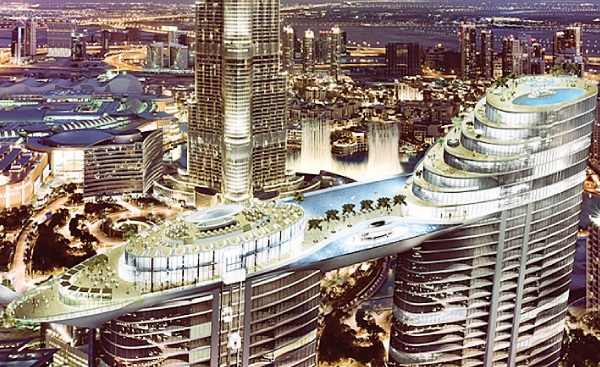
There seems to be no holding back Emaar’s drive to make the most of the current bullish trading environment as they announce yet another development in Down Town. The Address Residence Fountains View is targeting the top end of the market as the company releases a limited number of luxury residences – ranging in size from 2k to 17k sq ft.

Dubai-based builder, Arabtec, will buy the remaining 45% shares it does not own in Emirates Falcon Electromechanical for US$ 45 million. This should help the company as it expands its operations into more low cost housing projects in Abu Dhabi and Dubai. Last month, Arabtec bought the remaining 40% shares in Target Engineering which will help in its ambitions to expand into oil and gas construction.

The latest report on the new Dubai Zoo, to be known as Dubai Safari, is that work on the US$ 40.9 million project is on time and will be ready by the end of next year. Covering 120 hectares, it will have four different sections – Arabian, African, Asian and Open Safari – and will also have a golf course, botanical garden and resort.

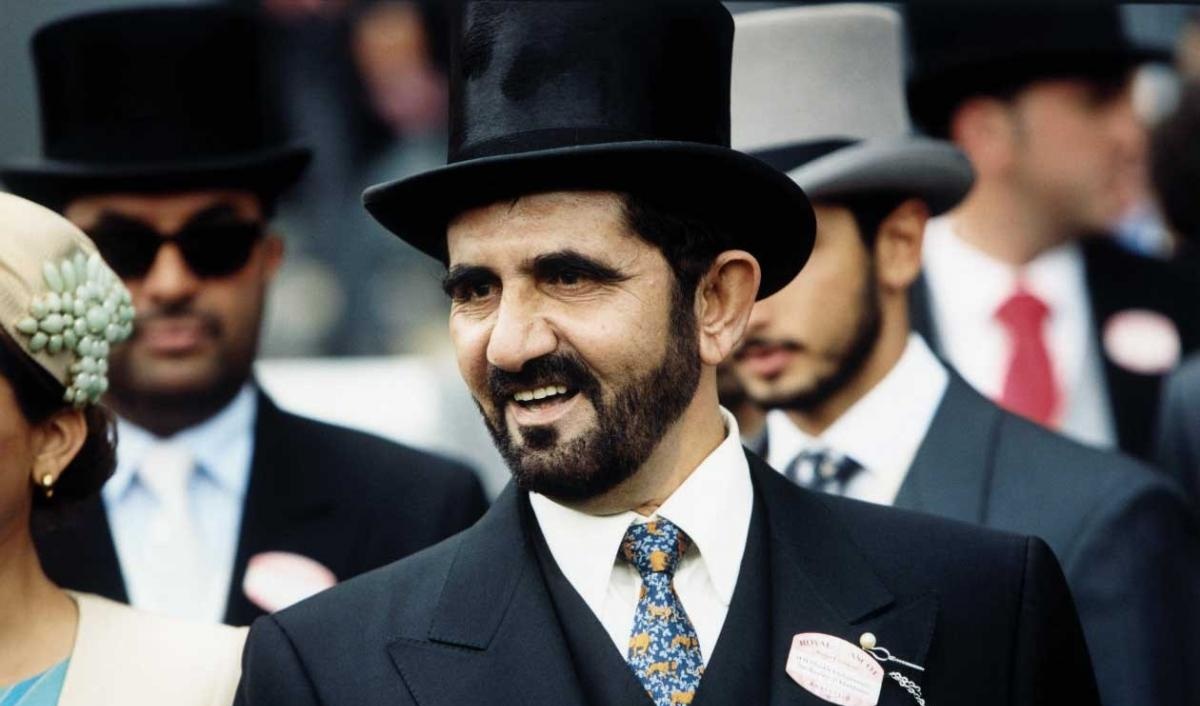
Not a good week for Godolphin and trainer, Mahmood Al Zarooni, who has been banned for eight years from the industry following his admission that he had used banned steroids to dope racehorses in the UK. HH Sheikh Mohammed bin Rashid al Maktoum is not best pleased and has publicly stated that there can be no excuse for any deliberate violation to the rules of horse racing. Reiterating that he was appalled and angered by this discrepancy, he has ordered that the stable at Moulton Paddocks in Newmarket be closed with immediate effect.  The only good thing to come out of this incident is that Godolphin will return stronger than ever once its reputation and sportsmanship recover.

In order to finance the building of ten new schools and to upgrade existing establishments, GEMS Education has just arranged a US$ 545 million finance deal with local banks including Mashreq, Dubai Islamic, Noor Islamic and Abu Dhabi Islamic. In addition to the schools, the Varkey-owned company is establishing a Leadership Academy and Teacher Training Centre in Dubai.

Despite the cost of education and food rising by 6% and 2.15% in the year ending 31 March 2013, latest figures from the National Bureau of Statistics indicate that UAE’s consumer price index reached 117.38, equivalent to an inflation rise of only 1%. Rather surprisingly, there was an actual drop of 0.11% in the cost of housing but the signs are that this sector will show a larger rise this year and will push the 2013 inflation rate to probably nearer a more realistic 3%.

As the retail space at Dubai International Airport expands with the opening of Concourse A in Terminal 3, it comes as no surprise to see that Dubai Duty Free sales have jumped by nearly 12% to US$ 436 million in Q1. The new facility has added a further 8,000 sq mt for shoppers with the DDF shopping area now covering 26,000 sq mt.

It will not be long before the duty free retailer becomes active at Dubai World Central – the emirate’s new airport, which will eventually have five runways and annual capacity for 160 million passengers and 12 million tonnes of cargo. The world’s largest airport will start passenger traffic in Q4 with Saudi-based carrier, Nasair, and European budget carrier, Whiz Air, being its first two operators.

Although the airline is flying high – with promising annual results due shortly –  the Emirates Airline cable car system in London is seeking new sponsors to defray US$ 27.8 million of costs for the 1.1 km Thames river crossing. Since its June 2012 opening, the US$ 96.8 million project has carried more than 2 million visitors, with the Dubai airline providing  an estimated US$ 55.6 million for a ten-year branding deal.

The continuing growth of Emirates is reflected in the news that it will build five 25-storey residential towers in Dubai Silicon Oasis to house 2,000 of its cabin crew. Whether this will be sufficient remains to be seen as the airline is planning to recruit a further 2,700 cabin crew this year alone.

Apparently, the City of London is keen to promote and develop trade links with Dubai and particularly between Tecom (which runs ten business parks including Dubai Internet City, Dubai Outsource Zone and Dubai Media City) and UK’s Tech City based in East London.

There are reports that the Minister of Energy, HE Suehail Mohammed Al Mazrouei, is considering an increase in UAE oil production to 3.5 million bpd. Evidently, this will meet future increased consumer demand and help stabilise global markets during times of crises.

Interesting changes have been announced by the National Bonds Corporation which has also slashed minimum subscription levels from US$ 817 to US$ 27.2. Innovations include a US$ 13.6 bond winner every minute and 600 other daily prizes which will be split three ways – 200 for female bondholders, 200 for minor bondholders and 200 for regular savers. Major prizes include a monthly draw for US$ 272k, two BMWs and two gold bars – one for an Emirati lady and the other for an expat female.

Although there is some concern about a potential property bubble, maybe the same can be said of the local bourse. This week it has surged 6.6% to close on 2076 – its highest level in nearly four years. In the first four months of 2013 it has seen mega growth of 33.64% (and 32.19% over the past year). If Q1 earnings are above analysts’ expectations, there is no reason for the market not to test the 2150 mark this coming week but then fall back to below the 2000 mark before the summer heat hits home.

So far Emirates NBD, Commercial Bank of Dubai and Ducab have reported marked performance improvements in Q1. Dubai’s largest bank, 55.6% owned by Investment Corporation of Dubai, saw its quarterly net profit up 30.6% to US$ 228.1 million on the back of a 19.3% reduction in bad loan provisions to US$ 242.0 million. Its loans and advances stood at US$ 60.1 billion whilst deposits increased by 4% to US$ 60.8 billion. This week, the bank repaid US$ 817.4 million to the Central Bank as part of the US$ 3.43 billion it received in the wake of the GFC.

CBD had a quarterly profit of US$ 98.4 million – a 9.1% increase on its 2012 result. Loans and advances stood at US$ 7.63 billion whilst deposits were almost at the same level. It is no surprise to see one of the emirate’s conservative banks having relatively high liquidity and a capital adequacy ratio of 22.6%.

Ducab, jointly owned by the government’s Investment Corporation of Dubai and Abu Dhabi’s Senaat, reported a 10% increase in 2012 profits with a slight drop in Revenue to US$ 1.14 billion mainly due to a dip in copper prices. Cable exports rose by 42% which helped to offset weaker demand in the home market.

Meanwhile DP World has seen a weakening in trade with a 7.8% Q1 drop in container volumes compared to a year earlier. The world’s third biggest port operator saw a reduction from 13.8 million TEUs (20′ equivalent container unit) in Q1 2012 to 12.8 million TEUs.

The World Bank has just reported that the 2012 global remittance flow surged by 11% to reach US$ 512 billion. With 3% of the global population living outside their home country, this figure has more than quadrupled over the past decade. The top four recipient countries were India (US$ 69 billion), China (US$ 60 billion), The Philippines (US$ 24 billion) and Mexico (US$ 23 billion).

Chancellor, George Osborne, breathed a sigh of relief as the UK just missed going into a triple dip recession that would have meant the country would having its third recession in four years. However, he is not out of the woods yet as there has only been a small dip in annual net borrowing to US$ 184.4 billion whilst total public net debt remains stubbornly high at US$ 1.81 trillion or 75.4% of GDP.

The Eurozone is still the main driver that is holding back any prospect of a global recovery and it is the bigger economies in the 17-country bloc that are beginning to cause concern. Business confidence in Germany is deteriorating by the month whilst Italian politics is in turmoil despite the recent election of Enrico Letta as prime minister. Unemployment levels in France have jumped 11.5% over the past year with over 3.2 million now unemployed. Spain’s unemployment has ballooned to 27.7% and the government has now amended its 2013 growth forecast from minus 0.5% to minus 1.3%. (Despite this it is confident of cutting US$ 195 billion by 2014).

The major problem facing the world today is probably that of conflict of interest – mainly involving governments, big business and financial institutions. A good example is that of the Big 4 accounting firms – Deloittes, PwC, Ernst & Young and KPMG – and their association with governments.  In the UK, for example, they seem to have more than a cosy relationship with the government where they help the authorities with new tax law and then exploit loopholes in the legislation which, in turn, brings them a reported US$ 3 billion in fees for advice on tax matters they help set up.

One major incident this week encapsulates this problem further – and that is the collapse of a garment factory in Bangladesh which killed upwards of 200 people in what is the most corrupt and one of the poorest countries on the planet. It must be time for everyone to realise that using slave labour in such countries is immoral and ethically wrong and steps should be taken to erase this once and for all.

It appears that the World Bank, with the assistance of the IMF, plans to eradicate poverty – defined as living on less than US$ 1.25 a day – within a generation. Currently 21% of the world population lives in extreme poverty – a major improvement from the 42% mark twenty-five years ago. In most countries, corruption levels are rising and the poor are becoming poorer. The bank’s President, Jim Yong Kim, should visit any of the 200,000 shanty towns around the world. If he were to go NEZA Chacco Itza in Mexico, Orangi Town in Karachi, Dharavi in Mumbai, Khayelitsha in Cape Town or even Kibera in Nairobi, he might then realise he is living In Dreams.
Posted in Finance | Tagged , , , , , , , , , , , , | Leave a comment

All Shook Up

jose-mourinhoEmaar’s latest foray into the property market comes days after the release of 188 townhouses in their Mira development which brought chaos and pandemonium to Dubai’s streets, with thousands of unhappy prospective buyers on the rampage to purchase a villa. This one will be more sublime with the orderly launch of two Burj Vista buildings (one 20-storey, the other 65) comprising 680 apartments. This will be their fourth launch in Downtown Dubai in the past four months and undoubtedly this will be yet another sell-out for Dubai’s prime developer.

It seems that Salem Al Moosa’s Falcon City of Wonders is progressing well with 365 villas, of the planned total of 1,156, already completed with a further 214 under construction and the balance thereafter. The project, which spans 41 million sq ft, and includes replicas of the Seven Wonders of the World, will also have a shopping mall, hotels and a theme park.

Nakheel is slowly showing signs of recovery since it completed its restructuring in late 2011. The company will be buoyed by its Q1 results which showed an encouraging 61.9% jump in Revenue to US$ 595 million whilst its bottom line was up 35.6% at US$ 134 million. Since its restructuring, the developer has paid US$ 300 million in sukuk profit payments and loan interest but has still got some way to go to placate all its stakeholders.

The troubled Union Properties extended for a further five years, a US$ 109 million loan received from Abu Dhabi Commercial Bank – this comes after last November’s US$ 1 billion debt deal with Emirates NBD and a further loan extension of US$ 736 million.

The Dubai-based builder, Arabtec has signed a 60:40 agreement with Samsung Engineering to form a company that will be involved in large energy, infrastructure and power projects in the MENA region. The recent entrée of Abu Dhabi’s Aabar, as a significant shareholder, should ensure that the new JV soon becomes a significant player in this market.

Good news for Dubai’s Drake & Scull International which secured three contracts – in Abu Dhabi, Sharjah and Makkah, Saudi Arabia – with a value of US$ 181 million. Earlier in the year, the company announced that it had signed two contracts in Qatar worth US$ 132.5 million.

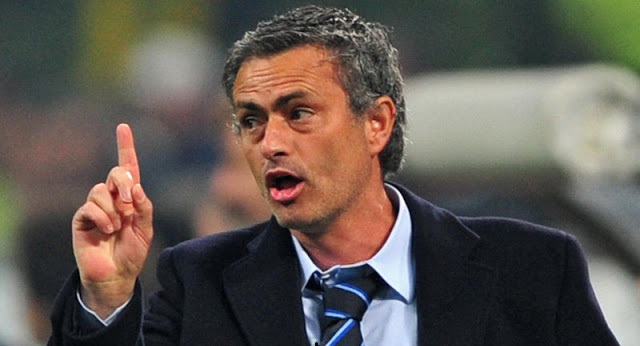
The market is anxiously awaiting the annual results from Emirates which should indicate that the airline is one of the most profitable in the aviation industry. Meanwhile there are reports that the company is considering a shirt deal with Jose Mourinho’s Real Madrid that is estimated to cost about US$ 34 million a year. (Whether the Special One will be there  – or at Manchester City – next season remains a mystery). This will be in addition to existing specific marketing rights such as branding in their Santiago Bernabeu stadium. Currently, the likes of Arsenal, Paris St Germain and Hamburg carry the Emirates logo on their kit.

This week it was also announced that it had been appointed the official partner for the French tennis Open at Roland Garros for the next five years. Apart from being the official airline for the ATP World Tour, Emirates also sponsors other major tennis events such as the US Open Italian Open and Barcelona Open. Wimbledon next?

Another interesting concept from the Emirates Group was floating the idea of franchising its Emirates Holidays segment in major overseas markets. Such is the strength of its brand that it seems that the airline could be on to a winner. In order to boost its Revenue further, the division is also making optimum use of digital platforms so as to keep up to date on available hotel rooms globally.

Even the top man at BA, Willie Walsh, has admitted defeat and declared that Heathrow will soon lose its top spot as the world’s busiest airport to Dubai. It would be an interesting exercise if both countries changed governments for a week and then the general public will be able to see what damage politicians, having to placate their constituents, can wreak on a country’s economy.

Not only is Dubai a transport hub, it has become a focal point for the hospitality sector. The latest chain to enter the local market is Four Seasons which will open its Jumeirah Beach Road property in Q4 this year, on an 11 acre waterfront site. The boutique hotel will include 49 suites, 3 restaurants and a beach club.

On the telecommunications front, troubled French operator Vivendi is set to sell its 53% share in Maroc Telecom for around US$ 6 billion. Both Etisalat and Qatar’s Ooredoo have shown interest in the Moroccan venture and Etisalat is reportedly set to sign a US$ 8 billion loan facility to help fund its bid. The successful bidder may have to buy out minority shareholders.

A sure sign that good times have returned to Dubai comes from BMW as the German luxury car-maker reported that Q1 sales were up by 38%. The BMW X5 was their most improved seller with a 75% jump to 234 cars whilst even the Mini saw quarterly sales up by 25% to 149 vehicles.

Dubai Islamic Bank was one of the first financial institutions to report Q1 earnings which showed an impressive Q1 Net Profit growth of 16.7% year on year to US$ 82.2 million and huge 22.2% jumps in Deposits to US$24.1 billion (32.4%) and Total Assets to US$ 32.9 billion (22.2%). Recently, the bank was confident enough to repay a US$ 1 billion deposit to the Ministry of Finance received in the aftermath of GFC in 2008.

Although down 8 points on the week at 1948,the Dubai Financial Market Index is still showing a healthy 25.10% gain so far in 2013 and a 25.07% yearly improvement. Obviously a better return than gold or silver.

As Brent Crude drops below US$ 100 per barrel, 2012 returns show that the country’s 2012 hydrocarbon revenue was at its highest level ever (US$ 124.7 billion). With 2013 production levels expected at 2.68 million bpd, the Institute for International Finance forecast similar revenue this year. There was also a 6.5% jump in GDP to US$ 375 billion, predicted to grow to new a new record level of US$ 393 billion this year.

The Dubai Gold and Commodities Exchange hit new peaks this week with 103,126 contracts in a day (for the first time over 100,000) plus record daily trading value at US$ 3.8 billion. Interestingly 93.7% of contracts and 92.1% in value related to Indian Rupee futures.

The unprecedented recent falls in the gold price has to indicate that there is something afoot and the fact that it fell a massive US$ 150 per ounce on Monday after dropping US$ 87 the previous Friday only adds credibility to the story. The end result is that by Monday it had shed 30% of its value from its September 2012 price of US$ 1,923.

It is hard to believe the expounded reasons why the yellow metal has lost its lustre, viz., an easing of QE3 in the US, slowing growth in China and a sell-off of the bullion in Cyprus. The facts are that QE3 still exists, Chinese growth forecasts fell by a meagre (and mainly technical) 0.2% to 7.7% and Cyprus was planning to sell a paltry 201k ounces – when annual production is nearly 2,700 tonnes! There has to be some shady dealings by the usual suspects.

The recent fall in gold prices has apparently wiped off US$ 169 billion of the capitalisation of companies that trade on the FT Gold Mines Index. Shares are trading at their lowest level relative to the actual metal in over 20 years. Any further drop in its price will result in financial ruin for many a miner, particularly when the global average production cost is put at around US$ 1,200.

Although the political spotlight shines on its neighbour, South Korea has just unveiled a US$ 15.3 billion stimulus package to create jobs and boost a sagging economy. Already this year, the Ministry of Finance has cut its 2013 growth forecast from 3.0% to 2.3% caused mainly by a reduction in exports to markets such as the eurozone and US and its currency, the won, appreciating 10%, compared to the US$. Similar problems are being experienced by near neighbours China and Japan (where the yen has dropped almost 20% to the US$ since November 2012).

One thing that the IMF is not good at is forecasting. Yet again they have had to lower earlier predictions for most of the developed world’s economies. Globally, it cut growth predictions from 3.5% to 3.3%, for the eurozone to minus 0.3% and UK to 0.7%. Of the major players in the eurozone, Germany is expected to witness 0.7% growth whereas its Gallic neighbour will see a minor contraction of 0.1%.  The IMF expect growth levels in China and the USA to improve by 7.7% and 1.9% respectively.

On Tuesday, Dubai felt tremors from the 7.8 magnitude earthquake that was recorded on the Iran / Pakistan border. This was our second quake in eight days and led to thousands of people evacuating shaking buildings. Just like the global economy, Dubai was All Shook Up.

Posted in Finance | Tagged , , , , , , , , , , , , , , , , , | Leave a comment

All or Nothing

dubai-police-lamborghiniLast year saw a 13.9% surge in foreign direct investment into the UAE, rising from US$ 24.5 billion in 2011 to US$ 27.9 billion. The improving economic climate and Dubai becoming more of a safe haven for overseas funds are the reasons behind this massive improvement. The emirate has more than recovered from the GFC when even as late as 2011, the value of cancelled and suspended projects was put at a staggering US$ 354 billion.

February was a boom time for Dubai hotels with occupancy rates increasing to 90.1%.  All industry indicators headed north including TRevPAR 11% at US$ 523.86, Average Room Rate at US$ 334.79, RevPAR 10.3% to US$ 301.70 and GOPPAR 12.7% at US$ 261.08. There is no doubt that this sector is a reflection of the Dubai bounce back and will continue to expand despite more inventory coming on stream this year.

Trade has always been Dubai’s lifeblood and it comes as no surprise to see that the country has the largest Arab market for imports (at US$ 381 billion) and only second to Saudi Arabia when it comes to exports. What is more surprising is, that according to a recent UN report, UAE is the world’s 25th largest importing country – accounting for 1.1% of the total imports of US$ 15.37 trillion – and 19th for exports with 1.5% of the global total of US$ 15.23 trillion.

A pointer that the real estate boom shows no hint of let up was the massive queues outside Emaar Square as the developer launched its Mira project of 188 townhouses on offer with starting prices as low as US$ 270k. Maybe a more orderly sales process will be in place for their next major release?

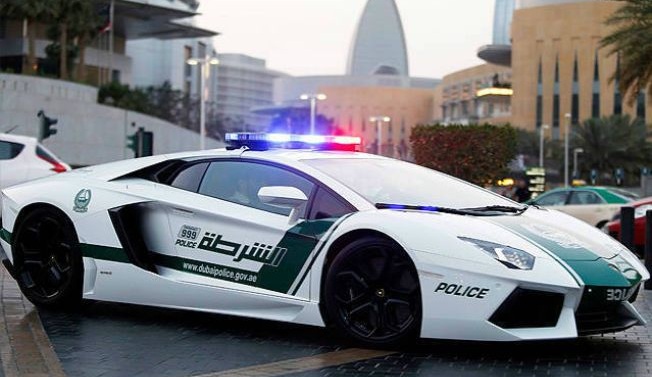
Not many police forces can claim to have a Lamborghini in their fleet – but Dubai can. Its latest acquisition is an Aventador 6.5 litre V12 engine car capable of 350 kph and comes with a price tag of US$ 500k.

Dubai Internet City and Dubai Outsource Zone announced a 15% growth in the number of new companies starting business in 2012 – a positive sign of rising confidence in Dubai. It is thought that 90% of all UAE outsourcing emanates in the emirate.

DIC – in partnership with the Kerala government – finally gave the green light to SmartCity Kochin. Phase 1 of the project – covering an area of 400k sq ft – will start in July with the first two buildings slated for completion before the end of 2014.

The Kaloti Group is about to construct one of the world’s largest gold and precious metals refinery in of all places – JLT. Costing an estimated US$ 60 million, it will have the capacity to produce 1,400 tonnes of gold and 600 tonnes of other precious metals.

This may not be a good investment based on the current gold market which has seen prices of the yellow metal plunge to US$ 1,480 an ounce, down 22% over the past six months. The main reason behind this decline is that QE in the US may be coming to an end after almost four years, during which time the Federal Reserve has pumped in excess of US$ 3 trillion of easy money into the economy. A secondary cause is that Cyprus is considering selling US$ 325 million of its gold reserves to prop up its battered economy. This may prompt other countries – including Italy and Spain – to take similar action and get out before the gold price goes down the toilet. A final worry is that there are reports that there is a sell order of 4 million ounces (12.4 tonnes) waiting for execution when Comex opens next Monday.

The Dubai Financial Market Index ended the week at 1956 on fairly thin trading of US$ 122 million. A day earlier, the DFM closed on 1963 – its highest level since November 2009 – on expectations that Q1 reporting will beat initial forecasts.

Within the next two months a mini revolution will hit the local banking industry with the long-awaited adoption of a direct debit payment system. This will see the demise of the current requirement of post-dated cheques to cover mortgages, loans and credit cards. One in five cheques issued (1.4 million), valued at US$ 12.7 billion, are reported to fail either because of insufficient funds or for other reasons.

The often complex – and definitely murky – world of derivative trading was further exposed by Mashreq starting legal proceedings against the Dutch ING Groep. The Dubai bank alleges that it has lost US$ 43 million on investments which were no more than junk rated bank debt despite their specific instructions to stay clear of the likes of CLOs (collateralised loan obligations), CDOs (collateralised debt obligations) and CBOs (collateralised bond obligations).The bank is the latest – but certainly not the last – GCC investor to seek damages for losses in credit derivative trading.

Another Dutch company in trouble was Royal Philips Electronics which has been fined US$ 4.5 million by the US SEC for alleged bribery offices in Poland relating to sales of medical equipment sales.

The career of former Chinese railway minister, Liu Zhijun, has hit the buffers with news that has been charged with corruption arising from his mishandling of huge infrastructure investments such as the US$ 136 billion rail link between Beijing and Shanghai. It can only be hoped that the new Chinese leader, Xi Jinping, is serious about tackling that country’s burgeoning corruption problem.

In the latest survey by Transparency International, the least corrupt countries are Denmark, New Zealand and Norway and the most corrupt in the 174-country survey were Somalia, North Korea and Afghanistan. The so called BRIC nations do not fare so well with Brazil rated 68th, Russia 133rd, India 94th and China 80th. All that tells you is that despite recent impressive GDP growth in those four countries, the gap between rich and poor, or haves and have nots, is widening. If this continues at present levels, there will be inevitable civil unrest on scales never seen before. The trinity of governments, financial institutions and so-called big business have to stop their relentless drive of self-aggrandisement and realise there must be a more equitable distribution of wealth  – otherwise it will be All or Nothing.

Posted in Finance | Tagged , , , , , , , , | Leave a comment

Out of Time

dubai-world-trade-centerWith Easter fast approaching, the local hospitality industry is bracing itself for another busy period. Apart from the influx of tourists, another sector is becoming an increasingly important driver in filling Dubai’s growing number of hotels and that is the conference market. Recent figures indicate a 12.5% surge to 1.85 million in the number of visitors attending the various exhibitions held at the Dubai World Trade Centre last year, including 703,000 from overseas. The 150 trade shows and exhibitions held are estimated to have filled Dubai’s coffers by US$ 1.8 billion.

It is not only people flooding into these shores but also capital. The Department of Economic Development has reported that its foreign investment office facilitated investment of nearly US$ 1 billion last year with a total economic impact of US$ 5 billion – a 14.3% jump on 2011. No doubt, disgruntled Cypriot depositors will  be looking to transfer funds into Dubai when draconian transfer limits are lifted.

The first two months of 2013 have seen Dubai International increase its passenger numbers by 15% up to 10.6 million. As a result, the airport has become the world’s second busiest – behind London Heathrow. It is expected that this will change with Dubai’s expansion plans of an increase in capacity by 50% to 90 million within the next five years.

The main driver behind these impressive returns has to be Emirates. Their passenger numbers will grow even further because of the decision by  the Australian Competiton and Consumer Commission to give final approval for the airline and Qantas to combine operations for the next five years. Dubai will take over the mantle of Singapore which has been the regional hub for the Australian carrier for the past two decades.

Having received 151 aircraft from Boeing since 2002, Emirates has 73 777-300ER on order worth in excess of US$ 23 billion. The three-year old budget carrier, flydubai, already has 27 737-800s in service with a further 23 still to be delivered. An obvious boost for Boeing and the US economy.

Damac Properties continue to hog the headlines with a raft of new developments already announced in Q1. Their latest offering is a luxury tower of hotel serviced apartments located on the seafront at Dubai Maritime City. The company also announced that phase 1 of its US$ 1 billion Paramount Hotel sold out within hours of release as over 1,000 potential international investors attended the launch. This is yet another positive sign of a major recovery in the Dubai property market.

One of Dubai’s major developers has just signed a US$ 136 million contract to build the Nile Towers in Cairo. Arabtec’s 23-storey hotel and residential complex – its third major project in Egypt – will include a 256-room Hilton and 114 luxury apartments. Having got its fingers burnt during the Dubai real estate crash four years ago, the company seems to be concentrating away from its home base.

Meanwhile Q2 will see Meydan announce some major projects on its rambling 3.7 million sq mt site. In order to fund future infrastructure, Meydan has just signed a financing deal with Commercial Bank International and Qatar National Bank.

In Meydan’s southern extension, G & Co has started work on the US$ 327 million development of its Millennium Estate. It is expected that completion of the 198 luxury villas – that will cost between US$ 1.56 million and US$ 2.0 million – will be completed by 2015. Funding of the 3.8 million sq ft project has been sourced locally.

Following its recent announcement of a new hospital in Meydan, local company Mir Hashem Khoory (MHK) is going into education with news that it is tying up with UK’s Kent College, Canterbury. Unlike some other educational facilities, this will not be a franchise arrangement as the UK entity will manage and operate the 2,000 student operation ready to open in 2015. It is expected to cost in the region of US$ 41 million.

The Varkey-run GEMS is planning to build a further 21 schools, over the next three years, bringing their total inventory of educational establishments to over eighty. The Dubai company, the world’s largest privately owned provider of school education, may have to raise up to US$ 1 billion to finance this expansion.

There have been two major industrial investments reported by Dubai-based companies – Al Braik Investments and Caparol. The former has obtained approval to establish a US$ 200 million silicon smelter in Abu Dhabi’s Khalifa Industrial Zone. When up and running in 2016, its two furnaces will have an annual capacity of 33,000 tonnes.

The other – a JV between Emaar Industries and Investments and Caparol – will develop a US$ 10.9 million facility in Dubai Industrial City. The German partner is that country’s largest paint manufacturer and is looking at tapping into the MENA market estimated to be worth US$ 680 million. The factory will be able to produce 30,000 tonnes per annum.

The government-owned Dubai Silicon Oasis Authority had a record 2012 with a 26% jump in profits to US$ 45.1 million on Revenue of US$ 186 million. There was also a 32% hike in the number of companies to over 700 of which 480 are involved in the IT industry.

Having made records sales of over 1,650 vehicles in 2012, it is no wonder to see Al Nabooda planning a US$ 39 million new Porsche showroom on SZR. Early indicators are that motor vehicle sales this year will be stronger than 2012.

A recent study has shown that the use of electronic payment products continues to expand in the region. Over the past four years, this medium has reportedly added US$ 4.2 billion to the UAE economy, compared to US$ 4.7 billion in Saudi Arabia and US$ 1.2 billion in Kuwait. Once again the UAE is seen to be punching above its weight.

The long drawn out Deyaar fraud case came to its conclusion this week with the former CEO, Zack Shahin, sentenced to fifteen years and three of his cohorts receiving lesser sentences. Between 2004 – 2007, they were accused of accepting bribes to the value of US$ 5.5 million. In addition fines of more than US$ 7.8 million were handed out.

The Dubai Financial Market Index has fallen 3.4% – its largest weekly drop in the past ten months. April will probably see more of the same. The market has been flat and falling over the past four weeks but is still up 13.7% so far in 2013.

Although Cyprus is still the dominant business story, there is bad news further afield. Argentina is on the brink of defaulting  on a looming US$ 1.3 billion claim. In 2002, the country had problems with repaying a US$ 100 billion loan; most of the creditors agreed to a  revised settlement except for hold-out creditors who refused and wanted full payment. Courts have agreed to their request   and the time of reckoning has now arrived for the South American government..

Three indictaors in the UK show that the country is in a bigger economic malaise than most obdservers had forecast. The latest quarterly GDP has a fall of 0.3% with a triple dip recession becoming more likely. Then its 2012 current account has jumped from US$ 30 billion to US$ 88 billion; the gap between spending and earnings is now 3.7% of the GDP – its highest level since 1989. Finally, sterling is under enormouus pressure and has fallen 6.7% to the US$ and 3.9% to the euro this quarter.

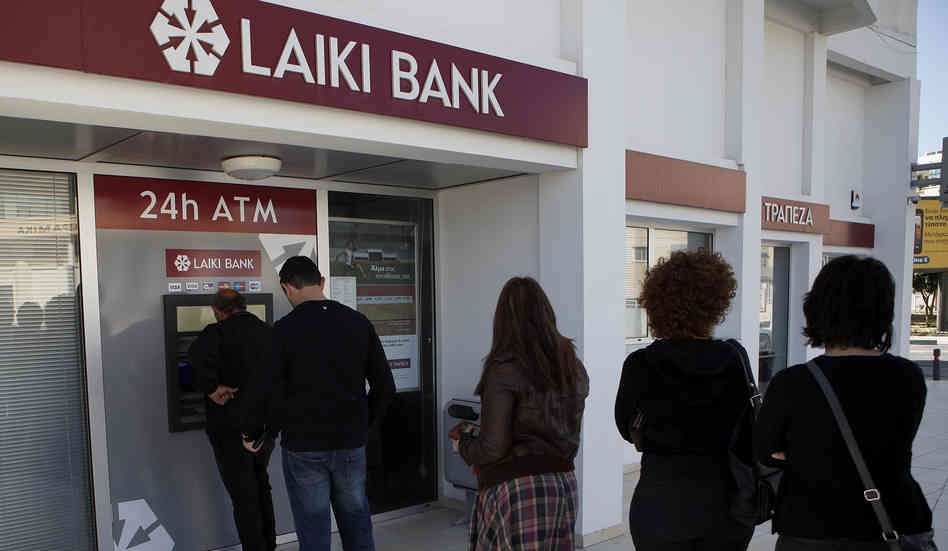
Eurozone’s third smallest economy, at US$ 23 billion, (behind Malta and Slovenia), has had an epic week. Finally Cyprus had to face reality after their last chance, Russia, refused any help. In exchange for a US$ 12.8 billion bail out, their second largest bank was closed down and depositors – with more than US$ 128k – were  heavily penalised. Further measures included a daily limit of US$ 368 for withdrawals and severe restrictions on international transactions limited to US$ 6.4k per month.

The end result is that there are now two euros in Cyprus – a cash euro and a bank euro, most of which cannot be accessed. The country has little chance of economic survival if tihs staus quo continues. President Nicos Anastasiades still clings to the hope that Cyprus can stay in th euro. Unfortunately for this Mediterranean island (and maybe for the likes of the PISS countries – Portugal, Italy, Spain and Slovenia – future possible bail out candidates this year) they are all Out Of Time.

Posted in Finance | Tagged , , , , , , , , , , | Leave a comment

Don’t Look Back In Anger

cyprus-atmThere is no doubt that the local tourism industry is booming and latest figures from the World Travel and Tourism Council just serve to confirm this. The massive impact this sector has on the economy can be gauged from the fact that it contributed US$ 52.8 billion, or 14%, of the GDP, with this set to grow even further in 2013. No wonder then that the industry accounted for almost 23% of total investment last year (amounting to US$ 22.6 billion) and over 11% of the work force – over 383k.

Interestingly, UAE ranked 15th  of 140 countries in a World Economic Forum survey on positive attitudes towards foreign visitors. At the top end of the scale were New Zealand, Iceland and Morocco whilst the least friendly were Bolivia, Venezuela, Russia and Kuwait.

The second ‘T’ in the Dubai trinity is trade and recent blogs have enumerated how well this sector is performing. One of the fastest growing segments is that of diamond trading and latest figures indicate that Dubai has become the third most important global hub after Mumbai and Antwerp. From an almost zero start position in 2003, the business is now worth in excess of US$ 40 billion and growing.

(It has to be Dubai when you hear stories of a Swiss company selling a Bentley Continental GTC diamond encrusted bonnet for US$ 545k. In the same vein, the most expensive garment in the world – an abaya – valued at US$ 17.7 million is on show at Raffles Dubai).

DP World had a 20.9% increase in 2012 profits to US$ 555 million as its Revenue rose 4.7% to US$ 3.12 billion. The world’s third largest ports operator invested US$ 685 million last year on its sixty terminals spread across six continents. This year, it plans to spend US$ 3 billion and is currently involved in eleven new developments and expansions.

Dubai-based Kaloti Group is helping the government of Suriname to build South America’s first ever gold smelting plant. When fully operational in 2016, it could be refining over 60 tons of gold annually.

Another step in making Dubai a major medical hub was the announcement that MHK (Mir Hashem Khoory) will build a hospital at Meydan. The 170-bed project, covering 280k sq ft, will be completed in 2015 and will be manned by 600 staff, half of whom will be from Korea. Currently this sector contributes around 6% to the UAE’s non-oil GDP totalling US$ 3.2 billion; estimates are that this figure will quadruple over the next three years.

Emaar had mixed results in respect of their property trades in 2012. Whilst apartment sales more than doubled to US$ 681 million, both its villa and commercial sales were down – villa sales dropped marginally to US$ 255 million whilst its commercial property nosedived from US$ 736 million to US$ 186 million.

Already owning the world’s second largest yacht, Dubai, HH Sheikh Mohammed bin Rashid Al Maktoum has taken delivery of a rather smaller 40 metre aluminium superyacht built by the Italian company, Saniorenzo. Curiously, seven of the ten biggest ever yachts are regionally owned. “Dubai” comes in 2nd at 160 metres (2 metres shorter than Roman Abramovich’s “Eclipse”), with The Sultan of Oman’s “Al Said” (155 metres), Saudi-owned “Abdulaziz” (147 metres),  Abu Dhabi’s “Yas” (141 metres), Saudi Crown Prince’s “Al Salamah”  (139 metres) and the Qatari Emir’s “Al Mirqab” (133 metres).

News this week that the belated Al Sufouh trams will be in Dubai by the end of 2013 – three years behind schedule because of liquidity problems emanating from the after effects of the GFC. The first phase of the 14 km track will see the 300-capacity vehicles move up to 3,500 passengers an hour from the Marina down Al Sufouh road and linking with three metro stations on SZR. Phase 1, covering 10.6 km, is expected to cost US$ 1.09 billion.

With an estimated US$ 50 billion worth of debt maturing between 2014-2016, don’t be surprised to see one of Dubai’s bigger government entities going public in the next year or so. Given the right economic climate, assets, such as Emirates or DEWA, would surely sell at a premium.

Last year, the UAE pumped 5% more oil raising their daily production to 2.68 million barrels. Consequently the country’s oil export earnings rose to US$ 124.7 billion boosting its current account from US$ 41 billion to US$ 60.5 billion – an impressive 47.6% surge.

During 2012, there was a 4.4% rise in money supply aggregate M2 as well as increases in bank loans and advances (2.6%) to US$ 299.5 billion and bank deposits (9.2%) to US$ 318.2 billion. The Central Bank also confirmed that, at the end of 2012, money supply M0 (currency in circulation and with banks) was at US$ 15.75 billion.

Meanwhile Dubai Financial Market Index had a flat trading week marginally down from its Sunday opening of 1916 to close on Thursday at 1910. The downward trend is expected to continue into April. YTD the Index is still up 16.85%.

HSBC is in trouble again – this time in Argentina where the authorities have accused the bank of money laundering and helping its clients evade taxes. The tax agency has commenced legal proceedings but the amounts involved are small fry compared to what went on in US which led to a US$ 1.9 billion settlement last year.

Another bank that seems to be more concerned with the welfare of its senior staff than its customers is Barclays. It has been reported that nine of them will receive a total of US$ 60 million in a share pay-out deal. So much for a promised overhaul of the bank’s extravagant pay deals!

One of the high profile firms in the US$ 2.25 trillion hedge fund industry, SAC Capital Advisors, has been caught in the biggest ever insider trading fraud. Its founder, Steven A Cohen, who has built up a US$ 15 billion hedge fund, settled with the US regulators and agreed to pay US$ 616 million as penalty for basically cheating the system. In the ideal world, the likes of Mr Cohen should be locked up for their misdemeanours.

On the tenth anniversary of the Iraq invasion, a recent report claims that the US has spent at least US$ 138 billion in military and reconstruction costs. 52% of this total (US$ 72 billion) was secured by ten contractors with the main beneficiary being KBR, a former subsidiary of Halliburton, which raked in revenues of US$ 39.5 billion. Coincidentally, Dick Cheney, the former VP to George Bush, used to run Halliburton. What is also worrying is a 2011 report on Wartime Contracting in Iraq and Afghanistan estimated that US$ 60 billion had been either wasted or lost to fraud since 2001.

In its aim to acquire strategic overseas assets, Chinese foreign direct investment continues to climb with Australia becoming a big target. In the first two months of this year, investment there was up 242% over the corresponding period in 2012 whilst there were major pushes in Hong Kong and US where increases of 156% and 146% were witnessed. Latest figures show that US$ 18.39 billion was spent overseas whilst inward investment stood at US$ 17.48 billion.

A combination of falling exports (2.9%) and rising imports (11.9%) is not good news for the Japanese economy as it reported a February trade deficit of US$ 8.1 billion. It seems that a falling yen (20% down on the US$ since November) is not the panacea many thought it would be.

Forecasting is not one of George Osborne’s strengths. In October, the UK Chancellor estimated the country’s 2013 growth at 1.2% – now he admits that it will be halved to 0.6% and even that may be on the optimistic side. Furthermore his December borrowing forecast has now been revised downwards, adding a further US$ 84 billion over the next five years on a debt figure heading towards US$ 1.8 trillion.

The week started with an attempted Great Euro Bank Robbery via a brazen – but ultimately failed – effort by European politicians, bankers and unelected eurocrats to clean away their financial shenanigans at the expense of Cypriot bank customers. With estimates that Russian interests hold 40% (or US$ 31 billion) of total deposits in Cyprus banks, there was a feeling that maybe the Germans were not too happy to be seen rescuing Russian money launderers. It would appear that the troika would not release US$ 12.9 billion in emergency loans unless US$ 7.5 billion was forthcoming with a bank levy on deposit accounts. Why then did they allow funds to bail out troubled Spanish banks to be paid directly to the government. How did Greece get US$ 310 billion in funds when their small neighbour is asking for such a relatively small amount?

It appears that Angela Merkel  will not allow any rescue funds to be used to bail out troubled banks. With an election coming up in September, the German Chancellor is probably more concerned about her domestic political future rather than the future of the eurozone. So much for eurozone solidarity as Cyprus is cast away to fend for itself.

If there is no satisfactory ending to this euro-made debacle, then there will be not only be huge ramifications in the Mediterranean island but the contagion effect will be felt  around the world.

Noel Gallagher was in town this week and performed a few of his Oasis songs. Try telling Cypriots, US taxpayers, HSBC and Barclays bank customers Not To Look Back In Anger – they all have a right to be completely hacked off!

Posted in Finance | Tagged , , , , , , , , , | Leave a comment

Help!

beatles-helpLast year, the UAE economy grew by 6.5% with GDP rising to US$ 375 billion, mainly because of higher oil prices and increasing investment from within the region moving to a comparatively safe zone. Saudi’s GDP accounted for 43.1% of the GCC total of US$ 1.482 trillion with the UAE second at 25.3%. This figure was more than Qatar and Kuwait combined: however its per capita GDP at US$ 45,731 lagged behind these two GCC countries. The Washington-based Institute for International Finance is forecasting a 5.3% growth this year.

Preliminary figures covering the first nine months of 2012 indicate that UAE non-oil exports rose by 60.8% to US$ 37 billion. The most valuable traded item was gold at US$ 21.7 billion followed by ethylene polymers (US$ 1.4 billion) and jewellery (US$ 1.3 billion). Over the same period, there was a 12.5% hike in imports to US$ 134.9 billion. Trade in the free zones rose to US$ 3.5 billion, comprising US$ 1.7 billion imports, US$ 1.5 billion re-exports and US$ 0.3 billion exports.

A Ministry of Foreign Trade report shows that UAE exports of plastics increased by a massive 127% in H1 2012. With its price doubling to US$ 1,790 per tonne since 2008 and with GCC production estimated at US$ 44 billion, it is not surprising to see the Dubai Gold and Commodities Exchange launching a plastics future contract – the first of its kind in the world.

A recent report showed that Dubai luxury property rose by 20% in 2012 making it the second highest global increase behind Jakarta which had  a massive 38% jump. Impressive gains such as this go a long way in clawing back the 60% fall following the GFC in 2008 with flatter rises expected in the current year.

Work on a US$ 3 billion project at Meydan City is expected to start in Q2 according to the Indian developer, Sobha. The project, covering 8 million sq ft, will take eight years to complete and will comprise hotels, shopping mall, villas and apartments.

2012 was a landmark year for the tourism industry with visitor numbers exceeding 10 million for the first time ever. Hotel guest numbers jumped 9.5% to 9.96 million and with the number of nights increasing by 14%, there was an 18% surge in hotel revenue to US$ 5.13 billion. Saudi Arabia accounted for 11.1% of all visitors with India, UK, US and Russia (with a 54% rise) making up the top five.

Starwood Hotels & Resorts Worldwide has recently moved their headquarters from New York to Dubai. The group, which runs the Sheraton and Le Meridien brands, plans to increase its Dubai portfolio by a further six properties. This is another sign that the emirate is now probably the centre for the world’s hospitality industry.

One tourist attraction not going ahead is the Formula One theme park that was to be built by troubled Union Properties. When launched seven years ago, the project was slated to cost US$ 360 million but after spending an estimated US$ 260 million, the project was suspended in 2009 when a further US$ 327 million was needed to complete the development. Now it seems that Bernie Ecclestone is set to receive US$ 10 million as a penalty for the abandonment of the theme park.

The local e-commerce sector is growing with on-line transactions topping US$ 11 billion and UAE’s total spend is equivalent to over 50% of the total GCC business. No wonder then that with foreign investment companies eyeing this burgeoning market, Tiger Global Management has just acquired the three year-old Dubai-based Cobone.com for an undisclosed amount but which could be around US$ 40 million.

With 3,500 vehicles currently in its fleet, Dubai Taxi Corporation has just ordered a further 1,100 Toyotas which will bring that manufacturer’s share of that market to 86%.

Having projects already in Brazil, Cameroon and Guinea, Dubai Aluminium Co has just purchased a 20% share in a Chinese calciner project. The joint venture with Hong Kong-based Sinoway Carbon Energy will secure Dubal’s future supply of calcined petroleum coke.

The latest Dubai entity seeking finance is Emirates NBD, 55.5% owned by the Investment Corporation of Dubai. The amount of the proposed bond is unknown but it is thought that it will be at least US$ 500 million. Some of the proceeds would go to repay part of the US$ 3.43 billion it received from the Ministry of Finance at the peak of the 2008 global crisis.

On the subject of debt, it must not be forgotten that Dubai is scheduled next year to repay US$ 22 billion, most of which relates to Dubai World. A large portion of this emanates from loans granted by Abu Dhabi and the UAE Central Bank when Dubai was on its economic knees following the GFC in late 2009.

As part of its on-going financial restructuring, DP World received US$ 736 million when selling interests in two container terminals and a logistics centre in Hong Kong. Ridding itself of a 55.2% share in its Asia Container Terminal raked in US$ 277 million whilst divesting 75% In CSX World Terminal and the ATL Logistics Centre netted the world’s third largest global ports operator a further US$ 459 million. This latest transaction is expected to see the company post a US$ 151 million gain.

DP World, one of only two stocks trading on Nasdaq Dubai, was at US$ 14.40 at the close of business on Thursday. DEWA’s latest US$ 1 billion sukuk – rated BBB – was listed on Monday which brought the value of registered sukuk on that bourse to US$ 6.24 billion.  Meanwhile Dubai Financial Market Index had another good week up 1.8% to 1916 from its Sunday opening of 1882. The Index is more likely to hit 1800 rather than 2000 in the coming weeks.

As its GDP shrinks at an annual rate of 2.4%, allied with rises in unemployment to 11.2% and public debt at 127%, it comes as no surprise to see Fitch downgrade the Italian economy to BBB+. This comes at the same time that the banks’ total gross bad loans increased by 16.6% to US$ 162.8 billion with the situation expected to worsen in H1.

Global markets are a little perturbed by the fact that comedian, Beppe Grillo, may hold the balance of power as centre left leader, Pier Luigi Bersani, tries to form a minority government  The political uncertainty could have a negative knock-on effect on the PIGS – Portugal, Ireland, Greece and Spain.

Unemployment rates in these four countries range between 15% – 26% – compared to say the likes of Germany and the Netherlands where it is around 5%.  Wage rates have remained flat in three of the countries with Ireland actually witnessing an 8% fall whereas Germany has seen labour costs rise by 10%. Even more depressing is the disparity in GDP where Spain, Ireland and Portugal have fallen 7% and Greece 24% since the GFC compared to Germany where the growth has been over 7%. All four countries have been racked by austerity measures moreso than most of their eurozone partners. This has resulted in falls in the PIGS’ domestic demand of between 13% – 25% and a weakening in their domestic investment.

Then there is the distinct possibility that Europe’s third largest market, the UK, will see itself in a triple dip recession. All economic indicators are heading south with the latest being industrial production which fell sharply in January. Following his “omnishambles” budget last year and having to admit that he will miss his own targets twelve months later, Chancellor George Osborne is in for a torrid time next Tuesday. Help!

Posted in Finance | Tagged , , , , , , , , , , , , , , , | Leave a comment

Goodbye Yellow Brick Wall

Tiananmen-SquareThere is no doubt that tourism is a major driver for the Dubai economy, epitomised by January’s  hotel occupancy, which rose to a giddy 89.6% –  helped along by the success of the month-long Dubai Shopping Festival which this year attracted 4.7 million visitors. All figures headed north with Average Room Rate up 5% to US$ 359.39 and Total Revenue per Available Room at its highest level ever of US$ 522.92. RevPAR and F&B were both up 10.2% (US$ 321.85) and 6.5%. This year will see an 8.3% increase in the room inventory to 58,800 with a massive 16.7% jump to around 69,000 hotel rooms by the end of 2014.

The second ‘T’ in Dubai’s growth is travel with the aviation sector generating almost US$ 40 billion equivalent to 14.7% of UAE’s GDP.  January IATA figures indicate how well this sector is performing when compared to European carriers and other global airlines. As is the norm these days, the region had the fastest worldwide growth in terms of passenger numbers with 14.3% compared to Europe that grew at a paltry 2.1% and globally at 2.7%. At the same time, available capacity grew at 14.4%, 0.4% and 2.2% respectively. More of the same is expected for the rest of the year.

With the retail sector accounting for an estimated 12% of GDP, Dubai has launched the first virtual mall,Tejuri.com, in the region. The fact that on-line shopping is still in its infancy here can be gauged from the income of only US$ 280 million generated in the UAE compared to say the UK where the industry is 170 times bigger at US$ 47.8 billion. There is no doubt that internet retail trading will be a growth sector for the local economy.

The end of March will see the phase 1 completion of the US$ 40.8 million new Dubai Zoo located in Al Warqa 5. The 400 hectares site will include a safari park, golf course and recreational facilities. In line with Dubai’s philosophy, the aim is to make the safari park the best centre for wildlife in the world. Dubai Municipality is also planning a crocodile park which will be set up in the near future.

An interesting development this week came with appointment of Douglas Kirkman as CEO of ICD-Brookfield Management Limited running a US$ 1 billion fund, targeting Dubai real estate assets. The Investment Corporation of Dubai, the government’s investment arm, has joined with the Canadian conglomerate to finance future major developments in the emirate.

Another government entity, Dubai Industrial City, is now home to 471 companies having seen a massive 82% increase (212) in the past year. DIC is a specialised industrial and logistics hub for light to medium manufacturing and is one of the main drivers that help to make the industrial sector the second largest contributor to the country’s GDP.

With an improved lending environment and historically low rates, Emirates becomes the third government-owned entity this year to opt for a sukuk financing option. This will be the airline’s second bond issue in 2013 following a rather complex structured US$ 750 million one in January; DEWA and the Dubai government have already raised finance of US$ 750 million and US$ 1.25 billion.

Emaar again hit the jackpot as it saw its third major project in three months sell out in less than one hour last Saturday. Investor interest in the Address Residence Sky View was worldwide with interested buyers from seventy-five countries which just shows the increasing pull of Dubai as a place to live. According to a recent survey, it has just become the seventh most desirable global living place for high wealth individuals.

Another massive development was announced this week – Damac Towers by Paramount. Located in Down Town, the US$ 1 billion project – with a movie based theme – will comprise four towers (all over 250 metres) and include a 540-room hotel and 1,400 serviced apartments. Construction has already started with completion expected by the end of 2015.

Meanwhile Nakheel is planning to construct two-storey villas in Jumeirah Village Circle and has issued a tender for potential bidders to develop the site. As the name implies, the development will see all ninety units built in a circle.

As one of the bedrocks of the local economy, it was not unexpected to see Dubal’s 2012 Net Profit increase by 6.5% to US$ 430 million on a 11.2% jump in Revenue to US$ 2.66 billion. Dubai Aluminium started operations in 1979 and has seen a sevenfold increase in annual production to over I million tonnes. Apart from being a shareholder in the Abu Dhabi-based Emal (Emirates Aluminium), the company has projects in Brazil, Cameroon and Guinea.

The Dubai Gold and Commodities Exchange has had a good start to the year  with record trades of over US$ 44 billion (1.16 million contracts) recorded in February. Despite its title, DGCX’s strongest sector remained currencies which accounted for US$ 40 billion of trades – a year on year increase of 126%. Gold and silver futures registered gains of 77% and 38%.

With its tier one ratio standing at a relatively high 13.9% at the end of 2012, Dubai Islamic Bank is taking measures to reduce this to below the 12% regulatory limit. The largest sharia-compliant financial institution in the country is holding investor meetings prior to a proposed US$ 500 million issue of a hybrid Tier 1 perpetual sukuk. If this goes ahead, it will help strengthen the bank’s tier one capital and bring it more in line with the Basel III global standards.

In regard to these standards, Moody’s has put the subordinated debt (amounting to some US$ 4 billion) of four UAE banks – ADCB, Emirates NBD, First Gulf Bank and Mashreq – with eight other Gulf banks on review for a possible future downgrade. The warning does not apply to any other aspects of the banks’ operations.

Whilst most global bourses were continuing their upward trend, the Dubai Financial Market Index edged 2.3% lower this week closing on 1882 from its Sunday opening of 1927. This drop into negative territory is largely the result of the 31.5% fall (from US$ 0.81 to US$ 0.56) in the price of Arabtec shares over the past week. This was precipitated by the company’s decision to raise a further US$ 1.8 billion that would obviously dilute the current value of shares. Despite the weekly fall, the Index has still risen by 16.0% so far in 2013.

Dubai’s CPI increased by 0.53% in January attributable to price rises in transport (1.61%), housing (1.44%) and health (0.83%) whilst certain sectors witnessed falls including clothing (1.47%), food (1.02%) and communications (0.86%). Abu Dhabi’s inflation increased only by 0.16%, even behind Sharjah (0.29%) and RAK (0.24%). Overall the UAE consumer price index rose by 0.43% to 117.41. Official figures indicate that 2012 inflation for the country was at a relatively low 0.6%. With the current property and tourist boom, it does not take a genius to see that 2013 inflation rates may well be a lot higher with 3.0%+ a top end estimate.

A sign of the times saw 366k less internet users as an increasing number of users turn to tablets and smart phones in 2012. The new boy on the bloke, du, is rapidly catching up with Etisalat as it takes 60% of the share of the two million new GSM subscribers last year. It now boasts 49% of the total market of 13.77 million. At 167.8%, the country now has one of the highest penetration rates in the world.

The World Bank has placed the UAE as the easiest place to do business in the Arab world and 22nd globally. Covering 185 countries, the Ease of Starting Business Index confirms that the country has moved up 24 places in the past year. Singapore. Hong Kong and New Zealand filled the top three places.

In the UK, HM Revenue and Customs have produced a list of their top tax criminals as part of their US$ 1.5 billion crackdown on tax evasion. Included on the list are seven Brits involved in smuggling 20 million cigarettes into the UK from Dubai and  a UK jeweller who bootlegged gold from the emirate to evade VAT of US$ 11.2 million.

The EU has fined Microsoft US$ 733 million for antitrust violations in not ensuring that up to 15 million consumers had a choice of browser – rather than defaulting to their own Internet Explorer. The US company had already been penalised US$ 2.08 billion for previous ‘skirmishes’ with this powerful authority. Other major IT companies may be next on the EU’s hit list.

It is sobering to see how the BRICs have fared recently after they were highlighted as the future economic powerhouses not so long ago. It is a sad refection of how  the world economy has been so badly hit in recent times.

Brazil was forecast to see 4.5% growth in 2012 following a 2.7% improvement a year earlier which took it past the UK to become the world’s sixth biggest economy. The economy struggled to make 0.6% growth last year (to US$ 2.2 trillion) and its was pushed back one place to be overtaken by the UK; that sums up how bad things are as the country’s debt burden begins to cause a cut back in consumer spending.

Russia’s economy grew by 3.4% last year – its lowest level since the GFC.   In 2013 a 3% expansion to the GDP would be good news because of low consumer confidence, a slowdown in investment, high inflation at 6% and a weakening global economy. At the expected level of growth in 2012, the country is actually going backwards.

India has again been rocked by another financial scandal – no surprise there. Adidas has had to take a US$ 200 million hit due to accounting irregularities at Reebok India Co. Evidently its former MD, Subhinder Singh Prem, and COO, Vishnu Bhgat, have been implicated in a fraud; both men deny the charges. On-going corruption is one of the main reasons why the Indian economy will never reach its full potential whilst red tape and flat manufacturing are lags on real expansion. When some analysts indicate that the country needs a minimum 8% growth rate just to keep up with its burgeoning population, it is of great concern that India saw only a 6.5% increase in GDP last year – down from 8.6% a year earlier. In the current year, anything over 5% would be a bonus.

The indicators from China are worrying with a marked slowdown in factory growth and the services sector. In 2012, the country grew at 7.8% – its lowest level this century – and is targeting a 7.5% expansion in GDP this year. Any official figures emanating from Beijing are best described as wobbly. Some think that its housing bubble may burst in 2013 – and that would have a detrimental effect not only in China but globally.

Posted in Finance | Tagged , , , , , , , , , , , , , , , | Leave a comment

Money For Nothing

dubai-emaarLatest reports indicate that the tourism boom continues unabated with Dubai hotels registering an 83.6% occupancy rate last year – with more of the same on the plate in 2013. More impressive was the climb in both RevPAR (revenue per available room) and Average Room Rates both up by 10.4% and 7.3% respectively.

The buoyancy in the market is reflected by the likes of Hilton and Marriott planning to add a further 1,000 and 3,000 rooms to their Dubai inventory over the next two years. Furthermore, the Jumeirah Group have started work on Phase 4 of Madinat totalling US$ 680 million whilst Al Habtoor will be building three more hotels on its Metropolitan site.

One event this week that saw the hotels bursting at the seams was Gulfood. With some 4,200 exhibitors and 60,000 visitors, the 4-day event is now the largest food exhibition in the world. For such a small city, it is a surprise to some that Dubai has over 2,000 companies involved in the food and beverage sector. Indeed it is estimated that almost 15% of Dubai’s manufacturing is food-related.

With its 2012 passenger numbers jumping 13.2% to 57.7 million, Dubai International Airport recorded a massive 14.6% hike in January numbers to 5.6 million compared to twelve months earlier. Despite the slowdown in world trade, the emirate once again bucked the trend with an 8.6% increase in freight traffic to 189k tonnes. (Near neighbour, Abu Dhabi dealt with 1.3 million passengers and 49k tonnes).

The driving force behind this phenomenal growth is Emirates which has carried 18.7 million passenger since last April – an increase of 15.4%. No wonder that pundits are expecting stellar profits when results are released in April. Their September 2012 half year figures indicated a doubling of its Net Income to US$ 463 million.

Troubled developer, Nakheel, is slowly battling back from its massive arrears problem and, with this week’s US$ 56 million repayment, has now settled US$ 252 million since its August 2011 US$ 16 billion debt restructuring scheme. Since then the company has delivered around 4,000 units and has a further US$ 380 million of developments in the pipeline. Last month, it reported that it had seen its 2012 Revenue surge 91% to US$ 2.13 billion.

Hardly a month goes by without Emaar Properties announcing a new project. This time it is a 189-room hotel and 532 serviced apartments located in Downtown. The Address Residence Sky View will be 230 metres high and have 50 floors. Sales will start on 02 March and it does not take a clairvoyant to see that it will be sold out the same day.

The largest listed contracting company in Dubai had a turbulent week. Arabtec announced that both its Chief Executive (and founder some forty years ago), Raid Kamal, and CFO, Ziad Makhzoumi, were no longer with the company. It did not take long for Abu Dhabi-based Aabar, who bought 22% of the company in August 2012,  becoming its major shareholder, to overhaul the boardroom. On the financial side, the 2012 Profit fell 37% to US$ 37.9 million and it announced that it plans to increase its capital by US$ 1.77 billion via a rights issue (US$ 1.31 billion) and convertible bonds (US$ 463 million). The market did not take too kindly to the news with the stock losing 9.8% on Thursday to close at US$ 0.728.

Empower, the district cooling services provider, registered a 17% rise in 2012 profits to US$ 51.8 million with assets of US$ 1.23 billion. It has also managed to reduce its loan book from US$ 354 million to US$ 131 million. Dubai’s population growth over the next five years is the main reason why industry analysts expect the UAE district cooling industry to  triple from US$ 4.09 billion to US$ 12.26 billion.

The Dubai government has bought back US$ 834 million of its own Medium Term Note of US$ 1.77 billion issued in April 2008. There is an apparent move afoot to better manage outstanding liabilities in the light of changed circumstances and lower borrowing costs.

Last month, HH Sheikh Mohammed bin Rashid Al Maktoum, spoke about his desire to make Dubai the hub for global Islamic economy. Although difficult to quantify, the global value of sukuk (Islamic bonds) is in the region of US$ 400 billion of which only 2.25% emanates from Dubai – well behind the likes of the big two (London US$ 27 billion and Malaysia  US$ 23 billion). Last year, there was a 42.3% surge in the issues of sukuk to US$ 121 billion. On Wednesday, the Dubai ruler reiterated his ambition that Dubai become the number one global centre for such financing.

The Dubai Financial Market Index ended the week at 1927 nudging marginally higher from its Sunday opening of 1923. In the first two months of the year, the Index has risen by 18.77%.

With the political impasse continuing on Capitol Hill, the US is once again teetering on the edge of its fiscal cliff. With no imminent deal in sight, it seems likely that US$ 85 billion worth of spending cuts are due to take place. Although this seems a high figure, it is not when compared to the federal expenditure of US$ 3.8 trillion.

It was a bad start to the week for several European economies none moreso than the UK and Italy. Moody’s became the first ratings agency to downgrade the Cameron-led economy from AAA to Aa1 because of worries about the lack of growth prospects and, to a lesser extent, its relatively high levels of debt. Apart from the economic impact, it will lead to a political bun fight that may see the demise of the Chancellor George Osborne.

Italy, the world’s eighth largest economy, is in a more perilous state, not helped by political uncertainty following the recent general election. It has had six straight quarters of recession with the economy contracting 0.7% in Q4 and 2.7% in 2012. The unemployment rate has risen from 8.9% to 11.2% over the past twelve months with the situation expected to worsen in 2013. No wonder its borrowing costs have started to climb again with the latest sale of 10 year bonds up from 4.17% to 4.83%.  Its debt position now is in excess of US$ 2.7 trillion whilst the unemployment rate continues to rise – up from 8.9% to 11.2% in 2012.

Reality has finally hit home for the EU bureaucrats. Like King Canute, they now realise that the tide cannot be turned and have conceded that the eurozone will be in recession in 2013. It was only in December that growth was forecast for this year but a combination of high unemployment and banks diving for cover and not lending, means that the bloc will remain in the doldrums for at least another year.

It has now dawned on authorities that joblessness is probably its main long-term problem and the fact that over 19 million are not working will continue to drag the eurozone deeper into economic trouble. At the same time, interest rates are at historical lows but that means nothing to public and private consumers if the banks are not lending.

Banks are again in the news for all the wrong reasons. Four UK banks have already put aside US$ 19.3 billion as a provision for future compensation claims for mis-selling payment protection insurance (PPI) to its long suffering customers. Lloyds TSB, Barclays, RBS and HSBC have provided US$ 9.9 billion, US$ 3.9 billion, US$ 3.3 billion and US$ 1.6 billion.

One of those offenders, RBS, has managed to make a loss every year since the UK government paid US$ 104 billion in 2008 to save the bank and become an 81% shareholder. In 2012, it managed to more than quadruple its loss to US$ 7.8 billion and then still want to pay out bonuses totaling US$ 921 million!

Not to be outdone, the world champions, Spain, have gone one better. Having received US$ 24.3 billion EU bailout funds in May 2012, one nationalised bank, Bankia, has returned an annual loss of US$ 25.2 billion. Next week, two other government-owned banks, Catalunya Banc and NCG Banco will come in with losses topping US$ 26 billion whilst Banco Popular and Banco de Valencia have already recorded 2012 deficits of US$ 3.3 billion and US$ 4.7 billion.

Money for Nothing

Posted in Finance | Tagged , , , , , , , , , , | Leave a comment

Islands in the Sun

bluewaters-island-dubaiSome believe that there are only about 920k Emirati citizens in a UAE population of an estimated 8.3 million. Of more surprise is the local unemployment rate of 14% and this is why HH Sheikh Mohammed bin Rashid Al Maktoum is prioritising finding them employment opportunities. In a move to make the private sector more attractive for the nationals, the Minister of Labour, HE Saqr Ghobash, has been instructed to look at adjusting working hours, holidays and salary levels to bring them in line with the public sector, which is often seen as a softer employment option.

Despite the on-going boom in the local economy, UAE gold and silver sales actually fell in 2012. Although Q4 saw a 6% jump in jewellery sales to US$ 409 million and a 3% hike in gold to US$ 556 million, total annual sales were down 6.3% to US$ 2.27 billion and 7.0% to US$ 2.78 billion respectively. (Global demand for the yellow metal rose in value to US$ 236.4 billion but 4% down in tonnage to 4.4k tonnes).

International confidence in Dubai (and the UAE) continues to improve as seen from the rapid increase of foreign direct investment. In 2010, the UN Conference on Trade and Development put the figure of FDI at US$ 5.5 billion which rose 39.6% to US$ 7.7 billion a year later. In 2012, the UAE attracted an estimated US$ 8.2 billion of FDI.

There was welcome news for Deira shoppers this week with Al Ghurair Centre commencing work on a US$ 545 million expansion plan. First opened in 1981, the mall is planning to double the size of its retail area and add a large entertainment zone.

In an effort to pay off short-term debt and finance new projects, Dubai’s largest investment company is arranging a US$ 273 million five-year Islamic bond (sukuk). Dubai Investments already has some thirty-two companies and is looking at a possible six more to add to their portfolio which would then see a large increase on this year’s profit compared to the 2012 return of US$ 87 million.

It comes as no surprise also to see that Nakheel is in discussions to restructure a US$ 2.2 billion loan, due for maturity in 2015. The debt-ridden developer was badly hit by the GFC and has struggled to recover but recent indicators could be seen as positive; these include a 2012 profit of US$ 545 million, delivery of 3,000 properties this year, a doubling in size of Dragon Mart and commencement of three major projects – two on Palm Jumeirah (Nakheel Mall and the Pointe) and a major expansion to Ibn Batuta Mall. It seems that there will be no further development on Palm Jebel Ali – at least in the short-term.

Meanwhile Cape Reed, a South African construction company, has announced that it has completed its work on Lebanon Island making it the first commercially developed island on Nakheel’s iconic The World. Located 4 km off-shore, the resort has a restaurant for 200, eight chalets, a swimming pool and, of course, its own beach. (Its original owner, Wakil Ahmed Azmi, sold the island last year for US$ 9.5 million incurring a loss of US$ 6.8 million).

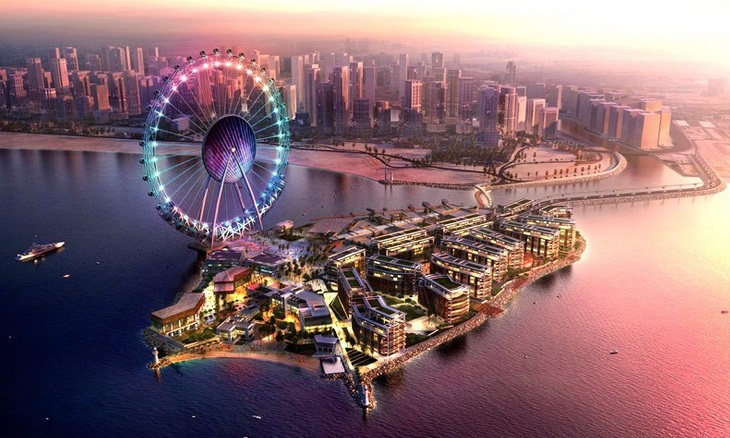
There is yet another island project. This time, Dutch contracting company, Van Oord, has started work on a US$ 134 million dredging contract on Island 2 off Jumeirah. This should finish by the end of the year at which time work on the mixed-development of a boutique resort with low rise apartments and a marina can start in earnest. The island, which will be connected to Jumeirah Road by a 300 mt long bridge, will be developed by Meraas Holding – the same company that recently announced a US$ 1.63 billion plan for the ‘Bluewaters’ island project off JBR.

Union Properties had another bumpy year with a fall in Revenue from US$ 1.34 billion to US$ 447 million but a major turnaround in Net Profit from a 2011 loss of US$ 425 million to a profit of US$ 48 million. More detailed figures are not currently available.

Dubai-based Arabtec has been awarded a US$ 272 million contract to construct the Abu Dhabi Fairmont hotel and serviced apartments. Covering an area of 155k sq mt, the 39-storey building will comprise a 563-room hotel and 249 apartments and is slated for completion within thirty months.

Next week sees another huge exhibition taking place. Last year, Gulfood generated US$ 155 million for the Dubai economy and this year, with 4,200 exhibitors and up to 60,000 visitors, will prove even more rewarding for the emirate’s coffers. Australia, which will have the largest number of overseas exhibitors, has seen its food exports to the UAE almost double since 2008 to US$ 662 million accounting for 8.6% of the country’s food bill of US$ 7.68 billion.

Having set up a successful business park model in Dubai, Tecom Investments has been trying for some time to set up a similar Internet City in Kerala. As a result of the usual setbacks associated with start-ups in India, construction is now expected in Q2 with Phase 1 estimated to cost US$ 735 million. Despite potential hurdles facing overseas investors, such as a weak rupee, high inflation, tax issues and the fact that Indian growth this year may be its lowest for a decade, Tecom is confident of commercial success.

Another Tecom enterprise, Dubai Biotechnology and Research Park (DuBiotech) saw the number of companies increase by 46.5% to 126 last year. In 2012, its first manufacturing facility was opened with Pharmax Pharmaceuticals’ US$ 10.9 million factory. Brookfield Multiplex is currently building Forearmed Hall – the prep school for Repton – due to open in Q3 and become the Park’s first educational establishment.

It has been a good week – and a good year – for the two telco companies. Etisalat saw a 15% increase in Net Profit (after royalty of US$ 1.76 billion) to US$ 1.83 billion with a 2% rise in revenue to US$ 8.96 billion. du announced a 14.7% jump in 2012 Revenue to US$ 2.77 billion with a resulting 80% surge in Net Profit (after royalty of  US$ 230 million) to US$ 540 million. With these impressive results and a declared US$ 0.082 dividend, no wonder du’s shares rose 11% on the day.

Dubai Financial Market Index finally managed to push through the  1900 barrier ending the week 1.5% higher at 1923 on its Sunday opening of 1894 – and up a creditable 18.53% so far this year. (Compare this to gold which started the year on US$ 1,680 and is trading today 6.8% down at US$ 1,573).

Eurozone’s smallest economy is currently causing the bloc its biggest headache. Cyprus applied for international financial aid in Q3 2012 requesting some US$ 22 billion (US$ 12.5 billion to shore up its banks and the balance for its budget) – a drop in the ocean when compared to Greece’s IMF and EU bailout funds of US$ 323 billion. However any aid would see their debt skyrocket to 140% of GDP which would be contrary to Fund’s lending rules. If no help is forthcoming then the country would become bankrupt and that would really spook the already jittery markets.

Latest data from the beleaguered eurozone confirm that the bloc has been in recession for the past five quarters. The optimistic mood of some of the politicians seems unfounded especially when perusing the performance of the PIGS. The four countries – Portugal, Italy, Greece and Spain – have latest unemployment levels at 16.4%, 11.1%, 26.0% and 26.6%, youth unemployment at 38.7%, 37.1%, 57.6% and 56.5%. If that were not enough, Q4 saw all four GDPs contract by 3.8%, 2.7%, 6.0% and 1.8% on the same quarter a year earlier.

There is increasing concern on the state of the French economy following President Francois Hollande’s acknowledgement that the country will miss its initial 2013 growth estimate of 0.8% for 2013. 2% would seem more likely with a possibility that eurozone’s second largest economy may even slip into recession. To make matters worse, the government has admitted that it will fail to cut this year’s public deficit to within 3% of GDP – the EU ceiling.

The Indian economy – Asia’s third largest – is going through a worrying phase and there is speculation that the country could see its debt downgraded to junk status. The market will be waiting on the outcome of the 28 February budget which will try and cut the fiscal deficit from 5.3% of GDP to 4.8% by encouraging FDI and reducing government spending.

A perusal of the currencies will see that a potential currency war is a distinct possibility with the latest skirmish being triggered by Japan. Their plan for monetary easing is to boost economic activity by reducing the yen’s value, causing much consternation among its trading partners. At the beginning of the week, the yen had fallen 15% against the greenback since November.  Following a G20 finance ministers’ weekend meeting a communiqué was issued stating their agreement that forex rates should be set by the market and not by any government intervention. Many believe that national interests will override as individual nations will boost their own economy even if it means upsetting others. John Donne’s poem, No Man is an Island, springs to mind.

Back in Dubai, island building is back in vogue and hopefully the emirate will not forget its desert heritage as it is quickly becoming better known for its Islands in the Sun.

Posted in Finance | Tagged , , , , , , , , , , , | Leave a comment

Number One

Sheikh-MohammedYet another indicator of the strength of the local economic recovery is the news that Dubai Mall’s sales jumped 24% in 2012 and its footfall was 20% up at 65 million visitors / shoppers. If this is any guide for the rest of the sector, all bodes well since retail accounts for 30% of Dubai’s GDP.

Across the board, UAE 2012 car sales have been impressive. Latest figures from Al Futtaim Motors, the exclusive Toyota distributor, show that the Japanese car maker has had a 32% year on year sales growth here. Mercedes has reported a 74% surge in the sales of its G Wagon range whilst its SUVs have increased by 38%. Other dealers have previously reported similar growth patterns.

Rarely a week goes by without mention of further property developments in Dubai. This week, there have been two major announcements. First, HH Sheikh Mohammad bin Rashid Al Maktoum has approved a US$ 1.63 billion plan by Meraas Holding for a new project off JBR. ‘Bluewaters’ Island will include the requisite 5-star hotel, residential and retail units as well as a US$ 272 million 210 metre Ferris wheel (naturally it will be the world’s largest); the complex will be connected to SZR by a direct roadway / monorail and to JBR by a pedestrian bridge.

Damac has launched a US$ 327 million project in Dubai Marina with the main contractor being Arabtec. Slated for completion by 2016, Damac Residenze, a 335 metre tower, will have an interior fit-out by the celebrated Italian designer, Fendi. No wonder then that prices will be in the region of US$ 8,200 per sq mt.

Welcome news for parents with children attending local private schools. The Knowledge and Human Development Authority has indicated that there will be no private school fee hikes in the next academic year. This comes only weeks after government directives ordered 2,000 basic food items be fixed for 2013 and that prices of some 6,600 imported medicines be reduced by up to 40%.

One little known fact is that Dubai sees over 30% of all global physical gold traded. Its mounting status in the yellow metal transactions will be further enhanced by the Dubai Gold and Commodities Exchange plan to establish a domestic exchange open to UAE investors to trade physical gold. Currently, the DGCE is one of the cheapest places in the world to trade gold. Meanwhile the bullion itself, hovering around the US$ 1,605 – 1,690 mark, has dropped more than 3% this year in contrast to strong performances from both platinum and palladium – up so far by 12% and 10% respectively. (The almost daily roller-coaster ride that is gold may lead the conspirators among us to consider that some sort of market manipulation may be afoot).

The substantial trade gap between the USA and UAE was further highlighted by 2012 figures showing a massive increase in their balance of trade from US$ 13.4 billion to US$ 20.3 billion. US exports to this country stood at US$ 22.5 billion whilst UAE exported only US$ 2.2 billion. A welcome fillip for Uncle Sam!

The past two weeks have seen the 17 listed UAE banks post favourable 2012 results with total year on year net profits rising by 11.4% to US$ 6.27 billion. Of the 23 national banks, 6 are not listed whilst there are 28 foreign financial institutions operating in the country.

Dubai-based bank, Shuaa Capital is slowly showing belated signs of recovery with a reduction in year on year Net Loss from US$ 80.0 million to US$ 16.1 million. Last year, the bank saw its Revenue jump 38% to US$ 37.4 million and its expenses drop by 45%.

DEWA announced a 6.4% increase in 2012 Net Profit to US$ 1.27 billion as its Turnover rose by 7.0% and cash generation by 1.4% to US$ 2.04 billion. At the end of the year, the public utility authority had total debts of US$ 5.6 billion, of which US$ 1.15 billion is due for repayment this year.

Not many airlines can boast of becoming profitable within three years from start-up – but flydubai can! In 2012, it posted net profits of US$ 41.4 million whilst carrying over 5.1 million passengers on its 52 routes. The CEO, Ghaith al Ghaith, is weighing up whether to add a further fifty aircraft to the low cost carrier’s fleet.

The locally owned baby store, JustKidding, has agreed a US$ 6.3 million franchise deal with the AMZ Group. Founded in 2006, it already has two Dubai outlets and, under the new arrangement, hopes to open a further three in the UAE as well as in Oman and Kuwait. Consequently, the forecast is for a fifteen fold increase in revenue over the next three years.

Dubai Financial Market Index tested the 1900 mark on Wednesday but later profit-taking saw the bourse close the week on 1894 – still 1.8% up since its Sunday opening and 16.73% so far this year.

With 2012 UAE sales up 15% and serving 50 million customers, McDonalds continues to dominate the local fast food sector. The American chain already has 109 outlets and with a 2013 investment of US$ 8.2 million will add another fifteen outlets. It hopes to increase its current 13% of the informal eating out market to 25% this year.

Just when horsemeat is getting all the press in Europe, the Dubai branded Calmelicious milk brand won EC approval to export their products into the bloc. The Emirates Industry for Camel Milk & Products, established in 2003, is home to the world’s largest camel milk and factory in the world. Although milk, chocolate and cheese are currently at the top of their export targets, EICMP is also in talks with cosmetic and medical companies that may have use for certain camel by-products.

A further sign of the global economic malaise comes with the world’s top steel producer, Arcelor Mittal, announcing a 2012 loss of US$ 3.72 billion. An 8.8% fall in European steel demand was the main driver for the company going into the red as the Indian conglomerate was forced to write down its European assets by US$ 4.3 billion, with an extra US$ 1.3 billion in restructuring costs.

Another company declaring a huge write-off is the beleaguered French auto-maker, Peugeot Citroen. Because of the dismal state of the European market, the company has deemed it necessary to write off US$ 6.3 billion in 2012.

Italy has been hit with further corruption probes. Giuseppe Orsi, Chairman of Finmeccanica, the country’s biggest defence company, has been arrested in connection with a probe into a US$ 560 million helicopter sale to India. Then there are the ongoing fraud enquiries relating to Italy’s third largest bank, Monte dei Paschi di Siena and the state-controlled energy group Eni.

Despite protestations from its technocrats that the worst was over, the eurozone has plunged even deeper into recession with no end in sight. The Q4 GDP fall of 0.6% is the worst quarterly return in four years with its three powerhouses, Germany, France and Italy all showing falls of 0.6%, 0.3% and 0.9% respectively. There is an Arabic saying that in order to kill a snake you should go for its head rather than its tale; maybe these problems could have been avoided if authorities had dealt more expeditiously with its eurozone “tale” countries – Spain, Greece, Portugal. The end result is a distinct danger of a contagion effect that could negatively impact on many economies including that of Dubai.

HH Sheikh Mohammed bin Rashid Al Maktoum held a Q & A session at this week’s two-day Government Summit attended by 2,500 officials in Dubai. Covering a wide range of topics, he again reiterated his desire that he wanted his nation to be number one. He continued that “becoming number one is not impossible – the word impossible doesn’t exist in our dictionary… My nation and I, we always try to be the first because no-one remembers the second”. That is the reason why the Dubai ruler insists on being Number One.

Posted in Finance | Tagged , , , , , , , , , , , , | Leave a comment